

Older patients are still under-represented in clinical trials of Alzheimer's disease
Open accessThe DOI matches its Crossref record; 33 of the 33 references it cites were found in a registry or an index.
Abstract
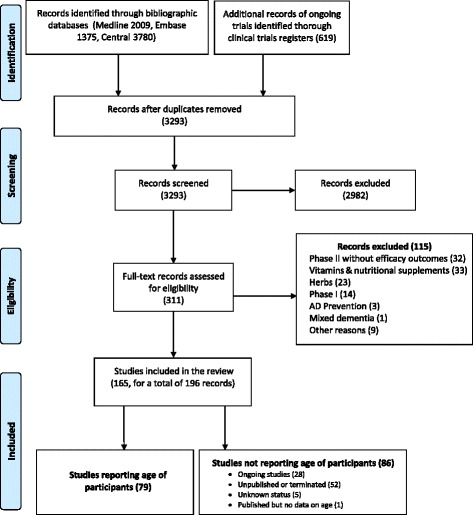
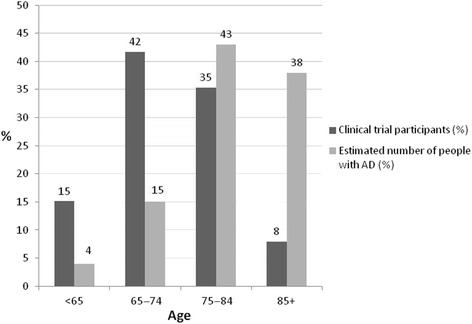
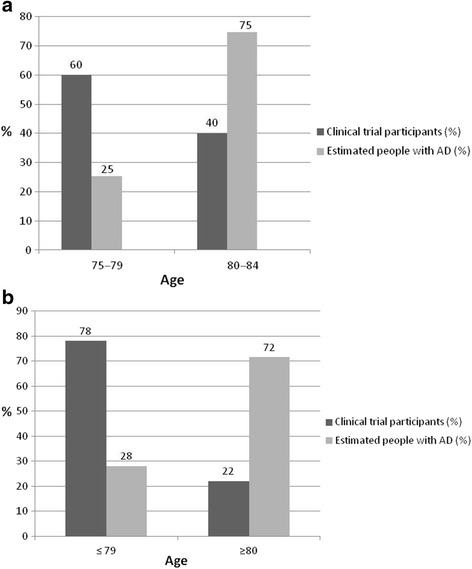
BACKGROUND: The age gap between participants in trials and patients who could benefit from the drugs studied has been widely documented across different clinical areas. Patients with dementia included in clinical research are systematically younger than those in the general population. We examined the age gap between participants in recent clinical trials testing interventions for Alzheimer's disease and epidemiological data. METHODS: We systematically searched literature databases (MedLine, EMBASE, the Cochrane Library) and ClinicalTrials.gov from 2000 to July 2015 to retrieve clinical trials testing pharmacologic treatments for Alzheimer's disease, other than cholinesterase inhibitors and memantine. We included ongoing and completed phase II/III randomized clinical trials, irrespective of their publication status. From each study reporting the participants' ages, we extracted size of sample, mean age, and standard deviation, and estimated the proportions of participants in different age classes. The number of patients with Alzheimer's disease by age class in the USA population was used for comparison. RESULTS: We included 165 clinical trials testing almost 100 different compounds, which enrolled or planned to enroll about 74,300 participants. Seventy-nine of these trials, accounting for about 26,800 participants, reported the age of the participants. The weighted mean age was 73.6 years (standard deviation, 8.2). People younger than 80 years were highly represented in clinical trials (78 %), despite the fact that those aged 80 and older form the majority (72 %) of patients with Alzheimer's disease. Only 8 % of clinical trial participants were 85 years or older. CONCLUSIONS: Patients enrolled in clinical trials on Alzheimer's disease are far from being representative of actual distribution of the patients in the general population. Clinical research should not be designed and conducted overlooking the fact that the majority of individuals with Alzheimer's disease are likely to be 80 or older.
Overview
The claims and statistics of this paper haven’t been checked yet.
Free: it reads the open-access text and checks the first 5 claims that cite a source we can check. Create a free account to check every claim.
Integrity signals
Registry
Cites
Statistics
Figures
Verification
Claims the paper makes
The claims and statistics of this paper haven’t been checked yet.
Free: it reads the open-access text and checks the first 5 claims that cite a source we can check. Create a free account to check every claim.
Claims other papers make about this one
Each is checked against this paper’s own text: does it say what the citing paper says it does?
The cited source says what the claim attributes to it.
In the citing paper
“older patients–particularly the oldest-old–remained disproportionally under-represented in clinical trials of Alzheimer’s disease [129–131].”
From Global reach of ageism on older persons' health: a systematic review (2020) · cites this paper as [129]
Self-check
Percentages, sums and reported differences re-computed from the paper’s own numbers.
The self-check needs the paper’s full text.
Citations
Cites
McKhann, G., Drachman, D., Folstein, M., Katzman, R., Price, D., & Stadlan, E. M. (1984) · Neurology · doi:10.1212/wnl.34.7.939 · Cited by 27,915
2016 Alzheimer's disease facts and figures
Alzheimer's Association (2016) · Alzheimer's & Dementia · doi:10.1016/j.jalz.2016.03.001 · Cited by 5,069
The global prevalence of dementia: a systematic review and metaanalysis.
Prince, M., Bryce, R., Albanese, E., Wimo, A., Ribeiro, W., & Ferri, C. P. (2013) · Alzheimer's & Dementia · doi:10.1016/j.jalz.2012.11.007 · Cited by 4,941 · cited 1×
“Several studies reported prevalence data on dementia [32], while a few focused specifically on Alzheimer’s disease.”
BackgroundAlzheimer disease in the United States (2010–2050) estimated using the 2010 census
Hebert, L. E., Weuve, J., Scherr, P. A., & Evans, D. A. (2013) · Neurology · doi:10.1212/wnl.0b013e31828726f5 · Cited by 2,642 · cited 5×
“This is because the most recent figures we found indicated only the number of people with Alzheimer’s disease by 10 year classes of age [14].”
BackgroundInfluentialPrevalence of Dementia in the United States: The Aging, Demographics, and Memory Study
Plassman, B. L., Langa, K. M., Fisher, G. G., Heeringa, S. G., Weir, D. R., Ofstedal, M. B., Burke, J. R., Hurd, M. D., Potter, G. G., Rodgers, W. L., et al. (2007) · Neuroepidemiology · doi:10.1159/000109998 · Cited by 1,932 · cited 4×
“Thus, to retrieve Alzheimer’s disease prevalence estimates by 5 year classes, we referred to published and unpublished data from previous cohort studies [17, 18].”
BackgroundMethodInfluentialDefeating Alzheimer's disease and other dementias: a priority for European science and society
Winblad, B., Amouyel, P., Andrieu, S., Ballard, C., Brayne, C., Brodaty, H., Cedazo-Minguez, A., Dubois, B., Edvardsson, D., Feldman, H., et al. (2016) · The Lancet Neurology · doi:10.1016/s1474-4422(16)00062-4 · Cited by 1,676
2015 Alzheimer's disease facts and figures
Alzheimer's Association (2015) · Alzheimer's & Dementia · doi:10.1016/j.jalz.2015.02.003 · Cited by 1,635
Alzheimer’s disease: Clinical trials and drug development
Mangialasche, F., Solomon, A., Winblad, B., Mecocci, P., & Kivipelto, M. (2010) · The Lancet Neurology · doi:10.1016/s1474-4422(10)70119-8 · Cited by 1,217 · cited 9×
“The number of patients with Alzheimer’s disease by age class in the USA population was used for comparison.”
InfluentialVan Spall, H. G. C., Toren, A., Kiss, A., & Fowler, R. A. (2007) · JAMA · doi:10.1001/jama.297.11.1233 · Cited by 1,055 · cited 2×
“This concept, known as external validity, applicability, or generalizability, is often neglected, especially in industrysponsored research [10], which selects the best possible experimental conditions to highlight the efficacy of new treatments, often disregarding their effectiveness in the real world.”
BackgroundAge, Neuropathology, and Dementia
Savva, G. M., Wharton, S. B., Ince, P. G., Forster, G., Matthews, F. E., & Brayne, C. (2009) · New England Journal of Medicine · doi:10.1056/nejmoa0806142 · Cited by 900 · cited 1×
“Older people have different pharmacokinetics and pharmacodynamics from people in their 60s or 70s [30].”
Background
Cited by
Global reach of ageism on older persons' health: a systematic review
Chang, E.-S., Kannoth, S., Levy, S., Wang, S.-Y., Lee, J. E., & Levy, B. R. (2020) · PLOS ONE · doi:10.1371/journal.pone.0220857 · Cited by 912
“To illustrate, in the context of dementia on a structural level, older patients–particularly the oldest-old–remained disproportionally under-represented in clinical trials of Alzheimer’s disease [129–131].”
Recruitment and Retention of Older People in Clinical Research: A Systematic Literature Review
Forsat, N. D., Palmowski, A., Palmowski, Y., Boers, M., & Buttgereit, F. (2020) · Journal of the American Geriatrics Society · doi:10.1111/jgs.16875 · Cited by 213
Duara, R., & Barker, W. (2022) · Neurotherapeutics · doi:10.1007/s13311-022-01185-z · Cited by 187
Reimagining cholinergic therapy for Alzheimer’s disease
Giacobini, E., Cuello, A. C., & Fisher, A. (2022) · Brain · doi:10.1093/brain/awac096 · Cited by 187
Recommendations to address key recruitment challenges of Alzheimer's disease clinical trials
Langbaum, J. B. S., Zissimopoulos, J., Au, R., Bose, N., Edgar, C. J., Ehrenberg, E., Fillit, H. M., Hill, C. V., Hughes, L., Irizarry, M. C., et al. (2022) · Alzheimer s & Dementia · doi:10.1002/alz.12737 · Cited by 131
Cummings, J. L. (2025) · Neurotherapeutics · doi:10.1016/j.neurot.2025.e00570 · Cited by 96
“Clinical trial participants tend to be younger, healthier, take fewer concomitant medications, and are more well educated than the general population [65,66].”
Pharmacokinetic and pharmacodynamic alterations in older people with dementia
Reeve, E., Trenaman, S. C., Rockwood, K. J., & Hilmer, S. N. (2017) · Expert Opinion on Drug Metabolism & Toxicology · doi:10.1080/17425255.2017.1325873 · Cited by 92
Potentially inappropriate prescribing in dementia: a state-of-the-art review since 2007
Delgado, J., Bowman, K., & Clare, L. (2020) · BMJ Open · doi:10.1136/bmjopen-2019-029172 · Cited by 68
Dementia clinical trial implications of mild behavioral impairment
Mortby, M. E., Black, S. E., Gauthier, S. G., Miller, D., Porsteinsson, A. P., Smith, E. E., Ismail, Z., & Mortby, M. E. (2018) · International Psychogeriatrics · doi:10.1017/s1041610218000042 · Cited by 68
“…a dementia drug since 2003 and clinical trials have shifted to disease prevention, with trials conducted in at-risk populations (Graham et al., 2017) resulting in an ever widening age gap between clinical trial participants and patients who could benefit from these drugs (Banzi et al., 2016).”
BackgroundMohs, R. C., Beauregard, D., Dwyer, J., Gaudioso, J., Bork, J., MaGee‐Rodgers, T., Key, M. N., Kerwin, D. R., Hughes, L., Cordell, C. B., et al. (2024) · Alzheimer's & Dementia · doi:10.1002/alz.13722 · Cited by 60
Mooldijk, S. S., Licher, S., & Wolters, F. J. (2021) · JAMA Neurology · doi:10.1001/jamaneurol.2021.2943 · Cited by 60
van Kolfschooten, H. (2023) · Journal of Law and the Biosciences · doi:10.1093/jlb/lsad031 · Cited by 52
“27 For example, older patients were significantly more likely to be denied access to health services and treatments, and older people were routinely excluded from clinical trials leading to underrepresentation in medical knowledge (eg in clinical trials of Alzheimer’s dis-23 ease 28 ).”
BackgroundShepherd, V. (2020) · Contemporary Clinical Trials · doi:10.1016/j.cct.2020.106054 · Cited by 52
“This includes that trial populations are younger [6] less representative of women and minority groups [7] and have fewer health conditions [8] than those in the affected population.”
BackgroundStudy partners: essential collaborators in discovering treatments for Alzheimer’s disease
Largent, E. A., Karlawish, J. H., & Grill, J. D. (2018) · Alzheimer s Research & Therapy · doi:10.1186/s13195-018-0425-4 · Cited by 51
Chen, Z., Zhang, H., Guo, Y., George, T. J., Prosperi, M., Hogan, W. R., He, Z., Shenkman, E. A., Wang, F., & Bian, J. (2021) · npj Digital Medicine · doi:10.1038/s41746-021-00452-1 · Cited by 40
Sex and gender differences in polypharmacy in persons with dementia: A scoping review
Trenaman, S. C., Rideout, M., & Andrew, M. K. (2019) · SAGE Open Medicine · doi:10.1177/2050312119845715 · Cited by 38
Shinto, L. H., Murchison, C., Silbert, L. C., Dodge, H. H., Lahna, D. L., Rooney, W. D., Kaye, J. A., Quinn, J. F., & Bowman, G. L. (2024) · JAMA Network Open · doi:10.1001/jamanetworkopen.2024.26872 · Cited by 32
Expanding the scope of health disparities research in Alzheimer's disease and related dementias
Akushevich, I. V., Kravchenko, J. S., Yashkin, A. P., Doraiswamy, P. M., Hill, C. V., & Alzheimer's Disease and Related Dementia Health Disparities Collaborative Group (2023) · Alzheimer s & Dementia Diagnosis Assessment & Disease Monitoring · doi:10.1002/dad2.12415 · Cited by 30
Insights into the pathological basis of dementia from population‐based neuropathology studies
Wharton, S. B., Simpson, J. E., Ince, P. G., Richardson, C. D., Merrick, R. L., Matthews, F. E., Brayne, C., & CFAS (2023) · Neuropathology and Applied Neurobiology · doi:10.1111/nan.12923 · Cited by 28
Lawani, M. A., Côté, L., Coudert, L., Morin, M., Witteman, H. O., Caron, D., Kröger, E., Voyer, P., Rodríguez, C., Légaré, F., et al. (2020) · BMC Medical Informatics and Decision Making · doi:10.1186/s12911-020-01197-9 · Cited by 28
Trial Participation in Neurodegenerative Diseases: Barriers and Facilitators
Weemering, D. N., Beelen, A., Kliest, T., van Leeuwen, L. A. G., van den Berg, L. H., & van Eijk, R. P. A. (2024) · Neurology · doi:10.1212/wnl.0000000000209503 · Cited by 26
“11 With eligibility criteria, the aim is to reduce undesirable characteristics in our trial population (e.g., end-stage disease).”
BackgroundGalvin, J. E., Cummings, J. L., Benea, M. L., de Moor, C., Allegri, R., Atri, A., Chertkow, H. M., Paquet, C., Porter, V. R., Ritchie, C. W., et al. (2024) · Alzheimer s & Dementia · doi:10.1002/alz.13785 · Cited by 23
Muntsant-Soria, A., & Giménez‐Llort, L. (2021) · Biomedicines · doi:10.3390/biomedicines9070715 · Cited by 21
Analysis of eligibility criteria in Alzheimer’s and related dementias clinical trials
Mitchell, A. K., Ehrenkranz, R. C., Franzen, S., Han, S. H., Shakur, M., McGowan, M., & Massett, H. A. (2024) · Scientific Reports · doi:10.1038/s41598-024-65767-x · Cited by 21
Olson, N. L., & Albensi, B. C. (2020) · Journal of Alzheimer s Disease Reports · doi:10.3233/adr-200214 · Cited by 21
“noted age-specific challenges in AD RCT, in which only 8% of RCT participants were >85 years, despite those 80 and over representing 72% of AD patients [56].”
BackgroundXu, J., Zhang, H., Zhang, H., Bian, J., & Wang, F. (2023) · Scientific Reports · doi:10.1038/s41598-023-27856-1 · Cited by 19
Different techniques for Alzheimer’s disease classification using brain images: a study
Hazarika, R. A., Abraham, A., Sur, S. N., Maji, A. K., & Kandar, D. (2021) · International Journal of Multimedia Information Retrieval · doi:10.1007/s13735-021-00210-9 · Cited by 22
Gabb, V. G., Blackman, J., Morrison, H. D., Li, H., Kendrick, A. H., Turner, N. L., Greenwood, R., Biswas, B., Heslegrave, A., & Coulthard, E. J. (2025) · JMIR Aging · doi:10.2196/72824 · Cited by 22
“Women, adults aged >80 years, and minoritized ethnic groups were underrepresented in our study, which is often observed in dementia research [78].”
Research on Frailty: Where We Stand and Where We Need to Go
Rodríguez‐Mañas, L., & Rodríguez-Sánchez, I. (2021) · Journal of the American Medical Directors Association · doi:10.1016/j.jamda.2021.01.061 · Cited by 17
Geroscience and Alzheimer's Disease Drug Development
Cummings, J. L., Osse, A. M. L., & Kinney, J. (2023) · The Journal of Prevention of Alzheimer s Disease · doi:10.14283/jpad.2023.103 · Cited by 16
“A review of AD trial populations found that 78% of trial participants are under the age of 80 whereas 72% of AD patients are 80 or older (16).”
BackgroundPre-clinical Models for Geriatric Pharmacotherapy
Hilmer, S. N., Johnell, K., & Mach, J. R. (2024) · Drugs & Aging · doi:10.1007/s40266-024-01129-6 · Cited by 18
“Participants in these RCTs are often younger, with less comorbidities, than real-world patients with dementia [29, 30].”
BackgroundCroff, R. L., Gowen, L. K., Lindauer, A., Shofner, S. J., Brown, K., & Eckstrom, E. (2020) · Journal of Clinical and Translational Science · doi:10.1017/cts.2020.12 · Cited by 14
“Only 8% of clinical trial participants were over 85 years [5].”
BackgroundDrug Safety in Geriatric Patients: Current Status and Proposed Way Forward
Furlan, G., Caduff‐Janosa, P., Sottosanti, L., Cappello, E., Valdiserra, G., & Tuccori, M. (2020) · Drug Safety · doi:10.1007/s40264-020-00949-w · Cited by 18
The ideological divide in confidence in science and participation in medical research
Gabel, M. J., Gooblar, J., Roe, C. M., & Morris, J. C. (2021) · Scientific Reports · doi:10.1038/s41598-021-82516-6 · Cited by 15
Li, Q., Guo, Y. M., He, Z., Zhang, H., George, T. J., & Bian, J. (2020) · medRxiv · doi:10.1101/2020.08.02.20166629 · Cited by 19
Corrao, G., Compagnoni, M. M., Franchi, M., Cantarutti, A., Pugni, P., Merlino, L. G., Catapano, A. L., & Mancia, G. (2017) · European Journal of Internal Medicine · doi:10.1016/j.ejim.2017.09.023 · Cited by 15
Nocebo phenomena may be enhanced in aging: Implications for clinical practice
Kravvariti, E., Kotsani, M., Mitsikostas, D. D., & Sfikakis, P. P. (2020) · Maturitas · doi:10.1016/j.maturitas.2020.07.011 · Cited by 13
Chen, L., Wang, M., Yang, Y., Shen, J., & Zhang, Y. (2020) · Frontiers in Pharmacology · doi:10.3389/fphar.2020.00942 · Cited by 12
“Thus, evidence for old populations was lacking, and only a few trials were explicitly designed for this population (Carroll and Zajicek, 2011; Bellera et al., 2013; Banzi et al., 2016; White et al., 2019).”
BackgroundToyli, A., Shaik, A., Chen, Z., Chen, Q., Sha, Q., & Zhou, W. (2025) · Frontiers in Cardiovascular Medicine · doi:10.3389/fcvm.2025.1685461 · Cited by 11
Glover, C. M., Arfanakis, K., Aggarwal, N. T., Bennett, D. A., Márquez, D. X., & Barnes, L. L. (2022) · Journal of Alzheimer s Disease · doi:10.3233/jad-220861 · Cited by 10
“Furthermore,thebenefitsofsci-entificadvancementsorknowledgeassociatedwith PETbrainscandatawillremainelusivetosize-ableportionsofnational[i.e.,thoseintheUnited States(US)]andglobalpopulations[6–10].”
Age representation in antiepileptic drug trials: A systematic review and meta-analysis
Desmarais, P., Miville, C., Milán-Tomás, Á., Nguyên, Q. D., Ojeda-López, C., Masellis, M., Black, S. E., Andrade, D. M., & Herrmann, N. (2018) · Epilepsy Research · doi:10.1016/j.eplepsyres.2018.03.005 · Cited by 9
Longo, E., Burnett, B., Bauermeister, S., & Zhou, S. (2022) · Aging and Disease · doi:10.14336/ad.2022.0829 · Cited by 11
Alimoradzadeh, R., Mirmiranpour, H., Hashemi, P., Pezeshki, S., & Salehi, S. S. (2019) · Journal of Neurology & Neurophysiology · doi:10.4172/2155-9562.1000483 · Cited by 20
“During 1993-2003, four inhibitors of Cholinesterase and Memantine have been approved for the symptomatic treatment of Volume 10 • Issue 1 • 1000483J Neurol Neurophysiol, an open access journal ISSN: 2155-9562 Alzheimer’s disease in the United States and Europe [19], but none has been confirmed for the treatment of ind…”
BackgroundPattar, B. S. B., Gulamhusein, N., Rytz, C. L., Miranda, K. T., Beach, L. B., Marshall, Z., Collister, D., Greene, D. N., Whitley, C. T., Saad, N., et al. (2024) · PLoS ONE · doi:10.1371/journal.pone.0309169 · Cited by 8
Protocol for the systematic review of age and sex in preclinical models of age-correlated diseases
Diederich, K., Steinfath, M., Bannach‐Brown, A., Bert, B., Butzke, D., Wildner, P. L., Wurm, M., Schadock, I., & Heinl, C. (2024) · F1000Research · doi:10.12688/f1000research.153466.1 · Cited by 7
“17 Wedo notplanadirect numericalcomparison butratherdetermine which partofa life stagethemice are in compared to humans.”
Age demographics of subjects enrolled in interventional phase 3 multiple myeloma clinical trials
Borad, A., Saeed, H., Toscani, M., Barone, J. G., & Weber, P. F. (2020) · Journal of Oncology Pharmacy Practice · doi:10.1177/1078155220934162 · Cited by 6
“In an examination of age demographics of Alzheimer’s disease trials between 2000 and 2015, Banzi et al.11 found the mean age of trial participants to be 73.6 years, despite a majority of Alzheimer’s patients being greater than 80 years old.”
BackgroundInfluentialImpacts of Eligibility Criteria on Trial Participants' Age in Alzheimer's Disease Clinical Trials.
Chen, A., Li, Q., He, X., Jaffee, M. S., Hogan, W. R., Wang, F., Guo, Y. M., & Bian, J. (2022) · PubMed Central · Cited by 7
Characteristics and Real-Life Outcomes of Dementia and Cognitive Impairment at a Geriatric Clinic
Chulakadabba, K., Muangpaisan, W., Siritipakorn, P., Wongviriyawong, T., Suraarunsumrit, P., Chalermsri, C., Intalapaporn, S., Chatthanawaree, W., Srinonprasert, V., & Assantachai, P. (2020) · Dementia and Geriatric Cognitive Disorders · doi:10.1159/000509731 · Cited by 5
McDaniel, J. C., Rausch, J., & McGowan, D. R. (2022) · International Wound Journal · doi:10.1111/iwj.13957 · Cited by 4
Machine Learning based Detection of Alzheimer’s disease in MRI images
M.Rajendiran, K. P. S. K. (2022) · Journal of Pharmaceutical Negative Results · doi:10.47750/pnr.2022.13.s08.196 · Cited by 4
“Patients' clinical records, as well as multimodality imaging data such as Computed Tomography (CT), Positron Emission Tomography (PET), Magnetic Resonance Imaging (MRI), X-rays, and CT scans, are all examples of multimodality data [7].”
BackgroundForsat, N. D., Palmowski, A., Palmowski, Y., Boers, M., & Buttgereit, F. (2019) · doi:10.17504/protocols.io.4f6gtre · Cited by 4
Can we predict trial failure among older adult-specific clinical trials using trial-level factors?
Lee, W., Basu, A., Carlson, J. J., & Veenstra, D. L. (2022) · Journal of Geriatric Oncology · doi:10.1016/j.jgo.2022.11.003 · Cited by 3
Strategies for optimizing clinical trial recruitment: perspectives among patients with breast cancer
Chen, M., Reh, N., Dwarampudi, S., Williams, C., Henderson, N. L., Rocque, G. B., & Gutnik, L. A. (2026) · Cancer Causes & Control · doi:10.1007/s10552-026-02140-5 · Cited by 2
“However, with the rise of the internet, older participants recruited through Facebook surpassed traditional recruitment methods [48].”
Ciccone, C. D. (2019) · Elsevier eBooks · doi:10.1016/b978-0-323-60912-8.00006-3 · Cited by 3
van Kolfschooten, H. (2025) · Brill | Nijhoff eBooks · doi:10.1163/9789004708389_004 · Cited by 2
Cummings, J. L., Zhong, K., Ballard, C. G., Sano, M. C., & Mintzer, J. E. (2025) · International Psychogeriatrics · doi:10.1016/j.inpsyc.2025.100107 · Cited by 2
“Trial participants tend to be younger, healthier, and more well educated than the population to which AD/NDD/VCI NPS medications will be applied [85].”
Medication use to manage comorbidities in people with dementia: a systematic review
Wang, K., Alan, J., Page, A. T., Percival, M. A., & Etherton‐Beer, C. (2022) · Journal of Pharmacy Practice and Research · doi:10.1002/jppr.1802 · Cited by 2
Felsted, K. F., & Caserta, M. S. (2023) · International Journal of Environmental Research and Public Health · doi:10.3390/ijerph20156491 · Cited by 2
UNDERREPRESENTATION OF OLDER PERSONS IN CLINICAL TRIALS
Kutsal, Y. G., İlgili, Ö., Koç, M., & ÖZYURT, C. S. (2023) · The Turkish Journal of Geriatrics · doi:10.29400/tjgeri.2023.349 · Cited by 1
“It is stated that, patients enrolled in clinical trials related to Alzheimer’s disease are far from representing the true distribution of patients in the general population (10).”
BackgroundAfonso, A. S., Schroeder, K. M., Mitchell, L., Carragher, N., Casey, C. S., & Patel, N. (2026) · BMJ Open · doi:10.1136/bmjopen-2025-115438 · Cited by 1
“25 26 Consequently, if some real-world AD populations are not represented in clinical trials, the generalisability of clinical trial findings to these populations is unknown.”
Research horizons for the twenty‐first century
Rodríguez‐Mañas, L., Assar, M. E., & Angulo, J. (2022) · Wiley eBooks · doi:10.1002/9781119484288.ch134 · Cited by 1
Enhancing vaccine clinical trials participation among elderly: challenges and strategies
Gillard, P. H., Nakhle, S., Brimhall, D., Henry, O., & Mesaros, N. E. (2025) · Trials · doi:10.1186/s13063-025-08754-5 · Cited by 1
Oldest Old Patients Should be Recruited More in Clinical Trials of Dementia
Park, Y. H. (2018) · Journal of Korean Medical Science · doi:10.3346/jkms.2018.33.e146 · Cited by 1
Bouranis, N. (2020) · doi:10.15760/etd.7337 · Cited by 2
Ткачева, О. Н., Sychev, D. A., Malaya, I. P., Burmistrov, V. A., Vergazova, E. K., Galeeva, A. A., Гордеев, И. Г., Dmitriev, V. A., Zhuravleva, M. V., Zyryanov, S. K., et al. (2022) · Russian Journal of Geriatric Medicine · doi:10.37586/2686-8636-4-2021-398-402
Eckstrom, E., Zauflik, M., & Lima, B. D. (2023) · Journal of Clinical and Translational Science · doi:10.1017/cts.2023.539
“In the USA today, 80% of dementia cases occur in people over the age of 80 years; however, 80% of dementia research involves participants under the age of 80 years [1].”
Baksh, R. A., Strydom, A., Carter, B., Carrière, I., & Ritchie, K. A. (2024) · Alzheimer s & Dementia Diagnosis Assessment & Disease Monitoring · doi:10.1002/dad2.12563
“A systematic review of 165 RCTs for AD treatments found that the mean age of participants was 73.6 years (SD = 8.2), 12 while 90% of RCTs for AD define a range from 55 to 85 years old, 20% of RCTs allow 50 to55 years old, and 15% allow for 85-to 90-year-old participants.”
BackgroundInfluentialtakaliuang, D. S., Muljadi, R., Sutanto, R., & Situmeang, R. (2025) · Research Square · doi:10.21203/rs.3.rs-7953365/v1
Ligocki, A. P., Sorets, A. G., Abdulrahman, A. M., Francini, N., Park, J. C., Lee, J. H., Ford, W. T., Lyons, S. M., Fritsch, E. L., Lamantia, Z. E., et al. (2026) · Molecular Therapy · doi:10.1016/j.ymthe.2026.06.028
Murphy, C. M. (2024) · Trinity's Access to Research Output (TARA) (Trinity College Dublin)
Bartley, M. M., Sauver, J. L. S., Schroeder, D. R., Khera, N., & Griffin, J. M. (2026) · Journal of Applied Gerontology · doi:10.1177/07334648261425294
Larkin, E., O’Shaughnessy, Í., Galvin, R., & Robinson, K. (2026) · BMC Medical Research Methodology · doi:10.1186/s12874-025-02749-1
Artificial intelligence in elderly care:A proposal for an assessment instrument for patients' rights
van Kolfschooten, H. (2024) · UvA-DARE (University of Amsterdam)
takaliuang, D. S., Muljadi, R., Sutanto, R., Situmeang, R., & cucunawangsih (2026) · Research Square · doi:10.21203/rs.3.rs-8824555/v1
Rizvi, B. M., Maillard, P., Posis, A. I. B., Colbeth, H., Chen, N. X., Brickman, A. M., Gilsanz, P., Corrada, M. M., & Whitmer, R. A. (2026) · Alzheimer s & Dementia · doi:10.1002/alz.71795
Wicker, A. L., Courtright-Lim, A., & Tilburt, J. (2026) · Frontiers in Psychiatry · doi:10.3389/fpsyt.2026.1953954
“Additionally, the frequent discussion of underrepresentation in clinical trials indicates that justice concerns begin at the evidence-generation stage and extend through real-world implementation (21, 44, 63).”
AI in clinical research: Regulatory and legal uncertainties in protecting participants’ rights
Lebret, A. (2026) · Regulatory Affairs Watch · doi:10.54920/scto.2026.rawatch.11.28
Metadata
- Authors
- Banzi, R., Camaioni, P., Tettamanti, M., Bertele’, V., & Lucca, U.
- Affiliations
- Mario Negri Institute for Pharmacological Research (IT)
- Corresponding author
- Banzi, Rita
- Venue
- Alzheimer's Research & Therapy
- Published
- 2016-08-12
- Volume
- 8
- Issue
- 1
- Pages
- 32-32
- ISSN
- 1758-9193 (ISSN-L)
- PMC
- PMC4982205
- OpenAlex
- W2509751368
- Cited by
- 74
- References
- 33
- Citations by year
- 2026: 7 · 2025: 7 · 2024: 10 · 2023: 8 · 2022: 12 · 2021: 6 · 2020: 14 · 2019: 4 · 2018: 4 · 2017: 2
- FWCI
- 0.48
- Type
- journal article
- Language
- en
- Open access
- gold
- doi.org
- Licence
- cc-by
- creativecommons.org/licenses/by/4.0 (tdm)
- creativecommons.org/licenses/by/4.0 (vor)
- Locations
- Alzheimer s Research & Therapy (publishedVersion, cc-by)
- PubMed Central (publishedVersion, cc-by)
- PubMed (publishedVersion)
- Funders
- Fondazione Alberto e Mariele Tessiore
- Topics
- Health Sciences › Medicine › Psychiatry and Mental health › Dementia and Cognitive Impairment Research
- Health Sciences › Medicine › Public Health, Environmental and Occupational Health › Ethics in Clinical Research
- Life Sciences › Neuroscience › Cellular and Molecular Neuroscience › Alzheimer's disease research and treatments
- Keywords
- Alzheimer's disease, age gap, older adults, underrepresentation in clinical trials, trial representativeness, dementia pharmacotherapy, age distribution of patients
- MeSH terms
- Age Factors, Aged, Aged, 80 and over, Alzheimer Disease, Humans, Middle Aged, Randomized Controlled Trials as Topic, Clinical Trials, Phase I as Topic, Clinical Trials, Phase II as Topic
About these checks
Registry, retraction, Cites and statistics results are computed, not judged, with one exception: a printed reference that no index lists is read once by a model before it counts as a citation error. Claims are extracted by a model and kept only when their quote appears verbatim in the text; each cited source is then checked, with a model’s help, for whether it says what the claim relies on. Those verdicts can be wrong — read the claim’s quote and the cited source before relying on one.
Statistics and arithmetic are recomputed, not judged.
Confidence bands are shown only for fields calibrated on our annotated test set. None is calibrated yet, so no band is shown.
What counts as a claim ›How we measure confidence ›How we check this ›
Are you an author, or do you see a problem with this page? Request a review
Data sources
Bibliographic data: Semantic Scholar, OpenAlex, Crossref.
Contains information from the Semantic Scholar Academic Graph Datasets, made available under the ODC Attribution License (ODC-BY 1.0).
Semantic Scholar’s data is described in: Kinney, R., et al. (2023). The Semantic Scholar Open Data Platform. arXiv:2301.10140.
