

Effects of low- and high-intensity physical exercise on physical and cognitive function in older persons with dementia: a randomized controlled trial
Open accessThe DOI matches its Crossref record; 109 of the 109 references it cites were found in a registry or an index.
Abstract
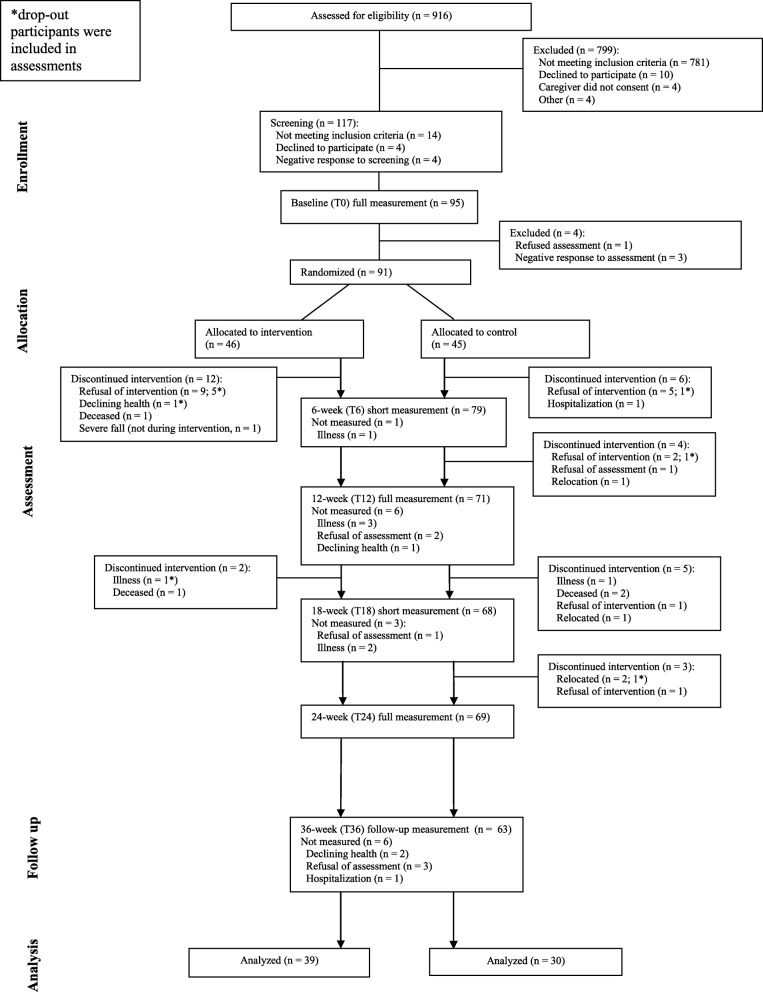
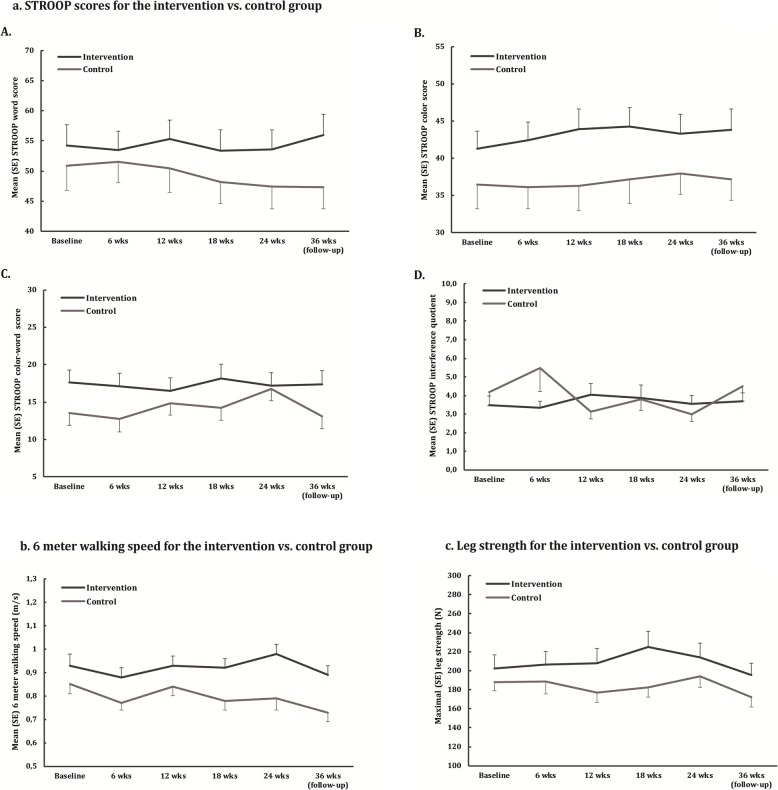
Background: Potential moderators such as exercise intensity or apolipoprotein-E4 (ApoE4) carriership may determine the magnitude of exercise effects on physical and cognitive functions in patients with dementia (PwD). We determined the effects of a 24-week aerobic and strength training program with a low- and high-intensity phase on physical and cognitive function. Methods: In an assessor-blinded randomized trial, 91 PwD (all-cause dementia, recruited from daycare and residential care facilities, age 82.3 ± 7.0 years, 59 women, Mini-Mental State Examination 20.2 ± 4.4) were allocated to the exercise or control group. In the exercise group, PwD participated in a walking and lower limb strength training program with 12 weeks low- and 12 weeks high-intensity training offered three times/week. Attention-matched control participants performed flexibility exercises and recreational activities. We assessed adherence, compliance, and exercise intensity for each session. We assessed physical (endurance, gait speed, mobility, balance, leg strength) and cognitive (verbal memory, visual memory, executive function, inhibitory control, psychomotor speed) functions with performance-based tests at baseline and after 6, 12, 18, 24, and 36 weeks (follow-up). ApoE4 carriership was determined post-intervention. Results: Sixty-nine PwD were analyzed. Their mean attendance was ~ 60% during the study period. There were no significant effects of the exercise vs. control intervention on endurance, mobility, balance, and leg strength in favor of the exercise group (Cohen’s d = 0.13–0.18). Gait speed significantly improved with ~ 0.05 m/s after the high-intensity phase for exercise participants (Cohen’s d = 0.41) but declined at follow-up. There were no significant effects of the exercise vs. control intervention on any of the cognitive measures (Cohen’s d ~ − 0.04). ApoE4 carriership did not significantly moderate exercise effects on physical or cognitive function. Conclusions: Exercise was superior to control activities for gait speed in our sample of PwD. However, the training effect provided no protection for mobility loss after detraining (follow-up). There were no beneficial effects of the exercise vs. control group on cognitive function. Exercise intensity moderated the effects of exercise on gait speed. ApoE4 carriership moderated the effect of exercise on global cognition only (trend level). Trial registration: Netherlands Trial Register, NTR5035. Registered on 2 March 2015.
Overview
The claims and statistics of this paper haven’t been checked yet.
Free: it reads the open-access text and checks the first 5 claims that cite a source we can check. Create a free account to check every claim.
Integrity signals
Registry
Cites
Statistics
Figures
Verification
Claims the paper makes
The claims and statistics of this paper haven’t been checked yet.
Free: it reads the open-access text and checks the first 5 claims that cite a source we can check. Create a free account to check every claim.
Claims other papers make about this one
Each is checked against this paper’s own text: does it say what the citing paper says it does?
In the citing paper
“Good quality RCTs of exercise interventions for people with dementia found they did not improve neuropsychiatric symptoms, cognition or functioning.(524, 525)”
From Dementia prevention, intervention, and care: 2024 report of the Lancet standing Commission (2024) · cites this paper as [524]
Self-check
Percentages, sums and reported differences re-computed from the paper’s own numbers.
The self-check needs the paper’s full text.
Citations
Cites
Statistical Power Analysis for the Behavioral Sciences
Muller, K. (1989) · Technometrics · doi:10.1080/00401706.1989.10488618 · Cited by 99,167
Folstein, M. F., Folstein, S. E., & McHugh, P. R. (1975) · Journal of Psychiatric Research · doi:10.1016/0022-3956(75)90026-6 · Cited by 88,282
Statistical power analysis for the behavioral sciences
(1990) · Computers, Environment and Urban Systems · doi:10.1016/0198-9715(90)90050-4 · Cited by 65,269
Kok, J. S., Berg, I. J., & Scherder, E. J. A. (2013) · Dementia and Geriatric Cognitive Disorders Extra · doi:10.1159/000353441 · Cited by 20,589
Self-citationOlder Adults' Reasons for Using Technology while Aging in Place
Peek, S. T. M., Luijkx, K. G., Rijnaard, M. D., Nieboer, M. E., van der Voort, C. S., Aarts, S., van Hoof, J., Vrijhoef, H. J. M., & Wouters, E. J. M. (2016) · Gerontology · doi:10.1159/000430949 · Cited by 19,690
Sensitivity and False Alarm Rate of a Fall Sensor in Long-Term Fall Detection in the Elderly
Kangas, M., Korpelainen, R., Vikman, I., Nyberg, L., & Jämsä, T. (2015) · Gerontology · doi:10.1159/000362720 · Cited by 18,909
Studies of interference in serial verbal reactions
Stroop, J. R. (1935) · Journal of Experimental Psychology · doi:10.1037/h0054651 · Cited by 18,622
The Timed “Up & Go”: A Test of Basic Functional Mobility for Frail Elderly Persons
Podsiadlo, D., & Richardson, S. (1991) · Journal of the American Geriatrics Society · doi:10.1111/j.1532-5415.1991.tb01616.x · Cited by 14,418
Corder, E. H., Saunders, A. M., Strittmatter, W. J., Schmechel, D. E., Gaskell, P. C., Small, G. W., Roses, A. D., Haines, J. L., & Pericak-Vance, M. A. (1993) · Science · doi:10.1126/science.8346443 · Cited by 9,429 · cited 1×
“For example, the presence of the apolipoprotein-E4 (ApoE4) allele, a risk factor for Alzheimer’s disease (AD) [29], may mediate the magnitude of exercise effects.”
BackgroundGarber, C. E., Blissmer, B., Deschenes, M. R., Franklin, B. A., Lamonte, M. J., Lee, I.-M., Nieman, D. C., & Swain, D. P. (2011) · Medicine & Science in Sports & Exercise · doi:10.1249/mss.0b013e318213fefb · Cited by 9,319
Research works printed but not linked: 2
- Wechsler D Wechsler Adult Intelligence Scale – third edition: administration and scoring manual 1997
- Luteijn F Vanderploeg FAE Groninger intelligence test manual 1983
Cited by
Dementia prevention, intervention, and care: 2024 report of the Lancet standing Commission
Livingston, G., Huntley, J., Liu, K. Y., Costafreda, S. G., Selbæk, G., Alladi, S., Ames, D., Banerjee, S., Burns, A., Brayne, C., et al. (2024) · The Lancet · doi:10.1016/s0140-6736(24)01296-0 · Cited by 3,860
Cognitive Aging and the Promise of Physical Activity
Erickson, K. I., Donofry, S. D., Sewell, K. R., Brown, B. M., & Stillman, C. M. (2022) · Annual Review of Clinical Psychology · doi:10.1146/annurev-clinpsy-072720-014213 · Cited by 178
The protective role of exercise against age-related neurodegeneration
Sujkowski, A., Hong, L., Wessells, R. J., & Todi, S. V. (2022) · Ageing Research Reviews · doi:10.1016/j.arr.2021.101543 · Cited by 134
Care Interventions for People Living With Dementia and Their Caregivers
Butler, M., Gaugler, J. E., Talley, K. M., Abdi, H. I., Desai, P. J., Duval, S., Forte, M. L., Nelson, V. A., Ng, W., Ouellette, J. M., et al. (2020) · doi:10.23970/ahrqepccer231 · Cited by 104
Kuo, K., Zhang, Y.-R., Chen, S., He, X., Huang, S., Wu, B., Deng, Y., Liu, Y., Ou, Y., Yu, C., et al. (2022) · Alzheimer s & Dementia · doi:10.1002/alz.12793 · Cited by 94
Jaberi, S., & Fahnestock, M. L. (2023) · Biomolecules · doi:10.3390/biom13111577 · Cited by 84
“Furthermore, the above results are contradicted by several studies [28–30] and meta-analyses [31] that found no significant improvements in executive function, memory, or information processing with exercise training in older adults with subjective cognitive decline, MCI, or dementia, or only…”
ResultTalar, K., Vetrovsky, T., van Haren, M., Négyesi, J., Granacher, U., Váczi, M., Martín-Arévalo, E., Del Olmo, M. F., Kałamacka, E., & Hortobágyi, T. (2022) · Ageing Research Reviews · doi:10.1016/j.arr.2022.101738 · Cited by 59
Self-citationSilva, J. L. D., Agbangla, N. F., Page, C. L., Ghernout, W., & Andrieu, B. (2022) · Frontiers in Psychology · doi:10.3389/fpsyg.2022.888851 · Cited by 55
Association of physical fitness with cognitive function in the community-dwelling older adults
Zhao, X., Huang, H., & Du, C. (2022) · BMC Geriatrics · doi:10.1186/s12877-022-03564-9 · Cited by 54
Steichele, K., Keefer, A., Dietzel, N., Graessel, E., Prokosch, H., & Kolominsky‐Rabas, P. L. (2022) · Alzheimer s Research & Therapy · doi:10.1186/s13195-022-01040-5 · Cited by 49
Tokgöz, S., & Claassen, J. A. H. R. (2021) · Cardiology and Therapy · doi:10.1007/s40119-020-00209-z · Cited by 42
“showed that a 24-week aerobic exercise program did not modify cognitive function in APOE e4 carriers with dementia [27].”
BackgroundHuang, X., Zhao, X., Li, B., Cai, Y., Zhang, S., Yu, F., & Wan, Q. (2021) · Experimental Gerontology · doi:10.1016/j.exger.2021.111424 · Cited by 42
Physical activity and cognitive and imaging biomarkers of Alzheimer's disease in down syndrome
Fleming, V., Piro‐Gambetti, B., Patrick, A., Zammit, M. D., Alexander, A. L., Christian, B. T., Handen, B. L., Cohen, A. D., Klunk, W. E., Laymon, C. M., et al. (2021) · Neurobiology of Aging · doi:10.1016/j.neurobiolaging.2021.07.016 · Cited by 42
Effect of 11 Weeks of Physical Exercise on Physical Fitness and Executive Functions in Children
Zhang, M., Garnier, H., Qian, G., & Li, S. (2023) · Children · doi:10.3390/children10030485 · Cited by 41
“Many studies have shown that physical exercise can effectively improve people’s cognitive function [38,39], which is consistent with the results of this study that physical exercise can improve the EFs of children.”
ResultPhysical Exercise as a Therapeutic Approach in Gastrointestinal Diseases
Severo, J. S., da Silva, A. C. A., dos Santos, B. L. B., REINALDO, T. S., de Oliveira, A. M., LIMA, R. S. P., Torres‐Leal, F. L., dos Santos, A. A., & da Silva, M. T. B. (2025) · Journal of Clinical Medicine · doi:10.3390/jcm14051708 · Cited by 41
“Light to moderate physical exercise generates benefits for GERD, while high-intensity exercise, depending on the type and duration, can be considered a risk to the patient’s health [56,89].”
Xie, X., & Huang, C. X. (2024) · Ageing Research Reviews · doi:10.1016/j.arr.2024.102316 · Cited by 41
Mao, S., Xie, L., & Lü, N. (2023) · BMC Geriatrics · doi:10.1186/s12877-023-03912-3 · Cited by 40
“It is generally classified into two or three levels based on certain criteria, including heart rate, breath, sweat, and duration [18, 40, 41].”
BackgroundZeng, Y., Wang, J., Cai, X., Zhang, X., Zhang, J., Peng, M., Xiao, D., Ouyang, H., & Yan, F. (2023) · Geriatric Nursing · doi:10.1016/j.gerinurse.2023.04.012 · Cited by 36
Hao, Y., Zhao, Y., Luo, H., Xie, L., Hu, H., & Sun, C. (2025) · Aging Clinical and Experimental Research · doi:10.1007/s40520-025-03016-5 · Cited by 34
Uysal, İ., Başar, S., Aysel, S., Kalafat, D., & Büyüksünnetçi, A. Ö. (2022) · Aging Clinical and Experimental Research · doi:10.1007/s40520-022-02321-7 · Cited by 35
Ding, Z., Leung, P.-Y., Lee, T.-L., & Chan, A. S. (2023) · Ageing Research Reviews · doi:10.1016/j.arr.2023.101886 · Cited by 31
Adult hippocampal neurogenesis: New avenues for treatment of brain disorders
Chen, L., Li, Z., Wang, W., Zhou, Y., Li, W., & Wang, Y. (2025) · Stem Cell Reports · doi:10.1016/j.stemcr.2025.102600 · Cited by 32
Lee, S. Y., Pang, B. W. J., Lau, L. K., Jabbar, K. B. A., Seah, W. T., Chen, K. K., Ng, T. P., & Wee, S. L. (2021) · BMJ Open · doi:10.1136/bmjopen-2021-052557 · Cited by 29
García-Llorente, A. M., Casimiro-Andújar, A. J., Linhares, D. G., Vale, R. G. D. S., & Marcos-Pardo, P. J. (2024) · Aging Clinical and Experimental Research · doi:10.1007/s40520-024-02700-2 · Cited by 26
“In this sense, Sanders, and colleagues [52] analyzed 69 older people comparing 2 groups of exercises at different intensities with a frequency of 3 × week for 24 weeks (low intensity x high intensity exercises).”
BackgroundPhysical training improves inhibitory control in children aged 7–12 years: An fNIRS study
Zhong, X., Wang, C., Xu, M., Yuan, X., & Jiang, C. (2024) · Behavioural Brain Research · doi:10.1016/j.bbr.2024.114902 · Cited by 24
Barha, C. K., Falck, R. S., Skou, S. T., & Liu-Ambrose, T. Y. L. (2020) · British Journal of Sports Medicine · doi:10.1136/bjsports-2020-102865 · Cited by 24
Ren, J., & Xiao, H. (2023) · Life · doi:10.3390/life13122285 · Cited by 22
“However, there is still controversy regarding the cognitive effects of exercise interventions, with some suggesting that exercise interventions have either no or limited impact on cognition [167,168].”
BackgroundXu, C., Zhang, Z., Hou, D., Wang, G., Li, C., Ma, X., Wang, K., Luo, H., & Zhu, M. J. (2024) · Frontiers in Psychiatry · doi:10.3389/fpsyt.2024.1402533 · Cited by 23
Carral, J. M. C., LÓPEZ-RODRÍGUEZ, A., & Mollinedo-Cardalda, I. (2021) · Journal of Exercise Rehabilitation · doi:10.12965/jer.2142130.065 · Cited by 23
“However, in our study we can observe that performing 30 min 3 times per week of physical exercise can also improve the cognitive functions of the older adult (Sanders et al., 2020) this follows the line of other studies (Jia et al.”
BackgroundMethodInfluentialLin, J., Shao, X., Shi, T., Wang, H., Zhang, P., Zhou, Y., Liu, N., He, Y., Fang, D., Shi, Y., et al. (2026) · Nature Aging · doi:10.1038/s43587-026-01075-5 · Cited by 21
The Role of Physical Exercise in Cognitive Preservation: A Systematic Review
Kaufman, M. W., Dyrek, P., Fredericson, M., Oppezzo, M., Roche, M. D., Frehlich, L., & Noordsy, D. L. (2023) · American Journal of Lifestyle Medicine · doi:10.1177/15598276231201555 · Cited by 20
“All 28-30”
InfluentialFeenstra, R. W., de Bruin, L. J. E., & van Heuvelen, M. J. G. (2023) · Behavioral Sciences · doi:10.3390/bs13110913 · Cited by 19
“PA improves physical functioning, including increased functional mobility [16], gait speed [17], strength, balance and endurance [18].”
BackgroundDeng, J., Wang, H., Fu, T., Xu, C., Zhu, Q., Guo, L., & Zhu, Y. (2024) · Frontiers in Public Health · doi:10.3389/fpubh.2024.1365589 · Cited by 19
Vásquez-Carrasco, E., Hernandez-Martinez, J., Sepúlveda-Ramírez, M., Carmine, F., Sandoval, C., Nobarı, H., & Valdés-Badilla, P. (2025) · Ageing Research Reviews · doi:10.1016/j.arr.2025.102785 · Cited by 18
Wang, H., Zhang, H., Chen, Y., Cai, M., Guo, C., & Chen, P. (2022) · Frontiers in Aging Neuroscience · doi:10.3389/fnagi.2022.935291 · Cited by 17
Rodríguez-Rodríguez, S., Canet‐Vintró, M., Wee, S. O., Rodríguez‐Sanz, J., López-de–Celis, C., Oviedo, G. R., Labata‐Lezaun, N., & Pérez‐Bellmunt, A. (2024) · Journal of Clinical Medicine · doi:10.3390/jcm13051301 · Cited by 16
“It was also shown that exercise increases cerebral blood flow, reduces brain shrinkage, and improves brain tissue metabolism, leading to adaptive changes in brain function [16,17].”
BackgroundDecaix, T., Bonnin, C., Götze, K., François, V., Petit, C., Rivière, C., Greffard, S., Cognat, E., Hugon, J., Paquet, C., et al. (2025) · The Journal of Frailty & Aging · doi:10.1016/j.tjfa.2025.100069 · Cited by 16
Martin‐Willett, R., Morris, B. M., Wilcox, R., Giordano, G., Andrews‐Hanna, J. R., Banich, M. T., & Bryan, A. (2021) · Experimental Gerontology · doi:10.1016/j.exger.2021.111431 · Cited by 16
Bezold, J., Trautwein, S., Barisch‐Fritz, B., Scharpf, A., Krell‐Roesch, J., Nigg, C. R., & Wöll, A. (2021) · German Journal of Exercise and Sport Research · doi:10.1007/s12662-021-00760-4 · Cited by 15
Rodríguez–Serrano, L. M., Sánchez, M. W., Torre, L. D. L., Pérez-Elvira, R., & Chávez–Hernández, M. E. (2024) · Life · doi:10.3390/life14040440 · Cited by 14
Li, P., He, Y., & He, M. (2025) · BMC Geriatrics · doi:10.1186/s12877-025-06454-y · Cited by 15
Zhuo, W., Lundquist, A. J., Donahue, E. K., Guo, Y., Phillips, D., Petzinger, G. M., Jakowec, M. W., & Holschneider, D. P. (2022) · Current Research in Neurobiology · doi:10.1016/j.crneur.2022.100039 · Cited by 14
Wang, N., Wang, L., Wang, J., Chen, R., Shi, M., Liu, H., & Xu, X. (2023) · Neurological Sciences · doi:10.1007/s10072-023-07250-5 · Cited by 14
McArthur, C., Alizadehsaravi, N., Affoo, R. H., Cooke, K., Douglas, N., Earl, M., Flynn, T., Ghanouni, P., Hunter, S. W., Kalu, M. E., et al. (2024) · JBI Evidence Synthesis · doi:10.11124/jbies-23-00431 · Cited by 14
Mediterranean Diet and Lifestyle in Persons with Mild to Moderate Alzheimer’s Disease
Dominguez, L. J., Veronese, N., Parisi, A., Seminara, F., Vernuccio, L., Catanese, G., & Barbagallo, M. (2024) · Nutrients · doi:10.3390/nu16193421 · Cited by 14
“Conversely, RCTs of exercise in persons with dementia have been so far negative for mental health domain improvements in either care homes or communities [88,89].”
BackgroundCui, M., Jiao, D., Miura, K. W., Liu, Y., Li, X., Zhu, Z., Sawada, Y., Watanabe, T., Tanaka, E., & Anme, T. (2024) · Journal of the American Medical Directors Association · doi:10.1016/j.jamda.2024.02.009 · Cited by 12
Yi, Q., Yang, C., Qi, Y., Feng, X., Tan, J., Song, X., Selvanayagam, V. S., & Cheong, J. P. G. (2025) · BMC Public Health · doi:10.1186/s12889-025-22321-2 · Cited by 13
“Currently, the positive association between PA and cognitive function has been increasingly documented [9– 11].”
Bartley, M. M., Sauver, J. L. S., Baer‐Benson, H., Schroeder, D. R., Khera, N., Fortune, E., & Griffin, J. M. (2023) · Preventive Medicine · doi:10.1016/j.ypmed.2023.107773 · Cited by 12
Faes, Y., Salathé, C. R., Herlig, M. L., & Elfering, A. (2023) · Frontiers in Sports and Active Living · doi:10.3389/fspor.2023.1090119 · Cited by 12
Alzheimer's disease phenotype based upon the carrier status of the apolipoprotein E ɛ4 allele
Ji, X., Peng, X., Tang, H., Pan, H., Wang, W. D., Wu, J., Chen, J., & Wei, N. (2023) · Brain Pathology · doi:10.1111/bpa.13208 · Cited by 11
“A study using walking and lower limb strength training as an intervention suggested no significant difference between APOE4 alle carriers and non-carriers [142].”
BackgroundAfanador-Restrepo, D. F., Casanova-Correa, A., Martín-Ojeda, R. I., Aibar‐Almazán, A., González-Martín, A. M., Hita‐Contreras, F., Carcelén‐Fraile, M. D. C., & Castellote‐Caballero, Y. (2024) · European Review of Aging and Physical Activity · doi:10.1186/s11556-024-00358-3 · Cited by 11
High-intensity exercise programs in people with dementia — a systematic review and meta-analysis
Russ, J., Weyh, C., & Pilat, C. (2020) · German Journal of Exercise and Sport Research · doi:10.1007/s12662-020-00688-1 · Cited by 12
Song, C., Lin, P.-S., Hung, P.-L., & Clinic, A. O. T. (2021) · International Journal of Environmental Research and Public Health · doi:10.3390/ijerph18179374 · Cited by 10
Ni, L., Lv, W., Sun, D., Sun, Y., Sun, Y., Xu, X., Chang, M., Han, X., Tao, S., Hu, X., et al. (2021) · Frontiers in Aging Neuroscience · doi:10.3389/fnagi.2021.766884 · Cited by 10
Vázquez‐Lorente, H., De‐la‐O, A., Carneiro‐Barrera, A., Molina‐Hidalgo, C., Castillo, M. J., & Amaro‐Gahete, F. J. (2023) · Scandinavian Journal of Medicine and Science in Sports · doi:10.1111/sms.14519 · Cited by 9
Cai, Z., Cai, R., & Li, S. (2024) · Frontiers in Psychology · doi:10.3389/fpsyg.2024.1376688 · Cited by 9
Sortino, M., Amato, A., & Musumeci, G. (2024) · Advanced technology in neuroscience . · doi:10.4103/atn.atn-d-23-00002 · Cited by 9
Effects of walking exercise on cognitive and physical functions: meta-analysis of older adults
Lee, M. J., Ro, H. J., Choi, J. K., & Kim, S. Y. (2024) · Forest Science and Technology · doi:10.1080/21580103.2024.2343354 · Cited by 8
Impact of Sharing Dance Older Adults on Physical and Psychosocial Outcomes
Sodums, D. J., Kim, S., Gallucci, C. E., Natadiria, M., Bar, R. J., Gardner, S. L., & Tafler, M. (2023) · Canadian Journal on Aging / La Revue canadienne du vieillissement · doi:10.1017/s0714980823000570 · Cited by 8
“In a randomized controlled trial by Sanders et al. (2020), they studied how high-intensity and low-intensity exercise affects the physical health of people living with dementia.”
Ahmadi, S., Quirion, I., Faivre, P., Registe, P. P. W., O'Brien, M. W., Bray, N. W., Dupuy, O., Sénéchal, M., Bélanger, M. F., & Mekari, S. (2024) · GeroScience · doi:10.1007/s11357-024-01188-y · Cited by 8
Chan, W. C., Lee, A. T. C., & Lam, L. C. W. (2021) · Current Opinion in Psychiatry · doi:10.1097/yco.0000000000000678 · Cited by 8
“Compared with control, the exercise group did not differ significantly on the cognitive outcomes at the end of the study [34].”
BackgroundSpencer, F. S. E., Elsworthy, R. J., Breen, L., Bishop, J. R. B., Dunleavy, C., & Aldred, S. (2025) · Trials · doi:10.1186/s13063-024-08696-4 · Cited by 8
Enhancing Brain Health and Well-Being in Older Adults: Innovations in Lifestyle Interventions
Beyer, J. L., Dix, E., Husain-Krautter, S., & Kyomen, H. H. (2024) · Current Psychiatry Reports · doi:10.1007/s11920-024-01513-4 · Cited by 7
Feasible Intervention through Simple Exercise for Risk of Falls in Dementia Patients: A Pilot Study
López-García, A., & Sánchez-Ruíz, M. E. (2022) · International Journal of Environmental Research and Public Health · doi:10.3390/ijerph191911854 · Cited by 7
“Other assessment tools have also been used to measure the risk of falls and physical capacities in people with dementia: the Berg balance scale [15,21], number of falls in a period of time [19,28], frailty and injuries: cooperative studies of intervention techniques—subtest 4 (FICSIT-4) [18,27], the 6 min walk test [1…”
BackgroundMethodResultInfluentialJenkins, E., Szanton, S., Hornstein, E., Reiff, J. S., Seau, Q., Huynh, G., Gray, J., Wright, R. S., Li, Q., Cotter, V. T., et al. (2024) · Dementia · doi:10.1177/14713012241272754 · Cited by 6
“…care facilities (Arrieta et al., 2018; Bossers et al., 2014; Galik et al., 2014; Henskens et al., 2018; Henwood et al., 2015; Kvael et al., 2017; Sanders et al., 2020; Sondell et al., 2019; Telenius et al., 2015; Toots et al., 2019), less research focuses on older adult ’ s community-based…”
Lingling, S., Chen, H., Li, X., Jichen, C., Li, C., & Chuhuai, W. (2025) · Frontiers in Physiology · doi:10.3389/fphys.2025.1581481 · Cited by 6
Li, H., Zhu, K., Gan, J., Wang, Z., Gao, Z., Liu, L., Guo, X., & Niu, J. (2025) · Frontiers in Aging Neuroscience · doi:10.3389/fnagi.2025.1666449 · Cited by 6
AI-Based Severity Classification of Dementia Using Gait Analysis
Moon, G., Cho, J., Choi, H., Kim, Y. J., Kim, G., & Jang, S. (2025) · Sensors · doi:10.3390/s25196083 · Cited by 6
“As lower-extremity muscles weaken, posture becomes unsteady, gait slows, stride length narrows, and balance deteriorates [5,6].”
Vlotinou, P., Tsiakiri, A., Frantzidιs, C. A., Katsouri, I.-G., & Aggelousis, N. (2023) · doi:10.3390/engproc2023050004 · Cited by 6
Niu, J., Li, Y., Zhou, Q., Liu, X., Yu, P., Gao, F., Gao, X., & Wang, Q. (2024) · Aging Clinical and Experimental Research · doi:10.1007/s40520-024-02846-z · Cited by 6
“Even low levels of PA have been reported to reduce the risk of insomnia, sleep disorders, and cognitive decline [41, 42].”
BackgroundKurtoğlu, A., Çar, B., Topoğlu, S., İşbaşaran, D. A., Eken, Ö., & Nobarı, H. (2024) · Current Psychology · doi:10.1007/s12144-024-06497-1 · Cited by 4
“When examining the literature, it was found that exercise programs longer than eight weeks in women significantly improved some performance indicators (Amiri et al., 2019; Sanders et al., 2020).”
Zhao, Y., Zhang, Z., Wang, C., Zhang, H., Wang, Y., & Bian, J. (2024) · Journal of International Medical Research · doi:10.1177/03000605241288843 · Cited by 4
“33 It is conceivable that higher intensities may induce a ceiling effect, where beyond a certain threshold, additional stimulation does not translate to greater therapeutic benefit.”
BackgroundPsychomotor Speed and Fall Risk in Older Adults with Sarcopenia and Frailty: A Cross-Sectional Study
Kilaitė, J., Dadelienė, R., Ginevičienė, V., Pranckevičienė, E., Mastavičiūtė, A., Jamontaitė, I. E., Urnikytė, A., Ahmetov, I. I., & Alekna, V. (2025) · Medicina · doi:10.3390/medicina61040706 · Cited by 4
“Increased physical performance and physical activity are associated with a reduced risk of falling and faster reaction time [41,42].”
Wen, Q., Luo, Q., Liu, Y., Lu, L., Białas, M., & Wilczyńska, D. M. (2025) · Frontiers in Medicine · doi:10.3389/fmed.2025.1568835 · Cited by 4
Li, P. (2025) · Advances in Physical Education · doi:10.4236/ape.2025.151004 · Cited by 4
Schwarck, S., Voelkle, M. C., Becke, A., Busse, N., Glanz, W., Düzel, E., & Ziegler, G. (2024) · Alzheimer s & Dementia Diagnosis Assessment & Disease Monitoring · doi:10.1002/dad2.12629 · Cited by 4
“15,16 This inconsistency may arise from differences in training methodology.”
Zhu, Y., Li, S., Xiao, Z., Wang, H., Zhang, X., Huang, Q., Yin, R., Guo, K., & Li, D. (2025) · Frontiers in Neurology · doi:10.3389/fneur.2025.1643957 · Cited by 3
Impactos da atividade física na qualidade de vida de pessoas longevas
Pereira, G. A., Tiossi, G. F., Pines, A. R., Montiel, J. M., Machado, A. A., & Tertuliano, I. W. (2025) · BRAZILIAN JOURNAL OF SPORT PSYCHOLOGY & HUMAN DEVELOPMENT (BJSPHD) · doi:10.5016/bjsphd.v1i2.19694 · Cited by 3
Lu, C.-W., Ng, T.-C., Cheng, Y.-C., & Su, C.-H. (2026) · Healthcare · doi:10.3390/healthcare14050689 · Cited by 3
Xu, F., Zhang, Y., Tan, D., He, Y., Fei, Q., & Xu, K. (2026) · Frontiers in Public Health · doi:10.3389/fpubh.2026.1793973 · Cited by 3
Duan, Q., Liu, X., & Zhang, A. (2024) · International Journal of Neuroscience · doi:10.1080/00207454.2024.2346154 · Cited by 3
Kasahara, S., Chiba, A., Jiang, L., Ishida, T., Koshino, Y., Samukawa, M., Saito, H., & Tohyama, H. (2024) · Journal of Aging and Physical Activity · doi:10.1123/japa.2024-0025 · Cited by 3
Jehu, D. A., Langston, R., Patel, C., Soares, A., Waller, J. L., Carrick, R. M., Hergott, C., Young, L., Hall, W. J., Robinson‐Johnson, D., et al. (2025) · Applied Sciences · doi:10.3390/app15126624 · Cited by 3
Evaluating and Motivating Activation in Long Term Care: Lessons From a Pilot Study
Jbilou, J., Bouazaoui, A. E., Zhang, B., Henry, J. L., McDonald, L., Hall, T., Chang, R., Barton, D., & Chignell, M. (2021) · Proceedings of the International Symposium on Human Factors and Ergonomics in Health Care · doi:10.1177/2327857921101016 · Cited by 3
Modaberi, S., Shahbazi, M., Naghdi, N., & Bagherzadeh, F. (2021) · کومش · doi:10.52547/koomesh.23.5.654 · Cited by 3
Wei, T., Gao, F., & Ma, W. (2024) · International Conference on Sports Technology and Performance Analysis (ICSTPA) · doi:10.1145/3723936.3723992 · Cited by 2
Yang, S.-G., Wang, W., Tung, Y., Huang, S.-C., Chang, M.-C., Huang, L., Yang, Y.-H., & Jhang, K.-M. (2025) · Frontiers in Medicine · doi:10.3389/fmed.2025.1540608 · Cited by 2
Longitudinal associations between self‐reported exercise levels and cognition in ADAD
Sewell, K. R., Doecke, J. D., Martins, R. N., Rainey‐Smith, S. R., Peiffer, J. J., Gardener, S. L., Sohrabi, H. R., Erickson, K. I., Brown, B. M., & The Dominantly Inherited Alzheimer Network (DIAN) (2025) · Alzheimer s & Dementia · doi:10.1002/alz.70383 · Cited by 2
Jehu, D. A., Patel, C., Soares, A., Waller, J. L., Carrick, R. M., Hergott, C., Young, L., Hall, W. J., Robinson‐Johnson, D., Allen, C., et al. (2025) · Journal of Alzheimer s Disease · doi:10.1177/13872877251378670 · Cited by 2
“15,16 However, a systematic review and meta-analysis 17 and a more recent randomized controlled trial 18 both revealed that exercise had a small effect on global cognition among PWD, but there was not enough evidence to determine whether exercise affected speci fi c domains of cognition, such as…”
Song, Y., Yu, Z., Lou, S., & Liu, D. (2025) · Neuroepidemiology · doi:10.1159/000548330 · Cited by 2
Tavares, M. S., de Menezes, S. L. S., Monteiro, W., Rodrigues, C. T., Joppert, D., Gonçalves, T. R., dAvila, J. D. C. P., de Moura, P. H., da Silva, J. F., & Moreno, A. M. (2026) · International Journal of Environmental Research and Public Health · doi:10.3390/ijerph23070878 · Cited by 2
“…adults with dementia, observed improvements in some physical performance measures but limited effects on cognitive outcomes, suggesting that the relationship between exercise and cognition may depend on factors such as exercise intensity, participant characteristics, and duration of follow-up [62].”
Koukoubanis, K., Stefanaki, K., Karagiannakis, D. S., Kalampalikis, A., & Michala, L. (2023) · Endocrine · doi:10.1007/s12020-023-03448-x · Cited by 2
Can Cognitive Assessment Games Save Us From Cognitive Decline?
Chignell, M., Morton, J. B., Kastner, M., & Lee, J. S. (2021) · Proceedings of the International Symposium on Human Factors and Ergonomics in Health Care · doi:10.1177/2327857921101058 · Cited by 2
Effect of exercise on the memory of overweight or obese older adults: Systematic review
Gatica, C. C., Valdete, R. G., Liabeuf, G., Bahamondes-Ávila, C., Bruneau-Chávez, J., & de la Rosa, F. J. B. (2022) · Revista del Nacional (Itaguá) · doi:10.18004/rdn2022.jun.01.058.074 · Cited by 2
Nakagawa, K., Kanai, S., Kitakaze, S., & Okamura, H. (2023) · Dementia and Geriatric Cognitive Disorders · doi:10.1159/000531516 · Cited by 2
Sedentarismo e sua relação com a demência
Guimarães, V. R., Martins, R. B., Zoboli, M. L., Santos, J. L., Oliveira, L. C. D., Lopes, V. D. L., Chadud, L. K. M., Silveira, H. T., Abreu, R. V. M., Moraes, M. D. O. D., et al. (2023) · Brazilian Journal of Health Review · doi:10.34119/bjhrv6n6-328 · Cited by 2
Influência da atividade física e hábitos alimentares na função cognitiva em idosos
de Souza, H. D. F., Araújo, A. N., Oyagawa, B. U., Teixeira, Y. N. V., & Santana, C. M. D. S. (2024) · Brazilian Journal of Health Review · doi:10.34119/bjhrv7n2-299 · Cited by 2
Martins‐Pais, I. M. N., Rabelo, W. L., Ferreira, N. V., Ferri, C. P., Suemoto, C. K., & Gonçalves, N. G. (2024) · Alzheimer Disease & Associated Disorders · doi:10.1097/wad.0000000000000637 · Cited by 2
Cui, C., Yu, T., Zhai, Y., Zhang, S., & Su, Z. (2024) · Medicine · doi:10.1097/md.0000000000039587 · Cited by 2
“79] The effects of alcohol consumption on cognitive function may still be controversial, and there was no significant correlation between alcohol consumption and CI prevalence in this study.”
BackgroundMartins, I. C., Inoue, L. H., & Santos, M. A. N. D. (2025) · LUMEN ET VIRTUS · doi:10.56238/levv16n49-027 · Cited by 2
Metadata
- Authors
- Sanders, L. M. J., Hortobágyi, T., Karssemeijer, E. G. A., Van der Zee, E. A., Scherder, E. J. A., & van Heuvelen, M. J. G.
- Affiliations
- University Medical Center Groningen (NL)
- Radboud University Nijmegen (NL)
- Vrije Universiteit Amsterdam (NL)
- Corresponding author
- Sanders, L. M. J.
- Venue
- Alzheimer's Research & Therapy
- Published
- 2020-03-19
- Volume
- 12
- Issue
- 1
- Pages
- 28-28
- ISSN
- 1758-9193 (ISSN-L)
- PMC
- PMC7082953
- OpenAlex
- W3012896574
- Semantic Scholar
- b6d8a91b9fbc1e8b28386cbc448fed06ce7a36d6
- Cited by
- 154
- References
- 109
- Citations by year
- 2026: 27 · 2025: 35 · 2024: 32 · 2023: 24 · 2022: 17 · 2021: 15 · 2020: 4
- FWCI
- 10.94
- Type
- journal article
- Language
- en
- Open access
- gold
- doi.org
- Licence
- cc-by
- creativecommons.org/licenses/by/4.0/ (tdm)
- creativecommons.org/licenses/by/4.0/ (vor)
- Locations
- Alzheimer s Research & Therapy (publishedVersion, cc-by)
- PubMed Central (publishedVersion, cc-by)
- PubMed (publishedVersion)
- VU Research Portal (publishedVersion, other-oa)
- Radboud Repository (Radboud University) (submittedVersion)
- DOAJ (DOAJ: Directory of Open Access Journals) (submittedVersion, cc-by-sa)
- University of Groningen research database (University of Groningen / Centre for Information Technology) (submittedVersion, cc-by)
- Radboud Repository (Radboud University) (submittedVersion, other-oa)
- Data Archiving and Networked Services (DANS) (submittedVersion, other-oa)
- Funders
- ZonMW (733050303)
- Topics
- Health Sciences › Medicine › Psychiatry and Mental health › Dementia and Cognitive Impairment Research
- Health Sciences › Medicine › Public Health, Environmental and Occupational Health › Physical Activity and Health
- Health Sciences › Health Professions › Physical Therapy, Sports Therapy and Rehabilitation › Balance, Gait, and Falls Prevention
- Keywords
- dementia, physical activity, exercise intensity, aerobic exercise, resistance training, walking speed, physical function, cognitive function, APOE ε4, older adults, walking, mobility (physical function), balance, detraining, exercise adherence, residential care, daycare centers, executive function, memory, psychomotor speed
- MeSH terms
- Aged, Aged, 80 and over, Cognition, Dementia, Exercise Therapy, Female, Humans, Netherlands, Exercise
About these checks
Registry, retraction, Cites and statistics results are computed, not judged, with one exception: a printed reference that no index lists is read once by a model before it counts as a citation error. Claims are extracted by a model and kept only when their quote appears verbatim in the text; each cited source is then checked, with a model’s help, for whether it says what the claim relies on. Those verdicts can be wrong — read the claim’s quote and the cited source before relying on one.
Statistics and arithmetic are recomputed, not judged.
Confidence bands are shown only for fields calibrated on our annotated test set. None is calibrated yet, so no band is shown.
What counts as a claim ›How we measure confidence ›How we check this ›
Are you an author, or do you see a problem with this page? Request a review
Data sources
Bibliographic data: Semantic Scholar, OpenAlex, Crossref.
Contains information from the Semantic Scholar Academic Graph Datasets, made available under the ODC Attribution License (ODC-BY 1.0).
Semantic Scholar’s data is described in: Kinney, R., et al. (2023). The Semantic Scholar Open Data Platform. arXiv:2301.10140.
