

Effects of low- and high-intensity physical exercise on physical and cognitive function in older persons with dementia: a randomized controlled trial
Open accessThe DOI matches its Crossref record; 109 of the 109 references it cites were found in a registry or an index.
Abstract
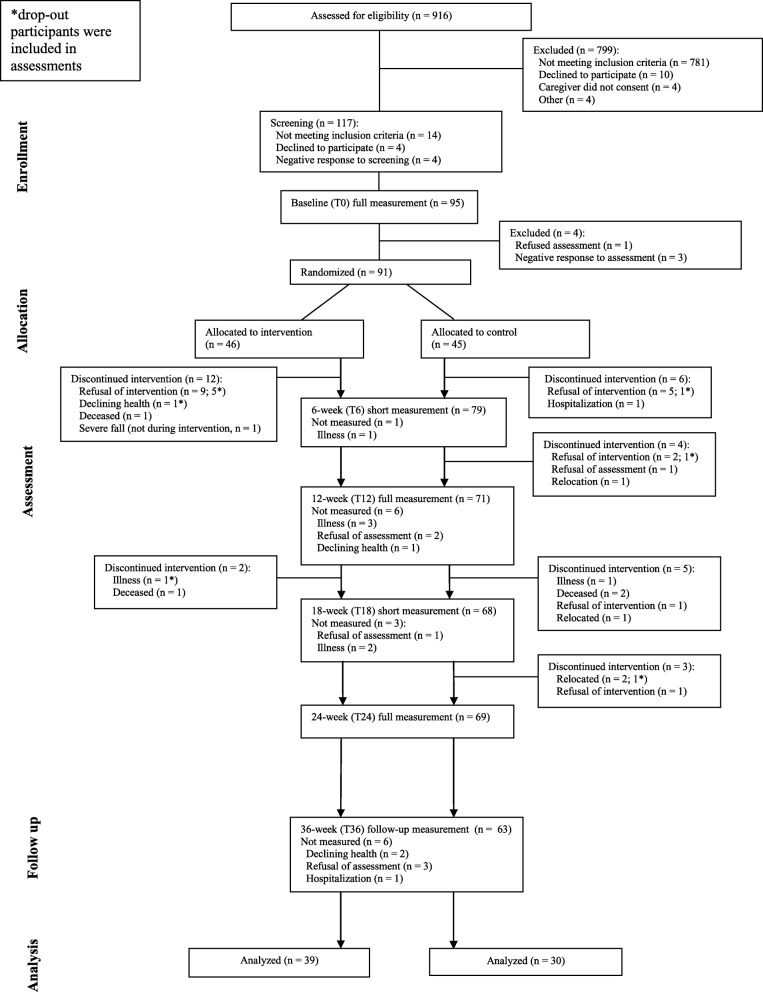
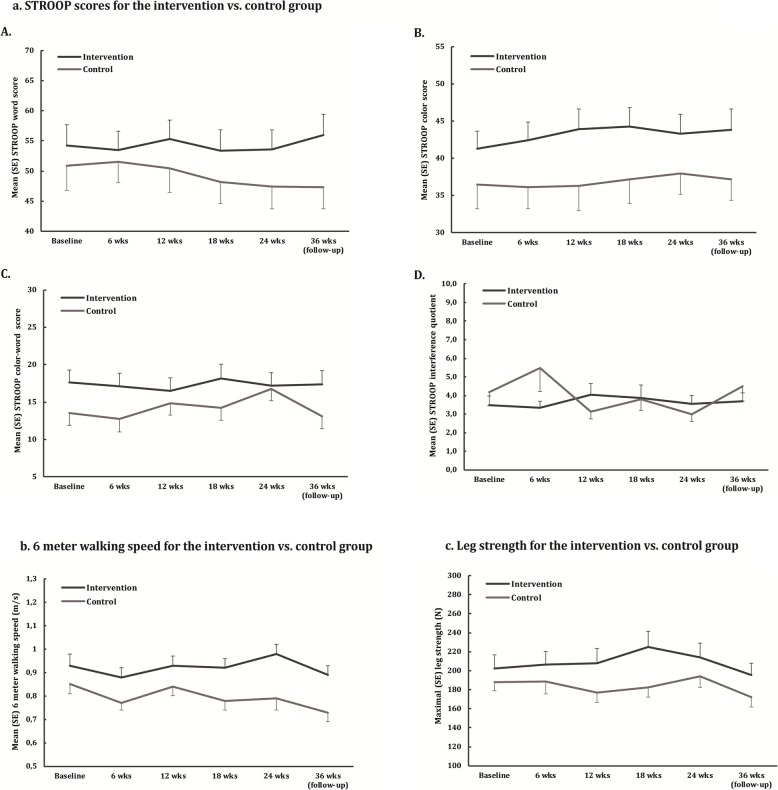
Background: Potential moderators such as exercise intensity or apolipoprotein-E4 (ApoE4) carriership may determine the magnitude of exercise effects on physical and cognitive functions in patients with dementia (PwD). We determined the effects of a 24-week aerobic and strength training program with a low- and high-intensity phase on physical and cognitive function. Methods: In an assessor-blinded randomized trial, 91 PwD (all-cause dementia, recruited from daycare and residential care facilities, age 82.3 ± 7.0 years, 59 women, Mini-Mental State Examination 20.2 ± 4.4) were allocated to the exercise or control group. In the exercise group, PwD participated in a walking and lower limb strength training program with 12 weeks low- and 12 weeks high-intensity training offered three times/week. Attention-matched control participants performed flexibility exercises and recreational activities. We assessed adherence, compliance, and exercise intensity for each session. We assessed physical (endurance, gait speed, mobility, balance, leg strength) and cognitive (verbal memory, visual memory, executive function, inhibitory control, psychomotor speed) functions with performance-based tests at baseline and after 6, 12, 18, 24, and 36 weeks (follow-up). ApoE4 carriership was determined post-intervention. Results: Sixty-nine PwD were analyzed. Their mean attendance was ~ 60% during the study period. There were no significant effects of the exercise vs. control intervention on endurance, mobility, balance, and leg strength in favor of the exercise group (Cohen’s d = 0.13–0.18). Gait speed significantly improved with ~ 0.05 m/s after the high-intensity phase for exercise participants (Cohen’s d = 0.41) but declined at follow-up. There were no significant effects of the exercise vs. control intervention on any of the cognitive measures (Cohen’s d ~ − 0.04). ApoE4 carriership did not significantly moderate exercise effects on physical or cognitive function. Conclusions: Exercise was superior to control activities for gait speed in our sample of PwD. However, the training effect provided no protection for mobility loss after detraining (follow-up). There were no beneficial effects of the exercise vs. control group on cognitive function. Exercise intensity moderated the effects of exercise on gait speed. ApoE4 carriership moderated the effect of exercise on global cognition only (trend level). Trial registration: Netherlands Trial Register, NTR5035. Registered on 2 March 2015.
Overview
The claims and statistics of this paper haven’t been checked yet.
Free: it reads the open-access text and checks the first 5 claims that cite a source we can check. Create a free account to check every claim.
Integrity signals
Registry
Cites
Statistics
Figures
Verification
Claims the paper makes
The claims and statistics of this paper haven’t been checked yet.
Free: it reads the open-access text and checks the first 5 claims that cite a source we can check. Create a free account to check every claim.
Claims other papers make about this one
Each is checked against this paper’s own text: does it say what the citing paper says it does?
In the citing paper
“Good quality RCTs of exercise interventions for people with dementia found they did not improve neuropsychiatric symptoms, cognition or functioning.(524, 525)”
From Dementia prevention, intervention, and care: 2024 report of the Lancet standing Commission (2024) · cites this paper as [524]
Self-check
Percentages, sums and reported differences re-computed from the paper’s own numbers.
The self-check needs the paper’s full text.
Citations
Cites
Statistical Power Analysis for the Behavioral Sciences
Muller, K. (1989) · Technometrics · doi:10.1080/00401706.1989.10488618 · Cited by 99,167
Folstein, M. F., Folstein, S. E., & McHugh, P. R. (1975) · Journal of Psychiatric Research · doi:10.1016/0022-3956(75)90026-6 · Cited by 88,282
Statistical power analysis for the behavioral sciences
(1990) · Computers, Environment and Urban Systems · doi:10.1016/0198-9715(90)90050-4 · Cited by 65,269
Hirono, N., Mori, E., Ikejiri, Y., Imamura, T., Shimomura, T., Hashimoto, M., Yamashita, H., & Ikeda, M. (1997) · Brain and nerve · Cited by 21,039
Kok, J. S., Berg, I. J., & Scherder, E. J. A. (2013) · Dementia and Geriatric Cognitive Disorders Extra · doi:10.1159/000353441 · Cited by 20,589
Self-citationOlder Adults' Reasons for Using Technology while Aging in Place
Peek, S. T. M., Luijkx, K. G., Rijnaard, M. D., Nieboer, M. E., van der Voort, C. S., Aarts, S., van Hoof, J., Vrijhoef, H. J. M., & Wouters, E. J. M. (2016) · Gerontology · doi:10.1159/000430949 · Cited by 19,690
Sensitivity and False Alarm Rate of a Fall Sensor in Long-Term Fall Detection in the Elderly
Kangas, M., Korpelainen, R., Vikman, I., Nyberg, L., & Jämsä, T. (2015) · Gerontology · doi:10.1159/000362720 · Cited by 18,909
Studies of interference in serial verbal reactions
Stroop, J. R. (1935) · Journal of Experimental Psychology · doi:10.1037/h0054651 · Cited by 18,622
The Timed “Up & Go”: A Test of Basic Functional Mobility for Frail Elderly Persons
Podsiadlo, D., & Richardson, S. (1991) · Journal of the American Geriatrics Society · doi:10.1111/j.1532-5415.1991.tb01616.x · Cited by 14,418
Corder, E. H., Saunders, A. M., Strittmatter, W. J., Schmechel, D. E., Gaskell, P. C., Small, G. W., Roses, A. D., Haines, J. L., & Pericak-Vance, M. A. (1993) · Science · doi:10.1126/science.8346443 · Cited by 9,429 · cited 1×
“For example, the presence of the apolipoprotein-E4 (ApoE4) allele, a risk factor for Alzheimer’s disease (AD) [29], may mediate the magnitude of exercise effects.”
BackgroundGarber, C. E., Blissmer, B., Deschenes, M. R., Franklin, B. A., Lamonte, M. J., Lee, I.-M., Nieman, D. C., & Swain, D. P. (2011) · Medicine & Science in Sports & Exercise · doi:10.1249/mss.0b013e318213fefb · Cited by 9,319
Validity of the Trail Making Test as an Indicator of Organic Brain Damage
Reitan, R. M. (1958) · Perceptual and Motor Skills · doi:10.2466/pms.1958.8.3.271 · Cited by 7,928
Power failure: why small sample size undermines the reliability of neuroscience
Button, K. S., Ioannidis, J. P. A., Mokrysz, C., Nosek, B. A., Flint, J., Robinson, E. S. J., & Munafò, M. R. (2013) · Nature Reviews Neuroscience · doi:10.1038/nrn3475 · Cited by 7,641
Gait speed and survival in older adults.
Studenski, S. (2011) · JAMA · doi:10.1001/jama.2010.1923 · Cited by 4,558
Effect size, confidence interval and statistical significance: a practical guide for biologists
Nakagawa, S., & Cuthill, I. C. (2007) · Biological Reviews · doi:10.1111/j.1469-185x.2007.00027.x · Cited by 3,835
Ngandu, T., Lehtisalo, J., Solomon, A., Levälahti, E., Ahtiluoto, S., Antikainen, R., Bäckman, L., Hänninen, T., Jula, A., Laatikainen, T., et al. (2015) · The Lancet · doi:10.1016/s0140-6736(15)60461-5 · Cited by 3,689
Cognitive Stimulation in Patients with Dementia: Randomized Controlled Trial
Mapelli, D., Di Rosa, E., Nocita, R., & Sava, D. (2013) · Dementia and Geriatric Cognitive Disorders Extra · doi:10.1159/000353457 · Cited by 3,453
Meaningful change and responsiveness in common physical performance measures in older adults.
Perera, S., Mody, S. H., Woodman, R. C., & Studenski, S. A. (2006) · Journal of the American Geriatrics Society · doi:10.1111/j.1532-5415.2006.00701.x · Cited by 2,513
Exercise builds brain health: key roles of growth factor cascades and inflammation
Cotman, C. W., Berchtold, N. C., & Christie, L.-A. (2007) · Trends in Neurosciences · doi:10.1016/j.tins.2007.06.011 · Cited by 2,268
Abellan Van Kan, G., Rolland, Y., Andrieu, S., Bauer, J., Beauchet, O., Bonnefoy, M., Cesari, M., Donini, L. M., Gillette-Guyonnet, S., Inzitari, M., et al. (2009) · The Journal of nutrition, health and aging · doi:10.1007/s12603-009-0246-z · Cited by 2,003
Thompson, P. D., Arena, R., Riebe, D., & Pescatello, L. S. (2013) · Current Sports Medicine Reports · doi:10.1249/jsr.0b013e31829a68cf · Cited by 1,823
Lautenschlager, N. T., Cox, K. L., Flicker, L., Foster, J. K., van Bockxmeer, F. M., Xiao, J., Greenop, K. R., & Almeida, O. P. (2008) · JAMA · doi:10.1001/jama.300.9.1027 · Cited by 1,637
The development of a comorbidity index with physical function as the outcome
GROLL, D., TO, T., BOMBARDIER, C., & WRIGHT, J. (2005) · Journal of Clinical Epidemiology · doi:10.1016/j.jclinepi.2004.10.018 · Cited by 1,198
Nagamatsu, L. S., Chan, A., Davis, J. C., Beattie, B. L., Graf, P., Voss, M. W., Sharma, D., & Liu-Ambrose, T. (2013) · Journal of Aging Research · doi:10.1155/2013/861893 · Cited by 1,089
Neeper, S. A., Gómez-Pinilla, F., Choi, J., & Cotman, C. W. (1996) · Brain Research · doi:10.1016/0006-8993(96)00273-9 · Cited by 1,014
Studies of interference in serial verbal reactions.
Stroop, J. R. (1992) · Journal of Experimental Psychology: General · doi:10.1037/0096-3445.121.1.15 · Cited by 918 · cited 1×
“The STROOP test [57] is used to assess basic attentional processing and inhibitory control.”
MethodEvidence for a release of brain-derived neurotrophic factor from the brain during exercise
Rasmussen, P., Brassard, P., Adser, H., Pedersen, M. V., Leick, L., Hart, E., Secher, N. H., Pedersen, B. K., & Pilegaard, H. (2009) · Experimental Physiology · doi:10.1113/expphysiol.2009.048512 · Cited by 914
Cognitive stimulation to improve cognitive functioning in people with dementia
Woods, B., Aguirre, E., Spector, A. E., & Orrell, M. (2012) · Cochrane Database of Systematic Reviews · doi:10.1002/14651858.cd005562.pub2 · Cited by 855
The Impact of Resistance Exercise on the Cognitive Function of the Elderly
CASSILHAS, R. C., VIANA, V. A. R., GRASSMANN, V., SANTOS, R. T., SANTOS, R. F., TUFIK, S., & MELLO, M. T. (2007) · Medicine & Science in Sports & Exercise · doi:10.1249/mss.0b013e318060111f · Cited by 770
Moloney, A. M., Griffin, R. J., Timmons, S., O’Connor, R., Ravid, R., & O’Neill, C. (2010) · Neurobiology of Aging · doi:10.1016/j.neurobiolaging.2008.04.002 · Cited by 764
A Drug Burden Index to Define the Functional Burden of Medications in Older People
Hilmer, S. N. (2007) · Archives of Internal Medicine · doi:10.1001/archinte.167.8.781 · Cited by 759
Rivera, E. J., Goldin, A., Fulmer, N., Tavares, R., Wands, J. R., & de la Monte, S. M. (2005) · Journal of Alzheimer s Disease · doi:10.3233/jad-2005-8304 · Cited by 723 · cited 1×
“Although lower levels in these neurobiological factors could leave more room for improvement, it is also possible that the neurobiological system is less responsive in PwD [103, 104].”
BackgroundPodewils, L. J. (2005) · American Journal of Epidemiology · doi:10.1093/aje/kwi092 · Cited by 675
Ding, Q., Vaynman, S., Akhavan, M., Ying, Z., & Gomez-Pinilla, F. (2006) · Neuroscience · doi:10.1016/j.neuroscience.2006.02.084 · Cited by 555
Drug development in Alzheimer’s disease: the path to 2025
Cummings, J., Aisen, P. S., DuBois, B., Frölich, L., Jack, C. R., Jones, R. W., Morris, J. C., Raskin, J., Dowsett, S. A., & Scheltens, P. (2016) · Alzheimer's Research & Therapy · doi:10.1186/s13195-016-0207-9 · Cited by 459 · cited 1×
“The clinical relevance of pharmacological treatments remains uncertain, and the risk of adverse reactions is high [2].”
BackgroundNeurobiological markers of exercise-related brain plasticity in older adults
Voss, M. W., Erickson, K. I., Prakash, R. S., Chaddock, L., Kim, J. S., Alves, H., Szabo, A., Phillips, S. M., Wójcicki, T. R., Mailey, E. L., et al. (2013) · Brain, Behavior, and Immunity · doi:10.1016/j.bbi.2012.10.021 · Cited by 418
Lamb, S. E., Sheehan, B., Atherton, N., Nichols, V., Collins, H., Mistry, D., Dosanjh, S., Slowther, A. M., Khan, I., Petrou, S., et al. (2018) · BMJ · doi:10.1136/bmj.k1675 · Cited by 417
Vascular hippocampal plasticity after aerobic exercise in older adults.
Maass, A., Düzel, S., Goerke, M., Becke, A., Sobieray, U., Neumann, K., Lövden, M., Lindenberger, U., Bäckman, L., Braun-Dullaeus, R., et al. (2015) · Molecular Psychiatry · doi:10.1038/mp.2014.114 · Cited by 382
Maass, A., Düzel, S., Brigadski, T., Goerke, M., Becke, A., Sobieray, U., Neumann, K., Lövdén, M., Lindenberger, U., Bäckman, L., et al. (2016) · NeuroImage · doi:10.1016/j.neuroimage.2015.10.084 · Cited by 358
A Cross-sectional Validation Study of the FICSIT Common Data Base Static Balance Measures
Rossiter-Fornoff, J. E., Wolf, S. L., Wolfson, L. I., Buchner, D. M., & FICSIT Group (1995) · The Journals of Gerontology Series A: Biological Sciences and Medical Sciences · doi:10.1093/gerona/50a.6.m291 · Cited by 338 · cited 1×
“We used the FICSIT-4 [53] as a static balance measure.”
MethodCan physical exercise in old age improve memory and hippocampal function?
Duzel, E., van Praag, H., & Sendtner, M. (2016) · Brain · doi:10.1093/brain/awv407 · Cited by 329
Liu‐Ambrose, T., Donaldson, M. G., Ahamed, Y., Graf, P., Cook, W. L., Close, J., Lord, S. R., & Khan, K. M. (2008) · Journal of the American Geriatrics Society · doi:10.1111/j.1532-5415.2008.01931.x · Cited by 322
Blankevoort, C. G., van Heuvelen, M. J. G., Boersma, F., Luning, H., de Jong, J., & Scherder, E. J. A. (2010) · Dementia and Geriatric Cognitive Disorders · doi:10.1159/000321357 · Cited by 320
Self-citationAge‐predicted maximal heart rate in healthy subjects: The HUNT F itness Study
Nes, B. M., Janszky, I., Wisløff, U., Støylen, A., & Karlsen, T. (2013) · Scandinavian Journal of Medicine & Science in Sports · doi:10.1111/j.1600-0838.2012.01445.x · Cited by 311
Sanders, L. M. J., Hortobágyi, T., la Bastide-van Gemert, S., van der Zee, E. A., & van Heuvelen, M. J. G. (2019) · PLOS ONE · doi:10.1371/journal.pone.0210036 · Cited by 311
Self-citationBDNF mediates improvements in executive function following a 1-year exercise intervention.
Leckie, R. L., Oberlin, L. E., Voss, M. W., Prakash, R. S., Szabo-Reed, A., Chaddock-Heyman, L., Phillips, S. M., Gothe, N. P., Mailey, E., Vieira-Potter, V. J., et al. (2014) · Frontiers in Human Neuroscience · doi:10.3389/fnhum.2014.00985 · Cited by 307
Morris, R., Lord, S., Bunce, J., Burn, D., & Rochester, L. (2016) · Neuroscience & Biobehavioral Reviews · doi:10.1016/j.neubiorev.2016.02.012 · Cited by 307
Vaynman, S., & Gomez‐Pinilla, F. (2006) · Journal of Neuroscience Research · doi:10.1002/jnr.20979 · Cited by 299
Vreugdenhil, A., Cannell, J., Davies, A., & Razay, G. (2012) · Scandinavian Journal of Caring Sciences · doi:10.1111/j.1471-6712.2011.00895.x · Cited by 296
Serum Brain-Derived Neurotrophic Factor and the Risk for Dementia: The Framingham Heart Study
Weinstein, G., Beiser, A. S., Choi, S. H., Preis, S. R., Chen, T. C., Vorgas, D., Au, R., Pikula, A., Wolf, P. A., DeStefano, A. L., et al. (2014) · JAMA Neurology · doi:10.1001/jamaneurol.2013.4781 · Cited by 289
Schwarz, A. J. (1996) · Journal of Clinical Endocrinology & Metabolism · doi:10.1210/jc.81.10.3492 · Cited by 284 · cited 1×
“Exerciseinduced changes in the aforementioned neurobiological factors may be dose-dependent, as evidenced by studies in rodents [37, 38] and humans [18, 39, 40].”
BackgroundSix-Month Walking Program Changes Cognitive and ADL Performance in Patients With Alzheimer
Venturelli, M., Scarsini, R., & Schena, F. (2011) · American Journal of Alzheimer's Disease & Other Dementias® · doi:10.1177/1533317511418956 · Cited by 278
Kemoun, G., Thibaud, M., Roumagne, N., Carette, P., Albinet, C., Toussaint, L., Paccalin, M., & Dugué, B. (2010) · Dementia and Geriatric Cognitive Disorders · doi:10.1159/000272435 · Cited by 273
Cognitive and behavioural effects of music-based exercises in patients with dementia
Van de Winckel, A., Feys, H., De Weerdt, W., & Dom, R. (2004) · Clinical Rehabilitation · doi:10.1191/0269215504cr750oa · Cited by 257
Brown, P. J. (2011) · Archives of General Psychiatry · doi:10.1001/archgenpsychiatry.2011.57 · Cited by 242
Insulin-like growth factor-1 and risk of Alzheimer dementia and brain atrophy
Westwood, A. J., Beiser, A., DeCarli, C., Harris, T. B., Chen, T. C., He, X.-M., Roubenoff, R., Pikula, A., Au, R., Braverman, L. E., et al. (2014) · Neurology · doi:10.1212/wnl.0000000000000382 · Cited by 224 · cited 3×
“Unfortunately, we have no information on the neurobiological factors (i.e., changes in IGF-1, VEGF, BDNF levels) hypothesized to underlie the beneficial effect of exercise on brain health.”
BackgroundInfluentialHigher Rates of Decline for Women and Apolipoprotein E ε4 Carriers
Holland, D., Desikan, R. S., Dale, A. M., & McEvoy, L. K. (2013) · American Journal of Neuroradiology · doi:10.3174/ajnr.a3601 · Cited by 219
Bossers, W. J. R., van der Woude, L. H. V., Boersma, F., Hortobágyi, T., Scherder, E. J. A., & van Heuvelen, M. J. G. (2015) · The American Journal of Geriatric Psychiatry · doi:10.1016/j.jagp.2014.12.191 · Cited by 218 · cited 8×
“Lower limb strength exercises can help enhance walking ability and produce a stronger neuromotor stimulus [11].”
BackgroundResultInfluentialSelf-citationSteinberg, M., Leoutsakos, J. S., Podewils, L. J., & Lyketsos, C. G. (2009) · International Journal of Geriatric Psychiatry · doi:10.1002/gps.2175 · Cited by 204
Impact of APOE in mild cognitive impairment
Farlow, M. R., He, Y., Tekin, S., Xu, J., Lane, R., & Charles, H. C. (2004) · Neurology · doi:10.1212/01.wnl.0000144279.21502.b7 · Cited by 198
A Method for Estimating Progression Rates in Alzheimer Disease
Doody, R. S., Massman, P., & Dunn, J. K. (2001) · Archives of Neurology · doi:10.1001/archneur.58.3.449 · Cited by 194 · cited 1×
“2–4 point decline that was previously found in comparable samples of PwD [80, 96].”
ResultTait, J. L., Duckham, R. L., Milte, C. M., Main, L. C., & Daly, R. M. (2017) · Frontiers in Aging Neuroscience · doi:10.3389/fnagi.2017.00368 · Cited by 193
Koch, W., Ehrenhaft, A., Griesser, K., Pfeufer, A., Müller, J., Schömig, A., & Kastrati, A. (2002) · Clinical Chemistry and Laboratory Medicine · doi:10.1515/cclm.2002.197 · Cited by 171
Enhancing cognitive functioning in the elderly: multicomponent vs resistance training
Forte, Boreham, Leite, C., De Vito, G., Brennan, Gibney, & Pesce (2013) · Clinical Interventions in Aging · doi:10.2147/cia.s36514 · Cited by 168
Gait Speed and Decline in Gait Speed as Predictors of Incident Dementia
Dumurgier, J., Artaud, F., Touraine, C., Rouaud, O., Tavernier, B., Dufouil, C., Singh-Manoux, A., Tzourio, C., & Elbaz, A. (2016) · The Journals of Gerontology Series A: Biological Sciences and Medical Sciences · doi:10.1093/gerona/glw110 · Cited by 159 · cited 1×
“Gait speed is an important clinical measure in older adults because it is associated with the rate of cognitive decline [62], vulnerability to adverse events [63], and survival [64].”
Backgroundvan Abbema, R., de Greef, M., Crajé, C., Krijnen, W. P., Hobbelen, H. J. S. M., & van der Schans, C. P. (2015) · BMC Geriatrics · doi:10.1186/s12877-015-0061-9 · Cited by 154
de Andrade, L. P., Gobbi, L. T. B., Coelho, F. G. M., Christofoletti, G., Riani Costa, J. L., & Stella, F. (2013) · Journal of the American Geriatrics Society · doi:10.1111/jgs.12531 · Cited by 150
Reliability of Six Physical Performance Tests in Older People With Dementia
Blankevoort, C. G., van Heuvelen, M. J. G., & Scherder, E. J. A. (2013) · Physical Therapy · doi:10.2522/ptj.20110164 · Cited by 149
Self-citationGroup and individual cognitive therapies in Alzheimer's disease: the ETNA3 randomized trial
Amieva, H., Robert, P. H., Grandoulier, A.-S., Meillon, C., De Rotrou, J., Andrieu, S., Berr, C., Desgranges, B., Dubois, B., Girtanner, C., et al. (2016) · International Psychogeriatrics · doi:10.1017/s1041610215001830 · Cited by 148
Effect of regular exercise on senile dementia patients
Kwak, Y.-S., Um, S.-Y., Son, T.-G., & Kim, D.-J. (2008) · International Journal of Sports Medicine · doi:10.1055/s-2007-964853 · Cited by 143
Holthoff, V. A., Marschner, K., Scharf, M., Steding, J., Meyer, S., Koch, R., & Donix, M. (2015) · PLOS ONE · doi:10.1371/journal.pone.0121478 · Cited by 141
Karssemeijer, E. G. A., Aaronson, J. A., Bossers, W. J. R., Donders, R., Olde Rikkert, M. G. M., & Kessels, R. P. C. (2019) · Alzheimer's Research & Therapy · doi:10.1186/s13195-018-0454-z · Cited by 141 · cited 1×
“One RCT in PwD attending daycare showed that aerobic training had favorable effects on psychomotor speed only [82].”
BackgroundSelf-citationAssociation of Physical Activity History With Physical Function and Mortality in Old Age
Stenholm, S., Koster, A., Valkeinen, H., Patel, K. V., Bandinelli, S., Guralnik, J. M., & Ferrucci, L. (2016) · The Journals of Gerontology Series A: Biological Sciences and Medical Sciences · doi:10.1093/gerona/glv111 · Cited by 138
Arcoverde, C., Deslandes, A., Moraes, H., Almeida, C., Araujo, N. B. D., Vasques, P. E., Silveira, H., & Laks, J. (2014) · Arquivos de Neuro-Psiquiatria · doi:10.1590/0004-282x20130231 · Cited by 131
Toots, A., Littbrand, H., Boström, G., Hörnsten, C., Holmberg, H., Lundin-Olsson, L., Lindelöf, N., Nordström, P., Gustafson, Y., & Rosendahl, E. (2017) · Journal of Alzheimer's Disease · doi:10.3233/jad-170014 · Cited by 128
Effect of Resistance Exercise on Serum Levels of Growth Factors in Humans
Rojas Vega, S., Knicker, A., Hollmann, W., Bloch, W., & Strüder, H. K. (2010) · Hormone and Metabolic Research · doi:10.1055/s-0030-1267950 · Cited by 127
Bossers, W. J. R., van der Woude, L. H. V., Boersma, F., Scherder, E., & van Heuvelen, M. J. G. (2012) · Dementia and Geriatric Cognitive Disorders Extra · doi:10.1159/000345038 · Cited by 126
Self-citationSchwenk, M., Zieschang, T., Englert, S., Grewal, G. S., Najafi, B., & Hauer, K. A. (2014) · BMC Geriatrics · doi:10.1186/1471-2318-14-73 · Cited by 126 · cited 1×
“These results attest to a relationship between gait speed improvements and strength improvements [67].”
ResultTelenius, E. W., Engedal, K., & Bergland, A. (2015) · BMC Geriatrics · doi:10.1186/s12877-015-0151-8 · Cited by 121
Homocysteine and Lipoprotein Levels Following Resistance Training in Older Adults
Vincent, K. R., Braith, R. W., Bottiglieri, T., Vincent, H. K., & Lowenthal, D. T. (2003) · Preventive Cardiology · doi:10.1111/j.1520-037x.2003.01723.x · Cited by 116
Cott, C. A., Dawson, P., Sidani, S., & Wells, D. (2002) · Alzheimer Disease & Associated Disorders · doi:10.1097/00002093-200204000-00005 · Cited by 115
Effect of aerobic exercise on physical performance in patients with Alzheimer's disease
Sobol, N. A., Hoffmann, K., Frederiksen, K. S., Vogel, A., Vestergaard, K., Brændgaard, H., Gottrup, H., Lolk, A., Wermuth, L., Jakobsen, S., et al. (2016) · Alzheimer's & Dementia · doi:10.1016/j.jalz.2016.05.004 · Cited by 114
DANCE AND MOVEMENT THERAPEUTIC METHODS IN MANAGEMENT OF DEMENTIA: A RANDOMIZED, CONTROLLED STUDY
Hokkanen, L., Rantala, L., Remes, A. M., Härkönen, B., Viramo, P., & Winblad, I. (2008) · Journal of the American Geriatrics Society · doi:10.1111/j.1532-5415.2008.01611.x · Cited by 110
Eggermont, L. H. P., Swaab, D. F., Hol, E. M., & Scherder, E. J. A. (2009) · Journal of Neurology, Neurosurgery & Psychiatry · doi:10.1136/jnnp.2008.158444 · Cited by 108
Self-citationStevens, J., & Killeen, M. (2006) · Contemporary Nurse · doi:10.5172/conu.2006.21.1.32 · Cited by 107
Reproducibility of Performance-Based and Self-Reported Measures of Functional Status
Hoeymans, N., Wouters, E. R., Feskens, E. J., van den Bos, G. A., & Kromhout, D. (1997) · The Journals of Gerontology Series A: Biological Sciences and Medical Sciences · doi:10.1093/gerona/52a.6.m363 · Cited by 105
Whiteman, A. S., Young, D. E., He, X., Chen, T. C., Wagenaar, R. C., Stern, C. E., & Schon, K. (2014) · Behavioural Brain Research · doi:10.1016/j.bbr.2013.11.023 · Cited by 102
Chalfont, G., Milligan, C., & Simpson, J. (2020) · Dementia · doi:10.1177/1471301218795289 · Cited by 97 · cited 1×
“Diversity in symptoms and disease etiology may require diverse interventions, and exercise could be one option for PwD in addition to cognitive training, social stimulation, and sensory enrichment, preferably as part of a multicomponent program [91, 92].”
BackgroundThomas, V. S., & Hageman, P. A. (2003) · The Journals of Gerontology Series A: Biological Sciences and Medical Sciences · doi:10.1093/gerona/58.8.m746 · Cited by 94
Reliability of Physical Performance Measures in Nursing Home Residents With Alzheimer's Disease
Tappen, R. M., Roach, K. E., Buchner, D., Barry, C., & Edelstein, J. (1997) · The Journals of Gerontology Series A: Biological Sciences and Medical Sciences · doi:10.1093/gerona/52a.1.m52 · Cited by 94
de Souto Barreto, P., Cesari, M., Denormandie, P., Armaingaud, D., Vellas, B., & Rolland, Y. (2017) · Journal of the American Geriatrics Society · doi:10.1111/jgs.14947 · Cited by 82 · cited 1×
“Earlier evidence for the effects of exercise on cognition is conflicted for PwD in nursing homes [10, 11, 13, 71, 77] as well as community settings [14, 78–81].”
BackgroundResistance Training and Neuromuscular Performance in Seniors
Granacher, U., Gruber, M., & Gollhofer, A. (2009) · International Journal of Sports Medicine · doi:10.1055/s-0029-1224178 · Cited by 81
Hageman, P. A., & Thomas, V. S. (2002) · International Journal of Geriatric Psychiatry · doi:10.1002/gps.597 · Cited by 76
Tsuzuku, S., Kajioka, T., Sakakibara, H., & Shimaoka, K. (2018) · Scandinavian Journal of Medicine and Science in Sports · doi:10.1111/sms.13039 · Cited by 72
Heart Rate Variability Indexes in Dementia: A Systematic Review with a Quantitative Analysis
da Silva, V. P., Ramalho Oliveira, B. R., Tavares Mello, R. G., Moraes, H., Deslandes, A. C., & Laks, J. (2017) · Current Alzheimer Research · doi:10.2174/1567205014666170531082352 · Cited by 71
Esain, I., Gil, S. M., Bidaurrazaga‐Letona, I., & Rodriguez‐Larrad, A. (2018) · Aging Clinical and Experimental Research · doi:10.1007/s40520-018-0990-1 · Cited by 69
Smith, J. C., Lancaster, M. A., Nielson, K. A., Woodard, J. L., Seidenberg, M., Durgerian, S., Sakaie, K., & Rao, S. M. (2015) · NeuroImage · doi:10.1016/j.neuroimage.2015.08.007 · Cited by 65 · cited 1×
“Conversely, ApoE4 carriers may be more responsive to exercise [32], perhaps because lower functional levels at baseline [33–36] leave more room for improvement.”
BackgroundFenesi, B., Fang, H., Kovacevic, A., Oremus, M., Raina, P., & Heisz, J. J. (2017) · Journal of Alzheimer’s Disease · doi:10.3233/jad-160424 · Cited by 64
Vanzella, C., Neves, J. D., Vizuete, A. F. K., Aristimunha, D., Kolling, J., Longoni, A., Gonçalves, C. A., Wyse, Â. T. D. S., & Netto, C. A. (2017) · Behavioural Brain Research · doi:10.1016/j.bbr.2017.07.034 · Cited by 58
Biological effects of dosing aerobic exercise and neuromuscular electrical stimulation in rats
Dalise, S., Cavalli, L., Ghuman, H., Wahlberg, B., Gerwig, M., Chisari, C., Ambrosio, F., & Modo, M. (2017) · Scientific Reports · doi:10.1038/s41598-017-11260-7 · Cited by 45
Geirsdottir, O. G., Arnarson, A., Ramel, A., Briem, K., Jonsson, P. V., & Thorsdottir, I. (2015) · Scandinavian Journal of Public Health · doi:10.1177/1403494814560842 · Cited by 42
Potential Moderators of Physical Activity on Brain Health
Leckie, R. L., Weinstein, A. M., Hodzic, J. C., & Erickson, K. I. (2012) · Journal of Aging Research · doi:10.1155/2012/948981 · Cited by 42
Layne, A. S., Hsu, F.-C., Blair, S. N., Chen, S.-H., Dungan, J., Fielding, R. A., Glynn, N. W., Hajduk, A. M., King, A. C., Manini, T. M., et al. (2017) · Archives of Physical Medicine and Rehabilitation · doi:10.1016/j.apmr.2016.07.019 · Cited by 42
Commentary: Physical Exercise as Personalized Medicine for Dementia Prevention?
Gronwald, T., & Budde, H. (2019) · Frontiers in Physiology · doi:10.3389/fphys.2019.01358 · Cited by 24
Verkerke, G. J., LEMMINK, K. A. P. M., Slagers, A., Westhoff, M. H., van Riet, G. A. J., & Rakhorst, G. (2003) · Medical & Biological Engineering & Computing · doi:10.1007/bf02348432 · Cited by 23
Apolipoprotein E genotype and physical function among older people with mild cognitive impairment
Doi, T., Shimada, H., Makizako, H., Tsutsumimoto, K., Uemura, K., & Suzuki, T. (2014) · Geriatrics and gerontology international/Geriatrics & gerontology international · doi:10.1111/ggi.12291 · Cited by 21
NHG-Standaard Dementie (derde herziening)+
van Charante, E. P. M., Perry, M., Vernooij-Dassen, M. J. F. J., Boswijk, D., Stoffels, J., Achthoven, L., & Luning-Koster, M. N. (2012) · Cited by 21
Kuiack, S. L., Campbell, W. W., & Evans, W. J. (2003) · Activities Adaptation & Aging · doi:10.1300/j016v28n01_03 · Cited by 16
(2015) · PubMed Central · Cited by 9
Research works printed but not linked: 2
- Wechsler D Wechsler Adult Intelligence Scale – third edition: administration and scoring manual 1997
- Luteijn F Vanderploeg FAE Groninger intelligence test manual 1983
Cited by
Dementia prevention, intervention, and care: 2024 report of the Lancet standing Commission
Livingston, G., Huntley, J., Liu, K. Y., Costafreda, S. G., Selbæk, G., Alladi, S., Ames, D., Banerjee, S., Burns, A., Brayne, C., et al. (2024) · The Lancet · doi:10.1016/s0140-6736(24)01296-0 · Cited by 3,860
Cognitive Aging and the Promise of Physical Activity
Erickson, K. I., Donofry, S. D., Sewell, K. R., Brown, B. M., & Stillman, C. M. (2022) · Annual Review of Clinical Psychology · doi:10.1146/annurev-clinpsy-072720-014213 · Cited by 178
The protective role of exercise against age-related neurodegeneration
Sujkowski, A., Hong, L., Wessells, R. J., & Todi, S. V. (2022) · Ageing Research Reviews · doi:10.1016/j.arr.2021.101543 · Cited by 134
Care Interventions for People Living With Dementia and Their Caregivers
Butler, M., Gaugler, J. E., Talley, K. M., Abdi, H. I., Desai, P. J., Duval, S., Forte, M. L., Nelson, V. A., Ng, W., Ouellette, J. M., et al. (2020) · doi:10.23970/ahrqepccer231 · Cited by 104
Kuo, K., Zhang, Y.-R., Chen, S., He, X., Huang, S., Wu, B., Deng, Y., Liu, Y., Ou, Y., Yu, C., et al. (2022) · Alzheimer s & Dementia · doi:10.1002/alz.12793 · Cited by 94
Metadata
- Authors
- Sanders, L. M. J., Hortobágyi, T., Karssemeijer, E. G. A., Van der Zee, E. A., Scherder, E. J. A., & van Heuvelen, M. J. G.
- Affiliations
- University Medical Center Groningen (NL)
- Radboud University Nijmegen (NL)
- Vrije Universiteit Amsterdam (NL)
- Corresponding author
- Sanders, L. M. J.
- Venue
- Alzheimer's Research & Therapy
- Published
- 2020-03-19
- Volume
- 12
- Issue
- 1
- Pages
- 28-28
- ISSN
- 1758-9193 (ISSN-L)
- PMC
- PMC7082953
- OpenAlex
- W3012896574
- Cited by
- 154
- References
- 109
- Citations by year
- 2026: 27 · 2025: 35 · 2024: 32 · 2023: 24 · 2022: 17 · 2021: 15 · 2020: 4
- FWCI
- 10.94
- Type
- journal article
- Language
- en
- Open access
- gold
- doi.org
- Licence
- cc-by
- creativecommons.org/licenses/by/4.0/ (tdm)
- creativecommons.org/licenses/by/4.0/ (vor)
- Locations
- Alzheimer s Research & Therapy (publishedVersion, cc-by)
- PubMed Central (publishedVersion, cc-by)
- PubMed (publishedVersion)
- VU Research Portal (publishedVersion, other-oa)
- Radboud Repository (Radboud University) (submittedVersion)
- DOAJ (DOAJ: Directory of Open Access Journals) (submittedVersion, cc-by-sa)
- University of Groningen research database (University of Groningen / Centre for Information Technology) (submittedVersion, cc-by)
- Radboud Repository (Radboud University) (submittedVersion, other-oa)
- Data Archiving and Networked Services (DANS) (submittedVersion, other-oa)
- Funders
- ZonMW (733050303)
- Topics
- Health Sciences › Medicine › Psychiatry and Mental health › Dementia and Cognitive Impairment Research
- Health Sciences › Medicine › Public Health, Environmental and Occupational Health › Physical Activity and Health
- Health Sciences › Health Professions › Physical Therapy, Sports Therapy and Rehabilitation › Balance, Gait, and Falls Prevention
- Keywords
- dementia, physical activity, exercise intensity, aerobic exercise, resistance training, walking speed, physical function, cognitive function, APOE ε4, older adults, walking, mobility (physical function), balance, detraining, exercise adherence, residential care, daycare centers, executive function, memory, psychomotor speed
- MeSH terms
- Aged, Aged, 80 and over, Cognition, Dementia, Exercise Therapy, Female, Humans, Netherlands, Exercise
About these checks
Registry, retraction, Cites and statistics results are computed, not judged, with one exception: a printed reference that no index lists is read once by a model before it counts as a citation error. Claims are extracted by a model and kept only when their quote appears verbatim in the text; each cited source is then checked, with a model’s help, for whether it says what the claim relies on. Those verdicts can be wrong — read the claim’s quote and the cited source before relying on one.
Statistics and arithmetic are recomputed, not judged.
Confidence bands are shown only for fields calibrated on our annotated test set. None is calibrated yet, so no band is shown.
What counts as a claim ›How we measure confidence ›How we check this ›
Are you an author, or do you see a problem with this page? Request a review
Data sources
Bibliographic data: Semantic Scholar, OpenAlex, Crossref.
Contains information from the Semantic Scholar Academic Graph Datasets, made available under the ODC Attribution License (ODC-BY 1.0).
Semantic Scholar’s data is described in: Kinney, R., et al. (2023). The Semantic Scholar Open Data Platform. arXiv:2301.10140.
