

Artificial intelligence framework identifies candidate targets for drug repurposing in Alzheimer’s disease
Open accessPublished version of a preprint
The DOI matches its Crossref record; 102 of the 102 references it cites were found in a registry or an index.
Abstract
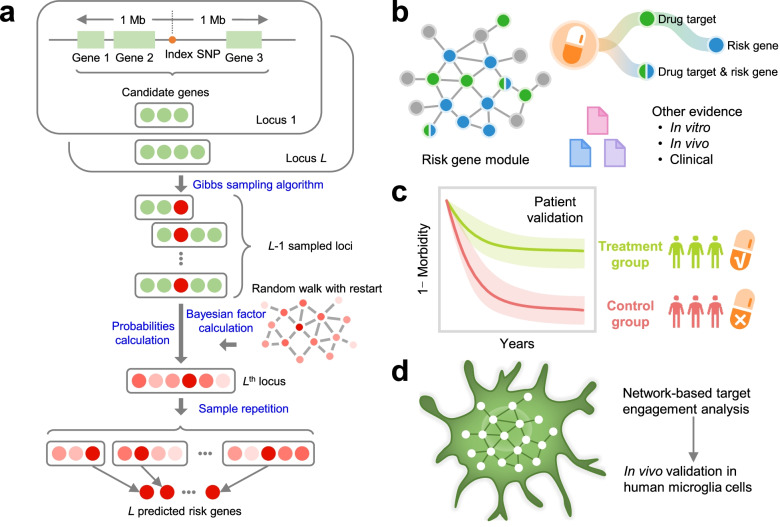
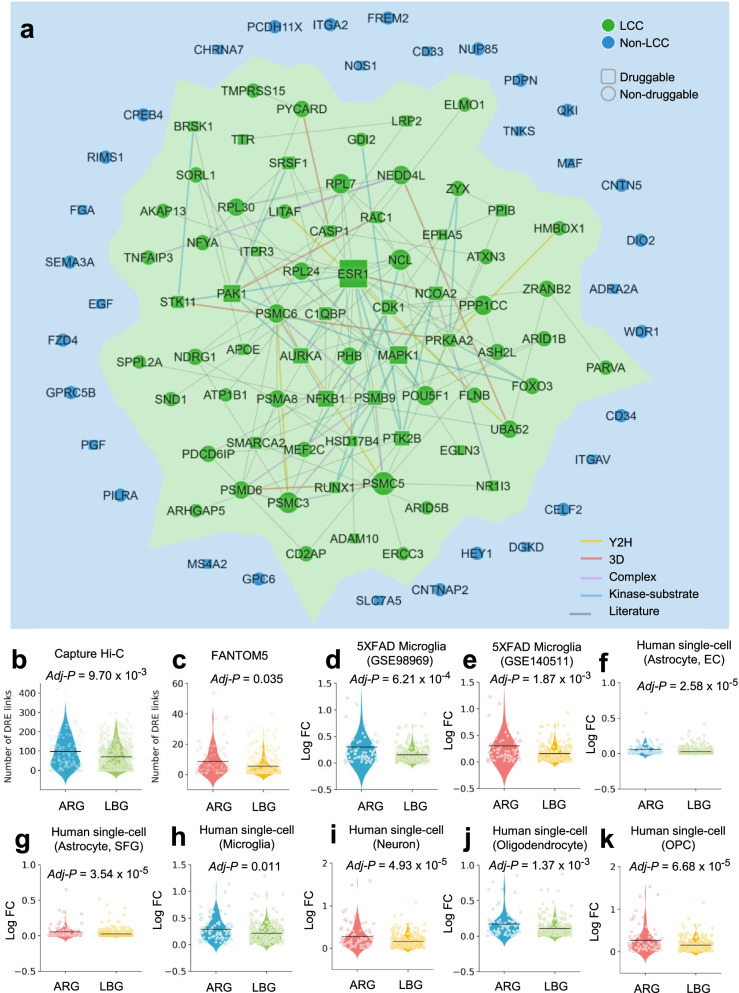
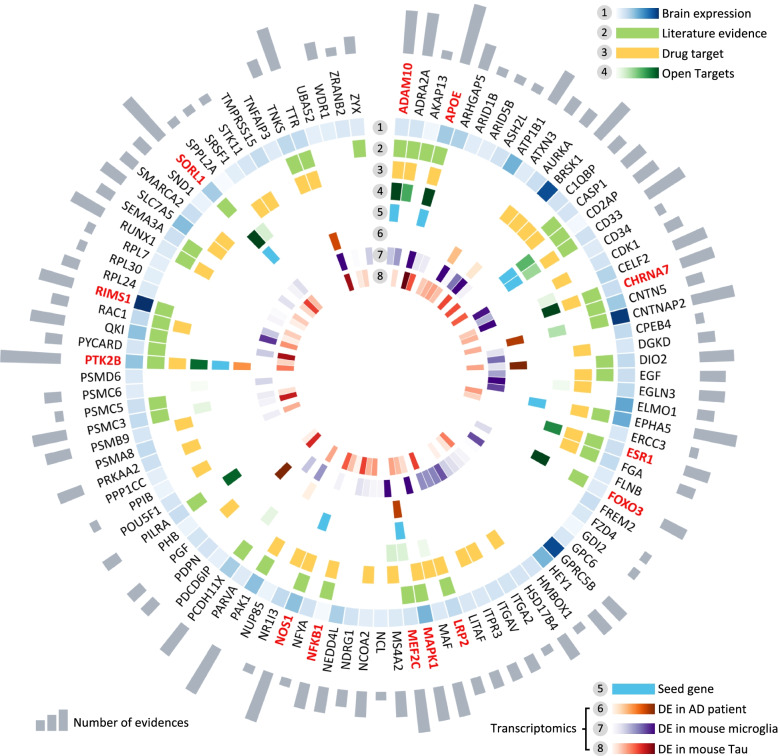
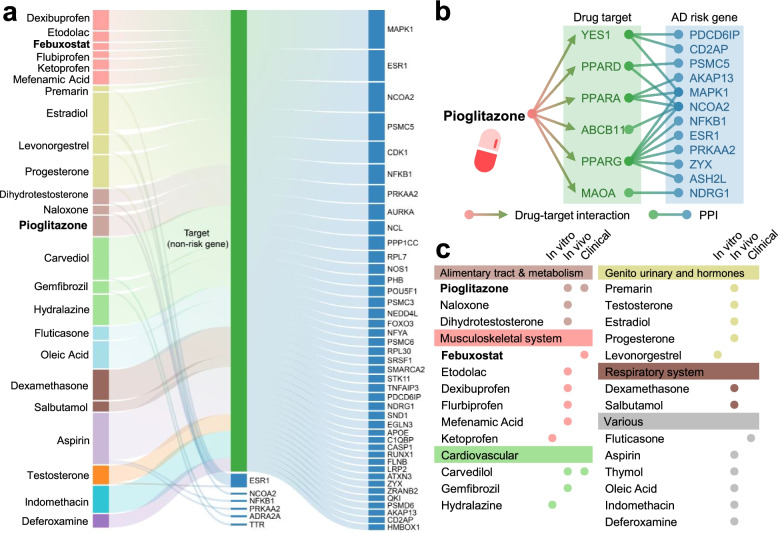
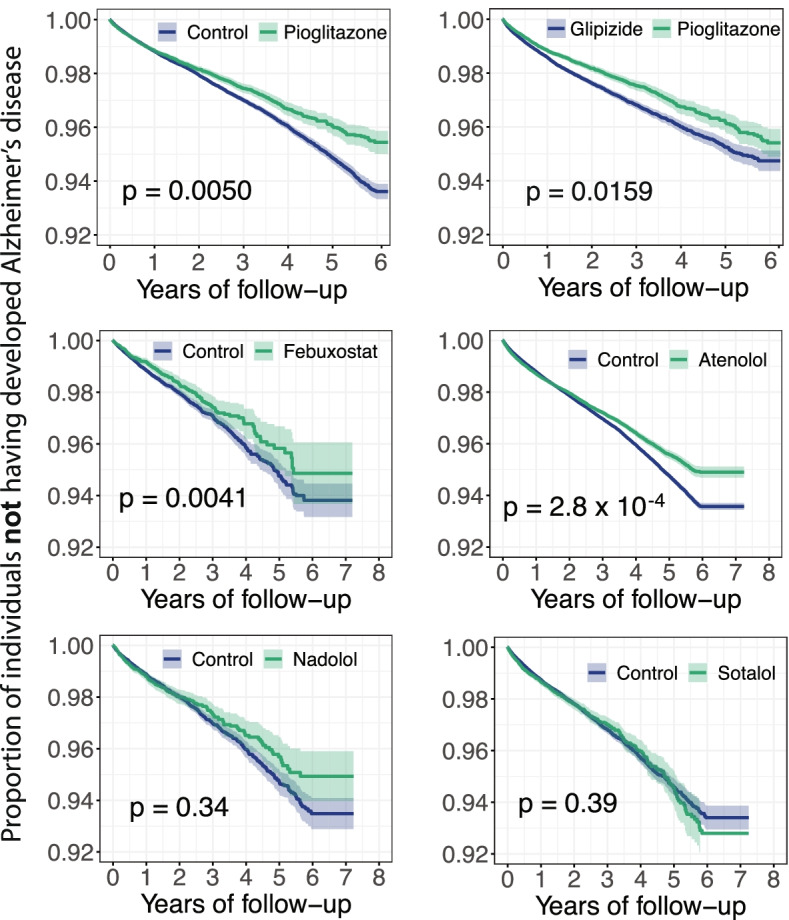
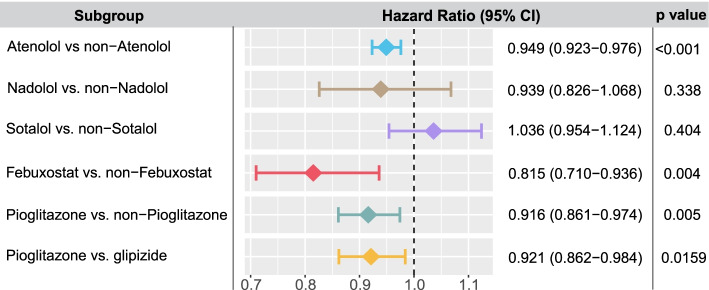
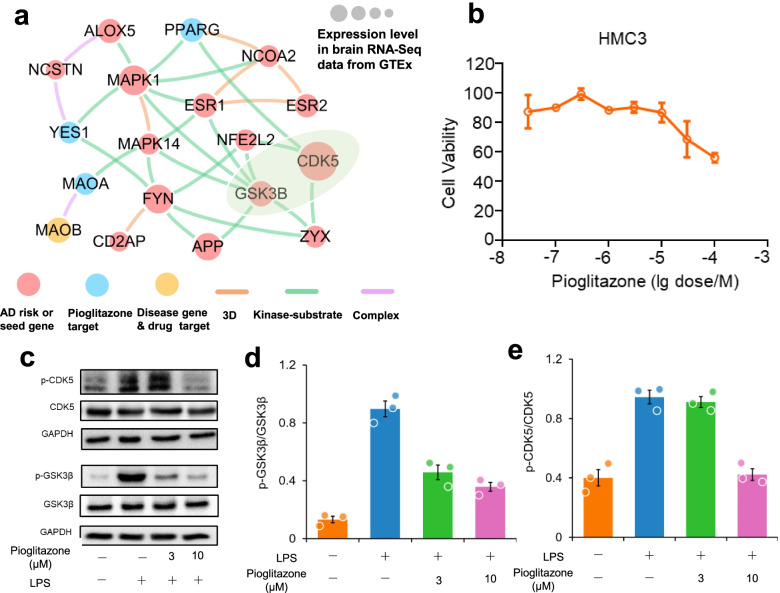
Background: Genome-wide association studies (GWAS) have identified numerous susceptibility loci for Alzheimer’s disease (AD). However, utilizing GWAS and multi-omics data to identify high-confidence AD risk genes (ARGs) and druggable targets that can guide development of new therapeutics for patients suffering from AD has heretofore not been successful. Methods: To address this critical problem in the field, we have developed a network-based artificial intelligence framework that is capable of integrating multi-omics data along with human protein–protein interactome networks to accurately infer accurate drug targets impacted by GWAS-identified variants to identify new therapeutics. When applied to AD, this approach integrates GWAS findings, multi-omics data from brain samples of AD patients and AD transgenic animal models, drug-target networks, and the human protein–protein interactome, along with large-scale patient database validation and in vitro mechanistic observations in human microglia cells. Results: Through this approach, we identified 103 ARGs validated by various levels of pathobiological evidence in AD. Via network-based prediction and population-based validation, we then showed that three drugs (pioglitazone, febuxostat, and atenolol) are significantly associated with decreased risk of AD compared with matched control populations. Pioglitazone usage is significantly associated with decreased risk of AD (hazard ratio (HR) = 0.916, 95% confidence interval [CI] 0.861–0.974, P = 0.005) in a retrospective case-control validation. Pioglitazone is a peroxisome proliferator-activated receptor (PPAR) agonist used to treat type 2 diabetes, and propensity score matching cohort studies confirmed its association with reduced risk of AD in comparison to glipizide (HR = 0.921, 95% CI 0.862–0.984, P = 0.0159), an insulin secretagogue that is also used to treat type 2 diabetes. In vitro experiments showed that pioglitazone downregulated glycogen synthase kinase 3 beta (GSK3β) and cyclin-dependent kinase (CDK5) in human microglia cells, supporting a possible mechanism-of-action for its beneficial effect in AD. Conclusions: In summary, we present an integrated, network-based artificial intelligence methodology to rapidly translate GWAS findings and multi-omics data to genotype-informed therapeutic discovery in AD.
Overview
The claims and statistics of this paper haven’t been checked yet.
Free: it reads the open-access text and checks the first 5 claims that cite a source we can check. Create a free account to check every claim.
Integrity signals
Registry
Cites
Statistics
Figures
Verification
Claims the paper makes
The claims and statistics of this paper haven’t been checked yet.
Free: it reads the open-access text and checks the first 5 claims that cite a source we can check. Create a free account to check every claim.
Claims other papers make about this one
Each is checked against this paper’s own text: does it say what the citing paper says it does?
The cited source says what the claim attributes to it.
In the citing paper
“the ability of AI to utilize genetic and multiomics data also demonstrates great potential for advancing the treatment of dementia”
From Multimodal neuroimaging and AI integration in cognitive disorders: advances, challenges, and future directions for precision medicine (2026) · cites this paper as Fang et al., 2022
The cited source says what the claim attributes to it.
In the citing paper
“The AD repurposing candidates suggested and validated by the five studies using real-world data for validation included fluticasone and mometasone (inhaled corticosteroids) (Xu et al., 2021), dexamethasone (a systemic corticosteroid) (Tang et al., 2022), pioglitazone (an antidiabetic drug) (Fang et al., 2022), febuxostat (a uric acid-lowering drug used in treatment of gout) (Fang et al., 2022),”
From Drug repurposing for Alzheimer’s disease from 2012–2022—a 10-year literature review (2023) · cites this paper as Fang et al., 2022
The cited source says what the claim attributes to it.
In the citing paper
“Four of these studies performed pharmacoepidemiologic investigations, three leveraging the MarketScan Medicare Supplementary Material (Fang et al., 2021;Xu et al., 2021;Fang et al., 2022) and the fourth utilizing Medicare claims data (Desai et al., 2022).”
From Drug repurposing for Alzheimer’s disease from 2012–2022—a 10-year literature review (2023) · cites this paper as Fang et al., 2022
Self-check
Percentages, sums and reported differences re-computed from the paper’s own numbers.
The self-check needs the paper’s full text.
Citations
Cites
WGCNA: an R package for weighted correlation network analysis
Langfelder, P., & Horvath, S. (2008) · BMC Bioinformatics · doi:10.1186/1471-2105-9-559 · Cited by 27,252
DrugBank 5.0: a major update to the DrugBank database for 2018
Wishart, D. S., Feunang, Y. D., Guo, A. C., Lo, E. J., Marcu, A., Grant, J. R., Sajed, T., Johnson, D., Li, C., Sayeeda, Z., et al. (2018) · Nucleic Acids Research · doi:10.1093/nar/gkx1037 · Cited by 8,404
Bindea, G., Mlecnik, B., Hackl, H., Charoentong, P., Tosolini, M., Kirilovsky, A., Fridman, W.-H., Pagès, F., Trajanoski, Z., & Galon, J. (2009) · Bioinformatics · doi:10.1093/bioinformatics/btp101 · Cited by 6,280 · cited 1×
“To advance disease understanding of networkpredicted high-confidence risk genes, we performed biological pathway enrichment analysis using ClueGO plugin in Cytoscape (Table S9) [55].”
MethodA Unique Microglia Type Associated with Restricting Development of Alzheimer’s Disease
Keren-Shaul, H., Spinrad, A., Weiner, A., Matcovitch-Natan, O., Dvir-Szternfeld, R., Ulland, T. K., David, E., Baruch, K., Lara-Astaiso, D., Toth, B., et al. (2017) · Cell · doi:10.1016/j.cell.2017.05.018 · Cited by 5,493 · cited 2×
“16.1) packages in R with steps complied with the original literature [24–27].”
MethodInfluentialMeta-Analysis of 74,046 Individuals Identifies 11 New Susceptibility Loci for Alzheimer’s Disease
(EADI), E. A. D. I., Lambert, J.-C., (GERAD), G. A. E. R. I. A. D., Alzheimer's Disease Genetic Consortium (ADGC), (CHARGE), C. F. H. A. A. R. I. G. E., Ibrahim-Verbaas, C. A., Harold, D., Naj, A. C., Sims, R., Bellenguez, C., et al. (2013) · Nature Genetics · doi:10.1038/ng.2802 · Cited by 4,336 · cited 1×
“Among them, APOE , ADAM10 , and SORL1 are well-known AD risk genes, validated by large-scale genetic studies and preclinical studies [6, 59, 60].”
BackgroundAlzheimer Disease: An Update on Pathobiology and Treatment Strategies
Long, J. M., & Holtzman, D. M. (2019) · Cell · doi:10.1016/j.cell.2019.09.001 · Cited by 3,204 · cited 3×
“S FDA for Alzheimer’s treatment in nearly 20 years; yet, its clinical efficacy is limited to a narrow segment of the AD continuum andpotential side effects [1, 9].”
BackgroundAlzheimer Disease Genetics Consortium (ADGC), Kunkle, B. W., The European Alzheimer’s Disease Initiative (EADI), Cohorts for Heart and Aging Research in Genomic Epidemiology Consortium (CHARGE), Genetic and Environmental Risk in AD/Defining Genetic, P. A. E. R. F. A. D. C. (., Grenier-Boley, B., Sims, R., Bis, J. C., Damotte, V., Naj, A. C., et al. (2019) · Nature Genetics · doi:10.1038/s41588-019-0358-2 · Cited by 2,946
An Expanded View of Complex Traits: From Polygenic to Omnigenic
Boyle, E. A., Li, Y. I., & Pritchard, J. K. (2017) · Cell · doi:10.1016/j.cell.2017.05.038 · Cited by 2,851 · cited 1×
“To maximize genetic signals based on the omnigenic hypothesis [20], we adopted a loose threshold ( P < 1 × 10 − 5 ) to collect and filter AD SNPs and finally obtained 106 unique GWAS SNPs for downstream analyses. systems; (2) kinase-substrate interactions by literature-derived low-throughput and…”
MethodSingle-cell transcriptomic analysis of Alzheimer’s disease
Mathys, H., Davila-Velderrain, J., Peng, Z., Gao, F., Mohammadi, S., Young, J. Z., Menon, M., He, L., Abdurrob, F., Jiang, X., et al. (2019) · Nature · doi:10.1038/s41586-019-1195-2 · Cited by 2,568 · cited 1×
“To validate the remaining 14 ARGs without any omics evidence, we further collected significantly expressed proteins or genes from the most recent human AD brain proteomic or transcriptomic studies [26, 48–51].”
MethodAn atlas of active enhancers across human cell types and tissues
The FANTOM Consortium, Andersson, R., Gebhard, C., Miguel-Escalada, I., Hoof, I., Bornholdt, J., Boyd, M., Chen, Y., Zhao, X., Schmidl, C., et al. (2014) · Nature · doi:10.1038/nature12787 · Cited by 2,550 · cited 3×
“The second data-set we used was from the Functional Annotation of the Mammalian Genome 5 (FANTOM5) project [22], in which cap analysis of gene expression (CAGE) technology was employed to infer enhancer-promoter links Comparison analyses were conducted to evaluate the predicted drug‑AD association…”
Method
Cited by
Network-based drug repurposing for novel coronavirus 2019-nCoV/SARS-CoV-2
Zhou, Y., Hou, Y., Shen, J., Huang, Y., Martin, W., & Cheng, F. (2020) · Cell Discovery · doi:10.1038/s41421-020-0153-3 · Cited by 1,597
Self-citationDeep learning for drug repurposing: Methods, databases, and applications
Pan, X., Lin, X., Cao, D., Zeng, X., Yu, P. S., He, L., Nussinov, R., & Cheng, F. (2022) · WIREs Computational Molecular Science · doi:10.1002/wcms.1597 · Cited by 188
Self-citationZhou, Y., Xu, J., Hou, Y., Leverenz, J. B., Kallianpur, A., Mehra, R., Liu, Y., Yu, H., Pieper, A. A., Jehi, L., et al. (2021) · Alzheimer's Research & Therapy · doi:10.1186/s13195-021-00850-3 · Cited by 162
Self-citationArtificial Intelligence in Pharmaceutical Sciences
Lu, M., Yin, J., Zhu, Q., Lin, G., Mou, M., Liu, F., Pan, Z., You, N., Lian, X., Li, F., et al. (2023) · Engineering · doi:10.1016/j.eng.2023.01.014 · Cited by 161
Haghayegh, F., Norouziazad, A., Haghani, E., Feygin, A. A., Rahimi, R. H., Ghavamabadi, H. A., Sadighbayan, D., Madhoun, F., Papagelis, M., Felfeli, T., et al. (2024) · Advanced Science · doi:10.1002/advs.202400595 · Cited by 172
Xu, J., Mao, C., Hou, Y., Luo, Y., Binder, J. L., Zhou, Y., Bekris, L. M., Shin, J., Hu, M., Wang, F., et al. (2022) · Cell Reports · doi:10.1016/j.celrep.2022.111717 · Cited by 115
“80 Sildenafil was suggested as promising AD treatment based on A β -tau synergistic endophenotype study.”
Self-citationApplications of Artificial Intelligence in Drug Repurposing
Wan, Z., Sun, X., Li, Y., Chu, T., Hao, X., Cao, Y., & Zhang, P. (2025) · Advanced Science · doi:10.1002/advs.202411325 · Cited by 129
Self-citationSAveRUNNER: A network-based algorithm for drug repurposing and its application to COVID-19
Fiscon, G., Conte, F., Farina, L., & Paci, P. (2021) · PLoS Computational Biology · doi:10.1371/journal.pcbi.1008686 · Cited by 115
Ren, F., Wei, J., Chen, Q., Hu, M., Yu, L., Mi, J., Zhou, X., Qin, D., Wu, J., & Wu, A. (2025) · Acta Pharmaceutica Sinica B · doi:10.1016/j.apsb.2025.07.030 · Cited by 97
Gene-environment interactions within a precision environmental health framework
Motsinger‐Reif, A. A., Reif, D. M., Akhtari, F. S., House, J. S., Campbell, C. R., Messier, K. P., Fargo, D. C., Bowen, T. A., Nadadur, S. S., Schmitt, C., et al. (2024) · Cell Genomics · doi:10.1016/j.xgen.2024.100591 · Cited by 112
Harnessing endophenotypes and network medicine for Alzheimer's drug repurposing
Fang, J., Pieper, A. A., Nussinov, R., Lee, G., Bekris, L., Leverenz, J. B., Cummings, J., & Cheng, F. (2020) · Medicinal Research Reviews · doi:10.1002/med.21709 · Cited by 94
Self-citationArtificial intelligence in pharmacology research and practice
van der Lee, M., & Swen, J. J. (2023) · Clinical and Translational Science · doi:10.1111/cts.13431 · Cited by 83
Zhou, Y., Fang, J., Bekris, L. M., Kim, Y. H., Pieper, A. A., Leverenz, J. B., Cummings, J., & Cheng, F. (2021) · Alzheimer's Research & Therapy · doi:10.1186/s13195-020-00760-w · Cited by 83
Self-citationArtificial intelligence for drug discovery and development in Alzheimer's disease
Qiu, Y., & Cheng, F. (2024) · Current Opinion in Structural Biology · doi:10.1016/j.sbi.2024.102776 · Cited by 83
Self-citationDrug repurposing for Alzheimer’s disease and other neurodegenerative disorders
Cummings, J. L., Zhou, Y., Stone, A. V., Cammann, D., Tonegawa‐Kuji, R., Cacho, J. R. F., & Cheng, F. (2025) · Nature Communications · doi:10.1038/s41467-025-56690-4 · Cited by 88
Self-citationThe Art of Finding the Right Drug Target: Emerging Methods and Strategies
Jia, Z.-C., Yang, X., Wu, Y., Li, M., Das, D., Chen, M., & Wu, J. (2024) · Pharmacological Reviews · doi:10.1124/pharmrev.123.001028 · Cited by 78
Cheng, F., Wang, F., Tang, J., Zhou, Y., Fu, Z., Zhang, P., Haines, J. L., Leverenz, J. B., Gan, L., Hu, J., et al. (2024) · Cell Reports Medicine · doi:10.1016/j.xcrm.2023.101379 · Cited by 63
Self-citationDrug repurposing for Alzheimer’s disease from 2012–2022—a 10-year literature review
Grabowska, M. E., Huang, A., Wen, Z., Li, B., & Wei, W.-Q. (2023) · Frontiers in Pharmacology · doi:10.3389/fphar.2023.1257700 · Cited by 55
“Four of these studies performed pharmacoepidemiologic investigations, three leveraging the MarketScan Medicare Supplementary Material (Fang et al., 2021; Xu et al., 2021; Fang et al., 2022) and the fourth utilizing Medicare claims data (Desai et al.”
BackgroundMethodInfluentialSelf-citationAI-Driven Drug Discovery for Rare Diseases
Gangwal, A., & Lavecchia, A. (2024) · Journal of Chemical Information and Modeling · doi:10.1021/acs.jcim.4c01966 · Cited by 59
Utilization of precision medicine digital twins for drug discovery in Alzheimer's disease
Ren, Y., Pieper, A. A., & Cheng, F. (2025) · Neurotherapeutics · doi:10.1016/j.neurot.2025.e00553 · Cited by 62
Self-citationClark, C., Rabl, M., Dayon, L., & Popp, J. (2022) · Frontiers in Aging Neuroscience · doi:10.3389/fnagi.2022.1065904 · Cited by 50
Harnessing the potential of machine learning and artificial intelligence for dementia research
Ranson, J. M., Bucholc, M., Lyall, D. M., Newby, D., Winchester, L. M., Oxtoby, N. P., Veldsman, M., Rittman, T., Marzi, S. J., Skene, N., et al. (2023) · Brain Informatics · doi:10.1186/s40708-022-00183-3 · Cited by 51
Yoon, J. H., Lee, H., Kwon, D., Lee, D., Lee, S., Cho, E., Kim, J., & Kim, D. (2024) · Brain Communications · doi:10.1093/braincomms/fcae265 · Cited by 47
“81 However, despite many studies conducted, the data have not been robustly validated.”
BackgroundArtificial intelligence for dementia prevention
Newby, D., Orgeta, V., Marshall, C. R., Lourida, I., Albertyn, C. P., Tamburin, S., Raymont, V., Veldsman, M., Koychev, I., Bauermeister, S., et al. (2023) · Alzheimer's & Dementia · doi:10.1002/alz.13463 · Cited by 42
“Opportunities and future directions for ML to enhance prevention interventions and trials”
BackgroundComputational Approaches to Drug Repurposing: Methods, Challenges, and Opportunities
Cousins, H. C., Nayar, G., & Altman, R. B. (2024) · Annual Review of Biomedical Data Science · doi:10.1146/annurev-biodatasci-110123-025333 · Cited by 48
Zhou, Y., Xu, J., Hou, Y., Bekris, L., Leverenz, J. B., Pieper, A. A., Cummings, J., & Cheng, F. (2022) · Alzheimer's & Dementia: Translational Research & Clinical Interventions · doi:10.1002/trc2.12350 · Cited by 39
Self-citationBiomedical discovery through the integrative biomedical knowledge hub (iBKH)
Su, C., Hou, Y., Zhou, M., Rajendran, S., Maasch, J. R. M. A., Abedi, Z., Zhang, H., Bai, Z., Cuturrufo, A., Guo, W. L., et al. (2023) · iScience · doi:10.1016/j.isci.2023.106460 · Cited by 51
“As a proof of concept, we performed in silico hypothesis generation for AD drug repurposing, i.e., predicting drugs that potentially connect to the AD entity (Fang et al., 2022; Fang et al., 2021; Zeng et al., 2020; Zhou et al., 2021).”
MethodSelf-citationMachine learning in Alzheimer’s disease drug discovery and target identification
Geng, C., Wang, Z., & Tang, Y. (2024) · Ageing Research Reviews · doi:10.1016/j.arr.2023.102172 · Cited by 34
Applications of artificial intelligence in dementia research
Tsoi, K. K. F., Jia, P., Dowling, N. M., Titiner, J. R., Wagner, M., Capuano, A. W., & Donohue, M. (2022) · Cambridge Prisms Precision Medicine · doi:10.1017/pcm.2022.10 · Cited by 43
The landscape of the methodology in drug repurposing using human genomic data: a systematic review
Wang, L., Lü, Y., Li, D., Zhou, Y., Yu, L., Mesa‐Eguiagaray, I., Campbell, H. J., Li, X., & Τheodoratou, E. (2024) · Briefings in Bioinformatics · doi:10.1093/bib/bbad527 · Cited by 38
Self-citationKumar, R., Singh, A. K., Kassar, A. S. A., Humaida, M. I., Joshi, S., & Sharma, M. (2025) · Computer Modeling in Engineering & Sciences · doi:10.32604/cmes.2025.059152 · Cited by 59
Harnessing the Power of AI in Pharmacokinetics and Pharmacodynamics: A Comprehensive Review
Pawar, V. T., PATIL, A. R., Tamboli, F. A., Gaikwad, D., Mali, D. P., & Shinde, A. J. (2023) · International Journal of Pharmaceutical Quality Assurance · doi:10.25258/ijpqa.14.2.31 · Cited by 56
Zhang, P., Hou, Y., Tu, W., Campbell, N., Pieper, A. A., Leverenz, J. B., Gao, S., Cummings, J., & Cheng, F. (2023) · Alzheimer's & Dementia · doi:10.1002/alz.12819 · Cited by 30
“68,69 However, pioglitazone didn’t show significant clinical benefits for patients with mild to moderate AD in a large phase II study (NCT00982202) and a phase III trial (NCT01931566) with non-Hispanic or Latino, White participants.”
Self-citationIn silico drug repurposing in COVID-19: A network-based analysis
Sibilio, P., Bini, S., Fiscon, G., Sponziello, M., Conte, F., Pecce, V., Durante, C., Paci, P., Falcone, R., Norata, G. D., et al. (2021) · Biomedicine & Pharmacotherapy · doi:10.1016/j.biopha.2021.111954 · Cited by 30
Drug Discovery and Development Targeting Dementia
Zagórska, A., Czopek, A., Fryc, M., Jaromin, A., & Boyd, B. J. (2023) · Pharmaceuticals · doi:10.3390/ph16020151 · Cited by 33
Angelucci, F., Ai, A. R., Piendel, L. A., Cerman, J., & Hort, J. (2024) · Current Opinion in Structural Biology · doi:10.1016/j.sbi.2024.102857 · Cited by 32
Valdes, P., Caldwell, A. B., Liu, Q., Fitzgerald, M. Q., Ramachandran, S., Karch, C. M. M., Dominantly Inherited Alzheimer Network (DIAN), Adams, S., Allegri, R., Araki, A., et al. (2025) · Alzheimer s Research & Therapy · doi:10.1186/s13195-024-01659-6 · Cited by 28
“…1,608 FAD-approved drug targets, 2,251 unique human target notes, and high-quality 15,367 physical drug-target interactions (edges) as part of a drug-target network constructed using published binding affinity data [105] that is publicly available in a systems biology tool known as AlzGPS [106].”
Ahmed, F., Samantasinghar, A., Ali, W., & Choi, K. H. (2024) · Molecular Diversity · doi:10.1007/s11030-023-10784-7 · Cited by 28
Bykova, M., Hou, Y., Eng, C., & Cheng, F. (2022) · Human Molecular Genetics · doi:10.1093/hmg/ddac208 · Cited by 26
Self-citationYuan, X., Wang, H., Zhang, F., Zhang, M., Wang, Q., & Wang, J. (2023) · Neuropharmacology · doi:10.1016/j.neuropharm.2022.109327 · Cited by 25
Self-citationMa, Y., Shi, W., Dong, Y., Sun, Y., & Jin, Q. (2024) · Current Issues in Molecular Biology · doi:10.3390/cimb46050298 · Cited by 27
“AI models include machine learning (ML)-based [122], deep learning-based, and network-based algorithms [123].”
MethodArtificial intelligence streamlines scientific discovery of drug–target interactions
Yang, Y., & Cheng, F. (2025) · British Journal of Pharmacology · doi:10.1111/bph.17427 · Cited by 26
“Another study used a network-based machine learning framework with multi-omics human protein – protein interactome data to find potential AD treatments (Fang et al., 2022).”
Self-citationDou, L., Xu, Z., Xu, J., Zang, C., Su, C., Pieper, A. A., Leverenz, J. B., Wang, F., Zhu, X., Cummings, J. L., et al. (2025) · npj Parkinson's Disease · doi:10.1038/s41531-025-00870-y · Cited by 26
Self-citationShippy, D. C., & Ulland, T. K. (2023) · Journal of Neuroimmunology · doi:10.1016/j.jneuroim.2023.578031 · Cited by 22
Habbal, S., Mian, M., Imam, M., Tahiri, J., Amor, A., & Reddy, P. H. (2025) · Brain Organoid and Systems Neuroscience Journal · doi:10.1016/j.bosn.2025.05.001 · Cited by 19
Artificial Intelligence to Guide Repurposing of Drugs
Fu, Z., Yang, Y., Chung, M. K., & Cheng, F. (2026) · Annual Review of Medicine · doi:10.1146/annurev-med-050224-122802 · Cited by 19
Self-citationApplication of artificial intelligence in Alzheimer’s disease: a bibliometric analysis
Song, S., Li, T., Lin, W., Liu, R., & Zhang, Y. (2025) · Frontiers in Neuroscience · doi:10.3389/fnins.2025.1511350 · Cited by 20
Fiscon, G., Conte, F., Farina, L., & Paci, P. (2022) · International Journal of Molecular Sciences · doi:10.3390/ijms23073703 · Cited by 16
The Time Sequence of Gene Expression Changes after Spinal Cord Injury
Mun, S., Han, K., & Hyun, J. K. (2022) · Cells · doi:10.3390/cells11142236 · Cited by 16
“Recent artificial intelligence-based drug discovery and drug repositioning techniques can dramatically shorten the preclinical research period and cost while increasing the possibility of treating various neurological diseases that were not previously available [88,89].”
BackgroundZhang, Z., Huang, D., Feng, J., Li, W., Wang, Z., Lu, M., Luo, Y., Yang, W., Xu, Z., Xie, Q., et al. (2024) · Interdisciplinary medicine · doi:10.1002/inmd.20230062 · Cited by 20
Singh, S. K., Kumar, A., Singh, R. B., Ghosh, P., & Bajad, N. G. (2022) · Current Topics in Medicinal Chemistry · doi:10.2174/1568026623666221026091010 · Cited by 20
Fang, J., Wu, Q., Ye, F., Cai, C., Xu, L., Gu, Y., Wang, Q., Liu, A., Tan, W., & Du, G. (2021) · Frontiers in Genetics · doi:10.3389/fgene.2021.728960 · Cited by 14
Self-citationMulti‐Omics‐Augmented GWAS for Crop Improvement: From Mechanisms to Breeding
Mangi, N., Zhao, Q., Li, M., Li, C., Yan, L., Kong, L., Qin, A.-G., Zhou, Y.-P., Liu, H., Zhang, Y.-P., et al. (2025) · Modern Agriculture · doi:10.1002/moda.70032 · Cited by 13
“Third, the clinical translation of GWAS findings remains challenging, as they largely provide risk associations rather than directly actionable therapeutic targets [22].”
Self-citationWang, X., Yang, J., Zhang, X., Cai, J., Zhang, J., Cai, C., Zhuo, Y., Fang, S., Xu, X., Wang, H., et al. (2024) · Phytomedicine · doi:10.1016/j.phymed.2024.156158 · Cited by 12
Self-citationGu, Z., Ge, B., Wang, Y., Gong, Y., & Qi, M. (2025) · Frontiers in Aging Neuroscience · doi:10.3389/fnagi.2025.1609063 · Cited by 12
Dharshini, S. A. P., Sneha, N. P., Yesudhas, D., Kulandaisamy, A., Rangaswamy, U., Anusuya, S., Taguchi, Y., & Gromiha, M. M. (2022) · Current Topics in Medicinal Chemistry · doi:10.2174/1568026622666220902110115 · Cited by 12
Tandon, S., & Sarkar, S. (2023) · Biochemical and Biophysical Research Communications · doi:10.1016/j.bbrc.2023.01.022 · Cited by 12
Wu, X.-L., Li, Z., Chen, G., Yin, Y., & Chen, C. Y. (2023) · Frontiers in Molecular Biosciences · doi:10.3389/fmolb.2023.1227371 · Cited by 14
Artificial intelligence in drug development for delirium and Alzheimer’s disease
Ai, R., Xiao, X., Deng, S., Yang, N., Xing, X., Watne, L. O., Selbæk, G., Wedatilake, Y., Xie, C., Rubinsztein, D. C., et al. (2025) · Acta Pharmaceutica Sinica B · doi:10.1016/j.apsb.2025.04.026 · Cited by 13
Wu, Q., Su, S., Cai, C., Xu, L., Fan, X., Ke, H., Dai, Z., Fang, S., Zhuo, Y., Wang, Q., et al. (2023) · Computational and Structural Biotechnology Journal · doi:10.1016/j.csbj.2023.02.041 · Cited by 14
“The detailed data process can be found in previous literature evidence [4].”
BackgroundMethodSelf-citationDang, M., Liu, B., Chen, Y., & Zhang, Z. (2026) · Psychoradiology · doi:10.1093/psyrad/kkag007 · Cited by 10
Integrative Multiomics Insights into the Genetic and Epigenetic Architecture of Alzheimer’s Disease
Mishra, A. K., & Jain, S. (2025) · ACS Chemical Neuroscience · doi:10.1021/acschemneuro.5c00750 · Cited by 13
Artificial Intelligence in Geriatric Psychiatry Through the Lens of Contemporary Philosophy
Alexopoulos, G. S. (2023) · American Journal of Geriatric Psychiatry · doi:10.1016/j.jagp.2023.09.006 · Cited by 10
Fu, X., Wang, X., Lai, Y., Cai, C., Liao, Y., Dai, Z., Huilin, X., Fang, S., & Fang, J. (2023) · Molecules · doi:10.3390/molecules29010021 · Cited by 9
“More information on the network proximity measure is presented in earlier studies [47,48].”
ResultSelf-citationNehmeh, B., Rebehmed, J., Nehmeh, R., Taleb, R. I., & Akoury, E. (2024) · Drug Discovery Today · doi:10.1016/j.drudis.2024.104216 · Cited by 9
Regulation of aging by balancing mitochondrial function and antioxidant levels
Yoshina, S., Izuhara, L., Kamatani, N., & Mitani, S. (2022) · The Journal of Physiological Sciences · doi:10.1186/s12576-022-00853-1 · Cited by 10
“A recent study identified FBX as a potential new treatment for AD using artificial intelligence approaches [47].”
BackgroundKim, Y. A., Mellén, M., Kızıl, Ç., & Santa‐María, I. (2023) · British Journal of Pharmacology · doi:10.1111/bph.16280 · Cited by 9
“…new studies have attempted to rapidly translate genome-wide association study findings and multi-omics data to genotype-informed therapeutic discovery in AD and related tauopa-thies through an integrated, network-based artificial intelligence framework (Fang et al., 2022; Nicholls et al., 2020).”
BackgroundNetwork-based drug repurposing for potential stroke therapy
Wu, Q., Chen, C., Liu, W., Zhou, Y., Weng, G., & Gu, Y. (2023) · Computational and Structural Biotechnology Journal · doi:10.1016/j.csbj.2023.04.018 · Cited by 10
“In 2021, Fang et al. also developed an integrated, network-based artificial intelligence methodology for therapeutic discovery in AD, which found three drugs (pioglitazone, febuxostat, and atenolol) were highly related with decreased risk of AD [58].”
BackgroundSelf-citationKuwabara, M., Nakai, M., Sumita, Y., Iwanaga, Y., Ae, R., Kodama, T., Hisatome, I., & Kamatani, N. (2024) · Frontiers in Pharmacology · doi:10.3389/fphar.2023.1289386 · Cited by 8
Wang, T., Pate, V., Kim, D. H., Power, M. C., Garden, G. A., Palta, P., Knopman, D. S., Jonson‐Funk, M., Stürmer, T., & Kucharska‐Newton, A. (2025) · American Journal of Epidemiology · doi:10.1093/aje/kwaf166 · Cited by 7
Conte, L., Decembrino, N., Arribas, C., Cucci, F., Nunzio, G. D., Amodeo, I., Raffaeli, G., Leonardi, R., Cascio, D., Garrido, F., et al. (2025) · Seminars in Fetal and Neonatal Medicine · doi:10.1016/j.siny.2025.101691 · Cited by 8
Mou, F. S., Ahmed, T., Huda, M. N., & Nandi, A. K. (2026) · Artificial Intelligence Review · doi:10.1007/s10462-025-11484-4 · Cited by 9
Kumar, B. S. H., Dinesh, B. G. H., Ganjipete, S., Ramar, M., Ammunje, D. N., Kunjiappan, S., Chidambaram, K., & Pavadai, P. (2025) · Scientific Reports · doi:10.1038/s41598-025-28605-2 · Cited by 12
“An ML-based regression modelling approach was employed to predict inhibitory activity and identify potential repurposable drugs for AD 16 .”
Jiang, S., Tian, Z., Yang, Y., Li, X., Zhou, F., Cheng, J., Lyu, J., Gao, T., Zhang, P., Han, H., et al. (2025) · Acta Pharmaceutica Sinica B · doi:10.1016/j.apsb.2025.08.015 · Cited by 6
“Similarly, Fang et al. 129 proposed an integrated network-based AI method that can quickly transform genome-wide association study findings and multi-omics data into genotype-based AD treatments, discovering that three drugs (pioglitazone, febuxostat, atenolol) were significantly associated with…”
Self-citationA Drosophila model for mechanistic investigation of tau protein spread
Bankapalli, K., Thomas, R. E., Vincow, E. S., Milstein, G., Fisher, L. V., & Pallanck, L. J. (2024) · Disease Models & Mechanisms · doi:10.1242/dmm.050858 · Cited by 7
Application of computational methods in the drug discovery and development of Alzheimer's disease
Zhang, Q., Gong, X., Liu, H., & Yao, X. (2025) · Acta Pharmaceutica Sinica B · doi:10.1016/j.apsb.2025.07.038 · Cited by 10
“Fang et al. 179 developed a network-based AI framework that integrates GWAS with multi-omics data to identify high-confidence AD risk genes and drug-gable targets.”
Wei, M., Huo, Y., Yuan, J., Fan, X. L., Wang, X., Tan, S., Gao, X., Ouyang, R., & Li, H. (2025) · Advanced Science · doi:10.1002/advs.202513270 · Cited by 6
Yue, C., Chen, B., Pan, F., Wang, Z., Yu, H., Liu, G., Li, W., Wang, R., & Tang, Y. (2025) · Journal of Chemical Information and Modeling · doi:10.1021/acs.jcim.5c00172 · Cited by 6
Artificial Intelligence in Alzheimer’s Drug Discovery
Cheng, F., & Cummings, J. L. (2022) · Cambridge University Press eBooks · doi:10.1017/9781108975759.007 · Cited by 6
Self-citationSiciliano, B., Henkel, N., Ryan, W. G., Imami, A. S., Vergis, J. M., Xu, C., Arvay, T. O., Sahay, S., Pulvender, P., Hamoud, A.-R. A., et al. (2025) · Brain Behavior & Immunity - Health · doi:10.1016/j.bbih.2025.101044 · Cited by 6
Yuan, X., Gao, L., Peng, Y., She, T., & Wang, J. (2025) · Artificial Intelligence in Medicine · doi:10.1016/j.artmed.2025.103301 · Cited by 5
Ma, Y., Tian, H., Xiao, W., Ma, Y., Su, H., Zhu, L., Jiang, Y. L., Li, G., Li, Y., Yuan, M., et al. (2025) · ACS Omega · doi:10.1021/acsomega.5c07349 · Cited by 8
Ras, RhoA, and vascular pharmacology in neurodevelopment and aging
Nussinov, R., Jang, H., & Cheng, F. (2024) · Neurochemistry International · doi:10.1016/j.neuint.2024.105883 · Cited by 4
Self-citationPreventive effects of xanthohumol in APP/PS1 mice based on multi-omics atlas
Liu, W., Chen, X., Chen, Y., Lin, Z., Huang, X., Zhang, Z., & Liu, J. (2025) · Brain Research Bulletin · doi:10.1016/j.brainresbull.2025.111316 · Cited by 4
“…biological interpretation, which provides new ideas for discovering clinical pathogenesis, confirming disease targets, and discovering biomarkers (Fang J, et al. 2022; Mills RH, et al. 2022). l r In this study, Xn was found to improve the learning and memory ability of APP/PS1 mice, which is…”
Wang, Y., Chen, Y., Liang, X., Zhu, L., & Wen, X. (2024) · Scientific Reports · doi:10.1038/s41598-024-78364-9 · Cited by 4
Strategies for translating proteomics discoveries into drug discovery for dementia
Halder, A., & Drummond, E. (2023) · Neural Regeneration Research · doi:10.4103/1673-5374.373681 · Cited by 4
Beyond APP, PSEN1, PSEN2, and APOE: What Else Does the Genome Tell Us?
Behl, C. (2023) · Springer eBooks · doi:10.1007/978-3-031-31570-1_16 · Cited by 5
Wu, Z., Yu, S., Tian, D., Li, C., & Jing, J. (2025) · Frontiers in Cellular Neuroscience · doi:10.3389/fncel.2025.1705069 · Cited by 3
Artificial Intelligence and Multiple Sclerosis: Past, Present, and Future
Amin, M., Nakamura, K., & Ontaneda, D. (2025) · Seminars in Neurology · doi:10.1055/a-2730-8997 · Cited by 3
Wal, P., Dwivedi, J., Pandey, K., Sharma, K. K., Tiwari, M., Ali, M. S., Khan, A., & Gasmi, A. (2026) · Computational Biology and Chemistry · doi:10.1016/j.compbiolchem.2026.109120 · Cited by 6
Genetic variants for Alzheimer's disease and comorbid conditions
Pan, M., Lai, D., Unverzagt, F. W., Apostolova, L. G., Hendrie, H. C., Saykin, A. J., Foroud, T., & Gao, S. (2024) · Journal of Alzheimer s Disease · doi:10.1177/13872877241289054 · Cited by 3
Wang, X., Wang, M., Wang, H., Yin, G., & Zhang, Y. (2025) · Journal of Alzheimer s Disease · doi:10.1177/13872877251360009 · Cited by 4
Hernández-Contreras, K. A., Rojas-Durán, F., Hernández‐Aguilar, M. E., Herrera‐Covarrubias, D., Godínez‐Victoria, M., Manzo, J., Pérez-Estudillo, C. A., Ramos-Morales, F. R., Toledo‐Cárdenas, M. R., & Aranda-Abreu, G. E. (2025) · BioMed · doi:10.3390/biomed5010003 · Cited by 3
DiGiovanni, A., Shehaj, A., Millar, D. R., Tse, C., & Rizk, E. (2025) · Cureus · doi:10.7759/cureus.87350 · Cited by 5
Lin, K., Yang, Y., & Cheng, F. (2024) · bioRxiv (Cold Spring Harbor Laboratory) · doi:10.1101/2024.07.21.604494 · Cited by 3
Self-citationAlidoost, M., Huang, J., Dermentzaki, G., Blazier, A. S., Gaglia, G., Hammond, T. R., Frau, F., McCorry, M. C., Ofengeim, D., & Wilson, J. L. (2025) · Clinical Pharmacology & Therapeutics · doi:10.1002/cpt.3682 · Cited by 3
“Separate investigations of post-mortem brain samples further corroborated shared gene-level changes across patients with four diseases (Alzheimer’s Disease, Parkinson’s disease, Huntington’s disease, and ALS) and discovered that shared genes were involved in functional processes such as inflammation, mitochondrial dys…”
Recent Advances in the Application of Artificial Intelligence in Alzheimer's Disease
Yao, L., Ni, J., Wei, M., Li, T., Li, F., Wang, T., Xiao, W., Shi, J., & Tian, J. (2025) · Current Alzheimer Research · doi:10.2174/0115672050410489250930175402 · Cited by 2
Talukdar, N., Zhang, X., Paithankar, S., Wang, H., & Chen, B. (2025) · Drug Discovery Today · doi:10.1016/j.drudis.2025.104552 · Cited by 5
Sirigineedi, A. (2025) · American journal of student research. · doi:10.70251/hyjr2348.364052 · Cited by 2
Eluigwe, K. N., Acquah, E. N. O., Sarfo, E. A., Oka, O. U., Onwuegbuchi, O., & Okoye, N. A. (2026) · Research Connections · doi:10.1093/rescon/vmaf010 · Cited by 3
Metadata
- Authors
- Fang, J., Zhang, P., Wang, Q., Chiang, C.-W., Zhou, Y., Hou, Y., Xu, J., Chen, R., Zhang, B., Lewis, S. J., Leverenz, J. B., Pieper, A. A., Li, B., Li, L., Cummings, J., & Cheng, F.
- Affiliations
- Cleveland Clinic (US)
- Indiana University Indianapolis (US)
- Vanderbilt University (US)
- The Ohio State University (US)
- Case Western Reserve University (US)
- University Hospitals of Cleveland (US)
- University of Nevada, Las Vegas (US)
- Corresponding author
- Li, Bingshan
- Li, Lang
- Cheng, Feixiong
- ORCID
- Venue
- Alzheimer's Research & Therapy
- Published
- 2022-01-10
- Volume
- 14
- Issue
- 1
- Pages
- 7-7
- ISSN
- 1758-9193 (ISSN-L)
- PMC
- PMC8751379
- OpenAlex
- W4206508717
- Semantic Scholar
- cd604bd0cb6056ac1da0753284c61168bb5aaf7b
- Cited by
- 140
- References
- 102
- Citations by year
- 2026: 23 · 2025: 38 · 2024: 27 · 2023: 20 · 2022: 25
- FWCI
- 17.03
- Type
- journal article
- Language
- en
- Open access
- gold
- doi.org
- Licence
- cc-by
- creativecommons.org/licenses/by/4.0 (tdm)
- creativecommons.org/licenses/by/4.0 (vor)
- Locations
- Alzheimer s Research & Therapy (publishedVersion, cc-by)
- medRxiv (acceptedVersion)
- PubMed Central (publishedVersion, cc-by)
- PubMed (publishedVersion)
- Purdue University Indianapolis (Indiana University) (submittedVersion, other-oa)
- Digital Scholarship - UNLV (University of Nevada Reno) (submittedVersion, cc-by)
- DOAJ (DOAJ: Directory of Open Access Journals) (submittedVersion, cc-by-sa)
- eScholarship (California Digital Library) (submittedVersion, cc-by)
- IUScholarWorks (Indiana University) (submittedVersion, cc-by)
- Funders
- National Institute on Aging (R01AG066707, 3R01AG066707-01S1, R01AG069900, R35AG71476, R56AG063870, P30AG072959)
- Foundation for the National Institutes of Health (U01AG073323)
- National Institutes of Health (3R01AG066707-02S1)
- Topics
- Life Sciences › Neuroscience › Cellular and Molecular Neuroscience › Alzheimer's disease research and treatments
- Life Sciences › Pharmacology, Toxicology and Pharmaceutics › Drug Discovery › Computational Drug Discovery Methods
- Life Sciences › Biochemistry, Genetics and Molecular Biology › Molecular Biology › Bioinformatics and Genomic Networks
- Keywords
- Alzheimer's disease, drug repurposing, drug target identification, pioglitazone, febuxostat, atenolol, PPAR agonists, GSK3β, cyclin-dependent kinase 5, microglia, protein-protein interaction network, multi-omics integration, type 2 diabetes drugs, glipizide, Alzheimer's disease risk genes
- MeSH terms
- Alzheimer Disease, Animals, Artificial Intelligence, Diabetes Mellitus, Type 2, Humans, Retrospective Studies, Genome-Wide Association Study, Drug Repositioning
About these checks
Registry, retraction, Cites and statistics results are computed, not judged, with one exception: a printed reference that no index lists is read once by a model before it counts as a citation error. Claims are extracted by a model and kept only when their quote appears verbatim in the text; each cited source is then checked, with a model’s help, for whether it says what the claim relies on. Those verdicts can be wrong — read the claim’s quote and the cited source before relying on one.
Statistics and arithmetic are recomputed, not judged.
Confidence bands are shown only for fields calibrated on our annotated test set. None is calibrated yet, so no band is shown.
What counts as a claim ›How we measure confidence ›How we check this ›
Are you an author, or do you see a problem with this page? Request a review
Data sources
Bibliographic data: Semantic Scholar, OpenAlex, Crossref.
Contains information from the Semantic Scholar Academic Graph Datasets, made available under the ODC Attribution License (ODC-BY 1.0).
Semantic Scholar’s data is described in: Kinney, R., et al. (2023). The Semantic Scholar Open Data Platform. arXiv:2301.10140.
