

Artificial intelligence framework identifies candidate targets for drug repurposing in Alzheimer’s disease
Open accessPublished version of a preprint
The DOI matches its Crossref record; 102 of the 102 references it cites were found in a registry or an index.
Abstract
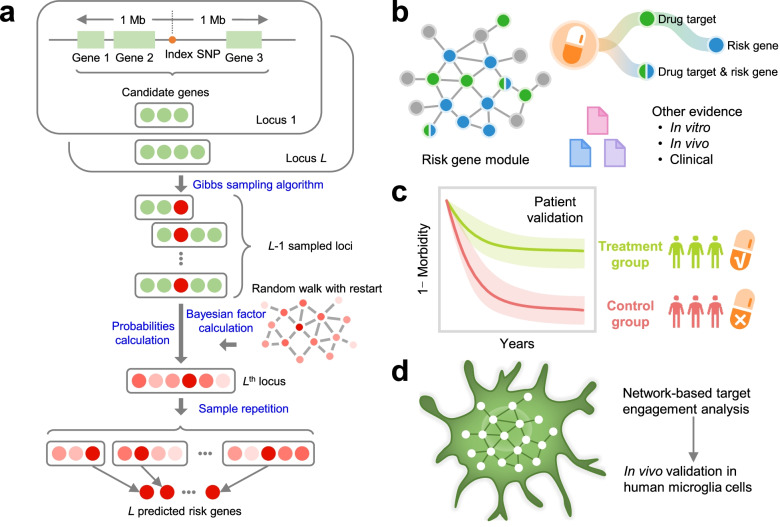
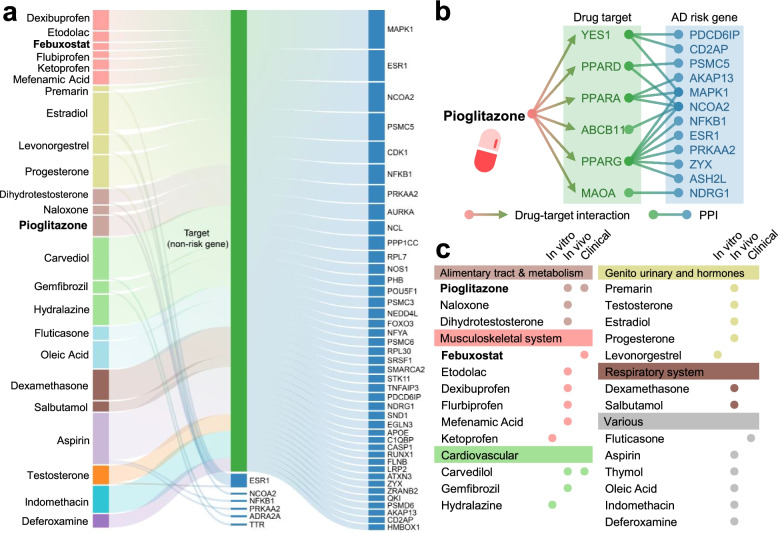
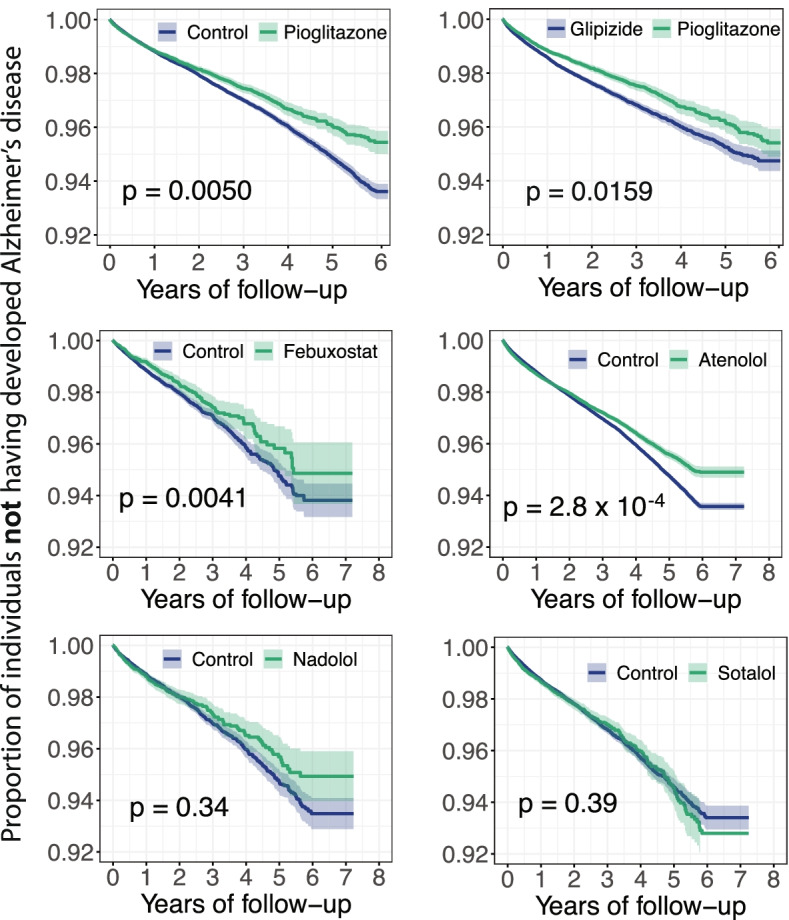
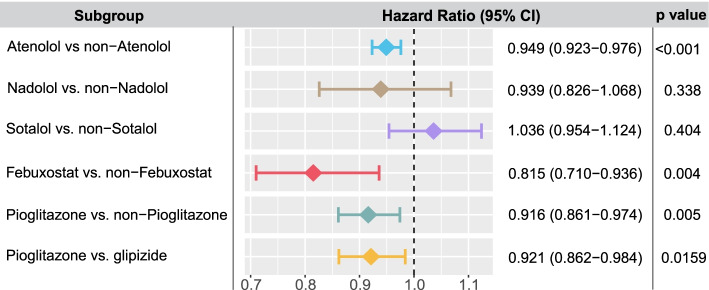
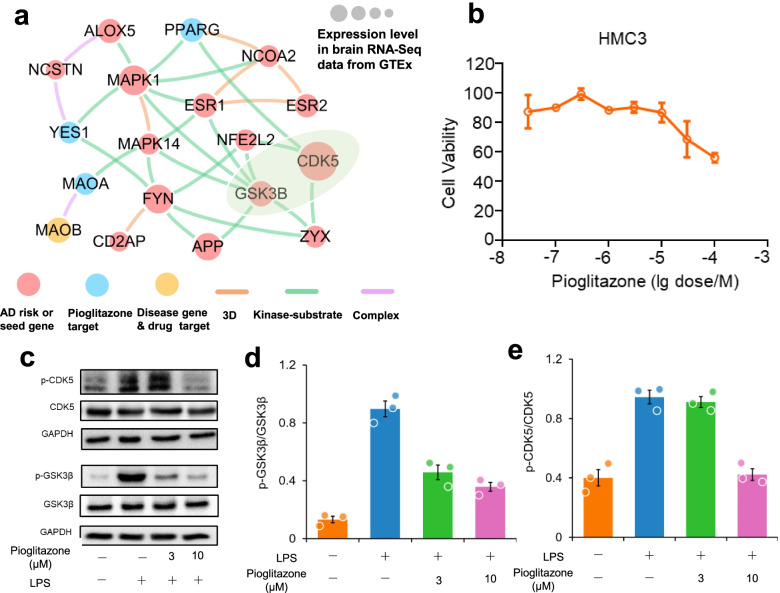
Background: Genome-wide association studies (GWAS) have identified numerous susceptibility loci for Alzheimer’s disease (AD). However, utilizing GWAS and multi-omics data to identify high-confidence AD risk genes (ARGs) and druggable targets that can guide development of new therapeutics for patients suffering from AD has heretofore not been successful. Methods: To address this critical problem in the field, we have developed a network-based artificial intelligence framework that is capable of integrating multi-omics data along with human protein–protein interactome networks to accurately infer accurate drug targets impacted by GWAS-identified variants to identify new therapeutics. When applied to AD, this approach integrates GWAS findings, multi-omics data from brain samples of AD patients and AD transgenic animal models, drug-target networks, and the human protein–protein interactome, along with large-scale patient database validation and in vitro mechanistic observations in human microglia cells. Results: Through this approach, we identified 103 ARGs validated by various levels of pathobiological evidence in AD. Via network-based prediction and population-based validation, we then showed that three drugs (pioglitazone, febuxostat, and atenolol) are significantly associated with decreased risk of AD compared with matched control populations. Pioglitazone usage is significantly associated with decreased risk of AD (hazard ratio (HR) = 0.916, 95% confidence interval [CI] 0.861–0.974, P = 0.005) in a retrospective case-control validation. Pioglitazone is a peroxisome proliferator-activated receptor (PPAR) agonist used to treat type 2 diabetes, and propensity score matching cohort studies confirmed its association with reduced risk of AD in comparison to glipizide (HR = 0.921, 95% CI 0.862–0.984, P = 0.0159), an insulin secretagogue that is also used to treat type 2 diabetes. In vitro experiments showed that pioglitazone downregulated glycogen synthase kinase 3 beta (GSK3β) and cyclin-dependent kinase (CDK5) in human microglia cells, supporting a possible mechanism-of-action for its beneficial effect in AD. Conclusions: In summary, we present an integrated, network-based artificial intelligence methodology to rapidly translate GWAS findings and multi-omics data to genotype-informed therapeutic discovery in AD.
Overview
The claims and statistics of this paper haven’t been checked yet.
Free: it reads the open-access text and checks the first 5 claims that cite a source we can check. Create a free account to check every claim.
Integrity signals
Registry
Cites
Statistics
Figures
Verification
Claims the paper makes
The claims and statistics of this paper haven’t been checked yet.
Free: it reads the open-access text and checks the first 5 claims that cite a source we can check. Create a free account to check every claim.
Claims other papers make about this one
Each is checked against this paper’s own text: does it say what the citing paper says it does?
The cited source says what the claim attributes to it.
In the citing paper
“the ability of AI to utilize genetic and multiomics data also demonstrates great potential for advancing the treatment of dementia”
From Multimodal neuroimaging and AI integration in cognitive disorders: advances, challenges, and future directions for precision medicine (2026) · cites this paper as Fang et al., 2022
The cited source says what the claim attributes to it.
In the citing paper
“The AD repurposing candidates suggested and validated by the five studies using real-world data for validation included fluticasone and mometasone (inhaled corticosteroids) (Xu et al., 2021), dexamethasone (a systemic corticosteroid) (Tang et al., 2022), pioglitazone (an antidiabetic drug) (Fang et al., 2022), febuxostat (a uric acid-lowering drug used in treatment of gout) (Fang et al., 2022),”
From Drug repurposing for Alzheimer’s disease from 2012–2022—a 10-year literature review (2023) · cites this paper as Fang et al., 2022
The cited source says what the claim attributes to it.
In the citing paper
“Four of these studies performed pharmacoepidemiologic investigations, three leveraging the MarketScan Medicare Supplementary Material (Fang et al., 2021;Xu et al., 2021;Fang et al., 2022) and the fourth utilizing Medicare claims data (Desai et al., 2022).”
From Drug repurposing for Alzheimer’s disease from 2012–2022—a 10-year literature review (2023) · cites this paper as Fang et al., 2022
Self-check
Percentages, sums and reported differences re-computed from the paper’s own numbers.
The self-check needs the paper’s full text.
Citations
Cites
WGCNA: an R package for weighted correlation network analysis
Langfelder, P., & Horvath, S. (2008) · BMC Bioinformatics · doi:10.1186/1471-2105-9-559 · Cited by 27,252
DrugBank 5.0: a major update to the DrugBank database for 2018
Wishart, D. S., Feunang, Y. D., Guo, A. C., Lo, E. J., Marcu, A., Grant, J. R., Sajed, T., Johnson, D., Li, C., Sayeeda, Z., et al. (2018) · Nucleic Acids Research · doi:10.1093/nar/gkx1037 · Cited by 8,404
Bindea, G., Mlecnik, B., Hackl, H., Charoentong, P., Tosolini, M., Kirilovsky, A., Fridman, W.-H., Pagès, F., Trajanoski, Z., & Galon, J. (2009) · Bioinformatics · doi:10.1093/bioinformatics/btp101 · Cited by 6,280 · cited 1×
“To advance disease understanding of networkpredicted high-confidence risk genes, we performed biological pathway enrichment analysis using ClueGO plugin in Cytoscape (Table S9) [55].”
MethodA Unique Microglia Type Associated with Restricting Development of Alzheimer’s Disease
Keren-Shaul, H., Spinrad, A., Weiner, A., Matcovitch-Natan, O., Dvir-Szternfeld, R., Ulland, T. K., David, E., Baruch, K., Lara-Astaiso, D., Toth, B., et al. (2017) · Cell · doi:10.1016/j.cell.2017.05.018 · Cited by 5,493 · cited 2×
“16.1) packages in R with steps complied with the original literature [24–27].”
MethodInfluentialMeta-Analysis of 74,046 Individuals Identifies 11 New Susceptibility Loci for Alzheimer’s Disease
(EADI), E. A. D. I., Lambert, J.-C., (GERAD), G. A. E. R. I. A. D., Alzheimer's Disease Genetic Consortium (ADGC), (CHARGE), C. F. H. A. A. R. I. G. E., Ibrahim-Verbaas, C. A., Harold, D., Naj, A. C., Sims, R., Bellenguez, C., et al. (2013) · Nature Genetics · doi:10.1038/ng.2802 · Cited by 4,336 · cited 1×
“Among them, APOE , ADAM10 , and SORL1 are well-known AD risk genes, validated by large-scale genetic studies and preclinical studies [6, 59, 60].”
BackgroundAlzheimer Disease: An Update on Pathobiology and Treatment Strategies
Long, J. M., & Holtzman, D. M. (2019) · Cell · doi:10.1016/j.cell.2019.09.001 · Cited by 3,204 · cited 3×
“S FDA for Alzheimer’s treatment in nearly 20 years; yet, its clinical efficacy is limited to a narrow segment of the AD continuum andpotential side effects [1, 9].”
BackgroundAlzheimer Disease Genetics Consortium (ADGC), Kunkle, B. W., The European Alzheimer’s Disease Initiative (EADI), Cohorts for Heart and Aging Research in Genomic Epidemiology Consortium (CHARGE), Genetic and Environmental Risk in AD/Defining Genetic, P. A. E. R. F. A. D. C. (., Grenier-Boley, B., Sims, R., Bis, J. C., Damotte, V., Naj, A. C., et al. (2019) · Nature Genetics · doi:10.1038/s41588-019-0358-2 · Cited by 2,946
An Expanded View of Complex Traits: From Polygenic to Omnigenic
Boyle, E. A., Li, Y. I., & Pritchard, J. K. (2017) · Cell · doi:10.1016/j.cell.2017.05.038 · Cited by 2,851 · cited 1×
“To maximize genetic signals based on the omnigenic hypothesis [20], we adopted a loose threshold ( P < 1 × 10 − 5 ) to collect and filter AD SNPs and finally obtained 106 unique GWAS SNPs for downstream analyses. systems; (2) kinase-substrate interactions by literature-derived low-throughput and…”
MethodSingle-cell transcriptomic analysis of Alzheimer’s disease
Mathys, H., Davila-Velderrain, J., Peng, Z., Gao, F., Mohammadi, S., Young, J. Z., Menon, M., He, L., Abdurrob, F., Jiang, X., et al. (2019) · Nature · doi:10.1038/s41586-019-1195-2 · Cited by 2,568 · cited 1×
“To validate the remaining 14 ARGs without any omics evidence, we further collected significantly expressed proteins or genes from the most recent human AD brain proteomic or transcriptomic studies [26, 48–51].”
MethodAn atlas of active enhancers across human cell types and tissues
The FANTOM Consortium, Andersson, R., Gebhard, C., Miguel-Escalada, I., Hoof, I., Bornholdt, J., Boyd, M., Chen, Y., Zhao, X., Schmidl, C., et al. (2014) · Nature · doi:10.1038/nature12787 · Cited by 2,550 · cited 3×
“The second data-set we used was from the Functional Annotation of the Mammalian Genome 5 (FANTOM5) project [22], in which cap analysis of gene expression (CAGE) technology was employed to infer enhancer-promoter links Comparison analyses were conducted to evaluate the predicted drug‑AD association…”
Method
Cited by
Items 101–146 of 146
Are trait‐associated genes clustered together in a gene network?
Koo, H. J., & Pan, W. (2024) · Genetic Epidemiology · doi:10.1002/gepi.22557 · Cited by 3
Yin, H. J., Li, Q., Yang, S., Zhang, C., Zhai, Y., Hou, H., & Yan, Q. (2024) · Holistic Integrative Oncology · doi:10.1007/s44178-024-00134-4 · Cited by 3
“Furthermore, it has demonstrated considerable success in the screening and diagnosis of lung cancer [87, 88], as well as in the identification of potential drug reuses for Alzheimer’s disease [89].”
Mo, J., Li, Z., Chen, H., Lu, Z., Ding, B., Yuan, X., Liu, Y., & Zhu, W. (2023) · Aging · doi:10.18632/aging.204789 · Cited by 2
“NMF is mainly used to explore the new therapeutical effect of drugs [11], and the rug-repurposing opportunities from one disease to another [12].”
BackgroundNavigating the Landscape of Alzheimer's Disease: From Epidemiology to Drug Re-purposing
Rathi, K., Bhole, R. P., Bansode, P., & Motghare, N. (2024) · Advances in Pharmacology and Pharmacy · doi:10.13189/app.2024.120206 · Cited by 2
Advances in Developing Small Molecule Drugs for Alzheimer's Disease
Zhang, W., Zhang, L., Lv, M., Fu, Y., Meng, X., Wang, M., & Wang, H. (2024) · Current Alzheimer Research · doi:10.2174/0115672050329828240805074938 · Cited by 1
Saleem, R. (2025) · Advances in computational intelligence and robotics book series · doi:10.4018/979-8-3693-6270-9.ch004 · Cited by 1
Guo, P., Guo, P., Zhao, J., Zhang, B., Wang, C., Bai, Y., & Liu, A. (2025) · Phytomedicine Plus · doi:10.1016/j.phyplu.2025.100853 · Cited by 2
Self-citationSingle‐cell analysis reveals neuroprotective histone deacetylase inhibitor pathways
Peyton, M., Jury, N., Liu, J., Beimfohr, C., Sunil, C., Brooks, S., Zhang, P., McCabe, S., Richardson, T. I., Huang, K., et al. (2026) · Alzheimer s & Dementia · doi:10.1002/alz.71108 · Cited by 2
“8 Clinicaltrialshaveexploreddiabetes medications, antimicrobials, and cardiovascular drugs.”
Self-citationGałuszewski, M., Olszewski, J., Jankowska, K., Wójcik, K., & Bielecka, A. (2026) · Journal of Clinical Medicine · doi:10.3390/jcm15072801 · Cited by 1
“In addition to pioglitazone, a significant association with reduced AD risk was also shown for febuxostat and atenolol [12].”
Drug repurposing in Alzheimer's disease: Emerging therapeutic strategies and promising candidates
More, P. S., Rangari, S. W., Lade, S. N., Unidrwade, D. S., Burle, S. S., Umekar, M. J., Lohiya, R. T., & Zanwar, A. S. (2026) · Ageing Research Reviews · doi:10.1016/j.arr.2026.103113 · Cited by 3
Li, J., Li, Y., Lin, S., Rao, J., & Zhao, H. (2026) · PLoS Computational Biology · doi:10.1371/journal.pcbi.1014323 · Cited by 1
“Several studies have developed computational frameworks to explore drug repurposing, including iGOLD [22], a network-based artificial intelligence framework [23].”
The Research Landscape of Metformin and Alzheimer’s Disease: A Bibliometric Analysis
Cheng, Q., & Xu, W. (2026) · BIO Web of Conferences · doi:10.1051/bioconf/202623701006 · Cited by 1
The Emerging Role of AI in Dementia Research and Healthcare
Ranson, J. M., Bucholc, M., Lyall, D. M., Newby, D., Winchester, L. M., Oxtoby, N. P., Veldsman, M., Rittman, T., Marzi, S. J., Skene, N., et al. (2022) · Brain informatics and health · doi:10.1007/978-981-19-5272-2_4 · Cited by 1
Introduction to aging and age-related disease
Fossel, M. (2024) · Elsevier eBooks · doi:10.1016/b978-0-443-15500-0.00001-3 · Cited by 1
Review: Applications of Artificial Intelligence in Dementia Research — R0/PR3
(2022) · Cambridge Prisms Precision Medicine · doi:10.1017/pcm.2022.10.pr3
Decision: Applications of Artificial Intelligence in Dementia Research — R1/PR8
(2022) · Cambridge Prisms Precision Medicine · doi:10.1017/pcm.2022.10.pr8
Review: Applications of Artificial Intelligence in Dementia Research — R0/PR2
(2022) · Cambridge Prisms Precision Medicine · doi:10.1017/pcm.2022.10.pr2
Decision: Applications of Artificial Intelligence in Dementia Research — R0/PR5
(2022) · Cambridge Prisms Precision Medicine · doi:10.1017/pcm.2022.10.pr5
Recommendation: Applications of Artificial Intelligence in Dementia Research — R1/PR7
(2022) · Cambridge Prisms Precision Medicine · doi:10.1017/pcm.2022.10.pr7
Author comment: Applications of Artificial Intelligence in Dementia Research — R1/PR6
Tsoi, K. K. F. (2022) · Cambridge Prisms Precision Medicine · doi:10.1017/pcm.2022.10.pr6
Recommendation: Applications of Artificial Intelligence in Dementia Research — R0/PR4
(2022) · Cambridge Prisms Precision Medicine · doi:10.1017/pcm.2022.10.pr4
Author comment: Applications of Artificial Intelligence in Dementia Research — R0/PR1
Tsoi, K. K. F. (2022) · Cambridge Prisms Precision Medicine · doi:10.1017/pcm.2022.10.pr1
Research on drug relocation methods based on network pharmacology
Wang, X., Wang, H., & Wang, J. (2025) · International Conference on Optoelectronic Information and Optical Engineering (OIOE) · doi:10.1117/12.3045998
New Progress in the Treatment of Alzheimer’s Disease
朱, 玉. (2025) · Advances in Clinical Medicine · doi:10.12677/acm.2025.1561810
Identification of novel SIRT1 up-regulators using a cell-based high-throughput screening assay
Shen, Y., Yang, H., Gao, P., Lu, W., Cao, Q., Yang, H., Du, G., & Li, L. (2025) · European Journal of Pharmacology · doi:10.1016/j.ejphar.2025.178066
Self-citationRecent Advances and Strategies in Drug Repurposing for Alzheimer’s Disease Therapy
Kim, S., Woo, H., Chae, S., & Kim, J. E. (2025) · KSBB Journal · doi:10.7841/ksbbj.2025.40.4.327
From Code to Cure: Computational Strategies in Drug Repurposing
Sijina, K. P., & Rajanikant, G. K. (2025) · Springer handbooks · doi:10.1007/978-3-031-81728-1_32 · Cited by 1
Artificial intelligence: Relevance and applications in dementia
Raghavan, S., Gebre, R. K., & Vemuri, P. (2026) · Elsevier eBooks · doi:10.1016/b978-0-443-26466-5.00005-2
Reimer, R. J., Soper, B., Wilson, J. L., Gonçalves, A. R., Pico, J. E. C., Suarez, P., Gryshuk, A. L., Osborne, T. F., Grimes, K., & Ray, P. (2026) · The Lancet Digital Health · doi:10.1016/j.landig.2025.100963
Stable feature selection for multi-locus Genome-Wide Association Studies
Nouira, A. (2022) · theses.fr (ABES) · doi:10.70675/931575a0z1fc7z401fza336zf81fa5ba9b98
Jenseits von APP, PSEN1, PSEN2 und APOE – was lehrt uns das Genom noch?
Behl, C. (2026) · Springer eBooks · doi:10.1007/978-3-662-72210-7_16
Liu, K., Li, J.-L., Chen, Y., Li, Y.-X., Deng, J., Gong, Y., Cao, C., Zeng, Q., Xiao, Z.-W., Wen, K.-Z., et al. (2026) · Drug Design Development and Therapy · doi:10.2147/dddt.s544803 · Cited by 1
“2,22,23 Initially, known drug targets were mapped to the human proteome, which was subsequently mapped to disease modules.”
Sahoo, S. K., Tripathy, B., & Khadanga, M. (2026) · Current Bioinformatics · doi:10.2174/0115748936413988251219064552
Artificial Intelligence in Drug Discovery: Scoping Review with ☸️SAIMSARA
SAIMSARA (2026) · SAIMSARA Journal · doi:10.62487/saimsara62d4eb26
The Role of Artificial Intelligence for Drug Repurposing in Alzheimer’s Disease
Guntupalli, S., Bykova, M., Martin, W., & Cheng, F. (2026) · Topics in medicinal chemistry · doi:10.1007/7355_2026_191
Self-citationChallenges in recent Alzheimer's disease therapeutic approaches
Kim, C.-H. (2026) · Elsevier eBooks · doi:10.1016/b978-0-443-45844-6.00017-2
Transforming Dementia Caregiving Through Assistive Technologies
Zhang, Q., Wu, Y., & Xu, L. (2026) · Frontiers research topics · doi:10.3389/978-2-8325-8067-7
Rakhmanovich, A. I., qizi, M. A. M., Rizoyevna, K. L., Tulkinovich, E. A., Tursunovich, S. A., & o'g'li, S. S. H. (2026) · International Journal of Drug Delivery Technology · doi:10.25258/ijddt.16.44s.15
“Mellitus: A Network Pharmacology Approach while the GLP-1 receptor agonist liraglutide showed highly promising clinical efficacy in the Phase 2b ELAD trial [8,20].”
InfluentialGao, T.-L., Geng, S., Chen, J., Yang, L., Nie, Y.-J., Yu, H., & Chai, G. (2026) · Translational Psychiatry · doi:10.1038/s41398-026-04199-9
Chen, F., Wang, L., Liu, H., Khan, Q., Tang, B., & Bao, N. (2026) · Journal of Nanobiotechnology · doi:10.1186/s12951-026-04551-7
“In another study, Fang et al. [289] tested pioglitazone in human microglia cells in AD.”
Leveraging Advanced AI Frameworks for Dual PPAR α/γ Agonist Discovery in Alzheimer’s Disease
Chaturvedi, N., Mishra, V., Haque, S., Khatoon, S., Rawal, K., & Kumar, V. (2026) · ACS Chemical Neuroscience · doi:10.1021/acschemneuro.6c00148
Hiraoka, M., Ariwansa, D., Abiko, Y., Paudel, D., Yoshida, S., Okamoto, K., Sato, N., Nagata, K., & Hirano, M. (2026) · Scientific Reports · doi:10.1038/s41598-026-65466-9
The global research of artificial intelligence on Alzheimer disease: A 25-year bibliometric analysis
Wu, H., Wang, X.-S., Yang, M., & Cai, J. (2026) · Medicine · doi:10.1097/md.0000000000050370
Brain‐Targeting siRNA Delivery to Tackle Alzheimer's Disease
Yang, Q., Chen, Z., Zhu, J., Chai, T., Tang, F., Fan, M., Li, Y., Chen, S., Liu, Y., & Zheng, M. (2026) · Wiley Interdisciplinary Reviews Nanomedicine and Nanobiotechnology · doi:10.1002/wnan.70076
Wang, J., Li, Z., Wang, T., Jiang, L., Sharif, A., Takechi, R., Li, T., Chong, L. H., Fang, F., Pang, Z., et al. (2026) · Acta Pharmaceutica Sinica B · doi:10.1016/j.apsb.2026.09.013
Li, X., & Gozes, I. (2026) · Frontiers in Pharmacology · doi:10.3389/fphar.2026.1999276
Metadata
- Authors
- Fang, J., Zhang, P., Wang, Q., Chiang, C.-W., Zhou, Y., Hou, Y., Xu, J., Chen, R., Zhang, B., Lewis, S. J., Leverenz, J. B., Pieper, A. A., Li, B., Li, L., Cummings, J., & Cheng, F.
- Affiliations
- Cleveland Clinic (US)
- Indiana University Indianapolis (US)
- Vanderbilt University (US)
- The Ohio State University (US)
- Case Western Reserve University (US)
- University Hospitals of Cleveland (US)
- University of Nevada, Las Vegas (US)
- Corresponding author
- Li, Bingshan
- Li, Lang
- Cheng, Feixiong
- ORCID
- Venue
- Alzheimer's Research & Therapy
- Published
- 2022-01-10
- Volume
- 14
- Issue
- 1
- Pages
- 7-7
- ISSN
- 1758-9193 (ISSN-L)
- PMC
- PMC8751379
- OpenAlex
- W4206508717
- Semantic Scholar
- cd604bd0cb6056ac1da0753284c61168bb5aaf7b
- Cited by
- 140
- References
- 102
- Citations by year
- 2026: 23 · 2025: 38 · 2024: 27 · 2023: 20 · 2022: 25
- FWCI
- 17.03
- Type
- journal article
- Language
- en
- Open access
- gold
- doi.org
- Licence
- cc-by
- creativecommons.org/licenses/by/4.0 (tdm)
- creativecommons.org/licenses/by/4.0 (vor)
- Locations
- Alzheimer s Research & Therapy (publishedVersion, cc-by)
- medRxiv (acceptedVersion)
- PubMed Central (publishedVersion, cc-by)
- PubMed (publishedVersion)
- Purdue University Indianapolis (Indiana University) (submittedVersion, other-oa)
- Digital Scholarship - UNLV (University of Nevada Reno) (submittedVersion, cc-by)
- DOAJ (DOAJ: Directory of Open Access Journals) (submittedVersion, cc-by-sa)
- eScholarship (California Digital Library) (submittedVersion, cc-by)
- IUScholarWorks (Indiana University) (submittedVersion, cc-by)
- Funders
- National Institute on Aging (R01AG066707, 3R01AG066707-01S1, R01AG069900, R35AG71476, R56AG063870, P30AG072959)
- Foundation for the National Institutes of Health (U01AG073323)
- National Institutes of Health (3R01AG066707-02S1)
- Topics
- Life Sciences › Neuroscience › Cellular and Molecular Neuroscience › Alzheimer's disease research and treatments
- Life Sciences › Pharmacology, Toxicology and Pharmaceutics › Drug Discovery › Computational Drug Discovery Methods
- Life Sciences › Biochemistry, Genetics and Molecular Biology › Molecular Biology › Bioinformatics and Genomic Networks
- Keywords
- Alzheimer's disease, drug repurposing, drug target identification, pioglitazone, febuxostat, atenolol, PPAR agonists, GSK3β, cyclin-dependent kinase 5, microglia, protein-protein interaction network, multi-omics integration, type 2 diabetes drugs, glipizide, Alzheimer's disease risk genes
- MeSH terms
- Alzheimer Disease, Animals, Artificial Intelligence, Diabetes Mellitus, Type 2, Humans, Retrospective Studies, Genome-Wide Association Study, Drug Repositioning
About these checks
Registry, retraction, Cites and statistics results are computed, not judged, with one exception: a printed reference that no index lists is read once by a model before it counts as a citation error. Claims are extracted by a model and kept only when their quote appears verbatim in the text; each cited source is then checked, with a model’s help, for whether it says what the claim relies on. Those verdicts can be wrong — read the claim’s quote and the cited source before relying on one.
Statistics and arithmetic are recomputed, not judged.
Confidence bands are shown only for fields calibrated on our annotated test set. None is calibrated yet, so no band is shown.
What counts as a claim ›How we measure confidence ›How we check this ›
Are you an author, or do you see a problem with this page? Request a review
Data sources
Bibliographic data: Semantic Scholar, OpenAlex, Crossref.
Contains information from the Semantic Scholar Academic Graph Datasets, made available under the ODC Attribution License (ODC-BY 1.0).
Semantic Scholar’s data is described in: Kinney, R., et al. (2023). The Semantic Scholar Open Data Platform. arXiv:2301.10140.
