

Effects of intensive lifestyle changes on the progression of mild cognitive impairment or early dementia due to Alzheimer’s disease: a randomized, controlled clinical trial
Open accessThe DOI matches its Crossref record; 41 of the 41 references it cites were found in a registry or an index; none of the 16 sources its claims cite is checked for support yet.
Abstract
Background: Evidence links lifestyle factors with Alzheimer’s disease (AD). We report the first randomized, controlled clinical trial to determine if intensive lifestyle changes may beneficially affect the progression of mild cognitive impairment (MCI) or early dementia due to AD. Methods: A 1:1 multicenter randomized controlled phase 2 trial, ages 45-90 with MCI or early dementia due to AD and a Montreal Cognitive Assessment (MoCA) score of 18 or higher. The primary outcome measures were changes in cognition and function tests: Clinical Global Impression of Change (CGIC), Alzheimer’s Disease Assessment Scale (ADAS-Cog), Clinical Dementia Rating–Sum of Boxes (CDR-SB), and Clinical Dementia Rating Global (CDR-G) after 20 weeks of an intensive multidomain lifestyle intervention compared to a wait-list usual care control group. ADAS-Cog, CDR-SB, and CDR-Global scales were compared using a Mann-Whitney-Wilcoxon rank-sum test, and CGIC was compared using Fisher’s exact test. Secondary outcomes included plasma Aβ42/40 ratio, other biomarkers, and correlating lifestyle with the degree of change in these measures. Results: Fifty-one AD patients enrolled, mean age 73.5. No significant differences in any measures at baseline. Only two patients withdrew. All patients had plasma Aβ42/40 ratios <0.0672 at baseline, strongly supporting AD diagnosis. After 20 weeks, significant between-group differences in the CGIC ( p = 0.001), CDR-SB ( p = 0.032), and CDR Global ( p = 0.037) tests and borderline significance in the ADAS-Cog test ( p = 0.053). CGIC, CDR Global, and ADAS-Cog showed improvement in cognition and function and CDR-SB showed significantly less progression, compared to the control group which worsened in all four measures. Aβ42/40 ratio increased in the intervention group and decreased in the control group ( p = 0.003). There was a significant correlation between lifestyle and both cognitive function and the plasma Aβ42/40 ratio. The microbiome improved only in the intervention group ( p <0.0001). Conclusions: Comprehensive lifestyle changes may significantly improve cognition and function after 20 weeks in many patients with MCI or early dementia due to AD. Trial registration: Approved by Western Institutional Review Board on 12/31/2017 (#20172897) and by Institutional Review Boards of all sites. This study was registered retrospectively with clinicaltrials.gov on October 8, 2020 (NCT04606420, ID: 20172897).
Overview
CoChat Summary
TL;DR
In a 20-week randomized controlled trial of 51 patients with MCI or early dementia due to Alzheimer’s disease, an intensive multimodal lifestyle intervention was associated with significantly better cognition/function on several standard measures than a usual-care control group. The intervention group also showed a beneficial increase in plasma Aβ42/40 ratio and microbiome changes, while the control group worsened.
Key findings
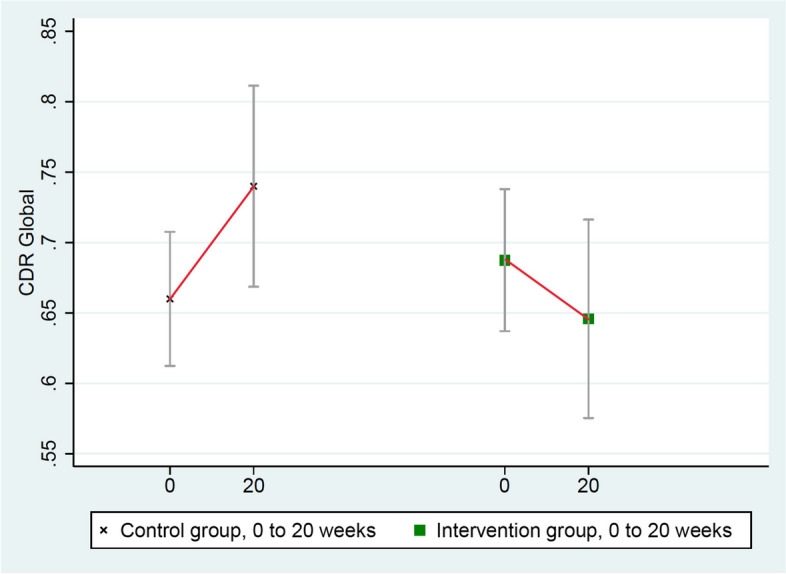
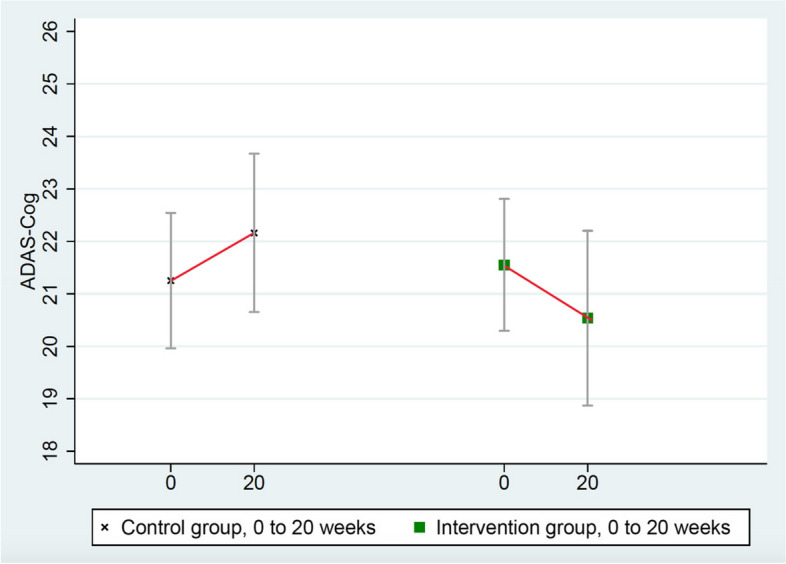
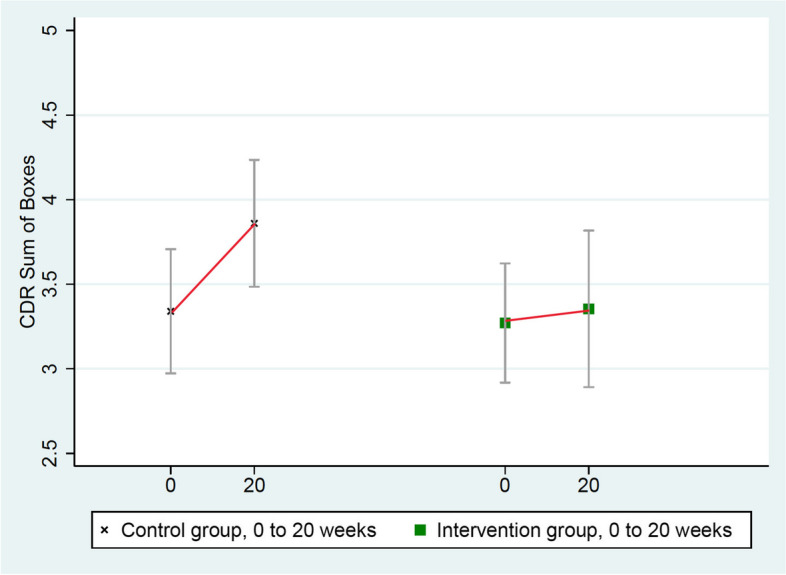
- After 20 weeks, between-group differences were significant for CGIC (p = 0.001), CDR-SB (p = 0.032), and CDR Global (p = 0.037), with borderline significance for ADAS-Cog (p = 0.053); CGIC, CDR Global, and ADAS-Cog improved in the intervention group, and CDR-SB showed less progression, while the control group worsened on all four measures.
- In a sensitivity analysis excluding one intervention-group outlier, all four cognition/function measures were statistically significant: ADAS-Cog p = 0.028, CDR-SB p = 0.046, CDR-Global p = 0.037, and CGIC p = 0.001.
- Plasma Aβ42/40 ratio increased in the intervention group and decreased in the control group (p = 0.003); the microbiome improved only in the intervention group (p < 0.0001).
- Significant correlations were reported between degree of lifestyle change and change in cognition/function measures and in the plasma Aβ42/40 ratio; substantial adherence was associated with stopping progression (e.g., 71.4% for ADAS-Cog, 95.6% for CDR-Global, 120.6% for CDR-SB).
Methods
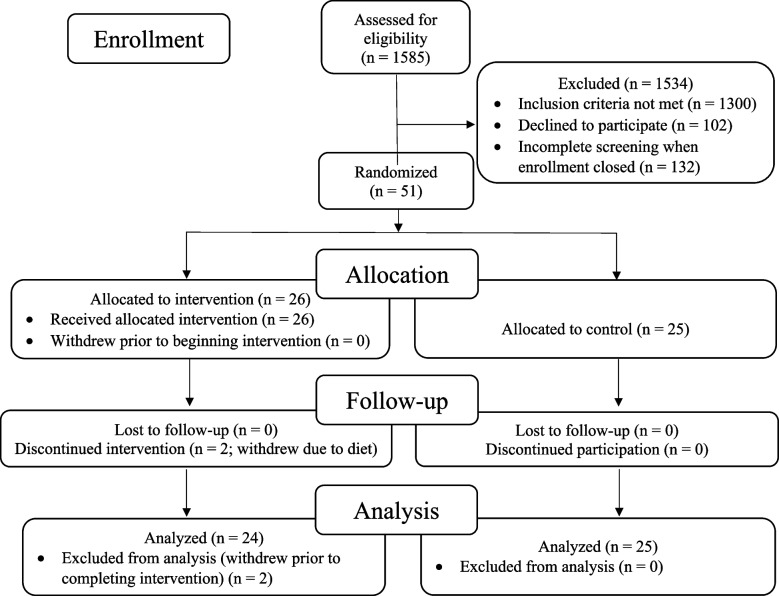
- 1:1 multicenter randomized controlled phase 2 trial enrolling adults ages 45–90 with MCI or early dementia due to AD and MoCA score ≥18; 51 enrolled (26 intervention, 25 control), 2 intervention-group withdrawals, 49 analyzed, mean age 73.5.
- Intervention: 20 weeks of intensive multimodal lifestyle changes including a whole-foods plant-based diet, exercise, stress management, group support, and supplements; control: wait-list usual care asked not to make lifestyle changes for 20 weeks.
- Primary outcomes: CGIC, ADAS-Cog, CDR-SB, and CDR Global; ADAS-Cog, CDR-SB, and CDR-Global compared with Mann-Whitney-Wilcoxon rank-sum tests, CGIC with Fisher’s exact test; secondary outcomes included plasma Aβ42/40 ratio, other biomarkers, and microbiome.
Limitations
- The paper states only 51 patients were enrolled and two withdrew; the small sample limits generalizability, especially with less racial and ethnic diversity than sought, and 20 weeks is relatively short for MCI/early dementia due to AD.
- The paper states subjects could not be blinded to lifestyle intervention, no direct measures of brain structure were included, not all intervention patients improved, and the dose-response analysis combined groups so was no longer randomized and could have unknown confounding.
- The text also makes evident protocol impacts from COVID-19: planned MRI and amyloid PET scans became infeasible, cognition/function testing was reduced, recruitment was terminated early due to recruitment challenges and limited funding, and the trial was registered retrospectively due to an administrative error.
Model-written summary. Check it against the paper before relying on it.
Integrity signals
Registry
Cites
Statistics
Figures
Verification
Claims the paper makes
0 Valid · 0 Not valid · 13 Not checked · 97 Own results and interpretations
A result the paper reports from its own data — it cites no other source for it, so there is none to check. The quote shows it is in the paper.
In the paper
“Correlation with lifestyle at 20 weeks: p < 0.0001; correlation: 0.678”
§ Effects of intensive lifestyle changes on the progression of mild cognitive impairment or early dementia due to Alzheimer’s disease: a randomized, controlled clinical trial > Correlation of lifestyle index and cognitive function > LDL-cholesterol
plainstates an association- Asserted: passes — The authors put it forward as true.
- Checkable: passes — It can be checked against evidence.
- Load-bearing: unclear — It is unclear whether the paper’s conclusions depend on it.
- Based: passes — The paper gives a reason why it holds.
A result the paper reports from its own data — it cites no other source for it, so there is none to check. The quote shows it is in the paper.
In the paper
“Correlation with degree of change in lifestyle: p = 0.068; correlation: 0.266”
§ Effects of intensive lifestyle changes on the progression of mild cognitive impairment or early dementia due to Alzheimer’s disease: a randomized, controlled clinical trial > Correlation of lifestyle index and cognitive function > Plasma Aβ42/40 ratio
plainstates an association- Asserted: passes — The authors put it forward as true.
- Checkable: passes — It can be checked against evidence.
- Load-bearing: unclear — It is unclear whether the paper’s conclusions depend on it.
- Based: passes — The paper gives a reason why it holds.
A result the paper reports from its own data — it cites no other source for it, so there is none to check. The quote shows it is in the paper.
In the paper
“Correlation with degree of change in lifestyle: p= 0.015; correlation: 0.317”
§ Effects of intensive lifestyle changes on the progression of mild cognitive impairment or early dementia due to Alzheimer’s disease: a randomized, controlled clinical trial > Correlation of lifestyle index and cognitive function > ADAS-Cog
plainstates an association- Asserted: passes — The authors put it forward as true.
- Checkable: passes — It can be checked against evidence.
- Load-bearing: unclear — It is unclear whether the paper’s conclusions depend on it.
- Based: passes — The paper gives a reason why it holds.
A result the paper reports from its own data — it cites no other source for it, so there is none to check. The quote shows it is in the paper.
In the paper
“we found statistically significant correlations between the degree of lifestyle change (from baseline to 20 weeks) and the degree of change in three of four measures of cognition and function”
§ Effects of intensive lifestyle changes on the progression of mild cognitive impairment or early dementia due to Alzheimer’s disease: a randomized, controlled clinical trial > Correlation of lifestyle index and cognitive function
plainstates an association- Asserted: passes — The authors put it forward as true.
- Checkable: passes — It can be checked against evidence.
- Load-bearing: passes — The paper’s conclusions depend on it.
- Based: passes — The paper gives a reason why it holds.
A result the paper reports from its own data — it cites no other source for it, so there is none to check. The quote shows it is in the paper.
In the paper
“Correlation with degree of change in lifestyle: p = 0.007; correlation: 0.383”
§ Effects of intensive lifestyle changes on the progression of mild cognitive impairment or early dementia due to Alzheimer’s disease: a randomized, controlled clinical trial > Correlation of lifestyle index and cognitive function > Glyc-A
plainstates an association- Asserted: passes — The authors put it forward as true.
- Checkable: passes — It can be checked against evidence.
- Load-bearing: unclear — It is unclear whether the paper’s conclusions depend on it.
- Based: passes — The paper gives a reason why it holds.
34 more claims
Create a free account to see all 110 claims and to verify the 16 references still open.
- It may state two separate claims as one. 51
- Probably not a substantial claim. 31
Claims other papers make about this one
Each is checked against this paper’s own text: does it say what the citing paper says it does?
In the citing paper
“the authors used one-tailed level 0.05 tests of their primary outcomes, a departure from the more typical two-tailed level 0.05 tests (or one-tailed level 0.025 tests) that leave open the possibility of an intervention resulting in benefit or harm”
From Effects of intensive lifestyle changes on the progression of mild cognitive impairment or early dementia due to Alzheimer’s disease: the need for rigor (2025) · cites this paper as [1]
In the citing paper
“Ornish and colleagues indicate that prespecified power calculations informed the need for a trial of no less than 100 patients, but that slow recruitment and the COVID-19 pandemic forced closure of the trial early, after just 51 participants were randomized.”
From Effects of intensive lifestyle changes on the progression of mild cognitive impairment or early dementia due to Alzheimer’s disease: the need for rigor (2025) · cites this paper as [1]
Self-check
Percentages, sums and reported differences re-computed from the paper’s own numbers.
Rated minor: it would not touch a result — a value no result rests on, a p-value that stays on the same side of the significance level, or a conflict that is clerical, resolved elsewhere in the paper, or outside its own findings.
In the paper
“| Male | 13 | 42.9 | 19 | 73.1 | 0.153 |”
§ Effects of intensive lifestyle changes on the progression of mild cognitive impairment or early dementia due to Alzheimer’s disease: a randomized, controlled clinical trial > Results
Reported 42.9 · recomputed 52
Cited works that were retracted
Works this paper cites that were later retracted, from the retraction notices publishers deposit. Major when the notice came out before this paper was published.
Rated major: it would touch a result — a value a result rests on, reported and recomputed p-values on opposite sides of the significance level, two passages that conflict with no sign which is right, or a cited work retracted before this paper was published.
In the paper
“For example, a Lancet commission on dementia prevention, intervention, and care listed 12 potentially modifiable risk factors that together account for an estimated 40% of the global burden of dementia [1].”
Cited work 10.1016/s0140-6736(20)30367-6 · retracted 2023-05-01 · notice 10.1016/s2468-2667(23)00083-x · this paper published 2024-06-07
Citations
Cites
1 retracted
Dementia prevention, intervention, and care: 2020 report of the Lancet Commission
Livingston, G., Huntley, J., Sommerlad, A., Ames, D., Ballard, C., Banerjee, S., Brayne, C., Burns, A., Cohen-Mansfield, J., Cooper, C., et al. (2020) · The Lancet · doi:10.1016/s0140-6736(20)30367-6 · Cited by 10,430 · cited 1×
“For example, a Lancet commission on dementia prevention, intervention, and care listed 12 potentially modifiable risk factors that together account for an estimated 40% of the global burden of dementia [1].”
BackgroundRetractedMcKhann, G. M., Knopman, D. S., Chertkow, H., Hyman, B. T., Jack, C. R., Kawas, C. H., Klunk, W. E., Koroshetz, W. J., Manly, J. J., Mayeux, R., et al. (2011) · Alzheimer's & Dementia · doi:10.1016/j.jalz.2011.03.005 · Cited by 18,657 · cited 1×
“An initial inclusion criterion of “current diagnosis of mild to moderate dementia due to AD (McKhann et al., 2011)” was further clarified to include a MoCA score of 18 or higher.”
BackgroundAlbert, M. S., DeKosky, S. T., Dickson, D., Dubois, B., Feldman, H. H., Fox, N. C., Gamst, A., Holtzman, D. M., Jagust, W. J., Petersen, R. C., et al. (2011) · Alzheimer's & Dementia · doi:10.1016/j.jalz.2011.03.008 · Cited by 10,152
Lecanemab in early Alzheimer's disease
van Dyck, C. H., Swanson, C. J., Aisen, P., Bateman, R. J., Chen, C., Gee, M., Kanekiyo, M., Li, D., Reyderman, L., Cohen, S., et al. (2023) · New England Journal of Medicine · doi:10.1056/nejmoa2212948 · Cited by 5,678 · cited 2×
“Anti-amyloid antibodies have shown modest effects on slowing progression, but they are expensive, have potential for adverse events, are not yet widely available, and do not result in overall cognitive improvement [40].”
BackgroundNgandu, T., Lehtisalo, J., Solomon, A., Levälahti, E., Ahtiluoto, S., Antikainen, R., Bäckman, L., Hänninen, T., Jula, A., Laatikainen, T., et al. (2015) · The Lancet · doi:10.1016/s0140-6736(15)60461-5 · Cited by 3,689 · cited 1×
“…Incidence of Dementia (CAIDE) dementia risk scores of at least 6 points and cognition at mean or slightly lower, a multimodal intervention of diet, exercise, cognitive training, vascular risk monitoring maintained cognitive function after 2 years in older adults at increased risk of dementia [8].”
BackgroundSelf-citationCan lifestyle changes reverse coronary heart disease?
Ornish, D., Brown, S. E., Billings, J. H., Scherwitz, L. W., Armstrong, W. T., Ports, T. A., McLanahan, S. M., Kirkeeide, R. L., Gould, K. L., & Brand, R. J. (1990) · The Lancet · doi:10.1016/0140-6736(90)91656-u · Cited by 2,338
Self-citationIntensive Lifestyle Changes for Reversal of Coronary Heart Disease
Ornish, D. (1998) · JAMA · doi:10.1001/jama.280.23.2001 · Cited by 1,730 · cited 1×
“…this lifestyle index (i.e., the degree of lifestyle changes) and changes in the degree of coronary atherosclerosis (percent diameter stenosis) in coronary heart disease; [41, 45] changes in PSA levels and LNCaP cell growth in men with prostate cancer; [42] and changes in telomere length [43].”
BackgroundSelf-citationConsumption of Fish and n-3 Fatty Acids and Risk of Incident Alzheimer Disease
Morris, M. C., Evans, D. A., Bienias, J. L., Tangney, C. C., Bennett, D. A., Wilson, R. S., Aggarwal, N., & Schneider, J. (2003) · Archives of Neurology · doi:10.1001/archneur.60.7.940 · Cited by 1,135 · cited 1×
“Omega-3 fatty acids: In those age 65 or older, those consuming omega-3 fatty acids once/ week or more had a 60% lower risk of developing AD, and total intake of n-3 polyunsaturated fatty acids was associated with reduced risk of Alzheimer disease [24].”
BackgroundWorld‐Wide FINGERS Network: A global approach to risk reduction and prevention of dementia
Kivipelto, M., Mangialasche, F., Snyder, H. M., Allegri, R., Andrieu, S., Arai, H., Baker, L., Belleville, S., Brodaty, H., Brucki, S. M., et al. (2020) · Alzheimer's & Dementia · doi:10.1002/alz.12123 · Cited by 553 · cited 1×
“Other large-scale multidomain intervention studies to determine if this intervention can help prevent dementia are being conducted or planned in over 60 countries worldwide, as part of the World-Wide FINGERS network, including the POINTER study in the U.S. [12, 13].”
BackgroundSelf-citationRingman, J. M., Frautschy, S. A., Teng, E., Begum, A. N., Bardens, J., Beigi, M., Gylys, K. H., Badmaev, V., Heath, D. D., Apostolova, L. G., et al. (2012) · Alzheimer's Research & Therapy · doi:10.1186/alzrt146 · Cited by 541 · cited 1×
“Curcumin targets inflammatory and antioxidant pathways as well as (directly) amyloid aggregation, [25] although there may be problems with bioavailability and crossing the blood-brain barrier [26].”
Background
Research works printed but not linked: 4
- Ornish D Ornish A UnDo It 2019 New York Ballantine Books
- Kivipelto M, Mangialasche F, Snyder H M, Allegri R, Andrieu S, Arai H, Baker L, Belleville S, Brodaty H, Brucki SM, Calandri I, Caramelli P, Chen C, Chertkow H, Chew E, Choi S H, Chowdhary N, Crivelli L, De La Torre R, Du Y, Dua T, Espeland M, Feldman H H, Hartmanis M, Hartmann T, Heffernan M, Henry C J, Hong C H, Håkansson K, Iwatsubo T, Jeong J H, Jimenez‐Maggiora G, Koo E H, Launer L J, Lehtisalo J, Lopera F, Martínez‐Lage P, Martins R, Middleton L, Molinuevo J L, Montero‐Odasso M, Moon S Y, Morales‐Pérez K, Nitrini R, Nygaard H B, Park Y K, Peltonen M, Qiu C, Quiroz Y T, Raman R, Rao N, Ravindranath V, Rosenberg A, Sakurai T, Salinas R M, Scheltens P, Sevlever G, Soininen H, Sosa A L, Suemoto C K, Tainta‐Cuezva M, Velilla L, Wang Y, Whitmer R, Xu X, Bain L J, Solomon A, Ngandu T, Carillo, M C. World‐Wide FINGERS Network: A global approach to risk reduction and prevention of dementia. Alzheimer's Dement. 2020, 10.1002/alz.12123. · DOI · Paper page
- Horsley K Unlimited Memory 2016 Granger Indiana TCK Publishing
- Ornish D Scherwitz LW Billings JH Brown SE Gould KL Merritt TA Sparler S Armstrong WT Ports TA Kirkeeide RL Hogeboom C Brand RJ Intensive lifestyle changes for reversal of coronary heart disease JAMA 1998 280 23 2001 7 10.1001/jama.280.23.2001 9863851 · DOI · Paper page
Cited by
van Zonneveld, S. M., van den Oever, E. J., Haarman, B. C. M., Grandjean, E. L., Nuninga, J. O., van de Rest, O., & Sommer, I. E. (2024) · Nutrients · doi:10.3390/nu16162646 · Cited by 96
“A recent RCT (n = 51) investigated the impact of intensive lifestyle changes, including a Mediterranean-style diet, on patients with mild cognitive impairment or early-stage AD [40].”
BackgroundGlobal Diseases Deserve Global Solutions: Alzheimer’s Disease
Twiss, E., McPherson, C., & Weaver, D. F. (2025) · Neurology International · doi:10.3390/neurolint17060092 · Cited by 72
“Among the twenty-four patients in the intervention group, ten reported improvements in their cognitive function; no patients in the control group (no lifestyle interventions) experienced any cognitive improvement [82].”
Novelties on Neuroinflammation in Alzheimer’s Disease–Focus on Gut and Oral Microbiota Involvement
Popescu, C., Munteanu, C., Anghelescu, A., Ciobanu, V., Spînu, A., Andone, I., Mandu, M., Bistriceanu, R., Băilă, M., Postoiu, R.-L., et al. (2024) · International Journal of Molecular Sciences · doi:10.3390/ijms252011272 · Cited by 63
“By tailoring interventions based on an individual’s specific microbiota profile, better clinical outcomes may be possible [109].”
BackgroundThe complex relationship between gut microbiota and Alzheimer’s disease: A systematic review
Zhou, X.-P., Sun, L.-B., Liu, W., Zhu, W.-M., Li, L.-C., Song, X., Xing, J.-P., & Gao, S. (2024) · Ageing Research Reviews · doi:10.1016/j.arr.2024.102637 · Cited by 57
Kurhaluk, N., Kołodziejska, R., Kamiński, P., & Ткаченко, Г. М. (2025) · International Journal of Molecular Sciences · doi:10.3390/ijms262311706 · Cited by 45
Xie, H., Jiang, J., Cao, S., Xu, X., Zhou, J., Zhang, R., Huang, B., Lu, P., Peng, L., & Liu, M. (2025) · International Journal of Molecular Sciences · doi:10.3390/ijms26031373 · Cited by 35
Gut microbiota metabolites: potential therapeutic targets for Alzheimer’s disease?
Zhang, S., Lu, J., Jin, Z., Xu, H., Zhang, D., Chen, J., & Wang, J. (2024) · Frontiers in Pharmacology · doi:10.3389/fphar.2024.1459655 · Cited by 31
Gut-brain relationship in dementia and Alzheimer's disease: Impact on stress and immunity
Mukherjee, U., & Reddy, P. H. (2025) · Ageing Research Reviews · doi:10.1016/j.arr.2025.102843 · Cited by 30
Maggiore, A., Latina, V., D’Erme, M., Amadoro, G., & Coccurello, R. (2024) · Ageing Research Reviews · doi:10.1016/j.arr.2024.102578 · Cited by 27
Martínez-López, S., Tabone, M., Clemente-Velasco, S., González-Soltero, M. D. R., Bailén, M., de Lucas, B., Bressa, C., Domínguez-Balmaseda, D., Marín-Muñoz, J., Antúnez, C., et al. (2024) · Journal of Alzheimer’s Disease · doi:10.1177/13872877241292829 · Cited by 20
“102 The synergy from combining multiple lifestyle factors in an intervention could lead to more profound and sustainable health improvements in AD patients.”
Bereczki, E., Mangialasche, F., Barbera, M., Padilla, P. M., Hara, Y., Fillit, H. M., Solomon, A., & Kivipelto, M. (2025) · The Journal of Prevention of Alzheimer s Disease · doi:10.1016/j.tjpad.2025.100367 · Cited by 23
“Further significant changes in plasma amyloid β 42/40 ratio, along with LDL cholesterol levels were also reported [60].”
InfluentialSelf-citationLifestyle factors and plasma biomarkers of Alzheimer's disease: A narrative review
Hooper, C., Coley, N., Delrieu, J., & Guyonnet, S. (2025) · The Journal of Prevention of Alzheimer s Disease · doi:10.1016/j.tjpad.2025.100130 · Cited by 22
Grant, W. B. (2024) · Journal of Alzheimer s Disease · doi:10.3233/jad-240658 · Cited by 21
Vaziri, Y., Olia, J. B. H., Avcı, Ç. B., & Nourazarian, A. (2025) · Molecular Brain · doi:10.1186/s13041-025-01263-1 · Cited by 21
“Additionally, Rentz et al. (2024) showed that a multi-modal lifestyle intervention (diet, exercise, mindfulness) altered microbial diversity and decreased plasma Aβ and tau markers over 24 months, showing promise as a non-invasive AD-modifying strategy [136].”
Epigenetics in Neurodegenerative Diseases
van Zundert, B., & Montecino, M. A. (2025) · Sub-cellular biochemistry/Subcellular biochemistry · doi:10.1007/978-3-031-75980-2_3 · Cited by 21
Huang, C., Yan, Y., Tam, W., Sun, W., Ye, Y., Wang, N., Shi, Y., Zhu, Z., Chen, D., Chen, L., et al. (2025) · BMC Medicine · doi:10.1186/s12916-025-04085-z · Cited by 20
“Given the irreversible nature of dementia and the limitations of current treatments, early interventions to slow the progression from mild cognitive impairment (MCI) to dementia have become a public health priority [2–4].”
Food Allergy, Nutrition, Psychology, and Health
Gupta, E., Conway, A. E., Verdi, M., Groetch, M., Anagnostou, A., Abrams, E. M., Nowak-Wegrzyn, A. H., Bukstein, D. A., Madan, J. C., Hand, M., et al. (2024) · The Journal of Allergy and Clinical Immunology In Practice · doi:10.1016/j.jaip.2024.09.036 · Cited by 19
Understanding the Molecular Impact of Physical Exercise on Alzheimer’s Disease
Cantón-Suárez, A., Sánchez-Valdeón, L., Bello-Corral, L., Cuevas, M. J., & Estébanez, B. (2024) · International Journal of Molecular Sciences · doi:10.3390/ijms252413576 · Cited by 18
“No significant differences were observed between the sedentary and active groups in any of the biomarkers related to tau pathology, including p-Tau18 and t-tau, analysed in plasma [87,88] and CSF [89].”
Translating Alzheimer’s Disease Mechanisms into Therapeutic Opportunities
Li, J., Wang, L., Zhang, X., Shi, J., Zhu, Y. Z., Wang, H., Zhu, X., Zhu, Q., & Luo, J. (2025) · Biomolecules · doi:10.3390/biom15091290 · Cited by 17
“Over 20 weeks, interventions targeting lifestyle (diet, exercise, and cognitive activity) improved measures of cognition [137].”
The Power of Lifestyle Psychiatry: A New Approach to Mental Health
Merlo, G., & Sugden, S. G. (2025) · American Journal of Lifestyle Medicine · doi:10.1177/15598276251329915 · Cited by 17
“16,19,20 Furthermore, research highlights the signi fi cant role of the gastrointestinal microbiome on brain health, 15 which impacts the enteric, peripheral, and central nervous systems through neurotransmitter, hormone, and immune signaling, often termed the brain-gut-microbiota axis (BGM).”
Thompson, L. I., Gaster, B., Hammers, D. B., Fittipaldi, S., Barrett, A. M., Partrick, K. A., Scholler, E., Tiede, B., Butler, C., & Workgroup, T. C. D. C. A. (2025) · Alzheimer s & Dementia · doi:10.1002/alz.70966 · Cited by 17
Wei, C., Zhao, J., Hu, R., & Wei, X. (2025) · Frontiers in Psychiatry · doi:10.3389/fpsyt.2025.1516341 · Cited by 17
Wang, S., Shi, Y., Xin, R., Kang, H., Xiong, H., & Ren, J. (2025) · Frontiers in Endocrinology · doi:10.3389/fendo.2025.1614006 · Cited by 17
Sakurai, T., Sugimoto, T., & Arai, H. (2025) · Geriatrics and gerontology international/Geriatrics & gerontology international · doi:10.1111/ggi.70088 · Cited by 16
Mackey-Alfonso, S. E., & Barrientos, R. M. (2025) · Alzheimer s & Dementia · doi:10.1002/alz.70911 · Cited by 15
Sohrabpour, A., Sarovic, D., Zetterberg, H., Hämäläinen, M., Baillet, S., & Khan, S. (2025) · Alzheimer s & Dementia · doi:10.1002/alz.70835 · Cited by 14
“59,60 Such biomarkers would enable the early delivery of intervention strategies 69 to slow or halt disease progression, improve the quality of life of patients and their family, reduce the economic burden of AD, 2,70 monitor treatment efficacy, and, by directly measuring the neurophysiological…”
Mechanisms and Impact of Cognitive Reserve in Normal Aging and Alzheimer’s Disease
Simfukwe, C., An, S. S. A., & Youn, Y. C. (2025) · Diagnostics · doi:10.3390/diagnostics15233068 · Cited by 14
“In the absence of disease-modifying therapies, identifying factors that could delay or attenuate progression to dementia remained a priority, given the profound implications for public health expenditure and the preservation of quality of life [11–13].”
Physical Exercise and Mechanism Related to Alzheimer’s Disease: Is Gut–Brain Axis Involved?
Sanchez‐Martinez, J., Solis‐Urra, P., Arancibia, J. E. O., & Plaza‐Díaz, J. (2024) · Brain Sciences · doi:10.3390/brainsci14100974 · Cited by 14
“Furthermore, the relative abundance of the taxa associated with an increased risk of Alzheimer’s disease decreased in the intervention group, e.g., Prevotella and Turicibacter , the latter of which has been associated with relevant biological processes such as serotonin production [74].”
BackgroundPeripheral immune and metabolic regulation of Aβ and Tau by exercise in Alzheimer’s disease
Yu, Y., & Chen, K. (2025) · Frontiers in Immunology · doi:10.3389/fimmu.2025.1678526 · Cited by 14
A multi-target therapeutic framework for Alzheimer’s disease: an integrative mechanistic review
Bajinka, O., Jallow, L., & Ozdemir, G. (2026) · Neuroscience · doi:10.1016/j.neuroscience.2026.01.010 · Cited by 12
Adolescents’ Perceptions of Sustainable Diets: Myths, Realities, and School-Based Interventions
Silva, P. (2025) · Sustainability · doi:10.3390/su17125323 · Cited by 11
Liu, Y., Chen, S., Li, S., Pei, Z., Fan, S., & Guo, Y. (2025) · Journal of Alzheimer s Disease Reports · doi:10.1177/25424823251362444 · Cited by 11
Kim, Y., Je, M., Kang, K., & Kim, Y. (2025) · Nutrients · doi:10.3390/nu17213469 · Cited by 11
A systematic review: Brain age gap as a promising early diagnostic biomarker for Alzheimer's disease
Liu, S., Xu, L., Xu, G., Wang, Y., Zhang, G., & He, L. (2025) · Journal of the Neurological Sciences · doi:10.1016/j.jns.2025.123563 · Cited by 11
Targeting the RAGE–RIPK1 binding site attenuates diabetes-associated cognitive deficits
Gao, L., Wu, S., Hu, B., Zhang, Q., Wu, Y., Li, H., Ye, Q., Huang, C., Wen, X., Cheng, A., et al. (2025) · Journal of Neuroinflammation · doi:10.1186/s12974-025-03489-1 · Cited by 11
“The Montreal Cognitive Assessment Test (MoCA) is used as a rapid screening tool to assess cognitive function, and it has been recognized as better than other cognitive tools at detecting cognitive deficits in patients [14, 15].”
Predictors of Transition from Mild Cognitive Impairment to Normal Cognition and Dementia
Gao, J., Liu, L., Yang, Z., Fan, J., & Initiative, A. D. N. (2025) · Behavioral Sciences · doi:10.3390/bs15111552 · Cited by 11
“Previous studies have indicated that cognitive improvement requires the combined effects of multiple interventions, includes non-neurodegenerative factors (Ornish et al., 2024).”
Rappaport, N., Nogal, B., Perrott, K. M., Domina, V., Hood, L., & Price, N. D. (2025) · The Annual Review of Pharmacology and Toxicology · doi:10.1146/annurev-pharmtox-062124-013423 · Cited by 9
Chen, H., Deng, Y., Li, X., Ding, A., Wang, J., Sun, A., Tu, H., & Qiao, Y. (2025) · BMC Neurology · doi:10.1186/s12883-025-04183-8 · Cited by 9
“Healthy lifestyle are associated with the prevention or deceleration of cognitive decline in older adults, whereas unhealthy lifestyle are linked to an increased risk of cognitive impairment [31, 32].”
Lucassen, P. J., Kőrösi, A., de Rooij, S. R., Smit, A. B., van Dam, A., Daskalakis, N. P., van Kesteren, R. E., Verheijen, M. H. G., Lesuis, S. L., Kessels, H. W. H. G., et al. (2024) · Biological Psychiatry · doi:10.1016/j.biopsych.2024.11.007 · Cited by 9
“Thus, whereas positive lifestyle factors may contribute to resilience to AD (26,27), adverse environmental experiences in contrast have been linked to earlier development of AD.”
Lassell, R., Pritchard, K. T., Baehr, L. A., Ceïde, M. E., Chatterjee, S. A., Colón-Semenza, C., Jayakody, O. M., Lieber, S. B., Loewenthal, J., Mosher, C. L., et al. (2025) · Age and Ageing · doi:10.1093/ageing/afaf159 · Cited by 9
Chen, X., Song, H., Liu, J., He, Y., Wei, L., Deng, M., Zhang, R., Huang, Y., & Yang, Y. (2024) · Patient Education and Counseling · doi:10.1016/j.pec.2024.108397 · Cited by 9
Exercise mitigates Alzheimer’s disease by targeting ferroptosis driven by cellular senescence
Yu, Y., & Chen, K. (2026) · Frontiers in Cell and Developmental Biology · doi:10.3389/fcell.2025.1742209 · Cited by 8
Weng, B., Chen, H., Zheng, Y., Wei, J., Xue, P., Benedict, C., Chen, W., & Tan, X. W. (2025) · SLEEP · doi:10.1093/sleep/zsaf233 · Cited by 8
Wang, C. Q. S., Dong, S. Y., Wang, K., Yang, Y., Liu, S. Q., & Luo, J. (2025) · European Journal of Nutrition · doi:10.1007/s00394-025-03777-9 · Cited by 7
Shi, J., Tian, H., Wei, J., Xu, W., Luo, Q., Peng, J., Xia, J., Huai, W., Xiong, Y., & Chen, Y. (2025) · Frontiers in Public Health · doi:10.3389/fpubh.2025.1524898 · Cited by 7
Multidomain therapy for Alzheimer’s disease: a scoping review of cognitive decline trials
Roach, J. C., Glusman, G., Rapozo, M. K., Merrill, D. A., Bramen, J. E., Hodes, J. F., Siddarth, P., Meysami, S., Elhelou, S. H. K., Glatt, R. M., et al. (2025) · Molecular Neurodegeneration · doi:10.1186/s13024-025-00912-2 · Cited by 7
“…ID NCT05894954); FINGER [61]; ITHNCLR [62]; JMINT [63]; LETHE [64]; Lifestyle Intervention for Early Alzheimer’s Disease (LIEAD) [65]; MAPT [66, 67]; MYB [68]; PREVENTION [69]; RECODE [70] ClinicalTrials.gov ID NCT03883633); SMARRT [71]; THISCE-EFF [72]; US POINTER [73, 74];…”
Wang, R., Li, J., Li, X., Guo, Y., Chen, P., & Tian, P. (2025) · Reviews in the Neurosciences · doi:10.1515/revneuro-2025-0013 · Cited by 7
Petrov, W., Ślebioda, D., Kozińska, R. B., Kukla, K., Petrov, P., Sroka, M., Tesyna, J., Puźniak, G., Kudliński, M., Rejda, T., et al. (2026) · International Journal of Molecular Sciences · doi:10.3390/ijms27135733 · Cited by 6
“In the early stages of AD, when mild cognitive impairment (MCI) is present, lifestyle and dietary modifications, such as increased physical activity and adherence to a Mediterranean diet, have been effective in reducing symptoms and significantly improving AD biomarkers [17–19].”
Effects of vegan diets and lifestyle on adult body composition: a narrative review
Jakše, B., Mis, N. F., Fras, Z., Tanous, D., & Wirnitzer, K. (2025) · Food & Function · doi:10.1039/d5fo01876e · Cited by 6
Jannati, A., Thompson, K., Toro‐Serey, C., Gomes‐Osman, J., Banks, R., Higgins, C., Showalter, J., Bates, D. W., Tobyne, S. M., & Pascual‐Leone, Á. (2025) · Alzheimer s Research & Therapy · doi:10.1186/s13195-025-01913-5 · Cited by 6
Gambella, E., Lombardi, L., Cicconi, D., Raccichini, A., Paciaroni, L., Giuli, C., Bonfigli, A. R., Fabbietti, P., Pelliccioni, G., & Gagliardi, C. (2025) · Frontiers in Public Health · doi:10.3389/fpubh.2025.1561263 · Cited by 6
Diet as a Modulator of Gut Microbiota May Reduce Alzheimer’s Disease Risk
Ochocińska, A., Podstawka, I., Kępka, A., & Waszkiewicz, N. (2025) · Nutrients · doi:10.3390/nu17193053 · Cited by 6
“…as Monoglobus (family Oscillospiraceae ), Runinococcus torques spp. ( family Oscillospiraceae ), Roseburia hominis spp. ( family Lachnospiraceae ), and Christensenellaceae R-7 spp. ( family Christensenellaceae ), are correlated with a greater presence of deposits in the cerebrospinal fluid [30,33].”
Insights from antiaging-related X discussions: A six-year #Longevity hashtag analysis study
Bensz, J., Sołdacki, D., Ma, Z., Matin, F. B., Matin, M., & Atanasov, A. G. (2025) · Current Research in Biotechnology · doi:10.1016/j.crbiot.2025.100280 · Cited by 6
Educational Tutorial on Fisher’s Exact Test for Medical Researchers
Madadizadeh, F., Soodejani, M. T., & Bahariniya, S. (2026) · Journal of Reliability and Statistical Studies · doi:10.13052/jrss0974-8024.1919 · Cited by 6
Tristão‐Pereira, C., Fuster, V., López‐Jiménez, A., Fernández‐Pena, A., Semerano, A., Fernandez‐Nueda, I., García‐Lunar, I., Ayuso, C., Sánchez‐Gonzalez, J., Ibáñez, B., et al. (2024) · American Heart Journal · doi:10.1016/j.ahj.2024.09.028 · Cited by 5
Dunk, M. M., Dove, A. E., Wang, J., Sakakibara, S., Carballo‐Casla, A., & Xu, W. (2025) · JACC Advances · doi:10.1016/j.jacadv.2025.102229 · Cited by 5
Air pollution and Alzheimer's disease prevention: The science and a prevention plan
Khalsa, D. S., Lavretsky, H., Reddy, M. Y., Fenn, A., & Walling, C. G. (2025) · Journal of Alzheimer s Disease · doi:10.1177/13872877251386482 · Cited by 5
“” 60 It demonstrated improvement in cognitive tests, cognitive function, and showed less progression relative to the usual care-control group.”
InfluentialAssessing Preliminary Implementation Outcomes of a Lifestyle Medicine Intervention
Pangalangan, J. M. L., Farewell, C. V., Frates, E. P., Tollefson, M., Brooks‐Russell, A., & Puma, J. E. (2026) · Health Promotion Practice · doi:10.1177/15248399261419077 · Cited by 5
Dementia in People With Multiple Sclerosis: A Systematic Review and Meta‐Analysis
Mirmosayyeb, O., Firouzabadi, D. D., Oraee, S., Alinejadfard, M., Panah, M. Y., Vaheb, S., Ghoshouni, H., & Shaygannejad, V. (2025) · Brain and Behavior · doi:10.1002/brb3.70588 · Cited by 5
“…as they can guide practitioners to be more vigilant about dementia in PwMS and encourage patients to take proactive steps, such as adopting lifestyle changes or participating in cognitive rehabilitation, both of which have demonstrated promising outcomes (Kudlicka et al. 2023, Ornish et al. 2024).”
Belojević, G. (2024) · Noise and Health · doi:10.4103/nah.nah_162_24 · Cited by 5
“…[5] depression, [6] hearing loss, [7] unhealthy lifestyle, involving smoking, excessive alcohol consumption, and cognitive inactivity in late life, [8] unhealthy diet, [9] physical inactivity, [10] insufficient sleep, [11] hypertension, [12] head injury, [13] and various environmental factors.”
Yang, J., Ding, H., Amini, S., Hao, B., Karjadi, C., Au, R., & Paschalidis, I. C. (2026) · Alzheimer s Research & Therapy · doi:10.1186/s13195-026-02006-7 · Cited by 4
“…(total number of story units recalled), TRAILA and TRAILB (trail making test A and B – total number of seconds to complete), VEG (total number of vegetables named in 60 s), and ANIMALS (total number of animals named in 60 s) modifications, or prioritize candidates for clinical trials [16, 54].”
Ge, J., Han, Y., Peng, S., Zhang, S., & Zheng, L. (2025) · Frontiers in Public Health · doi:10.3389/fpubh.2025.1675383 · Cited by 4
Fillit, H. M., Touchon, J., Vellas, B. J., Nisenbaum, L. K., & Burstein, A. H. (2025) · The Journal of Prevention of Alzheimer s Disease · doi:10.1016/j.tjpad.2025.100327 · Cited by 4
“Moreover, because lifestyle has an impact on metabolic disease management [37] as well as AD onset and progression [41], ongoing studies such as MET-FINGER are investigating the effects of the anti-hyperglycemic agent metformin and targeted lifestyle changes as a potential disease-modifying…”
Lifestyle medicine: bridging behavioural science and clinical care
Giurca, B. C., Lau, M., & Fallows, E. (2025) · Clinics in Integrated Care · doi:10.1016/j.intcar.2025.100288 · Cited by 4
Yang, X., Geng, X., Xu, Z., Xu, Y. Y., Han, H., Zhang, Q., Jin, H., Wang, Y., Sun, B., Zhang, M., et al. (2025) · Alzheimer s Research & Therapy · doi:10.1186/s13195-025-01861-0 · Cited by 4
“It should be noted that advanced age is closely associated with prevalence of AD, but not all elderly individuals progress to dementia [10].”
Okudan, S., Sezer, T., Kayıtmazbatır, E. T., Belviranlı, M., & Okudan, N. (2025) · Cellular and Molecular Biology · doi:10.14715/cmb/2025.71.3.14 · Cited by 4
“Regular exercise reversed this by reducing inflam - mation and improving mitochondrial biogenesis in blood samples from AD patients [32-34].”
Grill, J. D., & Gillen, D. (2025) · Alzheimer's Research & Therapy · doi:10.1186/s13195-024-01621-6 · Cited by 4
Mesenchymal stem cell application in Alzheimer's disease
Feng, Q., Chen, F., Liu, R., Li, D., Feng, H., & Yang, J. (2025) · Regenerative Therapy · doi:10.1016/j.reth.2025.07.006 · Cited by 4
Dong, J., Yu, S., Qin, Y., Jin, X., Xing, Y., & Wang, H. (2025) · Qualitative Health Research · doi:10.1177/10497323251324127 · Cited by 3
“Adopting a healthy lifestyle is a key strategy for dementia prevention (Elwood et al., 2013; Ornish et al., 2024; Polidori et al., 2010), also aligning with the core principles of chronic disease prevention and management (Bodai et al., 2018).”
de Oliveira, G. L. D. S., & Prediger, R. D. (2026) · Dementia & Neuropsychologia · doi:10.1590/1980-5764-dn-2025-0346 · Cited by 3
The urgent and global need for democratized blood-based biomarker diagnostics in Alzheimer's disease
Quinn, S. D. (2025) · The Journal of Precision Medicine Health and Disease · doi:10.1016/j.premed.2025.100002 · Cited by 3
“…individuals at risk before irreversible neuronal damage occurs opens an opportunity for early intervention strategies which could include lifestyle modifications (Dhana et al., 2022; Ornish et al., 2024) and recruitment of patients into clinical trials as new disease-modifying therapies emerge.”
Kaviyarasu, S., Padmanaban, N., Khute, S., Zengin, G., & Subash, P. (2025) · Frontiers in Chemistry · doi:10.3389/fchem.2025.1586728 · Cited by 3
Mild cognitive impairment due to cerebrovascular disease and Alzheimer’s
Parfenov, V. A., Гришина, Д. А., Борисовна, Л. А., Grinyuk, V. V., Захаров, В. В., & Викторовна, Ш. К. (2025) · Neurology neuropsychiatry Psychosomatics · doi:10.14412/2074-2711-2025-3-77-83 · Cited by 3
Fi, B., Veltishchev, D. Y., Volel, B. A., Garganeeva, N. P., Kopylov, F. Y., Lareva, N. V., Medvedev, V. E., Mosolov, S. N., Petrova, M. M., Петрунько, О. В., et al. (2025) · Kardiologiia · doi:10.18087/cardio.2025.6.n2921 · Cited by 3
Landon, B., Subasinghe, K., Sumien, N., & Phillips, N. (2025) · Experimental Gerontology · doi:10.1016/j.exger.2025.112745 · Cited by 3
“These trials enroll participants based on available diagnostic criteria for AD, which consider the disease to be singular and thus does no stratification (Geldmacher et al., 2011; Swanson et al., 2021; Ornish et al., 2024).”
Bramen, J. E., Siddarth, P., Popa, E. S., Kress, G. T., Rapozo, M. K., Hodes, J. F., Ganapathi, A. S., Sparks, W. M., Tongson, Y. M., Torres, A. M., et al. (2025) · Journal of Alzheimer s Disease · doi:10.1177/13872877251388933 · Cited by 3
Xu, J., Shaikh, U., Sant’Ana, T. T., & Mollayeva, T. (2026) · Scientific Reports · doi:10.1038/s41598-026-44818-5 · Cited by 3
“These results are consistent with recent observations showing that trust in relationships is associated with outcomes in advanced clinical conditions, including stroke 63 and dementia 64 .”
Tiwari, P., Gupta, A., Kaushik, M., Dwivedi, R., Tripathi, M., & Dada, R. (2026) · Journal of Alzheimer s Disease · doi:10.1177/13872877261415612 · Cited by 3
“11,16 – 19 Consistent with the baseline comparisons, alpha diversity analyses revealed that overall microbial richness and diversity in AD participants were comparable to healthy controls, with no major differences across indices such as Observed species, Chao1, ACE, Shannon, and Simpson.”
Integrating Geriatrics and Lifestyle Medicine: Paving the Path to Healthy Aging
Pintas, S. K., & Loewenthal, J. (2024) · American Journal of Lifestyle Medicine · doi:10.1177/15598276241282986 · Cited by 3
Hanslian, E., Dell’Oro, M., Schiele, J. K., Kandil, F. I., Hasanbasic, D., Henn, C., Graessel, E., Scheuermann, J.-S., Scheerbaum, P., Michalsen, A., et al. (2025) · Frontiers in Nutrition · doi:10.3389/fnut.2025.1536939 · Cited by 3
Lifestyle Medicine and the Far Horizon: Before, Since, and Beyond
Katz, D. L. (2025) · American Journal of Lifestyle Medicine · doi:10.1177/15598276251316268 · Cited by 3
Widaja, E., & Pawitan, J. A. (2024) · Narra J · doi:10.52225/narra.v4i3.935 · Cited by 3
Yu, J., Zhu, L., Song, Y., Shi, B., & Zhou, X. (2025) · Actas Españolas de Psiquiatría · doi:10.62641/aep.v53i3.1948 · Cited by 3
“…State Examination (MMSE) [11], Neuropsychiatric Inventory (NPI) [12], Alzheimer’s Disease Assessment Scale-Cognitive Subscale (ADAS-cog) [13], Montreal Cognitive Assessment (MoCA) [14], and Self-rating Anxiety/Depression Scale (SAS/SDS) [15] were administered to patients before and…”
Danna, R., Kondle, S., Amar, O., Mabourakh, M., Chen, G., Fadol, W. B., & Mohieldin, A. M. (2025) · Biology · doi:10.3390/biology14121787 · Cited by 2
“…signaling pathways like Shh and Wnt, contributing to neuronal resilience and potentially reducing the risk of NDDs. Con-gruently, recent studies have increasingly focused on lifestyle factors as the mainstay of preventive strategy against the development and progression of NDDs [202,203].”
Libon, D. J., Swenson, R., Tobyne, S. M., Emrani, S., Salciunas, L. A., Brown, A. J., Ginsberg, T., Kling, M. A., Overbeck, K., Powell, L. A., et al. (2026) · Journal of Alzheimer s Disease · doi:10.1177/13872877261418287 · Cited by 2
Jeedi, N. M., Naik, R. R., Nimbal, S. K., & Patil, S. B. (2025) · Oriental Pharmacy and Experimental Medicine · doi:10.1007/s13596-025-00819-9 · Cited by 2
Nutritional strategies against dementia in rural populations
Gonçalves, B. D. S., Gannavaram, N. L., Yates, C., Kandula, A., Nayyar, A., Pillai, S. S., Puri, R. K., & Nayyar, A. (2025) · Frontiers in Nutrition · doi:10.3389/fnut.2025.1677197 · Cited by 2
Neils‐Strunjas, J., Gore, J. S. L., Dietz, A. R., Wiatr, M., & Thompson, D. (2024) · Perspectives of the ASHA Special Interest Groups · doi:10.1044/2024_persp-23-00290 · Cited by 2
“Furthermore, exciting new research has suggested that an hour of daily meditation and other stress reduction techniques may be effective in treating MCI and mild dementia when combined with diet, exercise, and other lifestyle modifications (Ornish et al., 2024).”
Rao, R. V., Boyd, A., Okada, S., Lipa, W., Kelly, L., Coward, C., Bredesen, A. L., Gregory, J., & Bredesen, D. E. (2025) · Brain Sciences · doi:10.3390/brainsci16010002 · Cited by 2
“…neurocognitive batteries) and sustained cognitive improvement in clinical cohorts treated with ReCODE and similar protocols [6,10,13,14,16–19,21–23,25], ( 2 ) The PHQ-9, a validated and widely used depression screening tool, provides a clinically meaningful outcome measure that directly…”
Health Behavior Changes in a Lifestyle Medicine Program: A Convergent Mixed Methods Study
Pangalangan, J. M. L., Frates, E. P., Tollefson, M., Farewell, C. V., Abramonte, E., Brooks‐Russell, A., & Puma, J. E. (2026) · Behavior Modification · doi:10.1177/01454455261437752 · Cited by 2
“There is robust evidence that lifestyle medicine interventions can positively impact metabolic disease risk and mental wellbeing (Knowler et al., 2002; Ornish et al., 1998, 2024; Wong et al., 2021).”
Epigenetic Changes in Alzheimer’s Disease and Interventions for Therapy
Xu, M., Xiong, L., Qin, Z., Yu, X., Chen, T., Zhang, X., Jin, M., Wang, L., Cai, L., Wei, Y., et al. (2026) · Neuropsychiatric Disease and Treatment · doi:10.2147/ndt.s576404 · Cited by 2
Amirmoezzi, Y., Cropley, V., Zalesky, A., & Tian, Y. E. (2026) · Neurobiology of Aging · doi:10.1016/j.neurobiolaging.2026.04.002 · Cited by 2
Rationale and design of a multidomain lifestyle program for mild cognitive impairment
Rodriguez, A. D., DuBose, J. R., Rozga, A., Zimring, C., Mynatt, E. D., Clifford, G. D., Vickers, K. L., Goldstein, F. C., Giannotto, E. L., Thelin, J. T., et al. (2026) · Alzheimer s & Dementia · doi:10.1002/alz.71068 · Cited by 2
Doar, E., Kishiyama, J., Bair, Z. J., & Beathard, C. (2025) · Immuno · doi:10.3390/immuno6010002 · Cited by 2
Wood, P. L., Lagos, A. K., & Kastigar, A. (2025) · Life · doi:10.3390/life16010022 · Cited by 2
“Of significance to this discussion are the observations that exercise [53–55] and exercise combined with improved lifestyle [56] can prevent or delay the onset of AD.”
Development and validation of a frailty risk model for patients with mild cognitive impairment
Cui, Y., Xu, Z., Cui, Z., Guo, Y., Wu, P., & Zhou, X. (2025) · Scientific Reports · doi:10.1038/s41598-025-88275-y · Cited by 2
Lin, G.-B., Liu, H.-H., Kuo, Y.-Y., Chen, Y.-M., Hsu, F.-T., Wang, Y., Kung, Y., Ching, C., & Chao, C. (2025) · International Journal of Molecular Sciences · doi:10.3390/ijms262010236 · Cited by 1
“Literature indicates that mild stress stimuli enhance the functional capacity of organisms and exert positive biological effects on cells [20,83-85].”
Regional analysis of APOE polymorphism in Alzheimer’s disease in Spain
Pardo-Pérez, I., Sánchez-Valdeón, L., Gallego, A. G., Estébanez, B., Verdejo, I. C., Fernández-Fernández, J. A., Méndez-Martínez, C., & Bello-Corral, L. (2025) · Scientific Reports · doi:10.1038/s41598-025-98323-2 · Cited by 1
Wang, R., & Yang, X. J. (2025) · Current Alzheimer Research · doi:10.2174/0115672050406141250822082635 · Cited by 1
Alghzawi, H. M., Siddiqui, M., Saiyeda, A. F., Hasnain, H., Sherbano, Kim, J. W., Ahadullah, M., Shams, S. S., & Salahuddin, Z. (2024) · Insights-Journal of Health and Rehabilitation · doi:10.71000/ijhr115 · Cited by 1
Metadata
- Authors
- Ornish, D., Madison, C., Kivipelto, M., Kemp, C., McCulloch, C. E., Galasko, D., Artz, J., Rentz, D., Lin, J., Norman, K., Ornish, A., Tranter, S., DeLamarter, N., Wingers, N., Richling, C., Kaddurah-Daouk, R., Knight, R., McDonald, D., Patel, L., Verdin, E., E. Tanzi, R., & Arnold, S. E.
- Affiliations
- University of California, San Francisco (US)
- California Pacific Medical Center (US)
- Karolinska University Hospital (SE)
- Preventive Medicine Research Institute (US)
- University of California San Diego (US)
- University of Nevada, Reno (US)
- Harvard University (US)
- Buck Institute for Research on Aging (US)
- Corresponding author
- Ornish, Dean
- ORCID
- Venue
- Alzheimer's Research & Therapy
- Published
- 2024-06-07
- Volume
- 16
- Issue
- 1
- Pages
- 122-122
- ISSN
- 1758-9193 (ISSN-L)
- PMC
- PMC11157928
- OpenAlex
- W4399443274
- Semantic Scholar
- a75a12fe56a01a2ad3a2f7e7d61a071a31e538c7
- Cited by
- 201
- References
- 41
- Citations by year
- 2026: 84 · 2025: 96 · 2024: 21
- FWCI
- 37.41
- Type
- journal article
- Language
- en
- Open access
- gold
- doi.org
- Licence
- cc-by
- creativecommons.org/licenses/by/4.0 (tdm)
- creativecommons.org/licenses/by/4.0 (vor)
- Locations
- Alzheimer s Research & Therapy (publishedVersion, cc-by)
- PubMed Central (publishedVersion, cc-by)
- PubMed (publishedVersion)
- DOAJ (DOAJ: Directory of Open Access Journals) (submittedVersion)
- Funders
- The Alzheimer’s Drug Discovery Foundation (GC-202102-2021459)
- Leonard A. Lauder & Judith Glickman Lauder
- Gary & Laura Lauder
- Mary Bucksbaum Scanlan Family Foundation
- Laurene Powell Jobs/Silicon Valley Community Foundation
- Pierre & Pamela Omidyar Fund/Silicon Valley Community Foundation
- George Vradenburg Foundation/Us Against Alzheimer’s
- American Endowment Foundation
- Arthur M. Blank Family Foundation
- DeJoria Peace Love & Happiness Foundation
- Maria Shriver/Women’s Alzheimer’s Movement
- Mark Pincus Family Fund/Silicon Valley Community Foundation
- Milken Family Foundation
- The Cleveland Clinic Foundation
- Greenbaum Foundation
- R. Martin Chavez
- Wonderful Company Foundation
- Daniel Socolow
- Anthony J. Robbins/Tony Robbins Foundation
- John Mackey
- John & Lisa Pritzker and the Lisa Stone Pritzker Family Foundation
- Ken Hubbard
- Greater Houston Community Foundation
- Henry Groppe
- Brock & Julie Leach Family Charitable Foundation
- Bucksbaum/Baum Foundation
- YPO Gold Los Angeles
- Lisa Holland/Betty Robertson
- The Each Foundation
- Moby Charitable Fund
- California Relief Program
- Gary & Lisa Schildhorn
- McNabb Foundation
- Renaissance Charitable Foumdation
- Around the Table Foundation
- Network for Good
- Ken & Kim Raisler Foundation
- Buckmaster Foundation
- Miner Foundation
- Craiglist Charitable Fund
- Gaurav Kapadia
- Healing Works Foundation/Wayne Jonas
- the Center for Innovative Medicine (CIMED) at the Karolinska Institutet, Hjärnfonden, Stockholms Sjukhem, Research Council for Health Working Life and Welfare
- Alzheimer Gut Microbiome Project (funded by NIA U19AG063744 & U01AG061359 & R01AG081322)
- Topics
- Health Sciences › Medicine › Psychiatry and Mental health › Dementia and Cognitive Impairment Research
- Life Sciences › Neuroscience › Cellular and Molecular Neuroscience › Alzheimer's disease research and treatments
- Health Sciences › Medicine › Oncology › Cancer-related cognitive impairment studies
- Keywords
- Alzheimer's disease, mild cognitive impairment, early-stage dementia, multidomain lifestyle intervention, disease progression, gut microbiota, cognitive function, functional capacity, lifestyle modification, biomarkers, Clinical Dementia Rating, Montreal Cognitive Assessment, Alzheimer's Disease Assessment Scale, Clinical Global Impression of Change, waitlist control, older adults
- MeSH terms
- Aged, Aged, 80 and over, Alzheimer Disease, Dementia, Female, Humans, Life Style, Male, Middle Aged, Neuropsychological Tests, Amyloid beta-Peptides, Treatment Outcome, Disease Progression, Cognitive Dysfunction
About these checks
Registry, retraction, Cites and statistics results are computed, not judged, with one exception: a printed reference that no index lists is read once by a model before it counts as a citation error. Claims are extracted by a model and kept only when their quote appears verbatim in the text; each cited source is then checked, with a model’s help, for whether it says what the claim relies on. Those verdicts can be wrong — read the claim’s quote and the cited source before relying on one.
A language model drew the claims from the paper on 2026-11-27, under version 3 of the claim definition (model deepseek-v4.1-flash, prompt extract-v3).
A second model labelled each claim on 2026-11-27 (model jev-1.13-20260917, definition revision gold-guideline-v0.2).
Statistics and arithmetic are recomputed, not judged.
Confidence bands are shown only for fields calibrated on our annotated test set. None is calibrated yet, so no band is shown.
What counts as a claim ›How we measure confidence ›How we check this ›
Are you an author, or do you see a problem with this page? Request a review
Data sources
Bibliographic data: Semantic Scholar, OpenAlex, Crossref.
Contains information from the Semantic Scholar Academic Graph Datasets, made available under the ODC Attribution License (ODC-BY 1.0).
Semantic Scholar’s data is described in: Kinney, R., et al. (2023). The Semantic Scholar Open Data Platform. arXiv:2301.10140.
