

Hypersensitive pupillary light reflex in infants at risk for autism
Open accessThe DOI matches its Crossref record; 32 of the 32 references it cites were found in a registry or an index.
Abstract
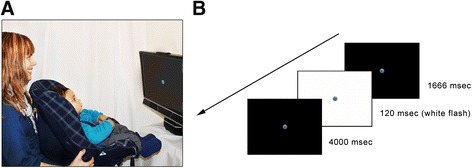
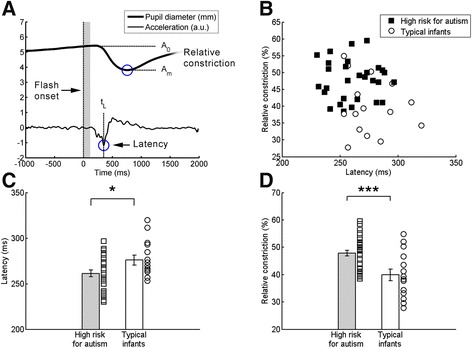
BACKGROUND: Post mortem brain tissue data and animal modeling work indicate cholinergic disruptions in autism. Moreover, the cholinergic system plays a key role in the early neurodevelopmental processes believed to be derailed early in life in individuals with the disorder. Yet, there is no data from human infants supporting a developmentally important role of this neurotransmitter system. Because the pupillary light reflex depends largely on cholinergic synaptic transmission, we assessed this reflex in a sample of infants at risk for autism as well as infants at low (average) risk. METHODS: Ten-month-old infants with an older sibling with autism (n = 29, 16 females), and thus a genetic predisposition to developing the disorder themselves, were presented with white flashes on a computer monitor, and pupillary responses were captured using eye tracking. A control group matched on age and developmental level (n = 15, seven females) was also tested. RESULTS: The siblings of children with autism had a faster and stronger pupillary light reflex compared to control infants. Baseline pupil diameter was equal in the two groups, ruling out tonic autonomic imbalance as an explanation for these differences. CONCLUSIONS: This study establishes that infant siblings of children with autism have hypersensitive pupillary light reflexes, a result which supports the view that altered sensory processing in infancy is associated with elevated autism risk. Moreover, the study indicates that individual differences in autism susceptibility are linked to differences in the cholinergic system during an early developmental period.
Overview
The claims and statistics of this paper haven’t been checked yet.
Free: it reads the open-access text and checks the first 5 claims that cite a source we can check. Create a free account to check every claim.
Integrity signals
Registry
Cites
Statistics
Figures
Verification
Claims the paper makes
The claims and statistics of this paper haven’t been checked yet.
Free: it reads the open-access text and checks the first 5 claims that cite a source we can check. Create a free account to check every claim.
Claims other papers make about this one
Each is checked against this paper’s own text: does it say what the citing paper says it does?
The source backs part of the claim, not all of it — or backs it for a different population, condition or comparison.
In the citing paper
“however, most infants had latency and constriction amplitudes that fell within the range of the control values (51).”
From Autism Spectrum Disorder in Children Is Not Associated With Abnormal Autonomic Nervous System Function: Hypothesis and Theory (2022) · cites this paper as [51]
Experimental — accuracy not yet measuredThe source backs part of the claim, not all of it — or backs it for a different population, condition or comparison.
In the citing paper
“Nyström et al. concluded that “infants at risk for autism have a hypersensitive pupillary light reflex,” suggested to be due to cholinergic autonomic “disruptions”; however, most infants had latency and constriction amplitudes that fell within the range of the control values (51).”
From Autism Spectrum Disorder in Children Is Not Associated With Abnormal Autonomic Nervous System Function: Hypothesis and Theory (2022) · cites this paper as [51]
Experimental — accuracy not yet measuredThe source backs part of the claim, not all of it — or backs it for a different population, condition or comparison.
In the citing paper
“Hence, children with autism have a robust pupillary light reflex.”
From Autism Spectrum Disorder in Children Is Not Associated With Abnormal Autonomic Nervous System Function: Hypothesis and Theory (2022) · cites this paper as [51]
Experimental — accuracy not yet measuredThe source backs part of the claim, not all of it — or backs it for a different population, condition or comparison.
In the citing paper
“They may have a response that is not different from typically developing children, or they may have a response that is different in some features but not in other characteristics.”
From Autism Spectrum Disorder in Children Is Not Associated With Abnormal Autonomic Nervous System Function: Hypothesis and Theory (2022) · cites this paper as [51]
Experimental — accuracy not yet measured
Self-check
Percentages, sums and reported differences re-computed from the paper’s own numbers.
The self-check needs the paper’s full text.
Citations
Cites
Diagnostic and Statistical Manual of Mental Disorders, 5th ed.
Carter, M. J. (2014) · Therapeutic Recreation Journal · Cited by 15,166
Genetic Heritability and Shared Environmental Factors Among Twin Pairs With Autism
Hallmayer, J. (2011) · Archives of General Psychiatry · doi:10.1001/archgenpsychiatry.2011.76 · Cited by 1,970 · cited 1×
“Recent studies indicate that shared environmental influences are negligible in autism, and the genetic risk is predominantly due to common variants ([28,29] but see [30]).”
BackgroundBehavioral manifestations of autism in the first year of life
Zwaigenbaum, L., Bryson, S., Rogers, T., Roberts, W., Brian, J., & Szatmari, P. (2005) · International Journal of Developmental Neuroscience · doi:10.1016/j.ijdevneu.2004.05.001 · Cited by 1,602 · cited 1×
“Little is known about the early neurodevelopmental events that shape the autistic behavioral phenotype, which typically emerges during toddlerhood and early childhood [1].”
BackgroundRecurrence Risk for Autism Spectrum Disorders: A Baby Siblings Research Consortium Study
Ozonoff, S., Young, G. S., Carter, A., Messinger, D., Yirmiya, N., Zwaigenbaum, L., Bryson, S., Carver, L. J., Constantino, J. N., Dobkins, K., et al. (2011) · Pediatrics · doi:10.1542/peds.2010-2825 · Cited by 1,429 · cited 2×
“Therefore, many studies are currently being carried out on infants at risk for autism (for example, siblings of children with the disorder, in which the recurrence rate may be as high as 20%) which can inform about processes in infancy that are associated with autism susceptibility [2,3].”
BackgroundAttention to eyes is present but in decline in 2–6-month-old infants later diagnosed with autism
Jones, W., & Klin, A. (2013) · Nature · doi:10.1038/nature12715 · Cited by 1,293
Most genetic risk for autism resides with common variation
Gaugler, T., Klei, L., Sanders, S. J., Bodea, C. A., Goldberg, A. P., Lee, A. B., Mahajan, M., Manaa, D., Pawitan, Y., Reichert, J., et al. (2014) · Nature Genetics · doi:10.1038/ng.3039 · Cited by 1,239 · cited 1×
“Recent studies indicate that shared environmental influences are negligible in autism, and the genetic risk is predominantly due to common variants ([28,29] but see [30]).”
BackgroundSandin, S., Lichtenstein, P., Kuja-Halkola, R., Larsson, H., Hultman, C. M., & Reichenberg, A. (2014) · JAMA · doi:10.1001/jama.2014.4144 · Cited by 1,073 · cited 1×
“Recent studies indicate that shared environmental influences are negligible in autism, and the genetic risk is predominantly due to common variants ([28,29] but see [30]).”
BackgroundBrain nicotinic acetylcholine receptors: native subtypes and their relevance
Gotti, C., Zoli, M., & Clementi, F. (2006) · Trends in Pharmacological Sciences · doi:10.1016/j.tips.2006.07.004 · Cited by 882 · cited 1×
“ceptors, which are known to modulate other autismrelated neurotransmitters as well [11,33].”
BackgroundMapping early brain development in autism
Courchesne, E., Pierce, K., Schumann, C. M., Redcay, E., Buckwalter, J. A., Kennedy, D. P., & Morgan, J. (2007) · Neuron · doi:10.1016/j.neuron.2007.10.016 · Cited by 860 · cited 1×
“ing neuronal pathfinding and cell survival [11,12].”
Wolff, J. J., Gu, H., Gerig, G., Elison, J. T., Styner, M., Gouttard, S., Botteron, K. N., Dager, S. R., Dawson, G., Estes, A. M., et al. (2012) · American Journal of Psychiatry · doi:10.1176/appi.ajp.2011.11091447 · Cited by 671 · cited 2×
“Reversal of group differences as a function of time has been reported by at least two recent studies comparing autistic infants with controls [26,27].”
BackgroundResult
Cited by
Loth, E., Charman, T., Mason, L., Tillmann, J., Jones, E. J. H., Wooldridge, C., Ahmad, J., Auyeung, B., Brogna, C., Ambrosino, S., et al. (2017) · Molecular Autism · doi:10.1186/s13229-017-0146-8 · Cited by 299
“For example, we assess the pupillary light reflex, which largely depends on cholinergic synaptic transmission [59].”
Self-citationEyeing up the Future of the Pupillary Light Reflex in Neurodiagnostics
Hall, C., & Chilcott, R. (2018) · Diagnostics · doi:10.3390/diagnostics8010019 · Cited by 230
“The difference in age among the studies' subjects, who ranged from 10-month-old infants [100] up to children >5 years of age [61, 98, 99] , may provide an explanation for the contrasting data.”
BackgroundMethodResultInfluentialJones, E. J. H., Venema, K., Earl, R., Lowy, R., Barnes, K., Estes, A., Dawson, G., & Webb, S. J. (2016) · Journal of Neurodevelopmental Disorders · doi:10.1186/s11689-016-9139-8 · Cited by 164
“Further, while children with ASD show a longer latency pupillary constriction to a sudden increase in luminance [87], infants at high familial risk show a faster constriction [88].”
BackgroundMcPartland, J. C., Bernier, R., Jeste, S., Dawson, G., Nelson, C. A., Chawarska, K., Earl, R. K., Faja, S., Johnson, S. P., Sikich, L., et al. (2020) · Frontiers in Integrative Neuroscience · doi:10.3389/fnint.2020.00016 · Cited by 163
Enhanced pupillary light reflex in infancy is associated with autism diagnosis in toddlerhood
Nyström, P., Gliga, T., Jobs, E. N., Gredebäck, G., Charman, T., Johnson, M. H., Bölte, S., & Falck‐Ytter, T. (2018) · Nature Communications · doi:10.1038/s41467-018-03985-4 · Cited by 146
Self-citationPupillometry in Infancy Research
Hepach, R., & Westermann, G. (2016) · Journal of Cognition and Development · doi:10.1080/15248372.2015.1135801 · Cited by 106
“…disorder and typically developing children Nuske et al. (2015) Social cognition 4 years Phasic Young children’s responses to averted and mutual gaze Nyström et al. (2015) Psychophysiology 10 months Pupillary light reflex Pupillary light reflex in infants at risk for developing autism Sirois and…”
BackgroundThe Role of Sensorimotor Difficulties in Autism Spectrum Conditions
Hannant, P., Tavassoli, T., & Cassidy, S. (2016) · Frontiers in Neurology · doi:10.3389/fneur.2016.00124 · Cited by 103
“Research has, for example, shown the existence of basic sensory reactivity symptoms such as: hypersensitivity across visual (29), tactile (30–32), auditory (33–36) and olfactory (37) domains as well as hyposensitivity to olfactory and gustatory stimuli (38, 39); differences in perceptual function (40); and propriocept…”
BackgroundVision in children with autism spectrum disorder: a critical review
Little, J. (2018) · Clinical and Experimental Optometry · doi:10.1111/cxo.12651 · Cited by 114
Sensorimotor Difficulties Are Associated with the Severity of Autism Spectrum Conditions
Hannant, P., Cassidy, S., Tavassoli, T., & Mann, F. (2016) · Frontiers in Integrative Neuroscience · doi:10.3389/fnint.2016.00028 · Cited by 91
Autism spectrum disorder and pupillometry: A systematic review and meta-analysis
de Vries, L. M., Fouquaet, I., Boets, B., Naulaers, G., & Steyaert, J. G. (2020) · Neuroscience & Biobehavioral Reviews · doi:10.1016/j.neubiorev.2020.09.032 · Cited by 101
Shic, F., Naples, A. J., Barney, E. C., Chang, S. A., Li, B., McAllister, T., Kim, M., Dommer, K. J., Hasselmo, S., Atyabi, A., et al. (2022) · Molecular Autism · doi:10.1186/s13229-021-00482-2 · Cited by 91
“For PLR, latency and relative pupil constriction were computed as in [28].”
BackgroundMethodThe role of multisensory development in early language learning
Mason, G. M., Goldstein, M. H., & Schwade, J. A. (2019) · Journal of Experimental Child Psychology · doi:10.1016/j.jecp.2018.12.011 · Cited by 92
Mastergeorge, A. M., Kahathuduwa, C. N., & Blume, J. (2020) · Journal of Autism and Developmental Disorders · doi:10.1007/s10803-020-04731-w · Cited by 72
Webb, S. J., Shic, F., Murias, M., Sugar, C. A., Naples, A. J., Barney, E. C., Borland, H., Hellemann, G. S., Johnson, S. P., Kim, M., et al. (2020) · Frontiers in Integrative Neuroscience · doi:10.3389/fnint.2019.00071 · Cited by 68
Pupillary Contagion in Infancy: Evidence for Spontaneous Transfer of Arousal
Fawcett, C., Wesevich, V., & Gredebäck, G. (2016) · Psychological Science · doi:10.1177/0956797616643924 · Cited by 64
Self-citationGenetic mechanisms of regression in autism spectrum disorder
Tammimies, K. (2019) · Neuroscience & Biobehavioral Reviews · doi:10.1016/j.neubiorev.2019.04.022 · Cited by 65
Hepach, R., Vaish, A., & Tomasello, M. (2015) · Frontiers in Psychology · doi:10.3389/fpsyg.2015.00858 · Cited by 60
“An increase in internal arousal results both in overall increased pupil dilation (Bradley et al., 2008) and in an inhibited PLR (Henderson et al., 2014; though see Nyström et al., 2015, for a different interpretation of the PLR in comparison to tonic pupil diameter).”
BackgroundTummeltshammer, K. S., Feldman, E. C. H., & Amso, D. (2018) · Developmental Cognitive Neuroscience · doi:10.1016/j.dcn.2018.12.006 · Cited by 56
“This adjustment has been shown in infants to best accommodate variation in the pupil as a result of differing initial light-reflex responses (i.e., the initial dilation and contraction that occurs when any new stimulus is presented as the eye adjusts to the light (Nystrom et al., 2015)).”
Eye-Tracking Biomarkers and Autism Diagnosis in Primary Care
Keehn, B., Monahan, P. O., Enneking, B. A., Ryan, T., Swigonski, N. L., & Keehn, R. M. (2024) · JAMA Network Open · doi:10.1001/jamanetworkopen.2024.11190 · Cited by 55
Wagner, J., Luyster, R., Tager-Flusberg, H. B., & Nelson, C. A. (2016) · Infancy · doi:10.1111/infa.12128 · Cited by 52
“Nyström et al. (2015) found that, while there were no pupil size differences between high-risk and low-risk infants during a baseline period, the high-risk group showed heightened sensitivity in the PLR, marked by stronger and faster responses.”
BackgroundMethodInfluentialMedical Therapies for Children With Autism Spectrum Disorder—An Update
Edwin Williamson, M. D., Sathe, N. A., & Andrews, J. C. (2017) · doi:10.23970/ahrqepccer189 · Cited by 50
Human eyes with dilated pupils induce pupillary contagion in infants
Fawcett, C., Arslan, M., Falck-Ytter, T., Roeyers, H., & Gredebäck, G. (2017) · Scientific Reports · doi:10.1038/s41598-017-08223-3 · Cited by 39
Self-citationAction Prediction Allows Hypothesis Testing via Internal Forward Models at 6 Months of Age
Gredebäck, G., Lindskog, M., Juvrud, J., Green, D., & Marciszko, C. (2018) · Frontiers in Psychology · doi:10.3389/fpsyg.2018.00290 · Cited by 44
“, 2018), and the pupillary light response to light flashes (Nyström et al., 2015).”
BackgroundSelf-citationBelteki, Z., Lumbreras, R., Fico, K., Haman, E., & Junge, C. (2022) · International Journal of Environmental Research and Public Health · doi:10.3390/ijerph19031469 · Cited by 42
“Reference Ages of Testing (Months) Average Number ofParticipants * Both Expressive and Receptive Measured?”
InfluentialHellmer, K., & Nyström, P. (2017) · Medical Hypotheses · doi:10.1016/j.mehy.2017.01.015 · Cited by 42
Self-citationOthers’ emotions teach, but not in autism: an eye-tracking pupillometry study
Nuske, H. J., Vivanti, G., & Dissanayake, C. (2016) · Molecular Autism · doi:10.1186/s13229-016-0098-4 · Cited by 43
“cluding those related to resting-state physiology [46–48], sensory-processing [49, 50], eye-gaze processing [51] and general face processing [52].”
BackgroundPupil adaptation corresponds to quantitative measures of autism traits in children
DiCriscio, A. S., & Troiani, V. (2017) · Scientific Reports · doi:10.1038/s41598-017-06829-1 · Cited by 41
Hyperacusis: Loudness intolerance, fear, annoyance and pain
Salvi, R., Chen, G., & Manohar, S. (2022) · Hearing Research · doi:10.1016/j.heares.2022.108648 · Cited by 42
Accommodative Function in Individuals with Autism Spectrum Disorder
Anketell, P. M., Saunders, K. J., Gallagher, S. M., Bailey, C., & Little, J. (2018) · Optometry and Vision Science · doi:10.1097/opx.0000000000001190 · Cited by 40
Atypical pupillary light reflex in 2–6‐year‐old children with autism spectrum disorders
Dinalankara, D. M. R., Miles, J. H., Takahashi, T., & Yao, G. (2017) · Autism Research · doi:10.1002/aur.1745 · Cited by 39
“This seemed to agree with a recent report that 10-month- old “high risk” infants who have elder siblings with autism had a shorter latency than the control group [Nystr€om et al., 2015].”
ResultEye Tracking as a Behavioral Biomarker for Psychiatric Conditions: The Road Ahead
Shic, F. (2016) · Journal of the American Academy of Child & Adolescent Psychiatry · doi:10.1016/j.jaac.2016.02.002 · Cited by 38
Using Pupillometry to Assess the Atypical Pupillary Light Reflex and LC-NE System in ASD
Lynch, G. T. F. (2018) · Behavioral Sciences · doi:10.3390/bs8110108 · Cited by 35
Falck‐Ytter, T., Hamrefors, L., Sanchez, M. S., Portugal, A. M., Taylor, M. J., Li, D., Viktorsson, C., Hardiansyah, I., Myers, L., Westberg, L., et al. (2021) · Twin Research and Human Genetics · doi:10.1017/thg.2021.34 · Cited by 28
“Pupillary light reflex (Nystrom et al., 2015; Nyström et al., 2018) Visual sensory processing X”
BackgroundSelf-citationPupil Dilation Progression Modulates Aberrant Social Cognition in Autism Spectrum Disorder
Bast, N., Banaschewski, T., Dziobek, I., Brandeis, D., Poustka, L., & Freitag, C. M. (2019) · Autism Research · doi:10.1002/aur.2178 · Cited by 29
“Baseline PD was defined as the mean absolute PD during the first 120 ms corrected for a participant’s mean PD in each corresponding item [Nyström et al., 2015].”
MethodHellmer, K., Söderlund, H., & Gredebäck, G. (2016) · Developmental Science · doi:10.1111/desc.12520 · Cited by 27
Self-citationToward Improved Child–Robot Interaction by Understanding Eye Movements
Lohan, K. S., Sheppard, E., Little, G., & Rajendran, G. (2018) · IEEE Transactions on Cognitive and Developmental Systems · doi:10.1109/tcds.2018.2838342 · Cited by 28
“[34] propose pupil eye dilation as potential biomarker for ASD and Nystrom and Gredebäck [61] study with infant siblings of children with ASD found that these children had a hyper-sensitive PLRs–which supports the view that altered sensory processing in infancy is associated with”
ResultA longitudinal study of pupillary light reflex in 6- to 24-month children
Kercher, C., Azinfar, L., Dinalankara, D. M. R., Takahashi, T., Miles, J. H., & Yao, G. (2020) · Scientific Reports · doi:10.1038/s41598-020-58254-6 · Cited by 26
Barbier, A., Chen, J.-H., & Huizinga, J. D. (2022) · Frontiers in Psychiatry · doi:10.3389/fpsyt.2022.830234 · Cited by 25
“concluded that “infants at risk for autism have a hypersensitive pupillary light reflex,” suggested to be due to cholinergic autonomic “disruptions”; however, most infants had latency and constriction amplitudes that fell within the range of the control values (51).”
BackgroundTruedsson, E., Fawcett, C. A., Wesevich, V. G., Gredebäck, G., & Wåhlstedt, C. (2019) · Frontiers in Psychology · doi:10.3389/fpsyg.2019.00573 · Cited by 26
Self-citationFish, L. A., Nyström, P., Gliga, T., Gui, A., Ali, J. B., Mason, L., Garg, S., Green, J., Johnson, M. H., Charman, T., et al. (2021) · Journal of Child Psychology and Psychiatry · doi:10.1111/jcpp.13518 · Cited by 23
Self-citationPolzer, L., Freitag, C. M., & Bast, N. (2022) · Autism Research · doi:10.1002/aur.2818 · Cited by 22
“An aberrant PLR has been indicated by several studies with contradictory findings across age groups regarding the direction of a different pupillary constriction (e.g., Dinalankara et al., 2017; Fan et al., 2009; Nyström et al., 2015, 2018).”
ResultHumans’ pupillary contagion extends to cats and dogs
Axelsson, E. L., & Fawcett, C. A. (2020) · Social Cognitive and Affective Neuroscience · doi:10.1093/scan/nsaa138 · Cited by 19
“The fixation screen had the samebackgroundcolourastheimagestolimitpupillarychanges based on the appearance of a new image (Nyström et al. , 2015; Fawcett et al. , 2016).”
Complexity of the Hypothalamic Oxytocin System and its Involvement in Brain Functions and Diseases
Cui, X., & Xiao, L. (2025) · Neuroscience Bulletin · doi:10.1007/s12264-025-01424-1 · Cited by 17
“Studies have shown considerable evidence of visual impairments in ASD, such as a hypersensitive pupillary light reflex [227], and oxytocin has been found to enhance pupil dilation and increase eye gaze toward novel stimuli [228, 229].”
Hannant, P., Cassidy, S., Renshaw, D., & Joyce, A. (2021) · Nutritional Neuroscience · doi:10.1080/1028415x.2019.1588486 · Cited by 16
Glaucoma: Biological Mechanism and its Clinical Translation
Durán‐Cristiano, S. C. (2022) · Current Molecular Medicine · doi:10.2174/1566524022666220508182051 · Cited by 15
Portugal, A. M., Taylor, M. J., Viktorsson, C., Nyström, P., Li, D., Tammimies, K., Ronald, A., & Falck‐Ytter, T. (2021) · Journal of Child Psychology and Psychiatry · doi:10.1111/jcpp.13564 · Cited by 14
Self-citationInvestigating the development of the autonomic nervous system in infancy through pupillometry
de Vries, L. M., Amelynck, S., Nyström, P., van Esch, L., Lierde, T. V., Warreyn, P., Roeyers, H., Noens, I. L. J., Naulaers, G., Boets, B., et al. (2023) · Journal of Neural Transmission · doi:10.1007/s00702-023-02616-7 · Cited by 14
“Based on several previous findings, we would expect a longer latency to constriction in the ASD group after the age of two, but a shorter latency to constriction in the ASD group before this age (de Vries et al. 2021; Dinalankara et al. 2017; Nyström et al. 2015).”
MethodSelf-citationRubido, M. D. V., Hollander, E., McCracken, J. T., Shic, F., Noeldeke, J., Boak, L. M., Khwaja, O., Sadikhov, S., da Fontoura, P. P., & Umbricht, D. (2020) · Journal of Autism and Developmental Disorders · doi:10.1007/s10803-020-04493-5 · Cited by 13
“flashes of light, as seen in (Nystrom et al. 2015)) or baseline pupil measurements outside of the eye tracking experiments.”
BackgroundAssociations between the pupil light reflex and the broader autism phenotype in children and adults
Soker-Elimaliah, S., Lehrfield, A., Scarano, S. R., & Wagner, J. (2023) · Frontiers in Human Neuroscience · doi:10.3389/fnhum.2022.1052604 · Cited by 12
“Interestingly, infants at increased likelihood for autism (by virtue of an older autistic sibling) show a stronger PLR response by the age of 10 months (Nyström et al., 2015), and stronger PLR responses predicted greater autism symptomology at age 3 years (Nyström et al.”
BackgroundMethodZivan, M., Morag, I., Yarmolovsky, J., & Geva, R. (2021) · Frontiers in Psychiatry · doi:10.3389/fpsyt.2021.646838 · Cited by 10
“Notably, both groups are prone to hyper-arousal (41, 42).”
BackgroundPupillary Responses Obey Emmert’s Law and Co-vary with Autistic Traits
Tortelli, C., Turi, M., Burr, D. C., & Binda, P. (2020) · Journal of Autism and Developmental Disorders · doi:10.1007/s10803-020-04718-7 · Cited by 10
Tecar, C., Chiperi, L. E., Iftimie, B.-E., Livint-Popa, L., Stefanescu, E., Sur, L. M., Drăghici, N. C., & Muresanu, D. (2025) · Journal of Clinical Medicine · doi:10.3390/jcm14248801 · Cited by 9
Dynamic eye avoidance patterns in the high autistic traits group: An eye-tracking study
Xue, H., Zhang, L., Wang, J., Liu, W., Liu, S., & Ming, D. (2023) · Frontiers in Psychiatry · doi:10.3389/fpsyt.2023.1086282 · Cited by 9
“The “gaze aversion hypothesis” (28) is that stimuli with more information, such as faces and eyes, can lead to high physiological arousal, and active avoidance of such information is used to alleviate the discomfort caused by this high arousal (18, 29, 30).”
BackgroundHamer, E. G., Vermeulen, R. J., Dijkstra, L., Hielkema, T., Kos, C., Bos, A. F., & Hadders‐Algra, M. (2016) · Acta Paediatrica · doi:10.1111/apa.13532 · Cited by 9
“(16) on 10-month-old infants reported shorter PLR latencies in infants at risk of autism than in typically developing peers.”
BackgroundBrief Report: Pupillometry, Visual Perception, and ASD Features in a Task-Switching Paradigm
DiCriscio, A. S., Hu, Y., & Troiani, V. (2019) · Journal of Autism and Developmental Disorders · doi:10.1007/s10803-019-04213-8 · Cited by 9
Wang, B. M., Mills, Z., Jones, H. F., Montgomery, J. M., & Lee, K. Y. (2025) · Journal of Neurochemistry · doi:10.1111/jnc.70088 · Cited by 8
Pupillometry in Developmental Psychology
Hepach, R. (2024) · Springer eBooks · doi:10.1007/978-3-031-54896-3_3 · Cited by 8
Sperandio, I., Unwin, K. L., Landry, O., & Chouinard, P. A. (2016) · Journal of Autism and Developmental Disorders · doi:10.1007/s10803-016-2971-6 · Cited by 8
Pupillary Correlates of Emotion and Cognition: A Computational Model
Balkenius, C., Fawcett, C. A., Falck‐Ytter, T., Gredebäck, G., & Johansson, B. (2019) · International IEEE/EMBS Conference on Neural Engineering · doi:10.1109/ner.2019.8717091 · Cited by 8
“Indeed, children with autism spectrum disorder or risk for such a disorder have been seen in experiments to show a larger baseline pupil size [23], a hypersensitive pupil light reflex [24], and an atypical development of the pupil baseline”
BackgroundMethodSelf-citationThe Strengths of Speech Divergence in Autistic People: Implications for Assessment and Support
Kapp, S. K., & Gudknecht, J. (2025) · Infant and Child Development · doi:10.1002/icd.70017 · Cited by 7
Social Justice and Autism: Links to Personality and Advocacy
Kapp, S. K. (2016) · eScholarship (California Digital Library) · Cited by 8
Interdevice Agreement between a Smartphone and a Commercial Pupillometer
Rattan, Y., Girgla, K. K., Mahajan, G., & Prasher, P. (2024) · International Journal of Applied and Basic Medical Research · doi:10.4103/ijabmr.ijabmr_396_23 · Cited by 6
Pupillary response during social emotion tasks in autism spectrum disorder
Lee, J., Chang, Y., Tseng, Y., Chou, T., & Chien, Y. (2024) · Autism Research · doi:10.1002/aur.3206 · Cited by 6
“By contrast, 10-month-old infants who had an older sibling with ASD exhibited stronger PLR than those without family history of ASD (Nystrom et al., 2015).”
Contextual Information Modulates Pupil Size in Autistic Children
Tortelli, C., Pomè, A., Turi, M., Igliozzi, R., Burr, D. C., & Binda, P. (2022) · Frontiers in Neuroscience · doi:10.3389/fnins.2022.752871 · Cited by 6
Ocular Manifestations of Neurologic Diseases
Mets-Halgrimson, R. B., Cirillo, M. L., Xu, W., Ram, R., Soneru, A. R., Tawse, K. L., Angulo, A. S., & Enzenauer, R. W. (2017) · Springer eBooks · doi:10.1007/978-3-319-18389-3_15 · Cited by 5
Sensitivity and specificity of pupillary light reflex measures for ASD using monocular pupillometry
Lynch, G. T. F., James, S., Cardon, T. A., & McPherson, S. (2022) · Neurological Sciences · doi:10.1007/s10072-022-05976-2 · Cited by 4
Neurobiological Factors of Executive Dysfunction in Autism Spectrum Disorders
Kozunova, G. L., Zakirov, F., Rytikova, A. M., Stroganova, T. A., & Chernyshev, B. (2023) · Neuroscience and Behavioral Physiology · doi:10.1007/s11055-023-01512-7 · Cited by 2
“…is indirectly evidenced by increases in the amplitudes of pupillary re fl exes to fl ashes of light as seen in infants at increased risk of developing autism, i.e., the younger brothers and sisters of children who have already been diagnosed with an autism spectrum disorder [Nystrom et al., 2015].”
BackgroundRúa, M. O. (2023) · RA Journal Of Applied Research · doi:10.47191/rajar/v9i11.02 · Cited by 3
Xiaobin, B. I., Xiaozhuang, F. A. N., Wenli, M. I., & He, H. (2020) · Advances in Psychological Science · doi:10.3724/sp.j.1042.2020.00443 · Cited by 2
The Strengths of Speech Delay: Getting a Grip on the Sensory-Motor Complexity of AutismPreprint
Kapp, S. K. (2023) · Authorea · doi:10.22541/au.168428686.66533786/v1 · Cited by 2
Katsanevaki, D., Dupuy, N., Booker, S. A., Wright, D., Kenny, A., Chen, Z., Kudryashova, N., Howitt, P., Stanfield, A. C., Kind, P. C., et al. (2025) · bioRxiv (Cold Spring Harbor Laboratory) · doi:10.1101/2025.04.09.647923 · Cited by 2
Brittenham, C., DiCriscio, A. S., Troiani, V., Hu, Y., & Wagner, J. (2025) · Scientific Reports · doi:10.1038/s41598-025-92904-x · Cited by 1
Fundus Peripapillary Vascular Changes in Autism Spectrum Disorder: A Cross‐Sectional Study
Wang, Y., Wang, Y., Zhu, Z., Xia, Z., Wang, N., Li, M., Jiao, Z., Pan, N., Zhang, Y., Chen, Q., et al. (2025) · Autism Research · doi:10.1002/aur.70094 · Cited by 1
“…(Patriquin et al. 2019; Taylor et al. 2021) and atypical pupillary light reflexes in children with ASD further suggest abnormalities in autonomic regulation of vascular function (Daluwatte et al. 2013; Dinalankara et al. 2017; Nyström et al. 2015), providing clinical support for our findings.”
Segers, M. (2016) · YorkSpace (York University) · Cited by 1
Clavaud, N. S. (2022) · theses.fr (ABES) · doi:10.70675/59dd1410z39bez4b03z8d29zf04f03fd1ba0 · Cited by 1
Kliesch, C. (2019) · Lancaster EPrints (Lancaster University) · doi:10.17635/lancaster/thesis/606
Rubido, M. D. V., Hollander, E., McCracken, J. T., Shic, F., Noeldeke, J., Boak, L. M., Khwaja, O., Sadikhov, S., da Fontoura, P. P., & Umbricht, D. (2020) · Journal of Autism and Developmental Disorders · doi:10.1007/s10803-020-04522-3
Investigating profiles of attention and arousal in Autism Spectrum Condition (ASC)
Fedyushkin, I. A. (2020) · Nottingham ePrints (University of Nottingham)
Rúa, M. O. (2022) · RA Journal Of Applied Research · doi:10.47191/rajar/v8i7.12
Eeg and Eye Tracking Multimodality Approach for Early Diagnosis of Autism Spectrum DisorderPreprint
Sun, B., Calvert, E. I., Wang, R., Wei, Z., Wu, Z.-L., Wang, X., & Kong, X. (2023) · SSRN Electronic Journal · doi:10.2139/ssrn.4510913
NEUROBIOLOGICAL FACTORS OF EXECUTIVE DYSFUNCTION IN AUTISM SPECTRUM DISORDERS
Kozunova, G. L., Zakirov, F., Rytikova, A. M., Stroganova, T. A., & Chernyshev, B. (2023) · Журнал высшей нервной деятельности им И П Павлова · doi:10.31857/s0044467723020077
Wardak, C., & Aguillon-Hernandez, N. (2024) · Elsevier eBooks · doi:10.1016/b978-0-12-820480-1.00166-2
Johansson, B., Tjøstheim, T. A., & Balkenius, C. (2025) · Frontiers in Computational Neuroscience · doi:10.3389/fncom.2025.1607239
Multisensory Attenuation of the Pupil Light Response in Autistic and Non‐Autistic Children
Brittenham, C., Vanneau, T., & Molholm, S. (2026) · European Journal of Neuroscience · doi:10.1111/ejn.70578
“Longitudinal studies in infants at elevated likelihood for ASD have shown atypical pupil responses and arousal patterns before the onset of core behavioural symptoms (McCormick et al. 2018; Nyström et al. 2018; Nyström et al. 2015).”
Shic, F., Naples, A. J., Barney, E. C., Chang, S. A., Li, B., McAllister, T., Kim, M., Dommer, K. J., Hasselmo, S., Atyabi, A., et al. (2022) · Figshare · doi:10.6084/m9.figshare.19395802
Een Visie op Vroege Ontwikkeling: Het Autonoom Zenuwstelsel en Autisme
de Vries, L. M. (2023) · Lirias
Fish, L. A., Gliga, T., Gui, A., Begum Ali, J., Mason, L., Johnson, M. H., Charman, T., Falck-Ytter, T., Jones, E. J. H., Kandaswamy, R., et al. (2025) · Apollo (University of Cambridge)
Self-citationFish, L. A., Gliga, T., Gui, A., Ali, J. B., Mason, L., Johnson, M. H., Charman, T., Falck‐Ytter, T., Jones, E. J. H., Kandaswamy, R., et al. (2026) · Scientific Reports · doi:10.1038/s41598-025-31651-5
“Both PLR latency and DNAm have previously been linked to early autism characteristics, particularly sensory sensitivities 5,13,28 .”
InfluentialSelf-citationOyungu, E., Keehn, B., McHenry, M. S., Monahan, P. O., Joseph, R. M., Yoon, S.-Y., Carlucci, J. G., Saina, C., Khaitan, A., Baliddawa, J., et al. (2026) · BMJ Open · doi:10.1136/bmjopen-2025-109958
“For example, pupillary light reflex, associated with the neurotransmitter acetylcholine, 58 is larger in 9-to 10- month-old infants at elevated likelihood for autism 59 62 and is associated with later autism diagnosis and symptom severity.”
Psychedelics and Autism Therapy: A Review of Current Research and Future Directions
Gondi, C. S., Gnanamony, M., Gondi, T. P., Nersesyan, L., & Demirkhanyan, L. H. (2026) · Current Issues in Molecular Biology · doi:10.3390/cimb48040417
Luo, H., Yapei, Q. I., & Chaoxiang, X. I. E. (2026) · Advances in Psychological Science · doi:10.3724/sp.j.1042.2027.0412
Metadata
- Authors
- Nyström, P., Gredebäck, G., Bölte, S., Falck-Ytter, T., & EASE team
- Affiliations
- Uppsala University (SE)
- Region Stockholm (SE)
- Corresponding author
- Nyström, Pär
- Venue
- Molecular Autism
- Published
- 2015
- Volume
- 6
- Issue
- 1
- Pages
- 10
- ISSN
- 2040-2392 (ISSN-L)
- PMC
- PMC4352563
- OpenAlex
- W2116777943
- Semantic Scholar
- 3308660c5d0f33f69289d892b67b3d786d9f0c57
- Cited by
- 79
- References
- 32
- Citations by year
- 2026: 3 · 2025: 8 · 2024: 5 · 2023: 8 · 2022: 10 · 2021: 4 · 2020: 8 · 2019: 7 · 2018: 8 · 2017: 6 · 2016: 11 · 2015: 1
- FWCI
- 5.22
- Type
- journal article
- Language
- en
- Open access
- gold
- doi.org
- Locations
- Molecular Autism (publishedVersion, cc-by)
- Europe PMC (PubMed Central) (publishedVersion, cc-by)
- PubMed Central (publishedVersion, cc-by)
- PubMed (publishedVersion)
- KTH Publication Database DiVA (KTH Royal Institute of Technology) (submittedVersion, other-oa)
- eSpace (Curtin University) (submittedVersion)
- Lund University Publications (Lund University) (submittedVersion)
- Funders
- European Federation of Pharmaceutical Industries and Associations
- European Commission (115300, FP7/2007)
- VINNOVA (259‐2012‐24)
- Svenska Forskningsrådet Formas (259-2012-24, 523-2009-7054)
- Vetenskapsrådet (523‐2009‐7054, 259-2012-24)
- Riksbankens Jubileumsfond (P12-0270:1)
- Innovative Medicines Initiative (115300)
- European Social Fund
- FP7 Ideas: European Research Council (312292)
- Topics
- Life Sciences › Neuroscience › Cognitive Neuroscience › Autism Spectrum Disorder Research
- Life Sciences › Biochemistry, Genetics and Molecular Biology › Genetics › Genetics and Neurodevelopmental Disorders
- Health Sciences › Medicine › Psychiatry and Mental health › Schizophrenia research and treatment
- Keywords
- pupillary light reflex, autism risk, infants, cholinergic system, siblings of autistic children, sensory processing, pupil size, brain development, autism susceptibility, eye tracking
About these checks
Registry, retraction, Cites and statistics results are computed, not judged, with one exception: a printed reference that no index lists is read once by a model before it counts as a citation error. Claims are extracted by a model and kept only when their quote appears verbatim in the text; each cited source is then checked, with a model’s help, for whether it says what the claim relies on. Those verdicts can be wrong — read the claim’s quote and the cited source before relying on one.
Statistics and arithmetic are recomputed, not judged.
Confidence bands are shown only for fields calibrated on our annotated test set. None is calibrated yet, so no band is shown.
What counts as a claim ›How we measure confidence ›How we check this ›
Are you an author, or do you see a problem with this page? Request a review
Data sources
Bibliographic data: Semantic Scholar, OpenAlex, Crossref.
Contains information from the Semantic Scholar Academic Graph Datasets, made available under the ODC Attribution License (ODC-BY 1.0).
Semantic Scholar’s data is described in: Kinney, R., et al. (2023). The Semantic Scholar Open Data Platform. arXiv:2301.10140.
