

Environmental risk factors for autism: an evidence-based review of systematic reviews and meta-analyses
Open accessThe DOI matches its Crossref record; 120 of the 120 references it cites were found in a registry or an index.
Abstract
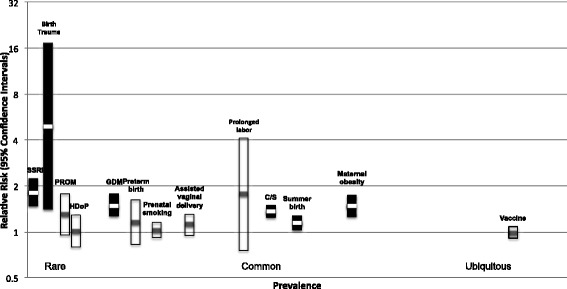
BACKGROUND: According to recent evidence, up to 40-50% of variance in autism spectrum disorder (ASD) liability might be determined by environmental factors. In the present paper, we conducted a review of systematic reviews and meta-analyses of environmental risk factors for ASD. We assessed each review for quality of evidence and provided a brief overview of putative mechanisms of environmental risk factors for ASD. FINDINGS: Current evidence suggests that several environmental factors including vaccination, maternal smoking, thimerosal exposure, and most likely assisted reproductive technologies are unrelated to risk of ASD. On the contrary, advanced parental age is associated with higher risk of ASD. Birth complications that are associated with trauma or ischemia and hypoxia have also shown strong links to ASD, whereas other pregnancy-related factors such as maternal obesity, maternal diabetes, and caesarian section have shown a less strong (but significant) association with risk of ASD. The reviews on nutritional elements have been inconclusive about the detrimental effects of deficiency in folic acid and omega 3, but vitamin D seems to be deficient in patients with ASD. The studies on toxic elements have been largely limited by their design, but there is enough evidence for the association between some heavy metals (most important inorganic mercury and lead) and ASD that warrants further investigation. Mechanisms of the association between environmental factors and ASD are debated but might include non-causative association (including confounding), gene-related effect, oxidative stress, inflammation, hypoxia/ischemia, endocrine disruption, neurotransmitter alterations, and interference with signaling pathways. CONCLUSIONS: Compared to genetic studies of ASD, studies of environmental risk factors are in their infancy and have significant methodological limitations. Future studies of ASD risk factors would benefit from a developmental psychopathology approach, prospective design, precise exposure measurement, reliable timing of exposure in relation to critical developmental periods and should take into account the dynamic interplay between gene and environment by using genetically informed designs.
Overview
The claims and statistics of this paper haven’t been checked yet.
Free: it reads the open-access text and checks the first 5 claims that cite a source we can check. Create a free account to check every claim.
Integrity signals
Registry
Cites
Statistics
Figures
Verification
Claims the paper makes
The claims and statistics of this paper haven’t been checked yet.
Free: it reads the open-access text and checks the first 5 claims that cite a source we can check. Create a free account to check every claim.
Claims other papers make about this one
Each is checked against this paper’s own text: does it say what the citing paper says it does?
The cited source says what the claim attributes to it.
In the citing paper
“Environmental risk factors could underlie risk of ASD through several complex underlying mechanisms, such as [Au: edits to improve narrative flow ok?] genetic and epigenetic related effects (see”
From Autism spectrum disorder (2020) · cites this paper as [18]
The cited source says what the claim attributes to it.
In the citing paper
“This and other studies identified environmental risk factors for ASD as advanced parental age 19 and birth trauma, particularly if due to proxies of hypoxia 18 .”
From Autism spectrum disorder (2020) · cites this paper as [18]
The cited source says what the claim attributes to it.
In the citing paper
“Data from studies aiming to identify risk factors for autism spectrum disorder (ASD) can be broadly split into three categories, those with evidence supporting an association (panel a), those with inconclusive evidence (panel b) and importantly, those with no supporting evidence (panel c).”
From Autism spectrum disorder (2020) · cites this paper as [18]
The cited source says what the claim attributes to it.
In the citing paper
“Environmental risk factors, although still under investigation, include advanced parental age, birth complications associated with trauma, ischemia, and hypoxia, as well as, to a lesser extent, maternal obesity, maternal diabetes, and cesarean delivery [11].”
From The Gut–Brain–Microbiota Connection and Its Role in Autism Spectrum Disorders (2025) · cites this paper as [11]
Self-check
Percentages, sums and reported differences re-computed from the paper’s own numbers.
The self-check needs the paper’s full text.
Citations
Cites
GRADE: an emerging consensus on rating quality of evidence and strength of recommendations
Guyatt, G. H., Oxman, A. D., Vist, G. E., Kunz, R., Falck-Ytter, Y., Alonso-Coello, P., & Schünemann, H. J. (2008) · BMJ · doi:10.1136/bmj.39489.470347.ad · Cited by 23,305
Baio, J., Wiggins, L., Christensen, D. L., Maenner, M. J., Daniels, J., Warren, Z., Kurzius-Spencer, M., Zahorodny, W., Robinson, C., Rosenberg, et al. (2018) · MMWR. Surveillance Summaries · doi:10.15585/mmwr.ss6706a1 · Cited by 6,078
Metals, Toxicity and Oxidative Stress
Valko, M., Morris, H., & Cronin, M. (2005) · Current Medicinal Chemistry · doi:10.2174/0929867053764635 · Cited by 5,018
Autism as a strongly genetic disorder: evidence from a British twin study
Bailey, A., Le Couteur, A., Gottesman, I., Bolton, P., Simonoff, E., Yuzda, E., & Rutter, M. (1995) · Psychological Medicine · doi:10.1017/s0033291700028099 · Cited by 2,461 · cited 1×
“Earlier twin studies suggested heritability as high as 80–90% for ASD with little contribution from the environment [4, 6, 7].”
BackgroundNeuroglial activation and neuroinflammation in the brain of patients with autism
Vargas, D. L., Nascimbene, C., Krishnan, C., Zimmerman, A. W., & Pardo, C. A. (2005) · Annals of Neurology · doi:10.1002/ana.20315 · Cited by 2,149
Genetic Heritability and Shared Environmental Factors Among Twin Pairs With Autism
Hallmayer, J. (2011) · Archives of General Psychiatry · doi:10.1001/archgenpsychiatry.2011.76 · Cited by 1,970
Battle, D. E. (2013) · CoDAS · doi:10.1590/s2317-17822013000200017 · Cited by 1,569
Naarden Braun, K. V., Lopez, M., White, T., et al. (2023) · Carolina Digital Repository (University of North Carolina at Chapel Hill) · doi:10.17615/y3kk-5x30 · Cited by 1,381
Most genetic risk for autism resides with common variation
Gaugler, T., Klei, L., Sanders, S. J., Bodea, C. A., Goldberg, A. P., Lee, A. B., Mahajan, M., Manaa, D., Pawitan, Y., Reichert, J., et al. (2014) · Nature Genetics · doi:10.1038/ng.3039 · Cited by 1,239
Self-citation
Cited by
Items 201–300 of 1,000
Oxiracetam and Zinc Ameliorates Autism-Like Symptoms in Propionic Acid Model of Rats
Paudel, R., Aran, K. R., Gupta, Y. K., & Singh, S. (2020) · Neurotoxicity Research · doi:10.1007/s12640-020-00169-1 · Cited by 30
Potential Role of Cannabinoid Type 2 Receptors in Neuropsychiatric and Neurodegenerative Disorders
Ishiguro, H., Kibret, B. G., Horiuchi, Y., & Onaivi, E. S. (2022) · Frontiers in Psychiatry · doi:10.3389/fpsyt.2022.828895 · Cited by 31
Polymorphisms in Vitamin D Receptor Genes in Association with Childhood Autism Spectrum Disorder
Zhang, Z., Li, S., Yu, L., & Liu, J. (2018) · Disease Markers · doi:10.1155/2018/7862892 · Cited by 30
The Prenatal Hormone Milieu in Autism Spectrum Disorder
Worsham, W., Dalton, S., & Bilder, D. A. (2021) · Frontiers in Psychiatry · doi:10.3389/fpsyt.2021.655438 · Cited by 29
Developmental disorders among Norwegian-born children with immigrant parents
Hansen, T. M., Qureshi, S. A., Gele, A. A., Hauge, L. J., Biele, G. P., Surén, P., & Kjøllesdal, M. K. R. (2023) · Child and Adolescent Psychiatry and Mental Health · doi:10.1186/s13034-022-00547-x · Cited by 29
A theory of autism bridging across levels of description
Noel, J., & Angelaki, D. E. (2023) · Trends in Cognitive Sciences · doi:10.1016/j.tics.2023.04.010 · Cited by 29
Migrant and ethnic minority status as risk indicators for schizophrenia: new findings
van der Ven, E., & Selten, J. (2018) · Current Opinion in Psychiatry · doi:10.1097/yco.0000000000000405 · Cited by 29
Genç, Ö., An, J., Fetter, R. D., Kulik, Y. D., Zunino, G., Sanders, S., & Davis, G. W. (2020) · eLife · doi:10.7554/elife.55775 · Cited by 29
Updated View on the Relation of the Pineal Gland to Autism Spectrum Disorders
Shomrat, T., & Nesher, N. (2019) · Frontiers in Endocrinology · doi:10.3389/fendo.2019.00037 · Cited by 28
Jendraszak, M., Gałęcka, M., Kotwicka, M., Regdos, A., Pazgrat-Patan, M., & Andrusiewicz, M. (2021) · Scientific Reports · doi:10.1038/s41598-021-03794-8 · Cited by 28
Antioxidants, Hormetic Nutrition, and Autism
Modafferi, S., Lupo, G., Tomasello, M., Rampulla, F., Ontario, M., Scuto, M. C., Salinaro, A. T., Arcidiacono, A. A., Anfuso, C. D., Legmouz, M., et al. (2023) · Current Neuropharmacology · doi:10.2174/1570159x21666230817085811 · Cited by 28
You, M., Li, S., Yan, S., Yao, D., Wang, T., & Wang, Y. (2023) · Environment International · doi:10.1016/j.envint.2023.108228 · Cited by 27
Bhandari, R., Paliwal, J. K., & Kuhad, A. (2020) · Advances in neurobiology · doi:10.1007/978-3-030-30402-7_23 · Cited by 28
El-Ansary, A. K. (2020) · Autism and Developmental Disorders · doi:10.17759/autdd.2020180306 · Cited by 28
Yu, H. Y., Niu, Y., Jia, G., Liang, Y., Chen, B., Sun, R., Wang, M., Huang, S., Zeng, J., Lu, J., et al. (2022) · Communications Biology · doi:10.1038/s42003-022-03005-8 · Cited by 26
Grossi, E., Migliore, L., & Muratori, F. (2018) · Journal of Developmental Origins of Health and Disease · doi:10.1017/s2040174418000211 · Cited by 27
Jaini, R., Wolf, M. R., Yu, Q., King, A. T., Frazier, T. W., & Eng, C. (2021) · Translational Psychiatry · doi:10.1038/s41398-021-01472-x · Cited by 26
Modzelewski, S., Naumowicz, M., Suprunowicz, M., Oracz, A. J., & Waszkiewicz, N. (2025) · Journal of Clinical Medicine · doi:10.3390/jcm14041119 · Cited by 25
Early and Late Corrections in Mouse Models of Autism Spectrum Disorder
Chung, C., Shin, W., & Kim, E. (2021) · Biological Psychiatry · doi:10.1016/j.biopsych.2021.07.021 · Cited by 25
Association Between Exposure of Children to General Anesthesia and Autism Spectrum Disorder
Laporta, M. L., Šprung, J., Fejedelem, C. A., Henning, D. T., Weaver, A. L., Hanson, A. C., Schroeder, D. R., Myers, S. M., Voigt, R. G., Weingarten, T. N., et al. (2021) · Journal of Autism and Developmental Disorders · doi:10.1007/s10803-021-05305-0 · Cited by 25
Mouat, J. S., & LaSalle, J. M. (2022) · Frontiers in Genetics · doi:10.3389/fgene.2022.831221 · Cited by 25
Chen, S., Fan, M., Lee, B. K., Dalman, C., Karlsson, H., & Gardner, R. M. (2023) · BMC Medicine · doi:10.1186/s12916-023-02799-6 · Cited by 25
The metabolic role of vitamin D in children’s neurodevelopment: a network study
Marzio, M. D., Lasky-Su, J. A., Chu, S. H., Prince, N., Litonjua, A. A., Weiss, S. T., Kelly, R. S., & Glass, K. (2024) · Scientific Reports · doi:10.1038/s41598-024-67835-8 · Cited by 25
Risk of Parkinson Disease in Individuals With Autism Spectrum Disorder
Yin, W., Reichenberg, A., Beeri, M. S., Levine, S. Z., Ludvigsson, J. F., Figee, M., & Sandin, S. (2025) · JAMA Neurology · doi:10.1001/jamaneurol.2025.1284 · Cited by 25
Self-citationAutism Spectrum Disorder: What Do We Know and Where Do We Go?
Leisman, G., & Melillo, R. J. (2025) · Brain Sciences · doi:10.3390/brainsci15091010 · Cited by 25
Persson, M., Reichenberg, A., Andersson, M., & Sandin, S. (2022) · International Journal of Epidemiology · doi:10.1093/ije/dyac116 · Cited by 24
Self-citationTargeting Shank3 deficiency and paresthesia in autism spectrum disorder: A brief review
Huang, M., Qi, Q., & Xu, T. (2023) · Frontiers in Molecular Neuroscience · doi:10.3389/fnmol.2023.1128974 · Cited by 24
Bai, C., Zheng, Y., Tian, L., Lin, J. J., Song, Y., Huang, C., Dong, Q., & Chen, J. (2023) · Ecotoxicology and Environmental Safety · doi:10.1016/j.ecoenv.2023.114643 · Cited by 24
Synaptopathology in autism spectrum disorders: Complex effects of synaptic genes on neural circuits
Wang, X., Kéry, R., & Xiong, Q. (2017) · Progress in Neuro-Psychopharmacology and Biological Psychiatry · doi:10.1016/j.pnpbp.2017.09.026 · Cited by 24
Clair, D. S., & Johnstone, M. (2018) · Philosophical Transactions of the Royal Society B Biological Sciences · doi:10.1098/rstb.2017.0037 · Cited by 24
Genetic and environmental influences on corticostriatal circuits in twins with autism
Hegarty, J. P., Lazzeroni, L. C., Raman, M. M., Hallmayer, J. F., Cleveland, S. C., Wolke, O. N., Phillips, J. M., Reiss, A. L., & Hardan, A. Y. (2020) · Journal of Psychiatry and Neuroscience · doi:10.1503/jpn.190030 · Cited by 24
Lu, J., Xiao, M., Guo, X., Liang, Y., Wang, M., Xu, J., Liu, L., Wang, Z., Zeng, G., Liu, K., et al. (2020) · Frontiers in Psychiatry · doi:10.3389/fpsyt.2020.576367 · Cited by 24
Yarger, H. A., & Redcay, E. (2020) · Development and Psychopathology · doi:10.1017/s095457942000084x · Cited by 25
Davidovitch, M., Shrem, M., Golovaty, N., Assaf, N., & Koren, G. (2018) · Medical Hypotheses · doi:10.1016/j.mehy.2018.06.007 · Cited by 24
Endocrine insights into the pathophysiology of autism spectrum disorder
Wilson, H. A., Creighton, C., Scharfman, H., Choleris, E., & MacLusky, N. J. (2021) · The Neuroscientist · doi:10.1177/1073858420952046 · Cited by 23
Nakhaee, S., Amirabadizadeh, A., Farnia, V., Azadi, N. A., Mansouri, B., & Radmehr, F. (2022) · Biological Trace Element Research · doi:10.1007/s12011-022-03265-9 · Cited by 23
Haddad, F. L., Oliveira, C. D., & Schmid, S. (2023) · Frontiers in Neuroscience · doi:10.3389/fnins.2023.1160243 · Cited by 23
Jiang, Y., Guo, C., Kuang, M., Lin, L., Xu, G., Pan, N., Weng, X., Jin, J., Shi, L., Yi, Q., et al. (2024) · Frontiers in Public Health · doi:10.3389/fpubh.2024.1321046 · Cited by 24
Gut-immune-brain dysfunction in Autism: Importance of sex
Kopec, A. M., Fiorentino, M. R., & Bilbo, S. D. (2018) · Brain Research · doi:10.1016/j.brainres.2018.01.009 · Cited by 23
Alex, A. M., Saradalekshmi, K. R., Shilen, N., Suresh, P. A., & Banerjee, M. (2019) · IUBMB Life · doi:10.1002/iub.2021 · Cited by 23
HLA Polymorphism in Regressive and Non‐Regressive Autism: A Preliminary Study
Tamouza, R., Fernell, E., Eriksson, M. A., Anderlid, B., Manier, C., Mariaselvam, C. M., Boukouaci, W., Leboyer, M., & Gillberg, C. (2019) · Autism Research · doi:10.1002/aur.2217 · Cited by 23
Razi, B., Imani, D., Makoui, M. H., Rezaei, R., & Aslani, S. (2019) · Research in Autism · doi:10.1016/j.rasd.2019.101473 · Cited by 24
Jiang, S., Xiao, L., Sun, Y., He, M., Gao, C., Zhu, C., Chang, H., Ding, J., Li, W., Wang, Y., et al. (2022) · Molecular Medicine Reports · doi:10.3892/mmr.2022.12670 · Cited by 23
Gene-environment interaction counterbalances social impairment in mouse models of autism
Kim, J., Park, K., Kang, R. J., Gonzales, E. L., Oh, H. A., Seung, H., Ko, M. J., Cheong, J. H., Chung, C., & Shin, C. Y. (2019) · Scientific Reports · doi:10.1038/s41598-019-47680-w · Cited by 23
Immune activation during pregnancy exacerbates ASD-related alterations in Shank3-deficient mice
Atanasova, E., Arévalo, A. P., Graf, I., Zhang, R., Bockmann, J., Lutz, A.-K., & Boeckers, T. M. (2023) · Molecular Autism · doi:10.1186/s13229-022-00532-3 · Cited by 22
Lactiplantibacillus plantarum N-1 improves autism-like behavior and gut microbiota in mouse
Qiu, Z., Luo, D., Yin, H., Chen, Y., Zhou, Z., Zhang, J., Zhang, L., Xia, J., Xie, J., Sun, Q., et al. (2023) · Frontiers in Microbiology · doi:10.3389/fmicb.2023.1134517 · Cited by 23
Wang, Y., Yu, S., & Li, M. (2023) · Frontiers in Cellular Neuroscience · doi:10.3389/fncel.2023.1226580 · Cited by 22
Ou, X.-X., Wang, X., Zhan, X., Shen, S., Karatela, S., Jin, J., Cai, L., Liu, R.-Q., Lin, L., & Dong, G. (2023) · The Science of The Total Environment · doi:10.1016/j.scitotenv.2023.169649 · Cited by 22
Cai, Y., Deng, W., Yang, Q., Pan, G., Liang, Z., Yang, X., Li, S., & Xiao, X. (2024) · International Immunopharmacology · doi:10.1016/j.intimp.2024.111783 · Cited by 22
Androgen levels in autism spectrum disorders: a systematic review and meta-analysis
Wang, Z., Zhang, B., Mu, C., Qiao, D., Huan, C., Zhao, Y., Cui, H., Zhang, R., & Li, S. (2024) · Frontiers in Endocrinology · doi:10.3389/fendo.2024.1371148 · Cited by 22
Maternal pre‐pregnancy weight and autistic‐like traits among offspring in the general population
Varcin, K. J., Newnham, J. P., & Whitehouse, A. (2018) · Autism Research · doi:10.1002/aur.1973 · Cited by 22
Panjwani, A. A., Ji, Y., Fahey, J. W., Palmer, A., Wang, G., Hong, X., ZUCKERMAN, B. S., & Wang, X. (2019) · Journal of Autism and Developmental Disorders · doi:10.1007/s10803-019-04264-x · Cited by 23
Palanisamy, A., Giri, T. K., Jiang, J., Bice, A. R., Quirk, J. D., Conyers, S. B., Maloney, S. E., Raghuraman, N., Bauer, A. Q., Garbow, J. R., et al. (2020) · JCI Insight · doi:10.1172/jci.insight.133172 · Cited by 22
Özşahin, İ., Mustapha, M. T., Albarwary, S. A., Şanlıdağ, B., Ozsahin, D. U., & Butler, T. (2021) · Journal of Comparative Effectiveness Research · doi:10.2217/cer-2020-0162 · Cited by 22
Li, Q., Yang, T., Chen, L., Dai, Y., Wu, L., Jia, F., Hao, Y., Li, L., Zhang, J., Ke, X., et al. (2021) · Frontiers in Nutrition · doi:10.3389/fnut.2021.661223 · Cited by 22
Wang, H. V., Forestier, S., & Corces, V. G. (2021) · Biology of Reproduction · doi:10.1093/biolre/ioab097 · Cited by 22
Prenatal and postnatal exposure to heavy metals in PM2.5 and autism spectrum disorder
Lin, H.-H., Jung, C., Lin, C., Chang, Y.-C., Hsieh, C.-Y., Hsu, P.-C., Chuang, B., & Hwang, B. (2023) · Environmental Research · doi:10.1016/j.envres.2023.116874 · Cited by 21
Consanguinity as a Risk Factor for Autism
Alshaban, F. A. W., Aldosari, M., Ghazal, I., Al‐Shammari, H., Elhag, S. F., Thompson, I. R., Bruder, J., Shaath, H., Al‐Faraj, F., Tolefat, M., et al. (2023) · Journal of Autism and Developmental Disorders · doi:10.1007/s10803-023-06137-w · Cited by 21
Smirnova, L., Modafferi, S., Schlett, C., Osborne, L. M., Payne, J. L., & Sabunciyan, S. (2024) · Molecular Psychiatry · doi:10.1038/s41380-023-02384-6 · Cited by 21
Cannabinoid treatment for the symptoms of autism spectrum disorder
Aran, A. A., & Cayam-Rand, D. (2024) · Expert Opinion on Emerging Drugs · doi:10.1080/14728214.2024.2306290 · Cited by 21
Ashwlayan, V. D., Ratnesh, R. K., Sharma, D., Sharma, A. K., Sangal, A., Saifi, A., & Singh, J. (2024) · Indian Journal of Microbiology · doi:10.1007/s12088-024-01265-y · Cited by 21
Yin, W., Pulakka, A., Reichenberg, A., Kolevzon, A., Ludvigsson, J. F., Risnes, K. R., Lahti‐Pulkkinen, M., Persson, M., Silverman, M. E., Ådén, U., et al. (2024) · The Lancet Regional Health - Europe · doi:10.1016/j.lanepe.2024.100902 · Cited by 21
Self-citationCarter, C. (2019) · Neurochemistry International · doi:10.1016/j.neuint.2019.03.007 · Cited by 21
Davidovitch, M., Kuint, J., Lerner‐Geva, L., Zaslavsky‐Paltiel, I., Rotem, R. S., Chodick, G., Shalev, V., & Reichman, B. (2019) · Pediatric Research · doi:10.1038/s41390-019-0700-5 · Cited by 21
Preconception Risk Factors for Autism Spectrum Disorder—A Pilot Study
Hankus, M., Kazek, B., Paprocka, J., Kapinos-Gorczyca, A., Szczepara-Fabian, M., Buczek, A., & Emich‐Widera, E. (2020) · Brain Sciences · doi:10.3390/brainsci10050293 · Cited by 21
Jiang, S., He, M., Xiao, L., Sun, Y., Ding, J., Li, W., Guo, B., Wang, L., Wang, Y., Gao, C., et al. (2022) · Frontiers in Psychiatry · doi:10.3389/fpsyt.2022.835993 · Cited by 21
DESAFIOS E AVANÇOS NA UTILIZAÇÃO DA NEUROIMAGEM PARA DIAGNÓSTICO DE DOENÇAS NEUROLÓGICAS
Lima, E. C., Júnior, M. D. S. G., Rebouças, N. Q., da Trindade, M. C., Falcão, L. H. N., Ribeiro, J. S., Fernandes, I. C. B., Badin, L. M. N., Filho, L. C. S., de Almeida, W. B., et al. (2024) · Periódicos Brasil Pesquisa Científica · doi:10.36557/pbpc.v3i2.205 · Cited by 20
Hu, V. W., Hong, Y., Xu, M., & Shu, H. T. (2020) · Autism · doi:10.1177/1362361320971085 · Cited by 20
Peripartum effects of synthetic oxytocin: The good, the bad, and the unknown
Rashidi, M., Maier, E., Dekel, S., Sütterlin, M., Wolf, R. C., Ditzen, B., Grinevich, V., & Herpertz, S. C. (2022) · Neuroscience & Biobehavioral Reviews · doi:10.1016/j.neubiorev.2022.104859 · Cited by 20
Evidence on Neurotoxicity after Intrauterine and Childhood Exposure to Organomercurials
Azevedo, L. F., Karpova, N. N., Rocha, B. A., Barbosa, F., Gobe, G. C., & Carneiro, M. F. H. (2023) · International Journal of Environmental Research and Public Health · doi:10.3390/ijerph20021070 · Cited by 20
Tamayo, J. M., Osman, H. C., Schwartzer, J. J., Pinkerton, K. E., & Ashwood, P. (2023) · Journal of Neuroinflammation · doi:10.1186/s12974-023-02930-7 · Cited by 20
Wei, Q., Xiao, Y., Yang, T., Chen, J., Chen, L., Wang, K., Zhang, J., Li, L., Jia, F., Wu, L., et al. (2024) · Psychiatry Research · doi:10.1016/j.psychres.2024.115789 · Cited by 20
Intersection between Autism, Autism Spectrum Disorder (ASD), and Immigration: A Scoping Review
Puerto, M. S. C., & Vázquez, M. S. (2024) · Rehabilitation and Sports Medicine · doi:10.56294/ri202477 · Cited by 20
Algarve, T. D., Assmann, C. E., Aigaki, T., & da Cruz, I. B. M. (2018) · Drug and Chemical Toxicology · doi:10.1080/01480545.2018.1485689 · Cited by 20
Arab, A. H., & Elhawary, N. A. (2019) · Neuropsychiatric Disease and Treatment · doi:10.2147/ndt.s230348 · Cited by 21
Traetta, M. E., Codagnone, M. G., Uccelli, N. A., Ramos, A. J., Zárate, S., & Reinés, A. G. (2021) · Molecular Autism · doi:10.1186/s13229-021-00428-8 · Cited by 21
Risk of Autism After Pediatric Ischemic Stroke: A Nationwide Cohort Study
Sundelin, H. E. K., Söderling, J. K., Bang, P., & Bolk, J. (2022) · Neurology · doi:10.1212/wnl.0000000000200253 · Cited by 20
Potential natural products for the management of autism spectrum disorder
Sachdeva, P., Mehdi, I., Kaith, R., Ahmad, F., & Anwar, M. S. (2022) · Ibrain · doi:10.1002/ibra.12050 · Cited by 21
The Brain Basis of Comorbidity in Neurodevelopmental Disorders
Licari, M. K., Finlay‐jones, A. L., Reynolds, J. E., Alvares, G. A., Spittle, A. J., Downs, J. A., Whitehouse, A., Leonard, H., Evans, K. L., & Varcin, K. J. (2019) · Current Developmental Disorders Reports · doi:10.1007/s40474-019-0156-7 · Cited by 20
Dhulkifle, H., Agouni, A., Zeidan, A., Al-Kuwari, M. B. S., Parray, A., Tolefat, M., & Korashy, H. M. (2021) · International Journal of Molecular Sciences · doi:10.3390/ijms22179258 · Cited by 19
Conceptualizing Epigenetics and the Environmental Landscape of Autism Spectrum Disorders
Torres, G., Mourad, M., Iqbal, S., Moses‐Fynn, E., Pandita, A., Siddhartha, S. S., Sood, R. A., Srinivasan, K., Subbaiah, R. T., Tiwari, A., et al. (2023) · Genes · doi:10.3390/genes14091734 · Cited by 19
Lagod, P. P., Abdelli, L. S., & Naser, S. A. (2024) · International Journal of Molecular Sciences · doi:10.3390/ijms25158093 · Cited by 20
Saechua, C., Sarachana, T., Chonchaiya, W., Trairatvorakul, P., Yuwattana, W., Poolcharoen, C., Sangritdech, M., Saeliw, T., van Erp, M. L., Sangsuthum, S., et al. (2024) · Scientific Reports · doi:10.1038/s41598-024-79994-9 · Cited by 19
The Microbiome–Genetics Axis in Autism Spectrum Disorders: A Probiotic Perspective
Mihailovich, M., Tolinački, M., Bajić, S. S., Leštarević, S., Pejovic-Milovancevic, M., & Golić, N. (2024) · International Journal of Molecular Sciences · doi:10.3390/ijms252212407 · Cited by 20
Géryk, J., Krsička, D., Vlčková, M., Havlovičová, M., Maçek, M., & Pourová, R. K. (2020) · Metabolites · doi:10.3390/metabo10050184 · Cited by 19
Zhang, X., Huang, J., Zheng, G., Liang, J., Hu, B., Lou, Z.-Q., Li, A., & Ding, Y. (2021) · Biochemical and Biophysical Research Communications · doi:10.1016/j.bbrc.2021.11.020 · Cited by 19
The importance of nutritional management and education in the treatment of autism
Mandecka, A., & Regulska−Ilow, B. (2022) · Roczniki Państwowego Zakładu Higieny · doi:10.32394/rpzh.2022.0218 · Cited by 19
Potential Benefits of Anthocyanins in Chronic Disorders of the Central Nervous System
Panchal, S. K., & Brown, L. (2022) · Molecules · doi:10.3390/molecules28010080 · Cited by 19
Santos, J. X., Sampaio, P., Rasga, C., Martiniano, H., Faria, C. P., Café, C., Oliveira, A., Duque, F., Oliveira, G., Sousa, L., et al. (2023) · Environmental Research · doi:10.1016/j.envres.2023.115795 · Cited by 19
Butwick, A. J., Abrams, D. A., & Wong, C. A. (2022) · British Journal of Anaesthesia · doi:10.1016/j.bja.2021.12.017 · Cited by 19
Uccelli, N. A., Codagnone, M. G., Traetta, M. E., Levanovich, N., Rosato‐Siri, M. V., Urrutia, L., Falasco, G., Vázquez, S., Pasquini, J. M., & Reinés, A. G. (2021) · Journal of Neurochemistry · doi:10.1111/jnc.15444 · Cited by 18
Microbiome and Brain Development: A Tale of Two Systems
Cryan, J. F. (2025) · Annals of Nutrition and Metabolism · doi:10.1159/000544950 · Cited by 18
Davidovitch, M., Shmueli, D., Rotem, R. S., & Mimouni-Bloch, A. (2021) · BMC Psychiatry · doi:10.1186/s12888-021-03151-z · Cited by 18
Nadeem, A., Ahmad, S. F., Al-Harbi, N. O., AL-Ayadhi, L. Y., Alanazi, M. M., Alfardan, A. S., Attia, S. M., Algahtani, M., & Bakheet, S. A. (2022) · International Immunopharmacology · doi:10.1016/j.intimp.2022.108619 · Cited by 18
Leung, C. S., Rosenzweig, S. J., Yoon, B., Marinelli, N. A., Hollingsworth, E. W., Maguire, A. M., Cowen, M. H., Schmidt, M., Imitola, J., Uzun, E. D. G., et al. (2023) · Human Molecular Genetics · doi:10.1093/hmg/ddad002 · Cited by 18
Mercurio y trastornos del neurodesarrollo en niños: una revisión sistemática
Tapia, D. E., Abad, J., Madera, M., & Lázaro, J. P. M. (2023) · Archivos Argentinos de Pediatria · doi:10.5546/aap.2022-02838.eng · Cited by 18
Rasga, C., Santos, J. X., Café, C., Oliveira, A., Duque, F., de la Paz, M. P., Nunes, A., Oliveira, G., & Vicente, A. M. (2023) · Frontiers in Psychiatry · doi:10.3389/fpsyt.2023.1148184 · Cited by 19
Schwingel, G. B., Fontes‐Dutra, M., Ramos, B., Riesgo, R. D. S., Bambini-Júnior, V., & Gottfried, C. (2023) · IBRO Neuroscience Reports · doi:10.1016/j.ibneur.2023.09.008 · Cited by 18
Mercury leads to abnormal red blood cell adhesion to laminin mediated by membrane sulfatides
Akkaya, B., Kucukal, E., Little, J. A., & Gurkan, U. A. (2019) · Biochimica et Biophysica Acta (BBA) - Biomembranes · doi:10.1016/j.bbamem.2019.03.008 · Cited by 18
Hope, S., Nærland, T., Høyland, A. L., Torske, T., Malt, E. A., Abrahamsen, T. G., Nerhus, M., Wedervang‐Resell, K., Lonning, V., Johannessen, J., et al. (2020) · The FASEB Journal · doi:10.1096/fj.201900855rrr · Cited by 18
Metadata
- Authors
- Modabbernia, A., Velthorst, E., & Reichenberg, A.
- Affiliations
- Icahn School of Medicine at Mount Sinai (US)
- Corresponding author
- Modabbernia, Amirhossein
- Venue
- Molecular Autism
- Published
- 2017-03-17
- Volume
- 8
- Issue
- 1
- Pages
- 13-13
- ISSN
- 2040-2392 (ISSN-L)
- PMC
- PMC5356236
- OpenAlex
- W2596453284
- Cited by
- 809
- References
- 119
- Citations by year
- 2026: 69 · 2025: 89 · 2024: 104 · 2023: 107 · 2022: 98 · 2021: 99 · 2020: 88 · 2019: 77 · 2018: 65 · 2017: 10
- FWCI
- 7.34
- Type
- journal article
- Language
- en
- Open access
- gold
- doi.org
- Licence
- cc-by
- creativecommons.org/licenses/by/4.0/ (tdm)
- creativecommons.org/licenses/by/4.0/ (vor)
- Locations
- Molecular Autism (publishedVersion, cc-by)
- PubMed Central (publishedVersion, cc-by)
- PubMed (publishedVersion)
- Funders
- Eunice Kennedy Shriver National Institute of Child Health and Human Development (HD073978)
- National Institute of Mental Health (MH097849)
- Netherlands Organization for Scientific Research (916-15-005)
- Topics
- Life Sciences › Neuroscience › Cognitive Neuroscience › Autism Spectrum Disorder Research
- Health Sciences › Medicine › Psychiatry and Mental health › Child Nutrition and Feeding Issues
- Life Sciences › Biochemistry, Genetics and Molecular Biology › Genetics › Genetics and Neurodevelopmental Disorders
- Keywords
- autism spectrum disorder, environmental risk factors, advanced parental age, childbirth complications, maternal smoking, thimerosal, assisted reproduction, maternal obesity, maternal diabetes, cesarean section, vitamin D deficiency, folate deficiency, omega-3 deficiency, heavy metals, inorganic mercury, lead, oxidative stress, inflammation, endocrine disruption, gene-environment interaction, developmental psychopathology
- MeSH terms
- Autism Spectrum Disorder, Systematic Reviews as Topic, Environmental Exposure, Female, Humans, Parents, Pregnancy, Prospective Studies, Risk Factors, Meta-Analysis as Topic, Metals, Heavy, Delivery, Obstetric
About these checks
Registry, retraction, Cites and statistics results are computed, not judged, with one exception: a printed reference that no index lists is read once by a model before it counts as a citation error. Claims are extracted by a model and kept only when their quote appears verbatim in the text; each cited source is then checked, with a model’s help, for whether it says what the claim relies on. Those verdicts can be wrong — read the claim’s quote and the cited source before relying on one.
Statistics and arithmetic are recomputed, not judged.
Confidence bands are shown only for fields calibrated on our annotated test set. None is calibrated yet, so no band is shown.
What counts as a claim ›How we measure confidence ›How we check this ›
Are you an author, or do you see a problem with this page? Request a review
Data sources
Bibliographic data: Semantic Scholar, OpenAlex, Crossref.
Contains information from the Semantic Scholar Academic Graph Datasets, made available under the ODC Attribution License (ODC-BY 1.0).
Semantic Scholar’s data is described in: Kinney, R., et al. (2023). The Semantic Scholar Open Data Platform. arXiv:2301.10140.
