

Environmental risk factors for autism: an evidence-based review of systematic reviews and meta-analyses
Open accessThe DOI matches its Crossref record; 120 of the 120 references it cites were found in a registry or an index.
Abstract
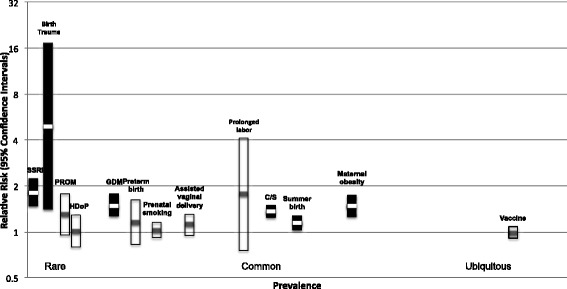
BACKGROUND: According to recent evidence, up to 40-50% of variance in autism spectrum disorder (ASD) liability might be determined by environmental factors. In the present paper, we conducted a review of systematic reviews and meta-analyses of environmental risk factors for ASD. We assessed each review for quality of evidence and provided a brief overview of putative mechanisms of environmental risk factors for ASD. FINDINGS: Current evidence suggests that several environmental factors including vaccination, maternal smoking, thimerosal exposure, and most likely assisted reproductive technologies are unrelated to risk of ASD. On the contrary, advanced parental age is associated with higher risk of ASD. Birth complications that are associated with trauma or ischemia and hypoxia have also shown strong links to ASD, whereas other pregnancy-related factors such as maternal obesity, maternal diabetes, and caesarian section have shown a less strong (but significant) association with risk of ASD. The reviews on nutritional elements have been inconclusive about the detrimental effects of deficiency in folic acid and omega 3, but vitamin D seems to be deficient in patients with ASD. The studies on toxic elements have been largely limited by their design, but there is enough evidence for the association between some heavy metals (most important inorganic mercury and lead) and ASD that warrants further investigation. Mechanisms of the association between environmental factors and ASD are debated but might include non-causative association (including confounding), gene-related effect, oxidative stress, inflammation, hypoxia/ischemia, endocrine disruption, neurotransmitter alterations, and interference with signaling pathways. CONCLUSIONS: Compared to genetic studies of ASD, studies of environmental risk factors are in their infancy and have significant methodological limitations. Future studies of ASD risk factors would benefit from a developmental psychopathology approach, prospective design, precise exposure measurement, reliable timing of exposure in relation to critical developmental periods and should take into account the dynamic interplay between gene and environment by using genetically informed designs.
Overview
The claims and statistics of this paper haven’t been checked yet.
Free: it reads the open-access text and checks the first 5 claims that cite a source we can check. Create a free account to check every claim.
Integrity signals
Registry
Cites
Statistics
Figures
Verification
Claims the paper makes
The claims and statistics of this paper haven’t been checked yet.
Free: it reads the open-access text and checks the first 5 claims that cite a source we can check. Create a free account to check every claim.
Claims other papers make about this one
Each is checked against this paper’s own text: does it say what the citing paper says it does?
The cited source says what the claim attributes to it.
In the citing paper
“Environmental risk factors could underlie risk of ASD through several complex underlying mechanisms, such as [Au: edits to improve narrative flow ok?] genetic and epigenetic related effects (see”
From Autism spectrum disorder (2020) · cites this paper as [18]
The cited source says what the claim attributes to it.
In the citing paper
“This and other studies identified environmental risk factors for ASD as advanced parental age 19 and birth trauma, particularly if due to proxies of hypoxia 18 .”
From Autism spectrum disorder (2020) · cites this paper as [18]
The cited source says what the claim attributes to it.
In the citing paper
“Data from studies aiming to identify risk factors for autism spectrum disorder (ASD) can be broadly split into three categories, those with evidence supporting an association (panel a), those with inconclusive evidence (panel b) and importantly, those with no supporting evidence (panel c).”
From Autism spectrum disorder (2020) · cites this paper as [18]
The cited source says what the claim attributes to it.
In the citing paper
“Environmental risk factors, although still under investigation, include advanced parental age, birth complications associated with trauma, ischemia, and hypoxia, as well as, to a lesser extent, maternal obesity, maternal diabetes, and cesarean delivery [11].”
From The Gut–Brain–Microbiota Connection and Its Role in Autism Spectrum Disorders (2025) · cites this paper as [11]
Self-check
Percentages, sums and reported differences re-computed from the paper’s own numbers.
The self-check needs the paper’s full text.
Citations
Cites
GRADE: an emerging consensus on rating quality of evidence and strength of recommendations
Guyatt, G. H., Oxman, A. D., Vist, G. E., Kunz, R., Falck-Ytter, Y., Alonso-Coello, P., & Schünemann, H. J. (2008) · BMJ · doi:10.1136/bmj.39489.470347.ad · Cited by 23,305
Baio, J., Wiggins, L., Christensen, D. L., Maenner, M. J., Daniels, J., Warren, Z., Kurzius-Spencer, M., Zahorodny, W., Robinson, C., Rosenberg, et al. (2018) · MMWR. Surveillance Summaries · doi:10.15585/mmwr.ss6706a1 · Cited by 6,078
Metals, Toxicity and Oxidative Stress
Valko, M., Morris, H., & Cronin, M. (2005) · Current Medicinal Chemistry · doi:10.2174/0929867053764635 · Cited by 5,018
Autism as a strongly genetic disorder: evidence from a British twin study
Bailey, A., Le Couteur, A., Gottesman, I., Bolton, P., Simonoff, E., Yuzda, E., & Rutter, M. (1995) · Psychological Medicine · doi:10.1017/s0033291700028099 · Cited by 2,461 · cited 1×
“Earlier twin studies suggested heritability as high as 80–90% for ASD with little contribution from the environment [4, 6, 7].”
BackgroundNeuroglial activation and neuroinflammation in the brain of patients with autism
Vargas, D. L., Nascimbene, C., Krishnan, C., Zimmerman, A. W., & Pardo, C. A. (2005) · Annals of Neurology · doi:10.1002/ana.20315 · Cited by 2,149
Genetic Heritability and Shared Environmental Factors Among Twin Pairs With Autism
Hallmayer, J. (2011) · Archives of General Psychiatry · doi:10.1001/archgenpsychiatry.2011.76 · Cited by 1,970
Battle, D. E. (2013) · CoDAS · doi:10.1590/s2317-17822013000200017 · Cited by 1,569
Naarden Braun, K. V., Lopez, M., White, T., et al. (2023) · Carolina Digital Repository (University of North Carolina at Chapel Hill) · doi:10.17615/y3kk-5x30 · Cited by 1,381
Most genetic risk for autism resides with common variation
Gaugler, T., Klei, L., Sanders, S. J., Bodea, C. A., Goldberg, A. P., Lee, A. B., Mahajan, M., Manaa, D., Pawitan, Y., Reichert, J., et al. (2014) · Nature Genetics · doi:10.1038/ng.3039 · Cited by 1,239
Self-citationThe epidemiology and global burden of autism spectrum disorders
Baxter, A. J., Brugha, T. S., Erskine, H. E., Scheurer, R. W., Vos, T., & Scott, J. G. (2015) · Psychological Medicine · doi:10.1017/s003329171400172x · Cited by 1,224 · cited 2×
“There is evidence that one in every 132 to one in every 68 individual suffers from ASD [2, 3].”
BackgroundSex differences in the brain: implications for explaining autism
Baron-Cohen, S., Knickmeyer, R. C., & Belmonte, M. K. (2005) · Science · doi:10.1126/science.1115455 · Cited by 1,145 · cited 1×
“, more systematizing, less empathizing) [92].”
Epigenetic transmission of the impact of early stress across generations
Franklin, T. B., Russig, H., Weiss, I. C., Gräff, J., Linder, N., Michalon, A., Vizi, S., & Mansuy, I. M. (2010) · Biological Psychiatry · doi:10.1016/j.biopsych.2010.05.036 · Cited by 1,125 · cited 1×
“Assisted reproductive technology and maternal stress (due to immigration) have also been linked to epigenetic alterations [65, 66], although the importance of such association with respect to ASD is unknown.”
BackgroundMitochondrial dysfunction in autism spectrum disorders: a systematic review and meta-analysis
Rossignol, D. A., & Frye, R. E. (2012) · Molecular Psychiatry · doi:10.1038/mp.2010.136 · Cited by 907
The genetics of autism spectrum disorders and related neuropsychiatric disorders in childhood
Lichtenstein, P., Carlström, E., Råstam, M., Gillberg, C., & Anckarsäter, H. (2010) · American Journal of Psychiatry · doi:10.1176/appi.ajp.2010.10020223 · Cited by 738
Prenatal risk factors for autism: comprehensive meta-analysis
Gardener, H., Spiegelman, D., & Buka, S. L. (2009) · British Journal of Psychiatry · doi:10.1192/bjp.bp.108.051672 · Cited by 736 · cited 9×
“[24, 25] carried out two comprehensive reviews of prenatal and perinatal risk factors for ASD.”
BackgroundInfluentialPerinatal and Neonatal Risk Factors for Autism: A Comprehensive Meta-analysis
Gardener, H., Spiegelman, D., & Buka, S. L. (2011) · Pediatrics · doi:10.1542/peds.2010-1036 · Cited by 665
Sharp, W. G., Berry, R. C., McCracken, C., Nuhu, N. N., Marvel, E., Saulnier, C. A., Klin, A., Jones, W., & Jaquess, D. L. (2013) · Journal of Autism and Developmental Disorders · doi:10.1007/s10803-013-1771-5 · Cited by 643 · cited 1×
“[40] showed significantly lower protein and calcium intake in children with ASD.”
BackgroundAutism spectrum disorders and autistic traits: A decade of new twin studies
Ronald, A., & Hoekstra, R. A. (2011) · American Journal of Medical Genetics Part B: Neuropsychiatric Genetics · doi:10.1002/ajmg.b.31159 · Cited by 616 · cited 2×
“Earlier twin studies suggested heritability as high as 80–90% for ASD with little contribution from the environment [4, 6, 7].”
BackgroundTaylor, L. E., Swerdfeger, A. L., & Eslick, G. D. (2014) · Vaccine · doi:10.1016/j.vaccine.2014.04.085 · Cited by 583
Depression in Persons with Autism: Implications for Research and Clinical Care
Ghaziuddin, M., Ghaziuddin, N., & Greden, J. (2002) · Journal of Autism and Developmental Disorders · doi:10.1023/a:1016330802348 · Cited by 579 · cited 1×
“Given that ASD has a high comorbidity rate with depression, such associations might reflect a shared risk mechanism rather than causality [56].”
BackgroundHalladay, A. K., Bishop, S., Constantino, J. N., Daniels, A. M., Koenig, K., Palmer, K., Messinger, D., Pelphrey, K., Sanders, S. J., Singer, A. T., et al. (2015) · Molecular Autism · doi:10.1186/s13229-015-0019-y · Cited by 574
Van Wijngaarden-Cremers, P. J. M., van Eeten, E., Groen, W. B., Van Deurzen, P. A., Oosterling, I. J., & Van der Gaag, R. J. (2014) · Journal of Autism and Developmental Disorders · doi:10.1007/s10803-013-1913-9 · Cited by 547 · cited 1×
“Not only the prevalence of ASD seems to be higher in boys but also the psychopathological, biochemical, and genetic aspects of ASD also appear to be different between males and females [89, 90].”
BackgroundPrenatal and Perinatal Risk Factors for Autism: A Review and Integration of Findings
Kolevzon, A., Gross, R., & Reichenberg, A. (2007) · Archives of Pediatrics & Adolescent Medicine · doi:10.1001/archpedi.161.4.326 · Cited by 510
Self-citationCharacteristics and Concordance of Autism Spectrum Disorders Among 277 Twin Pairs
Rosenberg, R. E., Law, J. K., Yenokyan, G., McGready, J., Kaufmann, W. E., & Law, P. A. (2009) · Archives of Pediatrics & Adolescent Medicine · doi:10.1001/archpediatrics.2009.98 · Cited by 495
Cytokine aberrations in autism spectrum disorder: a systematic review and meta-analysis
Masi, A., Quintana, D. S., Glozier, N., Lloyd, A. R., Hickie, I. B., & Guastella, A. J. (2015) · Molecular Psychiatry · doi:10.1038/mp.2014.59 · Cited by 466
Environmental toxicants and autism spectrum disorders: a systematic review
Rossignol, D. A., Genuis, S. J., & Frye, R. E. (2014) · Translational Psychiatry · doi:10.1038/tp.2014.4 · Cited by 458 · cited 10×
“Pesticide exposure during pregnancy [49], 2014 1 retrospective case-control; 3 prospective cohort All showed an increased rate of ASD in children with gestational exposure to chemicals including two prospective studies of organophosphates The studies provide enough evidence to justify larger studies of pesticide expos…”
BackgroundInfluentialAUTISM IN THALIDOMIDE EMBRYOPATHY: A POPULATION STUDY
Strömland, K., Nordin, V., Miller, M., Akerström, B., & Gillberg, C. (1994) · Developmental Medicine & Child Neurology · doi:10.1111/j.1469-8749.1994.tb11856.x · Cited by 453
What causes autism? Exploring the environmental contribution
Landrigan, P. J. (2010) · Current Opinion in Pediatrics · doi:10.1097/mop.0b013e328336eb9a · Cited by 429 · cited 1×
“Given the vulnerability of the developing brain to environmental factors, the causative association between environmental factors and ASD is biologically plausible [17].”
BackgroundNeurochemistry in the pathophysiology of autism.
McDougle, C. J., Erickson, C. A., Stigler, K. A., & Posey, D. J. (2005) · PubMed · Cited by 422
Jiang, H.-Y., Xu, L.-L., Shao, L., Xia, R.-M., Yu, Z.-H., Ling, Z.-X., Yang, F., Deng, M., & Ruan, B. (2016) · Brain Behavior and Immunity · doi:10.1016/j.bbi.2016.06.005 · Cited by 391
Gestational Diabetes Induces Placental Genes for Chronic Stress and Inflammatory Pathways
Radaelli, T., Varastehpour, A., Catalano, P., & Hauguel-de Mouzon, S. (2003) · Diabetes · doi:10.2337/diabetes.52.12.2951 · Cited by 390
Oxidative stress-related biomarkers in autism: Systematic review and meta-analyses
Frustaci, A., Neri, M., Cesario, A., Adams, J. B., Domenici, E., Dalla Bernardina, B., & Bonassi, S. (2012) · Free Radical Biology and Medicine · doi:10.1016/j.freeradbiomed.2012.03.011 · Cited by 365
Arndt, T. L., Stodgell, C. J., & Rodier, P. M. (2005) · International Journal of Developmental Neuroscience · doi:10.1016/j.ijdevneu.2004.11.001 · Cited by 360
Bai, J., Wong, F. W. S., Bauman, A., & Mohsin, M. (2002) · American Journal of Obstetrics and Gynecology · doi:10.1067/mob.2002.119639 · Cited by 351
D’Onofrio, B. M., Lahey, B. B., Turkheimer, E., & Lichtenstein, P. (2013) · American Journal of Public Health · doi:10.2105/ajph.2013.301252 · Cited by 343
Epigenetics of autism spectrum disorders
Schanen, N. C. (2006) · Human Molecular Genetics · doi:10.1093/hmg/ddl213 · Cited by 341
Braun, J. M., Kalkbrenner, A. E., Just, A. C., Yolton, K., Calafat, A. M., Sjödin, A., Hauser, R., Webster, G. M., Chen, A., & Lanphear, B. P. (2014) · Environmental Health Perspectives · doi:10.1289/ehp.1307261 · Cited by 328 · cited 2×
“For example, brominated flame retardants are both associated with an increased level of free testosterone and an increased risk of ASD [93, 94].”
BackgroundHow environmental and genetic factors combine to cause autism: A redox/methylation hypothesis
Deth, R., Muratore, C., Benzecry, J., Power-Charnitsky, V.-A., & Waly, M. (2008) · NeuroToxicology · doi:10.1016/j.neuro.2007.09.010 · Cited by 325 · cited 1×
“[79] has made a case for a redox/methylation hypothesis of ASD.”
BackgroundHeritability of Autistic Traits in the General Population
Hoekstra, R. A., Bartels, M., Verweij, C. J. H., & Boomsma, D. I. (2007) · Archives of Pediatrics & Adolescent Medicine · doi:10.1001/archpedi.161.4.372 · Cited by 320
Kana, R. K., Keller, T. A., Cherkassky, V. L., Minshew, N. J., & Just, M. A. (2009) · Social Neuroscience · doi:10.1080/17470910802198510 · Cited by 319
Cytokine dysregulation in autism spectrum disorders (ASD): Possible role of the environment
Goines, P. E., & Ashwood, P. (2013) · Neurotoxicology and Teratology · doi:10.1016/j.ntt.2012.07.006 · Cited by 314
Dingemans, M. M. L., van den Berg, M., & Westerink, R. H. S. (2011) · Environmental Health Perspectives · doi:10.1289/ehp.1003035 · Cited by 310
Biological sex affects the neurobiology of autism
Lai, M.-C., Lombardo, M. V., Suckling, J., Ruigrok, A. N. V., Chakrabarti, B., Ecker, C., Deoni, S. C. L., Craig, M. C., Murphy, D. G. M., Bullmore, E. T., et al. (2013) · Brain · doi:10.1093/brain/awt216 · Cited by 298
Perinatal brain injury in the preterm and term newborn
du Plessis, A. J., & Volpe, J. J. (2002) · Current Opinion in Neurology · doi:10.1097/00019052-200204000-00005 · Cited by 295
Mandy, W., & Lai, M. (2016) · Journal of Child Psychology and Psychiatry · doi:10.1111/jcpp.12501 · Cited by 283 · cited 2×
“As Mandy and Lai in their state in their recent review, to understand the ASD, we must engage with its complexity and take into the account the substantial heterogeneity of the factors that affect its onset as well as its course [110].”
BackgroundAdvanced parental age and autism risk in children: a systematic review and meta‐analysis
Wu, S., Wu, F., Ding, Y., Hou, J., Bi, J., & Zhang, Z. (2017) · Acta Psychiatrica Scandinavica · doi:10.1111/acps.12666 · Cited by 282 · cited 1×
“[23] performed a meta-analysis of 27 studies on association between advanced parental age and ASD.”
MethodPredicting motor outcome and death in term hypoxic-ischemic encephalopathy
Martinez-Biarge, M., Diez-Sebastian, J., Kapellou, O., Gindner, D., Allsop, J. M., Rutherford, M. A., & Cowan, F. M. (2011) · Neurology · doi:10.1212/wnl.0b013e31821f442d · Cited by 274
Association of gestational maternal hypothyroxinemia and increased autism risk
Román, G. C., Ghassabian, A., Bongers‐Schokking, J. J., Jaddoe, V. W. V., Hofman, A., de Rijke, Y. B., Verhulst, F. C., & Tiemeier, H. (2013) · Annals of Neurology · doi:10.1002/ana.23976 · Cited by 258
Curran, E. A., O'Neill, S. M., Cryan, J. F., Kenny, L. C., Dinan, T. G., Khashan, A. S., & Kearney, P. M. (2015) · Journal of Child Psychology and Psychiatry · doi:10.1111/jcpp.12351 · Cited by 250
A Systematic Review and Meta-Analysis of Multiple Airborne Pollutants and Autism Spectrum Disorder
Lam, J., Sutton, P., Kalkbrenner, A., Windham, G., Halladay, A., Koustas, E., Lawler, C., Davidson, L., Daniels, N., Newschaffer, C., et al. (2016) · PLOS ONE · doi:10.1371/journal.pone.0161851 · Cited by 247
Autism Spectrum Disorders and Epigenetics
Grafodatskaya, D., Chung, B., Szatmari, P., & Weksberg, R. (2010) · Journal of the American Academy of Child & Adolescent Psychiatry · doi:10.1016/j.jaac.2010.05.005 · Cited by 235 · cited 1×
“For example, valproate, a strong risk factor for ASD, inhibits histone deacetylase and interferes with folic acid metabolism [62, 63].”
BackgroundKim, Y. S., & Leventhal, B. L. (2015) · Biological Psychiatry · doi:10.1016/j.biopsych.2014.11.001 · Cited by 227
Genetic Structure of Reciprocal Social Behavior
Constantino, J. N., & Todd, R. D. (2000) · American Journal of Psychiatry · doi:10.1176/appi.ajp.157.12.2043 · Cited by 209
Maternal neuronal antibodies associated with autism and a language disorder
Dalton, P., Deacon, R., Blamire, A., Pike, M., McKinlay, I., Stein, J., Styles, P., & Vincent, A. (2003) · Annals of Neurology · doi:10.1002/ana.10557 · Cited by 204 · cited 1×
“It is possible that the association of maternal autoimmune disease with risk of ASD is partly mediated through the effect of maternal inflammatory mediators and autoantibodies on fetal neurodevelopment [72, 73].”
BackgroundMolecular Neurobiology of Lead (Pb2+): Effects on Synaptic Function
Neal, A. P., & Guilarte, T. R. (2010) · Molecular Neurobiology · doi:10.1007/s12035-010-8146-0 · Cited by 202
Xu, G., Jing, J., Bowers, K., Liu, B., & Bao, W. (2014) · Journal of Autism and Developmental Disorders · doi:10.1007/s10803-013-1928-2 · Cited by 199
Obstetric Complications in Autism: Consequences or Causes of the Condition?
BOLTON, P. F., MURPHY, M., MACDONALD, H., WHITLOCK, B., PICKLES, A., & RUTTER, M. (1997) · Journal of the American Academy of Child & Adolescent Psychiatry · doi:10.1097/00004583-199702000-00018 · Cited by 198 · cited 1×
“These epiphenomena are observed with higher frequency in children with ASD but are not necessarily causal [55].”
BackgroundChen, S.-W., Zhong, X.-S., Jiang, L.-N., Zheng, X.-Y., Xiong, Y.-Q., Ma, S.-J., Qiu, M., Huo, S.-T., Ge, J., & Chen, Q. (2016) · Behavioural Brain Research · doi:10.1016/j.bbr.2015.08.035 · Cited by 194 · cited 2×
“• Maternal autoimmune disease [34], 2016 10 9 case-control; 1 cohort + + + + Absent”
BackgroundAssociations between brominated flame retardants in house dust and hormone levels in men
Johnson, P. I., Stapleton, H. M., Mukherjee, B., Hauser, R., & Meeker, J. D. (2013) · Science of The Total Environment · doi:10.1016/j.scitotenv.2012.12.017 · Cited by 187
Brain and cognitive‐behavioural development after asphyxia at term birth
De Haan, M., Wyatt, J. S., Roth, S., Vargha‐Khadem, F., Gadian, D., & Mishkin, M. (2006) · Developmental Science · doi:10.1111/j.1467-7687.2006.00499.x · Cited by 180
Assisted reproduction treatment and epigenetic inheritance
van Montfoort, A. P. A., Hanssen, L. L. P., de Sutter, P., Viville, S., Geraedts, J. P. M., & de Boer, P. (2012) · Human Reproduction Update · doi:10.1093/humupd/dmr047 · Cited by 176
Matheson, S. L., Shepherd, A. M., Laurens, K. R., & Carr, V. J. (2011) · Schizophrenia Research · doi:10.1016/j.schres.2011.09.020 · Cited by 174
Maternal Mid-Pregnancy Autoantibodies to Fetal Brain Protein: The Early Markers for Autism Study
Croen, L. A., Braunschweig, D., Haapanen, L., Yoshida, C. K., Fireman, B., Grether, J. K., Kharrazi, M., Hansen, R. L., Ashwood, P., & Van de Water, J. (2008) · Biological Psychiatry · doi:10.1016/j.biopsych.2008.05.006 · Cited by 171
Mitchell, M. M., Woods, R., Chi, L., Schmidt, R. J., Pessah, I. N., Kostyniak, P. J., & LaSalle, J. M. (2012) · Environmental and Molecular Mutagenesis · doi:10.1002/em.21722 · Cited by 164
Wu, S., Ding, Y., Wu, F., Li, R., Xie, G., Hou, J., & Mao, P. (2015) · Neuroscience & Biobehavioral Reviews · doi:10.1016/j.neubiorev.2015.05.004 · Cited by 161
The Role of Inflammation and Infection in Preterm Birth
Bastek, J. A., Gomez, L. M., & Elovitz, M. A. (2011) · Clinics in Perinatology · doi:10.1016/j.clp.2011.06.003 · Cited by 159
Wang, T., Shan, L., Du, L., Feng, J., Xu, Z., Staal, W., & Jia, F. (2015) · European Child & Adolescent Psychiatry · doi:10.1007/s00787-015-0786-1 · Cited by 158
Flores-Pajot, M.-C., Ofner, M., Do, M. T., Lavigne, E., & Villeneuve, P. J. (2016) · Environmental Research · doi:10.1016/j.envres.2016.07.030 · Cited by 157 · cited 1×
“• O3 (every 10 μg/m(3)) [114], 2014 2 2 case-control + + + − NC”
MacGregor, A. J., Snieder, H., Schork, N. J., & Spector, T. D. (2000) · Trends in Genetics · doi:10.1016/s0168-9525(99)01946-0 · Cited by 155
Omega-3 fatty acids supplementation for autism spectrum disorders (ASD)
James, S., Montgomery, P., & Williams, K. (2011) · Cochrane Database of Systematic Reviews · doi:10.1002/14651858.cd007992.pub2 · Cited by 137
Evidence of the Gluten-Free and Casein-Free Diet in Autism Spectrum Disorders: A Systematic Review
Marí-Bauset, S., Zazpe, I., Mari-Sanchis, A., Llopis-González, A., & Morales-Suárez-Varela, M. (2014) · Journal of Child Neurology · doi:10.1177/0883073814531330 · Cited by 136
Epigenetics, Autism Spectrum, and Neurodevelopmental Disorders
Rangasamy, S., D’Mello, S. R., & Narayanan, V. (2013) · Neurotherapeutics · doi:10.1007/s13311-013-0227-0 · Cited by 136
Wayman, G. A., Bose, D. D., Yang, D., Lesiak, A., Bruun, D., Impey, S., Ledoux, V., Pessah, I. N., & Lein, P. J. (2012) · Environmental Health Perspectives · doi:10.1289/ehp.1104833 · Cited by 136
Aarabi, M., Gabriel, M. C. S., Chan, D., Behan, N. A., Caron, M., Pastinen, T., Bourque, G., MacFarlane, A. J., Zini, A. S., & Trasler, J. M. (2015) · Human Molecular Genetics · doi:10.1093/hmg/ddv338 · Cited by 134
Pu, D., Shen, Y., & Wu, J. (2013) · Autism Research · doi:10.1002/aur.1300 · Cited by 130 · cited 1×
“Another systematic review suggested that folate deficiency might interact with certain polymorphism in the methylene tetrahydrofolate reductase (MTHFR) gene to increase risk of ASD [45].”
BackgroundKinney, D. K., Barch, D. H., Chayka, B., Napoleon, S., & Munir, K. M. (2010) · Medical Hypotheses · doi:10.1016/j.mehy.2009.07.052 · Cited by 129
Yoshimasu, K., Kiyohara, C., Takemura, S., & Nakai, K. (2014) · NeuroToxicology · doi:10.1016/j.neuro.2014.06.007 · Cited by 125
Autism and Möbius sequence: an exploratory study of children in northeastern Brazil
Bandim, J. M., Ventura, L. O., Miller, M. T., Almeida, H. C., & Costa, A. E. S. (2003) · Arquivos de Neuro-Psiquiatria · doi:10.1590/s0004-282x2003000200004 · Cited by 117
Long-lived epigenetic interactions between perinatal PBDE exposure and Mecp2308 mutation
Woods, R., Vallero, R. O., Golub, M. S., Suarez, J. K., Ta, T. A., Yasui, D. H., Chi, L.-H., Kostyniak, P. J., Pessah, I. N., Berman, R. F., et al. (2012) · Human Molecular Genetics · doi:10.1093/hmg/dds046 · Cited by 109
Impaired inhibitory control of cortical synchronization in fragile X syndrome
Paluszkiewicz, S. M., Olmos-Serrano, J. L., Corbin, J. G., & Huntsman, M. M. (2011) · Journal of Neurophysiology · doi:10.1152/jn.00421.2011 · Cited by 108
The Therapeutic Effects of Camel Milk: A Systematic Review of Animal and Human Trials
Mihic, T., Rainkie, D. C., Wilby, K. J., & Pawluk, S. A. (2016) · Journal of Evidence-Based Complementary & Alternative Medicine · doi:10.1177/2156587216658846 · Cited by 100
Lack of Correlation Between Metallic Elements Analyzed in Hair by ICP-MS and Autism
Palma, G. D., Catalani, S., Franco, A., Brighenti, M., & Apostoli, P. (2011) · Journal of Autism and Developmental Disorders · doi:10.1007/s10803-011-1245-6 · Cited by 97
Balmer, N. V., Weng, M. K., Zimmer, B., Ivanova, V. N., Chambers, S. M., Nikolaeva, E., Jagtap, S., Sachinidis, A., Hescheler, J., Waldmann, T., et al. (2012) · Human Molecular Genetics · doi:10.1093/hmg/dds239 · Cited by 97
Kobayashi, T., Matsuyama, T., Takeuchi, M., & Ito, S. (2016) · Reproductive Toxicology · doi:10.1016/j.reprotox.2016.07.016 · Cited by 94
Kim, S., Park, J., Kim, H.-J., Lee, J. J., Choi, G., Choi, S., Kim, S., Kim, S. Y., Moon, H.-B., Kim, S., et al. (2013) · Environment International · doi:10.1016/j.envint.2013.07.009 · Cited by 90
Giera, S., Bansal, R., Ortiz-Toro, T. M., Taub, D. G., & Zoeller, R. T. (2011) · Endocrinology · doi:10.1210/en.2010-1490 · Cited by 89
Kuo, F.-C., Su, S.-W., Wu, C.-F., Huang, M.-C., Shiea, J., Chen, B.-H., Chen, Y.-L., & Wu, M.-T. (2015) · PLOS ONE · doi:10.1371/journal.pone.0123884 · Cited by 88
Maternal Body Mass Index and Risk of Autism Spectrum Disorders in Offspring: A Meta-analysis.
Wang, Y., Tang, S., Xu, S., Weng, S., & Liu, Z. (2016) · Scientific Reports · doi:10.1038/srep34248 · Cited by 81
Chelation for autism spectrum disorder (ASD)
James, S., Stevenson, S. W., Silove, N., & Williams, K. (2015) · Cochrane Database of Systematic Reviews · doi:10.1002/14651858.cd010766.pub2 · Cited by 80
Deng, W., Zou, X., Deng, H., Li, J., Chun, T., Wang, X., & Guo, X. (2015) · Journal of Child Neurology · doi:10.1177/0883073815580645 · Cited by 78
Maternal Smoking and Autism Spectrum Disorder: A Meta-analysis
Rosen, B. N., Lee, B. K., Lee, N. L., Yang, Y., & Burstyn, I. (2015) · Journal of Autism and Developmental Disorders · doi:10.1007/s10803-014-2327-z · Cited by 78
The role of phthalate esters in autism development: A systematic review
Jeddi, M. Z., Janani, L., Memari, A. H., Akhondzadeh, S., & yunesian, M. (2016) · Environmental Research · doi:10.1016/j.envres.2016.08.021 · Cited by 76
Maternal Obesity Affects Fetal Neurodevelopmental and Metabolic Gene Expression: A Pilot Study
Edlow, A. G., Vora, N. L., Hui, L., Wick, H. C., Cowan, J. M., & Bianchi, D. W. (2014) · PLoS ONE · doi:10.1371/journal.pone.0088661 · Cited by 76
Wong, C. T., Wais, J., & Crawford, D. A. (2015) · European Journal of Neuroscience · doi:10.1111/ejn.13028 · Cited by 73
Autism in immigrants: children born in Sweden to mothers born in Uganda
Gillberg, C., Schaumann, H., & Gillberg, I. C. (1995) · Journal of Intellectual Disability Research · doi:10.1111/j.1365-2788.1995.tb00482.x · Cited by 73
Nowack, N., Wittsiepe, J., Kasper-Sonnenberg, M., Wilhelm, M., & Schölmerich, A. (2015) · PLOS ONE · doi:10.1371/journal.pone.0129906 · Cited by 71 · cited 1×
“Recent studies have shown that chemicals (such as some PCB congeners) that are associated with lower testosterone levels are also associated with lower risk of autistic behaviors [93, 95].”
BackgroundBirth Spacing and Risk of Autism and Other Neurodevelopmental Disabilities: A Systematic Review
Conde‐Agudelo, A., Rosas-Bermúdez, A., & Norton, M. H. (2016) · PEDIATRICS · doi:10.1542/peds.2015-3482 · Cited by 70
Maternal migration and autism risk: Systematic analysis
Crafa, D., & Warfa, N. (2015) · International Review of Psychiatry · doi:10.3109/09540261.2014.995601 · Cited by 68 · cited 2×
“Maternal immigration [53], 2015 10 population-based The adjusted results showed higher rates of ASD if children had migrant mothers (2.”
BackgroundImpaired Gas Exchange at Birth and Risk of Intellectual Disability and Autism: A Meta-analysis
Modabbernia, A., Mollon, J., Boffetta, P., & Reichenberg, A. (2016) · Journal of Autism and Developmental Disorders · doi:10.1007/s10803-016-2717-5 · Cited by 67
Self-citationKim, S., Park, J., Kim, H.-J., Lee, J. J., Choi, G., Choi, S., Kim, S., Kim, S. Y., Moon, H.-B., Kim, S., et al. (2015) · PLOS ONE · doi:10.1371/journal.pone.0125213 · Cited by 67
Folic acid and autism: What do we know?
Castro, K., Klein, L. D. S., Baronio, D., Gottfried, C., Riesgo, R., & Perry, I. S. (2016) · Nutritional Neuroscience · doi:10.1179/1476830514y.0000000142 · Cited by 61 · cited 2×
“Folic acid [44], 2016 11 studies The findings were inconsistent; some studies provide support for the beneficial effect of folic acid on risk of ASD, whereas others show the opposite effect Observational studies were limited by self-report, whereas RCTs were limited by use of multivitamin”
BackgroundResultNapoli, E., Hung, C., Wong, S., & Giulivi, C. (2013) · Toxicological Sciences · doi:10.1093/toxsci/kfs339 · Cited by 55
Prostaglandin E2-Induced Synaptic Plasticity in Neocortical Networks of Organotypic Slice Cultures
Koch, H., Huh, S.-E., Elsen, F. P., Carroll, M. S., Hodge, R. D., Bedogni, F., Turner, M. S., Hevner, R. F., & Ramirez, J.-M. (2010) · The Journal of Neuroscience · doi:10.1523/jneurosci.4665-09.2010 · Cited by 52
Neurocognitive outcomes following neonatal encephalopathy
Armstrong, J., Bernard, T. J., Boada, R., & Manco‐Johnson, M. J. (2010) · Neurorehabilitation · doi:10.3233/nre-2010-0533 · Cited by 48
Prenatal and Neonatal Thyroid Stimulating Hormone Levels and Autism Spectrum Disorders
Yau, V. M., Lutsky, M., Yoshida, C. K., Lasley, B. L., Kharrazi, M., Windham, G. C., Gee, N., & Croen, L. (2014) · Journal of Autism and Developmental Disorders · doi:10.1007/s10803-014-2227-2 · Cited by 45
Conti, E., Mazzotti, S., Calderoni, S., Saviozzi, I., & Guzzetta, A. (2013) · Human Reproduction · doi:10.1093/humrep/det380 · Cited by 43
Bloom, M. S., Jansing, R. L., Kannan, K., Rej, R., & Fitzgerald, E. F. (2014) · International Journal of Hygiene and Environmental Health · doi:10.1016/j.ijheh.2013.09.003 · Cited by 41
Gentile, S. (2014) · CNS Spectrums · doi:10.1017/s1092852913000990 · Cited by 41
The Relationship between Zinc Levels and Autism: A Systematic Review and Meta-analysis.
Babaknejad, N., Sayehmiri, F., Sayehmiri, K., Mohamadkhani, A., & Bahrami, S. (2016) · Iranian journal of child neurology. · doi:10.22037/ijcn.v10i4.9217 · Cited by 37
Zn/Cu Levels in the Field of Autism Disorders: A Systematic Review and Meta-analysis.
Sayehmiri, F., Babaknejad, N., Bahrami, S., Sayehmiri, K., Darabi, M., & Rezaei–Tavirani, M. (2015) · Iranian journal of child neurology. · doi:10.22037/ijcn.v9i4.6780 · Cited by 36
Genetic and Environmental Influences on Autistic-Like Behaviors in 2-Year-Old Twins
Edelson, L. R., & Saudino, K. J. (2009) · Behavior Genetics · doi:10.1007/s10519-009-9270-3 · Cited by 35
Genetic Variance for Autism Screening Items in an Unselected Sample of Toddler-Age Twins
Stilp, R. L. H., Gernsbacher, M. A., Schweigert, E. K., Arneson, C. L., & Goldsmith, H. H. (2010) · Journal of the American Academy of Child & Adolescent Psychiatry · doi:10.1016/j.jaac.2009.11.012 · Cited by 29
New concepts in perinatal hypoxia ischemia encephalopathy
Scafidi, J., & Gallo, V. (2008) · Current Neurology and Neuroscience Reports · doi:10.1007/s11910-008-0021-2 · Cited by 26
Rais, T. B., & Rais, A. (2014) · PubMed · Cited by 16
(2005) · Annals of Neurology · doi:10.1002/ana.20397 · Cited by 15
Chelation for autism spectrum disorder (ASD)
James, S., Williams, K. J., Silove, N., & Stevenson, S. W. (2013) · Cochrane Database of Systematic Reviews · doi:10.1002/14651858.cd010766 · Cited by 15
Influence of prenatal exposure to environmental pollutants on human cord blood levels of glutamate
Palou-Serra, A., Murcia, M., López-Espinosa, M.-J., Grimalt, J. O., Rodríguez-Farré, E., Ballester, F., & Sunol, C. E. (2013) · NeuroToxicology · doi:10.1016/j.neuro.2013.12.003 · Cited by 13
Dysregulation of FMRP/mTOR Signaling Cascade in Hypoxic-Ischemic Injury of Premature Human Brain
Lechpammer, M., Wintermark, P., Merry, K. M., Jackson, M. C., Jantzie, L. L., & Jensen, F. E. (2015) · Journal of Child Neurology · doi:10.1177/0883073815596617 · Cited by 9
A Meta-analysis of Prenatal, Perinatal, and Neonatal Risks for Autism
Kancherla, V., & Dennis, L. K. (2006) · American Journal of Epidemiology · doi:10.1093/aje/163.suppl_11.s20-d · Cited by 5
Cited by
Lord, C., Brugha, T. S., Charman, T., Cusack, J., Dumas, G., Frazier, T., Jones, E. J. H., Jones, R. M., Pickles, A., State, M. W., et al. (2020) · Nature Reviews Disease Primers · doi:10.1038/s41572-019-0138-4 · Cited by 1,859
Annual Research Review: Shifting from ‘normal science’ to neurodiversity in autism science
Pellicano, E., & den Houting, J. (2022) · Journal of Child Psychology and Psychiatry · doi:10.1111/jcpp.13534 · Cited by 744
Epidemiology of autism spectrum disorders: a review of worldwide prevalence estimates since 2014
Chiarotti, F., & Venerosi, A. (2020) · Brain Sciences · doi:10.3390/brainsci10050274 · Cited by 580
Genetic Causes and Modifiers of Autism Spectrum Disorder
Rylaarsdam, L., & Guemez-Gamboa, A. (2019) · Frontiers in Cellular Neuroscience · doi:10.3389/fncel.2019.00385 · Cited by 560
The contribution of environmental exposure to the etiology of autism spectrum disorder
Bölte, S., Girdler, S., & Marschik, P. B. (2019) · Cellular and Molecular Life Sciences · doi:10.1007/s00018-018-2988-4 · Cited by 509
Metadata
- Authors
- Modabbernia, A., Velthorst, E., & Reichenberg, A.
- Affiliations
- Icahn School of Medicine at Mount Sinai (US)
- Corresponding author
- Modabbernia, Amirhossein
- Venue
- Molecular Autism
- Published
- 2017-03-17
- Volume
- 8
- Issue
- 1
- Pages
- 13-13
- ISSN
- 2040-2392 (ISSN-L)
- PMC
- PMC5356236
- OpenAlex
- W2596453284
- Cited by
- 809
- References
- 119
- Citations by year
- 2026: 69 · 2025: 89 · 2024: 104 · 2023: 107 · 2022: 98 · 2021: 99 · 2020: 88 · 2019: 77 · 2018: 65 · 2017: 10
- FWCI
- 7.34
- Type
- journal article
- Language
- en
- Open access
- gold
- doi.org
- Licence
- cc-by
- creativecommons.org/licenses/by/4.0/ (tdm)
- creativecommons.org/licenses/by/4.0/ (vor)
- Locations
- Molecular Autism (publishedVersion, cc-by)
- PubMed Central (publishedVersion, cc-by)
- PubMed (publishedVersion)
- Funders
- Eunice Kennedy Shriver National Institute of Child Health and Human Development (HD073978)
- National Institute of Mental Health (MH097849)
- Netherlands Organization for Scientific Research (916-15-005)
- Topics
- Life Sciences › Neuroscience › Cognitive Neuroscience › Autism Spectrum Disorder Research
- Health Sciences › Medicine › Psychiatry and Mental health › Child Nutrition and Feeding Issues
- Life Sciences › Biochemistry, Genetics and Molecular Biology › Genetics › Genetics and Neurodevelopmental Disorders
- Keywords
- autism spectrum disorder, environmental risk factors, advanced parental age, childbirth complications, maternal smoking, thimerosal, assisted reproduction, maternal obesity, maternal diabetes, cesarean section, vitamin D deficiency, folate deficiency, omega-3 deficiency, heavy metals, inorganic mercury, lead, oxidative stress, inflammation, endocrine disruption, gene-environment interaction, developmental psychopathology
- MeSH terms
- Autism Spectrum Disorder, Systematic Reviews as Topic, Environmental Exposure, Female, Humans, Parents, Pregnancy, Prospective Studies, Risk Factors, Meta-Analysis as Topic, Metals, Heavy, Delivery, Obstetric
About these checks
Registry, retraction, Cites and statistics results are computed, not judged, with one exception: a printed reference that no index lists is read once by a model before it counts as a citation error. Claims are extracted by a model and kept only when their quote appears verbatim in the text; each cited source is then checked, with a model’s help, for whether it says what the claim relies on. Those verdicts can be wrong — read the claim’s quote and the cited source before relying on one.
Statistics and arithmetic are recomputed, not judged.
Confidence bands are shown only for fields calibrated on our annotated test set. None is calibrated yet, so no band is shown.
What counts as a claim ›How we measure confidence ›How we check this ›
Are you an author, or do you see a problem with this page? Request a review
Data sources
Bibliographic data: Semantic Scholar, OpenAlex, Crossref.
Contains information from the Semantic Scholar Academic Graph Datasets, made available under the ODC Attribution License (ODC-BY 1.0).
Semantic Scholar’s data is described in: Kinney, R., et al. (2023). The Semantic Scholar Open Data Platform. arXiv:2301.10140.
