

Prevalence and cumulative incidence of autism spectrum disorders and the patterns of co-occurring neurodevelopmental disorders in a total population sample of 5-year-old children
Open accessThe DOI matches its Crossref record; 29 of the 29 references it cites were found in a registry or an index.
Abstract
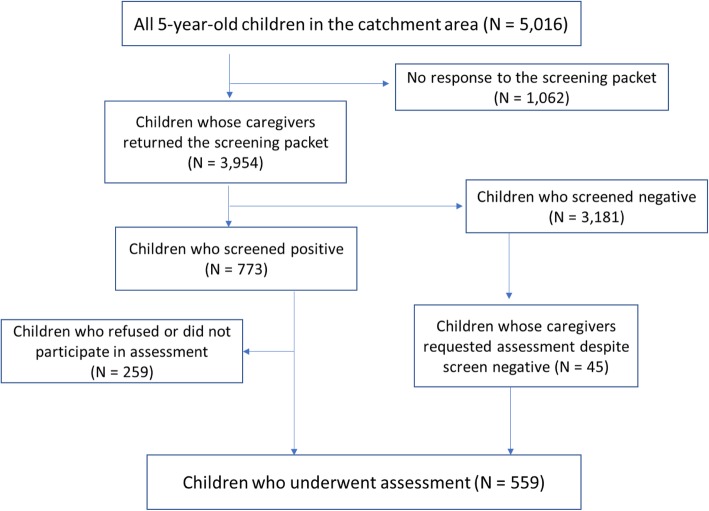
BACKGROUNDS: Whether there is a true increase in autism spectrum disorder (ASD) frequency or not remains unclear. Additionally, the rates of co-existing neurodevelopmental disorders (NDD) in a total population sample has not been fully examined before. Therefore, using a total population sample in Japan, we aimed to estimate the prevalence and cumulative incidence of autism spectrum disorder (ASD) annually, to determine whether there is a true increase in ASD prevalence by estimating the cumulative incidence of ASD annually, and to examine the rates of co-existing neurodevelopmental disorders (NDD). METHOD: In this cross-sectional sequential design study, all 5-year-old children in the catchment area underwent the screening annually from the year 2013-2016. Screen-positive children were invited to participate in a comprehensive assessment, including child and parent interview, behavioral observation, and cognitive and motor function testing. All cases were reviewed by a multidisciplinary research team. RESULTS: Caregivers of 3954 children returned the screening, among which 559 children underwent the assessment with 87 children receiving an ASD diagnosis. Adjusted ASD prevalence was 3.22% (95% confidence interval (CI) 2.66-3.76%). The male to female ratio of the crude prevalence was 2.2:1. The cumulative incidence of ASD up to 5 years of age for the total study years was 1.31% (95% CI 1.00-1.62%). A generalized linear model revealed no significant linear trends in 5-year cumulative incidence over the study years. Only 11.5% of children had ASD alone; the remaining 88.5% were found to have at least one co-existing NDD. LIMITATIONS: Modest sample size for a total population study. CONCLUSIONS: Our findings demonstrate the stability of the 5-year cumulative incidence of ASD, implying no true rise in ASD incident cases over the 4-year study period in the study catchment area. High rates of co-existing NDDs reflect the importance of investigating broad developmental challenges in children with ASD.
Overview
The claims and statistics of this paper haven’t been checked yet.
Free: it reads the open-access text and checks the first 5 claims that cite a source we can check. Create a free account to check every claim.
Integrity signals
Registry
Cites
Statistics
Figures
Verification
Claims the paper makes
The claims and statistics of this paper haven’t been checked yet.
Free: it reads the open-access text and checks the first 5 claims that cite a source we can check. Create a free account to check every claim.
Claims other papers make about this one
Each is checked against this paper’s own text: does it say what the citing paper says it does?
The source backs part of the claim, not all of it — or backs it for a different population, condition or comparison.
In the citing paper
“The high prevalence in high-income Asia Pacific was driven by high-quality data from South Korea and Japan indicating high prevalence in this region.12, 13, 28, 29”
From The global epidemiology and health burden of the autism spectrum: findings from the Global Burden of Disease Study 2021. (2025) · cites this paper as [13]
Experimental — accuracy not yet measuredThe source backs part of the claim, not all of it — or backs it for a different population, condition or comparison.
In the citing paper
“which was relatively low compared with the prevalence of autism spectrum disorder from active case-finding methods (in which prevalence is estimated using a diagnostic instrument in a general population survey supplemented by a search in case registries or special education facilities).11, 12, 13”
From The global epidemiology and health burden of the autism spectrum: findings from the Global Burden of Disease Study 2021. (2025) · cites this paper as [13]
Experimental — accuracy not yet measuredThe source backs part of the claim, not all of it — or backs it for a different population, condition or comparison.
In the citing paper
“The large increase in the estimated prevalence of the autism spectrum reflects necessary improvements in its epidemiological modelling and aligns global estimates with estimates derived from high-quality epidemiological surveys.11, 12, 13”
From The global epidemiology and health burden of the autism spectrum: findings from the Global Burden of Disease Study 2021. (2025) · cites this paper as [13]
Experimental — accuracy not yet measured
Self-check
Percentages, sums and reported differences re-computed from the paper’s own numbers.
The self-check needs the paper’s full text.
Citations
Cites
Baio, J., Wiggins, L., Christensen, D. L., Maenner, M. J., Daniels, J., Warren, Z., Kurzius-Spencer, M., Zahorodny, W., Robinson, C., Rosenberg, et al. (2018) · MMWR. Surveillance Summaries · doi:10.15585/mmwr.ss6706a1 · Cited by 6,078
What Is the Male-to-Female Ratio in Autism Spectrum Disorder? A Systematic Review and Meta-Analysis
Loomes, R., Hull, L., & Mandy, W. P. L. (2017) · Journal of the American Academy of Child & Adolescent Psychiatry · doi:10.1016/j.jaac.2017.03.013 · Cited by 2,804
Autism Diagnostic Observation Schedule
Lord, C., Rutter, M., Goode, S., Heemsbergen, J., Jordan, H., Mawhood, L., & Schopler, E. (2016) · PsycTESTS Dataset · doi:10.1037/t54175-000 · Cited by 1,678
Movement Assessment Battery for Children-2
Henderson, S. E., Sugden, D., & Barnett, A. L. (2019) · PsycTESTS Dataset · doi:10.1037/t55281-000 · Cited by 1,619
Prevalence of Autism Spectrum Disorders in a Total Population Sample
Kim, Y. S., Leventhal, B. L., Koh, Y.-J., Fombonne, E., Laska, E., Lim, E.-C., Cheon, K.-A., Kim, S.-J., Kim, Y.-K., Lee, H., et al. (2011) · American Journal of Psychiatry · doi:10.1176/appi.ajp.2011.10101532 · Cited by 1,524
Self-citationNaarden Braun, K. V., Lopez, M., White, T., et al. (2023) · Carolina Digital Repository (University of North Carolina at Chapel Hill) · doi:10.17615/y3kk-5x30 · Cited by 1,381
Competing risks in epidemiology: possibilities and pitfalls
Andersen, P. K., Geskus, R. B., de Witte, T., & Putter, H. (2012) · International Journal of Epidemiology · doi:10.1093/ije/dyr213 · Cited by 985
Pervasive Developmental Disorders in Preschool Children: Confirmation of High Prevalence
Chakrabarti, S., & Fombonne, E. (2005) · American Journal of Psychiatry · doi:10.1176/appi.ajp.162.6.1133 · Cited by 791
The Epidemiology of Asperger Syndrome: A Total Population Study
Ehlers, S., & Gillberg, C. (1993) · Journal of Child Psychology and Psychiatry · doi:10.1111/j.1469-7610.1993.tb02094.x · Cited by 720
Research works printed but not linked: 1
- Wechsler D Japanese WISC-IV Publication Committee. Japanese version of the Wechsler intelligence scale for children-fourth edition 2010 Nihon Bunka Kagakusha Tokyo, Japan
Cited by
Autism Spectrum Disorder: A Review
Hirota, T., & King, B. H. (2023) · JAMA · doi:10.1001/jama.2022.23661 · Cited by 957
Self-citationFrancés, L., Quintero, J., Fernández, A., Ruiz, A., Caules, J., Fillon, G., Hervás, A., & Soler, C. V. (2022) · Child and Adolescent Psychiatry and Mental Health · doi:10.1186/s13034-022-00462-1 · Cited by 344
“Few studies have considered the DSM-5 classification (APA, 2013); our review found only 2 such studies [16, 26].”
BackgroundThe global prevalence of autism spectrum disorder: A three-level meta-analysis
Talantseva, O. I., Romanova, R. S., Shurdova, E. M., Dolgorukova, T. A., Sologub, P. S., Titova, O. S., Kleeva, D. F., & Grigorenko, E. L. (2023) · Frontiers in Psychiatry · doi:10.3389/fpsyt.2023.1071181 · Cited by 318
Santomauro, D. F., Erskine, H. E., Mantilla Herrera, A. M., Miller, P. A., Shadid, J., Hagins, H., Addo, I. Y., Adnani, Q. E. S., Ahinkorah, B. O., Ahmed, A., et al. (2025) · The Lancet Psychiatry · doi:10.1016/s2215-0366(24)00363-8 · Cited by 223
Vagus nerve stimulation in brain diseases: Therapeutic applications and biological mechanisms
Wang, Y., Zhan, G., Cai, Z., Jiao, B., Zhao, Y., Li, S., & Luo, A. (2021) · Neuroscience & Biobehavioral Reviews · doi:10.1016/j.neubiorev.2021.04.018 · Cited by 206
Leblond, C. S., Le, T.-L., Malesys, S., Cliquet, F., Tabet, A.-C., Delorme, R., Rolland, T., & Bourgeron, T. (2021) · Molecular and Cellular Neuroscience · doi:10.1016/j.mcn.2021.103623 · Cited by 136
Multiple Classification of Brain MRI Autism Spectrum Disorder by Age and Gender Using Deep Learning
Nogay, H. S., & Adeli, H. (2024) · Journal of Medical Systems · doi:10.1007/s10916-023-02032-0 · Cited by 135
“A study revealed that 88.5% of children diagnosed with autism had at least one of the neurodevel-opmental disorders such as attention deficit hyperactivity disorder (ADHD), intellectual disability and developmental coordination disorder [7].”
BackgroundInfluentialKushima, M., Kojima, R., Shinohara, R., Horiuchi, S., Otawa, S., Ooka, T., Akiyama, Y., Miyake, K., Yokomichi, H., Yamagata, Z., et al. (2022) · JAMA Pediatrics · doi:10.1001/jamapediatrics.2021.5778 · Cited by 114
Trends in Autism Spectrum Disorder Diagnoses in Japan, 2009 to 2019
Sasayama, D., Kuge, R., Toibana, Y., & Honda, H. (2021) · JAMA Network Open · doi:10.1001/jamanetworkopen.2021.9234 · Cited by 76
Jiang, X., Chen, X., Su, J., & Liu, N. (2024) · BMC Psychiatry · doi:10.1186/s12888-024-05729-9 · Cited by 92
“A study in Japan reported a prevalence rate of 32.2/1000 for ASD among children under 5 years [54].”
BackgroundInfluentialSung, M., Ku, B., Leung, W. C. W., & MacDonald, M. (2021) · Journal of Autism and Developmental Disorders · doi:10.1007/s10803-021-05009-5 · Cited by 77
Chronic Fluoride Exposure and the Risk of Autism Spectrum Disorder
Strunecká, A., & Strunecký, O. (2019) · International Journal of Environmental Research and Public Health · doi:10.3390/ijerph16183431 · Cited by 48
“5 [84] Japan 161 1:62 [76] Japan 2018 322 1:31 [85] India 2016 9 1:1111 [88] India 2017 23 1:435 [89] South Korea 2011 220 1:45 [90] Sri Lanka 2016 93 1:107 [88]”
Mikami, M., Hirota, T., Takahashi, M., Adachi, M., Saito, M., Koeda, S., Yoshida, K., Sakamoto, Y., Kato, S., Nakamura, K., et al. (2021) · Child Psychiatry & Human Development · doi:10.1007/s10578-020-01013-5 · Cited by 37
“More details on the HFC study design was previously published [21].”
BackgroundSelf-citationAtherton, G., Morimoto, Y., Nakashima, S., & Cross, L. (2023) · Journal of Cross-Cultural Psychology · doi:10.1177/00220221231169945 · Cited by 47
Francés, L., Ruiz, A., Soler, C. V., Francés, J., Caules, J., Hervas, A., Carretero, C., Cardona, B., Quezada, E. M., Fernández, A., et al. (2023) · Frontiers in Psychiatry · doi:10.3389/fpsyt.2023.1260747 · Cited by 49
Tsuchiya, K. J., Hakoshima, S., Hara, T., Ninomiya, M., Saito, M., Fujioka, T., Kosaka, H., Hirano, Y., Matsuo, M., Kikuchi, M., et al. (2021) · Frontiers in Neurology · doi:10.3389/fneur.2020.603085 · Cited by 41
“…study from Japan pointed out that only 32% of children confirmed to have ASD at 5 years of age had any history of neuropsychiatric/neuropediatric diagnosis until their fifth birthdays, meaning that more than half of the children with ASD are left undiagnosed at 5 years of age or even older (1).”
BackgroundInfluentialSelf-citationLi, B., Sumera, A., Booker, S. A., & McCullagh, E. A. (2023) · ACS Chemical Neuroscience · doi:10.1021/acschemneuro.3c00062 · Cited by 38
Heterogeneity thwarts autism explanatory power: A proposal for endophenotypes
Waterhouse, L. (2022) · Frontiers in Psychiatry · doi:10.3389/fpsyt.2022.947653 · Cited by 29
“Saito et al. reported a prevalence of 3.22% for Japan (38), and Schendel et al. reported that a lifetime incidence of autism in a Danish cohort ranged from 3.52 to 4.28% (39).”
BackgroundInfluentialRingold, S. M., McGuire, R. W., Jayashankar, A., Kilroy, E., Butera, C. D., Harrison, L., Cermak, S. A., & Aziz‐Zadeh, L. (2022) · Brain Sciences · doi:10.3390/brainsci12091171 · Cited by 32
Lu, M., Wang, R., Zou, Y., & Pang, F. (2021) · Journal of Autism and Developmental Disorders · doi:10.1007/s10803-021-05252-w · Cited by 29
García‐Medina, J. J., Rubio-Velázquez, E., López-Bernal, M. D., Párraga-Muñoz, D., Pérez-Martínez, A., Pinazo-Duran, M. D., & del‐Río‐Vellosillo, M. (2020) · Journal of Clinical Medicine · doi:10.3390/jcm9103123 · Cited by 26
“Its prevalence is above 1% in all of the latest studies in different countries [2].”
BackgroundTateno, Y., Kumagai, K., Monden, R., Nanba, K., Ayumi, Y., Shiraishi, E., Teo, A. R., & Tateno, M. (2021) · Journal of korean Academy of Child and Adolescent Psychiatry · doi:10.5765/jkacap.200040 · Cited by 34
Bakar, N. A., Ibrahim, W. N. W., Abdullah, C. A. C., Ramlan, N. F., Shaari, K., Shohaimi, S., Mediani, A., Nasruddin, N. S., Kim, C., & Faudzi, S. M. M. (2022) · Toxics · doi:10.3390/toxics10090493 · Cited by 26
“NDDs [6,7] highlights the need for multidisciplinary efforts to understand the effects of low-concentration heavy metal exposure to fill data gaps in developmental neurotoxicity (DNT).”
BackgroundPerceived child impairment and the ‘autism epidemic’
Lundström, S., Taylor, M. J., Larsson, H., Lichtenstein, P., Kuja‐Halkola, R., & Gillberg, C. (2021) · Journal of Child Psychology and Psychiatry · doi:10.1111/jcpp.13497 · Cited by 34
Al-Mazidi, S. H., & AL-Ayadhi, L. Y. (2021) · International Journal of Environmental Research and Public Health · doi:10.3390/ijerph182413043 · Cited by 33
“The reason for this increase is not clear; it might be due to the changes in the diagnostic criteria or increased awareness of ASD among the community, medical professionals and educators [3,4].”
BackgroundUnderstanding the relationship between cerebellar structure and social abilities
Elandaloussi, Y., Floris, D. L., Coupé, P., Duchesnay, É., Mihailov, A., Grigis, A., Bègue, I., Victor, J., Frouin, V., Leboyer, M., et al. (2023) · Molecular Autism · doi:10.1186/s13229-023-00551-8 · Cited by 19
“Autism and intellectual disability are frequently associated conditions [9].”
BackgroundFrancés, L., Caules, J., Ruiz, A., Soler, C. V., Hervas, A., Fernández, A., Rodríguez-Quiroga, A., & Quintero, J. (2023) · BMC Pediatrics · doi:10.1186/s12887-023-03844-2 · Cited by 20
“Multimorbidity among individuals with NDs is the norm, as determined in Japan [10], low-resource countries [6], Scotland [8], Spain [11], and Norway [9].”
ResultInfluentialVidya, S., Gupta, K., Aly, A., Wills, A. J., Ifeachor, E., & Shankar, R. (2025) · EClinicalMedicine · doi:10.1016/j.eclinm.2025.103452 · Cited by 27
RetractedTateno, M., Matsuzaki, T., Takano, A., & Higuchi, S. (2022) · Frontiers in Psychiatry · doi:10.3389/fpsyt.2022.995665 · Cited by 20
Kalalo, R. T., Yuniar, S., & Ariyanto, F. C. (2021) · Annals of Medicine and Surgery · doi:10.1016/j.amsu.2021.102873 · Cited by 34
Prevalence and factors of sleep problems among Japanese children: a population-based study
Kuki, A., Terui, A., Sakamoto, Y., Osato‐Kaneda, A., Mikami, T., Nakamura, K., & Saito, M. (2024) · Frontiers in Pediatrics · doi:10.3389/fped.2024.1332723 · Cited by 15
Self-citationParr, J. R., Wigham, S., Farr, W. J., Male, I., Isard, L., Lees, R., Reddy, V., Saunders, G., & Grahame, V. (2024) · BMJ Paediatrics Open · doi:10.1136/bmjpo-2024-002496 · Cited by 21
Hirota, T., Bishop, S. L., Adachi, M., Shui, A. M., Takahashi, M., Mori, H., & Nakamura, K. (2020) · Autism Research · doi:10.1002/aur.2442 · Cited by 22
“Detailed explanations about the screening phase can be found in Data S1 and elsewhere [Saito et al., 2020].”
BackgroundSelf-citationHirayama, A., Wakusawa, K., Fujioka, T., Iwata, K., Usui, N., Kurita, D., Kameno, Y., Wakuda, T., Takagai, S., Hirai, T., et al. (2020) · Scientific Reports · doi:10.1038/s41598-020-77328-z · Cited by 15
Liao, C.-Y., Ganz, J. B., Vannest, K. J., Wattanawongwan, S., Pierson, L. M., Yllades, V. A., & Li, Y. (2020) · Review Journal of Autism and Developmental Disorders · doi:10.1007/s40489-020-00223-w · Cited by 13
Zhao, Y., Lu, F., Ding, R., Zhu, D., Zhang, R., Sun, S., He, P., & Zheng, X. (2024) · Autism · doi:10.1177/13623613241290388 · Cited by 15
“In Japan, four regional studies reported ASD prevalence ranging from 1.31% to 3.1% (Kita et al., 2019; Nishimura et al., 2019; Saito et al., 2020; Sasayama et al., 2021), and one study reported an incidence rate of 1.73% (Saito et al., 2020).”
InfluentialShanahan, P. J., Isaac, M., & Blackwell, J. E. (2020) · BJPsych Advances · doi:10.1192/bja.2020.65 · Cited by 14
Iwabuchi, T., Takahashi, N., Nishimura, T., Rahman, M. S., Harada, T., Okumura, A., Kuwabara, H., Takagai, S., Nomura, Y., Matsuzaki, H., et al. (2022) · Frontiers in Psychiatry · doi:10.3389/fpsyt.2021.816196 · Cited by 16
“Leptin concentrations in cord serumweremeasured using enzyme-linked immunosorbent assay kits by Skylight Biotech, Inc. (Akita, Japan), as described previously (62).”
BackgroundMethodInfluentialTackling myelin deficits in neurodevelopmental disorders using drug delivery systems
Rokach, M., Portioli, C., Brahmachari, S., Estevão, B. M., Decuzzi, P., & Barak, B. (2024) · Advanced Drug Delivery Reviews · doi:10.1016/j.addr.2024.115218 · Cited by 11
Yang, Y. (2020) · Medical Hypotheses · doi:10.1016/j.mehy.2020.109978 · Cited by 15
Coughlan, B., van IJzendoorn, M. H., Woolgar, M., Weisblatt, E., & Duschinsky, R. (2022) · Frontiers in Psychology · doi:10.3389/fpsyg.2021.780128 · Cited by 15
Sturrock, A., Foy, K., Freed, J., Adams, C., & Leadbitter, K. (2023) · International Journal of Language & Communication Disorders · doi:10.1111/1460-6984.12859 · Cited by 15
Nakahara, K., Michikawa, T., Morokuma, S., Hamada, N., Ogawa, M., Kato, K., Sanefuji, M., Shibata, E., Tsuji, M., Shimono, M., et al. (2022) · Communications Medicine · doi:10.1038/s43856-022-00101-y · Cited by 16
Ting, F. N., Kiing, J. S. H., Li, W. W., Chan, Y. H., Loo, J. H. Y., & Kang, Y. Q. (2023) · Journal of Autism and Developmental Disorders · doi:10.1007/s10803-023-06060-0 · Cited by 12
“The prevalence of ASD in children is estimated to be about 3% (Francés et al., 2023; Saito et al., 2020; Wallis et al., 2023).”
Zinc ion dyshomeostasis in autism spectrum disorder
Ahmadani, A., Kittana, M., Al-Marzooq, F. I., Subramanya, S. B., D’Adamo, M. C., Attlee, A., & Pessia, M. (2025) · Nutrition Research Reviews · doi:10.1017/s095442242500006x · Cited by 10
“A region-based study in Japan reported a prevalence of 3 · 22% in the total 5-year-old population screened for ASD between 2013 and 2016, with a cumulative incidence of 1 · 31% (44) .”
Identifying Rare Genetic Variants of Immune Mediators as Risk Factors for Autism Spectrum Disorder
Cai, C., Yin, Z., Liu, A., Wang, H., Zeng, S., Wang, Z., Qiu, H., Li, S., Zhou, J., & Wang, M. (2022) · Genes · doi:10.3390/genes13061098 · Cited by 10
Higashionna, T., Iwanaga, R., Tokunaga, A., Nakai, A., Tanaka, K., & Tanaka, G. (2022) · Brain Sciences · doi:10.3390/brainsci12050674 · Cited by 10
“Among them, autism spectrum disorder (ASD), attention deficit/hyperactivity disorder (AD/HD), and specific learning disorder (SLD) are known as comorbidities of developmental coordination disorder (DCD) [1].”
BackgroundInfluentialYang, L., Pang, F., & Sin, K. F. (2023) · Sustainability · doi:10.3390/su151914576 · Cited by 11
Classification metamorphoses of autism in child psychiatry
Goryunova, A. V., & Goryunov, А. V. (2021) · S S Korsakov Journal of Neurology and Psychiatry · doi:10.17116/jnevro20211211125 · Cited by 8
Bettencourt, C., Anzalone, S. M., Chétouani, M., Cohen, D., & Grossard, C. (2024) · Research in Autism · doi:10.1016/j.rasd.2024.102483 · Cited by 10
Potential Neuroimaging Biomarkers for Autism Spectrum Disorder
Subtirelu, R. C., Writer, M., Teichner, E. M., Patil, S., Indrakanti, D., Werner, T. J., & Alavi, A. A. (2024) · PET Clinics · doi:10.1016/j.cpet.2024.09.010 · Cited by 7
Wong, O. W. H., Chan, S. S. M., Chau, S. W. H., Chu, C. W., Ho, C. S., Ho, S. W., Hung, S. F., Hussain, S., Lai, K. Y. C., Lam, A. M. W., et al. (2025) · Autism · doi:10.1177/13623613251360269 · Cited by 8
“The prevalence of autism in Hong Kong, estimated at 2.57% in the present study, aligns with contemporary estimates from other Asian countries, such as 2.64% in South Korea (Kim et al., 2011) and 3.22% in Japan (Saito et al., 2020).”
InfluentialHirata, Y., & Ozawa, E. (2023) · Heliyon · doi:10.1016/j.heliyon.2023.e13791 · Cited by 17
“22% among preschool 5-year-old children [63].”
Kasahara, S., Yoshimoto, T., Oka, H., Sato, N. S., Morita, T., Niwa, S., Uchida, K., & Matsudaira, K. (2025) · Scientific Reports · doi:10.1038/s41598-025-95864-4 · Cited by 6
“Furthermore, ADHD frequently coexists with autism spectrum disorder (ASD) 26 .”
Hirota, T., Adachi, M., Takahashi, M., Mori, H., Shinkawa, H., Sakamoto, Y., Saito, M., & Nakamura, K. (2021) · International Journal of Epidemiology · doi:10.1093/ije/dyab112 · Cited by 8
Self-citationMachado, A. S., Dias, G., & Carvalho, I. P. (2024) · Research in Developmental Disabilities · doi:10.1016/j.ridd.2024.104742 · Cited by 11
Analysis of human neuronal cells carrying ASTN2 deletion associated with psychiatric disorders
Hayashi, Y., Okumura, H., Arioka, Y., Kushima, I., Mori, D., Lo, T., Otgonbayar, G., Kato, H., Nawa, Y., Kimura, H., et al. (2024) · Translational Psychiatry · doi:10.1038/s41398-024-02962-4 · Cited by 9
“Schizophrenia (SCZ), autism spectrum disorder (ASD), and bipolar disorder (BP) are very common psychiatric disorders, with high lifetime prevalence rates of ~0.5% [1, 2], 2.5% [3 – 5], and 1% [6, 7], respectively.”
BackgroundInfluentialLi, M., Wang, Y., Gao, H., Xia, Z., Zeng, C., Huang, K., Zhu, Z., Lu, J., Chen, Q., Ke, X., et al. (2024) · Autism Research · doi:10.1002/aur.3204 · Cited by 9
“Recent studies have reported that the prevalence of ASD exceeds 1% in the general population (Kogan et al., 2018; Saito et al., 2020; Wallis et al., 2023), with the average male-to-female ratio ranging from 4:1 to 5:1 (Loomes et al., 2017; Wi ’ sniowiecka-Kowalnik & Nowakowska, 2019).”
Elandaloussi, Y., Dufrenne, O., Lefebvre, A., Houenou, J., Senova, S., & Laidi, C. (2025) · The Cerebellum · doi:10.1007/s12311-025-01801-6 · Cited by 7
“Autism Spectrum Disorder (ASD) is a neurodevelopmental condition affecting more than 1% of the world population [1].”
InfluentialTranslational control in neurovascular brain development
Chalkiadaki, K., Statoulla, E., Μάρκου, Μ., Bellou, S., Bagli, E., Fotsis, T., Murphy, C., & Gkogkas, C. G. (2021) · Royal Society Open Science · doi:10.1098/rsos.211088 · Cited by 6
Kawabe, K., Horiuchi, F., Hosokawa, R., Nakachi, K., Soga, J., & Ueno, S. (2022) · Behavioral Sciences · doi:10.3390/bs12060172 · Cited by 6
Sleep quality and temperament in association with autism spectrum disorder among infants in Japan
Kikuchi, K., Michikawa, T., Morokuma, S., Hamada, N., Suetsugu, Y., Ikeda, S., Nakahara, K., Kato, K., Ochiai, M., Shibata, E., et al. (2023) · Communications Medicine · doi:10.1038/s43856-023-00314-9 · Cited by 10
Neurodevelopmental Profiles of 4-Year-Olds in the Navajo Birth Cohort Study
Rennie, B. J., Bishop, S. L., LEVENTHAL, B. L., Zheng, S., Geib, E. F., Kim, Y. S., Burnette, C. P., Salzman, E., Nozadi, S. S., Kim, H., et al. (2023) · JAACAP Open · doi:10.1016/j.jaacop.2023.06.003 · Cited by 6
Self-citationGallagher, A., Island, K., & Shea, J. O. (2023) · International Journal of Language & Communication Disorders · doi:10.1111/1460-6984.12912 · Cited by 9
Wang, J., Zhou, X., Ma, Z., Liu, L., Zhou, Q., Wen, J.-W., Wen, J.-H., Su, H., Zhang, Y., & Xia, X. (2025) · Toxics · doi:10.3390/toxics13100833 · Cited by 6
(Epi)genetic and clinical characteristics in 84 patients with pseudohypoparathyroidism type 1B
Urakawa, T., Sano, S., Kawashima, S., Nakamura, A., Shima, H., Ohta, M., Yamada, Y., Nishida, A., Narusawa, H., Ohtsu, Y., et al. (2023) · European Journal of Endocrinology · doi:10.1093/ejendo/lvad163 · Cited by 5
Autism is on the rise: what’s really behind the increase?
Pearson, H. (2025) · Nature · doi:10.1038/d41586-025-02636-1 · Cited by 7
Copy number variations in Japanese children with autism spectrum disorder
Sakamoto, Y., Shimoyama, S., Furukawa, T., Adachi, M., Takahashi, M., Mikami, T., Kuribayashi, M., Osato‐Kaneda, A., Tsushima, D., Saito, M., et al. (2021) · Psychiatric Genetics · doi:10.1097/ypg.0000000000000276 · Cited by 5
Self-citationEpidemiology of ASD in Preschool-age Children in Japan
Saito, M., Sakamoto, Y., & Terui, A. (2023) · IntechOpen eBooks · doi:10.5772/intechopen.108674 · Cited by 5
Self-citationEom, H., Kim, M., Yoo, J. K., Bae, E., Yi, J., & Lee, J. Y. (2022) · Annals of Child Neurology · doi:10.26815/acn.2022.00360 · Cited by 8
Connective differences between patients with depression with and without ASD: A case-control study
Kaneko, T., Nakamura, T., Ryokawa, A., Washizuka, S., Kitoh, Y., & Fujinaga, Y. (2023) · PLoS ONE · doi:10.1371/journal.pone.0289735 · Cited by 5
Noda, H., Yoneda, N., Kamogawa, K., Tanaka, G., Ide, M., & Iwanaga, R. (2024) · Frontiers in Child and Adolescent Psychiatry · doi:10.3389/frcha.2024.1411445 · Cited by 8
Depression, Gaming Disorder, and Internet Addiction in Adolescents with Autism Spectrum Disorder
Tateno, M., Tateno, Y., Shirasaka, T., Nanba, K., Shiraishi, E., Shimomura, R., & Kato, T. A. (2025) · Behavioral Sciences · doi:10.3390/bs15040423 · Cited by 9
“Recent results from large-scale surveys in Japan have reported a prevalence of 3.2% among 5-year-olds in Hirosaki city, Aomori, and 3.1% among 32-month-olds in Hamamatsu city, Shizuoka (Nishimura et al., 2019; Saito et al., 2020).”
InfluentialHeady, N., Watkins, A. J., John, A. M., & Hutchings, H. A. (2022) · Adoption & Fostering · doi:10.1177/03085759221100585 · Cited by 17
Tateno, M., Takano, A., Matsuzaki, T., & Higuchi, S. (2022) · Psychiatry and Clinical Neurosciences Reports · doi:10.1002/pcn5.4 · Cited by 4
Ferrini, L., Bartolini, E., Mancini, A., Tancredi, R., Ferrari, A. R., & Calderoni, S. (2025) · Journal of Clinical Medicine · doi:10.3390/jcm14020529 · Cited by 4
Uramoto, M., Moore, C., García, Y., & Kurumiya, Y. (2023) · Journal of Contextual Behavioral Science · doi:10.1016/j.jcbs.2023.05.005 · Cited by 9
Concerns for labor analgesia and autism spectrum disorders
Saito, M., Nakamura, K., & Hirota, K. (2020) · Journal of Anesthesia · doi:10.1007/s00540-020-02880-x · Cited by 4
“We appreciate the authors’ efforts, however, we have some concerns in this study as ASD specialists [2].”
ResultSelf-citationKasahara, S., Aono, S., Takatsuki, K., Niwa, S., & Yabuki, S. (2026) · Scientific Reports · doi:10.1038/s41598-026-45300-y · Cited by 3
Tanaka, M., Saito, M., Takahashi, M., Adachi, M., & Nakamura, K. (2021) · JMIR Pediatrics and Parenting · doi:10.2196/20172 · Cited by 3
Self-citationHirota, T., Nishimura, T., Mikami, M., Saito, M., & Nakamura, K. (2022) · Frontiers in Psychiatry · doi:10.3389/fpsyt.2022.902158 · Cited by 6
“Screening criteria we set in the developmental checkup can be found elsewhere (20).”
BackgroundMethodInfluentialSelf-citationTranstorno do espectro autista: Diagnóstico e compreensão da temática pelos responsáveis
Gaiato, M. H. B., Zotesso, M. C., Ferreira, L., Silveira, R. D. R., & Diodato, R. (2022) · Revista Contexto & Saúde · doi:10.21527/2176-7114.2022.46.13209 · Cited by 3
Long, D., Yang, T., Chen, J., Zhang, J., Dai, Y., Chen, L., Jia, F., Wu, L., Hao, Y., Li, L., et al. (2025) · Child and Adolescent Psychiatry and Mental Health · doi:10.1186/s13034-025-00858-9 · Cited by 7
“…States, the prevalence of ASD in 4-year-old children increased from 1.34% in 2010 [2] to 2.15% in 2020; [3] the prevalence of ASD in 5-year-old children in Japan also increased from 0.27% in 2005 [4] to 1.31% in 2019 [5], making it one of the fastest-growing disorders in terms of global prevalence.”
InfluentialA cross-cultural examination of bi-directional mentalising in autistic and non-autistic adults
Schuster, B. A., Okamoto, Y., Takahashi, T., Kurihara, Y., Keating, C. T., Cook, J. L., Kosaka, H., Ide, M., Naruse, H., Kraaijkamp, C., et al. (2025) · Molecular Autism · doi:10.1186/s13229-025-00659-z · Cited by 3
“…one of the gold-standard diagnostic tools for autism, the Autism Diagnostic Observation Scale (ADOS-2 [61])—a measure which was initially developed based on Western samples—is widely used alongside the DSM-V to diagnose autism in non-Western cultures such as Japan (e.g., see Saito et al. [62]).”
Aoki, A., Niimura, M., Kato, T., Takehara, K., Iida, J., Okada, T., Kurokami, T., Nishimaki, K., Ogura, K., Okuno, M., et al. (2022) · Frontiers in Psychiatry · doi:10.3389/fpsyt.2021.812347 · Cited by 2
Practice Track: A Learning Tracker using Digital Biomarkers for Autistic Preschoolers
Sandhu, G., Kilburg, A., Martin, A., Pande, C., Witschel, H. F., Laurenzi, E., & Billing, E. (2022) · EPiC series in computing · doi:10.29007/m2jx · Cited by 4
Horiuchi, S., Nomura, O., Curry, L. A., Kushima, M., Arnold, L., & Yamagata, Z. (2023) · Child Care Health and Development · doi:10.1111/cch.13107 · Cited by 7
López‐Zamora, M., Cano‐Villagrasa, A., Ramos, A. C., & Porcar‐Gozalbo, N. (2023) · European Journal of Investigation in Health Psychology and Education · doi:10.3390/ejihpe13110166 · Cited by 6
“Common characteristics of ASD encompass a wide and heterogeneous range of symptoms, including impaired social relationships [2], difficulties in verbal and non-verbal communication [3], problems processing sensory information [4], as well as restricted and repetitive patterns of behavior [5].”
BackgroundKato, Y., Kawahara, T., Endo, Y., & Yamazaki, A. (2025) · Japan Journal of Nursing Science · doi:10.1111/jjns.70001 · Cited by 7
“Japan reports an even higher prevalence among 5-year-olds, at 3.2% (Saito et al., 2020).”
InfluentialAutism Spectrum Disorder (ASD): From Molecular Mechanism to Novel Therapeutic Approach
Friedman, H. (2022) · IntechOpen eBooks · doi:10.5772/intechopen.100537 · Cited by 4
“The frequency of ASD occurrence continues to rise—from 1:110 in 2006 to 1:54 in 2016 [3], with at least one diagnosed coexisting neurodevelopmental disorder in most of the children [4].”
BackgroundDo autism and psychopathy co‐occur? A systematic review and clinical discussion
Murphy, D., Walker, F., & Broyd, J. G. (2024) · Criminal Behaviour and Mental Health · doi:10.1002/cbm.2352 · Cited by 3
Tateno, M., Shimomura, R., Shiraishi, E., Nanba, K., & Tateno, Y. (2024) · Brain Sciences · doi:10.3390/brainsci14121202 · Cited by 4
“More recent results from large-scale surveys in Japan have reported a prevalence of 3.2% among 5-year-olds in Hirosaki city, Aomori, and 3.1% among 32-month-olds in Hamamatsu city, Shizuoka [2,13].”
InfluentialDenWide-Net: Dense WideresNet for autism spectrum disorder detection using MRI image
Arunkumar, A., & Ilango, S. S. (2025) · Biomedical Signal Processing and Control · doi:10.1016/j.bspc.2025.108976 · Cited by 3
Cumulative Incidence and Prevalence of Autism Spectrum Disorder
Kim, Y. S., Liu, X., Chang, J., Koh, Y., Kim, J., Choi, Y., Cho, Y. J., Fombonne, E. J., & LEVENTHAL, B. L. (2026) · Archives of Pediatrics and Adolescent Medicine · doi:10.1001/jamapediatrics.2026.4066 · Cited by 2
Self-citationFujisawa, S., Saito, A., Sugawara, M., & Nakai, A. (2025) · Children · doi:10.3390/children12040420 · Cited by 2
“In Japan, one urban population-based study found that 63.2% of children with ASD have comorbid DCD [29].”
InfluentialBoxberger, A., Chen, B., Olson, L., Cordova, M., Mahmalji, J., Ríos, A., Linke, A. C., & Fishman, I. (2025) · Journal of Neurodevelopmental Disorders · doi:10.1186/s11689-025-09650-4 · Cited by 4
Gabunia, M., Zirakashvili, M., Nadareishvili, V., Kim, Y. S., LEVENTHAL, B. L., & Stevanović, D. (2025) · Advances in Autism · doi:10.1108/aia-01-2025-0003 · Cited by 3
Self-citationMiyahara, M. (2022) · International Journal of Environmental Research and Public Health · doi:10.3390/ijerph19020744 · Cited by 5
“Participants comprised 68 parents whose children attended the second phase of the Hirosaki Five-Year-Old Developmental Check-up (HFC) Study (See Mikami et al., 2020 [19] and Saito et al., 2020 [20] for details) in 2020.”
BackgroundÅkerlund, S., Håkansson, A., & Claesdotter‐Knutsson, E. (2023) · Frontiers in Psychology · doi:10.3389/fpsyg.2022.1068001 · Cited by 3
“Historically, ASD was considered a male disorder, although the view has changed there is still a male dominance with a 3:1 ratio (Hull et al., 2017; Loomes et al., 2017; Chiarotti and Venerosi, 2020; Saito et al., 2020).”
BackgroundEpigenetic regulations in neurological disorders
Mondal, P., Sarkar, S., & Das, A. (2023) · Elsevier eBooks · doi:10.1016/b978-0-12-823931-5.00010-4 · Cited by 2
Metadata
- Authors
- Saito, M., Hirota, T., Sakamoto, Y., Adachi, M., Takahashi, M., Osato-Kaneda, A., Kim, Y. S., Leventhal, B., Shui, A., Kato, S., & Nakamura, K.
- Affiliations
- Hirosaki University (JP)
- University of California, San Francisco (US)
- Corresponding author
- Nakamura, Kazuhiko
- ORCID
- Venue
- Molecular Autism
- Published
- 2020-05-14
- Volume
- 11
- Issue
- 1
- Pages
- 35-35
- ISSN
- 2040-2392 (ISSN-L)
- PMC
- PMC7227343
- OpenAlex
- W3026298612
- Cited by
- 161
- References
- 28
- Citations by year
- 2026: 18 · 2025: 36 · 2024: 19 · 2023: 28 · 2022: 30 · 2021: 20 · 2020: 8
- FWCI
- 11.56
- Type
- journal article
- Language
- en
- Open access
- gold
- doi.org
- Licence
- cc-by
- creativecommons.org/licenses/by/4.0 (tdm)
- creativecommons.org/licenses/by/4.0 (vor)
- Locations
- Molecular Autism (publishedVersion, cc-by)
- PubMed Central (publishedVersion, cc-by)
- PubMed (publishedVersion)
- DOAJ (DOAJ: Directory of Open Access Journals) (submittedVersion, cc-by-sa)
- eScholarship (California Digital Library) (submittedVersion)
- eScholarship (California Digital Library) (submittedVersion, cc-by)
- Funders
- Grants-in-Aid for Scientific Research (JP16K10239, JP15H04889)
- Topics
- Life Sciences › Neuroscience › Cognitive Neuroscience › Autism Spectrum Disorder Research
- Health Sciences › Medicine › Psychiatry and Mental health › Child Nutrition and Feeding Issues
- Life Sciences › Biochemistry, Genetics and Molecular Biology › Genetics › Genetics and Neurodevelopmental Disorders
- Keywords
- autism spectrum disorder, prevalence, cumulative incidence, 5-year-old children, sex ratio, developmental screening
- MeSH terms
- Autism Spectrum Disorder, Child, Preschool, Cross-Sectional Studies, Female, Humans, Infant, Japan, Male, Population Surveillance, Risk Factors, Socioeconomic Factors, Comorbidity, Incidence, Prevalence, Risk Assessment, Neurodevelopmental Disorders
About these checks
Registry, retraction, Cites and statistics results are computed, not judged, with one exception: a printed reference that no index lists is read once by a model before it counts as a citation error. Claims are extracted by a model and kept only when their quote appears verbatim in the text; each cited source is then checked, with a model’s help, for whether it says what the claim relies on. Those verdicts can be wrong — read the claim’s quote and the cited source before relying on one.
Statistics and arithmetic are recomputed, not judged.
Confidence bands are shown only for fields calibrated on our annotated test set. None is calibrated yet, so no band is shown.
What counts as a claim ›How we measure confidence ›How we check this ›
Are you an author, or do you see a problem with this page? Request a review
Data sources
Bibliographic data: Semantic Scholar, OpenAlex, Crossref.
Contains information from the Semantic Scholar Academic Graph Datasets, made available under the ODC Attribution License (ODC-BY 1.0).
Semantic Scholar’s data is described in: Kinney, R., et al. (2023). The Semantic Scholar Open Data Platform. arXiv:2301.10140.
