

Quantitative assessment of the impact of cryopreservation on human bone marrow-derived mesenchymal stem cells: up to 24 h post-thaw and beyond
Open accessThe DOI matches its Crossref record; 49 of the 49 references it cites were found in a registry or an index.
Abstract
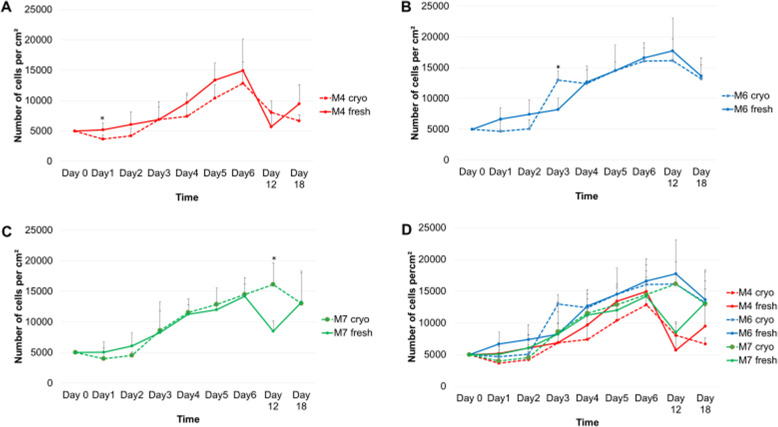
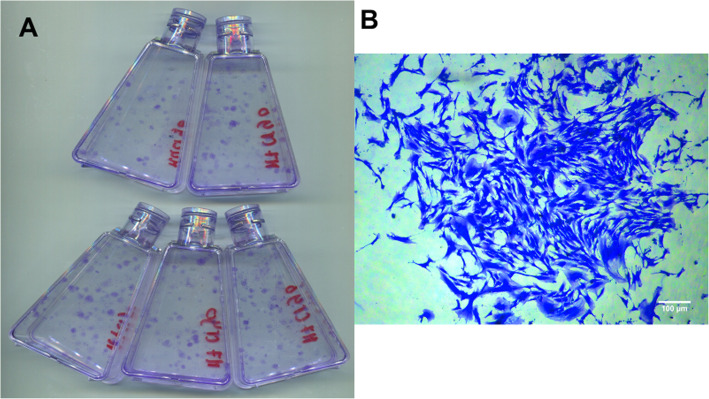
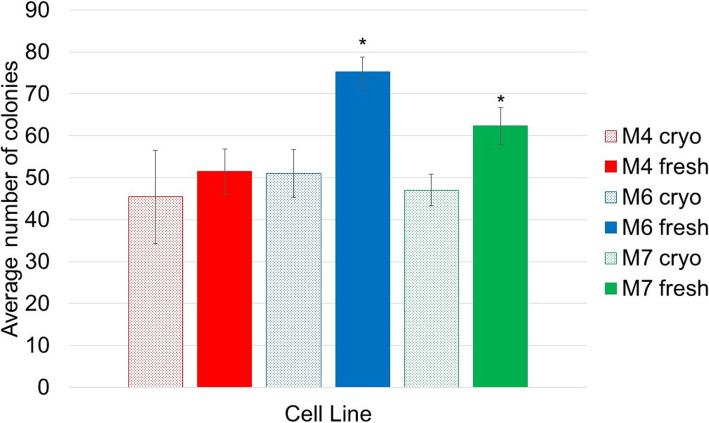
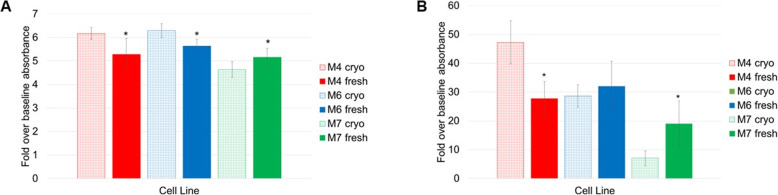
Background: The effects of cryopreservation on human bone marrow-derived mesenchymal stem cells (hBM-MSCs) are still ill-defined. In this study, a quantitative approach was adopted to measure several post-thaw cell attributes in order to provide an accurate reflection of the freezing and thawing impact. Methods: Fresh and cryopreserved passage-matched cells from three different donors were discretely analysed and compared for their viability, apoptosis level, phenotypic marker expression, metabolic activity, adhesion potential, proliferation rate, colony-forming unit ability (CFUF) and differentiation potentials. Results: The results of this study show that cryopreservation reduces cell viability, increases apoptosis level and impairs hBM-MSC metabolic activity and adhesion potential in the first 4 h after thawing. At 24 h post-thaw, cell viability recovered, and apoptosis level dropped but metabolic activity and adhesion potential remained lower than fresh cells. This suggests that a 24-h period is not enough for a full recovery. Beyond 24 h post-thaw, the observed effects are variable for the three cell lines. While no difference is observed in the pre- and post-cryopreservation proliferation rate, cryopreservation reduced the CFUF ability of two of the cell lines and variably affected the adipogenic and osteogenic differentiation potentials of the three cell lines. Conclusion: The data collected in this study clearly show that fresh and cryopreserved hBM-MSCs are different, and these differences will inevitably introduce variabilities to the product and process development and subsequently imply financial losses. In order to avoid product divergence pre- and post-cryopreservation, effective strategies to mitigate freezing effects must be developed and implemented.
Overview
The claims and statistics of this paper haven’t been checked yet.
Free: it reads the open-access text and checks the first 5 claims that cite a source we can check. Create a free account to check every claim.
Integrity signals
Registry
Cites
Statistics
Figures
Verification
Claims the paper makes
The claims and statistics of this paper haven’t been checked yet.
Free: it reads the open-access text and checks the first 5 claims that cite a source we can check. Create a free account to check every claim.
Claims other papers make about this one
Each is checked against this paper’s own text: does it say what the citing paper says it does?
The cited source says what the claim attributes to it.
In the citing paper
“Cryopreservation not only affects the proliferation of the cells [35], but also impacts the differentiation potential [36] and the immunosuppressive properties [37].”
Self-check
Percentages, sums and reported differences re-computed from the paper’s own numbers.
The self-check needs the paper’s full text.
Citations
Cites
Dominici, M., Le Blanc, K., Mueller, I., Slaper-Cortenbach, I., Marini, F. C., Krause, D. S., Deans, R. J., Keating, A., Prockop, D. J., & Horwitz, E. M. (2006) · Cytotherapy · doi:10.1080/14653240600855905 · Cited by 17,766 · cited 2×
“CD14 or CD11b, CD79a or CD19 and HLA class II’ [15].”
BackgroundRanade, V. V. (2009) · American Journal of Therapeutics · doi:10.1097/mjt.0b013e31817c941f · Cited by 2,775
Mesenchymal Stem Cell Homing: The Devil Is in the Details
Karp, J. M., & Leng Teo, G. S. (2009) · Cell Stem Cell · doi:10.1016/j.stem.2009.02.001 · Cited by 1,445 · cited 4×
“Moreover, MSC ability to adhere to the endothelium is essential to ‘MSC homing’, a crucial multistep process that allows therapeutic cells to reach their target area [39, 40].”
BackgroundInfluentialFriedenstein, A. J., Chailakhyan, R. K., Latsinik, N. V., Panasyuk, A. F., & Keiliss-Borok, I. V. (1974) · Transplantation · doi:10.1097/00007890-197404000-00001 · Cited by 1,431
A Yeast Mutant Showing Diagnostic Markers of Early and Late Apoptosis
Madeo, F., Fröhlich, E., & Fröhlich, K.-U. (1997) · The Journal of Cell Biology · doi:10.1083/jcb.139.3.729 · Cited by 793 · cited 1×
“When apoptosis is initiated, PS is translocated to the outer surface of the membrane, and this is considered an early sign of apoptosis [20, 21].”
BackgroundAdvances in Experimental Medicine and Biology
Berry, C. L. (1973) · Journal of Medical Genetics · doi:10.1136/jmg.10.4.401-a · Cited by 661
Concise Review: MSC Adhesion Cascade—Insights into Homing and Transendothelial Migration
Nitzsche, F., Müller, C., Lukomska, B., Jolkkonen, J., Deten, A., & Boltze, J. (2017) · Stem Cells · doi:10.1002/stem.2614 · Cited by 382 · cited 1×
“Moreover, MSC ability to adhere to the endothelium is essential to ‘MSC homing’, a crucial multistep process that allows therapeutic cells to reach their target area [39, 40].”
BackgroundMathieu, P. S., & Loboa, E. G. (2012) · Tissue Engineering Part B: Reviews · doi:10.1089/ten.teb.2012.0014 · Cited by 379
François, M., Copland, I. B., Yuan, S., Romieu-Mourez, R., Waller, E. K., & Galipeau, J. (2012) · Cytotherapy · doi:10.3109/14653249.2011.623691 · Cited by 375
Marquez-Curtis, L. A., Janowska-Wieczorek, A., McGann, L. E., & Elliott, J. A. W. (2015) · Cryobiology · doi:10.1016/j.cryobiol.2015.07.003 · Cited by 346
Cited by
Cottle, C., Porter, A. P., Lipat, A. J., Turner-Lyles, C., Nguyen, J., Moll, G., & Chinnadurai, R. (2022) · Current Stem Cell Reports · doi:10.1007/s40778-022-00212-1 · Cited by 174
The issue of heterogeneity of MSC-based advanced therapy medicinal products–a review
Česnik, A. B., & Švajger, U. (2024) · Frontiers in Cell and Developmental Biology · doi:10.3389/fcell.2024.1400347 · Cited by 128
Calcat-i-Cervera, S., Rendra, E., Scaccia, E., Amadeo, F., Hanson, V., Wilm, B., Murray, P., O’Brien, T., Taylor, A., & Bieback, K. (2023) · Stem Cell Research & Therapy · doi:10.1186/s13287-023-03352-1 · Cited by 56
“Cryopreservation not only affects the proliferation of the cells [35], but also impacts the differentiation potential [36] and the immunosuppressive properties [37].”
BackgroundStrecanska, M., Sekelova, T., Smolinská, V., Kuniaková, M., & Nicodemou, A. (2024) · Stem Cell Reviews and Reports · doi:10.1007/s12015-024-10812-5 · Cited by 59
Cryostorage of Mesenchymal Stem Cells and Biomedical Cell-Based Products
Linkova, D. D., Rubtsova, Y. P., & Николаевна, Е. М. (2022) · Cells · doi:10.3390/cells11172691 · Cited by 55
“Thus, even a 24-h expansion may not be enough to fully restore the MSCs’ therapeutic potential [87].”
BackgroundAssessment and comparison of viability assays for cellular products
Cai, Y., Procházková, M., Kim, Y., Jiang, C., Ma, J., Moses, L., Martin, K., Pham, V., Zhang, N., Highfill, S. L., et al. (2023) · Cytotherapy · doi:10.1016/j.jcyt.2023.11.008 · Cited by 44
Medrano-Trochez, C., Chatterjee, P., Pradhan, P., Stevens, H. Y., Ogle, M. E., Botchwey, E. A., Kurtzberg, J., Yeago, C., Gibson, G. C., & Roy, K. (2021) · Stem Cell Research & Therapy · doi:10.1186/s13287-021-02627-9 · Cited by 47
Altmaier, S., Meiser, I., Lemesre, E., Chanrion, B., Steeg, R., Leonte, L. E., Holst, B., Nielsen, B. S., Clausen, C., Schmidt, K., et al. (2022) · Reproductive Toxicology · doi:10.1016/j.reprotox.2022.05.005 · Cited by 36
Marquez‐Curtis, L. A., & Elliott, J. A. W. (2024) · Cryobiology · doi:10.1016/j.cryobiol.2024.104856 · Cited by 25
Wang, Z., Hu, Y., Wang, X., Chen, Y., Wu, D., Ji, H., Yu, C., Fang, J., Pan, C., Wang, L., et al. (2023) · Stem Cell Reviews and Reports · doi:10.1007/s12015-023-10556-8 · Cited by 17
Assay-ready Cryopreserved Cell Monolayers Enabled by Macromolecular Cryoprotectants
Tomás, R. M. F., Bissoyi, A., Congdon, T. R., & Gibson, M. I. (2022) · Biomacromolecules · doi:10.1021/acs.biomac.2c00791 · Cited by 18
Metabolic and secretory recovery of slow frozen–thawed human ovarian tissue in vitro
Einenkel, R., Schallmoser, A., & Sänger, N. (2022) · Molecular Human Reproduction · doi:10.1093/molehr/gaac037 · Cited by 13
Lee, D. Y., Lee, S. E., Kwon, D. H., Nithiyanandam, S., Lee, M. H., Hwang, J. S., Basith, S., Ahn, J. H., Shin, T. H., & Lee, G. (2021) · Stem Cells International · doi:10.1155/2021/8444599 · Cited by 13
“Thus, an assessment of the quality and freshness of hBM-MSCs is important for successful hBM-MSC-based cytotherapy outcomes, and studies have tried to evaluate and preserve the quality and freshness of hBM-MSCs [23, 25].”
BackgroundRecent advances in CAR-MSCs: the new engine of cellular immunotherapy evolution
Chen, Y., Li, J., Ma, Y., Fang, J., Yang, Y., Yan, L., Zhang, X., & Zhang, C. (2025) · Journal of Hematology & Oncology · doi:10.1186/s13045-025-01746-7 · Cited by 14
“During the freezing‒thawing process, a significant proportion of MSCs lose metabolic activity, and their immunosuppressive function and adhesion capacity are markedly impaired, posing a major technical challenge for obtaining sufficient active cells for therapeutic use [211, 212].”
Sieńko, D., Szabłowska‐Gadomska, I., Nowak-Szwed, A., Rudziński, S., Gofron, M., Zygmunciak, P., Lewandowska-Szumieł, M., Zgliczyński, W., Czupryniak, L., & Mrozikiewicz‐Rakowska, B. (2024) · International Journal of Molecular Sciences · doi:10.3390/ijms252212171 · Cited by 12
“Some authors even suggest that the poorer properties of the cells after thawing may be the reason for the unsatisfactory results of clinical trials with their participation [77–79].”
From cold chain to ambient: Benefits, risks, and evidence across cell therapy logistics
Gostage, J., Domingo‐Lopez, D. A., Tarpey, R., Duffy, G. P., & Levey, R. E. (2025) · Molecular Therapy — Methods & Clinical Development · doi:10.1016/j.omtm.2025.101613 · Cited by 16
“84 A systematic review summarized some of the effects of cryopreservation on BM-MSCs across 41 published resources (26 human studies).”
Nguyen, M. Q., Bui, H. T. H., Tuyet, A. N. T., Nhung, T. T. H., Hoang, D. M., Liêm, N. T., & Hoang, V. T. (2021) · Cell Transplantation · doi:10.1177/09636897211039441 · Cited by 11
Yi, E., Go, J., Yun, S., Lee, S. E., Kwak, J., Kim, S. W., & Kim, H. S. (2024) · Biomaterials · doi:10.1016/j.biomaterials.2024.122667 · Cited by 9
Johnstone, B. H., Gu, D., Lin, C.-H., Du, J., & Woods, E. J. (2023) · Cryobiology · doi:10.1016/j.cryobiol.2023.104592 · Cited by 12
Abraham, M., & Goel, S. (2024) · Cryobiology · doi:10.1016/j.cryobiol.2024.104896 · Cited by 8
Abraham, M., & Goel, S. (2025) · Cryobiology · doi:10.1016/j.cryobiol.2025.105211 · Cited by 9
Post-thaw application of ROCK-inhibitors increases cryopreserved T-cell yield
Gonzalez-Martinez, N., & Gibson, M. I. (2023) · RSC Medicinal Chemistry · doi:10.1039/d3md00378g · Cited by 10
Choi, S., & Jeong, J. (2026) · International Journal of Molecular Sciences · doi:10.3390/ijms27020619 · Cited by 12
“Viability is another critical parameter, with acceptable levels generally exceeding 70% [184].”
Shi, L., Jiang, L., Xing, T., Liu, K., Chen, C., Ma, P., Winkler, T., Qin, A., & Zhao, J. (2026) · Journal of Orthopaedic Translation · doi:10.1016/j.jot.2025.101041 · Cited by 12
“MSCs represent the most advanced cell type in cryopreservation research, with broad consensus on controlled slow freezing followed by liquid nitrogen storage [170 – 172].”
Alcayaga‐Miranda, F., Silva, J. D., Parada, N., da Silva, L. H. A., Cruz, F. F., Utreras‐Mendoza, Y., Hidalgo, Y., Cádiz, M. I., Tapia‐Limonchi, R., Espinoza, F., et al. (2023) · Frontiers in Cell and Developmental Biology · doi:10.3389/fcell.2023.1031331 · Cited by 7
“In agreement with other studies (Chinnadurai et al., 2014; Bahsoun et al., 2020), observed adhesion and clonogenic capacity were slightly diminished in cryo-MenSCs compared with fresh cells, and although a decrease in metabolic activity was observed in the short term, this effect was reversible and comparable with the…”
Abraham, M., Kori, I., Vishwakarma, U., & Goel, S. (2024) · Scientific Reports · doi:10.1038/s41598-024-58465-1 · Cited by 11
Desprez, C., Danovi, D., Knowles, C. H., & Day, R. M. (2023) · Journal of Tissue Engineering · doi:10.1177/20417314221139794 · Cited by 5
Bahsoun, S., Brown, M.-J., Coopman, K., & Akam, E. C. (2022) · Biopreservation and Biobanking · doi:10.1089/bio.2022.0017 · Cited by 5
Self-citationНиколаевна, Е. М., Rubtsova, Y. P., Linkova, D. D., Charykova, I. N., Farafontova, E. A., & Aleinik, D. Y. (2024) · Polymers · doi:10.3390/polym16020247 · Cited by 5
Artificial Intelligence-Based Quality Control of Cell Lines
Gramatiuk, S. M., Кryvoruchko, І. А., Ivanova, Y. V., Hubbard, E., Noebauer-Babenko, M., & Sargsyan, K. (2025) · Biopreservation and Biobanking · doi:10.1177/19475535251367317 · Cited by 9
Žukauskaitė, D., Zentelytė, A., Girniūtė, E., & Navakauskienė, R. (2024) · Reproductive BioMedicine Online · doi:10.1016/j.rbmo.2024.103990 · Cited by 4
Hypothermic Storage of Mesenchymal Stromal Cell-based Spheroids at a Temperature of 22°C
Trufanova, N. A., Trufanov, O., Божок, Г. А., Revenko, O. B., Cherkashina, D. V., Pakhomov, O. V., & Petrenko, O. (2024) · Problems of Cryobiology and Cryomedicine · doi:10.15407/cryo34.03.186 · Cited by 6
Zhang, Y., Wang, P., Jin, M., Zhou, Y., Ye, L., Zhu, X., Li, H., Zhou, M., Li, Y., Li, S., et al. (2023) · Tissue Engineering and Regenerative Medicine · doi:10.1007/s13770-023-00531-2 · Cited by 4
D’Adamo, E., Botondi, V., Falconio, L., Giardinelli, G., Gregorio, P. D., Caputi, S., Sinjari, B., Trubiani, O., Traini, T., Gazzolo, F., et al. (2023) · Clinical Chemistry and Laboratory Medicine (CCLM) · doi:10.1515/cclm-2023-1282 · Cited by 4
Trufanova, N. A., Hubenia, O., Kot, Y. G., Trufanov, O., Kovalenko, I., Kot, K., & Petrenko, O. (2024) · Biopreservation and Biobanking · doi:10.1089/bio.2024.0103 · Cited by 4
“However, it has limitations such as the need for expensive equipment and liquid nitrogen for storage and transportation, its effects on the cytoskeleton, 13 the differentiation potential, 14 and the gene expression rate.”
Binsila, B., Tomcy, T. A., Krishnappa, B., Sadikh, M., Ramachandran, N., Kolte, A. P., & Selvaraju, S. (2025) · Cryobiology · doi:10.1016/j.cryobiol.2025.105203 · Cited by 3
Calcat-i-Cervera, S., Rendra, E., Scaccia, E., Amadeo, F., Hanson, V., Wilm, B., Murray, P. A., O’Brien, T., Taylor, A., & Bieback, K. (2022) · bioRxiv (Cold Spring Harbor Laboratory) · doi:10.1101/2022.09.14.507944 · Cited by 3
“550 Cryopreservation not only affects the proliferation of the cells [35], but also impacts the 551 differentiation potential [36] and the immunosuppressive properties [37].”
BackgroundNew Cryoprotectants for Cell Therapies
Stolzing, A. (2025) · Advances in experimental medicine and biology · doi:10.1007/978-3-031-97297-3_21 · Cited by 2
Fujii, S., Endo, K., Ozeki, N., Sakamaki, Y., Kohno, Y., Mizuno, M., Katano, H., Tsuji, K., Koga, H., & Sekiya, I. (2022) · BMC Molecular and Cell Biology · doi:10.1186/s12860-022-00456-z · Cited by 3
Johnson, M. P., Tariq, M. H., Hughes, M. P., & Kohli, N. (2025) · Stem Cell Research & Therapy · doi:10.1186/s13287-025-04850-0 · Cited by 2
Ren, J., Li, J., Wang, H., Feng, H., Hao, H., Chen, J., Li, Y., Xu, Z., Li, C., Jiang, W. J., et al. (2026) · Bioactive Materials · doi:10.1016/j.bioactmat.2026.01.024 · Cited by 1
“Increasing evidence suggests that this fragmented approach contributes to a scenario of high attrition and low integration [9,10].”
Pham, D. L., Kalluri, M., Weaver, C., Hsu, A., Gillette, A. A., Zhao, W., Kearl, T. J., Hematti, P., Shah, N. N., & Skala, M. C. (2026) · Molecular Therapy Advances · doi:10.1016/j.omta.2026.201704 · Cited by 1
“41,42 Meanwhile, fresh quiescent T cells exhibited stable OMI measurements throughout the imaging time course.”
Gramatiuk, S. M., Кryvoruchko, І. А., Ivanova, Y. V., & Sargsyan, K. (2023) · Research Square · doi:10.21203/rs.3.rs-3258568/v1
Almehmadi, M. M., Al-Shalawi, O., Alshehri, S., & Alharthi, S. S. (2024) · doi:10.31219/osf.io/9dfj5
Barriers to Effective Cryopreservation of Cell Therapies: Challenges and Emerging Solution
Hunt, C. J., Johnstone, B. H., & Woods, E. J. (2025) · Advances in experimental medicine and biology · doi:10.1007/978-3-031-97297-3_20 · Cited by 1
Calcat-i-Cervera, S., Rendra, E., Scaccia, E., Amadeo, F., Hanson, V., Wilm, B., Murray, P., O’Brien, T., Taylor, A., & Bieback, K. (2023) · Figshare · doi:10.6084/m9.figshare.22767212
Medrano-Trochez, C., Chatterjee, P., Pradhan, P., Stevens, H. Y., Ogle, M. E., Botchwey, E. A., Kurtzberg, J., Yeago, C., Gibson, G. C., & Roy, K. (2021) · Figshare · doi:10.6084/m9.figshare.16935623
Anseeuw, N., Escalona‐Noguero, C., Vankevelaer, G., Wever, O. D., Elia, I., Rocha, S., & Solís‐Fernández, G. (2026) · bioRxiv (Cold Spring Harbor Laboratory) · doi:10.64898/2026.01.23.701296
Lam, A. T., Shridhar, A., Handral, H. K., Lee, J., Oh, S., & Wei, X. (2026) · Frontiers in Bioengineering and Biotechnology · doi:10.3389/fbioe.2026.1736526 · Cited by 1
Salaudeen, M. A., Allan, S. M., & Pinteaux, E. (2026) · British Journal of Pharmacology · doi:10.1111/bph.70527
“…of the cells, early removal from the sites of action, delay in post-thaw function recovery and side effects such as the promotion of tumour formation (Bahsoun et al., 2020; Bissell & Radisky, 2001; Salaudeen, Allan, & Pinteaux, 2024; Ullah et al., 2019; Zhang et al., 2016; Zhu et al., 2006).”
Anseeuw, N., Escalona‐Noguero, C., Vankevelaer, G., Aytekin, S., Wever, O. D., Elia, I., Rocha, S., & Solís‐Fernández, G. (2026) · ChemBioChem · doi:10.1002/cbic.70473
Capone, A., Merlo, B., Lanci, A., Ballotta, G., & Iacono, E. (2026) · Animals · doi:10.3390/ani16152349
Liu, X., & Liu, F. (2026) · Stem Cell Reviews and Reports · doi:10.1007/s12015-026-11210-9
“Cryopreservation is essential for off-the-shelf availability, yet freshly thawed cells differ biologically from continu - ously cultured counterparts in both viability and function [ 92, 125 ].”
Abraham, M., Kori, I., Anusha, P. V., Fathima, I., Idris, M. M., & Goel, S. (2026) · Journal of Tissue Engineering · doi:10.1177/20417314261473533
“35,121 A 24 h post-thaw acclimation period has been reported to improve MSC potency, reduce apoptosis, and restore several anti-inflammatory and angiogenic functions, although recovery remains donor, cell line, and endpoint-dependent.”
InfluentialCell Culture Protocol for Cultivated Meat Production
Karthik, J., Vanipenta, S. K., Srihari, K. R. N., Mohanty, V., Sivamani, Y., Swami, A., Abin Harrison, K., Devendran, R., & Sumitha, E. (2026) · Methods and protocols in food science · doi:10.1007/978-1-0716-5675-4_12
Metadata
- Authors
- Bahsoun, S., Coopman, K., & Akam, E. C.
- Affiliations
- Loughborough University (GB)
- Corresponding author
- Bahsoun, Soukaina
- Venue
- Stem Cell Research & Therapy
- Published
- 2020-12
- Volume
- 11
- Issue
- 1
- Pages
- 540-540
- ISSN
- 1757-6512 (ISSN-L)
- PMC
- PMC7734731
- OpenAlex
- W3110922037
- Cited by
- 55
- References
- 49
- Citations by year
- 2026: 12 · 2025: 8 · 2024: 12 · 2023: 11 · 2022: 8 · 2021: 4
- FWCI
- 2.97
- Type
- journal article
- Language
- en
- Open access
- gold
- doi.org
- Licence
- cc-by
- creativecommons.org/licenses/by/4.0/ (tdm)
- creativecommons.org/licenses/by/4.0/ (vor, 13 d)
- Locations
- Stem Cell Research & Therapy (publishedVersion, cc-by)
- PubMed Central (publishedVersion, cc-by)
- PubMed (publishedVersion)
- Figshare (submittedVersion, cc-by)
- DOAJ (DOAJ: Directory of Open Access Journals) (submittedVersion, cc-by-sa)
- Funders
- Engineering and Physical Sciences Research Council (EP/L015072/1)
- Loughborough University
- Topics
- Life Sciences › Biochemistry, Genetics and Molecular Biology › Cell Biology › Mesenchymal stem cell research
- Health Sciences › Medicine › Hematology › Hematopoietic Stem Cell Transplantation
- Health Sciences › Dentistry › Periodontics › Periodontal Regeneration and Treatments
- Keywords
- cryopreservation, bone marrow-derived mesenchymal stem cells, post-thaw recovery, cell viability, apoptosis, metabolic activity, cell adhesion, colony-forming units, adipogenesis, osteogenic differentiation, freezing effects, stem cell banking
- MeSH terms
- Bone Marrow, Cell Differentiation, Cell Survival, Humans, Osteogenesis, Cryopreservation, Cell Proliferation, Mesenchymal Stem Cells
About these checks
Registry, retraction, Cites and statistics results are computed, not judged, with one exception: a printed reference that no index lists is read once by a model before it counts as a citation error. Claims are extracted by a model and kept only when their quote appears verbatim in the text; each cited source is then checked, with a model’s help, for whether it says what the claim relies on. Those verdicts can be wrong — read the claim’s quote and the cited source before relying on one.
Statistics and arithmetic are recomputed, not judged.
Confidence bands are shown only for fields calibrated on our annotated test set. None is calibrated yet, so no band is shown.
What counts as a claim ›How we measure confidence ›How we check this ›
Are you an author, or do you see a problem with this page? Request a review
Data sources
Bibliographic data: Semantic Scholar, OpenAlex, Crossref.
Contains information from the Semantic Scholar Academic Graph Datasets, made available under the ODC Attribution License (ODC-BY 1.0).
Semantic Scholar’s data is described in: Kinney, R., et al. (2023). The Semantic Scholar Open Data Platform. arXiv:2301.10140.
