

Quantitative assessment of the impact of cryopreservation on human bone marrow-derived mesenchymal stem cells: up to 24 h post-thaw and beyond
Open accessThe DOI matches its Crossref record; 49 of the 49 references it cites were found in a registry or an index.
Abstract
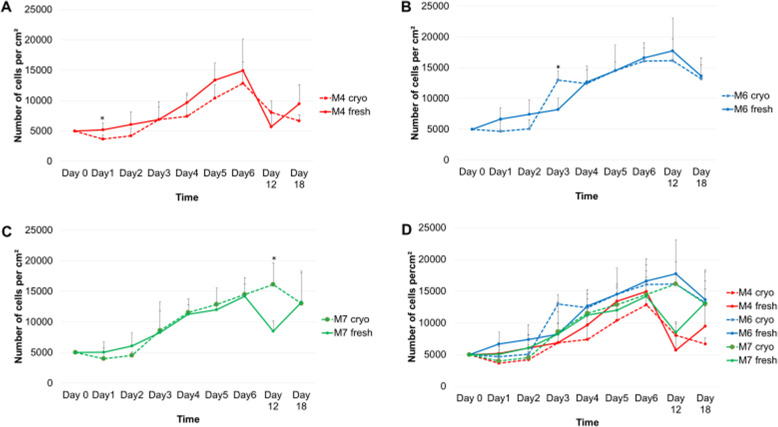
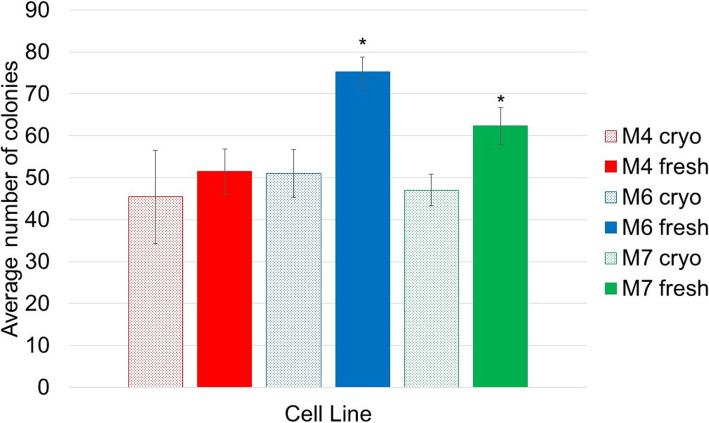
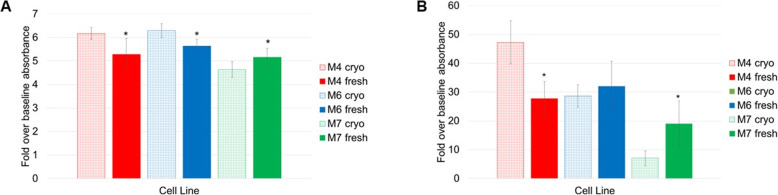
Background: The effects of cryopreservation on human bone marrow-derived mesenchymal stem cells (hBM-MSCs) are still ill-defined. In this study, a quantitative approach was adopted to measure several post-thaw cell attributes in order to provide an accurate reflection of the freezing and thawing impact. Methods: Fresh and cryopreserved passage-matched cells from three different donors were discretely analysed and compared for their viability, apoptosis level, phenotypic marker expression, metabolic activity, adhesion potential, proliferation rate, colony-forming unit ability (CFUF) and differentiation potentials. Results: The results of this study show that cryopreservation reduces cell viability, increases apoptosis level and impairs hBM-MSC metabolic activity and adhesion potential in the first 4 h after thawing. At 24 h post-thaw, cell viability recovered, and apoptosis level dropped but metabolic activity and adhesion potential remained lower than fresh cells. This suggests that a 24-h period is not enough for a full recovery. Beyond 24 h post-thaw, the observed effects are variable for the three cell lines. While no difference is observed in the pre- and post-cryopreservation proliferation rate, cryopreservation reduced the CFUF ability of two of the cell lines and variably affected the adipogenic and osteogenic differentiation potentials of the three cell lines. Conclusion: The data collected in this study clearly show that fresh and cryopreserved hBM-MSCs are different, and these differences will inevitably introduce variabilities to the product and process development and subsequently imply financial losses. In order to avoid product divergence pre- and post-cryopreservation, effective strategies to mitigate freezing effects must be developed and implemented.
Overview
The claims and statistics of this paper haven’t been checked yet.
Free: it reads the open-access text and checks the first 5 claims that cite a source we can check. Create a free account to check every claim.
Integrity signals
Registry
Cites
Statistics
Figures
Verification
Claims the paper makes
The claims and statistics of this paper haven’t been checked yet.
Free: it reads the open-access text and checks the first 5 claims that cite a source we can check. Create a free account to check every claim.
Claims other papers make about this one
Each is checked against this paper’s own text: does it say what the citing paper says it does?
The cited source says what the claim attributes to it.
In the citing paper
“Cryopreservation not only affects the proliferation of the cells [35], but also impacts the differentiation potential [36] and the immunosuppressive properties [37].”
Self-check
Percentages, sums and reported differences re-computed from the paper’s own numbers.
The self-check needs the paper’s full text.
Citations
Cites
Dominici, M., Le Blanc, K., Mueller, I., Slaper-Cortenbach, I., Marini, F. C., Krause, D. S., Deans, R. J., Keating, A., Prockop, D. J., & Horwitz, E. M. (2006) · Cytotherapy · doi:10.1080/14653240600855905 · Cited by 17,766 · cited 2×
“CD14 or CD11b, CD79a or CD19 and HLA class II’ [15].”
BackgroundRanade, V. V. (2009) · American Journal of Therapeutics · doi:10.1097/mjt.0b013e31817c941f · Cited by 2,775
Mesenchymal Stem Cell Homing: The Devil Is in the Details
Karp, J. M., & Leng Teo, G. S. (2009) · Cell Stem Cell · doi:10.1016/j.stem.2009.02.001 · Cited by 1,445 · cited 4×
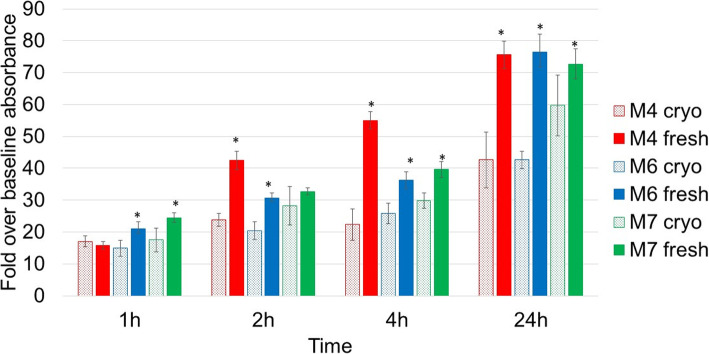
“Moreover, MSC ability to adhere to the endothelium is essential to ‘MSC homing’, a crucial multistep process that allows therapeutic cells to reach their target area [39, 40].”
BackgroundInfluentialFriedenstein, A. J., Chailakhyan, R. K., Latsinik, N. V., Panasyuk, A. F., & Keiliss-Borok, I. V. (1974) · Transplantation · doi:10.1097/00007890-197404000-00001 · Cited by 1,431
A Yeast Mutant Showing Diagnostic Markers of Early and Late Apoptosis
Madeo, F., Fröhlich, E., & Fröhlich, K.-U. (1997) · The Journal of Cell Biology · doi:10.1083/jcb.139.3.729 · Cited by 793 · cited 1×
“When apoptosis is initiated, PS is translocated to the outer surface of the membrane, and this is considered an early sign of apoptosis [20, 21].”
BackgroundAdvances in Experimental Medicine and Biology
Berry, C. L. (1973) · Journal of Medical Genetics · doi:10.1136/jmg.10.4.401-a · Cited by 661
Concise Review: MSC Adhesion Cascade—Insights into Homing and Transendothelial Migration
Nitzsche, F., Müller, C., Lukomska, B., Jolkkonen, J., Deten, A., & Boltze, J. (2017) · Stem Cells · doi:10.1002/stem.2614 · Cited by 382 · cited 1×
“Moreover, MSC ability to adhere to the endothelium is essential to ‘MSC homing’, a crucial multistep process that allows therapeutic cells to reach their target area [39, 40].”
BackgroundMathieu, P. S., & Loboa, E. G. (2012) · Tissue Engineering Part B: Reviews · doi:10.1089/ten.teb.2012.0014 · Cited by 379
François, M., Copland, I. B., Yuan, S., Romieu-Mourez, R., Waller, E. K., & Galipeau, J. (2012) · Cytotherapy · doi:10.3109/14653249.2011.623691 · Cited by 375
Marquez-Curtis, L. A., Janowska-Wieczorek, A., McGann, L. E., & Elliott, J. A. W. (2015) · Cryobiology · doi:10.1016/j.cryobiol.2015.07.003 · Cited by 346
Siddappa, R., Licht, R., van Blitterswijk, C., & de Boer, J. (2007) · Journal of Orthopaedic Research · doi:10.1002/jor.20402 · Cited by 320
Establishing Criteria for Human Mesenchymal Stem Cell Potency
Samsonraj, R. M., Rai, B., Sathiyanathan, P., Puan, K. J., Rötzschke, O., Hui, J. H., Raghunath, M., Stanton, L. W., Nurcombe, V., & Cool, S. M. (2015) · Stem Cells · doi:10.1002/stem.1982 · Cited by 221
Cell adhesion and mechanical stimulation in the regulation of mesenchymal stem cell differentiation
Wang, Y., & Chen, C. S. (2013) · Journal of Cellular and Molecular Medicine · doi:10.1111/jcmm.12061 · Cited by 220 · cited 1×
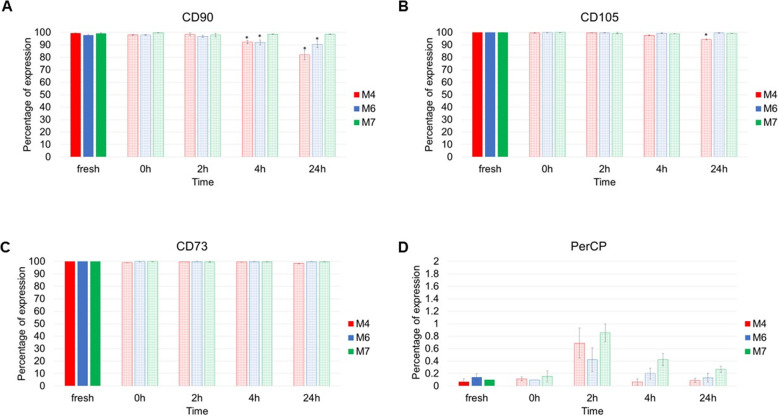
“In addition to CD90, cell adhesion and physical cues have also been associated with MSC differentiation [36].”
BackgroundQuantitative assessment of adipocyte differentiation in cell culture
Kraus, N. A., Ehebauer, F., Zapp, B., Rudolphi, B., Kraus, B. J., & Kraus, D. (2016) · Adipocyte · doi:10.1080/21623945.2016.1240137 · Cited by 213 · cited 1×
“The staining and quantitation protocols were based on [18].”
MethodMoraes, D. A., Sibov, T. T., Pavon, L. F., Alvim, P. Q., Bonadio, R. S., Da Silva, J. R., Pic-Taylor, A., Toledo, O. A., Marti, L. C., Azevedo, R. B., et al. (2016) · Stem Cell Research & Therapy · doi:10.1186/s13287-016-0359-3 · Cited by 212 · cited 1×
“However, the knockdown of CD90 expression in MSC from various sources has been shown to promote both osteogenic and adipogenic differentiation and reduce the cells’ stemness properties [30].”
BackgroundMeeting Lot-Size Challenges of Manufacturing Adherent Cells for Therapy
Rowley, J. A., Abraham, E., Campbell, A., Brandwein, H. J., & Oh, S. (2012) · Cited by 176
Early stages of p53-induced apoptosis are reversible
Geske, F. J., Lieberman, R., Strange, R., & Gerschenson, L. E. (2001) · Cell Death & Differentiation · doi:10.1038/sj.cdd.4400786 · Cited by 159
Ciuffreda, M. C., Malpasso, G., Musarò, P., Turco, V., & Gnecchi, M. (2016) · Methods in molecular biology · doi:10.1007/978-1-4939-3584-0_8 · Cited by 156
Mesenchymal stromal cell therapy: progress in manufacturing and assessments of potency
ROBB, K. P., FITZGERALD, J. C., BARRY, F., & VISWANATHAN, S. (2019) · Cytotherapy · doi:10.1016/j.jcyt.2018.10.014 · Cited by 156 · cited 1×
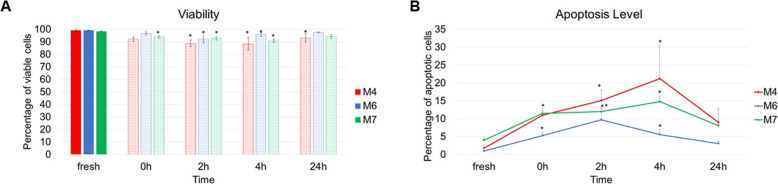
“As measured by flow cytometry using 7AAD, the viability in fresh samples was well above the benchmark for clinical application which is ≥ 90% [19] (99.”
MethodChinnadurai, R., Garcia, M. A., Sakurai, Y., Lam, W. A., Kirk, A. D., Galipeau, J., & Copland, I. B. (2014) · Stem Cell Reports · doi:10.1016/j.stemcr.2014.05.003 · Cited by 139 · cited 1×
“[41] referred MSC post-thaw low adherence capacity to disruption of F actin polymerisation rather than shedding of surface adhesion molecules.”
BackgroundThe impact of cryopreservation on bone marrow-derived mesenchymal stem cells: a systematic review
Bahsoun, S., Coopman, K., & Akam, E. C. (2019) · Journal of Translational Medicine · doi:10.1186/s12967-019-02136-7 · Cited by 137 · cited 12×
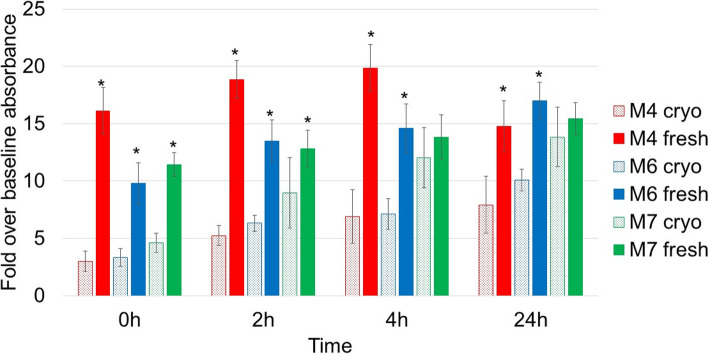
“preservation protocols affect these cells in several ways such as lower post-thaw viability and metabolic activity [2].”
BackgroundResultInfluentialSelf-citationPopulation dynamics of mesenchymal stromal cells during culture expansion
Schellenberg, A., Stiehl, T., Horn, P., Joussen, S., Pallua, N., Ho, A. D., & Wagner, W. (2011) · Cytotherapy · doi:10.3109/14653249.2011.640669 · Cited by 127 · cited 1×
“CFUF was shown to decline during successive culture and passaging [46].”
BackgroundWoods, E. J., Thirumala, S., Badhe-Buchanan, S., Clarke, D. M., & Mathew, A. J. (2016) · Cytotherapy · doi:10.1016/j.jcyt.2016.03.295 · Cited by 127
Massie, I., Selden, C., Hodgson, H. J. F., Fuller, B. J., Gibbons, S., & Morris, G. J. (2014) · Tissue Engineering Part C Methods · doi:10.1089/ten.tec.2013.0571 · Cited by 122 · cited 2×
“Yet, for regenerative medicine to bring significant therapeutic benefit to large numbers of people, cryopreservation should deliver functional products at a large scale while complying with Good Manufacturing Processes [3].”
BackgroundColony Forming Unit Assays for MSCs
Pochampally, R. (2008) · Mesenchymal Stem Cells · doi:10.1007/978-1-60327-169-1_6 · Cited by 120 · cited 1×
“Hence, this assay is regarded as suitable for estimating the percentage of early progenitors in MSC samples and for evaluating the biological activity of discrete cells [45].”
MethodGinis, I., Grinblat, B., & Shirvan, M. H. (2012) · Tissue Engineering Part C: Methods · doi:10.1089/ten.tec.2011.0395 · Cited by 109 · cited 1×
“[42] which showed that BM-MSC post-thaw proliferation potential was higher than that at pre-freeze.”
BackgroundEffect of Dimethyl Sulfoxide (DMSO) on Cryopreservation of Porcine Mesenchymal Stem Cells (pMSCs)
Ock, S., & Rho, G. (2011) · Cell Transplantation · doi:10.3727/096368910x552835 · Cited by 97 · cited 2×
“with the literature where [22] found that cryopreserved porcine BM-MSCs showed a significantly lower number of colonies compared to fresh while [23] reported that cryopreservation did not affect the colony-forming ability of horse BM-MSCs.”
BackgroundResultThy-1 (CD90) promotes bone formation and protects against obesity
Picke, A.-K., Campbell, G. M., Blüher, M., Krügel, U., Schmidt, F. N., Tsourdi, E., Winzer, M., Rauner, M., Vukicevic, V., Busse, B., et al. (2018) · Science Translational Medicine · doi:10.1126/scitranslmed.aao6806 · Cited by 96 · cited 1×
“In fact, the expression of CD90 on MSC was mainly associated with fate decision, namely promotion of osteogenesis accompanied by inhibition of adipogenesis [28, 29].”
BackgroundThy‐1: more than a marker for mesenchymal stromal cells
Saalbach, A., & Anderegg, U. (2019) · The FASEB Journal · doi:10.1096/fj.201802224r · Cited by 89 · cited 2×
“In fact, the expression of CD90 on MSC was mainly associated with fate decision, namely promotion of osteogenesis accompanied by inhibition of adipogenesis [28, 29].”
BackgroundCruz, F. F., Borg, Z. D., Goodwin, M., Sokocevic, D., Wagner, D., McKenna, D. H., Rocco, P. R. M., & Weiss, D. J. (2015) · Stem Cells Translational Medicine · doi:10.5966/sctm.2014-0268 · Cited by 84
Cryopreserved mesenchymal stem cells regain functional potency following a 24-h acclimation period
Antebi, B., Asher, A. M., Rodriguez, L. A., Moore, R. K., Mohammadipoor, A., & Cancio, L. C. (2019) · Journal of Translational Medicine · doi:10.1186/s12967-019-2038-5 · Cited by 83
Gramlich, O. W., Burand, A. J., Brown, A. J., Deutsch, R. J., Kuehn, M. H., & Ankrum, J. A. (2016) · Scientific Reports · doi:10.1038/srep26463 · Cited by 81 · cited 1×
“Moreover, stored therapeutic doses could be potentially used for a scheduled as well for urgent treatments [7].”
BackgroundEffects of Freeze–Thawing and Intravenous Infusion on Mesenchymal Stromal Cell Gene Expression
Hoogduijn, M. J., de Witte, S. F. H., Luk, F., Vroonhoven, M. C. G. N. V. D. H.-V., Ignatowicz, L., Catar, R. A., Strini, T., Korevaar, S. S., van IJcken, W. F. J., Betjes, M. G. H., et al. (2016) · Stem Cells and Development · doi:10.1089/scd.2015.0329 · Cited by 76
Guadix, J. A., López-Beas, J., Clares, B., Soriano-Ruiz, J. L., Zugaza, J. L., & Gálvez-Martín, P. (2019) · Pharmaceutics · doi:10.3390/pharmaceutics11110552 · Cited by 66
Apoptosis Measurement by Annexin V Staining
Miller, E. P. (2003) · Humana Press eBooks · doi:10.1385/1-59259-406-9:191 · Cited by 54 · cited 1×
“When apoptosis is initiated, PS is translocated to the outer surface of the membrane, and this is considered an early sign of apoptosis [20, 21].”
BackgroundVitamin D Promotes MSC Osteogenic Differentiation Stimulating Cell Adhesion and αVβ3 Expression
Posa, F., Benedetto, A. D., Cavalcanti‐Adam, E. A., Colaianni, G., Porro, C., Trotta, T., Brunetti, G., Muzio, L. L., Grano, M., & Mori, G. (2018) · Stem Cells International · doi:10.1155/2018/6958713 · Cited by 54
Cryopreservation: Evolution of Molecular Based Strategies
Baust, J. M., Corwin, W. L., Snyder, K. K., Buskirk, R. G. V., & Baust, J. G. (2016) · Advances in experimental medicine and biology · doi:10.1007/978-3-319-45457-3_2 · Cited by 47 · cited 1×
“The results presented herein are in accordance with the literature and can be further explained by the phenomenon known as cryopreservationinduced delayed-onset cell death [25]; the highest change in viability and apoptosis levels in this study were observed at 4 h post-thaw.”
ResultVerdánová, M., Pytlík, R., & Kalbáčová, M. H. (2014) · Biopreservation and Biobanking · doi:10.1089/bio.2013.0078 · Cited by 45 · cited 1×
“Data on how cryopreservation affects hBM-MSCs CFUF is scarce with only three studies showing mixed results [22, 23, 47].”
ResultCryopreservation of human mesenchymal stromal cells expressing TRAIL for human anti-cancer therapy
Yuan, Z., Lourenco, S. D. S., Sage, E. K., Kolluri, K. K., Lowdell, M. W., & Janes, S. M. (2016) · Cytotherapy · doi:10.1016/j.jcyt.2016.04.005 · Cited by 44 · cited 1×
“In fact, more than one third of the current MSC-based clinical trials use cryopreserved cells [11, 14].”
BackgroundMitchell, A. A., Rivas, K. A., Smith, R., & Watts, A. E. (2015) · Stem Cell Research & Therapy · doi:10.1186/s13287-015-0230-y · Cited by 43
Paladino, F. V., Peixoto-Cruz, J. S., Santacruz-Pérez, C., & Goldberg, A. C. (2015) · Cell and Tissue Banking · doi:10.1007/s10561-015-9525-6 · Cited by 41
Coopman, K. (2011) · Biotechnology Progress · doi:10.1002/btpr.680 · Cited by 41
Self-citationIntegrating Molecular Control to Improve Cryopreservation Outcome
Baust, J. G., Snyder, K. K., Van Buskirk, R., & Baust, J. M. (2017) · Biopreservation and Biobanking · doi:10.1089/bio.2016.0119 · Cited by 37
Morris, T. J., Picken, A., Sharp, D. M. C., Slater, N. K. H., Hewitt, C. J., & Coopman, K. (2016) · Cryobiology · doi:10.1016/j.cryobiol.2016.09.004 · Cited by 19
Self-citationAllogeneic Versus Autologous Mesenchymal Stromal Cells and Donor-to-Donor Variability
Qayed, M. D., Copland, I. B., & Galipeau, J. (2016) · Elsevier eBooks · doi:10.1016/b978-0-12-802826-1.00004-0 · Cited by 9
Editorial: Thy1/CD90 Surface Glycoprotein: Sensor of Microenvironment?
Felley‐Bosco, E., & Leyton, L. (2019) · Frontiers in Cell and Developmental Biology · doi:10.3389/fcell.2019.00162 · Cited by 7
Wiese, D. M., Ford, B., & Braid, L. R. (2019) · Cytotherapy · doi:10.1016/j.jcyt.2019.03.322 · Cited by 5
Process development considerations for cryopreservation of cellular therapies
Abazari, A. (2019) · Cell and Gene Therapy Insights · doi:10.18609/cgti.2019.122 · Cited by 4 · cited 3×
“product and its critical to quality attributes [9].”
BackgroundInfluentialBone Marrow Mesenchymal Stem Cells Adhesion Assay
Yang, Z., & Xiao, R. (2016) · BIO-PROTOCOL · doi:10.21769/bioprotoc.1895 · Cited by 3 · cited 1×
“An adhesion assay based on a published protocol was developed [16].”
Method
Cited by
Cottle, C., Porter, A. P., Lipat, A. J., Turner-Lyles, C., Nguyen, J., Moll, G., & Chinnadurai, R. (2022) · Current Stem Cell Reports · doi:10.1007/s40778-022-00212-1 · Cited by 174
The issue of heterogeneity of MSC-based advanced therapy medicinal products–a review
Česnik, A. B., & Švajger, U. (2024) · Frontiers in Cell and Developmental Biology · doi:10.3389/fcell.2024.1400347 · Cited by 128
Calcat-i-Cervera, S., Rendra, E., Scaccia, E., Amadeo, F., Hanson, V., Wilm, B., Murray, P., O’Brien, T., Taylor, A., & Bieback, K. (2023) · Stem Cell Research & Therapy · doi:10.1186/s13287-023-03352-1 · Cited by 56
“Cryopreservation not only affects the proliferation of the cells [35], but also impacts the differentiation potential [36] and the immunosuppressive properties [37].”
BackgroundStrecanska, M., Sekelova, T., Smolinská, V., Kuniaková, M., & Nicodemou, A. (2024) · Stem Cell Reviews and Reports · doi:10.1007/s12015-024-10812-5 · Cited by 59
Cryostorage of Mesenchymal Stem Cells and Biomedical Cell-Based Products
Linkova, D. D., Rubtsova, Y. P., & Николаевна, Е. М. (2022) · Cells · doi:10.3390/cells11172691 · Cited by 55
“Thus, even a 24-h expansion may not be enough to fully restore the MSCs’ therapeutic potential [87].”
Background
Metadata
- Authors
- Bahsoun, S., Coopman, K., & Akam, E. C.
- Affiliations
- Loughborough University (GB)
- Corresponding author
- Bahsoun, Soukaina
- Venue
- Stem Cell Research & Therapy
- Published
- 2020-12
- Volume
- 11
- Issue
- 1
- Pages
- 540-540
- ISSN
- 1757-6512 (ISSN-L)
- PMC
- PMC7734731
- OpenAlex
- W3110922037
- Cited by
- 55
- References
- 49
- Citations by year
- 2026: 12 · 2025: 8 · 2024: 12 · 2023: 11 · 2022: 8 · 2021: 4
- FWCI
- 2.97
- Type
- journal article
- Language
- en
- Open access
- gold
- doi.org
- Licence
- cc-by
- creativecommons.org/licenses/by/4.0/ (tdm)
- creativecommons.org/licenses/by/4.0/ (vor, 13 d)
- Locations
- Stem Cell Research & Therapy (publishedVersion, cc-by)
- PubMed Central (publishedVersion, cc-by)
- PubMed (publishedVersion)
- Figshare (submittedVersion, cc-by)
- DOAJ (DOAJ: Directory of Open Access Journals) (submittedVersion, cc-by-sa)
- Funders
- Engineering and Physical Sciences Research Council (EP/L015072/1)
- Loughborough University
- Topics
- Life Sciences › Biochemistry, Genetics and Molecular Biology › Cell Biology › Mesenchymal stem cell research
- Health Sciences › Medicine › Hematology › Hematopoietic Stem Cell Transplantation
- Health Sciences › Dentistry › Periodontics › Periodontal Regeneration and Treatments
- Keywords
- cryopreservation, bone marrow-derived mesenchymal stem cells, post-thaw recovery, cell viability, apoptosis, metabolic activity, cell adhesion, colony-forming units, adipogenesis, osteogenic differentiation, freezing effects, stem cell banking
- MeSH terms
- Bone Marrow, Cell Differentiation, Cell Survival, Humans, Osteogenesis, Cryopreservation, Cell Proliferation, Mesenchymal Stem Cells
About these checks
Registry, retraction, Cites and statistics results are computed, not judged, with one exception: a printed reference that no index lists is read once by a model before it counts as a citation error. Claims are extracted by a model and kept only when their quote appears verbatim in the text; each cited source is then checked, with a model’s help, for whether it says what the claim relies on. Those verdicts can be wrong — read the claim’s quote and the cited source before relying on one.
Statistics and arithmetic are recomputed, not judged.
Confidence bands are shown only for fields calibrated on our annotated test set. None is calibrated yet, so no band is shown.
What counts as a claim ›How we measure confidence ›How we check this ›
Are you an author, or do you see a problem with this page? Request a review
Data sources
Bibliographic data: Semantic Scholar, OpenAlex, Crossref.
Contains information from the Semantic Scholar Academic Graph Datasets, made available under the ODC Attribution License (ODC-BY 1.0).
Semantic Scholar’s data is described in: Kinney, R., et al. (2023). The Semantic Scholar Open Data Platform. arXiv:2301.10140.
