

Maturation of pluripotent stem cell-derived cardiomyocytes: limitations and challenges from metabolic aspects
Open accessThe DOI matches its Crossref record; 128 of the 128 references it cites were found in a registry or an index.
Abstract
Acute coronary syndromes, such as myocardial infarction (MI), lack effective therapies beyond heart transplantation, which is often hindered by donor scarcity and postoperative complications. Human induced pluripotent stem cells (hiPSCs) offer the possibility of myocardial regeneration by differentiating into cardiomyocytes. However, hiPSC-derived cardiomyocytes (hiPSC-cardiomyocytes) exhibit fetal-like calcium flux and energy metabolism, which inhibits their engraftment. Several strategies have been explored to improve the therapeutic efficacy of hiPSC-cardiomyocytes, such as selectively enhancing energy substrate utilization and improving the transplantation environment. In this review, we have discussed the impact of altered mitochondrial biogenesis and metabolic switching on the maturation of hiPSC-cardiomyocytes. Additionally, we have discussed the limitations inherent in current methodologies for assessing metabolism in hiPSC-cardiomyocytes, and the challenges in achieving sufficient metabolic flexibility akin to that in the healthy adult heart.
Overview
The claims and statistics of this paper haven’t been checked yet.
Free: it reads the open-access text and checks the first 5 claims that cite a source we can check. Create a free account to check every claim.
Integrity signals
Registry
Cites
Statistics
Figures
Verification
Claims the paper makes
The claims and statistics of this paper haven’t been checked yet.
Free: it reads the open-access text and checks the first 5 claims that cite a source we can check. Create a free account to check every claim.
Claims other papers make about this one
Each is checked against this paper’s own text: does it say what the citing paper says it does?
The source backs part of the claim, not all of it — or backs it for a different population, condition or comparison.
In the citing paper
“In addition, iPSC-derived cells often display immature or fetal-like phenotypes and may not fully recapitulate adult tissue physiology, particularly for functions that depend on cellular maturation, aging, long-term environmental exposure, or tissue-specific niche cues (Cerneckis et al. 2024;Jiang et al. 2024).”
From Primary cell cultures versus immortalized cell lines: critical comparative insights into biological fidelity and translational applications (2026) · cites this paper as Jiang et al. 2024
Experimental — accuracy not yet measured
Self-check
Percentages, sums and reported differences re-computed from the paper’s own numbers.
The self-check needs the paper’s full text.
Citations
Cites
Takahashi, K., & Yamanaka, S. (2006) · Cell · doi:10.1016/j.cell.2006.07.024 · Cited by 26,673 · cited 1×
“Induced pluripotent stem cells (iPSCs) reprogrammed from somatic cells, including dermal fibroblasts, peripheral blood T cells, renal tubular cells, and keratinocytes (from hair follicles, fat, and oral mucosa), have shown therapeutic potential in regenerative medicine [6, 7].”
BackgroundInduction of Pluripotent Stem Cells from Adult Human Fibroblasts by Defined Factors
Takahashi, K., Tanabe, K., Ohnuki, M., Narita, M., Ichisaka, T., Tomoda, K., & Yamanaka, S. (2007) · Cell · doi:10.1016/j.cell.2007.11.019 · Cited by 20,221
Ror2 signaling regulates Golgi structure and transport through IFT20 for tumor invasiveness
Nishita, M., Park, S.-Y., Nishio, T., Kamizaki, K., Wang, Z., Tamada, K., Takumi, T., Hashimoto, R., Otani, H., Pazour, G. J., et al. (2017) · Scientific Reports · doi:10.1038/s41598-016-0028-x · Cited by 15,947 · cited 6×
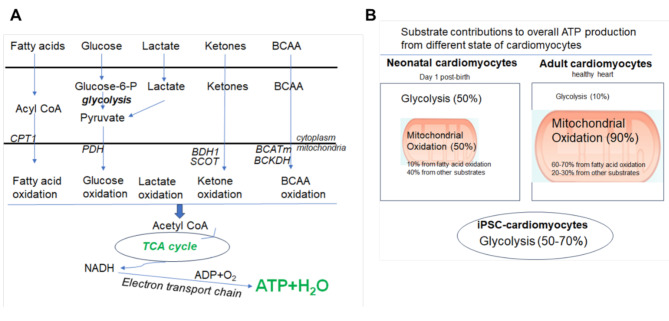
“Increased overall ATP production has been reported during hiPSC-cardiomyocyte maturation [14, 15, 35, 37, 58–61, 64, 96, 100, 101].”
BackgroundMethodInfluentialRe-epithelialization and immune cell behaviour in an ex vivo human skin model
Rakita, A., Nikolić, N., Mildner, M., Matiasek, J., & Elbe-Bürger, A. (2020) · Scientific Reports · doi:10.1038/s41598-019-56847-4 · Cited by 8,228 · cited 1×
“However, it does not provide information regarding the substrate preference [97], nor the negative correlation between fatty acid oxidation and glucose metabolism via the Randel cycle [98].”
BackgroundAnomalous collapses of Nares Strait ice arches leads to enhanced export of Arctic sea ice
Moore, G. W. K., Howell, S. E. L., Brady, M., Xu, X., & McNeil, K. (2021) · Nature Communications · doi:10.1038/s41467-020-20314-w · Cited by 5,155 · cited 1×
“Increased overall ATP production has been reported during hiPSC-cardiomyocyte maturation [14, 15, 35, 37, 58–61, 64, 96, 100, 101].”
BackgroundRandle, P. J., Garland, P. B., Hales, C. N., & Newsholme, E. A. (1963) · The Lancet · doi:10.1016/s0140-6736(63)91500-9 · Cited by 5,093 · cited 1×
“However, it does not provide information regarding the substrate preference [97], nor the negative correlation between fatty acid oxidation and glucose metabolism via the Randel cycle [98].”
BackgroundYang (2021) · doi:10.1038/s41598-020-79139-8 · Cited by 5,035 · cited 3×
“The flux of radioactive or stable isotopes through specific metabolic pathways is more informative, and can be measured directly by tracing 14 CO 2 -capture [14, 62, 69] or calculating the 13 C-metabolic flux [68].”
BackgroundMethodYoule, R. J., & Narendra, D. P. (2011) · Nature Reviews Molecular Cell Biology · doi:10.1038/nrm3028 · Cited by 3,273 · cited 1×
“Mitophagy is a major mitochondrial quality control mechanism [94].”
BackgroundAerobic glycolysis: Meeting the metabolic requirements of cell proliferation
Lunt, S. Y., & Vander Heiden, M. G. (2011) · Annual Review of Cell and Developmental Biology · doi:10.1146/annurev-cellbio-092910-154237 · Cited by 3,057 · cited 1×
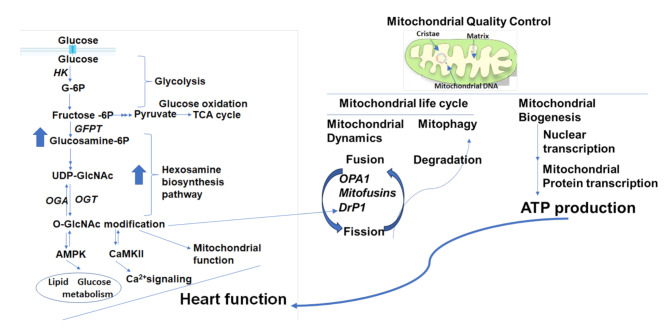
“The hexosamine biosynthesis pathway [50] is of particular interest since it introduces the O-GlcNAcylation modification in protein sequences (Fig.”
BackgroundPfeffer, M. A., & Braunwald, E. (1990) · Circulation · doi:10.1161/01.cir.81.4.1161 · Cited by 2,877 · cited 1×
“In the cardiovascular system [26, 52], increased O-GlcNAc levels have been associated with pressure-overload-induced hypertrophy [53, 54], heart failure [54], and myocardial remodeling [55], which contribute to mortality during ischemia [52, 56].”
Background
Cited by
Clinical translation of human iPSC technologies: advances, safety concerns, and future directions
Dhaiban, S., Chandran, S., Noshi, M., & Sajini, A. A. (2025) · Frontiers in Cell and Developmental Biology · doi:10.3389/fcell.2025.1627149 · Cited by 63
“Current efforts aim to improve cell maturation, reduce arrhythmogenic risk, and refine GMP-compliant manufacturing protocols (Silver et al., 2021; Jiang et al., 2024; Raniga et al., 2024).”
Stem Cells and Organoids: A Paradigm Shift in Preclinical Models Toward Personalized Medicine
Luce, E., & Duclos‐Vallée, J. (2025) · Pharmaceuticals · doi:10.3390/ph18070992 · Cited by 35
“A recurring challenge with hPSC-derived models is their incomplete maturation, which often results in suboptimal physiological functionality [20,82].”
Lu, Y., Liu, Y., Yan, Y., Fooladi, S., & Qyang, Y. (2025) · Biophysical Reviews · doi:10.1007/s12551-024-01267-6 · Cited by 29
“They also exhibit lower mitochondrial DNA content, less complex cristae structures, and reduced mitochondrial membrane potential (Jiang et al. 2024).”
Qassab, M. A., Merheb, M., Sayadi, S., Salloum, P., Dabbousi, Z., Bayeh, A., Harb, F., Azar, S. T., & Ghadieh, H. E. (2025) · Journal of Functional Biomaterials · doi:10.3390/jfb16100356 · Cited by 19
Clinical translational research on stem cell products: prospects and challenges
Chen, S., ZHANG, L., Ren, Y., Bai, X., Wei, X., Chai, M., 崔苏甦, Zhao, X., & Deng, H. (2026) · Signal Transduction and Targeted Therapy · doi:10.1038/s41392-026-02582-y · Cited by 18
“194,195 For example, Raniga et al. reported that the use of tissue engineering techniques with the support of biomaterials can increase the function and survival rates of PSC-derived cardiomyocytes.”
Metadata
- Authors
- Jiang, X., Lian, X., Wei, K., Zhang, J., Yu, K., Li, H., Ma, H., Cai, Y., & Pang, L.
- Affiliations
- First Hospital of Jilin University (CN)
- Shandong University of Traditional Chinese Medicine (CN)
- Hong Kong Polytechnic University (HK)
- Corresponding author
- Pang, Lei
- Venue
- Stem Cell Research & Therapy
- Published
- 2024-10-08
- Volume
- 15
- Issue
- 1
- Pages
- 354-354
- ISSN
- 1757-6512 (ISSN-L)
- PMC
- PMC11462682
- OpenAlex
- W4403209053
- Cited by
- 23
- References
- 128
- Citations by year
- 2026: 15 · 2025: 8
- FWCI
- 0.94
- Type
- journal article
- Language
- en
- Open access
- gold
- doi.org
- Licence
- cc-by-nc-nd
- creativecommons.org/licenses/by-nc-nd/4.0 (tdm)
- creativecommons.org/licenses/by-nc-nd/4.0 (vor)
- Locations
- Stem Cell Research & Therapy (publishedVersion, cc-by-nc-nd)
- PubMed Central (publishedVersion, cc-by-nc-nd)
- PubMed (publishedVersion)
- PolyU Institutional Research Archive (Hong Kong Polytechnic University) (publishedVersion, cc-by-nc-nd)
- DOAJ (DOAJ: Directory of Open Access Journals) (submittedVersion, cc-by-sa)
- Funders
- the Natural Science Foundation of Jilin Province (YDZJ202401235ZYTS)
- National Natural Science Foundation (82102306)
- Shenzhen Science and Technology Program (JCYJ20220531090814032)
- Natural Science Foundation of Jilin Province (YDZJ202401171ZYTS, YDZJ202401412ZYTS)
- Topics
- Life Sciences › Biochemistry, Genetics and Molecular Biology › Molecular Biology › Pluripotent Stem Cells Research
- Life Sciences › Biochemistry, Genetics and Molecular Biology › Molecular Biology › Congenital heart defects research
- Life Sciences › Biochemistry, Genetics and Molecular Biology › Cell Biology › Mesenchymal stem cell research
- Keywords
- hiPSC-derived cardiomyocytes, cardiomyocyte maturation, energy metabolism, mitochondrial biogenesis, metabolic switch, metabolic flexibility, calcium handling, cardiac regeneration, acute coronary syndrome, myocardial infarction, cell engraftment, energy substrate utilization
- MeSH terms
- Animals, Cell Differentiation, Energy Metabolism, Humans, Mitochondria, Heart, Myocardial Infarction, Cell Culture Techniques, Myocytes, Cardiac, Regenerative Medicine, Induced Pluripotent Stem Cells
About these checks
Registry, retraction, Cites and statistics results are computed, not judged, with one exception: a printed reference that no index lists is read once by a model before it counts as a citation error. Claims are extracted by a model and kept only when their quote appears verbatim in the text; each cited source is then checked, with a model’s help, for whether it says what the claim relies on. Those verdicts can be wrong — read the claim’s quote and the cited source before relying on one.
Statistics and arithmetic are recomputed, not judged.
Confidence bands are shown only for fields calibrated on our annotated test set. None is calibrated yet, so no band is shown.
What counts as a claim ›How we measure confidence ›How we check this ›
Are you an author, or do you see a problem with this page? Request a review
Data sources
Bibliographic data: Semantic Scholar, OpenAlex, Crossref.
Contains information from the Semantic Scholar Academic Graph Datasets, made available under the ODC Attribution License (ODC-BY 1.0).
Semantic Scholar’s data is described in: Kinney, R., et al. (2023). The Semantic Scholar Open Data Platform. arXiv:2301.10140.
