

Gender-related variables for health research
Open accessPublished version of a preprint
The DOI matches its Crossref record; 455 of the 455 references it cites were found in a registry or an index.
Abstract
Background: In this paper, we argue for Gender as a Sociocultural Variable (GASV) as a complement to Sex as a Biological Variable (SABV). Sex (biology) and gender (sociocultural behaviors and attitudes) interact to influence health and disease processes across the lifespan—which is currently playing out in the COVID-19 pandemic. This study develops a gender assessment tool—the Stanford Gender-Related Variables for Health Research—for use in clinical and population research, including large-scale health surveys involving diverse Western populations. While analyzing sex as a biological variable is widely mandated, gender as a sociocultural variable is not, largely because the field lacks quantitative tools for analyzing the influence of gender on health outcomes. Methods: We conducted a comprehensive review of English-language measures of gender from 1975 to 2015 to identify variables across three domains: gender norms, gender-related traits, and gender relations. This yielded 11 variables tested with 44 items in three US cross-sectional survey populations: two internet-based ( N = 2051; N = 2135) and a patient-research registry ( N = 489), conducted between May 2017 and January 2018. Results: Exploratory and confirmatory factor analyses reduced 11 constructs to 7 gender-related variables: caregiver strain, work strain, independence, risk-taking, emotional intelligence, social support, and discrimination. Regression analyses, adjusted for age, ethnicity, income, education, sex assigned at birth, and self-reported gender identity, identified associations between these gender-related variables and self-rated general health, physical and mental health, and health-risk behaviors. Conclusion: Our new instrument represents an important step toward developing more comprehensive and precise survey-based measures of gender in relation to health. Our questionnaire is designed to shed light on how specific gender-related behaviors and attitudes contribute to health and disease processes, irrespective of—or in addition to—biological sex and self-reported gender identity. Use of these gender-related variables in experimental studies, such as clinical trials, may also help us understand if gender factors play an important role as treatment-effect modifiers and would thus need to be further considered in treatment decision-making.
Overview
The claims and statistics of this paper haven’t been checked yet.
Free: it reads the open-access text and checks the first 5 claims that cite a source we can check. Create a free account to check every claim.
Integrity signals
Registry
Cites
Statistics
Figures
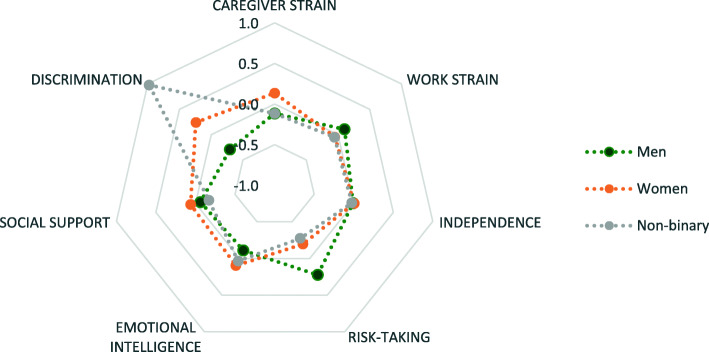
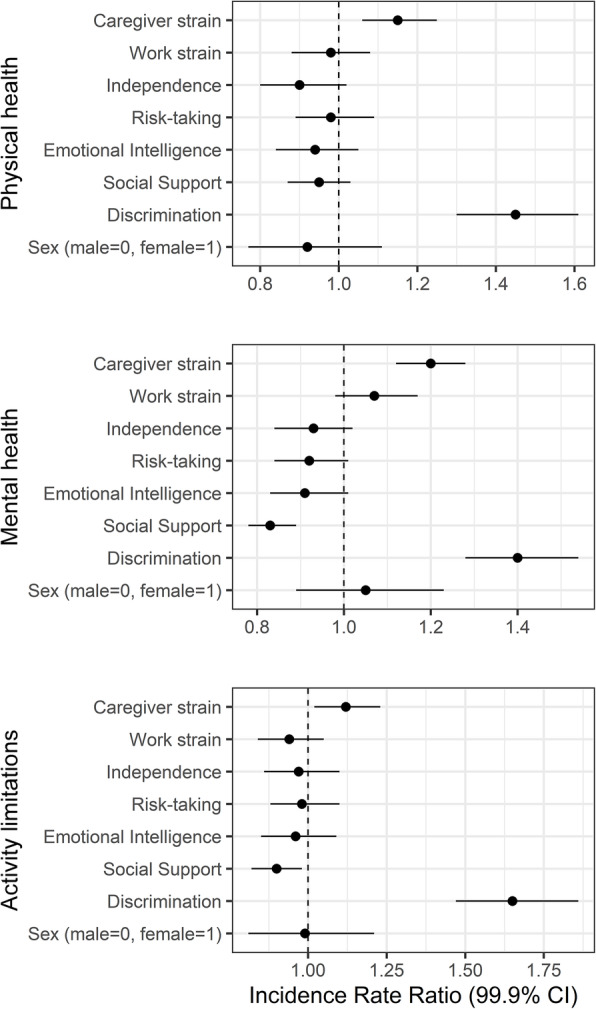
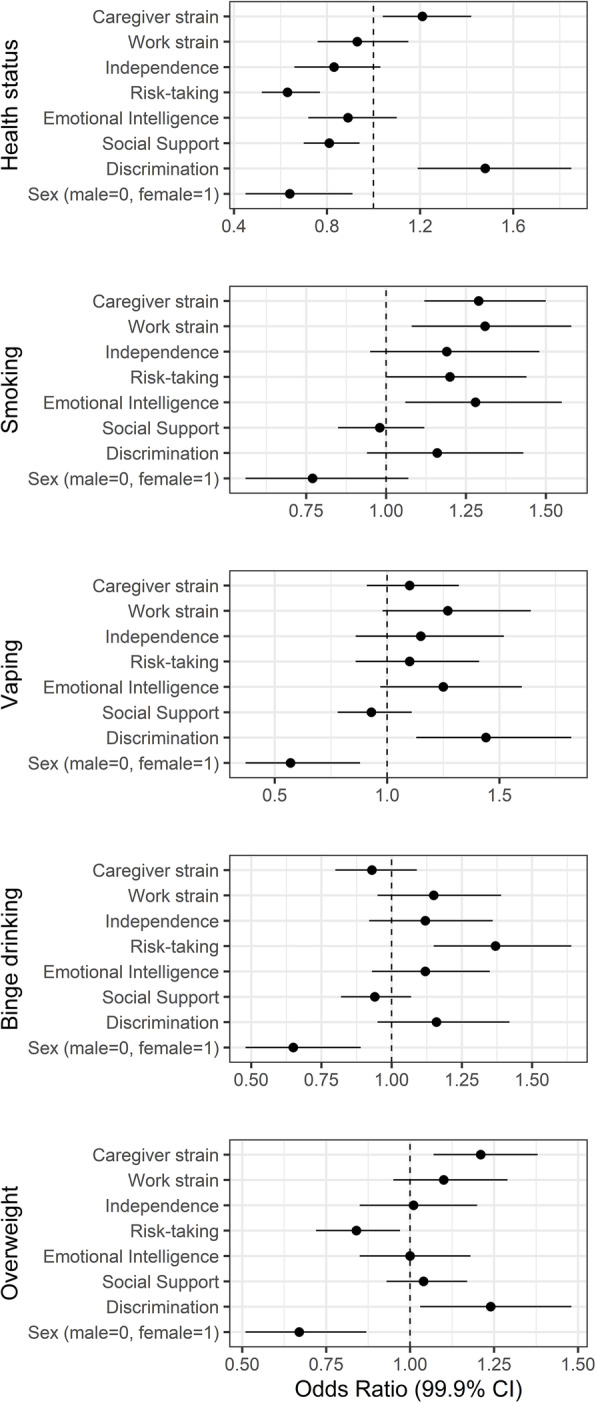
Verification
Claims the paper makes
The claims and statistics of this paper haven’t been checked yet.
Free: it reads the open-access text and checks the first 5 claims that cite a source we can check. Create a free account to check every claim.
Claims other papers make about this one
Each is checked against this paper’s own text: does it say what the citing paper says it does?
In the citing paper
“Ideologies that maintain dominating power structures often closely associate gender with sex and impose a binary view of gender, although empirical data show most gender-related variables to be either multi-categorical (for example, gender identities) or continuous (for example, masculinity and femininity)54–56.”
From Sex and gender in neurodevelopmental conditions (2023) · cites this paper as [56]
Self-check
Percentages, sums and reported differences re-computed from the paper’s own numbers.
The self-check needs the paper’s full text.
Citations
Cites
Hu, L., & Bentler, P. M. (1999) · Structural Equation Modeling A Multidisciplinary Journal · doi:10.1080/10705519909540118 · Cited by 108,788 · cited 1×
“Specifically, we used the Tuckler Lewis Index (TLI), the root mean square error of approximation (RMSEA), and the standardized root mean square residual (SRMR), relying on conventional fit criteria [73].”
MethodOn the Evaluation of Structural Equation Models
Bagozzi, R. P., & Yi, Y. (1988) · Journal of the Academy of Marketing Science · doi:10.1007/bf02723327 · Cited by 26,163
Significance tests and goodness of fit in the analysis of covariance structures.
Bentler, P. M., & Bonett, D. G. (1980) · Psychological Bulletin · doi:10.1037//0033-2909.88.3.588 · Cited by 19,023 · cited 1×
“Moreover, χ(2) values increase with sample size and the number of variables in the model [70].”
BackgroundEvaluating Goodness-of-Fit Indexes for Testing Measurement Invariance
Cheung, G. W., & Rensvold, R. B. (2002) · Structural Equation Modeling: A Multidisciplinary Journal · doi:10.1207/s15328007sem0902_5 · Cited by 16,280 · cited 1×
“Therefore, we followed Cheung and Rensvold [71] and Yuan and Bentler [72] and determined global model fit and invariance based on the approximate-fit statistics.”
MethodThe measurement of psychological androgyny
Bem, S. L. (1974) · Journal of Consulting and Clinical Psychology · doi:10.1037/h0036215 · Cited by 8,522 · cited 1×
“We were concerned that the conclusions were based on outdated gender identity constructs, such as the Bem Sex Role Inventory (BSRI, 1974) [12], developed using predominantly white, higher socioeconomic U.”
MethodHealthy work: stress, productivity, and the reconstruction of working life
(1990) · Choice Reviews Online · doi:10.5860/choice.28-0381 · Cited by 8,220 · cited 1×
“The first four items were adapted from Karasek and Theorell (54); the last two were developed by the authors.”
Rethinking individualism and collectivism: Evaluation of theoretical assumptions and meta-analyses.
Oyserman, D., Coon, H. M., & Kemmelmeier, M. (2002) · Psychological Bulletin · doi:10.1037/0033-2909.128.1.3 · Cited by 5,758 · cited 1×
“Independence is a personality trait characterized by a focus on the person as an individual, not as part of a community or group, which includes agency, self-confidence, self-determination, and decision-making ability, but not self-control or self-esteem [58].”
BackgroundThe Ambivalent Sexism Inventory: Differentiating hostile and benevolent sexism.
Glick, P., & Fiske, S. T. (1996) · Journal of Personality and Social Psychology · doi:10.1037//0022-3514.70.3.491 · Cited by 5,202
Baron-Cohen, S., & Wheelwright, S. (2004) · Journal of Autism and Developmental Disorders · doi:10.1023/b:jadd.0000022607.19833.00 · Cited by 4,093 · cited 2×
“Item one was developed by the authors, item two was adapted from Clark et al. [60], and items three and four were adapted from Baron-Cohen and Wheelwright [63].”
MethodINDIVIDUAL RISK ATTITUDES: MEASUREMENT, DETERMINANTS, AND BEHAVIORAL CONSEQUENCES
Dohmen, T., Falk, A., Huffman, D., Sunde, U., Schupp, J., & Wagner, G. G. (2011) · Journal of the European Economic Association · doi:10.1111/j.1542-4774.2011.01015.x · Cited by 3,896 · cited 1×
“[57], recorded on a five-point scale: general risk-taking behavior, risk-taking when making financial decisions, and risk-taking with respect to recreational activities.”
Background
Research works printed but not linked: 5
- Hunt K Annadale E Gender and health: major themes in health and social welfare 2012 London Routledge
- Schiebinger L Klinge I Sánchez de Madariaga I Paik HY Schraudner M Stefanick M Term: Gender. Gendered Innovations in Science, Health & Medicine, Engineering, and Environment 2021
- Basu J Development of the Indian Gender Role Identity Scale J Indian Acad Appl Psychol 2010 36 1 25 34
- Gaskin J Lim J Master validity tool AMOS Plug In; Gaskination’s StatWiki 2016
- Schiebinger L Klinge I Gendered innovations 2: how inclusive analysis contributes to research and innovation 2020 Luxembourg Publications Office of the European Union
Cited by
Items 201–256 of 256
The Influence of Lateral Constraints on Walking: Effects of Walking Speed and Biological Sex
Lordall, J., Arnold, C. M., Donkers, S. J., Farthing, J. P., Lanovaz, J. L., & Oates, A. (2025) · Journal of Applied Biomechanics · doi:10.1123/jab.2024-0258
da Silva, J. N., Munce, S., Law, S., Gopaul, U., Yu, A., Bayley, M. T., & MacDonald, S. L. (2025) · doi:10.2196/preprints.86514
Understanding sex and gender incorporation in health and medical research policy and practice
Hallam, L. (2023) · UNSWorks (UNSW Sydney) · doi:10.26190/unsworks/25017
Gogovor, A., Zomahoun, H. T. V., Ekanmian, G., Adisso, É. L., Tardif, A. D., Khadhraoui, L., Rhéault, N., Moher, D., & Légaré, F. (2021) · Figshare · doi:10.6084/m9.figshare.17056768
Gogovor, A., Zomahoun, H. T. V., Ekanmian, G., Adisso, É. L., Tardif, A. D., Khadhraoui, L., Rhéault, N., Moher, D., & Légaré, F. (2021) · Figshare · doi:10.6084/m9.figshare.17056765
Elliot, V., Kosteniuk, J. G., O’Connell, M. E., Cameron, C., & Morgan, D. (2024) · Figshare · doi:10.6084/m9.figshare.26733346
Gogovor, A., Zomahoun, H. T. V., Ekanmian, G., Adisso, É. L., Tardif, A. D., Khadhraoui, L., Rhéault, N., Moher, D., & Légaré, F. (2021) · Figshare · doi:10.6084/m9.figshare.17056750
Gogovor, A., Zomahoun, H. T. V., Ekanmian, G., Adisso, É. L., Tardif, A. D., Khadhraoui, L., Rhéault, N., Moher, D., & Légaré, F. (2021) · Figshare · doi:10.6084/m9.figshare.17056780
Wandschneider, L., Miani, C., & Razum, O. (2022) · Figshare · doi:10.6084/m9.figshare.19549616
Elliot, V., Kosteniuk, J. G., O’Connell, M. E., Cameron, C., & Morgan, D. (2024) · Figshare · doi:10.6084/m9.figshare.26733343
Gogovor, A., Zomahoun, H. T. V., Ekanmian, G., Adisso, É. L., Tardif, A. D., Khadhraoui, L., Rhéault, N., Moher, D., & Légaré, F. (2021) · Figshare · doi:10.6084/m9.figshare.17056762
Elliot, V., Kosteniuk, J. G., O’Connell, M. E., Cameron, C., & Morgan, D. (2024) · Figshare · doi:10.6084/m9.figshare.26733355
Wandschneider, L., Miani, C., & Razum, O. (2022) · Figshare · doi:10.6084/m9.figshare.19549619
Gogovor, A., Zomahoun, H. T. V., Ekanmian, G., Adisso, É. L., Tardif, A. D., Khadhraoui, L., Rhéault, N., Moher, D., & Légaré, F. (2021) · Figshare · doi:10.6084/m9.figshare.17056771
Wandschneider, L., Miani, C., & Razum, O. (2022) · Figshare · doi:10.6084/m9.figshare.19549610
Hartig, C., Horstmann, S., Jacke, K., Kraus, U., Dandolo, L., Schneider, A., Palm, K., & Bolte, G. (2024) · Figshare · doi:10.6084/m9.figshare.26759159
Gogovor, A., Zomahoun, H. T. V., Ekanmian, G., Adisso, É. L., Tardif, A. D., Khadhraoui, L., Rhéault, N., Moher, D., & Légaré, F. (2021) · Figshare · doi:10.6084/m9.figshare.17056756
Gogovor, A., Zomahoun, H. T. V., Ekanmian, G., Adisso, É. L., Tardif, A. D., Khadhraoui, L., Rhéault, N., Moher, D., & Légaré, F. (2021) · Figshare · doi:10.6084/m9.figshare.17056783
Additional file 1 of Explaining biological differences between men and women by gendered mechanisms
Colineaux, H., Neufcourt, L., Delpierre, C., Kelly‐Irving, M., & Lepage, B. (2024) · Figshare · doi:10.6084/m9.figshare.26577290
Gogovor, A., Zomahoun, H. T. V., Ekanmian, G., Adisso, É. L., Tardif, A. D., Khadhraoui, L., Rhéault, N., Moher, D., & Légaré, F. (2021) · Figshare · doi:10.6084/m9.figshare.17056747
Gender, Sex, and Their Entanglement: From Scientific Research to Policy and Practice
Brewis, A., Currah, P., DuBois, L. Z., Greaves, L., Hoppe, K., Karkazis, K. A., Pape, M., Villa, P.-I., & Wutich, A. (2026) · Springer eBooks · doi:10.1007/978-3-032-40218-9_13
Wiley, E. (2024) · MacSphere (McMaster University) · doi:10.71548/23242
Brede, J. (2024) · UCL Discovery (University College London)
Stubbs, M. A., Figeys, M., Russell-Hurst, N., Lethbridge, L., Taylor, C., Porteous, B., & Hutton, A. E. (2025) · Journal of Public Health · doi:10.1093/pubmed/fdaf159
“38 Biologically, gender differences manifest in hormonal variations, genetic predispositions, and disease presentations.”
Enhancing health literacy among immigrant women
Barton, A. J., Katz, J. R., Huerta, C. G., Meade, C. D., Moore, K. S., Nguyen-Truong, C. K. Y., Nies, M. A., & Lauver, D. (2025) · Nursing Outlook · doi:10.1016/j.outlook.2025.102658
The Effect of Using Smart Diabetes Calendar (SDC) on the Self-Efficacy of Diabetes Mellitus Patients
Utami, T. W., Astuti, Y. S., Nurhalimah, N., & Kusumaningtyas, Y. (2025) · Indonesian Journal of Global Health Research · doi:10.37287/ijghr.v7i6.723
“…‘gender differences’ arising from psychosocial and cultural processes, such as behavior, lifestyle, and attitudes toward prevention and treatment, also influence susceptibility and progression to type 2 diabetes (Kautzky-Willer et al., 2016; Mauvais-Jarvis et al., 2020; Nielsen et al., 2021).”
Mackie, P., Ashe, M. C., Barclay, R., Bayley, M. T., Donkers, S. J., Fleet, J. L., Mortenson, W. B., Peters, S. P., Pollock, C. L., Pooyania, S., et al. (2026) · Trials · doi:10.1186/s13063-026-09523-8
“Participant demographics will be collected at baseline (T0) and include age, sex, gender (using the Stanford Gender Questionnaire [28]), employment status, living arrangements, type of walking aid used, comorbidities (Functional comorbidity index [29]), medication, stroke profile (date, number of…”
Ye, J., Chen, I., Huang, P., Adjaottor, E. S., Addo, F.-M., Ahorsu, I. R., Griffiths, M. D., Lin, W., Ahorsu, D. K., & Lin, C. Y. (2026) · Scientific Reports · doi:10.1038/s41598-026-37166-x
“These sex-based differences aligned with research suggesting that males and females often experience stress differently 48,49 .”
Tarannum, S. (2023) · TSpace (University of Toronto)
da Silva, J. N. (2024) · TSpace (University of Toronto)
Samson, A. D. (2025) · TSpace (University of Toronto)
Kern, M., Wischmann, H.-A., Müller, A., Kurth, T., & Theuring, S. (2026) · Biology of Sex Differences · doi:10.1186/s13293-026-00875-z
“…(dichotomous) [42], ‘gross hourly wage’ and ‘gross monthly labor income’ (in Euros) [40, 43], ‘highest educational degree’ (continuous, 0–8) [11], ‘employment status’ (continuous, 0–3) [29, 44], ‘risk-taking scale’ (continuous, 0–10) [41], ‘political interest’ (categorical, not at all/not Fig.”
InfluentialThe gender system: A cross-national perspective
Quintana, R. (2026) · Social Science Research · doi:10.1016/j.ssresearch.2026.103344
Sex-related differences in psoriatic arthritis (PsA) treatment outcomes
Tran, A., & Eder, L. (2026) · Best Practice & Research Clinical Rheumatology · doi:10.1016/j.berh.2026.102132 · Cited by 1
Decoding sex and gender effects on health: evidence from a nationwide cohort
Gebhard, C. E., Gysi, B., Gebert, P., Mikaïl, N., Liechti, L., Schmidlin, P. R., Vinzens, A., Haider, A., Bengs, S., Treyer, V., et al. (2026) · Biology of Sex Differences · doi:10.1186/s13293-026-00888-8
Piotrowski, A., Schmidt, A., Kufeld, N., Kersting, C., Bencheva, V., Wiese, B., Bahrs, O., Hunger‐Schoppe, C., Maas, M., Preuss, J., et al. (2026) · Journal of Pain Research · doi:10.2147/jpr.s564795
“14 Furthermore, gender interacts with other socio-cultural categories, such as socio-economic position.”
Différences de soins liées au sexe chez les personnes diabétiques de type 2 de la cohorte Constances
Paquet, S. (2023) · theses.fr (ABES) · doi:10.70675/ac7c0a65zf6d4z4138za1c8z2b3db605bfe1
Hulshof, C. M., Jansen, N. E. J., Gharbaran, P., Schiphof, D., Berkers, P., & van Middelkoop, M. (2026) · BMJ Open · doi:10.1136/bmjopen-2025-112032
Jasser, N. F. A., Alrida, N. A., Hayajneh, F. A., Ayasreh, I. R., Haddad, R. H., & Aldaieflih, M. M. (2026) · Critical Care Nursing Quarterly · doi:10.1097/cnq.0000000000000617
Of mice and gender: considering gender norms in rodent models
Engel, L., Einstein, G., & Rozeske, R. R. (2026) · Biology of Sex Differences · doi:10.1186/s13293-026-00909-6
“Thus, here we are not proposing a metaphor for gender identity but for gender-like norms [8] or the set of responsibilities , functions , or roles of an individual that are highly dependent on the cultural context [8].”
Self-citationGender in suicide prevention in adolescents and young adults: a systematic review
Loubet, L., Bonnot, V., & Kivits, J. (2026) · BMC Public Health · doi:10.1186/s12889-026-28223-1
“This may be achieved through the use of tools developed in the context of health and public health studies [149, 166].”
Wiley, E., Sakakibara, B. M., Brooks, D., MacDermid, J. C., & Tang, A. (2026) · Physiotherapy Canada · doi:10.3138/ptc-2024-0135
Stevenson, J. C., Matthews, M., & Akram, U. (2026) · Applied Psychology Health and Well-Being · doi:10.1111/aphw.70202
“…studies should recruit more gender-balanced samples and include prespecified sex-or gender-based analyses, with stratified randomization where appropriate, to assess the consistency of intervention effects across groups and strengthen external validity (Heidari et al., 2016; Nielsen et al., 2017).”
Integrating gender perspectives in healthcare education: A scoping review
Huertas‐Zurriaga, A., Casanovas‐Cuellar, C., Oliva, M. P., Jorquera-Ruzzi, M. A., Leyva‐Moral, J. M., Bernabeu‐Tamayo, M. D., Garreta-Parés, G., Tosun, B., Prosen, M., & Vaismoradi, M. (2026) · Teaching and learning in nursing · doi:10.1016/j.teln.2026.07.025
Gender and Sex Entanglement in Neuroscience: A Neurofeminist Perspective
Duchesne, A. (2026) · Springer eBooks · doi:10.1007/978-3-032-40218-9_7
Gender/Sex Dynamics in Human Biomedical and Clinical Research
Juster, R., Bowleg, L., Ciccia, L., Rubin, J. B., Sanchís-Segura, C., Schweiger, S., Vilain, E. J. N., & Poteat, T. (2026) · Springer eBooks · doi:10.1007/978-3-032-40218-9_9
de Graaff, M., van der Heide, I., Rademakers, J. J. D. J. M., Pluijlaar, I. R., & Francke, A. L. (2026) · Health & Social Care in the Community · doi:10.1155/hsc/5341962
Liu, D., Li, Y., Zhang, Z., Jiang, W., Jiatong, L., Lin, T., & Li, Y. (2026) · Research Square · doi:10.21203/rs.3.rs-10993927/v1
Evolution of the Structure of Excess Mortality among Russian Men
Sabgayda Tamara, P., Зубко, А. В., & Semyonova, V. G. (2026) · Russian Foundation for Basic Research Journal Humanities and social sciences · doi:10.22204/2587-8956-2026-125-02-71-85
Gendered behaviors are associated with health beyond binary sexPreprint
Parent, O., McGuinness, M., Osborne, S., Danyluik, M., Mukora, A., Quesada, D., Devenyi, G. A., Raznahan, A., Juster, R., Dadar, M., et al. (2026) · medRxiv · doi:10.64898/2026.09.28.26364210
Doltra, A., Porta-Vilaró, M., Sugranyes, G., & Coll‐Vinent, B. (2026) · Revista Española de Cardiología · doi:10.1016/j.recesp.2026.09.004
PENGARUH MOTIVASI KERJA DAN LINGKUNAN KERJA TERHADAP KINERJA PEGAWAI
Nurjulaeni, A., & Sofiati, E. (2026) · JURNAL ILMIAH EKONOMI DAN MANAJEMEN
Gender-Related Factors Influencing Choice of Home Dialysis: A Mixed-Methods Study
Riehl-Tonn, V. J., Mizen, S., Moss, S., Leigh, J. P., Elliott, M. J., Dumanski, S. M., MacRae, J. M., Norris, C. M., Collister, D., & Ahmed, S. B. (2026) · Kidney Medicine · doi:10.1016/j.xkme.2026.101548
van Eeden, C., Khan, A., Alemayehu, W. G., Anderson, S. D., Buck, B. H., D’Amico, J. M., Dukelow, S. P., Hayward, J., McCabe, E., Spence, J. C., et al. (2026) · BMJ Open · doi:10.1136/bmjopen-2026-126752
Febriyanti, C., & Thohiriyah, T. (2026) · ELTIN JOURNAL Journal of English Language Teaching in Indonesia · doi:10.22460/eltin.v14i1.p191-206
“Conversely, women are framed in the role of homemaker because of their caring and empathetic nature (Levanon & Grusky, 2016; Cortes & Pan, 2018; Tadiri et al., 2021; Clayton & Tannenbaum, 2016; Nielsen et al., 2021; Marceline & Satria, 2023).”
Shah, M. A. (2026) · Journal of Women s Health Reproductive Medicine and Physiology · doi:10.68041/jwhrmp.v1i1/05
“Incorporating sex-specific biological data with gender-specific determinants could yield a more comprehensive portrait of disease course and treatment response, allowing for enhanced and equitable personalized treatment strategies 61 .”
Metadata
- Authors
- Nielsen, M. W., Stefanick, M. L., Peragine, D., Neilands, T. B., Ioannidis, J. P. A., Pilote, L., Prochaska, J. J., Cullen, M. R., Einstein, G., Klinge, I., LeBlanc, H., Paik, H. Y., & Schiebinger, L.
- Affiliations
- University of Copenhagen (DK)
- Stanford Medicine (US)
- University of Toronto (CA)
- University of California, San Francisco (US)
- McGill University Health Centre (CA)
- Stanford University (US)
- European Commission (BE)
- Cornell University (US)
- Corresponding author
- Schiebinger, Londa
- ORCID
- Venue
- Biology of Sex Differences
- Published
- 2021-02-22
- Volume
- 12
- Issue
- 1
- Pages
- 23-23
- ISSN
- 2042-6410 (ISSN-L)
- PMC
- PMC7898259
- OpenAlex
- W3087217577
- Cited by
- 238
- References
- 446
- Citations by year
- 2026: 34 · 2025: 45 · 2024: 55 · 2023: 45 · 2022: 39 · 2021: 19
- FWCI
- 34.24
- Type
- journal article
- Language
- en
- Open access
- gold
- doi.org
- Licence
- cc-by
- creativecommons.org/licenses/by/4.0/ (tdm)
- creativecommons.org/licenses/by/4.0/ (vor)
- Locations
- Biology of Sex Differences (publishedVersion, cc-by)
- medRxiv (acceptedVersion)
- PubMed Central (publishedVersion, cc-by)
- PubMed (publishedVersion)
- Research at the University of Copenhagen (University of Copenhagen) (publishedVersion, cc-by)
- TSpace (University of Toronto) (submittedVersion, cc-by)
- DiVA (Linkoping University) (submittedVersion, other-oa)
- DOAJ (DOAJ: Directory of Open Access Journals) (submittedVersion, cc-by-sa)
- eScholarship (California Digital Library) (submittedVersion)
- OSF Preprints (OSF Preprints) (submittedVersion)
- Funders
- School of Humanities and Sciences, Stanford University
- Stanford Humanities Center, Stanford University
- Topics
- Health Sciences › Medicine › Public Health, Environmental and Occupational Health › Sex and Gender in Healthcare
- Social Sciences › Sociology and Political Science › Gender, Health, and Social Inequality
- Social Sciences › Gender Studies › Gender Roles and Identity Studies
- Keywords
- sex as a biological variable, gender norms, gender relations, caregiver burden, job strain, independence, risk-taking, emotional intelligence, social support, discrimination, self-rated health, health risk behaviors, gender identity, treatment effect modifiers, COVID-19 pandemic
- MeSH terms
- Social Factors, COVID-19, SARS-CoV-2, Culture, Female, Gender Identity, Humans, Male, Surveys and Questionnaires, Sex Factors
About these checks
Registry, retraction, Cites and statistics results are computed, not judged, with one exception: a printed reference that no index lists is read once by a model before it counts as a citation error. Claims are extracted by a model and kept only when their quote appears verbatim in the text; each cited source is then checked, with a model’s help, for whether it says what the claim relies on. Those verdicts can be wrong — read the claim’s quote and the cited source before relying on one.
Statistics and arithmetic are recomputed, not judged.
Confidence bands are shown only for fields calibrated on our annotated test set. None is calibrated yet, so no band is shown.
What counts as a claim ›How we measure confidence ›How we check this ›
Are you an author, or do you see a problem with this page? Request a review
Data sources
Bibliographic data: Semantic Scholar, OpenAlex, Crossref.
Contains information from the Semantic Scholar Academic Graph Datasets, made available under the ODC Attribution License (ODC-BY 1.0).
Semantic Scholar’s data is described in: Kinney, R., et al. (2023). The Semantic Scholar Open Data Platform. arXiv:2301.10140.
