

The DOI matches its Crossref record; 99 of the 99 references it cites were found in a registry or an index.
DTiGEMS+: drug–target interaction prediction using graph embedding, graph mining, and similarity-based techniques
Open accessAbstract
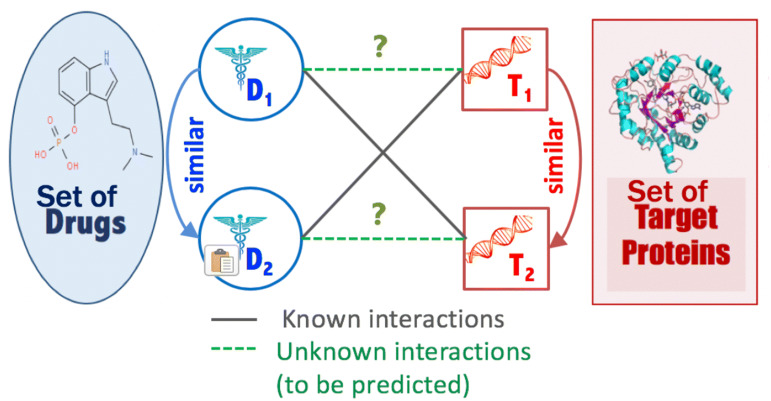
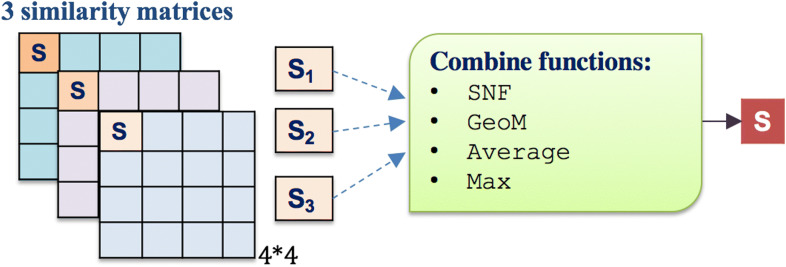
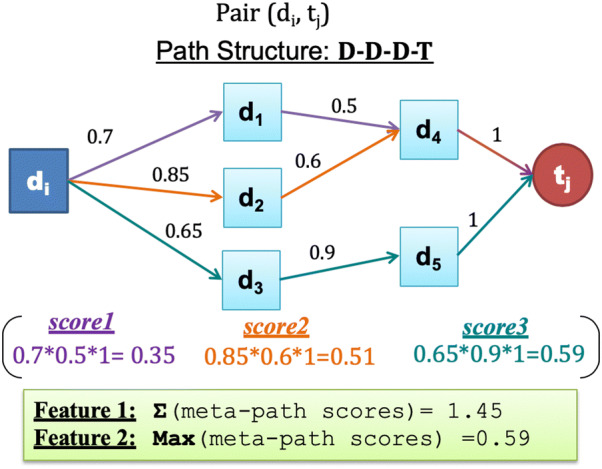
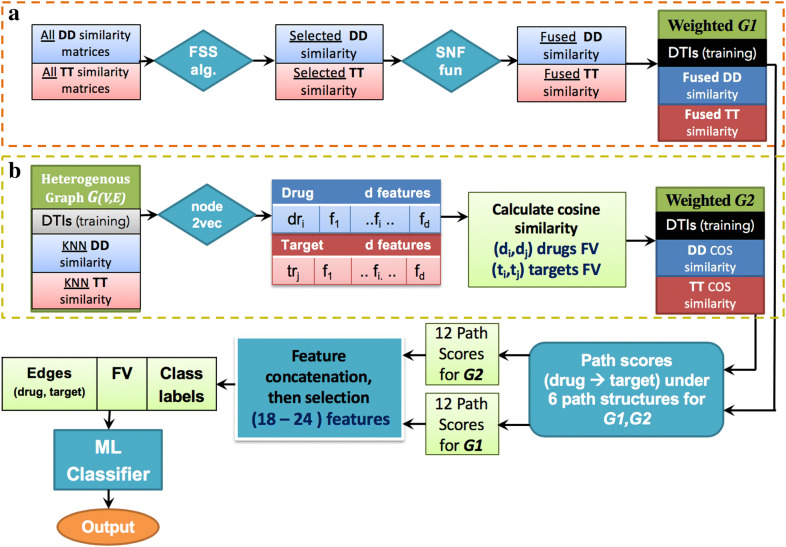
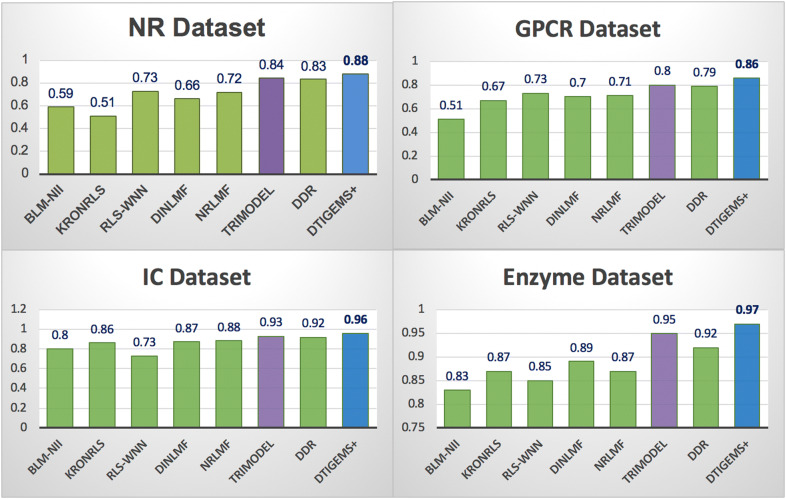
In silico prediction of drug–target interactions is a critical phase in the sustainable drug development process, especially when the research focus is to capitalize on the repositioning of existing drugs. However, developing such computational methods is not an easy task, but is much needed, as current methods that predict potential drug–target interactions suffer from high false-positive rates. Here we introduce DTiGEMS+, a computational method that predicts D rug–T arget i nteractions using G raph E mbedding, graph M ining, and S imilarity-based techniques. DTiGEMS+ combines similarity-based as well as feature-based approaches, and models the identification of novel drug–target interactions as a link prediction problem in a heterogeneous network. DTiGEMS+ constructs the heterogeneous network by augmenting the known drug–target interactions graph with two other complementary graphs namely: drug–drug similarity, target–target similarity. DTiGEMS+ combines different computational techniques to provide the final drug target prediction, these techniques include graph embeddings, graph mining, and machine learning. DTiGEMS+ integrates multiple drug–drug similarities and target–target similarities into the final heterogeneous graph construction after applying a similarity selection procedure as well as a similarity fusion algorithm. Using four benchmark datasets, we show DTiGEMS+ substantially improves prediction performance compared to other state-of-the-art in silico methods developed to predict of drug-target interactions by achieving the highest average AUPR across all datasets (0.92), which reduces the error rate by 33.3% relative to the second-best performing model in the state-of-the-art methods comparison.
Overview
The claims and statistics of this paper haven’t been checked yet.
Run the check — free, no account needed. It reads the open-access text and checks the sources it cites.
Integrity signals
Registry
Cites
Statistics
Figures
Verification
Claims the paper makes
The claims and statistics of this paper haven’t been checked yet.
Run the check — free, no account needed. It reads the open-access text and checks the sources it cites.
Claims other papers make about this one
Each is checked against this paper’s own text: does it say what the citing paper says it does?
In the citing paper
“Cell similarity graphs have also been created using autoencoders by first embedding gene expression readouts and then connecting genes based on how similar their embeddings are [157].”
From Graph representation learning in biomedicine and healthcare (2022) · cites this paper as [157]
In the citing paper
“Applied to such networks, graph representation learning can impute scRNA-seq data [156, 157], predict cell clusters [157, 158], etc.”
From Graph representation learning in biomedicine and healthcare (2022) · cites this paper as [157]
Self-check
Percentages, sums and reported differences re-computed from the paper’s own numbers.
The self-check needs the paper’s full text.
Citations
Cites
Scikit-learn: Machine Learning in Python
Pedregosa, F., Varoquaux, G., Gramfort, A., Michel, V., Thirion, B., Grisel, O., Blondel, M., Müller, A., Nothman, J., Louppe, G., et al. (2012) · arXiv · doi:10.48550/arxiv.1201.0490 · Cited by 71,016
A decision-theoretic generalization of on-line learning and an application to boosting
Freund, Y., & Schapire, R. E. (1997) · Journal of Computer and System Sciences · doi:10.1006/jcss.1997.1504 · Cited by 20,466
Proceedings of the 24th international conference on Machine learning
(2007) · doi:10.1145/1273496 · Cited by 11,869
node2vec: Scalable Feature Learning for Networks
Grover, A., & Leskovec, J. (2016) · Proceedings of the 22nd ACM SIGKDD International Conference on Knowledge Discovery and Data Mining · doi:10.1145/2939672.2939754 · Cited by 10,926
KEGG: new perspectives on genomes, pathways, diseases and drugs
Kanehisa, M., Furumichi, M., Tanabe, M., Sato, Y., & Morishima, K. (2017) · Nucleic Acids Research · doi:10.1093/nar/gkw1092 · Cited by 8,865
DrugBank 5.0: a major update to the DrugBank database for 2018
Wishart, D. S., Feunang, Y. D., Guo, A. C., Lo, E. J., Marcu, A., Grant, J. R., Sajed, T., Johnson, D., Li, C., Sayeeda, Z., et al. (2018) · Nucleic Acids Research · doi:10.1093/nar/gkx1037 · Cited by 8,404
Extended-Connectivity Fingerprints
Rogers, D. O. W., & Hahn, M. (2010) · Journal of Chemical Information and Modeling · doi:10.1021/ci100050t · Cited by 7,925
The relationship between Precision-Recall and ROC curves
Davis, J., & Goadrich, M. (2006) · Proceedings of the 23rd international conference on Machine learning - ICML '06 · doi:10.1145/1143844.1143874 · Cited by 6,559
Evaluation: from precision, recall and F-measure to ROC, informedness, markedness and correlation
Powers, D. M. W. (2020) · arXiv · doi:10.48550/arxiv.2010.16061 · Cited by 5,440
PubChem Substance and Compound databases
Kim, S., Thiessen, P. A., Bolton, E. E., Chen, J., Fu, G., Gindulyte, A., Han, L., He, J., He, S., Shoemaker, B. A., et al. (2016) · Nucleic Acids Research · doi:10.1093/nar/gkv951 · Cited by 5,436
Research works printed but not linked: 2
- Tenenbaum D (2019) KEGGREST: client-side REST access to KEGG. R Package Version 1.24.0. Fred Hutchinson Cancer Research Center, Seattle, WA, USA
- Kam HT (1995) Random decision forest. In: Proceedings of the 3rd international conference on document analysis and recognition, vol 1416, pp 278–282
Cited by
Sorted by citations
Sabe, V. T., Ntombela, T., Jhamba, L. A., Maguire, G. E. M., Govender, T., Naicker, T., & Kruger, H. G. (2021) · European Journal of Medicinal Chemistry · doi:10.1016/j.ejmech.2021.113705 · Cited by 665
Deep learning in drug discovery: an integrative review and future challenges
Askr, H., Elgeldawi, E., Ella, H. A., Elshaier, Y. A. M. M., Gomaa, M. M., & Hassanien, A. E. (2022) · Artificial Intelligence Review · doi:10.1007/s10462-022-10306-1 · Cited by 428
Graph representation learning in biomedicine and healthcare
Li, M. M., Huang, K., & Zitnik, M. (2022) · Nature Biomedical Engineering · doi:10.1038/s41551-022-00942-x · Cited by 294
DeepDDS: deep graph neural network with attention mechanism to predict synergistic drug combinations
Wang, J., Liu, X., Shen, S., Deng, L., & Liu, H. (2021) · Briefings in Bioinformatics · doi:10.1093/bib/bbab390 · Cited by 273
Ye, Q., Hsieh, C.-Y., Yang, Z., Kang, Y., Chen, J., Cao, D., He, S., & Hou, T. (2021) · Nature Communications · doi:10.1038/s41467-021-27137-3 · Cited by 261
Metadata
- Authors
- Thafar, M. A., Olayan, R. S., Ashoor, H., Albaradei, S., Bajic, V. B., Gao, X., Gojobori, T., & Essack, M.
- Affiliations
- Taif University (SA)
- The Jackson Laboratory for Genomic Medicine (US)
- King Abdulaziz University (SA)
- King Abdullah University of Science and Technology (SA)
- Corresponding author
- Essack, Magbubah
- ORCID
- Venue
- Journal of Cheminformatics
- Published
- 2020-06-29
- Volume
- 12
- Issue
- 1
- Pages
- 44-44
- ISSN
- 1758-2946 (ISSN-L)
- PMC
- PMC7325230
- OpenAlex
- W3039465695
- Cited by
- 143
- References
- 97
- Citations by year
- 2026: 12 · 2025: 18 · 2024: 28 · 2023: 24 · 2022: 15 · 2021: 44 · 2020: 2
- FWCI
- 10.68
- Type
- journal article
- Language
- en
- Open access
- gold
- doi.org
- Locations
- Journal of Cheminformatics (publishedVersion, cc-by)
- PubMed Central (publishedVersion, cc-by)
- PubMed (publishedVersion)
- DOAJ (DOAJ: Directory of Open Access Journals) (submittedVersion, cc-by-sa)
- The Mouseion at the JAXlibrary (Jackson Laboratory) (submittedVersion)
- King Abdullah University of Science and Technology Repository (King Abdullah University of Science and Technology) (submittedVersion, cc-by)
- Funders
- King Abdullah University of Science and Technology (BAS/1/1606-01-01, BAS/1/1059-01-01, BAS/1/1624-01-01, FCC/1/1976-26-01, FCC/1/1976-17-01)
- Topics
- Life Sciences › Pharmacology, Toxicology and Pharmaceutics › Drug Discovery › Computational Drug Discovery Methods
- Life Sciences › Biochemistry, Genetics and Molecular Biology › Molecular Biology › Bioinformatics and Genomic Networks
- Physical Sciences › Computer Science › Information Systems › Recommender Systems and Techniques
- Keywords
- drug-target interaction prediction, graph embedding, graph mining, similarity-based prediction, heterogeneous networks, link prediction, drug-drug similarity, similarity fusion, drug repurposing, false positive reduction
About these checks
Registry, retraction, Cites and statistics results are computed, not judged, with one exception: a printed reference that no index lists is read once by a model before it counts as a citation error. Claims are extracted by a model and kept only when their quote appears verbatim in the text; each cited source is then checked, with a model’s help, for whether it says what the claim relies on. Those verdicts can be wrong — read the claim’s quote and the cited source before relying on one.
Statistics and arithmetic are recomputed, not judged.
Confidence bands are shown only for fields calibrated on our annotated test set. None is calibrated yet, so no band is shown.
What counts as a claim ›How we measure confidence ›How we check this ›
Are you an author, or do you see a problem with this page? Request a review
