

The DOI matches its Crossref record; 68 of the 68 references it cites were found in a registry or an index.
Differential requirement for satellite cells during overload-induced muscle hypertrophy in growing versus mature mice
Open accessAbstract
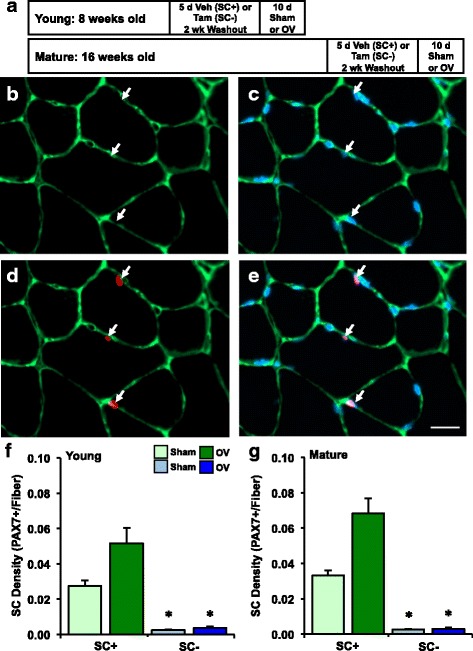
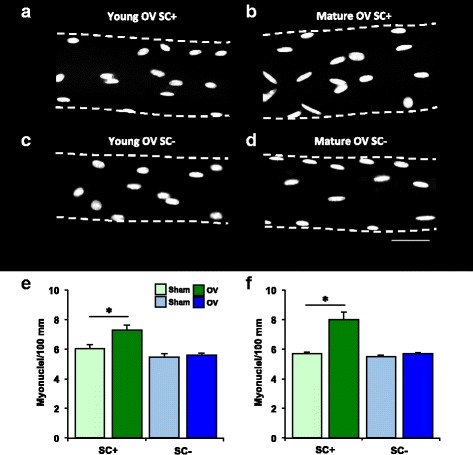
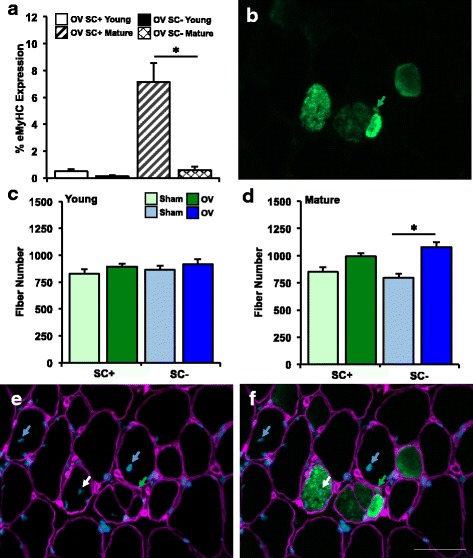
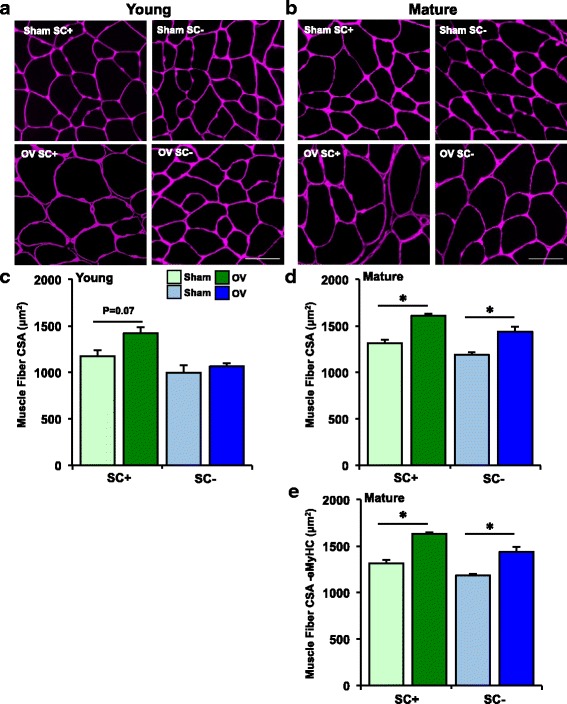
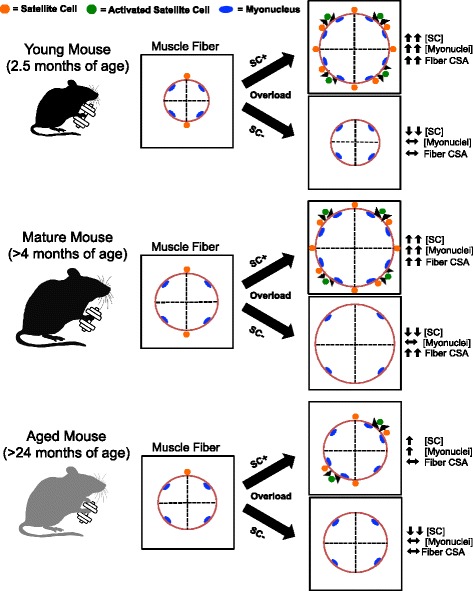
BACKGROUND: Pax7+ satellite cells are required for skeletal muscle fiber growth during post-natal development in mice. Satellite cell-mediated myonuclear accretion also appears to persist into early adulthood. Given the important role of satellite cells during muscle development, we hypothesized that the necessity of satellite cells for adaptation to an imposed hypertrophic stimulus depends on maturational age. METHODS: mice were treated for 5 days with vehicle (satellite cell-replete, SC+) or tamoxifen (satellite cell-depleted, SC-) at 2 months (young) and 4 months (mature) of age. Following a 2-week washout, mice were subjected to sham surgery or 10 day synergist ablation overload of the plantaris (n = 6-9 per group). The surgical approach minimized regeneration, de novo fiber formation, and fiber splitting while promoting muscle fiber growth. Satellite cell density (Pax7+ cells/fiber), embryonic myosin heavy chain expression (eMyHC), and muscle fiber cross sectional area (CSA) were evaluated via immunohistochemistry. Myonuclei (myonuclei/100 mm) were counted on isolated single muscle fibers. RESULTS: Tamoxifen treatment depleted satellite cells by ≥90% and prevented myonuclear accretion with overload in young and mature mice (p < 0.05). Satellite cells did not recover in SC- mice after overload. Average muscle fiber CSA increased ~20% in young SC+ (p = 0.07), mature SC+ (p < 0.05), and mature SC- mice (p < 0.05). In contrast, muscle fiber hypertrophy was prevented in young SC- mice. Muscle fiber number increased only in mature mice after overload (p < 0.05), and eMyHC expression was variable, specifically in mature SC+ mice. CONCLUSIONS: Reliance on satellite cells for overload-induced hypertrophy is dependent on maturational age, and global responses to overload differ in young versus mature mice.
Overview
The claims and statistics of this paper haven’t been checked yet.
Run the check — free, no account needed. It reads the open-access text and checks the sources it cites.
Integrity signals
Registry
Cites
Statistics
Figures
Verification
Claims the paper makes
The claims and statistics of this paper haven’t been checked yet.
Run the check — free, no account needed. It reads the open-access text and checks the sources it cites.
Claims other papers make about this one
Each is checked against this paper’s own text: does it say what the citing paper says it does?
In the citing paper
“However, in models of fully grown/ developed mice (>4 months of age), short-term hypertrophy occurs in the absence of satellite cells [20,24,25].”
From Potential Roles of n-3 PUFAs during Skeletal Muscle Growth and Regeneration (2018) · cites this paper as [25]
Self-check
Percentages, sums and reported differences re-computed from the paper’s own numbers.
The self-check needs the paper’s full text.
Citations
Cites
SATELLITE CELL OF SKELETAL MUSCLE FIBERS
Mauro, A. (1961) · The Journal of Cell Biology · doi:10.1083/jcb.9.2.493 · Cited by 3,683
Pax7 Is Required for the Specification of Myogenic Satellite Cells
Seale, P., Sabourin, L. A., Girgis-Gabardo, A., Mansouri, A., Gruß, P., & Rudnicki, M. A. (2000) · Cell · doi:10.1016/s0092-8674(00)00066-0 · Cited by 2,345
Murphy, M. M., Lawson, J. A., Mathew, S. J., Hutcheson, D. A., & Kardon, G. (2011) · Development · doi:10.1242/dev.064162 · Cited by 1,249
A Pax3/Pax7-dependent population of skeletal muscle progenitor cells
Relaix, F., Rocancourt, D., Mansouri, A., & BUCKINGHAM, M. E. (2005) · Nature · doi:10.1038/nature03594 · Cited by 1,167
Lepper, C., Partridge, T. A., & Fan, C.-M. (2011) · Development · doi:10.1242/dev.067595 · Cited by 1,105
Satellite cells as the source of nuclei in muscles of growing rats
Moss, F. P., & Leblond, C. P. (1971) · The Anatomical Record · doi:10.1002/ar.1091700405 · Cited by 1,025
Pax7-expressing satellite cells are indispensable for adult skeletal muscle regeneration
Sambasivan, R., Yao, R., Kissenpfennig, A., Van Wittenberghe, L., Paldi, A., Gayraud-Morel, B., Guenou, H., Malissen, B., Tajbakhsh, S., & Galy, A. (2011) · Development · doi:10.1242/dev.067587 · Cited by 939
Effective fiber hypertrophy in satellite cell-depleted skeletal muscle
McCarthy, J. J., Mula, J., Miyazaki, M., Erfani, R., Garrison, K., Farooqui, A. B., Srikuea, R., Lawson, B. A., Grimes, B., Keller, C., et al. (2011) · Development · doi:10.1242/dev.068858 · Cited by 616
Stockdale, F. E., & Holtzer, H. (1961) · Experimental Cell Research · doi:10.1016/0014-4827(61)90450-5 · Cited by 554
Dynamics of muscle fibre growth during postnatal mouse development
White, R. B., Biérinx, A.-S., Gnocchi, V. F., & Zammit, P. S. (2010) · BMC Developmental Biology · doi:10.1186/1471-213x-10-21 · Cited by 512
Cited by
Sorted by citations
Items 101–156 of 156
Chi, C.-P., Hou, C.-W., Wu, Y.-Y., Wang, T., & Yu, S.-H. (2020) · General Physiology and Biophysics · doi:10.4149/gpb_2019047 · Cited by 8
Detection of muscle stem cell-derived myonuclei in murine overloaded muscles
Kaneshige, A., Kaji, T., Saito, H., Higashimoto, T., Nakamura, A., Kurosawa, T., Ikemoto‐Uezumi, M., Uezumi, A., & Fukada, S. (2022) · STAR Protocols · doi:10.1016/j.xpro.2022.101307 · Cited by 7
Brandt, A. M., Kania, J., Gonzalez, M. L., & Johnson, S. (2018) · Journal of Animal Science · doi:10.1093/jas/sky234 · Cited by 6
Is the myonuclear domain ceiling hypothesis dead?
Aman, F. I., Khatib, E., AlNeaimi, A., Mohamed, A. A. M., Almulla, A. S., Zaidan, A. I., Alshafei, J., Habbal, O., Eldesouki, S., & Qaisar, R. (2021) · Singapore Medical Journal · doi:10.11622/smedj.2021103 · Cited by 6
Petkov, S., Brenmoehl, J., Langhammer, M., Hoeflich, A., & Röntgen, M. (2022) · Cells · doi:10.3390/cells11061001 · Cited by 6
Skeletal muscle memory: implications for sports, aging and nutrition
Pérez-Castillo, Í. M., Ruiz-Caride, S. R., Rueda, R., Chicharro, J. L., Segura-Ortiz, F., & Bouzamondo, H. (2025) · Frontiers in Nutrition · doi:10.3389/fnut.2025.1701520 · Cited by 7
Sex-Based Differences in Muscle Stem Cell Regulation Following Exercise
Beaudry, K. M., & Lisio, M. D. (2024) · Exercise and Sport Sciences Reviews · doi:10.1249/jes.0000000000000337 · Cited by 5
Zavoriti, A., Fessard, A., Rahmati, M., del Carmine, P., Chazaud, B., & Gondin, J. (2021) · bioRxiv (Cold Spring Harbor Laboratory) · doi:10.1101/2021.12.14.472254 · Cited by 7
Making sense of MYC in skeletal muscle: location, duration, and magnitude
Jones, R. G., Edman, S., Serrano, N., Wen, Y., McCarthy, J. J., Fry, C. S., von Walden, F., & Murach, K. A. (2025) · American Journal of Physiology-Cell Physiology · doi:10.1152/ajpcell.00528.2025 · Cited by 4
NEDD4-1 deficiency impairs satellite cell function during skeletal muscle regeneration
Cabezas, F., Cabello‐Verrugio, C., González, N., Salas, J., Ramírez, M. J., de la Vega, E., & Olguín, H. C. (2023) · Biological Research · doi:10.1186/s40659-023-00432-7 · Cited by 4
Song, Z., Lin, Q., Liang, J., & Zhang, W. (2024) · Molecular Biomedicine · doi:10.1186/s43556-024-00193-z · Cited by 4
Voronkov, A. V., Gerashchenko, A., Pozdnyakov, D. I., & Khusainov, D. V. (2019) · Pharmacy & Pharmacology · doi:10.19163/2307-9266-2019-7-3-148-157 · Cited by 4
Lieber, R. L., & Domenighetti, A. A. (2021) · Frontiers in Physiology · doi:10.3389/fphys.2021.642366 · Cited by 4
Hibernation as a model for skeletal muscle preservation
Porczak, A. E., & Feng, N. Y. (2025) · Annals of the New York Academy of Sciences · doi:10.1111/nyas.15389 · Cited by 3
Maruyama, S., & Kawano, F. (2025) · Laboratory Animal Research · doi:10.1186/s42826-025-00254-6 · Cited by 3
Il-6 signaling exacerbates hallmarks of chronic tendon disease by stimulating reparative fibroblasts
Stauber, T., Moschini, G., Hussien, A. A., Jaeger, P. K., Bock, K. D., & Snedeker, J. G. (2025) · eLife · doi:10.7554/elife.87092.3 · Cited by 3
Muscle memory theory: A critical evaluation
Serrano, N., Dupont‐Versteegden, E. E., & Murach, K. A. (2025) · The Journal of Physiology · doi:10.1113/jp289597 · Cited by 3
Logan, C. Y., Lim, X., Fish, M., Mizutani, M., Swain, B. B., & Nusse, R. (2025) · Development · doi:10.1242/dev.204933 · Cited by 3
Serrano, N., Koopmans, P. J., & Murach, K. A. (2025) · Skeletal Muscle · doi:10.1186/s13395-025-00407-0 · Cited by 5
The role of MEGF10 in myoblast fusion and hypertrophic response to overload of skeletal muscle
Richardson, L., Hughes, R., Johnson, C. A., Egginton, S., & Peckham, M. (2025) · Journal of Muscle Research and Cell Motility · doi:10.1007/s10974-024-09686-4 · Cited by 2
Injury-specific muscle regeneration: a computational blueprint for cellular and cytokine drivers
Haase, M., Comlekoglu, T., Petrucciani, A., Sego, T. J., PEIRCE, S. M., & Blemker, S. S. (2026) · Journal of The Royal Society Interface · doi:10.1098/rsif.2025.0534 · Cited by 2
The role of satellite cells in activity‐induced adaptations: breathing new life into the debate
Lisio, M. D., & Farup, J. (2017) · The Journal of Physiology · doi:10.1113/jp274969 · Cited by 2
Fahrner, A., Laiferová, N. A., Ukropcová, B., Ukropec, J., & Krützfeldt, J. (2023) · The Journal of Clinical Endocrinology & Metabolism · doi:10.1210/clinem/dgad041 · Cited by 1
miR-542: a novel regulator for muscle mass and function
Garros, R. F. (2017) · Spiral (Imperial College London) · doi:10.25560/68036 · Cited by 2
The Age-Dependent Resident Myonuclear Multi-Omic Response to a Skeletal Muscle Hypertrophic StimulusPreprint
Koopmans, P. J., Jones, R. G., Cabrera, A. R., da Silva, F. M., Greene, N. P., McCarthy, J. J., Ismaeel, A., Wen, Y., & Murach, K. A. (2025) · bioRxiv (Cold Spring Harbor Laboratory) · doi:10.1101/2025.10.29.685384 · Cited by 2
Contribution of Chromosome 14 to Exercise Capacity and Training Responses in Mice
Massett, M. P., Courtney, S. M., Kim, S. K., & Avila, J. J. (2019) · Frontiers in Physiology · doi:10.3389/fphys.2019.01165 · Cited by 1
Sarto, F., Fry, C. S., Narici, M. V., Rubin, L. L., & Price, F. D. (2025) · American Journal of Physiology-Cell Physiology · doi:10.1152/ajpcell.00076.2025 · Cited by 1
Time-of-day effects on muscle mitochondria following short-term ablation of satellite cells
Kahn, R. E., Dinnunhan, F., Meza, G., Lieber, R. L., Lacham‐Kaplan, O., Hawley, J. A., & Dayanidhi, S. (2025) · Frontiers in Physiology · doi:10.3389/fphys.2025.1613184 · Cited by 1
Deprez, A., Molina, T., Cagnone, G., Garcia, P., Leclerc, S., Cloutier, A., Desaulniers, R., Ellezam, B., Nuyt, A. M., & Dumont, N. A. (2025) · Journal of Cachexia Sarcopenia and Muscle · doi:10.1002/jcsm.70058 · Cited by 1
Karim, M., Yaku, K., Kim, J., Okekawa, A., Wada, T., Uchida, H., MIZUTANI, A., Nguyen, T. C. T., Kawaguchi, Y., Nakagawa, Y., et al. (2026) · Cell Reports · doi:10.1016/j.celrep.2025.116912 · Cited by 1
Myonuclear Dynamics After Skeletal Muscle Surgical Injury
Goeke, M., Serrano, N., Koopmans, P. J., & Murach, K. A. (2026) · The FASEB Journal · doi:10.1096/fj.202602413r · Cited by 1
Skeletal Muscle-Resident Pericyte Responses to Conditions of Use and Disuse
Munroe, M., Dvoretskiy, S., & Boppart, M. D. (2021) · Stem cell biology and regenerative medicine · doi:10.1007/978-3-030-62129-2_9 · Cited by 1
Englund, D. A., Murach, K. A., Dungan, C. M., Figueiredo, V. C., Vechetti, I. J., Dupont‐Versteegden, E. E., McCarthy, J. J., & Peterson, C. A. (2019) · bioRxiv (Cold Spring Harbor Laboratory) · doi:10.1101/588731 · Cited by 1
Differential Response of Oxidative and Glycolytic Skeletal Muscle Fibers to MesterolonePreprint
Asfour, H. A., Shaqoura, E. I., Said, R. S., Mustafa, A., Emerald, B. S., & Allouh, M. Z. (2021) · Research Square · doi:10.21203/rs.3.rs-459807/v1 · Cited by 1
Haase, M., Comlekoglu, T., Petrucciani, A., Peirce, S. M., & Blemker, S. S. (2023) · bioRxiv (Cold Spring Harbor Laboratory) · doi:10.1101/2023.08.14.553247 · Cited by 1
Transient MYC Mimicking the Exercise Response Orchestrates Multifaceted Skeletal Muscle AdaptationsPreprint
Jones, R. G., Koopmans, P. J., Serrano, N., Cabrera, A. R., Morena, F., Chambers, T. L., Walters, R., Borowik, A., Taylor, M. E., Wohlgemuth, R. P., et al. (2026) · bioRxiv (Cold Spring Harbor Laboratory) · doi:10.64898/2026.06.29.735332 · Cited by 1
Viggars, M. R. (2018) · Liverpool John Moores University · doi:10.24377/researchonline.ljmu.ac.uk.00009368
Effects of hypoxia exposure on skeletal muscle in vivo
Nagahisa, H., & Miyata, H. (2019) · 体力科學 · doi:10.7600/jspfsm.68.357
rasouli, H., Farzanegi, P., & Abbaszadeh, H. (2020) · Medical Laboratory Journal · doi:10.52547/mlj.14.6.41
Normal and Aberrant Muscle Tissue Healing, Learning from Health and Disease
Kostek, M. C., & Liu, S. (2023) · OBM Genetics · doi:10.21926/obm.genet.2303192
Grb2/Sos1 signaling regulates the number of reserve cells in C2C12 cell culture
Nagata, Y., Iitsuka, H., & Hagiwara, T. (2025) · In Vitro Cellular & Developmental Biology - Animal · doi:10.1007/s11626-025-01071-w
Khosrowpour, Z., Ramaswamy, N., Engquist, E. N., Dincer, B., Shah, A. M., Soliman, H. A. N., Goloviznina, N. A., Karachunski, P. I., & Kyba, M. (2025) · Cells · doi:10.3390/cells14151150
Cabezas, F., Cabello‐Verrugio, C., González, N., Salas, J., Ramírez, M. J., de la Vega, E., & Olguín, H. C. (2024) · Figshare · doi:10.6084/m9.figshare.26587236
Cabezas, F., Cabello‐Verrugio, C., González, N., Salas, J., Ramírez, M. J., de la Vega, E., & Olguín, H. C. (2024) · Figshare · doi:10.6084/m9.figshare.26587227
Cabezas, F., Cabello‐Verrugio, C., González, N., Salas, J., Ramírez, M. J., de la Vega, E., & Olguín, H. C. (2024) · Figshare · doi:10.6084/m9.figshare.26587233
Cabezas, F., Cabello‐Verrugio, C., González, N., Salas, J., Ramírez, M. J., de la Vega, E., & Olguín, H. C. (2024) · Figshare · doi:10.6084/m9.figshare.26587230
Additional file 1 of The Myotube Analyzer: how to assess myogenic features in muscle stem cells
Noë, S., Corvelyn, M., Willems, S., Costamagna, D., Aerts, J.-M., Campenhout, A. V., & Desloovere, K. (2022) · Figshare · doi:10.6084/m9.figshare.20056017
Therapeutic strategies targeting muscle stem cells in satellite cell-opathies
Garcia, P., Mokhtari, I., & Dumont, N. A. (2026) · Journal of Neuromuscular Diseases · doi:10.1177/22143602251414570
Étude du rôle de RhoA dans la plasticité du muscle squelettique
Noviello, C. (2020) · theses.fr (ABES) · doi:10.70675/c46c1ebdzfce4z41acza3c0z0443139c7e5a
Muscle fibers and cellular characteristics of male Saanen kids with different slaughter weights
Şen, U., Coşkun, İ., Önder, H., Yılmaz, Ö. F., Yüksel, H. M., Koçyiğit, A., Kizilköy, İ. C., & Odu, O. (2026) · BMC Veterinary Research · doi:10.1186/s12917-026-05439-2
Rôle de Srf dans le contrôle de la fusion des myoblastes
Kobon, K. (2022) · theses.fr (ABES) · doi:10.70675/8b6bc030zd923z447eza0b8z6cdc49037dcd
Valero‐Breton, M., Portal-Rodríguez, M., Tacchi, F., Salgado-Valdovinos, J., Miranda‐Pilar, M. C., Cifuentes-Silva, E., Martínez‐Pérez, M. I., Godoy, M., Bonicioli, J., Olguín, H. C., et al. (2026) · Acta Physiologica · doi:10.1111/apha.70274
Muscle satellite cells and aging
Johnson, A., Bevington, R. T., Rumelski, S., Kassamali, N., & Parise, G. (2026) · American Journal of Physiology-Cell Physiology · doi:10.1152/ajpcell.00232.2026
Thomas, N. T., Goh, J. Z., Murach, K. A., Fry, C. S., Peterson, C. A., Ismaeel, A., McCarthy, J. J., & Wen, Y. (2026) · bioRxiv (Cold Spring Harbor Laboratory) · doi:10.64898/2026.08.26.747125
Metadata
- Authors
- Murach, K. A., White, S. H., Wen, Y., Ho, A., Dupont-Versteegden, E. E., McCarthy, J. J., & Peterson, C. A.
- Affiliations
- University of Kentucky (US)
- Corresponding author
- Peterson, Charlotte A.
- Venue
- Skeletal Muscle
- Published
- 2017-07-10
- Volume
- 7
- Issue
- 1
- Pages
- 14-14
- ISSN
- 2044-5040 (ISSN-L)
- PMC
- PMC5504676
- OpenAlex
- W2736041272
- Cited by
- 156
- References
- 68
- Citations by year
- 2026: 9 · 2025: 19 · 2024: 15 · 2023: 12 · 2022: 18 · 2021: 23 · 2020: 21 · 2019: 16 · 2018: 14 · 2017: 9
- FWCI
- 6.70
- Type
- journal article
- Language
- en
- Open access
- gold
- doi.org
- Locations
- Skeletal Muscle (publishedVersion, cc-by)
- PubMed Central (publishedVersion, cc-by)
- PubMed (publishedVersion)
- UKnowledge (University of Kentucky) (submittedVersion, cc-by)
- DOAJ (DOAJ: Directory of Open Access Journals) (submittedVersion)
- Funders
- National Institutes of Health (F32AR071753, AR060701, AG049806)
- Topics
- Life Sciences › Biochemistry, Genetics and Molecular Biology › Molecular Biology › Muscle Physiology and Disorders
- Health Sciences › Nursing › Nutrition and Dietetics › Muscle metabolism and nutrition
- Health Sciences › Medicine › Genetics (clinical) › Neurogenetic and Muscular Disorders Research
- Keywords
- satellite cells, Pax7, muscle hypertrophy, myonuclear accretion, embryonic myosin heavy chain, muscle fiber cross-sectional area, muscle fiber number, developmental age, synergist ablation, plantaris muscle, postnatal muscle development
- MeSH terms
- Animals, Male, Mice, Inbred C57BL, Physical Conditioning, Animal, Muscle, Skeletal, Myosin Heavy Chains, Satellite Cells, Skeletal Muscle, Mice, PAX7 Transcription Factor
About these checks
Registry, retraction, Cites and statistics results are computed, not judged, with one exception: a printed reference that no index lists is read once by a model before it counts as a citation error. Claims are extracted by a model and kept only when their quote appears verbatim in the text; each cited source is then checked, with a model’s help, for whether it says what the claim relies on. Those verdicts can be wrong — read the claim’s quote and the cited source before relying on one.
Statistics and arithmetic are recomputed, not judged.
Confidence bands are shown only for fields calibrated on our annotated test set. None is calibrated yet, so no band is shown.
What counts as a claim ›How we measure confidence ›How we check this ›
Are you an author, or do you see a problem with this page? Request a review
