

Reading the m6A-encoded epitranscriptomic information in development and diseases
Open accessThe DOI matches its Crossref record; 158 of the 158 references it cites were found in a registry or an index.
Abstract
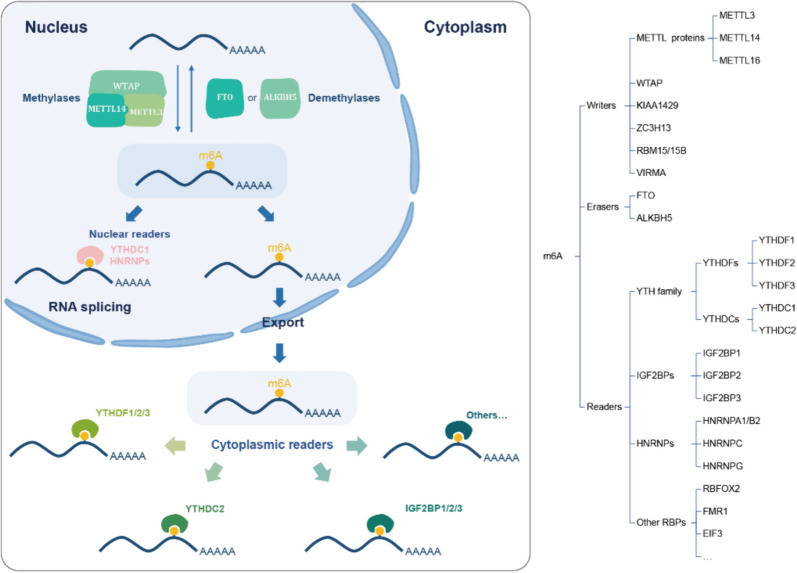
N6-methyladenosine (m 6 A) represents the most prevalent internal and reversible modification on RNAs. Different cell types display their unique m 6 A profiles, which are determined by the functions of m 6 A writers and erasers. M 6 A modifications lead to different outcomes such as decay, stabilization, or transport of the RNAs. The m 6 A-encoded epigenetic information is interpreted by m 6 A readers and their interacting proteins. M 6 A readers are essential for different biological processes, and the defects in m 6 A readers have been discovered in diverse diseases. Here, we review the latest advances in the roles of m 6 A readers in development and diseases. These recent studies not only highlight the importance of m 6 A readers in regulating cell fate transitions, but also point to the potential application of drugs targeting m 6 A readers in diseases.
Overview
The claims and statistics of this paper haven’t been checked yet.
Free: it reads the open-access text and checks the first 5 claims that cite a source we can check. Create a free account to check every claim.
Integrity signals
Registry
Cites
Statistics
Figures
Verification
Claims the paper makes
The claims and statistics of this paper haven’t been checked yet.
Free: it reads the open-access text and checks the first 5 claims that cite a source we can check. Create a free account to check every claim.
Claims other papers make about this one
Each is checked against this paper’s own text: does it say what the citing paper says it does?
The cited source doesn’t support the claim as written.
In the citing paper
“Phylogenetically conserved RRM domains on readers are responsible for IMP2 identifying m6A marks on RNA [17,27].”
From IMPlications of IMP2 in RNA Biology and Disease (2025) · cites this paper as [27]
Checked by a reasoning model — may be wrong.
Experimental — accuracy not yet measured
Self-check
Percentages, sums and reported differences re-computed from the paper’s own numbers.
The self-check needs the paper’s full text.
Citations
Cites
1 retracted
Liu, X., Qin, J., Gao, T., Li, C., He, B., Pan, B., Xu, X., Chen, X., Zeng, K., Xu, M., et al. (2020) · Molecular Therapy — Nucleic Acids · doi:10.1016/j.omtn.2020.09.036 · Cited by 78
RetractedGlobal Burden of Disease Cancer Collaboration, Fitzmaurice, C., Allen, C., Barber, R. M., Barregard, L., Bhutta, Z. A., Brenner, H., Dicker, D. J., Chimed-Orchir, O., Dandona, R., et al. (2017) · JAMA Oncology · doi:10.1001/jamaoncol.2016.5688 · Cited by 6,215
Topology of the human and mouse m6A RNA methylomes revealed by m6A-seq
Dominissini, D., Moshitch-Moshkovitz, S., Schwartz, S., Salmon-Divon, M., Ungar, L., Osenberg, S., Cesarkas, K., Jacob-Hirsch, J., Amariglio, N., Kupiec, M., et al. (2012) · Nature · doi:10.1038/nature11112 · Cited by 4,884 · cited 1×
“In 2012, the comprehensive profiling of m 6 A in mammalian cells for the entire transcriptome was achieved through the development of m 6 A antibody-based RNA-immuno-precipitation strategies, such as m 6 A-seq and Methylated RNA immunoprecipitation sequencing (MeRIP-seq) [14, 15].”
MethodN6-methyladenosine-dependent regulation of messenger RNA stability
Wang, X., Lu, Z., Gomez, A., Hon, G. C., Yue, Y., Han, D., Fu, Y., Parisien, M., Dai, Q., Jia, G., et al. (2014) · Nature · doi:10.1038/nature12730 · Cited by 4,558 · cited 3×
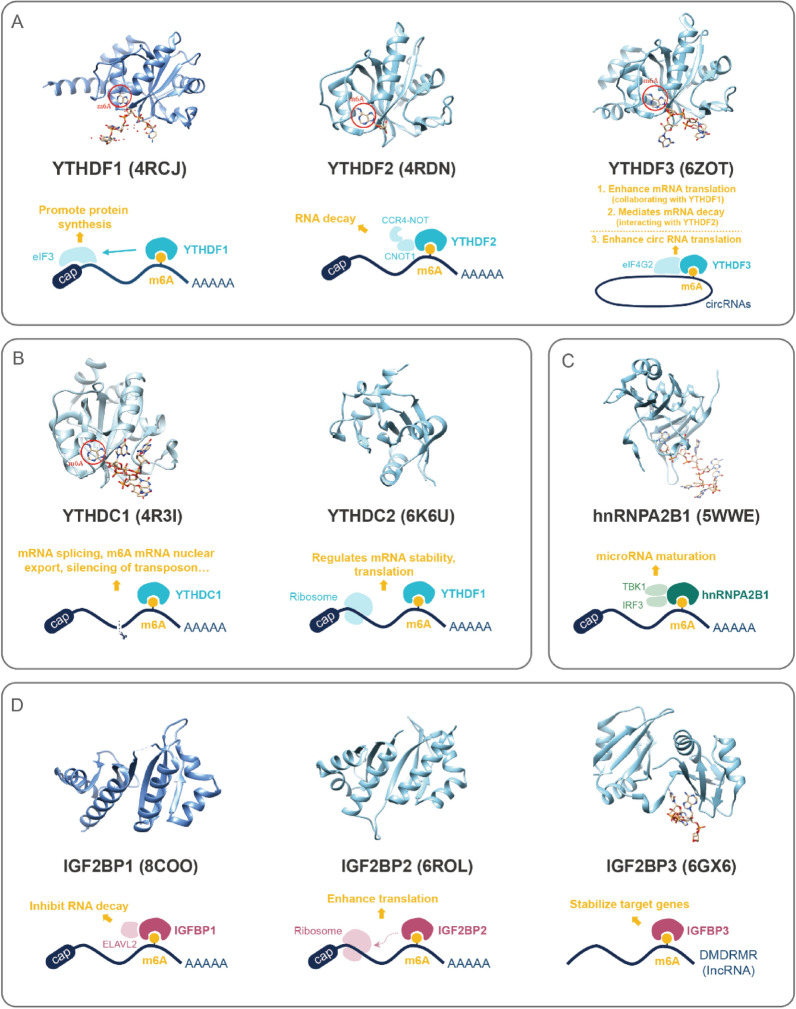
“Initially, the YTHDF family was believed to have distinct functions: YTHDF1 enhancing mRNA translation, YTHDF2 promoting mRNA degradation, and YTHDF3 modulating both translation and degradation [13, 32].”
BackgroundComprehensive Analysis of mRNA Methylation Reveals Enrichment in 3′ UTRs and near Stop Codons
Meyer, K. D., Saletore, Y., Zumbo, P., Elemento, O., Mason, C. E., & Jaffrey, S. R. (2012) · Cell · doi:10.1016/j.cell.2012.05.003 · Cited by 4,223 · cited 2×
“This writer complex binds to the mRNAs and transfers the methyl group to the specific adenosines, which usually contain the RRACH motifs [15].”
BackgroundMethodN6-Methyladenosine in nuclear RNA is a major substrate of the obesity-associated FTO
Jia, G., Fu, Y., Zhao, X., Dai, Q., Zheng, G., Yang, Y., Yi, C., Lindahl, T., Pan, T., Yang, Y.-G., et al. (2011) · Nature Chemical Biology · doi:10.1038/nchembio.687 · Cited by 4,106
ALKBH5 Is a Mammalian RNA Demethylase that Impacts RNA Metabolism and Mouse Fertility
Zheng, G., Dahl, J. A., Niu, Y., Fedorcsak, P., Huang, C.-M., Li, C. J., Vågbø, C. B., Shi, Y., Wang, W.-L., Song, S.-H., et al. (2013) · Molecular Cell · doi:10.1016/j.molcel.2012.10.015 · Cited by 3,550 · cited 2×
“Demethylases (erasers), including AlkB homolog 5 protein (ALKBH5) and FTO, mediate the removal of m 6 A modifications [5, 8].”
BackgroundN6-methyladenosine Modulates Messenger RNA Translation Efficiency
Wang, X., Zhao, B. S., Roundtree, I. A., Lu, Z., Han, D., Ma, H., Weng, X., Chen, K., Shi, H., & He, C. (2015) · Cell · doi:10.1016/j.cell.2015.05.014 · Cited by 3,483
A METTL3–METTL14 complex mediates mammalian nuclear RNA N6-adenosine methylation
Liu, J., Yue, Y., Han, D., Wang, X., Fu, Y., Zhang, L., Jia, G., Yu, M., Lu, Z., Deng, X., et al. (2014) · Nature Chemical Biology · doi:10.1038/nchembio.1432 · Cited by 3,433 · cited 3×
“METTL14 enhances the catalytic activity of METTL3 and contributes to RNA binding and substrate specificity, thus stabilizing the complex and facilitating its function [7, 10, 20].”
BackgroundDynamic RNA Modifications in Gene Expression Regulation
Roundtree, I. A., Evans, M. E., Pan, T., & He, C. (2017) · Cell · doi:10.1016/j.cell.2017.05.045 · Cited by 3,399 · cited 2×
“METTL14 enhances the catalytic activity of METTL3 and contributes to RNA binding and substrate specificity, thus stabilizing the complex and facilitating its function [7, 10, 20].”
Background
Cited by
Voicu, V. A., Toader, C., Șerban, M., Covache-Busuioc, R.-A., & Ciurea, A. V. (2025) · Biomedicines · doi:10.3390/biomedicines13082025 · Cited by 70
“For example, unregulated METTL3 localization and the misdistribution of the reader proteins (e.g., IGF2BP1, YTHDF1) generate m6A methylation that designates transcript lifetime and translational response [106].”
The RNA Revolution in the Central Molecular Biology Dogma Evolution
Haseltine, W. A., & Patarca, R. (2024) · International Journal of Molecular Sciences · doi:10.3390/ijms252312695 · Cited by 32
The Fundamental Role of Nutrients for Metabolic Balance and Epigenome Integrity Maintenance
de Souza, A. P., Marinho, V., & Marques, M. R. (2025) · Epigenomes · doi:10.3390/epigenomes9030023 · Cited by 22
“Adenosine methylation in RNA, particularly the m6A (N6-methyladenosine) modification, stands as one of the most extensively studied and pivotal epitranscriptomic modifications, playing a central role in the regulation of post-transcriptional gene expression [42].”
Regulation of Skeletogenic Pathways by m6A RNA Modification: A Comprehensive Review
Ahi, E. P. (2025) · Calcified Tissue International · doi:10.1007/s00223-025-01367-9 · Cited by 18
Guo, S.-W., Wang, W., Lv, G., Ling, Y., & Zhu, M. (2025) · PeerJ · doi:10.7717/peerj.19940 · Cited by 11
Potential Nucleotide Sites for RNA Glycosylation: acp3U and Beyond
Wang, X., Deng, J., Miao, X., Ge, W., Jiang, J., Wang, W., & Yang, S. (2025) · Bioconjugate Chemistry · doi:10.1021/acs.bioconjchem.5c00474 · Cited by 6
The role of lactylation in virology
Wang, S., & Zhang, L. (2025) · Virology · doi:10.1016/j.virol.2025.110466 · Cited by 4
IMPlications of IMP2 in RNA Biology and Disease
Das, J., Busia-Bourdain, O., Khan, K. M., & Wolfe, A. L. (2025) · International Journal of Molecular Sciences · doi:10.3390/ijms26062415 · Cited by 3
“Phylogenetically conserved RRM domains on readers are responsible for IMP2 identifying m6A marks on RNA [17,27].”
Mudasir, M., Shahzad, M., Bibi, A., Gul, S., Qiuyi, L., Arshad, S. F., Gul, H., & Shahzad, A. (2026) · Genetica · doi:10.1007/s10709-026-00260-z · Cited by 3
“YTHDC1 exhibits bind - ing affinity for specific m 6 A-modified sites within mRNA transcripts and noncoding RNAs.”
InfluentialDong, X., Chen, X., Tian, Y., Wang, L., & Wang, W. (2026) · Journal of Microbiology and Biotechnology · doi:10.4014/jmb.2510.10039 · Cited by 2
Yougang, W., Yang, S., Pan, J., Zeng, Y., Li, J., & Xu, L. (2026) · Journal of Agricultural and Food Chemistry · doi:10.1021/acs.jafc.6c00524 · Cited by 2
Wang, L., Luo, G., Liu, S., Xu, Z., Wei, W., & Li, X. (2025) · Diseases · doi:10.3390/diseases13100323 · Cited by 2
Lodhi, N., Powell, L., & Schneider, J. S. (2025) · Neurochemistry International · doi:10.1016/j.neuint.2025.106064 · Cited by 1
“Readers play a key role in determining the fate of modified RNAs, affecting various biological processes (Chen et al., 2024).”
Garg, P., Salgia, R., & Singhal, S. S. (2026) · Biochemical Pharmacology · doi:10.1016/j.bcp.2026.117872 · Cited by 1
Potential Relationship Between YTHDF3 and CFTR in Myocardial Ischemia–Reperfusion Injury
Tang, B., Zhu, C., Wang, H., Gao, M., & Li, T. (2026) · Journal of Cellular and Molecular Medicine · doi:10.1111/jcmm.71240 · Cited by 1
“As an m6A reader, YTHDF3 typically functions by promoting mRNA degradation or inhibiting translation [40].”
Takatsuka, R., Suzuki, R., Terashima, M., Suphakhong, K., Takino, T., Kawashiri, S., & Suzuki, T. (2024) · Gene Reports · doi:10.1016/j.genrep.2024.102113 · Cited by 1
m6A RNA methylation attenuates thermotolerance in ArabidopsisPreprint
Shekhawat, K., Sheikh, A. H., Nawaz, K., Fatima, A., Alzayed, W., Prasanna, A. N., & Hirt, H. (2025) · bioRxiv (Cold Spring Harbor Laboratory) · doi:10.1101/2025.05.22.655480 · Cited by 2
CircRNAs in Colorectal Cancer: Unveiling Their Roles and Exploring Therapeutic Potential
Ding, Y., Song, X.-H., & Chen, J. (2025) · Biochemical Genetics · doi:10.1007/s10528-025-11068-5
“Additionally, YTHDF3, a key RNA-binding protein, has been shown to recognize m6A-modified circRNAs, thereby enhancing their translation efficiency (Chen et al. 2024).”
Epitranscriptomics in kidney disease: insights and therapeutic potential
Tsai, Y.-C., Tsai, M.-T., Ou, S., Lin, C., & Li, S. (2025) · Kidney Research and Clinical Practice · doi:10.23876/j.krcp.25.204
“Members of the heterogeneous nuclear ribonucleoprotein (HNRNP) family, including HNRNPA2B1, HNRNPC, and HNRNPG, have also been identified as m⁶A readers [33,34].”
[Role of m6A methylation modification in photoaging and ultraviolet-induced skin cancers].
Hou, Y., Zhang, X., Liu, J., & Wu, J. (2025) · PubMed Central · doi:10.11817/j.issn.1672-7347.2025.250199
Chromatoid body integrates piRNA, SMG6 and m⁶A pathways to control mRNAs in the male germlinePreprint
Ahmedani, A., Savulkina, E., Ma, L., Champramary, S., Pauli, A. D., Valkonen, E., Laasanen, S. O., Palimo, R., George, R. A., Thapa, K., et al. (2026) · bioRxiv (Cold Spring Harbor Laboratory) · doi:10.64898/2026.03.26.714452
Lei, X., Dong, R., Yin, L., Wu, Z., Wang, L., & He, M. (2026) · Journal of Translational Medicine · doi:10.1186/s12967-026-08668-z
“As a pivotal epitranscriptomic modification, N 6 -meth- yladenosine (m 6 A) dynamically orchestrates mRNA metabolism—including splicing, translation, and decay— through a complex interplay of writers, erasers, and readers [35].”
RNA Prominence in the Expanded Central Molecular Biology Dogma
Haseltine, W. A., & Patarca, R. (2026) · Springer eBooks · doi:10.1007/978-3-032-31089-7_4
Tang, F., Gao, H., Chen, B., Ning, J., Yang, M., Li, X., & Qiao, L. (2026) · Cell Biology and Toxicology · doi:10.1007/s10565-026-10239-3
“Whether other m 6 A readers, such as YTHDF1 or YTHDF3, also contribute to PCBP1 regulation in this context remains to be determined.”
Yuan, C., Zhou, J., Jia, L., Wang, Y., Zhang, J., & Chen, X. (2026) · Research Square · doi:10.21203/rs.3.rs-10535034/v1
YTHDF3‐Dependent m 6 A Modification of cGAS Drives Nanoparticle‐Induced Senescence in Spermatocytes
Liang, J., Zhang, W., Kang, H., Wang, Z., Liu, Z., Huang, D., Jiang, G., Duan, L., & Gao, A. (2026) · Andrology · doi:10.1111/andr.70357
Xiong, Z., 鄢广奎, Wu, J., Xu, T., Chen, J., Liu, J., & Du, L. (2026) · Cellular Signalling · doi:10.1016/j.cellsig.2026.112907
Mukherjee, O., & Sarkar, K. (2026) · Biochimica et Biophysica Acta (BBA) - Gene Regulatory Mechanisms · doi:10.1016/j.bbagrm.2026.195188
Cai, X., Xu, X., Zhang, M., & Li, Z. (2026) · Cellular Signalling · doi:10.1016/j.cellsig.2026.112965
Deng, T., Zhang, H., Wang, Y., Jiao, Y., Wang, Z., Shi, T., Xu, J., Wen, C., Zhang, J., Zhang, K., et al. (2026) · Journal of Ethnopharmacology · doi:10.1016/j.jep.2026.122583
Metadata
- Authors
- Chen, Y., Zhou, Z., Chen, Y., & Chen, D.
- Affiliations
- Second Affiliated Hospital of Zhejiang University (CN)
- Corresponding author
- Chen, Di
- Venue
- Cell & Bioscience
- Published
- 2024-09-28
- Volume
- 14
- Issue
- 1
- Pages
- 124-124
- ISSN
- 2045-3701 (ISSN-L)
- PMC
- PMC11439334
- OpenAlex
- W4402939595
- Cited by
- 24
- References
- 158
- Citations by year
- 2026: 10 · 2025: 12 · 2024: 2
- FWCI
- 0.98
- Type
- journal article
- Language
- en
- Open access
- gold
- doi.org
- Licence
- cc-by
- creativecommons.org/licenses/by/4.0 (tdm)
- creativecommons.org/licenses/by/4.0 (vor)
- Locations
- Cell & Bioscience (publishedVersion, cc-by)
- PubMed Central (publishedVersion, cc-by)
- PubMed (publishedVersion)
- DOAJ (DOAJ: Directory of Open Access Journals) (submittedVersion, cc-by-sa)
- Funders
- National Natural Science Foundation of China (32270835)
- Natural Science Foundation of Zhejiang Province (Z22C129553)
- Topics
- Life Sciences › Biochemistry, Genetics and Molecular Biology › Molecular Biology › RNA modifications and cancer
- Life Sciences › Biochemistry, Genetics and Molecular Biology › Molecular Biology › RNA regulation and disease
- Life Sciences › Biochemistry, Genetics and Molecular Biology › Molecular Biology › RNA Research and Splicing
- Keywords
- N6-methyladenosine, m6A reader, epitranscriptomics, RNA modification, RNA stability, RNA degradation, RNA transport, cell fate transitions, development (biology), disease
About these checks
Registry, retraction, Cites and statistics results are computed, not judged, with one exception: a printed reference that no index lists is read once by a model before it counts as a citation error. Claims are extracted by a model and kept only when their quote appears verbatim in the text; each cited source is then checked, with a model’s help, for whether it says what the claim relies on. Those verdicts can be wrong — read the claim’s quote and the cited source before relying on one.
Statistics and arithmetic are recomputed, not judged.
Confidence bands are shown only for fields calibrated on our annotated test set. None is calibrated yet, so no band is shown.
What counts as a claim ›How we measure confidence ›How we check this ›
Are you an author, or do you see a problem with this page? Request a review
Data sources
Bibliographic data: Semantic Scholar, OpenAlex, Crossref.
Contains information from the Semantic Scholar Academic Graph Datasets, made available under the ODC Attribution License (ODC-BY 1.0).
Semantic Scholar’s data is described in: Kinney, R., et al. (2023). The Semantic Scholar Open Data Platform. arXiv:2301.10140.
