

Reading the m6A-encoded epitranscriptomic information in development and diseases
Open accessThe DOI matches its Crossref record; 158 of the 158 references it cites were found in a registry or an index.
Abstract
N6-methyladenosine (m 6 A) represents the most prevalent internal and reversible modification on RNAs. Different cell types display their unique m 6 A profiles, which are determined by the functions of m 6 A writers and erasers. M 6 A modifications lead to different outcomes such as decay, stabilization, or transport of the RNAs. The m 6 A-encoded epigenetic information is interpreted by m 6 A readers and their interacting proteins. M 6 A readers are essential for different biological processes, and the defects in m 6 A readers have been discovered in diverse diseases. Here, we review the latest advances in the roles of m 6 A readers in development and diseases. These recent studies not only highlight the importance of m 6 A readers in regulating cell fate transitions, but also point to the potential application of drugs targeting m 6 A readers in diseases.
Overview
The claims and statistics of this paper haven’t been checked yet.
Free: it reads the open-access text and checks the first 5 claims that cite a source we can check. Create a free account to check every claim.
Integrity signals
Registry
Cites
Statistics
Figures
Verification
Claims the paper makes
The claims and statistics of this paper haven’t been checked yet.
Free: it reads the open-access text and checks the first 5 claims that cite a source we can check. Create a free account to check every claim.
Claims other papers make about this one
Each is checked against this paper’s own text: does it say what the citing paper says it does?
The cited source doesn’t support the claim as written.
In the citing paper
“Phylogenetically conserved RRM domains on readers are responsible for IMP2 identifying m6A marks on RNA [17,27].”
From IMPlications of IMP2 in RNA Biology and Disease (2025) · cites this paper as [27]
Checked by a reasoning model — may be wrong.
Experimental — accuracy not yet measured
Self-check
Percentages, sums and reported differences re-computed from the paper’s own numbers.
The self-check needs the paper’s full text.
Citations
Cites
1 retracted
Liu, X., Qin, J., Gao, T., Li, C., He, B., Pan, B., Xu, X., Chen, X., Zeng, K., Xu, M., et al. (2020) · Molecular Therapy — Nucleic Acids · doi:10.1016/j.omtn.2020.09.036 · Cited by 78
RetractedGlobal Burden of Disease Cancer Collaboration, Fitzmaurice, C., Allen, C., Barber, R. M., Barregard, L., Bhutta, Z. A., Brenner, H., Dicker, D. J., Chimed-Orchir, O., Dandona, R., et al. (2017) · JAMA Oncology · doi:10.1001/jamaoncol.2016.5688 · Cited by 6,215
Topology of the human and mouse m6A RNA methylomes revealed by m6A-seq
Dominissini, D., Moshitch-Moshkovitz, S., Schwartz, S., Salmon-Divon, M., Ungar, L., Osenberg, S., Cesarkas, K., Jacob-Hirsch, J., Amariglio, N., Kupiec, M., et al. (2012) · Nature · doi:10.1038/nature11112 · Cited by 4,884 · cited 1×
“In 2012, the comprehensive profiling of m 6 A in mammalian cells for the entire transcriptome was achieved through the development of m 6 A antibody-based RNA-immuno-precipitation strategies, such as m 6 A-seq and Methylated RNA immunoprecipitation sequencing (MeRIP-seq) [14, 15].”
MethodN6-methyladenosine-dependent regulation of messenger RNA stability
Wang, X., Lu, Z., Gomez, A., Hon, G. C., Yue, Y., Han, D., Fu, Y., Parisien, M., Dai, Q., Jia, G., et al. (2014) · Nature · doi:10.1038/nature12730 · Cited by 4,558 · cited 3×
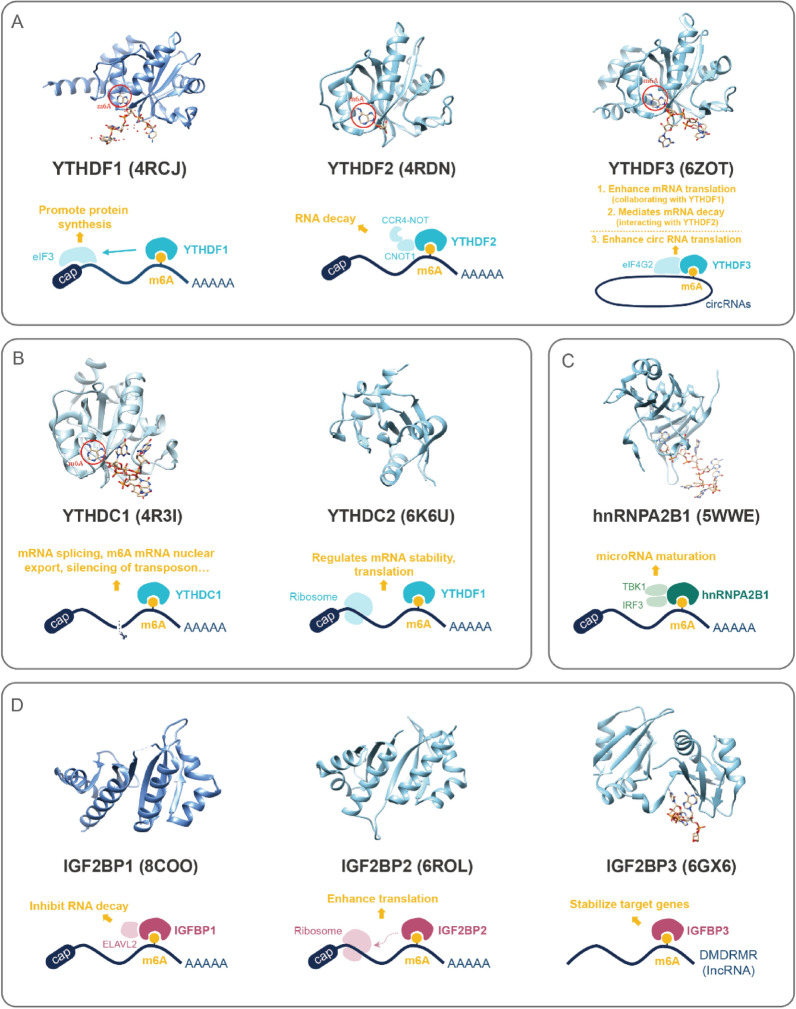
“Initially, the YTHDF family was believed to have distinct functions: YTHDF1 enhancing mRNA translation, YTHDF2 promoting mRNA degradation, and YTHDF3 modulating both translation and degradation [13, 32].”
BackgroundComprehensive Analysis of mRNA Methylation Reveals Enrichment in 3′ UTRs and near Stop Codons
Meyer, K. D., Saletore, Y., Zumbo, P., Elemento, O., Mason, C. E., & Jaffrey, S. R. (2012) · Cell · doi:10.1016/j.cell.2012.05.003 · Cited by 4,223 · cited 2×
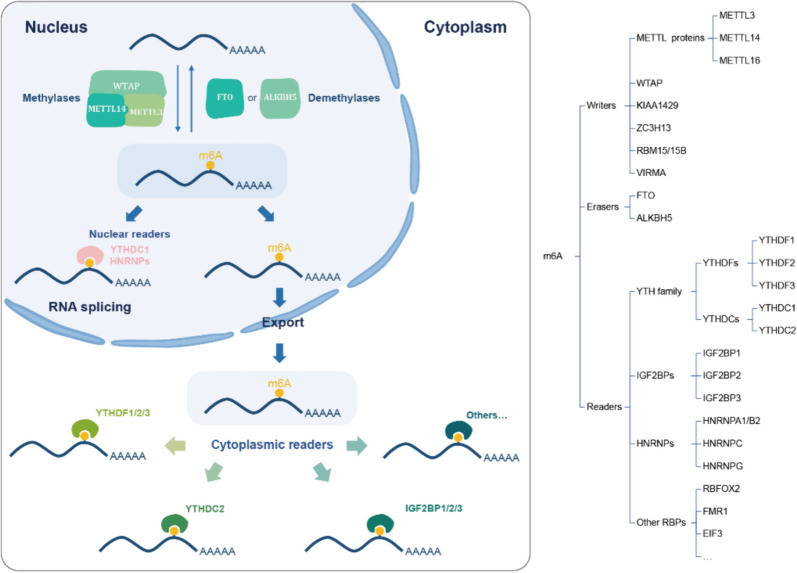
“This writer complex binds to the mRNAs and transfers the methyl group to the specific adenosines, which usually contain the RRACH motifs [15].”
BackgroundMethodN6-Methyladenosine in nuclear RNA is a major substrate of the obesity-associated FTO
Jia, G., Fu, Y., Zhao, X., Dai, Q., Zheng, G., Yang, Y., Yi, C., Lindahl, T., Pan, T., Yang, Y.-G., et al. (2011) · Nature Chemical Biology · doi:10.1038/nchembio.687 · Cited by 4,106
ALKBH5 Is a Mammalian RNA Demethylase that Impacts RNA Metabolism and Mouse Fertility
Zheng, G., Dahl, J. A., Niu, Y., Fedorcsak, P., Huang, C.-M., Li, C. J., Vågbø, C. B., Shi, Y., Wang, W.-L., Song, S.-H., et al. (2013) · Molecular Cell · doi:10.1016/j.molcel.2012.10.015 · Cited by 3,550 · cited 2×
“Demethylases (erasers), including AlkB homolog 5 protein (ALKBH5) and FTO, mediate the removal of m 6 A modifications [5, 8].”
BackgroundN6-methyladenosine Modulates Messenger RNA Translation Efficiency
Wang, X., Zhao, B. S., Roundtree, I. A., Lu, Z., Han, D., Ma, H., Weng, X., Chen, K., Shi, H., & He, C. (2015) · Cell · doi:10.1016/j.cell.2015.05.014 · Cited by 3,483
A METTL3–METTL14 complex mediates mammalian nuclear RNA N6-adenosine methylation
Liu, J., Yue, Y., Han, D., Wang, X., Fu, Y., Zhang, L., Jia, G., Yu, M., Lu, Z., Deng, X., et al. (2014) · Nature Chemical Biology · doi:10.1038/nchembio.1432 · Cited by 3,433 · cited 3×
“METTL14 enhances the catalytic activity of METTL3 and contributes to RNA binding and substrate specificity, thus stabilizing the complex and facilitating its function [7, 10, 20].”
BackgroundDynamic RNA Modifications in Gene Expression Regulation
Roundtree, I. A., Evans, M. E., Pan, T., & He, C. (2017) · Cell · doi:10.1016/j.cell.2017.05.045 · Cited by 3,399 · cited 2×
“METTL14 enhances the catalytic activity of METTL3 and contributes to RNA binding and substrate specificity, thus stabilizing the complex and facilitating its function [7, 10, 20].”
BackgroundRecognition of RNA N6-methyladenosine by IGF2BP proteins enhances mRNA stability and translation
Huang, H., Weng, H., Sun, W., Qin, X., Shi, H., Wu, H., Zhao, B. S., Mesquita, A., Liu, C., Yuan, C. L., et al. (2018) · Nature Cell Biology · doi:10.1038/s41556-018-0045-z · Cited by 2,997 · cited 1×
“Function-ally, IGF2BPs play pivotal roles in the post-transcriptional regulation of RNAs, including translational control, RNA stability, and RNA localization in neuronal cells [11, 46, 47] (Fig.”
BackgroundReading, writing and erasing mRNA methylation
Zaccara, S., Ries, R. J., & Jaffrey, S. R. (2019) · Nature Reviews Molecular Cell Biology · doi:10.1038/s41580-019-0168-5 · Cited by 2,597 · cited 2×
“…co-transcriptionally by a methyltransferase complex (MTC) consisting of the METTL3 catalytic component and other accessory subunits such as METTL14, Wilms Tumor 1-Associating Protein (WTAP), Vir-like m6A methyltransferase associated (VIRMA), and Zinc finger CCCH-Type containing 13 (ZC3H13) [18].”
BackgroundHematopoiesis: An Evolving Paradigm for Stem Cell Biology
Orkin, S. H., & Zon, L. I. (2008) · Cell · doi:10.1016/j.cell.2008.01.025 · Cited by 2,570 · cited 2×
“These HSCs originate from a specialized subset of endothelial cells, termed hematopoietic endothelial cells, which undergo the endothelial-hemat-opoietic transition (EHT) process for differentiation [61].”
BackgroundGlobal Burden of Disease Cancer Collaboration, Fitzmaurice, C., Abate, D., Abbasi, N., Abbastabar, H., Abd-Allah, F., Abdel-Rahman, O., Abdelalim, A., Abdoli, A., Abdollahpour, I., et al. (2019) · JAMA Oncology · doi:10.1001/jamaoncol.2019.2996 · Cited by 2,501
The role of m6A modification in the biological functions and diseases
Jiang, X., Liu, B., Nie, Z., Duan, L., Xiong, Q., Jin, Z., Yang, C., & Chen, Y. (2021) · Signal Transduction and Targeted Therapy · doi:10.1038/s41392-020-00450-x · Cited by 2,335 · cited 1×
“Each mRNA molecule, on average, contains three to five m 6 A modifications, which constitute approximately one-third of the total mammalian mRNAs [17].”
BackgroundSelf-citationThe cell biology of neurogenesis
Götz, M., & Huttner, W. B. (2005) · Nature Reviews Molecular Cell Biology · doi:10.1038/nrm1739 · Cited by 2,130 · cited 1×
“This dynamic process centers on neural stem cell development and occurs during both embryonic development and throughout an organism’s life [66].”
BackgroundNuclear m6A Reader YTHDC1 Regulates mRNA Splicing
Xiao, W., Adhikari, S., Dahal, U., Chen, Y.-S., Hao, Y.-J., Sun, B.-F., Sun, H.-Y., Li, A., Ping, X.-L., Lai, W.-Y., et al. (2016) · Molecular Cell · doi:10.1016/j.molcel.2016.01.012 · Cited by 2,054
Self-citationN6-methyladenosine-dependent RNA structural switches regulate RNA–protein interactions
Liu, N., Dai, Q., Zheng, G., He, C., Parisien, M., & Pan, T. (2015) · Nature · doi:10.1038/nature14234 · Cited by 1,988 · cited 2×
“These exposed sites can be recognized by HNRNPC, enabling its subsequent interaction with these m 6 A-modified RNAs [30].”
BackgroundExtensive translation of circular RNAs driven by N6-methyladenosine
Yang, Y., Fan, X., Mao, M., Song, X., Wu, P., Zhang, Y., Jin, Y., Yang, Y., Chen, L.-L., Wang, Y., et al. (2017) · Cell Research · doi:10.1038/cr.2017.31 · Cited by 1,855 · cited 1×
“Additionally, YTHDF3 recruits eIF4G2 to m 6 A sites, initiating the translation of circRNAs [32–34] (Fig.”
BackgroundYTHDF3 facilitates translation and decay of N6-methyladenosine-modified RNA
Shi, H., Wang, X., Lu, Z., Zhao, B. S., Ma, H., Hsu, P. J., Liu, C., & He, C. (2017) · Cell Research · doi:10.1038/cr.2017.15 · Cited by 1,815 · cited 2×
“Initially, the YTHDF family was believed to have distinct functions: YTHDF1 enhancing mRNA translation, YTHDF2 promoting mRNA degradation, and YTHDF3 modulating both translation and degradation [13, 32].”
BackgroundIdentification of Methylated Nucleosides in Messenger RNA from Novikoff Hepatoma Cells
Desrosiers, R., Friderici, K., & Rottman, F. (1974) · Proceedings of the National Academy of Sciences · doi:10.1073/pnas.71.10.3971 · Cited by 1,757 · cited 1×
“M 6 A modifications in mRNAs have been reported since the 1970s, while their key functions were not recognized until a deeper investigation into m 6 A-related enzymes was conducted [4].”
Backgroundm6A RNA methylation promotes XIST-mediated transcriptional repression
Patil, D. P., Chen, C.-K., Pickering, B. F., Chow, A., Jackson, C., Guttman, M., & Jaffrey, S. R. (2016) · Nature · doi:10.1038/nature19342 · Cited by 1,747 · cited 1×
“…UV Cross-Linking and Immunoprecipitation (CLIP) analysis of YTHDC2 binding sites across the transcriptome suggest a low overlap with m 6 A sites in mRNAs, hinting that YTHDC2 may recognize specific m 6 A sites or employ alternate binding mechanisms to modulate m 6 A-modified mRNAs [42].”
BackgroundDu, H., Zhao, Y., He, J., Zhang, Y., Xi, H., Liu, M., Ma, J., & Wu, L. (2016) · Nature Communications · doi:10.1038/ncomms12626 · Cited by 1,463 · cited 1×
“This interaction is responsible for recruiting subunits to form the CCR4-NOT complex, which leads to the de-adenylation and subsequent degradation of the bound m 6 A-modified mRNAs [30, 31].”
BackgroundFunctions of N6-methyladenosine and its role in cancer
He, L., Li, H., Wu, A., Peng, Y., Shu, G., & Yin, G. (2019) · Molecular Cancer · doi:10.1186/s12943-019-1109-9 · Cited by 1,397 · cited 1×
“Dysregulation of different m 6 A readers has been intensively studied in diverse disease conditions [23–25].”
BackgroundYTHDC1 mediates nuclear export of N6-methyladenosine methylated mRNAs
Roundtree, I. A., Luo, G.-Z., Zhang, Z., Wang, X., Zhou, T., Cui, Y., Sha, J., Huang, X., Guerrero, L., Xie, P., et al. (2017) · eLife · doi:10.7554/elife.31311 · Cited by 1,256
Bokar, J. A., Shambaugh, M. E., Polayes, D. A., Matera, A. G., & ROTTMAN, F. M. (1997) · PubMed Central · Cited by 1,123
The hnRNP family: insights into their role in health and disease
Geuens, T., Bouhy, D., & Timmerman, V. (2016) · Human Genetics · doi:10.1007/s00439-016-1683-5 · Cited by 1,093 · cited 1×
“HNRNPs comprise a diverse ensemble of RNA-binding proteins, encompassing approximately 20 unique proteins ubiquitously expressed in human tissues [48].”
BackgroundThe U6 snRNA m 6 A Methyltransferase METTL16 Regulates SAM Synthetase Intron Retention
Pendleton, K. E., Chen, B., Liu, K., Hunter, O. V., Xie, Y., Tu, B. P., & Conrad, N. K. (2017) · Cell · doi:10.1016/j.cell.2017.05.003 · Cited by 1,085
RNA N6-methyladenosine modification in cancers: current status and perspectives
Deng, X., Su, R., Weng, H., Huang, H., Li, Z., & Chen, J. (2018) · Cell Research · doi:10.1038/s41422-018-0034-6 · Cited by 845 · cited 1×
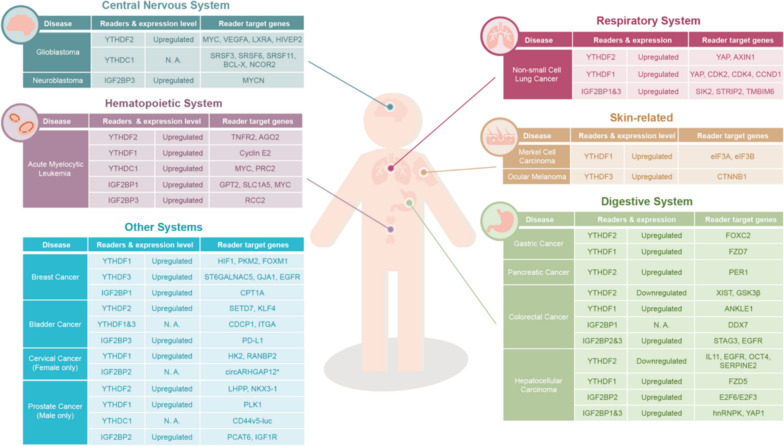
“Mis-regulation of these m 6 A readers contributes to different types of cancers, not only highlighting the importance of m 6 A-mediated regulation but also implying the m 6 A readers may serve as drug targets for cancer therapeutics [146] (Fig.”
BackgroundhnRNP complexes: composition, structure, and function
Krecic, A. M., & Swanson, M. S. (1999) · Current Opinion in Cell Biology · doi:10.1016/s0955-0674(99)80051-9 · Cited by 813 · cited 1×
“This domain enhances their association with specific RNA sequences or modifications including m 6 A [49].”
BackgroundA Unified Model for the Function of YTHDF Proteins in Regulating m6A-Modified mRNA
Zaccara, S., & Jaffrey, S. R. (2020) · Cell · doi:10.1016/j.cell.2020.05.012 · Cited by 797 · cited 1×
“However, subsequent studies have revealed that YTHDF proteins do not regulate HeLa cell translation, and during mRNA degradation, they bind to the same m 6 A-modified mRNAs rather than distinct ones [153].”
BackgroundBell, J. L., Wächter, K., Mühleck, B., Pazaitis, N., Köhn, M., Lederer, M., & Hüttelmaier, S. (2013) · Cellular and Molecular Life Sciences · doi:10.1007/s00018-012-1186-z · Cited by 783 · cited 1×
“Remarkably, IGF2BP1 and IGF2BP3 share up to about 73% of amino acid sequence homology [43].”
BackgroundCytoplasmic m6A reader YTHDF3 promotes mRNA translation
Li, A., Chen, Y.-S., Ping, X.-L., Yang, X., Xiao, W., Yang, Y., Sun, H.-Y., Zhu, Q., Baidya, P., Wang, X., et al. (2017) · Cell Research · doi:10.1038/cr.2017.10 · Cited by 764
Self-citationStructural basis for selective binding of m6A RNA by the YTHDC1 YTH domain
Xu, C., Wang, X., Liu, K., Roundtree, I. A., Tempel, W., Li, Y., Lu, Z., He, C., & Min, J. (2014) · Nature Chemical Biology · doi:10.1038/nchembio.1654 · Cited by 707 · cited 1×
“For instance, when methylated adenosine is at the 0 position, YTHDC1 shows a preference for guanine instead of adenine at the -1 position, which is attributed to the ability of guanine to establish hydrogen bonds with the V382 residue of the YTH domain in the YTHDC1 [28].”
BackgroundWarda, A. S., Kretschmer, J., Hackert, P., Lenz, C., Urlaub, H., Höbartner, C., Sloan, K. E., & Bohnsack, M. T. (2017) · EMBO reports · doi:10.15252/embr.201744940 · Cited by 642
Primary structure and binding activity of the hnRNP U protein: binding RNA through RGG box.
Kiledjian, M., & Dreyfuss, G. (1992) · The EMBO Journal · doi:10.1002/j.1460-2075.1992.tb05331.x · Cited by 629 · cited 1×
“Intriguingly, while the RGG box substantially augments the binding affinity between the proteins and RNAs, its influence on the specific binding of HNRNPG to RNA is comparatively marginal [52].”
Backgroundm6A-dependent maternal mRNA clearance facilitates zebrafish maternal-to-zygotic transition
Zhao, B. S., Wang, X., Beadell, A. V., Lu, Z., Shi, H., Kuuspalu, A., Ho, R. K., & He, C. (2017) · Nature · doi:10.1038/nature21355 · Cited by 564 · cited 2×
“These persistent mRNAs were primarily associated with pathways involved in transcriptional regulation, consequently disturbing the transcriptome of both round spermatids and elongated spermatids [55].”
BackgroundKasowitz, S. D., Ma, J., Anderson, S. J., Leu, N. A., Xu, Y., Gregory, B. D., Schultz, R. M., & Wang, P. J. (2018) · PLOS Genetics · doi:10.1371/journal.pgen.1007412 · Cited by 550
m6A facilitates hippocampus-dependent learning and memory through YTHDF1
Shi, H., Zhang, X., Weng, Y.-L., Lu, Z., Liu, Y., Lu, Z., Li, J., Hao, P., Zhang, Y., Zhang, F., et al. (2018) · Nature · doi:10.1038/s41586-018-0666-1 · Cited by 546 · cited 2×
“This decrease in protein levels is a direct consequence of YTHDF1 loss, indicating its pivotal role in promoting the translation of transcripts relevant to neuronal function [69].”
BackgroundYang, X., Zhang, S., He, C., Xue, P., Zhang, L., He, Z., Zang, L., Feng, B., Sun, J., & Zheng, M. (2020) · Molecular Cancer · doi:10.1186/s12943-020-1146-4 · Cited by 513 · cited 1×
“YTHDF2 is detected to be downregulated in colorectal cancer (CRC), and it has been found to mediate the degradation of X inactivate-specific transcript (XIST), a long non-coding RNA, which may contribute to accelerated tumor growth and metastasis in CRC [89].”
BackgroundParis, J., Morgan, M., Campos, J., Spencer, G. J., Shmakova, A., Ivanova, I., Mapperley, C., Lawson, H., Wotherspoon, D. A., Sepulveda, C., et al. (2019) · Cell Stem Cell · doi:10.1016/j.stem.2019.03.021 · Cited by 502 · cited 1×
“By binding to Tumor Necrosis Factor Receptor 2 (TNFR2), YTHDF2 accelerates the degradation of TNFR2 mRNAs, thus inhibiting the TNF signaling pathway and participating in AML progression [105].”
Wojtas, M. N., Pandey, R. R., Mendel, M., Homolka, D., Sachidanandam, R., & Pillai, R. S. (2017) · Molecular Cell · doi:10.1016/j.molcel.2017.09.021 · Cited by 450
Grand Challenge Commentary: RNA epigenetics?
He, C. (2010) · Nature Chemical Biology · doi:10.1038/nchembio.482 · Cited by 440
Chang, G., Shi, L., Ye, Y., Shi, H., Zeng, L., Tiwary, S., Huse, J. T., Huo, L., Ma, L., Ma, Y., et al. (2020) · Cancer Cell · doi:10.1016/j.ccell.2020.10.004 · Cited by 412 · cited 2×
“Many m 6 A readers have been proven to be associated with distant metastasis of breast cancer and are considered promising prognostic biomarkers and therapeutic targets for breast cancer, here IGF2BP1 and YTHDF3 are examples [138–140].”
BackgroundRNA m6A methylation across the transcriptome
Sendinc, E., & Shi, Y. (2023) · Molecular Cell · doi:10.1016/j.molcel.2023.01.006 · Cited by 411 · cited 1×
“These modifications fine-tune RNA structures and functions, thereby influencing gene expression and regulation [1, 2].”
BackgroundDixit, D., Prager, B. C., Gimple, R. C., Poh, H. X., Wang, Y., Wu, Q., Qiu, Z., Kidwell, R. L., Kim, L. J. Y., Xie, Q., et al. (2021) · Cancer Discovery · doi:10.1158/2159-8290.cd-20-0331 · Cited by 410 · cited 1×
“In glioblastoma stem cells, YTHDF2 plays a role in maintaining its oncogenic phenotype by stabilizing MYC and Vascular Endothelial Growth Factor (VEGF) [117].”
BackgroundGuo, X., Li, K., Jiang, W., Hu, Y., Xiao, W., Huang, Y., Feng, Y., Pan, Q., & Wan, R. (2020) · Molecular Cancer · doi:10.1186/s12943-020-01158-w · Cited by 398 · cited 1×
“Furthermore, the upregulation of PER1 reactivates the ATM-CHK2-P53/CDC25C signaling pathway, suppressing tumor cell growth [88].”
BackgroundMethylation of Structured RNA by the m6A Writer METTL16 Is Essential for Mouse Embryonic Development
Mendel, M., Chen, K.-M., Homolka, D., Gos, P., Pandey, R. R., McCarthy, A. A., & Pillai, R. S. (2018) · Molecular Cell · doi:10.1016/j.molcel.2018.08.004 · Cited by 397 · cited 1×
“METTL16, on the other hand, is involved in methylating specific mRNAs, lncRNAs, and U6 small nuclear RNAs (snRNAs), as well as regulating S-adenosylmethio-nine (SAM) homeostasis [6, 21, 22].”
BackgroundYTH Domain: A Family of N 6-Methyladenosine (m 6 A) Readers
Liao, S., Sun, H., & Xu, C. (2018) · Genomics, Proteomics & Bioinformatics · doi:10.1016/j.gpb.2018.04.002 · Cited by 396
Zhang, C., Huang, S., Zhuang, H., Ruan, S., Zhou, Z., Huang, K., Ji, F., Ma, Z., Hou, B., & He, X. (2020) · Oncogene · doi:10.1038/s41388-020-1303-7 · Cited by 393 · cited 2×
“Contrary to the above, there is an alternative perspective suggesting that YTHDF2 should be regarded as an onco-gene in HCC development, for the deletion of YTHDF2 can decrease POU5F1 translation in an m 6 A-dependent manner, thereby inhibiting the stemness of cancer stem cells [96].”
BackgroundSelf-citationIvanova, I., Much, C., Di Giacomo, M., Azzi, C., Morgan, M., Moreira, P. N., Monahan, J., Carrieri, C., Enright, A. J., & O’Carroll, D. (2017) · Molecular Cell · doi:10.1016/j.molcel.2017.08.003 · Cited by 392
Zhong, L., Liao, D., Zhang, M., Zeng, C., Li, X., Zhang, R., Ma, H., & Kang, T. (2019) · Cancer Letters · doi:10.1016/j.canlet.2018.11.006 · Cited by 372 · cited 2×
“Additionally, the expression of YTHDF2 exhibits an inverse relationship with HCC cell proliferation, achieved through the activation of MEK and ERK signaling pathways and the destabilization of the Epidermal Growth Factor Receptor (EGFR) mRNA [95].”
BackgroundThe RNA m6A reader YTHDC1 silences retrotransposons and guards ES cell identity
Liu, J., Gao, M., He, J., Wu, K., Lin, S., Jin, L., Chen, Y., Liu, H., Shi, J., Wang, X., et al. (2021) · Nature · doi:10.1038/s41586-021-03313-9 · Cited by 365
Self-citationThe roles and implications of RNA m6A modification in cancer
Deng, X., Qing, Y., Horne, D., Huang, H., & Chen, J. (2023) · Nature Reviews Clinical Oncology · doi:10.1038/s41571-023-00774-x · Cited by 364 · cited 1×
“3) [25, 82].”
YTHDF1 links hypoxia adaptation and non-small cell lung cancer progression
Shi, Y., Fan, S., Wu, M., Zuo, Z., Li, X., Jiang, L., Shen, Q., Xu, P., Zeng, L., Zhou, Y., et al. (2019) · Nature Communications · doi:10.1038/s41467-019-12801-6 · Cited by 363 · cited 2×
“In addition, another investigation has demonstrated the m 6 A-dependent role of YTHDF1 in regulating the translation efficiency of cyclin-dependent kinase 2 (CDK2), CDK4, and cyclin D1 (CCND1), thereby exerting control of NSCLC cell proliferation and xenograft tumor formation [124].”
BackgroundSelf-citationYTHDF2 reduction fuels inflammation and vascular abnormalization in hepatocellular carcinoma
Hou, J., Zhang, H., Liu, J., Zhao, Z., Wang, J., Lu, Z., Hu, B., Zhou, J., Zhao, Z., Feng, M., et al. (2019) · Molecular Cancer · doi:10.1186/s12943-019-1082-3 · Cited by 361 · cited 1×
“The underlying mechanisms involve YTHDF2 facilitating the decay of interleukin 11 (IL11) and serpin family E member 2 (SERPINE2) mRNAs [97].”
BackgroundYthdf2-mediated m6A mRNA clearance modulates neural development in mice
Li, M., Zhao, X., Wang, W., Shi, H., Pan, Q., Lu, Z., Perez, S. P., Suganthan, R., He, C., Bjørås, M., et al. (2018) · Genome Biology · doi:10.1186/s13059-018-1436-y · Cited by 353 · cited 5×
“Notably, YTHDF2-deficient NSPCs retain their ability to undergo neuronal differentiation in vitro; however, their capacity to differentiate into glial cells becomes impaired, indicating a bias towards neuronal lineage differentiation [67].”
BackgroundInfluentialJin, D., Guo, J., Wu, Y., Yang, L., Wang, X., Du, J., Dai, J., Chen, W., Gong, K., Miao, S., et al. (2020) · Molecular Cancer · doi:10.1186/s12943-020-01161-1 · Cited by 344 · cited 4×
“YTHDF2, a prominent player in the regulation of post-transcriptional events, has emerged as a key modulator of YAP mRNA degradation in the context of non-small cell lung cancer (NSCLC) [122, 123].”
BackgroundInfluentialWeng, H., Huang, F., Yu, Z., Chen, Z., Prince, E., Kang, Y., Zhou, K., Li, W., Hu, J., Fu, C., et al. (2022) · Cancer Cell · doi:10.1016/j.ccell.2022.10.004 · Cited by 336 · cited 1×
“This regulatory process can be inhibited by the small molecule drug CWI1-2 [114].”
BackgroundLi, J., Xie, H., Ying, Y., Chen, H., Yan, H., He, L., Xu, M., Xu, X., Liang, Z., Liu, B., et al. (2020) · Molecular Cancer · doi:10.1186/s12943-020-01267-6 · Cited by 333
Degrauwe, N., Suvà, M.-L., Janiszewska, M., Riggi, N., & Stamenkovic, I. (2016) · Genes & Development · doi:10.1101/gad.287540.116 · Cited by 324 · cited 1×
“Their protein domains are similarly organized in terms of order and spacing, each featuring two RNA-recognition motifs (RRMs) at the N-terminus and four KH domains at the C-terminus [44].”
BackgroundControl of c-myc mRNA stability by IGF2BP1-associated cytoplasmic RNPs
Weidensdorfer, D., Stöhr, N., Baude, A., Lederer, M., Köhn, M., Schierhorn, A., Buchmeier, S., Wahle, E., & Hüttelmaier, S. (2009) · RNA · doi:10.1261/rna.1175909 · Cited by 318 · cited 2×
“Enriched in testes and function in both the cytoplasm and nucleus, YTHDC2 primarily regulates mRNA stability and translation [40, 41].”
BackgroundTiruchinapalli, D. M., Oleynikov, Y., Kelič, S., Shenoy, S. M., Hartley, A., Stanton, P. K., Singer, R. H., & Bassell, G. J. (2003) · The Journal of Neuroscience · doi:10.1523/jneurosci.23-08-03251.2003 · Cited by 315 · cited 1×
“Function-ally, IGF2BPs play pivotal roles in the post-transcriptional regulation of RNAs, including translational control, RNA stability, and RNA localization in neuronal cells [11, 46, 47] (Fig.”
BackgroundFang, R., Chen, X., Zhang, S., Shi, H., Ye, Y., Shi, H., Zou, Z., Li, P., Guo, Q., Ma, L., et al. (2021) · Nature Communications · doi:10.1038/s41467-020-20379-7 · Cited by 312 · cited 1×
“The degradation of these specific mRNAs leads to cholesterol dysregulation, cell proliferation, invasion, and tumorigenesis of glioblastoma [118].”
BackgroundWang, Q., Guo, X., Li, L., Gao, Z., Su, X., Ji, M., & Liu, J. (2020) · Cell Death & Disease · doi:10.1038/s41419-020-03071-y · Cited by 308 · cited 1×
“Since the Warburg effect is known as a typical hallmark of cancer metabolism, its increase is associated with tumorigenesis [141].”
BackgroundN6-methyladenosine of HIV-1 RNA regulates viral infection and HIV-1 Gag protein expression
Tirumuru, N., Zhao, B. S., Lu, W., Lu, Z., He, C., & Wu, L. (2016) · eLife · doi:10.7554/elife.15528 · Cited by 290 · cited 3×
“Consequently, YTHDF proteins act as negative regulators of post-entry HIV-1 infection, providing a potential avenue for therapeutic interventions targeting the m 6 A-modified viral RNA [148].”
BackgroundInfluentialAbnormality of m6A mRNA methylation is involved in Alzheimer’s disease
Han, M., Liu, Z., Xu, Y., Liu, X., Wang, D., Li, F., Wang, Y., & Bi, J. (2020) · Frontiers in Neuroscience · doi:10.3389/fnins.2020.00098 · Cited by 286 · cited 1×
“YTHDF1 has emerged as a critical factor in the regulation of hippocampus-dependent learning and memory processes in mice [68, 69].”
BackgroundZhang, C., Zhang, M., Ge, S., Huang, W., Lin, X., Gao, J., Gong, J., & Shen, L. (2019) · Cancer Medicine · doi:10.1002/cam4.2360 · Cited by 283 · cited 1×
“It is supported by the evidence that up-regulated YTHDF2 is associated with prolonged survival in GC patients [84].”
Backgroundm6A RNA modifications are measured at single-base resolution across the mammalian transcriptome
Hu, L., Liu, S., Peng, Y., Ge, R., Su, R., Senevirathne, C., Harada, B. T., Dai, Q., Wei, J., Zhang, L., et al. (2022) · Nature Biotechnology · doi:10.1038/s41587-022-01243-z · Cited by 272 · cited 1×
“…A-seq meth-ods like m 6 A-Selective Allyl Chemical labeling and sequencing (m 6 A-SAC-seq) and evolved TadA-assisted N6-methyladenosine sequencing (eTAM-seq), we can now use clinical samples to create detailed maps of m 6 A modifications within transcriptomes with single-base resolution [77, 156].”
MethodYTHDF1 Regulates Tumorigenicity and Cancer Stem Cell-Like Activity in Human Colorectal Carcinoma
Bai, Y., Yang, C., Wu, R., Huang, L., Song, S., Li, W., Yan, P., Lin, C., Li, D., & Zhang, Y. (2019) · Frontiers in Oncology · doi:10.3389/fonc.2019.00332 · Cited by 267 · cited 1×
“Its gene copy number positively correlates with mRNA and protein expression levels in CRC. Perti-nently, knocking down of YTHDF1 inhibits tumorigenicity in vitro and effectively suppresses murine xenograft tumor growth in vivo, by disrupting the Wnt/β-Catenin pathway [91].”
BackgroundN6-Methyladenosine Modulates Nonsense-Mediated mRNA Decay in Human Glioblastoma
Li, F., Yi, Y., Miao, Y., Long, W., Long, T., Chen, S., Cheng, W., Zou, C., Zheng, Y., Wu, X., et al. (2019) · Cancer Research · doi:10.1158/0008-5472.can-18-2868 · Cited by 247 · cited 2×
“This process affects target mRNA alternative splicing, including BCL-X and nuclear receptor corepressor 2 (NCOR2), consequently contributing to the glioblastoma phenotype [119].”
BackgroundSelf-citationCheng, Y., Xie, W., Pickering, B. F., Chu, K. L., Savino, A. M., Yang, X., Luo, H., Nguyen, D. T., Mo, S., Barin, E., et al. (2021) · Cancer Cell · doi:10.1016/j.ccell.2021.04.017 · Cited by 245
Kretschmer, J., Rao, H., Hackert, P., Sloan, K. E., Höbartner, C., & Bohnsack, M. T. (2018) · RNA · doi:10.1261/rna.064238.117 · Cited by 243 · cited 2×
“Enriched in testes and function in both the cytoplasm and nucleus, YTHDC2 primarily regulates mRNA stability and translation [40, 41].”
BackgroundYTHDF1 Promotes Gastric Carcinogenesis by Controlling Translation of FZD7
Pi, J., Wang, W., Ji, M., Wang, X., Wei, X., Jin, J., Liu, T., Qiang, J., Qi, Z., Li, F., et al. (2021) · Cancer Research · doi:10.1158/0008-5472.can-20-0066 · Cited by 241 · cited 1×
“Upregulation of YTHDF1 promotes increased FZD7 expression, consequently leading to the hyperactivation of the Wnt/β-Catenin pathway and facilitating the pathogenesis of GC [85].”
BackgroundSelf-citationRole of m6A writers, erasers and readers in cancer
Fang, Z., Mei, W., Qu, C., Lu, J., Shang, L., Cao, F., & Li, F. (2022) · Experimental Hematology & Oncology · doi:10.1186/s40164-022-00298-7 · Cited by 241
Dynamic regulation and functions of mRNA m6A modification
Wang, S., Lv, W., Li, T., Zhang, S., Wang, H., Li, X., Wang, L., Ma, D., Zang, Y., Shen, J., et al. (2022) · Cancer Cell International · doi:10.1186/s12935-022-02452-x · Cited by 227 · cited 1×
“Interestingly, m 6 A was found to be predominantly enriched in regions such as the 3 ′ untranslated regions (3 ′ UTRs) and in proximity to stop codons, a feature that is highly conserved in different species [16].”
BackgroundMa, S., Sun, B., Duan, S., Han, J., Barr, T., Zhang, J., Bissonnette, M. B., Kortylewski, M., He, C., Chen, J., et al. (2023) · Nature Immunology · doi:10.1038/s41590-022-01398-6 · Cited by 225
Feng, M., Xie, X., Han, G., Zhang, T., Li, Y., Li, Y., Yin, R., Wang, Q., Zhang, T., Wang, P., et al. (2021) · Blood · doi:10.1182/blood.2020009676 · Cited by 213
Eom, T., Antar, L. N., Singer, R. H., & Bassell, G. J. (2003) · The Journal of Neuroscience · doi:10.1523/jneurosci.23-32-10433.2003 · Cited by 212 · cited 3×
“Notably, the phosphorylation of IGF2BP1 by SRC kinase facilitates the release of ACTB mRNAs, enabling its translation and local enrichment within specific subcellular compartments, and facilitating growth cone guidance, a fundamental process in neural development and synaptic connectivity [71].”
BackgroundInfluentialChen, J., Sun, Y., Xu, X., Wang, D., He, J., Zhou, H., Lu, Y., Zeng, J., Du, F., Gong, A., et al. (2017) · Cell Cycle · doi:10.1080/15384101.2017.1380125 · Cited by 209 · cited 1×
“Functionally, YTHDF2 plays a dual role in PC cells, promoting proliferation while inhibiting migration and invasion [87].”
BackgroundXiao, Y.-L., Liu, S., Ge, R., Wu, Y., He, C., Chen, M., & Tang, W. (2023) · Nature Biotechnology · doi:10.1038/s41587-022-01587-6 · Cited by 201
Liu, X., He, H., Zhang, F., Hu, X., Bi, F., Li, K., Yu, H., Zhao, Y., Teng, X., Li, J., et al. (2022) · Cell Death & Disease · doi:10.1038/s41419-022-04950-2 · Cited by 199 · cited 2×
“The circARHGAP12, marked with an asterisk (*) in the figure, is a circRNA IGF2BPs enhance the aggressiveness of CRC cells and promote vasculogenic mimicry [93, 94].”
BackgroundHartmann, A. M., Nayler, O., Schwaiger, F. W., Obermeier, A., & Stamm, S. (1999) · Molecular Biology of the Cell · doi:10.1091/mbc.10.11.3909 · Cited by 195 · cited 1×
“YTHDC1 is one of the m 6 A readers which localized in the nucleus [35] (Fig.”
BackgroundJin, H., Ying, X., Que, B., Wang, X., Chao, Y., Zhang, H., Yuan, Z., Qi, D., Lin, S., Min, W., et al. (2019) · EBioMedicine · doi:10.1016/j.ebiom.2019.07.068 · Cited by 195 · cited 2×
“This enhanced translation leads to an upregulation of ITGA expression, which in turn contributes to the promotion of BC cell growth [129].”
BackgroundYang, F., Jin, H., Que, B., Chao, Y., Zhang, H., Ying, X., Zhou, Z., Yuan, Z., Su, J., Wu, B., et al. (2019) · Oncogene · doi:10.1038/s41388-019-0755-0 · Cited by 183 · cited 2×
“YTHDF1 has been demonstrated to play a vital role in promoting BC progression [128, 129].”
BackgroundSelf-citationIGFBP2: integrative hub of developmental and oncogenic signaling network
Li, T., Forbes, M. E., Fuller, G. N., Li, J., Yang, X., & Zhang, W. (2020) · Oncogene · doi:10.1038/s41388-020-1154-2 · Cited by 175 · cited 1×
“For instance, IGF2BP proteins stabilize Insulin-like Growth Factor 2 (IGF2) mRNA, enhancing its role in the IGF signaling pathway, thereby influencing glucose metabolism [154, 155].”
BackgroundPalanichamy, J. K., Tran, T. M., Howard, J. M., Contreras, J. R., Fernando, T. R., Sterne-Weiler, T., Katzman, S., Toloue, M., Yan, W., Basso, G., et al. (2016) · Journal of Clinical Investigation · doi:10.1172/jci80046 · Cited by 168 · cited 1×
“Tumor cells with knock-out IGF2BP3 displayed increased apoptosis and reduced proliferation [116].”
Backgroundm6A reader YTHDC1 modulates autophagy by targeting SQSTM1 in diabetic skin
Liang, D., Lin, W.-J., Ren, M., Qiu, J., Yang, C., Wang, X., Li, N., Zeng, T., Sun, K., You, L., et al. (2022) · Autophagy · doi:10.1080/15548627.2021.1974175 · Cited by 168 · cited 1×
“It was discovered that YTHDC1, in collaboration with ELAV-like RNA binding protein 1 (ELAVL1)/HuR, regulates the stability of SQSTM1 nuclear mRNA in diabetic keratinocytes, which affects the autophagy and the wound healing rate of diabetic skin [150].”
BackgroundChen, C., Liu, W., Guo, J., Liu, Y., Liu, X., Liu, J., Dou, X., Le, R., Huang, Y., Li, C., et al. (2021) · Protein & Cell · doi:10.1007/s13238-021-00837-8 · Cited by 165 · cited 1×
“YTHDF1 depletion disrupts these processes, leading to increased transcriptional activities [60].”
BackgroundLang, C., Yin, C., Lin, K., Li, Y., Yang, Q., Wu, Z., Du, H., Ren, D., Dai, Y., & Peng, X. (2021) · Clinical and Translational Medicine · doi:10.1002/ctm2.426 · Cited by 158 · cited 3×
“Functional studies have demonstrated a significant inhibition of PCa cell invasion, migration, and proliferation upon knock-down of IGF2BP2 in vitro [134].”
BackgroundInfluentialMETTL3/YTHDF2 m 6 A axis promotes tumorigenesis by degrading SETD7 and KLF4 mRNAs in bladder cancer
Xie, H., Li, J., Ying, Y., Yan, H., Jin, K., Ma, X., He, L., Xu, X., Liu, B., Wang, X., et al. (2020) · Journal of Cellular and Molecular Medicine · doi:10.1111/jcmm.15063 · Cited by 155 · cited 1×
“Notably, according to the analysis of MeRIP and RIP, it has been revealed that the METTL3/YTHDF2 axis plays a critical role in the degradation of the mRNAs of tumor suppressors including SET Domain Containing 7 (SETD7) and KLF4, which potentially contributes to the progression of BC [127].”
MethodYTHDF1 promotes breast cancer cell growth, DNA damage repair and chemoresistance
Sun, Y., Dong, D. F., Xia, Y., Hao, L., Wang, W., & Zhao, C. (2022) · Cell Death and Disease · doi:10.1038/s41419-022-04672-5 · Cited by 149 · cited 1×
“The deficiency of YTHDF1 accelerates the growth of breast cancer cells both in vitro and in vivo, suggesting its possible role as an oncogenic factor in breast cancer [135].”
BackgroundElcheva, I. A., Wood, T., Chiarolanzio, K., Chim, B., Wong, M., Singh, V., Gowda, C. P., Lu, Q., Hafner, M., Dovat, S., et al. (2020) · Leukemia · doi:10.1038/s41375-019-0656-9 · Cited by 146 · cited 1×
“This interaction not merely promotes bone marrow differentiation but also enhances the susceptibility of leukemia cells to chemotherapeutic agents [113].”
BackgroundControl of Early B Cell Development by the RNA N6-Methyladenosine Methylation
Zheng, Z., Zhang, L., Cui, X., Yu, X., Hsu, P. J., Lyu, R., Tan, H., Mandal, M., Zhang, M. H., Sun, H., et al. (2020) · Cell Reports · doi:10.1016/j.celrep.2020.107819 · Cited by 144
Mapperley, C., van de Lagemaat, L. N., Lawson, H., Tavosanis, A., Paris, J., Campos, J., Wotherspoon, D., Durko, J., Sarapuu, A., Choe, J., et al. (2020) · The Journal of Experimental Medicine · doi:10.1084/jem.20200829 · Cited by 142 · cited 3×
“In YTHDF2-defi-cient HSC mouse models, young mice demonstrated increased levels of multiple m 6 A-modified inflammatory transcripts, while older mice faced difficulties in multilineage hematopoiesis [62].”
BackgroundInfluentialNielsen, J. (2004) · Nucleic Acids Research · doi:10.1093/nar/gkh754 · Cited by 139 · cited 1×
“The KH domains are primarily responsible for RNA binding, while the RRM domains contribute to the stabilization of IGF2BP-RNA complexes, with a half-life exceeding 2 h [45, 46].”
BackgroundReaders, writers and erasers of N6-methylated adenosine modification
Wu, B., Li, L., Huang, Y., Ma, J., & Min, J. (2017) · Current Opinion in Structural Biology · doi:10.1016/j.sbi.2017.05.011 · Cited by 137 · cited 2×
“On the contrary, the absence of methylation on adenosine weakens the interaction between the YTH domain and m 6 A-modified RNAs [9, 26, 27].”
BackgroundN6-methyladenosine reader YTHDF family in biological processes: Structures, roles, and mechanisms
Chen, L., Gao, Y., Xu, S., Yuan, J., Wang, M., Li, T., & Gong, J. (2023) · Frontiers in Immunology · doi:10.3389/fimmu.2023.1162607 · Cited by 137 · cited 1×
“Each protein is characterized by a C-terminal YTH domain and an N-terminal domain enriched with proline, glutamine, and asparagine residues [29].”
BackgroundMüller, S., Bley, N., Glaß, M., Busch, B., Rousseau, V., Misiak, D., Fuchs, T., Lederer, M., & Hüttelmaier, S. (2018) · Nucleic Acids Research · doi:10.1093/nar/gky229 · Cited by 135 · cited 1×
“IGF2BP1 has been identified as promoting the expression of oncogenic factors by counteracting miRNA-mediated suppression in cancer [112].”
BackgroundXia, A., Yuan, W., Wang, Q., Xu, J., Gu, Y., Zhang, L., Chen, C., Wang, Z., Wu, D., He, Q., et al. (2022) · Nature Cancer · doi:10.1038/s43018-021-00315-4 · Cited by 134 · cited 2×
“Studies investigating the cancer-testis-associated long non-coding RNA, namely lnc-CTHCC, have revealed the substantial involvement of IGF2BPs in HCC [102].”
BackgroundWu, R., Liu, Y., Zhao, Y., Bi, Z., Yao, Y., Liu, Q., Wang, F., Wang, Y., & Wang, X. (2019) · Cell Death and Disease · doi:10.1038/s41419-019-1417-4 · Cited by 132 · cited 2×
“The deficiency of m 6 A in piPSCs negatively impacts self-renewal ability and enhances the initiation of the differentiation process in an m 6 A reader-dependent manner [58, 59].”
BackgroundThe m6A reader IGF2BP3 promotes acute myeloid leukemia progression by enhancing RCC2 stability
Zhang, N., Shen, Y., Li, H., Chen, Y., Zhang, P., Lou, S., & Deng, J. (2022) · Experimental & Molecular Medicine · doi:10.1038/s12276-022-00735-x · Cited by 130 · cited 1×
“Additionally, IGF2BP3 accelerates the progression of AML by enhancing the Regulator of Chromosome Condensation 2 (RCC2) stability [115].”
BackgroundSelf-citationLi, Y., Sheng, H., Ma, F., Wu, Q., Huang, J., Chen, Q., Sheng, L., Zhu, X., Zhu, X., & Xu, M. (2021) · Cell Death and Disease · doi:10.1038/s41419-021-03763-z · Cited by 129 · cited 2×
“Consequently, this molecular mechanism contributes to promoting lung adenocarcinoma (LUAD) progression [123].”
BackgroundYin, R., Chang, J., Li, Y., Gao, Z., Qiu, Q., Wang, Q., Han, G., Chai, J., Feng, M., Wang, P., et al. (2022) · Cell Stem Cell · doi:10.1016/j.stem.2021.09.014 · Cited by 119 · cited 3×
“Consequently, this controls mitochondrial activity, acting as a safeguard against the degradation of HSC functionality [65].”
BackgroundInfluentialStructural Insights into N 6 -Methyladenosine (m 6 A) Modification in the Transcriptome
Huang, J. B., & Yin, P. (2018) · Genomics Proteomics & Bioinformatics · doi:10.1016/j.gpb.2018.03.001 · Cited by 115
Chen, H., Yu, Y., Yang, M., Huang, H., Ma, S., Hu, J., Xi, Z., Guo, H., Yao, G., Yang, L. S., et al. (2022) · Cell & Bioscience · doi:10.1186/s13578-022-00759-w · Cited by 112 · cited 1×
“The overexpression of FOXM1 in breast cancer cells partially offset the tumor suppressor impact of YTHDF1 silencing [137].”
BackgroundRole of m6A modification in female infertility and reproductive system diseases
Chen, J., Fang, Y., Xu, Y., & Sun, H. (2022) · International Journal of Biological Sciences · doi:10.7150/ijbs.69771 · Cited by 106 · cited 1×
“YTHDC1 is crucial for the development of spermato-gonia in males and the growth and maturation of oocytes in females [78–80].”
BackgroundYao, X., Li, W., Li, L., Li, M., Zhao, Y., Fang, D., Zeng, X., & Luo, Z. Y. (2022) · Cell Death and Disease · doi:10.1038/s41419-022-04711-1 · Cited by 105 · cited 1×
“PKM2 is then upregulated, which promotes tumor glycolysis and ultimately increases the tumo-rigenic and metastatic potential of breast cancer cells [136].”
BackgroundShi, J., Zhang, Q., Yin, X., Ye, J., Gao, S.-Q., Chen, C., Yang, Y., Wu, B., Fu, Y., Zhang, H., et al. (2022) · International Journal of Biological Sciences · doi:10.7150/ijbs.76798 · Cited by 104 · cited 3×
“IGF2BP1 is stabilized by deu-biquitination mediated by Ubiquitin-Specific Peptidase 10 (USP10), resulting in its elevated expression in breast cancer [140].”
BackgroundThe RNA m6A Reader YTHDF1 Is Required for Acute Myeloid Leukemia Progression
Hong, Y., Yang, Z., Chen, Y., Liu, T., Zheng, Y., Zhou, C., Wu, G.-C., Chen, Y., Xia, J., Wen, R., et al. (2023) · Cancer Research · doi:10.1158/0008-5472.can-21-4249 · Cited by 102 · cited 3×
“Subsequent investigations revealed that YTHDF1 promotes the translation of Cyc-lin E2 in an m 6 A-dependent manner, thereby influencing the normal cell cycle [108].”
BackgroundInfluentialSelf-citationZhang, M., Zhai, Y., Zhang, S., Dai, X., & Li, Z. (2020) · Frontiers in Cell and Developmental Biology · doi:10.3389/fcell.2020.00782 · Cited by 98
Chen, X., Liang, R., Yi, Y.-C., Fan, H., Chen, M., Zhang, J., & Zhu, J. (2021) · Frontiers in Cell and Developmental Biology · doi:10.3389/fcell.2021.647702 · Cited by 98
Ythdf m6A Readers Function Redundantly during Zebrafish Development
Kontur, C., Jeong, M., Cifuentes, D., & Giraldez, A. J. (2020) · Cell Reports · doi:10.1016/j.celrep.2020.108598 · Cited by 94 · cited 3×
“Interestingly, the absence of YTHDC1 leads to significant changes in alternative polyadenylation, resulting in alterations in the length of the 3’UTR of mRNAs [81].”
BackgroundInfluentialFMRP phosphorylation modulates neuronal translation through YTHDF1
Zou, Z., Wei, J., Chen, Y., Kang, Y., Shi, H., Yang, F., Shi, Z., Chen, S., Zhou, Y., Sepich‐Poore, C., et al. (2023) · Molecular Cell · doi:10.1016/j.molcel.2023.10.028 · Cited by 94
Self-citationZhou, Y., Yan, J., Huang, H., Liu, L., Ren, L., Hu, J., Jiang, X., Zheng, Y., Xu, L., Zhong, F., et al. (2024) · Cell Death & Disease · doi:10.1038/s41419-024-06509-9 · Cited by 92 · cited 1×
“For instance, IGF2BP proteins stabilize Insulin-like Growth Factor 2 (IGF2) mRNA, enhancing its role in the IGF signaling pathway, thereby influencing glucose metabolism [154, 155].”
BackgroundYTHDF1 Aggravates the Progression of Cervical Cancer Through m6A-Mediated Up-Regulation of RANBP2
Wang, H., Luo, Q., Kang, J., Wei, Q., Yu, Y., Yang, D., Liu, X., Liu, T., & Yi, P. (2021) · Frontiers in Oncology · doi:10.3389/fonc.2021.650383 · Cited by 91 · cited 1×
“YTHDF1 regulates the translation of RANBP2 in an m 6 A-dependent manner, but not its mRNA expression, thereby affecting cervical cancer cell growth, migration, and invasion [142].”
BackgroundDou, X., Xiao, Y., Shen, C., Wang, K., Wu, T., Liu, C., Li, Y., Yu, X., Liu, J., Dai, Q., et al. (2023) · Nature Cell Biology · doi:10.1038/s41556-023-01213-w · Cited by 90 · cited 2×
“With this binding structural characteristic, RBFOX2 can increase chromatin accessibility in an m 6 A-dependent manner, further influencing RNA methylation levels and RNA abundance, as well as the level of H3K4me3 modification in chromatin [53].”
BackgroundMicroRNAs and DNA methylation as epigenetic regulators of mitosis, meiosis and spermiogenesis
Yao, C., Liu, Y., Sun, M., Niu, M., Yuan, Q., Hai, Y., Guo, Y., Chen, Z., Hou, J., Liu, Y., et al. (2015) · Reproduction · doi:10.1530/rep-14-0643 · Cited by 88 · cited 1×
“Additionally, male reproductive cells progress through three distinct phases: mitotic division for spermatogonia self-renewal, meiotic divisions in sper-matocytes, and the transformation of haploid spermatids into mature sperm via spermiogenesis [73].”
BackgroundZhang, S., Guan, X., Liu, W., Zhu, Z., Jin, H. W., Zhu, Y., Chen, Y., Zhang, M., Xu, C., Tang, X., et al. (2022) · Cell Death Discovery · doi:10.1038/s41420-022-00872-2 · Cited by 85
Self-citationCieniková, Z., Damberger, F. F., Hall, J., Allain, F. H.-T., & Maris, C. (2014) · Journal of the American Chemical Society · doi:10.1021/ja507690d · Cited by 84
Epigenetic regulations in mammalian spermatogenesis: RNA-m6A modification and beyond
Gui, Y., & Yuan, S. (2021) · Cellular and Molecular Life Sciences · doi:10.1007/s00018-021-03823-9 · Cited by 74
Ji, F., Lu, Y., Chen, S., Yan, Y., Lin, X., Zhu, Y., & Luo, X. (2021) · Cell Death Discovery · doi:10.1038/s41420-021-00595-w · Cited by 74 · cited 2×
“IGF2BP2 promotes cervical cancer fate by specifically binding to circRNAs and thereby regulating circRNAs [143]. circARHGAP12, a novel circRNA, was found to be upregulated in cervical cancer tissues and adjacent normal tissues by circRNA high-throughput sequencing.”
BackgroundLi, H., Zhang, N., Jiao, X., Wang, C., Sun, W., He, Y., Ren, G., Huang, S., Li, M., Chang, Y., et al. (2021) · Clinical and Translational Medicine · doi:10.1002/ctm2.602 · Cited by 74
Xu, Y., He, X., Wang, S., Sun, B., Jia, R., Chai, P., Li, F., Yang, Y., Ge, S., Jia, R., et al. (2022) · Oncogene · doi:10.1038/s41388-021-02146-0 · Cited by 70
Bian, S., Ni, W., Zhu, M., Song, Q., Zhang, J., Ni, R., & Zheng, W. (2020) · Frontiers in Molecular Biosciences · doi:10.3389/fmolb.2020.604766 · Cited by 65
YTHDF2 is a potential target of AML1/ETO-HIF1α loop-mediated cell proliferation in t(8;21) AML
Chen, Z., Shao, Y.-L., Wang, L.-L., Lin, J., Zhang, J., Ding, Y., Gao, B.-B., Liu, D., & Gao, X. (2021) · Oncogene · doi:10.1038/s41388-021-01818-1 · Cited by 60 · cited 1×
“This axis may promote cellular proliferation in t(8;21) AML by modulating global m 6 A modification [107].”
BackgroundYTHDF2 Inhibits Gastric Cancer Cell Growth by Regulating FOXC2 Signaling Pathway
Shen, X., Zhao, K., Xu, L., Cheng, G., Zhu, J., Gan, L., Wu, Y., & Zhuang, Z. (2021) · Frontiers in Genetics · doi:10.3389/fgene.2020.592042 · Cited by 59 · cited 2×
“Moreover, the knock-out of YTHDF2 leads to increased expression of Forkhead Box C2 (FOXC2), resulting in the suppression of GC cell proliferation, invasion, and migration [83].”
Backgroundvan Hoek, M., Langendonk, J. G., de Rooij, S. R., Sijbrands, E. J. G., & Roseboom, T. J. (2009) · Diabetes · doi:10.2337/db08-1173 · Cited by 58
Tian, J., Ying, P., Ke, J., Zhu, Y., Yang, Y., Gong, Y., Zou, D., Peng, X., Yang, N., Wang, X., et al. (2019) · International Journal of Cancer · doi:10.1002/ijc.32677 · Cited by 57 · cited 1×
“Additionally, YTHDF1 can recognize m 6 A modification on the tumor suppressor gene Ankyrin Repeat and LEM Domain Containing 1 (ANKLE1), which enables YTHDF1 to regulate cell proliferation and enhance genomic stability in CRC carcinogenesis by influencing ANKLE1’s transcriptional efficiency [92].”
BackgroundOncogenic Role of an Epigenetic Reader of m6A RNA Modification: YTHDF1 in Merkel Cell Carcinoma
Orouji, E., Peitsch, W. K., Orouji, A., Houben, R., & Utikal, J. S. (2020) · Cancers · doi:10.3390/cancers12010202 · Cited by 57 · cited 2×
“A recent study has shown that YTHDF1 plays an oncogenic role through m 6 A machinery in the tumorigenesis of Merkel Cell Carcinoma (MCC) [144].”
BackgroundDifferential roles of YTHDF1 and YTHDF3 in embryonic stem cell-derived cardiomyocyte differentiation
Wang, S., Zhang, J., Xiang, W., Lin, X., Liu, X., & Zhou, J. L. (2020) · RNA Biology · doi:10.1080/15476286.2020.1850628 · Cited by 57 · cited 3×
“Specifically, depletion of YTHDF1 in mESCs leads to enhanced stemness, characterized by elevated expression levels of pluripotency-associated genes such as Developmental Pluripotency Associated 3 (DPPA3) and Kruppel-Like Factor 2 (KLF2) [57].”
BackgroundInfluentialLi, P., Shi, Y., Gao, D., Xu, H., Zou, Y., Wang, Z., & Li, W. (2022) · International Journal of Biological Sciences · doi:10.7150/ijbs.75063 · Cited by 55 · cited 2×
“Subsequently, YTHDF1 can exert its tumorigenic effects by targeting Polo Like Kinase 1 (PLK1) in an m 6 A-dependent manner, which facilitates the hyperacti-vation of the PI3K/AKT signaling pathway, thereby promoting PCa tumorigenesis and metastasis both in vitro and in vivo [132].”
BackgroundAn additional class of m6A readers
Zhou, K. I., & Pan, T. (2018) · Nature Cell Biology · doi:10.1038/s41556-018-0046-y · Cited by 51 · cited 2×
“Function-ally, IGF2BPs play pivotal roles in the post-transcriptional regulation of RNAs, including translational control, RNA stability, and RNA localization in neuronal cells [11, 46, 47] (Fig.”
BackgroundYu, J. Q., She, Y., Yang, L., Zhuang, M., Han, P., Liu, J., Lin, X., Wang, N., Chen, M., Jiang, C., et al. (2021) · Advanced Science · doi:10.1002/advs.202101329 · Cited by 51 · cited 2×
“Furthermore, the knock-out of YTHDF1 or YTHDF2 in granule cells was found to significantly promote in vitro granule cell axon and parallel fiber growth, cerebellar synapse formation, and motor coordination [70].”
BackgroundSchaeffer, V., Hansen, K. M., Morris, D. R., LeBoeuf, R. C., & Abrass, C. K. (2012) · American Journal of Physiology-Renal Physiology · doi:10.1152/ajprenal.00185.2012 · Cited by 50 · cited 4×
“IGF2BP2 directly targets lamb2 mRNA within the actin cytoskeleton, allowing it to regulate LAMB2 expression [152].”
BackgroundInfluentialPost-translational regulation of the maternal-to-zygotic transition
Liu, C., Ma, Y., Shang, Y., Huo, R., & Li, W. (2018) · Cellular and Molecular Life Sciences · doi:10.1007/s00018-018-2750-y · Cited by 49 · cited 2×
“Post-transcriptional regulation and utilization of the maternal transcriptome are crucial for meiotic maturation, fertilization, and early embryonic development [54].”
Backgroundm6A RNA methylation regulates mitochondrial function
Kahl, M., Xu, Z., Arumugam, S., Edens, B. M., Fischietti, M., Zhu, A. C., Platanias, L. C., He, C., Zhuang, X., & Ma, Y. C. (2024) · Human Molecular Genetics · doi:10.1093/hmg/ddae029 · Cited by 49 · cited 1×
“METTL14 enhances the catalytic activity of METTL3 and contributes to RNA binding and substrate specificity, thus stabilizing the complex and facilitating its function [7, 10, 20].”
BackgroundQi, M., Sun, H., Guo, Y., Zhou, Y., Gu, X., Jin, J., Chen, X., Wang, F., Ma, H., Guo, X., et al. (2021) · Cell Proliferation · doi:10.1111/cpr.13164 · Cited by 47 · cited 1×
“In zebrafish, it has been observed that homozygous mutant males (Ythdf2 − / − ), regardless of maternal genotype, produce on average approximately 70% of embryos that fail to progress beyond the one-cell stage, suggesting potential defects in sperm function [76, 77].”
BackgroundReading and writing of mRNA m6A modification orchestrate maternal-to-zygotic transition in mice
Zhu, W., Ding, Y., Meng, J., Gu, L., Liu, W., Li, L., Chen, H., Wang, Y., Li, Z., Li, C., et al. (2023) · Genome biology · doi:10.1186/s13059-023-02918-9 · Cited by 46 · cited 1×
“Therefore, through modulating the stability and translation of m 6 A-modified mRNAs, m 6 A readers intricately shape MZT dynamics and efficacy [56].”
BackgroundZhang, Z., Zhou, K., Li, H., Small, A., Xue, J., Huang, H., Weng, H., Su, R. J., Tan, B., Shen, C., et al. (2023) · Genes & Diseases · doi:10.1016/j.gendis.2023.01.016 · Cited by 43 · cited 1×
“Therapies targeting the YTHDF2/miR-126 axis hold considerable therapeutic potential [106].”
BackgroundLuxton, H. J., Simpson, B., Mills, I., Brindle, N. R., Ahmed, Z., Stavrinides, V., Heavey, S., Stamm, S., & Whitaker, H. (2019) · Cancers · doi:10.3390/cancers11091233 · Cited by 41 · cited 1×
“By interacting with metadherin, a key contributor to tumorigenesis, YTHDC1 exerts a repressive effect on the exon inclusion of tumor-related mRNA, such as the CD44v5-luc minigene [133].”
BackgroundRNA m6A reader IGF2BP3 promotes metastasis of triple‐negative breast cancer via SLIT2 repression
Jiang, T., He, X., Zhao, Z., Zhang, X., Wang, T., & Jia, L. (2022) · The FASEB Journal · doi:10.1096/fj.202200751rr · Cited by 38
Schroeder, A. C., & Eppig, J. J. (1989) · Gamete Research · doi:10.1002/mrd.1120240111 · Cited by 37 · cited 1×
“Throughout the process of folliculogenesis, which marks the oocyte’s growth stage, critical biomaterials and the maternal transcriptome are compiled to ensure oocyte competency [72].”
BackgroundDepletion of m6A reader protein YTHDC1 induces dilated cardiomyopathy by abnormal splicing of Titin
Gao, S., Sun, H., Chen, K., Gu, X., Chen, H., Jiang, L., Chen, L., Zhang, S., Liu, Y., Shi, D., et al. (2021) · Journal of Cellular and Molecular Medicine · doi:10.1111/jcmm.16955 · Cited by 37 · cited 3×
“It has been observed that the depletion of YTHDC1 leads to abnormal splicing patterns of Titin, further implicating YTHDC1 in the regulation of cardiac function [149].”
BackgroundInfluentialSelf-citationChen, Z., Huang, L., Wang, K., Zhang, L., Zhong, X., Yan, Z., Liu, B., & Zhu, P. (2022) · Science China Life Sciences · doi:10.1007/s11427-021-2038-5 · Cited by 31 · cited 3×
“This stabilization, in turn, contributes to the activation of the Wnt/β-Catenin pathway and the self-renewal of liver tumor-initiating cells [101].”
BackgroundInfluentialZhang, X., Chen, Q., He, Y., Shi, Q., Yin, C., Xie, Y., Yu, H., Bao, Y., Wang, X., Tang, C., et al. (2023) · Journal of Experimental & Clinical Cancer Research · doi:10.1186/s13046-022-02573-1 · Cited by 29
Chen, M., Tian, B., Hu, G., & Guo, Y. (2023) · Cancers · doi:10.3390/cancers15123148 · Cited by 27 · cited 2×
“For example, METTL3-mediated m 6 A modification upregulates circular Ubiquitin Like With PHD And Ring Finger Domains 2 (circUHRF2), subsequently recruiting IGF2BP1 to inhibit the degradation of DEAD-box helicase 27 (DDX27) protein, thereby enhancing CRC stemness and metastasis [93].”
BackgroundChen, S., Jeng, Y., Chang, C., Chang, H., Huang, M., Juan, H., Hsu, C., Lee, H., Liao, Y., Lee, Y., et al. (2011) · Cancer Science · doi:10.1111/j.1349-7006.2011.02100.x · Cited by 26 · cited 1×
“Moreover, IGF2BP3 expression was observed to be decreased following retinoid acid treatment, and its knock-down resulted in reduced invasion ability of neuroblastoma cells [120].”
BackgroundLiu, M., Zhao, Z., Cai, Y., Peng, B., Liang, Q., Yan, Y., & Xu, Z. (2021) · Aging · doi:10.18632/aging.203674 · Cited by 24 · cited 1×
“YTHDF1 exerts a pivotal regulatory role in HCC by modulating various cellular processes, including the cell cycle, metabolism, and cell proliferation [98–100].”
BackgroundZhou, H., Yan, Y., Gao, J., Ma, M., Liu, Y., Shi, X., Zhang, Q., & Xu, X. (2023) · Journal of Virology · doi:10.1128/jvi.01751-22 · Cited by 24
Kisan, A., & Chhabra, R. (2022) · Journal of Cellular Physiology · doi:10.1002/jcp.30907 · Cited by 22
Wu, C., Cui, J., Huo, Y., Shi, L., & Wang, C. (2023) · International Journal of Biological Macromolecules · doi:10.1016/j.ijbiomac.2023.123990 · Cited by 20 · cited 2×
“This leads to an increased presence of LSCs in the blood and bone marrow of AML mice, thereby sustaining leukemia progression [110].”
BackgroundZhao, X., Tian, G. G., Fang, Q., Pei, X., Wang, Z., & Wu, J. (2020) · Molecular Therapy — Nucleic Acids · doi:10.1016/j.omtn.2020.11.020 · Cited by 19 · cited 2×
“The deficiency of m 6 A in piPSCs negatively impacts self-renewal ability and enhances the initiation of the differentiation process in an m 6 A reader-dependent manner [58, 59].”
BackgroundZhao, X., Lin, Z. Y., Fan, Y., Li, W., Zhang, Y., Li, F., Hong, T., Feng, H., Tong, M., Wang, N., et al. (2021) · Acta Biochimica et Biophysica Sinica · doi:10.1093/abbs/gmab148 · Cited by 19 · cited 3×
“Post-tran-scriptional mechanisms are essential for comprehending spermatogenesis since large dynamic changes in the transcriptome during mammalian spermatogenesis have been documented, along with the existence of uncoupled transcription and translation at specific stages of spermatogenesis [74].”
BackgroundInfluentialThe Oncofetal Protein IMP3: A Novel Molecular Marker to Predict Aggressive Meningioma
Hao, S., Smith, T. W., Chu, P. G., Liu, Q., Ok, C. Y., Woda, B. A., Lü, D., Lin, P., Wang, S. A., Dresser, K., et al. (2011) · Archives of Pathology & Laboratory Medicine · doi:10.5858/2009-0652-oar2 · Cited by 17 · cited 1×
“Additionally, in a recent study, IGF2BP3 has been identified as a biomarker that can be used in the initial diagnosis of meningioma [121].”
BackgroundCui, J., Zhu, Y., Liu, X., Wang, W., Jiang, X., Xia, Y., Zhou, G., Chen, S., & Shi, B. (2022) · Cancer Cell International · doi:10.1186/s12935-022-02456-7 · Cited by 17 · cited 1×
“Importantly, this upregulation of IGF2BP3 has been associated with the regulation of both total and membrane-bound expression levels of programmed cell death ligand 1 (PD-L1), which has been established to be associated with immune suppression and tumor progression [130].”
BackgroundXu, Y., Xu, L., Kong, Y., Li, K., Li, J., Xu, F., Liang, S., & Chen, B. (2023) · Biochemical and Biophysical Research Communications · doi:10.1016/j.bbrc.2023.10.045 · Cited by 16 · cited 2×
“Specifically, IGF2BP1 stabilizes Salt-Induc-ible Kinase 2 (SIK2) mRNA through m 6 A modification, leading to an upregulation of SIK2 levels [125].”
BackgroundAcute Myeloid Leukemia: Review and Current Update
Manish, A. (2021) · International Journal of Biochemistry & Physiology · doi:10.23880/ijbp-16000197 · Cited by 5 · cited 1×
“AML stands out as the most common type of acute leukemia in adults [103].”
Background
Cited by
Voicu, V. A., Toader, C., Șerban, M., Covache-Busuioc, R.-A., & Ciurea, A. V. (2025) · Biomedicines · doi:10.3390/biomedicines13082025 · Cited by 70
“For example, unregulated METTL3 localization and the misdistribution of the reader proteins (e.g., IGF2BP1, YTHDF1) generate m6A methylation that designates transcript lifetime and translational response [106].”
The RNA Revolution in the Central Molecular Biology Dogma Evolution
Haseltine, W. A., & Patarca, R. (2024) · International Journal of Molecular Sciences · doi:10.3390/ijms252312695 · Cited by 32
The Fundamental Role of Nutrients for Metabolic Balance and Epigenome Integrity Maintenance
de Souza, A. P., Marinho, V., & Marques, M. R. (2025) · Epigenomes · doi:10.3390/epigenomes9030023 · Cited by 22
“Adenosine methylation in RNA, particularly the m6A (N6-methyladenosine) modification, stands as one of the most extensively studied and pivotal epitranscriptomic modifications, playing a central role in the regulation of post-transcriptional gene expression [42].”
Regulation of Skeletogenic Pathways by m6A RNA Modification: A Comprehensive Review
Ahi, E. P. (2025) · Calcified Tissue International · doi:10.1007/s00223-025-01367-9 · Cited by 18
Guo, S.-W., Wang, W., Lv, G., Ling, Y., & Zhu, M. (2025) · PeerJ · doi:10.7717/peerj.19940 · Cited by 11
Metadata
- Authors
- Chen, Y., Zhou, Z., Chen, Y., & Chen, D.
- Affiliations
- Second Affiliated Hospital of Zhejiang University (CN)
- Corresponding author
- Chen, Di
- Venue
- Cell & Bioscience
- Published
- 2024-09-28
- Volume
- 14
- Issue
- 1
- Pages
- 124-124
- ISSN
- 2045-3701 (ISSN-L)
- PMC
- PMC11439334
- OpenAlex
- W4402939595
- Semantic Scholar
- 8d33a4e7527309d839886d976a3042528bfdad03
- Cited by
- 24
- References
- 158
- Citations by year
- 2026: 10 · 2025: 12 · 2024: 2
- FWCI
- 0.98
- Type
- journal article
- Language
- en
- Open access
- gold
- doi.org
- Licence
- cc-by
- creativecommons.org/licenses/by/4.0 (tdm)
- creativecommons.org/licenses/by/4.0 (vor)
- Locations
- Cell & Bioscience (publishedVersion, cc-by)
- PubMed Central (publishedVersion, cc-by)
- PubMed (publishedVersion)
- DOAJ (DOAJ: Directory of Open Access Journals) (submittedVersion, cc-by-sa)
- Funders
- National Natural Science Foundation of China (32270835)
- Natural Science Foundation of Zhejiang Province (Z22C129553)
- Topics
- Life Sciences › Biochemistry, Genetics and Molecular Biology › Molecular Biology › RNA modifications and cancer
- Life Sciences › Biochemistry, Genetics and Molecular Biology › Molecular Biology › RNA regulation and disease
- Life Sciences › Biochemistry, Genetics and Molecular Biology › Molecular Biology › RNA Research and Splicing
- Keywords
- N6-methyladenosine, m6A reader, epitranscriptomics, RNA modification, RNA stability, RNA degradation, RNA transport, cell fate transitions, development (biology), disease
About these checks
Registry, retraction, Cites and statistics results are computed, not judged, with one exception: a printed reference that no index lists is read once by a model before it counts as a citation error. Claims are extracted by a model and kept only when their quote appears verbatim in the text; each cited source is then checked, with a model’s help, for whether it says what the claim relies on. Those verdicts can be wrong — read the claim’s quote and the cited source before relying on one.
Statistics and arithmetic are recomputed, not judged.
Confidence bands are shown only for fields calibrated on our annotated test set. None is calibrated yet, so no band is shown.
What counts as a claim ›How we measure confidence ›How we check this ›
Are you an author, or do you see a problem with this page? Request a review
Data sources
Bibliographic data: Semantic Scholar, OpenAlex, Crossref.
Contains information from the Semantic Scholar Academic Graph Datasets, made available under the ODC Attribution License (ODC-BY 1.0).
Semantic Scholar’s data is described in: Kinney, R., et al. (2023). The Semantic Scholar Open Data Platform. arXiv:2301.10140.
