

Expression profiling and functional analysis of Toll‐like receptors in primary healthy human nasal epithelial cells shows no correlation and a refractory LPS response
Open accessThe DOI matches its Crossref record; 42 of the 42 references it cites were found in a registry or an index.
Abstract
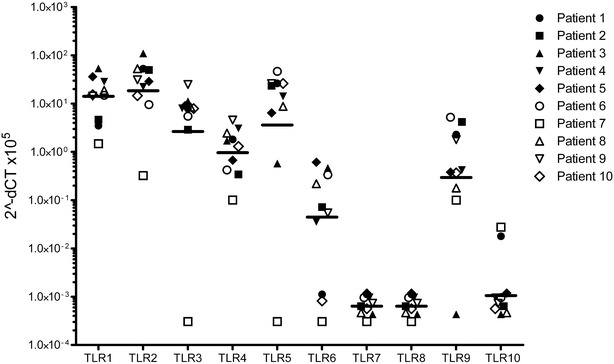
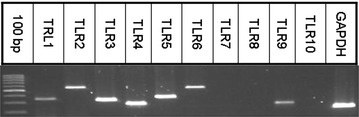
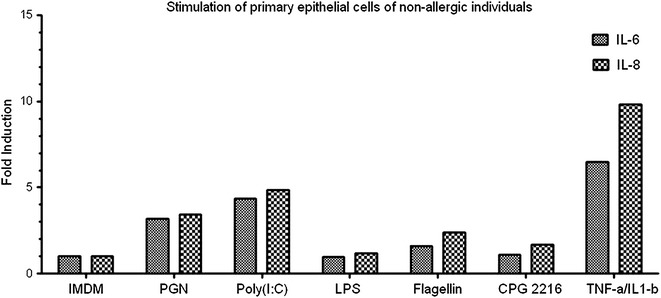
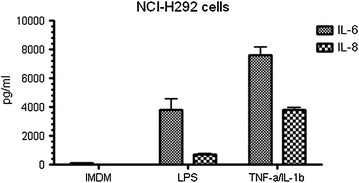
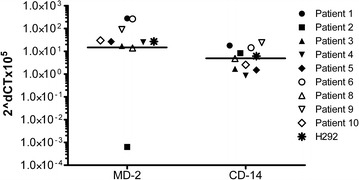
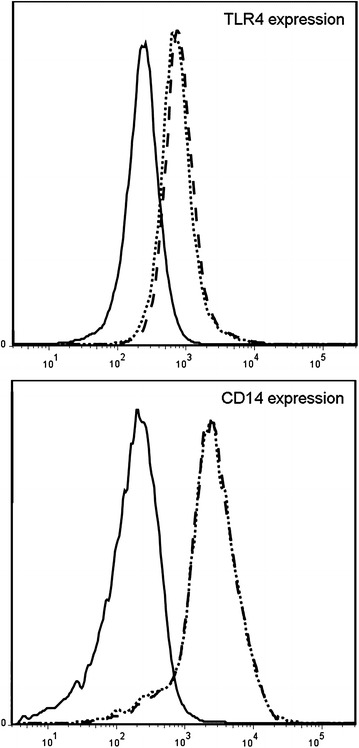
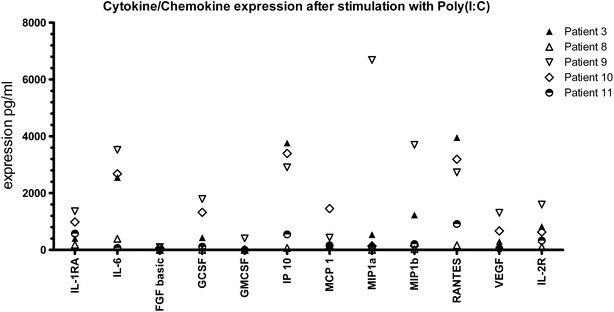
Background: Innate immune recognition via Toll‐like receptors (TLRs) on barrier cells like epithelial cells has been shown to influence the regulation of local immune responses. Here we determine expression level variations and functionality of TLRs in nasal epithelial cells from healthy donors. Methods: Expression levels of the different TLRs on primary nasal epithelial cells from healthy donors derived from inferior turbinates was determined by RT‐PCR. Functionality of the TLRs was determined by stimulation with the respective ligand and evaluation of released mediators by Luminex ELISA. Results: Primary nasal epithelial cells express different levels of TLR1‐6 and TLR9. We were unable to detect mRNA of TLR7, TLR8 and TLR10. Stimulation with Poly(I:C) resulted in a significant increased secretion of IL‐4, IL‐6, RANTES, IP‐10, MIP‐1β, VEGF, FGF, IL‐1RA, IL‐2R and G‐CSF. Stimulation with PGN only resulted in significant increased production of IL‐6, VEGF and IL‐1RA. Although the expression of TLR4 and co‐stimulatory molecules could be confirmed, primary nasal epithelial cells appeared to be unresponsive to stimulation with LPS. Furthermore, we observed huge individual differences in TLR agonist‐induced mediator release, which did not correlate with the respective expression of TLRs. Conclusion: Our data suggest that nasal epithelium seems to have developed a delicate system of discrimination and recognition of microbial patterns. Hypo‐responsiveness to LPS could provide a mechanism to dampen the inflammatory response in the nasal mucosa in order to avoid a chronic inflammatory response. Individual, differential expression of TLRs on epithelial cells and functionality in terms of released mediators might be a crucial factor in explaining why some people develop allergies to common inhaled antigens, and others do not.
Overview
The claims and statistics of this paper haven’t been checked yet.
Free: it reads the open-access text and checks the first 5 claims that cite a source we can check. Create a free account to check every claim.
Integrity signals
Registry
Cites
Statistics
Figures
Verification
Claims the paper makes
The claims and statistics of this paper haven’t been checked yet.
Free: it reads the open-access text and checks the first 5 claims that cite a source we can check. Create a free account to check every claim.
Claims other papers make about this one
Each is checked against this paper’s own text: does it say what the citing paper says it does?
The cited source says what the claim attributes to it.
In the citing paper
“These mediators affect recruitment of inflammatory cells to local tissues and create a microenvironment that affects the function of immune cells, thereby propagating local inflammatory processes.325”
From International Consensus Statement on Allergy and Rhinology: Allergic Rhinitis (2018) · cites this paper as [325]
Self-check
Percentages, sums and reported differences re-computed from the paper’s own numbers.
The self-check needs the paper’s full text.
Citations
Cites
Janeway, C. A., & Medzhitov, R. (2002) · Annual Review of Immunology · doi:10.1146/annurev.immunol.20.083001.084359 · Cited by 8,394 · cited 1×
“Toll-like receptors are evolutionarily conserved pattern recognition receptors of the innate immune system [4].”
BackgroundA Toll-like receptor recognizes bacterial DNA
Hemmi, H., Takeuchi, O., Kawai, T., Kaisho, T., Sato, S., Sanjo, H., Matsumoto, M., Hoshino, K., Wagner, H., Takeda, K., et al. (2000) · Nature · doi:10.1038/35047123 · Cited by 6,491 · cited 5×
“DNA-containing CpG motifs are recognized via TLR9 [14, 15].”
BackgroundInfluentialToll-like receptors: critical proteins linking innate and acquired immunity
Akira, S., Takeda, K., & Kaisho, T. (2001) · Nature Immunology · doi:10.1038/90609 · Cited by 4,777 · cited 1×
“and TLR13, specific ligands have been identified [5, 6].”
BackgroundSmall anti-viral compounds activate immune cells via the TLR7 MyD88–dependent signaling pathway
Hemmi, H., Kaisho, T., Takeuchi, O., Sato, S., Sanjo, H., Hoshino, K., Horiuchi, T., Tomizawa, H., Takeda, K., & Akira, S. (2002) · Nature Immunology · doi:10.1038/ni758 · Cited by 2,522
Pattern recognition receptors TLR4 and CD14 mediate response to respiratory syncytial virus
Kurt-Jones, E. A., Popova, L., Kwinn, L., Haynes, L. M., Jones, L. P., Tripp, R. A., Walsh, E. E., Freeman, M. W., Golenbock, D. T., Anderson, L. J., et al. (2000) · Nature Immunology · doi:10.1038/80833 · Cited by 1,683
Eisenbarth, S. C., Piggott, D. A., Huleatt, J. W., Visintin, I., Herrick, C. A., & Bottomly, K. (2002) · The Journal of Experimental Medicine · doi:10.1084/jem.20021340 · Cited by 1,171
Hammad, H., Chieppa, M., Perros, F., Willart, M. A., Germain, R. N., & Lambrecht, B. N. (2009) · Nature Medicine · doi:10.1038/nm.1946 · Cited by 1,139 · cited 3×
“For example, stimulation of TLR2 and TLR4 signalling pathways has been shown to both drive [16, 17] and inhibit [18, 19] the development of Th2-mediated allergic inflammation in different experimental mouse models.”
BackgroundTakeuchi, O., Hoshino, K., & Akira, S. (2000) · The Journal of Immunology · doi:10.4049/jimmunol.165.10.5392 · Cited by 1,048
HSP70 as Endogenous Stimulus of the Toll/Interleukin-1 Receptor Signal Pathway
Vabulas, R. M., Ahmad-Nejad, P., Ghose, S., Kirschning, C. J., Issels, R. D., & Wagner, H. (2002) · Journal of Biological Chemistry · doi:10.1074/jbc.m111204200 · Cited by 948 · cited 1×
“Originally thought to be a receptor only for LPS, TLR4 now emerges as a molecule responsible for signalling induced by a broad variety of molecules such as respiratory syncytial virus protein F [9], fungal components [10], or endogenous ligands like heat shock proteins, lung surfactant protein A, and beta-defensin [11…”
BackgroundToll-Like Receptor 4-Dependent Activation of Dendritic Cells by β-Defensin 2
Biragyn, A., Ruffini, P. A., Leifer, C. A., Klyushnenkova, E., Shakhov, A., Chertov, O., Shirakawa, A. K., Farber, J. M., Segal, D. M., Oppenheim, J. J., et al. (2002) · Science · doi:10.1126/science.1075565 · Cited by 902
Toll-like receptor function and signaling
Kaisho, T., & Akira, S. (2006) · Journal of Allergy and Clinical Immunology · doi:10.1016/j.jaci.2006.02.023 · Cited by 898 · cited 1×
“and TLR13, specific ligands have been identified [5, 6].”
BackgroundLipopolysaccharide (LPS)-binding protein accelerates the binding of LPS to CD14.
Hailman, E., Lichenstein, H. S., Wurfel, M. M., Miller, D. S., Johnson, D. A., Kelley, M., Busse, L. A., Zukowski, M. M., & Wright, S. D. (1994) · The Journal of experimental medicine · doi:10.1084/jem.179.1.269 · Cited by 743 · cited 1×
“5, 6) surface expression of TLR4 and CD14, and co-expression of the adaptor MD-2 that are indispensable for proper TLR4 signalling [33, 34].”
BackgroundActivation of Airway Epithelial Cells by Toll-Like Receptor Agonists
Sha, Q., Truong-Tran, A. Q., Plitt, J. R., Beck, L. A., & Schleimer, R. P. (2004) · American Journal of Respiratory Cell and Molecular Biology · doi:10.1165/rcmb.2003-0388oc · Cited by 487 · cited 1×
“Although it should be noted that our sample size of 10 healthy individuals is relatively small, so that it would be difficult to generalize our conclusions for the general population The expression of TLRs within the lower respiratory tract has been investigated intensively [22, 24, 25, 35], while data on TLR expressi…”
BackgroundHuman Keratinocytes Express Functional Toll-Like Receptor 3, 4, 5, and 9
Lebre, M. C., van der Aar, A. M. G., van Baarsen, L., van Capel, T. M. M., Schuitemaker, J. H. N., Kapsenberg, M. L., & de Jong, E. C. (2007) · Journal of Investigative Dermatology · doi:10.1038/sj.jid.5700530 · Cited by 486
Redecke, V., Häcker, H., Datta, S. K., Fermin, A., Pitha, P. M., Broide, D. H., & Raz, E. (2004) · The Journal of Immunology · doi:10.4049/jimmunol.172.5.2739 · Cited by 448 · cited 1×
“For example, stimulation of TLR2 and TLR4 signalling pathways has been shown to both drive [16, 17] and inhibit [18, 19] the development of Th2-mediated allergic inflammation in different experimental mouse models.”
BackgroundCytokine‐regulated accumulation of eosinophils in inflammatory disease
Lampinen, M., Carlson, M., Håkansson, L. D., & Venge, P. (2004) · Allergy · doi:10.1111/j.1398-9995.2004.00469.x · Cited by 356 · cited 1×
“Furthermore, IL-8 and RANTES have been shown to be involved in the recruitment and survival of eosinophils [38].”
BackgroundUehara, A., Fujimoto, Y., Fukase, K., & Takada, H. (2007) · Molecular Immunology · doi:10.1016/j.molimm.2007.02.007 · Cited by 330
Farhat, K., Riekenberg, S., Heine, H., Debarry, J., Lang, R., Mages, J., Buwitt-Beckmann, U., Röschmann, K., Jung, G., Wiesmüller, K.-H., et al. (2008) · Journal of Leukocyte Biology · doi:10.1189/jlb.0807586 · Cited by 321 · cited 3×
“Farhat K, Riekenberg S, Heine H, Debarry J, Lang R, Mages J, et al. Heterodimerization of TLR2 with TLR1 or TLR6 expands the ligand spectrum but does not lead to differential signaling.”
BackgroundSelf-citationGuillot, L., Balloy, V., McCormack, F. X., Golenbock, D. T., Chignard, M., & Si-Tahar, M. (2002) · The Journal of Immunology · doi:10.4049/jimmunol.168.12.5989 · Cited by 299
Toll-Like Receptors in Normal and Cystic Fibrosis Airway Epithelial Cells
Muir, A., Soong, G., Sokol, S., Reddy, B., Gomez, M. I., van Heeckeren, A., & Prince, A. (2004) · American Journal of Respiratory Cell and Molecular Biology · doi:10.1165/rcmb.2003-0329oc · Cited by 259 · cited 1×
“Although it should be noted that our sample size of 10 healthy individuals is relatively small, so that it would be difficult to generalize our conclusions for the general population The expression of TLRs within the lower respiratory tract has been investigated intensively [22, 24, 25, 35], while data on TLR expressi…”
BackgroundWang, J. E., Warris, A., Ellingsen, E. A., Jørgensen, P. F., Flo, T. H., Espevik, T., Solberg, R., Verweij, P. E., & Aasen, A. O. (2001) · Infection and Immunity · doi:10.1128/iai.69.4.2402-2406.2001 · Cited by 230 · cited 1×
“Originally thought to be a receptor only for LPS, TLR4 now emerges as a molecule responsible for signalling induced by a broad variety of molecules such as respiratory syncytial virus protein F [9], fungal components [10], or endogenous ligands like heat shock proteins, lung surfactant protein A, and beta-defensin [11…”
BackgroundRitter, M., Mennerich, D., Weith, A., & Seither, P. (2005) · Journal of Inflammation · doi:10.1186/1476-9255-2-16 · Cited by 184
Toll-like receptor heterodimer variants protect from childhood asthma
Kormann, M., Depner, M., Hartl, D., Klopp, N., Illig, T., Adamski, J., Vogelberg, C., Weiland, S. K., von Mutius, E., & Kabesch, M. (2008) · Journal of Allergy and Clinical Immunology · doi:10.1016/j.jaci.2008.04.039 · Cited by 175 · cited 1×
“Given the role of TLRs expressed on epithelial cells within the induction of immune responses, the relatively limited knowledge on the expression of TLRs in nasal epithelium, and the protective effect of TLR polymorphism in childhood asthma [31], the aim of this study was to determine the expression and functionality…”
BackgroundEndotoxin responsiveness of human airway epithelia is limited by low expression of MD-2
Jia, H. P., Kline, J. N., Penisten, A., Apicella, M. A., Gioannini, T. L., Weiss, J., & McCray, P. B. (2004) · American Journal of Physiology-Lung Cellular and Molecular Physiology · doi:10.1152/ajplung.00377.2003 · Cited by 158 · cited 12×
“This unresponsiveness has also been observed in the epithelia of the gut where it was attributed to missing MD-2 expression [37] and in nasal epithelium from polyposis patients by Wang and co-workers [29].”
BackgroundInfluentialSchulz, C. K. J., Farkas, L., WOLF, K., Krätzel, K., Eißner, G., & Pfeifer, M. A. (2002) · Scandinavian Journal of Immunology · doi:10.1046/j.1365-3083.2002.01137.x · Cited by 132
Human β‐defensins and toll‐like receptors in the upper airway
Claeys, S., De Belder, T., Holtappels, G., Gevaert, P., Verhasselt, B., Van Cauwenberge, P., & Bachert, C. (2003) · Allergy · doi:10.1034/j.1398-9995.2003.00180.x · Cited by 124 · cited 1×
“showed constant expression of TLR2 and TLR4 in tissue biopsies from patients with nasal polyposis or chronic rhinosinusitis and in healthy individuals [27].”
BackgroundTan, A. M., Chen, H., Pochard, P., Eisenbarth, S. C., Herrick, C. A., & Bottomly, H. K. (2010) · The Journal of Immunology · doi:10.4049/jimmunol.0900340 · Cited by 111 · cited 1×
“indicating that TLR4 signaling in epithelial cells is critical for the initiation of Th2 responses to inhaled allergens [41].”
BackgroundKennedy, M. N., Mullen, G. E. D., Leifer, C. A., Lee, C., Mazzoni, A., Dileepan, K. N., & Segal, D. M. (2004) · Journal of Biological Chemistry · doi:10.1074/jbc.m405444200 · Cited by 105
Up-regulation of Toll-like receptors 2, 3 and 4 in allergic rhinitis
Fransson, M., Adner, M., Erjefält, J., Jansson, L., Uddman, R., & Cardell, L.-O. (2005) · Respiratory Research · doi:10.1186/1465-9921-6-100 · Cited by 104
TLR4 Signaling Attenuates Ongoing Allergic Inflammation
Hollingsworth, J. W., Whitehead, G. S., Lin, K. L., Nakano, H., Gunn, M. D., Schwartz, D. A., & Cook, D. N. (2006) · The Journal of Immunology · doi:10.4049/jimmunol.176.10.5856 · Cited by 99
Thorley, A. J., Grandolfo, D., Lim, E., Goldstraw, P., Young, A., & Tetley, T. D. (2011) · PLoS ONE · doi:10.1371/journal.pone.0021827 · Cited by 94 · cited 1×
“In contrast to this it has been reported that lung epithelial cells do express TLR 1–6, including adaptor molecules like CD14 and MD-2, with bronchial epithelial cells showing CD14-dependent activation of TLR4 and alveolar epithelial cells showing LPS-binding protein (LBP)-dependent inhibition of TLR4 signalling [22,…”
BackgroundTengroth, L., Millrud, C. R., Kvarnhammar, A. M., Kumlien Georén, S., Latif, L., & Cardell, L.-O. (2014) · PLoS ONE · doi:10.1371/journal.pone.0098239 · Cited by 87
How epithelial cells detect danger: aiding the immune response
Vroling, A. B., Fokkens, W. J., & Van Drunen, C. M. (2008) · Allergy · doi:10.1111/j.1398-9995.2008.01785.x · Cited by 86 · cited 1×
“Epithelial cells are the outer lining of the mucosa of the nasal airway and play, besides their role as passive physical barrier, an important role in orchestrating innate and adaptive immune responses [1–3].”
BackgroundSelf-citationPage, K., Ledford, J. R., Zhou, P. H., & Wills-Karp, M. A. (2009) · The Journal of Immunology · doi:10.4049/jimmunol.0900838 · Cited by 62 · cited 1×
“For example, stimulation of TLR2 and TLR4 signalling pathways has been shown to both drive [16, 17] and inhibit [18, 19] the development of Th2-mediated allergic inflammation in different experimental mouse models.”
BackgroundMolecular Mechanisms of Nasal Epithelium in Rhinitis and Rhinosinusitis
Toppila-Salmi, S., van Drunen, C. M., Fokkens, W. J., Golebski, K., Mattila, P., Joenvaara, S., Renkonen, J., & Renkonen, R. (2015) · Current Allergy and Asthma Reports · doi:10.1007/s11882-014-0495-8 · Cited by 57 · cited 1×
“Epithelial cells are the outer lining of the mucosa of the nasal airway and play, besides their role as passive physical barrier, an important role in orchestrating innate and adaptive immune responses [1–3].”
BackgroundSelf-citationMD-2 controls bacterial lipopolysaccharide hyporesponsiveness in human intestinal epithelial cells
Lenoir, C., Sapin, C., Broquet, A. H., Jouniaux, A.-M., Bardin, S., Gasnereau, I., Thomas, G., Seksik, P., Trugnan, G., Masliah, J., et al. (2007) · Life Sciences · doi:10.1016/j.lfs.2007.12.007 · Cited by 52 · cited 1×
“This unresponsiveness has also been observed in the epithelia of the gut where it was attributed to missing MD-2 expression [37] and in nasal epithelium from polyposis patients by Wang and co-workers [29].”
BackgroundInvolvement of Toll-like receptors in the immune response of nasal polyp epithelial cells
Wang, J., Matsukura, S., Watanabe, S., Adachi, M., & Suzaki, H. (2007) · Clinical Immunology · doi:10.1016/j.clim.2007.05.009 · Cited by 36 · cited 3×
“The expression of TLR2, 3, and 4 has been shown in nasal epithelial cells derived from nasal polyps, with poly(I:C) inducing the secretion of RANTES, IP-10, IL-8 and GMCSF [29].”
BackgroundGolebski, K., Luiten, S., van Egmond, D., de Groot, E., Röschmann, K. I. L., Fokkens, W. J., & van Drunen, C. M. (2014) · PLoS ONE · doi:10.1371/journal.pone.0087768 · Cited by 34 · cited 1×
“This notion would also be in line with our recent observation that many aspects of TLR3 activation of nasal epithelial cells resemble that of activation by house dust mite allergen [39].”
ResultSelf-citationExpression of Toll‐like receptors in nasal epithelium in allergic rhinitis
Renkonen, J., Toppila-Salmi, S. K., Joenväärä, S., Mattila, P., Parviainen, V., Hagström, J., Haglund, C. H., Lehtonen, M., & Renkonen, R. (2015) · Apmis · doi:10.1111/apm.12408 · Cited by 32 · cited 5×
“The absence of TLR7 and TLR10 mRNA expression differs from the previous observations of Renkonen [36] and Tengroth [30].”
BackgroundResultInfluentialExpression of Toll-like receptors in cultured nasal epithelial cells
Lin, C., Tsai, C.-H. A., Cheng, C., Chen, Y.-S., Tournier, F., & Yeh, T. (2007) · Acta Oto-Laryngologica · doi:10.1080/00016480601089416 · Cited by 29 · cited 1×
“Isolated nasal epithelial cells from nasal polyps were shown to constitutively express mRNA of all 10 TLRs, with more pronounced expression of TLR 1–6 [28].”
Backgroundvan Tongeren, J., Reinartz, S. M., Fokkens, W. J., de Jong, E. C., & van Drunen, C. M. (2008) · Allergy · doi:10.1111/j.1398-9995.2008.01791.x · Cited by 23
Self-citationInvolvement of Toll-like receptors in the immune response of nasal polyp epithelial cells
汪, 際. (2013) · Medical Entomology and Zoology · Cited by 3
Cited by
International Consensus Statement on Allergy and Rhinology: Allergic Rhinitis
Wise, S. K., Lin, S. Y., Toskala, E., Orlandi, R. R., Akdis, C. A., Alt, J. A., Azar, A., Baroody, F. M., Bachert, C., Canonica, G. W., et al. (2018) · International Forum of Allergy & Rhinology · doi:10.1002/alr.22073 · Cited by 557
Self-citationCan SARS-CoV-2 Virus Use Multiple Receptors to Enter Host Cells?
Gadanec, L. K., McSweeney, K. R., Qaradakhi, T., Ali, B. A., Zulli, A., & Apostolopoulos, V. (2021) · International Journal of Molecular Sciences · doi:10.3390/ijms22030992 · Cited by 155
Key role of the epithelium in chronic upper airways diseases
Gohy, S., Hupin, C., Ladjemi, M. Z., Hox, V., & Pilette, C. (2019) · Clinical & Experimental Allergy · doi:10.1111/cea.13539 · Cited by 62
Fokkens, W. J., & Reitsma, S. (2022) · Otolaryngologic Clinics of North America · doi:10.1016/j.otc.2022.09.001 · Cited by 53
Self-citationThe current findings in eosinophilic chronic rhinosinusitis
Tsuda, T., Suzuki, M., Kato, Y., Kidoguchi, M., Kumai, T., Fujieda, S., & Sakashita, M. (2023) · Auris Nasus Larynx · doi:10.1016/j.anl.2023.08.002 · Cited by 46
Metadata
- Authors
- van Tongeren, J., Röschmann, K. I. L., Reinartz, S. M., Luiten, S., Fokkens, W. J., de Jong, E. C., & van Drunen, C. M.
- Affiliations
- Department of Otorhinolaryngology Academic Medical Center (AMC) Amsterdam The Netherlands
- Amsterdam UMC Location University of Amsterdam (NL)
- Department of Cell Biology & Histology Academic Medical Center (AMC) Amsterdam The Netherlands
- ORCID
- Fokkens, W. J.
- Venue
- Clinical and Translational Allergy
- Publisher
- Wiley
- Published
- 2015-01
- Volume
- 5
- Issue
- 1
- Pages
- 42-42
- ISSN
- 2045-7022 (ISSN-L)
- PMC
- PMC4677436
- OpenAlex
- W2191484182
- Cited by
- 30
- References
- 42
- Citations by year
- 2026: 3 · 2025: 4 · 2024: 2 · 2023: 3 · 2022: 5 · 2021: 4 · 2020: 3 · 2019: 2 · 2018: 1 · 2017: 2 · 2016: 1
- FWCI
- 0.66
- Type
- journal article
- Language
- en
- Open access
- gold
- doi.org
- Licence
- Locations
- Clinical and Translational Allergy (publishedVersion, cc-by)
- PubMed Central (publishedVersion, cc-by)
- PubMed (publishedVersion)
- Pure Amsterdam UMC (submittedVersion, other-oa)
- Data Archiving and Networked Services (DANS) (submittedVersion)
- Funders
- Netherlands Organisation for Health Research and Development (NL) (92003459)
- IUAP (P6/35)
- Topics
- Life Sciences › Immunology and Microbiology › Immunology › Immune Response and Inflammation
- Life Sciences › Biochemistry, Genetics and Molecular Biology › Molecular Biology › Inflammasome and immune disorders
- Life Sciences › Immunology and Microbiology › Immunology › T-cell and B-cell Immunology
- Keywords
- Toll-like receptors, nasal epithelial cells, innate immunity, lipopolysaccharide, TLR4, TLR9, poly(I:C), peptidoglycan, cytokine production, chemokines, vascular endothelial growth factor, interleukin-1 receptor antagonist, interindividual variability, allergen sensitization, nasal mucosa, inferior turbinate
About these checks
Registry, retraction, Cites and statistics results are computed, not judged, with one exception: a printed reference that no index lists is read once by a model before it counts as a citation error. Claims are extracted by a model and kept only when their quote appears verbatim in the text; each cited source is then checked, with a model’s help, for whether it says what the claim relies on. Those verdicts can be wrong — read the claim’s quote and the cited source before relying on one.
Statistics and arithmetic are recomputed, not judged.
Confidence bands are shown only for fields calibrated on our annotated test set. None is calibrated yet, so no band is shown.
What counts as a claim ›How we measure confidence ›How we check this ›
Are you an author, or do you see a problem with this page? Request a review
Data sources
Bibliographic data: Semantic Scholar, OpenAlex, Crossref.
Contains information from the Semantic Scholar Academic Graph Datasets, made available under the ODC Attribution License (ODC-BY 1.0).
Semantic Scholar’s data is described in: Kinney, R., et al. (2023). The Semantic Scholar Open Data Platform. arXiv:2301.10140.
