

Evaluation of the Cochrane tool for assessing risk of bias in randomized clinical trials: overview of published comments and analysis of user practice in Cochrane and non-Cochrane reviews
Open accessThe DOI matches its Crossref record; 28 of the 28 references it cites were found in a registry or an index.
Abstract
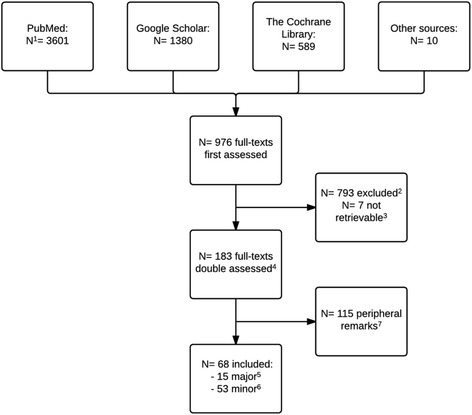
BACKGROUND: The Cochrane risk of bias tool for randomized clinical trials was introduced in 2008 and has frequently been commented on and used in systematic reviews. We wanted to evaluate the tool by reviewing published comments on its strengths and challenges and by describing and analysing how the tool is applied to both Cochrane and non-Cochrane systematic reviews. METHODS: A review of published comments (searches in PubMed, The Cochrane Methodology Register and Google Scholar) and an observational study (100 Cochrane and 100 non-Cochrane reviews from 2014). RESULTS: Our review included 68 comments, 15 of which were categorised as major. The main strengths of the tool were considered to be its aim (to assess trial conduct and not reporting), its developmental basis (wide consultation, empirical and theoretical evidence) and its transparent procedures. The challenges of the tool were mainly considered to be its choice of core bias domains (e.g. not involving funding/conflicts of interest) and issues to do with implementation (i.e. modest inter-rater agreement) and terminology. Our observational study found that the tool was used in all Cochrane reviews (100/100) and was the preferred tool in non-Cochrane reviews (31/100). Both types of reviews frequently implemented the tool in non-recommended ways. Most Cochrane reviews planned to use risk of bias assessments as basis for sensitivity analyses (70 %), but only a minority conducted such analyses (19 %) because, in many cases, few trials were assessed as having "low" risk of bias for all standard domains (6 %). The judgement of at least one risk of bias domain as "unclear" was found in 89 % of included randomized clinical trials (1103/1242). CONCLUSIONS: The Cochrane tool has become the standard approach to assess risk of bias in randomized clinical trials but is frequently implemented in a non-recommended way. Based on published comments and how it is applied in practice in systematic reviews, the tool may be further improved by a revised structure and more focused guidance.
Overview
The claims and statistics of this paper haven’t been checked yet.
Free: it reads the open-access text and checks the first 5 claims that cite a source we can check. Create a free account to check every claim.
Integrity signals
Registry
Cites
Statistics
Figures
Verification
Claims the paper makes
The claims and statistics of this paper haven’t been checked yet.
Free: it reads the open-access text and checks the first 5 claims that cite a source we can check. Create a free account to check every claim.
Claims other papers make about this one
Each is checked against this paper’s own text: does it say what the citing paper says it does?
The cited source says what the claim attributes to it.
In the citing paper
“Few trials are assessed as at low risk of bias, and judgments of unclear risk of bias are common. 6 7”
From RoB 2: a revised tool for assessing risk of bias in randomised trials (2019) · cites this paper as [6]
The cited source says what the claim attributes to it.
In the citing paper
“A review of comments and user practice found that both Cochrane and nonCochrane systematic reviews often implemented the RoB tool in non-standard ways. 6”
From RoB 2: a revised tool for assessing risk of bias in randomised trials (2019) · cites this paper as [6]
Self-check
Percentages, sums and reported differences re-computed from the paper’s own numbers.
The self-check needs the paper’s full text.
Citations
Cites
The Cochrane Collaboration's tool for assessing risk of bias in randomised trials
Higgins, J. P. T., Altman, D. G., Gotzsche, P. C., Juni, P., Moher, D., Oxman, A. D., Savovic, J., Schulz, K. F., Weeks, L., Sterne, J. A. C., et al. (2011) · BMJ · doi:10.1136/bmj.d5928 · Cited by 33,817
Self-citationDermyshi, E., Wang, Y., Yan, C., Hong, W., Qiu, G., Gong, X., & Zhang, T. (2017) · Neonatology · doi:10.1159/000454668 · Cited by 24,451
Assessing the quality of reports of randomized clinical trials: Is blinding necessary?
Jadad, A. R., Moore, R. A., Carroll, D., Jenkinson, C., Reynolds, D. J. M., Gavaghan, D. J., & McQuay, H. J. (1996) · Controlled Clinical Trials · doi:10.1016/0197-2456(95)00134-4 · Cited by 17,582 · cited 1×
“Other tools and scales used to assess risk of bias included the Jadad Quality Assessment Scale (19/80, 24 %) [13] and the Physiotherapy Evidence Database (short PEDro) scale (5/80, 6 %) [14] (Table 4).”
MethodZhang, Q., Wang, C., Zheng, M., Li, Y., Li, J., Zhang, L., Shang, X., & Yan, C. (2015) · Cerebrovascular Diseases · doi:10.1159/000369778 · Cited by 11,533
Dong, Y., Hao, L., Shi, Z., Wang, G., Zhang, Z., & Han, C. (2013) · Urologia Internationalis · doi:10.1159/000351405 · Cited by 4,540
Industry sponsorship and research outcome
Lundh, A., Lexchin, J., Mintzes, B., Schroll, J. B., & Bero, L. (2017) · Cochrane Database of Systematic Reviews · doi:10.1002/14651858.mr000033.pub3 · Cited by 1,697
Bassler, D. (2010) · JAMA · doi:10.1001/jama.2010.310 · Cited by 611
Industry sponsorship and research outcome
Lundh, A., Sismondo, S., Lexchin, J., Busuioc, O. A., & Bero, L. (2012) · Cochrane Database of Systematic Reviews · doi:10.1002/14651858.mr000033.pub2 · Cited by 605
Influence of trial sample size on treatment effect estimates: meta-epidemiological study
Dechartres, A., Trinquart, L., Boutron, I., & Ravaud, P. (2013) · BMJ · doi:10.1136/bmj.f2304 · Cited by 544 · cited 1×
“Several design features of randomized clinical trials have been reported in meta-epidemiological studies to be associated with exaggerated treatment effects, such as sample size [25], development country status [26], single centre status [27] and stopping a trial early [28].”
BackgroundSelf-citationRisk of bias versus quality assessment of randomised controlled trials: cross sectional study
Hartling, L., Ospina, M., Liang, Y., Dryden, D. M., Hooton, N., Krebs Seida, J., & Klassen, T. P. (2009) · BMJ · doi:10.1136/bmj.b4012 · Cited by 348 · cited 3×
“Over this period, the tool has been used in numerous systematic reviews, the scientific debate on risk of bias has proceeded (for example, reflecting on the role of source of funding [3–6] or other “meta-biases” [7]) and research publications have analysed user experience [8] and inter-agreement rates [9–11].”
BackgroundMethodResultSavović, J., Weeks, L., Sterne, J. A., Turner, L., Altman, D. G., Moher, D., & Higgins, J. P. (2014) · Systematic Reviews · doi:10.1186/2046-4053-3-37 · Cited by 340 · cited 4×
“Over this period, the tool has been used in numerous systematic reviews, the scientific debate on risk of bias has proceeded (for example, reflecting on the role of source of funding [3–6] or other “meta-biases” [7]) and research publications have analysed user experience [8] and inter-agreement rates [9–11].”
BackgroundMethodResultInfluentialSelf-citationDechartres, A., Boutron, I., Trinquart, L., Charles, P., & Ravaud, P. (2011) · Annals of Internal Medicine · doi:10.7326/0003-4819-155-1-201107050-00006 · Cited by 307
Self-citationHartling, L., Hamm, M. P., Milne, A., Vandermeer, B., Santaguida, P. L., Ansari, M., Tsertsvadze, A., Hempel, S., Shekelle, P., & Dryden, D. M. (2013) · Journal of Clinical Epidemiology · doi:10.1016/j.jclinepi.2012.07.005 · Cited by 173 · cited 2×
“Hartling and colleagues and Armijo-Olivo and colleagues concluded unsatisfactory agreement rates by users of the tool and suggested the need for more detailed guidance in assessing the risk of bias [9, 15].”
BackgroundWho is blinded in randomized clinical trials? A study of 200 trials and a survey of authors
Haahr, M. T., & Hróbjartsson, A. (2006) · Clinical Trials · doi:10.1177/1740774506069153 · Cited by 150 · cited 1×
“for blinding [22]), when judgements are based on insufficient information or when the intervention is more complex (e.”
BackgroundSelf-citationArmijo-Olivo, S., Ospina, M., da Costa, B. R., Egger, M., Saltaji, H., Fuentes, J., Ha, C., & Cummings, G. G. (2014) · PLoS ONE · doi:10.1371/journal.pone.0096920 · Cited by 124 · cited 2×
“While there is evidence that some factors are empirically associated with effect estimates, such as single versus multicentre design, early stopping of trials and funding source [14-16], the extent to which these should be considered alongside the main bias domains is still a topic of debate.”
BackgroundIndustry Sponsorship and Research Outcome: A Cochrane Review
Bero, L. A. (2013) · JAMA Internal Medicine · doi:10.1001/jamainternmed.2013.4190 · Cited by 109 · cited 1×
“It is widely believed that industry funding and other conflicts of interest are associated with higher estimates of treatment effects in randomized trials [24].”
BackgroundWhy the Cochrane Risk of Bias Tool Should Include Funding Source as a Standard Item
Bero, L. A. (2013) · Cochrane Database of Systematic Reviews · doi:10.1002/14651858.ed000075 · Cited by 96 · cited 1×
“Over this period, the tool has been used in numerous systematic reviews, the scientific debate on risk of bias has proceeded (for example, reflecting on the role of source of funding [3–6] or other “meta-biases” [7]) and research publications have analysed user experience [8] and inter-agreement rates [9–11].”
MethodPanagiotou, O. A., Contopoulos-Ioannidis, D. G., & Ioannidis, J. P. A. (2013) · BMJ · doi:10.1136/bmj.f707 · Cited by 89 · cited 1×
“Several design features of randomized clinical trials have been reported in meta-epidemiological studies to be associated with exaggerated treatment effects, such as sample size [25], development country status [26], single centre status [27] and stopping a trial early [28].”
BackgroundHartling, L., Bond, K., Vandermeer, B., Seida, J., Dryden, D. M., & Rowe, B. H. (2011) · PLoS ONE · doi:10.1371/journal.pone.0017242 · Cited by 78
Metabias: A Challenge for Comparative Effectiveness Research
Goodman, S., & Dickersin, K. (2011) · Annals of Internal Medicine · doi:10.7326/0003-4819-155-1-201107050-00010 · Cited by 67 · cited 1×
“Over this period, the tool has been used in numerous systematic reviews, the scientific debate on risk of bias has proceeded (for example, reflecting on the role of source of funding [3–6] or other “meta-biases” [7]) and research publications have analysed user experience [8] and inter-agreement rates [9–11].”
MethodHopewell, S., Boutron, I., Altman, D. G., & Ravaud, P. (2013) · BMJ Open · doi:10.1136/bmjopen-2013-003342 · Cited by 66 · cited 3×
“Hopewell and colleagues [16] studied assessment of risk of bias in Cochrane and non-Cochrane reviews indexed in The Database of Abstracts of Reviews of Effects (DARE) [17] and published in 2012.”
BackgroundSelf-citationWhy the Cochrane Risk of Bias Tool Should not Include Funding Source as a Standard Item
Sterne, J. A. (2013) · Cochrane Database of Systematic Reviews · doi:10.1002/14651858.ed000076 · Cited by 60
Self-citationImproved interobserver variation after training of doctors in the Neer system: A randomised trial
Brorson, S., Bagger, J., Sylvest, A., & Høbjartsson, A. (2002) · Journal of Bone and Joint Surgery - British Volume · doi:10.1302/0301-620x.84b7.13010 · Cited by 57 · cited 1×
“Studies assessing between-rater agreement for complex assessment procedures often have modest agreement rates [20], which in some cases may be improved with training [21].”
BackgroundReporting of conflicts of interest from drug trials in Cochrane reviews: cross sectional study
Roseman, M., Turner, E. H., Lexchin, J., Coyne, J. C., Bero, L. A., & Thombs, B. D. (2012) · BMJ · doi:10.1136/bmj.e5155 · Cited by 55 · cited 1×
“Over this period, the tool has been used in numerous systematic reviews, the scientific debate on risk of bias has proceeded (for example, reflecting on the role of source of funding [3–6] or other “meta-biases” [7]) and research publications have analysed user experience [8] and inter-agreement rates [9–11].”
MethodBrorson, S., & Hróbjartsson, A. (2007) · Journal of Clinical Epidemiology · doi:10.1016/j.jclinepi.2007.04.014 · Cited by 50 · cited 1×
“Studies assessing between-rater agreement for complex assessment procedures often have modest agreement rates [20], which in some cases may be improved with training [21].”
BackgroundSelf-citationHróbjartsson, A., Boutron, I., Turner, L., Altman, D. G., & Moher, D. (2013) · Cochrane Database of Systematic Reviews · doi:10.1002/14651858.ed000058 · Cited by 49 · cited 1×
“Thus, for authors of a systematic review, it is paramount to adequately address the risk of bias in the included trials [1].”
BackgroundSelf-citationJefferson, T., Jones, M., Doshi, P., Mar, C. D., Hama, R., Thompson, M. J., Onakpoya, I., & Heneghan, C. J. (2014) · BMJ Open · doi:10.1136/bmjopen-2014-005253 · Cited by 22 · cited 1×
“Occasionally, one may access trial protocols, internal company study reports or reports by drug regulation agencies (such as the United States’ Food & Drug Administration) to facilitate better risk of bias judgements [19].”
Backgroundda Costa, B. R., Resta, N. M., Beckett, B., Israel-Stahre, N., Diaz, A., Johnston, B. C., Egger, M., Jüni, P., & Armijo-Olivo, S. L. (2014) · Systematic Reviews · doi:10.1186/2046-4053-3-144 · Cited by 15
Cited by
RoB 2: a revised tool for assessing risk of bias in randomised trials
Sterne, J. A. C., Savović, J., Page, M. J., Elbers, R. G., Blencowe, N. S., Boutron, I., Cates, C. J., Cheng, H.-Y., Corbett, M. S., Eldridge, S. M., et al. (2019) · BMJ · doi:10.1136/bmj.l4898 · Cited by 34,787
“Few trials are assessed as at low risk of bias, and judgements of ‘unclear’ risk of bias are common.(6) 7 Empirical studies have found only moderate reliability of risk-of-bias judgements.”
BackgroundSelf-citationAbd-Alrazaq, A. A., Rababeh, A., Alajlani, M., Bewick, B. M., & Househ, M. (2020) · Journal of Medical Internet Research · doi:10.2196/16021 · Cited by 503
Vale, C. L., Fisher, D., Kneebone, A., Parker, C., Pearse, M., Richaud, P., Sargos, P., Sydes, M. R., Brawley, C., Brihoum, M., et al. (2020) · The Lancet · doi:10.1016/s0140-6736(20)31952-8 · Cited by 404
Skene, K., O’Farrelly, C. M., Byrne, E. M., Kirby, N., Stevens, E. C., & Ramchandani, P. G. (2022) · Child Development · doi:10.1111/cdev.13730 · Cited by 175
“The validity of the tool is not yet well- established, and modest levels of inter- rater agreement have been reported— indicating subjectivity in making judgments of bias (potentially due to lack of clear guidelines; Jørgensen et al., 2016).”
BackgroundUsing Risk of Bias 2 to assess results from randomised controlled trials: guidance from Cochrane
Flemyng, E., Moore, T. H., Boutron, I., Higgins, J. P., Hróbjartsson, A., Nejstgaard, C. H., & Dwan, K. (2023) · BMJ Evidence-Based Medicine · doi:10.1136/bmjebm-2022-112102 · Cited by 264
Self-citation
Metadata
- Authors
- Jørgensen, L., Paludan-Müller, A. S., Laursen, D. R. T., Savović, J., Boutron, I., Sterne, J. A. C., Higgins, J. P. T., & Hróbjartsson, A.
- Affiliations
- Rigshospitalet (DK)
- University Hospitals Bristol NHS Foundation Trust (GB)
- Inserm (FR)
- University of Southern Denmark (DK)
- Corresponding author
- Jørgensen, Lars
- ORCID
- Venue
- Systematic Reviews
- Published
- 2016-05-10
- Volume
- 5
- Issue
- 1
- Pages
- 80-80
- ISSN
- 2046-4053 (ISSN-L)
- PMC
- PMC4862216
- OpenAlex
- W2346262725
- Cited by
- 396
- References
- 28
- Citations by year
- 2026: 27 · 2025: 59 · 2024: 75 · 2023: 48 · 2022: 41 · 2021: 42 · 2020: 35 · 2019: 35 · 2018: 20 · 2017: 12 · 2016: 2
- FWCI
- 21.48
- Type
- journal article
- Language
- en
- Open access
- gold
- doi.org
- Licence
- cc-by
- Locations
- Systematic Reviews (publishedVersion, cc-by)
- PubMed Central (publishedVersion, cc-by)
- PubMed (publishedVersion)
- Bristol Research (University of Bristol) (publishedVersion, cc-by)
- Explore Bristol Research (submittedVersion, cc-by)
- University of Southern Denmark Research Portal (University of Southern Denmark) (submittedVersion, cc-by)
- Funders
- Rigshospitalet
- Topics
- Social Sciences › Decision Sciences › Statistics, Probability and Uncertainty › Meta-analysis and systematic reviews
- Social Sciences › Sociology and Political Science › Delphi Technique in Research
- Health Sciences › Nursing › Issues, ethics and legal aspects › Pharmaceutical industry and healthcare
- Keywords
- Cochrane risk of bias tool, risk of bias assessment, randomized controlled trials, interobserver agreement, sensitivity analysis, tool implementation, online comments
- MeSH terms
- Systematic Reviews as Topic, Humans, Bias, Randomized Controlled Trials as Topic, Risk Assessment
About these checks
Registry, retraction, Cites and statistics results are computed, not judged, with one exception: a printed reference that no index lists is read once by a model before it counts as a citation error. Claims are extracted by a model and kept only when their quote appears verbatim in the text; each cited source is then checked, with a model’s help, for whether it says what the claim relies on. Those verdicts can be wrong — read the claim’s quote and the cited source before relying on one.
Statistics and arithmetic are recomputed, not judged.
Confidence bands are shown only for fields calibrated on our annotated test set. None is calibrated yet, so no band is shown.
What counts as a claim ›How we measure confidence ›How we check this ›
Are you an author, or do you see a problem with this page? Request a review
Data sources
Bibliographic data: Semantic Scholar, OpenAlex, Crossref.
Contains information from the Semantic Scholar Academic Graph Datasets, made available under the ODC Attribution License (ODC-BY 1.0).
Semantic Scholar’s data is described in: Kinney, R., et al. (2023). The Semantic Scholar Open Data Platform. arXiv:2301.10140.
