

Evaluation of the Cochrane tool for assessing risk of bias in randomized clinical trials: overview of published comments and analysis of user practice in Cochrane and non-Cochrane reviews
Open accessThe DOI matches its Crossref record; 28 of the 28 references it cites were found in a registry or an index.
Abstract
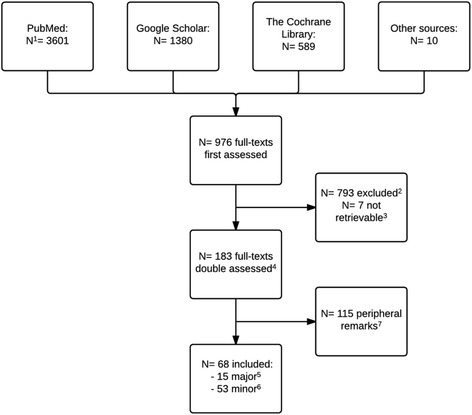
BACKGROUND: The Cochrane risk of bias tool for randomized clinical trials was introduced in 2008 and has frequently been commented on and used in systematic reviews. We wanted to evaluate the tool by reviewing published comments on its strengths and challenges and by describing and analysing how the tool is applied to both Cochrane and non-Cochrane systematic reviews. METHODS: A review of published comments (searches in PubMed, The Cochrane Methodology Register and Google Scholar) and an observational study (100 Cochrane and 100 non-Cochrane reviews from 2014). RESULTS: Our review included 68 comments, 15 of which were categorised as major. The main strengths of the tool were considered to be its aim (to assess trial conduct and not reporting), its developmental basis (wide consultation, empirical and theoretical evidence) and its transparent procedures. The challenges of the tool were mainly considered to be its choice of core bias domains (e.g. not involving funding/conflicts of interest) and issues to do with implementation (i.e. modest inter-rater agreement) and terminology. Our observational study found that the tool was used in all Cochrane reviews (100/100) and was the preferred tool in non-Cochrane reviews (31/100). Both types of reviews frequently implemented the tool in non-recommended ways. Most Cochrane reviews planned to use risk of bias assessments as basis for sensitivity analyses (70 %), but only a minority conducted such analyses (19 %) because, in many cases, few trials were assessed as having "low" risk of bias for all standard domains (6 %). The judgement of at least one risk of bias domain as "unclear" was found in 89 % of included randomized clinical trials (1103/1242). CONCLUSIONS: The Cochrane tool has become the standard approach to assess risk of bias in randomized clinical trials but is frequently implemented in a non-recommended way. Based on published comments and how it is applied in practice in systematic reviews, the tool may be further improved by a revised structure and more focused guidance.
Overview
The claims and statistics of this paper haven’t been checked yet.
Free: it reads the open-access text and checks the first 5 claims that cite a source we can check. Create a free account to check every claim.
Integrity signals
Registry
Cites
Statistics
Figures
Verification
Claims the paper makes
The claims and statistics of this paper haven’t been checked yet.
Free: it reads the open-access text and checks the first 5 claims that cite a source we can check. Create a free account to check every claim.
Claims other papers make about this one
Each is checked against this paper’s own text: does it say what the citing paper says it does?
The cited source says what the claim attributes to it.
In the citing paper
“Few trials are assessed as at low risk of bias, and judgments of unclear risk of bias are common. 6 7”
From RoB 2: a revised tool for assessing risk of bias in randomised trials (2019) · cites this paper as [6]
The cited source says what the claim attributes to it.
In the citing paper
“A review of comments and user practice found that both Cochrane and nonCochrane systematic reviews often implemented the RoB tool in non-standard ways. 6”
From RoB 2: a revised tool for assessing risk of bias in randomised trials (2019) · cites this paper as [6]
Self-check
Percentages, sums and reported differences re-computed from the paper’s own numbers.
The self-check needs the paper’s full text.
Citations
Cites
The Cochrane Collaboration's tool for assessing risk of bias in randomised trials
Higgins, J. P. T., Altman, D. G., Gotzsche, P. C., Juni, P., Moher, D., Oxman, A. D., Savovic, J., Schulz, K. F., Weeks, L., Sterne, J. A. C., et al. (2011) · BMJ · doi:10.1136/bmj.d5928 · Cited by 33,817
Self-citationDermyshi, E., Wang, Y., Yan, C., Hong, W., Qiu, G., Gong, X., & Zhang, T. (2017) · Neonatology · doi:10.1159/000454668 · Cited by 24,451
Assessing the quality of reports of randomized clinical trials: Is blinding necessary?
Jadad, A. R., Moore, R. A., Carroll, D., Jenkinson, C., Reynolds, D. J. M., Gavaghan, D. J., & McQuay, H. J. (1996) · Controlled Clinical Trials · doi:10.1016/0197-2456(95)00134-4 · Cited by 17,582 · cited 1×
“Other tools and scales used to assess risk of bias included the Jadad Quality Assessment Scale (19/80, 24 %) [13] and the Physiotherapy Evidence Database (short PEDro) scale (5/80, 6 %) [14] (Table 4).”
MethodZhang, Q., Wang, C., Zheng, M., Li, Y., Li, J., Zhang, L., Shang, X., & Yan, C. (2015) · Cerebrovascular Diseases · doi:10.1159/000369778 · Cited by 11,533
Dong, Y., Hao, L., Shi, Z., Wang, G., Zhang, Z., & Han, C. (2013) · Urologia Internationalis · doi:10.1159/000351405 · Cited by 4,540
Industry sponsorship and research outcome
Lundh, A., Lexchin, J., Mintzes, B., Schroll, J. B., & Bero, L. (2017) · Cochrane Database of Systematic Reviews · doi:10.1002/14651858.mr000033.pub3 · Cited by 1,697
Bassler, D. (2010) · JAMA · doi:10.1001/jama.2010.310 · Cited by 611
Industry sponsorship and research outcome
Lundh, A., Sismondo, S., Lexchin, J., Busuioc, O. A., & Bero, L. (2012) · Cochrane Database of Systematic Reviews · doi:10.1002/14651858.mr000033.pub2 · Cited by 605
Influence of trial sample size on treatment effect estimates: meta-epidemiological study
Dechartres, A., Trinquart, L., Boutron, I., & Ravaud, P. (2013) · BMJ · doi:10.1136/bmj.f2304 · Cited by 544 · cited 1×
“Several design features of randomized clinical trials have been reported in meta-epidemiological studies to be associated with exaggerated treatment effects, such as sample size [25], development country status [26], single centre status [27] and stopping a trial early [28].”
BackgroundSelf-citationRisk of bias versus quality assessment of randomised controlled trials: cross sectional study
Hartling, L., Ospina, M., Liang, Y., Dryden, D. M., Hooton, N., Krebs Seida, J., & Klassen, T. P. (2009) · BMJ · doi:10.1136/bmj.b4012 · Cited by 348 · cited 3×
“Over this period, the tool has been used in numerous systematic reviews, the scientific debate on risk of bias has proceeded (for example, reflecting on the role of source of funding [3–6] or other “meta-biases” [7]) and research publications have analysed user experience [8] and inter-agreement rates [9–11].”
BackgroundMethodResult
Cited by
RoB 2: a revised tool for assessing risk of bias in randomised trials
Sterne, J. A. C., Savović, J., Page, M. J., Elbers, R. G., Blencowe, N. S., Boutron, I., Cates, C. J., Cheng, H.-Y., Corbett, M. S., Eldridge, S. M., et al. (2019) · BMJ · doi:10.1136/bmj.l4898 · Cited by 34,787
“Few trials are assessed as at low risk of bias, and judgements of ‘unclear’ risk of bias are common.(6) 7 Empirical studies have found only moderate reliability of risk-of-bias judgements.”
BackgroundSelf-citationAbd-Alrazaq, A. A., Rababeh, A., Alajlani, M., Bewick, B. M., & Househ, M. (2020) · Journal of Medical Internet Research · doi:10.2196/16021 · Cited by 503
Vale, C. L., Fisher, D., Kneebone, A., Parker, C., Pearse, M., Richaud, P., Sargos, P., Sydes, M. R., Brawley, C., Brihoum, M., et al. (2020) · The Lancet · doi:10.1016/s0140-6736(20)31952-8 · Cited by 404
Skene, K., O’Farrelly, C. M., Byrne, E. M., Kirby, N., Stevens, E. C., & Ramchandani, P. G. (2022) · Child Development · doi:10.1111/cdev.13730 · Cited by 175
“The validity of the tool is not yet well- established, and modest levels of inter- rater agreement have been reported— indicating subjectivity in making judgments of bias (potentially due to lack of clear guidelines; Jørgensen et al., 2016).”
BackgroundUsing Risk of Bias 2 to assess results from randomised controlled trials: guidance from Cochrane
Flemyng, E., Moore, T. H., Boutron, I., Higgins, J. P., Hróbjartsson, A., Nejstgaard, C. H., & Dwan, K. (2023) · BMJ Evidence-Based Medicine · doi:10.1136/bmjebm-2022-112102 · Cited by 264
Self-citationConsidering bias and conflicts of interest among the included studies
Boutron, I., Page, M. J., Higgins, J. P., Altman, D. G., Lundh, A., Hróbjartsson, A., & on behalf of the Cochrane Bias Methods Group (2019) · Cochrane Handbook for Systematic Reviews of Interventions · doi:10.1002/9781119536604.ch7 · Cited by 258
Self-citationFarrah, K., Young, K., Tunis, M. C., & Zhao, L. (2019) · Systematic Reviews · doi:10.1186/s13643-019-1172-8 · Cited by 246
“The choice of risk of bias tools (RoB tools) is not straightforward for reviews of NRS, although methodological tools for assessing the risk of bias in randomized controlled trials (RCT) are more well-established, with the Cochrane Collaboration’s RoB Tool [5] now considered the standard [6].”
MethodPrehabilitation for Patients Undergoing Orthopedic Surgery: A Systematic Review and Meta-analysis
Punnoose, A., Claydon-Mueller, L. S., Weiss, O., Zhang, J., Rushton, A., & Khanduja, V. (2023) · JAMA Network Open · doi:10.1001/jamanetworkopen.2023.8050 · Cited by 219
Hadgraft, N. T., Winkler, E., Climie, R. E., Grace, M. S., Romero, L., Owen, N., Dunstan, D., Healy, G., & Dempsey, P. C. (2021) · British Journal of Sports Medicine · doi:10.1136/bjsports-2019-101154 · Cited by 179
Crocker, T. F., Lam, N., Jordão, M., Brundle, C., Prescott, M., Forster, A., Ensor, J., Gladman, J., & Clegg, A. (2023) · Journal of Clinical Epidemiology · doi:10.1016/j.jclinepi.2023.06.015 · Cited by 174
Critical appraisal of nonrandomized studies—A review of recommended and commonly used tools
Quigley, J. M., Thompson, J. C., Halfpenny, N. J., & Scott, D. A. (2019) · Journal of Evaluation in Clinical Practice · doi:10.1111/jep.12889 · Cited by 144
Quality assessment tools used in systematic reviews of in vitro studies: A systematic review
Tran, L., Tam, D. N. H., Elshafay, A., Dang, T., Hirayama, K., & Huy, N. T. (2021) · BMC Medical Research Methodology · doi:10.1186/s12874-021-01295-w · Cited by 118
“This was relatively low compared to other areas, such as in randomized clinical trials, the Cochrane tool was reported as widely used in 100% Cochrane reviews [64].”
ResultNavarrete‐Dechent, C., Mori, S., Barker, C. A., Dickson, M. A., & Nehal, K. S. (2019) · JAMA Dermatology · doi:10.1001/jamadermatol.2018.4940 · Cited by 151
Effect of vitamin�D supplementation on polycystic ovary syndrome: A meta‑analysis
Miao, C., Fang, X., Chen, Y., & Zhang, Q. (2020) · Experimental and Therapeutic Medicine · doi:10.3892/etm.2020.8525 · Cited by 110
“The quality of each study was independently assessed by two authors according to the following criteria: Studies designed with case characteristics matched to controls; the studies followed strict inclusion and exclusion criteria for patients; and the methodological quality of the included studies described by Jadad R…”
MethodNevins, J. E. H., Donovan, S. M., Snetselaar, L., Dewey, K. G., Novotny, R., Stang, J. L., Taveras, E. M., Kleinman, R. E., Bailey, R. L., Raghavan, R., et al. (2021) · Journal of Nutrition · doi:10.1093/jn/nxab238 · Cited by 167
Łagowska, K., Bajerska, J., & Jamka, M. (2018) · Nutrients · doi:10.3390/nu10111637 · Cited by 112
“The evaluations were scaled as a low, unclear, and high risk of bias, according to the criteria for judging the risk of bias provided by the Cochrane handbook [35].”
MethodMurphy, M., Travers, M. J., Gibson, W., Chivers, P., Debenham, J. R., Docking, S., & Rio, E. (2018) · Sports Medicine · doi:10.1007/s40279-018-0932-2 · Cited by 119
Efficacy of psychological treatment for headache disorder: a systematic review and meta-analysis
Lee, H. J., Lee, J. H., Cho, E. Y., Kim, S. M., & Yoon, S. (2019) · The Journal of Headache and Pain · doi:10.1186/s10194-019-0965-4 · Cited by 100
Li, Z., & Denning, D. W. (2023) · Current Fungal Infection Reports · doi:10.1007/s12281-023-00456-2 · Cited by 114
A meta-analysis of STEM project-based learning on creativity
Kwon, H., & Lee, Y. (2025) · STEM Education · doi:10.3934/steme.2025014 · Cited by 133
Platelet storage duration and its clinical and transfusion outcomes: a systematic review
Aubron, C., Flint, A. W. J., Ozier, Y. M., & McQuilten, Z. (2018) · Critical Care · doi:10.1186/s13054-018-2114-x · Cited by 100
Aly, T. A. (2017) · Asian Spine Journal · doi:10.4184/asj.2017.11.1.150 · Cited by 99
“Electronic searches of MEDLINE, EMBASE, the Cochrane Central Register of Controlled Trials and other internet databases were performed to identify trials according to the Cochrane Collaboration guidelines [24].”
MethodRisk of Bias 2 in Cochrane Reviews: a phased approach for the introduction of new methodology
Flemyng, E., Dwan, K., Moore, T. H., Page, M. J., & Higgins, J. P. (2020) · Cochrane Database of Systematic Reviews · doi:10.1002/14651858.ed000148 · Cited by 95
Self-citationThe effect of body mass index on major outcomes after vascular surgery
Galyfos, G. C., Geropapas, G., Kerasidis, S., Sianou, A., Sigala, F., & Filis, K. (2016) · Journal of Vascular Surgery · doi:10.1016/j.jvs.2016.09.032 · Cited by 99
Zhang, L., Xu, L., Wu, D., Yu, C., Fan, S., & Cai, B. (2021) · Annals of Palliative Medicine · doi:10.21037/apm-21-451 · Cited by 108
“The I(2) statistic quantified inconsistency across trials as unimportant (0–40%), moderate (30–60%), substantial (50–90%), and considerable (75–100%) (18).”
MethodPhysical activity, exercise, and mental health of healthy adolescents: A review of the last 5 years
Ruiz-Ranz, E., & Asín‐Izquierdo, I. (2024) · Sports Medicine and Health Science · doi:10.1016/j.smhs.2024.10.003 · Cited by 103
Broderick, P. B., Horgan, F., Blake, C. M., Ehrensberger, M., Simpson, D., & Monaghan, K. (2018) · Gait & Posture · doi:10.1016/j.gaitpost.2018.05.017 · Cited by 91
Effects of orexin receptor antagonism on human sleep architecture: A systematic review
Clark, J. W., Brian, M. L., Drummond, S. P. A., Hoyer, D., & Jacobson, L. H. (2020) · Sleep Medicine Reviews · doi:10.1016/j.smrv.2020.101332 · Cited by 93
Alashram, A. R., Padua, E., & Annino, G. (2019) · American Journal of Physical Medicine & Rehabilitation · doi:10.1097/phm.0000000000001252 · Cited by 93
Promoting public access to clinical trial protocols: challenges and recommendations
Chan, A.-W., & Hróbjartsson, A. (2018) · Trials · doi:10.1186/s13063-018-2510-1 · Cited by 84
“Combined with the lack of publicly available protocols, these deficiencies in published final reports contribute to the finding that 89% of randomized trials included in systematic reviews had an ‘unclear’ rating for at least one domain of the Cochrane risk of bias tool, which is widely used for evaluating the interna…”
BackgroundSelf-citationAsquini, G., Pitance, L., Michelotti, A., & Falla, D. (2022) · Journal of Oral Rehabilitation · doi:10.1111/joor.13299 · Cited by 95
Cherak, S. J., Giesbrecht, G. F., Metcalfe, A., Ronksley, P. E., & Malebranche, M. E. (2018) · Psychoneuroendocrinology · doi:10.1016/j.psyneuen.2018.04.023 · Cited by 86
Casonatto, J., & Yamacita, C. M. (2019) · Complementary Therapies in Medicine · doi:10.1016/j.ctim.2019.102232 · Cited by 90
Phillippo, D. M., Dias, S., Welton, N. J., Caldwell, D. M., Taske, N., & Ades, A. E. (2019) · Annals of Internal Medicine · doi:10.7326/m18-3542 · Cited by 72
Alashram, A. R., Padua, E., Romagnoli, C., & Annino, G. (2019) · Neurorehabilitation · doi:10.3233/nre-192863 · Cited by 77
“The Cochrane tool has become the standard method to assess the risk of bias in randomized clinical trials (Jørgensen et al., 2016).”
MethodBotulinum toxin in the management of temporomandibular disorders: a systematic review
Thambar, S., Kulkarni, S., Armstrong, S. H., & Nikolarakos, D. (2020) · British Journal of Oral and Maxillofacial Surgery · doi:10.1016/j.bjoms.2020.02.007 · Cited by 88
Orikpete, O. F., & Ewim, D. R. E. (2023) · Nuclear Engineering and Design · doi:10.1016/j.nucengdes.2023.112797 · Cited by 96
Feliu‐Soler, A., Cebolla, A., McCracken, L. M., D’Amico, F., Knapp, M. R. J., López-Montoyo, A., García‐Campayo, J., Soler, J., Baños, R., Pérez‐Aranda, A., et al. (2017) · Behavior Therapy · doi:10.1016/j.beth.2017.07.001 · Cited by 77
Hamre, H. J., Glockmann, A., von Ammon, K., Riley, D. S., & Kiene, H. (2023) · Systematic Reviews · doi:10.1186/s13643-023-02313-2 · Cited by 89
“[42] (Table 9).”
Cook, T., Lowe, C., Maybury, M., & Lewis, J. S. (2018) · British Journal of Sports Medicine · doi:10.1136/bjsports-2016-097444 · Cited by 69
Edmunds, K., Tuffaha, H., Galvao, D. A., Scuffham, P., & Newton, R. U. (2020) · Supportive Care in Cancer · doi:10.1007/s00520-019-05255-5 · Cited by 75
Effect of exercise-based cancer rehabilitation via telehealth: a systematic review and meta-analysis
Baťalík, L., Chamradova, K., Winnige, P., Dosbaba, F., Batalikova, K., Vlažná, D., Janíková, A., Pepera, G., Abu‐Odah, H., & Su, J. J. (2024) · BMC Cancer · doi:10.1186/s12885-024-12348-w · Cited by 65
“The bias domains of the tool were identified to purpose-fully cover all fundamental bias mechanisms in RCTs and it is the most commonly used tool (about 100% for Cochrane reviews and 31% for non-Cochrane reviews) [21].”
MethodHow to Practice Academic Medicine and Publish from Developing Countries? A Practical Guide
Nundy, S., Kakar, A., & Bhutta, Z. A. (2021) · Springer eBooks · doi:10.1007/978-981-16-5248-6 · Cited by 74
Griggs, S. A., Conley, S., Batten, J., & Grey, M. J. (2020) · Sleep Medicine Reviews · doi:10.1016/j.smrv.2020.101356 · Cited by 64
Effectiveness of Pilates exercise on low back pain: a systematic review with meta-analysis
Patti, A., Thornton, J. S., Giustino, V., Drid, P., Paoli, A., Schulz, J. M., Palma, A., & Bianco, A. (2023) · Disability and Rehabilitation · doi:10.1080/09638288.2023.2251404 · Cited by 69
“…quality of the included studies was assessed using the Cochrane Collaboration’s tool for assessing the risk of bias in randomized trials (Figure 2) [29–31] and, additionally, the PEDro scale (Physiotherapy any evidence Database), which is a validated tool for assessing the risk of bias of RCTs…”
Miyazaki, H., Igarashi, A., Takeuchi, T., Teng, L., Uda, A., Deguchi, H., Higuchi, K., & Tango, T. (2019) · Journal of Gastroenterology and Hepatology · doi:10.1111/jgh.14664 · Cited by 69
Wang, Y., Keitz, S., Briel, M., Glasziou, P., Brignardello-Petersen, R., Siemieniuk, R. A. C., Zeraatkar, D., Akl, E. A., Armijo-Olivo, S., Bassler, D., et al. (2025) · BMJ · doi:10.1136/bmj-2024-081199 · Cited by 60
Dorris, C., Winter, K., O’Hare, L., & Lwoga, E. T. (2024) · Campbell Systematic Reviews · doi:10.1002/cl2.1417 · Cited by 76
Wu, S., Li, G., Du, L., Chen, S., Zhang, X., & He, Q. (2023) · Digital Health · doi:10.1177/20552076231176705 · Cited by 62
Xia, H., Shen, H., Cha, W., & Lu, Q. (2021) · Frontiers in Cardiovascular Medicine · doi:10.3389/fcvm.2021.632318 · Cited by 61
Moreno-Segura, N., Igual-Camacho, C., Ballester-Gil, Y., Blasco-Igual, M. C., & Blasco, J. M. (2018) · Journal of Aging and Physical Activity · doi:10.1123/japa.2017-0078 · Cited by 37
Yang, R., Tao, W., Chen, Y., Zhang, B., Tang, J., Zhong, S., & Chen, X.-X. (2016) · International Journal of Surgery · doi:10.1016/j.ijsu.2016.11.017 · Cited by 57
Wijnen, A., Bouma, S. E., Seeber, G. H., van der Woude, L. H. V., Bulstra, S. K., Lazovic, D., Stevens, M. J., & van den Akker‐Scheek, I. (2018) · PLoS ONE · doi:10.1371/journal.pone.0194517 · Cited by 60
“A suggestion could be to follow the criteria as proposed by the Osteoarthritis Research Society International (OARSI) in 2015 [49].”
BackgroundMethodInfluentialAngiogenesis in abnormal uterine bleeding: a narrative review
Middelkoop, M., Don, E. E., Hehenkamp, W. J. K., Polman, N. J., Griffioen, A. W., & Huirne, J. A. F. (2023) · Human Reproduction Update · doi:10.1093/humupd/dmad004 · Cited by 54
“…the quality of the RCTs, the case–control, and cohorts studies, the Cochrane Risk of Bias tool version 2.0 (RoB 2) and the Newcastle–Ottawa Scale (NOS- RoB) were used respectively (Supplementary Data Files S2 and S3) (Stang, 2010; Sterne et al., 2019; Jørgensen et al., 2016; Wells et al., 2021).”
MethodInfluentialZhao, J.-F., Li, B.-X., & Zhang, Q. (2021) · Annals of Palliative Medicine · doi:10.21037/apm-20-2201 · Cited by 47
“The quality of the included studies was reviewed according to the Cochrane system evaluation guide manual (35,36).”
MethodAlhani, F., Jafarabadi, M. A., Norouzadeh, R., Rahimi‐Bashar, F., Vahedian‐Azimi, A., Jamialahmadi, T., & Sahebkar, A. (2022) · Journal of Affective Disorders · doi:10.1016/j.jad.2022.07.066 · Cited by 57
Risk of bias assessments for selective reporting were inadequate in the majority of Cochrane reviews
Saric, F., Barcot, O., & Puljak, L. (2019) · Journal of Clinical Epidemiology · doi:10.1016/j.jclinepi.2019.04.007 · Cited by 48
Tough, D., Robinson, J., Gowling, S., Raby, P., Dixon, J., & Harrison, S. L. (2018) · BMC Cancer · doi:10.1186/s12885-018-5068-0 · Cited by 52
The relationships between mastication and cognitive function: A systematic review and meta-analysis
Maria, M. T. S., Hasegawa, Y., Khaing, A. M. M., Salazar, S. E., & Ono, T. (2023) · Japanese Dental Science Review · doi:10.1016/j.jdsr.2023.10.001 · Cited by 51
“Quality assessment of included cross-over trials was performed using the Cochrane Collaboration tool, Review Manager (RevMan, Version 5.4, The Cochrane Collaboration, 2020), for assessing the risk of bias and meta-analyses [48,50].”
MethodInfluentialA Comprehensive Review: Robot-Assisted Treatments for Gait Rehabilitation in Stroke Patients
Park, Y., Lee, D.-H., & Lee, J.-H. (2024) · Medicina · doi:10.3390/medicina60040620 · Cited by 47
“It is crucial to identify and assess potential biases to accurately interpret study results and make evidence-based decisions [46,47].”
BackgroundThe Effectiveness of Acupuncture for Osteoporosis: A Systematic Review and Meta-Analysis
Pan, H., Jin, R., Li, M., Liu, Z., Xie, Q., & Wang, P. (2018) · The American Journal of Chinese Medicine · doi:10.1142/s0192415x18500258 · Cited by 47
Lewkowicz, D., Slosarek, T., Wernicke, S., Winne, A., Wohlbrandt, A. M., & Böttinger, E. P. (2021) · JMIR Rehabilitation and Assistive Technologies · doi:10.2196/26612 · Cited by 46
Leenen, J. P. L., Hentzen, J. E. K. R., & Ockhuijsen, H. D. L. (2018) · Updates in Surgery · doi:10.1007/s13304-018-0526-4 · Cited by 46
“As an overall score of quality cannot be calculated from the cochrane risk of bias tool [36], the GRADE-approach is used for grading the overall quality of evidence in the included studies [37–39].”
BackgroundMethodIwano, S., Kambara, K., & Aoki, S. (2022) · Journal of Happiness Studies · doi:10.1007/s10902-022-00497-3 · Cited by 49
Economic Impact of Insufficient and Disturbed Sleep in the Workplace
Glick, D. R., Abariga, S. A., Thomas, I., Shipper, A. G., Gunia, B., Grandner, M. A., Rosenberg, E., Hines, S. E., Capaldi, V. F., Collen, J. F., et al. (2023) · PharmacoEconomics · doi:10.1007/s40273-023-01249-8 · Cited by 54
Medicinal plants for primary dysmenorrhoea: A systematic review
Pellow, J., & Nienhuis, C. (2018) · Complementary Therapies in Medicine · doi:10.1016/j.ctim.2018.01.001 · Cited by 49
Effectiveness of manual therapy in COPD: A systematic review of randomised controlled trials
Simonelli, C., Vitacca, M., Vignoni, M., Ambrosino, N., & Paneroni, M. (2019) · Pulmonology · doi:10.1016/j.pulmoe.2018.12.008 · Cited by 44
Horner, D. E., Stevens, J., Pandor, A., Nokes, T., Keenan, J., de Wit, K., & Goodacre, S. W. (2019) · Journal of Thrombosis and Haemostasis · doi:10.1111/jth.14666 · Cited by 45
Ma, C., Lin, M., Gao, J., Xu, S., Huang, L., Zhu, J., Huang, J., Tao, J., & Chen, L. (2022) · Aging Clinical and Experimental Research · doi:10.1007/s40520-021-02069-6 · Cited by 46
“More rigorous RCTs are needed to investigate the best peripheral biomarkers reflecting the regulation of PA on the pathological process of AD for MCI elderly.”
MethodInfluentialXu, P., Huang, Y. S., Wang, J., An, X., Zhang, T., Li, Y., Zhang, J., & Wang, B. (2020) · Journal of Neurology · doi:10.1007/s00415-020-10058-4 · Cited by 43
Origin and Development of Moral Sense: A Systematic Review
Limone, P., & Toto, G. A. (2022) · Frontiers in Psychology · doi:10.3389/fpsyg.2022.887537 · Cited by 42
Don, E. E., Middelkoop, M., Hehenkamp, W. J. K., Mijatovic, V., Griffioen, A. W., & Huirne, J. A. F. (2023) · International Journal of Molecular Sciences · doi:10.3390/ijms24087011 · Cited by 48
The Effect of Walking on Depressive and Anxiety Symptoms: Systematic Review and Meta-Analysis
Xu, Z., Zheng, X., Ding, H., Zhang, D., Cheung, P. M.-H., Yang, Z., Tam, K. W., Zhou, W., Chan, D. C. C., Wang, W., et al. (2024) · JMIR Public Health and Surveillance · doi:10.2196/48355 · Cited by 47
Peralta-Mamani, M., da Silva, B. M., Pinto, A. C. D. S., Rubira‐Bullen, I. R. F., Honório, H. M., Rubira, C. M. F., & Santos, P. S. D. S. (2019) · Critical Reviews in Oncology/Hematology · doi:10.1016/j.critrevonc.2019.03.009 · Cited by 42
Minozzi, S., Gonzalez-Lorenzo, M., Cinquini, M., Berardinelli, D., Cagnazzo, C., Ciardullo, S., De Nardi, P., Gammone, M., Iovino, P., Lando, A., et al. (2022) · Journal of Clinical Epidemiology · doi:10.1016/j.jclinepi.2022.09.003 · Cited by 41
“Several methodological studies have been published evaluating the appropriate use of this tool [5 e 13].”
Inter-rater reliability of AMSTAR is dependent on the pair of reviewers
Pieper, D., Jacobs, A., Weikert, B., Fishta, A., & Wegewitz, U. E. (2017) · BMC Medical Research Methodology · doi:10.1186/s12874-017-0380-y · Cited by 45
“Low inter-rater reliability poses potential problems for users of evidence synthesis products, as users may need to consider whether a review would have reached a different conclusion had the methodological quality been assessed by different assessors [11].”
BackgroundLi, C., Sun, X., Li, Q., Sun, Q., Wu, B., & Duan, D. (2020) · Medicine · doi:10.1097/md.0000000000020947 · Cited by 49
Overall bias methods and their use in sensitivity analysis of Cochrane reviews were not consistent
Babić, A., Vuka, I., Šarić, F., Proloscic, I., Slapnicar, E., Cavar, J., Peričić, T. P., Pieper, D., & Puljak, L. (2019) · Journal of Clinical Epidemiology · doi:10.1016/j.jclinepi.2019.11.008 · Cited by 39
Bertizzolo, L., Bossuyt, P., Atal, I., Ravaud, P., & Dechartres, A. (2019) · BMJ Open · doi:10.1136/bmjopen-2018-028382 · Cited by 35
“strengths and weaknesses Our study goes beyond previous literature on the topic.(3) 12–18 26 As compared with most other studies, we used real-world data to explore agreement of risk of bias assessments in real scenarios.”
MethodResultEffects of Neuromuscular Training on Physical Performance in Older People: A Systematic Review
Concha‐Cisternas, Y., Castro‐Piñero, J., Leiva-Ordóñez, A. M., Valdés-Badilla, P. A., Celis-Morales, C. A., & Guzmán-Muñoz, E. (2023) · Life · doi:10.3390/life13040869 · Cited by 40
Moore, T. H., Higgins, J., & Dwan, K. (2023) · Cochrane evidence synthesis and methods · doi:10.1002/cesm.12031 · Cited by 34
“For example, users merged, omitted or added domains, and failed to specify if they applied the tool to specific outcomes [3, 4].”
Self-citationProlotherapy for chronic low back pain: a review of literature
Giordano, L., Murrell, W., & Maffulli, N. (2021) · British Medical Bulletin · doi:10.1093/bmb/ldab004 · Cited by 36
Ein, N., Gervasio, J., Cyr, K. S., Liu, J. J. W., Baker, C., Nazarov, A., & Richardson, J. D. (2024) · Frontiers in Health Services · doi:10.3389/frhs.2024.1426202 · Cited by 38
Immediate-release methylphenidate for attention deficit hyperactivity disorder (ADHD) in adults
Cândido, R. C. F., de Padua, C. A. M., Golder, S., & Junqueira, D. R. (2021) · Cochrane Database of Systematic Reviews · doi:10.1002/14651858.cd013011.pub2 · Cited by 44
Inter-review agreement of risk-of-bias judgments varied in Cochrane reviews
Könsgen, N., Barčot, O., Heß, S., Puljak, L., Gooßen, K., Rombey, T., & Pieper, D. (2019) · Journal of Clinical Epidemiology · doi:10.1016/j.jclinepi.2019.12.016 · Cited by 37
Pandor, A., Horner, D. E., Davis, S., Goodacre, S. W., Stevens, J., Clowes, M., Hunt, B. J., Nokes, T., Keenan, J., & de Wit, K. (2019) · Health Technology Assessment · doi:10.3310/hta23630 · Cited by 38
Neuromuscular Blocking Agents for ARDS: A Systematic Review and Meta-Analysis
Torbic, H., Krishnan, S., Harnegie, M. P., & Duggal, A. (2020) · Respiratory Care · doi:10.4187/respcare.07849 · Cited by 35
“10,13 Risk of Bias and Quality Assessment The Cochrane Risk of Bias tool 16 was applied to each trial to evaluate the methodology for randomization, concealment, blinding, completeness of data, and selection outcome reporting.”
Chowdhury, R., Hier, J., Payne, K. E., Abdulhaleem, M., Dimitstein, O., Eisenbach, N., Forest, V., & Payne, R. J. (2025) · Cancers · doi:10.3390/cancers17071156 · Cited by 33
Zhang, W., Neal, J. B., Lin, L. H., Dai, F., Hersey, D., McDonagh, D. L., Su, F., & Meng, L. (2018) · Journal of Neurosurgical Anesthesiology · doi:10.1097/ana.0000000000000520 · Cited by 35
Evans, M., Kuodi, P., Akunna, C. J., McCreedy, N., Donsmark, M., Ren, H., & Nnaji, C. A. (2023) · Diabetes and Vascular Disease Research · doi:10.1177/14791641231221740 · Cited by 33
Wasir, R., Rahma, F. A., Ariyanto, J., Syamsir, S. B., Suparni, S., Raharjo, A., Jannah, F., & Basrowi, R. W. (2025) · The Open Public Health Journal · doi:10.2174/0118749445393540250506115107 · Cited by 35
Churchill, R., Teo, K., Kervin, L. M., Riadi, I., & Cosco, T. D. (2022) · Health Psychology and Behavioral Medicine · doi:10.1080/21642850.2022.2125874 · Cited by 35
“The ROB-2 tool was used in this review as it has recently become the standard in assessing risk of bias of randomised controlled trials (Jørgensen et al., 2016).”
MethodAlashram, A. R., Padua, E., Aburub, A., Raju, M., & Annino, G. (2022) · PM&R · doi:10.1002/pmrj.12804 · Cited by 31
“The Cochrane tool is considered the standard tool to assess the risk of bias in randomized clinical trials.(36,37) The Cochrane Collaboration tool consists of six main items (sequence generation, allocation concealment, blinding, incomplete outcome data, selective outcome reporting, other bias).”
MethodDíaz‐Lara, J., Nieto-Acevedo, R., Abián‐Vicén, J., & Coso, J. D. (2024) · International Journal of Sports Physiology and Performance · doi:10.1123/ijspp.2023-0232 · Cited by 30
“41 This tool is focused on 7 domains to evaluate the studies ’ bias: sequence generation and allocation concealment (selection bias), blinding of participants and personnel (performance bias), blinding of outcome assessment (detection bias), incomplete outcome data (attrition bias), selective…”
MethodZhang, F., Chen, Z., Su, F., & Zhang, T. (2021) · Journal of Wound Care · doi:10.12968/jowc.2021.30.sup4.s28 · Cited by 30
Montalva-Valenzuela, F., Castillo-Paredes, A., Farías‐Valenzuela, C., Andrades-Ramírez, O., Concha‐Cisternas, Y., & Guzmán-Muñoz, E. (2024) · AIMS Public Health · doi:10.3934/publichealth.2024029 · Cited by 31
“Each domain (randomization process, departures from the intended interventions, missing outcome data, outcome measurement, selection of the reported outcome, and overall) was rated as “low”, “some concerns”, or “high” risk of bias [48].”
BackgroundWong, E. K. C., Hoang, P., Kouri, A., Gill, S. S., Huang, Y. Q., Lee, J. C., Weiss, S. M., Daniel, R., McGowan, J., Amog, K., et al. (2024) · BMC Medicine · doi:10.1186/s12916-024-03764-7 · Cited by 30
Wamba, A. A., Takah, N. F., & Johnman, C. (2019) · PLoS ONE · doi:10.1371/journal.pone.0219623 · Cited by 28
Wang, Y.-Y., Wang, X.-X., Chen, L., Liu, Y., & Li, Y. (2023) · Asian Journal of Psychiatry · doi:10.1016/j.ajp.2023.103635 · Cited by 28
Knowledge translation tools for parents on child health topics: a scoping review
Albrecht, L., Scott, S. D., & Hartling, L. (2017) · BMC Health Services Research · doi:10.1186/s12913-017-2632-2 · Cited by 29
“This tool has been deemed the most comprehensive for assessing potential for bias in RCTs [21] and has become the standard approach for systematic reviews [22].”
Method
Metadata
- Authors
- Jørgensen, L., Paludan-Müller, A. S., Laursen, D. R. T., Savović, J., Boutron, I., Sterne, J. A. C., Higgins, J. P. T., & Hróbjartsson, A.
- Affiliations
- Rigshospitalet (DK)
- University Hospitals Bristol NHS Foundation Trust (GB)
- Inserm (FR)
- University of Southern Denmark (DK)
- Corresponding author
- Jørgensen, Lars
- ORCID
- Venue
- Systematic Reviews
- Published
- 2016-05-10
- Volume
- 5
- Issue
- 1
- Pages
- 80-80
- ISSN
- 2046-4053 (ISSN-L)
- PMC
- PMC4862216
- OpenAlex
- W2346262725
- Cited by
- 396
- References
- 28
- Citations by year
- 2026: 27 · 2025: 59 · 2024: 75 · 2023: 48 · 2022: 41 · 2021: 42 · 2020: 35 · 2019: 35 · 2018: 20 · 2017: 12 · 2016: 2
- FWCI
- 21.48
- Type
- journal article
- Language
- en
- Open access
- gold
- doi.org
- Licence
- cc-by
- Locations
- Systematic Reviews (publishedVersion, cc-by)
- PubMed Central (publishedVersion, cc-by)
- PubMed (publishedVersion)
- Bristol Research (University of Bristol) (publishedVersion, cc-by)
- Explore Bristol Research (submittedVersion, cc-by)
- University of Southern Denmark Research Portal (University of Southern Denmark) (submittedVersion, cc-by)
- Funders
- Rigshospitalet
- Topics
- Social Sciences › Decision Sciences › Statistics, Probability and Uncertainty › Meta-analysis and systematic reviews
- Social Sciences › Sociology and Political Science › Delphi Technique in Research
- Health Sciences › Nursing › Issues, ethics and legal aspects › Pharmaceutical industry and healthcare
- Keywords
- Cochrane risk of bias tool, risk of bias assessment, randomized controlled trials, interobserver agreement, sensitivity analysis, tool implementation, online comments
- MeSH terms
- Systematic Reviews as Topic, Humans, Bias, Randomized Controlled Trials as Topic, Risk Assessment
About these checks
Registry, retraction, Cites and statistics results are computed, not judged, with one exception: a printed reference that no index lists is read once by a model before it counts as a citation error. Claims are extracted by a model and kept only when their quote appears verbatim in the text; each cited source is then checked, with a model’s help, for whether it says what the claim relies on. Those verdicts can be wrong — read the claim’s quote and the cited source before relying on one.
Statistics and arithmetic are recomputed, not judged.
Confidence bands are shown only for fields calibrated on our annotated test set. None is calibrated yet, so no band is shown.
What counts as a claim ›How we measure confidence ›How we check this ›
Are you an author, or do you see a problem with this page? Request a review
Data sources
Bibliographic data: Semantic Scholar, OpenAlex, Crossref.
Contains information from the Semantic Scholar Academic Graph Datasets, made available under the ODC Attribution License (ODC-BY 1.0).
Semantic Scholar’s data is described in: Kinney, R., et al. (2023). The Semantic Scholar Open Data Platform. arXiv:2301.10140.
