

Barriers and facilitators to the integration of mental health services into primary health care: a systematic review
Open accessThe DOI matches its Crossref record; 55 of the 56 references it cites were found in a registry or an index.
Abstract
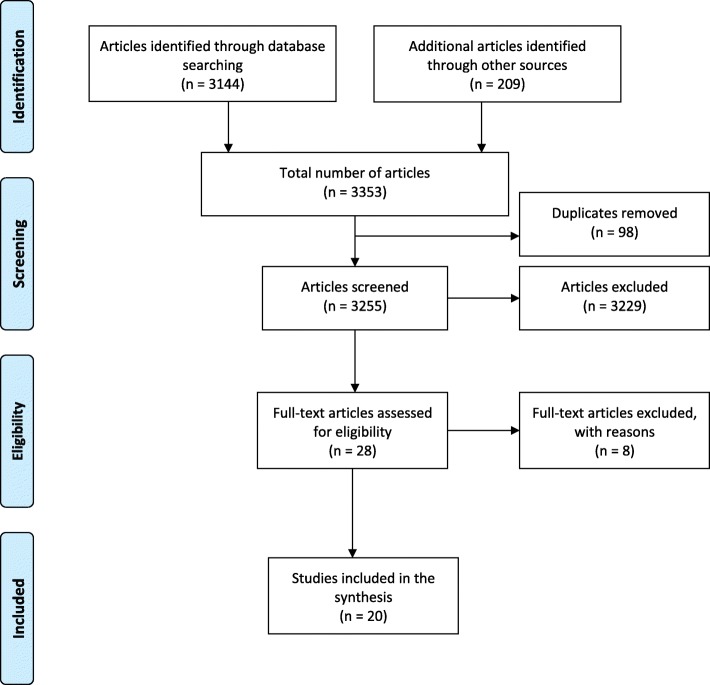
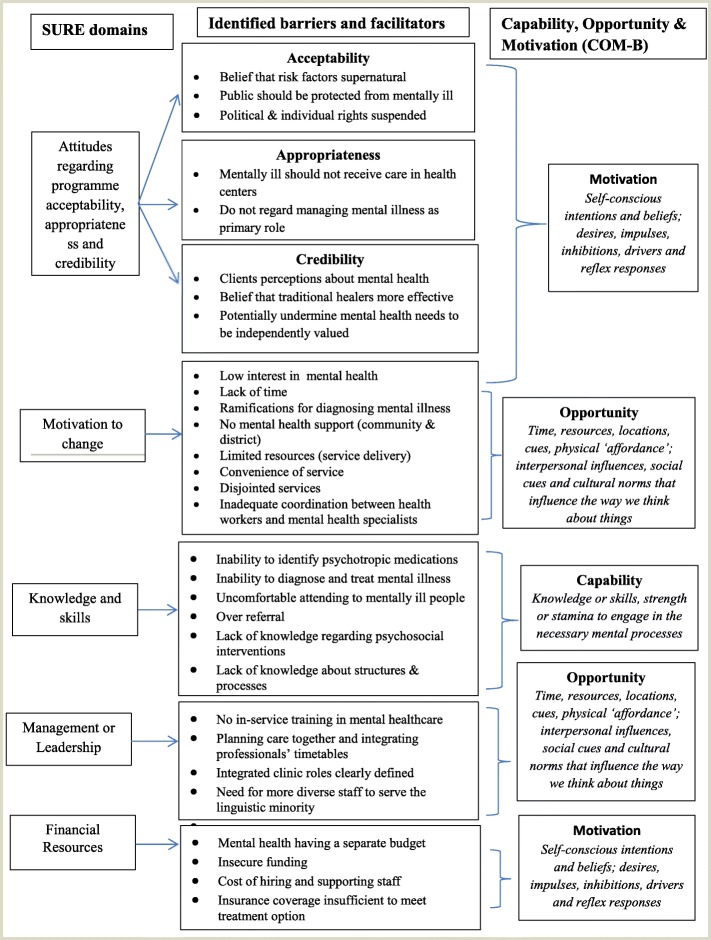
The objective of the review was to synthesize evidence of barriers and facilitators to the integration of mental health services into PHC from existing literature. The structure of the review was guided by the SPIDER framework which involves the following: Sample or population of interest—primary care providers (PCPs); Phenomenon of Interest—integration of mental health services into primary health care (PHC); Design—influenced robustness and analysis of the study; Evaluation—outcomes included subjective outcomes (views and attitudes); and Research type—qualitative, quantitative, and mixed methods studies. Studies that described mental health integration in PHC settings, involved primary care providers, and presented barriers/facilitators of mental health integration into PHC were included in the review. The sources of information included PubMed, PsycINFO, Cochrane Central Register of Controlled trials, the WHO website, and OpenGrey. Assessment of bias and quality was done using two separate tools: the Critical Appraisal Skills Program (CASP) qualitative checklist and the Effective Public Health Practice Project Quality Assessment Tool for Quantitative Studies. Twenty studies met the inclusion criteria out of the 3353 search results. The most frequently reported barriers to integration of mental health services into PHC were (i) attitudes regarding program acceptability, appropriateness, and credibility; (ii) knowledge and skills; (iii) motivation to change; (iv) management and/or leadership; and (v) financial resources. In order to come up with an actionable approach to addressing the barriers, these factors were further analyzed along a behavior change theory. We have shown that the integration of mental health services into PHC has been carried out by various countries. The analysis from this review provides evidence to inform policy on the existing barriers and facilitators to the implementation of the mental health integration policy option. Not all databases may have been exhausted. PROSPERO 2016 (Registration Number: CRD42016052000 ) and published in BMC Systematic Reviews August 2017.
Overview
The claims and statistics of this paper haven’t been checked yet.
Free: it reads the open-access text and checks the first 5 claims that cite a source we can check. Create a free account to check every claim.
Integrity signals
Registry
Cites
Statistics
Figures
Verification
Claims the paper makes
The claims and statistics of this paper haven’t been checked yet.
Free: it reads the open-access text and checks the first 5 claims that cite a source we can check. Create a free account to check every claim.
Claims other papers make about this one
Each is checked against this paper’s own text: does it say what the citing paper says it does?
The source backs part of the claim, not all of it — or backs it for a different population, condition or comparison.
In the citing paper
“Such complexity necessitates frameworks that can map causal pathways, engage diverse stakeholders, and adapt to emergent challenges [16].”
From Co-creating systems change for mental health: a theory of change approach from the MeHPriC initiative in Lagos, Nigeria (2025) · cites this paper as [16]
Experimental — accuracy not yet measuredThe cited source says what the claim attributes to it.
In the citing paper
“However, integrating mental health into PHC is a complex systems intervention involving multiple stakeholders and dynamic implementation contexts.”
From Co-creating systems change for mental health: a theory of change approach from the MeHPriC initiative in Lagos, Nigeria (2025) · cites this paper as [16]
Self-check
Percentages, sums and reported differences re-computed from the paper’s own numbers.
The self-check needs the paper’s full text.
Citations
Cites
Preferred Reporting Items for Systematic Reviews and Meta-Analyses: the PRISMA statement
Moher, D., Liberati, A., Tetzlaff, J., Altman, D. G., & for the PRISMA Group (2009) · BMJ · doi:10.1136/bmj.b2535 · Cited by 83,823
Preferred Reporting Items for Systematic Reviews and Meta-Analyses: The PRISMA Statement
Moher, D., Liberati, A., Tetzlaff, J., Altman, D. G., & The PRISMA Group (2009) · PLoS Medicine · doi:10.1371/journal.pmed.1000097 · Cited by 64,042 · cited 1×
“The review was conducted according to the Preferred Reporting Items for Systematic Reviews and Meta-Analyses (PRISMA) checklist recommended for systematic reviews [31], as outlined in Additional file 1, and the results were analyzed following the “best fit” framework synthesis.”
MethodWang, G., Ma, R., Qiao, G., Wada, K., Aizawa, Y., & Satoh, T. (2015) · Integrative Medicine International · doi:10.1159/000368408 · Cited by 18,657
Michie, S., van Stralen, M. M., & West, R. (2011) · Implementation Science · doi:10.1186/1748-5908-6-42 · Cited by 13,697 · cited 1×
“Motivation is all those brain processes that energize and direct behavior, not just goals and conscious decision-making; it includes habitual processes, emotional responding, and analytical decision-making [33].”
Whiteford, H. A., Degenhardt, L., Rehm, J., Baxter, A. J., Ferrari, A. J., Erskine, H. E., Charlson, F. J., Norman, R. E., Flaxman, A. D., Johns, N., et al. (2013) · The Lancet · doi:10.1016/s0140-6736(13)61611-6 · Cited by 6,006
Beyond PICO: The SPIDER Tool for Qualitative Evidence Synthesis
Cooke, A., Smith, D., & Booth, A. (2012) · Qualitative Health Research · doi:10.1177/1049732312452938 · Cited by 2,608
A systematic review of barriers to and facilitators of the use of evidence by policymakers
Oliver, K., Innvar, S., Lorenc, T., Woodman, J., & Thomas, J. (2014) · BMC Health Services Research · doi:10.1186/1472-6963-14-2 · Cited by 1,346 · cited 1×
“Understanding barriers and facilitators influencing the actions of PCPs using the COM-B system of behavior change provides a practical way of addressing barriers related to the integration of mental health care services into PHC which may improve the implementation of the policy option [62].”
Barriers to improvement of mental health services in low-income and middle-income countries
Saraceno, B., van Ommeren, M., Batniji, R., Cohen, A., Gureje, O., Mahoney, J., Sridhar, D., & Underhill, C. (2007) · The Lancet · doi:10.1016/s0140-6736(07)61263-x · Cited by 1,088 · cited 1×
“Up to 85% of people with severe mental illness in low- and middle-income countries (LMIC) receive no treatment for their disorder [3, 4].”
Human resources for mental health care: current situation and strategies for action
Kakuma, R., Minas, H., van Ginneken, N., Dal Poz, M. R., Desiraju, K., Morris, J. E., Saxena, S., & Scheffler, R. M. (2011) · The Lancet · doi:10.1016/s0140-6736(11)61093-3 · Cited by 979 · cited 1×
“Furthermore, evidence shows that mental health care can be delivered effectively in PHC settings and that once identified, most mental illnesses can be treated using cost-effective means [10, 15, 16].”
Barriers and Strategies in Guideline Implementation—A Scoping Review
Fischer, F., Lange, K., Klose, K., Greiner, W., & Kraemer, A. (2016) · Healthcare · doi:10.3390/healthcare4030036 · Cited by 900 · cited 1×
“The closest studies were a scoping review that examined the barriers and strategies to the implementation of guidelines but not COM-B related [58] and another that assessed the utility of a psychometric tool by general practitioners which utilized the COM-B framework [59].”
Research works printed but not linked: 5
- World Health Organization Mental health policy, planning & service development integrating systems & services, integrating people 2007 Geneva World Health Organization
- Whiteford HA Ferrari AJ Degenhardt L Feigin V Vos T Patel V Chisholm D Dua T Laxminarayan R Medina-Mora ME Global burden of mental, neurological, and substance use disorders: an analysis from the Global Burden of Disease Study 2010 Mental, neurological, and substance use disorders: disease control priorities, Third Edition (Volume 4) 2016 Washington (DC) The International Bank for Reconstruction and Development / The World Bank (c) 2016 International Bank for Reconstruction and Development / The World Bank.
- World Health Organization Organization WH Improving health systems and services for mental health 2009 Geneva WHO Press 27
- Critical Appraisal Skills Programme (CASP). CASP Qualitative Checklist. Oxford; 2014.
- Thomas H Quality assessment tool for quantitative studies 2003 Toronto McMaster University
Cited by
Nilsen, P., & Bernhardsson, S. (2019) · BMC Health Services Research · doi:10.1186/s12913-019-4015-3 · Cited by 1,014
Le, P. D., Eschliman, E. L., Grivel, M. M., Tang, J., Cho, Y. G., Yang, X., Tay, C., Li, T., Bass, J., & Yang, L. H. (2022) · Implementation Science · doi:10.1186/s13012-021-01179-z · Cited by 233
“, integration into primary care, [22]).”
Troup, J., Fuhr, D. C., Woodward, A., Sondorp, E., & Roberts, B. (2021) · International Journal of Mental Health Systems · doi:10.1186/s13033-020-00431-1 · Cited by 140
Morena, A., Gaias, L. M., & Larkin, C. (2022) · Frontiers in Health Services · doi:10.3389/frhs.2022.896885 · Cited by 138
“Such barriers can persist and limit a provider’s ability to deploy or sustain an EBP, even when they intend to do so (4, 30).”
BackgroundA reflection of the current status of the mental healthcare system in South Africa
Sorsdahl, K., Petersen, I., Myers, B., Zingela, Z., Lund, C., & van der Westhuizen, C. (2023) · SSM - Mental Health · doi:10.1016/j.ssmmh.2023.100247 · Cited by 98
Hentges, R. F., Graham, S. A., Fearon, P. R. M., Tough, S., & Madigan, S. L. (2020) · Depression and Anxiety · doi:10.1002/da.23039 · Cited by 85
“(Wakida et al., 2018).”
Arundell, L.-L., Greenwood, H., Baldwin, H., Kotas, E., Smith, S., Trojanowska, K., & Cooper, C. (2020) · Systematic Reviews · doi:10.1186/s13643-020-01333-6 · Cited by 53
Yousefi, F., Dehnavieh, R., Laberge, M., Gagnon, M.-P., Ghaemi, M. M., Nadali, M., & Azizi, N. (2025) · BMC Primary Care · doi:10.1186/s12875-025-02785-2 · Cited by 70
“The flexibility and specificity of SPIDER make it a valuable tool for identifying relevant studies in exploratory research [54, 55].”
Sorsdahl, K., Naledi, T., Lund, C., Levitt, N. S., Joska, J. A., Stein, D. J., & Myers, B. (2021) · Journal of Health Services Research & Policy · doi:10.1177/1355819620954232 · Cited by 47
Rameez, S., & Nasir, A. (2023) · Journal of Family Medicine and Primary Care · doi:10.4103/jfmpc.jfmpc_391_22 · Cited by 60
“[39] Using our complimentary analysis framework, the obstacles and promoters that influence the primary care practitioner’s activities offer a practical strategy to overcome hurdles linked to mental healthcare services in primary care to improve the health outcomes of LMICs.”
BackgroundMethodInfluentialStigma as a barrier to suicide prevention efforts in Iran
Masoomi, M., Hosseinikolbadi, S., Saeed, F., Sharifi, V., Nadoushan, A. H. J., & Shoib, S. (2023) · Frontiers in Public Health · doi:10.3389/fpubh.2022.1026451 · Cited by 59
Orangi, S., Orangi, T., Munge, K., & Honda, A. (2023) · BMJ Open · doi:10.1136/bmjopen-2022-070399 · Cited by 57
The Impact of Mental Illness on Postoperative Adverse Outcomes After Outpatient Joint Surgery
Kamalapathy, P. N., Kurker, K. P., Althoff, A. D., Browne, J. A., & Werner, B. C. (2021) · The Journal of Arthroplasty · doi:10.1016/j.arth.2021.04.002 · Cited by 44
Wakida, E. K., Okello, E. S., Rukundo, G. Z., Akena, D. H., Alele, P. E., Talib, Z. M., & Obua, C. (2019) · International Journal of Mental Health Systems · doi:10.1186/s13033-019-0272-0 · Cited by 47
Self-citationSiqueira, M. M., Coube, M., Millett, C. J., Rocha, R., & Hone, T. (2021) · Systematic Reviews · doi:10.1186/s13643-021-01714-5 · Cited by 55
Adeniran, E. A., Quinn, M., Wallace, R. J., Walden, R., Labisi, T., Olaniyan, A. C., Brooks, B., & Pack, R. P. (2023) · Drug and Alcohol Dependence Reports · doi:10.1016/j.dadr.2023.100152 · Cited by 53
Mekonen, T., Chan, G., Mossie, T. B., Menberu, M., Davidson, L., Hides, L. M., & Leung, J. (2022) · PLoS ONE · doi:10.1371/journal.pone.0278106 · Cited by 45
“Consistent with the results of the current study, previous studies reported the common perceptions among primary care clinicians that primary care facilities are not suited to treat mental illness and that specialists should treat mental illness [34, 35].”
ResultInforme mundial sobre la salud mental: Transformar la salud mental para todos
de la Salud, O. P. (2023) · Pan American Health Organization eBooks · doi:10.37774/9789275327715 · Cited by 103
van der Keylen, P., Tomandl, J., Wollmann, K., Mohler, R. A., Sofroniou, M., Maun, A., Voigt-Radloff, S., & Frank, L. (2020) · Journal of Medical Internet Research · doi:10.2196/18816 · Cited by 38
“CASP offers distinct and easy-to-use checklists for critically appraising different forms of evidence and studies adapted from the JAMA Users Guide to the Medical Literature [28] and is used in similar reviews [29].”
Towards comprehensive mental health care: experiences and challenges of psychosocial care in Brazil
Sampaio, M. L., & Júnior, J. P. B. (2021) · BMC Public Health · doi:10.1186/s12889-021-11397-1 · Cited by 53
“Many countries still show difficulties in MH service access [7], MH-related human rights violations [6], insufficient social integration [8], care not centred on individuals and their family members [9], and weaknesses in response to crisis patients [10].”
BackgroundGamieldien, F., Galvaan, R., MYERS, B. J., & Sorsdahl, K. R. (2021) · Community Mental Health Journal · doi:10.1007/s10597-021-00904-8 · Cited by 38
“Challenges faced by mental health services in the primary care setting relate to inadequate infrastructure, poor organisation, shortage of medication, insufficient staff with mental health training, stigma towards people with SMI, long waiting times, lack of rehabilitation and mental health promotion services, limited…”
BackgroundSingh, S., & Nambiar, V. (2024) · Journal of Applied Security Research · doi:10.1080/19361610.2024.2331885 · Cited by 43
“This framework was chosen due to its high amiability with qualitative and mixed-methods approach (Wakida et al., 2018).”
Yitbarek, K., Birhanu, Z., Tucho, G. T., Anand, S., Agenagnew, L., Ahmed, G., Getnet, M., & Tesfaye, Y. (2021) · Risk Management and Healthcare Policy · doi:10.2147/rmhp.s298190 · Cited by 37
Fabian, K. E., Muanido, A., Cumbe, V., Manaca, N., Hicks, L., Weiner, B. J., Sherr, K., & Wagenaar, B. H. (2020) · Health Policy and Planning · doi:10.1093/heapol/czaa114 · Cited by 30
Lienhart, G., Masson, E., Farge, P., Schott, A., Thivichon‐Prince, B., & Chanelière, M. (2023) · BMC Oral Health · doi:10.1186/s12903-023-03458-1 · Cited by 48
Barriers and challenges of using health information technology in home care: a systematic review
Galavi, Z., Montazeri, M., & Ahmadian, L. (2022) · The International Journal of Health Planning and Management · doi:10.1002/hpm.3492 · Cited by 27
Komu, C. K., Ngigi, M., & Melson, A. J. (2025) · Mental Health Science · doi:10.1002/mhs2.70006 · Cited by 41
Kigozi, G., Heunis, J. C., & Engelbrecht, M. (2023) · BMC Nursing · doi:10.1186/s12912-023-01188-x · Cited by 26
“A systematic review of studies conducted in developed and developing countries also alluded to the preponderance of negative attitudes among healthcare providers, which would benefit from behaviour change interventions [24].”
BackgroundPathways towards scaling up Problem Management Plus in Turkey: a theory of change workshop
Fuhr, D. C., Acartürk, C., Uygun, E., McGrath, M., İlkkurşun, Z., Kaykha, S., Sondorp, E., Sijbrandij, M., Ventevogel, P., Cuijpers, P. J., et al. (2020) · Conflict and Health · doi:10.1186/s13031-020-00278-w · Cited by 26
Luitel, N. P., Jordans, M. J. D., Subba, P., & Komproe, I. H. (2020) · BMC Family Practice · doi:10.1186/s12875-020-01266-y · Cited by 28
“Problems in regular supply of psychotropic medicines have also been reported in various studies, and this is considered as one of the biggest challenges to integration of mental health services into primary health care system [27].”
BackgroundAnyebe, E. E., Olisah, V., Garba, S. N., Murtala, H. H., & Aliyu, D. (2021) · International Journal of Africa Nursing Sciences · doi:10.1016/j.ijans.2021.100376 · Cited by 23
The Problem of Self-Disclosure of Self-Harming Behaviour in Adolescence
Démuthová, S., Václavíková, I., Selecká, L., & Blatný, M. (2020) · Postmodern Openings · doi:10.18662/po/11.4/220 · Cited by 22
“There are several reasons - for a review, see e.g. Bruwer et al. (2011), Wakida et al. (2018) -; however, the key and primary reason is the individual’s willingness to disclose the problem to others.”
BackgroundPapachristopoulos, I., Sazakli, E., & Leotsinidis, M. (2023) · BMC Family Practice · doi:10.1186/s12875-023-02017-5 · Cited by 26
“In order to guide an efficient support of mental disorders at the primary healthcare, the following recommendations are deduced from this study, also supported by the literature: i) theoretical learning should be accompanied by practical training, so that education is tied with real clinical practice [4], ii) an effic…”
BackgroundMethodOcchipinti, J., Skinner, A., Carter, S., Heath, J., Lawson, K. D., McGill, K., McClure, R., & Hickie, I. B. (2021) · Scientific Reports · doi:10.1038/s41598-021-90762-x · Cited by 19
Barriers and Facilitators to Mental Health Service Integration: A Scoping Review
Searby, A., Burr, D., Carolin, R., & Hutchinson, A. M. (2024) · International Journal of Mental Health Nursing · doi:10.1111/inm.13449 · Cited by 33
“These concerns were echoed in a systematic review conducted by Wakida et al. (2018), where ongoing funding for integration initiatives was recognised as a challenge for sustainable service integration in several studies.”
Staab, E. M., Wan, W., Li, M., Quinn, M. T., Campbell, A., Gedeon, S., Schaefer, C. T., & Laiteerapong, N. (2021) · Families Systems & Health · doi:10.1037/fsh0000660 · Cited by 15
Honisett, S., Hall, T., Hiscock, H., & Goldfeld, S. R. (2022) · Australian and New Zealand Journal of Public Health · doi:10.1111/1753-6405.13292 · Cited by 15
Kenwright, M., Fairclough, P., McDonald, J., & Pickford, L. (2024) · International Journal of Nursing Studies Advances · doi:10.1016/j.ijnsa.2024.100182 · Cited by 15
“These include: Lack of staff knowledge about system structures and work processes; lack of integrated health professionals ’ timetables; uncoordinated care planning; no clearly defined integrated clinic roles and disjointed services within a decentralised system (Wakida et al., 2018).”
BackgroundBeaudin, J., Chouinard, M., Hudon, É., & Hudon, C. (2024) · BMC Family Practice · doi:10.1186/s12875-024-02464-8 · Cited by 24
“The lack of knowledge and skills specific to CMD (anxiety or depression) is a well-known problem in Quebec’s primary care settings [47, 48], and elsewhere in the world [49, 50].”
BackgroundYang, B. K., Idzik, S. R., & Evans, P. (2021) · International Journal of Nursing Studies · doi:10.1016/j.ijnurstu.2021.103956 · Cited by 16
Behavioral Health in Primary Care
Petts, R. A., & Gaynor, S. T. (2021) · Pediatric Clinics of North America · doi:10.1016/j.pcl.2021.02.010 · Cited by 14
Woodward, A., Burchert, S., Barry, A. S., Broerse, J. E. W., Sondorp, E., Bold, A., Ruberl, A., Hessling, J. M., Knaevelsrud, C., Roberts, B., et al. (2023) · SSM - Mental Health · doi:10.1016/j.ssmmh.2023.100231 · Cited by 19
“…acceptability was anticipated as a major influencing factor given its ubiquity in scaling up programmes (Zamboni et al., 2019) but especially given its potential to act as a barrier to the integration of mental health services into primary healthcare (Esponda et al., 2020; Wakida et al., 2018).”
BackgroundImpact Evaluation of Technology Driven Mental Health Capacity Building in Bihar, India
Malathesh, B. C., Bairy, B. K., Kumar, C. N., Nirisha, P. L., Gajera, G., Pandey, P. K., Manjunatha, N., Ganesh, A., Mehrotra, K., Bhaskarapillai, B., et al. (2021) · Psychiatric Quarterly · doi:10.1007/s11126-021-09945-4 · Cited by 18
Rukundo, G. Z., Wakida, E. K., Karungi, C. K., Asasira, J., Kumakech, E., & Obua, C. (2023) · PLoS ONE · doi:10.1371/journal.pone.0285310 · Cited by 13
“However, this is not yet realized in developing countries such as Uganda [3, 4].”
BackgroundSelf-citationMayoyo, E. M., Chenge, F. M., Sow, A., Criel, B., Michielsen, J., den Broeck, K. V., & Coppieters, Y. (2024) · BMC Family Practice · doi:10.1186/s12875-024-02460-y · Cited by 18
“A number of internal and external health systems and contextual factors have been identified in the literature [19–21].”
BackgroundWakida, E. K., Obua, C., Musisi, S., Rukundo, G. Z., Ssebutinde, P., Talib, Z. M., Akena, D. H., & Okello, E. S. (2019) · International Journal of Mental Health Systems · doi:10.1186/s13033-019-0304-9 · Cited by 15
Self-citationYousuf, M. S., Harvey, H. L., Sharei, A. A., Albakri, K. A., & Alabdallat, Y. J. (2022) · Jordan Medical Journal · doi:10.35516/jmj.v56i3.362 · Cited by 11
Hine, R. H., Mitchell, E., Whitehead-Annett, L., Duncan, Z., & McArdle, A. M. (2023) · Journal of Public Health · doi:10.1007/s10389-023-01855-y · Cited by 13
“This issue has been highlighted in previous literature (Wakida et al. 2018) The results from this study suggest proactive planning for disasters is underdeveloped and currently insufficient to meet the urgent and substantial needs once a disaster strikes.”
Gigaba, S. G., Luvuno, Z., Bhana, A., van Rensburg, A. J., Mthethwa, L., Rao, D., Hongo, N., & Petersen, I. (2023) · Learning Health Systems · doi:10.1002/lrh2.10389 · Cited by 14
Dieu, S. Z. Y., Low, M. K., & Mishu, M. P. (2025) · PLoS ONE · doi:10.1371/journal.pone.0316825 · Cited by 23
“Health systems often exhibit inadequate integration of mental health services into the broader healthcare policies or within primary healthcare [22–24].”
Brown, V., Tran, H. N. Q., Blake, M. R., Rachel, L., & Moodie, M. (2020) · Health Research Policy and Systems · doi:10.1186/s12961-020-00633-6 · Cited by 11
“Given the call for improved theoretical approaches to implementation and scale-up [12] and the evidence that indicates that economic constructs may be both barriers and facilitators to successful scale-up and implementation of evidence-based practices [4, 62], this suggests that a more comprehensive approach to the ex…”
BackgroundCommunity-Based Psychiatric Services in Sri Lanka: a Model by WHO in the Making
Rajasuriya, M., Hewagama, M., Ruwanpriya, S., & Wijesundara, H. (2021) · Consortium Psychiatricum · doi:10.17816/cp106 · Cited by 11
Mushi, D., Hanlon, C., Francis, J. M., Candida, M., Demissie, M., & Teferra, S. (2023) · BMC Family Practice · doi:10.1186/s12875-023-02061-1 · Cited by 12
“However, participants reported the following factors facilitating the integration of the AUD intervention in PHC, use of the existing health system resources, and the existence of structured plans to deliver the intervention, similar to another study in Eastern Africa [20] and building the capacity of providers to man…”
ResultPeycheva, A., Guevara, A. F., & Jordans, M. J. D. (2023) · SSM - Mental Health · doi:10.1016/j.ssmmh.2023.100284 · Cited by 13
van Rensburg, A. J., Hongo, N., Mthethwa, L., Grant, M., Kathree, T., Luvuno, Z., Leung, A., Bhana, A., Rao, D., & Petersen, I. (2024) · BMJ Global Health · doi:10.1136/bmjgh-2024-015165 · Cited by 12
Woodward, A., Dieleman, M. A., Sondorp, E., Roberts, B., Fuhr, D. C., Ventevogel, P., Sijbrandij, M., & Broerse, J. E. W. (2021) · Intervention · doi:10.4103/intv.intv_29_20 · Cited by 15
Groen, G., Jörns‐Presentati, A., Dessauvagie, A., Seedat, S., van den Heuvel, L. L., Suliman, S., Grobler, G. P., Jansen, R., Mwape, L., Katowa-Mukwato, P., et al. (2022) · Issues in Mental Health Nursing · doi:10.1080/01612840.2022.2124003 · Cited by 13
“Enabling HCW in PHC to better detect mental health problems and refer patients in need could be a huge step toward improved treatment coverage for mental disorders (Wakida et al., 2018).”
BackgroundSansbury, G. M., Pence, B. W., Zimba, C. C., Yanguela, J., Landrum, K. R., Matewere, M., Mbota, M., Malava, J., Tikhiwa, H. A., Morrison, A. M., et al. (2023) · BMC Health Services Research · doi:10.1186/s12913-023-10344-7 · Cited by 11
“Emerging evidence suggests that leadership can act as both a facilitator of and a barrier to mental health EBP implementation [32, 33].”
BackgroundMedical–Dental Integration in a Rural Community Health Center: A Qualitative Program Evaluation
Pawloski, C., Hilgert, J. B., Senturia, K., Davis, S., Koday, M., & Cunha‐Cruz, J. (2021) · Health Promotion Practice · doi:10.1177/15248399211002832 · Cited by 9
“Integrated organizational changes between medical and dental services have not received system-level assessments comparable with those conducted in primary care and behavioral health (Wakida et al., 2018).”
BackgroundNilsson, E., Johanson, S., Behm, L., & Bejerholm, U. (2023) · BMC Nursing · doi:10.1186/s12912-023-01340-7 · Cited by 31
“To access MH services in this context is perceived as a challenge for patients and similarly difficult for the providers across PHC services to maintain it [26, 27].”
BackgroundWomen’s Health Hubs: a rapid mixed-methods evaluation
Daniel, K., Bousfield, J., Hocking, L., Jackson, L., & Taylor, B. (2024) · Health and Social Care Delivery Research · doi:10.3310/jyft5036 · Cited by 17
Referral to Digital Parent Training in Primary Care: Facilitators and Barriers
Fehrenbacher, C., Schoeny, M. E., Reed, M., Shattell, M. M., & Breitenstein, S. M. (2020) · Clinical Practice in Pediatric Psychology · doi:10.1037/cpp0000367 · Cited by 11
Hasan, M. Z., Singh, S., Arora, D., Jain, N., & Gupta, S. (2020) · Systematic Reviews · doi:10.1186/s13643-020-01514-3 · Cited by 9
Vara, M. D., Mira, A., Miragall, M., García-Palacios, A., Botella, C., Gili, M., Riera-Serra, P., García-Campayo, J., Mayoral-Cleries, F., & Baños, R. M. (2020) · International Journal of Environmental Research and Public Health · doi:10.3390/ijerph17218094 · Cited by 7
Ceccarelli, C., Prina, E., Alkasaby, M. A., Cadorin, C., Gandhi, Y., Cristofalo, D., Jamei, Y. A., Muneghina, O., Barbui, C., Jordans, M. J. D., et al. (2023) · Clinical Psychology Review · doi:10.1016/j.cpr.2023.102371 · Cited by 12
Fleury, M., Rochette, L., Cao, Z., Grenier, G., Massamba, V. K., & LESAGE, A. D. (2025) · BMC Family Practice · doi:10.1186/s12875-024-02674-0 · Cited by 9
Aebi, N. J., Baenteli, I., Fink, G., Meinlschmidt, G., Schaefert, R., Schwenkglenks, M. M., Studer, A., Trost, S., Tschudin, S., & Wyss, K. (2023) · PLoS ONE · doi:10.1371/journal.pone.0285395 · Cited by 7
“health is to the detriment of mental health conditions [10, 17, 21].”
BackgroundInfluentialO’Dell, S. M., Fisher, H. R., Schlieder, V., Klinger, T., Kininger, R. L., Cosottile, M., Cummings, S., & DeHart, K. (2021) · JMIR Pediatrics and Parenting · doi:10.2196/27551 · Cited by 6
“Research on elements of effective implementation and scaling of FTF behavioral health services in primary care has robustly shown that effectiveness is influenced by contextual factors such as provider knowledge and skills about and attitudes toward behavioral health topics, motivation to change, management and leader…”
BackgroundMokaya, A. G., Dlamini, N., Nkosi, S., Nzuza, M., Smith, T., Wambua, G. N., Hunt, X., Stein, A. L., & Ngwenya, N. B. (2025) · Wellcome Open Research · doi:10.12688/wellcomeopenres.24117.1 · Cited by 8
“…in Africa, where young people often experience barriers to mental health care, including stigma surrounding mental illness 20–22 , inadequate integration of mental health into primary healthcare systems 23–25 and the aforementioned severe shortage of mental health professionals, among others.”
Karpenko, O., Melikhov, O. G., Tyazhelnikov, A. A., & Kostyuk, G. P. (2021) · Consortium Psychiatricum · doi:10.17816/cp112 · Cited by 6
“30 The effect of PCPhs’ mental health training is studied within the WHO mhGAP initiative in low-to-middle income countries, 31 and the number of referrals to specialized care is one of the estimated outcomes in some studies.”
BackgroundViglione, C., & Boynton-Jarrett, R. (2023) · Maternal and Child Health Journal · doi:10.1007/s10995-022-03564-6 · Cited by 4
“…routine and predictable barriers in translation of evidencebased practices including staff engagement, space, funding, technology, and cultural and translation barriers (Gagnon et al., 2022; Fam & Ferrant, 2018; Wakida et al., 2018; Chartrand et al., 2019; Brady et al., 2020; Toscos et al., 2018).”
BackgroundJensen, A., Halling, A., Pirouzifard, M., & Lindström, M. (2025) · BMC Family Practice · doi:10.1186/s12875-025-02866-2 · Cited by 6
“Integrating mental health services within primary care structures has proved difficult [29].”
Iwelunmor, J., Ogedegbe, G. G., Dulli, L., Aifah, A. A., Nwaozuru, U., Obiezu‐Umeh, C., Onakomaiya, D. O., Rakhra, A., Mishra, S., Colvin, C. L., et al. (2023) · Implementation Science Communications · doi:10.1186/s43058-023-00425-3 · Cited by 8
“However, poor or limited readiness may lead to resistance and reduce the effectiveness of the implementation process [10, 13].”
BackgroundUdo, S., Ogbu, P. S., Tsaku, P. A., Tukur, A. L., & NewMarch, A. (2024) · International Health · doi:10.1093/inthealth/ihae003 · Cited by 6
Spence, T., Gibbs, J., Wong, G., Howarth, A., Copas, A. J., Crundwell, D., Jackson, L., Mercer, C. H., Mohammed, H. P., Apea, V., et al. (2025) · Journal of Medical Internet Research · doi:10.2196/72812 · Cited by 7
“…has observed that financial resources are one of the most commonly cited contextual factors affecting implementation, and as Nilsen et al [32] note, implementation research so far has focused predominantly on the need for sufficient financial resources to enable implementation to happen [36].”
Perceptions of integrated rehabilitation service delivery in a metropolitan district
Maseko, L. J., Adams, F., & Myezwa, H. (2024) · African Journal of Primary Health Care & Family Medicine · doi:10.4102/phcfm.v16i1.4069 · Cited by 7
“43 The rehabilitation philosophy emphasises a comprehensive approach to patient care, through a clear and continuous person-centred approach.”
BackgroundMoodley, S. V., Wolvaardt, L., & Grobler, C. (2024) · BMC Medical Education · doi:10.1186/s12909-024-05637-2 · Cited by 5
Calik, A., Liu, H. M., Montgomery, A. K., Honisett, S., Munster, K. V., Morris, T., Eapen, V., Goldfeld, S. R., Hiscock, H., Eastwood, J. G., et al. (2024) · Health Research Policy and Systems · doi:10.1186/s12961-024-01164-0 · Cited by 6
Rugakingira, A., Yondu, E., Thobias, J. M., Dionis, I., Kamata, C. C., Kilonzi, M., Metta, E. O., & Sirili, N. S. (2024) · HIV Research & Clinical Practice · doi:10.1080/25787489.2024.2398869 · Cited by 5
“Lack of adequate knowledge and skills of the added services is reported as one of the drawbacks during the integration of healthcare services [36,37].”
Skjærpe, J. N., Joa, I., Willumsen, E., Hegelstad, W. T. V., Iakovleva, T. A., & Storm, M. (2022) · Journal of Multidisciplinary Healthcare · doi:10.2147/jmdh.s384072 · Cited by 6
“These findings are aligned with research emphasizing the importance of adequate health record systems for proper provider-level coordination.(8,39,40) Our results also highlighted electronic messages as a beneficial communication tool in care coordination, but the system does not always work as desired.”
ResultSayegh, C. S., Chavannes, M., Moss, I. K., Featherstone, R. E., & Urquiza, I. (2023) · Journal of Pediatric Gastroenterology and Nutrition · doi:10.1002/jpn3.12060 · Cited by 5
Mental health crisis situations: the nurse’s work in Primary Health Care
de Paula, G. B., Akra, N. M. A. E., Córdova, L. F., Cardoso, L., Zanetti, A. C. G., & Giacon-Arruda, B. C. C. (2024) · Revista Latino-Americana de Enfermagem · doi:10.1590/1518-8345.7015.4356 · Cited by 4
Wakida, E. K., Atuhaire, C. D., Karungi, C. K., Maling, S., & Obua, C. (2021) · Advances in Medical Education and Practice · doi:10.2147/amep.s339752 · Cited by 4
Self-citationEkusai‐Sebatta, D., Ocan, M., Singh, S., Kyaddondo, D., Akena, D. H., Nakalembe, L., Apunyo, R., Kinengyere, A. A., Namisango, E., Obuku, E. A., et al. (2023) · PLoS ONE · doi:10.1371/journal.pone.0292996 · Cited by 6
Self-citationMadundo, K., Mwobobia, J. M., Perry, M., Knippler, E. T., Amiri, I., Msoka, E. F., Tarimo, C. S., Katiti, V. W., Mmbaga, B. T., Goldston, D. B., et al. (2025) · PLOS mental health. · doi:10.1371/journal.pmen.0000268 · Cited by 6
“Some studies have also reported on other challenges such as providers’ knowledge and skills [35–37], and inadequate training in use of mental health screening tools [33].”
Singh, S., & Nambiar, V. (2024) · Advances in medical technologies and clinical practice book series · doi:10.4018/979-8-3693-1123-3.ch011 · Cited by 4
Comparing Short Cognitive Screening Instruments in an Outreach Memory Clinic in Primary Care
Ó’Caoimh, R., Cadoo, S., Daly, B., & Molloy, D. W. (2025) · International Journal of Environmental Research and Public Health · doi:10.3390/ijerph22030410 · Cited by 5
“These mirror broader challenges delivering mental health services in the community in low-and middle-income [10] as well as higher-income countries [11].”
Luo, M., Wang, K., Yue, Y., & Chen, C. (2025) · Asian Nursing Research · doi:10.1016/j.anr.2025.07.007 · Cited by 3
Corso, M., Martin, K., Salmi, L., Wright, D. S., Quon, J., Cancelliere, C., Mior, S. A., Murnaghan, K., & Côté, P. (2025) · BMC Family Practice · doi:10.1186/s12875-025-03132-1 · Cited by 4
“…and treat-ment, clinician time constraints, inadequate training in the use of mental health screening tools, and inability to diagnose and treat MHDs [8, 9] While several screening tools are available [10], there is no consensus on which tools are best suited for primary care settings [11–13].”
Menear, M., Ashcroft, R., Dahrouge, S., Silveira, J., Booton, J., Emode, M., & McKenzie, K. J. (2024) · BMC Family Practice · doi:10.1186/s12875-024-02519-w · Cited by 5
“However, the delivery of high-quality, integrated mental health care in primary care remains a challenge, even in settings like FHTs that are aligned to the Patient-Centered Medical Home model [19–22].”
BackgroundRavichandran, N., Dillon, E., McCombe, G., Sietiņš, E., Broughan, J., O’Connor, K., Gulati, G. M., Frawley, T., Kelly, B. D., Guérandel, A., et al. (2025) · Irish Journal of Psychological Medicine · doi:10.1017/ipm.2025.24 · Cited by 3
“Increased workload and limited con-sultation time, inequities in funding, and a general low prioritisation of mental health care at both the local and national levels also hinder the delivery of optimal care in primary care settings (Wakida et al .”
Gill, S., Kambou, C., & Mauriello, B. (2025) · American Journal of Qualitative Research · doi:10.29333/ajqr/16539 · Cited by 5
Measuring Behavioral Health Integration in Primary Care
Pourat, N., Tieu, L., & Martinez, A. E. (2022) · Population Health Management · doi:10.1089/pop.2022.0160 · Cited by 5
“10,12,35,38”
Messer, J., Tzartzas, K., Marion‐Veyron, R., & Cohidon, C. (2023) · International Journal of Public Health · doi:10.3389/ijph.2023.1606368 · Cited by 6
Skjærpe, J. N., Iakovleva, T. A., & Storm, M. (2024) · BMC Health Services Research · doi:10.1186/s12913-024-10999-w · Cited by 5
“Research shows that such challenges are common in care coordination [3, 10, 65].”
BackgroundAdeleke, O. T., Adekunle, W. A., Oduniyi, O. A., Akinbode, A. O., Oluwasanya, A. N., Aibangbee, O., Orji, E. J., Olabode, A. T., & Ariba, A. J. (2025) · Discover Mental Health · doi:10.1007/s44192-025-00221-6 · Cited by 3
“…a lack of mental health care in-service training, combined with no formal discussions about mental health disorders with higher-level supervisors; (b) a lack of coordination between mental health specialists and general health workers; and (c) a lack of support from the district medical team [16].”
InfluentialLaRocco–Cockburn, A., Jakupcak, M., Bauer, A. M., Bowen, D. J., Bechtel, J. M., Koconis, N., & Fortney, J. C. (2022) · General Hospital Psychiatry · doi:10.1016/j.genhosppsych.2022.03.004 · Cited by 3
Ekeke, N., Iyama, F., Ossai, E. N., Chukwu, J., Eze, C. C., Egbule, D., Nwafor, C., Njoku, M. I., Meka, A., Odama, M., et al. (2024) · International Journal of Mycobacteriology · doi:10.4103/ijmy.ijmy_145_24 · Cited by 2
Wahlund, T., Spångberg, F., Lundqvist, V. V., & Andersson, E. (2025) · Internet Interventions · doi:10.1016/j.invent.2025.100842 · Cited by 1
Nilsson, E., Behm, L., Johanson, S., & Bejerholm, U. (2025) · Scandinavian Journal of Primary Health Care · doi:10.1080/02813432.2025.2587543 · Cited by 2
“…skills, and motivation for change, as well as insufficient management, leadership, resources, and strategies hinder this integration of services [14,19,22,25]. therefore, the availability of and access to mental health services of good quality still varies considerably across Phc [12,20,22].”
Influential
Metadata
- Authors
- Wakida, E. K., Talib, Z. M., Akena, D., Okello, E. S., Kinengyere, A., Mindra, A., & Obua, C.
- Affiliations
- Mbarara University of Science and Technology (UG)
- Makerere University (UG)
- Corresponding author
- Wakida, Edith K.
- ORCID
- Venue
- Systematic Reviews
- Published
- 2018-11-28
- Volume
- 7
- Issue
- 1
- ISSN
- 2046-4053 (ISSN-L)
- PMC
- PMC6264616
- OpenAlex
- W4251992581
- Cited by
- 219
- References
- 56
- Citations by year
- 2026: 34 · 2025: 37 · 2024: 42 · 2023: 39 · 2022: 19 · 2021: 25 · 2020: 19 · 2019: 4
- FWCI
- 1.86
- Type
- journal article
- Language
- en
- Open access
- gold
- doi.org
- Licence
- cc-by
- creativecommons.org/licenses/by/4.0/ (tdm)
- creativecommons.org/licenses/by/4.0/ (vor)
- Locations
- Systematic Reviews (publishedVersion, cc-by)
- Europe PMC (PubMed Central) (publishedVersion, cc-by)
- DOAJ (DOAJ: Directory of Open Access Journals) (submittedVersion, cc-by-sa)
- Funders
- Fogarty International Center (D43TW010128)
- Swedish Foundation for International Cooperation in Research and Higher Education (51180060)
- Topics
- Health Sciences › Medicine › Psychiatry and Mental health › Mental Health Treatment and Access
- Health Sciences › Health Professions › General Health Professions › Health Policy Implementation Science
- Social Sciences › Psychology › Clinical Psychology › Psychiatric care and mental health services
- Keywords
- mental health services, primary care, mental health integration, barriers to integration, primary care providers, program acceptability, provider knowledge and skills, leadership and management, financial resources, behaviour change theory, mental health policy
About these checks
Registry, retraction, Cites and statistics results are computed, not judged, with one exception: a printed reference that no index lists is read once by a model before it counts as a citation error. Claims are extracted by a model and kept only when their quote appears verbatim in the text; each cited source is then checked, with a model’s help, for whether it says what the claim relies on. Those verdicts can be wrong — read the claim’s quote and the cited source before relying on one.
Statistics and arithmetic are recomputed, not judged.
Confidence bands are shown only for fields calibrated on our annotated test set. None is calibrated yet, so no band is shown.
What counts as a claim ›How we measure confidence ›How we check this ›
Are you an author, or do you see a problem with this page? Request a review
Data sources
Bibliographic data: Semantic Scholar, OpenAlex, Crossref.
Contains information from the Semantic Scholar Academic Graph Datasets, made available under the ODC Attribution License (ODC-BY 1.0).
Semantic Scholar’s data is described in: Kinney, R., et al. (2023). The Semantic Scholar Open Data Platform. arXiv:2301.10140.
