

Barriers and facilitators to the integration of mental health services into primary health care: a systematic review
Open accessThe DOI matches its Crossref record; 55 of the 56 references it cites were found in a registry or an index.
Abstract
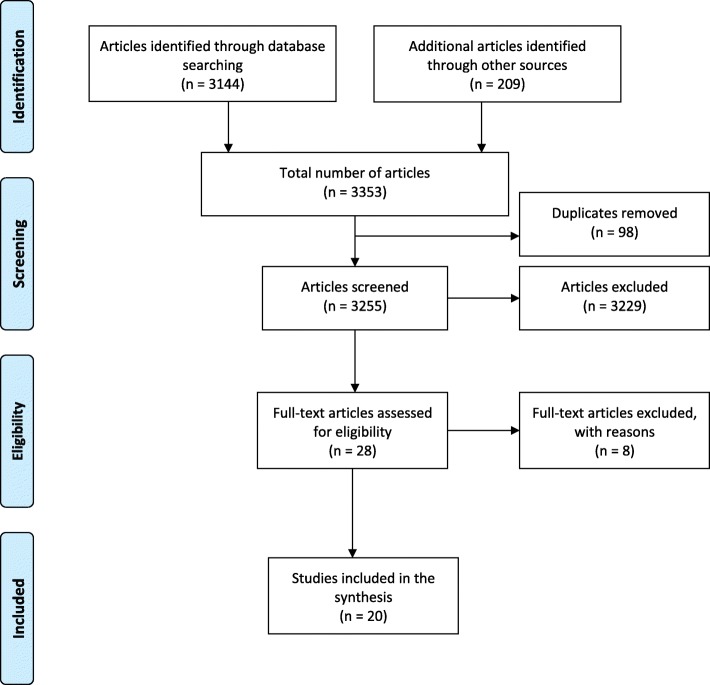
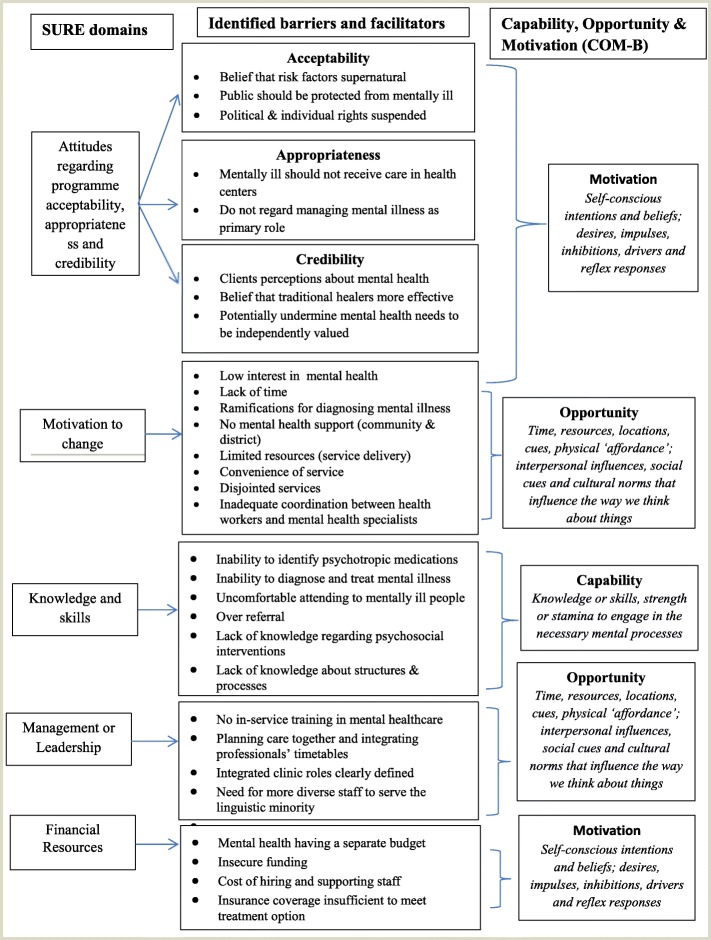
The objective of the review was to synthesize evidence of barriers and facilitators to the integration of mental health services into PHC from existing literature. The structure of the review was guided by the SPIDER framework which involves the following: Sample or population of interest—primary care providers (PCPs); Phenomenon of Interest—integration of mental health services into primary health care (PHC); Design—influenced robustness and analysis of the study; Evaluation—outcomes included subjective outcomes (views and attitudes); and Research type—qualitative, quantitative, and mixed methods studies. Studies that described mental health integration in PHC settings, involved primary care providers, and presented barriers/facilitators of mental health integration into PHC were included in the review. The sources of information included PubMed, PsycINFO, Cochrane Central Register of Controlled trials, the WHO website, and OpenGrey. Assessment of bias and quality was done using two separate tools: the Critical Appraisal Skills Program (CASP) qualitative checklist and the Effective Public Health Practice Project Quality Assessment Tool for Quantitative Studies. Twenty studies met the inclusion criteria out of the 3353 search results. The most frequently reported barriers to integration of mental health services into PHC were (i) attitudes regarding program acceptability, appropriateness, and credibility; (ii) knowledge and skills; (iii) motivation to change; (iv) management and/or leadership; and (v) financial resources. In order to come up with an actionable approach to addressing the barriers, these factors were further analyzed along a behavior change theory. We have shown that the integration of mental health services into PHC has been carried out by various countries. The analysis from this review provides evidence to inform policy on the existing barriers and facilitators to the implementation of the mental health integration policy option. Not all databases may have been exhausted. PROSPERO 2016 (Registration Number: CRD42016052000 ) and published in BMC Systematic Reviews August 2017.
Overview
The claims and statistics of this paper haven’t been checked yet.
Free: it reads the open-access text and checks the first 5 claims that cite a source we can check. Create a free account to check every claim.
Integrity signals
Registry
Cites
Statistics
Figures
Verification
Claims the paper makes
The claims and statistics of this paper haven’t been checked yet.
Free: it reads the open-access text and checks the first 5 claims that cite a source we can check. Create a free account to check every claim.
Claims other papers make about this one
Each is checked against this paper’s own text: does it say what the citing paper says it does?
The source backs part of the claim, not all of it — or backs it for a different population, condition or comparison.
In the citing paper
“Such complexity necessitates frameworks that can map causal pathways, engage diverse stakeholders, and adapt to emergent challenges [16].”
From Co-creating systems change for mental health: a theory of change approach from the MeHPriC initiative in Lagos, Nigeria (2025) · cites this paper as [16]
Experimental — accuracy not yet measuredThe cited source says what the claim attributes to it.
In the citing paper
“However, integrating mental health into PHC is a complex systems intervention involving multiple stakeholders and dynamic implementation contexts.”
From Co-creating systems change for mental health: a theory of change approach from the MeHPriC initiative in Lagos, Nigeria (2025) · cites this paper as [16]
Self-check
Percentages, sums and reported differences re-computed from the paper’s own numbers.
The self-check needs the paper’s full text.
Citations
Cites
Preferred Reporting Items for Systematic Reviews and Meta-Analyses: the PRISMA statement
Moher, D., Liberati, A., Tetzlaff, J., Altman, D. G., & for the PRISMA Group (2009) · BMJ · doi:10.1136/bmj.b2535 · Cited by 83,823
Preferred Reporting Items for Systematic Reviews and Meta-Analyses: The PRISMA Statement
Moher, D., Liberati, A., Tetzlaff, J., Altman, D. G., & The PRISMA Group (2009) · PLoS Medicine · doi:10.1371/journal.pmed.1000097 · Cited by 64,042 · cited 1×
“The review was conducted according to the Preferred Reporting Items for Systematic Reviews and Meta-Analyses (PRISMA) checklist recommended for systematic reviews [31], as outlined in Additional file 1, and the results were analyzed following the “best fit” framework synthesis.”
MethodWang, G., Ma, R., Qiao, G., Wada, K., Aizawa, Y., & Satoh, T. (2015) · Integrative Medicine International · doi:10.1159/000368408 · Cited by 18,657
Michie, S., van Stralen, M. M., & West, R. (2011) · Implementation Science · doi:10.1186/1748-5908-6-42 · Cited by 13,697 · cited 1×
“Motivation is all those brain processes that energize and direct behavior, not just goals and conscious decision-making; it includes habitual processes, emotional responding, and analytical decision-making [33].”
Whiteford, H. A., Degenhardt, L., Rehm, J., Baxter, A. J., Ferrari, A. J., Erskine, H. E., Charlson, F. J., Norman, R. E., Flaxman, A. D., Johns, N., et al. (2013) · The Lancet · doi:10.1016/s0140-6736(13)61611-6 · Cited by 6,006
Beyond PICO: The SPIDER Tool for Qualitative Evidence Synthesis
Cooke, A., Smith, D., & Booth, A. (2012) · Qualitative Health Research · doi:10.1177/1049732312452938 · Cited by 2,608
A systematic review of barriers to and facilitators of the use of evidence by policymakers
Oliver, K., Innvar, S., Lorenc, T., Woodman, J., & Thomas, J. (2014) · BMC Health Services Research · doi:10.1186/1472-6963-14-2 · Cited by 1,346 · cited 1×
“Understanding barriers and facilitators influencing the actions of PCPs using the COM-B system of behavior change provides a practical way of addressing barriers related to the integration of mental health care services into PHC which may improve the implementation of the policy option [62].”
Barriers to improvement of mental health services in low-income and middle-income countries
Saraceno, B., van Ommeren, M., Batniji, R., Cohen, A., Gureje, O., Mahoney, J., Sridhar, D., & Underhill, C. (2007) · The Lancet · doi:10.1016/s0140-6736(07)61263-x · Cited by 1,088 · cited 1×
“Up to 85% of people with severe mental illness in low- and middle-income countries (LMIC) receive no treatment for their disorder [3, 4].”
Human resources for mental health care: current situation and strategies for action
Kakuma, R., Minas, H., van Ginneken, N., Dal Poz, M. R., Desiraju, K., Morris, J. E., Saxena, S., & Scheffler, R. M. (2011) · The Lancet · doi:10.1016/s0140-6736(11)61093-3 · Cited by 979 · cited 1×
“Furthermore, evidence shows that mental health care can be delivered effectively in PHC settings and that once identified, most mental illnesses can be treated using cost-effective means [10, 15, 16].”
Barriers and Strategies in Guideline Implementation—A Scoping Review
Fischer, F., Lange, K., Klose, K., Greiner, W., & Kraemer, A. (2016) · Healthcare · doi:10.3390/healthcare4030036 · Cited by 900 · cited 1×
“The closest studies were a scoping review that examined the barriers and strategies to the implementation of guidelines but not COM-B related [58] and another that assessed the utility of a psychometric tool by general practitioners which utilized the COM-B framework [59].”
Research works printed but not linked: 5
- World Health Organization Mental health policy, planning & service development integrating systems & services, integrating people 2007 Geneva World Health Organization
- Whiteford HA Ferrari AJ Degenhardt L Feigin V Vos T Patel V Chisholm D Dua T Laxminarayan R Medina-Mora ME Global burden of mental, neurological, and substance use disorders: an analysis from the Global Burden of Disease Study 2010 Mental, neurological, and substance use disorders: disease control priorities, Third Edition (Volume 4) 2016 Washington (DC) The International Bank for Reconstruction and Development / The World Bank (c) 2016 International Bank for Reconstruction and Development / The World Bank.
- World Health Organization Organization WH Improving health systems and services for mental health 2009 Geneva WHO Press 27
- Critical Appraisal Skills Programme (CASP). CASP Qualitative Checklist. Oxford; 2014.
- Thomas H Quality assessment tool for quantitative studies 2003 Toronto McMaster University
Cited by
Items 101–200 of 219
Primary Healthcare Nurses: Key Role Players in Early Recognition of Mental Health Issues
Jansen, R., & Morifi, M. G. (2025) · Issues in Mental Health Nursing · doi:10.1080/01612840.2025.2571624 · Cited by 6
“Furthermore, Baker and Naidu (2021) and Wakida et al. (2018) mentioned that financial constraints and a lack of trained staff knowledgeable in mental health present significant challenges to this integration.”
van Eijk, N. L., Schweren, L., Veerbeek, M., Creemers, D. H. M., van Ballegooijen, W., de Winter, R. F. P., Luijs, N., Janssen, K., Lucassen, I. G. M., Schoorl, M., et al. (2025) · Global Implementation Research and Applications · doi:10.1007/s43477-025-00202-5 · Cited by 2
“Reviews of implementation studies in healthcare have identified commonly reported barriers, such as a lack of time and resources, a lack of knowledge, low motivation to change, and negative attitudes towards the intervention (Correa et al., 2020; Wakida et al., 2018).”
Sweeney, K., Gilarova, M., Ng, L., Baker, J., Maxwell, S. S., MacRae, C., Mercer, S. W., Anand, A., Guthrie, B., & Stirland, L. (2026) · BMJ Medicine · doi:10.1136/bmjmed-2025-002400 · Cited by 4
“23 Previous systematic reviews in this area have focused on specific comorbidity pairs, 24–26 specific interventions, 27 28 or on a range of interventions for multimorbidity in patients who may not have depression or anxiety.”
Lossada-Soto, E., Pazik, M., Horodyski, M., Vasilopoulos, T., de Faria, L. B., Mathews, C. A., & Hagen, J. E. (2022) · Pilot and Feasibility Studies · doi:10.1186/s40814-022-01119-8 · Cited by 2
“Models have been established that empower primary care providers and oncologists to initiate medical management for patients exhibiting signs of depression, anxiety, and post-traumatic stress disorder [5, 6].”
BackgroundIbrahim, I., Bohsas, H., Swed, S., Abouainain, Y., Othman, Z. A., Jabban, Y. K. E., Rakab, A., Hafez, W., Fathey, S., Almoshantaf, M. B., et al. (2023) · Archives of Public Health · doi:10.1186/s13690-023-01132-0 · Cited by 2
Nava-Ruelas, R., Todowede, O. O., Siddiqi, N., & Elsey, H. (2024) · Global Health Research · doi:10.3310/grwh1425 · Cited by 4
Sharma, V. K., Odiyoor, M., Robinson, C., & Jaydeokar, S. (2023) · World Social Psychiatry · doi:10.4103/wsp.wsp_36_23 · Cited by 2
Otieno, J. A., Were, L. M., Sagam, C. K., Kariuki, S., & Ochodo, E. (2024) · BMJ Open · doi:10.1136/bmjopen-2023-077361 · Cited by 3
“The themes identified among included studies according to the SURE framework 19 are presented in table 1.”
Situações de crise de saúde mental: o trabalho do enfermeiro na Atenção Primária à Saúde
de Paula, G. B., Akra, N. M. A. E., Córdova, L. F., Cardoso, L., Zanetti, A. C. G., & Giacon-Arruda, B. C. C. (2024) · Revista Latino-Americana de Enfermagem · doi:10.1590/1518-8345.7015.4357 · Cited by 2
Situaciones de crisis de salud mental: el trabajo del enfermero en la Atención Primaria de Salud
de Paula, G. B., Akra, N. M. A. E., Córdova, L. F., Cardoso, L., Zanetti, A. C. G., & Giacon-Arruda, B. C. C. (2024) · Revista Latino-Americana de Enfermagem · doi:10.1590/1518-8345.7015.4355 · Cited by 2
Management of Psychosis and Schizophrenia by Primary Care GPs: A Cross-Sectional Study in Spain
Muñoz, J. S., Quemada, C., Lara, M. M. H., García, Á. M. G., Martí‐García, C., García‐Herrera, J. M., & Morales‐Asencio, J. M. (2025) · Journal of Primary Care & Community Health · doi:10.1177/21501319241306177 · Cited by 2
Febana, B. M., & Mulondo, M. A. (2025) · Health SA Gesondheid · doi:10.4102/hsag.v30i0.2878 · Cited by 2
“Furthermore, existing healthcare systems in LMICs are primarily designed to address acute physical health conditions, with little emphasis on the chronic nature of many mental health conditions (Wakida et al. 2018).”
InfluentialIntegrated behavioral health care in pediatric practices: the dollars don’t add up
Zhu, J. M., Chung, S., & Giliberti, M. (2025) · Health Affairs Scholar · doi:10.1093/haschl/qxaf046 · Cited by 2
Engineering Integrated Care Expansion and Innovation: Drawing upon Nursing Leadership
Delaney, K. R., Emerson, M. R., Soltis‐Jarrett, V., Barton, A. J., & Weber, M. (2025) · International Journal of Environmental Research and Public Health · doi:10.3390/ijerph22040598 · Cited by 2
“Issues around billing and payment appear in every list of significant barriers to integrated care expansion [46–48].”
Implementing Screening and Counseling for Adolescent Mental Health and Substance Use
Patel, S. V., Hart, L. C., Booth, G., Rotunda, W., Kugley, S., Pilar, M. R., Coker-Schwimmer, M. J. L., Voisin, C. E., Koesters, S. C., Viswanathan, M., et al. (2025) · PEDIATRICS · doi:10.1542/peds.2024-070314 · Cited by 4
Adewuya, A. O., Ola, B. A., Coker, O., Oladipo, O. E., Olibamoyo, O., & Atilola, O. (2025) · Implementation Science Communications · doi:10.1186/s43058-025-00798-7 · Cited by 1
“While our adaptive response of partnering with private pharmacies provided temporary solutions, recent evidence [40] identified medication supply chains as a persistent barrier to sustainable mental health integration across LMICs, suggesting that long-term sustainability requires comprehensive…”
Alemayehu, Y., Girma, M., Bacha, L., Boka, K., & Tarafa, H. (2023) · Frontiers in Psychiatry · doi:10.3389/fpsyt.2023.1059698 · Cited by 2
Workplace Wellbeing of LGBT Individuals: Impact on Sustainability
Nambiar, V., & Singh, S. (2024) · World sustainability series · doi:10.1007/978-3-031-57456-6_8 · Cited by 1
Lopes, L. P. N., Santos, D., Silva, J. C., Bergamaschi, C. D. C., Moura, M. D. G., Okuyama, J. H. H., & Lopes, L. C. (2024) · BMJ Open · doi:10.1136/bmjopen-2024-084612 · Cited by 3
Campbell, R. L., & Bridges, A. J. (2024) · Journal of Clinical Medicine · doi:10.3390/jcm13185629 · Cited by 1
“However, implementation is facilitated by several factors such as educational opportunities for patients and providers, good collaboration and communication, good record systems, individualized treatments, and the recruitment of specialized workers [64–67].”
BackgroundEisman, A. B., Martin, J. J., Hasson, R. E., & Kilbourne, A. M. (2024) · Journal of School Health · doi:10.1111/josh.13539 · Cited by 2
Mental Health: The Need for Effective Policies
Jato, D. M., Hassan, H. K., & Asombang, M. W. (2025) · Springer eBooks · doi:10.1007/978-3-031-65179-3_19 · Cited by 2
Mukubvu, O., Tonono, G. C., Mupinga, R. L., Uriga, C. T., Machona, Y. A., Doyce, S. R., Mavindidze, E., Mushonga, R. H., Shava, B. K., Muchemwa, S., et al. (2026) · PLOS Global Public Health · doi:10.1371/journal.pgph.0005107 · Cited by 1
Mahon, K. N., Harris-Lane, L. M., King, A. C., Bobele, M., Churchill, A., Cornish, P. A., Goguen, B., Garland, S. N., Jaouich, A., & Rash, J. A. (2025) · International Journal of Mental Health Systems · doi:10.1186/s13033-025-00683-9 · Cited by 1
“…of 20 studies reported that the most frequent barriers to integrating mental health services into primary care included: (1) attitudes regarding the acceptability, appropriateness, and credibility of the service, (2) knowledge and skills to implement the practice; and (3) motivation to change [55].”
VanHara, A., & Hage, D. S. (2025) · Journal of Evidence-Based Social Work · doi:10.1080/26408066.2025.2571439 · Cited by 4
Morrison, A. M., Zimba, C. C., Stockton, M. A., Malava, J., Mbota, M., Matewere, M., Akello, H., Akiba, C. F., Landrum, K. R., Go, V., et al. (2026) · PLOS mental health. · doi:10.1371/journal.pmen.0000532 · Cited by 1
“Having engaged leaders and management personnel is key to integrating mental health services into primary healthcare [11,27,28].”
Stern, C., Valenzuela, C., Whitehorn, A., Pollock, D., Minooee, S., Gohil, D. A., Zhu, Z., Kirkpatrick, P., Loureiro, R. L., Davies, E., et al. (2026) · JBI Evidence Synthesis · doi:10.11124/jbies-25-00265 · Cited by 6
O’Donnell, R., Ayton, D., Pizzirani, B., Savaglio, M., Fast, D., Vicary, D., & Skouteris, H. (2020) · Australian Journal of Primary Health · doi:10.1071/py20046 · Cited by 2
Rosal, J. L., & Al‐Delaimy, W. K. (2022) · International Journal of Systemic Therapy · doi:10.1080/2692398x.2022.2055430 · Cited by 1
“…stigma, medication access, lack of time and lack of workforce, have been identified in other countries (Angdembe et al., 2017; Echeverri et al., 2018; Esponda et al., 2019; Martinez et al., 2017; Wakida et al., 2018) and in Jordan (The Hashemite Kingdom of Jordan & The Higher Health Council, 2015).”
BackgroundIntegrating Behavioral Health into Primary Care for Women
Smith, J. P., Vaden, C., Smith, W., & Ketel, C. R. (2022) · Advances in Family Practice Nursing · doi:10.1016/j.yfpn.2021.12.004 · Cited by 1
Consumer Perspectives on Anxiety Management in Australian General Practice
Parker, E. L., & Banfield, M. (2022) · International Journal of Environmental Research and Public Health · doi:10.3390/ijerph19095706 · Cited by 1
Kusumawaty, I., Yunike, Y., & Upoyo, A. S. (2023) · Health & Social Care in the Community · doi:10.1155/2023/5954810 · Cited by 1
Exploring pre-implementation perceptions of integrated care in a university setting
Larson, J. M., Miller, M. M., McGill, S. K., Ormond, A. E., Provines, J., & Petts, R. A. (2023) · Journal of American College Health · doi:10.1080/07448481.2023.2201866 · Cited by 1
“15,18 Although it was outside of the scope of this study to examine how provider perceptions and attitudes ultimately impacted implementation (and potentially served as barriers), the data suggest potential areas that can be targeted prior to, or during, a transition to integration.”
Factors associated with physical and psychological wellness of American adults with asthma
Axon, D. R., & Eckert, B. (2024) · Journal of Asthma · doi:10.1080/02770903.2024.2412311 · Cited by 1
Occhiptinti, J.-A., Skinner, A., Carter, S., Heath, J., Lawson, K. D., McGill, K., McClure, R., & Hickie, I. B. (2021) · Research Square · doi:10.21203/rs.3.rs-409804/v1 · Cited by 2
Simão, C. (2019) · Digital Library of Theses and Dissertations (Universidade de São Paulo) · doi:10.11606/d.7.2019.tde-22022021-164101
Haley, S. J., Vargens, R. W., Sudré, A. A. D. S., Ferreira, F., Alves, K., de Carvalho, V. A. L., Puig, D. S. N., Athié, K., & Fortes, S. (2021) · International Journal of Mental Health and Addiction · doi:10.1007/s11469-021-00648-2
“Alcohol screening and brief intervention in primary care reduce alcohol use among adults without dependence in both high- and middle-income countries (Guimarães et al., 2015; Joseph & Basu, 2016; Kaner et al., 2018; Kaner et al., 2007; Pereira et al., 2013; Soares & Vargas, 2019; Wakida et al., 2018).”
BackgroundExamining Anxiety Treatment Information Needs: Web-Based Survey Study
Bernstein, M. T., Reynolds, K., Jakobson, L. S., Stoesz, B. M., Alcolado, G. M., & Furer, P. (2022) · JMIR Formative Research · doi:10.2196/31338 · Cited by 1
“For example, general health care providers may not have the in-depth knowledge of treatment options that specialists do [24].”
BackgroundChege, M. W., Mathai, M., Mbwayo, A., & Gitau, C. W. (2022) · Global Social Welfare · doi:10.1007/s40609-022-00229-8
“Integrating mental health services into primary health care is considered the most viable option to ensure that people get the mental health care they need and to help narrow the treatment gap (Wakida et al., 2018; World Health Organization, 2008).”
BackgroundAlhamidi, S. A., & Alyousef, S. M. (2022) · Mental Health and Social Inclusion · doi:10.1108/mhsi-07-2022-0041 · Cited by 8
Poursaadati, M. Z., Maarefvand, M., Bolhari, J., Hosseinzadeh, S., & Khubchandani, J. (2022) · International Journal of Social Psychiatry · doi:10.1177/00207640221124438
“Therefore, the WHO has recommended the integration of mental health care into primary health care and community-based interventions, especially in low and middle-income countries (Lund et al., 2012; Wakida et al., 2018).”
BackgroundNagykaldi, Z. J., Littenberg, B., Bonnell, L. N., Breshears, R. E., Clifton, J., Crocker, A. M., Hitt, J. R., Kessler, R. S., Mollis, B. L., Miyamoto, R. E. S., et al. (2023) · Translational Behavioral Medicine · doi:10.1093/tbm/ibad013
Integrated care and the behavioral health primary care provider
Nelson, C. (2023) · JAAPA · doi:10.1097/01.jaa.0000937328.12743.43
Ratish, S., & Reddy, G. S. (2023) · International Journal of Psychiatric Nursing · doi:10.37506/ijpn.v9i2.19604
Skjærpe, J. N., Iakovleva, T. A., & Storm, M. (2023) · Research Square · doi:10.21203/rs.3.rs-3313206/v1
Ohri, U., Paul, J., Vijayalakshmi, P., Govindan, R., Manjunatha, N., Kumar, C. N., & Math, S. B. (2023) · Journal of Family Medicine and Primary Care · doi:10.4103/jfmpc.jfmpc_775_23 · Cited by 1
“[3] Ultimately, this does not result in any changes over a long time.”
BackgroundMushi, D., Hanlon, C., Moshiro, C. S., Francis, J. M., Feyasa, M. B., & Teferra, S. (2024) · BMC Health Services Research · doi:10.1186/s12913-024-10687-9
“This finding accords with studies on integrating mental health services in PHC, patients with cancer, and other non-communicable diseases, respectively [36–38].”
ResultGosdin, M., Hoeft, T. J., Henderson, S., Wagner, J. L., & Hinton, L. (2024) · BMJ Open · doi:10.1136/bmjopen-2023-074403
DEVELOPMENT, DELIVERY AND EVALUATION OF MICRO-CERTIFICATE MENTAL HEALTH AMBASSADORSHIP COURSE
Tahir, T. A., Muchungi, K., Iqbal, M., Njoroge, W., Maina, R., Bosire, E. N., & Merali, Z. (2023) · Journal of Pakistan Psychiatric Society · doi:10.63050/jpps.20.01.248 · Cited by 1
Suicidality in Black and further non- white communities
Lazaridou, F. B., & Schouler‐Ocak, M. (2024) · Oxford University Press eBooks · doi:10.1093/med/9780198843405.003.0013
SUS: Uso de equipamentos inovadores para diagnóstico do câncer de mama
Oliveira, T. S., Júnior, C. V. B., Isidro-Filho, A., dos Santos, S. D. L. V., & de Oliveira, D. S. (2024) · Cadernos Gestão Pública e Cidadania · doi:10.12660/cgpc.v29.90669 · Cited by 22
“Estudo desenvolvido por Wakida et al. (2018) identificou que a falta de recursos financei-ros na região de saúde influenciou negativamente a adoção de inovações em serviços de saúde mental na atenção primária.”
Developing primary mental health services for under-resourced communities emerging from epidemicsPreprint
Ssebunnya, J., Turyahabwa, J., Mugisha, J., Kyohangirwe, L., Rutakumwa, R., Tusiime, C., Sentongo, H., & Kinyanda, E. (2024) · Research Square · doi:10.21203/rs.3.rs-5671931/v1
Rahim, N. A. A., Rahman, N. S. A., Rahman, K. A. A., Cheong, J. Y., Ghafar, N. F. A., Ibrahim, Y. A., Ramlan, A. R., & Zaini, S. (2025) · Journal of Pharmacy · doi:10.31436/jop.v5i1.301
Abah, T. (2020) · University of North Texas Digital Library (University of North Texas) · doi:10.12794/metadc1707305
Adeleke, O. T., Adekunle, W. A., Oduniyi, O. A., Akinbode, A. O., Oluwasanya, A. N., Aibangbee, O., Orji, E. J., Olabode, A. T., & Ariba, A. J. (2025) · Research Square · doi:10.21203/rs.3.rs-6001960/v1
Pereira, R. C. D., Reis, A. D. C. P., Costa, A. A. S., Florentino, I. D. L., Saraiva, A. G. D., Campos, P. E. D. S., Lopes, L. P. B., Carvalho, F. O., Alexandre, L. A. C., Macedo, L. F. R., et al. (2025) · Journal of Nursing Scholarship · doi:10.1111/jnu.70021 · Cited by 2
Krawczyk, N., & Samples, H. (2025) · Milbank Quarterly · doi:10.1111/1468-0009.70028 · Cited by 2
Persaud, M., Chunduri, S., & Mitchell, J. I. (2025) · Healthcare Management Forum · doi:10.1177/08404704251360222 · Cited by 1
Boateng, P. A., Duah, I. O., Ampong, J., Dowuona-Hammond, M., & Marciano, L. (2025) · medRxiv · doi:10.1101/2025.10.02.25337221
“Existing studies and/or systematic reviews have largely emphasized prevalence [10, 67-69], barriers to care [70, 71], focused on Western contexts [72], narrow groups, or specific interventions such as mobile apps and SMS campaigns [73-75].”
Practical Applications and Future Directions
Sultan, N. S. (2025) · Nutritional neurosciences · doi:10.1007/978-981-95-1983-5_1
Minjoz, S., Collin‐Vézina, D., Genest, C., Carleton, R. N., Ricciardelli, R., Moll, S. E., St-Hilaire, G., & Geoffrion, S. (2025) · Implementation Science Communications · doi:10.1186/s43058-025-00804-y
“The e-learning format facilitates knowledge translation, is cost-effective, and brief; all features that are intended to reduce barriers officers encounter when using mental health programs [54, 56, 72].”
Howlett, N., Antonopoulou, V., McKinlay, A. R., Lorencatto, F., McGowan, L. J., Osborn, D., O'Donnell, A. J., Oliver, E., Vlaev, I., Sniehotta, F. F., et al. (2025) · Systematic Reviews · doi:10.1186/s13643-025-02970-5
“There are some emerging examples of this; for example, a review from Wakida and colleagues [26] mapped reported facilitators and barriers of the integration of mental health services into primary care to the COM-B model, assessing Capability, Opportunity and Motivation towards Behaviour [27].”
Calik, A., Liu, H. M., Montgomery, A. K., Honisett, S., Van Munster, K.-A., Morris, T., Eapen, V., Goldfeld, S. R., Hiscock, H., Eastwood, J., et al. (2024) · Figshare · doi:10.6084/m9.figshare.26749160
Lienhart, G., Elsa, M., Farge, P., Schott, A., Thivichon‐Prince, B., & Chanelière, M. (2024) · Figshare · doi:10.6084/m9.figshare.24355150
Mayoyo, E. M., Chenge, F. M., Sow, A., Criel, B., Michielsen, J., den Broeck, K. V., & Coppieters, Y. (2024) · Figshare · doi:10.6084/m9.figshare.26733406
Mayoyo, E. M., Chenge, F. M., Sow, A., Criel, B., Michielsen, J., den Broeck, K. V., & Coppieters, Y. (2024) · Figshare · doi:10.6084/m9.figshare.26733403
Calik, A., Liu, H. M., Montgomery, A. K., Honisett, S., Van Munster, K.-A., Morris, T., Eapen, V., Goldfeld, S. R., Hiscock, H., Eastwood, J., et al. (2024) · Figshare · doi:10.6084/m9.figshare.26749166
Sansbury, G. M., Pence, B. W., Zimba, C. C., Yanguela, J., Landrum, K. R., Matewere, M., Mbota, M., Malava, J., Tikhiwa, H. A., Morrison, A. M., et al. (2023) · Figshare · doi:10.6084/m9.figshare.24819461
Brown, V., Huong, T., Miranda, B., Rachel, L., & Moodie, M. M. (2020) · Figshare · doi:10.6084/m9.figshare.13031492
Siqueira, M., Coube, M., Millett, C. J., Rocha, R., & Hone, T. (2021) · Figshare · doi:10.6084/m9.figshare.14722211
Nilsson, E., Johanson, S., Behm, L., & Bejerholm, U. (2024) · Figshare · doi:10.6084/m9.figshare.26591780
Brown, V., Huong, T., Miranda, B., Rachel, L., & Moodie, M. M. (2020) · Figshare · doi:10.6084/m9.figshare.13031498
Menear, M., Ashcroft, R., Dahrouge, S., Silveira, J., Booton, J., Emode, M., & McKenzie, K. J. (2024) · Figshare · doi:10.6084/m9.figshare.26488298
Lienhart, G., Elsa, M., Farge, P., Schott, A., Thivichon‐Prince, B., & Chanelière, M. (2023) · Figshare · doi:10.6084/m9.figshare.24355056
Sampaio, M. L., & Júnior, J. P. B. (2021) · Figshare · doi:10.6084/m9.figshare.14936517
Papachristopoulos, I., Sazakli, E., & Leotsinidis, M. (2023) · Figshare · doi:10.6084/m9.figshare.22622254
Siqueira, M., Coube, M., Millett, C. J., Rocha, R., & Hone, T. (2021) · Figshare · doi:10.6084/m9.figshare.14722217
Hasan, M. Z., Singh, S., Arora, D., Jain, N., & Gupta, S. (2020) · Figshare · doi:10.6084/m9.figshare.13212626
Calik, A., Liu, H. M., Montgomery, A. K., Honisett, S., Van Munster, K.-A., Morris, T., Eapen, V., Goldfeld, S. R., Hiscock, H., Eastwood, J., et al. (2024) · Figshare · doi:10.6084/m9.figshare.26749163
Hasan, M. Z., Singh, S., Arora, D., Jain, N., & Gupta, S. (2020) · Figshare · doi:10.6084/m9.figshare.13212629
Beaudin, J., Chouinard, M., Hudon, É., & Hudon, C. (2024) · Figshare · doi:10.6084/m9.figshare.26027685
Troup, J., Fuhr, D. C., Woodward, A., Sondorp, E., & Roberts, B. (2021) · Figshare · doi:10.6084/m9.figshare.13543925
Brown, V., Huong, T., Miranda, B., Rachel, L., & Moodie, M. M. (2020) · Figshare · doi:10.6084/m9.figshare.13031495
Beaudin, J., Chouinard, M., Hudon, É., & Hudon, C. (2024) · Figshare · doi:10.6084/m9.figshare.26027516
Beaudin, J., Chouinard, M., Hudon, É., & Hudon, C. (2024) · Figshare · doi:10.6084/m9.figshare.26733025
Calik, A., Liu, H. M., Montgomery, A. K., Honisett, S., Van Munster, K.-A., Morris, T., Eapen, V., Goldfeld, S. R., Hiscock, H., Eastwood, J., et al. (2024) · Figshare · doi:10.6084/m9.figshare.26749157
Siqueira, M., Coube, M., Millett, C. J., Rocha, R., & Hone, T. (2021) · Figshare · doi:10.6084/m9.figshare.14722214
New Frontiers in Pediatric Psychology: Dismantling Barriers Through Integrated School Health Care
Smith, N. D. W., Perry, D., & Pulgarón, E. R. (2025) · Clinical Practice in Pediatric Psychology · doi:10.1177/21694826251383506
“…mental health services for a population of individuals who experience a complex myriad of barriers including geographic, fi nancial, language, knowledge, awareness, bias and stigma, systemic inequities, health literacy, time-and provider-based constraints (Peer & Koren, 2022; Wakida et al., 2018).”
Management of depression in primary care in Catalonia: a mixed-method study
Fuster‐Casanovas, A., Melero, S. M., Catalina, Q. M., Vidal‐Alaball, J., & Carrión, C. (2026) · BMC Psychiatry · doi:10.1186/s12888-026-07794-8
“In this regard, some studies suggest that although PC professionals have reasonable knowledge about mental health, it is sometimes not enough to be able to approach the consultation comfortably [58, 59].”
Crosby, E. S., Turi, E. R., Eisenman, D., Famiglio, E., Khazanov, G. K., Jager‐Hyman, S., & Wolk, C. B. (2026) · Journal of Evaluation in Clinical Practice · doi:10.1111/jep.70362
Folwell, J., Pilimatalawwe, D., Mannes, J., O’Curry, S., Walsh, C., Gibbs, J., Critoph, D. J., Morse, I., Duschinsky, R., & Morgan, T. (2026) · PLOS mental health. · doi:10.1371/journal.pmen.0000542
“At present there is little known about physical health professionals’ experiences of responding to the needs of mental health patients admitted to hospital wards [17].”
Müller, S., Gagelmann, L. K., Tönnies, J., Wildenauer, A., Wensing, M., Friederich, H., & Haun, M. W. (2026) · Journal of General Internal Medicine · doi:10.1007/s11606-025-10109-4
Alves, M. D., JOBIC, A., Rosso, N., Abello, M., Autret, A., Vion‐Dury, J., Belzeaux-R, R., & Korrichi, F. (2026) · PLoS ONE · doi:10.1371/journal.pone.0343295
“This includes a low level of interest in mental health care provision among some GPs, increased workload and limited time, insufficient local mental health support, and limited resources for service delivery [12].”
Pasch, L., Verma, R., Sandhu, A., Shen, J., Masiello, A. M., Ajeya, D., Ailani, S., & KASHYAP, R. (2026) · Journal of Affective Disorders · doi:10.1016/j.jad.2026.121513
Boateng, P. A., Duah, I. O., Ampong, J., Dowuona-Hammond, M., Schulz, P. J., & Marciano, L. (2026) · PLoS ONE · doi:10.1371/journal.pone.0342264 · Cited by 2
“Existing studies and/or systematic reviews have largely emphasized prevalence [10,66–68], barriers to care [69,70], focused on Western contexts [71], narrow groups, or specific interventions such as mobile apps and SMS campaigns [72–74].”
สว่างศรี, ว., เมฆวิลัย, ว., จึงศิรกุลวิทย์, ด., ลิขิตธรากุล, ธ., เตียเย็น, ป., & โฮ่กุล, พ. (2026) · Journal of Mental Health of Thailand - วารสารสุขภาพจิต แห่งประเทศไทย · doi:10.64838/jmht.2026.282347
Scaling MHPSS Interventions: Key Dilemmas and Pathways Forward
Muneghina, O. (2026) · Springer eBooks · doi:10.1007/978-981-95-5871-1_4 · Cited by 1
Mwesiga, E. K., Ssembajjwe, W. J., Ndigamanya, R. I., Balinga, S., Aujo, B. T., Ampiire, M., Kaddu, A. K., Ssemata, A. S., Kalungi, A., Kiguba, R., et al. (2026) · medRxiv · doi:10.64898/2026.04.30.26352152
Nkansah, E. O., Boateng, D., Owusu‐Antwi, R., Baffour, P., & Dassah, E. T. (2026) · doi:10.2196/preprints.98706
Metadata
- Authors
- Wakida, E. K., Talib, Z. M., Akena, D., Okello, E. S., Kinengyere, A., Mindra, A., & Obua, C.
- Affiliations
- Mbarara University of Science and Technology (UG)
- Makerere University (UG)
- Corresponding author
- Wakida, Edith K.
- ORCID
- Venue
- Systematic Reviews
- Published
- 2018-11-28
- Volume
- 7
- Issue
- 1
- ISSN
- 2046-4053 (ISSN-L)
- PMC
- PMC6264616
- OpenAlex
- W4251992581
- Cited by
- 219
- References
- 56
- Citations by year
- 2026: 34 · 2025: 37 · 2024: 42 · 2023: 39 · 2022: 19 · 2021: 25 · 2020: 19 · 2019: 4
- FWCI
- 1.86
- Type
- journal article
- Language
- en
- Open access
- gold
- doi.org
- Licence
- cc-by
- creativecommons.org/licenses/by/4.0/ (tdm)
- creativecommons.org/licenses/by/4.0/ (vor)
- Locations
- Systematic Reviews (publishedVersion, cc-by)
- Europe PMC (PubMed Central) (publishedVersion, cc-by)
- DOAJ (DOAJ: Directory of Open Access Journals) (submittedVersion, cc-by-sa)
- Funders
- Fogarty International Center (D43TW010128)
- Swedish Foundation for International Cooperation in Research and Higher Education (51180060)
- Topics
- Health Sciences › Medicine › Psychiatry and Mental health › Mental Health Treatment and Access
- Health Sciences › Health Professions › General Health Professions › Health Policy Implementation Science
- Social Sciences › Psychology › Clinical Psychology › Psychiatric care and mental health services
- Keywords
- mental health services, primary care, mental health integration, barriers to integration, primary care providers, program acceptability, provider knowledge and skills, leadership and management, financial resources, behaviour change theory, mental health policy
About these checks
Registry, retraction, Cites and statistics results are computed, not judged, with one exception: a printed reference that no index lists is read once by a model before it counts as a citation error. Claims are extracted by a model and kept only when their quote appears verbatim in the text; each cited source is then checked, with a model’s help, for whether it says what the claim relies on. Those verdicts can be wrong — read the claim’s quote and the cited source before relying on one.
Statistics and arithmetic are recomputed, not judged.
Confidence bands are shown only for fields calibrated on our annotated test set. None is calibrated yet, so no band is shown.
What counts as a claim ›How we measure confidence ›How we check this ›
Are you an author, or do you see a problem with this page? Request a review
Data sources
Bibliographic data: Semantic Scholar, OpenAlex, Crossref.
Contains information from the Semantic Scholar Academic Graph Datasets, made available under the ODC Attribution License (ODC-BY 1.0).
Semantic Scholar’s data is described in: Kinney, R., et al. (2023). The Semantic Scholar Open Data Platform. arXiv:2301.10140.
