

Machine learning algorithms for systematic review: reducing workload in a preclinical review of animal studies and reducing human screening error
Open accessPublished version of a preprint
The DOI matches its Crossref record; 44 of the 44 references it cites were found in a registry or an index.
Abstract
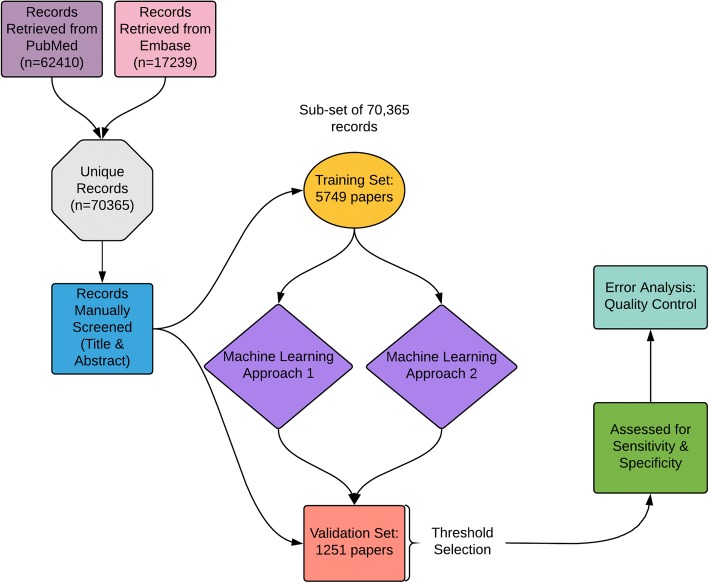
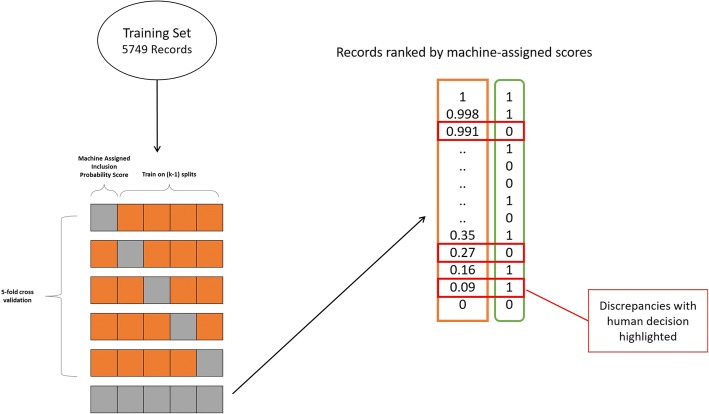
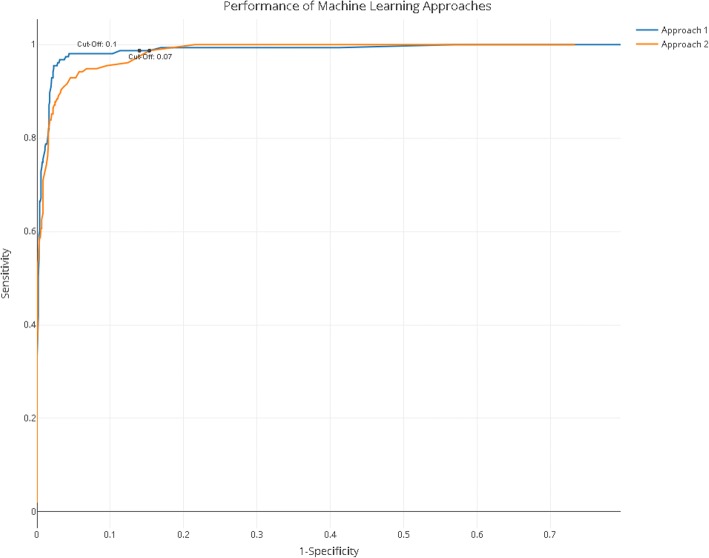
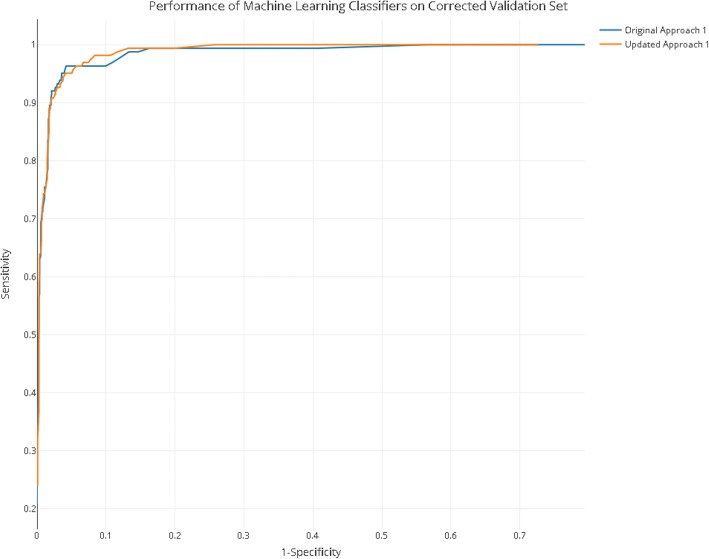
BACKGROUND: Here, we outline a method of applying existing machine learning (ML) approaches to aid citation screening in an on-going broad and shallow systematic review of preclinical animal studies. The aim is to achieve a high-performing algorithm comparable to human screening that can reduce human resources required for carrying out this step of a systematic review. METHODS: We applied ML approaches to a broad systematic review of animal models of depression at the citation screening stage. We tested two independently developed ML approaches which used different classification models and feature sets. We recorded the performance of the ML approaches on an unseen validation set of papers using sensitivity, specificity and accuracy. We aimed to achieve 95% sensitivity and to maximise specificity. The classification model providing the most accurate predictions was applied to the remaining unseen records in the dataset and will be used in the next stage of the preclinical biomedical sciences systematic review. We used a cross-validation technique to assign ML inclusion likelihood scores to the human screened records, to identify potential errors made during the human screening process (error analysis). RESULTS: ML approaches reached 98.7% sensitivity based on learning from a training set of 5749 records, with an inclusion prevalence of 13.2%. The highest level of specificity reached was 86%. Performance was assessed on an independent validation dataset. Human errors in the training and validation sets were successfully identified using the assigned inclusion likelihood from the ML model to highlight discrepancies. Training the ML algorithm on the corrected dataset improved the specificity of the algorithm without compromising sensitivity. Error analysis correction leads to a 3% improvement in sensitivity and specificity, which increases precision and accuracy of the ML algorithm. CONCLUSIONS: This work has confirmed the performance and application of ML algorithms for screening in systematic reviews of preclinical animal studies. It has highlighted the novel use of ML algorithms to identify human error. This needs to be confirmed in other reviews with different inclusion prevalence levels, but represents a promising approach to integrating human decisions and automation in systematic review methodology.
Overview
The claims and statistics of this paper haven’t been checked yet.
Free: it reads the open-access text and checks the first 5 claims that cite a source we can check. Create a free account to check every claim.
Integrity signals
Registry
Cites
Statistics
Figures
Verification
Claims the paper makes
The claims and statistics of this paper haven’t been checked yet.
Free: it reads the open-access text and checks the first 5 claims that cite a source we can check. Create a free account to check every claim.
Claims other papers make about this one
Each is checked against this paper’s own text: does it say what the citing paper says it does?
The source backs part of the claim, not all of it — or backs it for a different population, condition or comparison.
In the citing paper
“However, developing automatic screening tools based on combined ML techniques seems feasible; plenty of research and developments have been done in this field in recent years [26, 39, 41, 46, 52].”
From Machine learning computational tools to assist the performance of systematic reviews: A mapping review. (2022) · cites this paper as [52]
Experimental — accuracy not yet measuredThe source backs part of the claim, not all of it — or backs it for a different population, condition or comparison.
In the citing paper
“In systematic reviews, initial screens to identify papers are based on titles, abstracts, and keywords [156].”
From Reporting animal research: Explanation and elaboration for the ARRIVE guidelines 2.0 (2020) · cites this paper as [156]
Experimental — accuracy not yet measuredThe cited source says what the claim attributes to it.
In the citing paper
“However, current approaches lack robust stopping criteria, so that reviewers do not know when they have seen all or a certain proportion of relevant documents.”
From Statistical stopping criteria for automated screening in systematic reviews (2020) · cites this paper as [10]
The cited source says what the claim attributes to it.
In the citing paper
“as researchers agree that this is one of the most time-consuming steps [58, 67,71].”
From Automation of systematic literature reviews: A systematic literature review (2021) · cites this paper as [58]
In the citing paper
“these tools assist the reviewer by suggesting, classifying, or selecting records, and can either help or even replace the reviewer during certain parts of the process [28, 52, 71]”
From Machine learning computational tools to assist the performance of systematic reviews: A mapping review. (2022) · cites this paper as [52]
1 more claim about this paper
Create a free account to see every claim other papers make about this one.
Self-check
Percentages, sums and reported differences re-computed from the paper’s own numbers.
The self-check needs the paper’s full text.
Citations
Cites
R: A Language and Environment for Statistical Computing
R Core Team (2025) · doi:10.32614/r.manuals · Cited by 352,181
Scikit-learn: Machine Learning in Python
Pedregosa, F., Varoquaux, G., Gramfort, A., Michel, V., Thirion, B., Grisel, O., Blondel, M., Müller, A., Nothman, J., Louppe, G., et al. (2012) · arXiv · doi:10.48550/arxiv.1201.0490 · Cited by 71,016 · cited 1×
“Approach 1 Approach 1 used a tri-gram ‘ bag-of-words ’ model for feature selection and implemented a linear support vector machine (SVM) with stochastic gradient descent (SGD) as supported by the SciKit-Learn python library [25].”
MethodRegularization Paths for Generalized Linear Models via Coordinate Descent
Friedman, J., Hastie, T., & Tibshirani, R. (2010) · Journal of Statistical Software · doi:10.18637/jss.v033.i01 · Cited by 19,927 · cited 1×
“represented by 600 features, and an L1-regularised logistic regression model was built using glmnet package [31]”
MethodIntroduction to information retrieval
(2009) · Choice Reviews Online · doi:10.5860/choice.46-2715 · Cited by 12,278
Introduction to Information Retrieval
Manning, C. D., Raghavan, P., & Schütze, H. (2008) · doi:10.1017/cbo9780511809071 · Cited by 11,288
Pencina, M. J., D' Agostino, R. B., D' Agostino, R. B., & Vasan, R. S. (2008) · Statistics in Medicine · doi:10.1002/sim.2929 · Cited by 6,493 · cited 1×
“The following equation was used [37]: Sensitivity, specificity, precision, accuracy and WSS@95% equations from [5].”
MethodTwo-sided confidence intervals for the single proportion: comparison of seven methods
Newcombe, R. G. (1998) · Statistics in Medicine · doi:10.1002/(sici)1097-0258(19980430)17:8<857::aid-sim777>3.0.co;2-e · Cited by 5,107 · cited 1×
“95% confidence intervals were calculated using the efficient-score method [33].”
MethodSensitivity Analysis of k-Fold Cross Validation in Prediction Error Estimation
Rodriguez, J. D., Perez, A., & Lozano, J. A. (2010) · IEEE Transactions on Pattern Analysis and Machine Intelligence · doi:10.1109/tpami.2009.187 · Cited by 1,890 · cited 1×
“Over five iterations, one subsample is set aside, and the remaining four subsamples are used to train the algorithm [35].”
MethodA sequential algorithm for training text classifiers
Lewis, D., & Gale, W. A. (1994) · arXiv (Cornell University) · doi:10.5555/188490.188495 · Cited by 1,731
Bornmann, L., & Mutz, R. (2015) · Journal of the Association for Information Science and Technology · doi:10.1002/asi.23329 · Cited by 1,576 · cited 1×
“The rate of publication of primary research is increasing exponentially within biomedicine [1].”
Background
Research works printed but not linked: 2
- 28. Thomas J Brunton J Graziosi S EPPI-Reviewer 4.0: software for research synthesis. EPPI-Centre Software 2010 London Social Science Research Unit, Institute of Education
- 38. Robin, X. (2017). “pROC” Package. https://cran.r-project.org/web/packages/pROC/pROC.pdf. Accessed 11 Dec 2018.
Cited by
Items 101–195 of 195
Addison, S. M., Campion, E. D., Landsman, M. J., Rogalin, C. L., & Veeh, C. A. (2025) · Research on Social Work Practice · doi:10.1177/10497315251357190 · Cited by 7
Al-Marridi, A. Z., Said, A. B., Ulde, S. M., & Khwaileh, T. (2025) · Systematic Reviews · doi:10.1186/s13643-025-02895-z · Cited by 8
“By learning from human-labeled data, ML algorithms can classify articles as relevant or irrelevant, potentially reducing the time and resources required for SRs [5].”
The use of text-mining software to facilitate screening of literature on centredness in health care
Forsgren, E., Wallström, S., Feldthusen, C., Zechner, N., Sawatzky, R. G., & Öhlén, J. (2023) · Systematic Reviews · doi:10.1186/s13643-023-02242-0 · Cited by 7
“To reduce screening burden, text-mining and deciding a cut-off or threshold whereby no additional citations require screening are, even if tested for specific as well as broader topics, not widely used due to the risk of lowering the recall [12, 19, 20].”
BackgroundMudd, A., Conroy, T., Voldbjerg, S. L., Goldschmied, A. Z., Feo, R., & Schuwirth, L. (2025) · Journal of Clinical Nursing · doi:10.1111/jocn.17818 · Cited by 11
Practice-enhancing publications about the medication-use process in 2022
Vest, T. A., Gazda, N. P., O’Neil, D. P., Donnowitz, K. R., Rebecca Carlson, M., & Eckel, S. F. (2024) · American Journal of Health-System Pharmacy · doi:10.1093/ajhp/zxae125 · Cited by 7
Sampson, M., Nama, N., O’Hearn, K., Murto, K., Nasr, A., Katz, S. L., Macartney, G. M., Momoli, F., & McNally, J. D. (2020) · International Journal of Technology Assessment in Health Care · doi:10.1017/s0266462320002159 · Cited by 7
Socket shield technique in implant dentistry: An AI-based bibliometric analysis
Fang, Q., Ramachandran, R. A., Köseoğlu, M., Kan, J. Y. K., & Sukotjo, C. (2025) · Journal of Prosthetic Dentistry · doi:10.1016/j.prosdent.2025.05.014 · Cited by 6
Uses of artificial intelligence and machine learning in systematic reviews of education research
Karlstrøm, H. (2024) · London Review of Education · doi:10.14324/lre.22.1.40 · Cited by 7
Li, X., Zhang, A., Al-Zaidy, R. A., Rao, A., Baral, S., Bao, L., & Giles, C. L. (2022) · PLoS ONE · doi:10.1371/journal.pone.0270034 · Cited by 6
Gorelik, A. J., Gorelik, M. G., Ridout, K. K., Nimarko, A. F., Peisch, V. D., Kuramkote, S. R., Low, M., Pan, T., Singh, S., Nrusimha, A., et al. (2023) · Nature Mental Health · doi:10.1038/s44220-023-00109-w · Cited by 6
Connecting the dots in neuroscience research: The future of evidence synthesis
Hair, K., Arroyo-Araujo, M., Vojvodić, S., Economou, M., Wong, C., Tinsdeall, F., Smith, S., Rackoll, T., Sena, E. S., & McCann, S. (2024) · Experimental Neurology · doi:10.1016/j.expneurol.2024.115047 · Cited by 5
“…articles, removing duplicate articles in systematic searches (Hair et al., 2023a, 2023b; Sandra and Mir, 2024), screening articles for inclusion (Bannach-Brown et al., 2019), extracting data (Wang et al., 2022a), and assessing the reporting of measures to reduce bias (Wang et al., 2022b; Zurrer…”
MMiDaS-AE: multi-modal missing data aware stacked autoencoder for biomedical abstract screening
Lee, E. W., Wallace, B., Galaviz, K. I., & Ho, J. C. (2020) · ACM Conference on Health, Inference, and Learning (CHIL) · doi:10.1145/3368555.3384463 · Cited by 7
“Previous work for semi-automating screening for SRs predominantly represented documents via sparse bag-of-words (BOW) representations [4, 15, 27, 33, 40, 52].”
BackgroundMethodSutton, A., O’Keefe, H., Johnson, E. E., & Marshall, C. (2023) · Research Synthesis Methods · doi:10.1002/jrsm.1665 · Cited by 5
“4 By automating some of the more repetitive tasks, 5 researcher time could be redirected to tasks which require nuanced judgement, such as the applicability of available evidence.”
BackgroundHomogeneous Ensemble Feature Selection for Mass Spectrometry Data Prediction in Cancer Studies
Liang, Y., Gharipour, A., Kelemen, E., & Kelemen, A. (2024) · Mathematics · doi:10.3390/math12132085 · Cited by 7
Napoleão, B. M., Petrillo, F. D. S., & Hallé, S. (2021) · Euromicro Conference on Software Engineering and Advanced Applications (SEAA) · doi:10.1109/seaa53835.2021.00015 · Cited by 7
“[17] [55], [57], [62] WSS@95%(Work SavedoverSampling The percentage of studies that the reviewers do not have to read because they have been screened out by the classifier considered at 95% recall.”
BackgroundMethodInfluentialMacleod, G., Dozier, M., Marvell, R., Matthews‐Smith, G., Macleod, M. R., & Liao, J. (2023) · Oxford Review of Education · doi:10.1080/03054985.2023.2203376 · Cited by 5
“Without ML, a human (or preferably two humans, each scoring each manuscript independently) would mark studies as ‘include’ or ‘exclude’ on the basis of their reading of the title and abstract (Bannach-Brown et al., 2019; Marshall & Wallace, 2019).”
BackgroundMethodSelf-citationThe 3Ranker: An AI-based Algorithm for Finding Non-animal Alternative Methods
van Beuningen, N., Alkema, S. G., Hijlkema, N., Ulfhake, B., Frías, R., Ritskes-Hoitinga, M. J., & Alkema, W. B. L. (2023) · Alternatives to Laboratory Animals · doi:10.1177/02611929231210777 · Cited by 5
“9 The current improvements to the starting model were aimed at creating two separate models for skin and brain research, and we foresee that similar improvements could be made to establish models for other diseases, such as cancer and cardiovascular diseases.”
BackgroundMethodSystematic review automation methods
Norman, C. R. (2020) · theses.fr (ABES) · doi:10.70675/044ffa34z5c9bz433az99c8z64697dcd28a2 · Cited by 8
Using machine learning paradigm to predict CBR value of treated expansive soil
Ahmad, U., Jamil, I., Jamal, H., Khan, M. B., Accouche, O., & Azab, M. (2025) · Geotechnical Research · doi:10.1680/jgere.24.00066 · Cited by 4
Tong, J., Wang, S., Wang, G., Wang, Y., & Moraros, J. (2026) · npj Urban Sustainability · doi:10.1038/s42949-026-00377-2 · Cited by 6
“Recent advances in machine learning for systematic reviews have demonstrated that such hybrid approaches can signi fi cantly reduce workload while maintaining high accuracy 126,127 .”
Liu, Y., Zou, D., Dong, H.-W., Liu, Y. Y., Fu, E.-H., Tian, Z.-L., & Liu, N.-G. (2025) · PLoS ONE · doi:10.1371/journal.pone.0329349 · Cited by 4
“Sophisticated machine learning algorithms can swiftly identify and critically assess relevant publications, thereby enhancing research integrity and efficiency [6].”
Friedrichs, J., Seide, S., Vey, J. A., Zimmermann, S., Hardt, J., Kleeff, J. H., Klose, J., Michalski, C. W., Kieser, M., Pilz, M., et al. (2021) · BMJ Open · doi:10.1136/bmjopen-2021-057226 · Cited by 4
Ruiz, C. F., Alborelli, I., Manzo, M., Calgua, B., Keller, E., Vuaroqueaux, V., Quagliata, L., Rentsch, C. A., Spagnoli, G. C., Diener, P. A., et al. (2023) · Pathobiology · doi:10.1159/000531175 · Cited by 4
“…trees and the optimized model was run with 11 trees based on the “ Gini impurity ” results) and regression tree, by means of the “ rpart package, ” as well as multi-variate Cox regression and principal component analyses were used to select most relevant biomarkers associated to BR status [20, 21].”
MethodRofi, I. B., Eshita, M. M., Ahmed, M. S., & Noor, J. (2024) · International Conference on Networking, Systems and Security (NSysS) · doi:10.1145/3704522.3704529 · Cited by 6
“In line with this, from our findings, we see that machine learning models such as KNN, XGBoost, Gradient Boost, and Explainable AI such as LIME yielded identical insights in a shorter duration [7, 36].”
Introducing CRIS—A unified framework for systematic literature searches across disciplines
Ciemer, C., Klotzbier, T. J., Ghellal, S., & Schott, N. (2025) · Frontiers in Public Health · doi:10.3389/fpubh.2025.1489161 · Cited by 4
Bashir, R., Dunn, A. G., & Surian, D. (2020) · Research Synthesis Methods · doi:10.1002/jrsm.1473 · Cited by 7
Building a Systematic Online Living Evidence Summary of COVID-19 Research
Hair, K., Sena, E. S., Wilson, E., Currie, G. L., Macleod, M. R., Bahor, Z., Sena, C., Ayder, C., Liao, J., Tanriver-Ayder, E., et al. (2021) · Journal of EAHIL · doi:10.32384/jeahil17465 · Cited by 4
“For example, we can train a machine to classify research as relevant or not relevant to our research question, or to extract structured information from publications, at greatly reduced human effort (3-5).”
BackgroundSelf-citationCawley, M. A. (2022) · Advances in library and information science (ALIS) book series · doi:10.4018/978-1-7998-9702-6.ch008 · Cited by 6
Spiero, I., Leeuwenberg, A. M., Moons, K. G. M., Hooft, L., & Damen, J. A. A. (2025) · Journal of Clinical Epidemiology · doi:10.1016/j.jclinepi.2025.111987 · Cited by 3
Ryan, K., Hooijmans, C. R., Struijs, F., Munckhof, S. V. D., Kiffen, R., Dahan, A., Hoffmann, S., Mandrioli, D., Menon, J. M. L., Roeleveld, N., et al. (2025) · Environmental Toxicology and Pharmacology · doi:10.1016/j.etap.2025.104916 · Cited by 3
Psychotherapy treatment manuals for adult populations (1950–2025): A scoping review
Wislocki, K. E., Bridgwater, M. A., Petti, E., Cenkner, D. P., Hernandez-Ramos, R., Tran, M.-L. M., Naderi, G., Murphy, H., Walker, L., & Zalta, A. K. (2026) · Clinical Psychology Review · doi:10.1016/j.cpr.2026.102721 · Cited by 3
Song, Z., Huang, S., Thapa, N., Zhang, X., Park, B.-K., Lu, J., Li, W., Liu, W., Zhan, B., & Li, J. (2026) · Research Synthesis Methods · doi:10.1017/rsm.2026.10094 · Cited by 5
Iqbal, S., Olivares, C. B., Rizzo, L., Parker, T. D., Wong, C., Underwood, B. R., Carpenter, J. R., Dunne, R. A., Raymont, V., Reith, A., et al. (2026) · Alzheimer s & Dementia · doi:10.1002/alz.71495 · Cited by 3
Self-citationCawley, M. A., Carlson, R., Vest, T. A., & Eckel, S. F. (2024) · American Journal of Health-System Pharmacy · doi:10.1093/ajhp/zxae357 · Cited by 8
Machine learning to predict penumbra core mismatch in acute ischemic stroke using clinical note data
Kohli, S., Agarwal, P., Chan, A. H. W., Erekat, A. N., Nadkarni, G. N., & Kummer, B. R. (2025) · npj Digital Medicine · doi:10.1038/s41746-025-01703-1 · Cited by 3
“TF-IDF is a mathematical method that outputs a score indicating the frequency of any given word within a particular patient ’ s text corpus compared to the clinical notes of all other patients 24,25 .”
Hay, R. E., Zorko, D. J., O’Hearn, K., McQuaid, C., Pont‐Thibodeau, G. D., Guerra, G. G., Olivier, J., Ducharme‐Crevier, L., Lee, L. A., Bel, M. J. D., et al. (2025) · Pediatric Critical Care Medicine · doi:10.1097/pcc.0000000000003780 · Cited by 4
Learning from Principles of Evidence-Based Medicine to Optimize Nonclinical Research Practices
Lefevre, I. A., & Balice‐Gordon, R. J. (2019) · Handbook of experimental pharmacology · doi:10.1007/164_2019_276 · Cited by 4
Kusa, W., Hanbury, A., & Knoth, P. (2022) · arXiv (Cornell University) · doi:10.34726/4261 · Cited by 5
Arnison, T., & Zhao, X. (2023) · Frontiers in Psychology · doi:10.3389/fpsyg.2023.1198190 · Cited by 3
Machine Learning-Assisted Systematic Review: A Case Study in Learning Analytics
Xu, Z., Zhuang, X., & Ma, S. (2025) · Education Sciences · doi:10.3390/educsci15111488 · Cited by 2
Pitre, T., Zeraatkar, D., Granton, J., Busse, J., Rochwerg, B., & Guyatt, G. (2026) · Journal of Clinical Epidemiology · doi:10.1016/j.jclinepi.2026.112514 · Cited by 2
Azmi, R., Chenal, J., Diop, E. B., Abdem, S. A. E., Bounabi, M., Hlal, M., Adraoui, M., & Chafiq, T. (2026) · City and Environment Interactions · doi:10.1016/j.cacint.2026.100296 · Cited by 2
Changing organizational culture in community sport: a systematic review
Woodforde, J., Thomas, G., Harrison, Z., Mulcahy, S., Townsend, S., & Cairney, J. (2026) · Frontiers in Sports and Active Living · doi:10.3389/fspor.2026.1852179 · Cited by 2
“The use of ASReview is supported by growing methodological evidence demonstrating that machine learning – assisted screening can substantially reduce screening burden while maintaining high recall of relevant studies when combined with human verification (34, 35).”
Haddaway, N., & Westgate, M. J. (2020) · Environmental Evidence · doi:10.1186/s13750-020-00212-w · Cited by 3
Schaut, W., Shrivastav, A., Ramakrishnan, S., & Bowden, R. (2023) · Frontiers in Medicine · doi:10.3389/fmed.2023.1072767 · Cited by 2
Literature Filtering for Systematic Reviews with Transformers
Hawkins, J., & Tivey, D. R. (2024) · International Conference on Communications, Computing and Artificial Intelligence (CCCAI) · doi:10.1145/3676581.3676582 · Cited by 3
“…including processes that reduce the human workload through question-specific predictive models built on an initial set of human reviewer labels[5, 13], expanded to include other kinds of meta-data[30] and applications that update the prioritisation of abstracts in an iterative feedback…”
SyROCCo: enhancing systematic reviews using machine learning
Fang, Z., Arana‐Catania, M., van Lier, F.-A., Velarde, J. O., Bregazzi, H., Airoldi, M., Carter, E., & Procter, R. (2024) · Data & Policy · doi:10.1017/dap.2024.33 · Cited by 3
“…tools to help with systematic reviews, reducing the human and financial resources required and the time needed to conduct the research (Tsafnat et al., 2014; O ’ Mara-Eves, et al., 2015; Marshal and Brereton, 2015; Howard et al., 2016; Bannach-Brown et al., 2019; Marshal and Wallace, 2019).”
BackgroundMethodAngrish, M. M., Thayer, K. A., Schulz, B., Nowak, A. J., Persad, A. S., Phillips, A. L., Rice, G., Shannon, T., Wilkins, A. A., Christensen, K. L. Y., et al. (2024) · Evidence-Based Toxicology · doi:10.1080/2833373x.2024.2421192 · Cited by 2
Hirst, T. C., Wilson, E., Browne, D., & Sena, E. S. (2024) · Neuro-Oncology Advances · doi:10.1093/noajnl/vdae193 · Cited by 3
Gazda, N. P., Vest, T. A., Peek, G. K., Francart, S. J., & Eckel, S. F. (2025) · American Journal of Health-System Pharmacy · doi:10.1093/ajhp/zxaf012 · Cited by 2
Near-Edge Computing For Industry 5.0
Sharma, M., Tomar, A., & Hazra, A. (2025) · Springer eBooks · doi:10.1007/978-3-031-87837-4_21 · Cited by 2
Machine learning approach to literature mining for the genetics of complex diseases
Schuster, J. S., Superdock, M., Agudelo, A., Stey, P., Padbury, J. F., Sarkar, I. N., & Uzun, A. (2019) · Database · doi:10.1093/database/baz124 · Cited by 2
Landívar, G. E. V., Arambulo, J. A. E., Martínez, M. Á. Q., & Vázquez, M. Y. L. (2021) · Lecture notes in networks and systems · doi:10.1007/978-3-030-85540-6_128 · Cited by 1
Systematic reviews of animal studies – Report of an international symposium
Fausak, E. D., Funaro, M. C., Kepsel, A. C., Eldermire, E., Foster, M., Norton, H., Mears, K., Crews, M. E., Brennan, M. L., Currie, G. L., et al. (2023) · Veterinary Evidence · doi:10.18849/ve.v8i3.653 · Cited by 2
“Automation adds the ability to analyse data at a level that surpasses that of human screeners (Bannach-Brown et al., 2019).”
Automated SLR with a Few Labeled Papers and a Fair Workload Metric
Faria, A. V. A., de Melo, M. K., de Oliveira, F. A. R., Weigang, L., & Celestino, V. R. R. (2023) · Lecture notes in business information processing · doi:10.1007/978-3-031-43088-6_1 · Cited by 1
Leal, R. D., da Silva, T., Nicodemo, A. C., Almeida, R. O., Munis, R. A., da Silva, R. B. G., & Simões, D. (2024) · International Journal of Forest Engineering · doi:10.1080/14942119.2024.2398943 · Cited by 4
“Then, 10% of the data were reserved to form the validation set (Bannach-Brown et al. 2019; Wei et al. 2019; Maleki et al. 2020).”
Lafata, J. E., Rendle, K. A. S., Wainwright, J. V., Cooley, M. E., Vachani, A., Neslund-Dudas, C. M., Odelberg, M. R., Alcaro, L., Staresinic, C., Alexander, G., et al. (2025) · MDM Policy & Practice · doi:10.1177/23814683251328375 · Cited by 3
Machine learning-assisted abstract screening on learning analytics: a step-by-step tutorial
Xu, Z., Ma, S., Zhuang, X., Adeyemi, A. E., & Kogut, A. (2026) · Systematic Reviews · doi:10.1186/s13643-026-03111-2 · Cited by 1
“Most previously validated studies are concentrated in the medical field [9, 13, 14, 18, 25, 30] with a few in other disciplines including language [31], agriculture [1], and animal science [6].”
Comparing supervised machine learning and large language models in title-abstract screening
Aigner, M. F., Ganzinger, M., Probst, P., Rinckens, M., & Pausch, T. M. (2026) · Systematic Reviews · doi:10.1186/s13643-026-03199-6 · Cited by 2
Nunnery, J. A. (2026) · Research Synthesis Methods · doi:10.1017/rsm.2026.10116 · Cited by 1
Tahmo, N. B., Noah, A., Odhiambo, B., Kyalo, C., Ligare, F., Wanjiku, J., Sharma, A., Kharmandar, A., Idemili, C. J., Kong, J. D., et al. (2026) · Journal of Clinical Epidemiology · doi:10.1016/j.jclinepi.2026.112541 · Cited by 1
Rodgers, J. B., & Ritskes-Hoitinga, M. J. (2021) · Laboratory animal science and medicine · doi:10.1007/978-3-030-66147-2_10 · Cited by 1
Applying AI to Manage Acute and Chronic Clinical Condition
Hagan, R., Gillan, C. J., & Shyamsundar, M. (2022) · Springer eBooks · doi:10.1007/978-3-030-78307-5_10 · Cited by 2
Utomo, C. P., Maulani, C., Sukotjo, C., Fathurahman, M., & Yunan, C. A. (2022) · International Seminar on Research of Information Technology and Intelligent Systems (ISRITI) · doi:10.1109/isriti56927.2022.10052806 · Cited by 1
“[5] screened systematic review papers in preclinical animal studies using a typical algorithm with two distinct techniques.”
BackgroundEnsemble Machine Learning Approaches for Proteogenomic Cancer StudiesPreprint
Liang, Y., Gharipour, A., Kelemen, E., & Kelemen, A. (2020) · Research Square · doi:10.21203/rs.3.rs-101902/v1 · Cited by 3
“Machine learning (ML) with wrapper methods and ensemble feature selection has the advantage to alleviate and compensate for some of the demerits of statistical approaches [17-18].”
BackgroundTools to enable animal to human translation: Assessing the value of disease models
Ferreira, G. S. (2020) · Utrecht University Repository (Utrecht University) · doi:10.33540/157 · Cited by 2
Mudd, A., Conroy, T., Voldbjerg, S. L., Goldschmied, A. Z., & Schuwirth, L. (2024) · Research Square · doi:10.21203/rs.3.rs-4767916/v1 · Cited by 2
Baclic, O., Tunis, M. C., Young, K., Doan, C., & Swerdfeger, H. (2020) · Relevé des maladies transmissibles au Canada · doi:10.14745/ccdr.v46i06a02f
Wisener, L. V. (2021) · The Atrium (University of Guelph) · doi:10.1017/s1466252319000252
Conducting a Systematic Review: Trends in Machine Learning and Text Mining
Falco, M., & Berdiñas, I. (2020) · El Servicio de Difusión de la Creación Intelectual (National University of La Plata)
On maintaining successful treatment outcomes in interdisciplinary multimodal pain treatment
Elbers, S. (2021) · Research Publications (Maastricht University) · doi:10.26481/dis.20211117se
Jonas, M., Bittermann, A., Chasiotis, A., & Rosman, T. (2022) · Frontiers in Psychology · doi:10.3389/fpsyg.2022.899430
Lee, E. W., & Ho, J. C. (2023) · Lecture notes in computer science · doi:10.1007/978-3-031-28244-7_35 · Cited by 2
USO DA IA NA METODOLOGIA CIENTÍFICA
Pereira, C. R. (2024) · Editora Blucher eBooks · doi:10.5151/9786555502954-02
Technological Innovation in Peer Review
(2024) · Advances in medical education, research, and ethics (AMERE) book series · doi:10.4018/979-8-3693-3828-5.ch007
Noel-Storr, A. H., Redmond, P., Lamé, G., Liberati, E. G., Kelly, S., Miller, L., Dooley, G., Paterson, A., & Burt, J. (2021) · Figshare · doi:10.6084/m9.figshare.14498702
Ineichen, B. V., Gosteli, M., & Held, U. (2023) · Zenodo (CERN European Organization for Nuclear Research) · doi:10.5281/zenodo.7600508
Noel-Storr, A. H., Redmond, P., Lamé, G., Liberati, E. G., Kelly, S., Miller, L., Dooley, G., Paterson, A., & Burt, J. (2021) · Figshare · doi:10.6084/m9.figshare.14498696
Forsgren, E., Wallström, S., Feldthusen, C., Zechner, N., Sawatzky, R. G., & Öhlén, J. (2024) · Figshare · doi:10.6084/m9.figshare.26585850
Issaiy, M., Ghanaati, H., Kolahi, S., Shakiba, M., Jalali, A. H., Zarei, D., Kazemian, S., Avanaki, M. A., & Firouznia, K. (2024) · Figshare · doi:10.6084/m9.figshare.25495165
Noel-Storr, A. H., Redmond, P., Lamé, G., Liberati, E. G., Kelly, S., Miller, L., Dooley, G., Paterson, A., & Burt, J. (2021) · Figshare · doi:10.6084/m9.figshare.14498699
Chai, K. E. K., Lines, R. L. J., Gucciardi, D. F., & Ng, L. (2021) · Figshare · doi:10.6084/m9.figshare.14361540
Automated Eligibility Screening and its Evaluation in the Medical Domain
Kusa, W. (2024) · reposiTUm (TU Wien) · doi:10.34726/hss.2024.124620
Noel-Storr, A. H., Redmond, P., Lamé, G., Liberati, E. G., Kelly, S., Miller, L., Dooley, G., Paterson, A., & Burt, J. (2021) · Figshare · doi:10.6084/m9.figshare.14498705
Forsgren, E., Wallström, S., Feldthusen, C., Zechner, N., Sawatzky, R. G., & Öhlén, J. (2024) · Figshare · doi:10.6084/m9.figshare.26585853
Jiménez, R. C., Lee, T., Rosillo, N., Córdova, R., Cree, I. A., González, Á., & Indave Ruiz, B. I. (2023) · Figshare · doi:10.6084/m9.figshare.22609363
Ofori-Boateng, R. (2025) · Open Access Institutional Repository at Robert Gordon University (Robert Gordon University) · doi:10.48526/rgu-wt-3020586
Active Learning Models for Systematic Literature Review: A Railway Drainage Case
Gorbunov, O., Sinsabvarodom, C., & Rinchumphu, D. (2025) · International Joint Symposium on Artificial Intelligence and Natural Language Processing (iSAI-NLP) · doi:10.1109/isai-nlp66160.2025.11320463
“These algorithms can be trained to classify articles as relevant or irrelevant, thereby reducing the time and human effort required to complete a review [1].”
de la Torre-López, J., Ramírez, A., & Romero, J. R. (2026) · SSRN Electronic Journal · doi:10.2139/ssrn.6263105
Mirzaei, Y. (2026) · RWTH Publications (RWTH Aachen) · doi:10.18154/rwth-2026-02385
Barragán, A. M., Bonett, S. E. O., Rodríguez-Grande, E.-I., Orjuela-Cañón, Á. D., Perdómo, O., & Sánchez, G. (2026) · Cochrane Evidence Synthesis and Methods · doi:10.1002/cesm.70098
“…89, 113, 175] Proposing a metric for evaluating automated screening accuracy [104] Lack of standardization Stopping criteria [18, 41, 65, 96, 104, 187, 190, 192] Metrics in the evaluation of resources for automating SRL [32, 73, 119, 164, 177, 178, 183, 189] Benchmark data sets for evaluating…”
Fariborzi, H., & Steel, P. (2026) · SSRN Electronic Journal · doi:10.2139/ssrn.7388958
Nunnery, J. A. (2026) · Journal of Higher Education Theory and Practice · doi:10.33423/5tg2ts54
“Bannach-Brown et al. (2019) show the same shape in a large preclinical review, training models to reproduce reconciled human decisions and scoring them against those decisions.”
Domain-specific information retrieval
Verberne, S., Piroi, F., & Hanbury, A. (2026) · Foundations and Trends® in Information Retrieval · doi:10.1108/ftinr-09-2025-0088
Lesmana, C., Ibrohim, M. O., Budi, I. D., & Jiwanggi, M. A. (2026) · Journal of Information Systems Engineering and Business Intelligence · doi:10.20473/jisebi.12.3.760-774
Metadata
- Authors
- Bannach-Brown, A., Przybyła, P., Thomas, J., Rice, A. S. C., Ananiadou, S., Liao, J., & Macleod, M. R.
- Affiliations
- University of Manchester (GB)
- University College London (GB)
- Imperial College London (GB)
- University of Edinburgh (GB)
- ORCID
- Venue
- Systematic Reviews
- Published
- 2019-01-15
- Volume
- 8
- Issue
- 1
- Pages
- 23-23
- ISSN
- 2046-4053 (ISSN-L)
- PMC
- PMC6334440
- OpenAlex
- W2910642642
- Cited by
- 185
- References
- 44
- Citations by year
- 2026: 12 · 2025: 23 · 2024: 38 · 2023: 30 · 2022: 21 · 2021: 26 · 2020: 27 · 2019: 8
- FWCI
- 4.16
- Type
- journal article
- Language
- en
- Open access
- gold
- doi.org
- Licence
- cc-by
- creativecommons.org/licenses/by/4.0/ (tdm)
- Locations
- Systematic Reviews (publishedVersion, cc-by)
- Europe PMC (PubMed Central) (publishedVersion, other-oa)
- PubMed Central (publishedVersion, cc-by)
- PubMed (publishedVersion)
- Bond University Research Portal (Bond University) (acceptedVersion, cc-by)
- DOAJ (DOAJ: Directory of Open Access Journals) (submittedVersion, cc-by-sa)
- UCL Discovery (University College London) (submittedVersion)
- Research Explorer (The University of Manchester) (submittedVersion, cc-by)
- Scopus (Elsevier) (submittedVersion)
- Edinburgh Research Explorer (University of Edinburgh) (submittedVersion, other-oa)
- Repositori digital de la UPF (Universitat Pompeu Fabra) (submittedVersion, cc-by)
- Spiral (Imperial College London) (submittedVersion, cc-by)
- Funders
- Wellcome Trust (MR/N015665/1)
- Topics
- Social Sciences › Decision Sciences › Statistics, Probability and Uncertainty › Meta-analysis and systematic reviews
- Physical Sciences › Computer Science › Information Systems › Information Retrieval and Search Behavior
- Health Sciences › Health Professions › Health Information Management › Artificial Intelligence in Healthcare
- Keywords
- machine learning, citation screening, systematic reviews, preclinical animal studies, animal models of depression, error analysis, sensitivity and specificity
- MeSH terms
- Machine Learning, Systematic Reviews as Topic, Algorithms, Animals, Depressive Disorder, Humans, Sensitivity and Specificity, Bibliometrics, Workload, Models, Animal
About these checks
Registry, retraction, Cites and statistics results are computed, not judged, with one exception: a printed reference that no index lists is read once by a model before it counts as a citation error. Claims are extracted by a model and kept only when their quote appears verbatim in the text; each cited source is then checked, with a model’s help, for whether it says what the claim relies on. Those verdicts can be wrong — read the claim’s quote and the cited source before relying on one.
Statistics and arithmetic are recomputed, not judged.
Confidence bands are shown only for fields calibrated on our annotated test set. None is calibrated yet, so no band is shown.
What counts as a claim ›How we measure confidence ›How we check this ›
Are you an author, or do you see a problem with this page? Request a review
Data sources
Bibliographic data: Semantic Scholar, OpenAlex, Crossref.
Contains information from the Semantic Scholar Academic Graph Datasets, made available under the ODC Attribution License (ODC-BY 1.0).
Semantic Scholar’s data is described in: Kinney, R., et al. (2023). The Semantic Scholar Open Data Platform. arXiv:2301.10140.
