

Machine learning algorithms for systematic review: reducing workload in a preclinical review of animal studies and reducing human screening error
Open accessPublished version of a preprint
The DOI matches its Crossref record; 44 of the 44 references it cites were found in a registry or an index.
Abstract
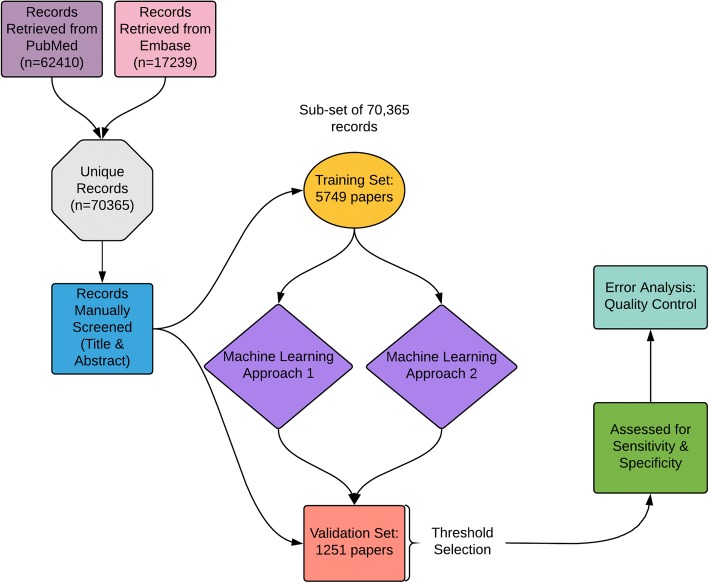
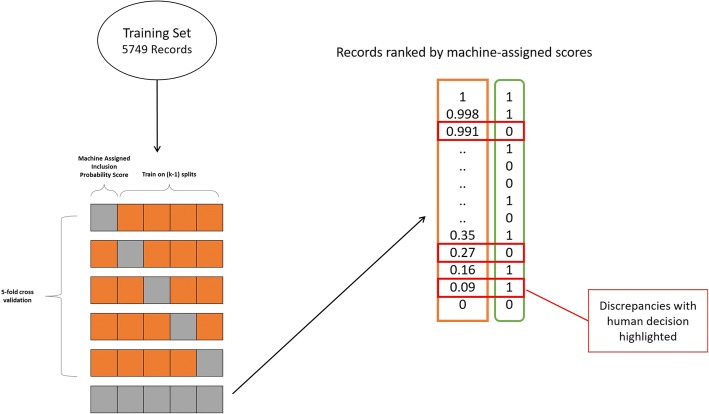
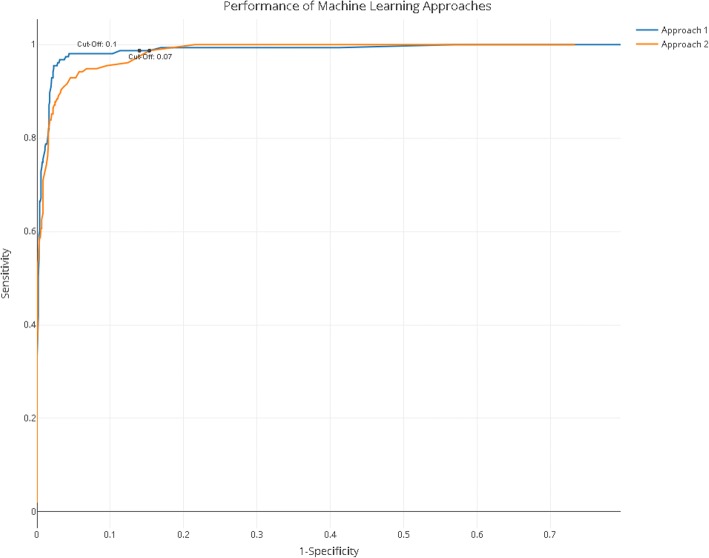
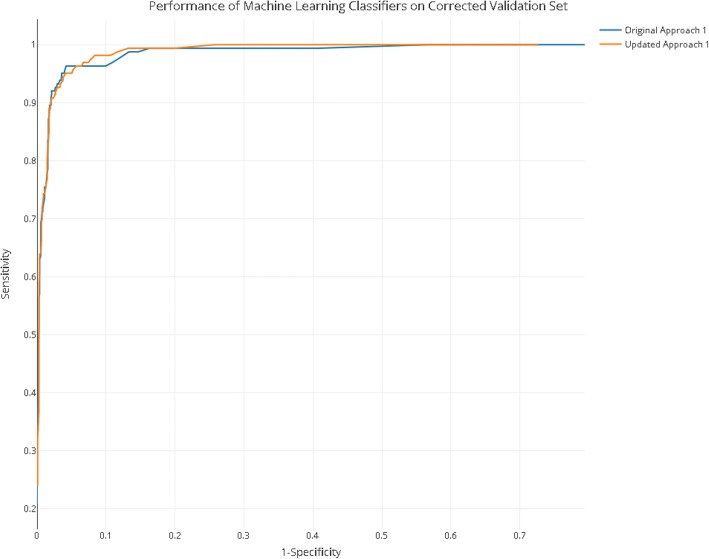
BACKGROUND: Here, we outline a method of applying existing machine learning (ML) approaches to aid citation screening in an on-going broad and shallow systematic review of preclinical animal studies. The aim is to achieve a high-performing algorithm comparable to human screening that can reduce human resources required for carrying out this step of a systematic review. METHODS: We applied ML approaches to a broad systematic review of animal models of depression at the citation screening stage. We tested two independently developed ML approaches which used different classification models and feature sets. We recorded the performance of the ML approaches on an unseen validation set of papers using sensitivity, specificity and accuracy. We aimed to achieve 95% sensitivity and to maximise specificity. The classification model providing the most accurate predictions was applied to the remaining unseen records in the dataset and will be used in the next stage of the preclinical biomedical sciences systematic review. We used a cross-validation technique to assign ML inclusion likelihood scores to the human screened records, to identify potential errors made during the human screening process (error analysis). RESULTS: ML approaches reached 98.7% sensitivity based on learning from a training set of 5749 records, with an inclusion prevalence of 13.2%. The highest level of specificity reached was 86%. Performance was assessed on an independent validation dataset. Human errors in the training and validation sets were successfully identified using the assigned inclusion likelihood from the ML model to highlight discrepancies. Training the ML algorithm on the corrected dataset improved the specificity of the algorithm without compromising sensitivity. Error analysis correction leads to a 3% improvement in sensitivity and specificity, which increases precision and accuracy of the ML algorithm. CONCLUSIONS: This work has confirmed the performance and application of ML algorithms for screening in systematic reviews of preclinical animal studies. It has highlighted the novel use of ML algorithms to identify human error. This needs to be confirmed in other reviews with different inclusion prevalence levels, but represents a promising approach to integrating human decisions and automation in systematic review methodology.
Overview
The claims and statistics of this paper haven’t been checked yet.
Free: it reads the open-access text and checks the first 5 claims that cite a source we can check. Create a free account to check every claim.
Integrity signals
Registry
Cites
Statistics
Figures
Verification
Claims the paper makes
The claims and statistics of this paper haven’t been checked yet.
Free: it reads the open-access text and checks the first 5 claims that cite a source we can check. Create a free account to check every claim.
Claims other papers make about this one
Each is checked against this paper’s own text: does it say what the citing paper says it does?
The source backs part of the claim, not all of it — or backs it for a different population, condition or comparison.
In the citing paper
“However, developing automatic screening tools based on combined ML techniques seems feasible; plenty of research and developments have been done in this field in recent years [26, 39, 41, 46, 52].”
From Machine learning computational tools to assist the performance of systematic reviews: A mapping review. (2022) · cites this paper as [52]
Experimental — accuracy not yet measuredThe source backs part of the claim, not all of it — or backs it for a different population, condition or comparison.
In the citing paper
“In systematic reviews, initial screens to identify papers are based on titles, abstracts, and keywords [156].”
From Reporting animal research: Explanation and elaboration for the ARRIVE guidelines 2.0 (2020) · cites this paper as [156]
Experimental — accuracy not yet measuredThe cited source says what the claim attributes to it.
In the citing paper
“However, current approaches lack robust stopping criteria, so that reviewers do not know when they have seen all or a certain proportion of relevant documents.”
From Statistical stopping criteria for automated screening in systematic reviews (2020) · cites this paper as [10]
The cited source says what the claim attributes to it.
In the citing paper
“as researchers agree that this is one of the most time-consuming steps [58, 67,71].”
From Automation of systematic literature reviews: A systematic literature review (2021) · cites this paper as [58]
In the citing paper
“these tools assist the reviewer by suggesting, classifying, or selecting records, and can either help or even replace the reviewer during certain parts of the process [28, 52, 71]”
From Machine learning computational tools to assist the performance of systematic reviews: A mapping review. (2022) · cites this paper as [52]
1 more claim about this paper
Create a free account to see every claim other papers make about this one.
Self-check
Percentages, sums and reported differences re-computed from the paper’s own numbers.
The self-check needs the paper’s full text.
Citations
Cites
R: A Language and Environment for Statistical Computing
R Core Team (2025) · doi:10.32614/r.manuals · Cited by 352,181
Scikit-learn: Machine Learning in Python
Pedregosa, F., Varoquaux, G., Gramfort, A., Michel, V., Thirion, B., Grisel, O., Blondel, M., Müller, A., Nothman, J., Louppe, G., et al. (2012) · arXiv · doi:10.48550/arxiv.1201.0490 · Cited by 71,016 · cited 1×
“Approach 1 Approach 1 used a tri-gram ‘ bag-of-words ’ model for feature selection and implemented a linear support vector machine (SVM) with stochastic gradient descent (SGD) as supported by the SciKit-Learn python library [25].”
MethodRegularization Paths for Generalized Linear Models via Coordinate Descent
Friedman, J., Hastie, T., & Tibshirani, R. (2010) · Journal of Statistical Software · doi:10.18637/jss.v033.i01 · Cited by 19,927 · cited 1×
“represented by 600 features, and an L1-regularised logistic regression model was built using glmnet package [31]”
MethodIntroduction to information retrieval
(2009) · Choice Reviews Online · doi:10.5860/choice.46-2715 · Cited by 12,278
Introduction to Information Retrieval
Manning, C. D., Raghavan, P., & Schütze, H. (2008) · doi:10.1017/cbo9780511809071 · Cited by 11,288
Pencina, M. J., D' Agostino, R. B., D' Agostino, R. B., & Vasan, R. S. (2008) · Statistics in Medicine · doi:10.1002/sim.2929 · Cited by 6,493 · cited 1×
“The following equation was used [37]: Sensitivity, specificity, precision, accuracy and WSS@95% equations from [5].”
MethodTwo-sided confidence intervals for the single proportion: comparison of seven methods
Newcombe, R. G. (1998) · Statistics in Medicine · doi:10.1002/(sici)1097-0258(19980430)17:8<857::aid-sim777>3.0.co;2-e · Cited by 5,107 · cited 1×
“95% confidence intervals were calculated using the efficient-score method [33].”
MethodSensitivity Analysis of k-Fold Cross Validation in Prediction Error Estimation
Rodriguez, J. D., Perez, A., & Lozano, J. A. (2010) · IEEE Transactions on Pattern Analysis and Machine Intelligence · doi:10.1109/tpami.2009.187 · Cited by 1,890 · cited 1×
“Over five iterations, one subsample is set aside, and the remaining four subsamples are used to train the algorithm [35].”
MethodA sequential algorithm for training text classifiers
Lewis, D., & Gale, W. A. (1994) · arXiv (Cornell University) · doi:10.5555/188490.188495 · Cited by 1,731
Bornmann, L., & Mutz, R. (2015) · Journal of the Association for Information Science and Technology · doi:10.1002/asi.23329 · Cited by 1,576 · cited 1×
“The rate of publication of primary research is increasing exponentially within biomedicine [1].”
BackgroundA Sequential Algorithm for Training Text Classifiers
Lewis, D. D., & Gale, W. A. (1994) · SIGIR ’94 · doi:10.1007/978-1-4471-2099-5_1 · Cited by 1,208
Borah, R., Brown, A. W., Capers, P. L., & Kaiser, K. A. (2017) · BMJ Open · doi:10.1136/bmjopen-2016-012545 · Cited by 737 · cited 1×
“In clinical systematic reviews, Borah and colleagues [6] showed the average clinical systematic review registered on PROSPERO (International Prospective Register of Systematic Reviews) takes an average 67.”
BackgroundO’Mara-Eves, A., Thomas, J., McNaught, J., Miwa, M., & Ananiadou, S. (2015) · Systematic Reviews · doi:10.1186/2046-4053-4-5 · Cited by 681 · cited 2×
“Sensitivity, specificity, precision, accuracy and WSS@95% equations from [5].”
BackgroundSelf-citationLiving systematic review: 1. Introduction-the why, what, when, and how
Elliott, J. H., Synnot, A., Turner, T., Simmonds, M., Akl, E. A., McDonald, S., Salanti, G., Meerpohl, J., MacLehose, H., Hilton, J., et al. (2017) · Journal of Clinical Epidemiology · doi:10.1016/j.jclinepi.2017.08.010 · Cited by 655 · cited 1×
“Following this process, further records will be excluded, which will allow for further training of the algorithm, to be used in future living systematic review on this topic [41].”
MethodSelf-citationDeploying an interactive machine learning system in an evidence-based practice center: abstrackr
Wallace, B. C., Small, K., Brodley, C. E., Lau, J., & Trikalinos, T. A. (2012) · Proceedings of the 2nd ACM SIGHIT International Health Informatics Symposium · doi:10.1145/2110363.2110464 · Cited by 532
Systematic review automation technologies
Tsafnat, G., Glasziou, P., Choong, M. K., Dunn, A., Galgani, F., & Coiera, E. (2014) · Systematic Reviews · doi:10.1186/2046-4053-3-74 · Cited by 472
Net Reclassification Indices for Evaluating Risk Prediction Instruments: A Critical Review
Kerr, K. F., Wang, Z., Janes, H., McClelland, R. L., Psaty, B. M., & Pepe, M. S. (2014) · Epidemiology · doi:10.1097/ede.0000000000000018 · Cited by 446 · cited 2×
“The outcome of error analysis is presented as reclassification tables, the area under the curve (AUC) being used to compare the performance of the ML algorithm trained on the uncorrected training set, and the net reclassification index (NRI) [36] used to compare the performance of the classifier built on the updated t…”
MethodInfluentialDeveloping a Robust Part-of-Speech Tagger for Biomedical Text
Tsuruoka, Y., Tateishi, Y., Kim, J.-D., Ohta, T., McNaught, J., Ananiadou, S., & Tsujii, J. (2005) · Lecture Notes in Computer Science · doi:10.1007/11573036_36 · Cited by 436 · cited 1×
“Namely, the document text (consisting of title and abstract) was first lemmatised with the tool GENIA tagger [29] and then converted into bag-of-words representation of unigrams, which was then used to create two types of features.”
MethodSelf-citationMarshall, I. J., Noel‐Storr, A., Kuiper, J., Thomas, J., & Wallace, B. C. (2018) · Research Synthesis Methods · doi:10.1002/jrsm.1287 · Cited by 435 · cited 1×
“By manually constructing datasets and training algorithms on training sets with different ‘prevalence’ or different class imbalance, the variance in the predictions the model makes can potentially be reduced (see [43]).”
BackgroundSelf-citationReducing Workload in Systematic Review Preparation Using Automated Citation Classification
Cohen, A. M., Hersh, W. R., Peterson, K., & Yen, P.-Y. (2006) · Journal of the American Medical Informatics Association · doi:10.1197/jamia.m1929 · Cited by 411 · cited 2×
“Machine learning approaches have been evaluated in context of systematic reviews of several medical problems including drug class efficacy assessment [7, 8, 12], genetic associations [9], public health [13, 16], cost-effectiveness analyses [9], toxicology [3], treatment effectiveness [17, 18], and nutrition [17].”
BackgroundO’Mara-Eves, A., Thomas, J., McNaught, J., Miwa, M., & Ananiadou, S. (2015) · Systematic Reviews · doi:10.1186/s13643-015-0031-5 · Cited by 353
Self-citationSemi-automated screening of biomedical citations for systematic reviews
Wallace, B. C., Trikalinos, T. A., Lau, J., Brodley, C., & Schmid, C. H. (2010) · BMC Bioinformatics · doi:10.1186/1471-2105-11-55 · Cited by 351 · cited 1×
“Machine learning approaches have been evaluated in context of systematic reviews of several medical problems including drug class efficacy assessment [7, 8, 12], genetic associations [9], public health [13, 16], cost-effectiveness analyses [9], toxicology [3], treatment effectiveness [17, 18], and nutrition [17].”
BackgroundHooijmans, C. R., Tillema, A., Leenaars, M., & Ritskes-Hoitinga, M. (2010) · Laboratory Animals · doi:10.1258/la.2010.009117 · Cited by 297 · cited 1×
“The search strings were composed of the animal filters devised by the Systematic Review Center for Laboratory animal Experimentation (SYRCLE) [21, 22], NOT reviews, comments, or letters AND a depression disorder string (for full search strings see [23]).”
MethodSena, E. S., Currie, G. L., McCann, S. K., Macleod, M. R., & Howells, D. W. (2014) · Journal of Cerebral Blood Flow & Metabolism · doi:10.1038/jcbfm.2014.28 · Cited by 264 · cited 1×
“Sena and colleagues developed guidelines for the appraisal of systematic reviews of animal studies [20].”
BackgroundSelf-citationSWIFT-Review: a text-mining workbench for systematic review
Howard, B. E., Phillips, J., Miller, K., Tandon, A., Mav, D., Shah, M. R., Holmgren, S., Pelch, K. E., Walker, V., Rooney, A. A., et al. (2016) · Systematic Reviews · doi:10.1186/s13643-016-0263-z · Cited by 196 · cited 3×
“Machine learning approaches have been evaluated in context of systematic reviews of several medical problems including drug class efficacy assessment [7, 8, 12], genetic associations [9], public health [13, 16], cost-effectiveness analyses [9], toxicology [3], treatment effectiveness [17, 18], and nutrition [17].”
BackgroundSelf-citationReducing systematic review workload through certainty-based screening
Miwa, M., Thomas, J., O’Mara-Eves, A., & Ananiadou, S. (2014) · Journal of Biomedical Informatics · doi:10.1016/j.jbi.2014.06.005 · Cited by 190 · cited 1×
“Machine learning approaches have been evaluated in context of systematic reviews of several medical problems including drug class efficacy assessment [7, 8, 12], genetic associations [9], public health [13, 16], cost-effectiveness analyses [9], toxicology [3], treatment effectiveness [17, 18], and nutrition [17].”
BackgroundSelf-citationWallace, B. C., Small, K., Brodley, C. E., & Trikalinos, T. A. (2011) · 2011 IEEE 11th International Conference on Data Mining · doi:10.1109/icdm.2011.33 · Cited by 186 · cited 1×
“One approach in cases where prevalence is low may be to adjust for a class imbalance in the training sets [42].”
BackgroundRathbone, J., Hoffmann, T., & Glasziou, P. (2015) · Systematic Reviews · doi:10.1186/s13643-015-0067-6 · Cited by 184 · cited 1×
“Machine learning approaches have been evaluated in context of systematic reviews of several medical problems including drug class efficacy assessment [7, 8, 12], genetic associations [9], public health [13, 16], cost-effectiveness analyses [9], toxicology [3], treatment effectiveness [17, 18], and nutrition [17].”
BackgroundShemilt, I., Simon, A., Hollands, G. J., Marteau, T. M., Ogilvie, D., O'Mara‐Eves, A., Kelly, M. P., & Thomas, J. (2014) · Research Synthesis Methods · doi:10.1002/jrsm.1093 · Cited by 170 · cited 1×
“Machine learning approaches have been evaluated in context of systematic reviews of several medical problems including drug class efficacy assessment [7, 8, 12], genetic associations [9], public health [13, 16], cost-effectiveness analyses [9], toxicology [3], treatment effectiveness [17, 18], and nutrition [17].”
BackgroundSelf-citationPrioritising references for systematic reviews with RobotAnalyst: A user study
Przybyła, P., Brockmeier, A. J., Kontonatsios, G., Le Pogam, M., McNaught, J., von Elm, E., Nolan, K., & Ananiadou, S. (2018) · Research Synthesis Methods · doi:10.1002/jrsm.1311 · Cited by 148
Self-citationActive learning for biomedical citation screening
Wallace, B. C., Small, K., Brodley, C. E., & Trikalinos, T. A. (2010) · Proceedings of the 16th ACM SIGKDD international conference on Knowledge discovery and data mining · doi:10.1145/1835804.1835829 · Cited by 123 · cited 1×
“screened, chosen either through random sampling or, using active learning [10], on the basis either of those with highest uncertainty of predictions [11, 12] or alter-”
Methodde Vries, R. B. M., Hooijmans, C. R., Tillema, A., Leenaars, M., & Ritskes-Hoitinga, M. (2014) · Laboratory Animals · doi:10.1177/0023677213494374 · Cited by 102
Engineering Quality and Reliability in Technology-Assisted Review
Cormack, G. V., & Grossman, M. R. (2016) · Proceedings of the 39th International ACM SIGIR conference on Research and Development in Information Retrieval · doi:10.1145/2911451.2911510 · Cited by 98 · cited 1×
“Various approaches have been tested [40], but they do not guarantee achieving a desired sensitivity level.”
BackgroundToward modernizing the systematic review pipeline in genetics: efficient updating via data mining
Wallace, B. C., Small, K., Brodley, C. E., Lau, J., Schmid, C. H., Bertram, L., Lill, C. M., Cohen, J. T., & Trikalinos, T. A. (2012) · Genetics in Medicine · doi:10.1038/gim.2012.7 · Cited by 62 · cited 1×
“Machine learning approaches have been evaluated in context of systematic reviews of several medical problems including drug class efficacy assessment [7, 8, 12], genetic associations [9], public health [13, 16], cost-effectiveness analyses [9], toxicology [3], treatment effectiveness [17, 18], and nutrition [17].”
BackgroundCohen, A. M., Ambert, K., & McDonagh, M. (2012) · BMC Medical Informatics and Decision Making · doi:10.1186/1472-6947-12-33 · Cited by 57 · cited 1×
“Machine learning approaches have been evaluated in context of systematic reviews of several medical problems including drug class efficacy assessment [7, 8, 12], genetic associations [9], public health [13, 16], cost-effectiveness analyses [9], toxicology [3], treatment effectiveness [17, 18], and nutrition [17].”
BackgroundMrsRF: an efficient MapReduce algorithm for analyzing large collections of evolutionary trees
Matthews, S. J., & Williams, T. L. (2010) · BMC Bioinformatics · doi:10.1186/1471-2105-11-s1-s15 · Cited by 53
Cohen, A. M., Adams, C. E., Davis, J. M., Yu, C., Yu, P. S., Meng, W., Duggan, L., McDonagh, M., & Smalheiser, N. R. (2010) · Proceedings of the 1st ACM International Health Informatics Symposium · doi:10.1145/1882992.1883046 · Cited by 45 · cited 1×
“Researchers find it increasingly difficult to keep up with new findings and discoveries even within a single biomedical domain, an issue that has been emerging for a number of years [2].”
BackgroundA semi-supervised approach using label propagation to support citation screening
Kontonatsios, G., Brockmeier, A. J., Przybyła, P., McNaught, J., Mu, T., Goulermas, J. Y., & Ananiadou, S. (2017) · Journal of Biomedical Informatics · doi:10.1016/j.jbi.2017.06.018 · Cited by 42 · cited 1×
“…if performance does not meet a required threshold then more records are screened, chosen either through random sampling or, using active learning [10], on the basis either of those with highest uncertainty of predictions [11, 12] or alternatively from those most likely to be included [13 – 15].”
BackgroundSelf-citationLiu, J., Timsina, P., & El-Gayar, O. (2016) · Information Systems Frontiers · doi:10.1007/s10796-016-9724-0 · Cited by 41 · cited 2×
“Machine learning approaches have been evaluated in context of systematic reviews of several medical problems including drug class efficacy assessment [7, 8, 12], genetic associations [9], public health [13, 16], cost-effectiveness analyses [9], toxicology [3], treatment effectiveness [17, 18], and nutrition [17].”
BackgroundMethod2008 Panhellenic Conference on Informatics
(2008) · doi:10.1109/pci14481.2008 · Cited by 39
Automation of citation screening in pre-clinical systematic reviews
Liao, J., Ananiadou, S., Currie, L. G., Howard, B. E., Rice, A., Sena, S. E., Thomas, J., Varghese, A., & Macleod, M. R. (2018) · doi:10.1101/280131 · Cited by 13 · cited 1×
“To the best of our knowledge, there have been only two attempts to apply such techniques to reviews of preclinical animal studies [3, 19].”
BackgroundSelf-citationBahor, Z., Nunes‐Fonseca, C., Thomson, L. D. G., Sena, E. S., & Macleod, M. R. (2016) · Evidence-based Preclinical Medicine · doi:10.1002/ebm2.22 · Cited by 11
Self-citationBornmann, L., & Mutz, R. (2014) · arXiv · doi:10.48550/arxiv.1402.4578 · Cited by 11
Understanding in vivo modelling of depression in non‐human animals: a systematic review protocol
Bannach‐Brown, A., Liao, J., Wegener, G., & Macleod, M. R. (2016) · Evidence-based Preclinical Medicine · doi:10.1002/ebm2.24 · Cited by 10 · cited 1×
“The search strings were composed of the animal filters devised by the Systematic Review Center for Laboratory animal Experimentation (SYRCLE) [21, 22], NOT reviews, comments, or letters AND a depression disorder string (for full search strings see [23]).”
MethodSelf-citation
Research works printed but not linked: 2
- 28. Thomas J Brunton J Graziosi S EPPI-Reviewer 4.0: software for research synthesis. EPPI-Centre Software 2010 London Social Science Research Unit, Institute of Education
- 38. Robin, X. (2017). “pROC” Package. https://cran.r-project.org/web/packages/pROC/pROC.pdf. Accessed 11 Dec 2018.
Cited by
Reporting animal research: Explanation and elaboration for the ARRIVE guidelines 2.0
Percie du Sert, N., Ahluwalia, A., Alam, S., Avey, M. T., Baker, M., Browne, W. J., Clark, A., Cuthill, I. C., Dirnagl, U., Emerson, M., et al. (2020) · PLOS Biology · doi:10.1371/journal.pbio.3000411 · Cited by 2,677
Self-citationSalameh, J.-P., Bossuyt, P. M., McGrath, T. A., Thombs, B. D., Hyde, C. J., Macaskill, P., Deeks, J. J., Leeflang, M., Korevaar, D. A., Whiting, P., et al. (2020) · BMJ · doi:10.1136/bmj.m2632 · Cited by 719
Automation of systematic literature reviews: A systematic literature review
van Dinter, R., Tekinerdogan, B., & Catal, C. (2021) · Information and Software Technology · doi:10.1016/j.infsof.2021.106589 · Cited by 432
“…Gual ´ an and Saquicela [40] describe an algorithm that automates metadata extraction from articles Cost assignment [66] Data resampling [41,42,58,64] SMOTE [43,53] Feature enrichment [43,63] Cost-sensitive classifiers [43,53, 61,66] Precision@95% recall [ published by IEEE, ACM, Springer,…”
BackgroundMethodError rates of human reviewers during abstract screening in systematic reviews
Wang, Z., Nayfeh, T., Tetzlaff, J., O’Blenis, P., & Murad, M. H. (2020) · PLOS ONE · doi:10.1371/journal.pone.0227742 · Cited by 217
Chai, K. E. K., Lines, R. L. J., Gucciardi, D. F., & Ng, L. (2021) · Systematic Reviews · doi:10.1186/s13643-021-01635-3 · Cited by 190
“Machine learning approaches to the facilitation of title and abstract screening have been examined within many scientific disciplines, such as public health [24], animal studies [3] and genetics [42].”
Background
Metadata
- Authors
- Bannach-Brown, A., Przybyła, P., Thomas, J., Rice, A. S. C., Ananiadou, S., Liao, J., & Macleod, M. R.
- Affiliations
- University of Manchester (GB)
- University College London (GB)
- Imperial College London (GB)
- University of Edinburgh (GB)
- ORCID
- Venue
- Systematic Reviews
- Published
- 2019-01-15
- Volume
- 8
- Issue
- 1
- Pages
- 23-23
- ISSN
- 2046-4053 (ISSN-L)
- PMC
- PMC6334440
- OpenAlex
- W2910642642
- Cited by
- 185
- References
- 44
- Citations by year
- 2026: 12 · 2025: 23 · 2024: 38 · 2023: 30 · 2022: 21 · 2021: 26 · 2020: 27 · 2019: 8
- FWCI
- 4.16
- Type
- journal article
- Language
- en
- Open access
- gold
- doi.org
- Licence
- cc-by
- creativecommons.org/licenses/by/4.0/ (tdm)
- Locations
- Systematic Reviews (publishedVersion, cc-by)
- Europe PMC (PubMed Central) (publishedVersion, other-oa)
- PubMed Central (publishedVersion, cc-by)
- PubMed (publishedVersion)
- Bond University Research Portal (Bond University) (acceptedVersion, cc-by)
- DOAJ (DOAJ: Directory of Open Access Journals) (submittedVersion, cc-by-sa)
- UCL Discovery (University College London) (submittedVersion)
- Research Explorer (The University of Manchester) (submittedVersion, cc-by)
- Scopus (Elsevier) (submittedVersion)
- Edinburgh Research Explorer (University of Edinburgh) (submittedVersion, other-oa)
- Repositori digital de la UPF (Universitat Pompeu Fabra) (submittedVersion, cc-by)
- Spiral (Imperial College London) (submittedVersion, cc-by)
- Funders
- Wellcome Trust (MR/N015665/1)
- Topics
- Social Sciences › Decision Sciences › Statistics, Probability and Uncertainty › Meta-analysis and systematic reviews
- Physical Sciences › Computer Science › Information Systems › Information Retrieval and Search Behavior
- Health Sciences › Health Professions › Health Information Management › Artificial Intelligence in Healthcare
- Keywords
- machine learning, citation screening, systematic reviews, preclinical animal studies, animal models of depression, error analysis, sensitivity and specificity
- MeSH terms
- Machine Learning, Systematic Reviews as Topic, Algorithms, Animals, Depressive Disorder, Humans, Sensitivity and Specificity, Bibliometrics, Workload, Models, Animal
About these checks
Registry, retraction, Cites and statistics results are computed, not judged, with one exception: a printed reference that no index lists is read once by a model before it counts as a citation error. Claims are extracted by a model and kept only when their quote appears verbatim in the text; each cited source is then checked, with a model’s help, for whether it says what the claim relies on. Those verdicts can be wrong — read the claim’s quote and the cited source before relying on one.
Statistics and arithmetic are recomputed, not judged.
Confidence bands are shown only for fields calibrated on our annotated test set. None is calibrated yet, so no band is shown.
What counts as a claim ›How we measure confidence ›How we check this ›
Are you an author, or do you see a problem with this page? Request a review
Data sources
Bibliographic data: Semantic Scholar, OpenAlex, Crossref.
Contains information from the Semantic Scholar Academic Graph Datasets, made available under the ODC Attribution License (ODC-BY 1.0).
Semantic Scholar’s data is described in: Kinney, R., et al. (2023). The Semantic Scholar Open Data Platform. arXiv:2301.10140.
