

Machine learning algorithms for systematic review: reducing workload in a preclinical review of animal studies and reducing human screening error
Open accessPublished version of a preprint
The DOI matches its Crossref record; 44 of the 44 references it cites were found in a registry or an index.
Abstract
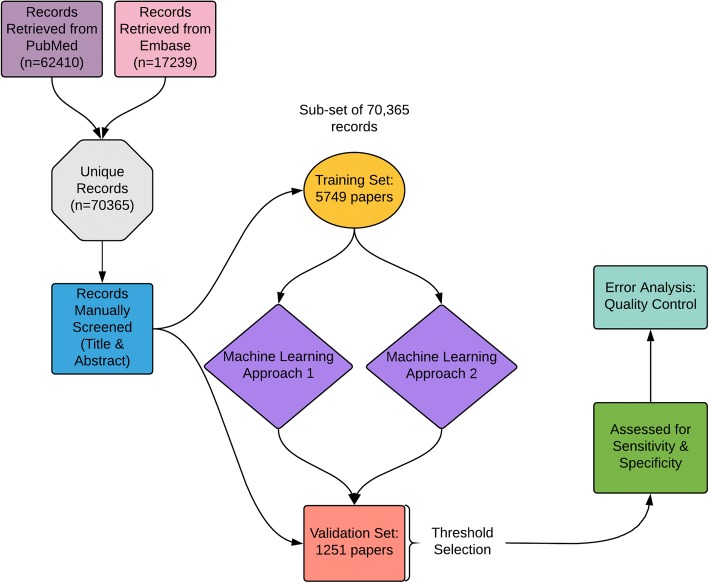
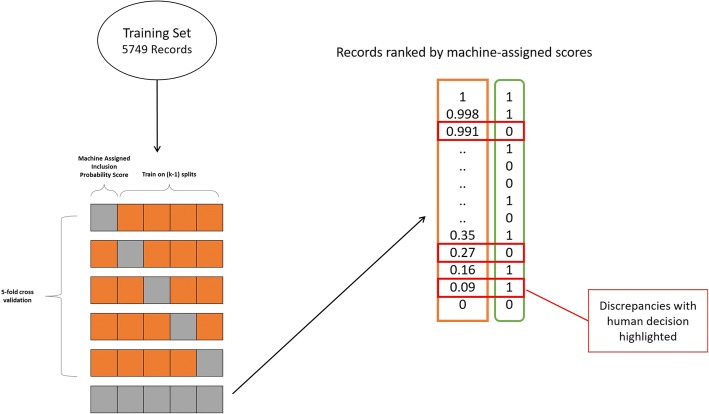
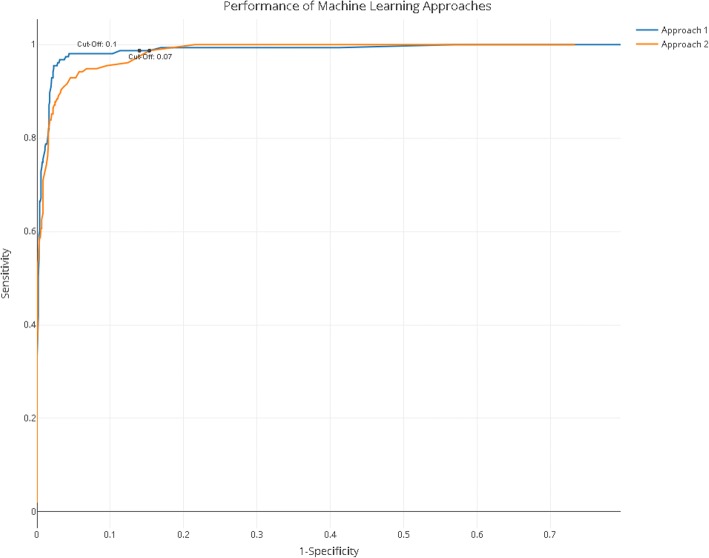
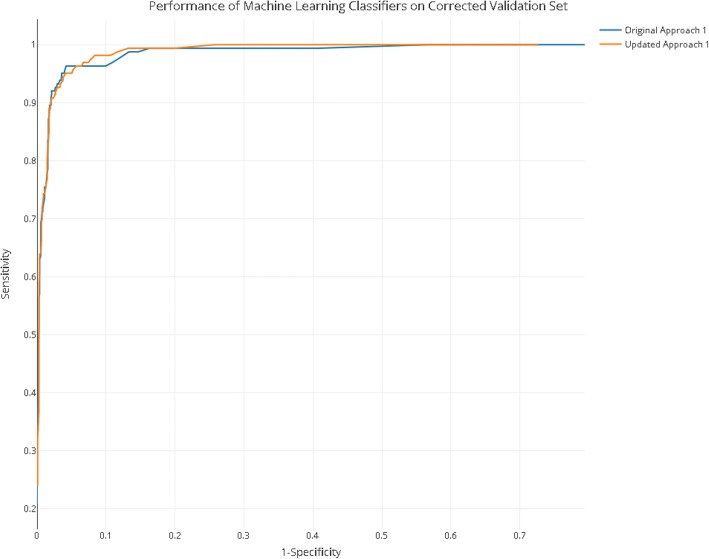
BACKGROUND: Here, we outline a method of applying existing machine learning (ML) approaches to aid citation screening in an on-going broad and shallow systematic review of preclinical animal studies. The aim is to achieve a high-performing algorithm comparable to human screening that can reduce human resources required for carrying out this step of a systematic review. METHODS: We applied ML approaches to a broad systematic review of animal models of depression at the citation screening stage. We tested two independently developed ML approaches which used different classification models and feature sets. We recorded the performance of the ML approaches on an unseen validation set of papers using sensitivity, specificity and accuracy. We aimed to achieve 95% sensitivity and to maximise specificity. The classification model providing the most accurate predictions was applied to the remaining unseen records in the dataset and will be used in the next stage of the preclinical biomedical sciences systematic review. We used a cross-validation technique to assign ML inclusion likelihood scores to the human screened records, to identify potential errors made during the human screening process (error analysis). RESULTS: ML approaches reached 98.7% sensitivity based on learning from a training set of 5749 records, with an inclusion prevalence of 13.2%. The highest level of specificity reached was 86%. Performance was assessed on an independent validation dataset. Human errors in the training and validation sets were successfully identified using the assigned inclusion likelihood from the ML model to highlight discrepancies. Training the ML algorithm on the corrected dataset improved the specificity of the algorithm without compromising sensitivity. Error analysis correction leads to a 3% improvement in sensitivity and specificity, which increases precision and accuracy of the ML algorithm. CONCLUSIONS: This work has confirmed the performance and application of ML algorithms for screening in systematic reviews of preclinical animal studies. It has highlighted the novel use of ML algorithms to identify human error. This needs to be confirmed in other reviews with different inclusion prevalence levels, but represents a promising approach to integrating human decisions and automation in systematic review methodology.
Overview
The claims and statistics of this paper haven’t been checked yet.
Free: it reads the open-access text and checks the first 5 claims that cite a source we can check. Create a free account to check every claim.
Integrity signals
Registry
Cites
Statistics
Figures
Verification
Claims the paper makes
The claims and statistics of this paper haven’t been checked yet.
Free: it reads the open-access text and checks the first 5 claims that cite a source we can check. Create a free account to check every claim.
Claims other papers make about this one
Each is checked against this paper’s own text: does it say what the citing paper says it does?
The source backs part of the claim, not all of it — or backs it for a different population, condition or comparison.
In the citing paper
“However, developing automatic screening tools based on combined ML techniques seems feasible; plenty of research and developments have been done in this field in recent years [26, 39, 41, 46, 52].”
From Machine learning computational tools to assist the performance of systematic reviews: A mapping review. (2022) · cites this paper as [52]
Experimental — accuracy not yet measuredThe source backs part of the claim, not all of it — or backs it for a different population, condition or comparison.
In the citing paper
“In systematic reviews, initial screens to identify papers are based on titles, abstracts, and keywords [156].”
From Reporting animal research: Explanation and elaboration for the ARRIVE guidelines 2.0 (2020) · cites this paper as [156]
Experimental — accuracy not yet measuredThe cited source says what the claim attributes to it.
In the citing paper
“However, current approaches lack robust stopping criteria, so that reviewers do not know when they have seen all or a certain proportion of relevant documents.”
From Statistical stopping criteria for automated screening in systematic reviews (2020) · cites this paper as [10]
The cited source says what the claim attributes to it.
In the citing paper
“as researchers agree that this is one of the most time-consuming steps [58, 67,71].”
From Automation of systematic literature reviews: A systematic literature review (2021) · cites this paper as [58]
In the citing paper
“these tools assist the reviewer by suggesting, classifying, or selecting records, and can either help or even replace the reviewer during certain parts of the process [28, 52, 71]”
From Machine learning computational tools to assist the performance of systematic reviews: A mapping review. (2022) · cites this paper as [52]
1 more claim about this paper
Create a free account to see every claim other papers make about this one.
Self-check
Percentages, sums and reported differences re-computed from the paper’s own numbers.
The self-check needs the paper’s full text.
Citations
Cites
R: A Language and Environment for Statistical Computing
R Core Team (2025) · doi:10.32614/r.manuals · Cited by 352,181
Scikit-learn: Machine Learning in Python
Pedregosa, F., Varoquaux, G., Gramfort, A., Michel, V., Thirion, B., Grisel, O., Blondel, M., Müller, A., Nothman, J., Louppe, G., et al. (2012) · arXiv · doi:10.48550/arxiv.1201.0490 · Cited by 71,016 · cited 1×
“Approach 1 Approach 1 used a tri-gram ‘ bag-of-words ’ model for feature selection and implemented a linear support vector machine (SVM) with stochastic gradient descent (SGD) as supported by the SciKit-Learn python library [25].”
MethodRegularization Paths for Generalized Linear Models via Coordinate Descent
Friedman, J., Hastie, T., & Tibshirani, R. (2010) · Journal of Statistical Software · doi:10.18637/jss.v033.i01 · Cited by 19,927 · cited 1×
“represented by 600 features, and an L1-regularised logistic regression model was built using glmnet package [31]”
MethodIntroduction to information retrieval
(2009) · Choice Reviews Online · doi:10.5860/choice.46-2715 · Cited by 12,278
Introduction to Information Retrieval
Manning, C. D., Raghavan, P., & Schütze, H. (2008) · doi:10.1017/cbo9780511809071 · Cited by 11,288
Pencina, M. J., D' Agostino, R. B., D' Agostino, R. B., & Vasan, R. S. (2008) · Statistics in Medicine · doi:10.1002/sim.2929 · Cited by 6,493 · cited 1×
“The following equation was used [37]: Sensitivity, specificity, precision, accuracy and WSS@95% equations from [5].”
MethodTwo-sided confidence intervals for the single proportion: comparison of seven methods
Newcombe, R. G. (1998) · Statistics in Medicine · doi:10.1002/(sici)1097-0258(19980430)17:8<857::aid-sim777>3.0.co;2-e · Cited by 5,107 · cited 1×
“95% confidence intervals were calculated using the efficient-score method [33].”
MethodSensitivity Analysis of k-Fold Cross Validation in Prediction Error Estimation
Rodriguez, J. D., Perez, A., & Lozano, J. A. (2010) · IEEE Transactions on Pattern Analysis and Machine Intelligence · doi:10.1109/tpami.2009.187 · Cited by 1,890 · cited 1×
“Over five iterations, one subsample is set aside, and the remaining four subsamples are used to train the algorithm [35].”
MethodA sequential algorithm for training text classifiers
Lewis, D., & Gale, W. A. (1994) · arXiv (Cornell University) · doi:10.5555/188490.188495 · Cited by 1,731
Bornmann, L., & Mutz, R. (2015) · Journal of the Association for Information Science and Technology · doi:10.1002/asi.23329 · Cited by 1,576 · cited 1×
“The rate of publication of primary research is increasing exponentially within biomedicine [1].”
Background
Research works printed but not linked: 2
- 28. Thomas J Brunton J Graziosi S EPPI-Reviewer 4.0: software for research synthesis. EPPI-Centre Software 2010 London Social Science Research Unit, Institute of Education
- 38. Robin, X. (2017). “pROC” Package. https://cran.r-project.org/web/packages/pROC/pROC.pdf. Accessed 11 Dec 2018.
Cited by
Reporting animal research: Explanation and elaboration for the ARRIVE guidelines 2.0
Percie du Sert, N., Ahluwalia, A., Alam, S., Avey, M. T., Baker, M., Browne, W. J., Clark, A., Cuthill, I. C., Dirnagl, U., Emerson, M., et al. (2020) · PLOS Biology · doi:10.1371/journal.pbio.3000411 · Cited by 3,123
Self-citationSalameh, J.-P., Bossuyt, P. M., McGrath, T. A., Thombs, B. D., Hyde, C. J., Macaskill, P., Deeks, J. J., Leeflang, M., Korevaar, D. A., Whiting, P., et al. (2020) · BMJ · doi:10.1136/bmj.m2632 · Cited by 719
Automation of systematic literature reviews: A systematic literature review
van Dinter, R., Tekinerdogan, B., & Catal, C. (2021) · Information and Software Technology · doi:10.1016/j.infsof.2021.106589 · Cited by 432
“…Gual ´ an and Saquicela [40] describe an algorithm that automates metadata extraction from articles Cost assignment [66] Data resampling [41,42,58,64] SMOTE [43,53] Feature enrichment [43,63] Cost-sensitive classifiers [43,53, 61,66] Precision@95% recall [ published by IEEE, ACM, Springer,…”
BackgroundMethodError rates of human reviewers during abstract screening in systematic reviews
Wang, Z., Nayfeh, T., Tetzlaff, J., O’Blenis, P., & Murad, M. H. (2020) · PLOS ONE · doi:10.1371/journal.pone.0227742 · Cited by 217
Chai, K. E. K., Lines, R. L. J., Gucciardi, D. F., & Ng, L. (2021) · Systematic Reviews · doi:10.1186/s13643-021-01635-3 · Cited by 190
“Machine learning approaches to the facilitation of title and abstract screening have been examined within many scientific disciplines, such as public health [24], animal studies [3] and genetics [42].”
BackgroundArtificial intelligence to automate the systematic review of scientific literature
de la Torre-López, J., Ramírez, A., & Romero, J. R. (2023) · Computing · doi:10.1007/s00607-023-01181-x · Cited by 170
Soliman, N., Haroutounian, S., Hohmann, A. G., Krane, E. J., Liao, J., Macleod, M. R., Segelcke, D., Sena, C., Thomas, J., Vollert, J., et al. (2021) · Pain · doi:10.1097/j.pain.0000000000002269 · Cited by 166
Self-citationBaclic, O., Tunis, M., Young, K., Doan, C., & Swerdfeger, H. (2020) · Canada Communicable Disease Report · doi:10.14745/ccdr.v46i06a02 · Cited by 134
Raman, R., Pattnaik, D., Hughes, L., & Nedungadi, P. (2024) · Journal of Innovation & Knowledge · doi:10.1016/j.jik.2024.100517 · Cited by 167
DeLuca, N. M., Angrish, M., Wilkins, A., Thayer, K., & Cohen Hubal, E. A. (2021) · Environment International · doi:10.1016/j.envint.2020.106308 · Cited by 122
Statistical stopping criteria for automated screening in systematic reviews
Callaghan, M. W., & Müller-Hansen, F. (2020) · Systematic Reviews · doi:10.1186/s13643-020-01521-4 · Cited by 121
Elbers, S., Wittink, H. M., Konings, S., Kaiser, U., Kleijnen, J., Pool, J. J. M., Köke, A. J. A., & Smeets, R. (2021) · European Journal of Pain · doi:10.1002/ejp.1875 · Cited by 131
Machine Learning and Big Data Provide Crucial Insight for Future Biomaterials Discovery and Research
Kerner, J., Dogan, A. B., & von Recum, H. A. (2020) · Acta Biomaterialia · doi:10.1016/j.actbio.2021.05.053 · Cited by 111
Systematic Evidence Map for Over One Hundred and Fifty Per- and Polyfluoroalkyl Substances (PFAS)
Carlson, L. M., Angrish, M., Shirke, A. V., Radke, E. G., Schulz, B., Kraft, A., Judson, R., Patlewicz, G., Blain, R., Lin, C., et al. (2022) · Environmental Health Perspectives · doi:10.1289/ehp10343 · Cited by 96
Levelling the Translational Gap for Animal to Human Efficacy Data
Ferreira, G. S., Veening-Griffioen, D. H., Boon, W., Moors, E. H. M., & van Meer, P. J. K. (2020) · Animals · doi:10.3390/ani10071199 · Cited by 107
Methodological insights into ChatGPT’s screening performance in systematic reviews
Issaiy, M., Ghanaati, H., Kolahi, S., Shakiba, M., Jalali, A. H., Zarei, D., Kazemian, S., Avanaki, M. A., & Firouznia, K. (2024) · BMC Medical Research Methodology · doi:10.1186/s12874-024-02203-8 · Cited by 69
“However, they typically employ machine learning (ML) algorithms to rate the articles and need the users to annotate some citations as relevant, unsure, or irrelevant [30].”
BackgroundOfori-Boateng, R., Aceves-Martins, M., Wiratunga, N., & Moreno-Garcia, C. F. (2024) · Artificial Intelligence Review · doi:10.1007/s10462-024-10844-w · Cited by 86
Cierco Jimenez, R., Lee, T., Rosillo, N., Cordova, R., Cree, I. A., Gonzalez, A., & Indave Ruiz, B. I. (2022) · BMC Medical Research Methodology · doi:10.1186/s12874-022-01805-4 · Cited by 85
“Especially promising are ML techniques [49–51] for the automation of systematic reviews steps [41, 46, 52].”
BackgroundMethodInfluentialCurrie, G. L., Angel-Scott, H. N., Colvin, L., Cramond, F., Hair, K., Khandoker, L., Liao, J., Macleod, M. R., McCann, S., Morland, R., et al. (2019) · PLoS Biology · doi:10.1371/journal.pbio.3000243 · Cited by 87
Self-citationBahor, Z., Liao, J., Currie, G. L., Ayder, C., Macleod, M. R., McCann, S., Bannach‐Brown, A., Wever, K. E., Soliman, N., Wang, Q., et al. (2021) · BMJ Open Science · doi:10.1136/bmjos-2020-100103 · Cited by 90
Self-citationRobledo, S., Grisales Aguirre, A. M., Hughes, M., & Eggers, F. (2023) · Journal of Small Business Management · doi:10.1080/00472778.2021.1955125 · Cited by 80
“Swift-Review organizes data labeling by list criteria (year, author, source, and so forth) (Bannach-Brown et al., 2019; Cawley et al., 2020).”
BackgroundGood Research Practice in Non-Clinical Pharmacology and Biomedicine
Bespalov, A., Michel, M. C., & Steckler, T. (2020) · Handbook of experimental pharmacology · doi:10.1007/978-3-030-33656-1 · Cited by 92
Keshava, C., Nicolai, S., Vulimiri, S. V., Cruz, F. A., Ghoreishi, N., Knüppel, S., Lenzner, A., Tarnow, P., Vanselow, J. T., Schulz, B., et al. (2023) · Environment International · doi:10.1016/j.envint.2023.107952 · Cited by 69
Text mining to support abstract screening for knowledge syntheses: a semi-automated workflow
Pham, B., Jovanovic, J., Bagheri, E., Antony, J., Ashoor, H., Nguyen, T. T., Rios, P., Robson, R., Thomas, S. M., Watt, J., et al. (2021) · Systematic Reviews · doi:10.1186/s13643-021-01700-x · Cited by 63
Shirke, A. V., Radke, E. G., Lin, C. J., Blain, R. B., Vetter, N., Lemeris, C., Hartman, P. A., Hubbard, H. F., Angrish, M. M., Arzuaga, X., et al. (2024) · Environmental Health Perspectives · doi:10.1289/ehp13423 · Cited by 101
“This threshold is comparable to human error rates 37,49,50 and is used as a metric to evaluate machine-learning performance.”
Tóth, B., Berek, L., Gulácsi, L., Péntek, M., & Zrubka, Z. (2024) · Systematic Reviews · doi:10.1186/s13643-024-02592-3 · Cited by 48
“…131], Distiller SR [94, 99, 126], Rayyan [103, 131], Systematic Review Accelerator [18, 135], RCT Tagger [77, 78], SWIFT Review [125, 126], SyRF [92, 111], ASR (automated systematic review) [67], ASReview [133], Aggre-gator [58], ATCER [63], Cochrane RCT Classifier [72], Covidence [131],…”
BackgroundInfluentialdos Reis, A. H. S., de Oliveira, A. L. M., Fritsch, C. G., Zouch, J., Ferreira, P. H., & Polese, J. C. (2023) · Systematic Reviews · doi:10.1186/s13643-023-02231-3 · Cited by 61
Leveraging AI to improve evidence synthesis in conservation
Berger‐Tal, O., Wong, B. B. M., Adams, C. A., Blumstein, D. T., Candolin, U., Gibson, M. J., Greggor, A. L., Lagisz, M., Macura, B., Price, C. J., et al. (2024) · Trends in Ecology & Evolution · doi:10.1016/j.tree.2024.04.007 · Cited by 58
Kebede, M. M., Le Cornet, C., & Fortner, R. T. (2023) · Research Synthesis Methods · doi:10.1002/jrsm.1589 · Cited by 50
“49 Adjustment for human screening error might have yielded better performance as documented in the recent studies 13,49 .”
BackgroundMethodMatsui, K., Utsumi, T., Aoki, Y., Maruki, T., Takeshima, M., & Takaesu, Y. (2024) · Journal of Medical Internet Research · doi:10.2196/52758 · Cited by 50
“In addition, human error is inevitable in the screening process [15-17], and the number of such errors can increase as the amount of paper to be screened increases possibly due to fatigue and cognitive overload [18,19].”
Crowdsourcing the Citation Screening Process for Systematic Reviews: Validation Study
Nama, N., Sampson, M., Barrowman, N., Sandarage, R., Menon, K., Macartney, G., Murto, K., Vaccani, J.-P., Katz, S., Zemek, R., et al. (2019) · Journal of Medical Internet Research · doi:10.2196/12953 · Cited by 50
Haby, M. M., Barreto, J. O. M., Kim, J. Y. H., Peiris, S., Mansilla, C., Torres, M., Guerrero‐Magaña, D. E., & Revéiz, L. (2023) · Research Synthesis Methods · doi:10.1002/jrsm.1664 · Cited by 53
Carlson, L. M., Christensen, K. L. Y., Sagiv, S. K., Rajan, P. K., Klocke, C. R., Lein, P. J., Coffman, E., Shaffer, R. M., Yost, E. E., Arzuaga, X., et al. (2022) · Environmental Research · doi:10.1016/j.envres.2022.115148 · Cited by 47
Automating Systematic Literature Review
Felizardo, K. R., & Carver, J. C. (2020) · Springer eBooks · doi:10.1007/978-3-030-32489-6_12 · Cited by 64
A practical guide to preclinical systematic review and meta-analysis
Soliman, N., Rice, A. S. C., & Vollert, J. (2020) · Pain · doi:10.1097/j.pain.0000000000001974 · Cited by 44
Self-citationSundaram, G., & Berleant, D. (2023) · Lecture notes in networks and systems · doi:10.1007/978-981-99-3243-6_7 · Cited by 48
Wong, C., Dakin, R. S., Williamson, J., Newton, J. L., Steven, M., Colville, S., Stavrou, M., Gregory, J. M., Elliott, E., Mehta, A. R., et al. (2022) · BMJ Open · doi:10.1136/bmjopen-2022-064173 · Cited by 42
Self-citationFelizardo, K. R., Lima, M. H. T. D. F., Deizepe, A., Conte, T. U., & Steinmacher, I. (2024) · Proceedings of the ... ACM-IEEE International Symposium on Empirical Software Engineering and Measurement/International Symposium on Empirical Software Engineering and Measurement · doi:10.1145/3674805.3686666 · Cited by 53
Goss, D. M., Vasilescu, S. A., Vasilescu, P. A., Cooke, S., Kim, S. H., Sacks, G. P., Gardner, D. K., & Warkiani, M. E. (2024) · Reproductive BioMedicine Online · doi:10.1016/j.rbmo.2024.103910 · Cited by 36
Ye, A., Maiti, A., Schmidt, M. W., & Pedersen, S. (2024) · Future Internet · doi:10.3390/fi16050167 · Cited by 46
Sule, F. A., Uthman, O. A., Olamijuwon, E. O., Ichegbo, N. K., Mgbachi, I. C., Okusanya, B., & Makinde, O. A. (2022) · BMJ Global Health · doi:10.1136/bmjgh-2021-007426 · Cited by 34
Measuring the impact of screening automation on meta-analyses of diagnostic test accuracy
Norman, C. R., Leeflang, M. M. G., Porcher, R., & Névéol, A. (2019) · Systematic Reviews · doi:10.1186/s13643-019-1162-x · Cited by 33
Systematic online living evidence summaries: emerging tools to accelerate evidence synthesis
Hair, K., Wilson, E., Wong, C., Tsang, A., Macleod, M. R., & Bannach‐Brown, A. (2023) · Clinical Science · doi:10.1042/cs20220494 · Cited by 39
Self-citationHarnessing AI for enhanced evidence-based laboratory medicine (EBLM)
Pillay, T. S., Topçu, D. İ., & Yenice, S. (2025) · Clinica Chimica Acta · doi:10.1016/j.cca.2025.120181 · Cited by 38
A Multi-Channel Convolutional Neural Network approach to automate the citation screening process
van Dinter, R., Catal, C., & Tekinerdoğan, B. (2021) · Applied Soft Computing · doi:10.1016/j.asoc.2021.107765 · Cited by 37
Lalu, M. M., Montroy, J. R., Begley, C. G., Bubela, T. M., Hunniford, V. T., Ripsman, D., Wesch, N. L., Kimmelman, J., Macleod, M. R., Moher, D., et al. (2020) · F1000Research · doi:10.12688/f1000research.23663.2 · Cited by 35
Self-citationGoldilocks: Just-Right Tuning of BERT for Technology-Assisted Review
Yang, E., MacAvaney, S., Lewis, D. D., & Frieder, O. (2022) · Lecture notes in computer science · doi:10.1007/978-3-030-99736-6_34 · Cited by 43
Applying machine classifiers to update searches: Analysis from two case studies
Stansfield, C., Stokes, G., & Thomas, J. (2021) · Research Synthesis Methods · doi:10.1002/jrsm.1537 · Cited by 34
Self-citationJain, D., Nambirajan, A., Chen, G., Geisinger, K. R., Hiroshima, K., Layfield, L. J., Minami, Y., Moreira, A. L., Motoi, N., Papotti, M. G., et al. (2022) · Journal of Thoracic Oncology · doi:10.1016/j.jtho.2022.02.013 · Cited by 32
The pharmacological bases for repurposing statins in depression: a review of mechanistic studies
Giorgi, R. D., Pesci, N. R., Rosso, G., Maina, G., Cowen, P. J., & Harmer, C. J. (2023) · Translational Psychiatry · doi:10.1038/s41398-023-02533-z · Cited by 35
“…studies are abundant yet less methodically organised on search engines and databases than their clinical counterparts, systematically searching for relevant mechanistic evidence can be daunting, though pro fi table [74] — and machine learning approaches have been developed to support the task [75].”
BackgroundSystematic review and meta-analysis of preclinical studies
Ineichen, B. V., Held, U., Salanti, G., Macleod, M. R., & Wever, K. E. (2024) · Nature Reviews Methods Primers · doi:10.1038/s43586-024-00347-x · Cited by 32
Self-citationAssessing risk of bias in toxicological studies in the era of artificial intelligence
Härtung, T., Hoffmann, S., & Whaley, P. (2025) · Archives of Toxicology · doi:10.1007/s00204-025-03978-5 · Cited by 33
“Bannach-Brown et al. (2019) demonstrate the application of machine learning to screen studies for inclusion in systematic reviews of animal studies, which is relevant to toxicology.”
Scotti, K. L., Young, S. M. N., Gainey, M. A., & Lan, H. (2025) · Cochrane Evidence Synthesis and Methods · doi:10.1002/cesm.70046 · Cited by 37
Technological advances in preclinical meta-research
Bannach‐Brown, A., Hair, K., Bahor, Z., Soliman, N., Macleod, M. R., & Liao, J. (2021) · BMJ Open Science · doi:10.1136/bmjos-2020-100131 · Cited by 28
Self-citationCornford, R., Deinet, S., Palma, A. D., Hill, S. L. L., McRae, L., Pettit, B., Marconi, V., Purvis, A., & Freeman, R. (2020) · Global Ecology and Biogeography · doi:10.1111/geb.13219 · Cited by 28
“…far had relatively limited use in the biological sciences (Nunez-Mir et al., 2016), but evaluations in the context of producing medical systematic reviews show that they can classify accurately and save time (O’Mara-Eves et al., 2015), and can even correct human error (Bannach-Brown et al., 2019).”
BackgroundResultThe Development of a Living Knowledge System and Implications for Future Systematic Searching
Grbin, L., Nichols, P., Russell, F., Fuller‐Tyszkiewicz, M., & Olsson, C. A. (2022) · Journal of the Australian Library and Information Association · doi:10.1080/24750158.2022.2087954 · Cited by 28
“For example, in 2019 Bannach-Brown et al. described using machine learning algorithms in systematic review screening (Bannach-Brown et al., 2019).”
MethodIterative guided machine learning-assisted systematic literature reviews: A diabetes case study
Zimmerman, J., Soler, R. E., Lavinder, J., Murphy, S., Atkins, C., Hulbert, L., Lusk, R., & Ng, B. P. (2021) · Systematic Reviews · doi:10.1186/s13643-021-01640-6 · Cited by 24
“26 The [10 -SVM, 1 - KNN, 1 – Decision Tree, 1 – Sigmoidal SVM] weighting distribution consistently resulted in the highest area under the curve of the options tested.”
BackgroundMethodWu, H., Jingbo, H., Cheng, H., Yang, L., Park, H. J., & Li, J. (2022) · International Journal of Biological Macromolecules · doi:10.1016/j.ijbiomac.2022.09.202 · Cited by 22
Kusa, W., Lipani, A., Knoth, P., & Hanbury, A. (2023) · Intelligent Systems with Applications · doi:10.1016/j.iswa.2023.200193 · Cited by 21
Using artificial intelligence tools to automate data extraction for living evidence syntheses
Mitchell, E., Are, E. B., Colijn, C., & Earn, D. J. D. (2025) · PLoS ONE · doi:10.1371/journal.pone.0320151 · Cited by 23
“Machine learning techniques have helped to considerably reduce this manual time investment [3–5].”
Lim, K.-H., Yang, S., Kim, S.-H., Ko, E., Kang, M., & Joo, J.-Y. (2023) · Brain · doi:10.1093/brain/awac451 · Cited by 21
Artificial Intelligence in Pharmaceutical Field - A Critical Review
Shanbhogue, M. H., Thirumaleshwar, S., Tegginamath, P. K., & Hemanth Kumar, S. (2021) · Current Drug Delivery · doi:10.2174/1567201818666210617100613 · Cited by 25
Somching, N., Wongsai, S., Wongsai, N., & Koedsin, W. (2020) · International Journal of Remote Sensing · doi:10.1080/01431161.2020.1799450 · Cited by 19
Using machine learning for continuous updating of meta-analysis in educational context
Chernikova, O., Stadler, M. J., Melev, I., & Fischer, F. (2024) · Computers in Human Behavior · doi:10.1016/j.chb.2024.108215 · Cited by 22
Li, Z., Gurgel, H., Dessay, N., Hu, L., Xu, L., & Gong, P. (2020) · International Journal of Environmental Research and Public Health · doi:10.3390/ijerph17124509 · Cited by 21
Eun, M., Jeon, E., Seo, K., Lee, D., & Jung, J. (2021) · Journal of Stroke and Cerebrovascular Diseases · doi:10.1016/j.jstrokecerebrovasdis.2021.105742 · Cited by 22
Lu, J. K., Sijm, M., Janssens, G. E., Goh, J., & Maier, A. B. (2023) · GeroScience · doi:10.1007/s11357-023-00815-4 · Cited by 19
Wong, C., Gregory, J. M., Liao, J., Egan, K. J., Vesterinen, H. M., Khan, A. A., Anwar, M. M., Beagan, C., Brown, F. S., Cafferkey, J., et al. (2023) · BMJ Open · doi:10.1136/bmjopen-2022-064169 · Cited by 19
Self-citationWilson, E., Cruz, F. A., Maclean, D., Ghanawi, J., McCann, S., Brennan, P. M., Liao, J., Sena, E. S., & Macleod, M. R. (2023) · Clinical Science · doi:10.1042/cs20220594 · Cited by 18
Self-citationSalimi, M., Roshanfar, M., Tabatabaei, N., & Mosadegh, B. (2023) · Journal of Personalized Medicine · doi:10.3390/jpm14010033 · Cited by 23
“ML techniques have demonstrated diverse applications in both preclinical and clinical stages within the biomedical field [39–41].”
BackgroundArtificial intelligence and automation of systematic reviews in women's health
Amezcua‐Prieto, C., Fernández-Luna, J. M., Huete, J. F., Bueno‐Cavanillas, A., & Khan, K. S. (2020) · Current Opinion in Obstetrics & Gynecology · doi:10.1097/gco.0000000000000643 · Cited by 17
Osseointegration Pharmacology: A Systematic Mapping Using Artificial Intelligence
Mahri, M., Shen, N., Berrizbeitia, F., Rodan, R., Daer, A., Faigan, M., Taqi, D., Wu, K. Y., Ahmadi, M., Ducret, M., et al. (2020) · Acta Biomaterialia · doi:10.1016/j.actbio.2020.11.011 · Cited by 18
Fatalla, A. A., Arzani, S., Veseli, E., Khademi, A., Khandan, A., Fahmy, M. D., Mirmohammadi, H., Hasselgren, G., Bang, H., Kolahi, J., et al. (2023) · Dental Hypotheses · doi:10.4103/denthyp.denthyp_122_23 · Cited by 22
Thomas, I. N., Roche, P. K., & Grêt‐Regamey, A. (2024) · Ecological Informatics · doi:10.1016/j.ecoinf.2024.102819 · Cited by 18
Kusa, W., Hanbury, A., & Knoth, P. (2022) · Lecture notes in computer science · doi:10.1007/978-3-030-99736-6_39 · Cited by 19
Sun, J., Caputo, V., & Taylor, H. (2024) · Applied Economic Perspectives and Policy · doi:10.1002/aepp.13446 · Cited by 18
Ofori-Boateng, R., Aceves‐Martins, M., Jayne, C., Wiratunga, N., & Moreno‐García, C. F. (2023) · Procedia Computer Science · doi:10.1016/j.procs.2023.08.149 · Cited by 15
Sousa, M. S. A., Peiris, S., Figueiró, M. F., Haby, M. M., Baraldi, A. C., Revéiz, L., & Souza, J. P. (2026) · Systematic Reviews · doi:10.1186/s13643-025-02842-y · Cited by 14
“Therefore, error analysis technique requires further detailed elucidation and validation [83, 114, 132, 139], including specific reporting checklists for protocols and manuscripts for these types of experiments or for ES that are being optimised by AI tools and platforms [138].”
Crowdsourcing citation-screening in a mixed-studies systematic review: a feasibility study
Noel-Storr, A. H., Redmond, P., Lamé, G., Liberati, E. G., Kelly, S., Miller, L., Dooley, G., Paterson, A., & Burt, J. (2021) · BMC Medical Research Methodology · doi:10.1186/s12874-021-01271-4 · Cited by 15
Ruan, M., Fan, J., Liu, M., Meng, Z., Zhang, X., & Zhang, C. (2025) · BMC Medical Research Methodology · doi:10.1186/s12874-025-02644-9 · Cited by 12
“Meanwhile, as demonstrated in prior studies [27], these tools also exhibit considerable potential for optimizing screening process efficiency.”
Pediatric Chronic Critical Illness: Protocol for a Scoping Review
Zorko, D. J., McNally, J. D., Rochwerg, B. N., Pinto, N. P., Couban, R., O’Hearn, K., & Choong, K. L. M. (2021) · JMIR Research Protocols · doi:10.2196/30582 · Cited by 12
BERT for Complex Systematic Review Screening to Support the Future of Medical Research
Hasny, M., Vasile, A.-P., Gianni, M., Bannach‐Brown, A., Nasser, M., Mackay, M., donovan, D., Šorli, J., Domocos, I., Dulloo, M., et al. (2023) · Lecture notes in computer science · doi:10.1007/978-3-031-34344-5_21 · Cited by 12
Self-citationA scoping review and analysis of green construction research: a machine learning aided approach
Fernando, A., Siriwardana, C., Law, D. W., Gunasekara, C., Zhang, K., & Gamage, K. G. P. N. (2024) · Smart and Sustainable Built Environment · doi:10.1108/sasbe-08-2023-0201 · Cited by 13
Design of Meta-Analysis Studies
Macleod, M. R., Tanriver-Ayder, E., Hair, K., & Sena, E. S. (2019) · Handbook of experimental pharmacology · doi:10.1007/164_2019_289 · Cited by 16
Self-citationSemi-automated title-abstract screening using natural language processing and machine learning
Pilz, M., Zimmermann, S., Friedrichs, J., Wördehoff, E., Ronellenfitsch, U., Kieser, M., & Vey, J. A. (2024) · Systematic Reviews · doi:10.1186/s13643-024-02688-w · Cited by 14
Ofori-Boateng, R., Escobar, T. G. T., Aceves‐Martins, M., Wiratunga, N., & Moreno‐García, C. F. (2024) · Artificial Intelligence in Medicine · doi:10.1016/j.artmed.2024.102989 · Cited by 12
“However, the rigour of the SR process simultaneously introduces two main substantial challenges [5,6].”
BackgroundMethodThayer, K. A., Angrish, M. M., Arzuaga, X., Carlson, L. M., Davis, A., Dishaw, L. V., Druwe, I. L., Gibbons, C. F., Glenn, B. S., Jones, R., et al. (2022) · Environment International · doi:10.1016/j.envint.2022.107468 · Cited by 12
Uthman, O. A., Court, R. A., Enderby, J., Al-Khudairy, L., Nduka, C. U., Mistry, H., Meléndez‐Torres, G. J., Taylor‐Phillips, S., & Clarke, A. (2022) · Health Technology Assessment · doi:10.3310/udir6682 · Cited by 12
“37,38 Furthermore, the most important aspect of the system to evaluate is how much future work the reviewers could save in the process of screening abstracts and titles.”
BackgroundMethodInfluentialNorman, C. R., Gargon, E., Leeflang, M., Névéol, A., & Williamson, P. R. (2019) · Database · doi:10.1093/database/baz109 · Cited by 11
LLAssist: Simple Tools for Automating Literature Review Using Large Language ModelsPreprint
Haryanto, C. Y. (2024) · arXiv.org · doi:10.48550/arxiv.2407.13993 · Cited by 9
“In response to these mounting challenges, the research community has begun exploring automated solutions to assist in the systematic literature review process [Silva J´unior and Dutra, 2021, Wallace et al., 2010, Tsafnat et al., 2018, Bannach-Brown et al., 2019].”
ContReviews: A content-based recommendation system for updating Living Evidences in health care
Tenti, P., Thomas, J., Peñaloza, R., & Pasi, G. (2025) · Knowledge-Based Systems · doi:10.1016/j.knosys.2025.112981 · Cited by 11
Self-citationA Systematic Online Living Evidence Summary of experimental Alzheimer’s disease research
Hair, K., Wilson, E., Maksym, O., Macleod, M. R., & Sena, E. S. (2024) · Journal of Neuroscience Methods · doi:10.1016/j.jneumeth.2024.110209 · Cited by 10
Self-citationA distantly supervised dataset for automated data extraction from diagnostic studies.
Norman, C., Leeflang, M., Spijker, R., Kanoulas, E., & Névéol, A. (2019) · Proceedings of the 18th BioNLP Workshop and Shared Task · doi:10.18653/v1/w19-5012 · Cited by 9
Sundaram, G., & Berleant, D. (2022) · arXiv (Cornell University) · doi:10.48550/arxiv.2211.15397 · Cited by 14
Rapid review: A review of methods and recommendations based on current evidence
Guo, Q., Jiang, G., Zhao, Q., Long, Y., Feng, K., Gu, X., Xu, Y., Li, Z., Huang, J., & Du, L. (2024) · Journal of Evidence-Based Medicine · doi:10.1111/jebm.12594 · Cited by 8
Rajapaksha, D., Siriwardana, C., Ruparathna, R., Maqsood, T., Setunge, S., Rajapakse, L., & Silva, S. D. (2024) · Buildings · doi:10.3390/buildings14061864 · Cited by 10
LaFollette, M. R., Clement, C. S., Luchins, K. R., Manuel, C. A., Foley, P. L., Hanson, W. H., Pettan-Brewer, C., Winn, C. B., & Garner, J. P. (2024) · PLoS ONE · doi:10.1371/journal.pone.0311840 · Cited by 8
Machine learning e revisão sistemática de literatura automatizada: uma revisão sistemática
Tsunoda, D. F., Moreira, P. S. D. C., & Guimarães, A. J. R. (2020) · Revista Tecnologia e Sociedade · doi:10.3895/rts.v16n45.12119 · Cited by 12
Xu, S., Zhao, Z., Liu, X., & Meng, X.-L. (2025) · BMC Medical Informatics and Decision Making · doi:10.1186/s12911-025-03138-w · Cited by 8
“GPT models not only maintain high sensitivity in complex screening tasks but also effectively reduce errors and workload [31, 32], providing a more reliable tool for literature screening [33, 34].”
Systematic Evidence Map for the Per- and Polyfluoroalkyl Substances (PFAS) Universe
Shirke, A. V., Radke, E. G., Jones, R., Allen, B. D., Lin, C. J., Ross, A., Vetter, N., Lemeris, C., Hartman, P. A., Eftim, S., et al. (2025) · Environmental Health Perspectives · doi:10.1021/ehp.6c00127 · Cited by 7
Metadata
- Authors
- Bannach-Brown, A., Przybyła, P., Thomas, J., Rice, A. S. C., Ananiadou, S., Liao, J., & Macleod, M. R.
- Affiliations
- University of Manchester (GB)
- University College London (GB)
- Imperial College London (GB)
- University of Edinburgh (GB)
- ORCID
- Venue
- Systematic Reviews
- Published
- 2019-01-15
- Volume
- 8
- Issue
- 1
- Pages
- 23-23
- ISSN
- 2046-4053 (ISSN-L)
- PMC
- PMC6334440
- OpenAlex
- W2910642642
- Cited by
- 185
- References
- 44
- Citations by year
- 2026: 12 · 2025: 23 · 2024: 38 · 2023: 30 · 2022: 21 · 2021: 26 · 2020: 27 · 2019: 8
- FWCI
- 4.16
- Type
- journal article
- Language
- en
- Open access
- gold
- doi.org
- Licence
- cc-by
- creativecommons.org/licenses/by/4.0/ (tdm)
- Locations
- Systematic Reviews (publishedVersion, cc-by)
- Europe PMC (PubMed Central) (publishedVersion, other-oa)
- PubMed Central (publishedVersion, cc-by)
- PubMed (publishedVersion)
- Bond University Research Portal (Bond University) (acceptedVersion, cc-by)
- DOAJ (DOAJ: Directory of Open Access Journals) (submittedVersion, cc-by-sa)
- UCL Discovery (University College London) (submittedVersion)
- Research Explorer (The University of Manchester) (submittedVersion, cc-by)
- Scopus (Elsevier) (submittedVersion)
- Edinburgh Research Explorer (University of Edinburgh) (submittedVersion, other-oa)
- Repositori digital de la UPF (Universitat Pompeu Fabra) (submittedVersion, cc-by)
- Spiral (Imperial College London) (submittedVersion, cc-by)
- Funders
- Wellcome Trust (MR/N015665/1)
- Topics
- Social Sciences › Decision Sciences › Statistics, Probability and Uncertainty › Meta-analysis and systematic reviews
- Physical Sciences › Computer Science › Information Systems › Information Retrieval and Search Behavior
- Health Sciences › Health Professions › Health Information Management › Artificial Intelligence in Healthcare
- Keywords
- machine learning, citation screening, systematic reviews, preclinical animal studies, animal models of depression, error analysis, sensitivity and specificity
- MeSH terms
- Machine Learning, Systematic Reviews as Topic, Algorithms, Animals, Depressive Disorder, Humans, Sensitivity and Specificity, Bibliometrics, Workload, Models, Animal
About these checks
Registry, retraction, Cites and statistics results are computed, not judged, with one exception: a printed reference that no index lists is read once by a model before it counts as a citation error. Claims are extracted by a model and kept only when their quote appears verbatim in the text; each cited source is then checked, with a model’s help, for whether it says what the claim relies on. Those verdicts can be wrong — read the claim’s quote and the cited source before relying on one.
Statistics and arithmetic are recomputed, not judged.
Confidence bands are shown only for fields calibrated on our annotated test set. None is calibrated yet, so no band is shown.
What counts as a claim ›How we measure confidence ›How we check this ›
Are you an author, or do you see a problem with this page? Request a review
Data sources
Bibliographic data: Semantic Scholar, OpenAlex, Crossref.
Contains information from the Semantic Scholar Academic Graph Datasets, made available under the ODC Attribution License (ODC-BY 1.0).
Semantic Scholar’s data is described in: Kinney, R., et al. (2023). The Semantic Scholar Open Data Platform. arXiv:2301.10140.
