

Statistical stopping criteria for automated screening in systematic reviews
Open accessPublished version of a preprint
The DOI matches its Crossref record; 28 of the 28 references it cites were found in a registry or an index; 10 of the 11 sources its claims cite were checked for support.
Abstract
Active learning for systematic review screening promises to reduce the human effort required to identify relevant documents for a systematic review. Machines and humans work together, with humans providing training data, and the machine optimising the documents that the humans screen. This enables the identification of all relevant documents after viewing only a fraction of the total documents. However, current approaches lack robust stopping criteria, so that reviewers do not know when they have seen all or a certain proportion of relevant documents. This means that such systems are hard to implement in live reviews. This paper introduces a workflow with flexible statistical stopping criteria, which offer real work reductions on the basis of rejecting a hypothesis of having missed a given recall target with a given level of confidence. The stopping criteria are shown on test datasets to achieve a reliable level of recall, while still providing work reductions of on average 17%. Other methods proposed previously are shown to provide inconsistent recall and work reductions across datasets.
Overview
CoChat Summary
TL;DR
The paper introduces statistical stopping criteria for active-learning screening in systematic reviews, using a hypergeometric test to reject the hypothesis that recall is below a target with a chosen confidence. On test datasets, the proposed criteria achieve reliable recall while saving on average 17% of screening work, whereas existing sampling and heuristic criteria are inconsistent.
Key findings
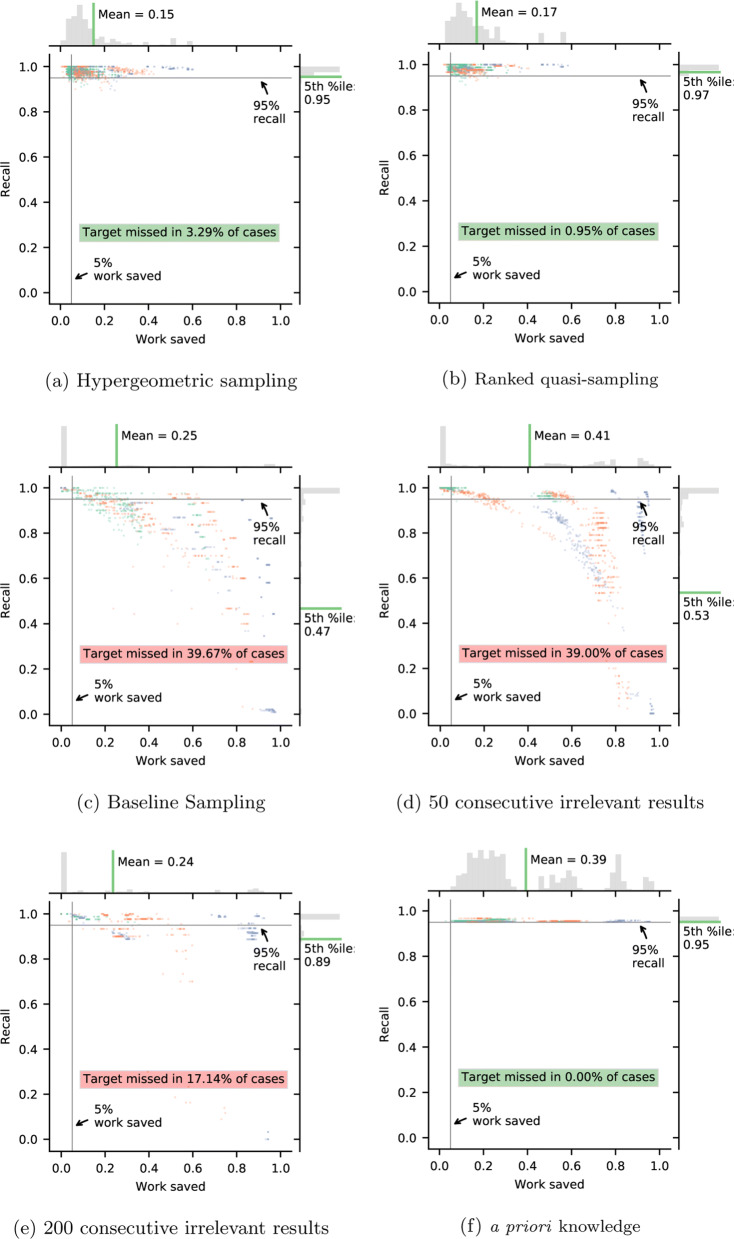
- The ranked quasi-sampling criterion achieved the 95% recall target in more than 95% of cases, saved a mean of 17% of work, and missed the target in only 0.95% of cases; the random sampling criterion saved 15% and missed the target in 3.29% of cases.
- The baseline sampling criterion missed the 95% recall target in 39.67% of cases, with the most common work saving being 0%.
- The heuristic criterion stopping after 50 consecutive irrelevant results had a mean work saving of 41% but missed the target in 39% of cases; the 200-irrelevant-result heuristic also performed unreliably.
- The proposed criteria are independent of model performance: if the model performs badly, work saved is low, but recall is not compromised.
Methods
- The study simulates active-learning screening on real systematic review datasets, including the Cohen et al. 2006 collection, Proton Beam, COPD, and FASTREAD computer science datasets, running 100 iterations per dataset.
- A basic SVM with 1–2 word n-grams from abstracts is used; screening starts with random samples of 200 documents, then batches of the 20 highest predicted relevance scores are revealed and the model retrained after each batch. Target recall is 95% and confidence level is 95%.
- The statistical test uses the hypergeometric distribution to test the null hypothesis that recall is below target; screening stops when the maximum probability of observed results under the null is below 1−α. Ranked quasi-sampling treats previously screened batches as quasi-samples to decide when to begin random sampling and as an independent stopping criterion.
Limitations
- The paper states that it did not formally address multiple testing; the authors call such a derivation mathematically challenging and beyond the scope, though they say performance suggests limited practical concern.
- The paper states that ranked quasi-sampling is unlikely to be accurate because documents seen during active learning are ranked, not random; the estimator is conservative if the assumption holds that machine-learning-selected documents are not less likely to be relevant than random ones.
- Evident from the text: evaluation uses a basic SVM and specific datasets, and the authors note that work savings, even maximum work savings, are below the state of the art recorded for those datasets.
Model-written summary. Check it against the paper before relying on it.
Integrity signals
Registry
Cites
Statistics
Figures
Verification
Claims the paper makes
5 Valid · 1 Not valid · 0 Not checked · 32 Own results and interpretations
The sources with a verdict support this claim; the rest weren’t checked yet, have no full text we could read, or their verdicts aren’t rated yet.
In the paper
“Active learning for systematic review screening promises to reduce the human effort required to identify relevant documents for a systematic review.”
- Also stated in: § Background · plain
“Several papers have developed active learning (AL) approaches [3–7] to reduce the time required to screen documents.”
§ Statistical stopping criteria for automated screening in systematic reviews > Abstract
What the sources say
- Supportedcites [3] Miwa M Thomas J O’Mara-Eves A Ananiadou S Reducing systematic review workload through certainty-based screening J Biomed Inform 2014 51 242 53 24954015 PMC4199186 source
The Introduction says active learning can make manual screening more efficient by suggesting items for review. The Conclusions report reduced screening burden and faster identification of relevant studies; the paper also notes a risk of missing some studies. (LLM, conf=0.94)
- Supportedcites [4] Wallace B, Trikalinos T, Lau J, Brodley C, Schmid C. Semi-automated screening of biomedical citations for systematic reviews. BMC Bioinforma. 2010; 11. 10.1186/1471-2105-11-55. PMC2824679 20102628 source
The Results state that the paper’s active-learning strategy significantly reduced reviewers’ screening burden without excluding relevant citations. The Abstract Results further report fewer citations requiring manual screening across three systematic-review datasets. (LLM, conf=0.94)
- Not checked — no full text of the sourcecites [5] Wallace BC Small K Brodley CE Trikalinos TA Active learning for biomedical citation screening Proceedings of the 16th ACM SIGKDD international conference on Knowledge discovery and data mining (KDD ’10) 2010 New York Association for Computing Machinery source
- Supportedcites [6] Jonnalagadda S Petitti D A new iterative method to reduce workload in systematic review process Int J Comput Biol Drug Des 2013 6 (1/2 5 23428470 PMC3787693 source
The Background describes active learning as an approach to reducing the effort of manually screening abstracts for systematic reviews. The claim says it promises to reduce effort, not that this paper demonstrated a workload reduction specifically for active learning. (LLM, conf=0.90)
- Supportedcites [7] Przybyła P Brockmeier A Kontonatsios G Le Pogam M McNaught J von Elm E Nolan K Ananiadou S Prioritising references for systematic reviews with RobotAnalyst: a user study Res Synth Methods 2018 9 3 470 88 29956486 PMC6175382 source
The Introduction (page not supplied) says machine learning can prioritise references based on screening decisions, potentially allowing reviewers to screen only part of a collection while finding the vast majority of relevant references. The Results (page not supplied) report faster identification of relevant references with active-learning prioritisation than with random sampling, supporting the citing sentence’s qualified claim that it promises to reduce human effort. (LLM, conf=0.93)
plainstates a cause- Asserted: passes — The authors put it forward as true.
- Checkable: passes — It can be checked against evidence.
- Load-bearing: passes — The paper’s conclusions depend on it.
- Based: passes — The paper gives a reason why it holds.
- Also stated in: § Background · plain
A result the paper reports from its own data — it cites no other source for it, so there is none to check. The quote shows it is in the paper.
In the paper
“The stopping criteria are shown on test datasets to achieve a reliable level of recall, while still providing work reductions of on average 17%.”
- Also stated in: § Results · plain
“Both the random sampling and the ranked sampling criteria achieve the target threshold of 95% in more than 95% of cases.”
§ Statistical stopping criteria for automated screening in systematic reviews > Abstract
plain- Asserted: passes — The authors put it forward as true.
- Checkable: passes — It can be checked against evidence.
- Load-bearing: passes — The paper’s conclusions depend on it.
- Based: passes — The paper gives a reason why it holds.
- Also stated in: § Results · plain
A result the paper reports from its own data — it cites no other source for it, so there is none to check. The quote shows it is in the paper.
In the paper
“In only 23% of cases can work savings be achieved while still achieving a recall of at least 95%.”
§ Statistical stopping criteria for automated screening in systematic reviews > Methods review > Sampling-based stopping criteria
plain- Asserted: passes — The authors put it forward as true.
- Checkable: passes — It can be checked against evidence.
- Load-bearing: passes — The paper’s conclusions depend on it.
- Based: passes — The paper gives a reason why it holds.
A result the paper reports from its own data — it cites no other source for it, so there is none to check. The quote shows it is in the paper.
In the paper
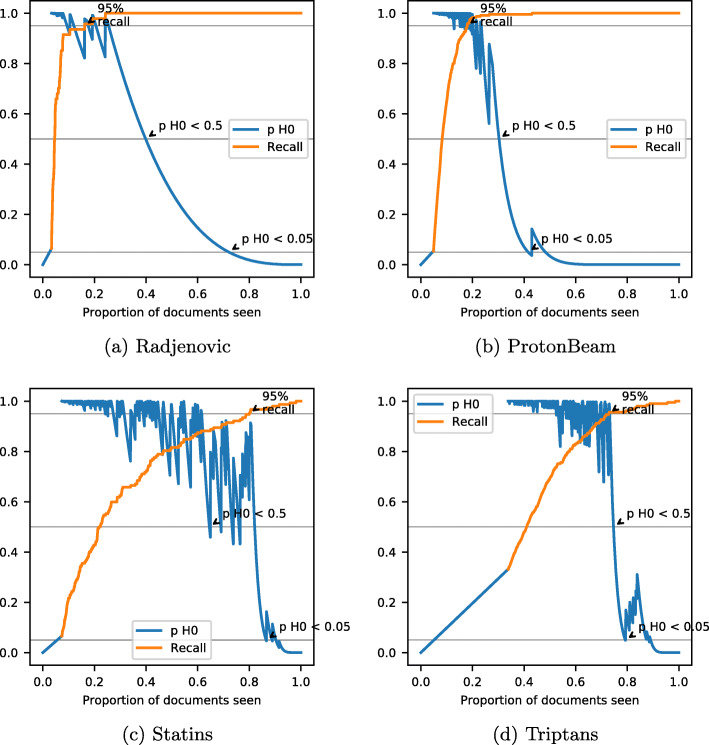
“In each case, 95% recall is achieved with close to 20% of documents remaining.”
§ Statistical stopping criteria for automated screening in systematic reviews > Results
plainstates an association- Asserted: passes — The authors put it forward as true.
- Checkable: passes — It can be checked against evidence.
- Load-bearing: passes — The paper’s conclusions depend on it.
- Based: passes — The paper gives a reason why it holds.
A conclusion the paper draws from its own results — it cites no other source for it, so there is none to check. The quote shows it is in the paper.
In the paper
“We find this a promising intuition, but argue that (1) it ignores uncertainty, as discussed in relation to the previous method”
§ Statistical stopping criteria for automated screening in systematic reviews > Methods review > Sampling-based stopping criteria
plainstates a cause- Asserted: passes — The authors put it forward as true.
- Checkable: passes — It can be checked against evidence.
- Load-bearing: passes — The paper’s conclusions depend on it.
- Based: passes — The paper gives a reason why it holds.
16 more claims
Create a free account to see all 38 claims and every source verdict.
- It may state two separate claims as one. 14
- Probably not a substantial claim. 4
Claims other papers make about this one
Each is checked against this paper’s own text: does it say what the citing paper says it does?
The cited source doesn’t support the claim as written.
In the citing paper
“However, maintaining a high recall rate (i.e., identifying most relevant studies) when the proportion of relevant studies is larger often results in minimal time savings, as a substantial portion of literature still requires manual review 22 .”
From AIM review tool: artificial intelligence for smarter systematic review screening (2026) · cites this paper as [22]
Checked by a reasoning model — may be wrong.
Experimental — accuracy not yet measuredThe source backs part of the claim, not all of it — or backs it for a different population, condition or comparison.
In the citing paper
“In contrast, Callaghan and Müller-Hansen (2020) found that data-driven approaches could not find 95% of all relevant records in 39% of the 20 systematic reviews analyzed.”
From Screening Smarter, Not Harder: A Comparative Analysis of Machine Learning Screening Algorithms and Heuristic Stopping Criteria for Systematic Reviews in Educational Research (2024) · cites this paper as Callaghan and Müller-Hansen (2020)
Experimental — accuracy not yet measuredThe source backs part of the claim, not all of it — or backs it for a different population, condition or comparison.
In the citing paper
“as their development depends on knowledge of the true relevant records (Callaghan & Müller-Hansen, 2020; Hamel et al., 2021).”
From Screening Smarter, Not Harder: A Comparative Analysis of Machine Learning Screening Algorithms and Heuristic Stopping Criteria for Systematic Reviews in Educational Research (2024) · cites this paper as Callaghan & Müller-Hansen, 2020
Experimental — accuracy not yet measuredThe source backs part of the claim, not all of it — or backs it for a different population, condition or comparison.
In the citing paper
“Lastly, researchers have an ongoing uncertainty regarding the optimal number of articles to screen using these tools, and the existing simulation studies have yielded limited and conflicting findings (Callaghan & MüllerHansen, 2020; Wallace et al., 2010).”
From Screening Smarter, Not Harder: A Comparative Analysis of Machine Learning Screening Algorithms and Heuristic Stopping Criteria for Systematic Reviews in Educational Research (2024) · cites this paper as Callaghan & Müller-Hansen, 2020
Experimental — accuracy not yet measuredThe source backs part of the claim, not all of it — or backs it for a different population, condition or comparison.
In the citing paper
“Overall, the performance of heuristic stopping rules should not be generalized to databases where the number of relevant records is unknown, as their development depends on knowledge of the true relevant records (Callaghan & Müller-Hansen, 2020; Hamel et al., 2021).”
From Screening Smarter, Not Harder: A Comparative Analysis of Machine Learning Screening Algorithms and Heuristic Stopping Criteria for Systematic Reviews in Educational Research (2024) · cites this paper as Callaghan & Müller-Hansen, 2020
Experimental — accuracy not yet measured
4 more claims about this paper
Create a free account to see every claim other papers make about this one.
Self-check
Percentages, sums and reported differences re-computed from the paper’s own numbers.
Each contradiction between two passages listed here was confirmed by an independent check.
Rated minor: it would not touch a result — a value no result rests on, a p-value that stays on the same side of the significance level, or a conflict that is clerical, resolved elsewhere in the paper, or outside its own findings.
In the paper
§ Statistical stopping criteria for automated screening in systematic reviews > Results
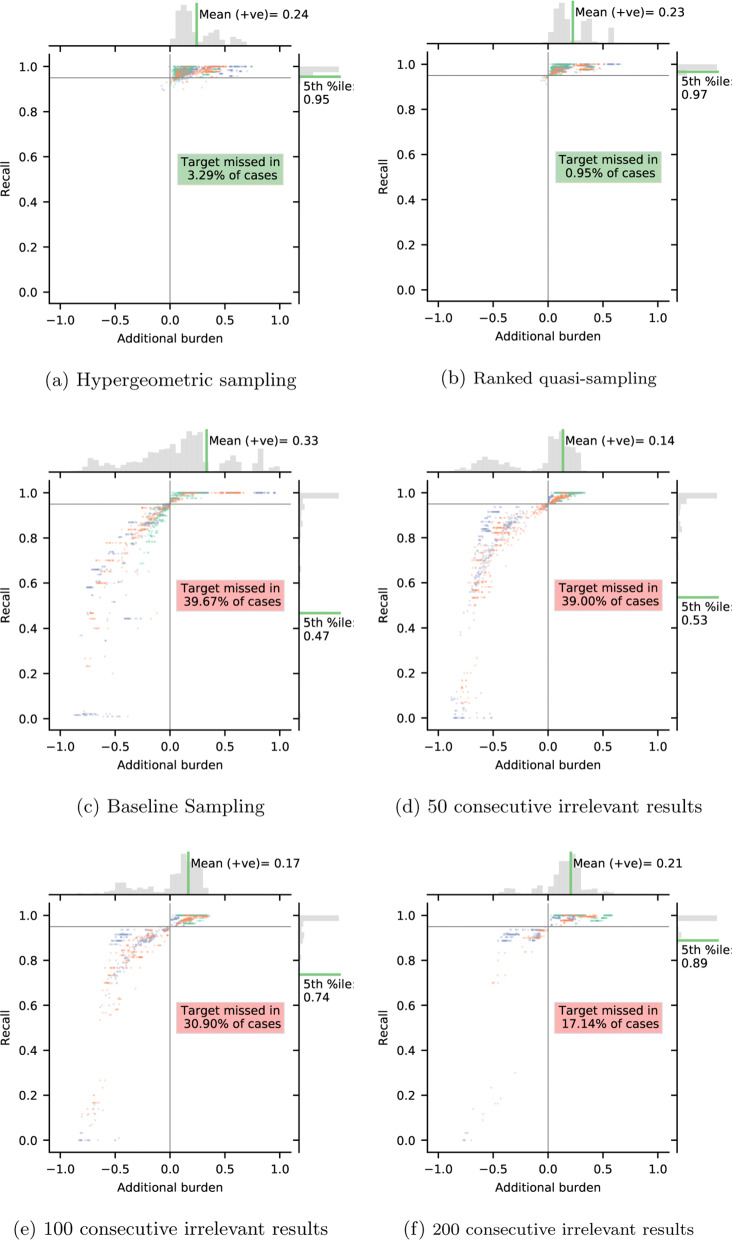
“In Fig. 6, we rescale the x axis, calling it additional burden, which is simply the work saved when the criterion is triggered minus the work saved when the recall target was actually achieved.”
§ Statistical stopping criteria for automated screening in systematic reviews > Methods > Evaluation
“Additional Burden: The work saved when the criterion was triggered subtracted from the work saved when the recall target was actually achieved.”
Citations
Cites
Scikit-learn: Machine Learning in Python
Pedregosa, F., Varoquaux, G., Gramfort, A., Michel, V., Thirion, B., Grisel, O., Blondel, M., Müller, A., Nothman, J., Louppe, G., et al. (2012) · arXiv · doi:10.48550/arxiv.1201.0490 · Cited by 71,016
Cortes, C., & Vapnik, V. (1995) · Machine Learning · doi:10.1007/bf00994018 · Cited by 59,421
Cortes, C., & Vapnik, V. (1995) · Machine-mediated learning · doi:10.1023/a:1022627411411 · Cited by 48,445
PRISMA-P Group, Moher, D., Shamseer, L., Clarke, M., Ghersi, D., Liberati, A., Petticrew, M., Shekelle, P., & Stewart, L. A. (2015) · Systematic Reviews · doi:10.1186/2046-4053-4-1 · Cited by 26,223
Cochrane Handbook for Systematic Reviews of Interventions: Cochrane Book Series
(2008) · doi:10.1002/9780470712184 · Cited by 25,048
O’Mara-Eves, A., Thomas, J., McNaught, J., Miwa, M., & Ananiadou, S. (2015) · Systematic Reviews · doi:10.1186/2046-4053-4-5 · Cited by 681 · cited 2×
“A major strand of the literature works on screening: the identification of relevant documents in a set of documents whose relevance is uncertain [2].”
BackgroundResultSearching for and selecting studies
Lefebvre, C., Glanville, J., Briscoe, S., Littlewood, A., Marshall, C., Metzendorf, M., Noel‐Storr, A., Rader, T., Shokraneh, F., Thomas, J., et al. (2019) · Cochrane Handbook for Systematic Reviews of Interventions · doi:10.1002/9781119536604.ch4 · Cited by 647 · cited 1×
“This is particularly problematic in systematic reviews because low recall increases the risk of bias [9].”
BackgroundMarshall, I. J., & Wallace, B. C. (2019) · Systematic Reviews · doi:10.1186/s13643-019-1074-9 · Cited by 638 · cited 1×
“The lack of appropriate stopping criteria has therefore been identified as a research gap [10, 11], although some approaches have been suggested.”
BackgroundReducing Workload in Systematic Review Preparation Using Automated Citation Classification
Cohen, A. M., Hersh, W. R., Peterson, K., & Yen, P.-Y. (2006) · Journal of the American Medical Informatics Association · doi:10.1197/jamia.m1929 · Cited by 411
O’Mara-Eves, A., Thomas, J., McNaught, J., Miwa, M., & Ananiadou, S. (2015) · Systematic Reviews · doi:10.1186/s13643-015-0031-5 · Cited by 353
Cited by
Khanna, T. M., Baiocchi, G., Callaghan, M., Creutzig, F., Guias, H., Haddaway, N. R., Hirth, L., Javaid, A., Koch, N., Laukemper, S., et al. (2021) · Nature Energy · doi:10.1038/s41560-021-00866-x · Cited by 186
Self-citationSystematic review and meta-analysis of ex-post evaluations on the effectiveness of carbon pricing
Döbbeling-Hildebrandt, N., Miersch, K., Khanna, T. M., Bachelet, M., Bruns, S. B., Callaghan, M., Edenhofer, O., Flachsland, C., Forster, P. M., Kalkuhl, M., et al. (2024) · Nature Communications · doi:10.1038/s41467-024-48512-w · Cited by 164
“A systematic review and meta-analysis of the ex-post literature””
BackgroundMethodSelf-citationHamel, C., Hersi, M., Kelly, S. E., Tricco, A. C., Straus, S., Wells, G., Pham, B., & Hutton, B. (2021) · BMC Medical Research Methodology · doi:10.1186/s12874-021-01451-2 · Cited by 104
“There have also been some more complex evaluations to implement a stopping decision [44].”
BackgroundA systematic review highlights that there are multiple benefits of urban agriculture besides food
Pradhan, P., Callaghan, M., Hu, Y., Dahal, K., Hunecke, C., Reußwig, F., Lotze‐Campen, H., & Kropp, J. P. (2023) · Global Food Security · doi:10.1016/j.gfs.2023.100700 · Cited by 119
Self-citationCampos, D. G., Fütterer, T., Gfrörer, T., Lavelle-Hill, R., Murayama, K., König, L., Hecht, M., Zitzmann, S., & Scherer, R. (2024) · Educational Psychology Review · doi:10.1007/s10648-024-09862-5 · Cited by 75
“…that the results on the performance of heuristic stopping criteria are highly dependent on dataset characteristics, it is advisable to extend the study to evaluate the effectiveness and generalizability of statistical stopping criteria, such as those proposed by Callaghan and Müller-Hansen (2020).”
InfluentialSantos, Á. O. D., da Silva, E. S., Couto, L. M., Reis, G. V. L., & Belo, V. S. (2023) · Journal of Biomedical Informatics · doi:10.1016/j.jbi.2023.104389 · Cited by 64
Tran, V.-T., Gartlehner, G., Yaacoub, S., Boutron, I., Schwingshackl, L., Stadelmaier, J., Sommer, I., Alebouyeh, F., Afach, S., Meerpohl, J., et al. (2024) · Annals of Internal Medicine · doi:10.7326/m23-3389 · Cited by 66
“…PICOS framework, making it easier for humans to identify false positives and negatives, and 2) their performance is not dependent on the proportion of citations that will be included by researchers, nor is it subject to the lack of appropriate stopping criteria faced by prioritization tools (32).”
BackgroundOude Wolcherink, M. J., Pouwels, X. G. L. V., van Dijk, S. H. B., Doggen, C. J. M., & Koffijberg, H. (2023) · Expert Review of Pharmacoeconomics & Outcomes Research · doi:10.1080/14737167.2023.2234639 · Cited by 50
“…of titles and abstracts has been screened), heuristic criteria (i.e. screening until a series of consecutive irrelevant articles have been found), and pragmatic criteria (i.e. screening for a prespecified amount of time), but no consensus has been reached on the most appropriate stopping rule [7].”
BackgroundOn the use of computer‐assistance to facilitate systematic mapping
Haddaway, N., Callaghan, M., Collins, A., Lamb, W. F., Minx, J. C., Thomas, J., & John, D. (2020) · Campbell Systematic Reviews · doi:10.1002/cl2.1129 · Cited by 56
Self-citationTóth, B., Berek, L., Gulácsi, L., Péntek, M., & Zrubka, Z. (2024) · Systematic Reviews · doi:10.1186/s13643-024-02592-3 · Cited by 48
“[32, 41, 52, 54–56, 59, 61, 68, 72, 82, 84, 85, 87, 89, 92, 93, 95, 96, 100, 106, 108, 110, 112, 114, 115, 119–122], followed by term-frequency/inverse document frequency (TF-IDF) ( N = 16/89, 18.0”
InfluentialUrban agriculture matters for sustainable development
Pradhan, P., Subedi, D. R., Dahal, K., Hu, Y., Gurung, P., Pokharel, S., Kafle, S., Khatri, B., Basyal, S., Gurung, M., et al. (2024) · Cell Reports Sustainability · doi:10.1016/j.crsus.2024.100217 · Cited by 73
Macura, B., Foggitt, E., Liera, C., Soto, A., Orlando, A., Duca, L. D., Carrard, N., Hannes, K., Sommer, M., & Dickin, S. (2023) · BMJ Global Health · doi:10.1136/bmjgh-2022-010850 · Cited by 52
A taxonomy to map evidence on the co-benefits, challenges, and limits of carbon dioxide removal
Prütz, R., Fuss, S., Lück, S., Stephan, L., & Rogelj, J. (2024) · Communications Earth & Environment · doi:10.1038/s43247-024-01365-z · Cited by 54
“Thesortedunseen literaturewasscreenedbyhandanditerativelytestedifarecalltargetof95% with p 0.05wasmet,usingthestoppingcriteriondevelopedbyref.50.”
Salmonella in Animal Feeds: A Scoping Review
Sargeant, J. M., Totton, S. C., Plishka, M., & Vriezen, E. R. (2021) · Frontiers in Veterinary Science · doi:10.3389/fvets.2021.727495 · Cited by 39
“A heuristic stopping approach was used, whereby reviewers stopped screening after there were an a priori defined number of citations screened without identifying an eligible article (31).”
MethodKönig, L., Zitzmann, S., Fütterer, T., Campos, D., Scherer, R., & Hecht, M. (2023) · doi:10.31234/osf.io/ybu3w · Cited by 33
Sundaram, G., & Berleant, D. (2023) · Lecture notes in networks and systems · doi:10.1007/978-981-99-3243-6_7 · Cited by 48
Burgard, T., & Bittermann, A. (2023) · Zeitschrift für Psychologie · doi:10.1027/2151-2604/a000509 · Cited by 29
König, L., Zitzmann, S., Fütterer, T., Campos, D., Scherer, R., & Hecht, M. (2024) · Research Synthesis Methods · doi:10.1002/jrsm.1762 · Cited by 40
“20 Also, the estimation technique of Callaghan and Müller-Hansen 21 resulted in similar identification rates regardless of the performance of learning algorithms.”
InfluentialCallaghan, M., Müller-Hansen, F., Bond, M., Hamel, C., Devane, D., Kusa, W., O’Mara-Eves, A., Spijker, R., Stevenson, M., Stansfield, C., et al. (2024) · Systematic Reviews · doi:10.1186/s13643-024-02699-7 · Cited by 27
Self-citationValencia, F. M., Mohren, C., Ramakrishnan, A., Merchert, M., Minx, J. C., & Steckel, J. C. (2024) · npj Climate Action · doi:10.1038/s44168-024-00153-x · Cited by 64
“This is commonly known as “ prioritised screening ” that has been shown to substantially reduce workload without signi fi cant loss of recall 35,36 .”
Goldilocks: Just-Right Tuning of BERT for Technology-Assisted Review
Yang, E., MacAvaney, S., Lewis, D. D., & Frieder, O. (2022) · Lecture notes in computer science · doi:10.1007/978-3-030-99736-6_34 · Cited by 43
“Designing stopping rules that determine as early as possible that a recall target has been reached is an active research area [6, 10, 11, 26, 28, 43, 47, 53], but we design our evaluation to avoid the selection and the error incurred by the stopping rule based on the prior studies in TAR cost…”
MethodThe Development of a Living Knowledge System and Implications for Future Systematic Searching
Grbin, L., Nichols, P., Russell, F., Fuller‐Tyszkiewicz, M., & Olsson, C. A. (2022) · Journal of the Australian Library and Information Association · doi:10.1080/24750158.2022.2087954 · Cited by 28
“However, question or topic complexity, breadth, and review rigour, is still vital for strict systematic reviews (Callaghan & Muller-Hansen, 2020).”
BackgroundMuller, A. E., Ames, H. M. R., Jardim, P. S. J., & Rose, C. J. (2022) · Research Synthesis Methods · doi:10.1002/jrsm.1541 · Cited by 21
“Screening, 7 – 9 risk of bias assessment, 10 and study design or quality classifiers 11,12 are some of the recent applications of ML to systematic reviewing.”
BackgroundCampbell, F., Sutton, A., Pollock, D., Garritty, C., Tricco, A. C., Schmidt, L., & Khalil, H. (2025) · BMJ Evidence-Based Medicine · doi:10.1136/bmjebm-2023-112389 · Cited by 43
“A further recent development is the use of statistical algorithms to estimate the sensitivity of having identified all relevant references (ie, completeness of screening process), 58 59 and tools to enable this approach to be used are being integrated into commercially available tools.”
Digital Tools to Support the Systematic Review Process: An Introduction
Schmidt, L., Cree, I. A., Campbell, F., & WCT EVI MAP group (2025) · Journal of Evaluation in Clinical Practice · doi:10.1111/jep.70100 · Cited by 30
O’Connor, A. M., Clark, J., Thomas, J., Spijker, R., Kusa, W., Walker, V. R., & Bond, M. (2024) · Systematic Reviews · doi:10.1186/s13643-024-02666-2 · Cited by 21
Heuristic stopping rules for technology-assisted review
Yang, E., Lewis, D. D., & Frieder, O. (2021) · ACM Symposium on Document Engineering (DocEng) · doi:10.1145/3469096.3469873 · Cited by 29
“Recently, Callaghan and Müller-Hansen [4] proposed an interventional method that stops the TAR process based on a heuristic method, and then incrementally samples random documents to both fulfill the recall target and statistically verify the fulfillment.”
BackgroundMethodInfluentialSimulation-based Active Learning for Systematic Reviews: A Scoping Review of Literature
Teijema, J. J., Ribeiro, G., Seuren, S., Anadria, D., Bagheri, A., & van de Schoot, R. (2023) · doi:10.31234/osf.io/67zmt · Cited by 10
Certifying One-Phase Technology-Assisted Reviews
Lewis, D. D., Yang, E., & Frieder, O. (2021) · ACM International Conference on Information and Knowledge Management (CIKM) · doi:10.1145/3459637.3482415 · Cited by 21
“These rules include SCAL [8], Autostop - Conservative [31], Autostop - Optimistic [31], and a recent rule by Callaghan and Müller-Hansen Callaghan and Müller-Hansen [5].”
MethodOn minimizing cost in legal document review workflows
Yang, E., Lewis, D. D., & Frieder, O. (2021) · ACM Symposium on Document Engineering (DocEng) · doi:10.1145/3469096.3469872 · Cited by 26
“In applied settings, TAR workflows use heuristics and/or sample-based estimates to decide when to stop a one-phase review [1, 8, 11, 33, 48].”
MethodScotti, K. L., Young, S. M. N., Gainey, M. A., & Lan, H. (2025) · Cochrane Evidence Synthesis and Methods · doi:10.1002/cesm.70046 · Cited by 37
“Resource ‐ constrained stopping (i) involves terminating screening due to external limitations such as time or budget constraints [186, 187].”
InfluentialLohmann, P. M., Pizzo, A., Bauer, J. M., Khanna, T. M., Flecke, S. L., Callaghan, M., Minx, J. C., & Reisch, L. A. (2026) · Nature Food · doi:10.1038/s43016-025-01279-9 · Cited by 44
“The screening strategy combined conventional elements of a manual screening process and innovative machine-learning-assisted screening procedures 74,75,76 .”
Self-citationYouth involvement in policy processes in public health, education, and social work—A scoping review
Flodgren, G., Helleve, A., Selstø, A., Fismen, A., Blanchard, L., Rutter, H., & Klepp, K. (2024) · Obesity Reviews · doi:10.1111/obr.13874 · Cited by 23
(2024) · doi:10.2139/ssrn.4811931 · Cited by 13
Self-citationNeeleman, R., Leenaars, C. H. C., Oud, M., Weijdema, F., & van de Schoot, R. (2024) · Systematic Reviews · doi:10.1186/s13643-024-02472-w · Cited by 12
Do it faster with PICOS: Generative AI-Assisted systematic review screening
Vallamchetla, S. K., Abdelkader, O., Elnaggar, A., Ramadan, D., Islam Shourav, M. M., Riaz, I. B., & Lin, M. P. (2025) · Journal of Biomedical Informatics · doi:10.1016/j.jbi.2025.104860 · Cited by 13
Artificial Intelligence Software to Accelerate Screening for Living Systematic Reviews
Fuller‐Tyszkiewicz, M., Jones, A., Vasa, R., Vasa, R., Grbin, L., Macdonald, J. A., Deane, C., Samuel, D., Evans-Whipp, T., & Olsson, C. A. (2025) · Clinical Child and Family Psychology Review · doi:10.1007/s10567-025-00519-5 · Cited by 22
“We also note though that, at present, a consensus view is lacking in the literature with respect to the best approach for a stopping rule (Callaghan & Müller-Hansen, 2020).”
Stähler, J., Bieleke, M., Wolff, W., & Schüler, J. (2025) · Motivation and Emotion · doi:10.1007/s11031-025-10123-3 · Cited by 19
“…we defined the stopping rule ( h t t p s : / / a s r e v i e w . n l / a s r e v i e w - c l a s - 1 0 1 / ) for the abstract screening, wherein our active l e a r n i n g cycle continued until two hundred consecutive articles were considered irrelevant (Callaghan & Müller-Hansen, 2020).”
Accelerating materials discovery through active learning: Methods, challenges and opportunities
Ma, Y., Gao, Y., Wang, L., Chen, M., Cui, W., Wang, B., & Du, Y. (2025) · The Innovation Informatics · doi:10.59717/j.xinn-inform.2025.100013 · Cited by 21
Tao, Y., Byrne, M., Ho, D., Zhu, Z., Conklin, J., Hlatshwako, T. G., Zhang, L., Aribodor, O. B., Magista, M., Shan, W., et al. (2024) · EClinicalMedicine · doi:10.1016/j.eclinm.2024.102989 · Cited by 18
Systematic review using a spiral approach with machine learning
Saeidmehr, A., Steel, P., & Samavati, F. F. (2024) · Systematic Reviews · doi:10.1186/s13643-023-02421-z · Cited by 19
“Fourth, stopping rules are still being developed [34].”
BackgroundStopping Methods for Technology-assisted Reviews Based on Point Processes
Stevenson, M., & Bin-Hezam, R. (2023) · ACM Transactions on Information Systems · doi:10.1145/3631990 · Cited by 22
“Callaghan and Müller-Hansen [11] point out that the hypergeometric distribution is more appropriate for sampling without replacement and therefore better suited to model the situation that occurs when unexamined documents are sampled (since it would make no sense to return a document to the set of…”
BackgroundMethodResultInfluentialHitting the target: stopping active learning at the cost-based optimum
Pullar-Strecker, Z., Dost, K., Frank, E., & Wicker, J. S. (2022) · Machine Learning · doi:10.1007/s10994-022-06253-1 · Cited by 24
“Domain-specific SC include work on drug target prediction, automated screening in systematic reviews, and a larger body of work focused on structural reliability analysis (Callaghan and Müller-Hansen, 2020; Moustapha et al, 2022; Yi et al, 2020).”
BackgroundRecommendations for producing knowledge syntheses to inform climate change assessments
Ford, J. D., Biesbroek, R. G., Berrang‐Ford, L., Creutzig, F., Haddaway, N., Harper, S. L., Minx, J. C., New, M. G., Sietsma, A. J., Zavaleta-Cortijo, C., et al. (2025) · Nature Climate Change · doi:10.1038/s41558-025-02354-6 · Cited by 21
“Priority screening in some cases can greatly reduce the time required for such ‘needle in a haystack’ problems and digital synthesis platforms are increasingly becoming more accessible to non-specialist users 64 .”
Self-citationCampos, D., Fütterer, T., Gfrörer, T., Lavelle-Hill, R. E., Murayama, K., König, L., Hecht, M., Zitzmann, S., & Scherer, R. (2023) · doi:10.31234/osf.io/fpwc2 · Cited by 11
Pampoukis, G., Zwietering, M. H., & den Besten, H. M. W. (2024) · Innovative Food Science & Emerging Technologies · doi:10.1016/j.ifset.2024.103773 · Cited by 14
Tran, V.-T., Gartlehner, G., Yaacoub, S. G., Boutron, I., Schwingshackl, L., Stadelmaier, J., Sommer, I., Aboulayeh, F., Afach, S., Meerpohl, J. J., et al. (2023) · medRxiv · doi:10.1101/2023.12.15.23300018 · Cited by 13
Belesova, K., Callaghan, M., Minx, J. C., Creutzig, F., Turcu, C., Hutchinson, E. J., Milner, J., Crane, M. A., Haines, A., Davies, M., et al. (2021) · Wellcome Open Research · doi:10.12688/wellcomeopenres.16570.1 · Cited by 7
Self-citationvan Mossel, S., Wolcherink, M. J. O., Cardet, R. E. D. F., de Geus‐Oei, L., Vriens, D., Koffijberg, H., & Saing, S. (2025) · PharmacoEconomics · doi:10.1007/s40273-025-01481-4 · Cited by 15
“Practical guidance details how to prepare for AI-assisted screening including search strategy, database selection and retrieval of records [13], how to build an initial training set and to proceed screening [13], and how to select stopping rules [14, 15].”
Large-Scale Simulation Study of Active Learning Models for Systematic Reviews
Teijema, J. J., de Bruin, J., Bagheri, A., & van de Schoot, R. (2023) · doi:10.31234/osf.io/2w3rm · Cited by 8
Using Chao’s Estimator as a Stopping Criterion for Technology-Assisted Review
Bron, M., van der Heijden, P. G. M., Feelders, A., & Siebes, A. (2025) · ACM Transactions on Information Systems · doi:10.1145/3724116 · Cited by 7
“The Poisson parameter can vary for each document i , allowing for heterogeneity in capture probabilities.”
InfluentialFarrugia, T., Duijts, S. F. A., Wilson, C. J., Hemming, L., Cockburn, C., & Spelten, E. R. (2024) · Orphanet Journal of Rare Diseases · doi:10.1186/s13023-024-03403-7 · Cited by 7
“One such method is heuristic stopping criteria, at which the reviewer ceases reviewing on ASRe-view once a specified number of consecutive irrelevant articles has been seen, assuming that the probability of a relevant article from the remaining unreviewed articles is low [16].”
MethodA systematic map of machine learning for urban climate change mitigation
Hintz, M. J., Milojevic-Dupont, N., Creutzig, F., Repke, T., & Kaack, L. H. (2025) · Nature Cities · doi:10.1038/s44284-025-00328-5 · Cited by 16
Wu, T., Ruser, S., Kalunga, L., & Ivanek, R. (2025) · Journal of Food Protection · doi:10.1016/j.jfp.2025.100488 · Cited by 8
Byrne, F., Hofstee, L., Teijema, J., De Bruin, J., & van de Schoot, R. (2024) · Systematic Reviews · doi:10.1186/s13643-024-02587-0 · Cited by 9
“Let us assume that the screener uses a (naïve) stopping rule of 100 irrelevant papers in a row (more on stopping rules: [4, 8, 14, 30, 33] and the screener indeed is presented 100 irrelevant records in a row and decides to stop screening.”
BackgroundMoens, M., Nagels, G., Wake, N., & Goudman, L. (2025) · iScience · doi:10.1016/j.isci.2025.113559 · Cited by 13
“45 Novel, more complicated ways of determining a stopping rule are currently being proposed with flexible statistical stopping criteria based on error stability or re-jecting a hypothesis of missing a given recall target.”
Spiero, I., Leeuwenberg, A., Moons, K. G. M., Hooft, L., & Damen, J. A. (2025) · Research Synthesis Methods · doi:10.1017/rsm.2025.10025 · Cited by 6
“40,41 Limitations of the current study include the reference standard of manual screening that was used in the simulations.”
Christie, A. P., Martin, P. A., & Taylor, N. G. (2025) · PLoS ONE · doi:10.1371/journal.pone.0326521 · Cited by 6
Ali, F., Tan, A. S.-C., & Wang, S. J.-W. (2025) · Research Synthesis Methods · doi:10.1017/rsm.2024.16 · Cited by 9
“37 Our cluster separability heuristic provides yet another tool to aid in the stopping decision: datasets that have high cluster separability of the already screened articles can be confidently terminated without sacrificing much recall, if at all.”
Stähler, J., Bieleke, M., Wolff, W., & Schüler, J. (2023) · PsyArXiv (OSF Preprints) · doi:10.31234/osf.io/b5sv2 · Cited by 7
When to stop reviewing: validation of stop criteria in ASReview
Kempny, C., Annac, K., Wahidie, D., Yilmaz-Aslan, Y., & Brzoska, P. (2026) · BMC Medical Research Methodology · doi:10.1186/s12874-026-02866-5 · Cited by 5
“These findings are consistent with critiques raised by Callaghan and Müller-Hansen (2020) [11], who demonstrated statistical limitations of fixed stopping criteria, and Callaghan et al. (2024) [22], who argued that universal stopping criteria are unlikely to be sufficient without considering…”
Jacob, D., Jacob, B., Jacob, E. R., & Jacob, A. M. (2025) · HERD Health Environments Research & Design Journal · doi:10.1177/19375867251351027 · Cited by 4
“A heuristic stopping approach criteria was used, which determines the number of papers that are irrelevant before screening can be stopped (Callaghan & Müller-Hansen, 2020).”
Machine Learning-Assisted Health Economics and Policy Reviews: A Comparative Assessment
Cavallaro, L., Ardito, V., Drummond, M., & Ciani, O. (2025) · Applied Health Economics and Health Policy · doi:10.1007/s40258-025-00963-y · Cited by 6
“Future research could explore other stopping rules, such as the pragmatic criterion (i.e., screening for a predetermined amount of time) [17], although the current findings remain robust under the rules explored.”
Khanna, T. M., Danilenko, D., Andor, M., Callaghan, M., Elliott, J., Repke, T., Smith, L. A., Sanchez, J., Venkatesh, B. T., & Minx, J. C. (2024) · Campbell Systematic Reviews · doi:10.1002/cl2.1424 · Cited by 7
“This point is determined using a statistical stopping criterion that ensures 95% recall with statistical confidence (Callaghan & Müller ‐ Hansen, 2020).”
MethodSelf-citationAccounting for Round-Off Errors When Using Gradient Minimization Methods
Lukyanenko, D. V., Shinkarev, V., & Yagola, A. G. (2022) · Algorithms · doi:10.3390/a15090324 · Cited by 4
Repke, T., Tinsdeall, F., Danilenko, D., Graziosi, S., Müller-Hansen, F., Schmidt, L., Thomas, J., & van Valkenhoef, G. (2026) · Cochrane Evidence Synthesis and Methods · doi:10.1002/cesm.70068 · Cited by 11
“[20] CURVE_FITTING [23] fits a negative exponential curve to the smoothed inclusion curve to estimate the total number of relevant records and derives a recall estimate from that.”
Self-citationVireque, A. A., Stolakis, V., Berteli, T. S., Bertero, M. T., & Kofinas, J. D. (2025) · Journal of Assisted Reproduction and Genetics · doi:10.1007/s10815-025-03498-2 · Cited by 4
“In SRs, acceptable recall is often set at a threshold of 90 to 95% or more, as the primary goal is to capture all available data, even at the cost of including irrelevant studies [23, 24].”
RLStop: A Reinforcement Learning Stopping Method for TAR
Bin-Hezam, R., & Stevenson, M. (2024) · International ACM SIGIR Conference on Research and Development in Information Retrieval (SIGIR) · doi:10.1145/3626772.3657911 · Cited by 7
“Several approaches carry out repeated statistical testing to determine whether the target recall has been achieved, e.g. [4, 15, 21, 31, 36], but this type of sequential testing is statistically invalid [37].”
BackgroundSALτ: efficiently stopping TAR by improving priors estimates
Molinari, A., & Esuli, A. (2023) · Data Mining and Knowledge Discovery · doi:10.1007/s10618-023-00961-5 · Cited by 10
“The production of systematic reviews has recently attracted the interest of the IR community (Callaghan and Müller-Hansen 2020; O’Mara-Eves et al. 2015; Lease et al. 2016; Wang et al. 2022), which has focused on several aspects of the process, from improving the query formulation issued to search…”
InfluentialHitting the Target: Stopping Active Learning at the Cost-Based OptimumPreprint
Pullar-Strecker, Z., Dost, K., Frank, E., et al. (2021) · arXiv (Cornell University) · doi:10.48550/arxiv.2110.03802 · Cited by 3
“Domain-specific SC include work on drug target prediction, automated screening in systematic reviews, and a larger body of work focused on structural reliability analysis (Callaghan and Müller-Hansen, 2020; Moustapha et al, 2022; Yi et al, 2020).”
BackgroundKonzett, V., Laskou, F., Smolen, J. S., Edwards, C. J., Aletaha, D., van der Heijde, D. M. F. M., Winthrop, K. L., Takeuchi, T., Caporali, R. F., Verschueren, P., et al. (2026) · Annals of the Rheumatic Diseases · doi:10.1016/j.ard.2026.05.006 · Cited by 5
König, L., Zitzmann, S., & Hecht, M. (2025) · Research Synthesis Methods · doi:10.1017/rsm.2025.10053 · Cited by 5
“Indeed, the performance of both the heuristic and the algorithm’s ranking accuracy has been shown to depend on the specific cutoff values used, 51–54 as well as the number of studies in the training set.”
Khanna, T. M., Danilenko, D., Wang, Q., Smith, L. A., Bhumika, T., Rai, A. N., Canales, J. S., Repke, T., Callaghan, M., Andor, M., et al. (2025) · Campbell Systematic Reviews · doi:10.1002/cl2.70070 · Cited by 11
Self-citationCawley, M. A., Carlson, R., Vest, T. A., & Eckel, S. F. (2024) · American Journal of Health-System Pharmacy · doi:10.1093/ajhp/zxae357 · Cited by 8
Koh, Z. H., Zarnegar, A., Skues, J., & Murray, G. (2024) · doi:10.31234/osf.io/e25tn · Cited by 1
Tóth, B., Berek, L., Gulàcsi, L., Péntek, M., & Zrubka, Z. (2023) · Research Square · doi:10.21203/rs.3.rs-3425312/v1 · Cited by 2
Effectiveness of carbon pricing – A systematic review and meta-analysis of the ex-post literaturePreprint
Döbbeling-Hildebrandt, N., Miersch, K., Khanna, T. M., Bachelet, M., Bruns, S. B., Callaghan, M., Edenhofer, O., Flachsland, C., Forster, P. M. D. F., Kalkuhl, M., et al. (2023) · Research Square · doi:10.21203/rs.3.rs-2860638/v1 · Cited by 5
Self-citationConfidence Sequences for Evaluating One-Phase Technology-Assisted Review
Lewis, D. D., Gray, L., & Noel, M. (2023) · International Conference on Artificial Intelligence and Law · doi:10.1145/3594536.3595167 · Cited by 6
Improved risk minimization algorithms for technology-assisted review
Molinari, A., Esuli, A., & Sebastiani, F. (2023) · Intelligent Systems with Applications · doi:10.1016/j.iswa.2023.200209 · Cited by 5
A survey on multimodal explainable Artificial Intelligence
Giovannoni, C., Metta, C., Monreale, A., & Rinzivillo, S. (2026) · Intelligent Systems with Applications · doi:10.1016/j.iswa.2026.200671 · Cited by 5
Fütterer, T., König, L., Campos, D., Scherer, R., Zitzmann, S., & Hecht, M. (2026) · Advances in Methods and Practices in Psychological Science · doi:10.1177/25152459261442150 · Cited by 2
“Various heuristic-based (Campos et al., 2024; Wallace et al., 2010) and statistical (Callaghan & Müller-Hansen, 2020; König, Zitzmann, Fütterer, et al., 2024) approaches have been proposed.”
InfluentialKozakiewicz, T., Wong, R., Ghouze, Z., Bond, M., & Campbell, F. (2026) · Journal of Clinical Epidemiology · doi:10.1016/j.jclinepi.2026.112211 · Cited by 3
Virendrakumar, B., Waddington, H. S., Scheelbeek, P., Jolley, E., & Schmidt, E. (2026) · Systematic Reviews · doi:10.1186/s13643-026-03101-4 · Cited by 1
“Furthermore, it remains unclear the optimum threshold for resulting in accurate prioritisation screening using ER [38].”
InfluentialKoh, Z. H., Zarnegar, A., Skues, J., & Murray, G. (2026) · BMC Research Notes · doi:10.1186/s13104-026-07651-7 · Cited by 2
“Furthermore, semi-automated tools typically require a stopping criterion for screening to be defined (e.g., the number of consecutive irrelevant articles screened) [16], which requires expert judgement.”
Simulation-based active learning for systematic reviews: A scoping review of literature
Teijema, J. J., Ribeiro, G., Seuren, S., Anadria, D., Bagheri, A., & van de Schoot, R. (2025) · Journal of Information Science · doi:10.1177/01655515251379058 · Cited by 1
Advocating for trust in and trustworthy AI to transform evidence synthesis
Fletcher, I. (2025) · Environmental Evidence · doi:10.1186/s13750-025-00369-2 · Cited by 3
“In many cases AI has been used as a supplement to manual labour efforts, such as to provide living updates of evidence through continuous study identification [37] and to prioritise screening in systematic reviews [11], with higher recall and lower effort than conventional methods [48].”
Glenn, D. L., Choi, S. H., & Zimmerman, R. S. (2025) · Journal of Psychopharmacology · doi:10.1177/02698811251353251 · Cited by 1
“…imported into ASReview, 9% ( n = 186) were screened by a single reviewer until a stopping criterion of 50 consecutive irrelevant records was reached: a heuristic approach discussed in recent literature on statistical stopping criteria for automated screening (Callaghan and Müller-Hansen, 2020).”
Lafata, J. E., Rendle, K. A. S., Wainwright, J. V., Cooley, M. E., Vachani, A., Neslund-Dudas, C. M., Odelberg, M. R., Alcaro, L., Staresinic, C., Alexander, G., et al. (2025) · MDM Policy & Practice · doi:10.1177/23814683251328375 · Cited by 3
“15 Once the team perceived the remaining identified studies were no longer relevant, an additional 500 citations were screened to ensure no relevant citations would be lost.”
Holt, J., Bhar, S. S., Schofield, P. E., Koder, D., Owen, P. J., Seitz, D. P., & Bhowmik, J. (2024) · Systematic Reviews · doi:10.1186/s13643-024-02516-1 · Cited by 3
“That is, the point at which duplicate human screening can be discontinued and the remaining records subjected to a more streamlined review process [25–27].”
BackgroundByrne, F., Hofstee, L., Teijema, J. J., Bruin, J. D., & van de Schoot, R. (2023) · doi:10.31234/osf.io/qhg9k · Cited by 1
Lohmann, P. M., Pizzo, A., Carvalho, B., Bauer, J. M., & Reisch, L. A. (2022) · Research Square · doi:10.21203/rs.3.pex-2070/v1 · Cited by 1
Jain, A. S., Gupta, R., & Rathore, B. (2026) · Journal of the Knowledge Economy · doi:10.1007/s13132-026-03462-0
Nunnery, J. A. (2026) · Research Synthesis Methods · doi:10.1017/rsm.2026.10116 · Cited by 1
Exact Finite-Population Sequential Auditing for Selective Release from Model-Proposed Candidate Sets
Hu, Y., Zhou, Z., Zhu, Y., et al. (2026) · Mathematics · doi:10.3390/math14183427
Castro, M. M. C., Aziz, A. A., & Adhikari, R. (2026) · Journal of Agribusiness in Developing and Emerging Economies · doi:10.1108/jadee-03-2026-0207
Jahani, A., & Salehi, K. (2026) · Research Square · doi:10.21203/rs.3.rs-10635666/v1
PASHA, M., & Shaikᵇ, M. A. (2026) · Research Square · doi:10.21203/rs.3.rs-10938971/v1
Spanodimitriou, Y., Ejaz, K. T., Ciampi, G., Scorpio, M., Masullo, M., Rosato, A., Maffei, L., & Sibilio, S. (2026) · Sensors · doi:10.3390/s26175640 · Cited by 1
Safety Perceptions in Urban Green Spaces: A Global Systematic Review
Presser, P., Reckien, D., Atún, F., & Pfeffer, K. (2026) · Urban forestry & urban greening · doi:10.1016/j.ufug.2026.129680
Barragán, A. M., Bonett, S. E. O., Rodríguez-Grande, E.-I., Orjuela-Cañón, Á. D., Perdómo, O., & Sánchez, G. (2026) · Cochrane Evidence Synthesis and Methods · doi:10.1002/cesm.70098
“Most articles regarding the pipeline and workflow category were published during 2020 ( n = 5) [8, 100, 102, 111, 159], workflows regarding different steps for random forest models being the most reported ( n = 2) [115, 143] (Appendix S4d.”
Influential
Metadata
- Authors
- Callaghan, M. W., & Müller-Hansen, F.
- Affiliations
- University of Leeds (GB)
- Leibniz Association (DE)
- Corresponding author
- Callaghan, Max W
- Venue
- Systematic Reviews
- Published
- 2020-11-28
- Volume
- 9
- Issue
- 1
- Pages
- 273-273
- ISSN
- 2046-4053 (ISSN-L)
- PMC
- PMC7700715
- OpenAlex
- W3110318438
- Cited by
- 121
- References
- 26
- Citations by year
- 2026: 28 · 2025: 28 · 2024: 26 · 2023: 23 · 2022: 5 · 2021: 10 · 2020: 1
- FWCI
- 2.02
- Type
- journal article
- Language
- en
- Open access
- gold
- doi.org
- Licence
- cc-by
- creativecommons.org/licenses/by/4.0/ (tdm)
- creativecommons.org/licenses/by/4.0/ (vor)
- Locations
- Systematic Reviews (publishedVersion, cc-by)
- Research Square (acceptedVersion, cc-by)
- PubMed Central (publishedVersion, cc-by)
- PubMed (publishedVersion)
- DOAJ (DOAJ: Directory of Open Access Journals) (submittedVersion)
- Publication Database PIK (Potsdam Institute for Climate Impact Research (PIK)) (submittedVersion, other-oa)
- Funders
- Bundesministerium für Bildung und Forschung (03EK3046B)
- Heinrich Böll Stiftung
- Topics
- Social Sciences › Decision Sciences › Statistics, Probability and Uncertainty › Meta-analysis and systematic reviews
- Physical Sciences › Computer Science › Information Systems › Information Retrieval and Search Behavior
- Physical Sciences › Computer Science › Artificial Intelligence › Machine Learning and Algorithms
- Keywords
- active learning (machine learning), systematic review screening, stopping rules, memory retrieval, human-machine collaboration, hypothesis testing
- MeSH terms
- Machine Learning, Systematic Reviews as Topic, Humans, Research
About these checks
Registry, retraction, Cites and statistics results are computed, not judged, with one exception: a printed reference that no index lists is read once by a model before it counts as a citation error. Claims are extracted by a model and kept only when their quote appears verbatim in the text; each cited source is then checked, with a model’s help, for whether it says what the claim relies on. Those verdicts can be wrong — read the claim’s quote and the cited source before relying on one.
The claim verdicts this report counts are experimental: their accuracy is not yet measured.
A language model drew the claims from the paper on 2026-09-29, under version 3 of the claim definition (model deepseek-v4.1-flash, prompt extract-v3).
A second model labelled each claim on 2026-09-29 (model jev-1.13-20260917, definition revision gold-guideline-v0.2).
Cited sources are checked with a language model’s help (gpt-6-sol).
Statistics and arithmetic are recomputed, not judged.
Confidence bands are shown only for fields calibrated on our annotated test set. None is calibrated yet, so no band is shown.
What counts as a claim ›How we measure confidence ›How we check this ›
Are you an author, or do you see a problem with this page? Request a review
Data sources
Bibliographic data: Semantic Scholar, OpenAlex, Crossref.
Contains information from the Semantic Scholar Academic Graph Datasets, made available under the ODC Attribution License (ODC-BY 1.0).
Semantic Scholar’s data is described in: Kinney, R., et al. (2023). The Semantic Scholar Open Data Platform. arXiv:2301.10140.
