

Barriers and enablers to physical activity in patients during hospital stay: a scoping review
Open accessThe DOI matches its Crossref record; 93 of the 93 references it cites were found in a registry or an index.
Abstract
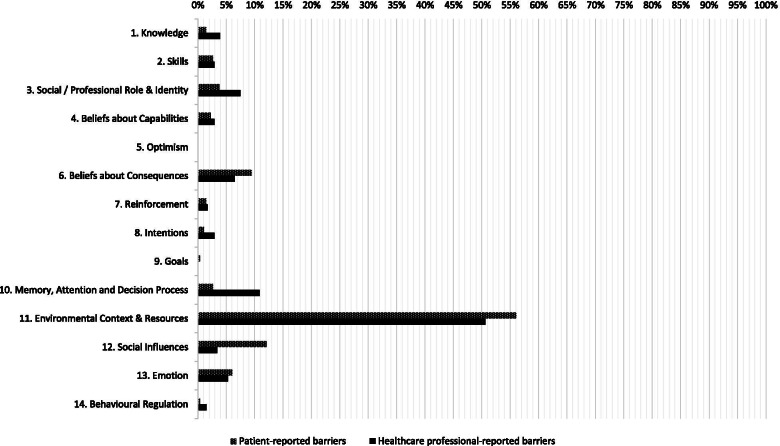
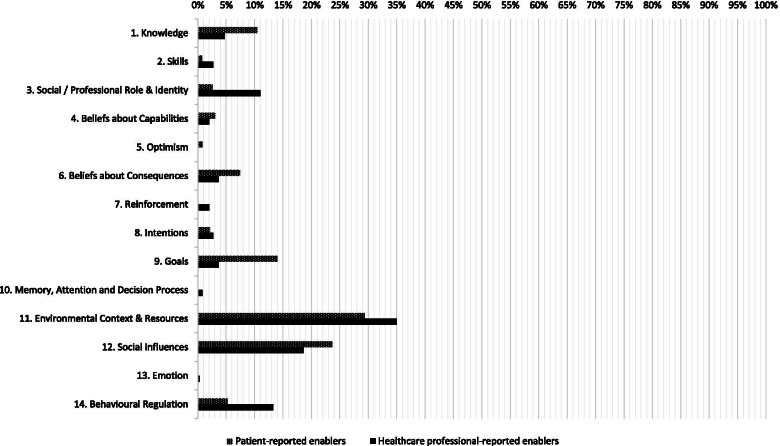
Background: Low levels of physical activity are common during the hospital stay and have been associated with negative health outcomes. Understanding barriers and enablers to physical activity during a hospital stay can improve the development and implementation of tailored interventions aimed at improving physical activity. Previous studies have identified many barriers and enablers, but a comprehensive overview is lacking. This study aimed to identify and categorize all published patient- and healthcare professional-reported barriers and enablers to physical activity during a hospital stay for acute care, using the Theoretical Domains Framework (TDF). Methods: We conducted a scoping review of Dutch and English articles using MEDLINE, CINAHL Plus, EMBASE, PsycINFO, and Cochrane Library (inception to September 2020), which included quantitative, qualitative, and mixed-methods studies reporting barriers and enablers to physical activity during a hospital stay for acute care, as perceived by patients or healthcare professionals. Two reviewers systematically extracted, coded, and categorized all barriers and enablers into TDF domains. Results: Fifty-six articles were included in this review (32 qualitative, 7 quantitative, and 17 mixed-methods). In total, 264 barriers and 228 enablers were reported by patients, and 415 barriers and 409 enablers by healthcare professionals. Patient-reported barriers were most frequently assigned to the TDF domains Environmental Context & Resources ( ECR, n = 148), Social Influences ( n = 32), and Beliefs about Consequences ( n = 25), while most enablers were assigned to ECR ( n = 67), Social Influences ( n = 54), and Goals ( n = 32). Barriers reported by healthcare professionals were most frequently assigned to ECR ( n = 210), Memory, Attention and Decision Process ( n = 45), and Social/Professional Role & Identity ( n = 31), while most healthcare professional-reported enablers were assigned to the TDF domains ECR ( n = 143), Social Influences ( n = 76), and Behavioural Regulation ( n = 54). Conclusions: Our scoping review presents a comprehensive overview of all barriers and enablers to physical activity during a hospital stay and highlights the prominent role of the TDF domains ECR and Social Influences in hospitalized patients’ physical activity behavior. This TDF-based overview provides a theoretical foundation to guide clinicians and researchers in future intervention development and implementation. Scoping review registration: No protocol was registered for this review.
Overview
The claims and statistics of this paper haven’t been checked yet.
Free: it reads the open-access text and checks the first 5 claims that cite a source we can check. Create a free account to check every claim.
Integrity signals
Registry
Cites
Statistics
Figures
Verification
Claims the paper makes
The claims and statistics of this paper haven’t been checked yet.
Free: it reads the open-access text and checks the first 5 claims that cite a source we can check. Create a free account to check every claim.
Claims other papers make about this one
Each is checked against this paper’s own text: does it say what the citing paper says it does?
In the citing paper
“Multicomponent interventions require qualified personnel and multiple resources for their application, both of which are considered important barriers to the implementation of physical activity programmes in acutely hospitalised older adults. 56”
Self-check
Percentages, sums and reported differences re-computed from the paper’s own numbers.
The self-check needs the paper’s full text.
Citations
Cites
PRISMA Extension for Scoping Reviews (PRISMA-ScR): Checklist and Explanation
Tricco, A. C., Lillie, E., Zarin, W., O'Brien, K. K., Colquhoun, H., Levac, D., Moher, D., Peters, M. D. J., Horsley, T., Weeks, L., et al. (2018) · Annals of Internal Medicine · doi:10.7326/m18-0850 · Cited by 43,565 · cited 3×
“A PRISMA-ScR flowchart was created to track the screening and inclusion process of this review [30, 33].”
BackgroundMethodScoping studies: towards a methodological framework
Arksey, H., & O'Malley, L. (2005) · International Journal of Social Research Methodology · doi:10.1080/1364557032000119616 · Cited by 36,742 · cited 2×
“Arksey H, O’Malley L. Scoping studies: towards a methodological frame‑ work.”
MethodRayyan-a web and mobile app for systematic reviews.
Ouzzani, M., Hammady, H., Fedorowicz, Z., & Elmagarmid, A. (2016) · Systematic Reviews · doi:10.1186/s13643-016-0384-4 · Cited by 26,092 · cited 2×
“A PRISMA-ScR flowchart was created to track the screening and inclusion process of this review [30, 33].”
MethodScoping studies: advancing the methodology
Levac, D., Colquhoun, H., & O'Brien, K. K. (2010) · Implementation Science · doi:10.1186/1748-5908-5-69 · Cited by 15,268 · cited 4×
“Tricco AC, Lillie E, Zarin W, O’Brien KK, Colquhoun H, Levac D, et al. PRISMA Extension for Scoping Reviews (PRISMA‑ScR): checklist and explanation.”
MethodInfluentialCane, J., O’Connor, D., & Michie, S. (2012) · Implementation Science · doi:10.1186/1748-5908-7-37 · Cited by 4,888 · cited 3×
“Collating, summarizing, and reporting the results Both reviewers (SJGG and HCvDH) independently coded the extracted barriers and enablers and categorized them into the 14 TDF domains [25, 40, 41].”
BackgroundMethodMaking sense of implementation theories, models and frameworks
Nilsen, P. (2015) · Implementation Science · doi:10.1186/s13012-015-0242-0 · Cited by 4,447
Atkins, L., Francis, J., Islam, R., O’Connor, D., Patey, A., Ivers, N., Foy, R., Duncan, E. M., Colquhoun, H., Grimshaw, J. M., et al. (2017) · Implementation Science · doi:10.1186/s13012-017-0605-9 · Cited by 3,819 · cited 6×
“TDF has been extensively used as a guide to identify and categorize modifiable factors that influence behavior [25].”
BackgroundMethodInfluentialScoping reviews: Time for clarity in definition, methods, and reporting
Colquhoun, H. L., Levac, D., O'Brien, K. K., Straus, S., Tricco, A. C., Perrier, L., Kastner, M., & Moher, D. (2014) · Journal of Clinical Epidemiology · doi:10.1016/j.jclinepi.2014.03.013 · Cited by 2,783 · cited 4×
“Tricco AC, Lillie E, Zarin W, O’Brien KK, Colquhoun H, Levac D, et al. PRISMA Extension for Scoping Reviews (PRISMA‑ScR): checklist and explanation.”
MethodInfluential(2020) · JBI Manual for Evidence Synthesis · doi:10.46658/jbimes-20-12 · Cited by 2,545
(2014) · Cited by 2,276
Peters, M., Godfrey, C., McInerney, P., Munn, Z., Tricco, A., & Khalil, H. (2019) · JBI Reviewer's Manual · doi:10.46658/jbirm-20-01 · Cited by 2,222
De-duplication of database search results for systematic reviews in EndNote
Bramer, W. M., Giustini, D., de Jonge, G. B., Holland, L., & Bekhuis, T. (2016) · Journal of the Medical Library Association : JMLA · doi:10.3163/1536-5050.104.3.014 · Cited by 2,103 · cited 1×
“1 (Clarivate Analytics, Philadelphia, Pennsylvania, USA) [31].”
Covinsky, K. E., Palmer, R. M., Fortinsky, R. H., Counsell, S. R., Stewart, A. L., Kresevic, D., Burant, C. J., & Landefeld, C. S. (2003) · Journal of the American Geriatrics Society · doi:10.1046/j.1532-5415.2003.51152.x · Cited by 1,670 · cited 1×
“Low levels of physical activity have been associated with negative health outcomes like functional decline [2, 3], increased length of stay [4], increased risk of institutionalization [5, 6], and mortality [2, 3, 7, 8].”
BackgroundDeCuir-Gunby, J. T., Marshall, P. L., & McCulloch, A. W. (2011) · Field Methods · doi:10.1177/1525822x10388468 · Cited by 1,456 · cited 1×
“Collating, summarizing, and reporting the results Both reviewers (SJGG and HCvDH) independently coded the extracted barriers and enablers and categorized them into the 14 TDF domains [25, 40, 41].”
Boyd, C. M., Landefeld, C. S., Counsell, S. R., Palmer, R. M., Fortinsky, R. H., Kresevic, D., Burant, C., & Covinsky, K. E. (2008) · Journal of the American Geriatrics Society · doi:10.1111/j.1532-5415.2008.02023.x · Cited by 735 · cited 1×
“Low levels of physical activity have been associated with negative health outcomes like functional decline [2, 3], increased length of stay [4], increased risk of institutionalization [5, 6], and mortality [2, 3, 7, 8].”
BackgroundThe Underrecognized Epidemic of Low Mobility During Hospitalization of Older Adults
Brown, C. J., Redden, D. T., Flood, K. L., & Allman, R. M. (2009) · Journal of the American Geriatrics Society · doi:10.1111/j.1532-5415.2009.02393.x · Cited by 686 · cited 1×
“Low levels of physical activity have been associated with negative health outcomes like functional decline [2, 3], increased length of stay [4], increased risk of institutionalization [5, 6], and mortality [2, 3, 7, 8].”
BackgroundPrevalence and Outcomes of Low Mobility in Hospitalized Older Patients
Brown, C. J., Friedkin, R. J., & Inouye, S. K. (2004) · Journal of the American Geriatrics Society · doi:10.1111/j.1532-5415.2004.52354.x · Cited by 656
Missed Nursing Care: A Qualitative Study
Kalisch, B. J. (2006) · Journal of Nursing Care Quality · doi:10.1097/00001786-200610000-00006 · Cited by 641 · cited 1×
“seven studies were published before 2010 [15, 52, 56, 75, 77, 78, 82].”
Prior, M., Guerin, M., & Grimmer‐Somers, K. (2008) · Journal of Evaluation in Clinical Practice · doi:10.1111/j.1365-2753.2008.01014.x · Cited by 507 · cited 1×
“Previous research suggests that developing and implementing such tailored multimodal interventions may be more effective than unimodal interventions [95].”
BackgroundBuurman, B. M., Hoogerduijn, J. G., de Haan, R. J., Abu-Hanna, A., Lagaay, A. M., Verhaar, H. J., Schuurmans, M. J., Levi, M., & de Rooij, S. E. (2011) · PLoS ONE · doi:10.1371/journal.pone.0026951 · Cited by 358 · cited 1×
“Low levels of physical activity have been associated with negative health outcomes like functional decline [2, 3], increased length of stay [4], increased risk of institutionalization [5, 6], and mortality [2, 3, 7, 8].”
BackgroundGourlan, M., Bernard, P., Bortolon, C., Romain, A. J., Lareyre, O., Carayol, M., Ninot, G., & Boiché, J. (2016) · Health Psychology Review · doi:10.1080/17437199.2014.981777 · Cited by 353 · cited 1×
“Moreover, using a theoretical framework to identify barriers and enablers to behavioral change has been demonstrated to be more successful in changing behavior than using a non-theory-driven approach [24, 25].”
MethodBrown, C. J., Williams, B. R., Woodby, L. L., Davis, L. L., & Allman, R. M. (2007) · Journal of Hospital Medicine · doi:10.1002/jhm.209 · Cited by 278
Brown, C. J., Foley, K. T., Lowman, J. D., MacLennan, P. A., Razjouyan, J., Najafi, B., Locher, J., & Allman, R. M. (2016) · JAMA Internal Medicine · doi:10.1001/jamainternmed.2016.1870 · Cited by 237
Hoyer, E. H., Friedman, M., Lavezza, A., Wagner‐Kosmakos, K., Lewis‐Cherry, R., Skolnik, J. L., Byers, S. P., Atanelov, L., Colantuoni, E., Brotman, D. J., et al. (2016) · Journal of Hospital Medicine · doi:10.1002/jhm.2546 · Cited by 226 · cited 5×
““Patient-related factors” were targeted by optimizing pain control [12], and “resources” by purchasing more walking aids [71], supporting physical activity with technology [86, 87], and supplying activity diaries and exercise booklets [11, 85].”
BackgroundMethodInfluentialBarriers to Early Mobility of Hospitalized General Medicine Patients: Survey Development and Results
Hoyer, E. H., Brotman, D. J., Chan, K. S., & Needham, D. M. (2014) · American Journal of Physical Medicine & Rehabilitation · doi:10.1097/phm.0000000000000185 · Cited by 185 · cited 2×
“While barriers reduce or negatively affect a patient’s physical activity behavior [15, 18, 21], enablers enhance or positively affect this behavior [14, 16, 19, 20].”
BackgroundGlowacki, K., Duncan, M. J., Gainforth, H. L., & Faulkner, G. (2017) · Mental health and physical activity · doi:10.1016/j.mhpa.2017.10.001 · Cited by 184 · cited 1×
“Studies reporting factors associated or correlated to physical activity during the hospital stay for acute care that was not self-reported were not included in this study [32].”
BackgroundHaines, K. J., Skinner, E. H., & Berney, S. (2013) · Physiotherapy · doi:10.1016/j.physio.2012.05.013 · Cited by 179
Patient‐friendly hospital environments: exploring the patients’ perspective
Douglas, C. H., & Douglas, M. R. (2004) · Health Expectations · doi:10.1046/j.1369-6513.2003.00251.x · Cited by 178 · cited 1×
“seven studies were published before 2010 [15, 52, 56, 75, 77, 78, 82].”
Mobility Activity and Its Value as a Prognostic Indicator of Survival in Hospitalized Older Adults
Ostir, G. V., Berges, I. M., Kuo, Y., Goodwin, J. S., Fisher, S. R., & Guralnik, J. M. (2013) · Journal of the American Geriatrics Society · doi:10.1111/jgs.12170 · Cited by 156 · cited 1×
“Low levels of physical activity have been associated with negative health outcomes like functional decline [2, 3], increased length of stay [4], increased risk of institutionalization [5, 6], and mortality [2, 3, 7, 8].”
BackgroundPatient‐centred improvements in health‐care built environments: perspectives and design indicators
Douglas, C. H., & Douglas, M. R. (2005) · Health Expectations · doi:10.1111/j.1369-7625.2005.00336.x · Cited by 146 · cited 2×
“Two studies did not specify the sample size [11, 77], and one study only specified the number of included sites [47].”
BackgroundA Qualitative Study Assessing the Barriers to Implementation of Enhanced Recovery After Surgery
Lyon, A., Solomon, M. J., & Harrison, J. D. (2014) · World Journal of Surgery · doi:10.1007/s00268-013-2441-7 · Cited by 141
How much do hospitalized adults move? A systematic review and meta-analysis
Fazio, S., Stocking, J., Kuhn, B., Doroy, A., Blackmon, E., Young, H. M., & Adams, J. Y. (2020) · Applied Nursing Research · doi:10.1016/j.apnr.2019.151189 · Cited by 128 · cited 1×
“Background Hospitalized patients spend between 87 and 100% of their time lying in bed or sitting, irrespective of the reason for admission [1].”
BackgroundThe MOVE ON Team, Moore, J. E., Johnson, A. M., Marquez, C., Almaawiy, U., Chan, W.-H., D’Souza, J., Liu, B., & Straus, S. E. (2014) · Implementation Science · doi:10.1186/s13012-014-0160-6 · Cited by 122 · cited 1×
“While barriers reduce or negatively affect a patient’s physical activity behavior [15, 18, 21], enablers enhance or positively affect this behavior [14, 16, 19, 20].”
BackgroundAlawadi, Z. M., Leal, I. M., Phatak, U. R., Flores-Gonzalez, J. R., Holihan, J. L., Karanjawala, B. E., Millas, S. G., & Kao, L. S. (2015) · Surgery · doi:10.1016/j.surg.2015.08.025 · Cited by 120
Association Between 900 Steps a Day and Functional Decline in Older Hospitalized Patients
Agmon, M., Zisberg, A., Gil, E., Rand, D., Gur‐Yaish, N., & Azriel, M. (2016) · JAMA Internal Medicine · doi:10.1001/jamainternmed.2016.7266 · Cited by 118
So, C., & Pierluissi, E. (2012) · Journal of the American Geriatrics Society · doi:10.1111/j.1532-5415.2012.03900.x · Cited by 112 · cited 4×
“also described not being provided with adequate walking aids and being attached to an intravenous line as barriers [14].”
BackgroundInfluentialGoing home better not worse: Older adults' views on physical function during hospitalization
Boltz, M. P., Capezuti, E., Shabbat, N., & Hall, K. (2010) · International Journal of Nursing Practice · doi:10.1111/j.1440-172x.2010.01855.x · Cited by 111 · cited 2×
“While barriers reduce or negatively affect a patient’s physical activity behavior [15, 18, 21], enablers enhance or positively affect this behavior [14, 16, 19, 20].”
BackgroundEat Walk Engage: An Interdisciplinary Collaborative Model to Improve Care of Hospitalized Elders
Mudge, A., McRae, P., & Cruickshank, M. (2013) · American Journal of Medical Quality · doi:10.1177/1062860613510965 · Cited by 106
How Nurses Decide to Ambulate Hospitalized Older Adults: Development of a Conceptual Model
King, B., & Bowers, B. J. (2011) · The Gerontologist · doi:10.1093/geront/gnr044 · Cited by 102
Nursing staff perceptions of physical function in hospitalized older adults
Boltz, M. P., Capezuti, E., & Shabbat, N. (2010) · Applied Nursing Research · doi:10.1016/j.apnr.2010.01.001 · Cited by 99 · cited 1×
“While barriers reduce or negatively affect a patient’s physical activity behavior [15, 18, 21], enablers enhance or positively affect this behavior [14, 16, 19, 20].”
BackgroundKing, B., Steege, L. M. B., Winsor, K., VanDenBergh, S., & Brown, C. J. (2016) · Journal of the American Geriatrics Society · doi:10.1111/jgs.14364 · Cited by 97
Weatherson, K. A., Gainforth, H. L., & Jung, M. E. (2017) · Implementation Science · doi:10.1186/s13012-017-0570-3 · Cited by 97 · cited 5×
“For example, if 60% of the HCPs agreed (18% somewhat agreed and 42% strongly agreed) that “discussing physical activity during physician rounds increases patients’ physical activity levels” was an enabler, this factor was extracted as enabler [35].”
BackgroundMethodResultInfluentialAttributing the responsibility for ambulating patients: A qualitative study
King, B., & Bowers, B. J. (2013) · International Journal of Nursing Studies · doi:10.1016/j.ijnurstu.2013.02.007 · Cited by 95
Garne-Dalgaard, A., Mann, S., Bredahl, T. V. G., & Stochkendahl, M. J. (2019) · Chiropractic & Manual Therapies · doi:10.1186/s12998-019-0268-5 · Cited by 94 · cited 1×
“The many factors assigned to the TDF domains Environmental Context and Resources and Social Influences, and the few factors assigned to the domains Skills, Optimism, and Reinforcement are in agreement with the results of similar research performed in other populations, such as physical activity at school [35], work [9…”
ResultStolbrink, M., McGowan, L., Saman, H., Nguyen, T. H., Knightly, R., Sharpe, J., Reilly, H. M., Jones, S., & Turner, A. M. (2014) · Journal of Hospital Infection · doi:10.1016/j.jhin.2014.05.006 · Cited by 93
Mahoney, J. E., Sager, M. A., & Jalaluddin, M. (1998) · The Journals of Gerontology Series A: Biological Sciences and Medical Sciences · doi:10.1093/gerona/53a.4.m307 · Cited by 93 · cited 1×
“Low levels of physical activity have been associated with negative health outcomes like functional decline [2, 3], increased length of stay [4], increased risk of institutionalization [5, 6], and mortality [2, 3, 7, 8].”
BackgroundCohen, Y., Zisberg, A., Chayat, Y., Gur‐Yaish, N., Gil, E., Levin, C., Rand, D., & Agmon, M. (2019) · The Journals of Gerontology Series A · doi:10.1093/gerona/glz025 · Cited by 92 · cited 1×
“Examples of interventions that specifically focus on goal setting and behavioral regulation are the Johns Hopkins Highest Level of Mobility tool [12], the WALK-FOR 900 steps per day behavioral target [91], and Hospital Fit monitor [87].”
MethodLittle, E. A., Presseau, J., & Eccles, M. (2015) · Implementation Science · doi:10.1186/s13012-015-0280-7 · Cited by 91 · cited 2×
“Further research is needed to retrospectively identify which barriers and enablers to physical activity during the a hospital stay have been targeted in previously described intervention studies [94], so clinicians may be better able to implement these interventions in other contexts.”
BackgroundTransactions between older people and the hospital environment: A social ecological analysis
Parke, B., & Chappell, N. L. (2009) · Journal of Aging Studies · doi:10.1016/j.jaging.2008.09.003 · Cited by 88
A room of one′s own – B eing cared for in a hospital with a single‐bed room design
Persson, E. I., Anderberg, P., & Ekwall, A. K. (2014) · Scandinavian Journal of Caring Sciences · doi:10.1111/scs.12168 · Cited by 88
the WALK-FOR team, Zisberg, A., Agmon, M., Gur-Yaish, N., Rand, D., Hayat, Y., & Gil, E. (2018) · BMC Geriatrics · doi:10.1186/s12877-018-0778-3 · Cited by 83 · cited 5×
““Patient-related factors” were targeted by optimizing pain control [12], and “resources” by purchasing more walking aids [71], supporting physical activity with technology [86, 87], and supplying activity diaries and exercise booklets [11, 85].”
BackgroundInfluentialKoenders, N., van Oorsouw, R., Seeger, J. P. H., der Sanden, M. W. G. N., van de Glind, I., & Hoogeboom, T. J. (2018) · Disability and Rehabilitation · doi:10.1080/09638288.2018.1492636 · Cited by 79
Klein, L. M., Young, D. L., Du, F., Lavezza, A., Hiser, S. L., Daley, K. N., & Hoyer, E. H. (2018) · Nursing Outlook · doi:10.1016/j.outlook.2018.02.006 · Cited by 77 · cited 1×
“Several studies have targeted these domains to improve patients’ physical activity levels, such as providing education to counter the belief that physical activity will result in injuries [86, 88], using shift huddles to address prioritizing physical activity [89], or mapping the therapy consultation process within a…”
BackgroundEarly enforced mobilisation following surgery for gastrointestinal cancer: feasibility and outcomes
van der Leeden, M., Huijsmans, R. J., Geleijn, E., Klerk, E. S. M. D. L., Dekker, J., Bonjer, H. J., & van der Peet, D. L. (2015) · Physiotherapy · doi:10.1016/j.physio.2015.03.3722 · Cited by 76
Activity restriction vs. self‐direction: hospitalised older adults' response to fear of falling
Boltz, M., Resnick, B., Capezuti, E., & Shuluk, J. (2014) · International Journal of Older People Nursing · doi:10.1111/opn.12015 · Cited by 73
Huisman, H. C. V. D. , Weemaes, A. T. R., Boymans, T. A. E. J., Lenssen, A. F., & de Bie, R. A. (2020) · Sensors · doi:10.3390/s20154317 · Cited by 71 · cited 2×
“Examples of interventions that specifically focus on goal setting and behavioral regulation are the Johns Hopkins Highest Level of Mobility tool [12], the WALK-FOR 900 steps per day behavioral target [91], and Hospital Fit monitor [87].”
BackgroundMethodSelf-citationIstanboulian, L., Rose, L., Gorospe, F., Yunusova, Y., & Dale, C. (2020) · Journal of Critical Care · doi:10.1016/j.jcrc.2020.02.015 · Cited by 61 · cited 1×
“Different extraction methods were used for qualitative and quantitative studies [34].”
MethodLack of meaningful activity on acute physical hospital wards: Older people’s experiences
Clarke, C., Stack, C., & Martin, M. (2017) · British Journal of Occupational Therapy · doi:10.1177/0308022617735047 · Cited by 59
Lim, S. H., Ang, S. Y., Ong, H. K., Lee, T. Z. Y., Lee, T. X. L., Luo, E. Z., & Thilarajah, S. (2020) · Geriatric Nursing · doi:10.1016/j.gerinurse.2020.03.015 · Cited by 59
Moreno, N. A., de Aquino, B. G., Garcia, I. F., Tavares, L. S., Costa, L. F., Giacomassi, I. W. S., & Lunardi, A. C. (2019) · Journal of Physiotherapy · doi:10.1016/j.jphys.2019.08.006 · Cited by 53
Physical performance following acute high-risk abdominal surgery: a prospective cohort study
Jønsson, L. R., Ingelsrud, L. H., Tengberg, L. T., Bandholm, T., Foss, N. B., & Kristensen, M. T. (2018) · Canadian Journal of Surgery · doi:10.1503/cjs.012616 · Cited by 52
Perspectives of patients and health-care professionals on physical activity of hospitalized patients
Klein, K. D., Valkenet, K., & Veenhof, C. (2019) · Physiotherapy Theory and Practice · doi:10.1080/09593985.2019.1626517 · Cited by 51 · cited 2×
“While barriers reduce or negatively affect a patient’s physical activity behavior [15, 18, 21], enablers enhance or positively affect this behavior [14, 16, 19, 20].”
BackgroundSelf-citationDermody, G., & Kovach, C. R. (2017) · Journal of Gerontological Nursing · doi:10.3928/00989134-20170518-01 · Cited by 47
Orchestrating care: nursing practice with hospitalised older adults
Dahlke, S., Phinney, A., Hall, W. A., Rodney, P., & Baumbusch, J. (2014) · International Journal of Older People Nursing · doi:10.1111/opn.12075 · Cited by 39
Perceived Benefits and Barriers to Exercise for Recently Treated Adults With Acute Leukemia
Bryant, A. L., Walton, A., Pergolotti, M., Phillips, B., Bailey, C. S. L., Mayer, D. K., & Battaglini, C. L. (2017) · Oncology nursing forum · doi:10.1188/17.onf.413-420 · Cited by 39
Physical activity during hospitalization: Activities and preferences of adults versus older adults
Meesters, J. J. L., Conijn, D., Vermeulen, H. M., & Vlieland, T. P. M. V. (2018) · Physiotherapy Theory and Practice · doi:10.1080/09593985.2018.1460429 · Cited by 39
Chan, E., Hong, M. L. I., Tan, M. Y.-H. G., & Chua, W. L. (2018) · Geriatric Nursing · doi:10.1016/j.gerinurse.2018.07.002 · Cited by 38
van Delft, L., Bor, P., Valkenet, K., Slooter, A. J. C., & Veenhof, C. (2020) · Physical Therapy · doi:10.1093/ptj/pzaa160 · Cited by 38 · cited 5×
““Patient-related factors” were targeted by optimizing pain control [12], and “resources” by purchasing more walking aids [71], supporting physical activity with technology [86, 87], and supplying activity diaries and exercise booklets [11, 85].”
BackgroundInfluentialSelf-citationStrategies Used by Older Patients to Prevent Functional Decline During Hospitalization
Lafrenière, S. A., Folch, N., Dubois, S., Bédard, L., & Ducharme, F. (2015) · Clinical Nursing Research · doi:10.1177/1054773815601392 · Cited by 37
Jahn, P., Lakowa, N., Landenberger, M., Vordermark, D., & Stoll, O. (2012) · Oncology nursing forum · doi:10.1188/12.onf.e84-e90 · Cited by 36
Rosbergen, I. C. M., Brauer, S., Fitzhenry, S., Grimley, R., & Hayward, K. S. (2017) · BMJ Open · doi:10.1136/bmjopen-2017-018226 · Cited by 36
Lee‐Steere, K., Liddle, J., Mudge, A., Bennett, S. H., McRae, P., & Barrimore, S. E. (2020) · Journal of Clinical Nursing · doi:10.1111/jocn.15248 · Cited by 36
Gillis, A. J., MacDonald, B. L., & MacIsaac, A. (2008) · The Journal of Continuing Education in Nursing · doi:10.3928/00220124-20081201-07 · Cited by 35 · cited 2×
“seven studies were published before 2010 [15, 52, 56, 75, 77, 78, 82].”
Probasco, J. C., Lavezza, A., Cassell, A., Shakes, T., Feurer, A., Russell, H., Sporney, H., Burnett, M., Maritim, C., Urrutia, V., et al. (2017) · The Neurohospitalist · doi:10.1177/1941874417729981 · Cited by 35
Lim, S. E. R., Ibrahim, K., Dodds, R. M., Purkis, A., Baxter, M. A., Rogers, A. E., Sayer, A. A., & Roberts, H. C. (2019) · Age and Ageing · doi:10.1093/ageing/afz114 · Cited by 35
Sepulveda-Pacsi, A. L., Soderman, M., & Kertesz, L. (2016) · Applied Nursing Research · doi:10.1016/j.apnr.2016.06.001 · Cited by 31 · cited 1×
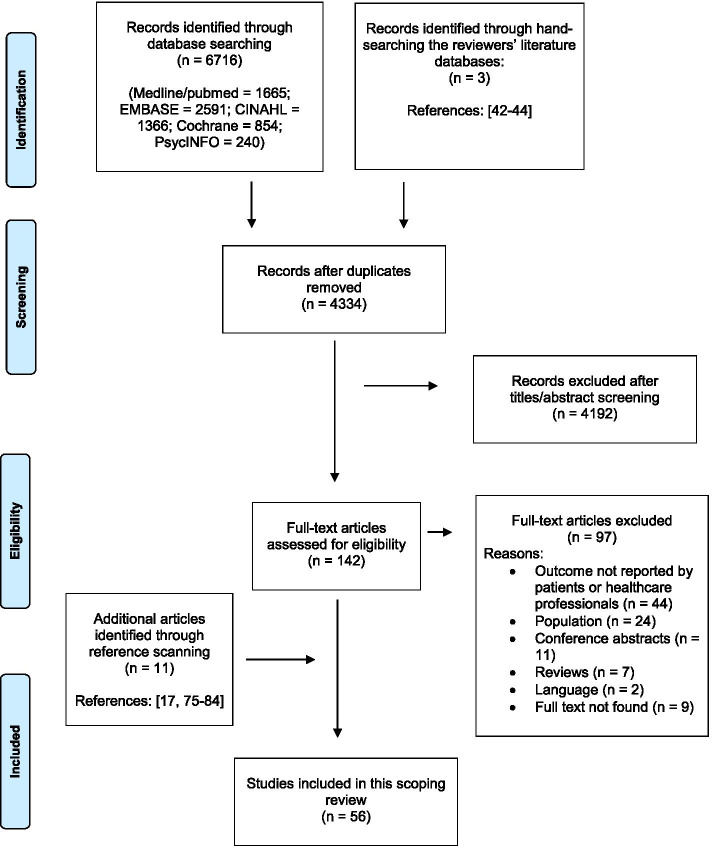
“Of the 56 studies, 32 used a qualitative study design [14–20, 38, 42, 44–46, 49–54, 57, 61, 67, 68, 70, 72–76, 78–80, 83], seven a quantitative study design [21, 37, 39, 63, 66, 69, 82], and 17 a mixed-methods study design [11, 36, 43, 47, 48, 55, 56, 58–60, 62, 64, 65, 71, 77, 81, 84].”
Koenders, N., Potkamp-Kloppers, S., Geurts, Y. M. G., Akkermans, R., der Sanden, M. W. G. N., & Hoogeboom, T. J. (2021) · Physical Therapy · doi:10.1093/ptj/pzab054 · Cited by 31
Kanaskie, M. L., & Snyder, C. (2017) · Applied Nursing Research · doi:10.1016/j.apnr.2017.11.006 · Cited by 27
Andreasen, J., Søndergaard, L. N., & Holst, M. (2018) · Patient Preference and Adherence · doi:10.2147/ppa.s168193 · Cited by 25
Cheah, S. Y., & Presnell, S. (2011) · Australian Occupational Therapy Journal · doi:10.1111/j.1440-1630.2010.00878.x · Cited by 23
Babine, R. L., Hyrkäs, K. E., Mckenzie, C. G., & Wierman, H. R. (2018) · Geriatric Nursing · doi:10.1016/j.gerinurse.2018.10.005 · Cited by 23 · cited 1×
“Two studies did not specify the sample size [11, 77], and one study only specified the number of included sites [47].”
BackgroundFeasibility of Implementing an Exercise Program in a Geriatric Assessment Unit: the SPRINT Program
Juneau, A., Bolduc, A., Nguyen, P., Leclerc, B., Rousseau, J., Dubé, F., Ringuet, M.-È., & Kergoat, M. (2018) · Canadian Geriatrics Journal · doi:10.5770/cgj.21.311 · Cited by 22
Granger, C. L., Parry, S. M., Denehy, L., & Remedios, L. J. (2018) · Physiotherapy Theory and Practice · doi:10.1080/09593985.2018.1425939 · Cited by 20
Thromboprophylaxis for hospitalized medical patients: A Multicenter Qualitative study
Cook, D., Tkaczyk, A., Lutz, K. H., McMullin, J., Haynes, R. B., & Douketis, J. D. (2009) · Journal of Hospital Medicine · doi:10.1002/jhm.461 · Cited by 18 · cited 1×
“seven studies were published before 2010 [15, 52, 56, 75, 77, 78, 82].”
Rasmussen, R. L., Holst, M., Nielsen, L. B., Villumsen, S., & Andreasen, J. (2020) · Health & Social Care in the Community · doi:10.1111/hsc.13025 · Cited by 12
Eastham, A. J., & Cox, D. L. (2017) · International Journal of Health Governance · doi:10.1108/ijhg-05-2016-0027 · Cited by 10
Tang, C. Y., Taylor, N. F., & Blackstock, F. C. (2013) · Chronic Respiratory Disease · doi:10.1177/1479972313504941 · Cited by 9
Gordge, L., Young, J. D., & Wiechula, R. (2009) · International Journal of Evidence-Based Healthcare · doi:10.1111/j.1744-1609.2009.00139.x · Cited by 9 · cited 1×
“seven studies were published before 2010 [15, 52, 56, 75, 77, 78, 82].”
Postoperative ambulation in thoracic surgery patients: standard versus modern ambulation methods
Nesbitt, J. C., Deppen, S. A., Corcoran, R., Cogdill, S., Huckabay, S., McKnight, D., Osborne, B. F., Werking, K., Gardner, M., & Perrigo, L. (2012) · Nursing in Critical Care · doi:10.1111/j.1478-5153.2011.00480.x · Cited by 9 · cited 1×
“Of the 56 studies, 32 used a qualitative study design [14–20, 38, 42, 44–46, 49–54, 57, 61, 67, 68, 70, 72–76, 78–80, 83], seven a quantitative study design [21, 37, 39, 63, 66, 69, 82], and 17 a mixed-methods study design [11, 36, 43, 47, 48, 55, 56, 58–60, 62, 64, 65, 71, 77, 81, 84].”
Bradley, G., Baker, K., & Bailey, C. (2019) · Disability and Rehabilitation · doi:10.1080/09638288.2019.1697762 · Cited by 8
Towards the effective introduction of physical activity interventions in primary health care
Huijg, J. M. (2009) · Leiden Repository (Leiden University) · Cited by 7
Murphy, J., & Jeune, I. L. (2018) · PubMed · Cited by 6
Holst, M., Hansen, P., Pedersen, L. A., Paulsen, S., Valentinsen, C. D., & Køhler, M. (2015) · VBN Forskningsportal (Aalborg Universitet) · Cited by 5
Research works printed but not linked: 1
- Kouchel D Early mobility in hospitalized older adults: needs assessment, analysis and proposed intervention [Masters Thesis] 2017 Carolina University of North Carolina at Chapel Hill Graduate School
Cited by
Gallardo-Gómez, D., del Pozo-Cruz, J., Pedder, H., Alfonso-Rosa, R. M., Álvarez-Barbosa, F., Noetel, M., Jasper, U., Chastin, S., Ramos-Munell, J., & del Pozo Cruz, B. (2023) · British Journal of Sports Medicine · doi:10.1136/bjsports-2022-106409 · Cited by 59
Obstacles to the Early Diagnosis and Management of Sarcopenia: Current Perspectives
Ooi, H., & Welch, C. (2024) · Clinical Interventions in Aging · doi:10.2147/cia.s438144 · Cited by 62
“53 However, this risk is low if properly supervised, and further education and support to staff may help to overcome this barrier.”
BackgroundDijkstra, F., van der Sluis, G., Jager‐Wittenaar, H., Hempenius, L., Hobbelen, H. J. S. M., & Finnema, E. (2022) · International Journal of Behavioral Nutrition and Physical Activity · doi:10.1186/s12966-022-01330-z · Cited by 44
“In line with previous studies [27, 29, 91], the importance of awareness and knowledge about mobilization to improve patients’ PA behavior was recognized in the current review.”
Alsop, T., Woodforde, J., Rosbergen, I. C. M., Mahendran, N., Brauer, S., & Gomersall, S. R. (2023) · Clinical Rehabilitation · doi:10.1177/02692155231170451 · Cited by 34
“that health professionals do not value mobility, are not interested in it and/or find it burdensome to assist.(36,49,86) Hospitalised adults express a desire to engage in meaningful physical activity,(31,99,100) value the encouragement from health professionals and feel inactivity exacerbates feelings of a loss of fre…”
Mani, H., Möri, C., Mattmann, M., Liechti, F. D., Inauen, J., Aujesky, D., Donzé, J. D., & Aubert, C. E. (2022) · Age and Ageing · doi:10.1093/ageing/afac159 · Cited by 26
Metadata
- Authors
- Geelen, S. J. G., van Dijk - Huisman, H. C., de Bie, R. A., Veenhof, C., Engelbert, R., van der Schaaf, M., & Lenssen, A. F.
- Affiliations
- Amsterdam University Medical Centers (NL)
- University of Applied Sciences Utrecht (NL)
- Maastricht University Medical Centre (NL)
- Corresponding author
- Geelen, Sven Jacobus Gertruda
- Venue
- Systematic Reviews
- Published
- 2021-11-04
- Volume
- 10
- Issue
- 1
- Pages
- 293-293
- ISSN
- 2046-4053 (ISSN-L)
- PMC
- PMC8569983
- OpenAlex
- W3192754367
- Cited by
- 94
- References
- 93
- Citations by year
- 2026: 18 · 2025: 15 · 2024: 18 · 2023: 15 · 2022: 28
- FWCI
- 2.04
- Type
- journal article
- Language
- en
- Open access
- gold
- doi.org
- Licence
- cc-by
- creativecommons.org/licenses/by/4.0 (tdm)
- creativecommons.org/licenses/by/4.0 (vor)
- Locations
- Systematic Reviews (publishedVersion, cc-by)
- Europe PMC (PubMed Central) (publishedVersion, other-oa)
- PubMed Central (publishedVersion, cc-by)
- PubMed (publishedVersion)
- Research Publications (Maastricht University) (publishedVersion, cc-by)
- Pure Amsterdam UMC (publishedVersion, cc-by)
- Data Archiving and Networked Services (DANS) (submittedVersion, other-oa)
- DOAJ (DOAJ: Directory of Open Access Journals) (submittedVersion, cc-by-sa)
- Utrecht University Repository (Utrecht University) (submittedVersion, other-oa)
- Research Publications (Maastricht University) (submittedVersion, other-oa)
- Topics
- Health Sciences › Medicine › Public Health, Environmental and Occupational Health › Physical Activity and Health
- Health Sciences › Medicine › Critical Care and Intensive Care Medicine › Intensive Care Unit Cognitive Disorders
- Health Sciences › Health Professions › Physical Therapy, Sports Therapy and Rehabilitation › Medical Practices and Rehabilitation
- Keywords
- physical activity, hospitalized patients, barriers and facilitators, Theoretical Domains Framework, acute care, environmental context and resources, social influence, healthcare workers, patient-reported barriers, behaviour change interventions, social support, beliefs about consequences, behavioral regulation, professional role and identity, goals, social norms, self-efficacy
- MeSH terms
- Health Personnel, Humans, Length of Stay, Exercise, Professional Role, Qualitative Research
About these checks
Registry, retraction, Cites and statistics results are computed, not judged, with one exception: a printed reference that no index lists is read once by a model before it counts as a citation error. Claims are extracted by a model and kept only when their quote appears verbatim in the text; each cited source is then checked, with a model’s help, for whether it says what the claim relies on. Those verdicts can be wrong — read the claim’s quote and the cited source before relying on one.
Statistics and arithmetic are recomputed, not judged.
Confidence bands are shown only for fields calibrated on our annotated test set. None is calibrated yet, so no band is shown.
What counts as a claim ›How we measure confidence ›How we check this ›
Are you an author, or do you see a problem with this page? Request a review
Data sources
Bibliographic data: Semantic Scholar, OpenAlex, Crossref.
Contains information from the Semantic Scholar Academic Graph Datasets, made available under the ODC Attribution License (ODC-BY 1.0).
Semantic Scholar’s data is described in: Kinney, R., et al. (2023). The Semantic Scholar Open Data Platform. arXiv:2301.10140.
