

MySafeRx: a mobile technology platform integrating motivational coaching, adherence monitoring, and electronic pill dispensing for enhancing buprenorphine/naloxone adherence during opioid use disorder treatment: a pilot study
Open accessThe DOI matches its Crossref record; 70 of the 70 references it cites were found in a registry or an index.
Abstract
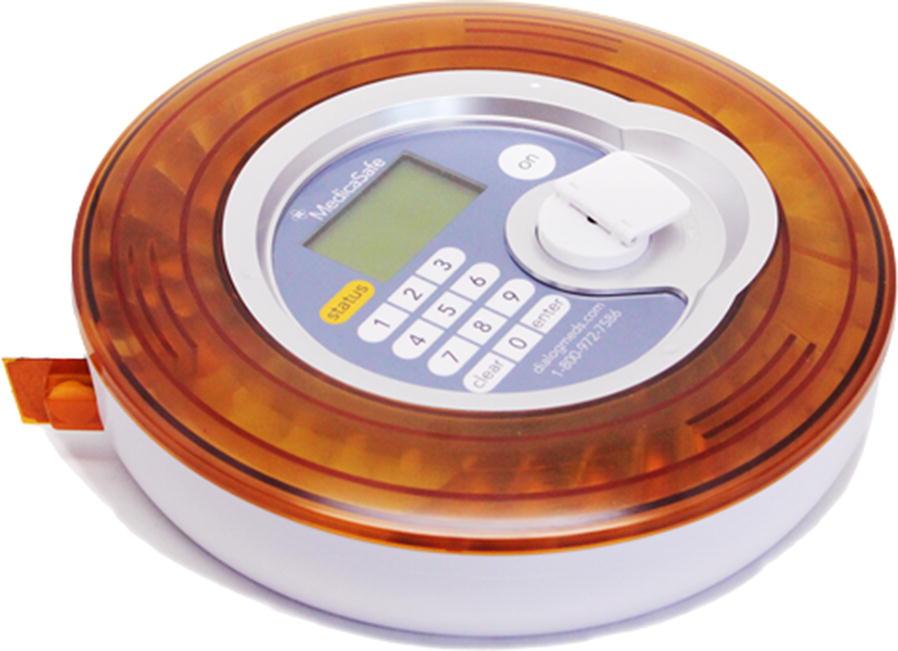
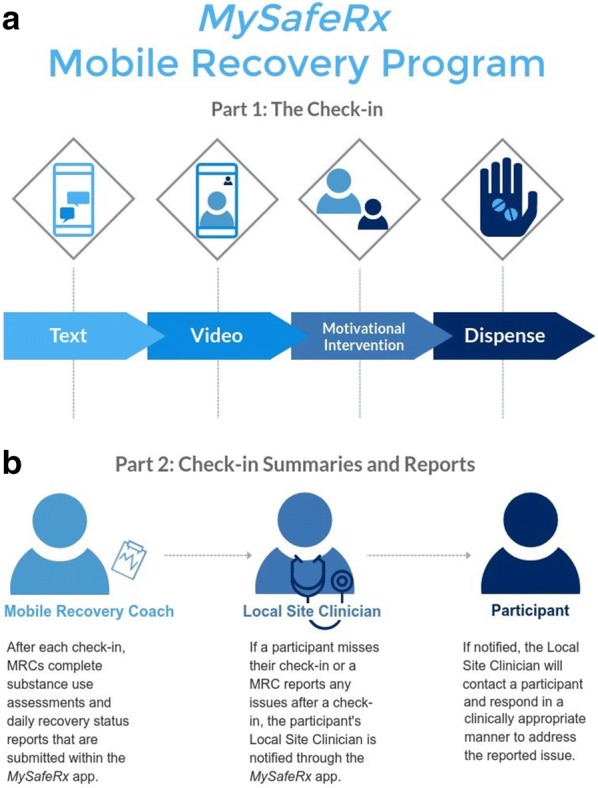
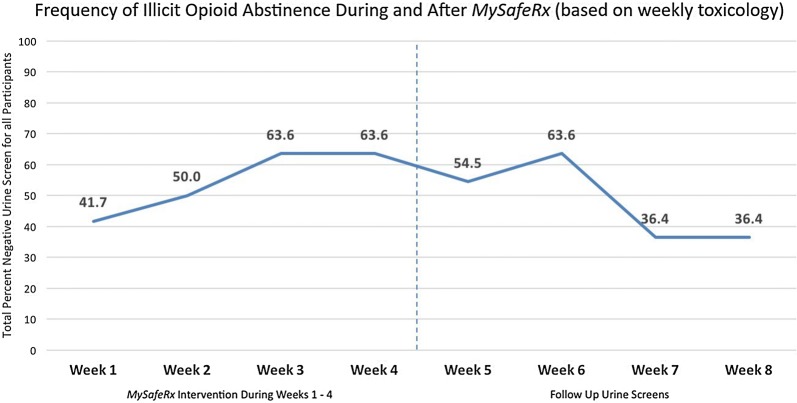
BACKGROUND: While buprenorphine/naloxone (B/N) is approved for opioid use disorder treatment, effective delivery of B/N comes with significant challenges. Most notably, many patients do not take medication daily as prescribed; this non-adherence worsens treatment outcomes, increases healthcare costs, and leads to persistent worries of diversion among providers and policymakers. The present study examines the feasibility, usability, and acceptability of MySafeRx-a mobile technology platform integrating motivational coaching, adherence monitoring, and electronic pill dispensing designed to address the challenges of office-based opioid treatment (OBOT) with B/N. METHODS: The MySafeRx platform integrates electronic pill dispensers, text-messaging, and videoconferencing to provide supervised self-administration of medication and daily motivational coaching through an Android app interface. High-risk early adults (18-39 years old) who were enrolled in OBOT with B/N and had documented illicit opioid use in the past month during opioid agonist therapy (n = 12) participated in a 28-day single-arm observational study of the MySafeRx platform in addition to standard care. RESULTS: Two-thirds of participants who completed the study achieved an average of > 5 days per week of supervised B/N self-administration. Visual confirmation of medication adherence was demonstrated for an average of 72% of study days among all participants. All participants achieved platform technical proficiency within 60 min, reporting good levels of usability and acceptability. Illicit opioid abstinence rates confirmed by urine toxicology increased by 53% during MySafeRx but fell 43% within 3 weeks post-intervention. CONCLUSION: The MySafeRx medication adherence and remote coaching mobile platform is acceptable and can be feasibly implemented in real-world opioid use disorder treatment settings during high-risk periods (i.e., initial stabilization, after illicit opioid lapse), resulting in reduced illicit opioid use; however, the effect did not last after intervention completion, suggesting longer duration or extended taper of program may be needed. ClinicalTrials.Gov NCT02942199 10/24/16 https://clinicaltrials.gov/ct2/show/NCT02942199.
Overview
The claims and statistics of this paper haven’t been checked yet.
Free: it reads the open-access text and checks the first 5 claims that cite a source we can check. Create a free account to check every claim.
Integrity signals
Registry
Cites
Statistics
Figures
Verification
Claims the paper makes
The claims and statistics of this paper haven’t been checked yet.
Free: it reads the open-access text and checks the first 5 claims that cite a source we can check. Create a free account to check every claim.
Claims other papers make about this one
Each is checked against this paper’s own text: does it say what the citing paper says it does?
The source backs part of the claim, not all of it — or backs it for a different population, condition or comparison.
In the citing paper
“Automated or smart pill dispensers may support adherence among patients who have memory or cognitive concerns or are at risk of medication misuse.202,203”
From Joint Clinical Practice Guideline on Benzodiazepine Tapering: Considerations When Risks Outweigh Benefits (2025) · cites this paper as [203]
Experimental — accuracy not yet measured
Self-check
Percentages, sums and reported differences re-computed from the paper’s own numbers.
The self-check needs the paper’s full text.
Citations
Cites
Harris, P. A., Taylor, R., Thielke, R., Payne, J., Gonzalez, N., & Conde, J. G. (2009) · Journal of Biomedical Informatics · doi:10.1016/j.jbi.2008.08.010 · Cited by 51,384
The Montreal Cognitive Assessment, MoCA: a brief screening tool for mild cognitive impairment
Nasreddine, Z. S., Phillips, N. A., Bédirian, V., Charbonneau, S., Whitehead, V., Collin, I., Cummings, J. L., & Chertkow, H. (2005) · Journal of the American Geriatrics Society · doi:10.1111/j.1532-5415.2005.53221.x · Cited by 25,553
Emerging adulthood: A theory of development from the late teens through the twenties.
Arnett, J. J. (2000) · American Psychologist · doi:10.1037/0003-066x.55.5.469 · Cited by 16,843
SUS: A 'Quick and Dirty' Usability Scale
(1996) · Usability Evaluation In Industry · doi:10.1201/9781498710411-35 · Cited by 8,989
Osterberg, L., & Blaschke, T. (2005) · New England Journal of Medicine · doi:10.1056/nejmra050100 · Cited by 7,974
An Empirical Evaluation of the System Usability Scale
Bangor, A., Kortum, P. T., & Miller, J. T. (2008) · International Journal of Human–Computer Interaction · doi:10.1080/10447310802205776 · Cited by 5,181
Motivational Interviewing: Helping People Change
Tober, G. (2013) · Alcohol and Alcoholism · doi:10.1093/alcalc/agt010 · Cited by 4,268
Kirk, J., MacDonald, A., Lavender, P., Dean, J., & Rubin, G. (2017) · Biomedicine Hub · doi:10.1159/000480347 · Cited by 3,887
(2013) · Cited by 2,393
Chronic stress, drug use, and vulnerability to addiction
Sinha, R. (2008) · Annals of the New York Academy of Sciences · doi:10.1196/annals.1441.030 · Cited by 1,904
Research works printed but not linked: 4
- Center for Substance Abuse Treatment, Clinical Guidelines for the Use of Buprenorphine in the Treatment of Opioid Addiction. Treatment Improvement Protocol (TIP) Series 40, 2004, Substance Abuse and Mental Health Services Administration: Rockville, MD. 22514846
- Schuman-Olivier Z et al. MySafeRx: an integrated mobile platform for buprenorphine adherence. In: American academy of addiction psychiatry (AAAP) 27th annual meeting and symposium 2016. Bonita Springs: Wiley/Blackwell (10.1111).
- First MB et al. Structured clinical interview for DSM-IV-TR axis I disorders, research version, patient edition. Vol. SCID-I/P. 2002, New York: Biometrics Research, New York State Psychiatric Institute.
- Schuman-Olivier Z et al. Feasibility for ActiWatch score (TM) for recording skills practice and conducting ecological momentary assessment in a RCT of mindfulness training vs. cognitive-behavioral therapy for tobacco smoking cessation. In: Poster presentation, international symposium on contemplative studies; 2012.
Cited by
Mason, M., Cho, Y., Rayo, J., Gong, Y., Harris, M., & Jiang, Y. (2022) · JMIR mHealth and uHealth · doi:10.2196/35157 · Cited by 164
“Information regarding adherence monitoring technologies was extracted and organized into a table for further synthesis (Multimedia Appendix 2 [1-6,9-13,15-18,20,26-99]).”
MethodSteinkamp, J. M., Goldblatt, N., Borodovsky, J. T., LaVertu, A., Kronish, I. M., Marsch, L. A., & Schuman-Olivier, Z. (2019) · JMIR Mental Health · doi:10.2196/12493 · Cited by 106
Self-citationStandardising the role of a digital navigator in behavioural health: a systematic review
Perret, S., Alon, N., Carpenter-Song, E. A., Myrick, K. J., Thompson, K., Li, S., Sharma, K., & Torous, J. B. (2023) · The Lancet Digital Health · doi:10.1016/s2589-7500(23)00152-8 · Cited by 107
Marrero, R. J., Fumero, A., de Miguel, A., & Peñate, W. (2020) · Patient Education and Counseling · doi:10.1016/j.pec.2020.04.030 · Cited by 65
Remote Methods for Conducting Tobacco-Focused Clinical Trials
Dahne, J., Tomko, R. L., McClure, E. A., Obeid, J. S., & Carpenter, M. J. (2020) · Nicotine & Tobacco Research · doi:10.1093/ntr/ntaa105 · Cited by 56
Guillen, A., Reddy, M., Saadat, S., & Chakravarthy, B. (2021) · Telemedicine Journal and e-Health · doi:10.1089/tmj.2021.0308 · Cited by 61
“19,28,51,52 Mobile applications that simply disseminated information about MAT, as outlined by Cavazos-Rehg et al., 53 found that successful completion of the app both improved attitudes toward MAT and increased interest in treatment initiation.”
Identification and Management of Opioid Use Disorder in Primary Care: an Update
Donroe, J. H., Bhatraju, E. P., Tsui, J. I., & Edelman, E. J. (2020) · Current Psychiatry Reports · doi:10.1007/s11920-020-01149-0 · Cited by 52
Brunner, E., Chen, C.-Y. A., Klein, T., Maust, D., Mazer-Amirshahi, M., Mecca, M., Najera, D., Ogbonna, C., Rajneesh, K. F., Roll, E., et al. (2025) · Journal of General Internal Medicine · doi:10.1007/s11606-025-09499-2 · Cited by 51
Hodges, J., Waselewski, M. E., Harrington, W., Franklin, T., Schorling, K., Huynh, J., Tabackman, A., Otero, K., Ingersoll, K. S., Tiouririne, N. A., et al. (2022) · Addiction Science & Clinical Practice · doi:10.1186/s13722-022-00296-4 · Cited by 33
Glasner, S. V., Patrick, K., Ybarra, M. L., Reback, C. J., Ang, A., Kalichman, S. C., Bachrach, K., Garneau, H. C., Venegas, A., & Rawson, R. A. (2021) · Drug and Alcohol Dependence · doi:10.1016/j.drugalcdep.2021.109229 · Cited by 40
Godersky, M. E., Klein, J. W., Merrill, J. O., Blalock, K. L., Saxon, A. J., Samet, J. H., & Tsui, J. I. (2020) · Journal of Addiction Medicine · doi:10.1097/adm.0000000000000608 · Cited by 28
“A recent pilot study for real-time observation of buprenorphine ingestion via video conferencing between patient and trained recovery coaches showed a similar adherence to computerized medication bottle caps at 72% adherence (Schuman-Olivier et al., 2018).”
BackgroundWyse, J. J. B., Morasco, B. J., Dougherty, J., Edwards, B., Kansagara, D. L., Gordon, A. J., Korthuis, P. T., Tuepker, A., Lindner, S., Mackey, K., et al. (2021) · Drug and Alcohol Dependence · doi:10.1016/j.drugalcdep.2021.108923 · Cited by 27
Schramm, Z. A., Leroux, B. G., Radick, A. C., Ventura, A. S., Klein, J. W., Samet, J. H., Saxon, A. J., Kim, T. W., & Tsui, J. I. (2020) · Addiction Science & Clinical Practice · doi:10.1186/s13722-020-00203-9 · Cited by 23
Mailloux, L. M., Haas, M. T., Larew, J., & DeJongh, B. M. (2021) · Mental Health Clinician · doi:10.9740/mhc.2021.01.035 · Cited by 23
Engineering Approaches for Addressing Opioid Use Disorder in the Community
Griffin, P. M. (2020) · Annual Review of Biomedical Engineering · doi:10.1146/annurev-bioeng-082719-040832 · Cited by 15
“MySafeRx: a mobile technology platform integrating motivational coaching, adherence monitoring, and electronic pill dispensing for enhancing buprenorphine/naloxone adherence during opioid use disorder treatment: a pilot study.”
BackgroundInfluentialSharp, A., Carlson, M., Howell, V., Moore, K. A., & Schuman‐Olivier, Z. (2020) · Journal of Substance Abuse Treatment · doi:10.1016/j.jsat.2020.108247 · Cited by 14
“The larger RCT tests an innovative technology and personcentered intervention for addressing engagement and retention in buprenorphine-based MOUD (Schuman-Olivier et al., 2018).”
BackgroundSelf-citationCurtis, M., Wilkinson, A. L., Dietze, P., Stewart, A. C., Kinner, S. A., Winter, R., Aitken, C. K., Walker, S., Cossar, R. D., Butler, T. G., et al. (2023) · Harm Reduction Journal · doi:10.1186/s12954-023-00773-2 · Cited by 13
Usabilidade de aplicativo móvel em saúde: uma revisão bibliométrica
da Silva, L. V. F., Santos, J. S., de Carvalho, A. L. A., de Andrade, D. M., de Sá, D. D., Alves, É. P., Felix, F. K. S., Medeiros, L. L. D. M., de Andrade, B. M., & Almeida, T. D. C. F. (2021) · Revista Eletrônica Acervo Saúde · doi:10.25248/reas.e6676.2021 · Cited by 28
Brooklyn, J. R., Stothart, M. E., Stunell, M., Berman, V. M., Rylant, D., & Hanson, M. (2021) · Journal of Addiction Medicine · doi:10.1097/adm.0000000000000895 · Cited by 11
Using Data Science to Improve Outcomes for Persons with Opioid use Disorder
Hayes, C. J., Cucciare, M. A., Martin, B. C., Hudson, T. J., Bush, K., Lo‐Ciganic, W., Yu, H. Q., Charron, E. M., & Gordon, A. J. (2022) · Substance Abuse · doi:10.1080/08897077.2022.2060446 · Cited by 12
“58,62,63 While novel mHealth apps hold potential for improving MOUD retention over the long term, rigorous testing has yet to be completed.”
BackgroundMisalignment of Stakeholder Incentives in the Opioid Crisis
Boloori, A., Arnetz, B. B., Viens, F. G., Maiti, T., & Arnetz, J. E. (2020) · International Journal of Environmental Research and Public Health · doi:10.3390/ijerph17207535 · Cited by 6
Shrader, C., Westrick, A. C., Vos, S. R., Perrino, T., Kanamori, M., Ter-Ghazaryan, D., & Stoler, J. B. (2023) · The Journal of Behavioral Health Services & Research · doi:10.1007/s11414-022-09828-x · Cited by 5
Smith, C. L., Keever, A., Bowden, T., Olson, K., Rodin, N. M., McDonell, M. G., Roll, J. M., Smoody, G., LeBrun, J., Miguel, A. C., et al. (2023) · JMIR Formative Research · doi:10.2196/40437 · Cited by 4
“Unlike some other technologies, such as the MySafeRx system [23], the Pillsy system does not require codes or video calls for the patient to access their medication.”
MethodKiburi, S. K., Kwobah, E., Paruk, S., & Chiliza, B. (2023) · BMC Digital Health · doi:10.1186/s44247-023-00014-3 · Cited by 6
Janzow, G. E., Harding, C., Flores, M. W., Borodovsky, J. T., Steinkamp, J., Marsch, L. A., & Schuman‐Olivier, Z. (2022) · Drug and Alcohol Dependence Reports · doi:10.1016/j.dadr.2022.100045 · Cited by 2
Self-citationHeinz, M. V., Lekkas, D., Abreu, V., Lee, C. M., Marsch, L. A., & Jacobson, N. C. (2024) · npj Mental Health Research · doi:10.1038/s44184-024-00086-7 · Cited by 2
Self-citationA comprehensive mobile health intervention to prevent and manage the complexities of opioid use
Singh, N., Dube, S. R., Varshney, U., & Bourgeois, A. G. (2022) · International Journal of Medical Informatics · doi:10.1016/j.ijmedinf.2022.104792 · Cited by 2
Nieto, O., Rosen, A. D., Kalmin, M. M., Li, L., SHOPTAW, S. J., Jenkins, S., Ardestani, Z. Z., & Tulu, B. (2025) · Journal of Medical Internet Research · doi:10.2196/69953 · Cited by 2
“In addition, technology interventions could also benefit from actively engaging patients through recurring wellness prompts and motivational coaching, as noted in the existing literature [19,21].”
Sugarman, D. E., Levine, E. A., Wang, C. L., Korte, F. M., Barbaro, N. A., Weiss, R. D., Marsch, L. A., Campbell, A., & Greenfield, S. F. (2026) · JMIR Formative Research · doi:10.2196/85195 · Cited by 1
“However, much of the current work in this area has used mixed-gender participant populations and has not specifically focused on women’s experiences [9-11, Findings from a recent review of digital interventions to support women in treatment for OUD showed that most of the existing technology in…”
Self-citationIT-based Patient Interventions for Opioid Abuse: Evaluation using Analytical Model
Singh, N., & Varshney, U. (2019) · ScholarWorks - WMU (Western Michigan University) · Cited by 1
Technological Advancements to Promote Adherence
Ramachandran, V., Cline, A. E., & Hawkins, S. D. (2019) · Updates in clinical dermatology · doi:10.1007/978-3-030-27809-0_10 · Cited by 1
Connery, H. S., McHugh, R. K., & Welsh, J. W. (2021) · Addiction · doi:10.1111/add.15322
Mancini, A., & Fabbo, A. (2023) · Springer eBooks · doi:10.1007/978-3-031-27968-3_33
Smart Interventions for Opioid Abuse: Design and Evaluation
Singh, N., & Varshney, U. (2024) · International Journal of Healthcare Information Systems and Informatics · doi:10.4018/ijhisi.335895
“The interventions are (a) mobile reminders (Voelker, 2019), (b) electronic monitoring of opioids (Jungquist et al., 2019), and (c) composite intervention (monitoring, reminders and support from other patients) (Schuman-Olivier et al., 2018; Varshney, 2015).”
BackgroundTam, C. C., Young, S. D., Harrison, S. E., Li, X., & Litwin, A. H. (2025) · JMIR Research Protocols · doi:10.2196/65847
“This virtual self-monitoring has been a promising strategy to manage psychiatric distress and substance use [88].”
Mamat, M., & Sansuwito, T. B. (2023) · Healthcare in Low-resource Settings · doi:10.4081/hls.2023.11785 · Cited by 2
“21 A website or mobile application to support maternal education should include information and resources for individual attention and social support.”
Nursing Practice Using Digital Technology in Psychiatric Outpatient Departments: A Scoping Review
Shimizu, T., Tanoue, M., Suzuki, M., & Katayama, T. (2025) · Journal of Japan Academy of Nursing Science · doi:10.5630/jans.45.454 · Cited by 1
Hodges, J., Waselewski, M. E., Harrington, W., Franklin, T., Schorling, K., Huynh, J., Tabackman, A., Otero, K., Ingersoll, K. S., Tiouririne, N. A., et al. (2022) · Figshare · doi:10.6084/m9.figshare.19321496
Hodges, J., Waselewski, M. E., Harrington, W., Franklin, T., Schorling, K., Huynh, J., Tabackman, A., Otero, K., Ingersoll, K. S., Tiouririne, N. A., et al. (2022) · Figshare · doi:10.6084/m9.figshare.19321499
Gregory, P. F., Larson, A. J., Spencer, S. P., Barry, D., Camacho, M., Neufeld, M. D., McDaniel, C. E., & Yonekawa, K. E. (2025) · Clinical Pediatrics · doi:10.1177/00099228251403825
Kim, J. J., Boschman, L., Azar, P., & Noureddin, B. (2026) · doi:10.2196/preprints.104420
D’Arcey, J., Zedan, S. A., Tackaberry-Giddens, L., McIntyre, C. M., Junaid, S., Asuncion, T.-R., & Kidd, S. A. (2026) · PLOS Digital Health · doi:10.1371/journal.pdig.0001544
“…(PHI) [68–70], four reported that the investigated digital tools were compliant with relevant privacy standards [43,64,66,67], five reported that PHI was stored on secured servers [43,44,67,69,74], and five reported the use of unique login and passwords known only to users [41,58,61,66,75].”
InfluentialKim, J. J., Boschman, L., Azar, P., & Noureddin, B. (2026) · JMIR Human Factors · doi:10.2196/104420
Schuman‐Olivier, Z., Janzow, G. E., Flores, M. W., Sharp, A., Harding, C., Rigg, K. K., Hills, H. A., & Moore, K. (2026) · Drug and Alcohol Dependence Reports · doi:10.1016/j.dadr.2026.100487
Self-citation
Metadata
- Authors
- Schuman-Olivier, Z., Borodovsky, J. T., Steinkamp, J., Munir, Q., Butler, K., Greene, M. A., Goldblatt, J., Xie, H. Y., & Marsch, L. A.
- Affiliations
- Dartmouth College (US)
- Boston University (US)
- Tufts University (US)
- Venue
- Addiction Science & Clinical Practice
- Published
- 2018-09-24
- Volume
- 13
- Issue
- 1
- Pages
- 21-21
- ISSN
- 1940-0632 (ISSN-L)
- 1940-0640
- PMC
- PMC6154900
- OpenAlex
- W2891084063
- Cited by
- 44
- References
- 70
- Citations by year
- 2026: 5 · 2025: 5 · 2024: 2 · 2023: 7 · 2022: 7 · 2021: 7 · 2020: 8 · 2019: 2 · 2018: 1
- FWCI
- 4.29
- Type
- journal article
- Language
- en
- Open access
- gold
- doi.org
- Licence
- cc-by
- creativecommons.org/licenses/by/4.0/ (tdm)
- creativecommons.org/licenses/by/4.0/ (vor)
- Locations
- Addiction Science & Clinical Practice (publishedVersion, cc-by)
- Europe PMC (PubMed Central) (publishedVersion, other-oa)
- PubMed Central (publishedVersion, cc-by)
- PubMed (publishedVersion)
- DOAJ (DOAJ: Directory of Open Access Journals) (submittedVersion, cc-by-sa)
- Funders
- National Institute on Drug Abuse (P30DA029926, R34DA040086, R43DA033702)
- Topics
- Health Sciences › Medicine › Public Health, Environmental and Occupational Health › Opioid Use Disorder Treatment
- Health Sciences › Health Professions › General Health Professions › Mobile Health and mHealth Applications
- Health Sciences › Medicine › Family Practice › Medication Adherence and Compliance
- Keywords
- buprenorphine/naloxone, opioid use disorder, medication adherence, motivational coaching, mobile health, office-based opioid treatment, opioid substitution therapy, illicit opioid use, opioid diversion, early adults, urine toxicology, feasibility and acceptability
- MeSH terms
- Smartphone, Buprenorphine, Naloxone Drug Combination, Mentoring, Adolescent, Adult, Female, Humans, Male, Motivation, Opioid-Related Disorders, Pilot Projects, Reminder Systems, Patient Satisfaction, Videoconferencing, Medication Adherence, Young Adult, Text Messaging, Mobile Applications
About these checks
Registry, retraction, Cites and statistics results are computed, not judged, with one exception: a printed reference that no index lists is read once by a model before it counts as a citation error. Claims are extracted by a model and kept only when their quote appears verbatim in the text; each cited source is then checked, with a model’s help, for whether it says what the claim relies on. Those verdicts can be wrong — read the claim’s quote and the cited source before relying on one.
Statistics and arithmetic are recomputed, not judged.
Confidence bands are shown only for fields calibrated on our annotated test set. None is calibrated yet, so no band is shown.
What counts as a claim ›How we measure confidence ›How we check this ›
Are you an author, or do you see a problem with this page? Request a review
Data sources
Bibliographic data: Semantic Scholar, OpenAlex, Crossref.
Contains information from the Semantic Scholar Academic Graph Datasets, made available under the ODC Attribution License (ODC-BY 1.0).
Semantic Scholar’s data is described in: Kinney, R., et al. (2023). The Semantic Scholar Open Data Platform. arXiv:2301.10140.
