

The brain-bone axis: Unraveling the complex interplay between the central nervous system and skeletal metabolism
Open accessThe DOI matches its Crossref record; 118 of the 119 references it cites were found in a registry or an index.
Abstract
The brain-bone axis has emerged as a captivating field of research, unveiling the intricate bidirectional communication between the central nervous system (CNS) and skeletal metabolism. This comprehensive review delves into the current state of knowledge surrounding the brain-bone axis, exploring the complex mechanisms, key players, and potential clinical implications of this fascinating area of study. The review discusses the neural regulation of bone metabolism, highlighting the roles of the sympathetic nervous system, hypothalamic neuropeptides, and neurotransmitters in modulating bone remodeling. In addition, it examines the influence of bone-derived factors, such as osteocalcin and fibroblast growth factor 23, on brain function and behavior. The therapeutic potential of targeting the brain-bone axis in the context of skeletal and neurological disorders is also explored. By unraveling the complex interplay between the CNS and skeletal metabolism, this review aims to provide a comprehensive resource for researchers, clinicians, and students interested in the brain-bone axis and its implications for human health and disease.
Overview
The claims and statistics of this paper haven’t been checked yet.
Free: it reads the open-access text and checks the first 5 claims that cite a source we can check. Create a free account to check every claim.
Integrity signals
Registry
Cites
Statistics
Figures
Verification
Claims the paper makes
The claims and statistics of this paper haven’t been checked yet.
Free: it reads the open-access text and checks the first 5 claims that cite a source we can check. Create a free account to check every claim.
Claims other papers make about this one
Each is checked against this paper’s own text: does it say what the citing paper says it does?
The source backs part of the claim, not all of it — or backs it for a different population, condition or comparison.
In the citing paper
“Similarly, parasympathetic influences and neuropeptides such as SP, CGRP, and neuropeptide Y have been linked to bone remodeling, but their integration with immune and endocrine pathways is unclear [12,161].”
From Interorgan Communications in Skeletal Pathophysiology: From Molecular Pathways to Multidisciplinary Therapies (2026) · cites this paper as [12]
Experimental — accuracy not yet measuredThe source backs part of the claim, not all of it — or backs it for a different population, condition or comparison.
In the citing paper
“Although evidence supports roles for sympathetic and sensory nerves in bone metabolism, the precise mechanisms remain debated.”
From Interorgan Communications in Skeletal Pathophysiology: From Molecular Pathways to Multidisciplinary Therapies (2026) · cites this paper as [12]
Experimental — accuracy not yet measuredThe source backs part of the claim, not all of it — or backs it for a different population, condition or comparison.
In the citing paper
“Some studies show that sympathetic activation promotes bone loss, while others suggest context-dependent effects.”
From Interorgan Communications in Skeletal Pathophysiology: From Molecular Pathways to Multidisciplinary Therapies (2026) · cites this paper as [12]
Experimental — accuracy not yet measured
Self-check
Percentages, sums and reported differences re-computed from the paper’s own numbers.
The self-check needs the paper’s full text.
Citations
Cites
Ghrelin is a growth-hormone-releasing acylated peptide from stomach
Kojima, M., Hosoda, H., Date, Y., Nakazato, M., Matsuo, H., & Kangawa, K. (1999) · Nature · doi:10.1038/45230 · Cited by 8,479 · cited 1×
“GHRP is mainly synthesized and secreted by neuroendocrine cells, such as the arcuate nucleus of the hypothalamus [42].”
BackgroundOsteoclast differentiation and activation
Boyle, W. J., Simonet, W. S., & Lacey, D. L. (2003) · Nature · doi:10.1038/nature01658 · Cited by 6,670 · cited 1×
“RANKL, in turn, stimulates osteo-clast differentiation and activity, thereby promoting bone resorption [21].”
BackgroundLeptin Inhibits Bone Formation through a Hypothalamic Relay
Ducy, P., Amling, M., Takeda, S., Priemel, M., Schilling, A. F., Beil, F. T., Shen, J., Vinson, C., Rueger, J. M., & Karsenty, G. (2000) · Cell · doi:10.1016/s0092-8674(00)81558-5 · Cited by 2,077 · cited 3×
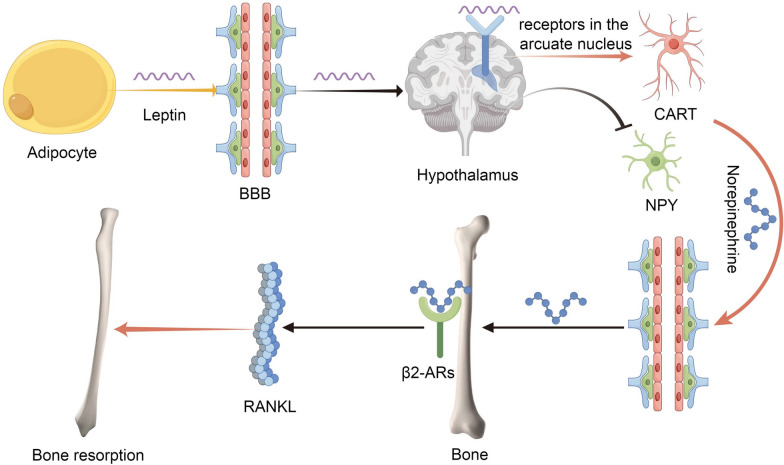
“This hypothalamic response results in increased sympathetic outflow to the skeleton, promoting bone loss through the activation of β2-ARs on osteoblasts [23].”
BackgroundInfluentialLeptin Regulates Bone Formation via the Sympathetic Nervous System
Takeda, S., Elefteriou, F., Levasseur, R., Liu, X., Zhao, L., Parker, K. L., Armstrong, D., Ducy, P., & Karsenty, G. (2002) · Cell · doi:10.1016/s0092-8674(02)01049-8 · Cited by 1,735 · cited 3×
“…of leptin on bone mass are primarily mediated through the SNS, with increased leptin signaling in the hypothalamus resulting in enhanced sympathetic outflow to the skeleton and subsequent activation of β2-ARs on osteoblasts, leading to decreased bone formation and increased bone resorption [6].”
BackgroundLeptin regulation of bone resorption by the sympathetic nervous system and CART
Elefteriou, F., Ahn, J. D., Takeda, S., Starbuck, M., Yang, X., Liu, X., Kondo, H., Richards, W. G., Bannon, T. W., Noda, M., et al. (2005) · Nature · doi:10.1038/nature03398 · Cited by 1,311 · cited 5×
“CART is an anorexigenic neuropeptide expressed in the hypothalamus and peripheral tissues, and has been implicated in the regulation of bone metabolism through both central and peripheral mechanisms [5].”
BackgroundInfluentialBone Morphogenetic Protein (BMP) signaling in development and human diseases
Wang, R. N., Green, J., Wang, Z., Deng, Y., Qiao, M., Peabody, M., Zhang, Q., Ye, J., Yan, Z., Denduluri, S., et al. (2014) · Genes & Diseases · doi:10.1016/j.gendis.2014.07.005 · Cited by 1,031 · cited 1×
“…tissues of AD patients and animal models, the expression of BMP2, BMP4 and BMP6 was up-regulated, while the expression of BMP9 was down-regulated, etc. BMPs can be involved in the pathogenesis of AD by regulating inflammatory response, oxidative stress, Aβ metabolism and other mechanisms [80].”
BackgroundMechanisms of Disease: is osteoporosis the obesity of bone?
Rosen, C. J., & Bouxsein, M. L. (2006) · Nature Clinical Practice Rheumatology · doi:10.1038/ncprheum0070 · Cited by 956 · cited 1×
“…of the sympathetic nervous system (SNS) in bone metabolism is supported by clinical evidence, as evidenced by studies linking conditions marked by heightened sympathetic activity, such as reflex sympathetic dystrophy and postmenopausal osteoporosis, with decreased bone mineral density [24, 25].”
BackgroundMaradit‐Kremers, H., Crowson, C. S., Nicola, P. J., Ballman, K. V., Roger, V. L., Jacobsen, S. J., & Gabriel, S. E. (2005) · Arthritis & Rheumatism · doi:10.1002/art.20853 · Cited by 927 · cited 1×
“The role of the PNS in bone metabolism is further supported by clinical observations of increased fracture risk in patients with conditions characterized by parasympathetic dysfunction, such as diabetes mellitus and inflammatory bowel disease [33, 34].”
BackgroundLeptin Differentially Regulates NPY and POMC Neurons Projecting to the Lateral Hypothalamic Area
Elias, C. F., Aschkenasi, C., Lee, C., Kelly, J., Ahima, R. S., Bjorbæk, C., Flier, J. S., Saper, C. B., & Elmquist, J. K. (1999) · Neuron · doi:10.1016/s0896-6273(01)80035-0 · Cited by 924 · cited 2×
“Leptin crosses the blood–brain barrier and binds to its receptors in the arcuate nucleus of the hypothalamus, leading to the activation of anorexigenic neurons expressing pro-opiomelanocortin (POMC) and CART, while suppressing orexigenic neurons expressing NPY and agouti-related peptide (AgRP) [22].”
BackgroundLrp5 Controls Bone Formation by Inhibiting Serotonin Synthesis in the Duodenum
Yadav, V. K., Ryu, J.-H., Suda, N., Tanaka, K. F., Gingrich, J. A., Schütz, G., Glorieux, F. H., Chiang, C. Y., Zajac, J. D., Insogna, K. L., et al. (2008) · Cell · doi:10.1016/j.cell.2008.09.059 · Cited by 834 · cited 1×
“Mice lacking tryptophan hydroxylase 1 (Tph1), the key enzyme in peripheral serotonin production, display a reduced bone mass phenotype, underscoring the significance of peripheral serotonin signaling in the regulation of skeletal equilibrium [56].”
Background
Cited by
Bone-brain interaction: mechanisms and potential intervention strategies of biomaterials
Yu, J., Ji, L., Liu, Y., Wang, X., Wang, J., & Liu, C. (2025) · Bone Research · doi:10.1038/s41413-025-00404-5 · Cited by 34
“98 Future research should focus on exploring the molecular, genetic, and physiological foundations of the brain-bone axis, as well as investigating the future development directions of this emerging fi eld.”
Luo, Y., Liu, B., Qiu, Y., Li, L., Yang, F., Zhang, C., & Wang, J. (2025) · Bioactive Materials · doi:10.1016/j.bioactmat.2025.01.034 · Cited by 39
Unraveling the Bone–Brain Axis: A New Frontier in Parkinson’s Disease Research
Liu, T., Wu, H., Li, J., Zhu, C., & Wei, J. (2024) · International Journal of Molecular Sciences · doi:10.3390/ijms252312842 · Cited by 26
Versatile application of magnesium-related bone implants in the treatment of bone defects
Tao, M., Cui, Y., Sun, S., Zhang, Y., Ge, J., Yin, W., Li, P., & Wang, Y. (2025) · Materials Today Bio · doi:10.1016/j.mtbio.2025.101635 · Cited by 37
“The brain-bone axis represents a crucial aspect of neuroskeletal regulation, encompassing bidirectional communication between the CNS and bone metabolism [276].”
Yang, M., Zhong, J.-D., Li, X., Tian, G., Bai, W.-Y., Fang, Y.-H., Qiu, M.-C., Yuan, C., Yu, C.-F., Li, N., et al. (2024) · Nature Communications · doi:10.1038/s41467-024-55147-4 · Cited by 25
“The SNS provides innervation to bone tissue, with the sympathetic fi bers directly interacting with osteoblasts and osteoclasts 47 .”
Liu, M., Liu, Y., Yu, J., Gong, J., Zhao, C., & Liu, Z. (2025) · Bone Research · doi:10.1038/s41413-025-00494-1 · Cited by 23
“15,16 Recent studies have further elucidated the pivotal role of SNS-mediated neuroregula-tory mechanisms in the pathogenesis of osteoporosis and OA, highlighting the therapeutic potential of targeting SNS signaling pathways in skeletal disorders.”
Shi, H., Huang, L., Wang, Q., Zhang, N., Lv, C., Lin, C., Shao, L., Xia, D., Zhao, Z., Yang, G., et al. (2025) · International Journal of Surgery · doi:10.1097/js9.0000000000003030 · Cited by 15
“The impact of exercise on the bone–brain axis is bidirectional [41] .”
InfluentialSelf-citationBrain–Bone Axis in Physiological and Pathological Conditions
Massaccesi, L., Romanelli, M. M. C., & Galliera, E. (2025) · International Journal of Molecular Sciences · doi:10.3390/ijms26199822 · Cited by 14
“The CNS exerts significant control over bone remodeling through several neural pathways, including the sympathetic nervous system, hypothalamic neuropeptides, and neurotransmitters [15].”
Chen, K., Chen, L., Ma, Y., Chen, S., Liu, J., Zhou, H., Chen, Y., & Liu, G. (2025) · Frontiers in Pharmacology · doi:10.3389/fphar.2025.1614542 · Cited by 15
“It has been shown that NGF not only affects bone metabolism through innervation (Shi and Chen, 2024), but also acts directly on osteoblasts (Aso et al., 2024), to regulate their proliferation, differentiation and function.”
The potential link between the development of Alzheimer’s disease and osteoporosis
Nasme, F., Behera, J., Tyagi, P., Debnath, N., Falcone, J. C., & Tyagi, N. (2025) · Biogerontology · doi:10.1007/s10522-024-10181-z · Cited by 15
“Recent research has unveiled an intricate and bidirectional relationship between the brain and skeletal system (Shi and Chen 2024; Otto et al. 2020).”
Cherief, M., Gomez-Salazar, M. A., Kang, M., Lee, S., Ramesh, S., Qin, Q., Xu, M., Kim, S., Archer, M., Zhu, M., et al. (2025) · Bone Research · doi:10.1038/s41413-025-00436-x · Cited by 11
Zeng, X., He, S., Yang, C., Yang, Y., Zheng, G., Wang, H., Liang, L., Xu, C., Cao, P., Wu, X., et al. (2025) · Pharmacological Research · doi:10.1016/j.phrs.2025.107850 · Cited by 11
Martiniaková, M., Kováčová, V., Bíro, R., Mondočková, V., Šarocká, A., Pénzes, N., Folwarczna, J., & Omelka, R. (2025) · Biomedicine & Pharmacotherapy · doi:10.1016/j.biopha.2025.118063 · Cited by 9
Brain neuron-derived WDFY1 induces bone loss
Chen, C., Wang, Z., Hong, C., Tan, Y., Duan, Y.-X., Luo, Y., Wang, X., Zeng, H., Luo, J.-Y., Wan, T., et al. (2026) · Nature Aging · doi:10.1038/s43587-025-01032-8 · Cited by 10
“The conventional view that the skeleton and central nervous system work independently has been challenged by increasing evidences revealing a bidirectional communication between the brain and bone, giving rise to the research field known as the brain-bone axis 36 .”
InfluentialKnani, L., Venditti, M., Rouis, H., Minucci, S., & Messaoudi, I. (2024) · Bone · doi:10.1016/j.bone.2024.117271 · Cited by 12
Rao, X., & Cai, X. T. (2026) · The FASEB Journal · doi:10.1096/fj.202505069r · Cited by 11
Inflammatory Bridges: Interconnections Between Alzheimer’s Disease and Bone Health
Li, H., Wang, W., Zhang, L., Wang, T., Liu, J., Wu, J., Ni, Q., Sun, B., & Sun, J. J. (2025) · Aging and Disease · doi:10.14336/ad.2025.10319 · Cited by 10
Zhang, T., Li, X., Kuang, D.-D., Pan, L., Li, Q.-M., Luo, J., & Zha, X. (2025) · International Journal of Biological Macromolecules · doi:10.1016/j.ijbiomac.2025.139706 · Cited by 8
Krasnova, O. A., Sopova, J. V., Kovaleva, A., Semenova, P. I., Zhuk, A. S., Smirnova, D., Perepletchikova, D. A., Bystrova, O. A., Martynova, M. G., Karelkin, V. V., et al. (2024) · Cells · doi:10.3390/cells13242110 · Cited by 7
Bone-brain crosstalk: emerging roles of osteocalcin in central nervous system disorders
Chen, H., Zhang, Z., Yi, W., Wang, N., Dong, X., Xing, Y., Liu, Q., Wu, Y., & Ma, X. (2025) · Neuroscience · doi:10.1016/j.neuroscience.2025.12.028 · Cited by 6
Osteosarcopenia: key molecular mechanisms and translational perspectives
Pu, Y., Teng, Y., Li, Y., Zhou, Y., Gao, M., Yan, Z., & Teng, Z. (2026) · Frontiers in Physiology · doi:10.3389/fphys.2025.1723522 · Cited by 8
“AgRP/NPY neurons modulate bone mass, with neuronal ablation leading to increased bone density (Enriquez et al., 2021); leptin–sympathetic signaling via β2-adrenergic receptors upregulates RANKL expression to couple energy expenditure with bone resorption (Shi and Chen, 2024).”
Wang, Y., Zhu, X., & Liang, Y. (2025) · American Journal of Lifestyle Medicine · doi:10.1177/15598276251341206 · Cited by 6
Endocrine Regulation of Osteoporosis: Insights from the Brain-Bone Axis Theory
Chen, X., Wang, J., Deng, T., Ni, Q., & Liu, F. (2025) · Journal of Bone Metabolism · doi:10.11005/jbm.25.887 · Cited by 6
“[10] This neurotransmitter specifically binds to β2-adrenergic receptor (β2-AR) on the surface of osteoblasts, activating the Gsα-adenylate cyclase signaling cascade and leading to the accumulation of intracellular cyclic adenosine monophosphate (cAMP).”
Bakir, M. A., Dabaliz, A., Raddaoui, M., Fatash, H., Elsaadany, N., Al-Kattan, W., & Mohammad, K. S. (2026) · Biology · doi:10.3390/biology15040364 · Cited by 6
““Clinical evidence indicates that the overstimulation of the SNS in patients with pheochromocytoma can significantly contribute to increased bone resorption, primarily affecting the trabecular bone through a weakened microarchitecture”, reports one study [17].”
InfluentialJain, S., & Vohora, D. (2024) · Bone · doi:10.1016/j.bone.2024.117383 · Cited by 4
Li, C., Ren, X., Zhou, K., Sun, Q., Liao, Z., Gong, T., & Wang, Y. (2025) · Journal of Magnetic Resonance Imaging · doi:10.1002/jmri.29820 · Cited by 4
Alzheimer's Disease Risk Factor APOE4 Exerts Dimorphic Effects on Female Bone
Schurman, C. A., Kaur, G., Kaya, S., Bons, J., Aguirre, C. G., Liu, Q., King, C. D., Wilson, K. A., Baker, H., Hady, M., et al. (2026) · Advanced Science · doi:10.1002/advs.202523511 · Cited by 3
Chen, Y., Wang, Z., Chen, H., Xu, J., Li, H., Li, S., Initiative, A. D. N., Sung, Y. J., Cruchaga, C., & Morris, J. C. (2025) · Molecular Neurobiology · doi:10.1007/s12035-025-05341-2 · Cited by 3
The brain–bone–gut axis: a microbial bridge underlying multisystem comorbidities
Xu, X., Ma, Q., You, P., & Wu, J. (2026) · Frontiers in Endocrinology · doi:10.3389/fendo.2026.1755305 · Cited by 4
“The nervous system and bone metabolism are intricately interconnected through highly complex and multilayered regulatory networks that in fl uence both skeletal health and neural function (2).”
Post-stroke osteoporosis: Mechanisms, treatments, and recent advances
Liu, Z., Liu, X., Wang, C., Sun, Q., Zhang, L., & Wang, J. (2024) · Journal of Aging and Rehabilitation · doi:10.1097/jagr.0000000000000015 · Cited by 3
“These elements form an intricate network that collectively maintains the health and stability of the skeleton, 61 for example, neuropeptide Y, 62 agouti-related peptides, 63 cocaine and amphetamine-regulated transcript peptide, 64 pro-opiomelanocortin, 65 neuromedin U, 66 vasoactive intestinal…”
Dan, Y., Pei, X., Xu, D., Liu, Z., Wang, Y., Yin, M., Li, L., & Yu, G. (2025) · Frontiers in Neurology · doi:10.3389/fneur.2025.1533565 · Cited by 3
Fascial Manual Medicine: A Continuous Evolution
Bordoni, B., & Escher, A. R. (2024) · Cureus · doi:10.7759/cureus.71442 · Cited by 4
Tsao, H. M., Huang, M., Liu, T., Chang, H., Chung, R., Kuo, H., Chen, A. C. H., Yang, R., & Liu, Y. (2024) · Alcoholism Clinical and Experimental Research · doi:10.1111/acer.15472 · Cited by 2
The effect of peripheral dopamine on fracture healing: an experimental study in a rat model
Yücel, M. O., Dalaslan, R. E., Sağlam, S., Arıcan, M., Karaduman, Z. O., Turhan, B., & Demir, F. (2025) · Journal of Orthopaedic Surgery and Research · doi:10.1186/s13018-025-06136-w · Cited by 2
“According to the literature, central dopamine has been shown to enhance osteoclast activity while suppressing osteoblast function, resulting in a reduction in bone mass [22].”
Li, X., Zhang, X., Wang, T., Li, H., Li, Y., Liu, J., & Bai, Y. (2025) · Frontiers in Medicine · doi:10.3389/fmed.2025.1677685 · Cited by 4
Poor Bone Health Associated with Reduced Cerebral Perfusion and Brain Volume in Older Adults
So, T. Y., Griffith, J. F., Abrigo, J., Shi, L., Yeung, D. K. W., Leung, J. C. S., Kwok, T. C. Y., & Mok, V. (2026) · Diagnostics · doi:10.3390/diagnostics16040529 · Cited by 2
“While traditionally considered separate entities, recent evidence suggests that bone health and brain function may be closely interconnected through a complex bone–brain axis [1–3].”
Shi, R., Yang, Z., & Zhuang, Z. (2026) · Science Progress · doi:10.1177/00368504261430042 · Cited by 2
“29 Increased expression of 5-HT disrupted the balance between FOXO1 (Forkhead box O1), CREB9 (cAMP response element-binding protein), and ATF4 (activating transcription factor 4).”
Shi, H., Chen, M., Chen, Y., Li, M., Ma, J., Yin, Z., Li, W., Miao, Y., Ou, Z., Wu, K., et al. (2026) · Interdisciplinary medicine · doi:10.1002/inmd.70138 · Cited by 3
Self-citationHao, T., Xie, H., Jia, D., Wang, H., Niu, W., Sha, Y., Qi, R., Zhang, L., & Zhang, Z. (2026) · Intensive and Critical Care Nursing · doi:10.1016/j.iccn.2026.104462 · Cited by 2
Gan, D., Qin, L., & Xiao, G. (2026) · Research · doi:10.34133/research.1319 · Cited by 1
“Similarly, parasympathetic influences and neuropeptides such as SP, CGRP, and neuropeptide Y have been linked to bone remodeling, but their integration with immune and endocrine pathways is unclear [ 12 , 161 ].”
Zhong, Y., Xiang, R., Zhao, X., Xia, M., Qu, Y., Lei, B., Sha, L., Han, T., Song, X., Yang, B. T., et al. (2025) · The Journal of Nutritional Biochemistry · doi:10.1016/j.jnutbio.2025.110134 · Cited by 1
Brain-gut-bone axis; a review of the association between gut microbiota and osteoporosis
Ahim, S. S., Aghaei, S., Banei, F., Mousavi, M., Shahsavan, M., Safa, K., Norouzbeygi, A., Zaremoghadam, E., & Nesaei, F. (2025) · Journal of Parathyroid Disease · doi:10.34172/jpd.2025.13307 · Cited by 1
“Meanwhile, the central nervous system directly influences skeletal metabolism by modulating neurotransmitters that affect bone cells, showing a tight integration between brain function and bone health (16).”
Afia, A. B., MacDowell, K. S., Martín‐Hernández, D., Zaafrane, F., Gaha, L., Leza, J. C., & Jrad, B. B. H. (2025) · European Archives of Psychiatry and Clinical Neuroscience · doi:10.1007/s00406-025-02172-z · Cited by 1
“Recent studies have emphasized the importance of inter-organ communication networks, such as the brain–bone axis, which link neural function to peripheral metabolic and inflammatory pathways [ 2].”
Qiao, L., Zeng, W.-T., Zhu, Y., Wong, M.-S., & Xiao, H.-H. (2026) · Brain Behavior and Immunity Integrative · doi:10.1016/j.bbii.2026.100151 · Cited by 3
Feng, Y., Jin, X., Song, J., & Hu, J. (2026) · Chinese Medical Journal BioMed · doi:10.65457/cmjbm-2026-0001 · Cited by 2
Ni, S., Guan, L., Jin, Y., Liu, L., Zhu, S., Zhao, W., & Kumar, P. V. (2026) · The EPMA Journal · doi:10.1007/s13167-026-00450-x · Cited by 1
Cao, L., Shu, J., Yao, Y., Yang, L., & Li, J. (2024) · Research Square · doi:10.21203/rs.3.rs-5395413/v1
Comment on “Osteoporosis in older patients with idiopathic normal pressure hydrocephalus”
Mo, S., & Gu, Y. (2025) · Osteoporosis International · doi:10.1007/s00198-025-07416-1
Insights into the mechanism of neuro-osseus overlap in Parkinson’s disease
Ali, S. J., Kisan, B., & Pasha, S. (2025) · International Journal of Advanced Biochemistry Research · doi:10.33545/26174693.2025.v9.i6d.4548
Exercise Patterns and Migraine Management: A Multifaceted Approach
Woldeamanuel, Y. W. (2025) · American Journal of Lifestyle Medicine · doi:10.1177/15598276251346394
Knani, L., Rouis, H., Kessabi, K., Venditti, M., & Messaoudi, I. (2025) · Calcified Tissue International · doi:10.1007/s00223-025-01444-z
“Some studies have shown that dopaminergic neuron degeneration and the resulting reduction in dopamine levels disrupt the central regulation of bone metabolism [114, 115 ].”
Farmanieh, A., Jabbari, L., Khakpournia, N., Barzegar, P., Karimi, Z., Bakhtiari, R., Mardanparvar, H., & Amiri, S. S. (2025) · Journal of Parathyroid Disease · doi:10.34172/jpd.2025.13314
Zhang, L., Rong, Y., Wang, X., Chen, Y., Xu, M., Tang, C., Yang, Y., Chen, G., & Li, S. (2026) · Bone · doi:10.1016/j.bone.2025.117774
Pickering, M., Morel, V., Macian, N., Dualé, C., Sortais, E., Graven‐Nielsen, T., Pereira, B., & Pickering, G. T. (2026) · Aging Clinical and Experimental Research · doi:10.1007/s40520-025-03317-9
“…networks were also observed in brain regions that affect CPM, suggesting that rather than an age-related decline, reduced CPM could be linked to osteoporosis-specific cognitive deterioration and hormonal changes (osteocalcin, FGF23, sclerostin) that impact the bone-brain axis in osteoporosis [30].”
Dai, X., Gao, Z., Gao, L., Fu, C., Wu, S., Yan, Z., Zeng, L., Zhang, Y., & Liu, B. (2026) · Brain Imaging and Behavior · doi:10.1007/s11682-026-01077-2
“The hypothal - amus exerts dual control over skeletal homeostasis through interconnected endocrine and autonomic pathways (Shi & Chen, 2024 ; Dimitri & Rosen, 2017 ).”
Rong, Y., Zhang, L., Xu, M., Chen, Y., Wang, X., Li, S., Yang, G., & Chen, G. (2026) · Frontiers in Endocrinology · doi:10.3389/fendo.2026.1750464 · Cited by 1
“Ultimately, it functions as the principal pathway through which the nervous system centrally regulates the balance between osteoblast-mediated bone formation and osteoclast-mediated bone resorption, thereby maintaining skeletal homeostasis (3, 4).”
Zhang, J., Chen, J., Qiu, Y., Teng, Z., Wang, B., Hou, X., Wang, L. P., Chen, J., Li, S., & Wu, H. (2026) · Journal of Affective Disorders · doi:10.1016/j.jad.2026.121600
Yang, G., Huang, X., Qiu, D., Wang, A., Liu, D., & Liu, Z. (2026) · Frontiers in Neuroscience · doi:10.3389/fnins.2026.1801524
“This seminal discovery gave rise to the revolutionary concept of the “brain-bone axis (BBA)”, which fundamentally represents bidirectional communication between central nuclei and the skeletal system (Shi and Chen, 2024; Dimitri and Rosen, 2017; Martiniakova et al., 2025).”
Zeng, D., Liu, J., Kanoya, Y., Kawasaki, T., Akiguchi, I., & Kinoshita, A. (2026) · Archives of Gerontology and Geriatrics Plus · doi:10.1016/j.aggp.2026.100287
A bibliometric analysis of the associations between Osteoporosis and Central Nervous System
Yu, G., Gao, Y., Song, H., Chen, X., Kuang, S., Su, C., Li, L., Manguang, L., & Chen, G. (2026) · Experimental Gerontology · doi:10.1016/j.exger.2026.113175
Stimulant Medications and Bone Health
Swanson, C. M., Wolfe, J. H., & Calarge, C. A. (2026) · Current Osteoporosis Reports · doi:10.1007/s11914-026-00965-2
“Conversely, peripheral dopamine signaling through dopamine receptors on osteoblasts and osteo-clasts is anabolic to bone, via inhibition of osteoclasto-genesis and stimulation of osteoblastogenesis [43, 45].”
Alzheimer's disease and rheumatoid arthritis
Alciati, A., & Atzeni, F. (2026) · Technical report · doi:10.1016/b978-0-443-23722-5.00010-8
Zeng, H., Li, Z., Jiang, S., Wu, J., Ren, Z., Leng, Y., Zhao, Q., Zhou, P., Gao, P., Wang, P., et al. (2026) · Frontiers in Aging Neuroscience · doi:10.3389/fnagi.2026.1755503
“The central nervous system modulates bone remodeling through neuroendocrine pathways and sympathetic activity (Shi and Chen, 2024; Zhang and Zhang, 2024), while bone-derived factors, such as osteocalcin and fibroblast growth factors (FGF), cross the blood-brain barrier to influence neurogenesis and…”
Repeated social defeat causes bone loss from mouse femur
Kim, D., Al‐Omari, F. A., Gallagher, N. R., Kim, J., Liu, J., Kim, M., Jackson, O., Sheridan, J. F., & Lee, B. S. (2026) · Brain Behavior & Immunity - Health · doi:10.1016/j.bbih.2026.101295
Krasnova, O. A., Sopova, J., Borodii, V., Semenova, P., Bystrova, O. A., & Neganova, I. E. (2026) · Stem Cell Reviews and Reports · doi:10.1007/s12015-026-11185-7
Targeting the Organ‐Brain Axis: The Modulatory Role of Peripheral Organs in Depression
Han, J., Zhang, W., Zhang, Y., & Ding, J. (2026) · Comprehensive physiology · doi:10.1002/cph4.70216
Xu, M., Zhu, M., Zhang, L., Tian, L., & Chu, X.-M. (2026) · PeerJ · doi:10.7717/peerj.21518
“As summarized by Shi & Chen (2024) , the central nervous system (CNS) regulates skeletal metabolism through neural pathways, particularly the sympathetic nervous system (SNS).”
Jasim, R. A., Hamzah, M. I., & Qaisy, U. K. A. J. A. (2026) · Romanian Journal of Psychiatry & Psychotherapy · doi:10.37897/rjpp.2026.2.2
“Emerging evidence links P1NP and other bone-turnover markers to central nervous system (CNS) health, suggesting a functional bone-brain axis rather than two separate systems [15,16].”
Yu, S., Tang, H.-Y., Shen, Y., Wei, W., Liaw, C., Kořínek, M., Nguyen, Q.-V., Yen, C., Wu, Y., Chang, H., et al. (2026) · Fitoterapia · doi:10.1016/j.fitote.2026.107427
Wei, Z., & Cheng, J. (2026) · Journal of Research in Medical Sciences · doi:10.4103/jrms.jrms_1210_25
Yi, Y. A. N. G., Liao, S., Zhang, T., & Jiong, L. U. O. (2026) · Journal of Zhejiang University (Medical Sciences) · doi:10.3724/zdxbyxb-2026-0001
The role of leptin in osteoarthritis: from pathogenesis to clinical implications
Ricciardi, G., Ballato, M., Carlo, G. D., Donadio, D., Germanà, E., Corpina, F., Lipari, C., Fadda, G., Leonetti, D., Zampogna, B., et al. (2026) · European Cytokine Network · doi:10.32604/ecn.2026.084855
Tong, X., Zhou, Y., Cao, Y., & Han, C. (2026) · Frontiers in Neurology · doi:10.3389/fneur.2026.1950788
Niu, J., Li, Z., Zou, Y., Wang, Z., Kang, J., Zhang, Y., Wang, S., Liu, R., & Han, X. (2026) · iScience · doi:10.1016/j.isci.2026.117602
“175 Clinically, sustained activation of this sympathetic catabolic pathway under chronic psychological stress or neuro-endocrine impairment represents a major pathological driver for primary and secondary osteoporosis development.”
Guo, Y., Cui, S., Zhang, W., Wu, Y., Song, Q., Chang, L., & Jiao, X. (2026) · ACS Biomaterials Science & Engineering · doi:10.1021/acsbiomaterials.6c00906
Bone-Nerve Crosstalk: A 2016-2026 Bibliometric Analysis With Experimental Insights
Li, D., Liu, Z., Liu, S., & Jiang, Q. (2026) · Journal of Craniofacial Surgery · doi:10.1097/scs.0000000000013286
Automating a systematic review: Analysis of the gut bone axis
Cantón-Cordeiro, T. (2024) · Rovira & Virgili repository
Sensing the skeleton: sensorineural regulation in bone
Li, Z., Zhu, M., Thottappillil, N., Ramesh, S., & James, A. W. (2026) · Nature reviews. Neuroscience · doi:10.1038/s41583-026-01084-8
Changjian, W., Furui, W., Yanyu, F., Yü, Y., & Wei, J. (2026) · Experimental Neurology · doi:10.1016/j.expneurol.2026.116058
Чурилин, О. А., Лузин, В. И., & Золотаревская, М. В. (2026) · Современные проблемы науки и образования · doi:10.17513/spno.34738
Pickering, M., Morel, V., Pereira, B., Pickering, G. P., Chapurlat, R. D., Tournadre, A., Chassain, C., & Sontheimer, A. (2026) · Postgraduate Medicine · doi:10.1080/00325481.2026.2739000
Gough, J. (2026) · Oxford University Press eBooks · doi:10.1093/9780197836088.003.0003
Psychology: A Fortuitous Federation?
Gough, J. (2026) · Oxford University Press eBooks · doi:10.1093/9780197836088.003.0007
Mind and Law: Responsibility and Brutes, Capacity and Control
Gough, J. (2026) · Oxford University Press eBooks · doi:10.1093/9780197836088.003.0014
Introduction: Conceptual Breakage
Gough, J. (2026) · Oxford University Press eBooks · doi:10.1093/9780197836088.002.0004
The Growth of Sciences: Stress and Immunity, from the Mind to the Moon
Gough, J. (2026) · Oxford University Press eBooks · doi:10.1093/9780197836088.003.0005
Psychiatry (Not) Picking a Side on the Cartesian Divide
Gough, J. (2026) · Oxford University Press eBooks · doi:10.1093/9780197836088.003.0006
Theory of Mind: Animals, Autism, and Normality
Gough, J. (2026) · Oxford University Press eBooks · doi:10.1093/9780197836088.003.0010
Gough, J. (2026) · Oxford University Press eBooks · doi:10.1093/9780197836088.003.0016
Descartes and Aristotelianism: Human Exceptionalism, Christianity, and Control
Gough, J. (2026) · Oxford University Press eBooks · doi:10.1093/9780197836088.003.0002
Cognitive Science: Missiles, Computers, and Bacteria
Gough, J. (2026) · Oxford University Press eBooks · doi:10.1093/9780197836088.003.0008
Human Beings and Their Make-Up
Gough, J. (2026) · Oxford University Press eBooks · doi:10.1093/9780197836088.003.0013
Mind in Philosophy: Untying the ‘World-Knot’
Gough, J. (2026) · Oxford University Press eBooks · doi:10.1093/9780197836088.003.0015
Intuitive Dualism and Human Specialness: Imposing Simplicity in Psychology and Anthropology
Gough, J. (2026) · Oxford University Press eBooks · doi:10.1093/9780197836088.003.0011
Zhao, X., Chen, K., Wang, B., Ma, J., Wang, Z., Gao, C., Zhang, T., Zang, F., Hu, B., & Chen, H. (2026) · Frontiers in Bioengineering and Biotechnology · doi:10.3389/fbioe.2026.1964470
“As the “central commander” of bone metabolism, the hypothalamus exhibits remarkable nuclear specificity and functional complexity (Shi and Chen, 2024).”
Advances in Bone-Brain Axis Research: Bidirectional Regulatory Mechanisms and Evidentiary Boundaries
熊, 昭. (2026) · Advances in Clinical Medicine · doi:10.12677/acm.2026.16103506
Metadata
- Authors
- Shi, H., & Chen, M.
- Affiliations
- Macau University of Science and Technology (MO)
- Corresponding author
- Chen, Min
- ORCID
- Chen, Min
- Venue
- European journal of medical research
- Published
- 2024-06-08
- Volume
- 29
- Issue
- 1
- Pages
- 317-317
- ISSN
- 0949-2321 (ISSN-L)
- 2047-783X
- PMC
- PMC11161955
- OpenAlex
- W4399465948
- Cited by
- 87
- References
- 119
- Citations by year
- 2026: 52 · 2025: 25 · 2024: 9
- FWCI
- 3.52
- Type
- journal article
- Language
- en
- Open access
- gold
- doi.org
- Licence
- cc-by
- creativecommons.org/licenses/by/4.0 (tdm)
- creativecommons.org/licenses/by/4.0 (vor)
- Locations
- European journal of medical research (publishedVersion, cc-by)
- PubMed Central (publishedVersion, cc-by)
- PubMed (publishedVersion)
- DOAJ (DOAJ: Directory of Open Access Journals) (submittedVersion)
- Funders
- National Natural Science Foundation of China (82374615)
- Shandong Province Key R&D Plan Project (2022CXGC020510)
- The Science and Technology Development Fund, Macau SAR (0114/2022/A)
- Topics
- Life Sciences › Biochemistry, Genetics and Molecular Biology › Molecular Biology › Bone Metabolism and Diseases
- Health Sciences › Medicine › Orthopedics and Sports Medicine › Bone health and osteoporosis research
- Health Sciences › Medicine › Nephrology › Parathyroid Disorders and Treatments
- Keywords
- central nervous system, skeletal metabolism, bone remodeling, sympathetic nervous system, hypothalamic neuropeptides, neurotransmitters, osteocalcin, fibroblast growth factor 23, neurological disorders, bone disease, therapeutic targeting
- MeSH terms
- Animals, Bone and Bones, Brain, Central Nervous System, Humans, Sympathetic Nervous System, Bone Remodeling
About these checks
Registry, retraction, Cites and statistics results are computed, not judged, with one exception: a printed reference that no index lists is read once by a model before it counts as a citation error. Claims are extracted by a model and kept only when their quote appears verbatim in the text; each cited source is then checked, with a model’s help, for whether it says what the claim relies on. Those verdicts can be wrong — read the claim’s quote and the cited source before relying on one.
Statistics and arithmetic are recomputed, not judged.
Confidence bands are shown only for fields calibrated on our annotated test set. None is calibrated yet, so no band is shown.
What counts as a claim ›How we measure confidence ›How we check this ›
Are you an author, or do you see a problem with this page? Request a review
Data sources
Bibliographic data: Semantic Scholar, OpenAlex, Crossref.
Contains information from the Semantic Scholar Academic Graph Datasets, made available under the ODC Attribution License (ODC-BY 1.0).
Semantic Scholar’s data is described in: Kinney, R., et al. (2023). The Semantic Scholar Open Data Platform. arXiv:2301.10140.
