

The brain-bone axis: Unraveling the complex interplay between the central nervous system and skeletal metabolism
Open accessThe DOI matches its Crossref record; 118 of the 119 references it cites were found in a registry or an index.
Abstract
The brain-bone axis has emerged as a captivating field of research, unveiling the intricate bidirectional communication between the central nervous system (CNS) and skeletal metabolism. This comprehensive review delves into the current state of knowledge surrounding the brain-bone axis, exploring the complex mechanisms, key players, and potential clinical implications of this fascinating area of study. The review discusses the neural regulation of bone metabolism, highlighting the roles of the sympathetic nervous system, hypothalamic neuropeptides, and neurotransmitters in modulating bone remodeling. In addition, it examines the influence of bone-derived factors, such as osteocalcin and fibroblast growth factor 23, on brain function and behavior. The therapeutic potential of targeting the brain-bone axis in the context of skeletal and neurological disorders is also explored. By unraveling the complex interplay between the CNS and skeletal metabolism, this review aims to provide a comprehensive resource for researchers, clinicians, and students interested in the brain-bone axis and its implications for human health and disease.
Overview
The claims and statistics of this paper haven’t been checked yet.
Free: it reads the open-access text and checks the first 5 claims that cite a source we can check. Create a free account to check every claim.
Integrity signals
Registry
Cites
Statistics
Figures
Verification
Claims the paper makes
The claims and statistics of this paper haven’t been checked yet.
Free: it reads the open-access text and checks the first 5 claims that cite a source we can check. Create a free account to check every claim.
Claims other papers make about this one
Each is checked against this paper’s own text: does it say what the citing paper says it does?
The source backs part of the claim, not all of it — or backs it for a different population, condition or comparison.
In the citing paper
“Similarly, parasympathetic influences and neuropeptides such as SP, CGRP, and neuropeptide Y have been linked to bone remodeling, but their integration with immune and endocrine pathways is unclear [12,161].”
From Interorgan Communications in Skeletal Pathophysiology: From Molecular Pathways to Multidisciplinary Therapies (2026) · cites this paper as [12]
Experimental — accuracy not yet measuredThe source backs part of the claim, not all of it — or backs it for a different population, condition or comparison.
In the citing paper
“Although evidence supports roles for sympathetic and sensory nerves in bone metabolism, the precise mechanisms remain debated.”
From Interorgan Communications in Skeletal Pathophysiology: From Molecular Pathways to Multidisciplinary Therapies (2026) · cites this paper as [12]
Experimental — accuracy not yet measuredThe source backs part of the claim, not all of it — or backs it for a different population, condition or comparison.
In the citing paper
“Some studies show that sympathetic activation promotes bone loss, while others suggest context-dependent effects.”
From Interorgan Communications in Skeletal Pathophysiology: From Molecular Pathways to Multidisciplinary Therapies (2026) · cites this paper as [12]
Experimental — accuracy not yet measured
Self-check
Percentages, sums and reported differences re-computed from the paper’s own numbers.
The self-check needs the paper’s full text.
Citations
Cites
Ghrelin is a growth-hormone-releasing acylated peptide from stomach
Kojima, M., Hosoda, H., Date, Y., Nakazato, M., Matsuo, H., & Kangawa, K. (1999) · Nature · doi:10.1038/45230 · Cited by 8,479 · cited 1×
“GHRP is mainly synthesized and secreted by neuroendocrine cells, such as the arcuate nucleus of the hypothalamus [42].”
BackgroundOsteoclast differentiation and activation
Boyle, W. J., Simonet, W. S., & Lacey, D. L. (2003) · Nature · doi:10.1038/nature01658 · Cited by 6,670 · cited 1×
“RANKL, in turn, stimulates osteo-clast differentiation and activity, thereby promoting bone resorption [21].”
BackgroundLeptin Inhibits Bone Formation through a Hypothalamic Relay
Ducy, P., Amling, M., Takeda, S., Priemel, M., Schilling, A. F., Beil, F. T., Shen, J., Vinson, C., Rueger, J. M., & Karsenty, G. (2000) · Cell · doi:10.1016/s0092-8674(00)81558-5 · Cited by 2,077 · cited 3×
“This hypothalamic response results in increased sympathetic outflow to the skeleton, promoting bone loss through the activation of β2-ARs on osteoblasts [23].”
BackgroundInfluentialLeptin Regulates Bone Formation via the Sympathetic Nervous System
Takeda, S., Elefteriou, F., Levasseur, R., Liu, X., Zhao, L., Parker, K. L., Armstrong, D., Ducy, P., & Karsenty, G. (2002) · Cell · doi:10.1016/s0092-8674(02)01049-8 · Cited by 1,735 · cited 3×
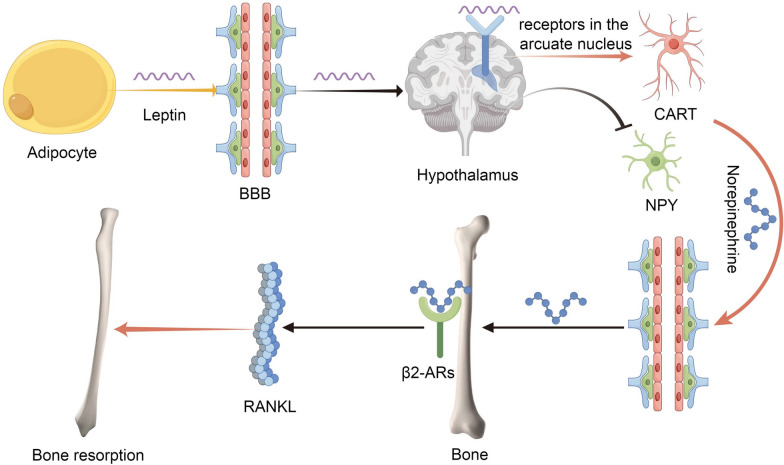
“…of leptin on bone mass are primarily mediated through the SNS, with increased leptin signaling in the hypothalamus resulting in enhanced sympathetic outflow to the skeleton and subsequent activation of β2-ARs on osteoblasts, leading to decreased bone formation and increased bone resorption [6].”
BackgroundLeptin regulation of bone resorption by the sympathetic nervous system and CART
Elefteriou, F., Ahn, J. D., Takeda, S., Starbuck, M., Yang, X., Liu, X., Kondo, H., Richards, W. G., Bannon, T. W., Noda, M., et al. (2005) · Nature · doi:10.1038/nature03398 · Cited by 1,311 · cited 5×
“CART is an anorexigenic neuropeptide expressed in the hypothalamus and peripheral tissues, and has been implicated in the regulation of bone metabolism through both central and peripheral mechanisms [5].”
BackgroundInfluentialBone Morphogenetic Protein (BMP) signaling in development and human diseases
Wang, R. N., Green, J., Wang, Z., Deng, Y., Qiao, M., Peabody, M., Zhang, Q., Ye, J., Yan, Z., Denduluri, S., et al. (2014) · Genes & Diseases · doi:10.1016/j.gendis.2014.07.005 · Cited by 1,031 · cited 1×
“…tissues of AD patients and animal models, the expression of BMP2, BMP4 and BMP6 was up-regulated, while the expression of BMP9 was down-regulated, etc. BMPs can be involved in the pathogenesis of AD by regulating inflammatory response, oxidative stress, Aβ metabolism and other mechanisms [80].”
BackgroundMechanisms of Disease: is osteoporosis the obesity of bone?
Rosen, C. J., & Bouxsein, M. L. (2006) · Nature Clinical Practice Rheumatology · doi:10.1038/ncprheum0070 · Cited by 956 · cited 1×
“…of the sympathetic nervous system (SNS) in bone metabolism is supported by clinical evidence, as evidenced by studies linking conditions marked by heightened sympathetic activity, such as reflex sympathetic dystrophy and postmenopausal osteoporosis, with decreased bone mineral density [24, 25].”
BackgroundMaradit‐Kremers, H., Crowson, C. S., Nicola, P. J., Ballman, K. V., Roger, V. L., Jacobsen, S. J., & Gabriel, S. E. (2005) · Arthritis & Rheumatism · doi:10.1002/art.20853 · Cited by 927 · cited 1×
“The role of the PNS in bone metabolism is further supported by clinical observations of increased fracture risk in patients with conditions characterized by parasympathetic dysfunction, such as diabetes mellitus and inflammatory bowel disease [33, 34].”
BackgroundLeptin Differentially Regulates NPY and POMC Neurons Projecting to the Lateral Hypothalamic Area
Elias, C. F., Aschkenasi, C., Lee, C., Kelly, J., Ahima, R. S., Bjorbæk, C., Flier, J. S., Saper, C. B., & Elmquist, J. K. (1999) · Neuron · doi:10.1016/s0896-6273(01)80035-0 · Cited by 924 · cited 2×
“Leptin crosses the blood–brain barrier and binds to its receptors in the arcuate nucleus of the hypothalamus, leading to the activation of anorexigenic neurons expressing pro-opiomelanocortin (POMC) and CART, while suppressing orexigenic neurons expressing NPY and agouti-related peptide (AgRP) [22].”
BackgroundLrp5 Controls Bone Formation by Inhibiting Serotonin Synthesis in the Duodenum
Yadav, V. K., Ryu, J.-H., Suda, N., Tanaka, K. F., Gingrich, J. A., Schütz, G., Glorieux, F. H., Chiang, C. Y., Zajac, J. D., Insogna, K. L., et al. (2008) · Cell · doi:10.1016/j.cell.2008.09.059 · Cited by 834 · cited 1×
“Mice lacking tryptophan hydroxylase 1 (Tph1), the key enzyme in peripheral serotonin production, display a reduced bone mass phenotype, underscoring the significance of peripheral serotonin signaling in the regulation of skeletal equilibrium [56].”
BackgroundMolecular mechanisms of neurodegeneration in Alzheimer's disease
Crews, L., & Masliah, E. (2010) · Human Molecular Genetics · doi:10.1093/hmg/ddq160 · Cited by 772 · cited 1×
“BMPs and their signaling pathways are abnormally regulated in neurodegenerative diseases such as AD and Parkinson’s disease (PD) [79].”
BackgroundBone morphogenetic proteins: a critical review
Bragdon, B., Moseychuk, O., Saldanha, S., King, D., Julian, J., & Nohe, A. (2011) · Cellular Signalling · doi:10.1016/j.cellsig.2010.10.003 · Cited by 691 · cited 1×
“BMP6 levels in peripheral blood of patients with depression were reduced and negatively correlated with the severity of depressive symptoms [86].”
BackgroundGeorges, G. T., Nájera, O., Sowers, K., & Sowers, J. R. (2017) · Cardiorenal Medicine · doi:10.1159/000449476 · Cited by 680
Yadav, V. K., Oury, F., Suda, N., Liu, Z.-W., Gao, X.-B., Confavreux, C., Klemenhagen, K. C., Tanaka, K. F., Gingrich, J. A., Guo, X. E., et al. (2009) · Cell · doi:10.1016/j.cell.2009.06.051 · Cited by 661 · cited 1×
“Mice with a conditional deletion of tryptophan hydroxylase 2 (Tph2), the key enzyme in central serotonin synthesis, display a phenotype characterized by increased bone mass, further corroborating the detrimental role of serotonin in bone metabolism [55].”
BackgroundOsteopontin: A Multifunctional Molecule Regulating Chronic Inflammation and Vascular Disease
Scatena, M., Liaw, L., & Giachelli, C. M. (2007) · Arteriosclerosis, Thrombosis, and Vascular Biology · doi:10.1161/atvbaha.107.144824 · Cited by 644 · cited 1×
“OPN is a phosphorylated glycoprotein that is expressed in osteoblasts, macrophages and activated T cells, and is involved in bone remodeling, inflammation and tissue repair, etc. [111].”
BackgroundFibroblast Growth Factor 23 Is a Counter-Regulatory Phosphaturic Hormone for Vitamin D
Liu, S., Tang, W., Zhou, J., Stubbs, J. R., Luo, Q., Pi, M., & Quarles, L. D. (2006) · Journal of the American Society of Nephrology · doi:10.1681/asn.2005111185 · Cited by 642 · cited 1×
“FGF23 has been shown to cross the blood–brain barrier and bind to FGF receptors (FGFRs) expressed in various regions of the brain, including the hippocam - pus, cortex, and hypothalamus [71].”
BackgroundMicropillar arrays as a high-throughput screening platform for therapeutics in multiple sclerosis
Mei, F., Fancy, S. P. J., Shen, Y.-A. A., Niu, J., Zhao, C., Presley, B., Miao, E., Lee, S., Mayoral, S. R., Redmond, S. A., et al. (2014) · Nature Medicine · doi:10.1038/nm.3618 · Cited by 590 · cited 1×
“Multiple sclerosis (MS) is a chronic inflammatory demy-elinating disease characterized by scattered demyelinating plaques and axonal degeneration in the central nervous system [108].”
BackgroundThe contribution of bone to whole-organism physiology
Karsenty, G., & Ferron, M. (2012) · Nature · doi:10.1038/nature10763 · Cited by 537 · cited 2×
“However, recent studies have revealed that osteocalcin also functions as a hormone, regulating glucose and energy metabolism, and influencing brain function and behavior [9].”
BackgroundMaternal and Offspring Pools of Osteocalcin Influence Brain Development and Functions
Oury, F., Khrimian, L., Denny, C. A., Gardin, A., Chamouni, A., Goeden, N., Huang, Y.-Y., Lee, H., Srinivas, P., Gao, X.-B., et al. (2013) · Cell · doi:10.1016/j.cell.2013.08.042 · Cited by 484 · cited 3×
“Conversely, bone-derived factors, such as osteocalcin [10, 11] and fibroblast growth factor 23 (FGF23) [12, 13], have been shown to influence brain function and behavior, crossing the blood–brain barrier and modulating cognitive processes, memory, and mood.”
BackgroundLeptin directly regulates bone cell function in vitro and reduces bone fragility in vivo
Cornish, J., Callon, K., Bava, U., Lin, C., Naot, D., Hill, B., Grey, A., Broom, N., Myers, D., Nicholson, G., et al. (2002) · Journal of Endocrinology · doi:10.1677/joe.0.1750405 · Cited by 472 · cited 1×
“Interestingly, the peripheral effects of leptin on bone appear to be opposite to its central effects, with direct stimulation of osteoblast differentiation and bone formation, and inhibition of osteoclastogenesis [36].”
BackgroundTumor necrosis factor-α: molecular and cellular mechanisms in skeletal pathology
Nanes, M. S. (2003) · Gene · doi:10.1016/s0378-1119(03)00841-2 · Cited by 440 · cited 1×
“Dysregulation of the signaling pathways involved in this complex system may contribute to the pathogenesis of conditions such as osteoporosis, fractures [14, 15], Alzheimer’s disease (AD) [16, 17], and depression [18, 19].”
BackgroundEstrogen and bone health in men and women
Cauley, J. A. (2015) · Steroids · doi:10.1016/j.steroids.2014.12.010 · Cited by 424 · cited 1×
“Dysregulation of the signaling pathways involved in this complex system may contribute to the pathogenesis of conditions such as osteoporosis, fractures [14, 15], Alzheimer’s disease (AD) [16, 17], and depression [18, 19].”
BackgroundSema3A regulates bone-mass accrual through sensory innervations
Fukuda, T., Takeda, S., Xu, R., Ochi, H., Sunamura, S., Sato, T., Shibata, S., Yoshida, Y., Gu, Z., Kimura, A., et al. (2013) · Nature · doi:10.1038/nature12115 · Cited by 415 · cited 1×
“This emerging area of investigation reveals a bidirectional communication network between the brain and bone, thereby questioning the conventional understanding of the skeleton solely as a structural support system and calcium reservoir [3, 4].”
BackgroundBrennan, M. Á., Layrolle, P., & Mooney, D. J. (2020) · Advanced Functional Materials · doi:10.1002/adfm.201909125 · Cited by 396 · cited 1×
“There is increasing evidence that GHRP and its signaling pathway are closely related to osteoporosis, osteoarthritis and other bone diseases [44].”
BackgroundReactive astrocytes secrete lcn2 to promote neuron death
Bi, F., Huang, C., Tong, J., Qiu, G., Huang, B., Wu, Q., Li, F., Xu, Z., Bowser, R., Xia, X.-G., et al. (2013) · Proceedings of the National Academy of Sciences · doi:10.1073/pnas.1218497110 · Cited by 371 · cited 1×
“In PD animal model and dopaminergic neuron cell model, LCN2 induced inflammatory factors (e.g., TNF-α and IL-1β) and ROS production by activating the NF-κB pathway, causing neuroinflammatory responses and oxidative stress damage, and ultimately leading to apoptosis of dopaminergic neurons [95].”
BackgroundMombereau, C., Kaupmann, K., Froestl, W., Sansig, G., van der Putten, H., & Cryan, J. F. (2004) · Neuropsychopharmacology · doi:10.1038/sj.npp.1300413 · Cited by 350 · cited 1×
“Moreover, mice lacking GABAB receptors specifically in osteoblasts exhibit a low bone mass phenotype, highlighting the importance of peripheral GABA signaling in maintaining skeletal homeostasis [66].”
BackgroundHypothalamic Y2 receptors regulate bone formation
Baldock, P. A., Sainsbury, A., Couzens, M., Enriquez, R. F., Thomas, G. P., Gardiner, E. M., & Herzog, H. (2002) · Journal of Clinical Investigation · doi:10.1172/jci0214588 · Cited by 349 · cited 1×
“NPY is an orexigenic neuropeptide expressed in the hypothalamus and peripheral nervous system, and has been implicated in the regulation of bone metabolism through both central and peripheral mechanisms [37].”
BackgroundUse of β-Blockers and Risk of Fractures
Schlienger, R. G. (2004) · JAMA · doi:10.1001/jama.292.11.1326 · Cited by 343
Masuyama, R., Stockmans, I., Torrekens, S., Van Looveren, R., Maes, C., Carmeliet, P., Bouillon, R., & Carmeliet, G. (2006) · Journal of Clinical Investigation · doi:10.1172/jci29463 · Cited by 331 · cited 1×
“Conversely, bone-derived factors, such as osteocalcin [10, 11] and fibroblast growth factor 23 (FGF23) [12, 13], have been shown to influence brain function and behavior, crossing the blood–brain barrier and modulating cognitive processes, memory, and mood.”
BackgroundOsteoporosis and sarcopenia in older age
Edwards, M. H., Dennison, E. M., Aihie Sayer, A., Fielding, R., & Cooper, C. (2015) · Bone · doi:10.1016/j.bone.2015.04.016 · Cited by 320 · cited 1×
“These findings suggest that an imbalance between the SNS and PNS may contribute to skeletal pathology, and highlight the potential therapeutic value of targeting the PNS in the management of bone disorders [35].”
BackgroundGhrelin Directly Regulates Bone Formation
Fukushima, N., Hanada, R., Teranishi, H., Fukue, Y., Tachibana, T., Ishikawa, H., Takeda, S., Takeuchi, Y., Fukumoto, S., Kangawa, K., et al. (2005) · Journal of Bone and Mineral Research · doi:10.1359/jbmr.041237 · Cited by 319 · cited 1×
“GHRP is mainly synthesized and secreted by neuroendocrine cells such as the arcuate hypothalamic nucleus, and binds to the GH secretion receptor (GHS-R) to stimulate the pulsatile release of GH, thereby regulating bone metabolism and bone remodeling [43].”
BackgroundGpr158 mediates osteocalcin’s regulation of cognition
Khrimian, L., Obri, A., Ramos-Brossier, M., Rousseaud, A., Moriceau, S., Nicot, A.-S., Mera, P., Kosmidis, S., Karnavas, T., Saudou, F., et al. (2017) · Journal of Experimental Medicine · doi:10.1084/jem.20171320 · Cited by 308
Skeletal secretion of FGF-23 regulates phosphate and vitamin D metabolism
Quarles, L. D. (2012) · Nature Reviews Endocrinology · doi:10.1038/nrendo.2011.218 · Cited by 269 · cited 1×
“FGF23 is secreted primarily by osteocytes and osteoblasts in response to increased serum phosphate levels, and acts on the kidneys to promote phosphate excretion and suppress vitamin D synthesis [70].”
BackgroundHinoi, E., Gao, N., Jung, D. Y., Yadav, V., Yoshizawa, T., Myers, M. G., Chua, S. C., Kim, J. K., Kaestner, K. H., & Karsenty, G. (2008) · The Journal of Cell Biology · doi:10.1083/jcb.200809113 · Cited by 267 · cited 1×
“…hormone (TRH) and angiotensin II (AngII) are important components of the hypothalamic neuroendocrine system, and play key roles in bone metabolism homeostasis and the development of bone-originated diseases through the regulation of downstream hormone secretion and autonomic activity [48].”
BackgroundGlutamate signaling in peripheral tissues
Hinoi, E., Takarada, T., Ueshima, T., Tsuchihashi, Y., & Yoneda, Y. (2004) · European Journal of Biochemistry · doi:10.1046/j.1432-1033.2003.03907.x · Cited by 240 · cited 1×
“Glutamate is the primary excitatory neurotransmitter in the CNS and has been implicated in the regulation of bone metabolism through both central and peripheral mechanisms [60].”
BackgroundThe two faces of serotonin in bone biology
Ducy, P., & Karsenty, G. (2010) · Journal of Cell Biology · doi:10.1083/jcb.201006123 · Cited by 210 · cited 1×
“Serotonin (5-hydroxytryptamine, 5-HT) is a monoamine neurotransmitter involved in the regulation of mood, appetite, and sleep, and has been shown to play a complex role in the regulation of bone metabolism, with distinct central and peripheral effects [54].”
BackgroundLipocalin 2: Novel component of proinflammatory signaling in Alzheimer's disease
Naudé, P. J. W., Nyakas, C., E. Eiden, L., Ait‐Ali, D., van der Heide, R., Engelborghs, S., Luiten, P. G. M., De Deyn, P. P., den Boer, J. A., & Eisel, U. L. M. (2012) · The FASEB Journal · doi:10.1096/fj.11-202457 · Cited by 209 · cited 1×
“Several studies have found that the levels of LCN2 in brain tissue, cerebrospinal fluid (CSF) and serum of AD patients are significantly higher than those of normal controls, suggesting that LCN2 may be involved in the pathogenesis of AD [90].”
BackgroundCentral control of bone remodeling by neuromedin U
Sato, S., Hanada, R., Kimura, A., Abe, T., Matsumoto, T., Iwasaki, M., Inose, H., Ida, T., Mieda, M., Takeuchi, Y., et al. (2007) · Nature Medicine · doi:10.1038/nm1640 · Cited by 206 · cited 3×
“Conversely, bone-derived factors, such as osteocalcin [10, 11] and fibroblast growth factor 23 (FGF23) [12, 13], have been shown to influence brain function and behavior, crossing the blood–brain barrier and modulating cognitive processes, memory, and mood.”
BackgroundBottini, M., Mebarek, S., Anderson, K. L., Strzelecka-Kiliszek, A., Bozycki, L., Simão, A. M. S., Bolean, M., Ciancaglini, P., Pikula, J. B., Pikula, S., et al. (2018) · Biochimica et Biophysica Acta (BBA) - General Subjects · doi:10.1016/j.bbagen.2017.11.005 · Cited by 204 · cited 1×
“…(OPN), Osteoprotegerin (OPG), Periostin (POSTN) and Dickkopf-1 (DKK1) are newly discovered bone-derived factors associated with neurological disorders, which have been shown to play important roles in various neurodegenerative diseases, cerebrovascular diseases and neurological injuries [110].”
BackgroundPhosphorylation of ULK1 by AMPK regulates translocation of ULK1 to mitochondria and mitophagy
Tian, W., Li, W., Chen, Y., Yan, Z., Huang, X., Zhuang, H., Zhong, W., Chen, Y., Wu, W., Lin, C., et al. (2015) · FEBS Letters · doi:10.1016/j.febslet.2015.05.020 · Cited by 199 · cited 1×
“Abnormalities in the signaling pathway of BMPs can lead to a series of neurodevelopmental disorders, such as spina bifida, microcephaly and other congenital diseases [78].”
BackgroundThe RANK–RANKL–OPG System: A Multifaceted Regulator of Homeostasis, Immunity, and Cancer
León-Oliva, D. D., Barrena-Blázquez, S., Jiménez-Álvarez, L., Fraile‐Μartinez, O., Montero, C. G., López-González, L., Torres‐Carranza, D., García-Puente, L. M., Carranza, S. T., Álvarez-Mon, M. Á., et al. (2023) · Medicina · doi:10.3390/medicina59101752 · Cited by 196 · cited 1×
“OPG is a member of the soluble tumor necrosis factor receptor superfamily, which is expressed in osteoblasts and inhibits osteoclast differentiation and bone resorption by blocking the binding of RANKL to the osteoclast membrane surface receptor RANK [113].”
BackgroundSkeletal parasympathetic innervation communicates central IL-1 signals regulating bone mass accrual
Bajayo, A., Bar, A., Denes, A., Bachar, M., Kram, V., Attar-Namdar, M., Zallone, A., Kovács, K. J., Yirmiya, R., & Bab, I. (2012) · Proceedings of the National Academy of Sciences · doi:10.1073/pnas.1206061109 · Cited by 194 · cited 1×
“However, emerging evidence suggests that the PNS also plays a role in the regulation of bone remodeling, counterbalancing the catabolic effects of the SNS [28].”
BackgroundMucha, M., Skrzypiec, A. E., Schiavon, E., Attwood, B. K., Kucerova, E., & Pawlak, R. (2011) · Proceedings of the National Academy of Sciences · doi:10.1073/pnas.1107936108 · Cited by 189 · cited 1×
“Knockdown of LCN2 gene or administration of LCN2-neutralizing antibody alleviated depressive behavior, increased hippocampal neurogenesis, and improved stress responsiveness in mice [99].”
BackgroundGenetic determination of the cellular basis of the sympathetic regulation of bone mass accrual
Kajimura, D., Hinoi, E., Ferron, M., Kode, A., Riley, K. J., Zhou, B., Guo, X. E., & Karsenty, G. (2011) · Journal of Experimental Medicine · doi:10.1084/jem.20102608 · Cited by 187 · cited 1×
“Activation of β2-ARs on osteoblasts results in the down-regulation of osteoblast proliferation and differentiation, while simultaneously up-regulating the expression of receptor activator of nuclear factor-κB ligand (RANKL) [20].”
BackgroundMolecular biomarkers for vascular cognitive impairment and dementia
Hosoki, S., Hansra, G. K., Jayasena, T., Poljak, A., Mather, K. A., Catts, V. S., Rust, R., Sagare, A. P., Kovacic, J. C., Brodtmann, A. G., et al. (2023) · Nature Reviews Neurology · doi:10.1038/s41582-023-00884-1 · Cited by 185 · cited 1×
“Vascular cognitive impairment (VCI) is a cognitive dysfunction caused by cerebrovascular lesions, and is one of the main types of dementia in old age [104].”
BackgroundDorsal–ventral patterning of the neural tube: A tale of three signals
Le Dréau, G., & Martí, E. (2012) · Developmental Neurobiology · doi:10.1002/dneu.22015 · Cited by 179 · cited 1×
“BMPs are involved in the development of central nervous system by regulating the proliferation, differentiation and apoptosis of neural stem cells [77].”
BackgroundFrom the periphery to the brain: Lipocalin-2, a friend or foe?
Ferreira, A. C., Dá Mesquita, S., Sousa, J. C., Correia-Neves, M., Sousa, N., Palha, J. A., & Marques, F. (2015) · Progress in Neurobiology · doi:10.1016/j.pneurobio.2015.06.005 · Cited by 179 · cited 1×
“…also known as neutrophil gelatinase-associated lipocalin (NGAL), is a lipid-transporting protein secreted by a variety of tissue cells, including bone tissues, and plays an important role in pathological processes, such as inflammatory responses, iron homeostasis regulation and organ damage [89].”
BackgroundActivation of Renin-Angiotensin System Induces Osteoporosis Independently of Hypertension
Asaba, Y., Ito, M., Fumoto, T., Watanabe, K., Fukuhara, R., Takeshita, S., Nimura, Y., Ishida, J., Fukamizu, A., & Ikeda, K. (2009) · Journal of Bone and Mineral Research · doi:10.1359/jbmr.081006 · Cited by 173 · cited 1×
“…HPA axis, and increase the level of glucocorticoid hormone through the AT1 receptor; on the other hand, it can activate the sympathetic nervous system and promote the release of catecholamines such as norepinephrine, and finally cause osteogenesis inhibition and bone resorption hyperactivity [52].”
BackgroundSclerostin and DKK1: new players in renal bone and vascular disease
Evenepoel, P., D’Haese, P. C., & Brandenburg, V. M. (2015) · Kidney International · doi:10.1038/ki.2015.156 · Cited by 170 · cited 1×
“Sclerostin (SOST), a glycoprotein secreted by osteoblasts, is an important negative regulator of the Wnt/β-catenin signaling pathway and plays a key role in bone metabolism and skeletal diseases such as osteoporosis [100].”
BackgroundThyroid Hormone Excess Rather Than Thyrotropin Deficiency Induces Osteoporosis in Hyperthyroidism
Bassett, J. H. D., O’Shea, P. J., Sriskantharajah, S., Rabier, B., Boyde, A., Howell, P. G. T., Weiss, R. E., Roux, J.-P., Malaval, L., Clement-Lacroix, P., et al. (2007) · Molecular Endocrinology · doi:10.1210/me.2007-0033 · Cited by 167 · cited 1×
“TRH is secreted by the paraventricular nucleus of the hypothalamus and indirectly regulates bone metabolism by stimulating TSH secretion from the pituitary gland and promoting the synthesis and release of thyroid hormones [50].”
BackgroundMediation of the Acute Stress Response by the Skeleton
Berger, J. M., Singh, P., Khrimian, L., Morgan, D. A., Chowdhury, S., Arteaga-Solis, E., Horvath, T. L., Domingos, A. I., Marsland, A. L., Yadav, V. K., et al. (2019) · Cell Metabolism · doi:10.1016/j.cmet.2019.08.012 · Cited by 167 · cited 1×
“…osteoc-alcin has also been implicated in the regulation of mood and stress response. ucOC has been shown to stimulate the synthesis of monoamine neurotransmitters, such as serotonin, dopamine, and norepinephrine, in the brain, which play crucial roles in the regulation of emotional states [68].”
BackgroundNeuronal Production of Lipocalin-2 as a Help-Me Signal for Glial Activation
Xing, C., Wang, X., Cheng, C., Montaner, J., Mandeville, E., Leung, W., van Leyen, K., Lok, J., Wang, X., & Lo, E. H. (2014) · Stroke · doi:10.1161/strokeaha.114.005733 · Cited by 165 · cited 1×
“LCN2 induces neuronal apoptosis by promoting iron accumulation, exacerbating lipid peroxidation and mitochondrial dysfunction [97].”
BackgroundJin, M., Kim, J.-H., Jang, E., Lee, Y. M., Han, H. S., Woo, D. K., Park, D. H., Kook, H., & Suk, K. (2014) · Journal of Cerebral Blood Flow & Metabolism · doi:10.1038/jcbfm.2014.83 · Cited by 161 · cited 1×
“After cerebral ischemia, LCN2 expression was rapidly induced in peri-infarct tissues and increased with the extent of infarction and neurological deficit, suggesting that LCN2 is involved in ischemic injury [96].”
BackgroundPeriostin in inflammation and allergy
Izuhara, K., Nunomura, S., Nanri, Y., Ogawa, M., Ono, J., Mitamura, Y., & Yoshihara, T. (2017) · Cellular and Molecular Life Sciences · doi:10.1007/s00018-017-2648-0 · Cited by 159 · cited 1×
“POSTN is a secreted extracellular matrix protein that is expressed in osteoblasts, fibroblasts and smooth muscle cells, and is involved in tissue development and injury repair [115].”
BackgroundA novel role for osteopontin in macrophage-mediated amyloid-β clearance in Alzheimer’s models
Rentsendorj, A., Sheyn, J., Fuchs, D.-T., Daley, D., Salumbides, B. C., Schubloom, H. E., Hart, N. J., Li, S., Hayden, E. Y., Teplow, D. B., et al. (2018) · Brain, Behavior, and Immunity · doi:10.1016/j.bbi.2017.08.019 · Cited by 141 · cited 1×
“It is linked to neurodegenerative and inflammatory diseases such as AD, PD, ALS, and MS, potentially impacting disease progression through its role in inflammation, oxidative stress, blood–brain barrier integrity, and Aβ clearance [112].”
BackgroundDepression and osteoporosis: epidemiology and potential mediating pathways
Mezuk, B., Eaton, W. W., & Golden, S. H. (2008) · Osteoporosis International · doi:10.1007/s00198-007-0449-2 · Cited by 134 · cited 1×
“Dysregulation of the signaling pathways involved in this complex system may contribute to the pathogenesis of conditions such as osteoporosis, fractures [14, 15], Alzheimer’s disease (AD) [16, 17], and depression [18, 19].”
BackgroundAsmus, S. E., Parsons, S., & Landis, S. C. (2000) · The Journal of Neuroscience · doi:10.1523/jneurosci.20-04-01495.2000 · Cited by 132 · cited 1×
“The PNS innervates bone tissue, with cholinergic nerve fibers expressing the neurotransmitter acetylcholine (ACh) in close proximity to bone cells [29].”
BackgroundThe relevance of ‘mixed anxiety and depression’ as a diagnostic category in clinical practice
Möller, H.-J., Bandelow, B., Volz, H.-P., Barnikol, U. B., Seifritz, E., & Kasper, S. (2016) · European Archives of Psychiatry and Clinical Neuroscience · doi:10.1007/s00406-016-0684-7 · Cited by 127 · cited 1×
“On the contrary, knockdown of LCN2 gene or administration of LCN2-neutralizing antibody attenuated cognitive dysfunction, Aβ deposition and Tau pathology in AD mice [93].”
BackgroundThe Central Nervous System and Bone Metabolism: An Evolving Story
Dimitri, P., & Rosen, C. J. (2016) · Calcified Tissue International · doi:10.1007/s00223-016-0179-6 · Cited by 127 · cited 1×
“The traditional perspective of the skeletal system and the central nervous system (CNS) as distinct entities with separate functions within the human body has been challenged by recent advancements in research, leading to the recognition of a new field of study known as the brain– bone axis [1, 2].”
BackgroundShi, Y., Oury, F., Yadav, V. K., Wess, J., Liu, X. S., Guo, X. E., Murshed, M., & Karsenty, G. (2010) · Cell Metabolism · doi:10.1016/j.cmet.2010.01.005 · Cited by 126 · cited 1×
“Conversely, pharmacological or surgical disruption of vagal signaling resulted in decreased bone mass and increased bone resorption [32].”
BackgroundThe Effect of Leptin on Bone - an Evolving Concept of Action
Cirmanová, V, Bayer, M., Stárka, L., & Zajíčková, K. (2008) · Physiological Research · doi:10.33549/physiolres.931499 · Cited by 123
Pathogenic Upregulation of Glial Lipocalin-2 in the Parkinsonian Dopaminergic System
Kim, B.-W., Jeong, K. H., Kim, J.-H., Jin, M., Kim, J.-H., Lee, M.-G., Choi, D.-K., Won, S.-Y., McLean, C., Jeon, M.-T., et al. (2016) · The Journal of Neuroscience · doi:10.1523/jneurosci.4261-15.2016 · Cited by 117 · cited 1×
“Serum and cerebrospinal fluid levels of LCN2 were significantly elevated in PD patients and positively correlated with the degree of motor dysfunction, suggesting that LCN2 is involved in the pathogenesis of PD [94].”
BackgroundGut microbiota and bone metabolism
Lu, L., Chen, X., Liu, Y., & Yu, X. (2021) · The FASEB Journal · doi:10.1096/fj.202100451r · Cited by 115
Jovanovic, V. M., Salti, A., Tilleman, H. G., Zega, K., Jukić, M. M., Zou, H., Friedel, R. H., Prakash, N., Blaess, S., Edenhofer, F., et al. (2018) · Journal of Neuroscience · doi:10.1523/jneurosci.1540-17.2018 · Cited by 103 · cited 1×
“In PD, the expression of BMP2 and BMP7 was down-regulated, and exogenous BMP7 administration was able to protect midbrain dopaminergic neurons and improve the motor function of PD animal models [82].”
BackgroundHypothalamic regulation of bone
Drießler, F., & Baldock, P. A. J. (2010) · Journal of Molecular Endocrinology · doi:10.1677/jme-10-0015 · Cited by 102 · cited 1×
“The CNS exerts significant control over bone remodeling through various neural pathways, including the sympathetic nervous system [5, 6], hypothalamic neuropeptides [7, 8], and neuro-transmitters [9].”
BackgroundBliziotes, M. (2010) · The Journal of Clinical Endocrinology & Metabolism · doi:10.1210/jc.2010-0861 · Cited by 99 · cited 1×
“Dopamine is a catecholamine neurotransmitter involved in the regulation of movement, reward, and motivation, and has been implicated in the regulation of bone metabolism through both central and peripheral mechanisms [57].”
BackgroundLipocalin-2 is involved in emotional behaviors and cognitive function
Ferreira, A. (2013) · Frontiers in Cellular Neuroscience · doi:10.3389/fncel.2013.00122 · Cited by 98 · cited 1×
“LCN2 is abnormally expressed in depression, bipolar disorder, schizophrenia and other mental diseases [98].”
BackgroundPrenatal Methamphetamine Exposure and Short-Term Maternal and Infant Medical Outcomes
Shah, R., Diaz, S. D., Arria, A. M., LaGasse, L. L., Derauf, C., Newman, E., Smith, L. M., Huestis, M. A., Haning, W., Strauss, A. A., et al. (2012) · American Journal of Perinatology · doi:10.1055/s-0032-1304818 · Cited by 97 · cited 1×
“Dysregulation of the signaling pathways involved in this complex system may contribute to the pathogenesis of conditions such as osteoporosis, fractures [14, 15], Alzheimer’s disease (AD) [16, 17], and depression [18, 19].”
BackgroundNew Treatments for Reflex Sympathetic Dystrophy
Schwartzman, R. J. (2000) · New England Journal of Medicine · doi:10.1056/nejm200008313430911 · Cited by 97 · cited 1×
“…of the sympathetic nervous system (SNS) in bone metabolism is supported by clinical evidence, as evidenced by studies linking conditions marked by heightened sympathetic activity, such as reflex sympathetic dystrophy and postmenopausal osteoporosis, with decreased bone mineral density [24, 25].”
BackgroundMicroglial Function in the Effects of Early-Life Stress on Brain and Behavioral Development
Catale, C., Gironda, S., Lo Iacono, L., & Carola, V. (2020) · Journal of Clinical Medicine · doi:10.3390/jcm9020468 · Cited by 97 · cited 1×
“In animal studies, chronic stress-induced microglia activation and neuronal damage through up-regulation of BMP4, leading to depressive behaviors, while BMP7 counteracted stress-induced neurodevelop - mental abnormalities and depressive phenotypes [87].”
BackgroundSato, T., Abe, T., Chida, D., Nakamoto, N., Hori, N., Kokabu, S., Sakata, Y., Tomaru, Y., Iwata, T., Usui, M., et al. (2010) · FEBS Letters · doi:10.1016/j.febslet.2010.01.001 · Cited by 93 · cited 1×
“ACh has been shown to exert anabolic effects on the skeleton by binding to nicotinic acetylcholine receptors (nAChRs) expressed on osteoblasts, promoting their proliferation and differentiation [30].”
BackgroundBliziotes, M. M., McLoughlin, S. W., Gunness, M. E., Fumagalli, F., Jones, S. R., & Caron, M. G. (2000) · Bone · doi:10.1016/s8756-3282(99)00232-x · Cited by 85 · cited 1×
“Mice lacking dopamine transporter (DAT), which results in increased dopamine levels in the brain, exhibit a low bone mass phenotype, further supporting the catabolic role of central dopamine signaling in bone metabolism [58].”
BackgroundNeuropeptide Y Attenuates Stress-Induced Bone Loss Through Suppression of Noradrenaline Circuits
Baldock, P., Lin, S., Zhang, L., Karl, T., Shi, Y., Driessler, F., Zengin, A., Hörmer, B., Lee, N., Wong, I., et al. (2014) · Journal of Bone and Mineral Research · doi:10.1002/jbmr.2205 · Cited by 81 · cited 1×
“In contrast, peripheral NPY signaling has been shown to have an anabolic effect on bone, with NPY receptors (particularly Y1 and Y2 receptors) expressed on osteoblasts and osteoclasts [38].”
BackgroundLipocalin 2 modulates the cellular response to amyloid beta
Mesquita, S. D., Ferreira, A. C., Falcão, A. M., Sousa, J. C., Oliveira, T. G., Correia‐Neves, M., Sousa, N., Marques, F., & Palha, J. A. (2014) · Cell Death and Differentiation · doi:10.1038/cdd.2014.68 · Cited by 77 · cited 1×
“…production and aggregation of β-amyloid (Aβ), accelerating the pathological process of AD; (5) LCN2 induces the over-phos-phorylation of Tau protein through the promotion of iron accumulation and oxidative stress, and the formation of neurofibrillary tangles, which leads to neuronal damage [92].”
BackgroundENDOCRINOLOGY AND ADOLESCENCE: Deciphering puberty: novel partners, novel mechanisms
Tena-Sempere, M. (2012) · European Journal of Endocrinology · doi:10.1530/eje-12-0669 · Cited by 76 · cited 1×
“In recent years, it has been found that TRH can stimulate the activity of downstream Kiss1 neurons through the hypothalamic TRH receptor (TRHR), promote the function of gon-adotropic axis and increase the level of sex hormones, thus directly affecting the bone metabolism [51].”
BackgroundDopamine D2-like receptor signaling suppresses human osteoclastogenesis
Hanami, K., Nakano, K., Saito, K., Okada, Y., Yamaoka, K., Kubo, S., Kondo, M., & Tanaka, Y. (2013) · Bone · doi:10.1016/j.bone.2013.04.019 · Cited by 68 · cited 1×
“Moreover, mice lacking D2 receptors exhibit a low bone mass phenotype, highlighting the importance of peripheral dopamine signaling in maintaining skeletal homeostasis [59].”
BackgroundZhao, X., Huang, X., Yang, C., Jiang, Y., Zhou, W., & Zheng, W. (2022) · International Journal of Molecular Sciences · doi:10.3390/ijms23116354 · Cited by 67 · cited 1×
“SOST activates the TLR4/NF-κB pathway and induces the release of inflammatory factors and reactive oxygen species, leading to secondary brain injury [107].”
BackgroundThe role of glutamate in the regulation of bone mass and architecture.
Skerry, T. M. (2008) · PubMed · Cited by 63
Delhanty, P. J. D., van der Eerden, B. C. J., & van Leeuwen, J. P. T. M. (2013) · BioFactors · doi:10.1002/biof.1120 · Cited by 62 · cited 1×
“In osteoporosis, GHRP can reduce bone loss by promoting the proliferation and differentiation of osteoblasts, inhibiting osteoclast activity, and improving bone marrow fat infiltration, etc. [45].”
BackgroundDekens, D. W., Naudé, P. J. W., Engelborghs, S., Vermeiren, Y., Dam, D. V., Voshaar, R. C. O., Eisel, U. L. M., & Deyn, P. P. D. (2016) · Journal of Alzheimer s Disease · doi:10.3233/jad-160330 · Cited by 62 · cited 1×
“Brain histological studies showed that LCN2 accumulated abnormally in the brain tissues of AD patients, and co-localized with amyloid plaques and neurofibrillary tangles [91].”
BackgroundBMP9 ameliorates amyloidosis and the cholinergic defect in a mouse model of Alzheimer’s disease
Burke, R. M., Norman, T. A., Haydar, T. F., Slack, B. E., Leeman, S. E., Blusztajn, J. K., & Mellott, T. J. (2013) · Proceedings of the National Academy of Sciences · doi:10.1073/pnas.1319297110 · Cited by 59 · cited 1×
“For example, BMP4 can promote the transformation of microglia to inflammatory phenotype and aggravate the neuroinflammatory response, while BMP9 can inhibit the production and aggregation of Aβ and play a neuroprotective role [81].”
BackgroundSelective binding of the PHD6 finger of MLL4 to histone H4K16ac links MLL4 and MOF
Zhang, Y., Jang, Y., Lee, J., Ahn, J., Xu, L., Holden, M. R., Cornett, E. M., Krajewski, K., Klein, B. J., Wang, S., et al. (2019) · Nature Communications · doi:10.1038/s41467-019-10324-8 · Cited by 58 · cited 1×
“In vivo studies have demonstrated that vagal nerve stimulation (VNS), which activates the PNS, leads to increased bone mass in mice [31].”
BackgroundIneichen, B. V., Kapitza, S., Bleul, C., Good, N., Plattner, P. S., Seyedsadr, M., Kaiser, J., Schneider, M. P., Zörner, B., Martinꝉ, R., et al. (2017) · Acta Neuropathologica · doi:10.1007/s00401-017-1745-3 · Cited by 56 · cited 1×
“…that in a mouse model of experimental autoimmune encephalomyelitis (EAE), SOST was significantly elevated along the course of the disease, and the administration of SOST-neutralizing antibody could delay the onset of EAE and reduce the inflammatory infiltration and demyelinating lesions [109].”
BackgroundAbdolmaleky, H. M., Gower, A. C., Wong, C. K., Cox, J. W., Zhang, X., Thiagalingam, A., Shafa, R., Sivaraman, V., Zhou, J., & Thiagalingam, S. (2018) · American Journal of Medical Genetics Part B Neuropsychiatric Genetics · doi:10.1002/ajmg.b.32691 · Cited by 53 · cited 1×
“Abnormalities in BMPs signaling pathway are associated with depression, schizophrenia, bipolar disorder and other mental diseases [85].”
BackgroundChen, X., Shuman, S. K., Hodges, J. S., Gatewood, L. C., & Xu, J. L. (2010) · Journal of the American Geriatrics Society · doi:10.1111/j.1532-5415.2010.03192.x · Cited by 52 · cited 1×
“Dysregulation of the signaling pathways involved in this complex system may contribute to the pathogenesis of conditions such as osteoporosis, fractures [14, 15], Alzheimer’s disease (AD) [16, 17], and depression [18, 19].”
BackgroundCurrent perspectives on NMDA-type glutamate signalling in bone
Spencer, G. J., McGrath, C. J., & Genever, P. G. (2006) · The International Journal of Biochemistry & Cell Biology · doi:10.1016/j.biocel.2006.11.002 · Cited by 51 · cited 1×
“Moreover, mice lacking the glutamate transporter GLAST, which results in increased glutamate levels in the brain, exhibit a low bone mass phenotype, further supporting the catabolic role of central glutamate signaling in bone metabolism [61].”
BackgroundYako, Y. Y., Guewo‐Fokeng, M., Balti, E. V., Bouatia‐Naji, N., Matsha, T. E., Sobngwi, E., Erasmus, R. T., Echouffo-Tcheugui, J. B., & Kengne, A. P. (2016) · Diabetes Research and Clinical Practice · doi:10.1016/j.diabres.2016.01.003 · Cited by 51 · cited 1×
“It has neuroprotective effects in Alzheimer’s disease, Parkinson’s disease, and cerebral ischemia by preventing neuronal apoptosis, oxidative stress, and inflammation, and maintaining synaptic stability [114].”
BackgroundHigh fat-fed diabetic mice present with profound alterations of the osteocyte network
Mabilleau, G., Perrot, R., Flatt, P. R., Irwin, N., & Chappard, D. (2016) · Bone · doi:10.1016/j.bone.2016.06.008 · Cited by 51 · cited 1×
“The role of the PNS in bone metabolism is further supported by clinical observations of increased fracture risk in patients with conditions characterized by parasympathetic dysfunction, such as diabetes mellitus and inflammatory bowel disease [33, 34].”
BackgroundYorgan, T. A., Peters, S., Jeschke, A., Benisch, P., Jakob, F., Amling, M., & Schinke, T. (2015) · Journal of Bone and Mineral Research · doi:10.1002/jbmr.2461 · Cited by 48 · cited 1×
“CSF and serum SOST levels are significantly higher in AD patients than in normal controls, suggesting that SOST may be involved in the pathogenesis of AD [101].”
BackgroundNeuropeptide Y is a critical modulator of Leptin's regulation of cortical bone
Wong, I. P. L., Nguyen, A., Khor, E. C., Enriquez, R. F., Eisman, J. A., Sainsbury, A., Herzog, H., & Baldock, P. A. J. (2012) · Journal of Bone and Mineral Research · doi:10.1002/jbmr.1786 · Cited by 47 · cited 1×
“The CNS exerts significant control over bone remodeling through various neural pathways, including the sympathetic nervous system [5, 6], hypothalamic neuropeptides [7, 8], and neuro-transmitters [9].”
BackgroundModulation of cognition and anxiety-like behavior by bone remodeling
Khrimian, L., Obri, A., & Karsenty, G. (2017) · Molecular Metabolism · doi:10.1016/j.molmet.2017.10.001 · Cited by 47 · cited 1×
“Conversely, bone-derived factors, such as osteocalcin [10, 11] and fibroblast growth factor 23 (FGF23) [12, 13], have been shown to influence brain function and behavior, crossing the blood–brain barrier and modulating cognitive processes, memory, and mood.”
BackgroundHart, C. G., & Karimi‐Abdolrezaee, S. (2020) · Experimental Neurology · doi:10.1016/j.expneurol.2020.113455 · Cited by 47 · cited 1×
“In addition, several genomic studies in patients with schizophrenia and bipolar disorder have identified abnormalities in genes related to the BMP signaling pathway [88].”
BackgroundSclerostin as a new key factor in vascular calcification in chronic kidney disease stages 3 and 4
Lv, W., Guan, L., Zhang, Y., Yu, S., Cao, B., & Ji, Y. (2016) · International Urology and Nephrology · doi:10.1007/s11255-016-1379-8 · Cited by 46 · cited 1×
“After cerebral ischemia, the expression of SOST was rapidly up-regulated in peri-infarct tissues and increased with the infarct extent and neurological deficit, suggesting that SOST was involved in ischemic brain injury [106].”
BackgroundNPY signalling in early osteoblasts controls glucose homeostasis
Lee, N. J., Nguyen, A., Enriquez, R. F., Luzuriaga, J., Bensellam, M., Laybutt, D. R., Baldock, P. A. J., & Herzog, H. (2015) · Molecular Metabolism · doi:10.1016/j.molmet.2014.12.010 · Cited by 45 · cited 1×
“Furthermore, mice lacking Y1 or Y2 receptors exhibit a low bone mass phenotype, highlighting the importance of peripheral NPY signaling in maintaining skeletal homeostasis [39].”
BackgroundBone morphogenetic protein-7 reduces toxicity induced by high doses of methamphetamine in rodents
Chou, J., Luo, Y., Kuo, C.-C., Powers, K., Shen, H., Harvey, B. K., Hoffer, B. J., & Wang, Y. (2007) · Neuroscience · doi:10.1016/j.neuroscience.2007.10.044 · Cited by 45 · cited 1×
“On the other hand, BMP7 can promote nerve regeneration, enhance proliferation and differentiation of neural stem cells, and improve functional recovery after stroke [84].”
BackgroundFGF-23 Deficiency Impairs Hippocampal-Dependent Cognitive Function
Laszczyk, A. M., Nettles, D., Pollock, T. A., Fox, S., Garcia, M. L., Wang, J., Quarles, L. D., & King, G. D. (2019) · eneuro · doi:10.1523/eneuro.0469-18.2019 · Cited by 45 · cited 1×
“In the hippocampus, FGF23 has been demonstrated to impair synaptic plasticity and cognitive function by reducing the expression of BDNF and other synaptic proteins [72].”
BackgroundBone and bone marrow: The same organ
Fattore, A. D., Capannolo, M., & Rucci, N. (2010) · Archives of Biochemistry and Biophysics · doi:10.1016/j.abb.2010.07.020 · Cited by 43 · cited 1×
“POSTN expression was found to be reduced in cerebrospinal fluid and serum of AD patients, and correlated with the degree of cognitive dysfunction, and POSTN-deficient mice showed accelerated aging, decreased learning and memory ability, and reduced hippocampal neuron density [116].”
BackgroundFunctional GABAB receptors expressed in cultured calvarial osteoblasts
Fujimori, S., Hinoi, E., & Yoneda, Y. (2002) · Biochemical and Biophysical Research Communications · doi:10.1016/s0006-291x(02)00405-9 · Cited by 42 · cited 1×
“Peripheral GABA signaling has also been shown to have an anabolic effect on bone, with GABA receptors (particularly GABAB receptors) expressed on osteoblasts and osteoclasts [65].”
BackgroundAccelerating Accelerometer Research in Aging
Shiroma, E. J., Schrack, J. A., & Harris, T. B. (2018) · The Journals of Gerontology Series A · doi:10.1093/gerona/gly033 · Cited by 39 · cited 1×
“Animal experiments demonstrated that specific overexpression of SOST in AD transgenic mice exacerbated Aβ deposition, Tau protein phosphorylation and neuronal loss, and accelerated the deterioration of cognitive function [102].”
BackgroundCentral genes, pathways and modules that regulate bone mass
Quirós-González, I., & Yadav, V. K. (2014) · Archives of Biochemistry and Biophysics · doi:10.1016/j.abb.2014.06.005 · Cited by 38
Risk and Prevention of Fracture in Patients With Major Medical Illnesses: A Mini-Review
Cummings, S. R., & Eastell, R. (2016) · Journal of Bone and Mineral Research · doi:10.1002/jbmr.3030 · Cited by 35 · cited 1×
“Dysregulation of the signaling pathways involved in this complex system may contribute to the pathogenesis of conditions such as osteoporosis, fractures [14, 15], Alzheimer’s disease (AD) [16, 17], and depression [18, 19].”
BackgroundLessons from Anti-Amyloid-β Immunotherapies in Alzheimer Disease: Aiming at a Moving Target
Wang, Y., Yan, T., Lu, H.-H., Yin, W., Lin, B., Fan, W.-B., Zhang, X., & Fernandez-Funez, P. (2017) · Neurodegenerative Diseases · doi:10.1159/000478741 · Cited by 35 · cited 1×
“SOST activates GSK-3β, which promotes Tau protein hyperphosphorylation and causes neurofibrillary tangles; (4) SOST induces oxidative stress and mitochondrial dysfunction, leading to neuronal apoptosis [103].”
BackgroundNeuronal Control of Bone Remodeling
Corr, A., Smith, J., & Baldock, P. (2017) · Toxicologic Pathology · doi:10.1177/0192623317738708 · Cited by 35 · cited 1×
“These effects are thought to be mediated, at least in part, by CART-induced activation of the SNS, leading to increased β2-AR signaling in osteoblasts and subsequent suppression of bone formation and enhanced bone resorption [40].”
BackgroundEffects of beta-blockers on fracture risk.
Reid, I. R. (2008) · PubMed · Cited by 33
Bone-brain crosstalk and potential associated diseases
Rousseaud, A., Moriceau, S., Ramos-Brossier, M., & Oury, F. (2016) · Hormone Molecular Biology and Clinical Investigation · doi:10.1515/hmbci-2016-0030 · Cited by 33 · cited 1×
“Elevated levels of FGF23 have been associated with increased expression of pro-inflammatory cytokines and reactive oxygen species in the hippocampus and cortex, which may contribute to the pathogenesis of cognitive impairment and neuropsychiatric disorders [74].”
BackgroundMenet, R., Bourassa, P., Calon, F., & ElAli, A. (2020) · Neurochemistry International · doi:10.1016/j.neuint.2020.104881 · Cited by 33 · cited 1×
“Blockade of DKK1 attenuated AD-like cognitive deficits and neuropathological changes [117].”
BackgroundMeCP2 dysfunction prevents proper BMP signaling and neural progenitor expansion in brain organoid
Hong, H., Yoon, S., Park, J. E., Lee, J. I., Kim, H. Y., Nam, H. J., & Cho, H. (2023) · Annals of Clinical and Translational Neurology · doi:10.1002/acn3.51799 · Cited by 26 · cited 1×
“In recent years, more and more evidence suggests that BMPs and their signaling pathways are closely related to various neurological diseases [76].”
BackgroundRecent advances in the crosstalk between adipose, muscle and bone tissues in fish
Hue, I., Capilla, E., Rosell-Moll, E., Balbuena-Pecino, S., Goffette, V., Gabillard, J., & Navarro, I. (2023) · Frontiers in Endocrinology · doi:10.3389/fendo.2023.1155202 · Cited by 23 · cited 1×
“The discovery of osteocalcin and FGF23 as bone-derived factors influencing brain function has opened up new avenues for understanding the complex interactions between the skeletal and nervous systems [75].”
BackgroundFang, H., Xu, X., Xu, R., Zhen, Y., Xu, G., & Li, Y.-K. (2017) · Journal of Diabetes and its Complications · doi:10.1016/j.jdiacomp.2017.09.004 · Cited by 22
Karunarathne, W. A. H. M., Choi, Y. H., Lee, M., Kang, C.-H., & Kim, G. (2023) · Biochemical Pharmacology · doi:10.1016/j.bcp.2023.115888 · Cited by 22 · cited 1×
“γ-Aminobutyric acid (GABA) is the primary inhibitory neurotransmitter in the CNS and has been implicated in the regulation of bone metabolism through both central and peripheral mechanisms [63].”
BackgroundBone Tissue and the Nervous System: What Do They Have in Common?
Minoia, A., Carbonare, L. D., Schwamborn, J. C., Bolognin, S., & Valenti, M. T. (2022) · Cells · doi:10.3390/cells12010051 · Cited by 21 · cited 1×
“Mice with elevated serum levels of FGF23 exhibit impairments in spatial learning and memory, as well as increased anxiety-like and depressive-like behaviors [73].”
BackgroundRuciński, M. (1998) · International Journal of Molecular Medicine · doi:10.3892/ijmm_00000031 · Cited by 20 · cited 1×
“These effects are thought to be mediated, at least in part, by NMU-induced activation of the SNS, leading to increased β2-AR signaling in osteoblasts and subsequent suppression of bone formation and enhanced bone resorption [41].”
BackgroundCrosstalk between the brain and bone.
Masi, L. (2012) · Europe PMC (PubMed Central) · Cited by 17
Al‐Dhalimy, A. M. B., Salim, H. M., Shather, A. H., Naser, I. H., Hizam, M. M., & Alshujery, M. K. (2023) · Pathology - Research and Practice · doi:10.1016/j.prp.2023.154778 · Cited by 17 · cited 1×
“In osteoarthritis, GHRP can slow down the progression of the disease by protecting the chondrocytes, inhibiting the synovial inflammation, and improving the alteration of the subchondral bone, etc. [46].”
BackgroundRole and molecular mechanism of ghrelin in degenerative musculoskeletal disorders
Sun, J., Tan, Y., Su, J., Mikhail, H., Pavel, V., Deng, Z., & Li, Y. (2023) · Journal of Cellular and Molecular Medicine · doi:10.1111/jcmm.17944 · Cited by 16 · cited 1×
“As an important regulator of the bone–brain axis, in-depth study of the regulation of bone metabolism by GHRP can help to understand the pathogenesis of osteogenic diseases from the perspective of neuroendocrine network and provide new ideas for the prevention and treatment of bone diseases [47].”
BackgroundThe role of nitric oxide and neuroendocrine system in pain generation
Gupta, A., Vejapi, M., & Knežević, N. N. (2024) · Molecular and Cellular Endocrinology · doi:10.1016/j.mce.2024.112270 · Cited by 16 · cited 1×
“(iii) CRF inhibits gonadotropin secretion through pituitary ACTH secretion, lowering the level of sex hormones and aggravating bone loss [49].”
BackgroundThe biology of bone morphogenetic protein signaling pathway in cerebrovascular system
Tang, H., Zhang, X., Xue, G., Xu, F. L., Wang, Q., Yang, P., Hong, B., Xu, Y., Huang, Q., Liu, J., et al. (2021) · Chinese Neurosurgical Journal · doi:10.1186/s41016-021-00254-0 · Cited by 12 · cited 1×
“The BMPs signaling pathway plays a dual role in the damage response and repair process after ischemic and hemorrhagic strokes [83].”
BackgroundStroke Longitudinal Volumetric Measures Correlate with the Behavioral Score in Non-Human Primates
Ramirez‐Garcia, G., Harrison, K. A., Fernández-Ruíz, J., Nashed, J. Y., & Cook, D. J. (2018) · Neuroscience · doi:10.1016/j.neuroscience.2018.11.026 · Cited by 11 · cited 1×
“…SOST expression was significantly elevated in the hippocampus and cortex in the rat VCI model induced by bilateral common carotid artery ligation (2VO), and the administration of SOST-neutralizing antibody significantly improved the learning memory and spatial cognitive abilities of rats [105].”
Background
Cited by
Bone-brain interaction: mechanisms and potential intervention strategies of biomaterials
Yu, J., Ji, L., Liu, Y., Wang, X., Wang, J., & Liu, C. (2025) · Bone Research · doi:10.1038/s41413-025-00404-5 · Cited by 34
“98 Future research should focus on exploring the molecular, genetic, and physiological foundations of the brain-bone axis, as well as investigating the future development directions of this emerging fi eld.”
Luo, Y., Liu, B., Qiu, Y., Li, L., Yang, F., Zhang, C., & Wang, J. (2025) · Bioactive Materials · doi:10.1016/j.bioactmat.2025.01.034 · Cited by 39
Unraveling the Bone–Brain Axis: A New Frontier in Parkinson’s Disease Research
Liu, T., Wu, H., Li, J., Zhu, C., & Wei, J. (2024) · International Journal of Molecular Sciences · doi:10.3390/ijms252312842 · Cited by 26
Versatile application of magnesium-related bone implants in the treatment of bone defects
Tao, M., Cui, Y., Sun, S., Zhang, Y., Ge, J., Yin, W., Li, P., & Wang, Y. (2025) · Materials Today Bio · doi:10.1016/j.mtbio.2025.101635 · Cited by 37
“The brain-bone axis represents a crucial aspect of neuroskeletal regulation, encompassing bidirectional communication between the CNS and bone metabolism [276].”
Yang, M., Zhong, J.-D., Li, X., Tian, G., Bai, W.-Y., Fang, Y.-H., Qiu, M.-C., Yuan, C., Yu, C.-F., Li, N., et al. (2024) · Nature Communications · doi:10.1038/s41467-024-55147-4 · Cited by 25
“The SNS provides innervation to bone tissue, with the sympathetic fi bers directly interacting with osteoblasts and osteoclasts 47 .”
Metadata
- Authors
- Shi, H., & Chen, M.
- Affiliations
- Macau University of Science and Technology (MO)
- Corresponding author
- Chen, Min
- ORCID
- Chen, Min
- Venue
- European journal of medical research
- Published
- 2024-06-08
- Volume
- 29
- Issue
- 1
- Pages
- 317-317
- ISSN
- 0949-2321 (ISSN-L)
- 2047-783X
- PMC
- PMC11161955
- OpenAlex
- W4399465948
- Cited by
- 87
- References
- 119
- Citations by year
- 2026: 52 · 2025: 25 · 2024: 9
- FWCI
- 3.52
- Type
- journal article
- Language
- en
- Open access
- gold
- doi.org
- Licence
- cc-by
- creativecommons.org/licenses/by/4.0 (tdm)
- creativecommons.org/licenses/by/4.0 (vor)
- Locations
- European journal of medical research (publishedVersion, cc-by)
- PubMed Central (publishedVersion, cc-by)
- PubMed (publishedVersion)
- DOAJ (DOAJ: Directory of Open Access Journals) (submittedVersion)
- Funders
- National Natural Science Foundation of China (82374615)
- Shandong Province Key R&D Plan Project (2022CXGC020510)
- The Science and Technology Development Fund, Macau SAR (0114/2022/A)
- Topics
- Life Sciences › Biochemistry, Genetics and Molecular Biology › Molecular Biology › Bone Metabolism and Diseases
- Health Sciences › Medicine › Orthopedics and Sports Medicine › Bone health and osteoporosis research
- Health Sciences › Medicine › Nephrology › Parathyroid Disorders and Treatments
- Keywords
- central nervous system, skeletal metabolism, bone remodeling, sympathetic nervous system, hypothalamic neuropeptides, neurotransmitters, osteocalcin, fibroblast growth factor 23, neurological disorders, bone disease, therapeutic targeting
- MeSH terms
- Animals, Bone and Bones, Brain, Central Nervous System, Humans, Sympathetic Nervous System, Bone Remodeling
About these checks
Registry, retraction, Cites and statistics results are computed, not judged, with one exception: a printed reference that no index lists is read once by a model before it counts as a citation error. Claims are extracted by a model and kept only when their quote appears verbatim in the text; each cited source is then checked, with a model’s help, for whether it says what the claim relies on. Those verdicts can be wrong — read the claim’s quote and the cited source before relying on one.
Statistics and arithmetic are recomputed, not judged.
Confidence bands are shown only for fields calibrated on our annotated test set. None is calibrated yet, so no band is shown.
What counts as a claim ›How we measure confidence ›How we check this ›
Are you an author, or do you see a problem with this page? Request a review
Data sources
Bibliographic data: Semantic Scholar, OpenAlex, Crossref.
Contains information from the Semantic Scholar Academic Graph Datasets, made available under the ODC Attribution License (ODC-BY 1.0).
Semantic Scholar’s data is described in: Kinney, R., et al. (2023). The Semantic Scholar Open Data Platform. arXiv:2301.10140.
