

Rest tremor revisited: Parkinson’s disease and other disorders
Open accessThe DOI matches its Crossref record; 71 of the 71 references it cites were found in a registry or an index.
Abstract
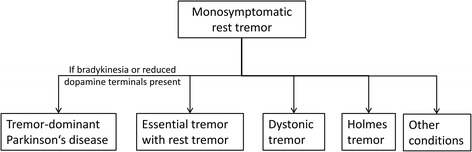
Tremor is the most common movement disorder characterized by a rhythmical, involuntary oscillatory movement of a body part. Since distinct diseases can cause similar tremor manifestations and vice-versa, it is challenging to make an accurate diagnosis. This applies particularly for tremor at rest. This entity was only rarely studied in the past, although a multitude of clinical studies on prevalence and clinical features of tremor in Parkinson's disease (PD), essential tremor and dystonia, have been carried out. Monosymptomatic rest tremor has been further separated from tremor-dominated PD. Rest tremor is also found in dystonic tremor, essential tremor with a rest component, Holmes tremor and a few even rarer conditions. Dopamine transporter imaging and several electrophysiological methods provide additional clues for tremor differential diagnosis. New evidence from neuroimaging and electrophysiological studies has broadened our knowledge on the pathophysiology of Parkinsonian and non-Parkinsonian tremor. Large cohort studies are warranted in future to explore the nature course and biological basis of tremor in common tremor related disorders.
Overview
The claims and statistics of this paper haven’t been checked yet.
Free: it reads the open-access text and checks the first 5 claims that cite a source we can check. Create a free account to check every claim.
Integrity signals
Registry
Cites
Statistics
Figures
Verification
Claims the paper makes
The claims and statistics of this paper haven’t been checked yet.
Free: it reads the open-access text and checks the first 5 claims that cite a source we can check. Create a free account to check every claim.
Claims other papers make about this one
Each is checked against this paper’s own text: does it say what the citing paper says it does?
The source backs part of the claim, not all of it — or backs it for a different population, condition or comparison.
In the citing paper
“In Fig. 7, a dominant activity at around 5 Hz is observed in the spectral domain of input signals (“red” color), which verifies the reported characteristics of the PHT in the literature, i.e., the PHT in PD and ET patients commonly occurs in 4–6 Hz and 4–8 Hz17,70, respectively, which results in accumulation of power in frequencies around 5 Hz.”
From PHTNet: Characterization and Deep Mining of Involuntary Pathological Hand Tremor using Recurrent Neural Network Models (2020) · cites this paper as [70]
Experimental — accuracy not yet measuredThe cited source says what the claim attributes to it.
In the citing paper
“However, due to the similarities in tremor characteristics for PD vs. ET, distinguishing some of these features without electronic aids can be difficult (Chen et al., 2017; Jain, Lo & Louis, 2006; Thenganatt & Louis, 2012).”
From Combined accelerometer and genetic analysis to differentiate essential tremor from Parkinson’s disease (2018) · cites this paper as Chen et al., 2017
In the citing paper
“The most common and classical PD tremor is a four to six Hz resting limb tremor, whereas the most common ET tremor is a four to eight Hz postural or kinetic tremor (Chen et al., 2017).”
From Combined accelerometer and genetic analysis to differentiate essential tremor from Parkinson’s disease (2018) · cites this paper as Chen et al., 2017
In the citing paper
“Interestingly, all ET subjects reported experiencing a rest tremor during this study, which is a higher rate than expected given the cardinal signs of PD vs ET differ in tremor type (Chen et al., 2017).”
From Combined accelerometer and genetic analysis to differentiate essential tremor from Parkinson’s disease (2018) · cites this paper as Chen et al., 2017
Self-check
Percentages, sums and reported differences re-computed from the paper’s own numbers.
The self-check needs the paper’s full text.
Citations
Cites
Staging of brain pathology related to sporadic Parkinson’s disease
Braak, H., Tredici, K. D., Rüb, U., de Vos, R. A. I., Jansen Steur, E. N. H., & Braak, E. (2003) · Neurobiology of Aging · doi:10.1016/s0197-4580(02)00065-9 · Cited by 10,777 · cited 1×
“mortem gold standard for histopathological confirmation of the diagnosis, as it is in PD [61].”
BackgroundConsensus Statement of the Movement Disorder Society on Tremor
Deuschl, G., Bain, P., & Brin, M. (2008) · Movement Disorders · doi:10.1002/mds.870131303 · Cited by 1,981 · cited 5×
“According to MDS consensus statement on tremor in 1998, ‘monosymptomatic rest tremor’(mRT) was used if these patients had a tremor duration of at least 2 years [1].”
BackgroundMethodInfluentialSelf-citationVariable expression of Parkinson's disease: A base‐line analysis of the DAT ATOP cohort
Jankovic, J., McDermott, M., Carter, J., Gauthier, S., Goetz, C., Golbe, L., Huber, S., Koller, W., Olanow, C., Shoulson, I., et al. (1990) · Neurology · doi:10.1212/wnl.40.10.1529 · Cited by 1,285
A Clinicopathologic Study of 100 Cases of Parkinson's Disease
Hughes, A. J., Daniel, S. E., Blankson, S., & Lees, A. J. (1993) · Archives of Neurology · doi:10.1001/archneur.1993.00540020018011 · Cited by 956 · cited 1×
“A case series of 100 pathologically proven PD revealed tremor in 68% of cases at disease onset, in 75% during the course of the disease, and in 9%, tremor disappeared late in the course of the illness [4].”
BackgroundNeuropathological changes in essential tremor: 33 cases compared with 21 controls
Louis, E. D., Faust, P. L., Vonsattel, J.-P. G., Honig, L. S., Rajput, A., Robinson, C. A., Rajput, A., Pahwa, R., Lyons, K. E., Ross, G. W., et al. (2007) · Brain · doi:10.1093/brain/awm266 · Cited by 562 · cited 2×
“Limited pathological and neurochemical studies point to cerebellum and brainstem abnormalities in ET, including cerebellar Purkinje cell loss, axonal swellings (torpedoes) [62], as well as GABAergic dysfunction of the dentate nucleus in the cerebellum [63] and locus coeruleus in the brainstem [64].”
BackgroundMethodA clinico-pathological study of subtypes in Parkinson's disease
Selikhova, M., Williams, D. R., Kempster, P. A., Holton, J. L., Revesz, T., & Lees, A. J. (2009) · Brain · doi:10.1093/brain/awp234 · Cited by 461 · cited 1×
“However, at later stages of the condition the course is similar for the akinetic-rigid variant and the tremor-dominant variant [16].”
BackgroundLouis, E. D., Ottman, R., & Allen Hauser, W. (1998) · Movement Disorders · doi:10.1002/mds.870130105 · Cited by 424 · cited 1×
“The prevalence of ET ranges from 1% in the total population to 5% for those beyond the age of 60 years [17].”
BackgroundPallidal dysfunction drives a cerebellothalamic circuit into Parkinson tremor
Helmich, R. C., Janssen, M. J. R., Oyen, W. J. G., Bloem, B. R., & Toni, I. (2011) · Annals of Neurology · doi:10.1002/ana.22361 · Cited by 417 · cited 1×
“amplitude is regulated within the cerebello-thalamocortical circuit [59].”
BackgroundEssential tremor and cerebellar dysfunction Clinical and kinematic analysis of intention tremor
Deuschl, G. (2000) · Brain · doi:10.1093/brain/123.8.1568 · Cited by 365
Self-citationMutations in GNAL cause primary torsion dystonia
Fuchs, T., Saunders-Pullman, R., Masuho, I., Luciano, M. S., Raymond, D., Factor, S., Lang, A. E., Liang, T.-W., Trosch, R. M., White, S., et al. (2013) · Nature Genetics · doi:10.1038/ng.2496 · Cited by 320 · cited 1×
“Head tremor was also noted in DYT25 patients with guanine nucleotide-binding protein(GNAL) mutation [39].”
BackgroundRe-emergent tremor of Parkinson's disease
Jankovic, J., Schwartz, K. S., & Ondo, W. (1999) · Journal of Neurology, Neurosurgery & Psychiatry · doi:10.1136/jnnp.67.5.646 · Cited by 307
Common Misdiagnosis of a Common Neurological Disorder: How Are We Misdiagnosing Essential Tremor?
Jain, S., Lo, S. E., & Louis, E. D. (2006) · Archives of Neurology · doi:10.1001/archneur.63.8.1100 · Cited by 304 · cited 1×
“Due to the lack of biomarkers, misdiagnoses among parkinsonian tremor, essential tremor (ET) and dystonic tremor are not uncommon [2].”
BackgroundCohen, O., Pullman, S., Jurewicz, E., Watner, D., & Louis, E. D. (2003) · Archives of Neurology · doi:10.1001/archneur.60.3.405 · Cited by 298 · cited 1×
“Activation conditions may also be phenotypical features separating different entities [26, 27].”
BackgroundMutations in ANO3 Cause Dominant Craniocervical Dystonia: Ion Channel Implicated in Pathogenesis
Charlesworth, G., Plagnol, V., Holmström, K. M., Bras, J., Sheerin, U.-M., Preza, E., Rubio-Agusti, I., Ryten, M., Schneider, S. A., Stamelou, M., et al. (2012) · The American Journal of Human Genetics · doi:10.1016/j.ajhg.2012.10.024 · Cited by 266 · cited 3×
“Pathogenic mutations in the anoctamin 3 gene (ANO3) were identified to cause autosomal dominant craniocervical dystonia and have been assigned to the dystonia locus dystonia-24 (DYT24) [36].”
BackgroundDefective dentate nucleus GABA receptors in essential tremor
Paris-Robidas, S., Brochu, E., Sintes, M., Emond, V., Bousquet, M., Vandal, M., Pilote, M., Tremblay, C., Di Paolo, T., Rajput, A. H., et al. (2012) · Brain · doi:10.1093/brain/awr301 · Cited by 198 · cited 1×
“Limited pathological and neurochemical studies point to cerebellum and brainstem abnormalities in ET, including cerebellar Purkinje cell loss, axonal swellings (torpedoes) [62], as well as GABAergic dysfunction of the dentate nucleus in the cerebellum [63] and locus coeruleus in the brainstem [64].”
BackgroundParkinson's disease tremor: pathophysiology
Hallett, M. (2011) · Parkinsonism & Related Disorders · doi:10.1016/s1353-8020(11)70027-x · Cited by 172 · cited 1×
“Emerging neuroimaging evidence showed that both the basal ganglia and the cerebellum are involved in Parkinsonian tremor [56].”
BackgroundHallett, M. (2014) · Parkinsonism & Related Disorders · doi:10.1016/s1353-8020(13)70029-4 · Cited by 171
Striatal FP-CIT uptake differs in the subtypes of early Parkinson’s disease
Spiegel, J., Hellwig, D., Samnick, S., Jost, W., Möllers, M.-O., Fassbender, K., Kirsch, C.-M., & Dillmann, U. (2007) · Journal of Neural Transmission · doi:10.1007/s00702-006-0518-2 · Cited by 169 · cited 1×
“Tremor dominant patients have higher dopamine transporter binding, compared to akinetic-rigid type [12], whereas tremor severity does not correlate with striatal dopamine deficits [13].”
BackgroundQuattrone, A., Cerasa, A., Messina, D., Nicoletti, G., Hagberg, G. E., Lemieux, L., Novellino, F., Lanza, P., Arabia, G., & Salsone, M. (2008) · American Journal of Neuroradiology · doi:10.3174/ajnr.a1190 · Cited by 166 · cited 1×
“Neuroimaging studies reported that ET with head tremor had more cerebellar atrophy, especially in the vermis of the anterior lobe [28, 29].”
BackgroundMorphological differences in Parkinson’s disease with and without rest tremor
Benninger, D. H., Thees, S., Kollias, S., Bassetti, C. L., & Waldvogel, D. (2009) · Journal of Neurology · doi:10.1007/s00415-009-0092-2 · Cited by 152 · cited 1×
“tremor had more grey matter volume decrease in the right quadrangular lobe and declive of the cerebellum [57] and”
BackgroundGABAergic Dysfunction in Essential Tremor: An11C-Flumazenil PET Study
Boecker, H., Weindl, A., Brooks, D. J., Ceballos-Baumann, A. O., Liedtke, C., Miederer, M., Sprenger, T., Wagner, K. J., & Miederer, I. (2010) · Journal of Nuclear Medicine · doi:10.2967/jnumed.109.074120 · Cited by 138 · cited 1×
“A PET study indicated that ET is associated with reduced GABAergic function and increased binding of GABA receptor sites in brain regions implicated specifically in tremor genesis [67].”
BackgroundClinical Correlates of Action Tremor in Parkinson Disease
Louis, E. D., Levy, G., Côte, L. J., Mejia, H., Fahn, S., & Marder, K. (2001) · Archives of Neurology · doi:10.1001/archneur.58.10.1630 · Cited by 131 · cited 2×
“was reported in 46–93% of PD patients depending on the selected populations [6, 7].”
BackgroundReduced Purkinje cell dendritic arborization and loss of dendritic spines in essential tremor
Louis, E. D., Lee, M., Babij, R., Ma, K., Cortes, E. P., Vonsattel, J., & Faust, P. L. (2014) · Brain · doi:10.1093/brain/awu314 · Cited by 131 · cited 1×
“Other features like Purkinje cell loss in one study [65] cannot be confirmed by others [66].”
BackgroundCerebellar Atrophy in Essential Tremor Using an Automated Segmentation Method
Cerasa, A., Messina, D., Nicoletti, G., Novellino, F., Lanza, P., Condino, F., Arabia, G., Salsone, M., & Quattrone, A. (2009) · American Journal of Neuroradiology · doi:10.3174/ajnr.a1544 · Cited by 127 · cited 1×
“Neuroimaging studies reported that ET with head tremor had more cerebellar atrophy, especially in the vermis of the anterior lobe [28, 29].”
BackgroundIntention tremor in essential tremor: Prevalence and association with disease duration
Louis, E. D., Frucht, S. J., & Rios, E. (2009) · Movement Disorders · doi:10.1002/mds.22370 · Cited by 118
Josephs, K. A., Matsumoto, J. Y., & Ahlskog, J. E. (2006) · Archives of Neurology · doi:10.1001/archneur.63.3.354 · Cited by 118
Tremor in the elderly: Essential and aging‐related tremor
Deuschl, G., Petersen, I., Lorenz, D., & Christensen, K. (2015) · Movement Disorders · doi:10.1002/mds.26265 · Cited by 116 · cited 1×
“[24], whereas late-onset patients have faster tremor progression, more frequent dementia and earlier mortality [25].”
BackgroundSelf-citationThe phenotypic spectrum of DYT24 due to ANO3 mutations
Stamelou, M., Charlesworth, G., Cordivari, C., Schneider, S. A., Kägi, G., Sheerin, U., Rubio‐Agusti, I., Batla, A., Houlden, H., Wood, N. W., et al. (2014) · Movement Disorders · doi:10.1002/mds.25802 · Cited by 115 · cited 1×
“In some individuals with ANO3 mutations, tremor was the sole initial manifestation leading to the misdiagnosis of ET [37, 38].”
BackgroundValidation of “laboratory‐supported” criteria for functional (psychogenic) tremor
Schwingenschuh, P., Saifee, T. A., Katschnig‐Winter, P., Macerollo, A., Koegl‐Wallner, M., Culea, V., Ghadery, C., Hofer, E., Pendl, T., Seiler, S., et al. (2016) · Movement Disorders · doi:10.1002/mds.26525 · Cited by 115 · cited 1×
“In cases where the clinical diagnosis remains challenging, providing a “laboratory-supported” level of certainty aids an early positive diagnosis [49].”
BackgroundIs tremor in dystonia a phenotypic feature of dystonia?
Defazio, G., Conte, A., Gigante, A. F., Fabbrini, G., & Berardelli, A. (2015) · Neurology · doi:10.1212/wnl.0000000000001341 · Cited by 109
Identification of psychogenic, dystonic, and other organic tremors by a coherence entrainment test
McAuley, J., & Rothwell, J. (2004) · Movement Disorders · doi:10.1002/mds.10707 · Cited by 101 · cited 1×
“Due to the inability of a patient with PT to generate voluntary tapping oscillations independent of their ongoing tremor oscillation, coherence entrainment test (CET) was used as a sensitive and specific means to distinguish PT from dystonic and other organic tremors, with nearly 100% concordance with clinical diagnos…”
MethodMunchau, A. (2001) · Brain · doi:10.1093/brain/124.9.1765 · Cited by 100 · cited 2×
“Patients with a late and simultaneous onset of arm tremor and torticollis had normal RI [54].”
BackgroundMethodRest and other types of tremor in adult-onset primary dystonia
Erro, R., Rubio-Agusti, I., Saifee, T. A., Cordivari, C., Ganos, C., Batla, A., & Bhatia, K. P. (2014) · Journal of Neurology, Neurosurgery & Psychiatry · doi:10.1136/jnnp-2013-305876 · Cited by 99 · cited 2×
“So far, the largest case series found that 262 (55%) out of 473 adult-onset primary dystonia showed tremor as a main symptom, with head tremor being the most common affected location (n = 196, 41%), followed by hand tremor (n = 140, 30%) [33].”
BackgroundIntrinsic signature of essential tremor in the cerebello-frontal network
Gallea, C., Popa, T., García-Lorenzo, D., Valabregue, R., Legrand, A.-P., Marais, L., Degos, B., Hubsch, C., Fernández-Vidal, S., Bardinet, E., et al. (2015) · Brain · doi:10.1093/brain/awv171 · Cited by 98
Essential tremor is not dependent upon cerebellar Purkinje cell loss
Rajput, A. H., Robinson, C. A., Rajput, M. L., Robinson, S. L., & Rajput, A. (2012) · Parkinsonism & Related Disorders · doi:10.1016/j.parkreldis.2012.01.013 · Cited by 96 · cited 1×
“Other features like Purkinje cell loss in one study [65] cannot be confirmed by others [66].”
BackgroundRossi, C., Frosini, D., Volterrani, D., Feo, P. D., Unti, E., Nicoletti, V., Kiferle, L., Bonuccelli, U., & Ceravolo, R. (2010) · European Journal of Neurology · doi:10.1111/j.1468-1331.2009.02898.x · Cited by 95 · cited 1×
“Tremor dominant patients have higher dopamine transporter binding, compared to akinetic-rigid type [12], whereas tremor severity does not correlate with striatal dopamine deficits [13].”
BackgroundGhaemi, M., Raethjen, J., Hilker, R., Rudolf, J., Sobesky, J., Deuschl, G., & Heiss, W. (2002) · Movement Disorders · doi:10.1002/mds.10125 · Cited by 88 · cited 1×
“An early study indicated that patients with mRT had a nearly identical striatal dopaminergic deficit as in PD [42].”
BackgroundSelf-citationLouis, E. D., Hernandez, N., & Michalec, M. (2015) · European Journal of Neurology · doi:10.1111/ene.12683 · Cited by 87 · cited 2×
“Rest tremor was also noted in ET, its prevalence is highly dependent on the selected cohorts, ranging from as low as 2% in the population-based setting to 46% in the brain bank samples [19].”
BackgroundTransducer‐based evaluation of tremor
Haubenberger, D., Abbruzzese, G., Bain, P. G., Bajaj, N., Benito‐León, J., Bhatia, K. P., Deuschl, G., Forjaz, M. J., Hallett, M., Louis, E. D., et al. (2016) · Movement Disorders · doi:10.1002/mds.26671 · Cited by 87 · cited 2×
“tremor, they are not more sensitive in defining the minimal detectable change than rating scales [70].”
BackgroundMethodSelf-citation‘Essential Tremor' or ‘the Essential Tremors': Is This One Disease or a Family of Diseases?
Louis, E. D. (2013) · Neuroepidemiology · doi:10.1159/000356351 · Cited by 86 · cited 1×
“gle entity but a group of diseases with diverse etiologies most of which are currently unknown [22, 23].”
BackgroundRest tremor suppression may separate essential from parkinsonian rest tremor
Papengut, F., Raethjen, J., Binder, A., & Deuschl, G. (2013) · Parkinsonism & Related Disorders · doi:10.1016/j.parkreldis.2013.03.013 · Cited by 85 · cited 1×
“One of the most important diagnostic features is the suppression of rest tremor during movement onset [10].”
BackgroundSelf-citationTremor in primary adult-onset dystonia: prevalence and associated clinical features
Defazio, G., Gigante, A. F., Abbruzzese, G., Bentivoglio, A. R., Colosimo, C., Esposito, M., Fabbrini, G., Guidubaldi, A., Girlanda, P., Liguori, R., et al. (2013) · Journal of Neurology, Neurosurgery & Psychiatry · doi:10.1136/jnnp-2012-303782 · Cited by 82 · cited 1×
“Based on two large cohorts with dystonia [33, 35], patients with segmental, multifocal and generalized dystonia had a higher proportion of tremor relative to focal dystonia.”
BackgroundEarly‐ and late‐onset essential tremor patients represent clinically distinct subgroups
Hopfner, F., Ahlf, A., Lorenz, D., Klebe, S., Zeuner, K. E., Kuhlenbäumer, G., & Deuschl, G. (2016) · Movement Disorders · doi:10.1002/mds.26708 · Cited by 82 · cited 1×
“[24], whereas late-onset patients have faster tremor progression, more frequent dementia and earlier mortality [25].”
BackgroundSelf-citationTorpedoes in the Cerebellar Vermis in Essential Tremor Cases vs. Controls
Louis, E. D., Faust, P. L., Ma, K. J., Yu, M., Cortes, E. P., & Vonsattel, J. (2011) · The Cerebellum · doi:10.1007/s12311-011-0291-0 · Cited by 81 · cited 1×
“Also, a recent pathological study found that patients with head and voice tremors had more Purkinje cell axonal swellings with torpedoes in the cerebellar vermis [30].”
Backgroundvan der Stouwe, A. M. M., Elting, J. W. J., van der Hoeven, J. H., van Laar, T., Leenders, K. L., Maurits, N. M., & Tijssen, M. A. J. (2016) · Parkinsonism & Related Disorders · doi:10.1016/j.parkreldis.2016.06.008 · Cited by 78
Neuropathological findings in benign tremulous Parkinsonism
Selikhova, M., Kempster, P. A., Revesz, T., Holton, J. L., & Lees, A. J. (2013) · Movement Disorders · doi:10.1002/mds.25220 · Cited by 77 · cited 1×
“At postmortem, 16 of them fulfilled the neuropathological criteria of PD, 5 cases (24%) didn’t have nigral impairment and were diagnosed as ET with associated rest tremor or dystonic tremor [45].”
BackgroundOccurrence of resting tremor in Parkinson's disease
Rajput, A. H., Rozdilsky, B., & Ang, L. (1991) · Neurology · doi:10.1212/wnl.41.8.1298 · Cited by 77 · cited 1×
“Rest tremor was noted at least during one evaluation among 47 pathologically verified Parkinsonian patients [5].”
BackgroundPandey, S., & Sarma, N. (2016) · Parkinsonism & Related Disorders · doi:10.1016/j.parkreldis.2016.03.024 · Cited by 77 · cited 1×
“There is a wide variability of tremor prevalence in dystonia, ranging from 14 to 87%, due to selected cases and the sample size [31, 32].”
BackgroundProvocation of Parkinsonian tremor
Raethjen, J., Austermann, K., Witt, K., Zeuner, K. E., Papengut, F., & Deuschl, G. (2008) · Movement Disorders · doi:10.1002/mds.22014 · Cited by 75 · cited 1×
“[9] The maximal amplitude is reached on average after 2–3 min [9].”
BackgroundSelf-citationDentate nucleus iron deposition is a potential biomarker for tremor‐dominant Parkinson's disease
He, N., Huang, P., Ling, H., Langley, J. A., Liu, C., Ding, B., Huang, J., Xu, H., Zhang, Y., Zhang, Z., et al. (2016) · NMR in Biomedicine · doi:10.1002/nbm.3554 · Cited by 68 · cited 1×
“more iron accumulation in dentate nucleus, relative to those with akinetic-rigid type [58].”
BackgroundTemporal discrimination in patients with dystonia and tremor and patients with essential tremor
Tinazzi, M., Fasano, A., Di Matteo, A., Conte, A., Bove, F., Bovi, T., Peretti, A., Defazio, G., Fiorio, M., & Berardelli, A. (2013) · Neurology · doi:10.1212/wnl.0b013e31827b1a54 · Cited by 65
Batla, A., Sánchez, M. C. C., Erro, R., Ganos, C., Stamelou, M., Balint, B., Brugger, F., Antelmi, E., & Bhatia, K. P. (2015) · Parkinsonism & Related Disorders · doi:10.1016/j.parkreldis.2015.09.013 · Cited by 64 · cited 1×
“Structural MRI found that 27 (14%) of 188 dystonia cases had cerebellar atrophy or cerebellar lesions [69] whereas functional neuroimaging studies on tremor in dystonia are lacking.”
BackgroundA new diagnostic test to distinguish tremulous Parkinson's disease from advanced essential tremor
Muthuraman, M., Hossen, A., Heute, U., Deuschl, G., & Raethjen, J. (2011) · Movement Disorders · doi:10.1002/mds.23672 · Cited by 63
Self-citationThe phenomenology of Parkinsonian tremor
Deuschl, G., Papengut, F., & Hellriegel, H. (2011) · Parkinsonism & Related Disorders · doi:10.1016/s1353-8020(11)70028-1 · Cited by 60 · cited 1×
“The most common form, classical Parkinsonian rest tremor, refers to a 4- to 6-Hz pill-rolling tremor in the fully resting limb, which is suppressed during movement initiation [8].”
BackgroundSelf-citationBlink reflex recovery cycle in patients with dystonic tremor: a cross-sectional study
Nisticò, R., Pirritano, D., Salsone, M., Valentino, P., Novellino, F., Condino, F., Bono, F., & Quattrone, A. (2012) · Neurology · doi:10.1212/wnl.0b013e3182518316 · Cited by 54 · cited 1×
“Increased R2 recovery index was found in dystonic tremor, whereas it is within the normal range in ET, with 100% accuracy [51].”
BackgroundBrain biochemistry in autopsied patients with essential tremor
Shill, H. A., Adler, C. H., Beach, T. G., Lue, L., Caviness, J. N., Sabbagh, M. N., Sue, L. I., & Walker, D. G. (2012) · Movement Disorders · doi:10.1002/mds.24004 · Cited by 54 · cited 1×
“Limited pathological and neurochemical studies point to cerebellum and brainstem abnormalities in ET, including cerebellar Purkinje cell loss, axonal swellings (torpedoes) [62], as well as GABAergic dysfunction of the dentate nucleus in the cerebellum [63] and locus coeruleus in the brainstem [64].”
BackgroundTesting for alcohol sensitivity of tremor amplitude in a large cohort with essential tremor
Hopfner, F., Erhart, T., Knudsen, K., Lorenz, D., Schneider, S. A., Zeuner, K. E., Deuschl, G., & Kuhlenbäumer, G. (2015) · Parkinsonism & Related Disorders · doi:10.1016/j.parkreldis.2015.05.005 · Cited by 53 · cited 1×
“As a feature of ET, alcohol sensitivity was reported in at least 46% of the patients [20].”
BackgroundSelf-citationResting Tremor in Parkinson Disease: A Negative Predictor of Levodopa-Induced Dyskinesia
Kipfer, S., Stephan, M. A., Schüpbach, W. M. M., Ballinari, P., & Kaelin‐Lang, A. (2011) · Archives of Neurology · doi:10.1001/archneurol.2011.147 · Cited by 49 · cited 2×
“Abbreviations ANO3: Anoctamin 3 gene; BRrc: Brainstem interneuronal inhibition; BTP: Benign tremulous Parkinsonism; CET: Coherence entrainment test; DAT: Dopamine transporter; DBS: Deep brain stimulation; DT: Dystonic tremor; DYT24: Dystonia locus dystonia-24; EMG: Electromyography; ET: Essential tremor; GNAL: Guanine…”
BackgroundAction tremor in Parkinson's disease: frequency and relationship to motor and non‐motor signs
Gigante, A. F., Bruno, G., Iliceto, G., Guido, M., Liuzzi, D., Mancino, P. V., Caro, M. F. D., Livrea, P., & Defazio, G. (2014) · European Journal of Neurology · doi:10.1111/ene.12583 · Cited by 46 · cited 1×
“was reported in 46–93% of PD patients depending on the selected populations [6, 7].”
BackgroundSchwingenschuh, P., & Deuschl, G. (2016) · Handbook of clinical neurology · doi:10.1016/b978-0-12-801772-2.00019-9 · Cited by 43
Self-citationTopography of essential tremor
Chen, W., Hopfner, F., Szymczak, S., Granert, O., Mueller, S. H., Kuhlenbäumer, G., & Deuschl, G. (2017) · Parkinsonism & Related Disorders · doi:10.1016/j.parkreldis.2017.04.012 · Cited by 42 · cited 4×
“Both female and severe hand tremor may increase the risk of head and/or voice tremor in ET [21].”
BackgroundInfluentialSelf-citationRest tremor in idiopathic adult‐onset dystonia
Gigante, A. F., Berardelli, A., & Defazio, G. (2016) · European Journal of Neurology · doi:10.1111/ene.12966 · Cited by 32 · cited 1×
“than in those with early-onset dystonia [34].”
Nisticò, R., Salsone, M., Vescio, B., Morelli, M., Trotta, M., Barbagallo, G., Arabia, G., & Quattrone, A. (2013) · Parkinsonism & Related Disorders · doi:10.1016/j.parkreldis.2013.10.006 · Cited by 31 · cited 1×
“Regarding the interstimulus intervals (ISI) of 100 ms, this method also seems to be reliable (100% accuracy) for the distinction of Parkinsonian from essential tremor [52].”
MethodTremor entities and their classification: an update
Gövert, F., & Deuschl, G. (2015) · Current Opinion in Neurology · doi:10.1097/wco.0000000000000211 · Cited by 30 · cited 1×
“Some practical clinical cues and ancillary tests for clinical distinction are found [3].”
BackgroundSelf-citationBenign Tremulous Parkinsonism?
Horn, G. V., & Schiess, M. C. (2006) · Archives of Neurology · doi:10.1001/archneur.63.10.1507-a · Cited by 26
Current concepts of essential tremor
Gövert, F., Becktepe, J. S., & Deuschl, G. (2016) · Revue Neurologique · doi:10.1016/j.neurol.2016.07.010 · Cited by 16
Self-citationBenign tremulous P arkinson's disease: A misnomer?
Deuschl, G. (2013) · Movement Disorders · doi:10.1002/mds.25317 · Cited by 13 · cited 3×
“The majority of these patients with mRT will develop PD after a decade or more [43].”
BackgroundInfluentialSelf-citation2.1.1 PARKINSON DISEASE TREMOR: PATHOPHYSIOLOGY
Hallett, M. (2011) · Parkinsonism & Related Disorders · doi:10.1016/s1353-8020(11)70388-1 · Cited by 11
Benign tremulous Parkinsonism: a unique entity or another facet of Parkinson’s disease?
Deeb, W., Hu, W., Almeida, L., Patterson, A., Martínez-Ramírez, D., & Shukla, A. W. (2016) · Translational Neurodegeneration · doi:10.1186/s40035-016-0057-1 · Cited by 9 · cited 1×
“Since rest tremor is a classic sign of PD, this entity of patients was also labelled as ‘benign tremulous Parkinsonism’(BTP) in some previous clinical studies [40, 41].”
ResultRare variants in ANO3 are not a susceptibility factor in essential tremor
Hopfner, F., Bungeroth, M., Pendziwiat, M., Tittmann, L., Deuschl, G., Schneider, S. A., & Kuhlenbäumer, G. (2013) · Parkinsonism & Related Disorders · doi:10.1016/j.parkreldis.2013.09.022 · Cited by 7 · cited 1×
“In some individuals with ANO3 mutations, tremor was the sole initial manifestation leading to the misdiagnosis of ET [37, 38].”
BackgroundSelf-citationHeterogeneity of Monosymptomatic Resting Tremor in a Prospective Study
Zheng, H., Zhang, R., Li, X., Li, F., Wang, Y.-C., Wang, X., Lu, L.-L., & Feng, T. (2015) · Chinese Medical Journal · doi:10.4103/0366-6999.159352 · Cited by 4 · cited 1×
“cases (15%) have scans without evidence of dopaminergic deficits (SWEDDs) [44].”
Background
Research works printed but not linked: 1
- Marsden C Obeso J Rothwell J Yahr MD Benign essential tremor is not a single entity Curr. Concepts park. Dis. Relat. Disord 1983 Amsterdam Excerpta Medica 31 46
Cited by
Music Therapy in the Treatment of Dementia: A Systematic Review and Meta-Analysis
Moreno-Morales, C., Calero, R., Moreno-Morales, P., & Pintado, C. (2020) · Frontiers in Medicine · doi:10.3389/fmed.2020.00160 · Cited by 229
Tremor Syndromes: An Updated Review
Lenka, A., & Jankovic, J. (2021) · Frontiers in Neurology · doi:10.3389/fneur.2021.684835 · Cited by 132
“These patients should be followed closely because many subsequently develop additional signs of PD in the future (36).”
BackgroundMethodPost-translational modifications: Regulators of neurodegenerative proteinopathies
Gupta, R. V., Sahu, M., Srivastava, D., Tiwari, S., Ambasta, R. K., & Kumar, P. (2021) · Ageing Research Reviews · doi:10.1016/j.arr.2021.101336 · Cited by 134
Neurodegenerative diseases: a hotbed for splicing defects and the potential therapies
Li, D., McIntosh, C. S., Mastaglia, F. L., Wilton, S. D., & Aung-Htut, M. T. (2021) · Translational Neurodegeneration · doi:10.1186/s40035-021-00240-7 · Cited by 109
Deep Learning Identifies Digital Biomarkers for Self-Reported Parkinson's Disease
Zhang, H., Deng, K., Li, H., Albin, R. L., & Guan, Y. (2020) · Patterns · doi:10.1016/j.patter.2020.100042 · Cited by 84
Metadata
- Authors
- Chen, W., Hopfner, F., Becktepe, J. S., & Deuschl, G.
- Affiliations
- Shanghai Jiao Tong University (CN)
- Christian-Albrechts-Universität zu Kiel (DE)
- Corresponding author
- Deuschl, Günther
- Venue
- Translational Neurodegeneration
- Published
- 2017-06-16
- Volume
- 6
- Issue
- 1
- Pages
- 16-16
- ISSN
- 2047-9158 (ISSN-L)
- PMC
- PMC5472969
- OpenAlex
- W2621445036
- Cited by
- 66
- References
- 71
- Citations by year
- 2026: 6 · 2025: 5 · 2024: 8 · 2023: 6 · 2022: 4 · 2021: 15 · 2020: 12 · 2019: 3 · 2018: 5 · 2017: 2
- FWCI
- 0.81
- Type
- journal article
- Language
- en
- Open access
- gold
- doi.org
- Licence
- cc-by
- Locations
- Translational Neurodegeneration (publishedVersion, cc-by)
- Europe PMC (PubMed Central) (publishedVersion, cc-by)
- PubMed Central (publishedVersion, cc-by)
- PubMed (publishedVersion)
- DOAJ (DOAJ: Directory of Open Access Journals) (submittedVersion, cc-by-sa)
- Funders
- National Natural Science Fund of China (81401039)
- German Research Council (/)
- International Essential Tremor Foundation (/)
- German Ministry of Education and Health (/)
- K.C.Wong Medical Fund of Shanghai Jiao Tong University (/)
- Youth Fund of Shanghai Ninth People’s Hospital (/)
- Topics
- Health Sciences › Medicine › Clinical Neurology › Deep Brain Stimulation and Movement Disorders
- Health Sciences › Medicine › Clinical Neurology › Parkinson's Disease Mechanisms and Treatments
- Health Sciences › Medicine › Clinical Neurology › Neurological and metabolic disorders
- Keywords
- resting tremor, Parkinson's disease, essential tremor, dystonia, Holmes tremor, tremor differential diagnosis, dopamine transporter imaging, tremor pathophysiology
About these checks
Registry, retraction, Cites and statistics results are computed, not judged, with one exception: a printed reference that no index lists is read once by a model before it counts as a citation error. Claims are extracted by a model and kept only when their quote appears verbatim in the text; each cited source is then checked, with a model’s help, for whether it says what the claim relies on. Those verdicts can be wrong — read the claim’s quote and the cited source before relying on one.
Statistics and arithmetic are recomputed, not judged.
Confidence bands are shown only for fields calibrated on our annotated test set. None is calibrated yet, so no band is shown.
What counts as a claim ›How we measure confidence ›How we check this ›
Are you an author, or do you see a problem with this page? Request a review
Data sources
Bibliographic data: Semantic Scholar, OpenAlex, Crossref.
Contains information from the Semantic Scholar Academic Graph Datasets, made available under the ODC Attribution License (ODC-BY 1.0).
Semantic Scholar’s data is described in: Kinney, R., et al. (2023). The Semantic Scholar Open Data Platform. arXiv:2301.10140.
