

Investigating capabilities of intermediaries in short food supply chains: a resource-based view
Open accessThe DOI matches its Crossref record; 100 of the 100 references it cites were found in a registry or an index.
Abstract
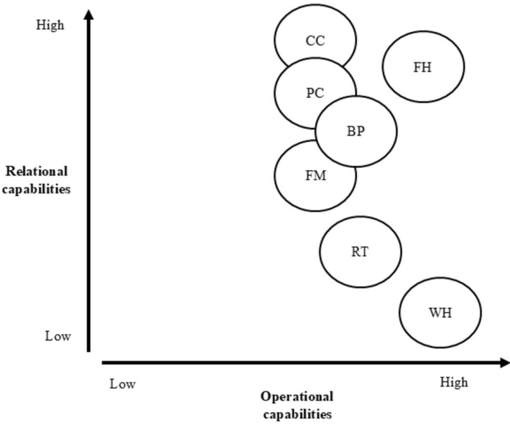
Short food supply chains (SFSCs) have been presented as a sustainable alternative to unsustainable conventional food supply chains (CFSCs). Here, intermediate SFSCs are most capable of expanding their scale and success. However, it remains unclear which intermediaries can do so sustainably, while upholding SFSCs values. Understanding the types of intermediaries and their capabilities is key to ensuring long-term success in the market. Through a systematic literature review, this paper investigates the type of intermediaries operating in SFSCs and their capabilities. Appropriate exclusion criteria eliminated articles that focused on shortening CFSCs without specifically mentioning SFSCs, as well as articles focusing on direct-to-consumer SFSCs, which did not mention intermediaries. A wide range of synonyms for intermediaries and capabilities was included to ensure a thorough search string. Based on these selection criteria, 65 articles have been selected and analyzed. The capabilities of seven different intermediaries are presented in context of the resource-based view. The capabilities are categorized in operational capabilities and relational capabilities. The outcome allows for the assessment of internal resources and external relationships that could strengthen the intermediaries’ operations, ultimately leading to sustainable competitive advantage. The practical implications of this research indicate that certain intermediaries are more suitable than others in obtaining competitive advantage toward CFSC and increasing the volumes moved through SFSCs and allowing for sustainable food supply chains. This is the first review to provide an overview of the most discussed intermediaries in SFSCs and their capabilities creating competitive advantage, allowing for future discussions around sustainable SFSCs.
Overview
The claims and statistics of this paper haven’t been checked yet.
Free: it reads the open-access text and checks the first 5 claims that cite a source we can check. Create a free account to check every claim.
Integrity signals
Registry
Cites
Statistics
Figures
Verification
Claims the paper makes
The claims and statistics of this paper haven’t been checked yet.
Free: it reads the open-access text and checks the first 5 claims that cite a source we can check. Create a free account to check every claim.
Claims other papers make about this one
Each is checked against this paper’s own text: does it say what the citing paper says it does?
The source backs part of the claim, not all of it — or backs it for a different population, condition or comparison.
In the citing paper
“In contrast, intermediated direct-to-retail (DTR) channels (specialized shops, restaurants, institutional buyers) reduce marketing burdens and enable higher volumes but require compliance with stricter standards and coordination with intermediaries [1,2,4,27].”
From Who Reaches the Consumer? A Network Analysis of Market Reach Factors of Slovakia's Short Food Supply Chains (2026) · cites this paper as [27]
Experimental — accuracy not yet measuredThe source backs part of the claim, not all of it — or backs it for a different population, condition or comparison.
In the citing paper
“Food hubs, producer cooperatives, and hybrid intermediary organizations facilitate aggregation, standardization, and market negotiation, enabling small producers to access retail and institutional buyers [2,27,38].”
From Who Reaches the Consumer? A Network Analysis of Market Reach Factors of Slovakia's Short Food Supply Chains (2026) · cites this paper as [27]
Experimental — accuracy not yet measuredThe source backs part of the claim, not all of it — or backs it for a different population, condition or comparison.
In the citing paper
“Producers engaged in processing and the production of higher-value-added products more frequently use SFSC channels that may involve a single intermediary, allowing them to reach a broader market [18,27,57].”
From Who Reaches the Consumer? A Network Analysis of Market Reach Factors of Slovakia's Short Food Supply Chains (2026) · cites this paper as [27]
Experimental — accuracy not yet measuredThe source backs part of the claim, not all of it — or backs it for a different population, condition or comparison.
In the citing paper
“Smaller producers tend to rely on direct channels due to limited production volumes and capital constraints, whereas larger producers are structurally better positioned to supply intermediated channels, utilizing higher efficiency in terms of sales volume [2,23,27,40].”
From Who Reaches the Consumer? A Network Analysis of Market Reach Factors of Slovakia's Short Food Supply Chains (2026) · cites this paper as [27]
Experimental — accuracy not yet measuredThe source backs part of the claim, not all of it — or backs it for a different population, condition or comparison.
In the citing paper
“Alternatively, they may represent newly formed cooperative or coordination structures able to actively manage product aggregation, distribution, and marketing; share infrastructure; and enhance bargaining power, resulting in improved access to retail and institutional markets [2,27].”
From Who Reaches the Consumer? A Network Analysis of Market Reach Factors of Slovakia's Short Food Supply Chains (2026) · cites this paper as [27]
Experimental — accuracy not yet measured
5 more claims about this paper
Create a free account to see every claim other papers make about this one.
Self-check
Percentages, sums and reported differences re-computed from the paper’s own numbers.
The self-check needs the paper’s full text.
Citations
Cites
The PRISMA 2020 statement: An updated guideline for reporting systematic reviews
Page, M. J., McKenzie, J. E., Bossuyt, P. M., Boutron, I., Hoffmann, T. C., Mulrow, C. D., Shamseer, L., Tetzlaff, J. M., Akl, E. A., Brennan, S. E., et al. (2021) · BMJ · doi:10.1136/bmj.n71 · Cited by 108,283
Rayyan-a web and mobile app for systematic reviews.
Ouzzani, M., Hammady, H., Fedorowicz, Z., & Elmagarmid, A. (2016) · Systematic Reviews · doi:10.1186/s13643-016-0384-4 · Cited by 26,092 · cited 1×
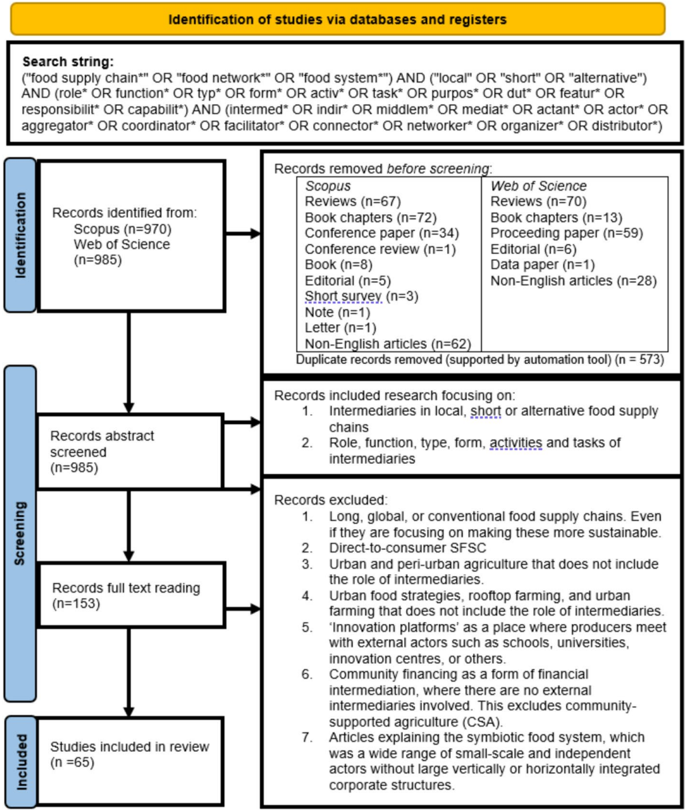
“The results were merged, and duplicates were removed ( n = 573) using Rayyan software (Ouzzani et al., 2016), leading to a total sample of 985 articles.”
Tranfield, D., Denyer, D., & Smart, P. (2003) · British Journal of Management · doi:10.1111/1467-8551.00375 · Cited by 15,386 · cited 2×
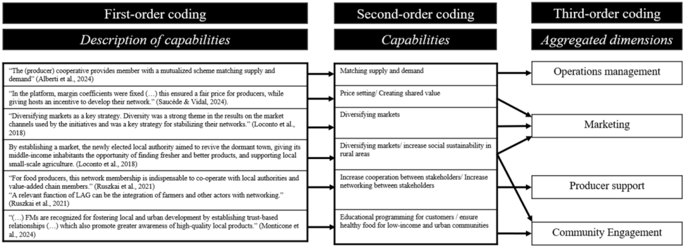
“The thematic analysis looked at qualitative elements in the articles using a thematic coding structure looking for key-words related to types, roles and capabilities, combined with intermediaries (Tranfield et al. 2003).”
Seeking Qualitative Rigor in Inductive Research: Notes on the Gioia Methodology
Gioia, D. A., Corley, K. G., & Hamilton, A. L. (2013) · Organizational Research Methods · doi:10.1177/1094428112452151 · Cited by 13,227
The Journal Coverage of Web of Science, Scopus and Dimensions: A Comparative Analysis
Singh, V. K., Singh, P., Karmakar, M., Leta, J., & Mayr, P. (2021) · Scientometrics · doi:10.1007/s11192-021-03948-5 · Cited by 2,342 · cited 4×
“…baseline sample of potentially relevant articles Step 4 Apply the inclusion/exclusion criteria from step 2 Step 5 Synthesize the articles Step 6 Report on the results of the SLR Google Scholar, this forum is deemed less suitable for research assessment exercises, such as SLRs (Singh et al. 2021).”
InfluentialRenting, H., Marsden, T. K., & Banks, J. (2003) · Environment and Planning A: Economy and Space · doi:10.1068/a3510 · Cited by 1,985 · cited 2×
“To achieve this, focus is increasingly directed to the development of alternative food SCs, better known as alternative food networks (AFNs) (Renting et al. 2003; Ilbery et al. 2004; Dani 2015).”
Food Supply Chain Approaches: Exploring their Role in Rural Development
Marsden, T., Banks, J., & Bristow, G. (2000) · Sociologia Ruralis · doi:10.1111/1467-9523.00158 · Cited by 1,210 · cited 2×
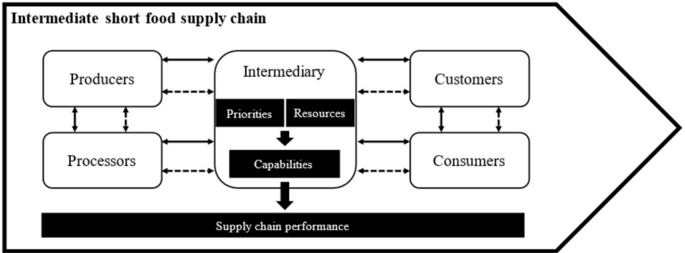
“The first form of SFSC involves no intermediaries, whereas proximate and spatially extended SFSCs usually involve an intermediary organization (i.e., intermediate SFSC) (Marsden et al. 2000).”
The practice and politics of food system localization
Hinrichs, C. C. (2003) · Journal of Rural Studies · doi:10.1016/s0743-0167(02)00040-2 · Cited by 1,108 · cited 1×
“While some SFSCs may foster social embeddedness and community (Sage 2003; Brunori et al. 2016), they also risk privileging middle-class consumers who have the financial means and cultural capital to participate (Hinrichs 2003).”
Avoiding the Local Trap: Scale and Food Systems in Planning Research
Born, B., & Purcell, M. (2006) · Journal of Planning Education and Research · doi:10.1177/0739456x06291389 · Cited by 1,066
Sustainable supply chain management and inter‐organizational resources: a literature review
Gold, S., Seuring, S., & Beske, P. (2010) · Corporate Social Responsibility and Environmental Management · doi:10.1002/csr.207 · Cited by 918 · cited 1×
“…is furthermore emphasized in the context of sustainability, where inter-firm resources and capabilities derived from the SC are so ambiguous to understand and socially complex that they are difficult to replicate by competitors, thus ensuring sustained competitive advantage (Gold et al. 2010).”
Allen, P., FitzSimmons, M., Goodman, M., & Warner, K. (2003) · Journal of Rural Studies · doi:10.1016/s0743-0167(02)00047-5 · Cited by 640 · cited 1×
“Several studies point out that local food is frequently priced higher than conventional alternatives, which can limit access for lower-income groups and reinforce existing inequalities in food systems (Allen et al. 2003; Allen 2010).”
Social embeddedness and relations of regard:
Sage, C. (2003) · Journal of Rural Studies · doi:10.1016/s0743-0167(02)00044-x · Cited by 551 · cited 2×
“In this sense, SFSCs may unintentionally reproduce exclusionary practices, overlooking the food needs of marginalized populations (Sage 2003).”
Realizing justice in local food systems
Allen, P. (2010) · Cambridge Journal of Regions, Economy and Society · doi:10.1093/cjres/rsq015 · Cited by 408 · cited 1×
“Several studies point out that local food is frequently priced higher than conventional alternatives, which can limit access for lower-income groups and reinforce existing inequalities in food systems (Allen et al. 2003; Allen 2010).”
Measuring the Economic, Environmental, and Social Sustainability of Short Food Supply Chains
Malak-Rawlikowska, A., Majewski, E., Wąs, A., Borgen, S. O., Csillag, P., Donati, M., Freeman, R., Hoàng, V., Lecoeur, J.-L., Mancini, M. C., et al. (2019) · Sustainability · doi:10.3390/su11154004 · Cited by 279 · cited 6×
“There is some knowledge with regard to the intermediaries that have shown greater capacity to move larger volumes in SFSCs (Malak-Rawlikowska et al. 2019), but little is known about the specific types, resources and capabilities that enable this success.”
InfluentialAre Local Food Chains More Sustainable than Global Food Chains? Considerations for Assessment
Brunori, G., Galli, F., Barjolle, D., Van Broekhuizen, R., Colombo, L., Giampietro, M., Kirwan, J., Lang, T., Mathijs, E., Maye, D., et al. (2016) · Sustainability · doi:10.3390/su8050449 · Cited by 239 · cited 3×
“…been described as part of the “local food trap” (Born & Purcell 2006), where local food is assumed to be inherently more just or sustainable, even though outcomes often depend on the social relations and power structures at play rather than scale itself (Brunori et al. 2016; Landon and Rosol 2025).”
Short Food Supply Chains (SFSC) as Local and Sustainable Systems
Jarzębowski, S., Bourlakis, M., & Bezat-Jarzębowska, A. (2020) · Sustainability · doi:10.3390/su12114715 · Cited by 220 · cited 1×
“Alternative intermediaries are considered mission-driven intermediaries that aim to create value in the entire SC and try to accomplish socioeconomic as well as socio-environmental sustainability in local communities (Jarzebowski et al. 2020; Alberti et al. 2024; Thomas et al. 2024).”
Bloom, J. D., & Hinrichs, C. C. (2011) · Renewable Agriculture and Food Systems · doi:10.1017/s1742170510000384 · Cited by 208 · cited 3×
“Wholesalers in the context of SFSC are almost often conventional intermediaries that manage a demand-driven SC, where customer demand and financial profits come first over relationships with local producers (Bloom and Hinrichs 2011; Roy et al. 2019).”
Food Supply Chains and Covid‐19: Impacts and Policy Lessons
Deconinck, K., Avery, E., & Jackson, L. A. (2020) · EuroChoices · doi:10.1111/1746-692x.12297 · Cited by 208 · cited 1×
“Additionally, recent SC disruptions caused by the COVID-19 pandemic and current geopolitical unrest in the world, highlight the vulnerability of CFSCs, especially with regard to global trade (OECD 2020; Caprile 2022; Uliano et al. 2023).”
Brunori, G., Rossi, A., & Guidi, F. (2012) · Sociologia Ruralis · doi:10.1111/j.1467-9523.2011.00552.x · Cited by 203
Sustainability in Alternative Food Networks: A Systematic Literature Review
Michel-Villarreal, R., Hingley, M., Canavari, M., & Bregoli, I. (2019) · Sustainability · doi:10.3390/su11030859 · Cited by 192 · cited 1×
“Stakeholders in SFSCs aim to create more sustainable, transparent and equitable systems by focusing on environmental responsibility, social fairness and reconnecting producers and consumers (Renting et al. 2003; Michel-Villarreal et al. 2019).”
Kim, M., Song, J., & Triche, J. (2014) · Information Systems Frontiers · doi:10.1007/s10796-014-9505-6 · Cited by 182 · cited 1×
“Relational capabilities, such as strategic decision-making, building collaborative networks and creating alliances, enhance the integration and agility of the SC, which are difficult for competitors to replicate (Kim et al. 2015).”
Vittersø, G., Torjusen, H., Laitala, K., Tocco, B., Biasini, B., Csillag, P., de Labarre, M. D., Lecoeur, J.-L., Maj, A., Majewski, E., et al. (2019) · Sustainability · doi:10.3390/su11174800 · Cited by 176 · cited 3×
“In more formalized cooperatives, such as Solidarity Purchasing Groups (SPGs), these relational resources are further structured through regulated routines and shared responsibilities, enhancing coordination and continuity (Brunori et al. 2012; Carlson and Bitsch 2019; Vittersø et al. 2019).”
Sellitto, M. A., Vial, L. A. M., & Viegas, C. V. (2017) · Journal of Cleaner Production · doi:10.1016/j.jclepro.2017.09.235 · Cited by 169 · cited 1×
“Finally, while not all producers in SFSCs are focused solely on organic production (Sellitto et al. 2018; Schoolman et al. 2021), local environmental and health sustainability is often improved by shorter food miles and environmentally friendly production methods (Malak-Rawlikowska et al. 2019).”
Local food hubs for alternative food systems: A case study from Santa Barbara County, California
Cleveland, D. A., Müller, N. M., Tranovich, A. C., Mazaroli, D. N., & Hinson, K. (2014) · Journal of Rural Studies · doi:10.1016/j.jrurstud.2014.03.008 · Cited by 162 · cited 2×
“…hubs that connect different producers with different customers, such as retailers, schools, hospitals and restaurants, acting as selling agents (Cleveland et al. 2014; Engelseth 2016; Furman and Papavasiliou 2018; Trivette 2019), but also attract consumers by offering a diverse set of products…”
Forecasting food supply chain developments in lagging rural regions: evidence from the UK
Ilbery, B., Maye, D., Kneafsey, M., Jenkins, T., & Walkley, C. (2004) · Journal of Rural Studies · doi:10.1016/j.jrurstud.2003.09.001 · Cited by 139 · cited 4×
“Intermediaries SFSCs can provide a wide range of services to both producers and customers in SFSCs that will meet the current growing demand for local food, while simultaneously managing diversified market requirements (Ilbery et al. 2004; Tewari et al. 2018).”
InfluentialSustainability and local food procurement: a case study of Finnish public catering
Lehtinen, U. (2012) · British Food Journal · doi:10.1108/00070701211252048 · Cited by 129 · cited 1×
“Additionally, their limited supply and difficulties in scaling up production make them unsuitable suppliers for many business customers, such as hotels, restaurants and catering businesses (HoReCa) as well as public procurement (Lehtinen 2012; Cembalo et al. 2015).”
Chiffoleau, Y., Millet-Amrani, S., & Canard, A. (2016) · Agriculture · doi:10.3390/agriculture6040057 · Cited by 126 · cited 4×
“Additionally, collaboration and support are often necessary from governmental institutions, such as municipalities, who provide space for the market (Chiffoleau et al. 2016; Loconto et al. 2018; Kurtsal et al. 2020; Pasquier Merino et al. 2022).”
InfluentialJia, F., Shahzadi, G., Bourlakis, M., & John, A. (2024) · Journal of Cleaner Production · doi:10.1016/j.jclepro.2023.140364 · Cited by 119 · cited 1×
“SFSCs support local communities in the face of disruptions and uncertainties and support their goal to obtain food security and resilience by providing a more stable and predictable SC (Foti and Tim-panaro 2021; Jia et al. 2024).”
Structuring Markets for Resilient Farming Systems
Valencia, V., Wittman, H., & Blesh, J. (2019) · Agronomy for Sustainable Development · doi:10.1007/s13593-019-0572-4 · Cited by 106 · cited 1×
“When this becomes difficult, a solution could be to introduce public support in the form of public procurement, which could provide stability in the SC (Valencia et al. 2019).”
Social Innovation and Sustainable Rural Development: The Case of a Brazilian Agroecology Network
Rover, O., De Gennaro, B., & Roselli, L. (2016) · Sustainability · doi:10.3390/su9010003 · Cited by 99
Horizontal logistics collaboration: an exploratory study in Morocco’s agri-food supply chains
Badraoui, I., van der Vorst, J. G. A. J., & Boulaksil, Y. (2019) · International Journal of Logistics Research and Applications · doi:10.1080/13675567.2019.1604646 · Cited by 96
Mancini, M. C., Menozzi, D., Donati, M., Biasini, B., Veneziani, M., & Arfini, F. (2019) · Sustainability · doi:10.3390/su11030721 · Cited by 93 · cited 1×
“While CFSCs often prioritize economic efficiency and productivity and are thus capable of delivering large volumes of food to meet the demand of a growing population, these SCs are often criticized for its unsustainability (Gori and Castellini 2023; Mancini et al. 2019; Zoll et al. 2021).”
Gori, F., & Castellini, A. (2023) · Sustainability · doi:10.3390/su15108140 · Cited by 89 · cited 1×
“While CFSCs often prioritize economic efficiency and productivity and are thus capable of delivering large volumes of food to meet the demand of a growing population, these SCs are often criticized for its unsustainability (Gori and Castellini 2023; Mancini et al. 2019; Zoll et al. 2021).”
Ribeiro, A. P., Harmsen, R., Feola, G., Carreón, J. R., & Worrell, E. (2021) · Sociologia Ruralis · doi:10.1111/soru.12331 · Cited by 82 · cited 2×
“Even if intermediaries generally function as external third parties and for-profit organizations, intermediaries in SFSC can also be formalized as nonprofit organizations, which include associations or consumer cooperatives and foundations (Poças Ribeiro et al. 2021).”
Zoll, F., Specht, K., & Siebert, R. (2021) · Sociologia Ruralis · doi:10.1111/soru.12350 · Cited by 82 · cited 1×
“While CFSCs often prioritize economic efficiency and productivity and are thus capable of delivering large volumes of food to meet the demand of a growing population, these SCs are often criticized for its unsustainability (Gori and Castellini 2023; Mancini et al. 2019; Zoll et al. 2021).”
Kump, B., & Fikar, C. (2021) · Journal of Cleaner Production · doi:10.1016/j.jclepro.2021.128407 · Cited by 72 · cited 8×
“…and local, but might diffuse into larger regional food systems over time by growing in scale and replicating at new locations or even change into a different intermediary where other intermediaries such as retailers adopt some features from these consumer cooperatives (Kump and Fikar 2021).”
InfluentialBenedek, Z., Fertő, I., & Molnár, A. (2018) · Agriculture and Human Values · doi:10.1007/s10460-017-9834-4 · Cited by 71
“Rationally Local”: Consumer Participation in Alternative Food Chains
Cembalo, L., Lombardi, A., Pascucci, S., Dentoni, D., Migliore, G., Verneau, F., & Schifani, G. (2015) · Agribusiness · doi:10.1002/agr.21419 · Cited by 66 · cited 2×
“In these constructions, producers are not only responsible for producing and processing their goods but are forced to take up additional operational services related to logistics and distribution as well as sales and marketing (Cembalo et al. 2015; Renkema and Hilletofth 2022).”
Clark, J. K., & Inwood, S. M. (2015) · Agriculture and Human Values · doi:10.1007/s10460-015-9618-7 · Cited by 65 · cited 3×
“Issues in SFSCs include limited availability for producers, weak relationships between producers and customers, lack of communication and difficulties in logistics, transportation and delivery services (Clark and Inwood 2016; Paciarotti and Torregiani 2018).”
Rosol, M., & Barbosa, R. (2021) · Agriculture and Human Values · doi:10.1007/s10460-021-10210-4 · Cited by 65 · cited 11×
“Retail shops in the literature include a wide variety of both alternative retailers such as local shops, farm shops, specialty shops, as well as conventional retailers such as supermarkets (Kurtsal et al. 2020; Rosol and Barbosa 2021; Syrovátková 2016; Vittersø et al. 2019).”
InfluentialPaciarotti, C., & Torregiani, F. (2018) · British Food Journal · doi:10.1108/bfj-04-2018-0253 · Cited by 64 · cited 2×
“Issues in SFSCs include limited availability for producers, weak relationships between producers and customers, lack of communication and difficulties in logistics, transportation and delivery services (Clark and Inwood 2016; Paciarotti and Torregiani 2018).”
Intermediate short food supply chains: a systematic review
Renkema‐Singh, M., & Hilletofth, P. (2022) · British Food Journal · doi:10.1108/bfj-06-2022-0463 · Cited by 63 · cited 2×
“Re-introducing intermediaries in SFSCs, creating intermediate SFSCs, can be one way of overcoming the limitations of direct-to-consumer SFSCs, while at the same time offering a way to deal with the rigid and nontransparent conditions of a CFSC (Tewari et al. 2018; Renkema and Hilletofth 2022).”
Self-citationAlternative Food Networks: An Interdisciplinary Assessment
(2018) · doi:10.1007/978-3-319-90409-2 · Cited by 61
Maye, D., & Ilbery, B. (2006) · European Urban and Regional Studies · doi:10.1177/0969776406068588 · Cited by 57 · cited 1×
“Moreover, it appears to be challenging to sort and classify the many emerging cooperation models functioning as intermediaries in SFSCs, because of the diversity of stake-holders, strategies and organizational forms that do not follow CFSC logic (Maye & Ilbery 2006; Martens et al. 2022).”
Trivette, S. A. (2018) · Agriculture and Human Values · doi:10.1007/s10460-018-9885-1 · Cited by 56 · cited 2×
“…as retailers, schools, hospitals and restaurants, acting as selling agents (Cleveland et al. 2014; Engelseth 2016; Furman and Papavasiliou 2018; Trivette 2019), but also attract consumers by offering a diverse set of products fulfilling the consumer market’s needs (Hyland and Macken-Walsh…”
Social innovation in alternative food networks. The role of co-producers in Campi Aperti
Alberio, M., & Moralli, M. (2021) · Journal of Rural Studies · doi:10.1016/j.jrurstud.2020.10.007 · Cited by 54 · cited 5×
“The difference between FMs and the producer and consumer cooperations mentioned earlier is the importance of formal governance, and often the use of a trademark or certification to support quality and create trust (Alberio and Moralli 2021; Chiffoleau et al. 2016; Escobar-López et al. 2021).”
InfluentialMarketing to the foodshed: Why do farmers participate in local food systems?
Schoolman, E. D., Morton, L. W., Arbuckle, J. G., & Han, G. (2021) · Journal of Rural Studies · doi:10.1016/j.jrurstud.2020.08.055 · Cited by 54 · cited 1×
“Finally, while not all producers in SFSCs are focused solely on organic production (Sellitto et al. 2018; Schoolman et al. 2021), local environmental and health sustainability is often improved by shorter food miles and environmentally friendly production methods (Malak-Rawlikowska et al. 2019).”
Aikins, E. F., & Ramanathan, U. (2020) · International Journal of Operations & Production Management · doi:10.1108/ijopm-06-2019-0478 · Cited by 53 · cited 1×
“Efficient utilization of SCs would reduce fossil fuels and greenhouse gases (Ferguson Aikins and Ramanathan 2020; Nordmark et al. 2012).”
Can a Farm-to-Table restaurant bring about change in the food system?: A case study of Chez Panisse
Pesci, S., & Brinkley, C. K. (2021) · Food Culture & Society · doi:10.1080/15528014.2021.1948754 · Cited by 49 · cited 2×
“As trust and commitment are key to SFSCs’ survival, it is important that food hubs are proficient networking agents (Engelseth 2016; Pesci and Brinkley 2021).”
Ciliberti, S., Frascarelli, A., & Martino, G. (2020) · Annals of Public and Cooperative Economics · doi:10.1111/apce.12263 · Cited by 42 · cited 3×
“While the cooperative exists as an independent organization, commitment and trust while maintaining property rights and autonomy, are important factors for small and medium-sized producers to maintain (Badraoui et al. 2020; Ciliberti et al. 2020).”
InfluentialMeta‐Analysis of Consumer Willingness to Pay for Short Food Supply Chain Products
Mustapa, M. A. C., & Kallas, Z. (2025) · Global Challenges · doi:10.1002/gch2.202400154 · Cited by 40 · cited 2×
“These SFSCs differ from CFSCs by operating within the geographical and social framework of a specific area or community, focusing on more localized, sustainable and transparent methods of food production, distribution and consumption (Charatsari et al. 2024; Mustapa and Kallas 2025).”
The Diverse Values and Motivations of Vermont Farm to Institution Supply Chain Actors
Conner, D. S., Sevoian, N., Heiss, S. N., & Berlin, L. (2014) · Journal of Agricultural and Environmental Ethics · doi:10.1007/s10806-013-9485-4 · Cited by 39 · cited 2×
“In this type of SFSCs when public procurement is involved, all stakeholders tend to work toward shared profits without negatively affecting the social values of supporting local producers (Conner et al. 2014).”
Stephens, R. J. S., & Barbier, M. (2021) · Journal of Rural Studies · doi:10.1016/j.jrurstud.2020.11.009 · Cited by 39 · cited 3×
“The pricing strategies of the platforms can be transparent and fixed, allowing for shared value creation in the SFSCs (Saucède and Vidal 2024; Stephens and Barbier 2021).”
InfluentialRelationships, sustainability and agri-food purchasing behaviour in farmer markets in Italy
Foti, V. T., & Timpanaro, G. (2021) · British Food Journal · doi:10.1108/bfj-04-2021-0358 · Cited by 39
Agroecology, local food systems and their markets
Loconto, A. M., Jimenez, A., Vandecandelaere, E., & Tartanac, F. (2018) · AGER. Revista de Estudios sobre Despoblación y Desarrollo Rural · doi:10.4422/ager.2018.15 · Cited by 38
Improving Local Food Systems through the Coordination of Agriculture Supply Chain Actors
Anggraeni, E. W., Handayati, Y., & Novani, S. (2022) · Sustainability · doi:10.3390/su14063281 · Cited by 38 · cited 1×
“…many of the barriers associated with direct-to-consumer sales, including consistent supply, large-scale food distribution, facilitating communication, food safety assurance and solving quality control (Anggraeni et al. 2022; Christensen et al. 2019; Havadi-Nagy 2021; Kawa-saki et al. 2023).”
The value of values-based supply chains: farmer perspective
Peterson, H. H., Feenstra, G., Ostrom, M. R., Tanaka, K., Brekken, C. A., & Engelskirchen, G. (2021) · Agriculture and Human Values · doi:10.1007/s10460-021-10255-5 · Cited by 37 · cited 4×
“Relationships in the SC are based on close collaborative relationships and trust, where producers are seen as strategic partners rather than substitutable price-driven suppliers (Christopher 2023; Mejia and Garcia-Diaz 2018; Peterson et al. 2021; Tewari et al. 2018).”
InfluentialAjates, R. (2021) · Sustainability · doi:10.3390/su132011219 · Cited by 36 · cited 4×
“…are central, and members often contribute on a voluntary basis, taking turns in key tasks such as distribution, weighing products, communication with producers, finances and marketing (Ajates 2021; Fuentes and Fuentes 2022; Kump and Fikar 2021; Kurtsal et al. 2020; Rosol and Barbosa 2021).”
InfluentialDeveloping Exchange in Short Local Foods Supply Chains
Engelseth, P. (2016) · International journal on food system dynamics · doi:10.18461/ijfsd.v7i3.734 · Cited by 34 · cited 2×
“As trust and commitment are key to SFSCs’ survival, it is important that food hubs are proficient networking agents (Engelseth 2016; Pesci and Brinkley 2021).”
Schreiber, K., Soubry, B., Dove-McFalls, C., & MacDonald, G. K. (2022) · Agriculture and Human Values · doi:10.1007/s10460-022-10343-0 · Cited by 34
The adoption of a local food concept in post-communist context: Farm shops in Czechia
Syrovátková, M. (2016) · Norsk Geografisk Tidsskrift - Norwegian Journal of Geography · doi:10.1080/00291951.2015.1125942 · Cited by 33 · cited 2×
“Retail shops in the literature include a wide variety of both alternative retailers such as local shops, farm shops, specialty shops, as well as conventional retailers such as supermarkets (Kurtsal et al. 2020; Rosol and Barbosa 2021; Syrovátková 2016; Vittersø et al. 2019).”
Carlson, L. A., & Bitsch, V. (2019) · Sustainability · doi:10.3390/su11041095 · Cited by 33 · cited 2×
“In more formalized cooperatives, such as Solidarity Purchasing Groups (SPGs), these relational resources are further structured through regulated routines and shared responsibilities, enhancing coordination and continuity (Brunori et al. 2012; Carlson and Bitsch 2019; Vittersø et al. 2019).”
Mejía, G., & García‐Díaz, C. (2017) · Agricultural Systems · doi:10.1016/j.agsy.2017.06.003 · Cited by 32 · cited 5×
“Previous research has shown that intermediation helps shorten negotiation times, matches customers with producers and reduces transaction costs (Mejia and Garcia-Diaz 2018).”
InfluentialFarmer, J. R., & Betz, M. E. (2016) · Journal of Rural Studies · doi:10.1016/j.jrurstud.2016.03.002 · Cited by 31 · cited 1×
“…often medium-sized producers that have enough produce to fulfill the market’s demand but experience barriers in handling food safety costs, lack of market SC partners, adequate infrastructure, and lack of network and support (Brekken et al. 2017; Dimitri and Oberholtzer 2009; Farmer and Betz 2016).”
Grando, S., Carey, J., Hegger, E., Jahrl, I., & Ortolani, L. (2017) · Urban Agriculture & Regional Food Systems · doi:10.2134/urbanag2016.05.0002 · Cited by 31 · cited 2×
“They take care of their distribution (Cardona et al. 2021; Grando et al. 2017).”
Tenorio, M. L. O., Pascucci, S., Verkerk, R., Dekker, M., & van Boekel, T. A. J. S. (2021) · Supply Chain Management An International Journal · doi:10.1108/scm-05-2020-0222 · Cited by 31 · cited 1×
“Because of the high number of intermediaries as well as large distances between stakeholders, CFSCs are complex in production, purchasing, transportation, warehousing, handling, packaging, processing, distribution and information processing (Olivares Tenorio et al. 2021; Cui et al. 2024).”
Multi-Actor Social Networks: A Social Practice Approach to Understanding Food Hubs
Hyland, J. J., & Macken-Walsh, Á. (2022) · Sustainability · doi:10.3390/su14031894 · Cited by 30
Infrastructuring alternative markets: Enabling local food exchange through patchworking
Fuentes, C., & Fuentes, M. J. F. D. O. (2022) · Journal of Rural Studies · doi:10.1016/j.jrurstud.2022.05.022 · Cited by 30 · cited 5×
“At their core, consumer cooperatives are constructed to enable the sale of local food products directly from producers to consumers, in a sustainable way (Kurtsal et al. 2020; Ajates 2021; Fuentes and Fuentes 2022; Benedek 2023).”
InfluentialSchool districts and their local food supply chains
Christensen, L. O., Jablonski, B. B. R., & O’Hara, J. K. (2017) · Renewable Agriculture and Food Systems · doi:10.1017/s1742170517000540 · Cited by 28 · cited 2×
“…many of the barriers associated with direct-to-consumer sales, including consistent supply, large-scale food distribution, facilitating communication, food safety assurance and solving quality control (Anggraeni et al. 2022; Christensen et al. 2019; Havadi-Nagy 2021; Kawa-saki et al. 2023).”
Roy, H., Hall, C. M., & Ballantine, P. W. (2019) · Journal of Foodservice Business Research · doi:10.1080/15378020.2019.1600891 · Cited by 28 · cited 5×
“With increased interest in locally produced food in the consumer market, conventional wholesalers respond to the opportunity to increase local food sales by using their existing SC infrastructure (Bloom and Hinrichs 2011; Roy et al. 2019).”
InfluentialKurtsal, Y., Ayalp, E. K., & Viaggi, D. (2020) · Bio-based and Applied Economics · doi:10.13128/bae-8242 · Cited by 28
Alternative Food Networks: Perceptions in Short Food Supply Chains in Spain
Escobar-López, S. Y., Amaya‐Corchuelo, S., & Espinoza‐Ortega, A. (2021) · Sustainability · doi:10.3390/su13052578 · Cited by 28 · cited 4×
“Unique capabilities of FMs are their ability to conduct quality control of products, establish trust among producers and consumers, and provide training for producers (Chiffoleau et al. 2016; Escobar-López et al. 2021; Kurtsal et al. 2020).”
InfluentialThe rise of collaborative engagement platforms
Leipämaa‐Leskinen, H., Närvänen, E., & Makkonen, H. S. (2022) · European Journal of Marketing · doi:10.1108/ejm-11-2020-0798 · Cited by 25
Martens, K., Rogga, S., Zscheischler, J., Pölling, B., Obersteg, A., & Piorr, A. (2022) · Land · doi:10.3390/land11040582 · Cited by 25 · cited 2×
“Some research has found that within some intermediate SFSC cooperation models, different stakeholders work together that do not necessarily originate from the agriculture sector (Martens et al. 2022).”
Hu, Z., & Zhang, Q. F. (2024) · Sustainable Development · doi:10.1002/sd.3097 · Cited by 24 · cited 4×
“…initiatives, such as consumer and producer cooperatives, can feel pressurized to focus on growth and profitability through agricultural intensification and commercialization, adapting more CFSC behaviors, sacrificing the social, relational and ecological values along the way (Hu and Zhang 2024).”
InfluentialTewari, M., Kelmenson, S., Guinn, A., Cumming, G., & Colloredo‐Mansfeld, R. (2018) · Culture Agriculture Food and Environment · doi:10.1111/cuag.12175 · Cited by 23 · cited 8×
“Intermediaries in CFSCs are generally motivated solely by the business opportunity of intermediation, without necessarily having intrinsic values focused on relationships with producers and customers connected to participation in SFSCs (Peterson et al. 2021; Tewari et al. 2018).”
InfluentialRuszkai, C., Pajtók-Tari, I., & Patkós, C. (2021) · Sustainability · doi:10.3390/su13042080 · Cited by 23 · cited 3×
“The technological resources of the platform such as digital infrastructure and online payment systems enable communication, coordination and transparency between producers and consumers (Hunter et al. 2022; Kurtsal et al. 2020; Loconto et al. 2018; Rosol and Barbosa 2021; Ruszkai et al. 2021).”
Rogers, J., & Fraszczak, M. (2014) · Sociologia Ruralis · doi:10.1111/soru.12041 · Cited by 21 · cited 1×
“The literature describes them mainly as a type of wholesaler, but depending on the geographical location of the study, they have also appeared as producers’ distribution platforms (Rogers and Fraszczak 2014) or formalized joint-stock company (Kawasaki et al. 2023).”
Alternative Food Networks, Social Capital, and Public Policy in Mexico City
Merino, A. G. P., Salcido, G. T., Monachon, D. S., & Villatoro-Hernández, J. G. (2022) · Sustainability · doi:10.3390/su142316278 · Cited by 21 · cited 3×
“Additionally, collaboration and support are often necessary from governmental institutions, such as municipalities, who provide space for the market (Chiffoleau et al. 2016; Loconto et al. 2018; Kurtsal et al. 2020; Pasquier Merino et al. 2022).”
Scale and affect in the local food movement
Furman, C., & Papavasiliou, F. (2018) · Food Culture & Society · doi:10.1080/15528014.2018.1427926 · Cited by 20 · cited 1×
“…with different customers, such as retailers, schools, hospitals and restaurants, acting as selling agents (Cleveland et al. 2014; Engelseth 2016; Furman and Papavasiliou 2018; Trivette 2019), but also attract consumers by offering a diverse set of products fulfilling the consumer market’s needs…”
Charatsari, C., Lioutas, E. D., & Rosa, M. D. (2024) · Sustainability · doi:10.3390/su162411241 · Cited by 19 · cited 2×
“These SFSCs differ from CFSCs by operating within the geographical and social framework of a specific area or community, focusing on more localized, sustainable and transparent methods of food production, distribution and consumption (Charatsari et al. 2024; Mustapa and Kallas 2025).”
Nordmark, I., Ljungberg, D., Gebresenbet, G., Bosona, T., & Jüriado, R. (2012) · Journal of Service Science and Management · doi:10.4236/jssm.2012.53030 · Cited by 18 · cited 1×
“Efficient utilization of SCs would reduce fossil fuels and greenhouse gases (Ferguson Aikins and Ramanathan 2020; Nordmark et al. 2012).”
Cui, Y., Diarrassouba, I., Joncour, C., & Michel, S. (2024) · Sustainability · doi:10.3390/su16177781 · Cited by 18 · cited 1×
“Because of the high number of intermediaries as well as large distances between stakeholders, CFSCs are complex in production, purchasing, transportation, warehousing, handling, packaging, processing, distribution and information processing (Olivares Tenorio et al. 2021; Cui et al. 2024).”
Dimitri, C., & Oberholtzer, L. (2009) · Renewable Agriculture and Food Systems · doi:10.1017/s1742170509002518 · Cited by 17 · cited 2×
“…often medium-sized producers that have enough produce to fulfill the market’s demand but experience barriers in handling food safety costs, lack of market SC partners, adequate infrastructure, and lack of network and support (Brekken et al. 2017; Dimitri and Oberholtzer 2009; Farmer and Betz 2016).”
Uliano, A., Stanco, M., & Nazzaro, C. (2023) · Sustainability · doi:10.3390/su151712721 · Cited by 16 · cited 1×
“Additionally, recent SC disruptions caused by the COVID-19 pandemic and current geopolitical unrest in the world, highlight the vulnerability of CFSCs, especially with regard to global trade (OECD 2020; Caprile 2022; Uliano et al. 2023).”
Brekken, C. A., Parks, M., & Lundgren, M. (2017) · Journal of Agriculture Food Systems and Community Development · doi:10.5304/jafscd.2017.074.008 · Cited by 15 · cited 2×
“…often medium-sized producers that have enough produce to fulfill the market’s demand but experience barriers in handling food safety costs, lack of market SC partners, adequate infrastructure, and lack of network and support (Brekken et al. 2017; Dimitri and Oberholtzer 2009; Farmer and Betz 2016).”
Hunter, E., Norrman, A., & Berg, E. (2021) · The International Food and Agribusiness Management Review · doi:10.22434/ifamr2020.0193 · Cited by 15 · cited 6×
“…that direct transactions between producers and consumers are enabled by different platforms, such as digital platforms, managed by a few volunteers, or retailers, including local shops, and provide their services without compensation (Hunter et al. 2022; Kump and Fikar 2021; Kurtsal et al. 2020).”
InfluentialCardona, A., Carusi, C., & Bell, M. M. (2021) · Sustainability · doi:10.3390/su132111886 · Cited by 15 · cited 2×
“They facilitate cooperation between stakeholders in the entire SC (Roy et al. 2019; Cardona et al. 2021) and can create and develop new ways of sales by, for example, box schemes, where multiple products from different producers are collected and distributed to a customer base (Cardona et al. 2021).”
On the transformative potential of Hungarian local food-buying clubs
Benedek, Z. (2023) · Frontiers in Sustainable Food Systems · doi:10.3389/fsufs.2023.1124877 · Cited by 15 · cited 1×
“At their core, consumer cooperatives are constructed to enable the sale of local food products directly from producers to consumers, in a sustainable way (Kurtsal et al. 2020; Ajates 2021; Fuentes and Fuentes 2022; Benedek 2023).”
Monticone, F., Samoggia, A., Specht, K., Schröter, B., Rossi, G., Wissman, A., & Bertazzoli, A. (2024) · Agriculture and Human Values · doi:10.1007/s10460-024-10563-6 · Cited by 15 · cited 2×
“FMs are recognized as promoters of social innovation through the activation of community ties (Monticone et al. 2024).”
Multilevel governance in farmers’ markets: a stakeholder analysis in Tuscany
Belletti, G., Salcido, G. T., Scarpellini, P., Mengoni, M., & Marescotti, A. (2024) · Frontiers in Sustainable Food Systems · doi:10.3389/fsufs.2024.1401488 · Cited by 14 · cited 3×
“…of social sustainability is gained through increased sales of fresh and healthy products in rural areas and to urban consumers, as well as the revival of rural areas through an increased focus on workers’ rights and support of small-scale agriculture (Loconto et al. 2018; Belletti et al. 2024).”
Platform openness and value: the mediation effect of user interaction and psychological distance
Saucède, F., & Vidal, D. (2024) · International Journal of Retail & Distribution Management · doi:10.1108/ijrdm-11-2022-0467 · Cited by 13
Vázquez, A. M., & del Moral, J. A. M. (2022) · Journal of Agricultural and Environmental Ethics · doi:10.1007/s10806-022-09879-2 · Cited by 10 · cited 3×
“However, in the case that FMs are organized by a third party, their main function is mediation between producer and consumer, and through their governance structure this third party FM could be considered an intermediary (Belletti et al. 2024; Vázquez and del Moral 2022).”
Thomas, A., Lewis, E. C., Poirier, L., Williamson, S., Xie, Y., Lightner, A., & Gittelsohn, J. (2024) · Journal of Agriculture Food Systems and Community Development · doi:10.5304/jafscd.2024.141.003 · Cited by 9 · cited 4×
“At the same time, conventional intermediaries often prioritize economic efficiency and productivity and are thus capable of delivering large volumes of food to meet customer demand (Thomas et al. 2024).”
InfluentialPROCESS MATURITY OF SHORT FOOD SUPPLY CHAINS
Maciejczak, M., & Maciejczak, M. (2014) · RePEc: Research Papers in Economics · doi:10.22004/ag.econ.190598 · Cited by 8
Alberti, N., Esposito, G., & Ferrando, T. (2024) · Agroecology and Sustainable Food Systems · doi:10.1080/21683565.2024.2368122 · Cited by 8 · cited 2×
“Alternative intermediaries are considered mission-driven intermediaries that aim to create value in the entire SC and try to accomplish socioeconomic as well as socio-environmental sustainability in local communities (Jarzebowski et al. 2020; Alberti et al. 2024; Thomas et al. 2024).”
Overcoming the local trap through inclusive and multi-scalar food systems
Landon, A., & Rosol, M. (2025) · Local Environment · doi:10.1080/13549839.2025.2450492 · Cited by 8 · cited 1×
“…been described as part of the “local food trap” (Born & Purcell 2006), where local food is assumed to be inherently more just or sustainable, even though outcomes often depend on the social relations and power structures at play rather than scale itself (Brunori et al. 2016; Landon and Rosol 2025).”
Beyond procurement: Anchor institutions and adaptations for resilience
Cunningham, N., Conner, D., Whitehouse, C., Blair, H., & Krueger, J. (2022) · Journal of Agriculture Food Systems and Community Development · doi:10.5304/jafscd.2022.113.006 · Cited by 7 · cited 1×
“They work upstream and downstream with stakeholders in the SC and are, therefore, the first to detect and react to issues in SFSCs (Cunningham et al. 2022; Dimitri and Oberholtzer 2009; Hyland and Macken-Walsh 2022; Winarno et al. 2020).”
Kawasaki, N., Washio, T., Nakamura, K., & NAGAHAMA, K. (2023) · Land · doi:10.3390/land12020320 · Cited by 7 · cited 2×
“The literature describes them mainly as a type of wholesaler, but depending on the geographical location of the study, they have also appeared as producers’ distribution platforms (Rogers and Fraszczak 2014) or formalized joint-stock company (Kawasaki et al. 2023).”
Food Hubs in Romania. Assessment of a Pilot Project
Havadi-Nagy, K. X. (2022) · Mitteilungen der Österreichischen Geographischen Gesellschaft · doi:10.1553/moegg163s327 · Cited by 3
Research works printed but not linked: 5
- Barney J (1991) Firm resources and sustained competitive advantage. J Manage 17:99–120
- *Carvalho de Rezende D (2013) Alternative agri-food networks: convergences and differences in the evolution of the markets. Agroalimentaria 19:17–37
- Christopher M (2023) Logistics and supply chain management, 6th edn. Pearson Education, Harlow
- Dani S (2015) Food supply chain management and logistics: from farm to fork. Kogan Page Limited, London
- 65. Winarno H, Perdana T, Handayati Y, Purnomo D (2020) Food hubs and short food supply chain, efforts to realize regional food distribution center (Case study on the establishment of a food distribution center in Banten province, Indo- nesia). Int J Supply Chain Manag 9:338-350
Cited by
Waziroh, I., Fuadi, I., Kholis, N., Adiyono, & Kandiri, K. (2026) · AL-HAYAT Journal of Islamic Education · doi:10.35723/ajie.v10i1.255 · Cited by 11
“…process-oriented model of the specific managerial strategies that enable these institutions to cohesively merge vocational aspirations with Islamic tenets, offering essential insights for sustaining relevance in an evolving educational landscape (Raj, 2025; Renkema-Singh & Hilletofth, 2025).”
Damavandi, S., Berardi, L., & Abbasi, S. (2026) · Food Policy · doi:10.1016/j.foodpol.2026.103050 · Cited by 5
Mapping and Innovating Business Models of Food Hubs in Short Food Supply Chains
Renkema‐Singh, M., Fobbe, L., & Hilletofth, P. (2025) · Corporate Social Responsibility and Environmental Management · doi:10.1002/csr.70337 · Cited by 2
“This is especially important for FHs, where collaboration and value co-creation are the basis for competitive advantage (Renkema-Singh and Hilletofth 2025).”
InfluentialSelf-citationVarecha, L., Jarábková, J., & Hrivnák, M. (2026) · Agriculture · doi:10.3390/agriculture16060649
Gao, Y., Shen, M., Yang, K., Wang, X., Jiang, L., & Yao, Y. (2026) · Agriculture · doi:10.3390/agriculture16020147
Metadata
- Authors
- Renkema-Singh, M., & Hilletofth, P.
- Affiliations
- University of Gävle (SE)
- Venue
- Agricultural and Food Economics
- Published
- 2025-11-04
- Volume
- 13
- Issue
- 1
- ISSN
- 2193-7532 (ISSN-L)
- OpenAlex
- W4415869767
- Semantic Scholar
- 003f4ee976f804a808315f2a359597a6e53dfcc5
- Cited by
- 6
- References
- 100
- Citations by year
- 2026: 6
- FWCI
- 3.26
- Type
- journal article
- Language
- en
- Open access
- gold
- doi.org
- Licence
- cc-by
- creativecommons.org/licenses/by/4.0 (tdm)
- creativecommons.org/licenses/by/4.0 (vor)
- Locations
- Agricultural and Food Economics (publishedVersion, cc-by)
- KTH Publication Database DiVA (KTH Royal Institute of Technology) (submittedVersion, other-oa)
- Dalarna University College Electronic Archive (submittedVersion, other-oa)
- DOAJ (DOAJ: Directory of Open Access Journals) (submittedVersion, cc-by-sa)
- Funders
- Familjen Kamprads Stiftelse (20220010)
- University of Gävle
- Topics
- Life Sciences › Agricultural and Biological Sciences › Plant Science › Organic Food and Agriculture
- Social Sciences › Business, Management and Accounting › Strategy and Management › Sustainable Supply Chain Management
- Life Sciences › Agricultural and Biological Sciences › General Agricultural and Biological Sciences › Agriculture and Agroindustry Studies
- Keywords
- short food supply chains, intermediaries, resource-based view, operational capabilities, relational capabilities, sustainable competitive advantage, food supply chain sustainability
About these checks
Registry, retraction, Cites and statistics results are computed, not judged, with one exception: a printed reference that no index lists is read once by a model before it counts as a citation error. Claims are extracted by a model and kept only when their quote appears verbatim in the text; each cited source is then checked, with a model’s help, for whether it says what the claim relies on. Those verdicts can be wrong — read the claim’s quote and the cited source before relying on one.
Statistics and arithmetic are recomputed, not judged.
Confidence bands are shown only for fields calibrated on our annotated test set. None is calibrated yet, so no band is shown.
What counts as a claim ›How we measure confidence ›How we check this ›
Are you an author, or do you see a problem with this page? Request a review
Data sources
Bibliographic data: Semantic Scholar, OpenAlex, Crossref.
Contains information from the Semantic Scholar Academic Graph Datasets, made available under the ODC Attribution License (ODC-BY 1.0).
Semantic Scholar’s data is described in: Kinney, R., et al. (2023). The Semantic Scholar Open Data Platform. arXiv:2301.10140.
