

Natural killer cells associated with SARS-CoV-2 viral RNA shedding, antibody response and mortality in COVID-19 patients
Open accessThe DOI matches its Crossref record; 12 of the 12 references it cites were found in a registry or an index.
Abstract
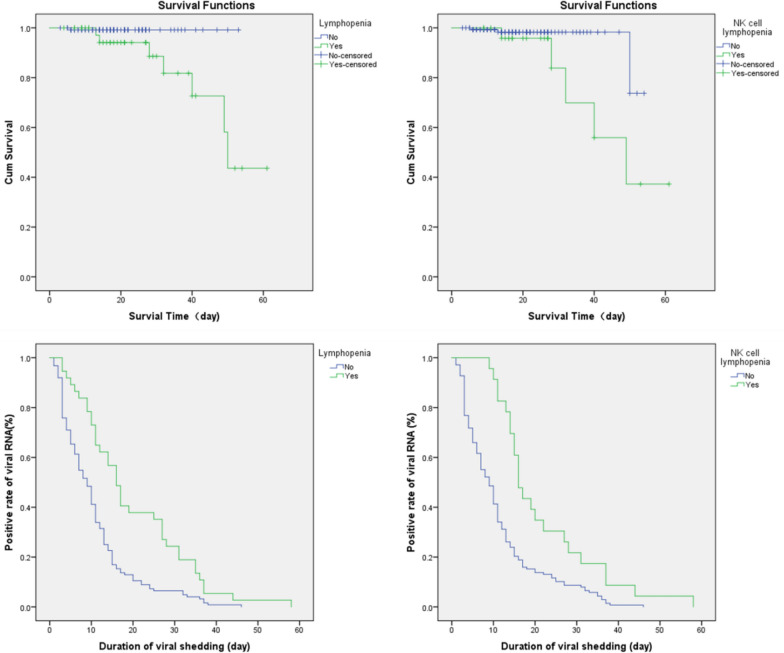
Coronavirus disease 2019 (COVID-19) is a novel infectious viral disease caused by the severe acute respiratory syndrome coronavirus 2 (SARS-CoV-2). Two consecutively negative SARS-CoV-2 viral RNA test ( interval ≥ 24 hours), improved respiratory symptoms and obvious absorption of inflammation in pulmonary imaging are the discharge criteria for COVID-19 patients. The clearance profile of viral RNA in the upper respiratory tract specimens, including nasopharyngeal swab and/or oropharyngeal swabs, is related to innate immune cells such as Natural Killer cells. A total of 168 patients were included for the study. In this cohort, non-severe and severe groups showed significant differences in white blood cells, neutrophils, lymphocytes, basophils and platelets counts, as well as in infection related parameters such as CRP and serum cytokine IL-6. For lymphocyte subsets tests at admission, the severe group displayed significantly lower cell counts than the non-severe group. Higher counts of total T cells, CD4 + T cells, CD8 + T cells, and NK cells in peripheral blood showed a significant correlation with the shorter time taken to obtain the first negative viral RNA test and first positive IgM/ IgG antibody test. The number of B cells was only correlated with time to achieve the first positive IgM/IgG test. The count of NK cells was also correlated with a higher level of IgG antibody (p = 0.025). The lymphocytopenia group had a significantly worse survival rate (p = 0.022) and a longer duration (p = 0.023) of viral shedding than the normal lymphocyte count group. A lower NK cell count correlates the most with the worse survival rate (p<0.001) and a longer duration (p<0.001) of viral shedding. This study suggests the potential value of allo-Natural Killer cell therapy as an universal COVID-19 treatment strategy.
Overview
The claims and statistics of this paper haven’t been checked yet.
Free: it reads the open-access text and checks the first 5 claims that cite a source we can check. Create a free account to check every claim.
Integrity signals
Registry
Cites
Statistics
Figures
Verification
Claims the paper makes
The claims and statistics of this paper haven’t been checked yet.
Free: it reads the open-access text and checks the first 5 claims that cite a source we can check. Create a free account to check every claim.
Claims other papers make about this one
Each is checked against this paper’s own text: does it say what the citing paper says it does?
The source backs part of the claim, not all of it — or backs it for a different population, condition or comparison.
In the citing paper
“The shared target genes and pathways in corresponding cells were previously shown related to death from COVID-1957–60.”
From ASGARD is a single-cell guided pipeline to aid repurposing of drugs (2023) · cites this paper as [57]
Experimental — accuracy not yet measuredThe source backs part of the claim, not all of it — or backs it for a different population, condition or comparison.
In the citing paper
“The population of neutrophil, NK cell, T cell, and monocyte increased in deceased severe COVID patients compared to the cured ones, suggesting the important role of these four types of cells in COVID-19-related death57–60 (Fig. 6b).”
From ASGARD is a single-cell guided pipeline to aid repurposing of drugs (2023) · cites this paper as [57]
Experimental — accuracy not yet measured
Self-check
Percentages, sums and reported differences re-computed from the paper’s own numbers.
The self-check needs the paper’s full text.
Citations
Cites
Clinical features of patients infected with 2019 novel coronavirus in Wuhan, China
Huang, C., Wang, Y., Li, X., Ren, L., Zhao, J., Hu, Y., Zhang, L., Fan, G., Xu, J., Gu, X., et al. (2020) · The Lancet · doi:10.1016/s0140-6736(20)30183-5 · Cited by 48,884
Virological assessment of hospitalized patients with COVID-2019
Wölfel, R., Corman, V. M., Guggemos, W., Seilmaier, M., Zange, S., Müller, M. A., Niemeyer, D., Jones, T. C., Vollmar, P., Rothe, C., et al. (2020) · Nature · doi:10.1038/s41586-020-2196-x · Cited by 6,661
Lymphopenia in severe coronavirus disease-2019 (COVID-19): systematic review and meta-analysis
Huang, I., & Pranata, R. (2020) · Journal of Intensive Care · doi:10.1186/s40560-020-00453-4 · Cited by 662 · cited 1×
“The lymphocytopenia (<1 × 10⁹/L) [3] group had a significantly worse survival rate (log-rank p = 0.”
BackgroundImpaired immune cell cytotoxicity in severe COVID-19 is IL-6 dependent
Mazzoni, A., Salvati, L., Maggi, L., Capone, M., Vanni, A., Spinicci, M., Mencarini, J., Caporale, R., Peruzzi, B., Antonelli, A., et al. (2020) · Journal of Clinical Investigation · doi:10.1172/jci138554 · Cited by 502 · cited 1×
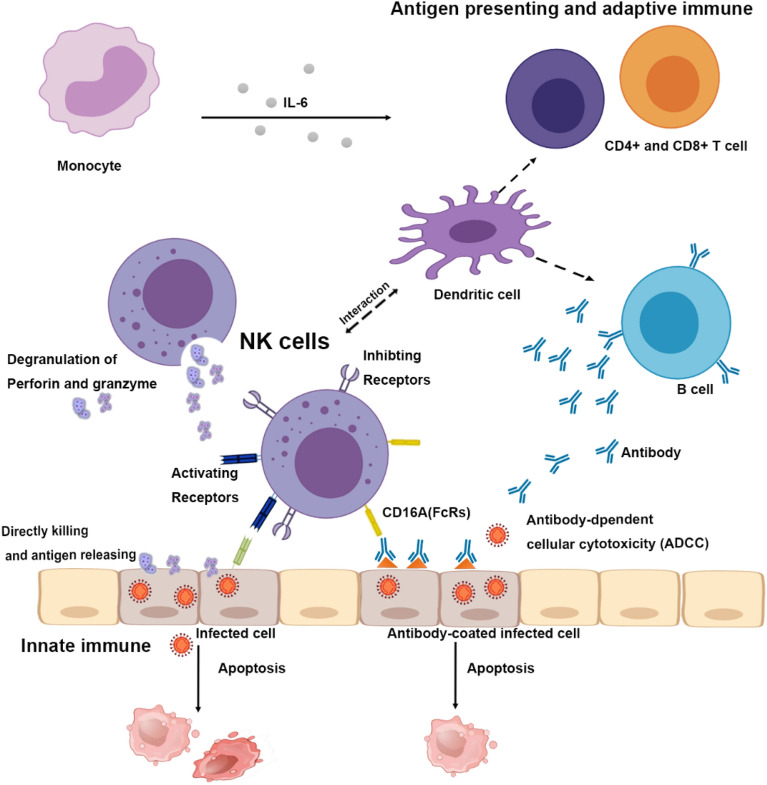
“NK cells, as a part of innate immune system, play an important role during acute viral infection [5].”
BackgroundPhelan, A. L. (2020) · The Lancet · doi:10.1016/s0140-6736(20)31034-5 · Cited by 291 · cited 10×
“The strength and duration of IgG after infection is the key point of immunity from SARS-CoV-2 [6].”
InfluentialThe Innate Immune System: Fighting on the Front Lines or Fanning the Flames of COVID-19?
McKechnie, J. L., & Blish, C. A. (2020) · Cell Host & Microbe · doi:10.1016/j.chom.2020.05.009 · Cited by 222
Effect of Natural Compounds on NK Cell Activation
Grudzień, M., & Rapak, A. (2018) · Journal of Immunology Research · doi:10.1155/2018/4868417 · Cited by 139
NAKAYAMA, M., Takeda, K., Kawano, M., Takai, T., Ishii, N., & Ogasawara, K. (2011) · Proceedings of the National Academy of Sciences · doi:10.1073/pnas.1110584108 · Cited by 137 · cited 1×
“NK cells interact with dendritic cells [8] and may play a part in processes of antigen-presentation and adaptive immunity against SARS-CoV-2.”
BackgroundEbbo, M., Gérard, L., Carpentier, S., Vely, F., Cypowyj, S., Farnarier, C., Vince, N., Malphettes, M., Fieschi, C., Oksenhendler, É., et al. (2016) · EBioMedicine · doi:10.1016/j.ebiom.2016.02.025 · Cited by 96 · cited 1×
“1 × 10⁹/L) [4] group had a significantly worse survival rate (log-rank p < 0.”
BackgroundDendritic Cell Editing by Natural Killer Cells
Ferlazzo, G., & Moretta, L. (2014) · Critical Reviews™ in Oncogenesis · doi:10.1615/critrevoncog.2014010827 · Cited by 73
Cited by
SARS-CoV-2 Variants, Vaccines, and Host Immunity
Mistry, P., Barmania, F., Mellet, J., Peta, K., Strydom, A., Viljoen, I. M., James, W., Gordon, S., & Pepper, M. S. (2022) · Frontiers in Immunology · doi:10.3389/fimmu.2021.809244 · Cited by 299
Binder, M. D., Mazereel, V., Stroobants, M., Picker, L. D., Assche, K. V., & Detraux, J. (2022) · Frontiers in Psychiatry · doi:10.3389/fpsyt.2021.798554 · Cited by 83
“Several therapeutic options for this vulnerable population may exist to reduce the increased mortality rate: the use of medications that target specific inflammatory markers, the use of a cytokine filter targeting multiple different cytokines at a larger scale, natural killer cell-based immunotherapies, and the use of…”
BackgroundNatural Killer Cells in SARS-CoV-2 Infection: Pathophysiology and Therapeutic Implications
Vito, C. D., Calcaterra, F., Coianiz, N., Terzoli, S., Voza, A., Mikulak, J., Bella, S. D., & Mavilio, D. (2022) · Frontiers in Immunology · doi:10.3389/fimmu.2022.888248 · Cited by 74
“Moreover, the observation that in SARS-CoV2 infected individuals the count of circulating NK cells is directly correlated with the level of anti-SARS-CoV-2 IgG antibodies suggests that NK cell-DC crosstalk in COVID-19 patients may also affect humoral adaptive immune responses, likely by indirectly promoting the secret…”
BackgroundHammer, Q., Dunst, J., Christ, W., Picarazzi, F., Wendorff, M., Momayyezi, P., Huhn, O., Netskar, H., Maleki, K. T., García, M., et al. (2022) · Cell Reports · doi:10.1016/j.celrep.2022.110503 · Cited by 66
“…or exhaustion is observed in patients with severe disease, suggesting that adequate activity of NK cellsmay be important in disease progression (Bao et al., 2021; Krämer et al., 2021; Liao et al., 2020; Maucourant et al., 2020; Mazzoni et al., 2020; Osman et al., 2020; Sahoo et al., 2021;…”
ASGARD is a single-cell guided pipeline to aid repurposing of drugs
He, B., Xiao, Y., Liang, H., Huang, Q., Du, Y., Li, Y., Garmire, D., Sun, D., & Garmire, L. X. (2023) · Nature Communications · doi:10.1038/s41467-023-36637-3 · Cited by 57
Rahman, M. H., Rana, H. K., Peng, S., Kibria, M. G., Islam, M. Z., Mahmud, S. M. H., & Moni, M. A. (2021) · Computers in Biology and Medicine · doi:10.1016/j.compbiomed.2021.104859 · Cited by 40
Barman, T. K., Singh, A. K., Bonin, J. L., Nafiz, T. N., Salmon, S. L., & Metzger, D. W. (2022) · JCI Insight · doi:10.1172/jci.insight.159422 · Cited by 37
COVID-19 and the Immune Response: A Multi-Phasic Approach to the Treatment of COVID-19
Sapir, T., Averch, Z., Lerman, B., Bodzin, A., Fishman, Y., & Maitra, R. (2022) · International Journal of Molecular Sciences · doi:10.3390/ijms23158606 · Cited by 41
“In a recent study, the immune cell count that correlated the most with survival rate and least with severity of disease was the NK cell count [50].”
BackgroundMaruthamuthu, S., Rajalingam, K., Kaur, N., Morvan, M. G., Soto, J., Lee, N., Kong, D., Hu, Z., Reyes, K. R., Ng, D., et al. (2022) · Frontiers in Genetics · doi:10.3389/fgene.2022.845474 · Cited by 30
Exploring the Utility of NK Cells in COVID-19
Deng, X., Terunuma, H., & Nieda, M. (2022) · Biomedicines · doi:10.3390/biomedicines10051002 · Cited by 33
“Clinical trials of NK cell therapy in COVID-19 patients have begun (Table 1) [36,38,140].”
BackgroundInfluentialOf vascular defense, hemostasis, cancer, and platelet biology: an evolutionary perspective
Menter, D. G., Afshar‐Kharghan, V., Shen, J. P., Martch, S. L., Maitra, A., Kopetz, S., Honn, K. V., & Sood, A. K. (2022) · Cancer and Metastasis Reviews · doi:10.1007/s10555-022-10019-5 · Cited by 24
Gur, I., Giladi, A., Isenberg, Y. N., Neuberger, A., & Stern, A. (2022) · Acta Haematologica · doi:10.1159/000523872 · Cited by 25
Wang, Y., Wu, M., Li, Y., Yuen, H. H., & He, M. (2022) · Journal of Biomedical Science · doi:10.1186/s12929-022-00811-4 · Cited by 28
“[125] NK cells can eliminate pathogen-infected cells by apoptosis through both direct and indirect mechanisms [126].”
BackgroundNatural killer cell exhaustion in SARS-CoV-2 infection
Gallardo‐Zapata, J., & Maldonado‐Bernal, C. (2022) · Innate Immunity · doi:10.1177/17534259221077750 · Cited by 20
“In contrast, "regulatory" NK subpopulations exhibited a greater ADCC antibody-dependent response and actively expanded in the periphery in severe COVID-19 patients.(112,113) It has been shown that they are less responsive to cytokine stimulation, but they respond better to signal through the CD16 receptor, so these ce…”
BackgroundDeng, X., Terunuma, H., & Nieda, M. (2021) · Biomedicines · doi:10.3390/biomedicines9050557 · Cited by 20
“For disease treatment using NK cells, NK-cell-based adoptive immunotherapy has been introduced fo cancer treatment and has be n consider d for viral infections [19,127,128].”
BackgroundCOVID-19 immunotherapy: Treatment based on the immune cell-mediated approaches
Zavvar, M., Yahyapoor, A., Baghdadi, H., Zargaran, S., Assadiasl, S., Abdolmohammadi, K., Abooei, A. H., Sattarian, M. R., JalaliFarahani, M., Zarei, N., et al. (2022) · International Immunopharmacology · doi:10.1016/j.intimp.2022.108655 · Cited by 16
“The results indicate a correlation between a higher count of NK cells in peripheral blood with negative viral RNA and positive IgG/IgM tests [38].”
BackgroundTargeting Specific Checkpoints in the Management of SARS-CoV-2 Induced Cytokine Storm
Abubakar, A. R., Ahmad, R., Rowaiye, A. B., Rahman, S., Iskandar, K., Dutta, S., Oli, A. N., Dhingra, S., Tor, M. A., Etando, A., et al. (2022) · Life · doi:10.3390/life12040478 · Cited by 15
Latifi-Pupovci, H. (2022) · Biomedicine & Pharmacotherapy · doi:10.1016/j.biopha.2022.113368 · Cited by 20
NK cell dysfunction is linked with disease severity in SARS‐CoV‐2 patients
Asl, K. D., Mazloumi, Z., Majidi, G., Kalarestaghi, H., Sabetkam, S., & Rafat, A. (2022) · Cell Biochemistry and Function · doi:10.1002/cbf.3725 · Cited by 12
“In early December 2019, an outbreak of novel virus was reported in Wuhan City, Hubei Province, China.1 Coronavirus disease 2019 (COVID‐19) pandemic led to the economic problems and disastrous deaths in both undeveloped and developing countries.”
BackgroundInfluentialFarhangnia, P., Dehrouyeh, S., Safdarian, A. R., Farahani, S. V., Gorgani, M., Rezaei, N., Akbarpour, M., & Delbandi, A. (2022) · International Immunopharmacology · doi:10.1016/j.intimp.2022.108786 · Cited by 15
Jiménez, D., & Arias, M. T. (2022) · Immunological Medicine · doi:10.1080/25785826.2022.2066251 · Cited by 13
Alrubayyi, A., Touizer, E., Hameiri‐Bowen, D., Charlton, B. G., Gea‐Mallorquí, E., Hussain, N., da Costa, K., Ford, R., Rees-Spear, C., Fox, T. A., et al. (2023) · Scientific Reports · doi:10.1038/s41598-023-45412-9 · Cited by 15
Macharia, J. M., Gakenye, G. W., Rozmann, N., Onchonga, D., Mwangi, R. W., Káposztás, Z., Mathenge, J., Pusztai, D., Pintér, M., Sugár, M., et al. (2022) · Scientific Reports · doi:10.1038/s41598-022-26824-5 · Cited by 11
Luo, H., Yan, J., Zhang, D., & Zhou, X. (2023) · Frontiers in Immunology · doi:10.3389/fimmu.2023.1152223 · Cited by 12
“Lower NK cell counts have been reported to be associated with poorer survival rates in COVID-19 (62).”
BackgroundHao, Y., Chen, P., Yuan, X., Zhao, A., Liang, Y., Liu, H., & Qian, W. (2022) · World Journal of Clinical Cases · doi:10.12998/wjcc.v10.i19.6555 · Cited by 9
Self-citationPsychotropic drugs interaction with the lipid nanoparticle of COVID-19 mRNA therapeutics
Sfera, A., Hazan, S., Anton, J. J., Sfera, D. O., Andronescu, C. V., Sasannia, S., Rahman, L., & Kozlakidis, Z. (2022) · Frontiers in Pharmacology · doi:10.3389/fphar.2022.995481 · Cited by 6
“On the other hand, unlike older individuals, SPI patients display an increased number of natural killer cell (NKC) that are unaffected by the psychotropic drugs, probably explaining the low prevalence of malignancy as well as COVID-19 critical illness in this population (Yovel et al., 2000; Bao et al., 2021; Tarantino…”
BackgroundHung, J.-N., Vo, D. N. K., Ho, H. P. T., & Tsai, M. (2022) · Biomacromolecules · doi:10.1021/acs.biomac.2c00271 · Cited by 6
Characteristics and Potential Roles of Natural Killer Cells During SARS-CoV-2 Infection
Cao, W., Wang, F., & Song, J. (2022) · Infectious Diseases & Immunity · doi:10.1097/id9.0000000000000075 · Cited by 7
Batista, J. C., DeAntonio, R., & López‐Vergès, S. (2025) · Cells · doi:10.3390/cells14110763 · Cited by 9
“A significant decrease in the absolute number of NK cells in peripheral blood was observed in patients with severe COVID-19 and those in intensive care units (ICUs) [4,61,62].”
NK cells modulate in vivo control of SARS-CoV-2 replication and suppression of lung damage
Balachandran, H., Kroll, K. W., Terry, K., Manickam, C., Jones, R. A., Woolley, G., Hayes, T., Martinot, A. J., Sharma, A., Lewis, M. G., et al. (2024) · PLoS Pathogens · doi:10.1371/journal.ppat.1012439 · Cited by 5
Sсherbak, S. G., Vologzhanin, D. A., Голота, А. С., Kamilova, Т. A., & Макаренко, С. В. (2022) · Journal of clinical practice · doi:10.17816/clinpract106239 · Cited by 5
Adjunctive treatment in COVID-19 and sepsis—What did we learn?
Giamarellos‐Bourboulis, E. J. (2023) · Medizinische Klinik - Intensivmedizin und Notfallmedizin · doi:10.1007/s00063-023-01089-6 · Cited by 4
Insights into Innate Immune Response Against SARS-CoV-2 Infection
Huţanu, A., Georgescu, A. M., Andrejkovits, Á. V., Au, W. W., & Dobreanu, M. (2021) · Revista română de medicină de laborator · doi:10.2478/rrlm-2021-0022 · Cited by 3
An Update on Complications Associated with SARS-CoV-2 Infection and COVID-19 Vaccination
Chowdhury, P., Bhattacharya, S., Gogoi, B., Veeranna, R. P., & Kumar, S. (2022) · Vaccines · doi:10.3390/vaccines10101639 · Cited by 3
“, perforin and granzymes production, which are increased in patients with severe COVID-19 disease [27,28,36].”
BackgroundNegm, E. M. (2022) · Egyptian Journal of Bronchology · doi:10.1186/s43168-022-00120-2 · Cited by 3
“, natural killer cells can be used as a universal COVID-19 treatment [20].”
BackgroundNK Cells: A Powerful Squad Versus SARS-CoV-2
Alvarado‐Hernandez, D. L., Vitales‐Noyola, M., Martínez-Rider, R., Bernal‐Silva, S., & Comas‐García, A. (2025) · International Journal of Molecular Sciences · doi:10.3390/ijms26136500 · Cited by 3
“Conversely, patients exhibiting NK lymphocytopenia had a worse prognosis and decreased survival rate [61].”
Physical activity during COVID-19 pandemic: A 5-year retrospect
Woods, J. A., Hutchinson, N. T., Powers, S. K., Gómez‐Cabrera, M. C., Radak, Z. O., Leeuwenburgh, C., Cacciatore, S., Marzetti, E., Zhang, T., Garza, R., et al. (2025) · Sports Medicine and Health Science · doi:10.1016/j.smhs.2025.11.001 · Cited by 3
“40 Also known is that exercise increases NK cell numbers and their function.”
The cross-talk study between immune system and SARS-CoV-2
Alamer, E. (2023) · Journal Of Advanced Pharmacy Education And Research · doi:10.51847/8u5axm8acl · Cited by 2
ASGARD: A Single-cell Guided pipeline to Aid Repurposing of DrugsPreprint
He, B., Xiao, Y., Liang, H., Huang, Q., Du, Y., Li, Y., Garmire, D., Sun, D., & Garmire, L. X. (2021) · PubMed · doi:10.48550/arxiv.2109.06377 · Cited by 2
NK cells are critical for in vivo control of SARS-CoV-2 replication and suppression of lung damagePreprint
Reeves, R. K., Balachandran, H., Kroll, K. W., Terry, K., Manickam, C., Jones, R. A., Woolley, G., Hayes, T., Martinot, A. J., Sharma, A., et al. (2023) · Research Square · doi:10.21203/rs.3.rs-3105052/v1 · Cited by 1
Computational genomic analysis of the lung tissue microenvironment in COVID-19 patientsPreprint
Bhuvaneshwar, K., Madhavan, S., & Gusev, Y. (2021) · bioRxiv (Cold Spring Harbor Laboratory) · doi:10.1101/2021.05.28.446250
Prolonged Viral Shedding in Three Young Adult Cases of COVID-19
Dong, W.-Y., Zhou, M., Huang, L., Zhang, C., Wang, F., & Xie, Z. (2022) · Infectious Diseases & Immunity · doi:10.1097/id9.0000000000000041
Chandra, K., Das, A. K., Banday, S., Dhyani, N., Upadhyay, B., Dang, A., Joshi, S., & Dudeja, M. (2022) · Indian Journal of Pathology and Microbiology · doi:10.4103/ijpm.ijpm_178_22
Sukmawati, I. N., Kusuma, M. T., Anam, K., & Prawiro, S. R. (2023) · Journal of Clinical Microbiology and Infectious Diseases · doi:10.51559/jcmid.v3i2.34
Integrative genomic analysis of the lung tissue microenvironment in SARS-CoV-2 and NL63 patients
Bhuvaneshwar, K., Madhavan, S., & Gusev, Y. (2024) · Heliyon · doi:10.1016/j.heliyon.2024.e32772
“Clinical trials are ongoing (NCT04324996 and NCT04634370) and scientists are now exploring immunotherapy and enhancement-based treatments using NK cells to combat the disease progression and severity of COVID-19 [51,53 – 55].”
BackgroundNavigating the Unknown: Open Questions Surrounding Natural Killer Cell Responses to SARS-CoV-2
Hammer, Q. (2025) · Springer eBooks · doi:10.1007/978-3-662-68816-8_32-1
Lee, H., Lee, B., Kim, S. W., Yeo, C. D., Lee, S. H., & Lim, J. (2025) · Journal of Korean Medical Science · doi:10.3346/jkms.2025.40.e172 · Cited by 1
“15,28-30 Our findings were also in line with previous results and suggest the potential role of NK and NKT subsets also as a surrogate biomarker of the COVID-19 severity.”
Metadata
- Authors
- Bao, C., Tao, X., Cui, W., Hao, Y., Zheng, S., Yi, B., Pan, T., Young, K. H., & Qian, W.
- Affiliations
- Second Affiliated Hospital of Zhejiang University (CN)
- Second Military Medical University (CN)
- Duke University (US)
- First Affiliated Hospital of Soochow University (CN)
- Corresponding author
- Young, Ken H.
- Qian, Wenbin
- Venue
- Experimental Hematology & Oncology
- Published
- 2021-01-27
- Volume
- 10
- Issue
- 1
- Pages
- 5-5
- ISSN
- 2162-3619 (ISSN-L)
- PMC
- PMC7839286
- OpenAlex
- W3124932440
- Cited by
- 47
- References
- 12
- Citations by year
- 2025: 5 · 2024: 2 · 2023: 7 · 2022: 28 · 2021: 5
- FWCI
- 3.33
- Type
- journal article
- Language
- en
- Open access
- gold
- doi.org
- Licence
- cc-by
- creativecommons.org/licenses/by/4.0/ (tdm)
- creativecommons.org/licenses/by/4.0/ (vor)
- Locations
- Experimental Hematology and Oncology (publishedVersion, cc-by)
- PubMed Central (publishedVersion, cc-by)
- PubMed (publishedVersion)
- DOAJ (DOAJ: Directory of Open Access Journals) (submittedVersion, cc-by-sa)
- Funders
- The Translation Research Grant of NCRCH (2020ZKZC01)
- Topics
- Health Sciences › Medicine › Infectious Diseases › COVID-19 Clinical Research Studies
- Health Sciences › Medicine › Infectious Diseases › SARS-CoV-2 and COVID-19 Research
- Life Sciences › Immunology and Microbiology › Immunology › Immune Cell Function and Interaction
- Keywords
- COVID-19 pandemic, SARS-CoV-2, natural killer cells, viral RNA shedding, viral clearance, antibody response, IgM and IgG antibodies, lymphopenia, mortality, CD4+ T cells, CD8+ T cells, B cells, interleukin-6, C-reactive protein, innate immunity
About these checks
Registry, retraction, Cites and statistics results are computed, not judged, with one exception: a printed reference that no index lists is read once by a model before it counts as a citation error. Claims are extracted by a model and kept only when their quote appears verbatim in the text; each cited source is then checked, with a model’s help, for whether it says what the claim relies on. Those verdicts can be wrong — read the claim’s quote and the cited source before relying on one.
Statistics and arithmetic are recomputed, not judged.
Confidence bands are shown only for fields calibrated on our annotated test set. None is calibrated yet, so no band is shown.
What counts as a claim ›How we measure confidence ›How we check this ›
Are you an author, or do you see a problem with this page? Request a review
Data sources
Bibliographic data: Semantic Scholar, OpenAlex, Crossref.
Contains information from the Semantic Scholar Academic Graph Datasets, made available under the ODC Attribution License (ODC-BY 1.0).
Semantic Scholar’s data is described in: Kinney, R., et al. (2023). The Semantic Scholar Open Data Platform. arXiv:2301.10140.
