

The DOI matches its Crossref record; 24 of the 25 references it cites were found in a registry or an index.
Deriving accurate microbiota profiles from human samples with low bacterial content through post-sequencing processing of Illumina MiSeq data
Open accessAbstract
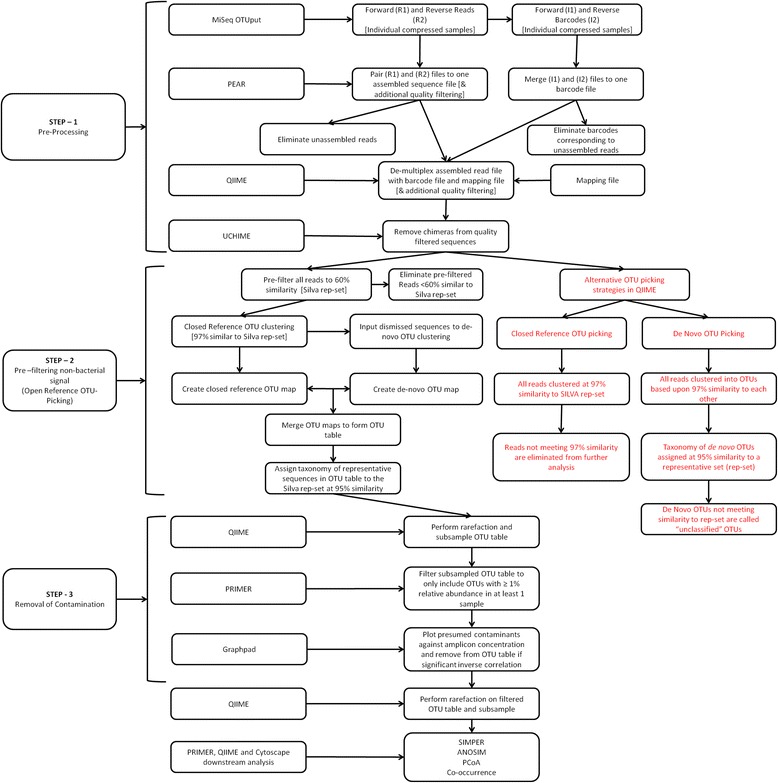
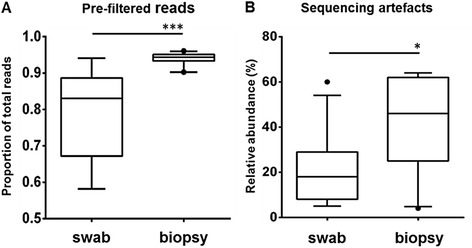
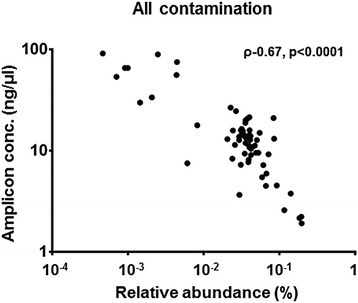
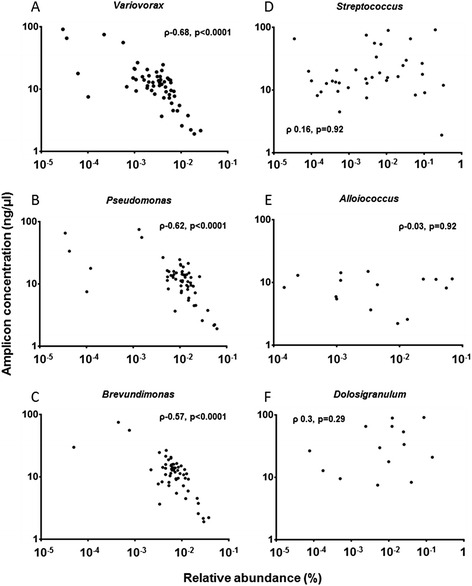
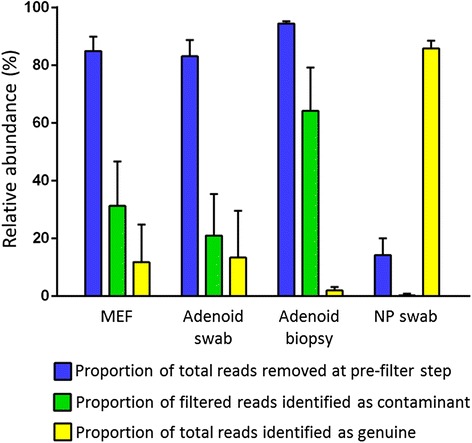
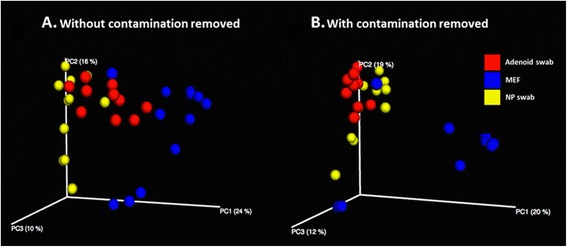
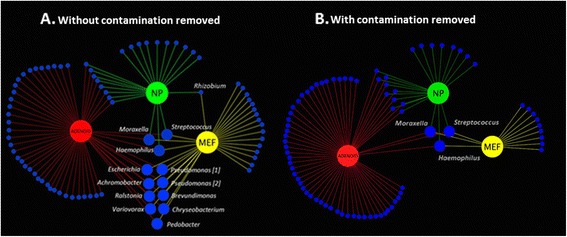
BACKGROUND: The rapid expansion of 16S rRNA gene sequencing in challenging clinical contexts has resulted in a growing body of literature of variable quality. To a large extent, this is due to a failure to address spurious signal that is characteristic of samples with low levels of bacteria and high levels of non-bacterial DNA. We have developed a workflow based on the paired-end read Illumina MiSeq-based approach, which enables significant improvement in data quality, post-sequencing. We demonstrate the efficacy of this methodology through its application to paediatric upper-respiratory samples from several anatomical sites. RESULTS: A workflow for processing sequence data was developed based on commonly available tools. Data generated from different sample types showed a marked variation in levels of non-bacterial signal and 'contaminant' bacterial reads. Significant differences in the ability of reference databases to accurately assign identity to operational taxonomic units (OTU) were observed. Three OTU-picking strategies were trialled as follows: de novo, open-reference and closed-reference, with open-reference performing substantially better. Relative abundance of OTUs identified as potential reagent contamination showed a strong inverse correlation with amplicon concentration allowing their objective removal. The removal of the spurious signal showed the greatest improvement in sample types typically containing low levels of bacteria and high levels of human DNA. A substantial impact of pre-filtering data and spurious signal removal was demonstrated by principal coordinate and co-occurrence analysis. For example, analysis of taxon co-occurrence in adenoid swab and middle ear fluid samples indicated that failure to remove the spurious signal resulted in the inclusion of six out of eleven bacterial genera that accounted for 80% of similarity between the sample types. CONCLUSIONS: The application of the presented workflow to a set of challenging clinical samples demonstrates its utility in removing the spurious signal from the dataset, allowing clinical insight to be derived from what would otherwise be highly misleading output. While other approaches could potentially achieve similar improvements, the methodology employed here represents an accessible means to exclude the signal from contamination and other artefacts.
Overview
The claims and statistics of this paper haven’t been checked yet.
Run the check — free, no account needed. It reads the open-access text and checks the sources it cites.
Integrity signals
Registry
Cites
Statistics
Figures
Verification
Claims the paper makes
The claims and statistics of this paper haven’t been checked yet.
Run the check — free, no account needed. It reads the open-access text and checks the sources it cites.
Claims other papers make about this one
Each is checked against this paper’s own text: does it say what the citing paper says it does?
In the citing paper
“Additional putative external contamination was identified on the basis that sequences from contaminants generally have frequencies that are inversely correlated with sample analyte concentration16,38.”
From RETRACTED ARTICLE: Microbiome analyses of blood and tissues suggest cancer diagnostic approach (2020) · cites this paper as [38]
In the citing paper
“As an additional quality control step, all OTUs were tested for correlations between the proportional abundance of the OTU and the post-PCR amplicon concentration of a sample using the method developed by Jervis-Brady et al. [90] as implemented in the contam_test program for R (https://github.com/eclarke/eclectic).”
From Population structure of human gut bacteria in a diverse cohort from rural Tanzania and Botswana (2019) · cites this paper as [90]
Self-check
Percentages, sums and reported differences re-computed from the paper’s own numbers.
The self-check needs the paper’s full text.
Citations
Cites
Cytoscape: A software Environment for integrated models of biomolecular interaction networks
Shannon, P., Markiel, A., Ozier, O., Baliga, N. S., Wang, J. T., Ramage, D., Amin, N., Schwikowski, B., & Ideker, T. (2003) · Genome Research · doi:10.1101/gr.1239303 · Cited by 51,888 · cited 1×
“2 [26] was used to create a co-occurrence model.”
MethodQIIME allows analysis of high-throughput community sequencing data
Caporaso, J. G., Kuczynski, J., Stombaugh, J., Bittinger, K., Bushman, F. D., Costello, E. K., Fierer, N., Peña, A. G., Goodrich, J. K., Gordon, J. I., et al. (2010) · Nature Methods · doi:10.1038/nmeth.f.303 · Cited by 34,887 · cited 12×
“Keywords: 16S rRNA, Respiratory, MiSeq, Contamination, Pair-end reads, QIIME, Otitis media * Correspondence: jakejervisbardy@hotmail.com †Equal contributors 1Menzies School of Health Research, Child Health Division, Charles Darwin University, Darwin, NT, Australia 2School of Medicine, Flinders University, Bedford Park…”
MethodInfluentialThe SILVA ribosomal RNA gene database project: improved data processing and web-based tools
Quast, C., Pruesse, E., Yilmaz, P., Gerken, J., Schweer, T., Yarza, P., Peplies, J., & Glöckner, F. O. (2012) · Nucleic Acids Research · doi:10.1093/nar/gks1219 · Cited by 33,055 · cited 2×
“8) [9] and SILVA (v111) [10], to assign identities to OTUs generated from a multi-template control comprised of known species at defined relative abundance.”
BackgroundMethodSearch and clustering orders of magnitude faster than BLAST
Edgar, R. C. (2010) · Bioinformatics · doi:10.1093/bioinformatics/btq461 · Cited by 21,098
Schloss, P. D., Westcott, S. L., Ryabin, T., Hall, J. R., Hartmann, M., Hollister, E. B., Lesniewski, R. A., Oakley, B. B., Parks, D. H., Robinson, C. J., et al. (2009) · Applied and Environmental Microbiology · doi:10.1128/aem.01541-09 · Cited by 19,549
UCHIME improves sensitivity and speed of chimera detection
Edgar, R. C., Haas, B. J., Clemente, J. C., Quince, C., & Knight, R. (2011) · Bioinformatics · doi:10.1093/bioinformatics/btr381 · Cited by 15,114
McDonald, D. T., Price, M. N., Goodrich, J. K., Nawrocki, E. P., DeSantis, T. Z., Probst, A. J., Andersen, G. L., Knight, R. D., & Hugenholtz, P. (2011) · The ISME Journal · doi:10.1038/ismej.2011.139 · Cited by 5,144 · cited 1×
“8) [9] and SILVA (v111) [10], to assign identities to OTUs generated from a multi-template control comprised of known species at defined relative abundance.”
BackgroundKraken: ultrafast metagenomic sequence classification using exact alignments
Wood, D. E., & Salzberg, S. L. (2014) · Genome Biology · doi:10.1186/gb-2014-15-3-r46 · Cited by 4,521 · cited 7×
“We note there are a variety of stand-alone methods available to eliminate this type of non-bacterial signal, such as DeconSeq [12], Kraken [11] and FastQ Screen (Babraham Bioinformatics, Babraham Institute, UK).”
MethodInfluentialPEAR: a fast and accurate Illumina Paired-End reAd mergeR
Zhang, J., Kobert, K., Flouri, T., & Stamatakis, A. (2014) · Bioinformatics · doi:10.1093/bioinformatics/btt593 · Cited by 4,497 · cited 2×
“5 [18] was used to pair the forward and reverse reads of sequences in each sample and discard all sequences less than 450 bp and/or with a Phred score <33.”
MethodReagent and laboratory contamination can critically impact sequence-based microbiome analyses
Salter, S. J., Cox, M. J., Turek, E. M., Calus, S. T., Cookson, W. O., Moffatt, M. F., Turner, P., Parkhill, J., Loman, N. J., & Walker, A. W. (2014) · BMC Biology · doi:10.1186/s12915-014-0087-z · Cited by 3,463 · cited 5×
“Such a spurious signal can substantially distort community profiles from samples with low bacterial load [4-6].”
BackgroundInfluential
Research works printed but not linked: 2
- The National Center for Biotechnology Information Sequence Read Archive. http://www.ncbi.nlm.nih.gov/sra/ (accessed 011014)
- The National Center for Biotechnology Information Basic Local Alignment Search Tool. http://blast.ncbi.nlm.nih.gov/Blast.cgi (accessed 011014)
Cited by
Sorted by citations
Items 101–192 of 192
Intratumoural microbiota: from theory to clinical application
Ji, H., Jiang, Z., Wei, C., Ma, Y., Zhao, J., Wang, F., Zhao, B., Wang, D., & Tang, D. (2023) · Cell Communication and Signaling · doi:10.1186/s12964-023-01134-z · Cited by 29
“However, the biomass of the microbiota in these tumors is relatively low, which makes it difficult to characterise bacteria in tumors [8].”
BackgroundGarcia-Recinos, L., Burrowes, P. A., & Domínguez-Bello, M. G. (2019) · Frontiers in Microbiology · doi:10.3389/fmicb.2019.02571 · Cited by 26
Characterization of conjunctival microbiome dysbiosis associated with allergic conjunctivitis
Liang, Q., Li, J., Zhang, S., Liao, Y., Guo, S., Liang, J., Deng, X., Liu, Y., Zou, B., Wen, X., et al. (2020) · Allergy · doi:10.1111/all.14635 · Cited by 24
The Lung Microbiome in Young Children with Cystic Fibrosis: A Prospective Cohort Study
Linnane, B. M., Walsh, A. M., Walsh, C. J., Crispie, F., O’Sullivan, Ó., Cotter, P. D., McDermott, M., Renwick, J. A. A., & McNally, P. (2021) · Microorganisms · doi:10.3390/microorganisms9030492 · Cited by 25
Choo, J. M., Trim, P. J., Leong, L. E. X., Abell, G. C. J., Brune, C., Jeffries, N., Wesselingh, S. L., Dear, T. N., Snel, M. F., & Rogers, G. B. (2017) · Frontiers in Microbiology · doi:10.3389/fmicb.2017.00608 · Cited by 26
“8.0) (Caporaso et al., 2010) using a bioinformatics pipeline described previously (Jervis-Bardy et al., 2015).”
MethodInfluentialSelf-citationInserra, A., Choo, J. M., Lewis, M. D., Rogers, G. B., Wong, M., & Licinio, J. (2019) · Scientific Reports · doi:10.1038/s41598-018-38055-8 · Cited by 23
Self-citationContamination detection and microbiome exploration with GRIMER
Piro, V. C., & Renard, B. Y. (2022) · GigaScience · doi:10.1093/gigascience/giad017 · Cited by 20
“observations in negative 70 controls) but also base on the frequency in relation to DNA concentration [42, 43].”
BackgroundBorchmann, S. (2021) · Microbiome · doi:10.1186/s40168-021-01039-4 · Cited by 21
Mak, G., Zaunders, J. J., Bailey, M., Seddiki, N., Rogers, G. B., Leong, L. E. X., Phan, T. G., Kelleher, A. D., Koelsch, K. K., Boyd, M. A., et al. (2021) · Frontiers in Immunology · doi:10.3389/fimmu.2021.688886 · Cited by 20
Self-citationThe impact of kit, environment, and sampling contamination on the observed microbiome of bovine milk
Dean, C. J., Deng, Y., Wehri, T. C., Peña-Mosca, F., Ray, T., Crooker, B. A., Godden, S., Caixeta, L. S., & Noyes, N. R. (2024) · mSystems · doi:10.1128/msystems.01158-23 · Cited by 20
“Furthermore, even a truly aseptically collected sample can be contaminated by DNA contained in molecular extraction and library preparation kits, i.e., the so-called “kitome” (27–29).”
BackgroundThe Interplay between Microbiota and Chemotherapy-Derived Metabolites in Breast Cancer
Plaza‐Díaz, J., & Álvarez‐Mercado, A. I. (2023) · Metabolites · doi:10.3390/metabo13060703 · Cited by 20
Leuvenhaege, C. V., Vandelannoote, K., Affolabi, D., Portaels, F., Sopoh, G. E., de Jong, B. C., Eddyani, M., & Meehan, C. J. (2017) · PLoS ONE · doi:10.1371/journal.pone.0181994 · Cited by 18
Profiling mycobacterial communities in pulmonary nontuberculous mycobacterial disease
Cowman, S. A., James, P. L., Wilson, R. C., Cookson, W., Moffatt, M. F., & Loebinger, M. R. (2018) · PLoS ONE · doi:10.1371/journal.pone.0208018 · Cited by 19
“Given the known presence of NTM in the oral cavity [9] contamination is a potential source of NTM sequences in the sputum, however in comparison to sputum oral secretions are likely to have contributed only a small fraction of the total biomass sequenced, and reassuringly there was no relationship between amplicon con…”
BackgroundPerspectives in lung microbiome research
Sulaiman, I., Schuster, S., & Segal, L. N. (2020) · Current Opinion in Microbiology · doi:10.1016/j.mib.2020.06.001 · Cited by 19
“Thus, it is expected that the amplification process and subsequent sequencing will be biased towards these contaminants resulting in a large proportion of the sequenced microbiota being dominated by them [32-34].”
BackgroundMetagenomic evidence for a polymicrobial signature of sepsis
Tan, C. C. S., Acman, M., van Dorp, L., & Balloux, F. (2021) · Microbial Genomics · doi:10.1099/mgen.0.000642 · Cited by 17
“As an alternative to our contamination reduction technique, statistical decontamination techniques identifying inverse relationships between the assigned abundance of taxa and sample DNA concentration [60, 61] could be used.”
In utero priming of fetal immune activation: Myths and mechanisms
Vidal, M. S., & Menon, R. (2023) · Journal of Reproductive Immunology · doi:10.1016/j.jri.2023.103922 · Cited by 18
Wolfe, T. J. D., & Wright, E. S. (2023) · BMC Microbiology · doi:10.1186/s12866-023-02851-8 · Cited by 19
García-Núñez, M., González, M. G., Pomares, X., Montón, C., Millares, L., Quero, S., Prina, E., la Cruz, O. A.-D., García, M. B., Capilla, S., et al. (2020) · Frontiers in Microbiology · doi:10.3389/fmicb.2020.01463 · Cited by 18
Yao, B., Dong, T., Fu, A., Li, H., Jiang, C., Li, N., & Cai, S. (2022) · STAR Protocols · doi:10.1016/j.xpro.2022.101765 · Cited by 15
The challenges of defining the human nasopharyngeal resistome
O’Connor, L., & Heyderman, R. S. (2023) · Trends in Microbiology · doi:10.1016/j.tim.2023.02.008 · Cited by 15
Recent Perspectives on Gene-Microbe Interactions Determining Predisposition to Otitis Media
Mittal, R., Sanchez-Luege, S. V., Wagner, S. M., Yan, D. L. S., & Liu, X. Z. (2019) · Frontiers in Genetics · doi:10.3389/fgene.2019.01230 · Cited by 15
Taylor, S., Papanicolas, L. E., Richards, A. F. B., Ababor, F., Kang, W. X., Choo, J. M., Woods, C. M., Wesselingh, S. L., Ooi, E. H., MacFarlane, P. L., et al. (2022) · BMC Microbiology · doi:10.1186/s12866-022-02436-x · Cited by 14
“Morris PS, Leach AJ, Silberberg P, Mellon G, Wilson C, Hamilton E, et al. Otitis media in young Aboriginal children from remote communities in northern and Central Australia: a cross-sectional survey.”
BackgroundResultInfluentialSelf-citationHuman liver microbiota modeling strategy at the early onset of fibrosis
Champion, C., Neagoe, R. M., Effernberger, M., Sala, D. T., Servant, F., Christensen, J. E., Arnoriaga‐Rodríguez, M., Amar, J., Lelouvier, B., Loubières, P., et al. (2023) · BMC Microbiology · doi:10.1186/s12866-023-02774-4 · Cited by 14
Dynamic interplay of intratumoral microbiota within the colorectal cancer microenvironment
Wu, Y., Wang, P., Zhao, X., Liu, T., Situ, B., & Zheng, L. (2023) · Open Research (University of Surrey) · doi:10.1002/viw.20230100 · Cited by 14
Investigating the origin of the fetal gut and placenta microbiome in twins
Williams, N. S., Vella, R., Zhou, Y., Gao, H., Maas, K. R., Townsel, C., Campbell, W. A., & Luo, G. (2021) · The Journal of Maternal-Fetal & Neonatal Medicine · doi:10.1080/14767058.2021.1936487 · Cited by 15
Schiff, S. J., Kiwanuka, J. P., Riggio, G., Nguyen, L., Mu, K., Sproul, E., Bazira, J., Mwanga‐Amumpaire, J., Tumusiime, D., Nyesigire, E., et al. (2016) · Frontiers in Medicine · doi:10.3389/fmed.2016.00022 · Cited by 14
“nd reagents are present, and these can dominate the analysis from low-biomass specimens [23]. Numerous approaches have been applied to attempt to correct for contamination in human microbiota samples [11,28]. Nevertheless, at present the identification of dilute putative pathogens within what are normatively sterile b…”
BackgroundLi, J., Liang, Q., Huang, F., Liao, Y., Zhao, W., Yang, J., Wen, X., Li, X., Chen, T., Guo, S., et al. (2022) · American Journal of Ophthalmology · doi:10.1016/j.ajo.2022.04.026 · Cited by 13
Sun, J., Germain, A., Kaglan, G., Servant, F., Lelouvier, B., Federici, M., Fernández‐Real, J. M., Sala, D. T., Neagoe, R. M., Bouloumié, A., et al. (2023) · International Journal of Obesity · doi:10.1038/s41366-023-01341-1 · Cited by 16
Filtering ASVs/OTUs via mutual information-based microbiome network analysis
Mokhtari, E. B., & Ridenhour, B. J. (2022) · BMC Bioinformatics · doi:10.1186/s12859-022-04919-0 · Cited by 13
“For example, [21] identified and removed Operational Taxonomic Units (OTUs) as potential contaminants if they have strong negative correlation with amplicon counts after 16S library preparation.”
BackgroundThe contribution of respiratory microbiome analysis to a treatable traits model of care
Taylor, S., O’Farrell, H. E., Simpson, J. L., Yang, I. A., & Rogers, G. B. (2018) · Respirology · doi:10.1111/resp.13411 · Cited by 11
Self-citationIntestinal Microbiota Composition in Sudden Infant Death Syndrome and Age-Matched Controls
Leong, L. E. X., Taylor, S., Shivasami, A., Goldwater, P. N., & Rogers, G. B. (2017) · The Journal of Pediatrics · doi:10.1016/j.jpeds.2017.08.070 · Cited by 11
“0, Boulder, CO)(34) software was used to analyze the 16S rRNA sequence generated from paired-end amplicon sequencing using previously described bioinformatics pipeline.(35) Spurious operational taxonomic units were removed systematically using previous reports of common laboratory sequencing contaminants.”
MethodSelf-citationPatterns of Microbiome Variation Among Infrapopulations of Permanent Bloodsucking Parasites
Doña, J., Herrera, S. V., Nyman, T., Kunnasranta, M., & Johnson, K. P. (2021) · Frontiers in Microbiology · doi:10.3389/fmicb.2021.642543 · Cited by 13
Peripheral blood microbial signatures in current and former smokers
Morrow, J. D., Castaldi, P. J., Chase, R., Yun, J. H., Lee, S., Liu, Y., Hersh, C. P., & the COPDGene Investigators (2021) · Scientific Reports · doi:10.1038/s41598-021-99238-4 · Cited by 10
Zhang, Y., Zhang, J., Xu, T., Zhang, C., Yu, W., Wei, T., Zhang, B., Chen, Q., Qiu, J., Li, H.-J., et al. (2021) · Journal of Immunology Research · doi:10.1155/2021/6417658 · Cited by 9
“Data were analyzed using the QIIME 1.8.0 software package (http://qiime.org/) [30].”
InfluentialHockney, R., Orr, C. H., Waring, G., Christiaens, I., Taylor, G., Cummings, S. P., Robson, S. C., & Nelson, A. (2022) · PLoS ONE · doi:10.1371/journal.pone.0265441 · Cited by 9
“These methods are recommended rather than simply removing all genera present in negative controls [72].”
MethodSouthern South Australian groundwater microbe diversity
Smith, R. J., Paterson, J. S., Wallis, I., Launer, E., Banks, E. W., Bresciani, É., Cranswick, R. H., Tobe, S. S., Marri, S., Goonan, P., et al. (2018) · FEMS Microbiology Ecology · doi:10.1093/femsec/fiy158 · Cited by 9
Self-citationRogers, G. B. (2017) · Emerging Topics in Life Sciences · doi:10.1042/etls20170043 · Cited by 8
Self-citationYadav, D., Dutta, A., & Mande, S. S. (2018) · DNA Research · doi:10.1093/dnares/dsy045 · Cited by 8
Olson, N. D., Zook, J. M., Morrow, J. B., & Lin, N. J. (2017) · PeerJ · doi:10.7717/peerj.3729 · Cited by 8
“Reagent contaminants can be addressed by41 producing negative controls (Jervis-Bardy et al., 2015), improved methods for removing contaminants42 (Woyke et al., 2011; Motley et al., 2014), and post-processing of sequence data in effort to distinguish43 these impurities from true organismal…”
MethodInference based PICRUSt accuracy varies across sample types and functional categoriesPreprint
Sun, S., Jones, R. B., & Fodor, A. A. (2019) · bioRxiv (Cold Spring Harbor Laboratory) · doi:10.1101/655746 · Cited by 8
“Additionally, metagenome sequencing can also be very challenging for low biomass samples or samples that are dominated by non-microbial DNA [2, 3].”
BackgroundAssociation Between Human Gut Microbiome and N-Glycan Composition of Total Plasma Proteome
Петров, В. А., Sharapov, S., Shagam, L., Nostaeva, A. V., Pezer, M., Li, D., Hanić, M., McGovern, D. P. B., Louis, E. J., Rahmouni, S., et al. (2022) · Frontiers in Microbiology · doi:10.3389/fmicb.2022.811922 · Cited by 7
New contributions on chronic low back pain: disc infection or contaminated cultures?
Victoria, M., Gimeno, A., Ventero, M. P., Barberá, J. M., Cholbi‐Llobell, F., Rodrı́guez, J. C., Baño-Ruiz, E., Caminero-Canas, M. A., & Reus, S. (2023) · Apmis · doi:10.1111/apm.13307 · Cited by 7
Lung allograft dysbiosis associates with immune response and primary graft dysfunction
Nelson, N. C., Wong, K. K., Mahoney, I. J., Malik, T., Rudym, D., Lesko, M. B., Qayum, S., Lewis, T. C., Chang, S. H., Chan, J. C. Y., et al. (2024) · The Journal of Heart and Lung Transplantation · doi:10.1016/j.healun.2024.11.006 · Cited by 6
Khan, I., Irfan, M., Khan, I., Noor, U., Xie, X., & Li, Z. (2025) · Frontiers in Cellular and Infection Microbiology · doi:10.3389/fcimb.2025.1616029 · Cited by 6
Identifying background microbiomes in an evidence recovery laboratory: A preliminary study
Neckovic, A., van Oorschot, R. A. H., Szkuta, B., & Durdle, A. (2021) · Science & Justice · doi:10.1016/j.scijus.2021.01.001 · Cited by 7
Data-Driven Mathematical Approach for Removing Rare Features in Zero-Inflated DatasetsPreprint
Ortiz-Velez, A. N., & Kelley, S. T. (2023) · bioRxiv (Cold Spring Harbor Laboratory) · doi:10.1101/2023.03.11.532198 · Cited by 6
“Thresholds for feature removal have been set at 10% [9], ≥1% in at least one 23 sample [10], 85% [11,12], or not reported or ignored [13–16].”
BackgroundOrtiz-Velez, A. N., & Kelley, S. T. (2024) · NAR Genomics and Bioinformatics · doi:10.1093/nargab/lqad110 · Cited by 10
Profiling the fecal microbiome and its modulators across the lifespan in the Netherlands
Boverhoff, D., Kool, J., Pijnacker, R., Ducarmon, Q. R., Zeller, G., Shetty, S. A., Sie, S., Mulder, A. C., van der Klis, F. R. M., Franz, E., et al. (2024) · Cell Reports · doi:10.1016/j.celrep.2024.114729 · Cited by 5
Diallo, K., Missa, K. F., Tuo, K., Amoikon, T. L.-S., Bla, B. K., & Bonfoh, B. (2023) · Frontiers in Microbiology · doi:10.3389/fmicb.2023.1292526 · Cited by 5
Formenti, F., Rinaldi, G., Cantacessi, C., & Cortés, A. (2021) · Methods in molecular biology · doi:10.1007/978-1-0716-1681-9_15 · Cited by 4
Chung, C. J., Hermes, B. M., Gupta, Y., Ibrahim, S. M., Belheouane, M., & Baines, J. F. (2023) · Animal Microbiome · doi:10.1186/s42523-023-00250-y · Cited by 5
A Method for Targeted 16S Sequencing of Human Milk Samples
Tobin, N. H., Woodward, C. L., Zabih, S., Lee, D., Li, F., & Aldrovandi, G. M. (2018) · Journal of Visualized Experiments · doi:10.3791/56974 · Cited by 4
Agudelo‐Pérez, S., Moreno, A. M., Garro, J. M. M., Flórez, J. E. S., Lopez, R., Becerra, M. P., & Sánchez, R. G. P. (2024) · Tropical Medicine and Infectious Disease · doi:10.3390/tropicalmed9070152 · Cited by 3
“Several statistical approaches have been developed based on the correlation between the relative abundance of samples and the sequencing depth [35].”
BackgroundTomar, S. S., & Khairnar, K. (2024) · Journal of Medical Virology · doi:10.1002/jmv.29829 · Cited by 3
Vasconcelos, E. J. R., Roy, C., Geiger, J., Oney, K. M., Koo, M., Ren, S., Oakley, B. B., & Diniz, P. P. V. D. P. (2021) · BMC Veterinary Research · doi:10.1186/s12917-021-02969-9 · Cited by 3
“The background diversity is expected to be present in every sample and our previous data and other studies have shown that the frequency of contamination is directly related to the sample DNA abundance within total DNA content [44, 57, 58].”
Hough, K., Nichani, J., Findlay, C., Bruce, I. A., & Newman, T. A. (2024) · medRxiv · doi:10.1101/2024.11.25.24317767 · Cited by 3
“A known issue with using a non-culture method for the identification of bacterial strains and species is an increased likelihood of false-positive results 36 .”
Hofman, J., Brenerová, P., & Linhartová, P. B. (2025) · Frontiers in Reproductive Health · doi:10.3389/frph.2025.1557912 · Cited by 2
Diversity and Roles of Mycorrhizal Fungi in the Bee Orchid Ophrys apifera
Abdullah, W. (2018) · University of Liverpool · doi:10.17638/03022579 · Cited by 2
Metagenomic evidence for a polymicrobial signature of sepsisPreprint
Tan, C. C. S., Acman, M., van Dorp, L., & Balloux, F. (2020) · bioRxiv (Cold Spring Harbor Laboratory) · doi:10.1101/2020.04.07.028837 · Cited by 2
Patterns of microbiome variation among infrapopulations of permanent bloodsucking parasitesPreprint
Doña, J., Herrera, S. V., Nyman, T., Kunnasranta, M., & Johnson, K. P. (2020) · bioRxiv (Cold Spring Harbor Laboratory) · doi:10.1101/2020.05.27.118331 · Cited by 2
Bacterial communities of Aedes aegypti mosquitoes differ between crop and midgut tissuesPreprint
Villegas, L. E. M., Radl, J., Dimopoulos, G., & Short, S. M. (2022) · bioRxiv (Cold Spring Harbor Laboratory) · doi:10.1101/2022.08.31.506054 · Cited by 2
Avendano-Viloria, A., Paniz-Mondolfi, A. E., Brody, R., Cordon‐Cardo, C., & Said, M. A. (2026) · Diagnostic histopathology · doi:10.1016/j.mpdhp.2026.06.012 · Cited by 1
Hough, K., Nichani, J., Findlay, C., Bruce, I. A., & Newman, T. A. (2025) · NIHR Open Research · doi:10.3310/nihropenres.13879.1 · Cited by 3
Hough, K., Nichani, J., Findlay, C., Bruce, I. A., & Newman, T. A. (2025) · NIHR Open Research · doi:10.3310/nihropenres.13879.2 · Cited by 1
An atlas of bacterial and viral associations in cancerPreprint
Borchmann, S. (2019) · bioRxiv · doi:10.1101/773200 · Cited by 2
Microbial and Proteomic Signature of Acute Cellular Rejection in Lung Transplants
Tanes, C., Mezochow, G. A., Brown, M., McGinniss, J. E., Bittinger, K. L., Anderson, M. R., Bushman, F. D., Christie, J. D., Collman, R. G., & Diamond, J. M. (2019) · Transplantation Proceedings · doi:10.1016/j.transproceed.2026.08.015
Microbiota development and mucosal IgA responses during childhood in health and allergic disease
Dzidic, M. (2019) · RiuNet (Universitat Politècnica de València) · doi:10.4995/thesis/10251/125479
Greenberg, J. M. (2020) · Human Biology
Optimized Analysis of the Lung Allograft Microbiota from Bronchoalveolar Lavage Fluid
Prescod, J. (2018) · TSpace (University of Toronto)
The Rest Is Noise: Finding Signals in Lung Microbiome Data Analysis
Boix-Amorós, A., Lee, A., & Clemente, J. C. (2022) · Respiratory medicine · doi:10.1007/978-3-030-87104-8_3
Hall, L. J. (2020) · Faculty Opinions – Post-Publication Peer Review of the Biomedical Literature · doi:10.3410/f.736297589.793574631
Larsen, B. (2019) · Faculty Opinions – Post-Publication Peer Review of the Biomedical Literature · doi:10.3410/f.736297589.793564076
Germain, R. N., & Khan, M. M. (2019) · Faculty Opinions – Post-Publication Peer Review of the Biomedical Literature · doi:10.3410/f.736297589.793566710
Profiling the Faecal Microbiome and its Modulators Across the Lifespan in the NetherlandsPreprint
Boverhoff, D., Kool, J., Pijnacker, R., Ducarmon, Q. R., Zeller, G., Shetty, S. A., Sie, S., Mulder, A. C., van der Klis, F. R. M., Franz, E., et al. (2024) · SSRN Electronic Journal · doi:10.2139/ssrn.4757043
Adserias‐Garriga, J., Yaroshuk, T., & Zapico, S. C. (2024) · Elsevier eBooks · doi:10.1016/b978-0-443-13320-6.00002-0
Microbiota Profiling Techniques: Recent Advancement
Anand, A., Manjula, S. N., & Mruthunjaya, K. (2025) · Interdisciplinary biotechnological advances · doi:10.1007/978-981-95-2104-3_2
Additional file 8 of mbImpute: an accurate and robust imputation method for microbiome data
Jiang, R., Li, W. V., & Li, J. J. (2021) · Figshare · doi:10.6084/m9.figshare.14870492
Engel, K., Pankoke, H., Jünemann, S., Brandl, H. B., Sauer, J., Griffith, S. C., Kalinowski, J., & Caspers, B. A. (2020) · Figshare · doi:10.6084/m9.figshare.13237570
Additional file 1 of Human liver microbiota modeling strategy at the early onset of fibrosis
Champion, C., Neagoe, R. M., Effernberger, M., Sala, D. T., Servant, F., Christensen, J. E., Arnoriaga‐Rodríguez, M., Amar, J., Lelouvier, B., Loubières, P., et al. (2023) · Figshare · doi:10.6084/m9.figshare.26564922
Additional file 1 of mbImpute: an accurate and robust imputation method for microbiome data
Jiang, R., Li, W. V., & Li, J. J. (2021) · Figshare · doi:10.6084/m9.figshare.14870471
Claassen-Weitz, S., Gardner‐Lubbe, S., Mwaikono, K. S., du Toit, E., Zar, H. J., & Nicol, M. P. (2020) · Figshare · doi:10.6084/m9.figshare.12292046
Wolfe, T. J. D., & Wright, E. S. (2023) · Figshare · doi:10.6084/m9.figshare.22662419
Li, Y., Bruni, L., Jaramillo-Torres, A., Gajardo, K., Kortner, T. M., & Krogdahl, Å. (2021) · Figshare · doi:10.6084/m9.figshare.13545373
Claassen-Weitz, S., Gardner‐Lubbe, S., Mwaikono, K. S., du Toit, E., Zar, H. J., & Nicol, M. P. (2020) · Figshare · doi:10.6084/m9.figshare.12292049
Li, N., Hu, J., Tong, W., Liu, C., Ding, Y., Li, N., & Cai, Z. (2026) · Frontiers in Bioinformatics · doi:10.3389/fbinf.2026.1906036
Zou, X., Ni, Y., Zhang, Q., Chang, K., Li, S., Zhang, Y., Yu, H., Wang, C., Yao, X. H., Chen, S., et al. (2026) · Med · doi:10.1016/j.medj.2026.101269 · Cited by 1
Metadata
- Authors
- Jervis-Bardy, J., Leong, L. E. X., Marri, S., Smith, R. J., Choo, J. M., Smith-Vaughan, H. C., Nosworthy, E., Morris, P. S., O’Leary, S., Rogers, G. B., & Marsh, R. L.
- Affiliations
- Flinders University (AU)
- South Australian Health and Medical Research Institute (AU)
- Charles Darwin University (AU)
- The University of Melbourne (AU)
- Corresponding author
- Jervis-Bardy, Jake
- ORCID
- Venue
- Microbiome
- Published
- 2015-05-05
- Volume
- 3
- Issue
- 1
- Pages
- 19-19
- ISSN
- 2049-2618 (ISSN-L)
- PMC
- PMC4428251
- OpenAlex
- W2063276097
- Cited by
- 192
- References
- 25
- Citations by year
- 2026: 3 · 2025: 6 · 2024: 10 · 2023: 20 · 2022: 14 · 2021: 23 · 2020: 25 · 2019: 27 · 2018: 23 · 2017: 20 · 2016: 18 · 2015: 3
- FWCI
- 9.27
- Type
- journal article
- Language
- en
- Open access
- gold
- doi.org
- Locations
- Microbiome (publishedVersion, cc-by)
- Europe PMC (PubMed Central) (publishedVersion, cc-by)
- PubMed Central (publishedVersion, cc-by)
- PubMed (publishedVersion)
- Minerva Access (University of Melbourne) (submittedVersion, cc-by)
- Adelaide Research & Scholarship (AR&S) (University of Adelaide) (submittedVersion, cc-by)
- Griffith Research Online (submittedVersion, cc-by)
- Funders
- Medical Research Council
- National Health and Medical Research Council (1007641)
- Topics
- Life Sciences › Biochemistry, Genetics and Molecular Biology › Molecular Biology › Genomics and Phylogenetic Studies
- Life Sciences › Biochemistry, Genetics and Molecular Biology › Molecular Biology › Gut microbiota and health
- Physical Sciences › Environmental Science › Ecology › Microbial Community Ecology and Physiology
- Keywords
- 16S rRNA gene sequencing, microbiota profiling, reagent contamination, operational taxonomic units, paired-end reads, middle ear fluid, reference database
About these checks
Registry, retraction, Cites and statistics results are computed, not judged, with one exception: a printed reference that no index lists is read once by a model before it counts as a citation error. Claims are extracted by a model and kept only when their quote appears verbatim in the text; each cited source is then checked, with a model’s help, for whether it says what the claim relies on. Those verdicts can be wrong — read the claim’s quote and the cited source before relying on one.
Statistics and arithmetic are recomputed, not judged.
Confidence bands are shown only for fields calibrated on our annotated test set. None is calibrated yet, so no band is shown.
What counts as a claim ›How we measure confidence ›How we check this ›
Are you an author, or do you see a problem with this page? Request a review
