

The DOI matches its Crossref record; 60 of the 60 references it cites were found in a registry or an index.
Breast cancer in postmenopausal women is associated with an altered gut metagenome
Open accessAbstract
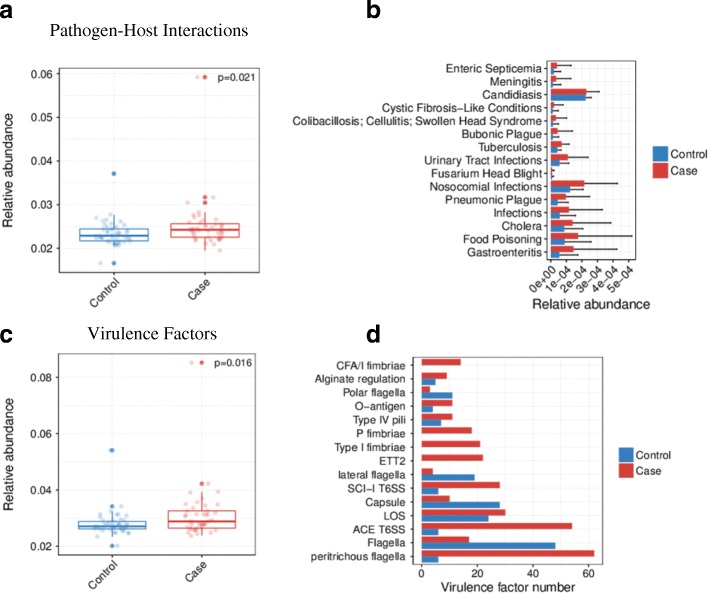
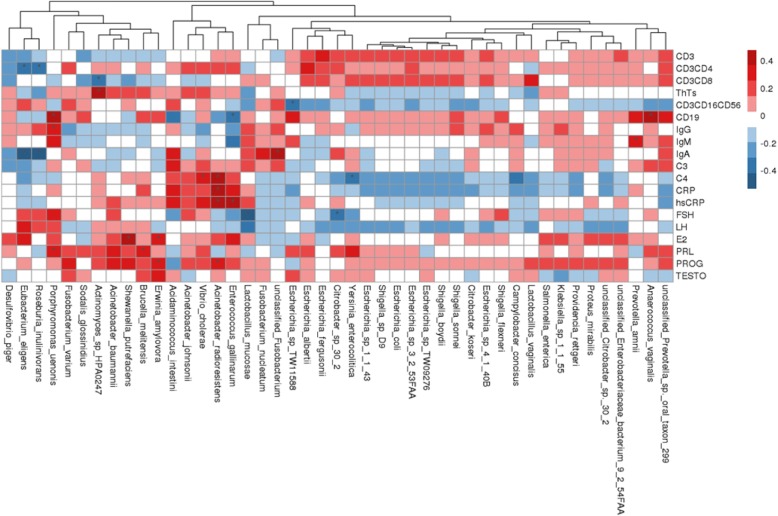
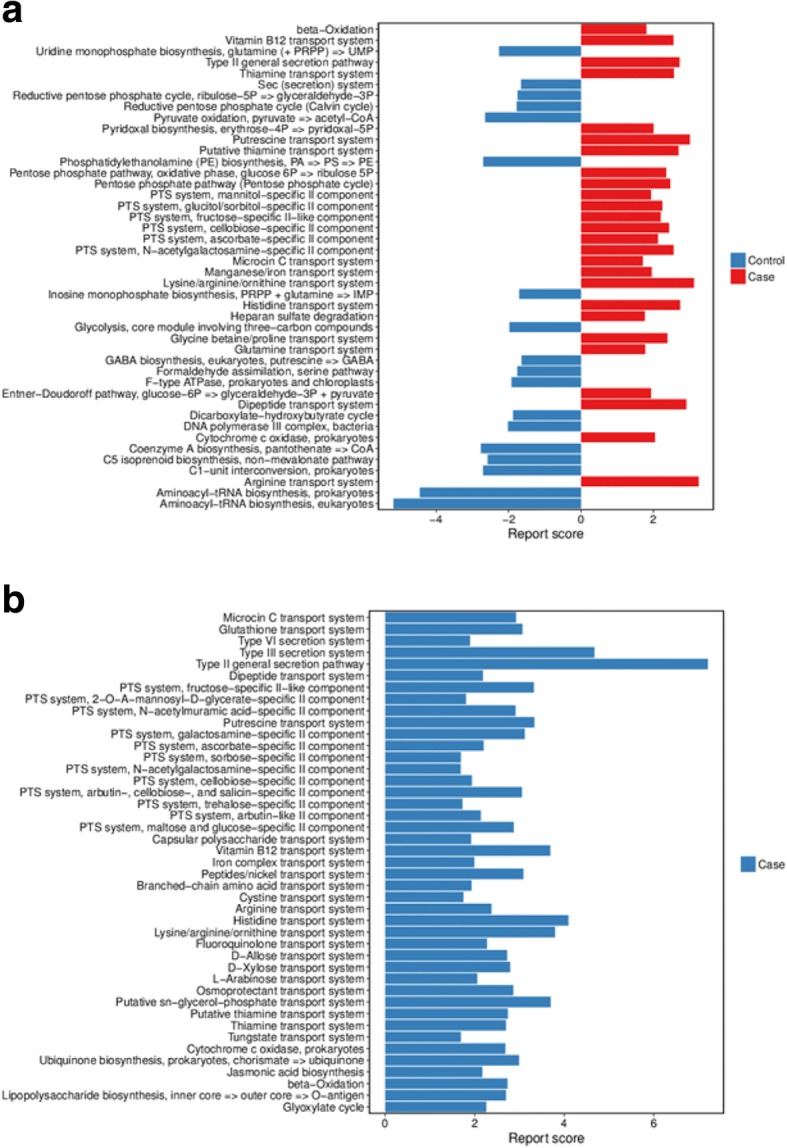
Increasing evidence suggests that gut microbiota play a role in the pathogenesis of breast cancer. The composition and functional capacity of gut microbiota associated with breast cancer have not been studied systematically. We performed a comprehensive shotgun metagenomic analysis of 18 premenopausal breast cancer patients, 25 premenopausal healthy controls, 44 postmenopausal breast cancer patients, and 46 postmenopausal healthy controls. Microbial diversity was higher in breast cancer patients than in controls. Relative species abundance in gut microbiota did not differ significantly between premenopausal breast cancer patients and premenopausal controls. In contrast, relative abundance of 45 species differed significantly between postmenopausal patients and postmenopausal controls: 38 species were enriched in postmenopausal patients, including Escherichia coli , Klebsiella sp_1_1_55 , Prevotella amnii , Enterococcus gallinarum , Actinomyces sp. HPA0247 , Shewanella putrefaciens , and Erwinia amylovora , and 7 species were less abundant in postmenopausal patients, including Eubacterium eligens and Lactobacillus vaginalis . Acinetobacter radioresistens and Enterococcus gallinarum were positively but weakly associated with expression of high-sensitivity C-reactive protein; Shewanella putrefaciens and Erwinia amylovora were positively but weakly associated with estradiol levels. Actinomyces sp. HPA0247 negatively but weakly correlated with CD3 + CD8 + T cell numbers. Further characterization of metagenome functional capacity indicated that the gut metagenomes of postmenopausal breast cancer patients were enriched in genes encoding lipopolysaccharide biosynthesis, iron complex transport system, PTS system, secretion system, and beta-oxidation. The composition and functions of the gut microbial community differ between postmenopausal breast cancer patients and healthy controls. The gut microbiota may regulate or respond to host immunity and metabolic balance. Thus, while cause and effect cannot be determined, there is a reproducible change in the microbiota of treatment-naive patients relative to matched controls.
Overview
The claims and statistics of this paper haven’t been checked yet.
Run the check — free, no account needed. It reads the open-access text and checks the sources it cites.
Integrity signals
Registry
Cites
Statistics
Figures
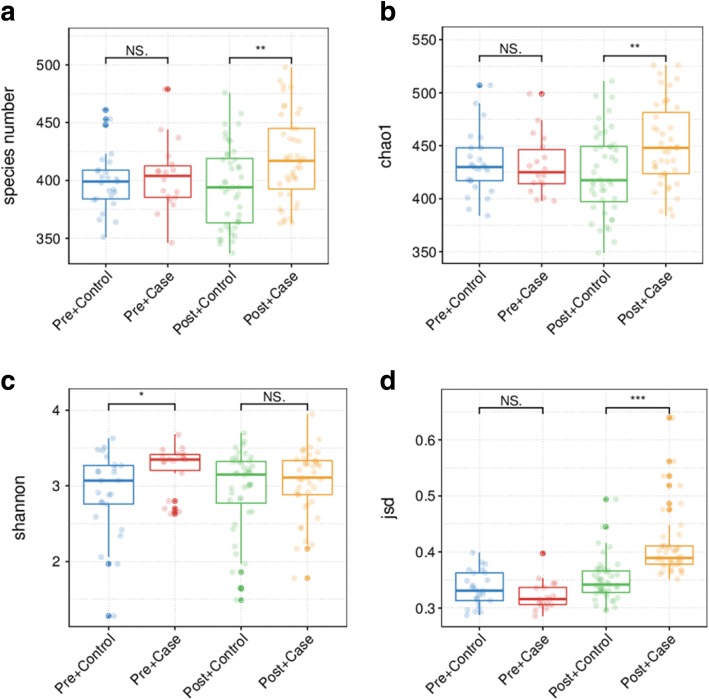
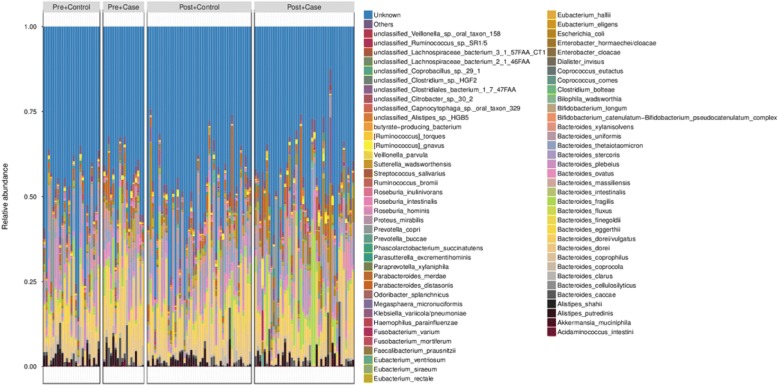
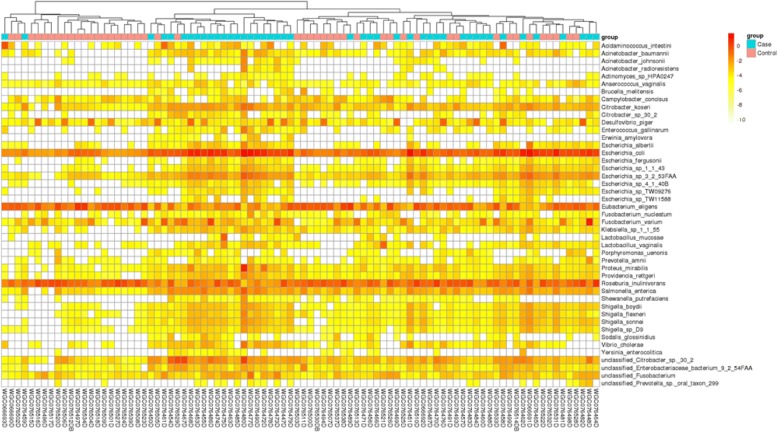
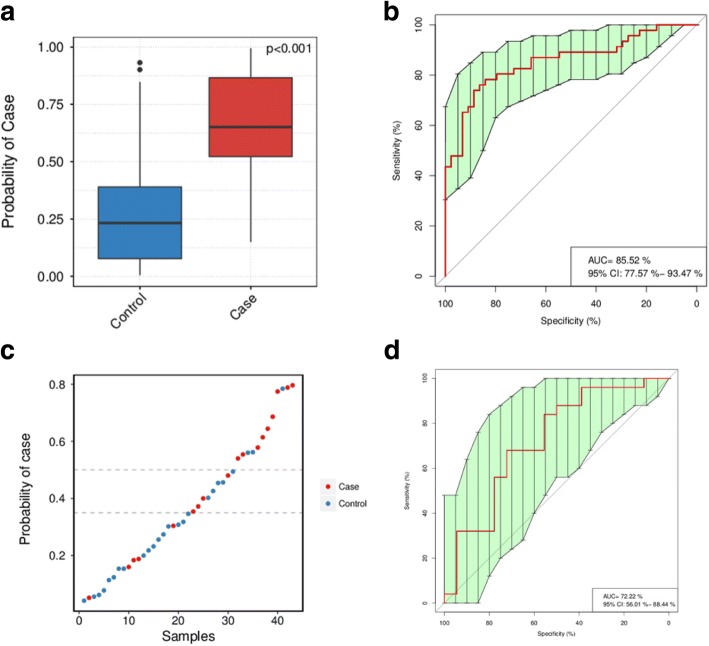
Verification
Claims the paper makes
The claims and statistics of this paper haven’t been checked yet.
Run the check — free, no account needed. It reads the open-access text and checks the sources it cites.
Self-check
Percentages, sums and reported differences re-computed from the paper’s own numbers.
The self-check needs the paper’s full text.
Citations
Cites
Controlling the False Discovery Rate: A Practical and Powerful Approach to Multiple Testing
Benjamini, Y., & Hochberg, Y. (1995) · Journal of the Royal Statistical Society Series B: Statistical Methodology · doi:10.1111/j.2517-6161.1995.tb02031.x · Cited by 109,482
A human gut microbial gene catalogue established by metagenomic sequencing
MetaHIT Consortium, Qin, J., Li, R., Raes, J., Arumugam, M., Burgdorf, K. S., Manichanh, C., Nielsen, T., Pons, N., Levenez, F., et al. (2010) · Nature · doi:10.1038/nature08821 · Cited by 11,624
Self-citationDiversity of the Human Intestinal Microbial Flora
Eckburg, P. B., Bik, E. M., Bernstein, C. N., Purdom, E., Dethlefsen, L., Sargent, M., Gill, S. R., Nelson, K. E., & Relman, D. A. (2005) · Science · doi:10.1126/science.1110591 · Cited by 7,913
A core gut microbiome in obese and lean twins
Turnbaugh, P. J., Hamady, M., Yatsunenko, T., Cantarel, B. L., Duncan, A., Ley, R. E., Sogin, M. L., Jones, W. J., Roe, B. A., Affourtit, J. P., et al. (2009) · Nature · doi:10.1038/nature07540 · Cited by 7,823
Enterotypes of the human gut microbiome
MetaHIT Consortium (additional members), Arumugam, M., Raes, J., Pelletier, E., Le Paslier, D., Yamada, T., Mende, D. R., Fernandes, G. R., Tap, J., Bruls, T., et al. (2011) · Nature · doi:10.1038/nature09944 · Cited by 7,548
Changes of Intestinal Functions in Liver Cirrhosis
Fukui, H., & Wiest, R. (2016) · Inflammatory Intestinal Diseases · doi:10.1159/000444436 · Cited by 6,820
A metagenome-wide association study of gut microbiota in type 2 diabetes
Qin, J., Li, Y., Cai, Z., Li, S., Zhu, J., Zhang, F., Liang, S., Zhang, W., Guan, Y., Shen, D., et al. (2012) · Nature · doi:10.1038/nature11450 · Cited by 6,762
Self-citationThe ade4 Package: Implementing the Duality Diagram for Ecologists
Dray, S., & Dufour, A. (2007) · Journal of Statistical Software · doi:10.18637/jss.v022.i04 · Cited by 6,740
Gut flora metabolism of phosphatidylcholine promotes cardiovascular disease
Wang, Z., Klipfell, E., Bennett, B. J., Koeth, R., Levison, B. S., DuGar, B., Feldstein, A. E., Britt, E. B., Fu, X., Chung, Y.-M., et al. (2011) · Nature · doi:10.1038/nature09922 · Cited by 5,597
Role of the microbiota in immunity and inflammation.
Belkaid, Y., & Hand, T. W. (2014) · Cell · doi:10.1016/j.cell.2014.03.011 · Cited by 5,385
Cited by
Sorted by citations
Hakim, S., Naqqash, T., Nawaz, M. S., Laraib, I., Siddique, M. J., Zia, R., Mirza, M. S., & Imran, A. (2021) · Frontiers in Sustainable Food Systems · doi:10.3389/fsufs.2021.617157 · Cited by 507
Zheng, D., Yin, G., Liu, M., Chen, C., Jiang, Y., Hou, L., & Zheng, Y. (2021) · The Science of The Total Environment · doi:10.1016/j.scitotenv.2021.146009 · Cited by 353
A faecal microbiota signature with high specificity for pancreatic cancer
Kartal, E., Schmidt, T. S. B., Molina-Montes, E., Rodríguez-Perales, S., Wirbel, J., Maistrenko, O. M., Akanni, W. A., Alashkar Alhamwe, B., Alves, R. J., Carrato, A., et al. (2022) · Gut · doi:10.1136/gutjnl-2021-324755 · Cited by 290
Gut microbial beta-glucuronidase: a vital regulator in female estrogen metabolism
Hu, S., Ding, Q., Zhang, W. K., Kang, M., Ma, J., & Zhao, L. (2023) · Gut Microbes · doi:10.1080/19490976.2023.2236749 · Cited by 304
Parida, S., Wu, S., Siddharth, S., Wang, G., Muniraj, N., Nagalingam, A., Hum, C., Mistriotis, P., Hao, H., Talbot, C. C., et al. (2021) · Cancer Discovery · doi:10.1158/2159-8290.cd-20-0537 · Cited by 257
Metadata
- Authors
- Zhu, J., Liao, M., Yao, Z., Liang, W., Li, Q., Liu, J., Yang, H., Ji, Y., Wei, W., Tan, A., Liang, S., Chen, Y., Lin, H., Zhu, X., Huang, S., Tian, J., Tang, R., Wang, Q., & Mo, Z.
- Affiliations
- Guangxi Medical University (CN)
- First Affiliated Hospital of GuangXi Medical University (CN)
- Corresponding author
- Wang, Qiuyan
- Mo, Zengnan
- ORCID
- Venue
- Microbiome
- Published
- 2018-08-06
- Volume
- 6
- Issue
- 1
- Pages
- 136-136
- ISSN
- 2049-2618 (ISSN-L)
- PMC
- PMC6080540
- OpenAlex
- W2885458712
- Cited by
- 377
- References
- 60
- Citations by year
- 2026: 23 · 2025: 45 · 2024: 50 · 2023: 50 · 2022: 49 · 2021: 97 · 2020: 41 · 2019: 19 · 2018: 3
- FWCI
- 14.23
- Type
- journal article
- Language
- en
- Open access
- gold
- doi.org
- Licence
- Locations
- Microbiome (publishedVersion, cc-by)
- Europe PMC (PubMed Central) (publishedVersion, cc-by)
- PubMed Central (publishedVersion, cc-by)
- PubMed (publishedVersion)
- DOAJ (DOAJ: Directory of Open Access Journals) (submittedVersion, cc-by-sa)
- Funders
- Guangxi Natural Science Foundation (2012GXNSFBA053117)
- Guangxi Natural Science Fund for Innovation Research Team (2013GXNSFFA019002)
- Guangxi Collaborative Innovation Center for genomic and personalized medicine (201319)
- National Natural Science Foundation of China (81060169)
- Topics
- Life Sciences › Biochemistry, Genetics and Molecular Biology › Molecular Biology › Gut microbiota and health
- Health Sciences › Dentistry › Periodontics › Oral microbiology and periodontitis research
- Health Sciences › Medicine › Oncology › Cancer Risks and Factors
- Keywords
- breast cancer, postmenopausal women, gut microbiota, gut metagenome, microbial diversity, Escherichia coli, Enterococcus gallinarum, Shewanella putrefaciens, Erwinia amylovora, Actinomyces, C-reactive protein, estradiol, CD8+ T cells, lipopolysaccharide biosynthesis, iron transport, fatty acid beta-oxidation, host-microbe interactions
- MeSH terms
- Gastrointestinal Microbiome, Adult, Bacteria, Bacterial Proteins, Breast Neoplasms, C-Reactive Protein, Estradiol, Female, Humans, Middle Aged, Phylogeny, Case-Control Studies, Premenopause, Postmenopause, Gene Regulatory Networks, Metagenomics
About these checks
Registry, retraction, Cites and statistics results are computed, not judged, with one exception: a printed reference that no index lists is read once by a model before it counts as a citation error. Claims are extracted by a model and kept only when their quote appears verbatim in the text; each cited source is then checked, with a model’s help, for whether it says what the claim relies on. Those verdicts can be wrong — read the claim’s quote and the cited source before relying on one.
Statistics and arithmetic are recomputed, not judged.
Confidence bands are shown only for fields calibrated on our annotated test set. None is calibrated yet, so no band is shown.
What counts as a claim ›How we measure confidence ›How we check this ›
Are you an author, or do you see a problem with this page? Request a review
