

Using single‐cell multiple omics approaches to resolve tumor heterogeneity
Open accessThe DOI matches its Crossref record; 124 of the 124 references it cites were found in a registry or an index.
Abstract
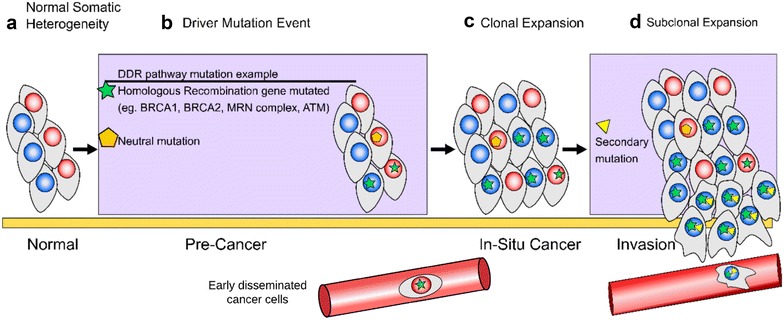
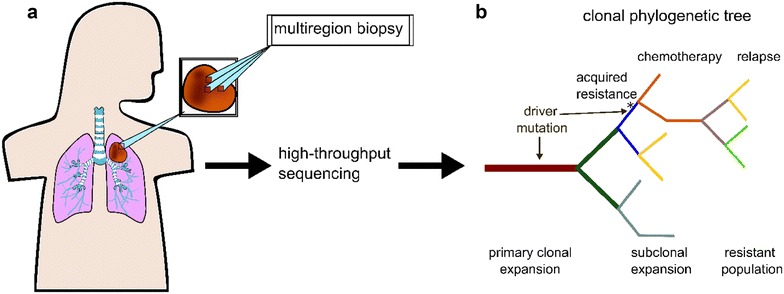
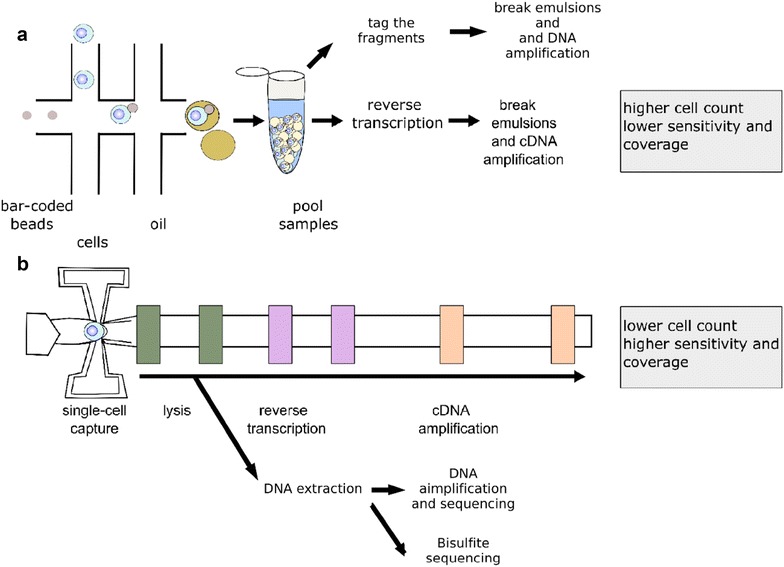
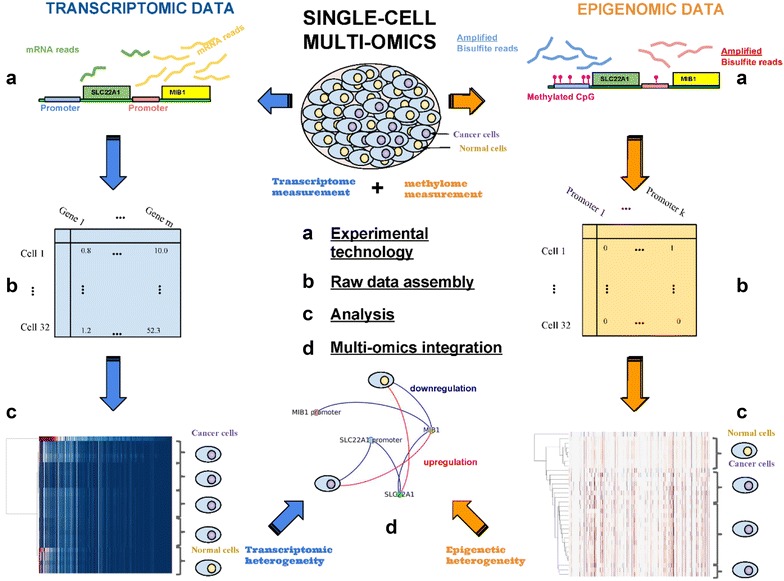
It has become increasingly clear that both normal and cancer tissues are composed of heterogeneous populations. Genetic variation can be attributed to the downstream effects of inherited mutations, environmental factors, or inaccurately resolved errors in transcription and replication. When lesions occur in regions that confer a proliferative advantage, it can support clonal expansion, subclonal variation, and neoplastic progression. In this manner, the complex heterogeneous microenvironment of a tumour promotes the likelihood of angiogenesis and metastasis. Recent advances in next‐generation sequencing and computational biology have utilized single‐cell applications to build deep profiles of individual cells that are otherwise masked in bulk profiling. In addition, the development of new techniques for combining single‐cell multi‐omic strategies is providing a more precise understanding of factors contributing to cellular identity, function, and growth. Continuing advancements in single‐cell technology and computational deconvolution of data will be critical for reconstructing patient specific intra‐tumour features and developing more personalized cancer treatments.
Overview
The claims and statistics of this paper haven’t been checked yet.
Free: it reads the open-access text and checks the first 5 claims that cite a source we can check. Create a free account to check every claim.
Integrity signals
Registry
Cites
Statistics
Figures
Verification
Claims the paper makes
The claims and statistics of this paper haven’t been checked yet.
Free: it reads the open-access text and checks the first 5 claims that cite a source we can check. Create a free account to check every claim.
Claims other papers make about this one
Each is checked against this paper’s own text: does it say what the citing paper says it does?
The cited source says what the claim attributes to it.
In the citing paper
“Recent significant advances in single-cell technologies, especially the single-cell RNA sequencing (scRNA-seq) technology, have enabled the analysis of intercellular heterogeneity at a very fine resolution8,9 and helped us to have many breakthroughs in understanding disease mechanisms10, such as breast cancer11, liver cancer12 and COVID-1913.”
From ASGARD is a single-cell guided pipeline to aid repurposing of drugs (2023) · cites this paper as [10]
Self-check
Percentages, sums and reported differences re-computed from the paper’s own numbers.
The self-check needs the paper’s full text.
Citations
Cites
STAR: ultrafast universal RNA-seq aligner
Dobin, A., Davis, C. A., Schlesinger, F., Drenkow, J., Zaleski, C., Jha, S., Batut, P., Chaisson, M., & Gingeras, T. R. (2013) · Bioinformatics · doi:10.1093/bioinformatics/bts635 · Cited by 51,709
Tissue-based map of the human proteome
Uhlén, M., Fagerberg, L., Hallström, B. M., Lindskog, C., Oksvold, P., Mardinoglu, A., Sivertsson, Å., Kampf, C., Sjöstedt, E., Asplund, A., et al. (2015) · Science · doi:10.1126/science.1260419 · Cited by 15,286
Enrichr: a comprehensive gene set enrichment analysis web server 2016 update
Kuleshov, M. V., Jones, M. R., Rouillard, A. D., Fernandez, N. F., Duan, Q., Wang, Z., Koplev, S., Jenkins, S. L., Jagodnik, K. M., Lachmann, A., et al. (2016) · Nucleic Acids Research · doi:10.1093/nar/gkw377 · Cited by 10,799
Comprehensive Mapping of Long-Range Interactions Reveals Folding Principles of the Human Genome
Lieberman-Aiden, E., van Berkum, N. L., Williams, L., Imakaev, M., Ragoczy, T., Telling, A., Amit, I., Lajoie, B. R., Sabo, P. J., Dorschner, M. O., et al. (2009) · Science · doi:10.1126/science.1181369 · Cited by 8,898
Vogelstein, B., Papadopoulos, N., Velculescu, V. E., Zhou, S., Diaz, L. A., & Kinzler, K. W. (2013) · Science · doi:10.1126/science.1235122 · Cited by 7,863
Intratumor Heterogeneity and Branched Evolution Revealed by Multiregion Sequencing
Gerlinger, M., Rowan, A. J., Horswell, S., Larkin, J., Endesfelder, D., Gronroos, E., Martinez, P., Matthews, N., Stewart, A., Tarpey, P., et al. (2012) · New England Journal of Medicine · doi:10.1056/nejmoa1113205 · Cited by 7,774
Massively parallel digital transcriptional profiling of single cells
Zheng, G. X. Y., Terry, J. M., Belgrader, P., Ryvkin, P., Bent, Z. W., Wilson, R., Ziraldo, S. B., Wheeler, T. D., McDermott, G. P., Zhu, J., et al. (2017) · Nature Communications · doi:10.1038/ncomms14049 · Cited by 7,353
Trapnell, C., Cacchiarelli, D., Grimsby, J., Pokharel, P., Li, S., Morse, M., Lennon, N. J., Livak, K. J., Mikkelsen, T. S., & Rinn, J. L. (2014) · Nature Biotechnology · doi:10.1038/nbt.2859 · Cited by 7,314 · cited 1×
“For example, Monocle2 is an unsupervised algorithm designed to analyze the heterogeneity among cells and reconstruct the micro-evolution timeline from scRNA-seq data [57].”
BackgroundHighly parallel genome-wide expression profiling of individual cells using nanoliter droplets.
Macosko, E. Z., Basu, A., Satija, R., Nemesh, J., Shekhar, K., Goldman, M., Tirosh, I., Bialas, A. R., Kamitaki, N., Martersteck, E. M., et al. (2015) · Cell · doi:10.1016/j.cell.2015.05.002 · Cited by 7,110 · cited 1×
“Droplet-based technologies such as Drop-seq, inDrop, Chromium, and ddSeq can produce tens to hundreds of thousands of uniquely barcoded cells (Table 1) [28, 35, 36].”
Buenrostro, J. D., Giresi, P. G., Zaba, L. C., Chang, H. Y., & Greenleaf, W. J. (2013) · Nature Methods · doi:10.1038/nmeth.2688 · Cited by 6,422
Research works printed but not linked: 6
- Rosenberg AB, Roco C, Muscat RA, Kuchina A, Mukherjee S, Chen W et al (2017) Scaling single cell transcriptomics through split pool barcoding. bioRxiv. https://www.biorxiv.org/content/early/2017/02/02/105163
- Macosko EZ Basu A Satija R Nemesh J Shekhar K Goldman M Highly parallel genome-wide expression profiling of individual CELLS using nanoliter droplets Cell. 2015 161 5 1202 1214 10.1016/j.cell.2015.05.002 26000488 PMC4481139 · DOI · Paper page
- Robinson DR Wu YM Lonigro RJ Vats P Cobain E Everett J Integrative clinical genomics of metastatic cancer Nature 2017 548 7667 297 303 10.1038/nature23306 28783718 PMC5995337 · DOI · Paper page
- Jahn K, Kuipers J, Beerenwinkel N (2016) Tree inference for single-cell data. Genome Biol 17(1):86 PMC4858868 27149953 · DOI · Paper page
- Campbell KR, Yau C, Rattray M (2016) Order Under Uncertainty: Robust Differential Expression Analysis Using Probabilistic Models for Pseudotime Inference. PLoS Comput Biol 12(11):e1005212 PMC5117567 27870852 · DOI · Paper page
- Ramani V, Deng X, Qiu R, Gunderson KL, Steemers FJ, Disteche CM et al (2017) Massively multiplex single-cell Hi-C. Nat Methods 14(3):263–266 PMC5330809 28135255 · DOI · Paper page
Cited by
[Retracted] Global Increase in Breast Cancer Incidence: Risk Factors and Preventive Measures
Kashyap, D., Pal, D., Sharma, R., Garg, V. K., Goel, N., Koundal, D., Zaguia, A., Koundal, S., & Belay, A. (2022) · BioMed Research International · doi:10.1155/2022/9605439 · Cited by 529
RetractedMachine learning approaches to drug response prediction: challenges and recent progress
Adam, G., Rampášek, L., Safikhani, Z., Smirnov, P., Haibe-Kains, B., & Goldenberg, A. (2020) · npj Precision Oncology · doi:10.1038/s41698-020-0122-1 · Cited by 425
“However, scDNAseq data suffers from increased noise — each cell has only two copies of each genomic locus, requiring ampli fi cation before sequencing 81 .”
MethodSingle Cell Multi-Omics Technology: Methodology and Application
Hu, Y., An, Q., Sheu, K., Trejo, B., Fan, S., & Guo, Y. (2018) · Frontiers in Cell and Developmental Biology · doi:10.3389/fcell.2018.00028 · Cited by 190
“Robotic manipulation, FACS, and microfluidic capture platforms have the advantage of the ability to sort through subpopulations by cell labeling, but require more extensive manipulation of single cells using expensive equipment (Ortega et al., 2017).”
BackgroundThe Underlying Tumor Genomics of Predominant Histologic Subtypes in Lung Adenocarcinoma
Caso, R., Sanchez-Vega, F., Tan, K. S., Mastrogiacomo, B., Zhou, J., Jones, G. D., Nguyen, B., Schultz, N., Connolly, J. G., Brandt, W. S., et al. (2020) · Journal of Thoracic Oncology · doi:10.1016/j.jtho.2020.08.005 · Cited by 160
Evaluation of Cell Type Annotation R Packages on Single-Cell RNA-Seq Data
Huang, Q., Liu, Y., Du, Y., & Garmire, L. X. (2021) · Genomics, Proteomics & Bioinformatics · doi:10.1016/j.gpb.2020.07.004 · Cited by 149
“334 As the multi-omics technology continues to advance [30], it will be of interest to evaluate these 335 methods, where both multi-omics and pre-defined marker information are available for the same 336 samples.”
BackgroundSelf-citationMethods for copy number aberration detection from single-cell DNA-sequencing data
Mallory, X., Edrisi, M., Navin, N. E., & Nakhleh, L. K. (2020) · Genome biology · doi:10.1186/s13059-020-02119-8 · Cited by 162
Deciphering Tumour Heterogeneity: From Tissue to Liquid Biopsy
Gilson, P., Merlin, J., & Harlé, A. (2022) · Cancers · doi:10.3390/cancers14061384 · Cited by 158
Circulating Tumor Cells as a Tool for Assessing Tumor Heterogeneity
Tellez-Gabriel, M., Heymann, M.-F., & Heymann, D. (2019) · Theranostics · doi:10.7150/thno.34337 · Cited by 111
Skeleton-vasculature chain reaction: a novel insight into the mystery of homeostasis
Chen, M., Li, Y., Huang, X., Gu, Y., Li, S., Yin, P., Zhang, L., & Tang, P. (2021) · Bone Research · doi:10.1038/s41413-021-00138-0 · Cited by 109
“Through this approach, we can establish novel endothelial subtypes and trace distinct trajectories of specific cell lineages in osteogenesisangiogenesis coupling.(273,274)”
MethodPoirion, O., Zhu, X., Ching, T., & Garmire, L. X. (2018) · Nature Communications · doi:10.1038/s41467-018-07170-5 · Cited by 78
Self-citationDrug discovery targeting the mTOR pathway
Martelli, A. M., Buontempo, F., & McCubrey, J. A. (2018) · Clinical Science · doi:10.1042/cs20171158 · Cited by 82
Single cell transcriptome research in human placenta
Li, H., Huang, Q., Liu, Y., & Garmire, L. X. (2020) · Reproduction · doi:10.1530/rep-20-0231 · Cited by 81
“Additionally, with the development of single cell technologies, other types of single cell omics studies, such as single cell epigenetics studies, as well as multi-omics single cell studies (scRNAseq, sc methylation and scATAC-Seq etc) will be very useful to delineate the coherent changes from epigenetic to transcript…”
BackgroundSelf-citationCirculating tumour cells in the -omics era: how far are we from achieving the ‘singularity’?
Visal, T. H., den Hollander, P., Cristofanilli, M., & Mani, S. A. (2022) · British Journal of Cancer · doi:10.1038/s41416-022-01768-9 · Cited by 79
Single-Cell Analysis of Circulating Tumor Cells: How Far Have We Come in the -Omics Era?
Rossi, E. M. C., & Zamarchi, R. (2019) · Frontiers in Genetics · doi:10.3389/fgene.2019.00958 · Cited by 67
Paolillo, C., Londin, E. R., & Fortina, P. M. (2019) · Clinical Chemistry · doi:10.1373/clinchem.2017.283895 · Cited by 72
Intratumor Heterogeneity in Early Lung Adenocarcinoma
Senosain, M.-F., & Massion, P. P. (2020) · Frontiers in Oncology · doi:10.3389/fonc.2020.00349 · Cited by 70
“In the recent years emerging single-cell analysis platforms have allowed the deep profiling of the tumor microenvironment (TME), and seem promising approaches for the dissection and of tumor heterogeneity (8).”
BackgroundASGARD is a single-cell guided pipeline to aid repurposing of drugs
He, B., Xiao, Y., Liang, H., Huang, Q., Du, Y., Li, Y., Garmire, D., Sun, D., & Garmire, L. X. (2023) · Nature Communications · doi:10.1038/s41467-023-36637-3 · Cited by 57
Self-citationEvaluation of STAR and Kallisto on Single Cell RNA-Seq Data Alignment
Du, Y., Huang, Q., Arisdakessian, C. G., & Garmire, L. X. (2020) · G3 Genes Genomes Genetics · doi:10.1534/g3.120.401160 · Cited by 64
Self-citationDevelopmental origins and oncogenic pathways in malignant brain tumors
Lu, Q. R., Qian, L., & Zhou, X. (2019) · Wiley Interdisciplinary Reviews Developmental Biology · doi:10.1002/wdev.342 · Cited by 60
“Single-cell sequencing, which allows profiling of single cells as opposed to bulk tumor tissue, has also been utilized to define the heterogeneity of gliomas (Khoo et al., 2016; Levitin, Yuan, & Sims, 2018; Ortega et al., 2017).”
Systems Biology, Systems Medicine, Systems Pharmacology: The What and The Why
Stéphanou, A., Fanchon, E., Innominato, P. F., & Ballesta, A. (2018) · Acta Biotheoretica · doi:10.1007/s10441-018-9330-2 · Cited by 50
“The multi-omics approach are also used to characterize intra-tumour heterogeneity (Ortega et al. 2017; Shi et al. 2017).”
MethodAngulo, J. C., Manini, C., Lopez, J. I., Pueyo, A., Colás, B., & Ropero, S. (2021) · Cancers · doi:10.3390/cancers13092071 · Cited by 54
Towards verifiable cancer digital twins: tissue level modeling protocol for precision medicine
Kemkar, S., Tao, M., Ghosh, A., STAMATAKOS, G. S., Graf, N. M., Poorey, K., Balakrishnan, U., Trask, N., & Radhakrishnan, R. (2024) · Frontiers in Physiology · doi:10.3389/fphys.2024.1473125 · Cited by 50
“…al., 2021) and multiomics (He et al., 2023; Menyhárt and Győrffy, 2021) techniques have enabled genetic, epigenetic, and even metabolic profiling of cancer cells at a cellular resolution, helping to delineate intratumoral heterogeneity (Lee et al., 2021; Schmidt et al., 2021; Ortega et al., 2017).”
BackgroundZhang, B., Zhu, L., Dai, Y., Li, H., Huang, K., Luo, Y., & Xu, W. (2019) · Epigenetics · doi:10.1080/15592294.2019.1644878 · Cited by 41
“The application of integrated single-cell assay strategies, such as the combination of the single cell transcriptome and epigenome, has become a trend in many areas such as biology and medicine in order to provide a more precise and correlated understanding of factors contributing to cellular functions and dysfunction…”
MethodKumar, M., Bowers, R. R., & Delaney, J. R. (2020) · Cell Cycle · doi:10.1080/15384101.2020.1836439 · Cited by 34
“InferCNV is the only currently available method that explores the expression intensity of genes across positions of tumor genomes in comparison to a set of reference “normal” cells to determine somatic changes [26].”
MethodSingle-cell RNA-seq variant analysis for exploration of genetic heterogeneity in cancer
Fasterius, E., Uhlén, M., & Szigyarto, C. A. (2019) · Scientific Reports · doi:10.1038/s41598-019-45934-1 · Cited by 33
Senosain, M.-F., Zou, Y., Novitskaya, T., Vasiukov, G., Balar, A., Rowe, D. J., Doxie, D. B., Lehman, J. M., Eisenberg, R., Maldonado, F., et al. (2021) · Scientific Reports · doi:10.1038/s41598-021-93807-3 · Cited by 31
Loret, N., Vandamme, N., Coninck, J. D., Taminau, J., Clercq, K. D., Blancke, G., Jonckheere, S., Goossens, S., Lemeire, K., Prijck, S. D., et al. (2022) · Molecular Cancer Research · doi:10.1158/1541-7786.mcr-21-0565 · Cited by 26
Zhang, W., Maeser, D., Lee, A. M., Huang, Y., Gruener, R. F., Abdelbar, I. G., Jena, S., Patel, A. G., & Huang, R. S. (2024) · Cancer Research · doi:10.1158/0008-5472.can-23-3005 · Cited by 28
Frontiers in single cell analysis: multimodal technologies and their clinical perspectives
Källberg, J., Xiao, W., Assche, D. V., Baret, J., & Taly, V. (2022) · Lab on a Chip · doi:10.1039/d2lc00220e · Cited by 26
Single-cell transcriptomics: a novel precision medicine technique in nephrology
Kim, J., & Park, J. (2020) · The Korean Journal of Internal Medicine · doi:10.3904/kjim.2020.415 · Cited by 15
“Single-cell multiomics techniques can distinguish subtypes of cells from heterogeneous cell populations [65-67].”
BackgroundTumor Copy Number Deconvolution Integrating Bulk and Single-Cell Sequencing Data
Lei, H., Lyu, B., Gertz, E. M., Schäffer, A. A., Shi, X., Wu, K., Li, G., Xu, L., Hou, Y., Dean, M. C., et al. (2020) · Journal of Computational Biology · doi:10.1089/cmb.2019.0302 · Cited by 20
Otsuji, K., Takahashi, Y. K., Osako, T., Kobayashi, T., Takano, T., Saeki, S., Yang, L., Baba, S., Kumegawa, K., Suzuki, H., et al. (2024) · npj Precision Oncology · doi:10.1038/s41698-024-00723-6 · Cited by 26
“WhenscoringPreclustersbasedonthree epithelialmarkergenetypesinnormalmammaryglands 31 (Supplementary Data4),theexpressionofgenesassociatedwithluminalhormone-sensing(L-Hor)cellsandluminalalveolar(L-Alv)cellswassigni fi cantly lower in Pre-C9R than in the other clusters (Supplementary Fig.”
InfluentialLiu, X., Powell, C. A., & Wang, X. (2022) · Clinical and Translational Medicine · doi:10.1002/ctm2.782 · Cited by 18
Intratumoral Heterogeneity in Ductal Carcinoma In Situ: Chaos and Consequence
Sinha, V. C., & Piwnica-Worms, H. M. (2018) · Journal of Mammary Gland Biology and Neoplasia · doi:10.1007/s10911-018-9410-6 · Cited by 17
Reactive oxygen species in cardiovascular diseases: an update
Fei, J., Demillard, L. J., & Ren, J. T. (2022) · Exploration of Medicine · doi:10.37349/emed.2022.00085 · Cited by 17
An update review of the application of single-cell RNA sequencing in pregnancy-related diseases
Zhou, Z., & Yang, X. (2024) · Frontiers in Endocrinology · doi:10.3389/fendo.2024.1415173 · Cited by 18
Batth, I. S., Meng, Q. H., Wang, Q., Torres, K. E., Burks, J. K., Wang, J., Gorlick, R. G., & Li, S. (2020) · BMC Cancer · doi:10.1186/s12885-020-07203-7 · Cited by 17
“Meanwhile, genetic and flow cytometry-based analysis of individual captured cells cannot ascertain sub-cellular protein localization and colocalization, in addition to being time- and cost-prohibitive [37].”
Yao, J., Liu, Y., Yang, J., Li, M., Li, S., Zhang, B., Yang, R., Zhang, Y., Cui, X., & Feng, C. (2022) · Frontiers in Genetics · doi:10.3389/fgene.2022.904536 · Cited by 16
Resolving tumor evolution: a phylogenetic approach
Li, L., Xie, W., Zhan, L., Wen, S., Luo, X., Xu, S., Cai, Y., Tang, W., Wang, Q., Li, M., et al. (2024) · Journal of the National Cancer Center · doi:10.1016/j.jncc.2024.03.001 · Cited by 22
Evaluation of pulmonary single‐cell identity specificity in scRNA‐seq analysis
Liu, X., Xu, G. S., Chen, C., Song, Y., Wang, W., & Wang, X. (2022) · Clinical and Translational Medicine · doi:10.1002/ctm2.1132 · Cited by 14
Berger, N. F., Kim‐Schulze, S., & Parekh, S. S. (2018) · Advances in experimental medicine and biology · doi:10.1007/978-3-319-97746-1_9 · Cited by 14
Single cell correlation analysis of liquid and solid biopsies in metastatic colorectal cancer
Gerdtsson, A. S., Thiele, J.-A., Shishido, S. N., Zheng, S., Schaffer, R. L., Bethel, K. J., Curley, S. A., Lenz, H., Hanna, D. L., Nieva, J. J., et al. (2019) · Oncotarget · doi:10.18632/oncotarget.27271 · Cited by 13
“To faithfully capture cell heterogeneity, personalized oncology is furthermore moving towards single cell profiling for more informed clinical decision making, as opposed to homogenized cell populations in conventional bulk biopsy analysis [5].”
BackgroundArtificial-cell-type aware cell-type classification in CITE-seq
Lian, Q., Xin, H., Ma, J., Konnikova, L., Chen, W., Gu, J., & Chen, K. (2020) · Bioinformatics · doi:10.1093/bioinformatics/btaa467 · Cited by 15
“CITE-seq has gained popularity in a wide range of biological and clinical studies, such as resolving tumor heterogeneity (Ortega, et al., 2017; Wagner, et al., 2019) and dissecting cell populations in complex tissues or organs (Cuevas-Diaz Duran, et al., 2017; Cui, et al., 2019; Klein and…”
BackgroundFunctional stratification of cancer drugs through integrated network similarity
Beyge, Ş. Ü., & Tunçbağ, N. (2022) · npj Systems Biology and Applications · doi:10.1038/s41540-022-00219-8 · Cited by 12
“For network reconstruction purposes, a solution to the prize-collecting Steiner tree problem was searched through Omics Integrator software 19 to fi nd an optimum tree.”
BackgroundMethodSelection and optimization of enzyme reporters for chemical cytometry
Proctor, A., Wang, Q., Lawrence, D. S., & Allbritton, N. L. (2019) · Methods in enzymology on CD-ROM/Methods in enzymology · doi:10.1016/bs.mie.2019.02.023 · Cited by 15
“, 2018) Furthermore, the ramifications of clonal evolution in the development of diseased states can be realized as mutations are traced to differences in single cells; for example, in formation of both solid and blood cancers, immunological responses, and neurodegenerative diseases.(D’Gama and Walsh, 2018; Keating et…”
BackgroundInfluentialSingle-Cell Omics: An Overview
Jehan, Z. (2019) · Elsevier eBooks · doi:10.1016/b978-0-12-814919-5.00001-4 · Cited by 13
How far is single‐cell sequencing from clinical application?
Zhang, J., Wang, W. Y., Huang, J., Wang, X., & Zeng, Y. (2020) · Clinical and Translational Medicine · doi:10.1002/ctm2.117 · Cited by 12
Shafighi, S. D., Kiełbasa, S. M., Sepúlveda-Yáñez, J., Monajemi, R., Cats, D., Mei, H., Menafra, R., Kloet, S. L., Veelken, H., van Bergen, C. A. M., et al. (2021) · Genome Medicine · doi:10.1186/s13073-021-00842-w · Cited by 10
Innovative strategies for annotating the “relationSNP” between variants and molecular phenotypes
Miller, J. E., Veturi, Y., & Ritchie, M. D. (2019) · BioData Mining · doi:10.1186/s13040-019-0197-9 · Cited by 9
“incredibly useful for those dissecting heterogeneity in cancer, as reviewed previously [146].”
BackgroundLiu, Z., Lin, Y., Gao, X., Mai, R., Piao, X., Ye, J., & Liang, R. (2020) · Frontiers in Genetics · doi:10.3389/fgene.2020.00634 · Cited by 7
“At present, international research on malignant tumors has been performed at the genomic, transcriptomic, and epigenetic levels using highthroughput sequencing technology (Chen et al., 2017; Ortega et al., 2017; Bareche et al., 2018).”
MethodMoonshot Objectives: Catalyze New Scientific Breakthroughs—Proteogenomics
Rodland, K., Piehowski, P., & Smith, R. D. (2018) · The Cancer Journal · doi:10.1097/ppo.0000000000000315 · Cited by 7
Tumor Copy Number Deconvolution Integrating Bulk and Single-Cell Sequencing Data
Lei, H., Lyu, B., Gertz, E. M., Schäffer, A. A., Shi, X., Wu, K., Li, G., Xu, L., Hou, Y., Dean, M. C., et al. (2019) · Lecture notes in computer science · doi:10.1007/978-3-030-17083-7_11 · Cited by 8
Poirion, O., Zhu, X., Ching, T. H., & Garmire, L. X. (2016) · bioRxiv (Cold Spring Harbor Laboratory) · doi:10.1101/095810 · Cited by 7
Self-citationMethods for Copy Number Aberration Detection from Single-cell DNA Sequencing DataPreprint
Fan, X., Edrisi, M., Navin, N., & Nakhleh, L. (2019) · bioRxiv (Cold Spring Harbor Laboratory) · doi:10.1101/696179 · Cited by 7
“single-cell data [27, 31–34, 37–48], a comprehensive study of their performance is”
Computational single cell oncology: state of the art
Paas-Oliveros, E., Lemus, E. H., & de Anda‐Jáuregui, G. (2023) · Frontiers in Genetics · doi:10.3389/fgene.2023.1256991 · Cited by 7
“Single-cell technologies have had a transformative impact on cancer research by enabling researchers to delve into the heterogeneity of tumors at an unprecedented level of detail (Ortega et al., 2017; Fan et al., 2018; Levitin et al., 2018; Ding et al., 2020; Wu F. et al., 2021).”
BackgroundGene Expression Studies for the Development of Particle Therapy
Amundson, S. A. (2018) · International Journal of Particle Therapy · doi:10.14338/ijpt-18-00010.1 · Cited by 5
“In addition, development of deconvolution algorithms now also allows expression profiles from mixed cell types to be applied to the study of tumor progression [13, 14] or tumor-infiltrating immune cells [15].”
Single-Cell Omics: Deciphering Tumor Clonal Architecture
Dzobo, K., Thomford, N. E., Rowe, A., Senthebane, D. A., & Dandara, C. (2019) · Elsevier eBooks · doi:10.1016/b978-0-12-814919-5.00005-1 · Cited by 5
Zhang, X., Hu, C., Li, D., & Liu, S. (2023) · Human Cell · doi:10.1007/s13577-023-01000-7 · Cited by 4
“InferCNV is the only currently available method that explores the expression intensity of genes across positions of tumor genomes in comparison to a set of reference “normal” cells to determine somatic changes [28].”
TCfinder: Robust tumor cell discrimination in scRNA‐seq based on gene pathway activity
Wu, C., Wei, N., Wu, T., Chen, J., Yao, H., Tao, Z., Zhao, X., Diao, K., Wang, J., Wang, W., et al. (2024) · iMetaOmics. · doi:10.1002/imo2.22 · Cited by 5
“…into the cellular ecosystem, including the interrogation of specific cell populations and their respective transcriptomic characteristics [2], the intratumoral heterogeneity [3], tumor evolution map [4], and tumor phylogenetic tree, and so on [5], which has been widely applied in cancer research.”
Single-Cell Omics in Personalized Medicine
Buriani, A., Fortinguerra, S., Sorrenti, V., Gabbia, D., & Carrara, M. (2019) · Elsevier eBooks · doi:10.1016/b978-0-12-817532-3.00014-1 · Cited by 6
SINGLE CELL ANALYSIS, WHAT IS IN THE FUTURE?
Garmire, L. X., Yuan, G.-C., Fan, R., Yeo, G. W., & Quackenbush, J. (2018) · Biocomputing 2019 · doi:10.1142/9789813279827_0030 · Cited by 2
Self-citationEpigenetic modulation of CTCs as a novel therapeutic target in oncology
Farah, H. S., Abosaoda, M. K., Mousa, H. M., Jyothi, S. R., Nayak, P. P., Janney, J. B., Singh, G., & Chauhan, A. S. (2025) · Molecular and Cellular Biochemistry · doi:10.1007/s11010-025-05402-z · Cited by 3
“…such as single-cell bisulfite sequencing (scBS-seq), which maps DNA methylation at the single-cell level, and single-cell ATAC-seq (scATAC-seq), which utilizes trans-posase-accessible chromatin using sequencing [95, 96], which require sufficient cell input to identify DNA methylation patterns.”
Piki, E., Dini, A., Rantanen, F., Bentz, F., Paavolainen, L., Barker, H. R., Raivola, J., Hirasawa, A., Kallioniemi, O., Murumägi, A., et al. (2024) · Molecular Therapy Oncology · doi:10.1016/j.omton.2024.200903 · Cited by 2
Liu, X., Liu, Y., Duan, W., Weng, J., Dai, H., Liu, F., Wang, L., Qian, M., Zhu, B., Wu, S., et al. (2026) · Signal Transduction and Targeted Therapy · doi:10.1038/s41392-026-02677-6 · Cited by 3
Fazal, S., & Azam, S. (2019) · Elsevier eBooks · doi:10.1016/b978-0-12-814919-5.00017-8 · Cited by 1
Multiparameter Single-Cell Characterization of Ovarian Intratumor Heterogeneity
Beaumont, K. G., Andreou, C., Ellis, E., & Sebra, R. (2021) · Methods in molecular biology · doi:10.1007/978-1-0716-1956-8_8 · Cited by 1
Self-citationSingle-Cell Technologies for Cancer Therapy
Hu, G., Lee, V. D., Lin, H., Mao, P.-W., Liu, H., Peh, J.-H., & Chen, C. (2021) · Springer eBooks · doi:10.1007/978-981-10-8953-4_10 · Cited by 1
Single-Cell Technologies for Cancer Therapy
Hu, G., Lee, V. D., Lin, H., Mao, P.-W., Liu, H., Peh, J.-H., & Chen, C. (2019) · Springer eBooks · doi:10.1007/978-981-10-4857-9_10-1
Strategies to integrate multi-omics data for patient survival predictionPreprint
Garmire, L. X. (2020) · arXiv (Cornell University) · doi:10.48550/arxiv.2008.12455
Self-citationLiu, X., Powell, C. A., & Wang, X. (2022) · Clinical and Translational Discovery · doi:10.1002/ctd2.45
Oota, S., Abe, K., Yokota, H., & Ikeo, K. (2022) · Research Square · doi:10.21203/rs.3.rs-1558242/v1
Mahajan, N., & Druley, T. E. (2018) · Springer eBooks · doi:10.1007/978-3-319-94827-0_1
New tools for understanding cancer evolution and drug resistance
Källberg, J. (2022) · theses.fr (ABES) · doi:10.70675/51bc11abzb90bz4c3az9418z3fd1486f4e56
Chandan, S., Bhargavi, C. P., Bhavana, S., Dasegowda, K. R., Kumaraswamy, H. M., Meghana, P., Babu, R. L., & Naika, H. R. (2024) · Elsevier eBooks · doi:10.1016/b978-0-443-27523-4.00022-6 · Cited by 1
Circulating tumor cells as a clinical, diagnostic, and prognostic biomarker in breast cancer
Gandhi, K., & Sharma, G. (2025) · Breast Disease · doi:10.1177/15581551241296776 · Cited by 1
Shafighi, S. D., Kiełbasa, S. M., Sepúlveda-Yáñez, J., Monajemi, R., Cats, D., Mei, H., Menafra, R., Kloet, S. L., Veelken, H., van Bergen, C. A. M., et al. (2021) · Figshare · doi:10.6084/m9.figshare.14300050
Stover, D. (2024) · University of Minnesota Digital Conservancy (University of Minnesota)
Sitthirak, S., Wangwiwatsin, A., Jusakul, A., Namwat, N., Klanrit, P., Roytrakul, S., Dokduang, H., Duangchan, T., Rattanapan, Y., Titapun, A., et al. (2026) · Medical Sciences · doi:10.3390/medsci14010030
“By adopting these creative methodologies, future cancer research can progress toward attaining a holistic, multi-faceted comprehension of tumor biology [148,149].”
Probabilistic graphical models for mapping tumor clones in cancerous tissues and single cells
Shafighi, S. D. (2023) · theses.fr (ABES) · doi:10.70675/e219dd51z467bz4341zb502z2139e940b1bb
Yang, J., Wu, L., Gong, H., & Gu, J. (2026) · Discover Oncology · doi:10.1007/s12672-026-05449-4
“The advent of single-cell sequencing technology provides an exceptional chance to unravel the complexity of the TME in an unbiased manner, facilitating single-cell high-throughput sequencing of transcriptomes, genomes, and epigenomes [21].”
DNA methylation in human disease: From biological mechanisms to clinical applications
Mallik, R., Gupta, P., Gupta, A. K., Chaturvedi, P., Pillai, V., & Muegge, K. (2026) · Seminars in Cancer Biology · doi:10.1016/j.semcancer.2026.102635 · Cited by 1
Metadata
- Authors
- Ortega, M. A., Poirion, O., Zhu, X., Huang, S., Wolfgruber, T. K., Sebra, R., & Garmire, L. X.
- Affiliations
- Cancer Center of Hawaii (US)
- Icahn School of Medicine at Mount Sinai (US)
- Corresponding author
- Garmire, Lana X.
- ORCID
- Venue
- Clinical and Translational Medicine
- Publisher
- Wiley
- Published
- 2017-12
- Volume
- 6
- Issue
- 1
- Pages
- 46-46
- ISSN
- 2001-1326 (ISSN-L)
- PMC
- PMC5746494
- OpenAlex
- W2775981375
- Cited by
- 81
- References
- 122
- Citations by year
- 2026: 4 · 2025: 2 · 2024: 8 · 2023: 4 · 2022: 12 · 2021: 8 · 2020: 15 · 2019: 17 · 2018: 10
- FWCI
- 1.07
- Type
- journal article
- Language
- en
- Open access
- gold
- doi.org
- Licence
- cc-by
- creativecommons.org/licenses/by/4.0/ (vor, 27 d)
- creativecommons.org/licenses/by/4.0 (tdm)
- creativecommons.org/licenses/by/4.0 (vor, 27 d)
- Locations
- Clinical and Translational Medicine (publishedVersion, cc-by)
- Europe PMC (PubMed Central) (publishedVersion, cc-by)
- PubMed Central (publishedVersion, cc-by)
- PubMed (publishedVersion)
- DOAJ (DOAJ: Directory of Open Access Journals) (submittedVersion)
- Funders
- National Institute of Environmental Health Sciences (K01ES025434)
- U.S. National Library of Medicine (R01 LM012373, LM012373)
- National Institute of General Medical Sciences (GM103457)
- National Institute of Child Health and Human Development (HD084633)
- Topics
- Life Sciences › Biochemistry, Genetics and Molecular Biology › Molecular Biology › Single-cell and spatial transcriptomics
- Life Sciences › Biochemistry, Genetics and Molecular Biology › Cancer Research › Cancer Genomics and Diagnostics
- Life Sciences › Biochemistry, Genetics and Molecular Biology › Molecular Biology › Gene expression and cancer classification
- Keywords
- tumor heterogeneity, single-cell multi-omics, intratumoral heterogeneity, clonal evolution, tumor progression, tumor microenvironment, single-cell sequencing, precision oncology
About these checks
Registry, retraction, Cites and statistics results are computed, not judged, with one exception: a printed reference that no index lists is read once by a model before it counts as a citation error. Claims are extracted by a model and kept only when their quote appears verbatim in the text; each cited source is then checked, with a model’s help, for whether it says what the claim relies on. Those verdicts can be wrong — read the claim’s quote and the cited source before relying on one.
Statistics and arithmetic are recomputed, not judged.
Confidence bands are shown only for fields calibrated on our annotated test set. None is calibrated yet, so no band is shown.
What counts as a claim ›How we measure confidence ›How we check this ›
Are you an author, or do you see a problem with this page? Request a review
Data sources
Bibliographic data: Semantic Scholar, OpenAlex, Crossref.
Contains information from the Semantic Scholar Academic Graph Datasets, made available under the ODC Attribution License (ODC-BY 1.0).
Semantic Scholar’s data is described in: Kinney, R., et al. (2023). The Semantic Scholar Open Data Platform. arXiv:2301.10140.
