

Associations between psychosocial risk factors, and changes in substance dependence and psychosocial functioning, during engagement with digital cognitive behavioral therapy for methamphetamine use: use of ‘Breaking Free from Substance Abuse’ by incarcerated people during the COVID-19 pandemic
Open accessThe DOI matches its Crossref record; 69 of the 69 references it cites were found in a registry or an index.
Abstract
Background: Methamphetamine use can be associated with involvement with correctional services and incarceration. Traditionally, treatments for methamphetamine use have been delivered in-person – however, lockdowns initiated during the COVID-19 pandemic significantly reduced access to such in-person support in prisons. Therefore, in May 2020 a digital cognitive-behavioral therapy (CBT) program for substance use disorders - 'Breaking Free from Substance Abuse' - was made available across prisons in Ohio in order to meet this treatment gap. This represents the first time this digital CBT intervention has been made widely available to incarcerated people residing in prisons or jails in the United States (US). This was a within-subjects study using data from 2187 Ohio prison residents who engaged with this digital CBT program to address their methamphetamine use. Results: Participants reported multiple psychosocial risk factors, including moderate to severe substance dependence, depression and anxiety; interpersonal conflict; aggressive behavior; paranoia; and difficulties with work, education and accommodation. Significant reductions in substance dependence, depression/anxiety and biopsychosocial impairment, and improvements in quality of life, were identified in the sample. Risk factors were associated with less positive outcomes, specifically interpersonal conflict and poor mental health. Completion of specific components of the program were associated with more positive outcomes – a dose response was also identified. Conclusions: Digital CBT can be delivered in secure US correctional settings and may help to fill unmet needs for in-person treatment. Specifically, this digital CBT program may support incarcerated individuals to address methamphetamine use, with outcomes being associated with psychosocial risk factors and program engagement.
Overview
The claims and statistics of this paper haven’t been checked yet.
Free: it reads the open-access text and checks the first 5 claims that cite a source we can check. Create a free account to check every claim.
Integrity signals
Registry
Cites
Statistics
Figures
Verification
Claims the paper makes
The claims and statistics of this paper haven’t been checked yet.
Free: it reads the open-access text and checks the first 5 claims that cite a source we can check. Create a free account to check every claim.
Claims other papers make about this one
Each is checked against this paper’s own text: does it say what the citing paper says it does?
The source backs part of the claim, not all of it — or backs it for a different population, condition or comparison.
In the citing paper
“In one innovative statewide study conducted during the COVID-19 pandemic, 2187 people with a history of methamphetamine use disorder who were incarcerated in Ohio participated in a digital CBT program”
From Pain in US corrections settings: the promise of digital solutions for better data and treatment access (2024) · cites this paper as [5]
Experimental — accuracy not yet measuredThe source backs part of the claim, not all of it — or backs it for a different population, condition or comparison.
In the citing paper
“Within-subject analysis revealed a dose-response effect wherein participants who had a higher engagement with the digital CBT program had more significant reductions in substance dependence, depression/anxiety, biopsychosocial impairment, and improvements in quality of life.”
From Pain in US corrections settings: the promise of digital solutions for better data and treatment access (2024) · cites this paper as [5]
Experimental — accuracy not yet measured
Self-check
Percentages, sums and reported differences re-computed from the paper’s own numbers.
The self-check needs the paper’s full text.
Citations
Cites
Michie, S., Richardson, M., Johnston, M., Abraham, C., Francis, J., Hardeman, W., Eccles, M. P., Cane, J., & Wood, C. E. (2013) · Annals of Behavioral Medicine · doi:10.1007/s12160-013-9486-6 · Cited by 7,629
Skevington, S. M., Lotfy, M., & O'Connell, K. A. (2004) · Quality of Life Research · doi:10.1023/b:qure.0000018486.91360.00 · Cited by 4,686
An Ultra-Brief Screening Scale for Anxiety and Depression: The PHQ–4
Kroenke, K., Spitzer, R. L., Williams, J. B. W., & Löwe, B. (2009) · Psychosomatics · doi:10.1016/s0033-3182(09)70864-3 · Cited by 4,261
Kotov, R., Gamez, W., Schmidt, F., & Watson, D. (2010) · Psychological Bulletin · doi:10.1037/a0020327 · Cited by 2,677 · cited 1×
“Alternatively there may be some other common factor that increases vulnerability to mental health and substance use issues, such as chronic stress (Brady & Sinha 2005) or certain personality traits (Kotov et al. 2010).”
BackgroundEysenbach, G. (2005) · Journal of Medical Internet Research · doi:10.2196/jmir.7.1.e11 · Cited by 2,524 · cited 2×
“Attrition rates in digital intervention studies have been identified as a problem (Eysenbach 2005), with a recent review finding that even in highly controlled RCTs, the average attrition rate is 48% (Torous et al.”
BackgroundThe role of telehealth during COVID-19 outbreak: a systematic review based on current evidence
Monaghesh, E., & Hajizadeh, A. (2020) · BMC Public Health · doi:10.1186/s12889-020-09301-4 · Cited by 1,941 · cited 1×
“During the COVID-19 pandemic in-person substance use disorder (SUD) treatment was limited, with many services moving to digital and telehealth delivery (Monaghesh & Hajizadeh 2020).”
BackgroundThe Recent Past and Near Future of Risk and/or Need Assessment
Andrews, D. A., Bonta, J., & Wormith, J. S. (2006) · Crime & Delinquency · doi:10.1177/0011128705281756 · Cited by 1,507
Boden, J. M., & Fergusson, D. M. (2011) · Addiction · doi:10.1111/j.1360-0443.2010.03351.x · Cited by 1,233 · cited 1×
“2011) suggests that some people use substances as a means of coping with their mental health difficulties, or conversely, substance use may directly cause, or exacerbate, pre-existing mental health difficulties (e.g. Boden & Fergusson 2011).”
BackgroundTrends and issues in crime and criminal justice
Brown, T., Bricknell, S., Bryant, W., Lyneham, S., Tyson, D., & Arias, P. A. F. (2019) · Trends and issues in crime and criminal justice · Cited by 925
Internet-delivered psychological treatments: from innovation to implementation
Andersson, G., Titov, N., Dear, B. F., Rozental, A., & Carlbring, P. (2019) · World Psychiatry · doi:10.1002/wps.20610 · Cited by 750
Co-Occurring Mental and Substance Use Disorders: The Neurobiological Effects of Chronic Stress
Brady, K. T., & Sinha, R. (2005) · American Journal of Psychiatry · doi:10.1176/appi.ajp.162.8.1483 · Cited by 552 · cited 1×
“Alternatively there may be some other common factor that increases vulnerability to mental health and substance use issues, such as chronic stress (Brady & Sinha 2005) or certain personality traits (Kotov et al.”
BackgroundTorous, J., Lipschitz, J., Ng, M., & Firth, J. (2020) · Journal of Affective Disorders · doi:10.1016/j.jad.2019.11.167 · Cited by 546
Cognitive deficits in individuals with methamphetamine use disorder: A meta-analysis
Potvin, S., Pelletier, J., Grot, S., Hébert, C., Barr, A. M., & Lecomte, T. (2018) · Addictive Behaviors · doi:10.1016/j.addbeh.2018.01.021 · Cited by 334
Homer, B. D., Solomon, T. M., Moeller, R. W., Mascia, A., DeRaleau, L., & Halkitis, P. N. (2008) · Psychological Bulletin · doi:10.1037/0033-2909.134.2.301 · Cited by 304
Theory-based active ingredients of effective treatments for substance use disorders
Moos, R. H. (2007) · Drug and Alcohol Dependence · doi:10.1016/j.drugalcdep.2006.10.010 · Cited by 292 · cited 2×
“These findings indicate that interventions for methamphetamine use should incorporate self-efficacy and coping skills development components (Moos 2007), in addition to clinical approaches to support emotional regulation (Kang et al.”
BackgroundBrecht, M.-L., & Herbeck, D. (2014) · Drug and Alcohol Dependence · doi:10.1016/j.drugalcdep.2014.02.702 · Cited by 280 · cited 1×
“Research has demonstrated that such psychosocial risk factors may predict treatment outcomes in methamphetamine users, for example, interpersonal/relationship instability (Brecht & Herbeck 2014) and mental health difficulties (McKetin et al.”
BackgroundKay‐Lambkin, F. J., Baker, A. L., Lewin, T. J., & Carr, V. J. (2009) · Addiction · doi:10.1111/j.1360-0443.2008.02444.x · Cited by 269
A systematic review of cognitive and behavioural therapies for methamphetamine dependence
LEE, N. K., & RAWSON, R. A. (2008) · Drug and Alcohol Review · doi:10.1080/09595230801919494 · Cited by 255 · cited 1×
“2020; Lee & Rawson 2008), and previous studies of this digital CBT program with UK prison populations (Davies et al.”
BackgroundAdolescent Substance Abuse and Psychiatric Comorbidities
Deas, D., & Brown, E. S. (2006) · The Journal of Clinical Psychiatry · doi:10.4088/jcp.0706e02 · Cited by 240 · cited 1×
“Substance use and mental health difficulties may start in late childhood and early adolescence (Deas & Brown 2006), often alongside significant childhood adversity (Johnson et al.”
BackgroundSubstance Abuse Treatment, Prevention, and Policy
Simmons, J., & Singer, M. C. (2006) · Cited by 221
Robinson, J. (2011) · Archives of General Psychiatry · doi:10.1001/archgenpsychiatry.2011.75 · Cited by 208
Pharmacological Treatment of Methamphetamine/Amphetamine Dependence: A Systematic Review
Siefried, K. J., Acheson, L. S., Lintzeris, N., & Ezard, N. (2020) · CNS Drugs · doi:10.1007/s40263-020-00711-x · Cited by 194
A cognitive–behavioural therapy assessment model for use in everyday clinical practice
Williams, C., & Garland, A. (2002) · Advances in Psychiatric Treatment · doi:10.1192/apt.8.3.172 · Cited by 193 · cited 1×
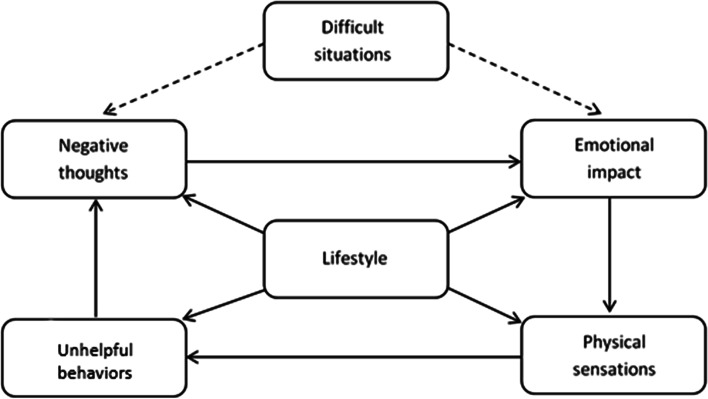
“The LBM is based on the five-factor model used in CBT (Williams & Garland 2002) and incorporates principles contained in the RNR model, in terms of focusing on the interplay between an individual’s cognitions, emotions, behaviors and lifestyle factors (Bonta & Andrews 2007).”
MethodMcKetin, R., Leung, J., Stockings, E., Huo, Y., Foulds, J., Lappin, J. M., Cumming, C., Arunogiri, S., Young, J. T., Sara, G., et al. (2019) · EClinicalMedicine · doi:10.1016/j.eclinm.2019.09.014 · Cited by 191
Carroll, K. M., Ball, S. A., Martino, S., Nich, C., Babuscio, T. A., & Rounsaville, B. J. (2009) · Drug and Alcohol Dependence · doi:10.1016/j.drugalcdep.2008.09.015 · Cited by 164
Non-pharmacological interventions for methamphetamine use disorder: a systematic review
AshaRani, P., Hombali, A., Seow, E., Ong, W. J., Tan, J. H., & Subramaniam, M. (2020) · Drug and Alcohol Dependence · doi:10.1016/j.drugalcdep.2020.108060 · Cited by 143
Test-retest reliability of the Severity of Dependence Scale
Gossop, M., Best, D. W., Marsden, J., & Strang, J. (1997) · Addiction · doi:10.1111/j.1360-0443.1997.tb03205.x · Cited by 139
Barriers to accessing methamphetamine treatment: A systematic review and meta-analysis
Cumming, C., Troeung, L., Young, J. T., Kelty, E., & Preen, D. B. (2016) · Drug and Alcohol Dependence · doi:10.1016/j.drugalcdep.2016.10.001 · Cited by 131
WIESNER, M., KIM, H. K., & CAPALDI, D. M. (2005) · Development and Psychopathology · doi:10.1017/s0954579405050133 · Cited by 128 · cited 1×
“2006), with these difficulties then contributing to an increased risk of offending in adulthood (Wiesner et al. 2005).”
BackgroundTelemedicine increases access to buprenorphine initiation during the COVID-19 pandemic
Wang, L., Weiss, J., Ryan, E. B., Waldman, J., Rubin, S., & Griffin, J. L. (2021) · Journal of Substance Abuse Treatment · doi:10.1016/j.jsat.2020.108272 · Cited by 109
Medications for alcohol use disorders: An overview
Akbar, M., Egli, M., Cho, Y.-E., Song, B.-J., & Noronha, A. (2018) · Pharmacology & Therapeutics · doi:10.1016/j.pharmthera.2017.11.007 · Cited by 96
Prevalence of childhood sexual abuse among incarcerated males in county jail
Johnson, R. J., Ross, M. W., Taylor, W. C., Williams, M. L., Carvajal, R. I., & Peters, R. J. (2006) · Child Abuse & Neglect · doi:10.1016/j.chiabu.2005.08.013 · Cited by 93 · cited 1×
“Substance use and mental health difficulties may start in late childhood and early adolescence (Deas & Brown 2006), often alongside significant childhood adversity (Johnson et al. 2006), with these difficulties then contributing to an increased risk of offending in adulthood (Wiesner et al.”
BackgroundThe role of lifestyle in perpetuating substance use disorder: the Lifestyle Balance Model
Davies, G., Elison, S., Ward, J., & Laudet, A. B. (2015) · Substance Abuse Treatment Prevention and Policy · doi:10.1186/1747-597x-10-2 · Cited by 76
Self-citationMethamphetamine‐associated psychosis: Clinical presentation, biological basis, and treatment options
Chiang, M., Lombardi, D., Du, J., Makrum, U., Sitthichai, R., Harrington, A., Shukair, N., Zhao, M., & Fan, X. (2019) · Human Psychopharmacology Clinical and Experimental · doi:10.1002/hup.2710 · Cited by 71
Mattila, E., Lappalainen, R., Välkkynen, P., Sairanen, E., Lappalainen, P., Karhunen, L., Peuhkuri, K., Korpela, R., Kolehmainen, M., & Ermes, M. (2016) · JMIR mhealth and uhealth · doi:10.2196/mhealth.5241 · Cited by 67
Sundström, C., Gajecki, M., Johansson, M., Blankers, M., Sinadinovic, K., Stenlund-Gens, E., & Berman, A. H. (2016) · PLOS ONE · doi:10.1371/journal.pone.0157817 · Cited by 64 · cited 1×
“Similar findings have been obtained for digital CBT for alcohol use disorder (Sundström et al. 2016), although there are gaps in the literature around whether practitioner guided or unguided digital CBT is most appropriate for other kinds of substance use disorders (Boumparis et al.”
Jones, A. A., Gicas, K. M., Seyedin, S., Willi, T. S., Leonova, O., Vila‐Rodriguez, F., Procyshyn, R. M., Smith, G. N., Schmitt, T., Vertinsky, A. T., et al. (2020) · PLoS Medicine · doi:10.1371/journal.pmed.1003172 · Cited by 62
Self-citationWeb-Based Alcohol Intervention: Study of Systematic Attrition of Heavy Drinkers
Radtke, T., Ostergaard, M., Cooke, R. W. I., & Scholz, U. (2017) · Journal of Medical Internet Research · doi:10.2196/jmir.6780 · Cited by 58 · cited 1×
“2020) – attrition in studies with SUD populations can also be high (Radtke et al. 2017).”
BackgroundMcKetin, R., Kothe, A., Baker, A. L., Lee, N. K., Ross, J., & Lubman, D. I. (2018) · Drug and Alcohol Review · doi:10.1111/dar.12528 · Cited by 53
Methamphetamine use, health and criminal justice system outcomes: A systematic review
Cumming, C., Kinner, S. A., McKetin, R., Li, I. W., & Preen, D. B. (2020) · Drug and Alcohol Review · doi:10.1111/dar.13062 · Cited by 52
Digital Mental Health for Alcohol and Substance Use Disorders
Boumparis, N., Schulte, M. H. J., & Riper, H. (2019) · Current Treatment Options in Psychiatry · doi:10.1007/s40501-019-00190-y · Cited by 50 · cited 1×
“2016), although there are gaps in the literature around whether practitioner guided or unguided digital CBT is most appropriate for other kinds of substance use disorders (Boumparis et al. 2019).”
BackgroundŞimşek, M., Dinç, M., & Ögel, K. (2018) · Psychiatry and Clinical Psychopharmacology · doi:10.1080/24750573.2018.1505283 · Cited by 49
The contribution of methamphetamine use to crime: Evidence from Australian longitudinal data
McKetin, R., Boden, J. M., Foulds, J., Najman, J. M., Ali, R. L., Degenhardt, L. J., Baker, A., Ross, J. E., Farrell, M., & Weatherburn, D. (2020) · Drug and Alcohol Dependence · doi:10.1016/j.drugalcdep.2020.108262 · Cited by 45 · cited 1×
“2020), financial difficulties (McKetin et al. 2020) and interpersonal conflict (Maltman et al.”
BackgroundCOVID-19 and treating incarcerated populations for opioid use disorder
Donelan, C. J., Hayes, E., Potee, R. A., Schwartz, L., & Evans, E. (2020) · Journal of Substance Abuse Treatment · doi:10.1016/j.jsat.2020.108216 · Cited by 37
Chen, Q., Sterner, G., Segel, J. E., & Feng, Z. (2022) · International Journal of Drug Policy · doi:10.1016/j.drugpo.2021.103555 · Cited by 37
An outcomes study of eTherapy for dual diagnosis using Breaking Free Online
Elison, S., Ward, J., Davies, G., Lidbetter, N., Hulme, D., & Dagley, M. (2014) · Advances in Dual Diagnosis · doi:10.1108/add-11-2013-0025 · Cited by 33 · cited 1×
“When this digital CBT program is delivered alongside practitioner support, this can enhance retention and improve outcomes (Elison et al. 2014; Elison, Ward, et al. 2017).”
MethodSelf-citationJuel, A., Kristiansen, C. B., Madsen, N. J., Munk‐Jørgensen, P., & Hjorth, P. (2016) · Nordic Journal of Psychiatry · doi:10.1080/08039488.2016.1251610 · Cited by 33 · cited 1×
“2019) and positive lifestyle changes (Juel et al. 2017).”
Elison, S., Ward, J., Williams, C., Espie, C., Davies, G., Dugdale, S., Ragan, K., Chisnall, L., Lidbetter, N., & Smith, K. (2017) · BMJ Open · doi:10.1136/bmjopen-2017-016392 · Cited by 33
Self-citationMoxley, V. B. A., Hoj, T. H., & Novilla, M. L. B. (2019) · Addictive Behaviors · doi:10.1016/j.addbeh.2019.106160 · Cited by 31 · cited 1×
“2019) and unstable accommodation and homelessness (Jones et al. 2020; Moxley et al. 2020).”
Violent offences of methamphetamine users and dilemmas of forensic psychiatric assessment
Liu, Y., Hao, B., Shi, Y., Li, X., Wang, X., Chen, Y., & Zhao, H. (2017) · Forensic Sciences Research · doi:10.1080/20961790.2017.1287155 · Cited by 30
Elison, S., Jones, A., Ward, J., Davies, G., & Dugdale, S. (2017) · Addictive Behaviors · doi:10.1016/j.addbeh.2017.05.028 · Cited by 25
Self-citationA meta-analysis of the effect of substance use interventions on emotion outcomes.
Kang, D., Fairbairn, C. E., & Ariss, T. A. (2019) · Journal of Consulting and Clinical Psychology · doi:10.1037/ccp0000450 · Cited by 25 · cited 1×
“These findings indicate that interventions for methamphetamine use should incorporate self-efficacy and coping skills development components (Moos 2007), in addition to clinical approaches to support emotional regulation (Kang et al. 2019) and positive lifestyle changes (Juel et al.”
BackgroundElison, S., Davies, G., & Ward, J. (2016) · Substance Use & Misuse · doi:10.3109/10826084.2016.1161052 · Cited by 23
Self-citationMethamphetamine use and technology-mediated psychosocial interventions: A mini-review
Rubenis, A. J., Baker, A., & Arunogiri, S. (2021) · Addictive Behaviors · doi:10.1016/j.addbeh.2021.106881 · Cited by 23
Dugdale, S., Ward, J., Hernen, J., Elison, S., Davies, G., & Donkor, D. (2016) · Substance Abuse Treatment Prevention and Policy · doi:10.1186/s13011-016-0069-y · Cited by 22
Self-citationMaltman, K., Savic, M., Manning, V., Dilkes‐Frayne, E., Carter, A., & Lubman, D. I. (2019) · Addiction Research & Theory · doi:10.1080/16066359.2019.1655547 · Cited by 22 · cited 1×
“Participants reported a range of psychosocial risk factors that are common amongst methamphetamine uses, including interpersonal conflict (Dadhe & Bettman 2019; Maltman et al. 2020), mental health difficulties including paranoia (Dadhe & Bettman 2019; McKetin et al.”
BackgroundDugdale, S., Elison, S., Davies, G., Ward, J., & Dalton, M. (2016) · The Journal of Behavioral Health Services & Research · doi:10.1007/s11414-016-9512-0 · Cited by 20
Self-citationThe 10 most important debates surrounding dual diagnosis
Hamilton, I. (2014) · Advances in Dual Diagnosis · doi:10.1108/add-05-2014-0013 · Cited by 19 · cited 1×
“Mental health and other psychosocial difficulties (e.g. homelessness), SUD and offending interact in multiple ways (Hamilton 2014).”
BackgroundMethamphetamine‐Using Felons: Psychosocial and Behavioral Characteristics
Semple, S. J., Zians, J., Strathdee, S. A., & Patterson, T. L. (2008) · American Journal on Addictions · doi:10.1080/10550490701756294 · Cited by 17
Male methamphetamine-user inmates in prison treatment: During-treatment outcomes
Joe, G. W., Rowan-Szal, G. A., Greener, J. M., Simpson, D. D., & Vance, J. (2010) · Journal of Substance Abuse Treatment · doi:10.1016/j.jsat.2009.08.002 · Cited by 16
Elison, S., Dugdale, S., Ward, J., & Davies, G. (2017) · Substance Use & Misuse · doi:10.1080/10826084.2017.1299183 · Cited by 16
Self-citationElison, S., Wardell, J. D., Quilty, L. C., Ward, J., & Davies, G. (2020) · Journal of Substance Abuse Treatment · doi:10.1016/j.jsat.2020.108261 · Cited by 12
Self-citationŠefránek, M., & Miovský, M. (2017) · Journal of Groups in Addiction & Recovery · doi:10.1080/1556035x.2017.1280718 · Cited by 10 · cited 1×
“2010) and community settings (Šefránek & Miovský 2017).”
Correlates and predictors of impulsivity in adults with methamphetamine use disorder
Lanesman, T. H., Gouse, H., Bantjes, J. R., Stein, D. J., & Löchner, C. (2019) · Journal of Substance Use · doi:10.1080/14659891.2019.1572803 · Cited by 10
Elison, S., Hayhurst, K. P., Jones, A., Welch, Z., Davies, G., & Ward, J. (2020) · Journal of Substance Use · doi:10.1080/14659891.2020.1851407 · Cited by 9
Self-citationElison, S., Märtens, K., Yau, C., Davies, G., & Ward, J. (2021) · The American Journal of Drug and Alcohol Abuse · doi:10.1080/00952990.2020.1861618 · Cited by 8
Self-citationMethamphetamine use and acquisitive crime: Evidence of a relationship
Goldsmid, S., & Willis, M. (2016) · Australian Institute of Criminology eBooks · doi:10.52922/ti149987 · Cited by 7 · cited 1×
“These factors may increase likelihood of both acquisitive (Goldsmid & Willis 2016) and violent crimes (Liu et al.”
BackgroundThe Lived Experiences of Adult Crystal Methamphetamine Users: A Qualitative Study
Dadhe, G., & Bettman, C. (2019) · Psychotherapy and Counselling Journal of Australia · doi:10.59158/001c.71114 · Cited by 7 · cited 2×
“Participants reported a range of psychosocial risk factors that are common amongst methamphetamine uses, including interpersonal conflict (Dadhe & Bettman 2019; Maltman et al.”
Ward, J., Elison, S., Davies, G., Dugdale, S., & Jones, A. (2019) · Journal of Substance Use · doi:10.1080/14659891.2019.1651915 · Cited by 6 · cited 1×
“2017), for people using alcohol (Ward et al. 2019), cannabis (Elison-Davies, Wardell, et al.”
BackgroundSelf-citation
Research works printed but not linked: 2
- Bonta J Andrews D Risk-need-responsivity model for offender assessment and rehabilitation Rehabilitation 2007 6 1 22
- Davies G Ward J Elison S Weston S Dugdale S Weekes J Implementation and evaluation of the breaking free online and pillars of recovery treatment and recovery programmes for substance-involved offenders: Reflections from the north-west prisons ‘gateways’ pathfinder Advancing Corrections 2017 3 95 113
Cited by
Enhancing healthcare accessibility through telehealth for justice impacted individuals
Williams, K. S., Singh, M. J., Elumn, J. E., Threats, M., Sha, Y., McCall, T., Wang, K., Massey, B., Peng, M. L., & Wiley, K. (2024) · Frontiers in Public Health · doi:10.3389/fpubh.2024.1401950 · Cited by 15
Elison, S., Pittard, L., Myton, T., Jones, A., Ward, J., & Davies, G. (2023) · Addiction Science & Clinical Practice · doi:10.1186/s13722-023-00391-0 · Cited by 3
Self-citationRybacka, M., & Brooke, J. M. (2023) · Springer eBooks · doi:10.1007/978-3-031-30663-1_5 · Cited by 2
Elison, S., Davies, G., Ward, J., Pittard, L., & Judge, C. (2024) · Journal of Criminology · doi:10.1177/26338076241251856 · Cited by 1
“These studies have been conducted with multiple substance-using populations, including those using opiates (Elison-Davies, Märtens, et al., 2021), cannabis (Elison-Davies, Wardell, et al., 2021), alcohol (Ward et al., 2019) and methamphetamine (Elison-Davies et al., 2022).”
InfluentialSelf-citationÇelik, F. G. H., Bayrak, N. G., & Uzun, S. (2025) · Public Health Nursing · doi:10.1111/phn.13544 · Cited by 4
Metadata
- Authors
- Elison-Davies, S., Newsome, J., Jones, A., Davies, G., & Ward, J.
- Affiliations
- University of Manchester (GB)
- Venue
- Health & Justice
- Published
- 2022-09-07
- Volume
- 10
- Issue
- 1
- Pages
- 28-28
- ISSN
- 2194-7899 (ISSN-L)
- PMC
- PMC9449936
- OpenAlex
- W4294868625
- Cited by
- 13
- References
- 69
- Citations by year
- 2026: 1 · 2025: 4 · 2024: 3 · 2023: 5
- FWCI
- 2.17
- Type
- journal article
- Language
- en
- Open access
- gold
- doi.org
- Licence
- cc-by
- creativecommons.org/licenses/by/4.0 (tdm)
- creativecommons.org/licenses/by/4.0 (vor)
- Locations
- Health & Justice (publishedVersion, cc-by)
- PubMed Central (publishedVersion, cc-by)
- PubMed (publishedVersion)
- DOAJ (DOAJ: Directory of Open Access Journals) (submittedVersion, cc-by-sa)
- Topics
- Health Sciences › Medicine › Epidemiology › Substance Abuse Treatment and Outcomes
- Social Sciences › Psychology › Applied Psychology › Digital Mental Health Interventions
- Social Sciences › Sociology and Political Science › Criminal Justice and Corrections Analysis
- Keywords
- methamphetamine use, digital cognitive behavioral therapy, prisoners, prison-based treatment, COVID-19 pandemic, substance dependence, anxiety and depression, psychosocial risk factors, interpersonal conflict, paranoia, quality of life, dose-response relationship, treatment gap
About these checks
Registry, retraction, Cites and statistics results are computed, not judged, with one exception: a printed reference that no index lists is read once by a model before it counts as a citation error. Claims are extracted by a model and kept only when their quote appears verbatim in the text; each cited source is then checked, with a model’s help, for whether it says what the claim relies on. Those verdicts can be wrong — read the claim’s quote and the cited source before relying on one.
Statistics and arithmetic are recomputed, not judged.
Confidence bands are shown only for fields calibrated on our annotated test set. None is calibrated yet, so no band is shown.
What counts as a claim ›How we measure confidence ›How we check this ›
Are you an author, or do you see a problem with this page? Request a review
Data sources
Bibliographic data: Semantic Scholar, OpenAlex, Crossref.
Contains information from the Semantic Scholar Academic Graph Datasets, made available under the ODC Attribution License (ODC-BY 1.0).
Semantic Scholar’s data is described in: Kinney, R., et al. (2023). The Semantic Scholar Open Data Platform. arXiv:2301.10140.
