

The DOI matches its Crossref record; 54 of the 55 references it cites were found in a registry or an index.
Psychological resilience and positive coping styles among Chinese undergraduate students: a cross-sectional study
Open accessAbstract
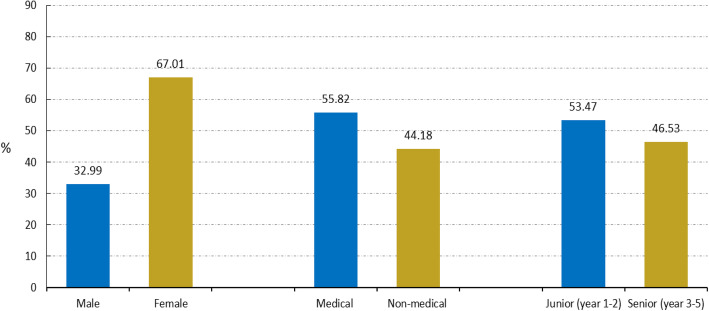
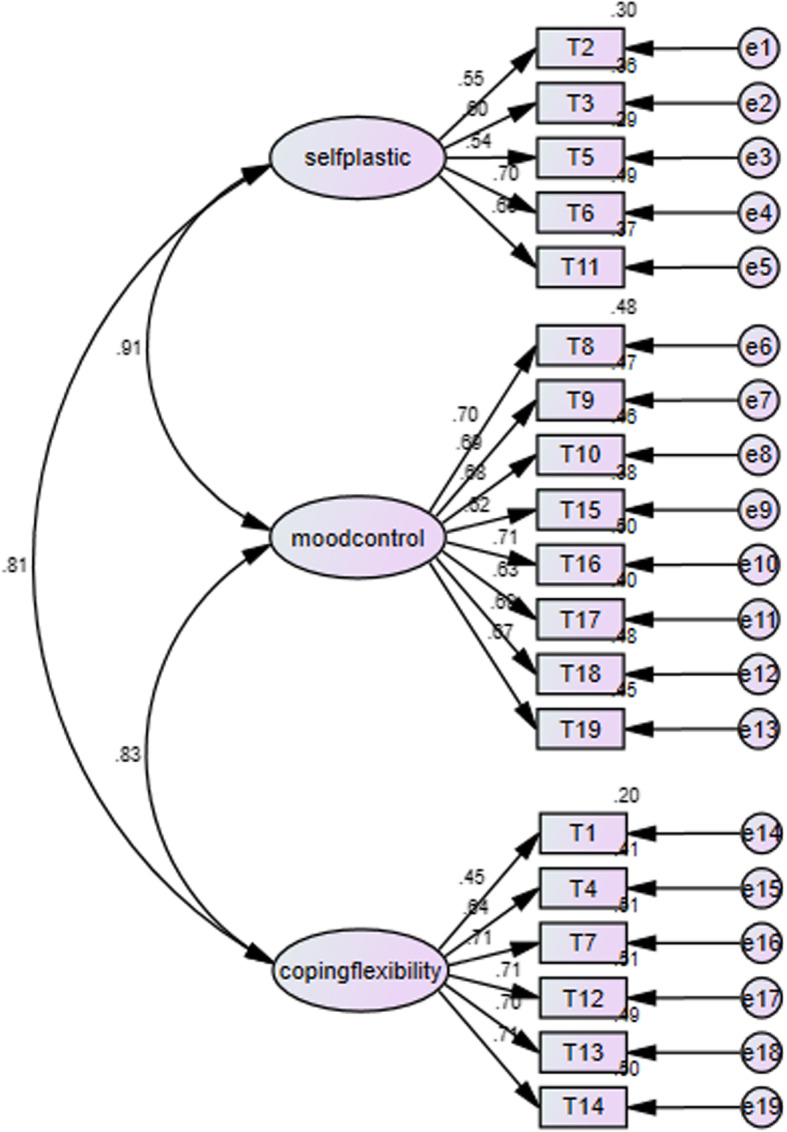
Background: Psychological resilience and coping strategies have been found to be related to various psychological and mental health problems. Evaluations of the relationship between resilience and coping style among university students are important for developing effective health promotion strategies focused on resilience intervention to benefit students’ health and well-being. The relationship between psychological resilience and coping styles has usually been examined among adults and patients. Very few studies have investigated the relationship between resilience and coping style in university students. The present study aimed to investigate the associations between psychological resilience, students’ characteristics (gender, major and grade) and coping styles among undergraduate students. Methods: A cross-sectional survey was conducted among undergraduate students in Shandong Province, China. Undergraduate students were randomly selected from 6 universities in 3 cities of the province using a stratified random sampling method. The questionnaire included questions on the participants’ demographic information, including gender, grade and major, measures of psychological resilience and coping style. Coping style was measured by the Simplified Coping Style Questionnaire (SCSQ). The Asian Resilience Scale (ARS) was applied to evaluate undergraduates’ psychological resilience. Multivariable regression analysis was used to examine the relationships between resilience, students’ characteristics and positive coping styles. Results: A sample of 1743 undergraduates was analysed. The mean psychological resilience score was 70.41. The mean score for positive coping style was 24.72. Multiple regression analysis showed that three factors of psychological resilience, mood control, self-plasticity and coping flexibility, were all significant factors for positive coping styles (regression coefficient = 0.34, 0.35, 0.14, p < 0.01 for the three factors, respectively). Medical students and females had higher scores for positive coping styles than non-medical students and males ( p < 0.01). Conclusions: The research revealed that females and medical students are more likely than males and non-medical students to adopt positive coping styles. Higher psychological resilience is associated with a better positive coping style. The findings suggest that psychological education and health promotion programmes that target strengthening psychological resilience among undergraduate students may help foster positive coping styles to benefit their mental health and psychological well-being.
Overview
The claims and statistics of this paper haven’t been checked yet.
Run the check — free, no account needed. It reads the open-access text and checks the sources it cites.
Integrity signals
Registry
Cites
Statistics
Figures
Verification
Claims the paper makes
The claims and statistics of this paper haven’t been checked yet.
Run the check — free, no account needed. It reads the open-access text and checks the sources it cites.
Claims other papers make about this one
Each is checked against this paper’s own text: does it say what the citing paper says it does?
The cited source says what the claim attributes to it.
In the citing paper
“The SCSQ demonstrates good internal consistency and reliability [68].”
From Effects of mindfulness-based cognitive therapy for Chinese adults with PTSD symptoms: protocol for a randomised controlled trial (2024) · cites this paper as [68]
Self-check
Percentages, sums and reported differences re-computed from the paper’s own numbers.
The self-check needs the paper’s full text.
Citations
Cites
Development of a new resilience scale: The Connor-Davidson Resilience Scale (CD-RISC)
Connor, K. M., & Davidson, J. R. T. (2003) · Depression and Anxiety · doi:10.1002/da.10113 · Cited by 11,793
Structural Equation Modelling: Guidelines for Determining Model Fit
Hooper, D., Coughlan, J., & Mullen, M. R. (2008) · Dublin Institute of Technology · doi:10.21427/d7cf7r · Cited by 8,746
The American Psychological Association
Langfeld, H. S. (1919) · Science · doi:10.1126/science.49.1254.51 · Cited by 7,453
Folkman, S., & Lazarus, R. S. (1985) · Journal of Personality and Social Psychology · doi:10.1037/0022-3514.48.1.150 · Cited by 4,845
Folkman, S., & Moskowitz, J. T. (2004) · Annual Review of Psychology · doi:10.1146/annurev.psych.55.090902.141456 · Cited by 3,485
Auerbach, R. P., Collaborators, W. W.-I., Mortier, P., Bruffaerts, R., Alonso, J., Benjet, C., Cuijpers, P., Demyttenaere, K., Ebert, D. D., Green, J. G., et al. (2018) · Journal of Abnormal Psychology · doi:10.1037/abn0000362 · Cited by 2,522
Gender differences in stress and coping styles
Aznar, M. P. M. (2004) · Personality and Individual Differences · doi:10.1016/j.paid.2004.01.010 · Cited by 2,139
Sex Differences in Coping Behavior: A Meta-Analytic Review and an Examination of Relative Coping
Tamres, L. K., Janicki, D., & Helgeson, V. S. (2002) · Personality and Social Psychology Review · doi:10.1207/s15327957pspr0601_1 · Cited by 2,044
Relationship of resilience to personality, coping, and psychiatric symptoms in young adults
Campbell‐Sills, L., Cohan, S. L., & Stein, M. B. (2005) · Behaviour Research and Therapy · doi:10.1016/j.brat.2005.05.001 · Cited by 1,410
The role of coping responses and social resources in attenuating the stress of life events
Billings, A., & Moos, R. (1981) · Journal of behavioral medicine · doi:10.1007/bf00844267 · Cited by 1,311
Research works printed but not linked: 12
- Sha T. College students’ adaptation from the whole concept of life development theory. Beijing Normal Univ Acad J. 2000;2:81–7.
- Jiao L, Zhang H. Analysis of mental health status and personality of medical college students. Chin J Health Psychol. 2007;15:231–4.
- Liu J. Overview on study progress of college students’ mental health in recent 20 years. Career Horizon. 2009(10):168–9.
- Sun W, Wei G. Study and analysis on undergraduates’ mental health status from 2007 to. Popular Literature (Academic Version). 2009;2010:195–6.
- Zhu H, Lu G, Liu H. Explore the correlations among resilience, stress and school adjustment of middle school students. Med Soc. 2012;5:71–3.
- Wan H, Wang Y, Lu G, University WM. The relationship between psychological stress and psychological harmony of medical students: mediation role of resilience. Chin J Health Psychol. 2015;10:1516–20.
- Xie Y. Reliability and validity of the simplified coping style questionnaire. Chin J Clin Psych. 1998;2:53–4.
- Poursardar F, Abbaspour Z, Abdi Zarrin S, Sangari AA. The effect of resiliency on mental health and life satisfaction: a psychological pattern of well-being. J Lorestan Univ Med Sci. 2012;14:81–9.
- Chen LX, Yao Y. Influential factors on mental health of the elderly people–analysis of two factors by personal characteristics and coping styles. Market Demographic Analysis. 2006;12:63–4.
- Fu Y, Yin K, Wang J. Survey on the status of mental health education services in 6 areas of China. China J Health Educ. 2017;4:295–8.
- Zhang Y. The function and realization of mental health education in ideological and political education of college studentsPhD thesis. Hebei Normal University, China; 2018.
- Huang X, Yong Z, Bi C, Chen Y. Problems about the construction of the mental health service system in China. Psychol Sci. 2007;1:2–5.
Cited by
Sorted by citations
Items 201–269 of 269
Prakoeswa, C. R. S., Alinda, M. D., Kusumaputra, B. H., Nasir, A., Yusuf, A., & Listiawan, M. Y. (2021) · Research Square · doi:10.21203/rs.3.rs-1159634/v1 · Cited by 1
Falewicz, A., & Steuden, S. (2021) · Kwartalnik Naukowy Fides et Ratio · doi:10.34766/fetr.v48i4.989
Minimizing the Impact of the COVID-19 Pandemic on Nontraditional Learners
(2022) · Advances in higher education and professional development book series · doi:10.4018/978-1-7998-8323-4.ch009
An Assessment of Resilience and Wellness of the Canadian Rangers
Ghazal, S. (2022) · Carleton University's Institutional Repository (MacOdrum Library, Carleton University) · doi:10.22215/etd/2022-14980
Resilience and Psychological Distress among UiTM Medical Students: The transitional gap
Raduan, N. J. N., Mohamad, N. I., Nikmat, A. W., & Amalia, E. (2022) · Environment-Behaviour Proceedings Journal · doi:10.21834/ebpj.v7i21.3706
Tacas-Yarcuri, V. (2022) · Revista Cuidado y Salud Pública · doi:10.53684/csp.v2i2.54
Ovcharenko, O. (2023) · KELM (Knowledge Education Law Management) · doi:10.51647/kelm.2023.4.26
Mediating Effect of Mental Health Coping in Crisis Intensity and Symptoms
Ahmad, N. S., Ismail, A. B., Jaafar, W. M. W., & Julianose, B. (2023) · Universal Journal of Public Health · doi:10.13189/ujph.2023.110506
Shmeleva, E. A., Meyerson, I.-L. S., Kislyakov, P. A., & Konstantínova, N. (2023) · Scientific search personality education culture · doi:10.54348/scis.2023.3.2
إدريس, م. (2023) · مجلة کلية الآداب بقنا · doi:10.21608/qarts.2023.249230.1803
HUBUNGAN ANTARA TINGKAT RESILIENSI DENGAN KADAR GLUKOSA DARAH SEWAKTU REMAJA DENGAN DM TIPE 1
Salam, A. Y., & Hartono, D. (2023) · Jurnal Kesehatan Tambusai · doi:10.31004/jkt.v4i4.20715
Hasanpanah, Z., Mohtashami, J., Rahgoi, A., & Behzadi, F. (2023) · Knowledge of Nursing Journal · doi:10.61186/knjournal.1.1.26
(2024) · Frontiers research topics · doi:10.3389/978-2-8325-4665-9
Resilience and Quality of Life on Type 2 Diabetes Mellitus Patients with Chronic Complications
Widayati, N., Wardika, I. J., & Ridla, A. Z. (2024) · Nursing and Health Sciences Journal (NHSJ) · doi:10.53713/nhsj.v4i2.311 · Cited by 4
Kiani, F. S., Ahsan, S., & Khattak, A. Z. (2024) · Journal of Substance Use · doi:10.1080/14659891.2024.2372094 · Cited by 1
Kuzin, I., Chala, S., Kalashchenko, S. I., Chernenko, L. M., Chalyy, K. A., & Hrynzovskyi, A. (2024) · Wiadomości Lekarskie · doi:10.36740/wlek202405111
Lisyanti, & Kilis, G. (2024) · Psyche 165 Journal · doi:10.35134/jpsy165.v17i3.401
Examining the Coping Styles of Teachers and Students to Gain Insights into Their Well-Being
Deepa, R., Deborah, D. S., & Sathya, R. (2024) · Springer Proceedings in Humanities and Social Sciences · doi:10.1007/978-981-97-3701-7_35
The Effect of Resilience on College Students’ Negative Emotions—Based on Latent Profile Analysis
王, 雪. (2024) · Advances in Psychology · doi:10.12677/ap.2024.1411805
Gould, S., Borgstrom, E., García, R., Wee, B. L., & McCallum, K. J. (2024) · International Journal of Care and Caring · doi:10.1332/23978821y2024d000000091
Tattooing Among Combat Soldiers as a Coping Resource With Their Military Service Experiences
Cohen‐Louck, K., & Iluz, Y. (2025) · Stress and Health · doi:10.1002/smi.70018
Mental Health Literacy of Chinese College Students: Implications on Mental Health Education in China
Chunyan, W., & Guintu, M. A. A. D. (2025) · Cureus · doi:10.7759/cureus.79614
Lizarazu, C. J. S., & Martínez, R. A. O. (2024) · Seminars in Medical Writing and Education · doi:10.56294/mw2024542
Gomez, E. G. M., Clarin, A. S., & Baluyos, G. R. (2025) · doi:10.38124/ijisrt/25may815
Einflüsse auf die Stressbelastung bei jugendlichen Mädchen mit chronischen Kopfschmerzen
Läßle, R. (2025) · Kinder- und Jugendmedizin · doi:10.1055/a-2435-4306
Religious coping as a protective factor against stress in medical education
Mastiti, R. N. (2025) · Indonesian Red Crescent Humanitarian Journal · doi:10.56744/irchum.v4i1.71 · Cited by 4
Li, K., Liu, Y., Arifani, Y., & Junaidi, J. (2025) · Research Square · doi:10.21203/rs.3.rs-6680906/v1
The Relationship between Emotional Intelligence and Resilience in Naresuan University Students
Anusaksathien, K. (2025) · Journal of Community Development Research (Humanities and Social Sciences) · doi:10.69650/jcdrhs.2025.909
Korjova, E. Y., Zhu, F., & Veselova, E. K. (2025) · Experimental Psychology (Russia) · doi:10.17759/exppsy.2025180209
Agnivesh, B., Lavanya, S., S, A. J., Sreenandana, S., & S., A. K. R. (2025) · doi:10.38124/ijisrt/25sep238
Liu, Y., Zhao, X., Cao, Z., Yin, J., Liu, B., Chen, D., Wang, W., Yang, S., & Huang, M. (2025) · Research Square · doi:10.21203/rs.3.rs-7519801/v1
Masduki, Y. (2025) · Journal of Research in Islamic Education · doi:10.25217/jrie.v7i1.6810
Huang, Y., Guo, H., Wang, S., Zhong, S., He, Y., Chen, H., Zhou, J., & Wang, X. (2024) · Figshare · doi:10.6084/m9.figshare.24934153
Almarri, F. K., Alaseem, A. M., Alanazi, M. S., Alyahya, S., Alsanad, N. H., Alswayed, K. E., Alanazi, J., Alharby, T. N., & Alghamdi, S. A. (2022) · Figshare · doi:10.6084/m9.figshare.21557567
Mak, B. S. W., Zhang, D., Powell, C. L. Y. M., Leung, M. K. W., Lo, H., Yang, X., Yip, B. H. K., Lee, E. K. P., Xu, Z., & Wong, S. Y. S. (2024) · Figshare · doi:10.6084/m9.figshare.25929200
Znaczenie wychowania do inteligencji emocjonalnej we współczesnym świecie
Knopp, K. A. (2025) · Psychologia Wychowawcza · doi:10.71358/pw.2607
Medical student syndrome: Health anxiety in medical and allied health sciences students
Akbar, M., Jilani, M., Shafique, H., Chaudhary, M. D., Shahzad, M., & Qamar, M. (2025) · Journal of Shalamar Medical & Dental College - JSHMDC · doi:10.53685/jshmdc.v6i2.375
Wei, W., Wang, Y., Song, A., Kang, L., & Sun, J. (2025) · Psycho-Oncologie · doi:10.18282/po4355
Self-citationNalwadda, P., & Bwenvu, G. (2026) · Psychology · doi:10.4236/psych.2026.172011
Music Therapy’s Impact on Resilience and Affect in Undergraduates
Osiowy, M., & Syrnyk, C. (2026) · Journal of Creativity in Mental Health · doi:10.1080/15401383.2026.2639546
Kuzmina, D. A. (2026) · Izvestiya of Saratov University Educational Acmeology Developmental Psychology · doi:10.18500/2304-9790-2026-15-1-62-70
Barakat, F., Zeng, Y., Liu, H., Suliman, M., Qi, M., Shen, S., & Li, P. (2026) · Journal of Affective Disorders · doi:10.1016/j.jad.2026.121797
Zhang, W. (2026) · International Journal of Inclusive Education · doi:10.1080/13603116.2026.2664012
Wang, Y. (2026) · Frontiers in Public Health · doi:10.3389/fpubh.2026.1831841
Self-citationA Phenomenological Inquiry into the Lived Experiences of Students in Navigating Research Writing
Fernandez, F. R., Dugong, D., Suerte, N. J., Mamayabay, G., Abella, A. F. C., & Calacar, C. J. (2026) · Psychology and Education A Multidisciplinary Journal · doi:10.70838/pemj.560603
Rodrigues, C., Santos, R., & Caixinha, H. J. M. (2026) · Springer series in design and innovation · doi:10.1007/978-3-032-13836-1_63
Prusty, B. K. (2025) · Next Gen World Reviews · doi:10.66132/ss010205
Zafra, V. B., Lazaroto, C. W., Delben, T. V. T., Fontes, C. J. F., Carmo, M. A. M. V., & Andrade, R. C. (2026) · Revista Sociedade Científica · doi:10.61411/rsc2026132919
Yang, L., Liu, N., Wang, L., & Xu, X. Y. (2026) · OMEGA - Journal of Death and Dying · doi:10.1177/00302228261463043
Sevilla, G. D. (2026) · Isabela State University Linker Journal of Education Social Sciences and Allied Health · doi:10.65141/jessah.v3i1.n1
The impact of COVID-19 on psychological practitioners’ private practices in South Africa
Kungwane, K., Oosthuizen, R. M., & Steyn, L. (2026) · SA Journal of Industrial Psychology · doi:10.4102/sajip.v52i0.2322
Criswell, K. R., Berryhill, C., Dutra, G., Holman, S., & Lester, J. (2026) · Journal of Further and Higher Education · doi:10.1080/0309877x.2026.2703074
Zhang, Z. (2026) · Journal of Gambling Studies · doi:10.1007/s10899-026-10537-9
Zin, N. A. M., Laidey, N. M., Tambi, N., Sitinjak, C., & Wong, L. C. (2026) · Journal of Adult and Continuing Education · doi:10.1177/14779714261472390
Liu, J., Cheng, S., Wu, Y., Zhao, L., Qin, Y., & Jing, X. (2026) · Frontiers in Psychology · doi:10.3389/fpsyg.2026.1894726
Self-citationLi, Y., Zhang, F., Zhang, M., Zhu, H., & Jin, Z. (2026) · Frontiers in Child and Adolescent Psychiatry · doi:10.3389/frcha.2026.1835372
Financial literacy and saving behaviour among Malaysian university students
Mohamad, A. B., & Jamaludin, H. B. (2026) · The Quarterly Review of Economics and Finance · doi:10.1016/j.qref.2026.102205
Entrepreneurial Readiness in Health Science Education
Sulistiawan, A., Idrus, A., Firman, Noerjoedianto, D., Maryani, A., Subandi, A., Sulistiyo, U., & Saputra, E. (2026) · International Journal of Learning Reformation in Elementary Education · doi:10.56741/iistr.ijlree.002064
Sahinoglu, E., & Asıcı, E. (2026) · The Journal of Psychology · doi:10.1080/00223980.2026.2722360
College students’ psychological resilience and daily recovery: a narrative review
Li, C. (2026) · Frontiers in Psychology · doi:10.3389/fpsyg.2026.1944087
A Network Analysis of Sleep Problems and Resilience Among Chinese Adolescents
Li, X., Yuan, G. F., An, Y., Fang, J., & Ao, L. (2026) · Journal of Adolescence · doi:10.1002/jad.70268
Jing, C., & Zhang, W. (2026) · Frontiers in Psychology · doi:10.3389/fpsyg.2026.1906415
Almustafa, A., Mustafa, M., Lam, D. Y.-P., & Karunagharan, J. K. (2026) · Psychology International · doi:10.3390/psycholint8040064
Yang, J., Zheng, M., Liu, T., Zhen, F., & Xie, X. (2026) · Current Psychology · doi:10.1007/s12144-026-10144-2
Guo, S., Tong, W., Zhou, X., Wang, S., Shen, P., & Meng, S. (2026) · Frontiers in Psychology · doi:10.3389/fpsyg.2026.1933714
Shi, L., Liu, L., Zong, Y., Lou, H., & Ma, A. (2026) · PLoS ONE · doi:10.1371/journal.pone.0360804
Metadata
- Authors
- Wu, Y., Yu, W., Wu, X., Wan, H., Wang, Y., & Lu, G.
- Affiliations
- Weifang Medical University (CN)
- Corresponding author
- Wang, Ying
- Lu, Guohua
- Venue
- BMC Psychology
- Published
- 2020-08-06
- Volume
- 8
- Issue
- 1
- Pages
- 79-79
- ISSN
- 2050-7283 (ISSN-L)
- PMC
- PMC7406959
- OpenAlex
- W3047541612
- Cited by
- 269
- References
- 55
- Citations by year
- 2026: 36 · 2025: 63 · 2024: 65 · 2023: 57 · 2022: 33 · 2021: 13 · 2020: 1
- FWCI
- 10.38
- Type
- journal article
- Language
- en
- Open access
- gold
- doi.org
- Locations
- BMC Psychology (publishedVersion, cc-by)
- PubMed Central (publishedVersion, cc-by)
- PubMed (publishedVersion)
- DOAJ (DOAJ: Directory of Open Access Journals) (submittedVersion, cc-by-sa)
- Funders
- Department of Education of Shandong Province (Grant number: J17RA137 & J13WH08)
- Topics
- Social Sciences › Psychology › Clinical Psychology › Resilience and Mental Health
- Social Sciences › Psychology › Developmental and Educational Psychology › Student Stress and Coping
- Social Sciences › Psychology › Applied Psychology › Optimism, Hope, and Well-being
- Keywords
- psychological resilience, positive coping, undergraduate students, university students, gender differences, medical students, coping flexibility, student mental health, health promotion
- MeSH terms
- Adaptation, Psychological, Adolescent, China, Cross-Sectional Studies, Female, Humans, Male, Surveys and Questionnaires, Students, Asian People, Resilience, Psychological, Young Adult
About these checks
Registry, retraction, Cites and statistics results are computed, not judged, with one exception: a printed reference that no index lists is read once by a model before it counts as a citation error. Claims are extracted by a model and kept only when their quote appears verbatim in the text; each cited source is then checked, with a model’s help, for whether it says what the claim relies on. Those verdicts can be wrong — read the claim’s quote and the cited source before relying on one.
Statistics and arithmetic are recomputed, not judged.
Confidence bands are shown only for fields calibrated on our annotated test set. None is calibrated yet, so no band is shown.
What counts as a claim ›How we measure confidence ›How we check this ›
Are you an author, or do you see a problem with this page? Request a review
