

Survival with AGS-003, an autologous dendritic cell–based immunotherapy, in combination with sunitinib in unfavorable risk patients with advanced renal cell carcinoma (RCC): Phase 2 study results
Open accessThe DOI matches its Crossref record; 47 of the 47 references it cites were found in a registry or an index.
Abstract
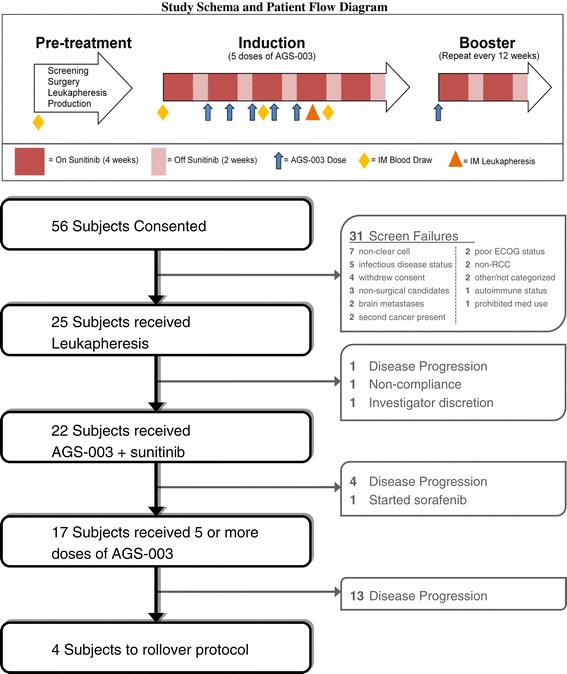
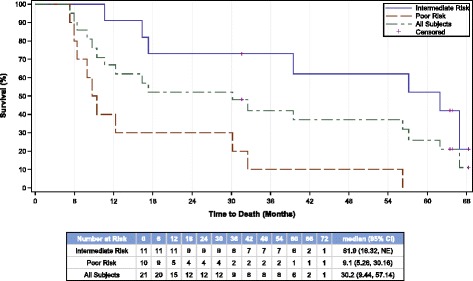
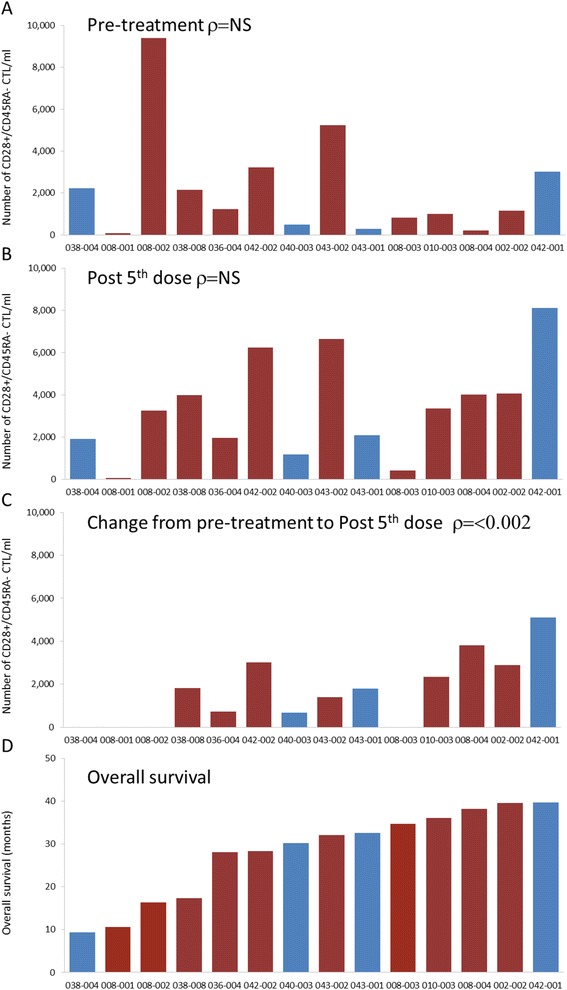
BACKGROUND: AGS-003 is an autologous immunotherapy prepared from fully matured and optimized monocyte-derived dendritic cells, which are co-electroporated with amplified tumor RNA plus synthetic CD40L RNA. AGS-003 was evaluated in combination with sunitinib in an open label phase 2 study in intermediate and poor risk, treatment naïve patients with metastatic clear cell renal cell carcinoma (mRCC). METHODS: Twenty-one intermediate and poor risk patients were treated continuously with sunitinib (4 weeks on, 2 weeks off per 6 week cycle). After completion of the first cycle of sunitinib, patients were treated with AGS-003 every 3 weeks for 5 doses, then every 12 weeks until progression or end of study. The primary endpoint was to determine the complete response rate. Secondary endpoints included clinical benefit, safety, progression free survival (PFS) and overall survival (OS). Immunologic response was also monitored. RESULTS: Thirteen patients (62%) experienced clinical benefit (9 partial responses, 4 with stable disease); however there were no complete responses in this group of intermediate and poor risk mRCC patients and enrollment was terminated early. Median PFS from registration was 11.2 months (95% CI 6.0, 19.4) and the median OS from registration was 30.2 months (95% CI 9.4, 57.1) for all patients. Seven (33%) patients survived for at least 4.5 years, while five (24%) survived for more than 5 years, including 2 patients who remain progression-free with durable responses for more than 5 years at the time of this report. AGS-003 was well tolerated with only mild injection-site reactions. The most common adverse events were related to expected toxicity from sunitinib therapy. In patients who had sequential samples available for immune monitoring, the magnitude of the increase in the absolute number of CD8(+) CD28(+) CD45RA(-) effector/memory T cells (CTLs) after 5 doses of AGS-003 relative to baseline, correlated with overall survival. CONCLUSIONS: AGS-003 in combination with sunitinib was well tolerated and yielded supportive immunologic responses coupled with extension of median and long-term survival in an unselected, intermediate and poor risk prognosis mRCC population. CLINICAL TRIAL REGISTRY: #NCT00678119.
Overview
The claims and statistics of this paper haven’t been checked yet.
Free: it reads the open-access text and checks the first 5 claims that cite a source we can check. Create a free account to check every claim.
Integrity signals
Registry
Cites
Statistics
Figures
Verification
Claims the paper makes
The claims and statistics of this paper haven’t been checked yet.
Free: it reads the open-access text and checks the first 5 claims that cite a source we can check. Create a free account to check every claim.
Claims other papers make about this one
Each is checked against this paper’s own text: does it say what the citing paper says it does?
The source backs part of the claim, not all of it — or backs it for a different population, condition or comparison.
In the citing paper
“the results of a phase II trial demonstrate the benefit of such an approach for patients with advanced-stage renal cell carcinoma (RCC)65”
From Enhancing cancer immunotherapy using antiangiogenics: opportunities and challenges (2018) · cites this paper as [65]
Experimental — accuracy not yet measuredIn the citing paper
“On the basis of positive preclinical data, these combinations are now being tested in multiple clinical trials, with promising outcomes reported for patients with RCC in a phase II trial65 (TABLE 2).”
From Enhancing cancer immunotherapy using antiangiogenics: opportunities and challenges (2018) · cites this paper as [65]
Self-check
Percentages, sums and reported differences re-computed from the paper’s own numbers.
The self-check needs the paper’s full text.
Citations
Cites
New Guidelines to Evaluate the Response to Treatment in Solid Tumors
Therasse, P., Arbuck, S. G., Eisenhauer, E. A., Wanders, J., Kaplan, R. S., Rubinstein, L., Verweij, J., Van Glabbeke, M., van Oosterom, A. T., Christian, M. C., et al. (2000) · JNCI: Journal of the National Cancer Institute · doi:10.1093/jnci/92.3.205 · Cited by 15,660
Improved Survival with Ipilimumab in Patients with Metastatic Melanoma
Hodi, F. S., O'Day, S. J., McDermott, D. F., Weber, R. W., Sosman, J. A., Haanen, J. B., Gonzalez, R., Robert, C., Schadendorf, D., Hassel, J. C., et al. (2010) · New England Journal of Medicine · doi:10.1056/nejmoa1003466 · Cited by 15,155 · cited 1×
“Delayed responses were noted even after initial increases in tumor burden [34].”
BackgroundSunitinib versus Interferon Alfa in Metastatic Renal-Cell Carcinoma
Motzer, R. J., Hutson, T. E., Tomczak, P., Michaelson, M. D., Bukowski, R. M., Rixe, O., Oudard, S., Negrier, S., Szczylik, C., Kim, S. T., et al. (2007) · New England Journal of Medicine · doi:10.1056/nejmoa065044 · Cited by 5,775 · cited 2×
“As TKI data matured, it became evident that sunitinib was rarely if ever associated with CRs in advanced RCC, even in studies where approximately one-third of subjects entered with favorable risk disease [26,31,32].”
BackgroundSelf-citationMotzer, R. J., Hutson, T. E., Tomczak, P., Michaelson, M. D., Bukowski, R. M., Oudard, S., Negrier, S., Szczylik, C., Pili, R., Bjarnason, G. A., et al. (2009) · Journal of Clinical Oncology · doi:10.1200/jco.2008.20.1293 · Cited by 2,181 · cited 1×
“As TKI data matured, it became evident that sunitinib was rarely if ever associated with CRs in advanced RCC, even in studies where approximately one-third of subjects entered with favorable risk disease [26,31,32].”
BackgroundSelf-citationHeng, D. Y. C., Xie, W., Regan, M. M., Warren, M. A., Golshayan, A. R., Sahi, C., Eigl, B. J., Ruether, J. D., Cheng, T., North, S., et al. (2009) · Journal of Clinical Oncology · doi:10.1200/jco.2008.21.4809 · Cited by 2,133 · cited 3×
“Patients were classified as intermediate (71%) or poor (29%) risk according to Memorial Sloan Kettering Cancer Center (MSKCC) [24] and intermediate (52%) or poor (48%) risk according to Heng criteria [25].”
BackgroundResultSelf-citationMotzer, R. J., Bacik, J., Murphy, B. A., Russo, P., & Mazumdar, M. (2002) · Journal of Clinical Oncology · doi:10.1200/jco.20.1.289 · Cited by 1,576 · cited 4×
“MSKCC risk [23], n (”
BackgroundInfluentialDannull, J. (2005) · Journal of Clinical Investigation · doi:10.1172/jci25947 · Cited by 989 · cited 1×
“The use of autologous tumor RNA for broad tumor antigen presentation by autologous, mature DCs holds promise as a fully personalized, patientspecific immunotherapeutic product as it minimizes the risk of mutant clonal escape with presentation of multiple target antigens from the autologous tumor sample [14-17].”
BackgroundIn Situ Cytotoxic and Memory T Cells Predict Outcome in Patients With Early-Stage Colorectal Cancer
Pagès, F., Kirilovsky, A., Mlecnik, B., Asslaber, M., Tosolini, M., Bindea, G., Lagorce, C., Wind, P., Marliot, F., Bruneval, P., et al. (2009) · Journal of Clinical Oncology · doi:10.1200/jco.2008.19.6147 · Cited by 954 · cited 1×
“This functionality is important because memory T cell responses have been associated with good clinical outcome in patients with solid tumors [41-43].”
BackgroundKo, J. S., Zea, A. H., Rini, B. I., Ireland, J. L., Elson, P., Cohen, P., Golshayan, A., Rayman, P. A., Wood, L., Garcia, J., et al. (2009) · Clinical Cancer Research · doi:10.1158/1078-0432.ccr-08-1332 · Cited by 862 · cited 2×
“The rationale to combine sunitinib with AGS-003, a fully personalized immunotherapy, was based upon the proven antitumor activity of sunitinib and its potential to attenuate the immune suppression in the tumor microenvironment observed in advanced RCC [18,19].”
BackgroundDendritic-cell immunotherapy: from ex vivo loading to in vivo targeting
Tacken, P. J., de Vries, I. J. M., Torensma, R., & Figdor, C. G. (2007) · Nature Reviews Immunology · doi:10.1038/nri2173 · Cited by 750 · cited 1×
“Dendritic cells (DCs) are a powerful tool for stimulating cell-mediated immunity by efficient presentation of antigen to both CD4 and CD8 Tcells [7,8].”
Background
Cited by
Items 101–200 of 207
New treatment modalities with vaccine therapy in renal cell carcinoma
Sönmez, M. G., & Sönmez, L. (2019) · Urology Annals · doi:10.4103/ua.ua_166_17 · Cited by 18
“Amin et al.[30] randomly compared sunitinib‑combined autologous DC vaccine (AGS‑003) treatment with just sunitinib treatment in the phase 2 study they made on 21 mRCC patients and reported that survival was significantly better in autologous DC vaccine + sunitinib group (57 ± 1 months vs. 30 ± 2 1 months).”
MethodThe current status of immunobased therapies for metastatic renal-cell carcinoma
Sathianathen, N. J., Krishna, S. R., Anderson, J. K., Weight, C., Gupta, S., Konety, B. R., & Griffith, T. S. (2017) · ImmunoTargets and Therapy · doi:10.2147/itt.s134850 · Cited by 18
“1 months for intermediate-risk and poor-risk patients, respectively.(56) It should be noted that more than half the cohort experienced a survival benefit >30 months.”
Poljak, I., Chiappini, C., & Adriani, G. (2026) · Lab on a Chip · doi:10.1039/d5lc01060h · Cited by 17
Current status of antigen-specific T-cell immunotherapy for advanced renal-cell carcinoma
Xu, Y., Miller, C. P., Warren, E. H., & Tykodi, S. S. (2021) · Human Vaccines & Immunotherapeutics · doi:10.1080/21645515.2020.1870846 · Cited by 18
Emerging immunotherapy in advanced renal cell carcinoma
Mendiratta, P., Rini, B. I., & Ornstein, M. C. (2017) · Urologic Oncology Seminars and Original Investigations · doi:10.1016/j.urolonc.2017.08.011 · Cited by 17
“In a phase II trial of treatment-naïve intermediate-and poor-risk aRCC, patients received an induction cycle of sunitinib, then AGS-003 in both an induction (every 3 weeks) and maintenance phase (every 12 weeks) until disease progression or study conclusion [41].”
BackgroundMethodModern Systemic Therapy for Metastatic Renal Cell Carcinoma of the Clear Cell Type
Parikh, M., & Lara, P. N. (2017) · Annual Review of Medicine · doi:10.1146/annurev-med-041916-124132 · Cited by 16
Recent Advances in the Medical Treatment of Recurrent or Metastatic Renal Cell Cancer
Kumbla, R. A., Figlin, R. A., & Posadas, E. M. (2016) · Drugs · doi:10.1007/s40265-016-0665-1 · Cited by 17
“Of note, the adverse events related to the injection involve local reactions at the site of injection, and the other reactions were sunitinib related [59].”
BackgroundSelf-citationmRNA vaccine development for cholangiocarcinoma: a precise pipeline
Tang, T., Huang, X., Zhang, G., Lu, M., & Liang, T. (2022) · Military Medical Research · doi:10.1186/s40779-022-00399-8 · Cited by 16
Özdemir, B. C., Siefker-Radtke, A. O., Campbell, M. T., & Subudhi, S. K. (2017) · European Urology Focus · doi:10.1016/j.euf.2017.10.001 · Cited by 19
Durvalumab: a potential maintenance therapy in surgery-ineligible non-small-cell lung cancer
Shafique, M. R., Robinson, L. A., & Antonia, S. J. (2018) · Cancer Management and Research · doi:10.2147/cmar.s148009 · Cited by 14
“AGS-003 consists of autologous monocytederived DCs obtained from patients’ tumor tissues.(96) The DCs are co-electroporated using tumor RNA, which allows the DCs to present tumor antigen via class I major histocompatibility complex.”
Exploring molecular and cellular mechanisms of Pre-Metastatic niche in renal cell carcinoma
Zhou, X., Li, R., Lai, M., & Lai, C. (2025) · Molecular Cancer · doi:10.1186/s12943-025-02315-9 · Cited by 14
“Furthermore, other DC vaccines in combination with sunitinib have shown the capacity to provoke tumor-specific T cell responses in mRCC patients, thereby overcoming the immunosuppressive effects commonly observed in RCC [169–172].”
Immunotherapy of advanced renal cell carcinoma: Current and future therapies
Gill, D. M., Hahn, A. W., Sonpavde, G., & Agarwal, N. (2016) · Human Vaccines & Immunotherapeutics · doi:10.1080/21645515.2016.1212794 · Cited by 13
“In the study by Amin, et al., no grade III or IV toxicities were attributed to AGS-003.”
BackgroundInfluentialAdvances on immunotherapy in genitourinary and renal cell carcinoma
Botta, G. P., Granowicz, E., & Costantini, C. L. (2017) · Translational Cancer Research · doi:10.21037/tcr.2017.02.09 · Cited by 14
“A Phase III trial has accrued and will determine sunitinib only versus sunitinib plus AGS-003 vaccine (55) (Figure 3).”
BackgroundTreatment of Metastatic Renal Cell Carcinoma
Richter, I., & Dvořák, J. (2018) · Klinicka onkologie · doi:10.14735/amko2018110 · Cited by 13
Clinical benefit and safety associated with mRNA vaccines for advanced solid tumors: A meta‐analysis
Zhang, T., Xu, H., Zheng, X., Xiong, X., Zhang, S., Yi, X., Li, J., Wei, Q., & Ai, J. (2023) · MedComm · doi:10.1002/mco2.286 · Cited by 13
Mohamed, S. I. A., Jantan, I., Nafiah, M. A., Ali‐Seyed, M., & Chan, K. M. (2018) · BMC Complementary and Alternative Medicine · doi:10.1186/s12906-018-2296-4 · Cited by 12
Therapeutic Vaccines for Genitourinary Malignancies
Dutcher, G., & Bilen, M. A. (2018) · Vaccines · doi:10.3390/vaccines6030055 · Cited by 12
“In addition, good T-cell responses were seen, and the increase in absolute number of T-cells correlated with survival [50].”
BackgroundResultThe Bright Future of mRNA as a Therapeutic Molecule
Vélez, D. E., Torres, B. L., & Hernández, G. (2025) · Genes · doi:10.3390/genes16040376 · Cited by 11
Role of immunotherapy in kidney cancer
Nazzani, S., Bazinet, A., & Karakiewicz, P. I. (2018) · Current Opinion in Supportive and Palliative Care · doi:10.1097/spc.0000000000000363 · Cited by 11
Exposure to Low-Dose Radiation Enhanced the Antitumor Effect of a Dendritic Cell Vaccine
Wang, S., Yu, H., He, R., Song, X., Chen, S., Yu, N., Li, W., Li, F., & Jiang, Q. (2019) · Dose-Response · doi:10.1177/1559325819832144 · Cited by 11
“Further studies are needed to assess whether this novel approach of DC vaccine preparation is effective for other types of solid tumors, specifically for renal tumors in which DC-based immunotherapy has entered into a phase 2 study.(44)”
BackgroundImmunotherapy of Renal Cell Carcinoma
Poprach, A., Lakomý, R., & Büchler, T. (2017) · Klinicka onkologie · doi:10.14735/amko20173s55 · Cited by 12
Sun, S., Mao, W., Wan, L., Pan, K.-H., Deng, L., Zhang, L., Zhang, G., & Chen, M. (2022) · Frontiers in Molecular Biosciences · doi:10.3389/fmolb.2021.794326 · Cited by 12
“Currently, new immunotherapy drugs have been developed successively, such as cancer vaccine (Amin et al., 2015), adoptive cell therapy (Tang et al., 2013), and checkpoint inhibitors (Ghatalia et al., 2017).”
BackgroundSaux, O. L., Freyer, G., & Négrier, S. (2016) · Clinical Drug Investigation · doi:10.1007/s40261-016-0384-0 · Cited by 10
Debenedette, M. A., Gamble, A. H., Norris, M. S., Horvatinovich, J. M., & Nicolette, C. A. (2023) · Human Vaccines & Immunotherapeutics · doi:10.1080/21645515.2023.2220629 · Cited by 9
“16,18,23,24 CD40L RNA was manufactured using in vitro transcription and a post-transcriptional capping method.”
BackgroundMethodInfluentialSelf-citationAdvances in treatment of metastatic renal cell carcinoma
Gong, J., Gerendash, B., Dizman, N., Khan, A. A., & Pal, S. K. (2016) · Current Opinion in Urology · doi:10.1097/mou.0000000000000319 · Cited by 9
Self-citationmRNA as a medicine in nephrology: the future is now
Granata, S., Stallone, G., & Zaza, G. (2023) · Clinical Kidney Journal · doi:10.1093/ckj/sfad196 · Cited by 10
“…of AGS-003 in combination with sunitinib ( the first-line treatment of mRCC ) in an unselected, intermediate and poor-risk mRCC patient population was associated with a doubling of expected survival, encouraging long-term and 5-year overall survival, and an excellent safety profile [ 97 ].”
BackgroundImmune-checkpoint inhibitors in melanoma and kidney cancer: from sequencing to rational selection
Flynn, M., Pickering, L. M., Larkin, J., & Turajlic, S. (2018) · Therapeutic Advances in Medical Oncology · doi:10.1177/1758835918777427 · Cited by 9
Tsao, C., Liaw, B. C.-H., He, C., Galsky, M. D., Sfakianos, J. P., & Oh, W. K. (2017) · Therapeutic Advances in Medical Oncology · doi:10.1177/1758834016687261 · Cited by 10
Discovery platforms for RNA therapeutics
Ciucci, G., Braga, L., & Zacchigna, S. (2024) · British Journal of Pharmacology · doi:10.1111/bph.16424 · Cited by 8
“…(LUNAR-COV19 and ARCoV) (Chen, Hu, et al., 2022; de Alwis et al., 2021), melanoma (Schuler-Thurner et al., 2015) and advanced renal cell carcinoma (Amin et al., 2015). mRNA replacement therapies have reached the clinical stage for cystic fibrosis, propionic acidaemia and ornithine…”
Willemen, Y., Versteven, M., Peeters, M., Berneman, Z. N., & Smits, E. (2020) · Cancers · doi:10.3390/cancers12020299 · Cited by 9
“Aarntzen [90] Stage III melanoma Stage IV melanoma 11 (42) ‐ ‐ 1 (5) ‐ 5 (23) ‐ 1 (5) 15 (58) 15 (68) 26 22 ‐ ‐ Sustained CRs ‐ Kongsted [81] Progressive metastatic CRPC ‐ 1 (25) 2 (50) ‐ 1 (25) 4 Docetaxel ‐ Kyte [75] Stage IV melanoma ‐ 1 (3) 3 (10) ‐ 25 (86) 29 +/− IL‐2 ‐ Amin [110] mRCC ‐ 9 (43) 4 (19) ‐ 8 (38) 21…”
InfluentialDendritic Cells: The Tools for Cancer Treatment
Locy, H., Melhaoui, S., Maenhout, S. K., & Thielemans, K. (2018) · InTech eBooks · doi:10.5772/intechopen.79273 · Cited by 9
“A phase II study using DCs loaded with tumor RNA and CD40L RNA combined with sunitinib (a tyrosine kinase inhibitor) in metastatic renal cell cancer patients showed the vaccine to be well tolerated, and clinical benefits were experienced in 62% of the patients [59].”
BackgroundHILLEBRAND, R. M., Vogt, A., Strassburg, C. P., Gonzalez-Carmona, M. A., & Schmidt‐Wolf, I. G. H. (2019) · Anticancer Research · doi:10.21873/anticanres.13645 · Cited by 7
Zamyatnin, A. A., Soltani, M., Savvateeva, L. V., & Ganjalıkhani-Hakemi, M. (2022) · Current Drug Targets · doi:10.2174/1389450123666220421124542 · Cited by 8
Sauerer, T., Albrecht, L., Sievers, N. M., Gerer, K. F., Hoyer, S., Dörrie, J., & Schaft, N. (2024) · Methods in molecular biology · doi:10.1007/978-1-0716-3770-8_10 · Cited by 6
Technical Challenges in the Manufacture of Dendritic Cell Cancer Therapies
Lozano, M. C. G., Cid, J., Benítez‐Ribas, D., & Juan, M. (2019) · European Oncology & Haematology · doi:10.17925/eoh.2019.15.1.22 · Cited by 6
Landscape of Immunotherapy in Genitourinary Malignancies
Ravindranathan, D., Alhalabi, O., Rafei, H., Shah, A. Y., & Bilen, M. A. (2021) · Advances in experimental medicine and biology · doi:10.1007/978-3-030-79308-1_5 · Cited by 7
Recent developments in cancer vaccines
Mukherjee, B., Hoque, A. A., Chakraborty, A., Chakraborty, S., Dutta, L., Dutta, D., Banerjee, S., Dhara, M., & Deepa, R. M. (2022) · Elsevier eBooks · doi:10.1016/b978-0-12-823686-4.00018-5 · Cited by 7
Autologous Dendritic Vaccine Therapy in Metastatic Kidney Cancer: The ADAPT Trial and Beyond
Master, V. A., Uzzo, R. G., Bratlavsky, G., & Karam, J. A. (2022) · European Urology Focus · doi:10.1016/j.euf.2022.04.003 · Cited by 6
Self-citationImmunotherapy for Renal Cancer: Sequencing and Combinations
Stewart, G. D., Santis, M. D., Escudier, B. J., Powles, T. B., & Sonpavde, G. (2016) · European Urology Focus · doi:10.1016/j.euf.2017.04.002 · Cited by 6
“There is great interest in the result of this combination study as the phase 2 study demonstrated a good median OS of 30 months for combined vaccine and sunitinib [35].”
BackgroundAdvances in dendritic cell-based therapeutic tumor vaccines
Qin, S., Na, J., Yang, Q., Tang, J., Deng, Y., & Zhong, L. (2025) · Molecular Immunology · doi:10.1016/j.molimm.2025.03.005 · Cited by 5
Cancer immunotherapy: new applications in urologic oncology
Mullane, S. A., & Bellmunt, J. (2016) · Current Opinion in Urology · doi:10.1097/mou.0000000000000337 · Cited by 6
“Sixty-two percent of patients had at least stable disease, and 42% of patients achieved a PR [103].”
BackgroundPorta, C., Toscani, I., Czarnecka, A. M., & Szczylik, C. A. (2016) · Expert Opinion on Biological Therapy · doi:10.1080/14712598.2017.1271869 · Cited by 5
“From a biological point of view, the mononuclear cells isolated from patient’s peripheral blood showed a reduction of Treg cells and an increase in CD8+CD28+CD45RA− (effector and memory cells), parameters positively correlated with OS [66].”
BackgroundShbeer, A. M. (2023) · Pathology - Research and Practice · doi:10.1016/j.prp.2023.155025 · Cited by 6
Immunotherapy: Controlled attack
Schmidt, C. W. (2016) · Nature · doi:10.1038/537s109a · Cited by 5
Role of immunotherapy in metastatic renal cell cancer: past, present and future
Lal, A., Sahu, K. K., Jindal, V., Mishra, A. K., & Siddiqui, A. D. (2019) · Annals of Translational Medicine · doi:10.21037/atm.2019.09.95 · Cited by 5
“sunitinib in aRCC patients with unfavorable risk factors (32).”
BackgroundImmunotherapy for genitourinary cancer: state of the art and new perspectives
Cattrini, C., Dellepiane, C., Cavo, A., Buzzatti, G., Tolomeo, F., Messina, C. G. M., & Boccardo, F. (2016) · Anti-Cancer Drugs · doi:10.1097/cad.0000000000000376 · Cited by 6
Therapeutic Sequencing in Metastatic Renal Cell Carcinoma
Maia, M. C., Dizman, N., Salgia, M. M., & Pal, S. K. (2017) · Kidney Cancer · doi:10.3233/kca-170006 · Cited by 4
“the study showed a median PFS of 11 months and median OS of 30 months [90].”
BackgroundSelf-citationHongo, F., Ueda, T., Takaha, N., Tamada, S., Nakatani, T., Miki, T., & Ukimura, O. (2022) · International Journal of Urology · doi:10.1111/iju.15077 · Cited by 4
Dendritic cell vaccines in neurological oncology
Chekhonin, I. V., Kobyakov, G. L., & Gurina, O. I. (2020) · Burdenko s Journal of Neurosurgery · doi:10.17116/neiro20208401176 · Cited by 4
Therapeutic tumor vaccines — a rising star to benefit cancer patients
Wei, Q., Fang, Z., Zhang, Z., & Zhang, T. (2021) · WArtificial Intelligence in Cancer · doi:10.35713/aic.v2.i3.25 · Cited by 4
The landscape of genitourinary cancer vaccines: clinical advances and future opportunities
Zheng, R., Cai, Y., Ding, W., Yang, F., Xu, K., & Gao, Y. (2025) · Journal of Advanced Research · doi:10.1016/j.jare.2025.11.049 · Cited by 3
“Matured monocyte-derived DCs are extracted from the patient’s body, subsequently co-electroporated with synthetic CD40L RNA and the patient’s amplified tumor RNA, then reintroduced into the patient [98].”
Lu, N., Han, J., Dong, L., Li, T., Margonis, G. A., Wang, J. J., Cao, H., Sun, Y., Wang, W., & Lin, C. (2026) · Journal of Translational Medicine · doi:10.1186/s12967-025-07287-4 · Cited by 3
Hu, J., & Mo, Z. (2022) · Mathematical Biosciences & Engineering · doi:10.3934/mbe.2023100 · Cited by 3
L’immunothérapie dans le cancer du rein : un développement clinique en plein essor
Baize, N., & Bigot, P. (2018) · The French Journal of Urology · doi:10.1016/j.purol.2017.11.005 · Cited by 3
Past, present and forecast of transfusion medicine: What has changed and what is expected to change?
Schmidt, A. E., Refaai, M. A., & Blumberg, N. (2016) · La Presse Médicale · doi:10.1016/j.lpm.2016.06.017 · Cited by 4
Bot, A. I., Berinstein, E. M., & Berinstein, N. L. (2017) · Elsevier eBooks · doi:10.1016/b978-0-323-35761-6.00013-4 · Cited by 6
Current Landscape of Immunotherapy in Genitourinary Malignancies
Alhalabi, O., Rafei, H., Bilen, M. A., & Shah, A. Y. (2020) · Advances in experimental medicine and biology · doi:10.1007/978-3-030-41008-7_6 · Cited by 3
Jasim, S. A., Михайловна, Ф. И., Noraldeen, S. A. M., Bansal, P., Alsaab, H. O., Abdullaev, B., Alkhafaji, A. T., Alawadi, A. H., Hamzah, H. F., & Mohammed, B. A. (2024) · Microvascular Research · doi:10.1016/j.mvr.2024.104691 · Cited by 4
Launch of Breakthrough Therapies Will Reshape Renal Cell Carcinoma Market.
Fellner, C. (2016) · PubMed · Cited by 2
Vaccine therapy in renal cell carcinoma: attempting to leap over a rising bar
Pal, S. K., Agarwal, N., Dizman, N., & Sonpavde, G. (2016) · The Lancet Oncology · doi:10.1016/s1470-2045(16)30493-4 · Cited by 2
Self-citationBigot, F., Bonnet, C., & Massard, C. (2017) · Bulletin du Cancer · doi:10.1016/j.bulcan.2017.01.009 · Cited by 2
Treatment of Metastatic Renal Cell Carcinoma: Latest Evidence and Ongoing Challenges
Aguiar, P. N., de Pádua, T. C., Barreto, C. M. N., & del Giglio, A. (2018) · Clinical Medicine Insights Urology · doi:10.1177/1179561118765758 · Cited by 2
Ahmed, R., Crespo, I., Tuyaerts, S., Bekkar, A., Graciotti, M., Xénarios, I., & Kandalaft, L. E. (2020) · Computational and Structural Biotechnology Journal · doi:10.1016/j.csbj.2020.08.001 · Cited by 1
Jin, X., Yang, J., Miao, D., Xiong, W., & Xiong, Z. (2026) · Biomedicines · doi:10.3390/biomedicines14061181 · Cited by 1
“…with metastatic RCC, AGS-003, a dendritic cell vaccine loaded with autologous tumor RNA and transfected with CD40L RNA, was administered in combination with sunitinib, achieving a median overall survival of 30.2 months [23], with no unexpected toxicity beyond the known safety profile of sunitinib.”
InfluentialAGS-003 combined with sunitinib for the precision treatment of metastatic renal cell carcinoma
Bedke, J., Stenzl, A., & Rausch, S. (2017) · Expert Review of Precision Medicine and Drug Development · doi:10.1080/23808993.2017.1375852 · Cited by 1
“After a 6-week initiation cycle of sunitinib, patients received five consecutive doses of AGS-003 every 3 weeks, then followed by 12-week intervals of AGS-003 until progression or end of study [11].”
BackgroundMethodInfluentialRenal carcinoma and immunotherapy
Poprach, A., & Lakomý, R. (2016) · Onkologie · doi:10.36290/xon.2016.053 · Cited by 1
Immunotherapy for Renal Cell Cancer (RCC)
Kitano, S., Ito, A., & Kim, Y. (2017) · Springer eBooks · doi:10.1007/978-4-431-55531-5_12 · Cited by 1
Role of Immune System in Kidney Cancer
Chudzinski‐Tavassi, A. M., Morais, K. L. P., de Souza, J. G., & Chammas, R. J. (2020) · IntechOpen eBooks · doi:10.5772/intechopen.77379 · Cited by 1
“AGS-003 is an autologous DC vaccine that is generated from host DCs in response to tumor mRNA [131], which is also to investigate in combination with sunitinib [132].”
BackgroundCancer Vaccine in Solid Tumors: Where We Stand
Roy, S., Ghosh, J., & Ghosh, R. (2021) · Indian Journal of Medical and Paediatric Oncology · doi:10.1055/s-0041-1735439 · Cited by 1
“30 The promising result of this Phase II trial initiated a Phase III trial (ADAPT) that randomized patients with advanced or mRCC (clear cell type) to sunitinib with or without rocapuldencel-T in a 2:1 fashion.”
BackgroundMartini, D. J., Olsen, T. A., Goyal, S., Liu, Y., Evans, S. T., Hitron, E., Russler, G. A., Yantorni, L. B., Caulfield, S. E., Brown, J. T., et al. (2022) · Journal of Immunotherapy and Precision Oncology · doi:10.36401/jipo-22-2 · Cited by 1
“2 months in a phase 2 clinical trial.([21]) Sequential nivolumab then salvages ICI dual therapy, and novel combination treatment regimens may present safe and efficacious alternatives to the currently approved ICI combination treatments.”
BackgroundSelf-citationCancer Vaccines for Solid Tumors
Vreeland, T. J., Herbert, G. S., & Peoples, G. E. (2018) · Wiley eBooks · doi:10.1002/9781118684535.ch6 · Cited by 1
Integrating Context of Tumor Biology and Vaccine Design to Shape Multidimensional Immunotherapies
Wang, N. S., & Maine, C. J. (2020) · Future Drug Discovery · doi:10.4155/fdd-2019-0031 · Cited by 1
Immunotherapy for Renal Cell Carcinoma
Büchler, T. (2015) · Klinicka onkologie · doi:10.14735/amko20154s64 · Cited by 2
Landmark Trials in Renal Cancer
Vaishampayan, U. N. (2018) · Kidney Cancer · doi:10.3233/kca-170026
Cancer Vaccines: Dendritic Cell-Based Vaccines and Related Approaches
Chaperot, L., Manches, O., & Aspord, C. (2018) · Elsevier eBooks · doi:10.1016/b978-0-12-801238-3.99437-6
Kidney Cancer: From Basics to Immunotherapy
de Oliveira, A. C. F., & de Oliveira, F. N. G. (2019) · Springer eBooks · doi:10.1007/978-3-030-16245-0_27
Schlom, J., Gameiro, S. R., Palena, C., & Gulley, J. L. (2022) · Wiley eBooks · doi:10.1002/9781119000822.hfcm066.pub2
Letter to the Editor: mRNA Vaccines in Urological Malignancies
Yang, L., Gao, G., & Huang, J. (2022) · Human Gene Therapy · doi:10.1089/hum.2022.29218.lya
Liver Cancer and the Curative Potential of Nanomedicine
Kuzmanović, A., Lin, C., & Bartneck, M. (2023) · Interdisciplinary cancer research · doi:10.1007/16833_2023_129 · Cited by 1
Wang, J., Forterre, A. V., Zhao, J., Frimannsson, D. O., Delcayre, A. X., Antes, T. J., Efron, B., Jeffrey, S. S., Pegram, M. D., & Matin, A. (2023) · doi:10.1158/1535-7163.c.6537766
CURRENT ACHIEVEMENTS OF DENDRITIC CELL-BASED IMMUNOTHERAPY
Džopalić, T., Topalović, M., & Bjelaković, M. (2019) · Acta Medica Medianae · doi:10.5633/amm.2019.0218
“Clinical benefit among patients with metastatic clear cell renal cell carcinoma and nonsmall cell lung cancer was achieved by RNA transfected DCs (47, 49).”
BackgroundXu, H., Zheng, X. S., Zhang, S., Yi, X., Zhang, T., Wei, Q., Li, H., & Ai, J. (2021) · Figshare · doi:10.6084/m9.figshare.17132830
Cancer Vaccines Based on mRNA: Hype or Hope?
de Mey, W., Autaers, D., Bertazzon, G., Esprit, A., Aragon, M. M., Franceschini, L., & Breckpot, K. (2024) · Wiley eBooks · doi:10.1002/9783527838394.ch13
mRNA-therapy: problems and prospects of application in nephrology
Айтбаев, К. А., Murkamilov, I. T., Fomin, V. V., Yusupova, T. F., Yusupova, Z. F., Yusupov, F. A., Khakimov, S., Ymankulov, D. S., & Kudaibergenova, I. (2025) · Nephrology (Saint-Petersburg) · doi:10.36485/1561-6274-2024-28-4-30-38
Combination of Pre-existing and New Strategies to Improve CAR-T Cells’ Efficiency
Tanwar, L. (2025) · International journal of high school research · doi:10.36838/v7i6.31
Qiu, X., Wu, Q., Zhu, J., Xu, T., Feng, Y., & Lin, S. (2025) · Critical Reviews in Oncology/Hematology · doi:10.1016/j.critrevonc.2025.104833
Advances of mRNA vaccines in genitourinary cancers
Shen, Y.-M., Wan, F., Xu, H., Yu, L., Huang, S., Ye, D., & Dai, B. (2025) · Biochimica et Biophysica Acta (BBA) - Reviews on Cancer · doi:10.1016/j.bbcan.2025.189427 · Cited by 1
Zheng, X., Xu, H., Yi, X., Zhang, T., Wei, Q., Li, H., & Ai, J. (2021) · Figshare · doi:10.6084/m9.figshare.17133118
Zheng, X., Xu, H., Yi, X., Zhang, T., Wei, Q., Li, H., & Ai, J. (2021) · Figshare · doi:10.6084/m9.figshare.17133091
Zheng, X., Xu, H., Yi, X., Zhang, T., Wei, Q., Li, H., & Ai, J. (2021) · Figshare · doi:10.6084/m9.figshare.17133112
Zheng, X., Xu, H., Yi, X., Zhang, T., Wei, Q., Li, H., & Ai, J. (2021) · Figshare · doi:10.6084/m9.figshare.17133115
Zheng, X., Xu, H., Yi, X., Zhang, T., Wei, Q., Li, H., & Ai, J. (2021) · Figshare · doi:10.6084/m9.figshare.17133106
Zheng, X., Xu, H., Yi, X., Zhang, T., Wei, Q., Li, H., & Ai, J. (2021) · Figshare · doi:10.6084/m9.figshare.17133103
Zheng, X., Xu, H., Yi, X., Zhang, T., Wei, Q., Li, H., & Ai, J. (2021) · Figshare · doi:10.6084/m9.figshare.17133097
Zheng, X., Xu, H., Yi, X., Zhang, T., Wei, Q., Li, H., & Ai, J. (2021) · Figshare · doi:10.6084/m9.figshare.17133094
Zheng, X., Xu, H., Yi, X., Zhang, T., Wei, Q., Li, H., & Ai, J. (2021) · Figshare · doi:10.6084/m9.figshare.17133088
Zheng, X., Xu, H., Yi, X., Zhang, T., Wei, Q., Li, H., & Ai, J. (2021) · Figshare · doi:10.6084/m9.figshare.17133121
Zheng, X., Xu, H., Yi, X., Zhang, T., Wei, Q., Li, H., & Ai, J. (2021) · Figshare · doi:10.6084/m9.figshare.17133109
The role of stat3 phosphorylation state in clear cell renal cell carcinoma (ccRCC)
Bautista, J. P. A., & Molecular, U. A. D. B. D. D. B. I. D. B. (2019) · LA Referencia (Red Federada de Repositorios Institucionales de Publicaciones Científicas) · Cited by 1
Metadata
- Authors
- Amin, A., Dudek, A. Z., Logan, T. F., Lance, R. S., Holzbeierlein, J. M., Knox, J. J., Master, V. A., Pal, S. K., Miller, W. H., Karsh, L. I., Tcherepanova, I. Y., DeBenedette, M. A., Williams, W. L., Plessinger, D. C., Nicolette, C. A., & Figlin, R. A.
- Affiliations
- Levine Cancer Institute (US)
- University of Illinois Chicago (US)
- Indiana University Melvin and Bren Simon Comprehensive Cancer Center (US)
- Urology of Virginia (US)
- University of Kansas (US)
- Princess Margaret Cancer Centre (CA)
- Emory University (US)
- City Of Hope National Medical Center (US)
- Jewish General Hospital (CA)
- The Urology Center of Colorado (US)
- Argos Therapeutics (United States) (US)
- Cedars-Sinai Medical Center (US)
- Corresponding author
- Amin, Asim
- Figlin, Robert A
- ORCID
- Venue
- Journal for ImmunoTherapy of Cancer
- Publisher
- BMJ
- Published
- 2015-04-21
- Volume
- 3
- Issue
- 1
- Pages
- 14-14
- ISSN
- 2051-1426 (ISSN-L)
- PMC
- PMC4404644
- OpenAlex
- W2060260809
- Cited by
- 205
- References
- 47
- Citations by year
- 2026: 5 · 2025: 13 · 2024: 7 · 2023: 12 · 2022: 20 · 2021: 32 · 2020: 17 · 2019: 13 · 2018: 26 · 2017: 29 · 2016: 26 · 2015: 5
- FWCI
- 22.70
- Type
- journal article
- Language
- en
- Open access
- gold
- doi.org
- Locations
- Journal for ImmunoTherapy of Cancer (publishedVersion, cc-by)
- PubMed Central (publishedVersion, cc-by)
- PubMed (publishedVersion)
- TSpace (University of Toronto) (submittedVersion)
- Topics
- Health Sciences › Medicine › Oncology › Renal cell carcinoma treatment
- Life Sciences › Immunology and Microbiology › Immunology › Immunotherapy and Immune Responses
- Health Sciences › Medicine › Oncology › Cancer Immunotherapy and Biomarkers
- Keywords
- sunitinib, metastatic clear cell renal cell carcinoma, combination immunotherapy, CD40 ligand, tumor RNA, CD8+ effector memory T cells, immune monitoring, progression-free survival, overall survival, durable response, treatment toxicity, long-term survival, early trial termination
About these checks
Registry, retraction, Cites and statistics results are computed, not judged, with one exception: a printed reference that no index lists is read once by a model before it counts as a citation error. Claims are extracted by a model and kept only when their quote appears verbatim in the text; each cited source is then checked, with a model’s help, for whether it says what the claim relies on. Those verdicts can be wrong — read the claim’s quote and the cited source before relying on one.
Statistics and arithmetic are recomputed, not judged.
Confidence bands are shown only for fields calibrated on our annotated test set. None is calibrated yet, so no band is shown.
What counts as a claim ›How we measure confidence ›How we check this ›
Are you an author, or do you see a problem with this page? Request a review
Data sources
Bibliographic data: Semantic Scholar, OpenAlex, Crossref.
Contains information from the Semantic Scholar Academic Graph Datasets, made available under the ODC Attribution License (ODC-BY 1.0).
Semantic Scholar’s data is described in: Kinney, R., et al. (2023). The Semantic Scholar Open Data Platform. arXiv:2301.10140.
