

Survival with AGS-003, an autologous dendritic cell–based immunotherapy, in combination with sunitinib in unfavorable risk patients with advanced renal cell carcinoma (RCC): Phase 2 study results
Open accessThe DOI matches its Crossref record; 47 of the 47 references it cites were found in a registry or an index.
Abstract
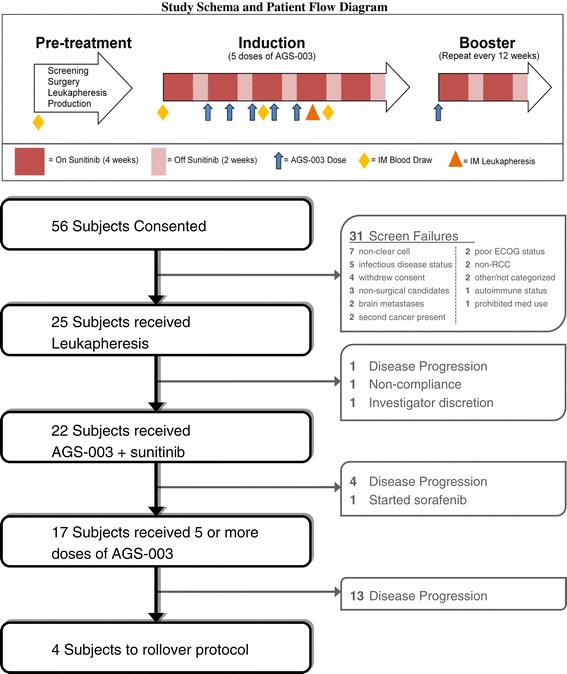
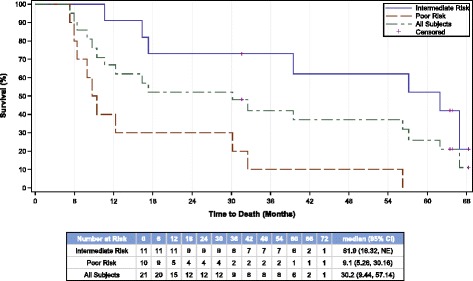
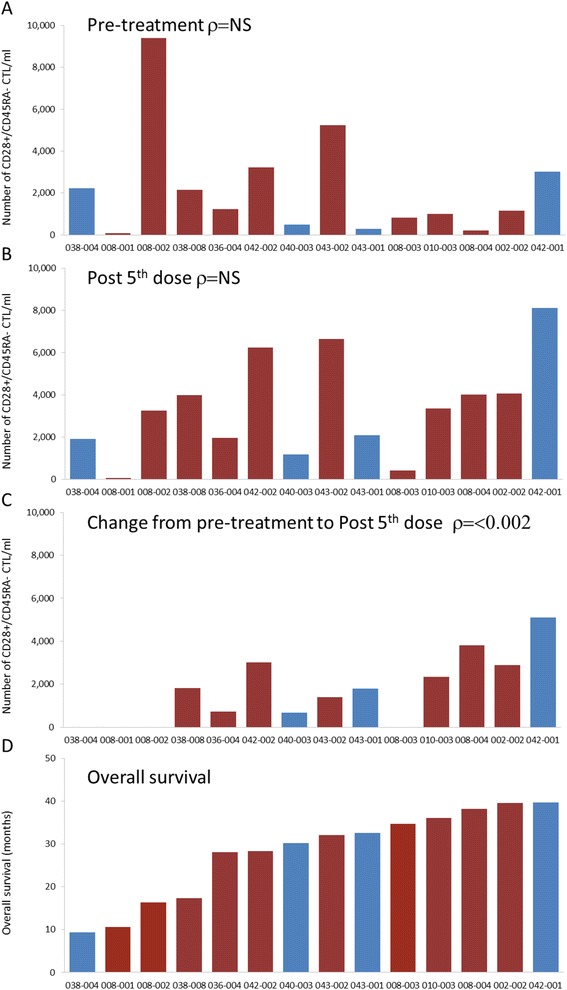
BACKGROUND: AGS-003 is an autologous immunotherapy prepared from fully matured and optimized monocyte-derived dendritic cells, which are co-electroporated with amplified tumor RNA plus synthetic CD40L RNA. AGS-003 was evaluated in combination with sunitinib in an open label phase 2 study in intermediate and poor risk, treatment naïve patients with metastatic clear cell renal cell carcinoma (mRCC). METHODS: Twenty-one intermediate and poor risk patients were treated continuously with sunitinib (4 weeks on, 2 weeks off per 6 week cycle). After completion of the first cycle of sunitinib, patients were treated with AGS-003 every 3 weeks for 5 doses, then every 12 weeks until progression or end of study. The primary endpoint was to determine the complete response rate. Secondary endpoints included clinical benefit, safety, progression free survival (PFS) and overall survival (OS). Immunologic response was also monitored. RESULTS: Thirteen patients (62%) experienced clinical benefit (9 partial responses, 4 with stable disease); however there were no complete responses in this group of intermediate and poor risk mRCC patients and enrollment was terminated early. Median PFS from registration was 11.2 months (95% CI 6.0, 19.4) and the median OS from registration was 30.2 months (95% CI 9.4, 57.1) for all patients. Seven (33%) patients survived for at least 4.5 years, while five (24%) survived for more than 5 years, including 2 patients who remain progression-free with durable responses for more than 5 years at the time of this report. AGS-003 was well tolerated with only mild injection-site reactions. The most common adverse events were related to expected toxicity from sunitinib therapy. In patients who had sequential samples available for immune monitoring, the magnitude of the increase in the absolute number of CD8(+) CD28(+) CD45RA(-) effector/memory T cells (CTLs) after 5 doses of AGS-003 relative to baseline, correlated with overall survival. CONCLUSIONS: AGS-003 in combination with sunitinib was well tolerated and yielded supportive immunologic responses coupled with extension of median and long-term survival in an unselected, intermediate and poor risk prognosis mRCC population. CLINICAL TRIAL REGISTRY: #NCT00678119.
Overview
The claims and statistics of this paper haven’t been checked yet.
Free: it reads the open-access text and checks the first 5 claims that cite a source we can check. Create a free account to check every claim.
Integrity signals
Registry
Cites
Statistics
Figures
Verification
Claims the paper makes
The claims and statistics of this paper haven’t been checked yet.
Free: it reads the open-access text and checks the first 5 claims that cite a source we can check. Create a free account to check every claim.
Claims other papers make about this one
Each is checked against this paper’s own text: does it say what the citing paper says it does?
The source backs part of the claim, not all of it — or backs it for a different population, condition or comparison.
In the citing paper
“the results of a phase II trial demonstrate the benefit of such an approach for patients with advanced-stage renal cell carcinoma (RCC)65”
From Enhancing cancer immunotherapy using antiangiogenics: opportunities and challenges (2018) · cites this paper as [65]
Experimental — accuracy not yet measuredIn the citing paper
“On the basis of positive preclinical data, these combinations are now being tested in multiple clinical trials, with promising outcomes reported for patients with RCC in a phase II trial65 (TABLE 2).”
From Enhancing cancer immunotherapy using antiangiogenics: opportunities and challenges (2018) · cites this paper as [65]
Self-check
Percentages, sums and reported differences re-computed from the paper’s own numbers.
The self-check needs the paper’s full text.
Citations
Cites
New Guidelines to Evaluate the Response to Treatment in Solid Tumors
Therasse, P., Arbuck, S. G., Eisenhauer, E. A., Wanders, J., Kaplan, R. S., Rubinstein, L., Verweij, J., Van Glabbeke, M., van Oosterom, A. T., Christian, M. C., et al. (2000) · JNCI: Journal of the National Cancer Institute · doi:10.1093/jnci/92.3.205 · Cited by 15,660
Improved Survival with Ipilimumab in Patients with Metastatic Melanoma
Hodi, F. S., O'Day, S. J., McDermott, D. F., Weber, R. W., Sosman, J. A., Haanen, J. B., Gonzalez, R., Robert, C., Schadendorf, D., Hassel, J. C., et al. (2010) · New England Journal of Medicine · doi:10.1056/nejmoa1003466 · Cited by 15,155 · cited 1×
“Delayed responses were noted even after initial increases in tumor burden [34].”
BackgroundSunitinib versus Interferon Alfa in Metastatic Renal-Cell Carcinoma
Motzer, R. J., Hutson, T. E., Tomczak, P., Michaelson, M. D., Bukowski, R. M., Rixe, O., Oudard, S., Negrier, S., Szczylik, C., Kim, S. T., et al. (2007) · New England Journal of Medicine · doi:10.1056/nejmoa065044 · Cited by 5,775 · cited 2×
“As TKI data matured, it became evident that sunitinib was rarely if ever associated with CRs in advanced RCC, even in studies where approximately one-third of subjects entered with favorable risk disease [26,31,32].”
BackgroundSelf-citationMotzer, R. J., Hutson, T. E., Tomczak, P., Michaelson, M. D., Bukowski, R. M., Oudard, S., Negrier, S., Szczylik, C., Pili, R., Bjarnason, G. A., et al. (2009) · Journal of Clinical Oncology · doi:10.1200/jco.2008.20.1293 · Cited by 2,181 · cited 1×
“As TKI data matured, it became evident that sunitinib was rarely if ever associated with CRs in advanced RCC, even in studies where approximately one-third of subjects entered with favorable risk disease [26,31,32].”
BackgroundSelf-citationHeng, D. Y. C., Xie, W., Regan, M. M., Warren, M. A., Golshayan, A. R., Sahi, C., Eigl, B. J., Ruether, J. D., Cheng, T., North, S., et al. (2009) · Journal of Clinical Oncology · doi:10.1200/jco.2008.21.4809 · Cited by 2,133 · cited 3×
“Patients were classified as intermediate (71%) or poor (29%) risk according to Memorial Sloan Kettering Cancer Center (MSKCC) [24] and intermediate (52%) or poor (48%) risk according to Heng criteria [25].”
BackgroundResultSelf-citationMotzer, R. J., Bacik, J., Murphy, B. A., Russo, P., & Mazumdar, M. (2002) · Journal of Clinical Oncology · doi:10.1200/jco.20.1.289 · Cited by 1,576 · cited 4×
“MSKCC risk [23], n (”
BackgroundInfluentialDannull, J. (2005) · Journal of Clinical Investigation · doi:10.1172/jci25947 · Cited by 989 · cited 1×
“The use of autologous tumor RNA for broad tumor antigen presentation by autologous, mature DCs holds promise as a fully personalized, patientspecific immunotherapeutic product as it minimizes the risk of mutant clonal escape with presentation of multiple target antigens from the autologous tumor sample [14-17].”
BackgroundIn Situ Cytotoxic and Memory T Cells Predict Outcome in Patients With Early-Stage Colorectal Cancer
Pagès, F., Kirilovsky, A., Mlecnik, B., Asslaber, M., Tosolini, M., Bindea, G., Lagorce, C., Wind, P., Marliot, F., Bruneval, P., et al. (2009) · Journal of Clinical Oncology · doi:10.1200/jco.2008.19.6147 · Cited by 954 · cited 1×
“This functionality is important because memory T cell responses have been associated with good clinical outcome in patients with solid tumors [41-43].”
BackgroundKo, J. S., Zea, A. H., Rini, B. I., Ireland, J. L., Elson, P., Cohen, P., Golshayan, A., Rayman, P. A., Wood, L., Garcia, J., et al. (2009) · Clinical Cancer Research · doi:10.1158/1078-0432.ccr-08-1332 · Cited by 862 · cited 2×
“The rationale to combine sunitinib with AGS-003, a fully personalized immunotherapy, was based upon the proven antitumor activity of sunitinib and its potential to attenuate the immune suppression in the tumor microenvironment observed in advanced RCC [18,19].”
BackgroundDendritic-cell immunotherapy: from ex vivo loading to in vivo targeting
Tacken, P. J., de Vries, I. J. M., Torensma, R., & Figdor, C. G. (2007) · Nature Reviews Immunology · doi:10.1038/nri2173 · Cited by 750 · cited 1×
“Dendritic cells (DCs) are a powerful tool for stimulating cell-mediated immunity by efficient presentation of antigen to both CD4 and CD8 Tcells [7,8].”
Background
Cited by
mRNA vaccines — a new era in vaccinology
Pardi, N., Hogan, M. J., Porter, F. W., & Weissman, D. (2018) · Nature Reviews Drug Discovery · doi:10.1038/nrd.2017.243 · Cited by 4,667
Hsieh, J. J., Purdue, M. P., Signoretti, S., Swanton, C., Albiges, L., Schmidinger, M., Heng, D. Y., Larkin, J., & Ficarra, V. (2017) · Nature Reviews Disease Primers · doi:10.1038/nrdp.2017.9 · Cited by 2,426
Enhancing cancer immunotherapy using antiangiogenics: opportunities and challenges
Fukumura, D., Kloepper, J., Amoozgar, Z., Duda, D. G., & Jain, R. K. (2018) · Nature Reviews Clinical Oncology · doi:10.1038/nrclinonc.2018.29 · Cited by 2,027
Therapeutic Targeting of the Tumor Microenvironment
Bejarano, L., Jordāo, M. J. C., & Joyce, J. A. (2021) · Cancer Discovery · doi:10.1158/2159-8290.cd-20-1808 · Cited by 1,653
Dendritic cell-based immunotherapy
Sabado, R. L., Balan, S., & Bhardwaj, N. (2017) · Cell Research · doi:10.1038/cr.2016.157 · Cited by 927
Treatment of renal cell carcinoma: Current status and future directions
Barata, P. C., & Rini, B. I. (2017) · CA: A Cancer Journal for Clinicians · doi:10.3322/caac.21411 · Cited by 831
“Cytokine-based immunotherapies like IFN-a and IL-2 have proven to be an effective therapeutic modality for a small subset of patients with mRCC. High-dose IL-2 therapy was approved by the FDA based on the pooled results from 7 phase 2 studies conducted in multiple institutions.92 Patients from these studies were conti…”
MethodInfluentialmRNA-based therapeutics: powerful and versatile tools to combat diseases
Qin, S., Tang, X., Chen, Y., Chen, K., Fan, N., Xiao, W., Zheng, Q., Li, G., Teng, Y., Wu, M., et al. (2022) · Signal Transduction and Targeted Therapy · doi:10.1038/s41392-022-01007-w · Cited by 771
mRNA therapeutics in cancer immunotherapy
Beck, J. D., Reidenbach, D., Salomon, N., Sahin, U., Türeci, Ö., Vormehr, M., & Kranz, L. M. (2021) · Molecular Cancer · doi:10.1186/s12943-021-01348-0 · Cited by 385
“) RCC NCT00678119 (II, single arm) Standard-of-care (sunitinib) 2008 Completed [28]”
BackgroundDendritic cells as orchestrators of anticancer immunity and immunotherapy
Heras-Murillo, I., Adán-Barrientos, I., Galán, M., Wculek, S. K., & Sancho, D. (2024) · Nature Reviews Clinical Oncology · doi:10.1038/s41571-024-00859-1 · Cited by 383
“For example, the tyrosine kinase inhibitor sunitinib can decrease T reg cell and MDSC abundance, and the combination of this agent with DC-based vaccination induces tumour-reactive T cell responses in patients with metastatic renal cell carcinoma (RCC) 239,240 .”
Dendritic Cell–Based Immunotherapy: State of the Art and Beyond
Bol, K. F., Schreibelt, G., Gerritsen, W. R., de Vries, I. J. M., & Figdor, C. G. (2016) · Clinical Cancer Research · doi:10.1158/1078-0432.ccr-15-1399 · Cited by 377
“A phase II clinical trial of sunitinib in combination with DC vaccination in advanced renal cell carcinoma patients showed expansion of CD8þ T cells and promising survival data (86).”
BackgroundFrom the RNA world to the clinic
Sullenger, B. A., & Nair, S. (2016) · Science · doi:10.1126/science.aad8709 · Cited by 274
Circular RNA vaccine in disease prevention and treatment
Niu, D., Wu, Y., & Lian, J. (2023) · Signal Transduction and Targeted Therapy · doi:10.1038/s41392-023-01561-x · Cited by 267
“269,272,273 However, vaccine therapy for tumors is progressing slowly, which may be related to the heterogeneity of tumor cells and the susceptibility of antigens to mutation.”
BackgroundTargeted therapies for renal cell carcinoma
Posadas, E. M., Limvorasak, S., & Figlin, R. A. (2017) · Nature Reviews Nephrology · doi:10.1038/nrneph.2017.82 · Cited by 244
Self-citationAn RNA toolbox for cancer immunotherapy
Pastor, F., Berraondo, P., Etxeberria, I., Frederick, J., Sahin, U., Gilboa, E., & Melero, I. (2018) · Nature Reviews Drug Discovery · doi:10.1038/nrd.2018.132 · Cited by 229
Recent advances in overcoming barriers to cell‐based delivery systems for cancer immunotherapy
Ding, Y., Wang, Y., & Hu, Q. (2022) · Exploration · doi:10.1002/exp.20210106 · Cited by 212
Immunomodulatory Activity of VEGF in Cancer
(2017) · International Review of Cell and Molecular Biology · doi:10.1016/bs.ircmb.2016.09.007 · Cited by 194
Biomaterials for vaccine-based cancer immunotherapy
Zhang, R., Billingsley, M. M., & Mitchell, M. J. (2018) · Journal of Controlled Release · doi:10.1016/j.jconrel.2018.10.008 · Cited by 200
Sunitinib resistance in renal cell carcinoma: From molecular mechanisms to predictive biomarkers
Jin, J., Xie, Y., Zhang, J.-S., Wang, J.-Q., Dai, S.-J., He, W.-F., Li, S.-Y., Ashby, C. R., Chen, Z.-S., & He, Q. (2023) · Drug Resistance Updates · doi:10.1016/j.drup.2023.100929 · Cited by 171
Clinical and immunological effects of mRNA vaccines in malignant diseases
Heine, A., Juranek, S., & Brossart, P. (2021) · Molecular Cancer · doi:10.1186/s12943-021-01339-1 · Cited by 181
“(62%) experienced clinical benefit (9 PR, 4 SD); NCT00678119 [162]”
Wang, J.-H., Forterre, A. V., Zhao, J., Frimannsson, D. O., Delcayre, A., Antes, T. J., Efron, B., Jeffrey, S. S., Pegram, M. D., & Matin, A. C. (2018) · Molecular Cancer Therapeutics · doi:10.1158/1535-7163.mct-17-0827 · Cited by 181
“Our previous studies have demonstrated that patient-specific exosomes derived from dendritic cells can be reliably produced under GMP for clinical use [21, 62-65].”
BackgroundGlaviano, A., Lau, H., Carter, L. M., Lee, E. H. C., Lam, H. Y., Okina, E., Tan, D. J. J., Tan, W., Ang, H. L., Carbone, D., et al. (2025) · Journal of Hematology & Oncology · doi:10.1186/s13045-024-01634-6 · Cited by 184
Mougel, A., Terme, M., & Tanchot, C. (2019) · Frontiers in Immunology · doi:10.3389/fimmu.2019.00467 · Cited by 161
Clinical advances of mRNA vaccines for cancer immunotherapy
Yaremenko, A. V., Khan, M. M., Zhen, X., Tang, Y., & Tao, W. (2025) · Med · doi:10.1016/j.medj.2024.11.015 · Cited by 149
Dendritic Cell Vaccines: A Shift from Conventional Approach to New Generations
Lee, K.-W., Yam, J. W. P., & Mao, X. (2023) · Cells · doi:10.3390/cells12172147 · Cited by 117
Current RNA-based Therapeutics in Clinical Trials
Zhou, L., Qin, Z., Zhu, Y., He, Z., & Xu, T. (2019) · Current Gene Therapy · doi:10.2174/1566523219666190719100526 · Cited by 126
Cancer vaccines: Enhanced immunogenic modulation through therapeutic combinations
Gatti-Mays, M. E., Redman, J. M., Collins, J. M., & Bilusic, M. (2017) · Human Vaccines & Immunotherapeutics · doi:10.1080/21645515.2017.1364322 · Cited by 116
Advances in Therapeutic Cancer Vaccines
Wong, K. K. W., Li, A. W., Mooney, D. J., & Dranoff, G. (2016) · Advances in immunology · doi:10.1016/bs.ai.2015.12.001 · Cited by 127
Sunitinib: Ten Years of Successful Clinical Use and Study in Advanced Renal Cell Carcinoma
Motzer, R. J., Escudier, B. J., Gannon, A., & Figlin, R. A. (2016) · The Oncologist · doi:10.1634/theoncologist.2016-0197 · Cited by 114
“In addition, a phase II study of sunitinib plus AGS-003, an autologous immunotherapy, as first-line therapy in patients with intermediate and poor-risk mRCC (n 5 21) found that the combination was well tolerated and yielded supportive immunologic responses with extended survival [92].”
BackgroundSelf-citationHeterogeneity in renal cell carcinoma
Beksac, A. T., Paulucci, D. J., Blum, K. A., Yadav, S. S., Sfakianos, J. P., & Badani, K. K. (2017) · Urologic Oncology Seminars and Original Investigations · doi:10.1016/j.urolonc.2017.05.006 · Cited by 124
Immunomodulatory Roles of VEGF Pathway Inhibitors in Renal Cell Carcinoma
Hirsch, L., Flippot, R., Escudier, B. J., & Albiges, L. K. (2020) · Drugs · doi:10.1007/s40265-020-01327-7 · Cited by 103
“In a phase II trial, AGS-003, an autologous dendritic cellbased immunotherapy in combination with sunitinib in first-line treatment seemed to improve median and longterm survival in an intermediate and poor-risk prognosis mRCC population [99].”
BackgroundRecent developments of RNA-based vaccines in cancer immunotherapy
Faghfuri, E., Pourfarzi, F., Faghfouri, A. H., Shadbad, M. A., Hajiasgharzadeh, K., & Baradaran, B. (2020) · Expert Opinion on Biological Therapy · doi:10.1080/14712598.2020.1815704 · Cited by 105
“The most frequent adverse events (AEs) were related to the usual toxicity from sunitinib treatment [99].”
BackgroundCheckpoint inhibitors and other novel immunotherapies for advanced renal cell carcinoma
Carlo, M. I., Voss, M. H., & Motzer, R. J. (2016) · Nature Reviews Urology · doi:10.1038/nrurol.2016.103 · Cited by 97
The Immunobiology of Kidney Cancer
Drake, C. G., & Stein, M. N. (2018) · Journal of Clinical Oncology · doi:10.1200/jco.2018.79.2648 · Cited by 104
Pandey, P. R., Young, K. H., Kumar, D., & Jain, N. K. (2022) · Molecular Cancer · doi:10.1186/s12943-022-01528-6 · Cited by 94
Figlin, R. A., Tannir, N. M., Uzzo, R. G., Tykodi, S. S., Chen, D. Y. T., Master, V. A., Kapoor, A., Vaena, D. A., Lowrance, W. T., Bratslavsky, G., et al. (2020) · Clinical Cancer Research · doi:10.1158/1078-0432.ccr-19-2427 · Cited by 91
“org Clin Cancer Res; 26(10) May 15, 2020 2329”
BackgroundMethodResultSelf-citationLi, S., Chen, J. Y., & Sun, Z. (2021) · 癌症:英文版 · doi:10.1002/cac2.12183 · Cited by 87
“However, clinical trials combining these immunotherapies with antiangiogenic agents are largely unsuccessful so far (Table 4) [107-109].”
BackgroundTherapeutic Cancer Vaccination with Ex Vivo RNA-Transfected Dendritic Cells—An Update
Dörrie, J., Schaft, N., Schuler, G., & Schuler-Thurner, B. (2020) · Pharmaceutics · doi:10.3390/pharmaceutics12020092 · Cited by 77
“[36] 21 Renal cell cancer sunitinib Standard TNFα + PGE2 + IFNγ + CD40L-mRNA EP with aT-RNA 5 pts with PR 8 pts with SD 13 pts with PR + SD 8 pts with PD Median OS:30.”
BackgroundMethodInfluentialImmune Checkpoint Inhibitors: Toward New Paradigms in Renal Cell Carcinoma
Flippot, R., Escudier, B. J., & Albiges, L. K. (2018) · Drugs · doi:10.1007/s40265-018-0970-y · Cited by 81
“Along with immune checkpoint inhibitors, next-generation tumor vaccines [103] oncolytic viruses [104] and engineered chimeric antigen receptors T lymphocytes [105] are anticipated new players that might help achieve efficient antitumor immunity for most patients.”
BackgroundOld Player-New Tricks: Non Angiogenic Effects of the VEGF/VEGFR Pathway in Cancer
Ntellas, P., Mavroeidis, L., Gκoura, S., Gazouli, I., Amylidi, A.-L., Papadaki, A., Zarkavelis, G., Mauri, D., Karpathiou, G., Kolettas, E., et al. (2020) · Cancers · doi:10.3390/cancers12113145 · Cited by 76
“A similar but somewhat distinct therapeutic approach in a phase II trial combining dendritic cell-based immunotherapy with sunitinib, also demonstrated benefit for patients with mRCC [204].”
BackgroundEmerging biomaterial-based strategies for personalized therapeutic in situ cancer vaccines
Viswanath, D. I., Liu, H., Huston, D. P., Chua, C. Y. X., & Grattoni, A. (2021) · Biomaterials · doi:10.1016/j.biomaterials.2021.121297 · Cited by 74
Xu, H., Zheng, X., Zhang, S., Yi, X., Zhang, T., Wei, Q., Li, H., & Ai, J. (2021) · Molecular Cancer · doi:10.1186/s12943-021-01465-w · Cited by 79
“limited number of studies have investigated mRNA vaccine in KIRC [8, 9] and their results were still far from satisfactory.”
ResultSunitinib in the treatment of metastatic renal cell carcinoma
Schmid, T. A., & Gore, M. E. (2016) · Therapeutic Advances in Urology · doi:10.1177/1756287216663979 · Cited by 72
“AGS-003 and sunitinib [Amin et al. 2015] Open-label phase II 21 Sunitinib (50 mg od 4/2) and after completion of first cycle AGS-003 q3w for five doses, then q12w until PD or end of study 43% with grade 3 toxicities 43%/11.”
BackgroundImmunogenicity of AGS-004 Dendritic Cell Therapy in Patients Treated During Acute HIV Infection
Gay, C. L., DeBenedette, M. A., Tcherepanova, I. Y., Gamble, A., Lewis, W. E., Cope, A. B., Kuruc, J. D., McGee, K. S., Kearney, M. F., Coffin, J. M., et al. (2018) · AIDS Research and Human Retroviruses · doi:10.1089/aid.2017.0071 · Cited by 68
“25 Therefore, our primary immune end point focused on the expansion of functional HIV-1-specific CD28 + /CD45RA - effector/memory CTLs.”
Self-citationSunitinib in the treatment of renal cell carcinoma: an update on recent evidence
Rizzo, M., & Porta, C. (2017) · Therapeutic Advances in Urology · doi:10.1177/1756287217713902 · Cited by 70
Navani, V., & Heng, D. Y. C. (2021) · JAMA Oncology · doi:10.1001/jamaoncol.2021.4337 · Cited by 71
CD40–CD40L in Neurological Disease
Ots, H. D., Tracz, J. A., Vinokuroff, K., & Musto, A. E. (2022) · International Journal of Molecular Sciences · doi:10.3390/ijms23084115 · Cited by 65
“CMN-001 [99–107] Dendritic cells with RNA from tumor specimen and CD40L RNA RCC [99–101,103,105–107], NSCLC [38], genitourinary cancer [103,104] II/III 3/2022 [99], 5/2018 [100], 4/2018 [101], 3/2018 [102], 9/2017 [103,104], 3/2017 [105], 5/2012 [106], 2/2012 [107]”
Laurell, A., Lönnemark, M., Brekkan, E., Magnusson, A., Tolf, A., Wallgren, A. C., Andersson, B. A., Adamson, L., Kiessling, R. W., & Karlsson‐Parra, A. (2017) · Journal for ImmunoTherapy of Cancer · doi:10.1186/s40425-017-0255-0 · Cited by 65
“In the study by Amin and collegues [32], the mOS for the high risk subgroup, according to IMDC criteria, was 9.”
BackgroundMethodMessenger RNA vaccines for cancer immunotherapy: progress promotes promise
Huff, A. L., Jaffee, E. M., & Zaidi, N. (2022) · Journal of Clinical Investigation · doi:10.1172/jci156211 · Cited by 66
“…active TLR4 and tumor antigens (134, 180) • WT-1 dendritic cell: mRNA encoding WT-1 (181) AGS-003: whole-tumor mRNA and synthetic CD40L mRNA (182) • RNA/dendritic cell vaccine: whole-tumor RNA (183) • Safe toxicity profile • Antigen-specific T cell responses in some patients •…”
mRNA vaccines: a new era in vaccine development
Chandra, S., Wilson, J. C., Good, D. M., & Wei, M. Q. (2024) · Oncology Research Featuring Preclinical and Clinical Cancer Therapeutics · doi:10.32604/or.2024.043987 · Cited by 66
“The common features of both non-replicating mRNA (NRM) and self-amplifying mRNA (SAM) structures include the 5 ′ and 3 ′ untranslated cap structure regions (UTR), an open reading frame [42], and a 3 ′ poly A tail [43].”
BackgroundXie, Z., Fang, Y., Zhang, X., Fang, Y., Li, R., Guo, Y., Yang, Y., Yang, S., & Song, L. (2025) · Cell Death and Disease · doi:10.1038/s41419-025-08180-0 · Cited by 70
Immunotherapy for metastatic renal cell carcinoma
Unverzagt, S., Moldenhauer, I., Nothacker, M., Roßmeißl, D., Hadjinicolaou, A. V., Peinemann, F., Greco, F., & Seliger, B. (2017) · Cochrane Database of Systematic Reviews · doi:10.1002/14651858.cd011673.pub2 · Cited by 65
Adjuvant therapy in renal cell carcinoma: Current knowledges and future perspectives
Larroquette, M., Peyraud, F., Domblides, C., Lefort, F., Bernhard, J., Ravaud, A., & Gross‐Goupil, M. (2021) · Cancer Treatment Reviews · doi:10.1016/j.ctrv.2021.102207 · Cited by 66
Advances of mRNA vaccine in tumor: a maze of opportunities and challenges
Yuan, Y., Gao, F., Chang, Y., Zhao, Q., & He, X. (2023) · Biomarker Research · doi:10.1186/s40364-023-00449-w · Cited by 64
Personalized approaches to active immunotherapy in cancer
Ophir, E., Bobisse, S., Coukos, G., Harari, A., & Kandalaft, L. E. (2015) · Biochimica et Biophysica Acta (BBA) - Reviews on Cancer · doi:10.1016/j.bbcan.2015.07.004 · Cited by 66
Gill, D. M., Hahn, A. W., Hale, P., & Maughan, B. L. (2018) · Current Treatment Options in Oncology · doi:10.1007/s11864-018-0517-1 · Cited by 54
Current Advance of Immune Evasion Mechanisms and Emerging Immunotherapies in Renal Cell Carcinoma
Jian, Y., Yang, K., Sun, X., Zhao, J. J., Huang, K., Al-Danakh, A., Xu, Z., Wu, H., Xu, Q., Zhang, L., et al. (2021) · Frontiers in Immunology · doi:10.3389/fimmu.2021.639636 · Cited by 60
Tumor-antigens and immune landscapes identification for prostate adenocarcinoma mRNA vaccine
Zheng, X., Xu, H., Yi, X., Zhang, T., Wei, Q., Li, H., & Ai, J. (2021) · Molecular Cancer · doi:10.1186/s12943-021-01452-1 · Cited by 54
“Moreover, the identification of immune subtypes of patients with PRAD for mRNA vaccination is another crucial factor for the curative effect [7].”
BackgroundCampillo-Davó, D., Laere, M. D., Roex, G., Versteven, M., Flumens, D., Berneman, Z. N., Tendeloo, V. F. V., Anguille, S., & Lion, E. (2021) · Pharmaceutics · doi:10.3390/pharmaceutics13030396 · Cited by 57
Guerriaud, M., & Kohli, É. (2022) · Frontiers in Medicine · doi:10.3389/fmed.2022.1012497 · Cited by 53
Datta, J., Berk, E., Cintolo, J. A., Xu, S., Roses, R. E., & Czerniecki, B. J. (2015) · Frontiers in Immunology · doi:10.3389/fimmu.2015.00271 · Cited by 51
Emerging therapeutic agents for genitourinary cancers
Zarrabi, K. K., Paroya, A., & Wu, S. (2019) · Journal of Hematology & Oncology · doi:10.1186/s13045-019-0780-z · Cited by 51
“ADAPT has been suspended by Argos Therapeutics after findings of an interim analysis revealed the TV was unlikely to meet any of its primary endpoints [118].”
MethodBreakthrough concepts in immune-oncology: Cancer vaccines at the bedside
Roy, S., Sethi, T. K., Taylor, D., Kim, Y. J., & Johnson, D. B. (2020) · Journal of Leukocyte Biology · doi:10.1002/jlb.5bt0420-585rr · Cited by 49
Immunotherapy for kidney cancer: status quo and the future
Bedke, J., Stühler, V., Stenzl, A., & Brehmer, B. (2017) · Current Opinion in Urology · doi:10.1097/mou.0000000000000466 · Cited by 46
Potential New Therapeutic Approaches for Renal Cell Carcinoma
Yang, D. C. H., & Chen, C. (2020) · Seminars in Nephrology · doi:10.1016/j.semnephrol.2019.12.010 · Cited by 47
“Dendritic cells (DCs) play a vital role in this aspect through efficient presentation of tumor antigens to CD4+ and CD8+ T cells.(69) Based on these activities, the use of DCs in cancer therapy has been considered.”
BackgroundA Window of Opportunity: Targeting Cancer Endothelium to Enhance Immunotherapy
Duru, G., van Egmond, M., & Heemskerk, N. (2020) · Frontiers in Immunology · doi:10.3389/fimmu.2020.584723 · Cited by 48
Gay, C. L., Kuruc, J. D., Falcinelli, S. D., Warren, J. A., Reifeis, S. A., Kirchherr, J. L., James, K. S., Dewey, M. G., Helms, A., Allard, B., et al. (2020) · Scientific Reports · doi:10.1038/s41598-020-61878-3 · Cited by 44
Self-citationPersonalized peptide vaccines and their relation to other therapies in urological cancer
Kimura, T., Egawa, S., & Uemura, H. (2017) · Nature Reviews Urology · doi:10.1038/nrurol.2017.77 · Cited by 41
Immunotherapies targeting tumor vasculature: challenges and opportunities
Dianat-Moghadam, H., Nedaeinia, R., Keshavarz, M., Azizi, M., Kazemi, M., & Salehi, R. (2023) · Frontiers in Immunology · doi:10.3389/fimmu.2023.1226360 · Cited by 36
Evolving adoptive cellular therapies in urological malignancies
Wong, Y. N. S., Joshi, K., Pulè, M. A., Peggs, K. S., Swanton, C., Quezada, S. A., & Linch, M. D. (2017) · The Lancet Oncology · doi:10.1016/s1470-2045(17)30327-3 · Cited by 38
Evolving Immunotherapy Approaches for Renal Cell Carcinoma
Curtis, S. A., Cohen, J. V., & Kluger, H. M. (2016) · Current Oncology Reports · doi:10.1007/s11912-016-0542-9 · Cited by 35
Gerer, K. F., Hoyer, S., Dörrie, J., & Schaft, N. (2016) · Methods in molecular biology · doi:10.1007/978-1-4939-6481-9_10 · Cited by 36
Evolving Treatment Paradigm in Metastatic Renal Cell Carcinoma
Gill, D. M., Agarwal, N., & Vaishampayan, U. N. (2017) · American Society of Clinical Oncology Educational Book · doi:10.1200/edbk_174469 · Cited by 38
Ige, M. A., Ren, X., Yang, Y., Zhang, H., Shen, C., Jiang, Y., Li, J., & Wan, X. (2025) · Molecular Therapy — Nucleic Acids · doi:10.1016/j.omtn.2025.102721 · Cited by 37
“201 Also, another mRNA vaccine has been administered to patients with RCC via the intradermal route, and the immune response evoked by the vaccine seems to mediate long-term survival in RCC patients (see Table 3).”
Profiles of tumor‑infiltrating immune cells in renal cell carcinoma and their clinical implications
Zhu, G., Pei, L., Yin, H., Fan, L., Li, X., Zhu, X., He, W., & Gou, X. (2019) · Oncology Letters · doi:10.3892/ol.2019.10896 · Cited by 39
Nanomedicine for Combination Urologic Cancer Immunotherapy
Tian, Y., Liu, Z., Wang, J., Li, L., Wang, F., Zhu, Z. G., & Wang, X. (2023) · Pharmaceutics · doi:10.3390/pharmaceutics15020546 · Cited by 33
“%) survived more than 5 years (NCT00678119) [36].”
mRNA cancer vaccines from bench to bedside: a new era in cancer immunotherapy
Shariati, A., Khani, P., Nasri, F., Afkhami, H., Khezrpour, A., Kamrani, S., Shariati, F. S., Alavimanesh, S., & Modarressi, M. H. (2024) · Biomarker Research · doi:10.1186/s40364-024-00692-9 · Cited by 38
Daniele, B., Sangro, B., Petrylak, D. P., Calabrò, F., Cartenì, G., Montesarchio, V., Placido, S. D., & Ascierto, P. A. (2016) · Journal for ImmunoTherapy of Cancer · doi:10.1186/s40425-015-0105-x · Cited by 29
“In a phase II study, AGS-003 in combination with sunitinib was well tolerated and yielded supportive immunologic responses and prolonged survival in patients with mRCC [19].”
BackgroundCellular immunotherapy: a clinical state-of-the-art of a new paradigm for cancer treatment
Rodríguez-Perez, Á. R., Campillo-Davó, D., Tendeloo, V. F. V., & Benítez‐Ribas, D. (2020) · Clinical & Translational Oncology · doi:10.1007/s12094-020-02344-4 · Cited by 31
Dendritic Cell-Based Immunotherapy in Hot and Cold Tumors
Kang, B. H., & Lee, H. K. (2022) · International Journal of Molecular Sciences · doi:10.3390/ijms23137325 · Cited by 28
Anker, J. F., Miller, J. R., Taylor, N., Kyprianou, N., & Tsao, C. (2021) · Cells · doi:10.3390/cells10113231 · Cited by 28
“cine, demonstrated benefit in early phase trials [188], but the phase III ADAPT trial in combination with sunitinib was terminated early after interim analysis suggested no benefit for OS [189].”
BackgroundThe role of immunotherapy in advanced renal cell carcinoma
Mondlane, E. R., Abreu‐Mendes, P., Martins, D. F., Cruz, R., & Mendes, F. (2021) · International braz j urol · doi:10.1590/s1677-5538.ibju.2020.0681 · Cited by 26
“demonstrated that when the AGS003 was added to sunitinib (first-line treatment for favourable risk), in patients with aRCC with low and intermediate risk, the expected survival was doubled and this combination also presented a good safety profile (22).”
BackgroundInfluentialElkhalifa, D. H., Rayan, M., Negmeldin, A. T., Elhissi, A. M. A., & Khalil, A. A. (2021) · Biomedicine & Pharmacotherapy · doi:10.1016/j.biopha.2021.112385 · Cited by 24
Nanomedicine for the Delivery of RNA in Cancer
Ghidini, M., Silva, S. G., Evangelista, J., Vale, M. L. C., Farooqi, A. A., & Pinheiro, M. (2022) · Cancers · doi:10.3390/cancers14112677 · Cited by 24
Current and Emerging Therapeutic Targets for Metastatic Renal Cell Carcinoma
Zarrabi, K. K., & Wu, S. (2018) · Current Oncology Reports · doi:10.1007/s11912-018-0684-z · Cited by 27
Jahangir, M., Yazdani, O., Kahrizi, M. S., Soltanzadeh, S., Javididashtbayaz, H., Mivefroshan, A., Ilkhani, S., & Esbati, R. (2022) · Cancer Cell International · doi:10.1186/s12935-022-02816-3 · Cited by 23
Novel immunotherapy in metastatic renal cell carcinoma
Cho, Y. H., Kim, M. S., Chung, H. S., & Hwang, E. C. (2017) · Korean journal of urology · doi:10.4111/icu.2017.58.4.220 · Cited by 25
“AGS-003 AGS-003 is a dendritic cell immuno-therapeutic vaccine constructed from autologous blood dendritic cells and generated through electroporation of tumor-derived RNA and CD40 ligands into host immune cells, which was tested in combination with sunitinib [14-18].”
BackgroundKlatt, M. G., Kowalewski, D. J., Schuster, H., Marco, M. D., Hennenlotter, J., Stenzl, A., Rammensee, H., & Stevanović, S. (2016) · OncoImmunology · doi:10.1080/2162402x.2016.1204504 · Cited by 23
“such as autologous vaccines and dendritic cell-based as well as RNA- or peptide-based approaches.(4-8) Recently, in a multipeptide”
BackgroundmRNA-based therapies: Preclinical and clinical applications
Qureischi, M., Mohr, J., Arellano-Viera, E., Knudsen, S. E., Vohidov, F., & Garitano-Trojaola, A. (2022) · International review of cytology · doi:10.1016/bs.ircmb.2022.04.007 · Cited by 23
Figlin, R. A. (2015) · Expert Opinion on Biological Therapy · doi:10.1517/14712598.2015.1063610 · Cited by 22
“Efficacy analysis of 21 evaluable patients reported 9 partial responses (43%), contributing to an overall clinical benefit rate of 62% [40].”
BackgroundSelf-citationRNAi-based therapeutics for lung cancer: biomarkers, microRNAs, and nanocarriers
Magalhães, M., Alvarez‐Lorenzo, C., Concheiro, Á., Figueiras, A., Paiva‐Santos, A. C., & Veiga, F. (2018) · Expert Opinion on Drug Delivery · doi:10.1080/17425247.2018.1517744 · Cited by 23
Chen, Y., He, J., Su, C., Wang, H., Chen, Y., Guo, W., Li, Y., & Ding, G. (2019) · Oncology Reports · doi:10.3892/or.2019.7311 · Cited by 24
“Molecular targeting agents such as immunotherapy, tyrosine kinase inhibitors and anti-angiogenic agents have become additional options for the treatment of metastatic RCC (4,5).”
BackgroundGerer, K. F., Erdmann, M., Hadrup, S. R., Lyngaa, R., Martin, L.-M., Voll, R. E., Schuler‐Thurner, B., Schuler, G., Schaft, N., Hoyer, S., et al. (2017) · Therapeutic Advances in Medical Oncology · doi:10.1177/1758834017712630 · Cited by 22
Adjuvant therapy for advanced renal cell carcinoma
Meissner, M. A., McCormick, B. Z., Karam, J. A., & Wood, C. G. (2018) · Expert Review of Anticancer Therapy · doi:10.1080/14737140.2018.1469980 · Cited by 21
“A new vaccine-based approach, AGS-003, a dendritic cell-based autologous immunotherapy, has shown promise for improving survival outcomes in mRCC, but has not been evaluated as an adjuvant therapy [41].”
BackgroundEmpowering dendritic cell cancer vaccination: the role of combinatorial strategies
Galati, D., & Zanotta, S. (2018) · Cytotherapy · doi:10.1016/j.jcyt.2018.09.007 · Cited by 21
Clinical applications of extracellular vesicle long RNAs
Chen, S., Zhu, X., & Huang, S. (2020) · Critical Reviews in Clinical Laboratory Sciences · doi:10.1080/10408363.2020.1751584 · Cited by 20
Improved Immunotherapy Efficacy by Vascular Modulation
Newport, E., Pedrosa, A., Njegić, A., Hodivala‐Dilke, K., & Muñoz‐Félix, J. M. (2021) · Cancers · doi:10.3390/cancers13205207 · Cited by 21
Modulation of the immune response by heterogeneous monocytes and dendritic cells in lung cancer
Kwiecień, I., Rutkowska, E., Raniszewska, A., Rzepecki, P., & Domagala-Kulawik, J. J. (2021) · World Journal of Clinical Oncology · doi:10.5306/wjco.v12.i11.966 · Cited by 21
Immune modulation by dendritic-cell-based cancer vaccines
Kumar, C., Kohli, S., Bapsy, P. P., Vaid, A. K., Jain, M. M., Attili, V. S. S., & Sharan, B. (2017) · Journal of Biosciences · doi:10.1007/s12038-017-9665-x · Cited by 21
Ahmed, R., Sayegh, N., Graciotti, M., & Kandalaft, L. E. (2020) · Current Opinion in Biotechnology · doi:10.1016/j.copbio.2020.02.009 · Cited by 20
Immunobiology and immunotherapy in genitourinary malignancies
Tsiatas, M. L., & Grivas, P. D. (2016) · Annals of Translational Medicine · doi:10.21037/atm.2016.06.29 · Cited by 20
Metadata
- Authors
- Amin, A., Dudek, A. Z., Logan, T. F., Lance, R. S., Holzbeierlein, J. M., Knox, J. J., Master, V. A., Pal, S. K., Miller, W. H., Karsh, L. I., Tcherepanova, I. Y., DeBenedette, M. A., Williams, W. L., Plessinger, D. C., Nicolette, C. A., & Figlin, R. A.
- Affiliations
- Levine Cancer Institute (US)
- University of Illinois Chicago (US)
- Indiana University Melvin and Bren Simon Comprehensive Cancer Center (US)
- Urology of Virginia (US)
- University of Kansas (US)
- Princess Margaret Cancer Centre (CA)
- Emory University (US)
- City Of Hope National Medical Center (US)
- Jewish General Hospital (CA)
- The Urology Center of Colorado (US)
- Argos Therapeutics (United States) (US)
- Cedars-Sinai Medical Center (US)
- Corresponding author
- Amin, Asim
- Figlin, Robert A
- ORCID
- Venue
- Journal for ImmunoTherapy of Cancer
- Publisher
- BMJ
- Published
- 2015-04-21
- Volume
- 3
- Issue
- 1
- Pages
- 14-14
- ISSN
- 2051-1426 (ISSN-L)
- PMC
- PMC4404644
- OpenAlex
- W2060260809
- Cited by
- 205
- References
- 47
- Citations by year
- 2026: 5 · 2025: 13 · 2024: 7 · 2023: 12 · 2022: 20 · 2021: 32 · 2020: 17 · 2019: 13 · 2018: 26 · 2017: 29 · 2016: 26 · 2015: 5
- FWCI
- 22.70
- Type
- journal article
- Language
- en
- Open access
- gold
- doi.org
- Locations
- Journal for ImmunoTherapy of Cancer (publishedVersion, cc-by)
- PubMed Central (publishedVersion, cc-by)
- PubMed (publishedVersion)
- TSpace (University of Toronto) (submittedVersion)
- Topics
- Health Sciences › Medicine › Oncology › Renal cell carcinoma treatment
- Life Sciences › Immunology and Microbiology › Immunology › Immunotherapy and Immune Responses
- Health Sciences › Medicine › Oncology › Cancer Immunotherapy and Biomarkers
- Keywords
- sunitinib, metastatic clear cell renal cell carcinoma, combination immunotherapy, CD40 ligand, tumor RNA, CD8+ effector memory T cells, immune monitoring, progression-free survival, overall survival, durable response, treatment toxicity, long-term survival, early trial termination
About these checks
Registry, retraction, Cites and statistics results are computed, not judged, with one exception: a printed reference that no index lists is read once by a model before it counts as a citation error. Claims are extracted by a model and kept only when their quote appears verbatim in the text; each cited source is then checked, with a model’s help, for whether it says what the claim relies on. Those verdicts can be wrong — read the claim’s quote and the cited source before relying on one.
Statistics and arithmetic are recomputed, not judged.
Confidence bands are shown only for fields calibrated on our annotated test set. None is calibrated yet, so no band is shown.
What counts as a claim ›How we measure confidence ›How we check this ›
Are you an author, or do you see a problem with this page? Request a review
Data sources
Bibliographic data: Semantic Scholar, OpenAlex, Crossref.
Contains information from the Semantic Scholar Academic Graph Datasets, made available under the ODC Attribution License (ODC-BY 1.0).
Semantic Scholar’s data is described in: Kinney, R., et al. (2023). The Semantic Scholar Open Data Platform. arXiv:2301.10140.
