

Survival with AGS-003, an autologous dendritic cell–based immunotherapy, in combination with sunitinib in unfavorable risk patients with advanced renal cell carcinoma (RCC): Phase 2 study results
Open accessThe DOI matches its Crossref record; 47 of the 47 references it cites were found in a registry or an index.
Abstract
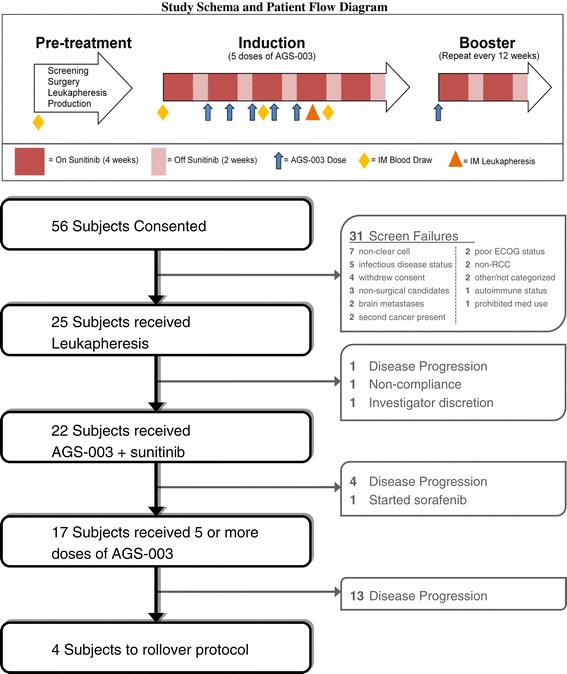
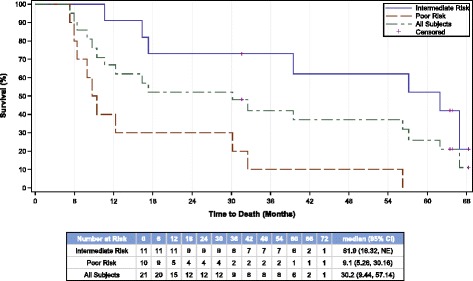
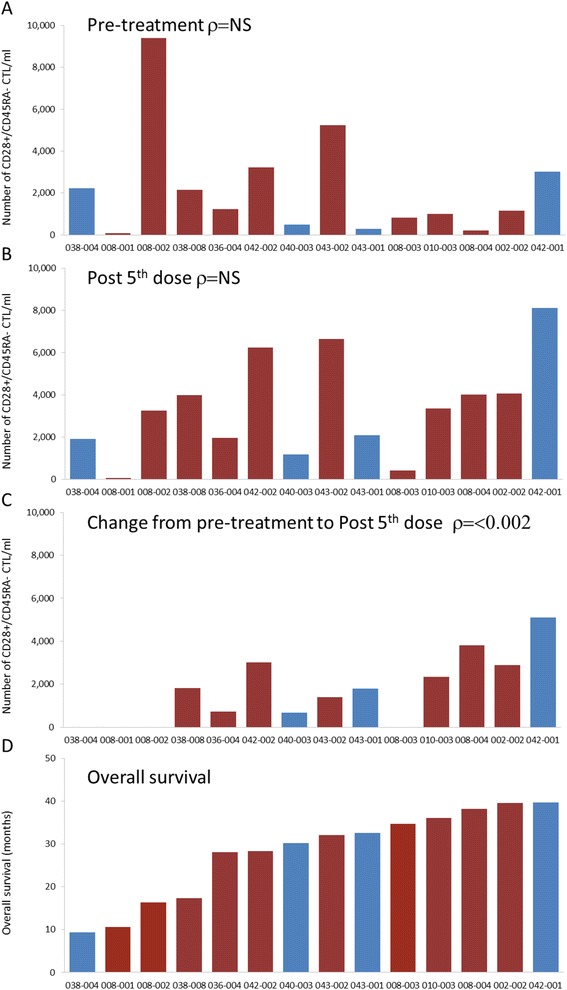
BACKGROUND: AGS-003 is an autologous immunotherapy prepared from fully matured and optimized monocyte-derived dendritic cells, which are co-electroporated with amplified tumor RNA plus synthetic CD40L RNA. AGS-003 was evaluated in combination with sunitinib in an open label phase 2 study in intermediate and poor risk, treatment naïve patients with metastatic clear cell renal cell carcinoma (mRCC). METHODS: Twenty-one intermediate and poor risk patients were treated continuously with sunitinib (4 weeks on, 2 weeks off per 6 week cycle). After completion of the first cycle of sunitinib, patients were treated with AGS-003 every 3 weeks for 5 doses, then every 12 weeks until progression or end of study. The primary endpoint was to determine the complete response rate. Secondary endpoints included clinical benefit, safety, progression free survival (PFS) and overall survival (OS). Immunologic response was also monitored. RESULTS: Thirteen patients (62%) experienced clinical benefit (9 partial responses, 4 with stable disease); however there were no complete responses in this group of intermediate and poor risk mRCC patients and enrollment was terminated early. Median PFS from registration was 11.2 months (95% CI 6.0, 19.4) and the median OS from registration was 30.2 months (95% CI 9.4, 57.1) for all patients. Seven (33%) patients survived for at least 4.5 years, while five (24%) survived for more than 5 years, including 2 patients who remain progression-free with durable responses for more than 5 years at the time of this report. AGS-003 was well tolerated with only mild injection-site reactions. The most common adverse events were related to expected toxicity from sunitinib therapy. In patients who had sequential samples available for immune monitoring, the magnitude of the increase in the absolute number of CD8(+) CD28(+) CD45RA(-) effector/memory T cells (CTLs) after 5 doses of AGS-003 relative to baseline, correlated with overall survival. CONCLUSIONS: AGS-003 in combination with sunitinib was well tolerated and yielded supportive immunologic responses coupled with extension of median and long-term survival in an unselected, intermediate and poor risk prognosis mRCC population. CLINICAL TRIAL REGISTRY: #NCT00678119.
Overview
The claims and statistics of this paper haven’t been checked yet.
Free: it reads the open-access text and checks the first 5 claims that cite a source we can check. Create a free account to check every claim.
Integrity signals
Registry
Cites
Statistics
Figures
Verification
Claims the paper makes
The claims and statistics of this paper haven’t been checked yet.
Free: it reads the open-access text and checks the first 5 claims that cite a source we can check. Create a free account to check every claim.
Claims other papers make about this one
Each is checked against this paper’s own text: does it say what the citing paper says it does?
The source backs part of the claim, not all of it — or backs it for a different population, condition or comparison.
In the citing paper
“the results of a phase II trial demonstrate the benefit of such an approach for patients with advanced-stage renal cell carcinoma (RCC)65”
From Enhancing cancer immunotherapy using antiangiogenics: opportunities and challenges (2018) · cites this paper as [65]
Experimental — accuracy not yet measuredIn the citing paper
“On the basis of positive preclinical data, these combinations are now being tested in multiple clinical trials, with promising outcomes reported for patients with RCC in a phase II trial65 (TABLE 2).”
From Enhancing cancer immunotherapy using antiangiogenics: opportunities and challenges (2018) · cites this paper as [65]
Self-check
Percentages, sums and reported differences re-computed from the paper’s own numbers.
The self-check needs the paper’s full text.
Citations
Cites
New Guidelines to Evaluate the Response to Treatment in Solid Tumors
Therasse, P., Arbuck, S. G., Eisenhauer, E. A., Wanders, J., Kaplan, R. S., Rubinstein, L., Verweij, J., Van Glabbeke, M., van Oosterom, A. T., Christian, M. C., et al. (2000) · JNCI: Journal of the National Cancer Institute · doi:10.1093/jnci/92.3.205 · Cited by 15,660
Improved Survival with Ipilimumab in Patients with Metastatic Melanoma
Hodi, F. S., O'Day, S. J., McDermott, D. F., Weber, R. W., Sosman, J. A., Haanen, J. B., Gonzalez, R., Robert, C., Schadendorf, D., Hassel, J. C., et al. (2010) · New England Journal of Medicine · doi:10.1056/nejmoa1003466 · Cited by 15,155 · cited 1×
“Delayed responses were noted even after initial increases in tumor burden [34].”
BackgroundSunitinib versus Interferon Alfa in Metastatic Renal-Cell Carcinoma
Motzer, R. J., Hutson, T. E., Tomczak, P., Michaelson, M. D., Bukowski, R. M., Rixe, O., Oudard, S., Negrier, S., Szczylik, C., Kim, S. T., et al. (2007) · New England Journal of Medicine · doi:10.1056/nejmoa065044 · Cited by 5,775 · cited 2×
“As TKI data matured, it became evident that sunitinib was rarely if ever associated with CRs in advanced RCC, even in studies where approximately one-third of subjects entered with favorable risk disease [26,31,32].”
BackgroundSelf-citationMotzer, R. J., Hutson, T. E., Tomczak, P., Michaelson, M. D., Bukowski, R. M., Oudard, S., Negrier, S., Szczylik, C., Pili, R., Bjarnason, G. A., et al. (2009) · Journal of Clinical Oncology · doi:10.1200/jco.2008.20.1293 · Cited by 2,181 · cited 1×
“As TKI data matured, it became evident that sunitinib was rarely if ever associated with CRs in advanced RCC, even in studies where approximately one-third of subjects entered with favorable risk disease [26,31,32].”
BackgroundSelf-citationHeng, D. Y. C., Xie, W., Regan, M. M., Warren, M. A., Golshayan, A. R., Sahi, C., Eigl, B. J., Ruether, J. D., Cheng, T., North, S., et al. (2009) · Journal of Clinical Oncology · doi:10.1200/jco.2008.21.4809 · Cited by 2,133 · cited 3×
“Patients were classified as intermediate (71%) or poor (29%) risk according to Memorial Sloan Kettering Cancer Center (MSKCC) [24] and intermediate (52%) or poor (48%) risk according to Heng criteria [25].”
BackgroundResultSelf-citationMotzer, R. J., Bacik, J., Murphy, B. A., Russo, P., & Mazumdar, M. (2002) · Journal of Clinical Oncology · doi:10.1200/jco.20.1.289 · Cited by 1,576 · cited 4×
“MSKCC risk [23], n (”
BackgroundInfluentialDannull, J. (2005) · Journal of Clinical Investigation · doi:10.1172/jci25947 · Cited by 989 · cited 1×
“The use of autologous tumor RNA for broad tumor antigen presentation by autologous, mature DCs holds promise as a fully personalized, patientspecific immunotherapeutic product as it minimizes the risk of mutant clonal escape with presentation of multiple target antigens from the autologous tumor sample [14-17].”
BackgroundIn Situ Cytotoxic and Memory T Cells Predict Outcome in Patients With Early-Stage Colorectal Cancer
Pagès, F., Kirilovsky, A., Mlecnik, B., Asslaber, M., Tosolini, M., Bindea, G., Lagorce, C., Wind, P., Marliot, F., Bruneval, P., et al. (2009) · Journal of Clinical Oncology · doi:10.1200/jco.2008.19.6147 · Cited by 954 · cited 1×
“This functionality is important because memory T cell responses have been associated with good clinical outcome in patients with solid tumors [41-43].”
BackgroundKo, J. S., Zea, A. H., Rini, B. I., Ireland, J. L., Elson, P., Cohen, P., Golshayan, A., Rayman, P. A., Wood, L., Garcia, J., et al. (2009) · Clinical Cancer Research · doi:10.1158/1078-0432.ccr-08-1332 · Cited by 862 · cited 2×
“The rationale to combine sunitinib with AGS-003, a fully personalized immunotherapy, was based upon the proven antitumor activity of sunitinib and its potential to attenuate the immune suppression in the tumor microenvironment observed in advanced RCC [18,19].”
BackgroundDendritic-cell immunotherapy: from ex vivo loading to in vivo targeting
Tacken, P. J., de Vries, I. J. M., Torensma, R., & Figdor, C. G. (2007) · Nature Reviews Immunology · doi:10.1038/nri2173 · Cited by 750 · cited 1×
“Dendritic cells (DCs) are a powerful tool for stimulating cell-mediated immunity by efficient presentation of antigen to both CD4 and CD8 Tcells [7,8].”
BackgroundCD8 + T‐cell memory in tumor immunology and immunotherapy
Klebanoff, C. A., Gattinoni, L., & Restifo, N. P. (2006) · Immunological Reviews · doi:10.1111/j.0105-2896.2006.00391.x · Cited by 511 · cited 1×
“This functionality is important because memory T cell responses have been associated with good clinical outcome in patients with solid tumors [41-43].”
BackgroundFinke, J. H., Rini, B., Ireland, J., Rayman, P., Richmond, A., Golshayan, A., Wood, L., Elson, P., Garcia, J., Dreicer, R., et al. (2008) · Clinical Cancer Research · doi:10.1158/1078-0432.ccr-07-5212 · Cited by 492 · cited 2×
“The rationale to combine sunitinib with AGS-003, a fully personalized immunotherapy, was based upon the proven antitumor activity of sunitinib and its potential to attenuate the immune suppression in the tumor microenvironment observed in advanced RCC [18,19].”
BackgroundDendritic Cells in the Cancer Microenvironment
Ma, Y., Shurin, G. V., Peiyuan, Z., & Shurin, M. R. (2013) · Journal of Cancer · doi:10.7150/jca.5046 · Cited by 361 · cited 1×
“helper T cell dysfunction [19,37-39].”
Feldman, D. R., Baum, M. S., Ginsberg, M. S., Hassoun, H., Flombaum, C. D., Velasco, S., Fischer, P., Ronnen, E., Ishill, N., Patil, S., et al. (2009) · Journal of Clinical Oncology · doi:10.1200/jco.2008.19.0108 · Cited by 298 · cited 1×
“Attempts to improve outcome using combinations of targeted agents including TKIs, mTORs, plus interferon have been limited due to severe and/or overlapping toxicity [27-30].”
BackgroundReversal of Myeloid Cell–Mediated Immunosuppression in Patients with Metastatic Renal Cell Carcinoma
Kusmartsev, S., Su, Z., Heiser, A., Dannull, J., Eruslanov, E., Kübler, H., Yancey, D., Dahm, P., & Vieweg, J. (2008) · Clinical Cancer Research · doi:10.1158/1078-0432.ccr-08-0165 · Cited by 284 · cited 1×
“Tumors are infiltrated with Treg cells and MDSCs that actively inhibit T-cell responses and contribute to altered immune surveillance in RCC [20,21].”
BackgroundMotzer, R. J., Hutson, T. E., Olsen, M. R., Hudes, G. R., Burke, J. M., Edenfield, W. J., Wilding, G., Agarwal, N., Thompson, J. A., Cella, D., et al. (2012) · Journal of Clinical Oncology · doi:10.1200/jco.2011.36.4133 · Cited by 275
Self-citationCoppin, C., Kollmannsberger, C., Le, L., Porzsolt, F., & Wilt, T. J. (2011) · BJU International · doi:10.1111/j.1464-410x.2011.10629.x · Cited by 266 · cited 1×
“Although durable responses are rarely seen with these targeted agents [1-3], they can be used for a broader spectrum of patients than cytokines and the clinical benefit as evidenced by improvements in both progression-free and overall survival, primarily in patients with favorable and intermediate risk profiles, has p…”
BackgroundAutocrine IL-2 is required for secondary population expansion of CD8+ memory T cells
Feau, S., Arens, R., Togher, S., & Schoenberger, S. P. (2011) · Nature Immunology · doi:10.1038/ni.2079 · Cited by 251 · cited 1×
“Under normal conditions, activated helper CD4 + T cells up-regulate CD40L and physically interact with DCs resulting in effective CD8 + cytotoxic T cell responses [36].”
BackgroundRini, B. I., Bellmunt, J., Clancy, J., Wang, K., Niethammer, A. G., Hariharan, S., & Escudier, B. (2014) · Journal of Clinical Oncology · doi:10.1200/jco.2013.50.5305 · Cited by 212 · cited 1×
“Attempts to improve outcome using combinations of targeted agents including TKIs, mTORs, plus interferon have been limited due to severe and/or overlapping toxicity [27-30].”
BackgroundDendritic Cells: Controllers of the Immune System and a New Promise for Immunotherapy
BANCHEREAU, J., PACZESNY, S., BLANCO, P., BENNETT, L., PASCUAL, V., FAY, J., & PALUCKA, A. K. (2003) · Annals of the New York Academy of Sciences · doi:10.1111/j.1749-6632.2003.tb06047.x · Cited by 208
Lee, A. W., Truong, T., Bickham, K., Fonteneau, J.-F., Larsson, M., Da Silva, I., Somersan, S., Thomas, E. K., & Bhardwaj, N. (2002) · Vaccine · doi:10.1016/s0264-410x(02)00382-1 · Cited by 207 · cited 1×
“Rather than employing the traditional ‘cytokine cocktail’ method [40], sequential cytokine exposure was employed which results in DCs that primarily induce CTL generation [10].”
MethodHeiser, A., Dahm, P., R. Yancey, D., Maurice, M. A., Boczkowski, D., Nair, S. K., Gilboa, E., & Vieweg, J. (2000) · The Journal of Immunology · doi:10.4049/jimmunol.164.10.5508 · Cited by 187
Nishino, M., Jagannathan, J. P., Krajewski, K. M., O’Regan, K., Hatabu, H., Shapiro, G., & Ramaiya, N. H. (2012) · American Journal of Roentgenology · doi:10.2214/ajr.11.7483 · Cited by 180 · cited 1×
“RECIST-based criteria used traditionally for evaluating response to cytotoxic agents may therefore not be adequate or helpful to evaluate clinically relevant outcomes with targeted therapies alone, since they may induce necrosis with minimal change in size with conventional imaging [33].”
BackgroundPatel, P. H., Senico, P. L., Curiel, R. E., & Motzer, R. J. (2009) · Clinical Genitourinary Cancer · doi:10.3816/cgc.2009.n.004 · Cited by 167 · cited 1×
“Attempts to improve outcome using combinations of targeted agents including TKIs, mTORs, plus interferon have been limited due to severe and/or overlapping toxicity [27-30].”
BackgroundThe Price We Pay for Progress: A Meta-Analysis of Harms of Newly Approved Anticancer Drugs
Niraula, S., Seruga, B., Ocana, A., Shao, T., Goldstein, R., Tannock, I. F., & Amir, E. (2012) · Journal of Clinical Oncology · doi:10.1200/jco.2011.40.3824 · Cited by 167 · cited 1×
“These safety results are noteworthy, since many newly approved targeted therapies are associated with serious side effects (gastrointestinal, skin, and vascular events) that affect morbidity and mortality and limit the ability to combine these newer treatments [45].”
BackgroundComplete Remission With Tyrosine Kinase Inhibitors in Renal Cell Carcinoma
Albiges, L., Oudard, S., Negrier, S., Caty, A., Gravis, G., Joly, F., Duclos, B., Geoffrois, L., Rolland, F., Guillot, A., et al. (2012) · Journal of Clinical Oncology · doi:10.1200/jco.2011.37.2516 · Cited by 163
Lebbé, C., Weber, J. S., Maio, M., Neyns, B., Harmankaya, K., Hamid, O., O'Day, S. J., Konto, C., Cykowski, L., McHenry, M. B., et al. (2014) · Annals of Oncology · doi:10.1093/annonc/mdu441 · Cited by 153 · cited 1×
“This is further supported by the proportion of melanoma patients treated with ipilimumab demonstrating durable, long term overall survival at a follow-up of 5 to 6 years [35].”
BackgroundCD4 regulatory T cells in human cancer pathogenesis
Knutson, K. L., Disis, M. L., & Salazar, L. G. (2006) · Cancer Immunology Immunotherapy · doi:10.1007/s00262-006-0194-y · Cited by 137
Motzer, R. J., Escudier, B. J., Bukowski, R. M., Rini, B. I., Hutson, T. E., Barrios, C. H., Lin, X., Fly, K. D., Matczak, E. M., & Gore, M. E. (2013) · British Journal of Cancer · doi:10.1038/bjc.2013.236 · Cited by 133 · cited 1×
“When treated with sunitinib alone, the expected percentage of intermediate and poor risk mRCC patients surviving greater than 30 months is 13% [23].”
BackgroundPhase 1 trial of everolimus plus sunitinib in patients with metastatic renal cell carcinoma
Molina, A. M., Feldman, D. R., Voss, M. H., Ginsberg, M. S., Baum, M. S., Brocks, D. R., Fischer, P. M., Trinos, M. J., Patil, S., & Motzer, R. J. (2012) · Cancer · doi:10.1002/cncr.26429 · Cited by 128 · cited 1×
“Attempts to improve outcome using combinations of targeted agents including TKIs, mTORs, plus interferon have been limited due to severe and/or overlapping toxicity [27-30].”
BackgroundRNA-transfected dendritic cells in cancer immunotherapy
Mitchell, D. A., & Nair, S. K. (2000) · Journal of Clinical Investigation · doi:10.1172/jci11405 · Cited by 111
Reversal of Tumor-Mediated Immunosuppression
Vieweg, J., Su, Z. Z., Dahm, P., & Kusmartsev, S. A. (2007) · Clinical Cancer Research · doi:10.1158/1078-0432.ccr-06-1924 · Cited by 100 · cited 1×
“Tumors are infiltrated with Treg cells and MDSCs that actively inhibit T-cell responses and contribute to altered immune surveillance in RCC [20,21].”
BackgroundKollmannsberger, C., Bjarnason, G. A., Burnett, P., Creel, P. A., Davis, M. P., Dawson, N. A., Feldman, D. R., George, S., Hershman, J. M., Lechner, T., et al. (2011) · The Oncologist · doi:10.1634/theoncologist.2010-0263 · Cited by 86 · cited 1×
“In clinical practice, the most common side effects of sunitinib treatment include fatigue/asthenia, anorexia/ loss of appetite, hypothyroidism, hand-foot syndrome, stomatitis/taste changes, diarrhea/abdominal pain, myelosuppression, and hypertension [44].”
BackgroundGore, M. E., & Larkin, J. (2011) · British Journal of Cancer · doi:10.1038/sj.bjc.6606084 · Cited by 85 · cited 1×
“Although durable responses are rarely seen with these targeted agents [1-3], they can be used for a broader spectrum of patients than cytokines and the clinical benefit as evidenced by improvements in both progression-free and overall survival, primarily in patients with favorable and intermediate risk profiles, has p…”
BackgroundFirst-, second-, third-line therapy for mRCC: benchmarks for trial design from the IMDC
Ko, J. J., Choueiri, T. K., Rini, B. I., Lee, J.-L., Kroeger, N., Srinivas, S., Harshman, L. C., Knox, J. J., Bjarnason, G. A., MacKenzie, M. J., et al. (2014) · British Journal of Cancer · doi:10.1038/bjc.2014.25 · Cited by 77 · cited 3×
“7 months, despite treatment with standard, sequential targeted therapy [22].”
BackgroundInfluentialSelf-citationPerret, R., & Ronchese, F. (2008) · Tissue Antigens · doi:10.1111/j.1399-0039.2008.01088.x · Cited by 70
Targeted therapeutic strategies for the management of renal cell carcinoma
Singer, E. A., Gupta, G. N., & Srinivasan, R. (2012) · Current Opinion in Oncology · doi:10.1097/cco.0b013e328351c646 · Cited by 52 · cited 2×
“Although durable responses are rarely seen with these targeted agents [1-3], they can be used for a broader spectrum of patients than cytokines and the clinical benefit as evidenced by improvements in both progression-free and overall survival, primarily in patients with favorable and intermediate risk profiles, has p…”
BackgroundRNA transfected dendritic cells as cancer vaccines.
Mitchell, D. A., & Nair, S. K. (2000) · PubMed · Cited by 49
Calderhead, D. M., DeBenedette, M. A., Ketteringham, H., Gamble, A. H., Horvatinovich, J. M., Tcherepanova, I. Y., Nicolette, C. A., & Healey, D. G. (2008) · Journal of Immunotherapy · doi:10.1097/cji.0b013e318183db02 · Cited by 45 · cited 12×
“Preclinical studies demonstrated that AGS-003 administration results in the generation of CD8 + CD28 + CD45RA − effector memory CTLs. Previous published work revealed that in vitro priming with post matured CD40L RNA electroporated DCs encoding specific target antigen expanded multi-functional antigen specific CTLs ex…”
MethodInfluentialSelf-citationDebenedette, M. A., Calderhead, D. M., Tcherepanova, I. Y., Nicolette, C. A., & Healey, D. G. (2010) · Journal of Immunotherapy · doi:10.1097/cji.0b013e3181fb651a · Cited by 38 · cited 3×
“AGS-003 is prepared ex vivo from matured monocyte-derived DCs co-electroporated with the patient's amplified tumor RNA and synthetic CD40L RNA [9-12].”
BackgroundMethodSelf-citationPorta, C., Bonomi, L., Lillaz, B., Paglino, C., Rovati, B., Imarisio, I., Morbini, P., Villa, C., Danova, M., Mensi, M., et al. (2007) · PubMed · Cited by 35
Debenedette, M. A., Calderhead, D. M., Ketteringham, H., Gamble, A. H., Horvatinovich, J. M., Tcherepanova, I. Y., Nicolette, C. A., & Healey, D. G. (2008) · The Journal of Immunology · doi:10.4049/jimmunol.181.8.5296 · Cited by 32 · cited 4×
“AGS-003 is prepared ex vivo from matured monocyte-derived DCs co-electroporated with the patient's amplified tumor RNA and synthetic CD40L RNA [9-12].”
BackgroundMethodInfluentialSelf-citationTcherepanova, I. Y., Harris, J., Starr, A. Z., Cleveland, J., Ketteringham, H., Calderhead, D. M., Horvatinovich, J. M., Healey, D. G., & Nicolette, C. A. (2008) · PLoS ONE · doi:10.1371/journal.pone.0001489 · Cited by 24 · cited 1×
“CD40L RNA was manufactured using in vitro transcription and a post-transcriptional capping method [48].”
MethodSelf-citationRole of Immunotherapy for Renal Cell Cancer in 2011
George, S., Пили, Р., Carducci, M. A., & Kim, J. (2011) · Journal of the National Comprehensive Cancer Network · doi:10.6004/jnccn.2011.0085 · Cited by 24 · cited 1×
“In contrast to the VEGF and mTOR inhibitors, durable and complete responses have been observed with high dose (HD) IL-2, indicating the importance of immune modulation in this disease process [5].”
ResultAtkins, M. B. (2009) · Medical Oncology · doi:10.1007/s12032-008-9148-x · Cited by 21 · cited 1×
“HD IL-2 is, however, associated with significant toxicity, which has limited this modality to be delivered at specialized centers in a highly selected and limited population of mRCC patients with a high level of cardiopulmonary fitness [6].”
BackgroundSlagter-Jäger, J. G., Raney, A., Lewis, W. E., Debenedette, M. A., Nicolette, C. A., & Tcherepanova, I. Y. (2013) · Molecular Therapy — Nucleic Acids · doi:10.1038/mtna.2013.18 · Cited by 8 · cited 1×
“Following screening and consent, autologous tumor total RNA was isolated from nephrectomy or metastasectomy tissue samples and messenger RNA was amplified using RT/PCR and in vitro transcription technologies as previously described [47].”
MethodSelf-citationKeystone Symposia on Molecular and Cellular Biology
(1994) · Biochimica et Biophysica Acta (BBA) - Biomembranes · doi:10.1016/0005-2736(94)90322-0 · Cited by 7
Cited by
mRNA vaccines — a new era in vaccinology
Pardi, N., Hogan, M. J., Porter, F. W., & Weissman, D. (2018) · Nature Reviews Drug Discovery · doi:10.1038/nrd.2017.243 · Cited by 4,667
Hsieh, J. J., Purdue, M. P., Signoretti, S., Swanton, C., Albiges, L., Schmidinger, M., Heng, D. Y., Larkin, J., & Ficarra, V. (2017) · Nature Reviews Disease Primers · doi:10.1038/nrdp.2017.9 · Cited by 2,426
Enhancing cancer immunotherapy using antiangiogenics: opportunities and challenges
Fukumura, D., Kloepper, J., Amoozgar, Z., Duda, D. G., & Jain, R. K. (2018) · Nature Reviews Clinical Oncology · doi:10.1038/nrclinonc.2018.29 · Cited by 2,027
Therapeutic Targeting of the Tumor Microenvironment
Bejarano, L., Jordāo, M. J. C., & Joyce, J. A. (2021) · Cancer Discovery · doi:10.1158/2159-8290.cd-20-1808 · Cited by 1,653
Dendritic cell-based immunotherapy
Sabado, R. L., Balan, S., & Bhardwaj, N. (2017) · Cell Research · doi:10.1038/cr.2016.157 · Cited by 927
Metadata
- Authors
- Amin, A., Dudek, A. Z., Logan, T. F., Lance, R. S., Holzbeierlein, J. M., Knox, J. J., Master, V. A., Pal, S. K., Miller, W. H., Karsh, L. I., Tcherepanova, I. Y., DeBenedette, M. A., Williams, W. L., Plessinger, D. C., Nicolette, C. A., & Figlin, R. A.
- Affiliations
- Levine Cancer Institute (US)
- University of Illinois Chicago (US)
- Indiana University Melvin and Bren Simon Comprehensive Cancer Center (US)
- Urology of Virginia (US)
- University of Kansas (US)
- Princess Margaret Cancer Centre (CA)
- Emory University (US)
- City Of Hope National Medical Center (US)
- Jewish General Hospital (CA)
- The Urology Center of Colorado (US)
- Argos Therapeutics (United States) (US)
- Cedars-Sinai Medical Center (US)
- Corresponding author
- Amin, Asim
- Figlin, Robert A
- ORCID
- Venue
- Journal for ImmunoTherapy of Cancer
- Publisher
- BMJ
- Published
- 2015-04-21
- Volume
- 3
- Issue
- 1
- Pages
- 14-14
- ISSN
- 2051-1426 (ISSN-L)
- PMC
- PMC4404644
- OpenAlex
- W2060260809
- Cited by
- 205
- References
- 47
- Citations by year
- 2026: 5 · 2025: 13 · 2024: 7 · 2023: 12 · 2022: 20 · 2021: 32 · 2020: 17 · 2019: 13 · 2018: 26 · 2017: 29 · 2016: 26 · 2015: 5
- FWCI
- 22.70
- Type
- journal article
- Language
- en
- Open access
- gold
- doi.org
- Locations
- Journal for ImmunoTherapy of Cancer (publishedVersion, cc-by)
- PubMed Central (publishedVersion, cc-by)
- PubMed (publishedVersion)
- TSpace (University of Toronto) (submittedVersion)
- Topics
- Health Sciences › Medicine › Oncology › Renal cell carcinoma treatment
- Life Sciences › Immunology and Microbiology › Immunology › Immunotherapy and Immune Responses
- Health Sciences › Medicine › Oncology › Cancer Immunotherapy and Biomarkers
- Keywords
- sunitinib, metastatic clear cell renal cell carcinoma, combination immunotherapy, CD40 ligand, tumor RNA, CD8+ effector memory T cells, immune monitoring, progression-free survival, overall survival, durable response, treatment toxicity, long-term survival, early trial termination
About these checks
Registry, retraction, Cites and statistics results are computed, not judged, with one exception: a printed reference that no index lists is read once by a model before it counts as a citation error. Claims are extracted by a model and kept only when their quote appears verbatim in the text; each cited source is then checked, with a model’s help, for whether it says what the claim relies on. Those verdicts can be wrong — read the claim’s quote and the cited source before relying on one.
Statistics and arithmetic are recomputed, not judged.
Confidence bands are shown only for fields calibrated on our annotated test set. None is calibrated yet, so no band is shown.
What counts as a claim ›How we measure confidence ›How we check this ›
Are you an author, or do you see a problem with this page? Request a review
Data sources
Bibliographic data: Semantic Scholar, OpenAlex, Crossref.
Contains information from the Semantic Scholar Academic Graph Datasets, made available under the ODC Attribution License (ODC-BY 1.0).
Semantic Scholar’s data is described in: Kinney, R., et al. (2023). The Semantic Scholar Open Data Platform. arXiv:2301.10140.
