

Peripheral T cell receptor diversity is associated with clinical outcomes following ipilimumab treatment in metastatic melanoma
Open accessThe DOI matches its Crossref record; 13 of the 13 references it cites were found in a registry or an index.
Abstract
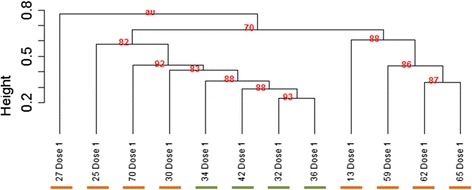
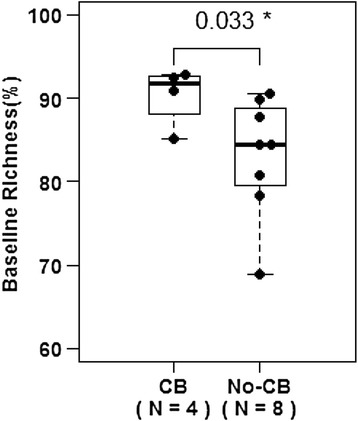
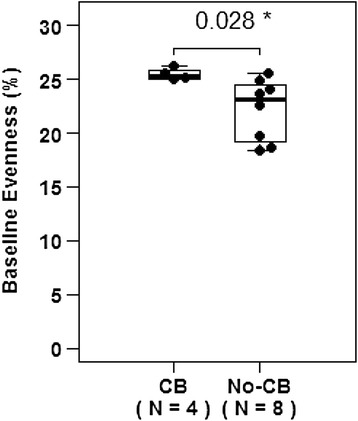
BACKGROUND: Ipilimumab improves overall survival in a subset of patients with metastatic melanoma. Peripheral blood T cell receptor (TCR) repertoire diversity has been associated with favorable outcomes in patients with cancer, but its relevance as a biomarker for ipilimumab outcomes remains unknown. FINDINGS: In this pilot study, we analyzed the pre-treatment peripheral blood TCR repertoire in 12 patients with metastatic melanoma who received ipilimumab at 3 mg/kg (clinical benefit, n = 4; no clinical benefit, n = 8). TCR diversity was evaluated using a polymerase chain reaction assay which measures TCR combinatorial diversity between V and J genes from genomic DNA. TCR repertoire diversity was studied through richness (observed V-J rearrangements) and evenness (similarity between the frequencies of specific V-J rearrangements). The Wilcoxon rank sum test was used to compare patients with clinical benefit and those without. Association with benefit in a dichotomized analysis was assessed through a Fisher's exact test. Overall survival was studied through log-rank analysis. There was a significant difference in richness (p = 0.033) and evenness (p = 0.028) between patients with and without clinical benefit. Dichotomized analysis showed that none of the patients with low richness (n = 0/5, p = 0.081) nor low evenness (n = 0/7, p = 0.01) achieved clinical benefit. There were no significant differences in overall survival. CONCLUSIONS: In this small group of patients, baseline TCR diversity in the peripheral blood was associated with clinical outcomes. Further investigation is ongoing in larger cohorts of patients to explore these preliminary findings and determine whether TCR diversity can be used as a predictive biomarker in cancer immunotherapy.
Overview
The claims and statistics of this paper haven’t been checked yet.
Free: it reads the open-access text and checks the first 5 claims that cite a source we can check. Create a free account to check every claim.
Integrity signals
Registry
Cites
Statistics
Figures
Verification
Claims the paper makes
The claims and statistics of this paper haven’t been checked yet.
Free: it reads the open-access text and checks the first 5 claims that cite a source we can check. Create a free account to check every claim.
Claims other papers make about this one
Each is checked against this paper’s own text: does it say what the citing paper says it does?
The source backs part of the claim, not all of it — or backs it for a different population, condition or comparison.
In the citing paper
“some studies have found that high TCR diversity in peripheral blood and tumors prior to ICI therapy is predictive of effective treatment, others have pointed to ICI therapy-associated increases in TCR clonality, that is, enrichment of T cells with the same TCRs, as a sign of effective therapy (150, 157-161).”
From Immune Checkpoint Inhibitors for the Treatment of Cancer: Clinical Impact and Mechanisms of Response and Resistance (2021) · cites this paper as [159]
Experimental — accuracy not yet measured
Self-check
Percentages, sums and reported differences re-computed from the paper’s own numbers.
The self-check needs the paper’s full text.
Citations
Cites
Improved Survival with Ipilimumab in Patients with Metastatic Melanoma
Hodi, F. S., O'Day, S. J., McDermott, D. F., Weber, R. W., Sosman, J. A., Haanen, J. B., Gonzalez, R., Robert, C., Schadendorf, D., Hassel, J. C., et al. (2010) · New England Journal of Medicine · doi:10.1056/nejmoa1003466 · Cited by 15,155 · cited 1×
“Cytotoxic T lymphocyte antigen 4 (CTLA-4) was the first immunologic checkpoint to be clinically targeted, and the anti-CTLA-4 antibody, ipilimumab, has been shown to improve overall survival in a subset of patients [1, 2].”
BackgroundSelf-citationIpilimumab plus Dacarbazine for Previously Untreated Metastatic Melanoma
Robert, C., Thomas, L., Bondarenko, I., O'Day, S., Weber, J., Garbe, C., Lebbe, C., Baurain, J.-F., Testori, A., Grob, J.-J., et al. (2011) · New England Journal of Medicine · doi:10.1056/nejmoa1104621 · Cited by 4,496 · cited 1×
“Cytotoxic T lymphocyte antigen 4 (CTLA-4) was the first immunologic checkpoint to be clinically targeted, and the anti-CTLA-4 antibody, ipilimumab, has been shown to improve overall survival in a subset of patients [1, 2].”
BackgroundSelf-citationCarthon, B. C., Wolchok, J. D., Yuan, J., Kamat, A., Ng Tang, D. S., Sun, J., Ku, G., Troncoso, P., Logothetis, C. J., Allison, J. P., et al. (2010) · Clinical Cancer Research · doi:10.1158/1078-0432.ccr-10-0569 · Cited by 460 · cited 1×
“Increases in the absolute lymphocyte count and markers of activation such as inducible co-stimulator (ICOS) on CD4+ T cells have been shown to be pharmacodynamic biomarkers of ipilimumab that correlate with overall survival [3-7].”
BackgroundSelf-citationImproved Survival with T Cell Clonotype Stability After Anti–CTLA-4 Treatment in Cancer Patients
Cha, E., Klinger, M., Hou, Y., Cummings, C., Ribas, A., Faham, M., & Fong, L. (2014) · Science Translational Medicine · doi:10.1126/scitranslmed.3008211 · Cited by 383 · cited 1×
“In another study, maintenance of high-frequency TCR clonotypes during CTLA-4 blockade was associated with improved overall survival [9].”
BackgroundCTLA4 Blockade Broadens the Peripheral T-Cell Receptor Repertoire
Robert, L., Tsoi, J., Wang, X., Emerson, R., Homet, B., Chodon, T., Mok, S., Huang, R. R., Cochran, A. J., Comin-Anduix, B., et al. (2014) · Clinical Cancer Research · doi:10.1158/1078-0432.ccr-13-2648 · Cited by 376 · cited 2×
“Other investigations have focused on the peripheral blood T-cell receptor (TCR) repertoire and have shown that CTLA-4 blockade diversifies the TCR repertoire [8].”
BackgroundDelyon, J., Mateus, C., Lefeuvre, D., Lanoy, E., Zitvogel, L., Chaput, N., Roy, S., Eggermont, A. M. M., Routier, E., & Robert, C. (2013) · Annals of Oncology · doi:10.1093/annonc/mdt027 · Cited by 318 · cited 1×
“Increases in the absolute lymphocyte count and markers of activation such as inducible co-stimulator (ICOS) on CD4+ T cells have been shown to be pharmacodynamic biomarkers of ipilimumab that correlate with overall survival [3-7].”
BackgroundSimeone, E., Gentilcore, G., Giannarelli, D., Grimaldi, A. M., Caracò, C., Curvietto, M., Esposito, A., Paone, M., Palla, M., Cavalcanti, E., et al. (2014) · Cancer Immunology, Immunotherapy · doi:10.1007/s00262-014-1545-8 · Cited by 253 · cited 1×
“Increases in the absolute lymphocyte count and markers of activation such as inducible co-stimulator (ICOS) on CD4+ T cells have been shown to be pharmacodynamic biomarkers of ipilimumab that correlate with overall survival [3-7].”
BackgroundQuantitative assessment of T cell repertoire recovery after hematopoietic stem cell transplantation
van Heijst, J. W. J., Ceberio, I., Lipuma, L. B., Samilo, D. W., Wasilewski, G. D., Gonzales, A. M. R., Nieves, J. L., van den Brink, M. R. M., Perales, M. A., & Pamer, E. G. (2013) · Nature Medicine · doi:10.1038/nm.3100 · Cited by 204
Increased frequency of ICOS+ CD4 T cells as a pharmacodynamic biomarker for anti-CTLA-4 therapy
Ng Tang, D., Shen, Y., Sun, J., Wen, S., Wolchok, J. D., Yuan, J., Allison, J. P., & Sharma, P. (2013) · Cancer Immunology Research · doi:10.1158/2326-6066.cir-13-0020 · Cited by 203 · cited 1×
“Increases in the absolute lymphocyte count and markers of activation such as inducible co-stimulator (ICOS) on CD4+ T cells have been shown to be pharmacodynamic biomarkers of ipilimumab that correlate with overall survival [3-7].”
BackgroundSelf-citationManuel, M., Tredan, O., Bachelot, T., Clapisson, G., Courtier, A., Parmentier, G., Rabeony, T., Grives, A., Perez, S., Mouret, J.-F., et al. (2012) · OncoImmunology · doi:10.4161/onci.19545 · Cited by 150 · cited 1×
“cancer [10], we hypothesized that the combinatorial diversity of the TCR repertoire would be relevant to clinical”
BackgroundSelf-citation
Cited by
Bagchi, S., Yuan, R., & Engleman, E. G. (2021) · Annual Review of Pathology: Mechanisms of Disease · doi:10.1146/annurev-pathol-042020-042741 · Cited by 2,189
Predictive biomarkers for checkpoint inhibitor-based immunotherapy
Gibney, G. T., Weiner, L. M., & Atkins, M. B. (2016) · The Lancet Oncology · doi:10.1016/s1470-2045(16)30406-5 · Cited by 1,635
CD4+ T cell help in cancer immunology and immunotherapy
Borst, J., Ahrends, T., Bąbała, N., Melief, C. J. M., & Kastenmüller, W. (2018) · Nature Reviews Immunology · doi:10.1038/s41577-018-0044-0 · Cited by 1,585
The future of cancer immunotherapy: microenvironment-targeting combinations
Murciano-Goroff, Y. R., Warner, A. B., & Wolchok, J. D. (2020) · Cell Research · doi:10.1038/s41422-020-0337-2 · Cited by 749
Self-citationMénétrier-Caux, C., Ray-Coquard, I., Blay, J.-Y., & Caux, C. (2019) · Journal for ImmunoTherapy of Cancer · doi:10.1186/s40425-019-0549-5 · Cited by 339
Metadata
- Authors
- Postow, M. A., Manuel, M., Wong, P., Yuan, J., Dong, Z., Liu, C., Perez, S., Tanneau, I., Noel, M., Courtier, A., Pasqual, N., & Wolchok, J. D.
- Affiliations
- Memorial Sloan Kettering Cancer Center (US)
- Corresponding author
- Postow, Michael A.
- Venue
- Journal for ImmunoTherapy of Cancer
- Publisher
- BMJ
- Published
- 2015-06-16
- Volume
- 3
- Issue
- 1
- Pages
- 23-23
- ISSN
- 2051-1426 (ISSN-L)
- PMC
- PMC4469400
- OpenAlex
- W1488069418
- Cited by
- 232
- References
- 13
- Citations by year
- 2026: 11 · 2025: 11 · 2024: 23 · 2023: 20 · 2022: 27 · 2021: 28 · 2020: 41 · 2019: 22 · 2018: 23 · 2017: 13 · 2016: 9 · 2015: 2
- FWCI
- 6.84
- Type
- journal article
- Language
- en
- Open access
- gold
- doi.org
- Locations
- Journal for ImmunoTherapy of Cancer (publishedVersion, cc-by)
- PubMed Central (publishedVersion, cc-by)
- PubMed (publishedVersion)
- Funders
- Society for Immunotherapy of Cancer
- National Cancer Institute (P30CA008748, T32CA009207, R25CA020449)
- Topics
- Health Sciences › Medicine › Oncology › Cancer Immunotherapy and Biomarkers
- Life Sciences › Immunology and Microbiology › Immunology › T-cell and B-cell Immunology
- Health Sciences › Medicine › Oncology › Cutaneous Melanoma Detection and Management
- Keywords
- T cell receptor diversity, ipilimumab, metastatic melanoma, predictive biomarkers, clinical benefit, immune checkpoint inhibitor response, cancer immunotherapy, overall survival
About these checks
Registry, retraction, Cites and statistics results are computed, not judged, with one exception: a printed reference that no index lists is read once by a model before it counts as a citation error. Claims are extracted by a model and kept only when their quote appears verbatim in the text; each cited source is then checked, with a model’s help, for whether it says what the claim relies on. Those verdicts can be wrong — read the claim’s quote and the cited source before relying on one.
Statistics and arithmetic are recomputed, not judged.
Confidence bands are shown only for fields calibrated on our annotated test set. None is calibrated yet, so no band is shown.
What counts as a claim ›How we measure confidence ›How we check this ›
Are you an author, or do you see a problem with this page? Request a review
How to cite
Cite CoChat for the checks on this page, and the paper for its own findings.
- This page
- CoChat. (2026). Citation check: Peripheral T cell receptor diversity is associated with clinical outcomes following ipilimumab treatment in metastatic melanoma. https://app.cochat.ai/papers/10.1186/s40425-015-0070-4
- The paper
- Postow, M. A., Manuel, M., Wong, P., Yuan, J., Dong, Z., Liu, C., Perez, S., Tanneau, I., Noel, M., Courtier, A., Pasqual, N., & Wolchok, J. D. (2015). Peripheral T cell receptor diversity is associated with clinical outcomes following ipilimumab treatment in metastatic melanoma. Journal for ImmunoTherapy of Cancer. https://doi.org/10.1186/s40425-015-0070-4
Data sources
Bibliographic data: Semantic Scholar, OpenAlex, Crossref.
Contains information from the Semantic Scholar Academic Graph Datasets, made available under the ODC Attribution License (ODC-BY 1.0).
Semantic Scholar’s data is described in: Kinney, R., et al. (2023). The Semantic Scholar Open Data Platform. arXiv:2301.10140.
