

Baseline circulating IL-17 predicts toxicity while TGF-β1 and IL-10 are prognostic of relapse in ipilimumab neoadjuvant therapy of melanoma
Open accessThe DOI matches its Crossref record; 33 of the 33 references it cites were found in a registry or an index.
Abstract
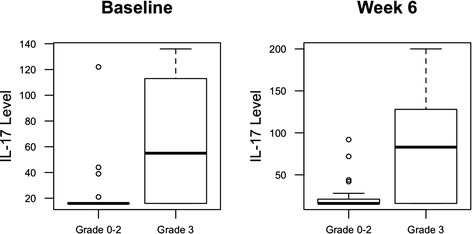
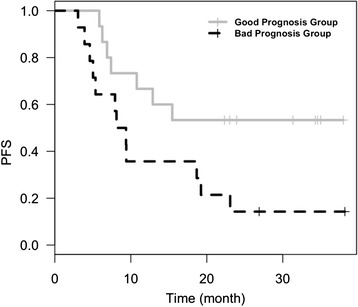
BACKGROUND: We evaluated candidate circulating serum cytokines, chemokines and growth factors in patients with locally/regionally advanced melanoma receiving neoadjuvant ipilimumab with toxicity and clinical outcome. METHODS: Patients were treated with ipilimumab (10 mg/kg IV every 3 weeks, 2 doses) before and after surgery. xMAP multiplex serum testing for 36 functionally selected cytokines and chemokines was performed at baseline and at six weeks (following ipilimumab). Based on our prior data, the association of IL-17 and immune related colitis was tested. Serum cytokines were divided into functional groups (Th1, Th2, Regulatory, Proinflammatory) and were assessed at baseline and week 6 using sparse-group Lasso modeling to assess the association of various cytokine groups with progression free survival (PFS). The linear combination of the cytokines/chemokines in this model was then used as a risk score and a Kaplan-Meier curve was generated to examine the association of the dichotomized score and PFS. RESULTS: Thirty-five patients were enrolled whose staging was: IIIB (3; N2b), IIIC (30; N2c, N3), IV (2). Median follow-up was 18 months. Among 33 evaluable patients, median PFS was 11 months (95 % CI = 6.2-19.2). IL-17 was found to correlate significantly with the incidence of grade 3 diarrhea/colitis when measured at baseline (p = 0.02) with a trend towards significance at 6 weeks (p = 0.06). In the modeling analysis, at baseline, the linear combination of 2 regulatory cytokines [TGF- β1 (ρ = 0.19) and IL-10 (ρ = -0.34)] was significantly associated with PFS (HR 2.66; p = 0.035). No significant correlations with clinical outcomes were found in examining the week 6 cytokines. CONCLUSIONS: Baseline IL-17 level was significantly associated with the later development of severe diarrhea/colitis while the combination of baseline TGF- β1 and IL-10 levels were associated with therapeutic clinical outcome after neoadjuvant ipilimumab. These findings warrant further investigation and validation. TRIAL REGISTRATION: ClinicalTrials.gov Identifier NCT00972933.
Overview
The claims and statistics of this paper haven’t been checked yet.
Free: it reads the open-access text and checks the first 5 claims that cite a source we can check. Create a free account to check every claim.
Integrity signals
Registry
Cites
Statistics
Figures
Verification
Claims the paper makes
The claims and statistics of this paper haven’t been checked yet.
Free: it reads the open-access text and checks the first 5 claims that cite a source we can check. Create a free account to check every claim.
Claims other papers make about this one
Each is checked against this paper’s own text: does it say what the citing paper says it does?
The source backs part of the claim, not all of it — or backs it for a different population, condition or comparison.
In the citing paper
“Increased circulating IL-17 levels at baseline in patients with locoregional metastatic melanoma (Tarhini et al., 2015)”
From Hallmarks of response, resistance, and toxicity to immune checkpoint blockade (2021) · cites this paper as Tarhini et al., 2015
Experimental — accuracy not yet measured
Self-check
Percentages, sums and reported differences re-computed from the paper’s own numbers.
The self-check needs the paper’s full text.
Citations
Cites
PD-1 and PD-L1 Immune Checkpoint Blockade to Treat Breast Cancer
Hartkopf, A. D., Taran, F.-A., Wallwiener, M., Walter, C. B., Krämer, B., Grischke, E.-M., & Brucker, S. Y. (2016) · Breast Care · doi:10.1159/000453569 · Cited by 30,845
Improved Survival with Ipilimumab in Patients with Metastatic Melanoma
Hodi, F. S., O'Day, S. J., McDermott, D. F., Weber, R. W., Sosman, J. A., Haanen, J. B., Gonzalez, R., Robert, C., Schadendorf, D., Hassel, J. C., et al. (2010) · New England Journal of Medicine · doi:10.1056/nejmoa1003466 · Cited by 15,155 · cited 1×
“Food and Drug Administration (FDA) for the treatment of advanced inoperable melanoma based on phase III trial results [7].”
BackgroundPD-1 blockade induces responses by inhibiting adaptive immune resistance
Tumeh, P. C., Harview, C. L., Yearley, J. H., Shintaku, I. P., Taylor, E. J. M., Robert, L., Chmielowski, B., Spasic, M., Henry, G., Ciobanu, V., et al. (2014) · Nature · doi:10.1038/nature13954 · Cited by 6,609 · cited 1×
“Major efforts in biomarker studies are ongoing and preliminary data are very encouraging, including gene expression signatures [9, 17], exome sequencing studies [18], and CD8 expression within the tumor microenvironment [19].”
BackgroundGenetic Basis for Clinical Response to CTLA-4 Blockade in Melanoma
Snyder, A., Makarov, V., Merghoub, T., Yuan, J., Zaretsky, J. M., Desrichard, A., Walsh, L. A., Postow, M. A., Wong, P., Ho, T. S., et al. (2014) · New England Journal of Medicine · doi:10.1056/nejmoa1406498 · Cited by 4,286 · cited 1×
“Major efforts in biomarker studies are ongoing and preliminary data are very encouraging, including gene expression signatures [9, 17], exome sequencing studies [18], and CD8 expression within the tumor microenvironment [19].”
BackgroundVan Cutsem, E., Köhne, C.-H., Láng, I., Folprecht, G., Nowacki, M. P., Cascinu, S., Shchepotin, I., Maurel, J., Cunningham, D., Tejpar, S., et al. (2011) · Journal of Clinical Oncology · doi:10.1200/jco.2010.33.5091 · Cited by 1,882
Phan, G. Q., Yang, J. C., Sherry, R. M., Hwu, P., Topalian, S. L., Schwartzentruber, D. J., Restifo, N. P., Haworth, L. R., Seipp, C. A., Freezer, L. J., et al. (2003) · Proceedings of the National Academy of Sciences · doi:10.1073/pnas.1533209100 · Cited by 1,575 · cited 1×
“The occurrence of irAEs has been reported to be associated with the overall clinical benefit in patients receiving ipilimumab [21–26].”
BackgroundAttia, P., Phan, G. Q., Maker, A. V., Robinson, M. R., Quezado, M. M., Yang, J. C., Sherry, R. M., Topalian, S. L., Kammula, U. S., Royal, R. E., et al. (2005) · Journal of Clinical Oncology · doi:10.1200/jco.2005.06.205 · Cited by 1,012 · cited 1×
“The occurrence of irAEs has been reported to be associated with the overall clinical benefit in patients receiving ipilimumab [21–26].”
BackgroundBeck, K. E., Blansfield, J. A., Tran, K. Q., Feldman, A. L., Hughes, M. S., Royal, R. E., Kammula, U. S., Topalian, S. L., Sherry, R. M., Kleiner, D., et al. (2006) · Journal of Clinical Oncology · doi:10.1200/jco.2005.04.5716 · Cited by 833
Downey, S. G., Klapper, J. A., Smith, F. O., Yang, J. C., Sherry, R. M., Royal, R. E., Kammula, U. S., Hughes, M. S., Allen, T. E., Levy, C. L., et al. (2007) · Clinical Cancer Research · doi:10.1158/1078-0432.ccr-07-0187 · Cited by 624 · cited 1×
“The occurrence of irAEs has been reported to be associated with the overall clinical benefit in patients receiving ipilimumab [21–26].”
BackgroundBalch, C. M., Urist, M. M., Karakousis, C. P., Smith, T. J., Temple, W. J., Drzewiecki, K., Jewell, W. R., Bartolucci, A. A., Mihm, M. C., Barnhill, R., et al. (1993) · Annals of Surgery · doi:10.1097/00000658-199309000-00005 · Cited by 525 · cited 1×
“Complete surgical excision and regional lymph node dissection followed by adjuvant therapy with high dose interferon alfa-2b (HDI) has been the standard of care for this group of patients [1].”
Background
Cited by
Items 101–200 of 403
Inflammatory markers in autoimmunity induced by checkpoint inhibitors
Husain, B., Kirchberger, M. C., Erdmann, M., Schüpferling, S., Abolhassani, A.-R., Fröhlich, W., Berking, C., & Heinzerling, L. (2021) · Journal of Cancer Research and Clinical Oncology · doi:10.1007/s00432-021-03550-5 · Cited by 57
Feakins, R. M., Torres, J., Borralho, P., Burisch, J. M., Gonçalves, T. C., de Ridder, L., Driessen, A. L. C., Lobatón, T., Menchen, L. A., Mookhoek, A., et al. (2021) · Journal of Crohn s and Colitis · doi:10.1093/ecco-jcc/jjab141 · Cited by 65
Lechner, M. G., Patel, A. Y., Hugo, W., Angell, T. E., Cheng, M. I., Pioso, M. S., Hoang, A. T., Yakobian, N., McCarthy, E. C., Chen, H.-C., et al. (2022) · The Journal of Immunology · doi:10.4049/jimmunol.2200244 · Cited by 59
Galus, Ł., Michalak, M., Lorenz, M., Stoińska‐Swiniarek, R., Tusień-Małecka, D., Galus, A., Kolenda, T., Leporowska, E., & Mackiewicz, J. (2023) · Cancer · doi:10.1002/cncr.34718 · Cited by 58
Sise, M. E., Seethapathy, H. S., & Reynolds, K. L. (2019) · The Oncologist · doi:10.1634/theoncologist.2018-0764 · Cited by 64
WADA-OHNO, M., Ito, T., & Furue, M. (2019) · Current Treatment Options in Oncology · doi:10.1007/s11864-019-0666-x · Cited by 61
Yoshino, K., Nakayama, T., Ito, A., Sato, E., & Kitano, S. (2019) · BMC Cancer · doi:10.1186/s12885-019-6138-7 · Cited by 57
Risk factors for immune checkpoint inhibitor-related pneumonitis in non-small cell lung cancer
Chao, Y., Zhou, J., Hsu, S.-J., Ding, N., Li, J., Zhang, Y., Xu, X., Tang, X., Wei, T., Zhu, Z., et al. (2022) · Translational Lung Cancer Research · doi:10.21037/tlcr-22-72 · Cited by 62
“The activation of T cells involves the release of excessive inflammatory cytokines, which can contribute to the development of irAEs (35,36).”
BackgroundBerg, M. H., Rincon, S. V. D., & Miller, W. H. (2022) · Journal for ImmunoTherapy of Cancer · doi:10.1136/jitc-2021-003551 · Cited by 59
Wang, H., Zhou, F., Zhao, C., Cheng, L., Zhou, C., Qiao, M., Li, X., & Chen, X. (2022) · Frontiers in Immunology · doi:10.3389/fimmu.2022.840313 · Cited by 57
“Previous studiesdetermined that the level of interleukin (IL)17 increased in patients with immunotherapy-associated colitis (8) and that increased levels of IL-17 have been detected in preclinical models of colitis (9).”
BackgroundHong, M. M. Y., & Vareki, S. M. (2022) · Cancers · doi:10.3390/cancers14061580 · Cited by 55
“However, high levels of IL-17 or Th17 cells in the peripheral blood were not correlated with response to immunotherapy but were correlated with irAEs [108,109].”
BackgroundWang, M., Liang, H., Wang, W., Zhao, S., Cai, X., Zhao, Y., Li, C., Cheng, B., Xiong, S., Li, J., et al. (2020) · Cancer · doi:10.1002/cncr.33270 · Cited by 56
“According to the clinical data, patients with colitis as an irAE had a higher level of interleukin 17 (IL-17) than those without colitis, and the IL-17 level was predictive of immune-mediated toxicities.(40,41) In the endocrine system, diabetes mellitus and hypothyroidism resulting from a PD-L1 inhibitor are regarded…”
MethodGao, Y., Tan, Y.-J., & Fang, J. (2025) · Nature Reviews Clinical Oncology · doi:10.1038/s41571-025-01026-w · Cited by 55
Pathology of immune-mediated tissue lesions following treatment with immune checkpoint inhibitors
Ibraheim, H., Perucha, E., & Powell, N. (2019) · Rheumatology · doi:10.1093/rheumatology/kez465 · Cited by 52
Living with Metastatic Cancer: A Roadmap for Future Research
Tometich, D. B., Hyland, K. A., Soliman, H. H., Jim, H., & Oswald, L. B. (2020) · Cancers · doi:10.3390/cancers12123684 · Cited by 54
Taylor, J., Gandhi, A., Gray, E. S., & Zaenker, P. (2023) · Frontiers in Immunology · doi:10.3389/fimmu.2022.991433 · Cited by 53
“In one study, increased baseline circulation of IL-17 was found to correlate with the occurrence of severe colitis among advanced melanoma patients receiving neoadjuvant ipilimumab (50).”
BackgroundExpert Perspective: Immune Checkpoint Inhibitors and Rheumatologic Complications
Cappelli, L. C., & Bingham, C. O. (2021) · Arthritis & Rheumatology · doi:10.1002/art.41587 · Cited by 53
“Elevated baseline levels of IL-17 have also been associated with development of severe colitis (71).”
BackgroundKeenan, T. E., Guerriero, J. L., Barroso‐Sousa, R., Li, T., O’Meara, T. A., Giobbie‐Hurder, A., Tayob, N., Hu, J., Severgnini, M., Agudo, J., et al. (2021) · Nature Communications · doi:10.1038/s41467-021-25769-z · Cited by 54
The dark side of immunotherapy
Okwundu, N., Grossman, D., Hu‐Lieskovan, S., Grossmann, K. F., & Swami, U. (2021) · Annals of Translational Medicine · doi:10.21037/atm-20-4750 · Cited by 52
König, D., & Laubli, H. P. (2020) · Pharmacology · doi:10.1159/000509081 · Cited by 54
Mechanisms of Immune Checkpoint Inhibitor-Mediated Colitis
Westdorp, H., Sweep, M. W. D., Gorris, M. A. J., Hoentjen, F., Boers‐Sonderen, M. J., van der Post, R. S., van den Heuvel, M. M., Piet, B., Boleij, A., Bloemendal, H. J., et al. (2021) · Frontiers in Immunology · doi:10.3389/fimmu.2021.768957 · Cited by 54
Mechanisms of checkpoint inhibition-induced adverse events
Urwyler, P., Earnshaw, I., Bermudez, M., Perucha, E., Wu, W., Ryan, S. E., Mcdonald, L., Karagiannis, S. N., Taams, L. S., Powell, N., et al. (2020) · Clinical & Experimental Immunology · doi:10.1111/cei.13421 · Cited by 56
Immunotherapy of thymic epithelial tumors: molecular understandings and clinical perspectives
Ao, Y.-Q., Gao, J., Wang, S., Jiang, J.-H., Deng, J., Wang, H., Xu, B., & Ding, J. (2023) · Molecular Cancer · doi:10.1186/s12943-023-01772-4 · Cited by 50
The correlation between immune-related adverse events and efficacy of immune checkpoint inhibitors
Fukushima, T., Kobayashi, S., & Ueno, M. (2024) · Japanese Journal of Clinical Oncology · doi:10.1093/jjco/hyae067 · Cited by 48
“For example, elevated baseline levels of IL-17 have been significantly correlated with later development of severe colitis (17).”
BackgroundTargeting molecular pathways to control immune checkpoint inhibitor toxicities
Reschke, R., Sullivan, R. J., Lipson, E. J., Enk, A. H., Gajewski, T. F., & Hassel, J. C. (2024) · Trends in Immunology · doi:10.1016/j.it.2024.11.014 · Cited by 50
Friedlander, P. A., Wood, K., Wassmann, K., Christenfeld, A. M., Bhardwaj, N., & Oh, W. K. (2018) · Journal for ImmunoTherapy of Cancer · doi:10.1186/s40425-018-0408-9 · Cited by 48
“However, an exploratory analysis of 35 melanoma patients treated with neoadjuvant ipilimumab demonstrated a significant association of baseline circulating IL-17 levels and the subsequent development of severe diarrhea/colitis [12].”
BackgroundShi, Y., Liu, X., Liu, J., Zhang, D., Liu, X., Yuan, Y., Zhou, Q., Gao, X., Chen, M., Xu, Y., et al. (2021) · Translational Lung Cancer Research · doi:10.21037/tlcr-21-710 · Cited by 52
“However, a sufficient tool predicting irAEs has yet to be determined (9-12).”
BackgroundYu, Y., Wang, S., Su, N., Pan, S., Tu, B., Zhao, J., Shen, Y., Qiu, Q., Liu, X., Luan, J., et al. (2022) · Frontiers in Oncology · doi:10.3389/fonc.2022.906824 · Cited by 49
Zhang, Y., Cheng, S., Zou, H., Han, Z., Xie, T., Zhang, B., Dai, D., Yin, X., Liang, Y., Kou, Y., et al. (2023) · Frontiers in Cellular and Infection Microbiology · doi:10.3389/fcimb.2023.1099063 · Cited by 53
Anderson, R., & Rapoport, B. L. (2018) · Frontiers in Oncology · doi:10.3389/fonc.2018.00080 · Cited by 47
“Baseline circulating IL-17 predicts toxicity while TGF-β1 and IL-10 are prognostic of relapse in ipilimumab neoadjuvant therapy of melanoma.”
BackgroundResultInfluentialLynes, J. P., Jackson, S., Sánchez, V., Dominah, G. A., Wang, X., Kuek, A., Hayes, C. P., Benzo, S., Scott, G. C., Chittiboina, P., et al. (2018) · Neurosurgery · doi:10.1093/neuros/nyy392 · Cited by 47
Daoussis, D., Kraniotis, P., Filippopoulou, A., Argiriadi, R., Theodoraki, S., Makatsoris, T., Koutras, A. K., Kehagias, I., Papachristou, D. J., Solomou, A. G., et al. (2019) · Rheumatology · doi:10.1093/rheumatology/kez361 · Cited by 46
Dimitriou, F., Cheng, P. F., Saltari, A., Schaper‐Gerhardt, K., Staeger, R., Haunerdinger, V., Sella, F., Tastanova, A., Urban, C., Dettwiler, S., et al. (2024) · Nature Cancer · doi:10.1038/s43018-024-00810-4 · Cited by 48
“Type III cytokines, such as IL-6, have also been linked to the occurrence of irAEs in patients treated for melanoma 20,21 .”
Cancer immunotherapy-induced rheumatic diseases emerge as new clinical entities
Cappelli, L. C., Shah, A. A., & Bingham, C. O. (2016) · RMD Open · doi:10.1136/rmdopen-2016-000321 · Cited by 43
Wang, Y., Zou, J., Li, Y., Jiao, X., Wang, Y., Zhuo, N., Gao, M., Gong, J., Li, J., Zhang, X., et al. (2022) · Frontiers in Immunology · doi:10.3389/fimmu.2022.987568 · Cited by 44
“Previous studies have suggested that excessive release of cytokines activates specific immune components, e.g., GI irAEs are associated with IL-17 (10), and cutaneous with IL-6 and IL-10 (31), while immune-related pneumonia is associated with CD74 (32).”
BackgroundStucci, L. S., D’Oronzo, S., Tucci, M., Macerollo, A., Ribero, S., Spagnolo, F., Marra, E., Picasso, V., Orgiano, L., Marconcini, R., et al. (2018) · Cancer Treatment Reviews · doi:10.1016/j.ctrv.2018.05.016 · Cited by 43
A Review of Immune-Mediated Adverse Events in Melanoma
Kennedy, L. B., & Salama, A. K. S. (2019) · Oncology and Therapy · doi:10.1007/s40487-019-0096-8 · Cited by 43
“T cell activation leads to production of inflammatory cytokines, including interleukin-17 (IL-17), which has been implicated in colitis [10, 11].”
BackgroundKähler, K. C., Hassel, J. C., Heinzerling, L., Loquai, C., Thoms, K., Ugurel, S., Zimmer, L., & Gutzmer, R. (2020) · JDDG Journal der Deutschen Dermatologischen Gesellschaft · doi:10.1111/ddg.14128 · Cited by 51
Germline genetic variation and predicting immune checkpoint inhibitor induced toxicity
Chin, I. S., Khan, A., Olsson-Brown, A. C., Papa, S., Middleton, G., & Palles, C. (2022) · npj Genomic Medicine · doi:10.1038/s41525-022-00345-6 · Cited by 44
Biomarkers of immune checkpoint inhibitor response and toxicity: Challenges and opportunities
Goodman, R. S., Jung, S., Balko, J. M., & Johnson, D. B. (2023) · Immunological Reviews · doi:10.1111/imr.13249 · Cited by 40
Ouwerkerk, W., van den Berg, M., van der Niet, S., Limpens, J., & Luiten, R. M. (2019) · Melanoma Research · doi:10.1097/cmr.0000000000000589 · Cited by 44
Facts and Hopes in Prediction, Diagnosis, and Treatment of Immune-Related Adverse Events
Smithy, J. W., Faleck, D. M., & Postow, M. A. (2021) · Clinical Cancer Research · doi:10.1158/1078-0432.ccr-21-1240 · Cited by 39
Specenier, P. M. (2016) · Expert Review of Anticancer Therapy · doi:10.1080/14737140.2016.1211936 · Cited by 43
Ji, J. H., Ha, S. Y., Lee, D., Sankar, K. N., Koltsova, E. K., Abou‐Alfa, G. K., & Yang, J. D. (2023) · International Journal of Molecular Sciences · doi:10.3390/ijms24087640 · Cited by 40
Vilariño, N., Bruna, J., Kalofonou, F. H., Anastopoulou, G. G., & Argyriou, A. A. (2020) · International Journal of Molecular Sciences · doi:10.3390/ijms21165774 · Cited by 40
“Recently, baseline serum IL-8 levels were associated with poor outcomes in two large retrospective cohorts of patients treated with ICIs [29,30], and elevated baseline IL-17 levels were a predictive marker of immune-related colitis in melanoma patients treated with ipilimumab [31].”
BackgroundAdvances on immune-related adverse events associated with immune checkpoint inhibitors
Fan, Y., Geng, Y., Shen, L., & Zhang, Z. (2020) · Frontiers of Medicine · doi:10.1007/s11684-019-0735-3 · Cited by 37
Uncoupling Therapeutic Efficacy from Immune-Related Adverse Events in Immune Checkpoint Blockade
Hu, W., Wang, G., Wang, Y., Riese, M. J., & You, M. (2020) · iScience · doi:10.1016/j.isci.2020.101580 · Cited by 38
“High levels of IL-17 (Tarhini et al., 2015) and IL-6 (Valpione et al., 2018) were also found to correlate with high-grade irAEs.”
BackgroundResultInfluentialTarhini, A. A., Kang, N., Lee, S. J., Hodi, F. S., Cohen, G. I., Hamid, O., Hutchins, L. F., Sosman, J. A., Kluger, H. M., Eroglu, Z., et al. (2021) · Journal for ImmunoTherapy of Cancer · doi:10.1136/jitc-2021-002535 · Cited by 37
Self-citationBiomarkers and Future Perspectives for Hepatocellular Carcinoma Immunotherapy
He, Y., Lu, M., Che, J., Chu, Q., Zhang, P., & Chen, Y. (2021) · Frontiers in Oncology · doi:10.3389/fonc.2021.716844 · Cited by 37
Biomarkers related to immune checkpoint inhibitors therapy
Li, N., Hou, X., Huang, S., Tai, R., Lei, L., Li, S., Abuliz, A., Wang, G., & Yang, S. (2022) · Biomedicine & Pharmacotherapy · doi:10.1016/j.biopha.2021.112470 · Cited by 37
Ponvilawan, B., Khan, A. W., Subramanian, J., & Bansal, D. (2024) · Cancers · doi:10.3390/cancers16061225 · Cited by 34
“For cytokines and chemokines, a comprehensive screening of cytokines and chemokines in 35 patients who received ipilimumab for neoadjuvant treatment before surgical resection revealed that only a higher pretreatment serum IL-17 level was associated with grade ≥ 3 irAEs [69].”
BackgroundKao, C., Charmsaz, S., Alden, S. L., Brancati, M., Li, H. L., Balaji, A., Munjal, K., Howe, K., Mitchell, S., Leatherman, J. M., et al. (2024) · Journal of Clinical Investigation · doi:10.1172/jci176567 · Cited by 40
McKean, M. A., & Amaria, R. N. (2018) · Cancer Treatment Reviews · doi:10.1016/j.ctrv.2018.08.011 · Cited by 34
Checkpoint inhibitor colitis: a new model of inflammatory bowel disease?
Siakavellas, S. I., & Bamias, G. (2018) · Current Opinion in Gastroenterology · doi:10.1097/mog.0000000000000482 · Cited by 36
Pedersen, J. G., Madsen, A. T., Gammelgaard, K. R., Pedersen, N. A., Sørensen, B. S., Øllegaard, T. H., & Jakobsen, M. R. (2020) · Cancers · doi:10.3390/cancers12061414 · Cited by 34
“Furthermore, a high level of transforming growth factor β (TGF-β) has been associated with increased response to nivolumab but worse outcome to ipilimumab [22,23].”
Immune Checkpoint Inhibitor Enterocolitis vs Idiopathic Inflammatory Bowel Disease
Thomas, A. S., Hanauer, S. B., & Wang, Y. (2022) · Clinical Gastroenterology and Hepatology · doi:10.1016/j.cgh.2022.10.004 · Cited by 38
Miao, J., Sise, M. E., & Herrmann, S. M. (2022) · Frontiers in Nephrology · doi:10.3389/fneph.2022.1017921 · Cited by 34
“IL-17 Baseline level correlated with severe diarrhea and colitis (95)”
BackgroundInfluentialSex-Related Differences in Immunotherapy Toxicities: Insights into Dimorphic Responses
Canzian, J., Conforti, F., Jacobs, F., Benvenuti, C., Gaudio, M., Gerosa, R., Sanctis, R. D., & Zambelli, A. (2025) · Cancers · doi:10.3390/cancers17071054 · Cited by 36
Circulating biomarkers predictive of tumor response to cancer immunotherapy
Lee, E. Y., & Kulkarni, R. P. (2019) · Expert Review of Molecular Diagnostics · doi:10.1080/14737159.2019.1659728 · Cited by 34
“led to improvement in therapeutic clinical outcome with respect to progress-free survival [43].”
BackgroundHughes, M. S., Zheng, H., Zubiri, L., Molina, G. E., Chen, S. T., Mooradian, M. J., Allen, I. M., Reynolds, K. L., & Dougan, M. (2019) · Cancer Medicine · doi:10.1002/cam4.2397 · Cited by 32
Chen, T., Wang, M., Chen, Y., Cao, Y., & Liu, Y. (2024) · Cell & Bioscience · doi:10.1186/s13578-024-01283-9 · Cited by 34
“Preliminary data suggested that soluble factors such as IL-6 [161], IL-8 [162, 163], IL-10 [164, 165], etc., may serve as predictive or prognostic factors for ICI response in solid tumors such as NSCLC.”
BackgroundUllur, A. R., Côté, G., Pelletier, K., & Kitchlu, A. (2023) · Clinical Kidney Journal · doi:10.1093/ckj/sfad014 · Cited by 35
“cytokines such as low baseline interleukin (IL)-6 and higher baseline IL-17 have been associated with increased risk of highgrade iRAEs [51, 52].”
BackgroundCheckpoint Inhibitor-Induced Colitis: From Pathogenesis to Management
Terrin, M., Migliorisi, G., Buono, A. D., Gabbiadini, R., Mastrorocco, E., Quadarella, A., Repici, A., Santoro, A., & Armuzzi, A. (2023) · International Journal of Molecular Sciences · doi:10.3390/ijms241411504 · Cited by 34
“Both diseases exhibit upregulation of regulatory cytokines (such as IL-10, INF-γ and IL-17) at the mucosa level [73].”
BackgroundPozzessere, C., Mazini, B., Omoumi, P., Jreige, M., Noirez, L., Digklia, A., Fasquelle, F., Sempoux, C. L., & Dromain, C. (2024) · Cancers · doi:10.3390/cancers16142585 · Cited by 34
“…interleukin-17, one of the central in fl ammatory cytokines upregulated in in fl ammatory bowel disease, in patients with ipilimumab-induced colitis [74]. study identified elevated levels of interleukin-17, one of the central inflammatory These fi ndings raise the possibility of using interleukin-17…”
BackgroundSystematic evaluation of immune regulation and modulation
Stroncek, D. F., Butterfield, L. H., Cannarile, M. A., Dhodapkar, M. V., Greten, T. F., Grivel, J., Kaufman, D. R., Kong, H. H., Korangy, F., Lee, P. P., et al. (2017) · Journal for ImmunoTherapy of Cancer · doi:10.1186/s40425-017-0223-8 · Cited by 32
Self-citationPredictive biomarkers of response to immune checkpoint inhibitors in melanoma
Nebhan, C. A., & Johnson, D. B. (2020) · Expert Review of Anticancer Therapy · doi:10.1080/14737140.2020.1724539 · Cited by 32
“MHC-II has also correlated with response in Hodgkin lymphoma [66], suggesting that it may have value in other cancer types.”
BackgroundGiommoni, E., Giorgione, R., Paderi, A., Pellegrini, E., Gambale, E., Marini, A., Antonuzzo, A., Marconcini, R., Roviello, G., Matucci‐Cerinic, M., et al. (2021) · Immuno · doi:10.3390/immuno1030017 · Cited by 33
Immune Checkpoint Inhibitor Rechallenge After Prior Immune Toxicity
Bylsma, S. A., Yun, K. M., Patel, S. P., & Dennis, M. J. (2022) · Current Treatment Options in Oncology · doi:10.1007/s11864-022-00995-9 · Cited by 32
Portenkirchner, C., Kienle, P., & Horisberger, K. (2021) · Pharmaceuticals · doi:10.3390/ph14040367 · Cited by 30
Delire, B., Martin, E. D., Meunier, L., Larrey, D. G., & Horsmans, Y. (2022) · Frontiers in Pharmacology · doi:10.3389/fphar.2021.786174 · Cited by 30
Bird, B., Nally, K., Ronan, K. E., Clarke, G. A., Amu, S., Almeida, A. S., Flavin, R., & Finn, S. P. (2022) · Diagnostics · doi:10.3390/diagnostics12010124 · Cited by 31
Germline biomarkers predict toxicity to anti-PD1/PDL1 checkpoint therapy
Weidhaas, J. B., Marco, N. D., Scheffler, A. W., Kalbasi, A. K., Wilenius, K., Rietdorf, E., Gill, J. M., Heilig, M., Desler, C., Chin, R., et al. (2022) · Journal for ImmunoTherapy of Cancer · doi:10.1136/jitc-2021-003625 · Cited by 30
Treatment of rheumatic adverse events of cancer immunotherapy
Reid, P. D., & Cappelli, L. C. (2022) · Best Practice & Research Clinical Rheumatology · doi:10.1016/j.berh.2022.101805 · Cited by 31
Advances in immune checkpoint inhibitors induced-cardiotoxicity
Li, X., Peng, W., Wu, J., Yeung, S. J., & Yang, R. (2023) · Frontiers in Immunology · doi:10.3389/fimmu.2023.1130438 · Cited by 30
Hwang, S. W., Kim, M. K., & Kweon, M. (2023) · Intestinal Research · doi:10.5217/ir.2023.00019 · Cited by 29
“CD4 and CD8 T-cell activation, with subsequent release of cytokines such as tumor necrosis factor, interferon-γ, IL-2, and IL17, have been reported in both experimental and human studies.(42,45,46) Cross-reactivity between anti-tumor T cells and T cells against similar antigens on normal cells might influence the deve…”
ResultQuagliariello, V., Passariello, M., Bisceglia, I., Paccone, A., Inno, A., Maurea, C., Lembo, R. R., Manna, L., Iovine, M., Canale, M. L., et al. (2024) · Frontiers in Cardiovascular Medicine · doi:10.3389/fcvm.2024.1232269 · Cited by 29
Bardoscia, L., Pasinetti, N., Triggiani, L., Cozzi, S., & Sardaro, A. (2021) · Frontiers in Pharmacology · doi:10.3389/fphar.2021.746853 · Cited by 30
Immunotherapy for Management of Thymic Epithelial Tumors: A Double-Edged Sword
Ballman, M., Zhao, C. N., McAdams, M. J., & Rajan, A. (2022) · Cancers · doi:10.3390/cancers14092060 · Cited by 31
Bredin, P., & Naidoo, J. (2022) · Cancer and Metastasis Reviews · doi:10.1007/s10555-022-10039-1 · Cited by 29
Williams, K. C., Gault, A., Anderson, A. E., Stewart, C. J., Lamb, C. A., Speight, R. A., Rajan, N., Plummer, R., & Pratt, A. G. (2023) · Frontiers in Immunology · doi:10.3389/fimmu.2023.1122430 · Cited by 29
“Baseline serum IL-17 also correlates with occurrence of colitis/diarrhoea in CPI recipients receiving anti-CTLA-4 (53) and was elevated in CPI-colitis patients compared to CPI patients who did not have an irAE (54).”
ResultImmune-mediated colitis after immune checkpoint inhibitor therapy
Giesler, S., Riemer, R., Lowinus, T., & Zeiser, R. (2024) · Trends in Molecular Medicine · doi:10.1016/j.molmed.2024.09.009 · Cited by 30
Kähler, K. C., Hassel, J. C., Heinzerling, L., Loquai, C., Thoms, K., Ugurel, S., Zimmer, L., Gutzmer, R., & (ADO), F. D. K. „. N. D. A. D. O. (2020) · JDDG Journal der Deutschen Dermatologischen Gesellschaft · doi:10.1111/ddg.14128_g · Cited by 28
Patil, P. D., Burotto, M., & Velcheti, V. (2018) · Expert Review of Molecular Diagnostics · doi:10.1080/14737159.2018.1440209 · Cited by 29
“reported an increased incidence of grade 3 colitis in patients with melanoma treated with ipilimumab who had higher levels of circulating IL-17 at baseline [42].”
BackgroundColli, L. M., Jessop, L., Myers, T. A., Camp, S. Y., Machiela, M. J., Choi, J., Cunha, R., Onabajo, O. O., Mills, G. C., Schmid, V., et al. (2021) · The American Journal of Human Genetics · doi:10.1016/j.ajhg.2021.07.009 · Cited by 27
T cell-mediated mechanisms of immune-related adverse events induced by immune checkpoint inhibitors
Li, L., Huang, Y., Xue, R., Li, L., Li, L., Liang, L., Lai, K., Huang, X., Qin, Y., & Zheng, Y. (2025) · Critical Reviews in Oncology/Hematology · doi:10.1016/j.critrevonc.2025.104808 · Cited by 28
Biomarker-Driven Personalization of Neoadjuvant Immunotherapy in Melanoma
Hoeijmakers, L. L., Reijers, I. L. M., & Blank, C. U. (2023) · Cancer Discovery · doi:10.1158/2159-8290.cd-23-0352 · Cited by 28
Abu‐Sbeih, H., & Wang, Y. (2019) · Inflammatory Bowel Diseases · doi:10.1093/ibd/izz212 · Cited by 27
Lauwyck, J., Beckwée, A., Santens, A., Schwarze, J. K., Awada, G., Vandersleyen, V., Aspeslagh, S., & Neyns, B. (2021) · Melanoma Research · doi:10.1097/cmr.0000000000000748 · Cited by 29
Zhao, N., Ye, Y., Cao, W., Mei, N., Fu, X., & Li, C. (2022) · Frontiers in Oncology · doi:10.3389/fonc.2022.923531 · Cited by 27
“putative biomarker for defining both at-risk patients and the severity of ipilimumab-induced colitis (29).”
BackgroundGérard, A. O., Doyen, J., Crémoni, M., Bailly, L., Zorzi, K., Ruetsch-Chelli, C., Brglez, V., Picard‐Gauci, A., Troin, L., Esnault, V. L. M., et al. (2021) · Journal for ImmunoTherapy of Cancer · doi:10.1136/jitc-2021-002512 · Cited by 25
Cao, T., Zhou, X., Wu, X., & Zou, Y. (2023) · Frontiers in Immunology · doi:10.3389/fimmu.2023.1207544 · Cited by 27
“Here, we propose RCC, renal cell carcinoma; NSCLC, non-small cell lung cancer; IL-6, interleukin-6; IL-17, interleukin-17; TMB, tumor mutation burden; MFI, mean fluorescence intensity. frontiersin.org that the commensal microbiota and the distinct characteristics of cutaneous immune system may be the issue.”
BackgroundInfluentialRiveiro‐Barciela, M., Carballal, S., Díaz‐González, Á., Mañosa, M., Gallego-Plazas, J., Cubiella, J., Jiménez‐Fonseca, P., Varela, M., Menchen, L. A., Sangro, B., et al. (2024) · Gastroenterología y Hepatología · doi:10.1016/j.gastrohep.2023.10.009 · Cited by 25
Fey, R. M., Billo, A., Clister, T., Doan, K., Berry, E., Tibbitts, D., & Kulkarni, R. P. (2025) · Cancers · doi:10.3390/cancers17050732 · Cited by 25
“Likewise, a higher starting baseline of circulating IL-17 levels significantly increased the risk of developing severe (grade 3+) irColitis/diarrhea [132].”
Autoimmune-related adverse events induced by immune checkpoint inhibitors
Sun, Y., Zhang, Z., Jia, K., Liu, H., & Zhang, F. (2025) · Current Opinion in Immunology · doi:10.1016/j.coi.2025.102556 · Cited by 24
Chan, K. K., Tirpack, A., Vitone, G., Benson, C., Nguyen, J., Ghosh, N., Jannat‐Khah, D., Bykerk, V. P., & Bass, A. R. (2020) · ACR Open Rheumatology · doi:10.1002/acr2.11181 · Cited by 24
Kiss, I., Kühn, M., Hrušák, K., & Büchler, T. (2022) · ESMO Open · doi:10.1016/j.esmoop.2022.100474 · Cited by 24
“Similarly, IL-17 is also associated with fatigue in the context of autoimmune disease, as well as with CPI toxicity.(80,81) A polymorphism described in the cytokine IL-17F gene is associated with lower risk of chronic fatigue syndrome, although its role in CPI toxicity remains unexplored.”
BackgroundHu, X., Ren, J., Xue, Q., Luan, R., Ding, D., Tan, J., Su, X., & Yang, J. (2023) · International Journal of Oncology · doi:10.3892/ijo.2023.5570 · Cited by 24
“…programmed cell death‑ligand 1; PD‑L2, programmed cell death‑ligand 2; mAb, monoclonal antibody; TCR, T cell receptor; MHC, major histocompatibility complex; IL, interleukin; APC, antigen‑presenting cell; CIP, checkpoint inhibitor pneumonitis. in melanoma treated with ipilimumab (P=0.02) (80).”
InfluentialD’Aiello, A., Lin, J., Gucalp, R. A., Tabatabaie, V., Cheng, H., Bloomgarden, N. A., Tomer, Y., & Halmos, B. (2021) · Cancers · doi:10.3390/cancers13061464 · Cited by 25
Immune-Related Adverse Events: Pneumonitis
Jain, A., Shannon, V. R., & Sheshadri, A. (2018) · Advances in experimental medicine and biology · doi:10.1007/978-3-030-02505-2_6 · Cited by 25
Ajgal, Z. C., Goulvestre, C., Zaibet, S., Arrondeau, J., Bretagne, M., Peyromaure, M., Batteux, F., Alexandre, J., Goldwasser, F., & Huillard, O. (2022) · Clinical Genitourinary Cancer · doi:10.1016/j.clgc.2022.04.002 · Cited by 23
Metadata
- Authors
- Tarhini, A. A., Zahoor, H., Lin, Y., Malhotra, U., Sander, C., Butterfield, L. H., & Kirkwood, J. M.
- Affiliations
- UPMC Hillman Cancer Center (US)
- Corresponding author
- Tarhini, Ahmad A.
- Venue
- Journal for ImmunoTherapy of Cancer
- Publisher
- BMJ
- Published
- 2015-09-15
- Volume
- 3
- Issue
- 1
- Pages
- 39-39
- ISSN
- 2051-1426 (ISSN-L)
- PMC
- PMC4570556
- OpenAlex
- W1916602633
- Semantic Scholar
- 1bfb5ce0aec677dd4070412cd39f2e067348984d
- Cited by
- 394
- References
- 33
- Citations by year
- 2026: 20 · 2025: 37 · 2024: 41 · 2023: 41 · 2022: 64 · 2021: 53 · 2020: 47 · 2019: 39 · 2018: 29 · 2017: 13 · 2016: 10
- FWCI
- 7.57
- Type
- journal article
- Language
- en
- Open access
- gold
- doi.org
- Licence
- cc-by
- creativecommons.org/licenses/by/4.0/ (tdm)
- Locations
- Journal for ImmunoTherapy of Cancer (publishedVersion, cc-by)
- Europe PMC (PubMed Central) (publishedVersion, cc-by)
- PubMed Central (publishedVersion, cc-by)
- PubMed (publishedVersion)
- D-Scholarship@Pitt (University of Pittsburgh) (acceptedVersion)
- Funders
- National Institutes of Health (P50CA121973)
- Topics
- Health Sciences › Medicine › Oncology › Cancer Immunotherapy and Biomarkers
- Health Sciences › Medicine › Oncology › Cutaneous Melanoma Detection and Management
- Life Sciences › Immunology and Microbiology › Immunology › Immunotherapy and Immune Responses
- Keywords
- melanoma, ipilimumab, neoadjuvant therapy, serum cytokines, IL-17, TGF-β1, IL-10, immune-related adverse events, immune-related colitis, diarrhea, progression-free survival, prognostic factors, regulatory cytokines, Th1/Th2 cytokines, sparse group lasso, serum biomarkers, immune checkpoint inhibitors
About these checks
Registry, retraction, Cites and statistics results are computed, not judged, with one exception: a printed reference that no index lists is read once by a model before it counts as a citation error. Claims are extracted by a model and kept only when their quote appears verbatim in the text; each cited source is then checked, with a model’s help, for whether it says what the claim relies on. Those verdicts can be wrong — read the claim’s quote and the cited source before relying on one.
Statistics and arithmetic are recomputed, not judged.
Confidence bands are shown only for fields calibrated on our annotated test set. None is calibrated yet, so no band is shown.
What counts as a claim ›How we measure confidence ›How we check this ›
Are you an author, or do you see a problem with this page? Request a review
Data sources
Bibliographic data: Semantic Scholar, OpenAlex, Crossref.
Contains information from the Semantic Scholar Academic Graph Datasets, made available under the ODC Attribution License (ODC-BY 1.0).
Semantic Scholar’s data is described in: Kinney, R., et al. (2023). The Semantic Scholar Open Data Platform. arXiv:2301.10140.
