

Baseline circulating IL-17 predicts toxicity while TGF-β1 and IL-10 are prognostic of relapse in ipilimumab neoadjuvant therapy of melanoma
Open accessThe DOI matches its Crossref record; 33 of the 33 references it cites were found in a registry or an index.
Abstract
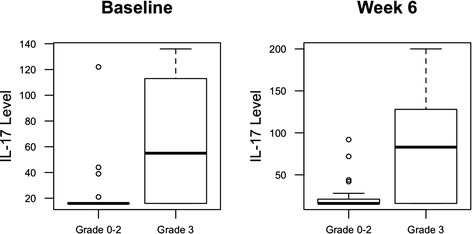
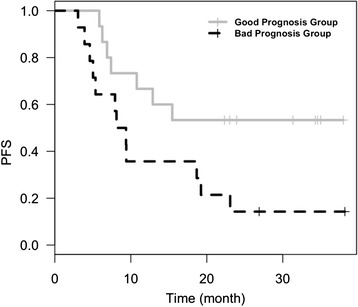
BACKGROUND: We evaluated candidate circulating serum cytokines, chemokines and growth factors in patients with locally/regionally advanced melanoma receiving neoadjuvant ipilimumab with toxicity and clinical outcome. METHODS: Patients were treated with ipilimumab (10 mg/kg IV every 3 weeks, 2 doses) before and after surgery. xMAP multiplex serum testing for 36 functionally selected cytokines and chemokines was performed at baseline and at six weeks (following ipilimumab). Based on our prior data, the association of IL-17 and immune related colitis was tested. Serum cytokines were divided into functional groups (Th1, Th2, Regulatory, Proinflammatory) and were assessed at baseline and week 6 using sparse-group Lasso modeling to assess the association of various cytokine groups with progression free survival (PFS). The linear combination of the cytokines/chemokines in this model was then used as a risk score and a Kaplan-Meier curve was generated to examine the association of the dichotomized score and PFS. RESULTS: Thirty-five patients were enrolled whose staging was: IIIB (3; N2b), IIIC (30; N2c, N3), IV (2). Median follow-up was 18 months. Among 33 evaluable patients, median PFS was 11 months (95 % CI = 6.2-19.2). IL-17 was found to correlate significantly with the incidence of grade 3 diarrhea/colitis when measured at baseline (p = 0.02) with a trend towards significance at 6 weeks (p = 0.06). In the modeling analysis, at baseline, the linear combination of 2 regulatory cytokines [TGF- β1 (ρ = 0.19) and IL-10 (ρ = -0.34)] was significantly associated with PFS (HR 2.66; p = 0.035). No significant correlations with clinical outcomes were found in examining the week 6 cytokines. CONCLUSIONS: Baseline IL-17 level was significantly associated with the later development of severe diarrhea/colitis while the combination of baseline TGF- β1 and IL-10 levels were associated with therapeutic clinical outcome after neoadjuvant ipilimumab. These findings warrant further investigation and validation. TRIAL REGISTRATION: ClinicalTrials.gov Identifier NCT00972933.
Overview
The claims and statistics of this paper haven’t been checked yet.
Free: it reads the open-access text and checks the first 5 claims that cite a source we can check. Create a free account to check every claim.
Integrity signals
Registry
Cites
Statistics
Figures
Verification
Claims the paper makes
The claims and statistics of this paper haven’t been checked yet.
Free: it reads the open-access text and checks the first 5 claims that cite a source we can check. Create a free account to check every claim.
Claims other papers make about this one
Each is checked against this paper’s own text: does it say what the citing paper says it does?
The source backs part of the claim, not all of it — or backs it for a different population, condition or comparison.
In the citing paper
“Increased circulating IL-17 levels at baseline in patients with locoregional metastatic melanoma (Tarhini et al., 2015)”
From Hallmarks of response, resistance, and toxicity to immune checkpoint blockade (2021) · cites this paper as Tarhini et al., 2015
Experimental — accuracy not yet measured
Self-check
Percentages, sums and reported differences re-computed from the paper’s own numbers.
The self-check needs the paper’s full text.
Citations
Cites
PD-1 and PD-L1 Immune Checkpoint Blockade to Treat Breast Cancer
Hartkopf, A. D., Taran, F.-A., Wallwiener, M., Walter, C. B., Krämer, B., Grischke, E.-M., & Brucker, S. Y. (2016) · Breast Care · doi:10.1159/000453569 · Cited by 30,845
Improved Survival with Ipilimumab in Patients with Metastatic Melanoma
Hodi, F. S., O'Day, S. J., McDermott, D. F., Weber, R. W., Sosman, J. A., Haanen, J. B., Gonzalez, R., Robert, C., Schadendorf, D., Hassel, J. C., et al. (2010) · New England Journal of Medicine · doi:10.1056/nejmoa1003466 · Cited by 15,155 · cited 1×
“Food and Drug Administration (FDA) for the treatment of advanced inoperable melanoma based on phase III trial results [7].”
BackgroundPD-1 blockade induces responses by inhibiting adaptive immune resistance
Tumeh, P. C., Harview, C. L., Yearley, J. H., Shintaku, I. P., Taylor, E. J. M., Robert, L., Chmielowski, B., Spasic, M., Henry, G., Ciobanu, V., et al. (2014) · Nature · doi:10.1038/nature13954 · Cited by 6,609 · cited 1×
“Major efforts in biomarker studies are ongoing and preliminary data are very encouraging, including gene expression signatures [9, 17], exome sequencing studies [18], and CD8 expression within the tumor microenvironment [19].”
BackgroundGenetic Basis for Clinical Response to CTLA-4 Blockade in Melanoma
Snyder, A., Makarov, V., Merghoub, T., Yuan, J., Zaretsky, J. M., Desrichard, A., Walsh, L. A., Postow, M. A., Wong, P., Ho, T. S., et al. (2014) · New England Journal of Medicine · doi:10.1056/nejmoa1406498 · Cited by 4,286 · cited 1×
“Major efforts in biomarker studies are ongoing and preliminary data are very encouraging, including gene expression signatures [9, 17], exome sequencing studies [18], and CD8 expression within the tumor microenvironment [19].”
BackgroundVan Cutsem, E., Köhne, C.-H., Láng, I., Folprecht, G., Nowacki, M. P., Cascinu, S., Shchepotin, I., Maurel, J., Cunningham, D., Tejpar, S., et al. (2011) · Journal of Clinical Oncology · doi:10.1200/jco.2010.33.5091 · Cited by 1,882
Phan, G. Q., Yang, J. C., Sherry, R. M., Hwu, P., Topalian, S. L., Schwartzentruber, D. J., Restifo, N. P., Haworth, L. R., Seipp, C. A., Freezer, L. J., et al. (2003) · Proceedings of the National Academy of Sciences · doi:10.1073/pnas.1533209100 · Cited by 1,575 · cited 1×
“The occurrence of irAEs has been reported to be associated with the overall clinical benefit in patients receiving ipilimumab [21–26].”
BackgroundAttia, P., Phan, G. Q., Maker, A. V., Robinson, M. R., Quezado, M. M., Yang, J. C., Sherry, R. M., Topalian, S. L., Kammula, U. S., Royal, R. E., et al. (2005) · Journal of Clinical Oncology · doi:10.1200/jco.2005.06.205 · Cited by 1,012 · cited 1×
“The occurrence of irAEs has been reported to be associated with the overall clinical benefit in patients receiving ipilimumab [21–26].”
BackgroundBeck, K. E., Blansfield, J. A., Tran, K. Q., Feldman, A. L., Hughes, M. S., Royal, R. E., Kammula, U. S., Topalian, S. L., Sherry, R. M., Kleiner, D., et al. (2006) · Journal of Clinical Oncology · doi:10.1200/jco.2005.04.5716 · Cited by 833
Downey, S. G., Klapper, J. A., Smith, F. O., Yang, J. C., Sherry, R. M., Royal, R. E., Kammula, U. S., Hughes, M. S., Allen, T. E., Levy, C. L., et al. (2007) · Clinical Cancer Research · doi:10.1158/1078-0432.ccr-07-0187 · Cited by 624 · cited 1×
“The occurrence of irAEs has been reported to be associated with the overall clinical benefit in patients receiving ipilimumab [21–26].”
BackgroundBalch, C. M., Urist, M. M., Karakousis, C. P., Smith, T. J., Temple, W. J., Drzewiecki, K., Jewell, W. R., Bartolucci, A. A., Mihm, M. C., Barnhill, R., et al. (1993) · Annals of Surgery · doi:10.1097/00000658-199309000-00005 · Cited by 525 · cited 1×
“Complete surgical excision and regional lymph node dissection followed by adjuvant therapy with high dose interferon alfa-2b (HDI) has been the standard of care for this group of patients [1].”
Background
Cited by
Items 201–300 of 403
The cure from within? a review of the microbiome and diet in melanoma
Kumar, P. R., Brazel, D., DeRogatis, J. M., Goldstein, J. B., Whiteson, K., Chow, W. A., Tinoco, R., & Moyers, J. T. (2022) · Cancer and Metastasis Reviews · doi:10.1007/s10555-022-10029-3 · Cited by 25
“Risk and prognostic factors for ipilimumab-induced colitis include elevated serum IL-17 level, peripheral eosinophilia, and NSAID use [73, 79, 80].”
BackgroundAcute Kidney Injury Induced by Immune Checkpoint Inhibitors
Tian, R., Liang, J., Li, R., & Zhou, X. (2022) · Kidney Diseases · doi:10.1159/000520798 · Cited by 25
Takenaka, Y., Takemoto, N., Otsuka, T., Nishio, M., Tanida, M., Fujii, T., Hayashi, K., Suzuki, M., Mori, M., Yamamoto, Y., et al. (2022) · Oral Oncology · doi:10.1016/j.oraloncology.2022.106018 · Cited by 22
Zhang, D., Shi, Y., Liu, X., Liu, J., Xu, Y., Zhao, J., Zhong, W., Käsmann, L., Hakozaki, T., Provencio, M., et al. (2022) · Translational Lung Cancer Research · doi:10.21037/tlcr-22-464 · Cited by 22
Checkpoint Inhibitors for Non-Small Cell Lung Cancer Among Older Adults
Elias, R., Morales, J. K., & Presley, C. J. (2017) · Current Oncology Reports · doi:10.1007/s11912-017-0619-0 · Cited by 23
Vitamin D, autoimmunity and immune-related adverse events of immune checkpoint inhibitors
Sun, L., Arbesman, J., & Piliang, M. P. (2020) · Archives of Dermatological Research · doi:10.1007/s00403-020-02094-x · Cited by 25
Liang, Y., Maeda, O., & Ando, Y. (2024) · Japanese Journal of Clinical Oncology · doi:10.1093/jjco/hyad184 · Cited by 23
Innate and adaptive immune features associated with immune-related adverse events
Khan, S., Malladi, V. S., von Itzstein, M. S., Mu-Mosley, H., Fattah, F. J., Liu, Y., Gwin, M. E., Park, J. Y., Cole, S., Bhalla, S., et al. (2025) · Journal for ImmunoTherapy of Cancer · doi:10.1136/jitc-2025-012414 · Cited by 24
Liang, L., Cui, C., Lv, D., Li, Y., Huang, L., Feng, J., An, T., Tian, P., Yang, K. G., Hu, L., et al. (2023) · ESC Heart Failure · doi:10.1002/ehf2.14340 · Cited by 21
Wu, C., Li, Z., Wu, Q., Lin, S., & Xie, X. (2021) · Immunotherapy · doi:10.2217/imt-2020-0230 · Cited by 21
Lin, A., Zheng, K., Jiang, A., Huang, X., Wang, Q., Hajdú, A., Li, Z., Zhang, J., & Luo, P. (2025) · Med Research · doi:10.1002/mdr2.70019 · Cited by 32
Vaziri, H., Turshudzhyan, A., & Vecchio, E. (2022) · Journal of Clinical Gastroenterology · doi:10.1097/mcg.0000000000001705 · Cited by 20
CD4 T cells and toxicity from immune checkpoint blockade
Earland, N. J., Zhang, W., Usmani, A., Nene, A., Bacchiocchi, A., Chen, D. Y., Sznol, M., Halaban, R., Chaudhuri, A. A., & Newman, A. M. (2023) · Immunological Reviews · doi:10.1111/imr.13248 · Cited by 21
Evidence for interleukin 17 involvement in severe immune-related neuroendocrine toxicity
Mazzarella, L., Giugliano, S., D’Amico, P., Belli, C., Duso, B. A., Rescigno, M., & Curigliano, G. (2020) · European Journal of Cancer · doi:10.1016/j.ejca.2020.10.006 · Cited by 21
Les, Í., Pérez-Francisco, I., Cabero, M., Sánchez, C., Hidalgo, M., Teijeira, L., Arrazubi, V., Domínguez, S., Anaut, P., Eguiluz, S., et al. (2022) · Frontiers in Pharmacology · doi:10.3389/fphar.2022.894550 · Cited by 20
Wang, S., Peng, D., Zhu, H. S., Min, W., Xue, M., Wu, R., Shao, Y., Pan, L., & Zhu, M. (2022) · Frontiers in Oncology · doi:10.3389/fonc.2022.1053370 · Cited by 21
Zhang, X., Zhang, B., Li, D., Yang, Y., Lin, S., Zhao, R., Li, Y., & Peng, L. (2025) · Frontiers in Immunology · doi:10.3389/fimmu.2025.1528084 · Cited by 23
Babey, H., Quéré, G., Descourt, R., Calloch, R. L., Lanfranco, L., Nousbaum, J., Cornec, D., Tison, A., & CHOUAID, C. (2018) · Expert Review of Anticancer Therapy · doi:10.1080/14737140.2018.1499468 · Cited by 20
“Another study found a relationship between the IL-17 concentration at ICI onset and the frequency of grade 3 diarrhea/colitis on ipilimumab [76].”
BackgroundYu, Z., Zhu, H., Chen, H., Zhu, L., & Liao, X. (2023) · Journal of Pharmacy & Pharmaceutical Sciences · doi:10.3389/jpps.2023.11235 · Cited by 18
Cascade of immunologic adverse events related to pembrolizumab treatment
Dhenin, A., Samartzi, V., Lejeune, S., & Seront, E. (2019) · BMJ Case Reports · doi:10.1136/bcr-2018-229149 · Cited by 19
Manne, A., Mulekar, M. S., Escobar, D. E., Alsayed, A., Sharma, G., Prodduturvar, P., Khushman, M. M., Howard, J. H., Gilbert, R., & Alkharabsheh, O. A. (2021) · Journal of Clinical Medicine Research · doi:10.14740/jocmr4511 · Cited by 20
“Some biomarkers, such as interleukin 17 (IL-17), eosinophil count, combined toxicity scores based on gene expression, autoantibodies, and gut microbiota, have shown correlative results with the incidence of irAE [9-14].”
BackgroundNeoantigen-Reactive T Cells: The Driving Force behind Successful Melanoma Immunotherapy
Davis, L., Tarduno, A., & Lu, Y. (2021) · Cancers · doi:10.3390/cancers13236061 · Cited by 19
Sanchez, K. G., Page, D. B., & Urba, W. J. (2019) · Surgical Oncology Clinics of North America · doi:10.1016/j.soc.2019.02.009 · Cited by 21
Gorabi, A. M., Ravari, M. S., Sanaei, M., Davaran, S., Kesharwani, P., & Sahebkar, A. (2022) · International Immunopharmacology · doi:10.1016/j.intimp.2022.109300 · Cited by 20
Immune checkpoint inhibitor-associated gastritis: Patterns and management
Lin, J., Lin, Z.-Q., Zheng, S., & Chen, Y. (2024) · World Journal of Gastroenterology · doi:10.3748/wjg.v30.i14.1941 · Cited by 19
“An increase in the serum IL-17 concentration at baseline with an exponential elevation at six weeks is a good indicator for ICI-diarrhea/colitis, and an decrease in the serum IL-17 concentration correlates with the resolution of symptoms, making it a valuable indicatior of treatment response[21].”
The Current and Future of Biomarkers of Immune Related Adverse Events
Bracamonte‐Baran, W., & Kim, S. T. (2024) · Rheumatic Disease Clinics of North America · doi:10.1016/j.rdc.2024.01.004 · Cited by 18
Watson, G. A., Doi, J., Hansen, A. R., & Spreafico, A. (2020) · British Journal of Clinical Pharmacology · doi:10.1111/bcp.14355 · Cited by 20
Serum Soluble Interleukin-2 Receptor as a Potential Biomarker for Immune-related Adverse Events
Takai, R., Funakoshi, Y., Suto, H., Nagatani, Y., Imamura, Y., Toyoda, M., Yakushijin, K., Kiyota, N., Harada, K., Yamashita, K., et al. (2021) · Anticancer Research · doi:10.21873/anticanres.14857 · Cited by 17
Chen, J., Wen, Y., Chu, X., Liu, Y., & Su, C. (2022) · Frontiers in Pharmacology · doi:10.3389/fphar.2022.944342 · Cited by 17
“, 2018), cytokines (Tarhini et al., 2015), autoantibodies (Duarte et al.”
Immune-related adverse events associated with cancer immunotherapy
Kungwankiattichai, S., Desai, A. J., Koppinger, S., & Maziarz, R. T. (2025) · Med · doi:10.1016/j.medj.2025.100800 · Cited by 16
Autoimmune complications of cancer immunotherapy
Dhodapkar, K. M. (2019) · Current Opinion in Immunology · doi:10.1016/j.coi.2019.08.004 · Cited by 17
Sanz-Segura, P., Cámara, P. G., Bonilla, E. M. F., Arbonés-Mainar, J. M., & Monterde, V. B. (2020) · Gastroenterología y Hepatología · doi:10.1016/j.gastrohep.2020.07.009 · Cited by 18
Zhang, X., Xu, S., Wang, J., Lv, Y., Wang, N., Lai, R., Sha, Z., Zhao, Q., & Guo, Z. (2022) · BMC Cancer · doi:10.1186/s12885-022-10199-x · Cited by 15
“Previous studies have suggested that CD8+ T cells [25], eosinophils [26], regulatory T cells [27], auto-antibodies [28], inflammatory cytokines (such as interleukin-17) [29], and gut microbiome may be involved in the development of irAEs [30].”
BackgroundLiu, H., Luo, S. X., Jie, J., Peng, L., Wang, S., & Song, L. (2023) · Frontiers in Immunology · doi:10.3389/fimmu.2023.1115305 · Cited by 17
“Th17 cells are critical mediators of various autoimmune diseases by producing IL-17 (87, 88).”
BackgroundOrnstein, M. C., Calabrese, C. M., Wood, L. S., Kirchner, E., Profusek, P., Allman, K. D., Martin, A. M., Kontzias, A., Grivas, P. D., Garcia, J. A., et al. (2019) · Clinical Genitourinary Cancer · doi:10.1016/j.clgc.2019.01.021 · Cited by 15
Watanabe, Y., Yamaguchi, Y., Takamura, N., Takahashi, Y., & Aihara, M. (2020) · European Journal of Cancer · doi:10.1016/j.ejca.2020.02.044 · Cited by 15
Khunger, A., Sarikonda, G., Tsau, J., Pahuja, A., Alfonso, Z., Gao, J., Laing, C., Vaupel, C., Dakappagari, N. K., & Tarhini, A. A. (2021) · Translational Oncology · doi:10.1016/j.tranon.2021.101014 · Cited by 17
Self-citationNeurological Immunotoxicity from Cancer Treatment
Wesley, S. F., Haggiagi, A. M., Thakur, K. T., & Jager, P. L. D. (2021) · International Journal of Molecular Sciences · doi:10.3390/ijms22136716 · Cited by 16
Issa, M., Tang, J., Guo, Y., Coss, C. C., Mace, T. A., Bischof, J. J., Phelps, M. A., Presley, C. J., & Owen, D. H. (2022) · Expert Review of Anticancer Therapy · doi:10.1080/14737140.2022.2094772 · Cited by 15
Wu, Y., Yu, S., & Qiao, H. (2022) · Frontiers in Pharmacology · doi:10.3389/fphar.2022.990445 · Cited by 16
“Induction of increased immune-promoting cells, such as a marked expansion of Th17 cells, is an independent risk factor for severe colitis in patients receiving ipilimumab (Tarhini et al., 2015).”
BackgroundNahar, K. J., Marsh‐Wakefield, F., Rawson, R. V., Gide, T. N., Ferguson, A. L., Allen, R. O., Quek, C. Y. J., da Silva, I. P., Tattersall, S., Kiely, C. J., et al. (2022) · JCI Insight · doi:10.1172/jci.insight.157839 · Cited by 15
“High levels of IL-17 at baseline have been associated with colitis in patients with metastatic melanoma treated with IPI (16).”
BackgroundXing, X., Zhao, Q. C., Zhou, J., Zhou, R., Liu, Y., Qin, X., Zhang, M., Zhong, Y., Wang, J., Tian, M., et al. (2023) · European Journal of Nuclear Medicine and Molecular Imaging · doi:10.1007/s00259-022-06084-1 · Cited by 16
“Although the precise mechanism of irAEs remains unclear and may vary depending on the type of ICI therapy and the organ affected, there is emerging evidence that T cell activation is a hallmark of irAEs, particularly colitis [93].”
BackgroundImmunotherapy-associated cardiovascular toxicities: insights from preclinical and clinical studies
Kong, Y., Wang, X., & Qie, R. (2024) · Frontiers in Oncology · doi:10.3389/fonc.2024.1347140 · Cited by 15
Özkan, A., Kapiteijn, E., van den Bos, F., Aarts, M. J. B., van den Berkmortel, F. W. P. J., Blank, C., Bloem, M., Blokx, W. A. M., Boers‐Sonderen, M. J., Bonenkamp, J. J., et al. (2024) · European Journal of Cancer · doi:10.1016/j.ejca.2024.115056 · Cited by 15
“For instance, IL-17, a cytokine upregulated in inflammatory bowel disease, has been linked to the development of grade 3 diarrhea or colitis in patients with melanoma treated with neoadjuvant ipilimumab [29,30].”
Cheng, T., Wu, Y., & Wu, R. (2025) · Frontiers in Immunology · doi:10.3389/fimmu.2025.1616872 · Cited by 14
Checkpoint inhibitor-associated autoimmunity
Ladak, K., & Bass, A. R. (2018) · Best Practice & Research Clinical Rheumatology · doi:10.1016/j.berh.2019.03.009 · Cited by 16
Eljilany, I., Noor, A., Paravathaneni, M., Yassine, I., Lee, S. J., Othus, M. K. D., Moon, J., Kirkwood, J. M., Sondak, V. K., Ribas, A., et al. (2023) · Cancers · doi:10.3390/cancers15092561 · Cited by 14
“This might be attributed to the high levels of circulating TH17 cells and IL17 that have been reported in patients with melanoma prior to the initiation of immunotherapy and could be contributing to the increased risk of developing GSL [28,29].”
BackgroundSelf-citationManagement of gastrointestinal adverse events induced by immune‐checkpoint inhibitors
Wang, Z., & Shen, L. (2018) · Chronic Diseases and Translational Medicine · doi:10.1016/j.cdtm.2017.12.001 · Cited by 14
“Pretreatment serum IL-17 levels were significantly associated with the development of grade 3 diarrhea or colitis, but not with all grades of colitis.(48) Increase in expression of two neutrophilactivation markers, CD177 and carcino-embryonic antigen related cellular adhesion molecule1 (CEACAM1),(49) and any abnormal…”
BackgroundPercik, R., Asher, N., & Liel, Y. (2021) · Immunotherapy · doi:10.2217/imt-2020-0332 · Cited by 13
Jiang, F., Zhang, Z., Chong, X., Shen, L., Fan, M., Liu, X., An, J., Peng, Z., & Zhang, C. (2022) · Cancers · doi:10.3390/cancers14174167 · Cited by 14
Helderman, N. C., Lucas, M. W., & Blank, C. U. (2023) · Immuno-Oncology Technology · doi:10.1016/j.iotech.2023.100374 · Cited by 13
“For irAEs in general, several potential biomarkers have already been evaluated, including autoantibodies,(17-19) and cytokine levels.(20,21) In addition, tumor mutational burden,(22) clonal expansion of CD8 T cells(23) and, in case of colitis, the gastrointestinal microbiome diversity were each associated with the dev…”
BackgroundDatta, D., Sulthana, S., Strauss, J., Puri, A., Bandi, S. P., & Singh, S. K. (2024) · International Journal of Pharmaceutics · doi:10.1016/j.ijpharm.2024.124719 · Cited by 16
Rethinking Immune Check Point Inhibitors Use in Liver Transplantation: Implications and Resistance
Ortiz, V., & Loeuillard, E. J. (2024) · Cellular and Molecular Gastroenterology and Hepatology · doi:10.1016/j.jcmgh.2024.101407 · Cited by 14
Chen, J., Tarantino, G., Severgnini, M., Bagińska, J., Giobbie‐Hurder, A., Weirather, J. L., Manos, M. P., Russell, J. D., Pfaff, K. L., Rodig, S. J., et al. (2024) · OncoImmunology · doi:10.1080/2162402x.2024.2432723 · Cited by 13
Yang, Y., Wu, Q., Chen, L., Qian, K., & Xu, X. (2022) · Annals of Translational Medicine · doi:10.21037/atm-22-1284 · Cited by 13
“It has been found that intestinal flora (16), gene mutation polymorphisms (17,18), autoantigen antibodies (19,20), and cytokines released by immune cells (21,22) can predict irAEs.”
Insomnia in patients treated with checkpoint inhibitors for cancer: A meta-analysis
Kišš, I., Kuhn, M., Hrušák, K., Buchler, B., Boublíková, L., & Büchler, T. (2022) · Frontiers in Oncology · doi:10.3389/fonc.2022.946307 · Cited by 12
Drug-related immune-mediated myelopathies
Gritsch, D., & Valencia-Sánchez, C. (2022) · Frontiers in Neurology · doi:10.3389/fneur.2022.1003270 · Cited by 12
“Other proposed biomarkers include increased soluble CD163 (70), higher preand post-treatment levels of soluble CTLA-4 in patients treated with ipilimumab (71), elevated pre and post-treatment levels of IL17 (72), low baseline levels of IL6 (73), and increased IL6 levels after ICI treatment (74).”
BackgroundKujtan, L. A., Kancha, R. K., Gustafson, B., Douglass, L., Ward, C. R., Buzard, B., & Subramanian, J. (2022) · Expert Review of Anticancer Therapy · doi:10.1080/14737140.2022.2029414 · Cited by 19
Kähler, K. C., Hassel, J. C., Heinzerling, L., Loquai, C., Mößner, R., Ugurel, S., Zimmer, L., Gutzmer, R., & (ADO), F. D. K. „. N. D. A. D. O. (2016) · JDDG Journal der Deutschen Dermatologischen Gesellschaft · doi:10.1111/ddg.13047_g · Cited by 16
The role of interleukin 17 in cancer: a systematic review
Begagić, E., Vranić, S., & Sominanda, A. (2024) · Carcinogenesis · doi:10.1093/carcin/bgae079 · Cited by 13
Immune-mediated adverse events in immune checkpoint inhibitors therapy: literature review
Lyadova, M. A., & Lyadov, V. K. (2021) · Journal of Modern Oncology · doi:10.26442/18151434.2021.2.200502 · Cited by 11
Han, X., Zang, D., Liu, D., & Chen, J. (2022) · Frontiers in Immunology · doi:10.3389/fimmu.2022.988849 · Cited by 12
“More importantly, serum IL-17 level has been elevated throughout the course of IMC (57, 58).”
BackgroundDey, A., Austin, M. R., Kluger, H. M., Trunova, N., Mann, H., Shire, N. J., Morgan, C., Zhou, D., & Mugundu, G. M. (2022) · Frontiers in Immunology · doi:10.3389/fimmu.2022.1026964 · Cited by 11
“Various baseline patient characteristics, such as differences in peripheral cytokine levels (34, 35) and differences in B-cell abundance (36), have been correlated with immune-mediated toxicity; however, these findings are preliminary and as yet there are no validated predictive biomarkers for imAE development.”
BackgroundBlocking CTLA ‐4 promotes pressure overload‐induced heart failure via activating Th17 cells
Shang, A., Yu, C., Bi, X., Jiang, W., Zhao, M., Sun, Y., Guan, H., & Zhang, Z. (2024) · The FASEB Journal · doi:10.1096/fj.202400384r · Cited by 11
Pulmonary Toxicities of Immunotherapy
Altan, M., Zhong, L., Shannon, V. R., & Sheshadri, A. (2021) · Advances in experimental medicine and biology · doi:10.1007/978-3-030-79308-1_14 · Cited by 11
How to use neoadjuvant medical treatment to maximize surgery in melanoma
Amaral, T. M. S., Tampouri, I., & Garbe, C. (2017) · Expert Review of Anticancer Therapy · doi:10.1080/14737140.2018.1421460 · Cited by 10
Checkpoint Inhibitors and Induction of Celiac Disease-like Condition
Lerner, A., & Benzvi, C. (2022) · Biomedicines · doi:10.3390/biomedicines10030609 · Cited by 10
Current landscape and tailored management of immune-related adverse events
Liu, W., Luo, Z., Liu, Y., & Sun, B. (2023) · Frontiers in Pharmacology · doi:10.3389/fphar.2023.1078338 · Cited by 10
“Enhanced Th17 cell responses could contribute to the production of proinflammatory cytokines such as IL-17A, IL-21 and IL-22, consequently participating in the pathogenesis of autoimmune diseases and irAEs (Noack and Miossec, 2014; Tarhini et al., 2015).”
BackgroundYamazaki, M., Watanabe, S., Tominaga, M., Yagi, T., Goto, Y., Yanagimura, N., Arita, M., Ohtsubo, A., Tanaka, T., Nozaki, K., et al. (2024) · Academic Radiology · doi:10.1016/j.acra.2024.08.043 · Cited by 11
Ogunleye, F. N., Blankenship, L. M., Millisor, V. E., Anderson, J., & Jaiyesimi, I. A. (2017) · Cancer Treatment and Research Communications · doi:10.1016/j.ctarc.2017.05.002 · Cited by 10
Operable Melanoma: Screening, Prognostication, and Adjuvant and Neoadjuvant Therapy
Tarhini, A. A., Lorigan, P. C., & Leachman, S. A. (2017) · American Society of Clinical Oncology Educational Book · doi:10.1200/edbk_174930 · Cited by 11
Self-citationGoswami, S., Siddiqui, B. A., Subudhi, S. K., Basu, S., Yadav, S. S., Diab, A. K., & Sharma, P. (2022) · Cancer Cell · doi:10.1016/j.ccell.2022.02.015 · Cited by 10
Stellato, M., Procopio, G., Giorgi, U. D., Maruzzo, M., Bimbatti, D., Mennitto, A., Sbrana, A., Roviello, G., Casadei, C., Sepe, P., et al. (2021) · Journal of Translational Medicine · doi:10.1186/s12967-021-03008-9 · Cited by 10
Lereim, R. R., Dunn, C., Aamdal, E., Chauhan, S. K., Straume, O., Guren, T. K., & Kyte, J. A. (2024) · OncoImmunology · doi:10.1080/2162402x.2024.2440967 · Cited by 9
“9 In this study, we have identified several candidate biomarkers that have also been reported in previous ICI studies for melanoma and other cancers.”
The Interplay of Cross‐Organ Immune Regulation in Inflammation and Cancer
Dou, J., Jiang, J., Xue, Y., Jiang, X., Jiang, Y., Xiao, P., & Xu, J. (2025) · MedComm · doi:10.1002/mco2.70249 · Cited by 10
Okuyama, K., Naruse, T., Matsushita, Y., Fujimoto, J., Yanamoto, S., Lei, Y. L., & Hu, J. (2026) · Molecular Cancer · doi:10.1186/s12943-026-02609-6 · Cited by 9
Li, Y., Chen, Y., Meng, Y., Zeng, Z., Shen, M., Yang, F., & Ren, X. (2024) · Cancer Biology and Medicine · doi:10.20892/j.issn.2095-3941.2024.0269 · Cited by 9
Development of a Flow Cytometry Assay to Predict Immune Checkpoint Blockade-Related Complications
Schilling, H., Glehr, G., Kapinsky, M., Ahrens, N., Riquelme, P., Cordero, L., Bitterer, F., Schlitt, H. J., Geissler, E. K., Haferkamp, S., et al. (2021) · Frontiers in Immunology · doi:10.3389/fimmu.2021.765644 · Cited by 11
Zheng, L., Yang, X., Wei, Y., You, J., Li, H., Liao, J., & Cheng, Y. (2022) · Materials & Design · doi:10.1016/j.matdes.2022.110738 · Cited by 9
Shah, M., Jizzini, M., Majzoub, I. E., Qdaisat, A. Z., Reyes‐Gibby, C. C., & Yeung, S. J. (2019) · Journal of Immunotherapy and Precision Oncology · doi:10.4103/jipo.jipo_11_19 · Cited by 9
Microbiota and immune-related adverse events in cancer immunotherapy
Schneider, S. M., Fan, C., Wang, Y., Jenq, R. R., & Watowich, S. S. (2026) · Nature reviews. Cancer · doi:10.1038/s41568-026-00921-3 · Cited by 8
“Specific associations reported include IL-17 and ICI colitis 31 ; IL-1β, IL-2 and GM-CSF and ICI thyroiditis 27 ; and IL-10 and ICI pneumonitis 33 .”
Ding, R., Lu, J., Huang, X., Deng, M., Wei, H., Jiang, G., Zhu, H., & Yuan, H. (2024) · International Immunopharmacology · doi:10.1016/j.intimp.2024.113100 · Cited by 9
Tumor location as a risk factor for severe immune-related adverse events
Blum, S. M., Ouyang, B., Zubiri, L., Leonard, D., Slowikowski, K., Wang, M., Grealish, K., Hathaway, N., Molina, G. E., Shah, N., et al. (2025) · Journal for ImmunoTherapy of Cancer · doi:10.1136/jitc-2024-011312 · Cited by 9
Cybulska-Stopa, B., Ziętek, M., Czarnecka, A. M., Piejko, K., Dziura, R., Galus, Ł., Ziółkowska, B., Kieszko, S., Kempa-Kamińska, N., Calik, J., et al. (2021) · Journal of Dermatological Treatment · doi:10.1080/09546634.2021.1937477 · Cited by 8
Atherosclerotic Progression Is Related to Immune-Related Adverse Events
Kurozumi, A., Sakamoto, K., Nakagawa, T., Matsunaga, F., Shimomura, A., Shimizu, C., Hara, H., & Hiroi, Y. (2022) · International Heart Journal · doi:10.1536/ihj.21-657 · Cited by 8
Monson, K. R., Ferguson, R., Handzlik, J. E., Xiong, J., Dagayev, S., Morales, L. J., Chat, V., Bunis, A., Sreenivasaiah, C., Dolfi, S. C., et al. (2024) · Clinical Cancer Research · doi:10.1158/1078-0432.ccr-24-0900 · Cited by 9
Clinical perspective and treatment of immune-related colitis after cancer immunotherapy
Braun, L. M., Lu, Y., & Zeiser, R. (2025) · Trends in cancer · doi:10.1016/j.trecan.2025.07.005 · Cited by 8
Jiang, Q., & Xue, R. (2024) · World Journal of Gastrointestinal Oncology · doi:10.4251/wjgo.v16.i3.577 · Cited by 7
“Specifically, factors such as pre-existing autoimmune disease[14-18], sex and body mass index[19-22], response to ICI[5,23-28], circulating cytokines and immune cells[19,29-31], inherited genetic variants[32,33], and microbiome[34-36] have been previously implicated in the prediction of irAEs.”
Wang, S., Lv, H., Yu, J., & Chen, M. (2024) · International Immunopharmacology · doi:10.1016/j.intimp.2024.111884 · Cited by 7
Advances in Genitourinary Tumor Genomics and Immunotherapy
Vohra, J., Barbosa, G. R., Pascoal, L. B., & Reis, L. O. (2025) · Genes · doi:10.3390/genes16060667 · Cited by 8
“A study found that high levels of interleukin-17 (IL-17) were associated with an increased risk of developing immune-related dermatitis in patients receiving ICIs [57].”
Pasoto, S. G., Franco, A. S., Silva, C. A., & Bonfá, E. (2024) · Expert Review of Clinical Immunology · doi:10.1080/1744666x.2024.2370327 · Cited by 7
“The use of ipilimumab (anti-CTLA-4) may increase the interleukin-17 levels, and it is associated with colitis [48,53].”
Sanz-Segura, P., Cámara, P. G., Bonilla, E. M. F., Arbonés-Mainar, J. M., & Monterde, V. B. (2021) · Gastroenterología y Hepatología (English Edition) · doi:10.1016/j.gastre.2020.07.007 · Cited by 10
Rivet, V., Quantin, X., Faillie, J., Lesage, C., Meunier, L., Faure, S., Hillaire‐Buys, D., Souder, C. L., Fabre, S., Assénat, E., et al. (2021) · La Revue de Médecine Interne · doi:10.1016/j.revmed.2021.01.002 · Cited by 7
Xu, X., Li, Y., Sun, S., Lin, X., Zhang, W., Wu, Y., Wei, B., Xu, D., Zheng, C., Fang, H., et al. (2025) · Cancer Letters · doi:10.1016/j.canlet.2025.217918 · Cited by 7
Wu, L., Wentworth, J. M., Liddle, C., Fewings, N., Carlino, M. S., Brown, D. A., Clifton-Bligh, R. J., Long, G. V., Scolyer, R. A., Norris, N., et al. (2025) · Journal of Clinical Investigation · doi:10.1172/jci192938 · Cited by 8
“…IRAEs is associated with higher baseline CD4 + counts (10), early Treg expansion (11), increased CD8 + clonal responses (12), a more diverse T cell repertoire (13), higher cytokine levels at baseline and early in treatment (11, 14, 15), neutrophil/lymphocyte ratio (16), and genetic variants (17).”
Gao, J., Miao, J., Zhinan, C., & Zhu, P. (2026) · Frontiers in Immunology · doi:10.3389/fimmu.2025.1611692 · Cited by 6
“To Anticipate”: Neoadjuvant Therapy in Melanoma with a Focus on Predictive Biomarkers
Garutti, M., Buriolla, S., Bertoli, E., Vitale, M. G., Rossi, E., Schinzari, G., Minisini, A. M., & Puglisi, F. (2020) · Cancers · doi:10.3390/cancers12071941 · Cited by 7
“Moreover, the cytokine and chemokine profiles were evaluated, and the IL-7 blood levels showed a significant correlation with grade 3 colitis, supporting the connection between immune-related toxicity and ipilimumab’s mechanism of action [38].”
BackgroundAbsmaier-Kijak, M., Iuliano, C., Kaesler, S., Biedermann, T., Posch, C., & Brockow, K. (2024) · Cancers · doi:10.3390/cancers16061226 · Cited by 6
“Similar results were obtained in another study performed in melanoma patients treated with ipilimumab, in which pre-treatment IL-17 levels were associated with the development of severe intestinal inflammation [29].”
ResultRisk factors for cardiovascular adverse events from immune checkpoint inhibitors
Luo, L., Liu, Y., Lu, J., Zhang, Y., Fan, G., Tang, X., & Guo, W. (2023) · Frontiers in Oncology · doi:10.3389/fonc.2023.1104888 · Cited by 6
Treatment of Stage III Resectable Melanoma—Adjuvant and Neoadjuvant Approaches
Tarhini, A. A., Castellano, E., & Eljilany, I. (2024) · The Cancer Journal · doi:10.1097/ppo.0000000000000706 · Cited by 7
Self-citation
Metadata
- Authors
- Tarhini, A. A., Zahoor, H., Lin, Y., Malhotra, U., Sander, C., Butterfield, L. H., & Kirkwood, J. M.
- Affiliations
- UPMC Hillman Cancer Center (US)
- Corresponding author
- Tarhini, Ahmad A.
- Venue
- Journal for ImmunoTherapy of Cancer
- Publisher
- BMJ
- Published
- 2015-09-15
- Volume
- 3
- Issue
- 1
- Pages
- 39-39
- ISSN
- 2051-1426 (ISSN-L)
- PMC
- PMC4570556
- OpenAlex
- W1916602633
- Semantic Scholar
- 1bfb5ce0aec677dd4070412cd39f2e067348984d
- Cited by
- 394
- References
- 33
- Citations by year
- 2026: 20 · 2025: 37 · 2024: 41 · 2023: 41 · 2022: 64 · 2021: 53 · 2020: 47 · 2019: 39 · 2018: 29 · 2017: 13 · 2016: 10
- FWCI
- 7.57
- Type
- journal article
- Language
- en
- Open access
- gold
- doi.org
- Licence
- cc-by
- creativecommons.org/licenses/by/4.0/ (tdm)
- Locations
- Journal for ImmunoTherapy of Cancer (publishedVersion, cc-by)
- Europe PMC (PubMed Central) (publishedVersion, cc-by)
- PubMed Central (publishedVersion, cc-by)
- PubMed (publishedVersion)
- D-Scholarship@Pitt (University of Pittsburgh) (acceptedVersion)
- Funders
- National Institutes of Health (P50CA121973)
- Topics
- Health Sciences › Medicine › Oncology › Cancer Immunotherapy and Biomarkers
- Health Sciences › Medicine › Oncology › Cutaneous Melanoma Detection and Management
- Life Sciences › Immunology and Microbiology › Immunology › Immunotherapy and Immune Responses
- Keywords
- melanoma, ipilimumab, neoadjuvant therapy, serum cytokines, IL-17, TGF-β1, IL-10, immune-related adverse events, immune-related colitis, diarrhea, progression-free survival, prognostic factors, regulatory cytokines, Th1/Th2 cytokines, sparse group lasso, serum biomarkers, immune checkpoint inhibitors
About these checks
Registry, retraction, Cites and statistics results are computed, not judged, with one exception: a printed reference that no index lists is read once by a model before it counts as a citation error. Claims are extracted by a model and kept only when their quote appears verbatim in the text; each cited source is then checked, with a model’s help, for whether it says what the claim relies on. Those verdicts can be wrong — read the claim’s quote and the cited source before relying on one.
Statistics and arithmetic are recomputed, not judged.
Confidence bands are shown only for fields calibrated on our annotated test set. None is calibrated yet, so no band is shown.
What counts as a claim ›How we measure confidence ›How we check this ›
Are you an author, or do you see a problem with this page? Request a review
Data sources
Bibliographic data: Semantic Scholar, OpenAlex, Crossref.
Contains information from the Semantic Scholar Academic Graph Datasets, made available under the ODC Attribution License (ODC-BY 1.0).
Semantic Scholar’s data is described in: Kinney, R., et al. (2023). The Semantic Scholar Open Data Platform. arXiv:2301.10140.
