

Baseline circulating IL-17 predicts toxicity while TGF-β1 and IL-10 are prognostic of relapse in ipilimumab neoadjuvant therapy of melanoma
Open accessThe DOI matches its Crossref record; 33 of the 33 references it cites were found in a registry or an index.
Abstract
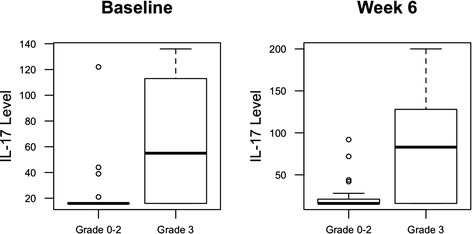
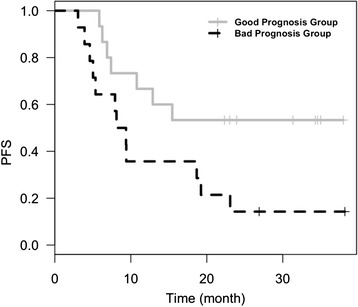
BACKGROUND: We evaluated candidate circulating serum cytokines, chemokines and growth factors in patients with locally/regionally advanced melanoma receiving neoadjuvant ipilimumab with toxicity and clinical outcome. METHODS: Patients were treated with ipilimumab (10 mg/kg IV every 3 weeks, 2 doses) before and after surgery. xMAP multiplex serum testing for 36 functionally selected cytokines and chemokines was performed at baseline and at six weeks (following ipilimumab). Based on our prior data, the association of IL-17 and immune related colitis was tested. Serum cytokines were divided into functional groups (Th1, Th2, Regulatory, Proinflammatory) and were assessed at baseline and week 6 using sparse-group Lasso modeling to assess the association of various cytokine groups with progression free survival (PFS). The linear combination of the cytokines/chemokines in this model was then used as a risk score and a Kaplan-Meier curve was generated to examine the association of the dichotomized score and PFS. RESULTS: Thirty-five patients were enrolled whose staging was: IIIB (3; N2b), IIIC (30; N2c, N3), IV (2). Median follow-up was 18 months. Among 33 evaluable patients, median PFS was 11 months (95 % CI = 6.2-19.2). IL-17 was found to correlate significantly with the incidence of grade 3 diarrhea/colitis when measured at baseline (p = 0.02) with a trend towards significance at 6 weeks (p = 0.06). In the modeling analysis, at baseline, the linear combination of 2 regulatory cytokines [TGF- β1 (ρ = 0.19) and IL-10 (ρ = -0.34)] was significantly associated with PFS (HR 2.66; p = 0.035). No significant correlations with clinical outcomes were found in examining the week 6 cytokines. CONCLUSIONS: Baseline IL-17 level was significantly associated with the later development of severe diarrhea/colitis while the combination of baseline TGF- β1 and IL-10 levels were associated with therapeutic clinical outcome after neoadjuvant ipilimumab. These findings warrant further investigation and validation. TRIAL REGISTRATION: ClinicalTrials.gov Identifier NCT00972933.
Overview
The claims and statistics of this paper haven’t been checked yet.
Free: it reads the open-access text and checks the first 5 claims that cite a source we can check. Create a free account to check every claim.
Integrity signals
Registry
Cites
Statistics
Figures
Verification
Claims the paper makes
The claims and statistics of this paper haven’t been checked yet.
Free: it reads the open-access text and checks the first 5 claims that cite a source we can check. Create a free account to check every claim.
Claims other papers make about this one
Each is checked against this paper’s own text: does it say what the citing paper says it does?
The source backs part of the claim, not all of it — or backs it for a different population, condition or comparison.
In the citing paper
“Increased circulating IL-17 levels at baseline in patients with locoregional metastatic melanoma (Tarhini et al., 2015)”
From Hallmarks of response, resistance, and toxicity to immune checkpoint blockade (2021) · cites this paper as Tarhini et al., 2015
Experimental — accuracy not yet measured
Self-check
Percentages, sums and reported differences re-computed from the paper’s own numbers.
The self-check needs the paper’s full text.
Citations
Cites
PD-1 and PD-L1 Immune Checkpoint Blockade to Treat Breast Cancer
Hartkopf, A. D., Taran, F.-A., Wallwiener, M., Walter, C. B., Krämer, B., Grischke, E.-M., & Brucker, S. Y. (2016) · Breast Care · doi:10.1159/000453569 · Cited by 30,845
Improved Survival with Ipilimumab in Patients with Metastatic Melanoma
Hodi, F. S., O'Day, S. J., McDermott, D. F., Weber, R. W., Sosman, J. A., Haanen, J. B., Gonzalez, R., Robert, C., Schadendorf, D., Hassel, J. C., et al. (2010) · New England Journal of Medicine · doi:10.1056/nejmoa1003466 · Cited by 15,155 · cited 1×
“Food and Drug Administration (FDA) for the treatment of advanced inoperable melanoma based on phase III trial results [7].”
BackgroundPD-1 blockade induces responses by inhibiting adaptive immune resistance
Tumeh, P. C., Harview, C. L., Yearley, J. H., Shintaku, I. P., Taylor, E. J. M., Robert, L., Chmielowski, B., Spasic, M., Henry, G., Ciobanu, V., et al. (2014) · Nature · doi:10.1038/nature13954 · Cited by 6,609 · cited 1×
“Major efforts in biomarker studies are ongoing and preliminary data are very encouraging, including gene expression signatures [9, 17], exome sequencing studies [18], and CD8 expression within the tumor microenvironment [19].”
BackgroundGenetic Basis for Clinical Response to CTLA-4 Blockade in Melanoma
Snyder, A., Makarov, V., Merghoub, T., Yuan, J., Zaretsky, J. M., Desrichard, A., Walsh, L. A., Postow, M. A., Wong, P., Ho, T. S., et al. (2014) · New England Journal of Medicine · doi:10.1056/nejmoa1406498 · Cited by 4,286 · cited 1×
“Major efforts in biomarker studies are ongoing and preliminary data are very encouraging, including gene expression signatures [9, 17], exome sequencing studies [18], and CD8 expression within the tumor microenvironment [19].”
BackgroundVan Cutsem, E., Köhne, C.-H., Láng, I., Folprecht, G., Nowacki, M. P., Cascinu, S., Shchepotin, I., Maurel, J., Cunningham, D., Tejpar, S., et al. (2011) · Journal of Clinical Oncology · doi:10.1200/jco.2010.33.5091 · Cited by 1,882
Phan, G. Q., Yang, J. C., Sherry, R. M., Hwu, P., Topalian, S. L., Schwartzentruber, D. J., Restifo, N. P., Haworth, L. R., Seipp, C. A., Freezer, L. J., et al. (2003) · Proceedings of the National Academy of Sciences · doi:10.1073/pnas.1533209100 · Cited by 1,575 · cited 1×
“The occurrence of irAEs has been reported to be associated with the overall clinical benefit in patients receiving ipilimumab [21–26].”
BackgroundAttia, P., Phan, G. Q., Maker, A. V., Robinson, M. R., Quezado, M. M., Yang, J. C., Sherry, R. M., Topalian, S. L., Kammula, U. S., Royal, R. E., et al. (2005) · Journal of Clinical Oncology · doi:10.1200/jco.2005.06.205 · Cited by 1,012 · cited 1×
“The occurrence of irAEs has been reported to be associated with the overall clinical benefit in patients receiving ipilimumab [21–26].”
BackgroundBeck, K. E., Blansfield, J. A., Tran, K. Q., Feldman, A. L., Hughes, M. S., Royal, R. E., Kammula, U. S., Topalian, S. L., Sherry, R. M., Kleiner, D., et al. (2006) · Journal of Clinical Oncology · doi:10.1200/jco.2005.04.5716 · Cited by 833
Downey, S. G., Klapper, J. A., Smith, F. O., Yang, J. C., Sherry, R. M., Royal, R. E., Kammula, U. S., Hughes, M. S., Allen, T. E., Levy, C. L., et al. (2007) · Clinical Cancer Research · doi:10.1158/1078-0432.ccr-07-0187 · Cited by 624 · cited 1×
“The occurrence of irAEs has been reported to be associated with the overall clinical benefit in patients receiving ipilimumab [21–26].”
BackgroundBalch, C. M., Urist, M. M., Karakousis, C. P., Smith, T. J., Temple, W. J., Drzewiecki, K., Jewell, W. R., Bartolucci, A. A., Mihm, M. C., Barnhill, R., et al. (1993) · Annals of Surgery · doi:10.1097/00000658-199309000-00005 · Cited by 525 · cited 1×
“Complete surgical excision and regional lymph node dissection followed by adjuvant therapy with high dose interferon alfa-2b (HDI) has been the standard of care for this group of patients [1].”
Background
Cited by
Schneider, B. J., Naidoo, J., Santomasso, B. D., Lacchetti, C., Adkins, S., Anadkat, M., Atkins, M. B., Brassil, K. J., Caterino, J. M., Chau, I., et al. (2021) · Journal of Clinical Oncology · doi:10.1200/jco.21.01440 · Cited by 2,372
Adverse effects of immune-checkpoint inhibitors: epidemiology, management and surveillance
Martins, F., Sofiya, L., Sykiotis, G. P., Lamine, F., Maillard, M., Fraga, M., Shabafrouz, K., Ribi, C., Cairoli, A., Guex-Crosier, Y., et al. (2019) · Nature Reviews Clinical Oncology · doi:10.1038/s41571-019-0218-0 · Cited by 2,314
Hallmarks of response, resistance, and toxicity to immune checkpoint blockade
Morad, G., Helmink, B. A., Sharma, P., & Wargo, J. A. (2021) · Cell · doi:10.1016/j.cell.2021.09.020 · Cited by 1,648
Immune-related adverse events of checkpoint inhibitors
Ramos-Casals, M., Brahmer, J. R., Callahan, M. K., Flores-Chávez, A., Keegan, N., Khamashta, M. A., Lambotte, O., Mariette, X., Prat, A., & Suárez-Almazor, M. E. (2020) · Nature Reviews Disease Primers · doi:10.1038/s41572-020-0160-6 · Cited by 1,412
A review of cancer immunotherapy toxicity
Kennedy, L. B., & Salama, A. K. S. (2020) · CA: A Cancer Journal for Clinicians · doi:10.3322/caac.21596 · Cited by 1,364
Brahmer, J. R., Abu-Sbeih, H., Ascierto, P. A., Brufsky, J., Cappelli, L. C., Cortazar, F. B., Gerber, D. E., Hamad, L., Hansen, E., Johnson, D. B., et al. (2021) · Journal for ImmunoTherapy of Cancer · doi:10.1136/jitc-2021-002435 · Cited by 917
Immune checkpoint therapy for solid tumours: clinical dilemmas and future trends
Sun, Q., Hong, Z., Zhang, C., Wang, L., Han, Z., & Ma, D. (2023) · Signal Transduction and Targeted Therapy · doi:10.1038/s41392-023-01522-4 · Cited by 598
“Overexpressed circulating IL-17 has been identified with a correlation to grade 3 diarrhoea or colitis when tested at baseline in 35 advanced melanoma patients receiving ipilimumab.(198) Novel research has integrated 11 circulating cytokines (including GM-CSF, IFN-α2, IL-2, et al.”
BackgroundThompson, J. A., Schneider, B. J., Brahmer, J., Andrews, S., Armand, P., Bhatia, S., Budde, L. E., Costa, L., Davies, M., Dunnington, D., et al. (2019) · Journal of the National Comprehensive Cancer Network · doi:10.6004/jnccn.2019.0013 · Cited by 570
When worlds collide: Th17 and Treg cells in cancer and autoimmunity
Knochelmann, H. M., Dwyer, C. J., Bailey, S. R., Amaya, S. M., Elston, D. M., Mazza-McCrann, J. M., & Paulos, C. M. (2018) · Cellular & Molecular Immunology · doi:10.1038/s41423-018-0004-4 · Cited by 535
Cutaneous Melanoma, Version 2.2019, NCCN Clinical Practice Guidelines in Oncology
Coit, D. G., Thompson, J. A., Albertini, M. R., Barker, C., Carson, W. E., Contreras, C., Daniels, G. A., DiMaio, D., Fields, R. C., Fleming, M. D., et al. (2019) · Journal of the National Comprehensive Cancer Network · doi:10.6004/jnccn.2019.0018 · Cited by 436
Lim, S. Y., Lee, J. H., Gide, T. N., Menzies, A. M., Guminski, A., Carlino, M. S., Breen, E. J., Yang, J. Y. H., Ghazanfar, S., Kefford, R. F., et al. (2019) · Clinical Cancer Research · doi:10.1158/1078-0432.ccr-18-2795 · Cited by 381
“Circulating cytokines such as decreased IL-10 and increased IL7 17 levels have been associated with irAEs in melanoma patients following treatment with 8 ipilimumab (19, 26).”
BackgroundChennamadhavuni, A., Abushahin, L., Jin, N., Presley, C. J., & Manne, A. (2022) · Frontiers in Immunology · doi:10.3389/fimmu.2022.779691 · Cited by 344
“Higher IL-7(2) at the baseline and exponential rise (102)”
Toi, Y., Sugawara, S., Sugisaka, J., Ono, H., Kawashima, Y., Aiba, T., Kawana, S., Saito, R., Aso, M., Tsurumi, K., et al. (2019) · JAMA Oncology · doi:10.1001/jamaoncol.2018.5860 · Cited by 352
Moving towards personalized treatments of immune-related adverse events
Esfahani, K., Elkrief, A., Calabrese, C., Lapointe, R., Hudson, M., Routy, B., Miller, W. H., & Calabrese, L. (2020) · Nature Reviews Clinical Oncology · doi:10.1038/s41571-020-0352-8 · Cited by 351
Lozano, A. X., Chaudhuri, A. A., Nene, A., Bacchiocchi, A., Earland, N., Vesely, M. D., Usmani, A., Turner, B. E., Steen, C. B., Luca, B. A., et al. (2022) · Nature Medicine · doi:10.1038/s41591-021-01623-z · Cited by 314
Tison, A., Quéré, G., Misery, L., Funck‐Brentano, E., Danlos, F., Routier, E., Robert, C., Loriot, Y., Lambotte, O., Bonniaud, B., et al. (2019) · Arthritis & Rheumatology · doi:10.1002/art.41068 · Cited by 309
“Moreover, elevated levels of interleukin17 at ICI initiation have been associated with a higher risk of colitis in patients treated with ipilimumab (52).”
BackgroundInfluentialNeurological Complications Associated With Anti–Programmed Death 1 (PD-1) Antibodies
Kao, J. C., Liao, B., Markovic, S. N., Klein, C. J., Naddaf, E., Staff, N. P., Liewluck, T., Hammack, J. E., Sandroni, P., Finnes, H., et al. (2017) · JAMA Neurology · doi:10.1001/jamaneurol.2017.1912 · Cited by 315
Delivanis, D. A., Gustafson, M. P., Bornschlegl, S., Merten, M. M., Kottschade, L., Withers, S., Dietz, A. B., & Ryder, M. (2017) · The Journal of Clinical Endocrinology & Metabolism · doi:10.1210/jc.2017-00448 · Cited by 278
“anti-CTLA-4–induced enterocolitis (42).”
Enterocolitis due to immune checkpoint inhibitors: a systematic review
Soularue, E., Lepage, P., Colombel, J. F., Coutzac, C., Faleck, D., Marthey, L., Collins, M., Chaput, N., Robert, C., & Carbonnel, F. (2018) · Gut · doi:10.1136/gutjnl-2018-316948 · Cited by 264
Autoimmunity, checkpoint inhibitor therapy and immune-related adverse events: A review
Khan, S., & Gerber, D. E. (2020) · Seminars in Cancer Biology · doi:10.1016/j.semcancer.2019.06.012 · Cited by 241
Autoimmune antibodies correlate with immune checkpoint therapy-induced toxicities
Tahir, S. A., Gao, J., Miura, Y., Blando, J., Tidwell, R. S. S., Zhao, H., Subudhi, S. K., Tawbi, H., Keung, E., Wargo, J., et al. (2019) · Proceedings of the National Academy of Sciences · doi:10.1073/pnas.1908079116 · Cited by 235
The Use of Immune Checkpoint Inhibitors in Oncology and the Occurrence of AKI: Where Do We Stand?
Franzin, R., Netti, G. S., Spadaccino, F., Porta, C., Gesualdo, L., Stallone, G., Castellano, G., & Ranieri, E. (2020) · Frontiers in Immunology · doi:10.3389/fimmu.2020.574271 · Cited by 201
Immune-checkpoint inhibitor use in patients with cancer and pre-existing autoimmune diseases
Tison, A., Garaud, S., Chiche, L., Cornec, D., & Kostine, M. (2022) · Nature Reviews Rheumatology · doi:10.1038/s41584-022-00841-0 · Cited by 195
Haematological immune-related adverse events with immune checkpoint inhibitors, how to manage?
Michot, J. M., Lazarovici, J., Tieu, A., Champiat, S., Voisin, A. L., Ebbo, M., Godeau, B., Michel, M., Ribrag, V., & Lambotte, O. (2019) · European Journal of Cancer · doi:10.1016/j.ejca.2019.07.014 · Cited by 180
Liver toxicity as a limiting factor to the increasing use of immune checkpoint inhibitors
De Martin, E., Michot, J.-M., Rosmorduc, O., Guettier, C., & Samuel, D. (2020) · JHEP Reports · doi:10.1016/j.jhepr.2020.100170 · Cited by 175
“with the incidence of grade 3 diarrhoea/colitis when measured at baseline in patients receiving immunotherapy.(26) IL6 was also found to be associated with the risk of immune toxicity.”
BackgroundImmune dysregulation in cancer patients developing immune-related adverse events
Khan, S., Khan, S. A., Luo, X., Fattah, F. J., Saltarski, J., Gloria-McCutchen, Y., Lu, R., Xie, Y., Li, Q., Wakeland, E., et al. (2019) · British Journal of Cancer · doi:10.1038/s41416-018-0155-1 · Cited by 186
“One study of preoperative ipilimumab for melanoma found that baseline interleukin-17 was associated with the development of diarrhoea/colitis.(27) That we identified a different pattern of cytokines in the present study may reflect the predominance of anti-PD1/PDL1 therapy and low rates of gastrointestinal toxicity (w…”
BackgroundHopkins, A. M., Rowland, A., Kichenadasse, G., Wiese, M. D., Gurney, H., McKinnon, R. A., Karapetis, C. S., & Sorich, M. J. (2017) · British Journal of Cancer · doi:10.1038/bjc.2017.274 · Cited by 180
“Another small study found that increased circulating IL-17 levels might be associated with gastrointestinal toxicity (Tarhini et al, 2015); however in general the investigation of predictors of ICI toxicity requires increased research.”
BackgroundBiomarkers for Immune Checkpoint Inhibitor-Mediated Tumor Response and Adverse Events
Nakamura, Y. (2019) · Frontiers in Medicine · doi:10.3389/fmed.2019.00119 · Cited by 185
Ascierto, P. A., Agarwala, S., Botti, G., Cesano, A., Ciliberto, G., Davies, M. A., Demaria, S., Dummer, R., Eggermont, A. M., Ferrone, S., et al. (2016) · Journal of Translational Medicine · doi:10.1186/s12967-016-1070-y · Cited by 173
Self-citationThe Balancing Act between Cancer Immunity and Autoimmunity in Response to Immunotherapy
Young, A., Quandt, Z., & Bluestone, J. A. (2018) · Cancer Immunology Research · doi:10.1158/2326-6066.cir-18-0487 · Cited by 169
“Although defining a correlationbetweenmultiple irAEs requires a greater number of patients, it may suggest a link between IL17-driven pathogenesis and the type of autoimmune sequelae that co-occur in response to CPI treatment, with potential for a targeted approach to relieve irAEs.”
BackgroundInfluentialNephrotoxicity of Cancer Immunotherapies: Past, Present and Future
Perazella, M. A., & Shirali, A. C. (2018) · Journal of the American Society of Nephrology · doi:10.1681/asn.2018050488 · Cited by 162
Gastrointestinal and Hepatic Complications of Immune Checkpoint Inhibitors
Cramer, P., & Bresalier, R. S. (2017) · Current Gastroenterology Reports · doi:10.1007/s11894-017-0540-6 · Cited by 167
Cappelli, L. C., Brahmer, J. R., Forde, P. M., Le, D. T., Lipson, E. J., Naidoo, J., Zheng, L., Bingham, C. O., & Shah, A. A. (2018) · Seminars in Arthritis and Rheumatism · doi:10.1016/j.semarthrit.2018.02.011 · Cited by 158
Nixon, A. B., Schalper, K. A., Jacobs, I., Potluri, S., Wang, I.-M., & Fleener, C. (2019) · Journal for ImmunoTherapy of Cancer · doi:10.1186/s40425-019-0799-2 · Cited by 154
Wang, T., Zheng, N., Luo, Q., Jiang, L., He, B., Yuan, X., & Shen, L. (2019) · Frontiers in Immunology · doi:10.3389/fimmu.2019.01235 · Cited by 146
Wang, M., Zhai, X., Li, J., Guan, J., Xu, S., Li, Y., & Zhu, H. (2021) · Frontiers in Immunology · doi:10.3389/fimmu.2021.670391 · Cited by 162
Immune Checkpoint Inhibitor-Associated Colitis: From Mechanism to Management
Tang, L., Wang, J., Lin, N., Zhou, Y., He, W., Liu, J., & Ma, X. (2021) · Frontiers in Immunology · doi:10.3389/fimmu.2021.800879 · Cited by 145
Holistic Approach to Immune Checkpoint Inhibitor-Related Adverse Events
Poto, R., Troiani, T., Criscuolo, G., Marone, G., Ciardiello, F., Tocchetti, C. G., & Varricchi, G. (2022) · Frontiers in Immunology · doi:10.3389/fimmu.2022.804597 · Cited by 147
“The association of baseline antibodies (85–87, 109, 110), baseline cytokine levels (65, 66, 111, 112), and immune cell changes (79, 83, 113–116) suggests that humoral and cellular immunity play a role in some specific irAEs.”
BackgroundInfluentialGamma delta T-cell-based immune checkpoint therapy: attractive candidate for antitumor treatment
Gao, Z., Bai, Y., Lin, A., Jiang, A., Zhou, C., Cheng, Q., Liu, Z., Chen, X., Zhang, J., & Luo, P. (2023) · Molecular Cancer · doi:10.1186/s12943-023-01722-0 · Cited by 138
Mechanisms of Cardiovascular Toxicities Associated With Immunotherapies
Baik, A. H., Oluwole, O. O., Johnson, D. B., Shah, N., Salem, J.-E., Tsai, K. K., & Moslehi, J. J. (2021) · Circulation Research · doi:10.1161/circresaha.120.315894 · Cited by 138
Autoimmune complications of immunotherapy: pathophysiology and management
Chan, K. K., & Bass, A. R. (2020) · BMJ · doi:10.1136/bmj.m736 · Cited by 141
Biomarkers of Checkpoint Inhibitor Induced Immune-Related Adverse Events—A Comprehensive Review
Hommes, J. W., Verheijden, R. J., Suijkerbuijk, K. P. M., & Hamann, D. (2021) · Frontiers in Oncology · doi:10.3389/fonc.2020.585311 · Cited by 140
Dimitriou, F., Hogan, S. A., Menzies, A. M., Dummer, R., & Long, G. V. (2021) · European Journal of Cancer · doi:10.1016/j.ejca.2021.08.031 · Cited by 134
Gowen, M. F., Giles, K. M., Simpson, D., Tchack, J., Zhou, H., Moran, U., Dawood, Z., Pavlick, A. C., Hu, S., Wilson, M. A., et al. (2018) · Journal of Translational Medicine · doi:10.1186/s12967-018-1452-4 · Cited by 125
Harnessing big data to characterize immune-related adverse events
Jing, Y., Yang, J., Johnson, D. B., Moslehi, J. J., & Han, L. (2022) · Nature Reviews Clinical Oncology · doi:10.1038/s41571-021-00597-8 · Cited by 125
von Itzstein, M. S., Khan, S., & Gerber, D. E. (2020) · Clinical Chemistry · doi:10.1093/clinchem/hvaa081 · Cited by 128
Review: Immune‐Related Adverse Events With Use of Checkpoint Inhibitors for Immunotherapy of Cancer
Suarez-Almazor, M. E., Kim, S. T., Abdel‐Wahab, N., & Diab, A. K. (2017) · Arthritis & Rheumatology · doi:10.1002/art.40043 · Cited by 134
“Moreover, a high baseline serum IL-17 level is associated with colitis after ipilimumab therapy (39).”
BackgroundThe biomarkers related to immune related adverse events caused by immune checkpoint inhibitors
Jia, X., Geng, L., Jiang, P., Xu, H., Nan, K., Yao, Y., Jiang, L., Sun, H., Qin, T., & Guo, H. (2020) · Journal of Experimental & Clinical Cancer Research · doi:10.1186/s13046-020-01749-x · Cited by 135
“CD177 and CEACAM1 Vafa Shahabi et al. analyzed the gene expression profiles of whole blood samples of melanoma patients treated with IPI and found that the neutrophil activation markers CD177 and CEACAM1 were highly expressed at baseline and postbaseline in patients with GI irAEs [28].”
BackgroundInfluentialKähler, K. C., Hassel, J. C., Heinzerling, L., Loquai, C., Mössner, R., Ugurel, S., Zimmer, L., Gutzmer, R., & for the “Cutaneous Side Effects” Committee of the Work Group Dermatological Oncology (ADO) (2016) · JDDG: Journal der Deutschen Dermatologischen Gesellschaft · doi:10.1111/ddg.13047 · Cited by 118
Queirolo, P., Boutros, A., Tanda, E. T., Spagnolo, F., & Quaglino, P. (2019) · Seminars in Cancer Biology · doi:10.1016/j.semcancer.2019.08.001 · Cited by 131
Immune-Related Adverse Events Associated with Immune Checkpoint Inhibitors
Day, D., & Hansen, A. R. (2016) · BioDrugs · doi:10.1007/s40259-016-0204-3 · Cited by 124
“Other studies have shown baseline and on-treatment interleukin17 levels may correlate with the development of colitis [107, 108].”
Richter, M. D., Pinkston, O., Kottschade, L. A., Finnes, H. D., Markovic, S. N., & Thanarajasingam, U. (2018) · Arthritis & Rheumatology · doi:10.1002/art.40397 · Cited by 117
Yin, J., Wu, Y., Yang, X., Gan, L., & Xue, J. (2022) · Frontiers in Immunology · doi:10.3389/fimmu.2022.830631 · Cited by 121
“In addition, IL-17 has been found to be associated with the development of some irAEs, such as colitis (110) and psoriasiform dermatologic toxicity (111).”
BackgroundEffects of immune‐related adverse events ( irAEs ) and their treatment on antitumor immune responses
Blum, S. M., Rouhani, S. J., & Sullivan, R. J. (2023) · Immunological Reviews · doi:10.1111/imr.13262 · Cited by 115
Immune checkpoints and rheumatic diseases: what can cancer immunotherapy teach us?
van der Vlist, M., Kuball, J. H. E., Radstake, T. R. D. J., & Meyaard, L. (2016) · Nature Reviews Rheumatology · doi:10.1038/nrrheum.2016.131 · Cited by 118
“…work is needed, some such data already exist; for example, serum levels of IL‑17 pre‑ dict the development of severe colitis in patients with cancer who are treated with CTLA4‑blocking therapy 53 , which is consistent with data implicating IL‑17 in the pathogenesis of autoimmune diseases 54 .”
Peripheral Blood-Based Biomarkers for Immune Checkpoint Inhibitors
An, H. J., Chon, H. J., & Kim, C. (2021) · International Journal of Molecular Sciences · doi:10.3390/ijms22179414 · Cited by 112
“2015 [73] Melanoma PD-1 inhibitors 18 Higher baseline IFN-γ/IL-10 ratio in PBMCs predicted longer PFS (AUC 0.”
BackgroundCheckpoint Inhibitor–Induced Colitis
Bellaguarda, E., & Hanauer, S. B. (2020) · The American Journal of Gastroenterology · doi:10.14309/ajg.0000000000000497 · Cited by 118
Cardiorenal complications of immune checkpoint inhibitors
Sury, K., Perazella, M. A., & Shirali, A. C. (2018) · Nature Reviews Nephrology · doi:10.1038/s41581-018-0035-1 · Cited by 108
Predicting and Preventing Immune Checkpoint Inhibitor Toxicity: Targeting Cytokines
Kang, J. H., Bluestone, J. A., & Young, A. (2021) · Trends in Immunology · doi:10.1016/j.it.2021.02.006 · Cited by 118
Immune‐Related Adverse Events From Immune Checkpoint Inhibitors
Marrone, K. A., Ying, W., & Naidoo, J. (2016) · Clinical Pharmacology & Therapeutics · doi:10.1002/cpt.394 · Cited by 106
Lee, D. J., Lee, H. J., Farmer, J. R., & Reynolds, K. L. (2021) · Current Cardiology Reports · doi:10.1007/s11886-021-01530-2 · Cited by 108
Deshpande, R. P., Sharma, S., & Watabe, K. (2020) · Cancers · doi:10.3390/cancers12102983 · Cited by 108
“The same study also reported that high baseline IL-10 levels were correlated with tumor relapse [149].”
BackgroundCasagrande, S., Sopetto, G. B., Bertalot, G., Bortolotti, R., Racanelli, V., Caffo, O., Giometto, B., Berti, A., & Veccia, A. (2024) · Cancers · doi:10.3390/cancers16071440 · Cited by 111
“…circulating cytokines as irAEs’ prediction factors demonstrated that eleven cytokines (G-CSF, GM-CSF, fractalkine, FGF-2, IFN-α 2, IL-12p70, IL-1 α , IL-1 β , IL-1RA, IL-2, and IL-13) were strongly associated with an increased risk of developing irAEs in melanoma patients treated with ICIs [84,87].”
BackgroundThe Multifaceted Role of Th1, Th9, and Th17 Cells in Immune Checkpoint Inhibition Therapy
Lee, J., Lozano‐Ruiz, B., Yang, F. M., Fan, D. D., Shen, L., & González-Navajas, J. M. (2021) · Frontiers in Immunology · doi:10.3389/fimmu.2021.625667 · Cited by 147
“Human Th17 cells are associated with IRAEs in patients with melanoma receiving anti–CTLA-4 therapy (64, 65)”
BackgroundResultPredictive Biomarkers for Checkpoint Inhibitor Immune-Related Adverse Events
Les, I., Martínez, M., Pérez-Francisco, I., Cabero, M., Teijeira, L., Arrazubi, V., Torrego, N., Campillo-Calatayud, A., Elejalde, I., Kochan, G., et al. (2023) · Cancers · doi:10.3390/cancers15051629 · Cited by 100
Strategies for improving the management of immune-related adverse events
Naing, A., Hajjar, J., Gulley, J. L., Atkins, M. B., Ciliberto, G., Meric‐Bernstam, F., & Hwu, P. (2020) · Journal for ImmunoTherapy of Cancer · doi:10.1136/jitc-2020-001754 · Cited by 103
Crossed Pathways for Radiation-Induced and Immunotherapy-Related Lung Injury
Zhang, Z., Zhou, J., Verma, V., Liu, X., Wu, M., Yu, J., & Chen, D. (2021) · Frontiers in Immunology · doi:10.3389/fimmu.2021.774807 · Cited by 112
Immunological Characteristics of Colitis Associated with Anti-CTLA-4 Antibody Therapy
Bamias, G., Delladetsima, I. K., Perdiki, Μ., Siakavellas, S. I., Goukos, D., Papatheodoridis, G., Daikos, G. L., & Gogas, H. J. (2017) · Cancer Investigation · doi:10.1080/07357907.2017.1324032 · Cited by 103
“Notably, a recent study found that elevated baseline serum IL-17 correlated significantly with the incidence of colitis in patients under ipilimumab treatment (21).”
BackgroundMechanisms of immune checkpoint inhibitor-mediated liver injury
Shojaie, L., Ali, M., Iorga, A., & Dara, L. (2021) · Acta Pharmaceutica Sinica B · doi:10.1016/j.apsb.2021.10.003 · Cited by 98
Ibis, B., Aliazis, K., Cao, C., Yenyuwadee, S., & Boussiotis, V. A. (2023) · Frontiers in Immunology · doi:10.3389/fimmu.2023.1197364 · Cited by 99
Bridge, J. A., Lee, J., DAUD, A. I., Wells, J. W., & Bluestone, J. A. (2018) · Frontiers in Medicine · doi:10.3389/fmed.2018.00351 · Cited by 90
“(135) evaluated circulating serum levels of cytokines, chemokines and a number of growth factors in response to CTLA-4 therapy (ipilimumab) finding a strong correlation between baseline levels of IL-17 and irAEs, and the combination of TGF-β and IL-10 baseline levels were predictive of relapse against therapy (135).”
BackgroundPredictive Biomarkers of Immune Checkpoint Inhibitors-Related Toxicities
Xu, Y., Fu, Y., Zhu, B., Wang, J., & Zhang, B. (2020) · Frontiers in Immunology · doi:10.3389/fimmu.2020.02023 · Cited by 101
Tarhini, A. A., & Kudchadkar, R. R. (2018) · Cancer Treatment Reviews · doi:10.1016/j.ctrv.2018.09.005 · Cited by 87
Self-citationImmune-Related Adverse Events: Pneumonitis
Zhong, L., Altan, M., Shannon, V. R., & Sheshadri, A. (2020) · Advances in experimental medicine and biology · doi:10.1007/978-3-030-41008-7_13 · Cited by 87
IL‐17 and its role in inflammatory, autoimmune, and oncological skin diseases: state of art
Bernardini, N., Skroza, N., Tolino, E., Mambrin, A., Anzalone, A., Balduzzi, V., Colapietra, D., Marchesiello, A., Michelini, S., Proietti, I., et al. (2019) · International Journal of Dermatology · doi:10.1111/ijd.14695 · Cited by 88
Greten, T. F., Abou-Alfa, G. K., Cheng, A.-L., Duffy, A. G., El-Khoueiry, A. B., Finn, R. S., Galle, P. R., Goyal, L., He, A. R., Kaseb, A. O., et al. (2021) · Journal for ImmunoTherapy of Cancer · doi:10.1136/jitc-2021-002794 · Cited by 80
Vitamin D intake is associated with decreased risk of immune checkpoint inhibitor‐induced colitis
Grover, S., Dougan, M. L., Tyan, K., Giobbie‐Hurder, A., Blum, S. M., Ishizuka, J. J., Qazi, T., Elias, R., Vora, K. B., Ruan, A. B., et al. (2020) · Cancer · doi:10.1002/cncr.32966 · Cited by 83
Adverse events induced by immune checkpoint inhibitors
Perdigoto, A. L., Kluger, H. M., & Herold, K. C. (2021) · Current Opinion in Immunology · doi:10.1016/j.coi.2021.02.002 · Cited by 83
“Cytokine levels • Baseline IL-17 levels may predict CPI-induced colitis [38] • IL-1β, IL-2, and GM-CSF at baseline and early decreases in IL-8, G-CSF, and MCP-1 predict thyroid dysfunction [41] • Cytokine toxicity score predictive of severe irAEs [93]”
BackgroundImmune-related adverse events of checkpoint inhibitors: Insights into immunological dysregulation
Yang, H., Yao, Z., Zhou, X., Zhang, W., Zhang, X., & Zhang, F. (2020) · Clinical Immunology · doi:10.1016/j.clim.2020.108377 · Cited by 74
Gergely, T. G., Kucsera, D., Tóth, V. É., Kovács, T., Sayour, N. V., Drobni, Z. D., Ruppert, M., Petrovich, B., Ágg, B., Onódi, Z., et al. (2022) · British Journal of Pharmacology · doi:10.1111/bph.15984 · Cited by 82
“In clinical studies, the level of circulating IL-17 was found to correlate with ICI-induced colitis (Tarhini et al., 2015).”
BackgroundBiomarkers for Response of Melanoma Patients to Immune Checkpoint Inhibitors: A Systematic Review
Jessurun, C. A. C., Vos, J. A. M., Limpens, J., & Luiten, R. M. (2017) · Frontiers in Oncology · doi:10.3389/fonc.2017.00233 · Cited by 82
Shivaji, U. N., Jeffery, L. E., Gui, X. S., Smith, S. C. L., Ahmad, O. F., Akbar, A., Ghosh, S., & Iacucci, M. (2019) · Therapeutic Advances in Gastroenterology · doi:10.1177/1756284819884196 · Cited by 83
Gastrointestinal adverse events associated with immune checkpoint inhibitor therapy
Rajha, E., Chaftari, P. S., Kamal, M. J., Maamari, J., Chaftari, C. P., & Yeung, S. J. (2019) · Gastroenterology report · doi:10.1093/gastro/goz065 · Cited by 76
Biomarkers in Precision Cancer Immunotherapy: Promise and Challenges
McKean, W. B., Moser, J. C., Rimm, D. L., & Hu‐Lieskovan, S. (2020) · American Society of Clinical Oncology Educational Book · doi:10.1200/edbk_280571 · Cited by 79
Risk factors for immune-related adverse events: what have we learned and what lies ahead?
Liu, X., Shi, Y., Zhang, D., Zhou, Q., Liu, J., Chen, M., Xu, Y., Zhao, J., Zhong, W., & Wang, M. (2021) · Biomarker Research · doi:10.1186/s40364-021-00314-8 · Cited by 79
“reported that elevated baseline IL17 levels were correlated with an increased incidence of grade 3 colitis in patients with melanoma treated with neoadjuvant ipilimumab [88].”
BackgroundOkada, N., Matsuoka, R., Sakurada, T., Goda, M., Chuma, M., Yagi, K., Zamami, Y., Nishioka, Y., & Ishizawa, K. (2020) · Scientific Reports · doi:10.1038/s41598-020-70743-2 · Cited by 80
Safety and efficacy of PD-1/PD-L1 blockade in patients with preexisting antinuclear antibodies
Sakakida, T., Ishikawa, T., Chihara, Y., Harita, S., Uchino, J., Tabuchi, Y., Komori, S., Asai, J., Narukawa, T., Arai, A., et al. (2019) · Clinical & Translational Oncology · doi:10.1007/s12094-019-02214-8 · Cited by 77
Váraljai, R., Zimmer, L., Al-Matary, Y. S., Kaptein, P., Albrecht, L. J., Shannan, B., Brase, J. C., Gusenleitner, D., Amaral, T. M. S., Wyss, N., et al. (2023) · Nature Cancer · doi:10.1038/s43018-023-00610-2 · Cited by 76
“T H 17 pathway predicts the occurrence of irAEs after ICI therapy 45,46 .”
Chat, V., Ferguson, R., Simpson, D., Kazlow, E., Lax, R., Moran, U., Pavlick, A. C., Frederick, D. T., Boland, G. M., Sullivan, R. J., et al. (2019) · Cancer Immunology Immunotherapy · doi:10.1007/s00262-019-02318-8 · Cited by 87
Regulation and impact of tumor-specific CD4+ T cells in cancer and immunotherapy
Guo, M., Liu, M. Y. R., & Brooks, D. G. (2024) · Trends in Immunology · doi:10.1016/j.it.2024.02.005 · Cited by 71
Uemura, M., Trinh, V. A., Haymaker, C., Jackson, N., Kim, D. W., Allison, J. P., Sharma, P., Vence, L., Bernatchez, C., Hwu, P., et al. (2016) · Journal of Hematology & Oncology · doi:10.1186/s13045-016-0309-7 · Cited by 69
Tyan, K., Bagińska, J., Brainard, M., Giobbie‐Hurder, A., Severgnini, M., Manos, M. P., Haq, R., Buchbinder, E. I., Ott, P. A., Hodi, F. S., et al. (2021) · Cancer Immunology Immunotherapy · doi:10.1007/s00262-021-02855-1 · Cited by 68
Wei, F., Azuma, K., Nakahara, Y., Saito, H., Matsuo, N., Tagami, T., Kouro, T., Igarashi, Y., Tokito, T., Kato, T., et al. (2023) · Journal for ImmunoTherapy of Cancer · doi:10.1136/jitc-2023-006788 · Cited by 68
Toxicity profiles of immunotherapy
Cousin, S., Sénéschal, J., & Italiano, A. (2017) · Pharmacology & Therapeutics · doi:10.1016/j.pharmthera.2017.07.005 · Cited by 65
Huang, F., Gonçalves, C., Bartish, M., Rémy-Sarrazin, J., Issa, M. E., Cordeiro, B., Guo, Q., Émond, A., Attias, M., Yang, W., et al. (2021) · Journal of Clinical Investigation · doi:10.1172/jci140752 · Cited by 69
Jung, M., Kang, M., Kim, B., Hong, J., Kim, C., Koh, C., Choi, G., Chung, Y., & Kim, B. (2022) · Advanced Materials · doi:10.1002/adma.202106516 · Cited by 63
Immune Checkpoint Inhibitors in the Management of Lung Cancer
Zimmermann, S., Peters, S., Owinokoko, T., & Gadgeel, S. M. (2018) · American Society of Clinical Oncology Educational Book · doi:10.1200/edbk_201319 · Cited by 63
Cytokines as potential combination agents with PD‐1/PD‐L1 blockade for cancer treatment
Mohammad, G. R. K. S., Ghahremanloo, A., Soltani, A., Fathi, E., & Hashemy, S. I. (2020) · Journal of Cellular Physiology · doi:10.1002/jcp.29491 · Cited by 66
“Also, TGF‐β and IL‐10 may use as predictive markers of immunotherapy response or immune‐ mediated toxicity (Tarhini et al., 2015).”
BackgroundBaseline TSH Level is Associated with Risk of Anti–PD-1–Induced Thyroid Dysfunction
Pollack, R. M., Kagan, M., Lotem, M., & Dresner–Pollak, R. (2019) · Endocrine Practice · doi:10.4158/ep-2018-0472 · Cited by 62
Gut microbiome and CAR-T therapy
Abid, M. B., Shah, N. N., Maatman, T. C., & Hari, P. (2019) · Experimental Hematology and Oncology · doi:10.1186/s40164-019-0155-8 · Cited by 59
“Callahan MK, Yang A, Tandon S, et al. Evaluation of serum IL-17 levels during ipilimumab therapy: correlation with colitis.”
BackgroundInfluential
Metadata
- Authors
- Tarhini, A. A., Zahoor, H., Lin, Y., Malhotra, U., Sander, C., Butterfield, L. H., & Kirkwood, J. M.
- Affiliations
- UPMC Hillman Cancer Center (US)
- Corresponding author
- Tarhini, Ahmad A.
- Venue
- Journal for ImmunoTherapy of Cancer
- Publisher
- BMJ
- Published
- 2015-09-15
- Volume
- 3
- Issue
- 1
- Pages
- 39-39
- ISSN
- 2051-1426 (ISSN-L)
- PMC
- PMC4570556
- OpenAlex
- W1916602633
- Cited by
- 394
- References
- 33
- Citations by year
- 2026: 20 · 2025: 37 · 2024: 41 · 2023: 41 · 2022: 64 · 2021: 53 · 2020: 47 · 2019: 39 · 2018: 29 · 2017: 13 · 2016: 10
- FWCI
- 7.57
- Type
- journal article
- Language
- en
- Open access
- gold
- doi.org
- Licence
- cc-by
- creativecommons.org/licenses/by/4.0/ (tdm)
- Locations
- Journal for ImmunoTherapy of Cancer (publishedVersion, cc-by)
- Europe PMC (PubMed Central) (publishedVersion, cc-by)
- PubMed Central (publishedVersion, cc-by)
- PubMed (publishedVersion)
- D-Scholarship@Pitt (University of Pittsburgh) (acceptedVersion)
- Funders
- National Institutes of Health (P50CA121973)
- Topics
- Health Sciences › Medicine › Oncology › Cancer Immunotherapy and Biomarkers
- Health Sciences › Medicine › Oncology › Cutaneous Melanoma Detection and Management
- Life Sciences › Immunology and Microbiology › Immunology › Immunotherapy and Immune Responses
- Keywords
- melanoma, ipilimumab, neoadjuvant therapy, serum cytokines, IL-17, TGF-β1, IL-10, immune-related adverse events, immune-related colitis, diarrhea, progression-free survival, prognostic factors, regulatory cytokines, Th1/Th2 cytokines, sparse group lasso, serum biomarkers, immune checkpoint inhibitors
About these checks
Registry, retraction, Cites and statistics results are computed, not judged, with one exception: a printed reference that no index lists is read once by a model before it counts as a citation error. Claims are extracted by a model and kept only when their quote appears verbatim in the text; each cited source is then checked, with a model’s help, for whether it says what the claim relies on. Those verdicts can be wrong — read the claim’s quote and the cited source before relying on one.
Statistics and arithmetic are recomputed, not judged.
Confidence bands are shown only for fields calibrated on our annotated test set. None is calibrated yet, so no band is shown.
What counts as a claim ›How we measure confidence ›How we check this ›
Are you an author, or do you see a problem with this page? Request a review
Data sources
Bibliographic data: Semantic Scholar, OpenAlex, Crossref.
Contains information from the Semantic Scholar Academic Graph Datasets, made available under the ODC Attribution License (ODC-BY 1.0).
Semantic Scholar’s data is described in: Kinney, R., et al. (2023). The Semantic Scholar Open Data Platform. arXiv:2301.10140.
