

Distinct predictive biomarker candidates for response to anti-CTLA-4 and anti-PD-1 immunotherapy in melanoma patients
Open accessThe DOI matches its Crossref record; 33 of the 33 references it cites were found in a registry or an index.
Abstract
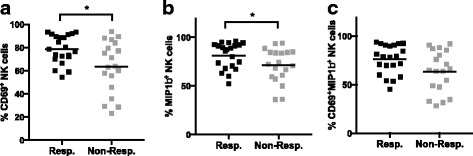
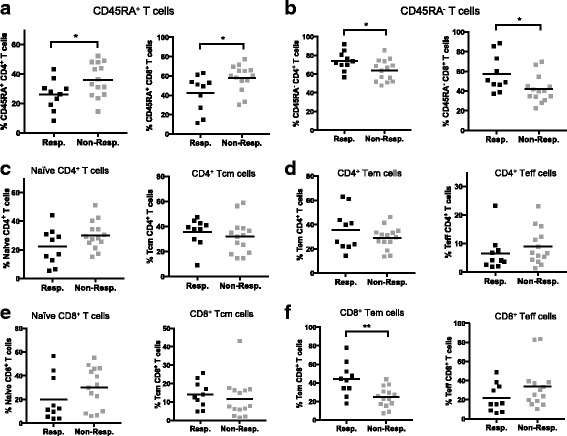
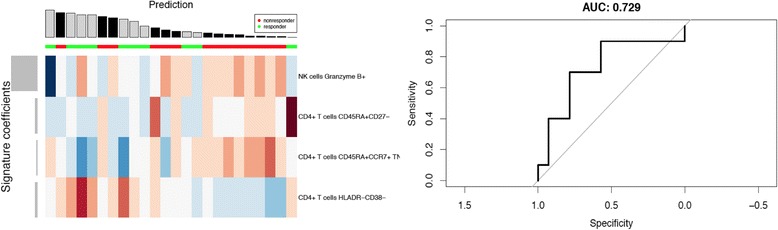
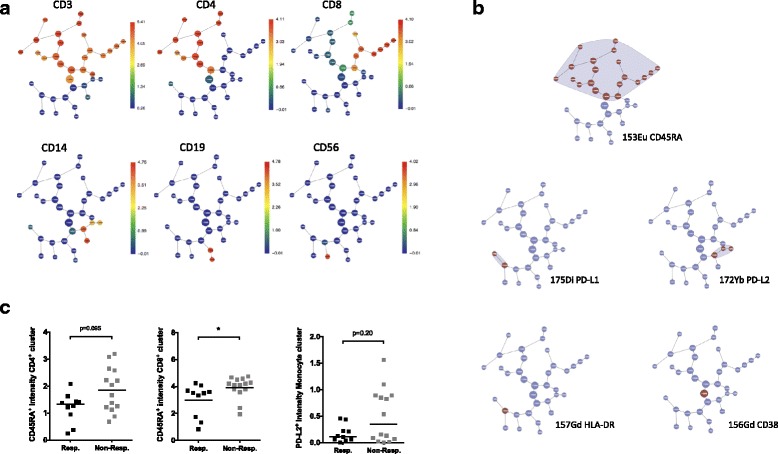
BACKGROUND: While immune checkpoint blockade has greatly improved clinical outcomes in diseases such as melanoma, there remains a need for predictive biomarkers to determine who will likely benefit most from which therapy. To date, most biomarkers of response have been identified in the tumors themselves. Biomarkers that could be assessed from peripheral blood would be even more desirable, because of ease of access and reproducibility of sampling. METHODS: We used mass cytometry (CyTOF) to comprehensively profile peripheral blood of melanoma patients, in order to find predictive biomarkers of response to anti-CTLA-4 or anti-PD-1 therapy. Using a panel of ~ 40 surface and intracellular markers, we performed in-depth phenotypic and functional immune profiling to identify potential predictive biomarker candidates. RESULTS: memory/non-memory cells and other memory subsets was different between responders and non-responders to anti-CTLA-4 therapy. In anti-PD-1 (but not anti-CTLA-4) treated patients, we discovered differences in CD69 and MIP-1β expressing NK cells between responders and non-responders. Finally, multivariate analysis was used to develop a model for the prediction of response. CONCLUSIONS: memory T cell subsets play an important role in response to anti-CTLA-4, and are potential biomarker candidates. For anti-PD-1 therapy, NK cell subsets (but not memory T cell subsets) correlated with clinical response to therapy. These functionally active NK cell subsets likely play a critical role in the anti-tumor response triggered by anti-PD-1.
Overview
The claims and statistics of this paper haven’t been checked yet.
Free: it reads the open-access text and checks the first 5 claims that cite a source we can check. Create a free account to check every claim.
Integrity signals
Registry
Cites
Statistics
Figures
Verification
Claims the paper makes
The claims and statistics of this paper haven’t been checked yet.
Free: it reads the open-access text and checks the first 5 claims that cite a source we can check. Create a free account to check every claim.
Claims other papers make about this one
Each is checked against this paper’s own text: does it say what the citing paper says it does?
The source backs part of the claim, not all of it — or backs it for a different population, condition or comparison.
In the citing paper
“Examination of the lymphocytes that correlated with such beneficial outcomes has repeatedly implicated effector and memory CD8 + T cell and NK cell populations (136-141).”
From Immune Checkpoint Inhibitors for the Treatment of Cancer: Clinical Impact and Mechanisms of Response and Resistance (2021) · cites this paper as [137]
Experimental — accuracy not yet measuredIn the citing paper
“anti-CTLA-4 and anti-PD-1 treatments are associated with distinct predictive biomarkers.”
From Immune Checkpoint Inhibitors for the Treatment of Cancer: Clinical Impact and Mechanisms of Response and Resistance (2021) · cites this paper as [137]
In the citing paper
“nonresponders to PD-1 treatment exhibited lower levels of CD69 and lower production of MIP-1β by NK cells (137).”
From Immune Checkpoint Inhibitors for the Treatment of Cancer: Clinical Impact and Mechanisms of Response and Resistance (2021) · cites this paper as [137]
In the citing paper
“Whereas CD45RA + naive CD8 + T cells negatively correlated with response with ipilimumab treatment, CD45RA -CD8 + T cells and CD8 + T effector memory cells (CD45RA -CCR7 -) were more abundant in responsive patients (137).”
From Immune Checkpoint Inhibitors for the Treatment of Cancer: Clinical Impact and Mechanisms of Response and Resistance (2021) · cites this paper as [137]
In the citing paper
“a higher frequency of memory CD45RA -CD4 + T cells in the blood of patients with melanoma at baseline was associated with a favorable response to ipilimumab, whereas an increased presence of naive CD45RA + CD4 + T cells correlated with nonresponders (137).”
From Immune Checkpoint Inhibitors for the Treatment of Cancer: Clinical Impact and Mechanisms of Response and Resistance (2021) · cites this paper as [137]
Self-check
Percentages, sums and reported differences re-computed from the paper’s own numbers.
The self-check needs the paper’s full text.
Citations
Cites
Breiman, L. (2001) · Machine Learning · doi:10.1023/a:1010933404324 · Cited by 133,538
Controlling the False Discovery Rate: A Practical and Powerful Approach to Multiple Testing
Benjamini, Y., & Hochberg, Y. (1995) · Journal of the Royal Statistical Society Series B: Statistical Methodology · doi:10.1111/j.2517-6161.1995.tb02031.x · Cited by 109,482 · cited 1×
“test function of the stats package in R to generate raw p-values, which were corrected for the false discovery rate using the Benjamini-Hochberg procedure [14].”
MethodPD-1 and PD-L1 Immune Checkpoint Blockade to Treat Breast Cancer
Hartkopf, A. D., Taran, F.-A., Wallwiener, M., Walter, C. B., Krämer, B., Grischke, E.-M., & Brucker, S. Y. (2016) · Breast Care · doi:10.1159/000453569 · Cited by 30,845
New response evaluation criteria in solid tumours: revised RECIST guideline (version 1.1)
Eisenhauer, E. A., Therasse, P., Bogaerts, J., Schwartz, L. H., Sargent, D., Ford, R., Dancey, J., Arbuck, S., Gwyther, S., Mooney, M., et al. (2009) · European Journal of Cancer · doi:10.1016/j.ejca.2008.10.026 · Cited by 29,534
Regularization and Variable Selection Via the Elastic Net
Zou, H., & Hastie, T. (2005) · Journal of the Royal Statistical Society Series B: Statistical Methodology · doi:10.1111/j.1467-9868.2005.00503.x · Cited by 20,957
Adverse Renal Effects of Immune Checkpoint Inhibitors: A Narrative Review
Wanchoo, R., Karam, S., Uppal, N. N., Barta, V. S., Deray, G., Devoe, C., Launay-Vacher, V., Jhaveri, K. D., & on behalf of Cancer and Kidney International Network Workgroup on Immune Checkpoint Inhibitors (2017) · American Journal of Nephrology · doi:10.1159/000455014 · Cited by 15,256
Improved Survival with Ipilimumab in Patients with Metastatic Melanoma
Hodi, F. S., O'Day, S. J., McDermott, D. F., Weber, R. W., Sosman, J. A., Haanen, J. B., Gonzalez, R., Robert, C., Schadendorf, D., Hassel, J. C., et al. (2010) · New England Journal of Medicine · doi:10.1056/nejmoa1003466 · Cited by 15,155
Self-citationPembrolizumab versus Ipilimumab in Advanced Melanoma
Robert, C., Schachter, J., Long, G. V., Arance, A., Grob, J. J., Mortier, L., Daud, A., Carlino, M. S., McNeil, C., Lotem, M., et al. (2015) · New England Journal of Medicine · doi:10.1056/nejmoa1503093 · Cited by 5,887
Two subsets of memory T lymphocytes with distinct homing potentials and effector functions
Sallusto, F., Lenig, D., Förster, R., Lipp, M., & Lanzavecchia, A. (1999) · Nature · doi:10.1038/44385 · Cited by 5,846 · cited 1×
“CD45RA expression, in conjunction with CCR7, can be used to identify naïve (CD45RACCR7), central memory (Tcm, CD45RACCR7), effector memory (Tem, CD45RA CCR7) and terminal effector (Teff, CD45RACCR7) cells [24].”
BackgroundFreeman, G. J., Long, A. J., Iwai, Y., Bourque, K., Chernova, T., Nishimura, H., Fitz, L. J., Malenkovich, N., Okazaki, T., Byrne, M. C., et al. (2000) · The Journal of Experimental Medicine · doi:10.1084/jem.192.7.1027 · Cited by 5,294 · cited 1×
“Since anti-CTLA-4 [20, 21] and anti-PD-1 [22, 23] tar-”
Research works printed but not linked: 1
- Hastie T Tibshirani R Narasimham B Chu G Pam: prediction analysis for microarrays 2011
Cited by
Items 101–190 of 190
Nørøxe, D. S., Flynn, A., Yde, C. W., Østrup, O., Nielsen, F. C., Skjøth‐Rasmussen, J., Brennum, J., Hamerlik, P., Weischenfeldt, J., Poulsen, H. S., et al. (2021) · Molecular Oncology · doi:10.1002/1878-0261.13015 · Cited by 17
Sidiropoulos, D. N., Stein-O’Brien, G., Danilova, L., Groß, N., Charmsaz, S., Xavier, S., Leatherman, J. M., Wang, H., Yarchoan, M. M., Jaffee, E. M., et al. (2022) · JCI Insight · doi:10.1172/jci.insight.160398 · Cited by 18
“Multiplexed data sets were also gated for viability and debarcoded into single samples as previously described (5, 25, 28, 35).”
BackgroundMethodResultInfluentialGreene, E., Finak, G., D’Amico, L. A., Bhardwaj, N., Church, C. D., Morishima, C., Ramchurren, N., Taube, J. M., Nghiem, P., Cheever, M. A., et al. (2019) · bioRxiv (Cold Spring Harbor Laboratory) · doi:10.1101/702118 · Cited by 14
Bai, Z., Su, G., & Fan, R. (2021) · Genomics Proteomics & Bioinformatics · doi:10.1016/j.gpb.2021.02.004 · Cited by 17
“play a critical role in the anti-tumor response triggered by antiPD-1, whereas CD4 and CD8 memory T cell subsets are potential biomarker candidates for higher response rate to anti-CTLA-4 [66].”
BackgroundNew insights into T-cell exhaustion in liver cancer: from mechanism to therapy
Hao, L., Li, S., & Hu, X. (2023) · Journal of Cancer Research and Clinical Oncology · doi:10.1007/s00432-023-05083-5 · Cited by 17
Wu, Y., Yu, S., & Qiao, H. (2022) · Frontiers in Pharmacology · doi:10.3389/fphar.2022.990445 · Cited by 16
“After ipilimumab, those patients with CD45RA- had better responses, both for CD4+ T and CD8+ T cells (Subrahmanyam et al., 2018).”
BackgroundKang, Z., Wang, J., Huang, W., Liu, J., & Yan, W. (2022) · Frontiers in Cell and Developmental Biology · doi:10.3389/fcell.2022.874429 · Cited by 16
“They have been shown to be predictive biomarkers for response to ICI in melanoma patients (Subrahmanyam et al., 2018).”
BackgroundJu, F., Wang, D., Huang, L. J., Jiang, C., Gao, C., Xiong, C., & Zhai, G. (2023) · Frontiers in Immunology · doi:10.3389/fimmu.2023.1227756 · Cited by 16
“found that functional subsets of NK cells were more active in samples responding to PD-1 inhibitor treatment than nonresponders, suggesting that PD-1 inhibitors may enhance the tumor killing effect of NK cells (56).”
BackgroundGarg†, S. K., Ott, M. J., Mostofa, A., Chen, Z., Chen, Y. A., Kroeger, J. L., Cao, B., Mailloux, A. W., Agrawal, A., Schaible, B., et al. (2020) · Frontiers in Immunology · doi:10.3389/fimmu.2020.00164 · Cited by 13
“Interestingly, recent studies have demonstrated the importance of memory and NK cells in high-dimensional analysis, but the numbers overlapped between responders and non-responders (26).”
ResultOwen, D. H., Benner, B. N., Pilcher, C., Good, L., Savardekar, H., Norman, R., Ghattas, C., Shah, M. H., Konda, B., Verschraegen, C. F., et al. (2020) · Clinical Lung Cancer · doi:10.1016/j.cllc.2020.10.018 · Cited by 13
Li, Z., Hu, J., Zhao, Q., Tao, Y., Lai, Z., Wang, Q., & Li, T. (2019) · Journal of Clinical Laboratory Analysis · doi:10.1002/jcla.23155 · Cited by 13
Systems immunology spanning tumors, lymph nodes, and periphery
Sidiropoulos, D. N., Ho, W. J., Jaffee, E. M., Kagohara, L. T., & Fertig, E. J. (2023) · Cell Reports Methods · doi:10.1016/j.crmeth.2023.100670 · Cited by 13
Dejardin, D., Kraxner, A., Blank, A., Rieder, N., Teichgräber, V., Städler, N., Beyer, U., Gomes, B. D., & Charo, J. (2023) · Clinical Cancer Research · doi:10.1158/1078-0432.ccr-23-1572 · Cited by 15
Wu, Y., Tian, B., Ou, X.-Y., Wu, M. Y., Huang, Q., Han, R., He, X., & Chen, S. (2024) · Cancer Immunology Immunotherapy · doi:10.1007/s00262-023-03626-w · Cited by 13
“Substantial evidence [39–41] supports a crucial role for NK cells in predicting anti-PD-1 efficacy and routine surveillance against cancer.”
ResultLentz, R. W., Friedrich, T. J., Blatchford, P. J., Jordan, K. R., Pitts, T. M., Robinson, H. R., Davis, S. L., Kim, S. S., Leal, A. D., Lee, M. R., et al. (2024) · Clinical Cancer Research · doi:10.1158/1078-0432.ccr-24-0090 · Cited by 14
“In melanoma, baseline peripheral blood effector memory CD8 + T cells were higher in responders to anti-CTLA4 therapy (51).”
BackgroundGourari, K., Catherine, J., Garaud, S., Kerger, J. N., Lepida, A., Georgala, A., Lebrun, F., Galdón, M. G., Gil, T., Willard-Gallo, K. E., et al. (2022) · Diagnostics · doi:10.3390/diagnostics12020539 · Cited by 12
“However, CyTOF analyses on clinical samples from melanoma patients treated with ICIs did not show any association between the frequency of PD-1 expression on either CD4+ or CD8+ T cells with clinical benefit [22].”
BackgroundPotential clinical implications of CD4+CD26high T cells for nivolumab treated melanoma patients
Galati, D., Zanotta, S., Capone, M., Madonna, G., Mallardo, D., Romanelli, M., Simeone, E., Festino, L., Sparano, F., Azzaro, R., et al. (2023) · Journal of Translational Medicine · doi:10.1186/s12967-023-04184-6 · Cited by 15
“According to these data, more memory T cells in baseline Peripheral Blood Mononuclear Cells (PBMC) are a possible biomarker candidate to predict clinical response to anti-CTLA-4 treatment in advanced melanoma patients [36] In line with these previous data, the high frequencies of blood circulating CD26high T lymphocyt…”
ResultThe expanding constellation of immune checkpoints: a DNAMic control by CD155
Bronte, V. (2018) · Journal of Clinical Investigation · doi:10.1172/jci121229 · Cited by 12
“More recently, a study in a small cohort of patients treated with anti–PD-1 showed that subsets of NK cells (but not T cells) detected at baseline using cytometry by time-of-flight (CyTOF) profiling correlated with the clinical response (3).”
BackgroundLim, S. Y., & Rizos, H. (2018) · Mammalian Genome · doi:10.1007/s00335-018-9757-4 · Cited by 13
“For example, CD4 and CD8 memory T cells were enriched in patients who responded to anti-CTLA-4 therapy whereas increased CD69 + NK cell counts correlated with clinical response to anti-PD-1 therapy (Subrahmanyam et al. 2018).”
BackgroundVoutsadakis, I. A. (2020) · Chinese Clinical Oncology · doi:10.21037/cco.2020.03.03 · Cited by 15
“Thus, memory T cell subsets seem to be more important for prediction in CTLA-4 blockade while NK cell expression of CD69 and MIP-1β could play a key role in PD-1 inhibition (48).”
BackgroundMaio, M., Coukos, G., Ferrone, S., Fox, B. A., Fridman, W. H., Garcia, P. L., Lahn, M., Provendier, O., Russo, V., Rüttinger, D., et al. (2018) · Cancer Immunology Immunotherapy · doi:10.1007/s00262-018-2285-y · Cited by 12
Flip‐flops of natural killer cells in autoimmune diseases versus cancers: Immunologic axis
Shahrabi, S., Zayeri, Z. D., Ansari, N., Hadad, E. H., & Rajaei, E. (2019) · Journal of Cellular Physiology · doi:10.1002/jcp.28421 · Cited by 11
Ramos‐Paradas, J., Gómez-Sánchez, D., Rosado, A., Ucero, A. C., Ferrer, I., García‐Luján, R., Zugazagoitia, J., Carrizo, N., Enguita, A. B., Conde, E., et al. (2022) · Journal of Clinical Medicine · doi:10.3390/jcm11061500 · Cited by 11
Bahmanyar, M., Vakil, M. K., Al‐Awsi, G. R. L., Kouhpayeh, S. A., Mansoori, Y., Mansoori, B., Moravej, A., Mazarzaei, A., & Ghasemian, A. (2022) · BMC Cancer · doi:10.1186/s12885-022-10320-0 · Cited by 11
Tiainen, S., Nurmela, V., Selander, T. A., Turunen, P., Pasonen‐Seppänen, S., Kettunen, T., Kuittinen, O. M., Auvinen, P., & Rönkä, A. (2023) · BMC Cancer · doi:10.1186/s12885-023-11699-0 · Cited by 9
“Indeed, mass cytometry analyses of peripheral blood immune cells have already been able to reveal specific compositions of immune cells which are predictive of the likelihood of a response to ICIs [47, 49, 50].”
BackgroundBreaking the Immune Complexity of the Tumor Microenvironment Using Single-Cell Technologies
Caligola, S., Sanctis, F. D., Canè, S., & Ugel, S. (2022) · Frontiers in Genetics · doi:10.3389/fgene.2022.867880 · Cited by 11
van den Ende, T., Ezdoglian, A. A., Baas, L. M., Bakker, J., Lougheed, S. M., Harrasser, M., Waasdorp, C., Henegouwen, M. I. V. B., Hulshof, M. C. C. M., Mohammad, N. H., et al. (2023) · OncoImmunology · doi:10.1080/2162402x.2023.2233403 · Cited by 10
“In patients with lung cancer and melanoma treated with anti-PD-1 or anti-CTLA-4 immunotherapy, complete and partial radiological responders had higher expression of PD-1 on CD8+ on-treatment or more baseline CD69+ natural killer (NK) cells compared to non-responders.(9,10) In poor responders higher frequencies of inhi…”
BackgroundWei, X., Gu, L., & Heng, W. (2020) · Oncology Letters · doi:10.3892/ol.2020.12350 · Cited by 12
“A study demonstrated that high numbers of pre‐existing memory T cells are potential biomarkers in patients with melanoma treated with CTLA‐4 antibody (17).”
BackgroundImmunotherapy and immunotherapy biomarkers for hepatocellular carcinoma
Armstrong, S. A., Prins, P., & He, A. R. (2021) · Hepatoma Research · doi:10.20517/2394-5079.2020.118 · Cited by 9
“However, biomarker data for HCC is not yet well established([28-32]).”
BackgroundMass Cytometry Analysis of T-Helper Cells
Subrahmanyam, P. B., & Maecker, H. T. (2021) · Methods in molecular biology · doi:10.1007/978-1-0716-1311-5_4 · Cited by 9
Self-citationWang, Y., Jiang, Y., Ding, F., Lü, J., Huang, T., Zhong, G., Zhu, P., Ma, Y., Li, J., Wang, X., et al. (2025) · Breast Cancer Research · doi:10.1186/s13058-025-02003-y · Cited by 9
Pezzana, S., Blaess, S., Traenkle, B., Schaefer, A., Ruoff, L., Tako, B., Vega, S. C., Kaiser, P. D., Wagner, T. R., González-Menéndez, I., et al. (2025) · Science Advances · doi:10.1126/sciadv.adw1924 · Cited by 10
“Tumor-derived parameters such as immunohistochemical assessed PD-(L)1 expression or tumor mutational burden ( 45 – 48 ) and blood-based biomarkers ( 49 – 51 ) have been identified as promising indicators for predicting therapeutic efficacy.”
Wang, J., Feng, Y.-F., & Liu, J.-H. (2025) · Frontiers in Immunology · doi:10.3389/fimmu.2025.1629879 · Cited by 10
Peripheral blood biomarkers for predicting response to PD-1/PD-L1 inhibitors
Chen, S., Hu, Y., Cheng, H., Guo, S., Han, Y., & Li, K. (2026) · Biomarker Research · doi:10.1186/s40364-026-00892-5 · Cited by 8
“From the initial flow cytometry [14], to T cell receptor (TCR)-seq [15], CyTOF detection [16], RNA-seq [17], and scRNA-seq [18], these high-throughput technologies have facilitated the identification of novel peripheral blood biomarkers and demonstrated their significant advantages in this field.”
Zheng, Q.-M., Li, Y., Wang, Y.-P., Li, G., Zhao, M., & Sun, Z. (2023) · Expert Review of Anticancer Therapy · doi:10.1080/14737140.2023.2208351 · Cited by 12
Laubli, H. P., Dirnhofer, S., & Zippelius, A. (2018) · Archiv für Pathologische Anatomie und Physiologie und für Klinische Medicin · doi:10.1007/s00428-018-2435-9 · Cited by 6
Cancer Immunotherapy: An Effective Tool in Cancer Control and Treatment
Kaur, K., & Khatik, G. L. (2019) · Current Cancer Therapy Reviews · doi:10.2174/1573394715666190913184853 · Cited by 21
Chan, A. S., Jiang, W., Blyth, E., Yang, J. Y. H., & Patrick, E. (2021) · Genome biology · doi:10.1186/s13059-021-02526-5 · Cited by 5
Review on Immuno-Oncology Agents for Cancer Therapy
Dhakad, G. G., Shirsat, S. P., & Tambe, K. P. (2022) · Research Journal of Pharmacology and Pharmacodynamics · doi:10.52711/2321-5836.2022.00008 · Cited by 5
“[32]. iv) The number of IO targets also increased by 50% between September 2017 and August 2018, indicating that the IO landscape could expand significantly in the future.”
Impact of chronic alcohol exposure on conventional and regulatory murine T cell subsets
Paterson, C. W., Gutierrez, M. B., Coopersmith, C. M., & Ford, M. L. (2023) · Frontiers in Immunology · doi:10.3389/fimmu.2023.1142614 · Cited by 5
Applications of CyTOF in Brain Immune Component Studies
Wang, Y., Xu, B., & Xue, L. (2021) · Engineering · doi:10.1016/j.eng.2021.06.022 · Cited by 5
Kotrulev, M., Gomez-Touriño, I. M., & Cordero, O. J. (2024) · Cancers · doi:10.3390/cancers16132427 · Cited by 8
“Other studies [82–85] in melanoma patients have reported that a higher frequency of circulating central memory T cells (CD4 and CD8) that are CD26-negative [86] is associated with an increased tumor inflammatory profile, with longer survival times, and with clinical response to anti-CTLA-4…”
ResultDrum, D. L., Jallorina, A. G., Wan, L. S., Chang, V. T.-S., & Lee-Wong, M. F. (2025) · Experimental Dermatology · doi:10.1111/exd.70030 · Cited by 6
Bornschlegl, S., Gustafson, M. P., Delivanis, D. A., Ryder, M. M., Liu, M., Vasmatzis, G., Hallemeier, C. L., Park, S. S., Roberts, L. R., Parney, I. F., et al. (2021) · Clinical & Translational Immunology · doi:10.1002/cti2.1267 · Cited by 6
“Other studies show immune phenotyping of melanoma patients receiving anti-CTLA-4 therapy indicates response to treatment when CD4 and CD8 memory T cells were higher at baseline; the same was not seen in patients receiving anti-PD-1 therapy.(25) Comparatively, our results also showed no difference in CD4 or CD8 memory…”
ResultZou, Y., Yuan, G., Tan, X., Luo, S., Yang, C., Tang, Y., Wang, Y., & Yao, K. (2022) · Frontiers in Genetics · doi:10.3389/fgene.2022.1011390 · Cited by 5
“Biomarkers including PD-1 expression, PD-L1 expression, tumour mutation burden and MSI status are not efficient for predicting the benefits of immune checkpoint blockade (Subrahmanyam et al., 2018; Ganesh et al., 2019; Jardim et al., 2021).”
BackgroundGilmour, C., Delaney, E., Parthasarathy, P. B., Roy, D., Ta, H. M., Zakeri, A., Grandez, P. E., Patnaik, S., Zhang, K., Juric, I., et al. (2026) · Journal of Clinical Investigation · doi:10.1172/jci195668 · Cited by 4
Moschella, F., Buccione, C., Ruspantini, I., Castiello, L., Gonzalez, A. R., Iacobone, F., Ferraresi, V., Palermo, B., Nisticò, P., Belardelli, F., et al. (2023) · Frontiers in Oncology · doi:10.3389/fonc.2023.1145667 · Cited by 5
Xiao, H., Zhang, J., Wang, K., Song, K., Zheng, H., Yang, J., Li, K., Yuan, R., Zhao, W., & Hui, Y. (2021) · Frontiers in Immunology · doi:10.3389/fimmu.2021.672031 · Cited by 4
“Evidence has shown that CD4+ and CD8+ memory T cell subsets, as well as NK cell subsets, correlated with a clinical response to immunotherapy in patients with melanoma (7, 8).”
BackgroundReview on Immuno-Oncology agents for Cancer Therapy
Dhakad, G. G., Shirsat, S. P., Tambe, K. P., Kairnar, V., & Jain, R. S. (2022) · Asian Journal of Pharmaceutical Research · doi:10.52711/2231-5691.2022.00017 · Cited by 3
Predictive biomarkers of inhibitors immune checkpoints therapy in malignant tumors
Kiselevsky, M. V., Самойленко, И. В., Жаркова, О. В., Ziganshina, N. V., Petkevich, A., Ситдикова, С. М., Suleymanova, A. M., Sagoyan, G. B., Михайловна, Е. М., Киргизов, К. И., et al. (2021) · Russian Journal of Pediatric Hematology and Oncology · doi:10.21682/2311-1267-2021-8-2-73-83 · Cited by 4
“Увеличение количества циркулирующих CD4, CD8 Т-клеток и абсолютного количества лимфоцитов через 2–8 нед после начала лечения ипилимумабом было зарегистрировано у пациентов с меланомой с лучшими клиническими эффектом [62].”
Laboratory biomarkers of an effective antitumor immune response. Clinical significance.
Malkova, A. M., Sharoyko, V. V., Zhukova, N. V., Gubal, A. R., & Орлова, Р. В. (2021) · Cancer Treatment and Research Communications · doi:10.1016/j.ctarc.2021.100489 · Cited by 5
Genomic Strategies for Personalized Cancer Therapy
Dudek, A. Z., Baxstrom, K., Bharadwaj, S., Blaes, A. H., Kulkarni, A. A., Lou, E., Nehru, V. M., Rabinovich, E., Shergill, A. P., & Viner, M. (2020) · Wiley eBooks · doi:10.1002/9781119432487.ch1 · Cited by 3
A beginner's guide to supervised analysis for mass cytometry data in cancer biology
Wlosik, J., Granjeaud, S., Gorvel, L., Olive, D., & Chrétien, A.-S. (2024) · Cytometry Part A · doi:10.1002/cyto.a.24901 · Cited by 2
Kowli, S., Minocherhomji, S., Martinez, O. M., Busque, S., Lebrec, H. N., & Maecker, H. T. (2025) · ImmunoHorizons · doi:10.1093/immhor/vlae013 · Cited by 5
Self-citationLiebers, M. R. (2020) · Royal Society of Chemistry eBooks · doi:10.1039/9781788019958-00345 · Cited by 2
Onieva, J. L., Pérez-Ruíz, E., Vilkki, V., Berciano‐Guerrero, M., Figueroa-Ortiz, L. C., Zalabardo, M., Martínez-Gálvez, B., Barragán, I., & Rueda‐Domínguez, A. (2026) · OncoImmunology · doi:10.1080/2162402x.2026.2650234 · Cited by 3
“51 Although translational medicine ultimately aims toward reducing biomarker sets for practical clinical implementation, it is noteworthy that high-dimensional gene-expression panels such as the 770-gene PanCancer IO 360™ assay are still routinely applied in immuno-oncology.”
hDirect-MAP: projection-free single-cell modeling of response to checkpoint immunotherapy
Lu, Y., Xue, G., Zheng, N., Han, K. S., Yang, W., Wang, R., Wu, L., Miller, L. D., Pardee, T. S., Triozzi, P. L., et al. (2022) · Briefings in Bioinformatics · doi:10.1093/bib/bbab575 · Cited by 1
In Silico Methods for Studying T Cell Biology
Grzesik, K., Eng, K. H., Crauste, F., & Battaglia, S. (2018) · International review of cytology · doi:10.1016/bs.ircmb.2018.07.005 · Cited by 1
Predictive Biomarkers of Melanoma
Hanly, A. M., Gibson, F. T., & Alani, R. M. (2021) · Springer eBooks · doi:10.1007/978-3-030-82639-0_16 · Cited by 1
Beyrend, G., van der Sluis, T. C., van der Gracht, E. T. I., Abdelaal, T., Jochems, S. P., Belderbos, R. A., Wesselink, T. H., van Duikeren, S., van Haften, F. J., Redeker, A., et al. (2022) · SSRN Electronic Journal · doi:10.2139/ssrn.4035850 · Cited by 1
Does oncology research need to slow down a little bit?
Dada, R. (2018) · Journal of Oncology Pharmacy Practice · doi:10.1177/1078155218785238
Genomic Biomarkers of Response and Resistance to Immune Checkpoint Therapies Across Solid Tumors
Miao, D. (2019) · Digital Access to Scholarship at Harvard (DASH) (Harvard University)
Noguera, R., Burgos‐Panadero, R., Lucantoni, F., de la Cruz‐Merino, L., & Naranjo, T. Á. (2019) · Revista Española de Patología · doi:10.1016/j.patol.2019.08.001 · Cited by 1
Lee, D. A., Fulton, R. B., Manne, M., Schweizer, L., & Raue, A. (2021) · bioRxiv (Cold Spring Harbor Laboratory) · doi:10.1101/2021.04.13.439713
Liu, J., Li, Y., Li, Q., Liang, D., Wang, Q., & Liu, Q. (2020) · Research Square · doi:10.21203/rs.3.rs-57690/v1
“Another study found that blood CD4+ memory T cell subsets played an important role in response to anti-CTLA-4 therapy in melanoma patients(31).”
Are anti-CTL4 and anti-PD-1 an effective biomarker in immunotherapy?
Vural, H. C. (2022) · Clinical Oncology Research and Reports · doi:10.31579/2693-4787/030
Malkova, A. M., Орлова, Р. В., Zhukova, N. V., Gubal, A. R., & Sharoiko, V. V. (2022) · Siberian Journal of Oncology · doi:10.21294/1814-4861-2022-21-2-109-117
Anti-ctla-4-monoclonal antibody
(2018) · Reactions Weekly · doi:10.1007/s40278-018-44599-y
Immunotherapy for Colorectal Cancer in the Era of Precision Medicine
Sur, D. G., Gorzo, A., & Burz, C. C. (2022) · IntechOpen eBooks · doi:10.5772/intechopen.105377
Monjazeb, A. M., Giobbie‐Hurder, A., Lako, A., Thrash, E. M., Brennick, R. C., Kao, K. Z., Manuszak, C., Gentzler, R. D., Tesfaye, A. A., Jabbour, S. K., et al. (2023) · doi:10.1158/1078-0432.22484139
Self-citationMonjazeb, A. M., Giobbie‐Hurder, A., Lako, A., Thrash, E. M., Brennick, R. C., Kao, K. Z., Manuszak, C., Gentzler, R. D., Tesfaye, A. A., Jabbour, S. K., et al. (2023) · doi:10.1158/1078-0432.22484139.v1
Self-citationEvidence That Circulating T Cells at Treatment Onset Predict Response to PD-1 Inhibitors
Salamaliki, C., Pouliasi, F., Liolis, E., Verigou, E., Koutras, A. K., Makatsoris, T., Kalofonos, C. P., Liossis, S. C., & Solomou, E. E. (2024) · Annals of Case Reports · doi:10.29011/2574-7754.101788
“Current evidence also supports that phenotypically active NKs are increased in responders [111,112].”
ResultAssessing global immune competence using CyTOF
Maecker, H. T. (2024) · Elsevier eBooks · doi:10.1016/b978-0-12-822213-3.00005-x
Self-citationDeveloping predictive biomarkers for endometrial cancer immunotherapy with mass cytometry (CyTOF)
Fuh, K. C., Huang, Y.-W., Lomonosova, E. E., & Fantl, W. J. (2024) · Elsevier eBooks · doi:10.1016/b978-0-12-822213-3.00001-2 · Cited by 1
Emerging Biomarkers of Response to Immunotherapy: Host Characteristics in Breast Cancer
Mathesh, V., & Reddy, S. M. (2025) · Cancer immunotherapy · doi:10.1007/13905_2024_44
Onieva, J. L., Pérez-Ruiz, E., Vilkki, V., Berciano‐Guerrero, M., Figueroa-Ortiz, L. C., Zalabardo-Aguilar, M., Martínez-Gálvez, B., Barragán, I., & Rueda‐Domínguez, A. (2025) · bioRxiv (Cold Spring Harbor Laboratory) · doi:10.1101/2025.08.13.670062
Kwak, M., Erdag, G., Leick, K. M., Bekiranov, S., Engelhard, V. H., & Slingluff, C. L. (2021) · Figshare · doi:10.6084/m9.figshare.16530071
Kwak, M., Erdag, G., Leick, K. M., Bekiranov, S., Engelhard, V. H., & Slingluff, C. L. (2021) · Figshare · doi:10.6084/m9.figshare.16530074
Chan, A., Jiang, W., Blyth, E., Yang, J. Y. H., & Patrick, E. (2021) · Figshare · doi:10.6084/m9.figshare.17097999
Tiainen, S., Nurmela, V., Selander, T., Turunen, P., Pasonen‐Seppänen, S., Kettunen, T., Kuittinen, O. M., Auvinen, P., & Rönkä, A. (2023) · Figshare · doi:10.6084/m9.figshare.24741835
Chan, A., Jiang, W., Blyth, E., Yang, J. Y. H., & Patrick, E. (2021) · Figshare · doi:10.6084/m9.figshare.17098002
Additional file 1 of NK cell transfer overcomes resistance to PD-(L)1 therapy in aged mice
Hou, J., Xie, S., Gao, J., Jiang, T., Zhu, E., Yang, X., Jin, Z., Long, H., Zhang, A., Yang, F., et al. (2024) · Figshare · doi:10.6084/m9.figshare.26718177
Pre-Existing Immunity Shapes Cancer Immunotherapy Efficacy
Xagara, A., Koinis, F., Tsapakidis, K., Samaras, I., Chantzara, E., Vasilieva, K., Lazarou, A., Georgoulias, V., & Kotsakis, A. P. (2026) · Onco · doi:10.3390/onco6010004
“Moreover, it is clear that high pre-existing levels of PD-1 or PD-L1 CD8 + T cells in TME [41,45,47,50–52] as well as in circulation [26,53–56] are correlated positively with survival benefit.”
Shi, H., Wang, J., Wang, Z., Li, Y., Yu, T., Qin, Y., & Lv, J. (2026) · Research · doi:10.34133/research.1210
“Lymphocytes, such as T cells and natural killer cells (NK cells), form the foundation of ICI efficacy, not only correlating with favorable outcomes but also being crucial for effective immunotherapy [ 12 – 15 ].”
Moya‐Plana, A. (2020) · theses.fr (ABES) · doi:10.70675/951feb6cz54bez4481zb3a9z590aa53175b4 · Cited by 1
Wierz, M. (2020) · theses.fr (ABES) · doi:10.70675/80454a47z3b6bz4b8bza0c3z684d69f087b3 · Cited by 1
Metadata
- Authors
- Subrahmanyam, P. B., Dong, Z., Gusenleitner, D., Giobbie-Hurder, A., Severgnini, M., Zhou, J., Manos, M., Eastman, L. M., Maecker, H. T., & Hodi, F. S.
- Affiliations
- Stanford Medicine (US)
- Harvard University (US)
- Corresponding author
- Hodi, F. Stephen
- ORCID
- Venue
- Journal for ImmunoTherapy of Cancer
- Publisher
- BMJ
- Published
- 2018-03-06
- Volume
- 6
- Issue
- 1
- Pages
- 18-18
- ISSN
- 2051-1426 (ISSN-L)
- PMC
- PMC5840795
- OpenAlex
- W2800568511
- Cited by
- 190
- References
- 33
- Citations by year
- 2026: 5 · 2025: 10 · 2024: 14 · 2023: 25 · 2022: 27 · 2021: 35 · 2020: 32 · 2019: 22 · 2018: 20
- FWCI
- 10.22
- Type
- journal article
- Language
- en
- Open access
- gold
- doi.org
- Licence
- cc-by
- Locations
- Journal for ImmunoTherapy of Cancer (publishedVersion, cc-by)
- Europe PMC (PubMed Central) (publishedVersion, cc-by)
- PubMed Central (publishedVersion, cc-by)
- PubMed (publishedVersion)
- Digital Access to Scholarship at Harvard (DASH) (Harvard University) (submittedVersion, cc-by)
- DOAJ (DOAJ: Directory of Open Access Journals) (submittedVersion)
- Funders
- National Cancer Institute (1R21CA205430)
- Topics
- Health Sciences › Medicine › Oncology › Cancer Immunotherapy and Biomarkers
- Life Sciences › Immunology and Microbiology › Immunology › T-cell and B-cell Immunology
- Life Sciences › Immunology and Microbiology › Immunology › Immunotherapy and Immune Responses
- Keywords
- melanoma, predictive biomarkers, CTLA-4 blockade, anti-PD-1 therapy, immune checkpoint blockade, mass cytometry, T cell memory subsets, natural killer cells, CD69, MIP-1β, treatment response prediction
- MeSH terms
- Antineoplastic Agents, Immunological, Adult, Aged, Female, Humans, Immunotherapy, Killer Cells, Natural, Male, Melanoma, Middle Aged, Skin Neoplasms, Biomarkers, CD4-Positive T-Lymphocytes, Treatment Outcome, CD8-Positive T-Lymphocytes, CTLA-4 Antigen, Programmed Cell Death 1 Receptor
About these checks
Registry, retraction, Cites and statistics results are computed, not judged, with one exception: a printed reference that no index lists is read once by a model before it counts as a citation error. Claims are extracted by a model and kept only when their quote appears verbatim in the text; each cited source is then checked, with a model’s help, for whether it says what the claim relies on. Those verdicts can be wrong — read the claim’s quote and the cited source before relying on one.
Statistics and arithmetic are recomputed, not judged.
Confidence bands are shown only for fields calibrated on our annotated test set. None is calibrated yet, so no band is shown.
What counts as a claim ›How we measure confidence ›How we check this ›
Are you an author, or do you see a problem with this page? Request a review
Data sources
Bibliographic data: Semantic Scholar, OpenAlex, Crossref.
Contains information from the Semantic Scholar Academic Graph Datasets, made available under the ODC Attribution License (ODC-BY 1.0).
Semantic Scholar’s data is described in: Kinney, R., et al. (2023). The Semantic Scholar Open Data Platform. arXiv:2301.10140.
