

Distinct predictive biomarker candidates for response to anti-CTLA-4 and anti-PD-1 immunotherapy in melanoma patients
Open accessThe DOI matches its Crossref record; 33 of the 33 references it cites were found in a registry or an index.
Abstract
BACKGROUND: While immune checkpoint blockade has greatly improved clinical outcomes in diseases such as melanoma, there remains a need for predictive biomarkers to determine who will likely benefit most from which therapy. To date, most biomarkers of response have been identified in the tumors themselves. Biomarkers that could be assessed from peripheral blood would be even more desirable, because of ease of access and reproducibility of sampling. METHODS: We used mass cytometry (CyTOF) to comprehensively profile peripheral blood of melanoma patients, in order to find predictive biomarkers of response to anti-CTLA-4 or anti-PD-1 therapy. Using a panel of ~ 40 surface and intracellular markers, we performed in-depth phenotypic and functional immune profiling to identify potential predictive biomarker candidates. RESULTS: memory/non-memory cells and other memory subsets was different between responders and non-responders to anti-CTLA-4 therapy. In anti-PD-1 (but not anti-CTLA-4) treated patients, we discovered differences in CD69 and MIP-1β expressing NK cells between responders and non-responders. Finally, multivariate analysis was used to develop a model for the prediction of response. CONCLUSIONS: memory T cell subsets play an important role in response to anti-CTLA-4, and are potential biomarker candidates. For anti-PD-1 therapy, NK cell subsets (but not memory T cell subsets) correlated with clinical response to therapy. These functionally active NK cell subsets likely play a critical role in the anti-tumor response triggered by anti-PD-1.
Overview
The claims and statistics of this paper haven’t been checked yet.
Free: it reads the open-access text and checks the first 5 claims that cite a source we can check. Create a free account to check every claim.
Integrity signals
Registry
Cites
Statistics
Figures
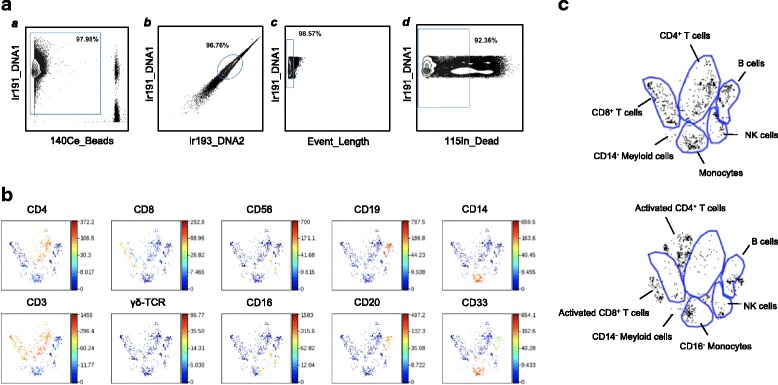
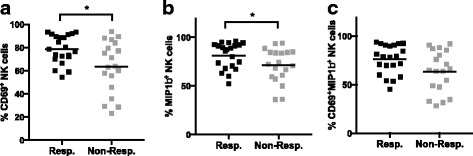
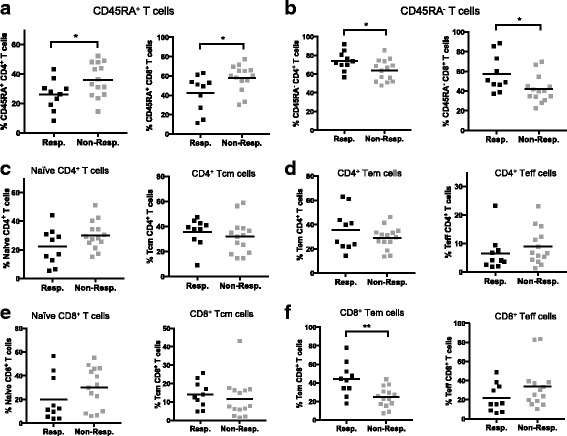
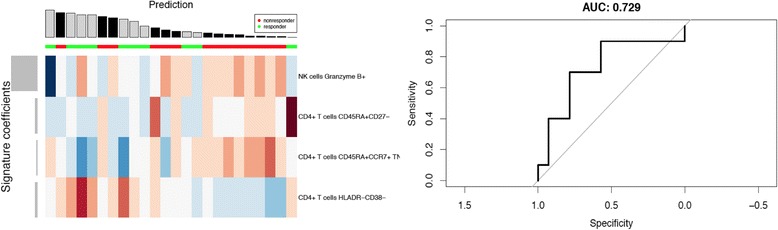
Verification
Claims the paper makes
The claims and statistics of this paper haven’t been checked yet.
Free: it reads the open-access text and checks the first 5 claims that cite a source we can check. Create a free account to check every claim.
Claims other papers make about this one
Each is checked against this paper’s own text: does it say what the citing paper says it does?
The source backs part of the claim, not all of it — or backs it for a different population, condition or comparison.
In the citing paper
“Examination of the lymphocytes that correlated with such beneficial outcomes has repeatedly implicated effector and memory CD8 + T cell and NK cell populations (136-141).”
From Immune Checkpoint Inhibitors for the Treatment of Cancer: Clinical Impact and Mechanisms of Response and Resistance (2021) · cites this paper as [137]
Experimental — accuracy not yet measuredIn the citing paper
“anti-CTLA-4 and anti-PD-1 treatments are associated with distinct predictive biomarkers.”
From Immune Checkpoint Inhibitors for the Treatment of Cancer: Clinical Impact and Mechanisms of Response and Resistance (2021) · cites this paper as [137]
In the citing paper
“nonresponders to PD-1 treatment exhibited lower levels of CD69 and lower production of MIP-1β by NK cells (137).”
From Immune Checkpoint Inhibitors for the Treatment of Cancer: Clinical Impact and Mechanisms of Response and Resistance (2021) · cites this paper as [137]
In the citing paper
“Whereas CD45RA + naive CD8 + T cells negatively correlated with response with ipilimumab treatment, CD45RA -CD8 + T cells and CD8 + T effector memory cells (CD45RA -CCR7 -) were more abundant in responsive patients (137).”
From Immune Checkpoint Inhibitors for the Treatment of Cancer: Clinical Impact and Mechanisms of Response and Resistance (2021) · cites this paper as [137]
In the citing paper
“a higher frequency of memory CD45RA -CD4 + T cells in the blood of patients with melanoma at baseline was associated with a favorable response to ipilimumab, whereas an increased presence of naive CD45RA + CD4 + T cells correlated with nonresponders (137).”
From Immune Checkpoint Inhibitors for the Treatment of Cancer: Clinical Impact and Mechanisms of Response and Resistance (2021) · cites this paper as [137]
Self-check
Percentages, sums and reported differences re-computed from the paper’s own numbers.
The self-check needs the paper’s full text.
Citations
Cites
Breiman, L. (2001) · Machine Learning · doi:10.1023/a:1010933404324 · Cited by 133,538
Controlling the False Discovery Rate: A Practical and Powerful Approach to Multiple Testing
Benjamini, Y., & Hochberg, Y. (1995) · Journal of the Royal Statistical Society Series B: Statistical Methodology · doi:10.1111/j.2517-6161.1995.tb02031.x · Cited by 109,482 · cited 1×
“test function of the stats package in R to generate raw p-values, which were corrected for the false discovery rate using the Benjamini-Hochberg procedure [14].”
MethodPD-1 and PD-L1 Immune Checkpoint Blockade to Treat Breast Cancer
Hartkopf, A. D., Taran, F.-A., Wallwiener, M., Walter, C. B., Krämer, B., Grischke, E.-M., & Brucker, S. Y. (2016) · Breast Care · doi:10.1159/000453569 · Cited by 30,845
New response evaluation criteria in solid tumours: revised RECIST guideline (version 1.1)
Eisenhauer, E. A., Therasse, P., Bogaerts, J., Schwartz, L. H., Sargent, D., Ford, R., Dancey, J., Arbuck, S., Gwyther, S., Mooney, M., et al. (2009) · European Journal of Cancer · doi:10.1016/j.ejca.2008.10.026 · Cited by 29,534
Regularization and Variable Selection Via the Elastic Net
Zou, H., & Hastie, T. (2005) · Journal of the Royal Statistical Society Series B: Statistical Methodology · doi:10.1111/j.1467-9868.2005.00503.x · Cited by 20,957
Adverse Renal Effects of Immune Checkpoint Inhibitors: A Narrative Review
Wanchoo, R., Karam, S., Uppal, N. N., Barta, V. S., Deray, G., Devoe, C., Launay-Vacher, V., Jhaveri, K. D., & on behalf of Cancer and Kidney International Network Workgroup on Immune Checkpoint Inhibitors (2017) · American Journal of Nephrology · doi:10.1159/000455014 · Cited by 15,256
Improved Survival with Ipilimumab in Patients with Metastatic Melanoma
Hodi, F. S., O'Day, S. J., McDermott, D. F., Weber, R. W., Sosman, J. A., Haanen, J. B., Gonzalez, R., Robert, C., Schadendorf, D., Hassel, J. C., et al. (2010) · New England Journal of Medicine · doi:10.1056/nejmoa1003466 · Cited by 15,155
Self-citationPembrolizumab versus Ipilimumab in Advanced Melanoma
Robert, C., Schachter, J., Long, G. V., Arance, A., Grob, J. J., Mortier, L., Daud, A., Carlino, M. S., McNeil, C., Lotem, M., et al. (2015) · New England Journal of Medicine · doi:10.1056/nejmoa1503093 · Cited by 5,887
Two subsets of memory T lymphocytes with distinct homing potentials and effector functions
Sallusto, F., Lenig, D., Förster, R., Lipp, M., & Lanzavecchia, A. (1999) · Nature · doi:10.1038/44385 · Cited by 5,846 · cited 1×
“CD45RA expression, in conjunction with CCR7, can be used to identify naïve (CD45RACCR7), central memory (Tcm, CD45RACCR7), effector memory (Tem, CD45RA CCR7) and terminal effector (Teff, CD45RACCR7) cells [24].”
BackgroundFreeman, G. J., Long, A. J., Iwai, Y., Bourque, K., Chernova, T., Nishimura, H., Fitz, L. J., Malenkovich, N., Okazaki, T., Byrne, M. C., et al. (2000) · The Journal of Experimental Medicine · doi:10.1084/jem.192.7.1027 · Cited by 5,294 · cited 1×
“Since anti-CTLA-4 [20, 21] and anti-PD-1 [22, 23] tar-”
Ipilimumab plus Dacarbazine for Previously Untreated Metastatic Melanoma
Robert, C., Thomas, L., Bondarenko, I., O'Day, S., Weber, J., Garbe, C., Lebbe, C., Baurain, J.-F., Testori, A., Grob, J.-J., et al. (2011) · New England Journal of Medicine · doi:10.1056/nejmoa1104621 · Cited by 4,496
Enhancement of Antitumor Immunity by CTLA-4 Blockade
Leach, D. R., Krummel, M. F., & Allison, J. P. (1996) · Science · doi:10.1126/science.271.5256.1734 · Cited by 3,955 · cited 1×
“Since anti-CTLA-4 [20, 21] and anti-PD-1 [22, 23] tar-”
Safety and Tumor Responses with Lambrolizumab (Anti–PD-1) in Melanoma
Hamid, O., Robert, C., Daud, A., Hodi, F. S., Hwu, W.-J., Kefford, R., Wolchok, J. D., Hersey, P., Joseph, R. W., Weber, J. S., et al. (2013) · New England Journal of Medicine · doi:10.1056/nejmoa1305133 · Cited by 3,392
Self-citationPD-L2 is a second ligand for PD-1 and inhibits T cell activation
Latchman, Y., Wood, C. R., Chernova, T., Chaudhary, D., Borde, M., Chernova, I., Iwai, Y., Long, A. J., Brown, J. A., Nunes, R., et al. (2001) · Nature Immunology · doi:10.1038/85330 · Cited by 2,955 · cited 1×
“Since anti-CTLA-4 [20, 21] and anti-PD-1 [22, 23] tar-”
Tivol, E. A., Borriello, F., Schweitzer, A. N., Lynch, W. P., Bluestone, J. A., & Sharpe, A. H. (1995) · Immunity · doi:10.1016/1074-7613(95)90125-6 · Cited by 2,914 · cited 1×
“Since anti-CTLA-4 [20, 21] and anti-PD-1 [22, 23] tar-”
Bendall, S. C., Simonds, E. F., Qiu, P., Amir, E.-A. D., Krutzik, P. O., Finck, R., Bruggner, R. V., Melamed, R., Trejo, A., Ornatsky, O. I., et al. (2011) · Science · doi:10.1126/science.1198704 · Cited by 2,279 · cited 1×
“spectral overlap seen with flow cytometry [7].”
Schadendorf, D., Hodi, F. S., Robert, C., Weber, J. S., Margolin, K., Hamid, O., Patt, D., Chen, T.-T., Berman, D. M., & Wolchok, J. D. (2015) · Journal of Clinical Oncology · doi:10.1200/jco.2014.56.2736 · Cited by 2,141 · cited 1×
“Nevertheless, there persists a need for predictive biomarkers that facilitate patient selection and treatment decisions, since not all patients respond, and some patients respond better to one therapy versus another [5, 6].”
BackgroundSelf-citationRobert, C., Ribas, A., Wolchok, J. D., Hodi, F. S., Hamid, O., Kefford, R., Weber, J. S., Joshua, A. M., Hwu, W.-J., Gangadhar, T. C., et al. (2014) · The Lancet · doi:10.1016/s0140-6736(14)60958-2 · Cited by 1,774
Self-citationAmir, E.-A. D., Davis, K. L., Tadmor, M. D., Simonds, E. F., Levine, J. H., Bendall, S. C., Shenfeld, D. K., Krishnaswamy, S., Nolan, G. P., & Pe'er, D. (2013) · Nature Biotechnology · doi:10.1038/nbt.2594 · Cited by 1,550 · cited 5×
“Frequencies of cell subsets/expression markers from FlowJo gating were used for multivariate analysis (described below). viSNE and citrus analysis viSNE is an automated dimensionality reduction algorithm available in CytoBank [12].”
MethodInfluentialMacrophage inflammatory protein-1
Maurer, M., & von Stebut, E. (2004) · The International Journal of Biochemistry & Cell Biology · doi:10.1016/j.biocel.2003.10.019 · Cited by 767
Normalization of mass cytometry data with bead standards
Finck, R., Simonds, E. F., Jager, A., Krishnaswamy, S., Sachs, K., Fantl, W., Pe'er, D., Nolan, G. P., & Bendall, S. C. (2013) · Cytometry Part A · doi:10.1002/cyto.a.22271 · Cited by 761 · cited 1×
“allowed us to use the MATLAB-based normalization technique using bead intensities as described [11].”
MethodBevacizumab plus ipilimumab in patients with metastatic melanoma
Hodi, F. S., Lawrence, D., Lezcano, C., Wu, X., Zhou, J., Sasada, T., Zeng, W., Giobbie-Hurder, A., Atkins, M. B., Ibrahim, N., et al. (2014) · Cancer Immunology Research · doi:10.1158/2326-6066.cir-14-0053 · Cited by 593 · cited 1×
“Previous research in our lab has shown that the addition of bevacizumab, an angiogenesis blockade agent targeting Vascular Endothelial Growth Factor (VEGF), to anti-CTLA-4 therapy increased memory subsets in both the CD4 and CD8 T cell compartments [30].”
BackgroundSelf-citationBaseline Biomarkers for Outcome of Melanoma Patients Treated with Pembrolizumab
Weide, B., Martens, A., Hassel, J. C., Berking, C., Postow, M. A., Bisschop, K., Simeone, E., Mangana, J., Schilling, B., Di Giacomo, A. M., et al. (2016) · Clinical Cancer Research · doi:10.1158/1078-0432.ccr-16-0127 · Cited by 589 · cited 2×
“5%) were found to be predictors of better survival [19].”
BackgroundResultMartens, A., Wistuba-Hamprecht, K., Foppen, M. G., Yuan, J., Postow, M. A., Wong, P., Romano, E., Khammari, A., Dreno, B., Capone, M., et al. (2016) · Clinical Cancer Research · doi:10.1158/1078-0432.ccr-15-2412 · Cited by 541 · cited 2×
“showed that low absolute monocyte count and high relative lymphocyte count were significantly associated with better survival in anti-CTLA-4 treated melanoma patients [18].”
BackgroundResultAutomated identification of stratifying signatures in cellular subpopulations
Bruggner, R. V., Bodenmiller, B., Dill, D. L., Tibshirani, R. J., & Nolan, G. P. (2014) · Proceedings of the National Academy of Sciences · doi:10.1073/pnas.1408792111 · Cited by 473 · cited 2×
“The unsupervised algorithm Citrus was used to further validate the findings of the individual statistical tests and the multivariate modeling [13].”
BackgroundMethodCarbognin, L., Pilotto, S., Milella, M., Vaccaro, V., Brunelli, M., Caliò, A., Cuppone, F., Sperduti, I., Giannarelli, D., Chilosi, M., et al. (2015) · PLOS ONE · doi:10.1371/journal.pone.0130142 · Cited by 447
Hiniker, S. M., Reddy, S. A., Maecker, H. T., Subrahmanyam, P. B., Rosenberg-Hasson, Y., Swetter, S. M., Saha, S., Shura, L., & Knox, S. J. (2016) · International Journal of Radiation Oncology*Biology*Physics · doi:10.1016/j.ijrobp.2016.07.005 · Cited by 233 · cited 2×
“A recent study in our lab has shown that CD8 Tcm cells were important in predicting response to antiCTLA-4 and radiation combination therapy [28].”
BackgroundResultSelf-citationReversible Senescence in Human CD4+CD45RA+CD27− Memory T Cells
Di Mitri, D., Azevedo, R. I., Henson, S. M., Libri, V., Riddell, N. E., Macaulay, R., Kipling, D., Soares, M. V. D., Battistini, L., & Akbar, A. N. (2011) · The Journal of Immunology · doi:10.4049/jimmunol.1100978 · Cited by 231
de Jong, R., Brouwer, M., Hooibrink, B., van der Pouw‐Kraan, T., Miedema, F., & van Lier, R. A. W. (1992) · European Journal of Immunology · doi:10.1002/eji.1830220418 · Cited by 144 · cited 1×
“Similar results were obtained using CD27 in place of CCR7 to define [25, 26] these memory T cell subsets (data not shown).”
ResultTietze, J. K., Angelova, D., Heppt, M. V., Reinholz, M., Murphy, W. J., Spannagl, M., Ruzicka, T., & Berking, C. (2017) · European Journal of Cancer · doi:10.1016/j.ejca.2016.12.031 · Cited by 95
Intracellular Cytokine Staining on PBMCs Using CyTOFTM Mass Cytometry
Lin, D., Gupta, S., & Maecker, H. T. (2015) · BIO-PROTOCOL · doi:10.21769/bioprotoc.1370 · Cited by 33
Self-citationCyTOF Measurement of Immunocompetence Across Major Immune Cell Types
Subrahmanyam, P. B., & Maecker, H. T. (2017) · Current Protocols in Cytometry · doi:10.1002/cpcy.27 · Cited by 30 · cited 1×
“Patient samples were processed for intracellular cytokine staining by CyTOF as previously described [9, 10].”
MethodSelf-citationCluster stability in the analysis of mass cytometry data
Melchiotti, R., Gracio, F., Kordasti, S., Todd, A. K., & de Rinaldis, E. (2017) · Cytometry Part A · doi:10.1002/cyto.a.23001 · Cited by 29
Research works printed but not linked: 1
- Hastie T Tibshirani R Narasimham B Chu G Pam: prediction analysis for microarrays 2011
Cited by
Bagchi, S., Yuan, R., & Engleman, E. G. (2021) · Annual Review of Pathology: Mechanisms of Disease · doi:10.1146/annurev-pathol-042020-042741 · Cited by 2,189
Immune checkpoint inhibitors: recent progress and potential biomarkers
Darvin, P., Toor, S. M., Sasidharan Nair, V., & Elkord, E. (2018) · Experimental & Molecular Medicine · doi:10.1038/s12276-018-0191-1 · Cited by 2,035
The immune contexture and Immunoscore in cancer prognosis and therapeutic efficacy
Bruni, D., Angell, H. K., & Galon, J. (2020) · Nature reviews. Cancer · doi:10.1038/s41568-020-0285-7 · Cited by 1,586
Kumagai, S., Togashi, Y., Kamada, T., Sugiyama, E., Nishinakamura, H., Takeuchi, Y., Vitaly, K., Itahashi, K., Maeda, Y., Matsui, S., et al. (2020) · Nature Immunology · doi:10.1038/s41590-020-0769-3 · Cited by 783
The hallmarks of successful anticancer immunotherapy
Galluzzi, L., Chan, T. A., Kroemer, G., Wolchok, J. D., & López-Soto, A. (2018) · Science Translational Medicine · doi:10.1126/scitranslmed.aat7807 · Cited by 575
Metadata
- Authors
- Subrahmanyam, P. B., Dong, Z., Gusenleitner, D., Giobbie-Hurder, A., Severgnini, M., Zhou, J., Manos, M., Eastman, L. M., Maecker, H. T., & Hodi, F. S.
- Affiliations
- Stanford Medicine (US)
- Harvard University (US)
- Corresponding author
- Hodi, F. Stephen
- ORCID
- Venue
- Journal for ImmunoTherapy of Cancer
- Publisher
- BMJ
- Published
- 2018-03-06
- Volume
- 6
- Issue
- 1
- Pages
- 18-18
- ISSN
- 2051-1426 (ISSN-L)
- PMC
- PMC5840795
- OpenAlex
- W2800568511
- Cited by
- 190
- References
- 33
- Citations by year
- 2026: 5 · 2025: 10 · 2024: 14 · 2023: 25 · 2022: 27 · 2021: 35 · 2020: 32 · 2019: 22 · 2018: 20
- FWCI
- 10.22
- Type
- journal article
- Language
- en
- Open access
- gold
- doi.org
- Licence
- cc-by
- Locations
- Journal for ImmunoTherapy of Cancer (publishedVersion, cc-by)
- Europe PMC (PubMed Central) (publishedVersion, cc-by)
- PubMed Central (publishedVersion, cc-by)
- PubMed (publishedVersion)
- Digital Access to Scholarship at Harvard (DASH) (Harvard University) (submittedVersion, cc-by)
- DOAJ (DOAJ: Directory of Open Access Journals) (submittedVersion)
- Funders
- National Cancer Institute (1R21CA205430)
- Topics
- Health Sciences › Medicine › Oncology › Cancer Immunotherapy and Biomarkers
- Life Sciences › Immunology and Microbiology › Immunology › T-cell and B-cell Immunology
- Life Sciences › Immunology and Microbiology › Immunology › Immunotherapy and Immune Responses
- Keywords
- melanoma, predictive biomarkers, CTLA-4 blockade, anti-PD-1 therapy, immune checkpoint blockade, mass cytometry, T cell memory subsets, natural killer cells, CD69, MIP-1β, treatment response prediction
- MeSH terms
- Antineoplastic Agents, Immunological, Adult, Aged, Female, Humans, Immunotherapy, Killer Cells, Natural, Male, Melanoma, Middle Aged, Skin Neoplasms, Biomarkers, CD4-Positive T-Lymphocytes, Treatment Outcome, CD8-Positive T-Lymphocytes, CTLA-4 Antigen, Programmed Cell Death 1 Receptor
About these checks
Registry, retraction, Cites and statistics results are computed, not judged, with one exception: a printed reference that no index lists is read once by a model before it counts as a citation error. Claims are extracted by a model and kept only when their quote appears verbatim in the text; each cited source is then checked, with a model’s help, for whether it says what the claim relies on. Those verdicts can be wrong — read the claim’s quote and the cited source before relying on one.
Statistics and arithmetic are recomputed, not judged.
Confidence bands are shown only for fields calibrated on our annotated test set. None is calibrated yet, so no band is shown.
What counts as a claim ›How we measure confidence ›How we check this ›
Are you an author, or do you see a problem with this page? Request a review
Data sources
Bibliographic data: Semantic Scholar, OpenAlex, Crossref.
Contains information from the Semantic Scholar Academic Graph Datasets, made available under the ODC Attribution License (ODC-BY 1.0).
Semantic Scholar’s data is described in: Kinney, R., et al. (2023). The Semantic Scholar Open Data Platform. arXiv:2301.10140.
