

Calreticulin exposure correlates with robust adaptive antitumor immunity and favorable prognosis in ovarian carcinoma patients
Open accessThe DOI matches its Crossref record; 44 of the 44 references it cites were found in a registry or an index.
Abstract
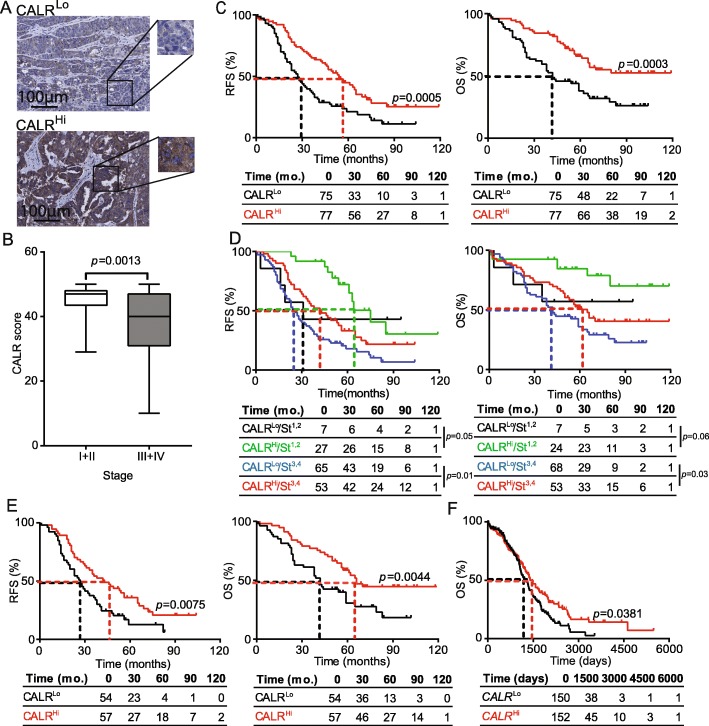
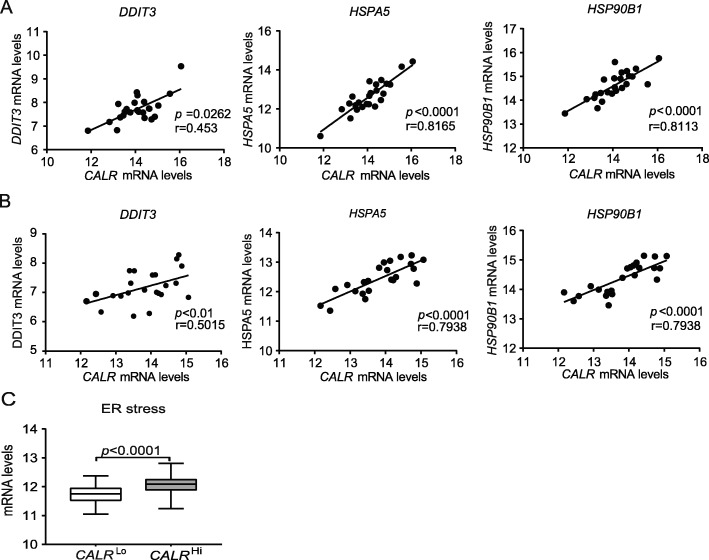
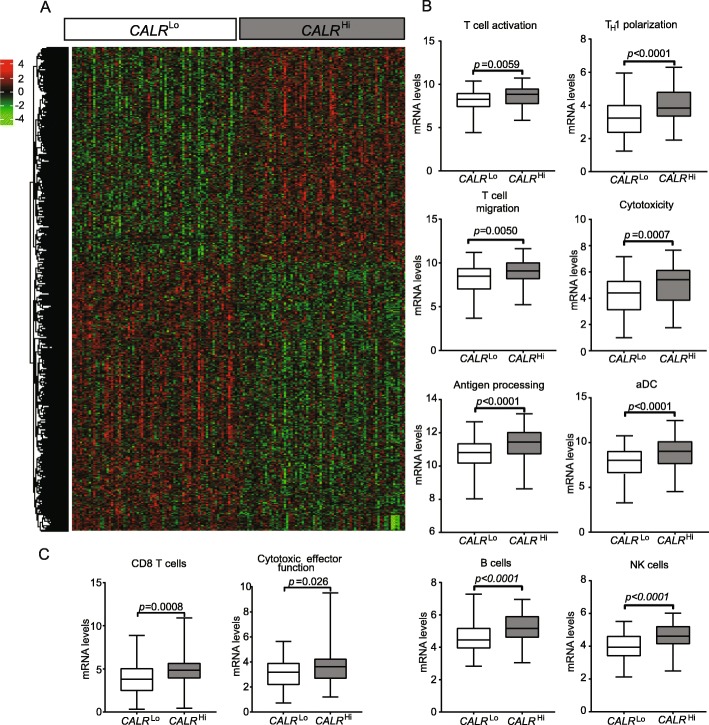
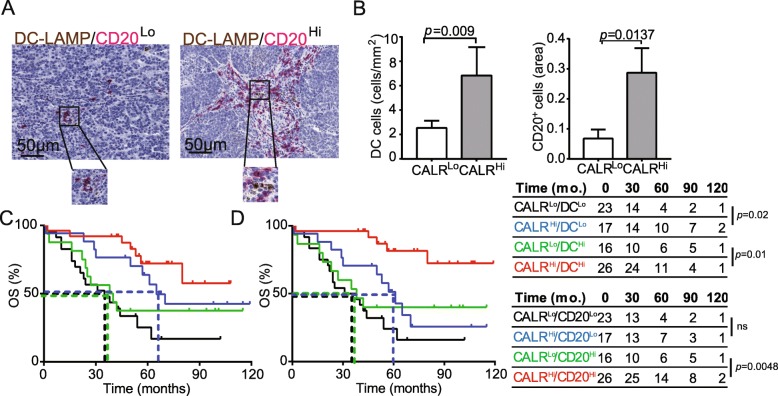
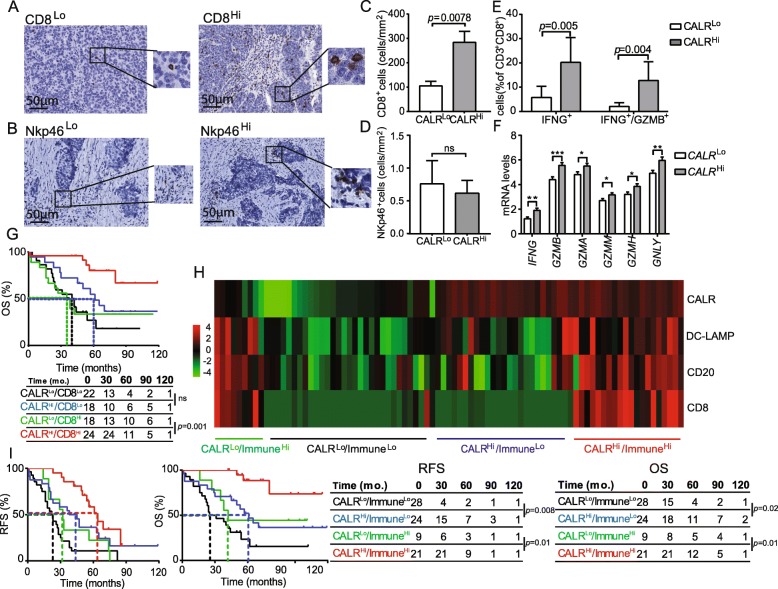
BACKGROUND: Adjuvanticity, which is the ability of neoplastic cells to deliver danger signals, is critical for the host immune system to mount spontaneous and therapy-driven anticancer immune responses. One of such signals, i.e., the exposure of calreticulin (CALR) on the membrane of malignant cells experiencing endoplasmic reticulum (ER) stress, is well known for its role in the activation of immune responses to dying cancer cells. However, the potential impact of CALR on the immune contexture of primary and metastatic high-grade serous carcinomas (HGSCs) and its prognostic value for patients with HGSC remains unclear. METHOD: We harnessed a retrospective cohort of primary (no = 152) and metastatic (no = 74) tumor samples from HGSC patients to investigate the CALR expression in relation with prognosis and function orientation of the tumor microenvironment. IHC data were complemented with transcriptomic and functional studies on second prospective cohort of freshly resected HGSC samples. In silico analysis of publicly available RNA expression data from 302 HGSC samples was used as a confirmatory approach. RESULTS: 1 polarization and cytotoxic activity that enables superior clinical benefits. CONCLUSIONS: Our data indicate that CALR levels in primary and metastatic HGSC samples have robust prognostic value linked to the activation of clinically-relevant innate and adaptive anticancer immune responses.
Overview
The claims and statistics of this paper haven’t been checked yet.
Free: it reads the open-access text and checks the first 5 claims that cite a source we can check. Create a free account to check every claim.
Integrity signals
Registry
Cites
Statistics
Figures
Verification
Claims the paper makes
The claims and statistics of this paper haven’t been checked yet.
Free: it reads the open-access text and checks the first 5 claims that cite a source we can check. Create a free account to check every claim.
Claims other papers make about this one
Each is checked against this paper’s own text: does it say what the citing paper says it does?
The cited source says what the claim attributes to it.
In the citing paper
“the ability of malignant cells to proficiently expose the endoplasmic reticulum (ER) protein calreticulin (CALR) on their surface as an adjuvantlike signal has been associated with superior disease outcome in patients with acute myeloid leukemia (Truxova et al., 2020) and ovarian carcinoma (Kasikova et al., 2019).”
From Immunomodulation by targeted anticancer agents (2021) · cites this paper as Kasikova et al., 2019
Self-check
Percentages, sums and reported differences re-computed from the paper’s own numbers.
The self-check needs the paper’s full text.
Citations
Cites
limma powers differential expression analyses for RNA-sequencing and microarray studies
Ritchie, M. E., Phipson, B., Wu, D., Hu, Y., Law, C. W., Shi, W., & Smyth, G. K. (2015) · Nucleic Acids Research · doi:10.1093/nar/gkv007 · Cited by 40,458
Complex heatmaps reveal patterns and correlations in multidimensional genomic data
Gu, Z., Eils, R., & Schlesner, M. (2016) · Bioinformatics · doi:10.1093/bioinformatics/btw313 · Cited by 10,034
Bindea, G., Mlecnik, B., Hackl, H., Charoentong, P., Tosolini, M., Kirilovsky, A., Fridman, W.-H., Pagès, F., Trajanoski, Z., & Galon, J. (2009) · Bioinformatics · doi:10.1093/bioinformatics/btp101 · Cited by 6,280
Elements of cancer immunity and the cancer–immune set point
Chen, D. S., & Mellman, I. (2017) · Nature · doi:10.1038/nature21349 · Cited by 5,352
The immune contexture in human tumours: impact on clinical outcome
Fridman, W. H., Pagès, F., Sautès-Fridman, C., & Galon, J. (2012) · Nature reviews. Cancer · doi:10.1038/nrc3245 · Cited by 4,981
Neoantigens in cancer immunotherapy
Schumacher, T. N., & Schreiber, R. D. (2015) · Science · doi:10.1126/science.aaa4971 · Cited by 4,783
Becht, E., Giraldo, N. A., Lacroix, L., Buttard, B., Elarouci, N., Petitprez, F., Selves, J., Laurent-Puig, P., Sautès-Fridman, C., Fridman, W. H., et al. (2016) · Genome Biology · doi:10.1186/s13059-016-1070-5 · Cited by 3,685
Ovarian cancer statistics, 2018
Torre, L. A., Trabert, B., DeSantis, C. E., Miller, K. D., Samimi, G., Runowicz, C. D., Gaudet, M. M., Jemal, A., & Siegel, R. L. (2018) · CA: A Cancer Journal for Clinicians · doi:10.3322/caac.21456 · Cited by 3,492
Immunogenic cell death and DAMPs in cancer therapy
Krysko, D. V., Garg, A. D., Kaczmarek, A., Krysko, O., Agostinis, P., & Vandenabeele, P. (2012) · Nature Reviews Cancer · doi:10.1038/nrc3380 · Cited by 3,223
Immunogenic cell death in cancer and infectious disease
Galluzzi, L., Buqué, A., Kepp, O., Zitvogel, L., & Kroemer, G. (2017) · Nature Reviews Immunology · doi:10.1038/nri.2016.107 · Cited by 3,119
Self-citation
Cited by
Immunogenic cell stress and death
Kroemer, G., Galassi, C., Zitvogel, L., & Galluzzi, L. (2022) · Nature Immunology · doi:10.1038/s41590-022-01132-2 · Cited by 1,353
Self-citationImmunostimulation with chemotherapy in the era of immune checkpoint inhibitors
Galluzzi, L., Humeau, J., Buqué, A., Zitvogel, L., & Kroemer, G. (2020) · Nature Reviews Clinical Oncology · doi:10.1038/s41571-020-0413-z · Cited by 1,349
Self-citationDetection of immunogenic cell death and its relevance for cancer therapy
Fucikova, J., Kepp, O., Kasikova, L., Petroni, G., Yamazaki, T., Liu, P., Zhao, L., Spisek, R., Kroemer, G., & Galluzzi, L. (2020) · Cell Death & Disease · doi:10.1038/s41419-020-03221-2 · Cited by 1,138
Self-citationFucikova, J., Spisek, R., Kroemer, G., & Galluzzi, L. (2021) · Cell Research · doi:10.1038/s41422-020-0383-9 · Cited by 400
Self-citationAssociation of the Epithelial–Mesenchymal Transition (EMT) with Cisplatin Resistance
Ashrafizadeh, M., Zarrabi, A., Hushmandi, K., Kalantari, M., Mohammadinejad, R., Javaheri, T., & Sethi, G. (2020) · International Journal of Molecular Sciences · doi:10.3390/ijms21114002 · Cited by 248
“Chemotherapy is still one of the most common modalities used in cancer therapy [30].”
Trial watch: chemotherapy-induced immunogenic cell death in immuno-oncology
Vanmeerbeek, I., Sprooten, J., De Ruysscher, D., Tejpar, S., Vandenberghe, P., Fucikova, J., Spisek, R., Zitvogel, L., Kroemer, G., Galluzzi, L., et al. (2020) · OncoImmunology · doi:10.1080/2162402x.2019.1703449 · Cited by 227
Self-citationTumor microenvironment in ovarian cancer: function and therapeutic strategy
Yang, Y., Yang, Y., Yang, J., Zhao, X., & Wei, X. (2020) · Frontiers in Cell and Developmental Biology · doi:10.3389/fcell.2020.00758 · Cited by 218
“In both the animal ovarian cancer model and human HGSOC patients, DCs can sense damage-associated molecular patterns (DAMPs) released from dead cancer cells, such as double-stranded DNA (dsDNA) fragments and calreticulin, an endoplasmic reticulum (ER) chaperone, eliciting Th1 polarized immunity (Ding et al., 2018; Kas…”
Immunomodulation by targeted anticancer agents
Petroni, G., Buqué, A., Zitvogel, L., Kroemer, G., & Galluzzi, L. (2021) · Cancer Cell · doi:10.1016/j.ccell.2020.11.009 · Cited by 212
Self-citationBiomarkers of Radiotherapy-Induced Immunogenic Cell Death
Vaes, R. D. W., Hendriks, L. E. L., Vooijs, M., & Ruysscher, D. D. (2021) · Cells · doi:10.3390/cells10040930 · Cited by 141
Fabian, K. P., Wolfson, B., & Hodge, J. W. (2021) · Frontiers in Oncology · doi:10.3389/fonc.2021.728018 · Cited by 144
Kiełbik, M., Szulc-Kiełbik, I., & Klink, M. (2021) · Cells · doi:10.3390/cells10010130 · Cited by 125
M2-like macrophages dictate clinically relevant immunosuppression in metastatic ovarian cancer
Hensler, M., Kašíková, L., Fišer, K., Raková, J., Škapa, P., Laco, J., Láníčková, T., Pecen, L., Truxová, I., Vosahlikova, S., et al. (2020) · Journal for ImmunoTherapy of Cancer · doi:10.1136/jitc-2020-000979 · Cited by 117
Self-citationThiruppathi, J., Vijayan, V., Park, I., Lee, S. E., & Rhee, J. H. (2024) · Frontiers in Immunology · doi:10.3389/fimmu.2024.1375767 · Cited by 94
Hernández, Á., Juanes‐Velasco, P., Landeira‐Viñuela, A., Bareke, H., Montalvillo, E., Góngora, R., & Fuentes, M. (2021) · Cancers · doi:10.3390/cancers13112821 · Cited by 77
Zhang, L., Zhou, C., Zhang, S., Chen, X., Liu, J., Xu, F., & Liang, W. (2022) · Frontiers in Oncology · doi:10.3389/fonc.2022.939249 · Cited by 84
“Consequently, DCs stimulated T cell proliferation and ultimately exerted a proper anti-tumor immune response (140). frontiersin.org Pemetrexed is another antimetabolite that inhibits enzymes involved in the folate pathway, including thymidylate synthase, dihydrofolate reductase, and glycinamide ribonucleotide formyltr…”
InfluentialImmunological configuration of ovarian carcinoma: features and impact on disease outcome
Fucikova, J. P., Coosemans, A., Oršulić, S., Cibula, D., Vergote, I. B., Galluzzi, L., & Špíšek, R. (2021) · Journal for ImmunoTherapy of Cancer · doi:10.1136/jitc-2021-002873 · Cited by 63
Self-citationZheng, J., Sun, Y., Long, T., Yuan, D., Yue, S., Zhang, N., & Yang, Z. (2022) · Drug Delivery · doi:10.1080/10717544.2022.2058653 · Cited by 53
“DAMPs are important immune adjuvants for the maturation of antigen-presenting cells: CRT is evenly distributed in the cytoplasm of resting cells; once activated, it translocated to the outer membrane leaflet, which enables phagocytes and efficient engulfment of dead cells (Kasikova et al., 2019).”
Reinforcing the immunogenic cell death to enhance cancer immunotherapy efficacy
Yu, S., Xiao, H., Ma, L., Zhang, J., & Zhang, J. (2023) · Biochimica et Biophysica Acta (BBA) - Reviews on Cancer · doi:10.1016/j.bbcan.2023.188946 · Cited by 53
Sun, N., Lei, Q., Wu, M., Gao, S., Yang, Z., Lv, X., Wei, R., Yan, F., & Cai, L. (2024) · Materials Today Bio · doi:10.1016/j.mtbio.2024.101053 · Cited by 59
“By binding to LDL receptor-related protein 1 (LRP1, best known as CD91), CRT promotes phagocytosis of dying cells and corpses by DCs, further initiating T-cell-mediated antitumor immunity [52].”
Cell Death in the Tumor Microenvironment: Implications for Cancer Immunotherapy
Gadiyar, V., Lahey, K. C., Calianese, D. C., Devoe, C., Mehta, D., Bono, K. R., Desind, S. Z., Davra, V., & Birge, R. B. (2020) · Cells · doi:10.3390/cells9102207 · Cited by 48
“One of the principal components of immunogenic cell death appears to be the exposure of a specific eat-me signal, calreticulin (CRT), on the cell surface [87,88].”
Metal-based immunogenic cell death inducers for cancer immunotherapy
Zou, J. X., Chang, M. R., Kuznetsov, N. A., Kee, J. X., Babak, M. V., & Ang, W. H. (2025) · Chemical Science · doi:10.1039/d4sc08495k · Cited by 48
Immunogenic cell death (ICD) enhancers—Drugs that enhance the perception of ICD by dendritic cells
Liu, P., Zhao, L., Zitvogel, L., Kepp, O., & Kroemer, G. (2023) · Immunological Reviews · doi:10.1111/imr.13269 · Cited by 45
“69 The clinical use of cardiac glycosides, which induce ICD, during chemotherapy is coupled to improved overall survival in cohorts of breast, colorectal, head and neck, and hepatocellular carcinoma patients, especially when they were treated with non- ICD-inducing cytotoxicants (other than…”
Self-citationMoonlighting Proteins Are Important Players in Cancer Immunology
Adamo, A., Frusteri, C., Pallotta, M. T., Pirali, T., Sartoris, S., & Ugel, S. (2021) · Frontiers in Immunology · doi:10.3389/fimmu.2020.613069 · Cited by 45
Láníčková, T., Hensler, M., Kašíková, L., Vosahlikova, S., Angelidou, A., Pasulka, J., Griebler, H., Drozenová, J., Mojžíšová, K., Vankerckhoven, A., et al. (2024) · Clinical Cancer Research · doi:10.1158/1078-0432.ccr-24-1594 · Cited by 43
Self-citationAbdullah, T. M., Whatmore, J. L., Bremer, E., Slibinskas, R., Michalak, M., & Eggleton, P. (2021) · Cancer Immunology Immunotherapy · doi:10.1007/s00262-021-03072-6 · Cited by 42
“CRT may represent a phagocytic signal on tumour cells recognized by dendritic cells, natural killer cells and other cells of both innate and adaptive immunity [19, 20].”
Fabian, K. P., Kowalczyk, J. T., Reynolds, S. T., & Hodge, J. W. (2022) · Cells · doi:10.3390/cells11233826 · Cited by 44
“Furthermore, high CRT exposure on malignant cells has been linked to enhanced immune activation and improved disease outcomes in patients with acute myeloid leukemia and ovarian cancer [44,55,56].”
Petrazzuolo, A., Perez-Lanzon, M., Martins, I., Liu, P., Kepp, O., Minard-Colin, V., Maiuri, M. C., & Kroemer, G. (2021) · Cell Death & Disease · doi:10.1038/s41419-021-03997-x · Cited by 36
“For example, the loss of CALR expression by cancer cells correlates with dismal prognosis in acute myeloid leukemia [21], colorectal cancer [22], non-small cell lung cancer [23], and ovarian carcinoma [24].”
Self-citationThe double life of a chemotherapy drug: Immunomodulatory functions of gemcitabine in cancer
Larson, A. C., Doty, K. R., & Solheim, J. C. (2024) · Cancer Medicine · doi:10.1002/cam4.7287 · Cited by 37
Transformable Gallium‐Based Liquid Metal Nanoparticles for Tumor Radiotherapy Sensitization
Liu, R., Gong, L., Zhu, X., Zhu, S., Wu, X., Xue, T., Yan, L., Du, J., & Gu, Z. (2022) · Advanced Healthcare Materials · doi:10.1002/adhm.202102584 · Cited by 37
EIF2α phosphorylation: a hallmark of both autophagy and immunogenic cell death
Humeau, J., Bezu, L., Kepp, O., & Kroemer, G. (2020) · Molecular & Cellular Oncology · doi:10.1080/23723556.2020.1776570 · Cited by 42
“In these cancers, CALR exposure was also linked to an elevated level of ER stress.(8,9) In addition, EIF2AK3-mediated eIF2α phosphorylation was associated with improved clinical outcome in human epidermal growth factor receptor 2 (HER2) breast cancer patients, while the density of tumor infiltrating lymphocytes correl…”
Self-citationDong, Y., Xu, C., Su, G., Li, Y., Yan, B., Liu, Y., Yin, T., Mou, S., & Mei, H. (2023) · Frontiers in Immunology · doi:10.3389/fimmu.2023.1122570 · Cited by 36
“There is more evidence that CALR is associated with cell carcinogenesis, drug resistance of tumor cells, and epithelial-mesenchymal transformation (17).”
Surface-exposed and soluble calreticulin: conflicting biomarkers for cancer prognosis
Kepp, O., Liu, P., Zhao, L., Plo, I., & Kroemer, G. (2020) · OncoImmunology · doi:10.1080/2162402x.2020.1792037 · Cited by 26
Self-citationLoss of GABARAP mediates resistance to immunogenic chemotherapy in multiple myeloma
Gullà, A., Morelli, E., Johnstone, M. E., Turi, M., Samur, M., Botta, C., Cifrić, S., Folino, P., Vinaixa, D., Barello, F., et al. (2024) · Blood · doi:10.1182/blood.2023022777 · Cited by 26
Cancer Biology of the Endoplasmic Reticulum Lectin Chaperones Calreticulin, Calnexin and PDIA3/ERp57
Lam, S. T. T., & Lim, C. J. (2021) · Progress in molecular and subcellular biology · doi:10.1007/978-3-030-67696-4_9 · Cited by 26
Zhu, K., Liu, X., Deng, W., Wang, G., & Fu, B. (2021) · Human Genomics · doi:10.1186/s40246-021-00372-x · Cited by 21
“Mounting evidence suggested that CALR expression was correlated with carcinogenesis, progression, outcome, and drug resistance as well as epithelial–mesenchymal transition [28].”
Preparation of carbon dot as a potential CRISPR/Cas9 plasmid delivery system for lung cancer cells
Mohammadinejad, R., Dehshahri, A., Sasan, H., Behnam, B., Ashrafizadeh, M., Gholami, A. S., Pardakhty, A., & Mandegary, A. (2020) · Minerva Biotecnologica · doi:10.23736/s1120-4826.20.02618-x · Cited by 20
The role of dendritic cells in radiation-induced immune responses
Kaur, A. P., Alice, A. F., Crittenden, M. R., & Gough, M. J. (2023) · International review of cytology · doi:10.1016/bs.ircmb.2023.02.002 · Cited by 21
Advances in technology and applications of nanoimmunotherapy for cancer
Dou, L., Meng, X., Yang, H., & Dong, H. (2021) · Biomarker Research · doi:10.1186/s40364-021-00321-9 · Cited by 18
“NPs have different potentials to modulate reactive oxygen species (ROS) and affect the functional status of DCs.”
InfluentialDesign and characterization of PROTAC degraders specific to protein N-terminal methyltransferase 1
Zhou, Q., Wu, W., Jia, K., Qi, G., Sun, X. S., & Li, P. (2022) · European Journal of Medicinal Chemistry · doi:10.1016/j.ejmech.2022.114830 · Cited by 19
Tumor-targeting bacteria as immune stimulants – the future of cancer immunotherapy?
Mowday, A. M., van de Laak, J., Fu, Z., Henare, K. L., Dubois, L. J., Lambin, P., Theys, J., & Patterson, A. V. (2024) · Critical Reviews in Microbiology · doi:10.1080/1040841x.2024.2311653 · Cited by 19
“…a number of cancer types including colorectal (Peng et al. 2010), esophageal (Suzuki et al. 2012), breast (Arnold et al. 2013) and ovarian cancer (Kasikova et al. 2019). induction of icD provides a new opportunity to improve the effectiveness of cancer treatment, causing a tumor-specific immune…”
The therapeutic mavericks: Potent immunomodulating chaperones capable of treating human diseases
Eggleton, P., Alba, J. D., Weinreich, M. A., Calias, P., Foulkes, R., & Corrigall, V. (2023) · Journal of Cellular and Molecular Medicine · doi:10.1111/jcmm.17669 · Cited by 17
Mo, J., Ruan, S., Yang, B., Jin, Y., Liu, K., Luo, X., & Jiang, H. (2023) · Journal of Zhejiang University SCIENCE B · doi:10.1631/jzus.b2200272 · Cited by 15
“Studies have indicated that CRT exposure was able to provide a robust innate and adaptive antitumor immune response, leading to favorable prognosis in OvCa patients (Kasikova et al., 2019).”
Kofla, G., Radecke, C., Frentsch, M., Walther, W., Stintzing, S., Riess, H., Bullinger, L., & Na, I. (2022) · OncoImmunology · doi:10.1080/2162402x.2022.2068109 · Cited by 16
Cifrić, S., Turi, M., Folino, P., Clericuzio, C., Barello, F., Maciel, T., Anderson, K. C., & Gullà, A. (2024) · Antioxidants and Redox Signaling · doi:10.1089/ars.2024.0558 · Cited by 12
“These interactions promote phagocytosis and the presentation of TAAs or TNAs by DCs to CTLs to induce an effective antitumor response (Doody et al., 2004; Garg et al., 2010; Schild et al., 1999).”
InfluentialSommer, A., Berndt, S., Lerchen, H.-G., Forveille, S., Sauvat, A., Mumberg, D., Kroemer, G., & Kepp, O. (2022) · OncoImmunology · doi:10.1080/2162402x.2022.2037216 · Cited by 13
Self-citationCalreticulin increases growth and progression of natural killer/T-cell lymphoma
Zheng, Y., Li, C., Xin, P., Peng, Q., Zhang, W., Liu, S., & Zhu, X. (2020) · Aging · doi:10.18632/aging.104030 · Cited by 12
“cancer [21], breast cancer [22], pancreatic cancer [23], hepatocellular carcinoma [24], prostate cancer [25], ovarian cancer [26] and glioma [27].”
del Valle, A. S., Beltrán‐Visiedo, M., de Poo-Rodríguez, V., Jiménez‐Alduán, N., Azaceta, G., Díez, R., Martínez-Lázaro, B., Izquierdo, I., Palomera, L., Naval, J., et al. (2022) · OncoImmunology · doi:10.1080/2162402x.2022.2141973 · Cited by 12
Fu, J., Zhang, W., & Jiang, T. (2022) · Frontiers in Genetics · doi:10.3389/fgene.2022.1035484 · Cited by 10
“Similar findings have been reported in ovarian cancer previously (Kasikova et al., 2019).”
Boaru, D. L., Fraile‐Μartinez, O., Castro-Martinez, P. D., Ortega, M. A., & García-Montero, C. (2026) · International Journal of Molecular Sciences · doi:10.3390/ijms27073061 · Cited by 9
Zhu, K., Deng, W., Deng, H., Liu, X., Wang, G., & Fu, B. (2021) · PPAR Research · doi:10.1155/2021/7056506 · Cited by 8
“Calreticulin (CALR), a crucial member of endoplasmic reticulum (ER) chaperones, was positively related to superior prognosis owing to the 10 PPAR Research activation of anticancer immune in various cancers [14 – 17].”
Assessment of transcription inhibition as a characteristic of immunogenic cell death
Cerrato, G., Humeau, J., Sauvat, A., Kepp, O., & Kroemer, G. (2022) · Methods in cell biology · doi:10.1016/bs.mcb.2021.12.026 · Cited by 7
Self-citationZhang, C., Tan, Y., Huang, J., Tang, X., Xiang, H., Shen, B., Tang, C., & Li, R. (2023) · Materials & Design · doi:10.1016/j.matdes.2023.112202 · Cited by 7
Yin, Q., Song, Q., Sun, L., Lü, J., & Zhang, X. (2025) · European Journal of Medicinal Chemistry · doi:10.1016/j.ejmech.2025.118122 · Cited by 6
Li, Y., Zhang, L., Xu, G., Xu, G., Chen, J., Zhao, K., Li, M., Jin, J., Peng, C., Wang, K., et al. (2024) · Frontiers in Immunology · doi:10.3389/fimmu.2024.1493528 · Cited by 7
Khorrami, M., Fadaie, M., Dizaji, S. R., Davoodi, A., Asghari, R., Shen, J., Rahimmanesh, I., Sethi, G., & Makvandi, P. (2026) · Journal of Nanobiotechnology · doi:10.1186/s12951-026-04286-5 · Cited by 5
Investigating proteogenomic divergence in patient-derived xenograft models of ovarian cancer
Perez, J. M., Duda, J. M., Ryu, J., Shetty, M., Mehta, S., Jagtap, P. D., Nelson, A., Winterhoff, B. J. N., Griffin, T. J., Starr, T. K., et al. (2025) · Scientific Reports · doi:10.1038/s41598-024-84874-3 · Cited by 5
Huang, X., Zhu, J., Li, Y., Yu, Y., & Tang, J. Y. (2022) · Frontiers in Oncology · doi:10.3389/fonc.2022.763480 · Cited by 5
“overall survival of patients with ovarian cancer (35).”
Sun, M., Qi, S., Wu, M., Xia, W., & Xiong, H. (2022) · Frontiers in Genetics · doi:10.3389/fgene.2022.909556 · Cited by 4
Dendritic Cell Immunotherapy for Ovarian Cancer: An Overview of Our Achievements
Bartůňková, J. (2024) · Onco · doi:10.3390/onco4010004 · Cited by 4
A PD-L1/CD3 Bispecific Antibody Enhances the Antitumor Effects of Regorafenib against Colon Cancer
Okpalanwaka, I. F., Daugherity, E. A., McCormick, A. L., Anderson, T. S., Smith, S. L., Lawrence, C., Appiah, D., & Lowe, D. B. (2025) · Molecular Cancer Therapeutics · doi:10.1158/1535-7163.mct-24-1015 · Cited by 7
Chen, C., Hu, Y.-C., Chien, Y., Huang, W.-C., Wu, C., Tsai, C., Lin, Y.-H., Lee, M., Chien, C., Yang, Y., et al. (2023) · Oxidative Medicine and Cellular Longevity · doi:10.1155/2023/8753309 · Cited by 4
Construction of a immune-associated genes based prognostic signature in bladder cancer
Shen, C., Wang, L., Yang, X., Liu, J., Yang, Q., Ding, X., Niu, H., & Wang, Y. (2021) · Artificial Cells Nanomedicine and Biotechnology · doi:10.1080/21691401.2020.1865994 · Cited by 4
“CLAR, a highly conserved chaperone protein, was associated with invasion and angiogenesis, antitumor immunity, and prognosis of tumours [38,39].”
Kimura, A., Mitsuda, J., Yoshimura, K., Saburi, S., Murakami, N., Sakurai, N., Yoshizawa, K., Morimoto, H., Mukudai, S., Nagao, H., et al. (2025) · npj Precision Oncology · doi:10.1038/s41698-025-00954-1 · Cited by 3
“…markers and lymphoid immune cells following combination therapy Given the reported induction of immunogenic cell death by chemother-apeutics, including taxanes 8 , we analyzed markers related to cell death, including cleaved caspase 3 for apoptosis 9 and calreticulin for immunogenicity 10 – 12 .”
Current evidence and emerging approaches in immunotherapy for gynecological cancers
Ashonibare, V. J., Hezekiah, O. S., Kukoyi, O. S., Hassan, S. A., Afolabi, O. A., Akhigbe, T. M., & Akhigbe, R. E. (2026) · Discover Oncology · doi:10.1007/s12672-026-04785-9 · Cited by 3
Messing with Signal 1: How Perturbed MHC Class I Antigen Presentation Contributes to Cancer
Lawand, M., Rayess, S. A., Jaber, R., & Endert, P. V. (2026) · Cells · doi:10.3390/cells15070653 · Cited by 3
Beltrán‐Visiedo, M., del Valle, A. S., Jiménez‐Alduán, N., Soler-Agesta, R., Naval, J., Galluzzi, L., & Marzo, I. (2024) · Methods in cell biology · doi:10.1016/bs.mcb.2024.05.009 · Cited by 2
Self-citationDisulfiram/Copper Combined with Irradiation Induces Immunogenic Cell Death in Melanoma
Wang, E., Zhang, Y., Jia, L., Lin, Z., Sun, T., Hu, P., Wang, K., Shang, Z., Guo, W. Y., Kiang, J. G., et al. (2026) · International Journal of Molecular Sciences · doi:10.3390/ijms27020980 · Cited by 2
Eskandani, N. A., Ghasemzaei, M., Farani, M. R., Mirzaee, D., Hatami, A., Khosravi, A. A., Ghoreishian, S. M., & Huh, Y. S. (2026) · Nano Today · doi:10.1016/j.nantod.2026.103065 · Cited by 3
Inflammatory cytokines induce new cancer dependencies
Cheruiyot, C. K., Kim, S. Y., Dubrot, J., Lane-Reticker, S. K., Miranda, A., Kammula, A. V., Perera, J., Du, P. P., Chuong, C. L., Fetterman, R. A., et al. (2026) · Nature Genetics · doi:10.1038/s41588-026-02614-x · Cited by 3
Chemotherapy Sparks Tertiary Lymphoid Structures in Metastatic Ovarian Cancer
Melgar, J. B., & Laoui, D. (2024) · Clinical Cancer Research · doi:10.1158/1078-0432.ccr-24-2738 · Cited by 2
Calreticulin – a multifaced protein
Kanduła, Z., & Lewandowski, K. C. (2021) · Postępy Higieny i Medycyny Doświadczalnej · doi:10.5604/01.3001.0014.8892 · Cited by 3
Ma, S., & Chen, F. (2022) · Pathology - Research and Practice · doi:10.1016/j.prp.2022.154110 · Cited by 2
Zhang, X., Xiong, S., Zhang, S., Si, Y., Dai, Z., Ji, T., Huang, X., Chen, D., Li, F., Hu, F., et al. (2026) · Human Gene Therapy · doi:10.1177/10430342261423100 · Cited by 1
“32 Further studies are warranted to explore how dendritic cell activation might contribute to the therapeutic ef fi - cacy of oAd-CMV-CALR.”
Joshi, J. (2020) · UVic’s Research and Learning Repository (University of Victoria)
Proteomics for Biomarker Discovery in Gynecological Cancers: A Systematic Review
Huang, D., Li, Y.-Z., Xu, H.-L., Liu, F., Li, X.-Y., Xiao, Q., Chen, X., Liu, K., Wang, D., Men, Y.-X., et al. (2024) · Journal of Proteome Research · doi:10.1021/acs.jproteome.4c00675
Modulation of tumor immunogenicity with AMPK activation in acute myeloid leukemia
Mondésir, J. (2021) · theses.fr (ABES) · doi:10.70675/2693bda5ze768z4bf0z857bze1eb8ccccc80
Dragan, S., Pătraș, L., Meszaros, M. S., Pavel, I., Munteanu, C. V. A., Borlan, R., Focşan, M., Martinez, A. B., Melero, A., Saveanu, L., et al. (2026) · bioRxiv (Cold Spring Harbor Laboratory) · doi:10.64898/2026.06.30.735629
Liu, Y., Ran, B., Kong, L., Zhou, D., Zhuang, Y., Guo, C., Ren, X., Li, J., Yang, X., Cui, H., et al. (2026) · Journal of Gastroenterology · doi:10.1007/s00535-026-02513-2
Vitiello, P. P. (n.d.) · Institutional Research Information System University of Turin (University of Turin) · Cited by 1
PERAN RETIKULUM ENDOPLASMA MEMICU KEMATIAN SEL KANKER DAN IMUN RESPONS: SYSTEMATIC REVIEW
Putri, H. E. (2024) · Jurnal Kesehatan Tambusai
Hell, L., Ding, Y., Pellens, C., Eylmann, K., Roßberg, M., Bokemeyer, C., Kupper, J., Schmalfeldt, B., Brauneck, F., Wellbrock, J., et al. (2026) · Frontiers in Immunology · doi:10.3389/fimmu.2026.1901291
“CD47 inhibits macrophage-mediated phagocytosis, while calreticulin promotes phagocytic clearance (20 – 23).”
Calreticulin and myeloproliferative neoplasms: linking biology to targeted therapies
Lewandowski, K., & Loch, J. I. (2026) · Expert Review of Clinical Immunology · doi:10.1080/1744666x.2026.2749708
Metadata
- Authors
- Kasikova, L., Hensler, M., Truxova, I., Skapa, P., Laco, J., Belicova, L., Praznovec, I., Vosahlikova, S., Halaska, M. J., Brtnicky, T., Rob, L., Presl, J., Kostun, J., Cremer, I., Ryska, A., Kroemer, G., Galluzzi, L., Spisek, R., & Fucikova, J.
- Affiliations
- Sotio (Czechia) (CZ)
- Inserm (FR)
- Karolinska University Hospital (SE)
- Yale University (US)
- Charles University (CZ)
- Corresponding author
- Fucikova, Jitka
- Venue
- Journal for ImmunoTherapy of Cancer
- Publisher
- BMJ
- Published
- 2019-11-20
- Volume
- 7
- Issue
- 1
- Pages
- 312-312
- ISSN
- 2051-1426 (ISSN-L)
- PMC
- PMC6868694
- OpenAlex
- W2990968959
- Cited by
- 79
- References
- 44
- Citations by year
- 2026: 10 · 2025: 5 · 2024: 13 · 2023: 8 · 2022: 14 · 2021: 15 · 2020: 14
- FWCI
- 10.28
- Type
- journal article
- Language
- en
- Open access
- gold
- doi.org
- Licence
- cc-by
- creativecommons.org/licenses/by/4.0/ (tdm)
- Locations
- Journal for ImmunoTherapy of Cancer (publishedVersion, cc-by)
- PubMed Central (publishedVersion, cc-by)
- PubMed (publishedVersion)
- DOAJ (DOAJ: Directory of Open Access Journals) (submittedVersion, cc-by-sa)
- Funders
- U.S. Department of Defense (#BC180476P1)
- Weill Cornell Medical College
- European Regional Development Fund (EF16_013/0001674)
- Topics
- Health Sciences › Medicine › Oncology › Ovarian cancer diagnosis and treatment
- Life Sciences › Immunology and Microbiology › Immunology › Immunotherapy and Immune Responses
- Health Sciences › Medicine › Oncology › Cancer Immunotherapy and Biomarkers
- Keywords
- calreticulin, high-grade serous carcinoma, ovarian carcinoma, adjuvant effect, endoplasmic reticulum stress, tumor microenvironment, antitumor immunity, prognostic factors, metastatic ovarian cancer, innate immunity, adaptive immunity, cytotoxic T lymphocytes
- MeSH terms
- RNA-Seq, Adult, Aged, Aged, 80 and over, Female, Humans, Middle Aged, Ovarian Neoplasms, Prognosis, Calreticulin, Tumor Microenvironment, Endoplasmic Reticulum Stress
About these checks
Registry, retraction, Cites and statistics results are computed, not judged, with one exception: a printed reference that no index lists is read once by a model before it counts as a citation error. Claims are extracted by a model and kept only when their quote appears verbatim in the text; each cited source is then checked, with a model’s help, for whether it says what the claim relies on. Those verdicts can be wrong — read the claim’s quote and the cited source before relying on one.
Statistics and arithmetic are recomputed, not judged.
Confidence bands are shown only for fields calibrated on our annotated test set. None is calibrated yet, so no band is shown.
What counts as a claim ›How we measure confidence ›How we check this ›
Are you an author, or do you see a problem with this page? Request a review
Data sources
Bibliographic data: Semantic Scholar, OpenAlex, Crossref.
Contains information from the Semantic Scholar Academic Graph Datasets, made available under the ODC Attribution License (ODC-BY 1.0).
Semantic Scholar’s data is described in: Kinney, R., et al. (2023). The Semantic Scholar Open Data Platform. arXiv:2301.10140.
