

Astroglial PGC-1alpha increases mitochondrial antioxidant capacity and suppresses inflammation: implications for multiple sclerosis
Open accessThe DOI matches its Crossref record; 60 of the 60 references it cites were found in a registry or an index.
Abstract
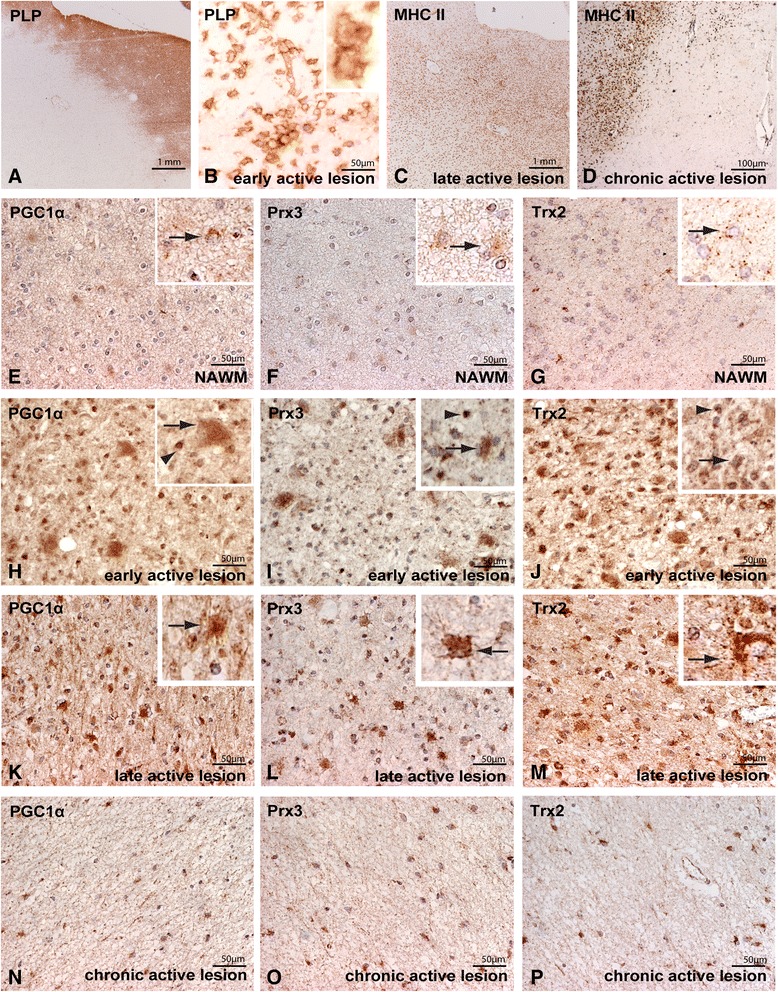
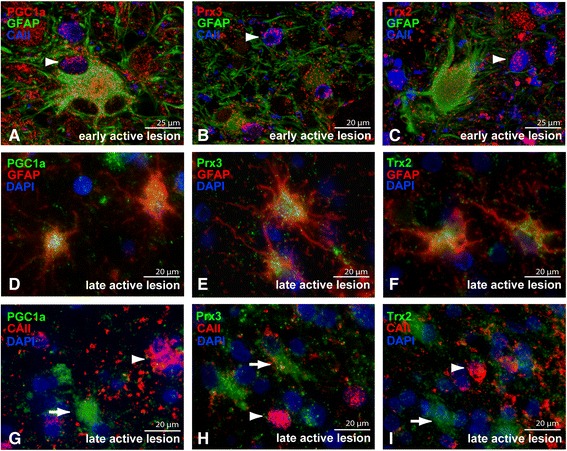
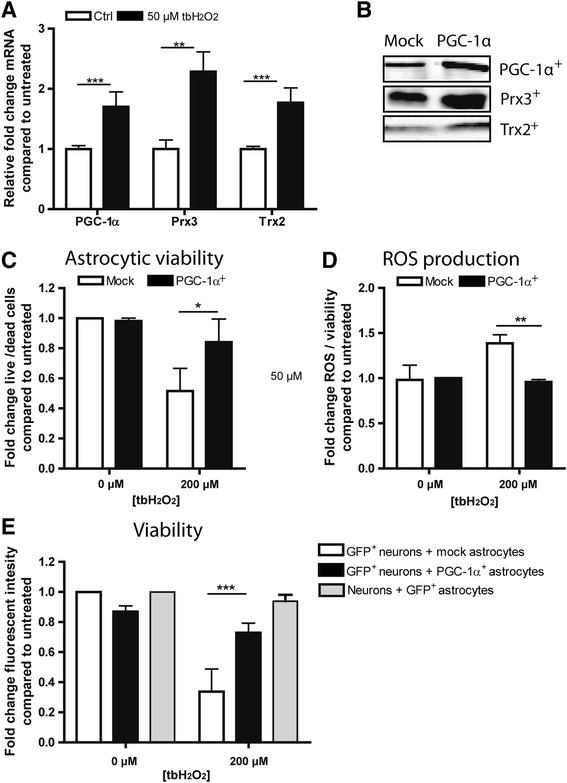
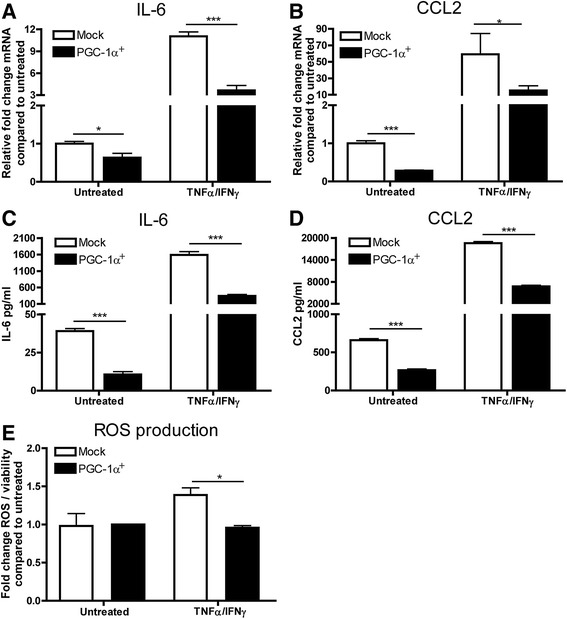
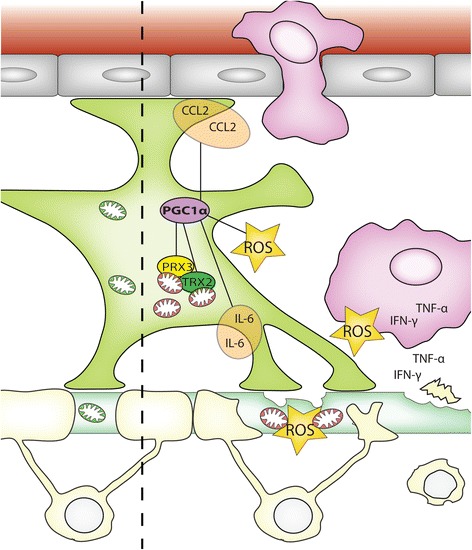
Recent evidence suggests that reactive oxygen species (ROS) produced by inflammatory cells drive axonal degeneration in active multiple sclerosis (MS) lesions by inducing mitochondrial dysfunction. Mitochondria are endowed with a variety of antioxidant enzymes, including peroxiredoxin-3 and thioredoxin-2, which are involved in limiting ROS-induced damage. In this study, we explored the distribution and role of the mitochondrial antioxidants peroxiredoxin-3 and thioredoxin-2 as well as their regulator peroxisome proliferator-activated receptor gamma coactivator1-alpha (PGC-1α) in MS pathogenesis. Immunohistochemical analysis of a large cohort of MS patients revealed a striking upregulation of PGC-1α and downstream mitochondrial antioxidants in active demyelinating MS lesions. Enhanced expression was predominantly observed in reactive astrocytes. To elucidate the functional role of astrocytic PGC-1α in MS pathology, we generated human primary astrocytes that genetically overexpressed PGC-1α. Upon an oxidative insult, these cells were shown to produce less ROS and were found to be more resistant to ROS-induced cell death compared to control cells. Intriguingly, also neuronal cells co-cultured with PGC-1α-overexpressing astrocytes were protected against an exogenous oxidative attack compared to neuronal cells co-cultured with control astrocytes. Finally, enhanced astrocytic PGC-1α levels markedly reduced the production and secretion of the pro-inflammatory mediators interleukin-6 and chemokine (C-C motif) ligand 2. Our findings suggest that increased astrocytic PGC-1α in active MS lesions might initially function as an endogenous protective mechanism to dampen oxidative damage and inflammation thereby reducing neurodegeneration. Activation of PGC-1α therefore represents a promising therapeutic strategy to improve mitochondrial function and repress inflammation.
Overview
The claims and statistics of this paper haven’t been checked yet.
Free: it reads the open-access text and checks the first 5 claims that cite a source we can check. Create a free account to check every claim.
Integrity signals
Registry
Cites
Statistics
Figures
Verification
Claims the paper makes
The claims and statistics of this paper haven’t been checked yet.
Free: it reads the open-access text and checks the first 5 claims that cite a source we can check. Create a free account to check every claim.
Self-check
Percentages, sums and reported differences re-computed from the paper’s own numbers.
The self-check needs the paper’s full text.
Citations
Cites
Astrocytes: Biology and pathology
Sofroniew, M. V., & Vinters, H. V. (2010) · Acta Neuropathologica · doi:10.1007/s00401-009-0619-8 · Cited by 5,196 · cited 1×
“Reactive astrocytes can aggravate inflammation and blood–brain barrier (BBB) leakage by secreting inflammatory molecules, but also facilitate BBB repair, secrete immunosuppressive molecules and possess neuroprotective properties [6-9].”
BackgroundSt-Pierre, J., Drori, S., Uldry, M., Silvaggi, J. M., Rhee, J., Jäger, S., Handschin, C., Zheng, K., Lin, J., Yang, W., et al. (2006) · Cell · doi:10.1016/j.cell.2006.09.024 · Cited by 2,233 · cited 1×
“In fact, we show that overexpression of PGC-1α or mitochondrial antioxidants protects astrocytes from ROS-induced cell death, which corroborates previous studies using different cell types and experimental animal models [21,45-47].”
ResultMultiple Sclerosis — The Plaque and Its Pathogenesis
Frohman, E. M., Racke, M. K., & Raine, C. S. (2006) · New England Journal of Medicine · doi:10.1056/nejmra052130 · Cited by 1,740
Reactive Astrocytes Protect Tissue and Preserve Function after Spinal Cord Injury
Faulkner, J. R., Herrmann, J. E., Woo, M. J., Tansey, K. E., Doan, N. B., & Sofroniew, M. V. (2004) · The Journal of Neuroscience · doi:10.1523/jneurosci.3547-03.2004 · Cited by 1,598
Metabolism of Inflammation Limited by AMPK and Pseudo-Starvation
O'Neill, L. A. J., & Hardie, D. G. (2013) · Nature · doi:10.1038/nature11862 · Cited by 1,133 · cited 1×
“Since PGC-1α has such widespread effects and evidence for an intricate relationship between cellular metabolism and inflammation is mounting, we were interested whether astroglial PGC-1α was able to influence the production of inflammatory mediators [51,52].”
BackgroundCui, L., Jeong, H., Borovecki, F., Parkhurst, C. N., Tanese, N., & Krainc, D. (2006) · Cell · doi:10.1016/j.cell.2006.09.015 · Cited by 1,012
Transcriptional control of mitochondrial biogenesis: the central role of PGC-1
Ventura-Clapier, R., Garnier, A., & Veksler, V. (2008) · Cardiovascular Research · doi:10.1093/cvr/cvn098 · Cited by 932 · cited 2×
“PGC-1α regulates the transcription of a broad array of genes and is a key player in mitochondrial biogenesis, consequently it is conceivable that the protective effects of enhanced PGC-1α levels extend beyond increased mitochondrial antioxidant production [24].”
BackgroundMitochondrial dysfunction as a cause of axonal degeneration in multiple sclerosis patients
Dutta, R., McDonough, J., Yin, X., Peterson, J., Chang, A., Torres, T., Gudz, T., Macklin, W. B., Lewis, D. A., Fox, R. J., et al. (2006) · Annals of Neurology · doi:10.1002/ana.20736 · Cited by 841
(2006) · Elsevier eBooks · doi:10.1016/b978-0-443-07271-0.x5001-0 · Cited by 769
Oxidative damage in multiple sclerosis lesions
Haider, L., Fischer, M. T., Frischer, J. M., Bauer, J., Hoftberger, R., Botond, G., Esterbauer, H., Binder, C. J., Witztum, J. L., & Lassmann, H. (2011) · Brain · doi:10.1093/brain/awr128 · Cited by 753
Self-citation
Cited by
PGC-1 α, Inflammation, and Oxidative Stress: An Integrative View in Metabolism
Rius-Pérez, S., Torres-Cuevas, I., Millán, I., Ortega, Á. L., & Pérez, S. (2020) · Oxidative Medicine and Cellular Longevity · doi:10.1155/2020/1452696 · Cited by 642
Palmer, A. L., & Ousman, S. S. (2018) · Frontiers in Aging Neuroscience · doi:10.3389/fnagi.2018.00337 · Cited by 250
Brambilla, R. (2019) · Acta Neuropathologica · doi:10.1007/s00401-019-01980-7 · Cited by 246
Oxidative stress and its impact on neurons and glia in multiple sclerosis lesions
Lassmann, H., & van Horssen, J. (2016) · Biochimica et Biophysica Acta (BBA) - Molecular Basis of Disease · doi:10.1016/j.bbadis.2015.09.018 · Cited by 238
Self-citationResveratrol and Brain Mitochondria: a Review
Jardim, F. R., de Rossi, F. T., Nascimento, M. X., da Silva Barros, R. G., Borges, P. A., Prescilio, I. C., & de Oliveira, M. R. (2018) · Molecular Neurobiology · doi:10.1007/s12035-017-0448-z · Cited by 217
“target of resveratrol in mammalian cells, also coordinates the expression of antioxidant enzymes [166, 167].”
BackgroundSpaas, J., van Veggel, L., Schepers, M., Tiane, A., van Horssen, J., Wilson, D. M., Moya, P. R., Piccart, E., Hellings, N., Eijnde, B. O., et al. (2021) · Cellular and Molecular Life Sciences · doi:10.1007/s00018-021-03802-0 · Cited by 213
Microglial PGC-1α protects against ischemic brain injury by suppressing neuroinflammation
Han, B., Jiang, W., Cui, P., Zheng, K., Dang, C., Wang, J., Li, H., Chen, L., Zhang, R., Wang, Q. M., et al. (2021) · Genome Medicine · doi:10.1186/s13073-021-00863-5 · Cited by 204
“In primary human astrocytes, PGC-1α markedly suppresses oxidative damage and the generation of proinflammatory mediators [14].”
BackgroundHan, B., Jiang, W., Liu, H., Wang, J., Zheng, K., Cui, P., Feng, Y., Dang, C., Bu, Y., Wang, Q. M., et al. (2020) · Theranostics · doi:10.7150/thno.37119 · Cited by 173
“Previous studies have demonstrated that increasing PGC-1α could effectively suppress microglia and astrocyte activations [58, 59].”
BackgroundAdamczyk, B., & Adamczyk-Sowa, M. H. (2016) · Oxidative Medicine and Cellular Longevity · doi:10.1155/2016/1973834 · Cited by 169
Mitochondrial dysfunction: A fatal blow in depression
Song, Y., Cao, H., Zuo, C., Gu, Z., Huang, Y., Miao, J., Fu, Y., Guo, Y., Jiang, Y., & Wang, F. (2023) · Biomedicine & Pharmacotherapy · doi:10.1016/j.biopha.2023.115652 · Cited by 156
PGC−1α Promoter Methylation in Parkinson’s Disease
Su, L., Chu, Y., Kordower, J. H., Li, B., Cao, H., Huang, L., Nishida, M., Song, L., Wang, D., & Federoff, H. J. (2015) · PLoS ONE · doi:10.1371/journal.pone.0134087 · Cited by 130
Multimodal Enhancement of Remyelination by Exercise with a Pivotal Role for Oligodendroglial PGC1α
Jensen, S. K., Michaels, N. J., Ilyntskyy, S., Keough, M. B., Kovalchuk, O., & Yong, V. W. (2018) · Cell Reports · doi:10.1016/j.celrep.2018.08.060 · Cited by 105
Targeting Keap1/Nrf2/ARE signaling pathway in multiple sclerosis
Michaličková, D., Hrnčíř, T., Canová, N. K., & Slanař, O. (2020) · European Journal of Pharmacology · doi:10.1016/j.ejphar.2020.172973 · Cited by 102
Peroxiredoxins in Neurodegenerative Diseases
Szeliga, M. (2020) · Antioxidants · doi:10.3390/antiox9121203 · Cited by 103
PGC1α: Friend or Foe in Cancer?
Mastropasqua, F., Girolimetti, G., & Shoshan, M. C. (2018) · Genes · doi:10.3390/genes9010048 · Cited by 102
Epigenetic Regulation of Neuroinflammation in Parkinson’s Disease
Rasheed, M., Liang, J., Wang, C., Deng, Y., & Chen, Z. (2021) · International Journal of Molecular Sciences · doi:10.3390/ijms22094956 · Cited by 101
Thioredoxin (Trx): A redox target and modulator of cellular senescence and aging-related diseases
Yang, B., Lin, Y., Huang, Y., Shen, Y.-Q., & Chen, Q. (2024) · Redox Biology · doi:10.1016/j.redox.2024.103032 · Cited by 99
Remyelination Therapy in Multiple Sclerosis
Harlow, D. E., Honce, J. M., & Miravalle, A. A. (2015) · Frontiers in Neurology · doi:10.3389/fneur.2015.00257 · Cited by 82
Zhang, J., Wu, D., Vikash, V., Song, J. T., Wang, J., Yi, J., & Dong, W. (2015) · Digestive Diseases and Sciences · doi:10.1007/s10620-015-3696-7 · Cited by 99
Cell type-specific Nrf2 expression in multiple sclerosis lesions
Licht-Mayer, S., Wimmer, I., Traffehn, S., Metz, I., Brück, W., Bauer, J., Bradl, M., & Lassmann, H. (2015) · Acta Neuropathologica · doi:10.1007/s00401-015-1452-x · Cited by 86
Self-citationMitochondria in Multiple Sclerosis: Molecular Mechanisms of Pathogenesis
Patergnani, S., Fossati, V., Bonora, M., Giorgi, C., Marchi, S., Missiroli, S., Rusielewicz, T., Wieckowski, M. R., & Pinton, P. (2016) · International review of cytology · doi:10.1016/bs.ircmb.2016.08.003 · Cited by 91
Astrocytes in Multiple Sclerosis—Essential Constituents with Diverse Multifaceted Functions
Aharoni, R., Eilam, R., & Arnon, R. (2021) · International Journal of Molecular Sciences · doi:10.3390/ijms22115904 · Cited by 76
The Role of the Thioredoxin System in Brain Diseases
Bjørklund, G., Zou, L., Peana, M., Chasapis, C. T., Hangan, T., Lu, J., & Maes, M. H. J. (2022) · Antioxidants · doi:10.3390/antiox11112161 · Cited by 76
Increasing Nrf2 Activity as a Treatment Approach in Neuropsychiatry
Morris, G., Walker, A. J., Walder, K., Berk, M., Marx, W., Carvalho, A. F., Maes, M., & Puri, B. K. (2021) · Molecular Neurobiology · doi:10.1007/s12035-020-02212-w · Cited by 72
Morris, G., Maes, M., Berk, M., Carvalho, A. F., & Puri, B. K. (2020) · European Psychiatry · doi:10.1192/j.eurpsy.2019.13 · Cited by 65
Yi, W., Schlüter, D., & Wang, X. (2019) · Brain Behavior and Immunity · doi:10.1016/j.bbi.2019.05.029 · Cited by 72
Geoffroy, P. A., Étain, B., Lajnef, M., Zerdazi, E., Brichant‐Petitjean, C., Heilbronner, U., Hou, L., Degenhardt, F. C., Rietschel, M., McMahon, F. J., et al. (2016) · Genes Brain & Behavior · doi:10.1111/gbb.12306 · Cited by 67
Chandra, A., Sharma, A., Calingasan, N. Y., White, J. M., Shurubor, Y. I., Yang, X. W., Beal, M. F., & Johri, A. (2016) · Human Molecular Genetics · doi:10.1093/hmg/ddw095 · Cited by 59
High-fat diet inhibits PGC-1α suppressive effect on NFκB signaling in hepatocytes
Barroso, W. A., Victorino, V. J., Jeremias, I. C., Petroni, R., Ariga, S. K. K., Salles, T. A., Barbeiro, D. F., de Lima, T. M., & de Souza, H. P. (2017) · European Journal of Nutrition · doi:10.1007/s00394-017-1472-5 · Cited by 54
Aging promotes an increase in mitochondrial fragmentation in astrocytes
Araujo, A. P. B., Vargas, G., Hayashide, L. D. S., Matias, I., Andrade, C. B. V., de Carvalho, J. J., Gomes, F. C. A., & Diniz, L. P. (2024) · Frontiers in Cellular Neuroscience · doi:10.3389/fncel.2024.1496163 · Cited by 43
Selvakumar, G. P., Iyer, S. S., Kempuraj, D., Raju, M., Thangavel, R., Saeed, D., Ahmed, M. E., Zahoor, H., Raikwar, S. P., Zaheer, S. A., et al. (2018) · Molecular Neurobiology · doi:10.1007/s12035-018-0882-6 · Cited by 38
The Role of PGC1α in Alzheimer’s Disease and Therapeutic Interventions
Mota, B. C., & Sastre, M. (2021) · International Journal of Molecular Sciences · doi:10.3390/ijms22115769 · Cited by 38
Michaličková, D., Šíma, M., & Slanař, O. (2020) · Physiological Research · doi:10.33549/physiolres.934276 · Cited by 37
Liu, Y., Zhai, J., Chen, J., Wang, X., & Wen, T. (2019) · Human Cell · doi:10.1007/s13577-019-00252-6 · Cited by 36
Baker, E. A., Sims, R., Leonenko, G., Frizzati, A., Harwood, J. C., Grozeva, D., GERAD/PERADES, CHARGE, ADGC, EADI, et al. (2019) · PLoS ONE · doi:10.1371/journal.pone.0218111 · Cited by 35
Sanabria‐Castro, A., Alape‐Girón, A., Flores-Díaz, M., Echeverri-McCandless, A., & Parajeles, A. (2024) · Reviews in the Neurosciences · doi:10.1515/revneuro-2023-0091 · Cited by 35
Ryan, K. M., Patterson, I., & McLoughlin, D. M. (2018) · Psychological Medicine · doi:10.1017/s0033291718002556 · Cited by 33
Luo, G., Zhou, Z., Li, C., Zhang, P., Chen, W., Li, X., Tang, J., & Qing, L. (2023) · Research Square · doi:10.21203/rs.3.rs-2700955/v1 · Cited by 33
Baker, E., Sims, R., Leonenko, G., Frizzati, A., Harwood, J., Grozeva, D., GERAD/PERADES, consortia, I., Morgan, K., Passmore, P., et al. (2018) · doi:10.1101/374876 · Cited by 31
Clemente‐Suárez, V. J., Rubio-Zarapuz, A., Belinchón-deMiguel, P., Beltrán-Velasco, A. I., Martín-Rodríguez, A., & Tornero-Aguilera, J. F. (2024) · Cells · doi:10.3390/cells13231940 · Cited by 31
Zhang, W., Liu, D., Yuan, M., & Zhu, L. (2024) · Ageing Research Reviews · doi:10.1016/j.arr.2024.102307 · Cited by 31
Protandim Protects Oligodendrocytes against an Oxidative Insult
Lim, J. L., van der Pol, S. M. A., Baron, W., McCord, J. M., de Vries, H. E., & van Horssen, J. (2016) · Antioxidants · doi:10.3390/antiox5030030 · Cited by 31
Maurya, S. K., Gupta, S., & Mishra, R. (2023) · Frontiers in Molecular Neuroscience · doi:10.3389/fnmol.2022.1072046 · Cited by 29
Fakan, B., Szalárdy, L., & Vécsei, L. (2019) · International Journal of Molecular Sciences · doi:10.3390/ijms20020426 · Cited by 28
PGC-1α activity and mitochondrial dysfunction in preterm infants
Mohammadi, A., Higazy, R., & Gauda, E. B. (2022) · Frontiers in Physiology · doi:10.3389/fphys.2022.997619 · Cited by 27
Mørkholt, A. S., Trabjerg, M. S., Oklinski, M. K., Bolther, L., Kroese, L. J., Pritchard, C. E. J., Huijbers, I. J., & Nieland, J. D. (2019) · Scientific Reports · doi:10.1038/s41598-019-49868-6 · Cited by 26
Protective Effects of the Caffeine Against Neurodegenerative Diseases
Tellone, E., Galtieri, A., Russo, A., & Ficarra, S. (2017) · Current Medicinal Chemistry · doi:10.2174/0929867324666171009104040 · Cited by 25
Valian, N., Ahmadiani, A., & Dargahi, L. (2016) · Journal of Cellular Biochemistry · doi:10.1002/jcb.25795 · Cited by 25
Shalmani, L. M., Valian, N., Pournajaf, S., Abbaszadeh, F., Dargahi, L., & Jorjani, M. (2020) · Mitochondrion · doi:10.1016/j.mito.2020.03.002 · Cited by 23
Pharmacological and physiological roles of adipokines and myokines in metabolic-related dementia
Arjunan, A., & Song, J. (2023) · Biomedicine & Pharmacotherapy · doi:10.1016/j.biopha.2023.114847 · Cited by 21
Su, H., Luo, H., Wang, Y., Zhao, Q., Zhang, Q., Zhu, Y., Pan, L., Liu, Y., Yang, C., Yin, Y., et al. (2023) · Glia · doi:10.1002/glia.24493 · Cited by 21
Soyal, S. M., Bonová, P., Kwik, M., Zara, G., Auer, S., Scharler, C., Strunk, D., Nofziger, C., Paulmichl, M., & Patsch, W. (2019) · Molecular Neurobiology · doi:10.1007/s12035-019-01731-5 · Cited by 20
Michaličková, D., Öztürk, H. K., Hroudová, J., Ľupták, M., Kučera, T., Hrnčíř, T., Canová, N. K., Šíma, M., & Slanař, O. (2022) · Physiological Research · doi:10.33549/physiolres.934800 · Cited by 19
Up‐regulation of PGC‐1α in neurons protects against experimental autoimmune encephalomyelitis
Dang, C., Han, B., Li, Q., Han, R., & Hao, J. (2019) · The FASEB Journal · doi:10.1096/fj.201901149rr · Cited by 19
Functions of Peroxiredoxins and Their Roles in Autoimmune Diseases
Zhou, F., Chen, F., Ouyang, Z., Zhu, R., Zhou, R., Hu, W. M., & Lu, C. (2023) · Antioxidants and Redox Signaling · doi:10.1089/ars.2022.0139 · Cited by 18
Smusz, J., Mojsak, P., Matys, P., Mirończuk, A., Tarasiuk, J., Grubczak, K., Starosz, A., Kochanowicz, J., Kułakowska, A., Ruszczyńska, K., et al. (2025) · International Journal of Molecular Sciences · doi:10.3390/ijms26189207 · Cited by 17
Cavalcanti, F., González‐Rey, E., Delgado, M., Falo, C. P., Mestre, L., Guaza, C., O’Valle, F., Lufino, M. M., Xaus, J., Mascaró, C., et al. (2022) · Pharmaceutics · doi:10.3390/pharmaceutics14071420 · Cited by 15
Zhang, R., Cao, S., Shi, Y., Wang, X., Shi, L., Zhang, Y., Han, C., Wang, B., Feng, L., & Liu, J.-P. (2023) · Naunyn-Schmiedeberg s Archives of Pharmacology · doi:10.1007/s00210-023-02486-6 · Cited by 15
Shakova, F. M., Kirova, Y. I., Silachev, D. N., Romanova, G. A., & Morozov, S. G. (2021) · Brain Sciences · doi:10.3390/brainsci11030325 · Cited by 13
Mitochondrial quality control in health and disease: mechanisms and therapeutic targets
Creus, A., Mohapatra, S., Ortega, L., & Sebastián, D. (2026) · Signal Transduction and Targeted Therapy · doi:10.1038/s41392-026-02813-2 · Cited by 13
Yan, A. L., Liu, Z., Xu, S. L., Qian, Y., Song, P., & Wei, M. (2020) · BMC Complementary Medicine and Therapies · doi:10.1186/s12906-020-03020-4 · Cited by 13
Maazouzi, M., Rasheed, M., Mbarek, L., Wang, X., Liang, J., Ma, H., Chen, Z., & Deng, Y. (2025) · Journal of Neurochemistry · doi:10.1111/jnc.70031 · Cited by 12
Schniertshauer, D., Wespel, S. L., & Bergemann, J. (2023) · Current Issues in Molecular Biology · doi:10.3390/cimb45050250 · Cited by 12
Valian, N., Heravi, M., Ahmadiani, A., & Dargahi, L. (2019) · Neuroscience · doi:10.1016/j.neuroscience.2019.03.016 · Cited by 12
Abulaban, A. A., Al-Kuraishy, H. M., Al-Gareeb, A. I., Ahmed, E., Alruwaili, M., Alexiou, A. T., Papadakis, M., & Batiha, G. E. (2025) · European Journal of Neuroscience · doi:10.1111/ejn.70067 · Cited by 11
Baldacchino, K., Peveler, W. J., Lemgruber, L., Smith, R. S., Scharler, C., Hayden, L., Komarek, L., Lindsay, S. L., Barnett, S. C., Edgar, J. M., et al. (2022) · Experimental Neurology · doi:10.1016/j.expneurol.2022.114113 · Cited by 11
Adamczyk, B., Niedziela, N., & Adamczyk-Sowa, M. H. (2017) · Codon Publications eBooks · doi:10.15586/codon.multiplesclerosis.2017.ch10 · Cited by 11
Dembitskaya, Y., & Popov, A. (2025) · Metabolic Brain Disease · doi:10.1007/s11011-025-01706-7 · Cited by 10
Varghese, M., Zhao, W., Yemul, S., Vempati, P., Radu, A., Simkovic, S., & Pasinetti, G. M. (2020) · Biomolecules · doi:10.3390/biom10050760 · Cited by 10
Szalárdy, L., Zádori, D., Bencsik, K., Vécsei, L., & Klivènyi, P. (2017) · Neuroscience Letters · doi:10.1016/j.neulet.2017.05.008 · Cited by 10
Szalárdy, L., Molnar, M. F., Zádori, D., Cseh, E. K., Veres, G., Kovács, G. G., Vécsei, L., & Klivènyi, P. (2018) · Frontiers in Behavioral Neuroscience · doi:10.3389/fnbeh.2018.00180 · Cited by 10
Kolić, I., Stojković, L., Dinčić, E., Jovanović, I. B., Stanković, A., & Živković, M. (2019) · Journal of Neuroimmunology · doi:10.1016/j.jneuroim.2019.577090 · Cited by 9
Upregulation of PGC-1α Attenuates Oxygen-Glucose Deprivation-Induced Hippocampal Neuronal Injury
Han, B., Zhao, H., Gong, X., Sun, J., Chi, S., Liu, T., & Xie, A. (2022) · Neural Plasticity · doi:10.1155/2022/9682999 · Cited by 9
Du, H., Lai, J., Lin, B., Pan, J., Zhou, Y., & Feng, Y. (2024) · Cell Biochemistry and Biophysics · doi:10.1007/s12013-024-01642-w · Cited by 10
Kwik, M., Hainzl, S., Oppelt, J., Tichý, B., Koller, U., Bernardinelli, E., Steiner, M., Zara, G., Nofziger, C., Weis, S., et al. (2021) · International Journal of Molecular Sciences · doi:10.3390/ijms22073296 · Cited by 8
PGC-1α-siRNA suppresses inflammation in substantia nigra of PD mice by inhibiting microglia
Guan, X., Wu, P., Cao, B., Liu, X., Chen, X., Zhang, W., Zhang, Y., Guan, Z., & Wang, Y. (2021) · International Journal of Neuroscience · doi:10.1080/00207454.2021.1910257 · Cited by 8
Redox Events As Modulators of Pathology and Therapy of Neuroinflammatory Diseases
Lepka, K., Berndt, C., Hartung, H., & Aktaş, O. (2016) · Frontiers in Cell and Developmental Biology · doi:10.3389/fcell.2016.00063 · Cited by 8
Yu, Z., Li, J., He, Z., Li, W., Lian, A., Xia, Y., Luo, Y., & Zhuo, Y. (2025) · Journal of Translational Medicine · doi:10.1186/s12967-025-07240-5 · Cited by 7
Orchestrating Stress Responses in Multiple Sclerosis: A Role for Astrocytic IFNγ Signaling
Habean, M. L., Kaiser, K. E., & Williams, J. L. (2024) · International Journal of Molecular Sciences · doi:10.3390/ijms25147524 · Cited by 6
Park, J. H., Kwak, B. J., Choi, H. J., Kim, O., Hong, H., Lee, S. C., Kim, K., You, Y. K., Lee, T. Y., Ahn, J., et al. (2020) · FEBS Open Bio · doi:10.1002/2211-5463.12961 · Cited by 6
Wen, Y., Hu, Z., Tang, X., & Hu, K. (2020) · Archives of Medical Science · doi:10.5114/aoms.2020.99024 · Cited by 5
Peroxisome Proliferator-Activated Receptor-γ Coactivator-1α in the Spotlight with Multiple Sclerosis
Yang, Y.-N., Zhang, M.-Q., Yu, F.-L., Han, B., Bao, M.-Y., He, Y., Li, X., & Zhang, Y. (2023) · Neuroscience Bulletin · doi:10.1007/s12264-023-01114-w · Cited by 5
Li, Z., Lin, H.-S., Huang, X.-P., Zhang, S.-Q. Y., Shu, X., & Wu, X. (2023) · Ageing and Neurodegenerative Diseases · doi:10.20517/and.2023.04 · Cited by 4
Wu, X., Xu, M., Huang, Y., Chen, P., Wu, L., Chen, A., Wei, J., Chen, Y., Lin, Y., Lin, Y., et al. (2026) · International Journal of Biological Sciences · doi:10.7150/ijbs.121472 · Cited by 2
石云锋, & Xia, S. (2026) · Current Issues in Molecular Biology · doi:10.3390/cimb48060642 · Cited by 1
PGC-1 alfa como regulador inflamatório na esteato-hepatite não-alcoólica
Barroso, W. A. (2016) · Digital Library of Theses and Dissertations (Universidade de São Paulo) · doi:10.11606/d.5.2016.tde-06062016-125337 · Cited by 1
Cavalcanti, F., González‐Rey, E., Delgado, M., Mestre, L., Guaza, C., Lufino, M. M., Xaus, J., Mascaró, C., Lunardi, S., Sacilotto, N., et al. (2021) · Research Square · doi:10.21203/rs.3.rs-114482/v5 · Cited by 1
Issa, S. A.-R. (2015) · theses.fr (ABES) · doi:10.70675/bac47709za653z4723z85f6z620ca3c186e3 · Cited by 1
Neuroprotective effects of PGC-1α activators in dopaminergic neurons
Mäkelä, J. (2016) · Helda - University of Helsinki Institutional Repository
Charakterisierung von Peroxiredoxin 2 im zentralen Nervensystem bei Multipler Sklerose
Winkler, D. A. (2021) · eDiss (Georg-August-Universität Göttingen) · doi:10.53846/goediss-8882
Cavalcanti, F., González‐Rey, E., Delgado, M., Mestre, L., Guaza, C., Lufino, M. M., Xaus, J., Mascaró, C., Lunardi, S., Sacilotto, N., et al. (2020) · Research Square · doi:10.21203/rs.3.rs-114482/v2
Cavalcanti, F., González‐Rey, E., Delgado, M., Mestre, L., Guaza, C., Lufino, M. M., Xaus, J., Mascaró, C., Lunardi, S., Sacilotto, N., et al. (2021) · Research Square · doi:10.21203/rs.3.rs-114482/v4
Cavalcanti, F., González‐Rey, E., Delgado, M., Mestre, L., Guaza, C., Lufino, M. M., Xaus, J., Mascaró, C., Lunardi, S., Sacilotto, N., et al. (2020) · Research Square · doi:10.21203/rs.3.rs-114482/v1
Cavalcanti, F., González‐Rey, E., Delgado, M., Mestre, L., Guaza, C., Lufino, M. M., Xaus, J., Mascaró, C., Lunardi, S., Sacilotto, N., et al. (2021) · Research Square · doi:10.21203/rs.3.rs-114482/v3
Research Progress on the Role of PGC-1α in Central Nervous System Glial Cells
王, 姜. (2025) · Advances in Clinical Medicine · doi:10.12677/acm.2025.1582192
Hajisoltani, R., Tabatabaei, F. S. A., Hamblin, M. R., & Ramezani, F. (2025) · Neurology Research International · doi:10.1155/nri/9424887
Han, B., Jiang, W., Cui, P., Zheng, K., Dang, C., Wang, J., Li, H., Chen, L., Zhang, R., Wang, Q. M., et al. (2021) · Figshare · doi:10.6084/m9.figshare.14329336
Han, B., Jiang, W., Cui, P., Zheng, K., Dang, C., Wang, J., Li, H., Chen, L., Zhang, R., Wang, Q. M., et al. (2021) · Figshare · doi:10.6084/m9.figshare.14329333
Kolić, I. (2021) · VinaR (Institute of Nuclear Sciences "Vinča")
Metadata
- Authors
- Nijland, P. G., Witte, M. E., van het Hof, B., van der Pol, S., Bauer, J., Lassmann, H., van der Valk, P., de Vries, H. E., & van Horssen, J.
- Affiliations
- Amsterdam Neuroscience (NL)
- Medical University of Vienna (AT)
- Corresponding author
- Nijland, Philip G
- Witte, Maarten E
- Venue
- Acta Neuropathologica Communications
- Published
- 2014-12
- Volume
- 2
- Issue
- 1
- Pages
- 170-170
- ISSN
- 2051-5960 (ISSN-L)
- PMC
- PMC4268800
- OpenAlex
- W2140399354
- Cited by
- 96
- References
- 60
- Citations by year
- 2026: 4 · 2025: 7 · 2024: 7 · 2023: 10 · 2022: 6 · 2021: 15 · 2020: 13 · 2019: 10 · 2018: 6 · 2017: 5 · 2016: 8 · 2015: 5
- FWCI
- 4.45
- Type
- journal article
- Language
- en
- Open access
- gold
- doi.org
- Locations
- Acta Neuropathologica Communications (publishedVersion, cc-by)
- Europe PMC (PubMed Central) (publishedVersion, cc-by)
- PubMed Central (publishedVersion, cc-by)
- PubMed (publishedVersion)
- Amsterdam UMC (VU Amsterdam) - Institutional Repository (publishedVersion)
- Pure Amsterdam UMC (submittedVersion)
- Data Archiving and Networked Services (DANS) (submittedVersion, other-oa)
- Data Archiving and Networked Services (DANS) (submittedVersion)
- Funders
- Emory University
- Universitetet i Oslo
- Topics
- Health Sciences › Medicine › Clinical Neurology › Multiple Sclerosis Research Studies
- Life Sciences › Biochemistry, Genetics and Molecular Biology › Molecular Biology › Redox biology and oxidative stress
- Health Sciences › Medicine › Clinical Neurology › Parkinson's Disease Mechanisms and Treatments
- Keywords
- multiple sclerosis, PGC-1α, astrocytes, reactive oxygen species, mitochondrial antioxidants, peroxiredoxin 3, thioredoxin 2, oxidative stress, neuroinflammation, demyelinating lesions, axonal degeneration, neuroprotection, interleukin-6, MCP-1, mitochondrial dysfunction
- MeSH terms
- Peroxisome Proliferator-Activated Receptor Gamma Coactivator 1-alpha, Adult, Aged, Antioxidants, Astrocytes, Brain, Cells, Cultured, Encephalitis, Female, Gene Expression Regulation, Humans, Male, Middle Aged, Multiple Sclerosis, Thioredoxins, Transcription Factors, Case-Control Studies, Cytokines, Reactive Oxygen Species, Oxidative Stress, Myelin Proteolipid Protein, Peroxiredoxin III, White Matter
About these checks
Registry, retraction, Cites and statistics results are computed, not judged, with one exception: a printed reference that no index lists is read once by a model before it counts as a citation error. Claims are extracted by a model and kept only when their quote appears verbatim in the text; each cited source is then checked, with a model’s help, for whether it says what the claim relies on. Those verdicts can be wrong — read the claim’s quote and the cited source before relying on one.
Statistics and arithmetic are recomputed, not judged.
Confidence bands are shown only for fields calibrated on our annotated test set. None is calibrated yet, so no band is shown.
What counts as a claim ›How we measure confidence ›How we check this ›
Are you an author, or do you see a problem with this page? Request a review
Data sources
Bibliographic data: Semantic Scholar, OpenAlex, Crossref.
Contains information from the Semantic Scholar Academic Graph Datasets, made available under the ODC Attribution License (ODC-BY 1.0).
Semantic Scholar’s data is described in: Kinney, R., et al. (2023). The Semantic Scholar Open Data Platform. arXiv:2301.10140.
